
Matador Network's Blog, page 1435
December 8, 2017
What to know before Angkor Wat
The Temples of Angkor are among the most fascinating and increasingly popular destinations in Southeast Asia. The excursion is more than worth it, but there are a few things you should know before arriving in Siem Reap.
1. There’s a lot more than just Angkor Wat.

Photo: Igor Ovsyannykov
While Angkor Wat is the most famous and certainly among the most beautiful, there are more than 1,000 Temples of Angkor. Angkor was the capital of the Khmer Empire from the 9th to 15th centuries, both a fully functional city and a religious site.
The temples were constructed in the 12th century, and today make up the largest historical religious site in the world. If all you do is snap a sunrise selfie at Angkor Wat, you’re missing out on a lot.
2. Start early, and pack for multiple days of adventure.
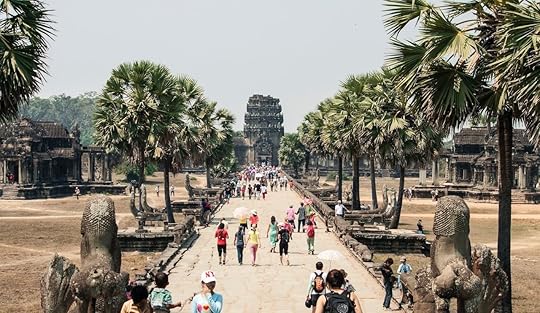
Photo: Milada Vigerova
I could spend a month exploring Angkor and still not feel like I’ve seen it all. At about 400 square kilometers, Angkor is impossible to experience in one day. Tickets are available in 1-day, 3-day, and 7-day options, and I encourage you to spend at least three days there.
Arriving early morning puts you ahead of the crowds and offers an opportunity to snap photos without having to spend five minutes figuring out how to frame out that line of tourists causing a traffic jam on the staircase. It also makes it much easier to plot out what you want to see over the course of your visit, as you’ll get a feel for how spread out the temples are and which ones are must-dos and which ones are maybes.
On a side note, you may feel “templed out” afterward. If other temple sites are part of your Southeast Asia travel plans, it’s best to space them out a bit (unless you’re a fanatic, in which case the 7-day pass is right up your alley).
3. Don’t throw away your ticket.
Multi-day tickets will be checked each time you re-enter the property. Replacing it means waiting in line and probably paying again unless your negotiation skills are on par with that of a defense lawyer. It’s best to just keep the ticket on you at all times.
4. Hire a local tuk-tuk driver instead of a tour operator.
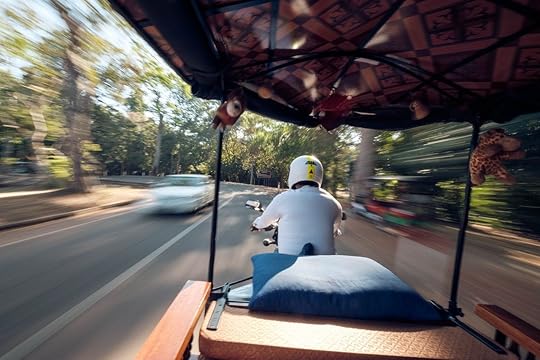
Photo: Christian Holzinger
I cannot emphasize this point enough. Ditch the tour bus, group package, and any other option that requires you to base your plans on other people’s timeframe and needs. Take your group in one tuk-tuk and have the driver shuttle you to the places your crew wants to see.
Also, the drivers know the area. They can make recommendations on the best times to visit specific temples and speed right by that giant tour bus, saving precious time.
One thing I found to be true in Cambodia, even more so than other Southeast Asian countries, is that drivers are eager to work with you for multiple days, maybe even your entire stay, as opposed to having to flag a ride each time. This provides a chance to get to know them, and equally as important, for them to get to know you. It didn’t take long for our driver to learn that my wife and I valued his opinion above that of the guidebook, resulting in more than one unexpected temple stop that we otherwise wouldn’t have seen or alternative entry point that we would never have heard about otherwise.
5. Skip sunrise at the main temple.

Photo: Florian Hahn
For real. It’s crowded. While breathtakingly beautiful, it’s hardly the only perfect sunrise spot in the complex. We shared our desire to view the sunrise at Angkor Wat with our driver, and he insisted that we instead take a twenty-minute hike up a path he knew about to an often-overlooked temple. We nearly had the place to ourselves, and it ended up being the most memorable sunrise experience of my life.
6. Angkor is inhabited by local villagers to this day.

Photo: David Dennis
Some residents have lineage dating back to Angkor’s heyday, with rice farming being a main source of livelihood for the many villages spread throughout the Angkor region. Respecting the residents, their villages, and customs is incredibly important. Treating historic sites with disrespect — being loud, drunk, obnoxious, or demanding — is in itself a shameful practice. Here, it’s not just shameful and disrespectful, it’s downright disgusting.
7. Hosting your own personal photo shoot is to be avoided, as well.

Photo: Densou
Of course, photos are part of the experience and part of the journey. But in my time at Angkor, I encountered a number of tourist groups occupying an entrance or popular area for far longer than appropriate, simply because each member had to get the perfect selfie followed by the perfect couples’ photo followed by the stoic shot followed by the standalone. Don’t be that group.
8. Bringing food and water is a good idea.
Another perk to hiring a local tuk-tuk driver –- on day two, he showed up with a cooler full of beer and water (which we reimbursed him for). We brought our own food to add to the mix and ended up perfectly satiated the entire day.
The temples are removed from central Siem Reap. It’s possible to buy food and water from local vendors on site, but much easier to bring your own.
9. Be ready to walk. A lot.
There were no elevators in the 12th century, and there certainly are none there now. The full experience requires a good deal of walking and stair climbing. Don’t whine — this is one of the most incredible experiences anywhere in the world. Going a bit deeper might just put you beyond the reaches of that busload of tourists that just pulled up and make the experience that much more memorable. You’ll encounter staircases, long paths to enter and exit temples, plus all of the walking around inside each one.
Additionally, many of the popular temples are far apart and require driving in between. This often leads to a number of impulse stops to check out other temples on the way, maybe buy a refreshment or hit the restroom. Be ready for a full day.
10. Bring a guidebook, even if traveling with a guide.
There’s simply so much knowledge to take in that it’s overwhelming without having a reference at your fingertips. Each temple has a story.
There are plenty of hawkers selling guidebooks onsite if you forget to plan ahead. Just be ready for a long chat if you’re feeling indecisive, as they aren’t keen on taking “no” for an answer. 

More like this: In Siem Reap you get hit up by begging kids all the time. Here’s how I dealt with it


Working holiday visa for Australia
If you are between the ages of 18 and 30 and would love to spend a year or two in Australia, the Work and Holiday or Working Holiday visa is for you! You can legally work anywhere in the country, and it’s easy to apply for. Read these steps carefully, and you could be on your way earlier than you think; 90% of applications are processed in less than two months.
1. Figure out which visa you’re eligible for.
There are two kinds of visas that allow you to live and work in Australia temporarily: the 417 (Working Holiday) and the 462 (Work and Holiday).
Working Holiday (subclass 417) visas are open to people with passports from Belgium, Canada, Cyprus, Denmark, Estonia, Finland, France, Germany, Hong Kong, Republic of Ireland, Italy, Japan, Republic of Korea, Malta, Netherlands, Norway, Sweden, Taiwan, and the United Kingdom.
Work and Holiday (subclass 462) visas are open to people with passports from Argentina, Bangladesh, Chile, Indonesia, Malaysia, Poland, Thailand, Turkey, the United States, and Uruguay.
There are a few differences between the visas. If you have more than one passport for countries that make you eligible for EITHER visa, you can choose to apply based on which one you prefer.
462 visas have education requirements — for most of the listed countries, this means you need to have completed at least two years of a tertiary education degree. A community college or any university degree would count towards this requirement.
462 visa applicants MUST provide police certificates from each country they have lived in for more than 12 months, as character references. 417 visa applicants MAY have to provide these certificates, but the application clearly states that they are not needed unless requested.
462 visa applicants MUST prove language competence, which the application form terms “functional English”. This could be proved either through having a passport from a country for whom English is a first language, taking a competency test, or otherwise showing competency (through an oral exam, for example).
462 visa applicants MUST provide a letter of support from their home government UNLESS you are from the People’s Republic of China, Singapore, or the United States. Malaysians may provide a Malaysian Certificate of Good Conduct.
For both visas, you may not hold one job for more than 6 months in a row. The visa is designed for you to be on holiday in Australia, and still be able to work occasionally (to further fund your holiday); Australian immigration feels that if you want to work more than 6 months, you should apply for a work visa instead.
Both visas have the possibility of applying for a second visa, or an extension, which will be discussed later in this article.
2. Start getting your documents together.
Neither visa will ask for original documents right off the bat; certified copies are better. You can find the exact list for the 417 visa here and the 462 visa here. You will need:
A copy of the photo page of your current passport, which should also include your birthdate, the issue date and location of your passport, and your signature.
A certified copy of your birth certificate showing both your parents’ names. If you don’t have a birth certificate, you can provide any other official document that proves your identity (like a government-issued ID).
Two passport-sized photos, with your name printed on the back.
Evidence of sufficient funds to support your holiday travel: at least $5000 AUD. This could be a bank statement or a certified letter from your bank.
If you served in the armed forces of any country, you must provide discharge papers.
If your name has changed, evidence of the name change.
The fee for the application. Fees change, so it is a good idea to check the website for exact costs, but generally, it costs around $440 AUD (plus a possible $80 AUD fee if you don’t submit the application online). There is a small fee for paying with credit card.
Further documents required for your 462 visa:
Evidence of relevant educational qualifications.
For relevant countries, a valid letter of government support for this application.
Evidence that you have a level of English which is assessed as at least functional.
Police certificates from any country lived in for more than 12 months.
3. Apply.
Once you have all your documents together, and you’ve saved up to pay your fees, it’s time to actually apply.
462 Visa: If you are from the USA, you can apply for your 462 visa online. Otherwise, or if you are a US citizen who can’t apply online for some reason, you can send or hand-deliver your application to the Australian Visa Application Office in your home country. This only applies if it is your first Work and Holiday Visa — see below for more info on applying for your second.
417 Visa: All applicants can apply online, as long as you make an “ImmiAccount”. If you cannot apply online, you can bring your paperwork and documentation to an Australian Immigration Office.
4. Wait.
Sometimes, you may be asked to complete medical or health checks — Australia is proudly tuberculosis and rabies-free, and many applicants are asked to provide evidence of recent medical check-ups or chest X-rays (to prove they don’t have TB). I did not have to do this, but many non-Australians who applied for my same university did, so your mileage may vary. If you are asked for more documents, it will appear on your ImmiAccount.
462 Visa: 75% of applications are processed within 24 days and 90% are processed within 56 days.
417 Visa: 75% of applications are processed in 16 days, and 90% are processed in 32 days.
If your circumstances change, any of the information on your application changes, or you need to withdraw your application, you must notify the Australian Immigration service immediately. This is especially relevant if your passport expires during the time between when you lodge the application and when you might arrive in Australia. Make sure your passport has at least a year or two of validity on it when you apply. If you have less than 6 months before it expires, get a new passport before you apply — you don’t want to get held up in the airport or denied entry because of a bureaucratic problem.
5. When you get your visa, rejoice.
Assuming you followed all the rules and got all the paperwork they asked for, you will be issued a digital visa. You will not get a physical form that goes in your passport (sadly, if you like this sort of souvenir — I love flipping back over my old stamps and visas). Your visa is associated with your passport or your ImmiCard, and it also has a unique ID number that you can use to access it when necessary.
6. Applying for second 462 or 417 visas.
Let’s say you’re having such a good holiday in Australia that you’d like to stay for another year! Well…you can. It might even be easier to apply for, provided you fulfill the requirements. What are the requirements? So glad you asked.
You must have completed all the requirements for the first 417 or 462 visa.
You must not have held more than one 417 or 462 visa (you can’t have THREE visas).
If you have a 417, you cannot have had a 462; and vice versa. This is to stop people with multiple citizenships from applying for TWO visas under each passport.
You must not have turned 31 by the time you apply.
You must have completed THREE MONTHS of specified work in regional Australia during the term of your first visa.
What is specified work, in regional Australia? This guideline was developed to help industries in remote areas with high turnover get more workers. These are acceptable fields:
plant and animal cultivation
fishing and pearling
tree farming and felling
For 462 visa applicants: tourism and hospitality
For 417 visa applicants: mining, construction
The job you fulfill must be eligible, which usually means labor-intensive. Working as a bookkeeper in one of these fields, for example, does not count towards your 3-month requirement. Neither is working as a nanny on a farm, a wine taster for a vineyard, or cleaning buildings belonging to a construction office. The work must be paid.
Regional Australia usually means outside of the major cities. Canberra, or anywhere in the Australian Capital Territory, cannot be counted as regional.
There are a lot of guidelines about how to calculate your hours worked, and whether or not weekends count, and what happens if a cyclone disrupts your harvesting season. You can find all of the information for 417 visas here and for 462 visas here. If this is what you are interested in doing, I suggest you read it extremely carefully to ensure that you can fulfill the guidelines. If you are already in Australia and applying for a second 417 or 462 visa, you must apply for it before your current visa runs out.
Up until very recently, 462 visas were not eligible for a second application/extension. This changed in February of 2017. If you find articles dating before that in doing further research, they will state that you cannot get a second 462 visa: this information is incorrect.
More like this: Which is the better country for a working holiday: Australia or New Zealand?
drunk driving deaths worldwide
There are few tragedies as common and overlooked as deaths from drunk driving. While the gun debate has raged on for years, the debate on how to reduce fatalities caused by drunk drivers is usually given a backseat. This could be because society as a whole has agreed for a long time that drunk driving is bad, so we believe that the problem must have been taken care of. Yet 10,265 Americans died from alcohol-related driving in 2015, compared to the 9,600 gun-related homicides in the US that year (gun-related suicides drives that number up to 38,000).
The map below, provided by Budget Direct, shows the percentage of traffic deaths due to drunk driving worldwide. As you can see, the US isn’t exactly in great standing. So until fully-autonomous vehicles get here (which could be sooner than you think), let’s not forget that the drunk driving is still a deadly problem.
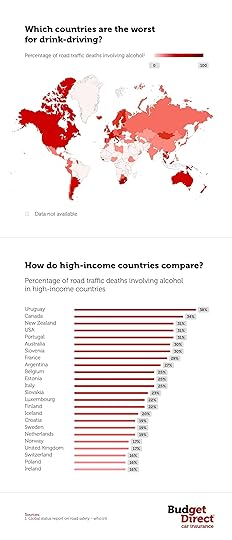
Photo: Budget
Direct
More like this: 5 of the strangest driving laws in the world

holiday destinations infographic
Almost a third of Americans travel during the holiday season, but not all of them visit friends and family. In fact, a lot of us are escaping family and cold weather altogether with trips to places like Cancun and the Bahamas, and some are taking the time off work to visit new places even farther abroad, like Cape Verde. But the map of international destinations drawing the most holiday travelers has changed a lot over the last decade, according to new research by TrueLuxury.Travel.
The site used Google Trends to put together this fascinating infographic about the places that have gotten more or less popular as holiday destinations since 2004. For example, searches for holiday visits Cape Verde have skyrocketed by 3,000%, perhaps as a result of new direct flights from London. Meanwhile, countries that experienced political unrest during the Arab Spring in 2011 saw a dramatic decrease in the number of people interested in visiting during the holidays. Libya, Egypt, and Tunisia each saw a decrease above 89%. This is pretty useful information if you are looking not only for a holiday abroad, but also a holiday away from other holiday travelers.
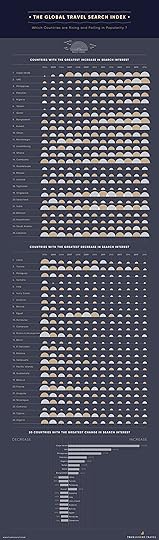
Photo: TrueLuxury.Travel
More like this: Traveling over the Holidays? Check out these 34 holiday travel hacks


December 7, 2017
Dear nontraveler
Dear nontraveler,
I invite you inside my mind. Would you like to come? Not because I feel the need to explain myself, but because I want to connect with you. And connection is bred from understanding.
Not everyone finds circling the world with a 40-liter backpack interesting. I get it. It took me a few years, but I get it. I’ll try to see your side if you try to see mine. I hope you hear me out.
To search or not to search.
I’ve dealt for years with what seems to be your favorite question: “What are you searching for?” Some basic answers that come to mind: peace, love, acceptance, for people with whom I can feel vulnerable and safe at the same time, health, human connection. Aren’t you? I hope so. I don’t think I’m searching for anything out of the ordinary.
I didn’t leave because I’m incomplete. I left because I’m whole. And I want to bring my wholeness to the world. Throw my hands up and see what happens. Truth be told, it hurts my feelings when you insinuate I’m broken. We’re all broken. I may trek mountains and cross borders, but I’m still delicate. Please be gentle.
However, I have a confession to make. I’m scared of commitment — not just to people, how we normally think of it, but commitment to places, to jobs, to contracts of any kind — because I’m scared of boredom. I’m scared to not feel alive while I’m living. ‘Cause I’ve been there before. And I don’t wanna go back.
So sometimes, just sometimes, I am running. Sometimes I do run to escape. Yeah, I said it. But we all run, don’t we? I just have expensive taste in the sport. Somehow a $739 flight to Asia is an appealing track for me to run. Others run while sitting in place. Staying in front of the TV for hours each evening. Hanging around at work a bit extra each night — not because there’s much left to do, but because you just can’t bring yourself home to face the problems in your marriage. Or having that extra drink not because you wanted more buzz, but because it makes you feel a little less here… and that feels good.
We all run. Let me get my exercise, too.
Eventually, we all run out of steam.
Being out in the big wide world.
I’ve never been touched on a crowded Indian train. In fact, numerous times people have given up their seat in honor of atithi devo bhava, “guest is God”, in Hindi. I miraculously managed to not catch a brain-eating parasite in Thailand’s hot springs, and I didn’t get trapped in Nicaraguan drug traffic. So far so good. I’m not saying these things have never happened to people. But the world isn’t as scary as you think.
Is your life as dramatic as the movies? Is your relationship as theatrical and is your car as shiny? So then what makes you believe all the drama of the news? Don’t auto-trust just because it comes through a screen. I prefer to see the world for myself.
Don’t be fooled. I’m scared shitless. I’m not fearless, my friend. But I feel the fear and do it anyway.
“How do you do it?”
I know what you really want to ask is where the funds are coming from. You can cut to the chase. I won’t be offended.
So what’s my deal? I happened to have a well-paid corporate job before I “threw it all away,” as you often like to call it (I mean, aren’t we supposed to throw away things we’re done with? Shoes, relationships, expired cereal). And my family happens to live in the coolest city in the world, so I stuck around for a while. I know, I know, lucky bitch.
But also, Jimmy Choos, shopping malls, and sitting at expensive boozy brunch have always given me some type of anxiety. Target and Chipotle are more my thing. I never understood precisely why paying $237 for two pieces of glass to shield your eyes from the sun seems to be accepted as common sense, or why everyone wants Christian Loubo-who?!? Is he really good in bed or something? But hey, you have your thing and I have mine. Maybe your money-mind works hard to pronounce French brand names. Mine calculates strictly in plane tickets. For the love of God, let’s just let each other rock.
There are all kinds of different ways to do it at home, so why not abroad? Humans, every last one of us, will always have something to say — she’s able to travel because she lives with her parents, they don’t have children so they can just leave, he’s a trust fund kid so he can pull it off. But even when you think you do, you really never know someone’s story. And at the end of the day, it just doesn’t matter. If you’re genuinely interested, ask. I’ll proudly give you all my secrets. But if you’re just trying to find a glitch in my plan, kindly save it. I know there are glitches. Life is full of glitches. Mine, yours, all of ours.
Yes, it has to be now.
Now is the only time that’s real. We all know that someday never comes. Can I tell you a secret? Sometimes I look in the mirror and wonder when I will ever be this healthy and fit, this sharp and alert, and this young and unsure, but excited. I think all of this not in an anxious way, but in a grateful way. In a you-have-it-so-do-something-with-it-NOW type of way.
I don’t want to wait around till I’m retired. That’s far too long. Not because I’m impatient, but because I’m excited. The world is a school and I want to run wild in it. Draw all over the walls with crayons. Flip all over the jungle gym. Enrollment started day 1 of life and the clock is officially ticking.
When will you ever “slow down”?
I won’t. Don’t hold your breath. For some reason, people never seem to ask this question to my friends who work 80-hour weeks, or to the mother who lets her own life and mental health slip away in the name of her four kids. Instead, society pats them on the back. Why?
Since I’ve had to deduce the societal definition of the phrase, my answer is I probably won’t “slow down.” Why not? Because I just don’t want to. At least not now. It doesn’t mean 10-month trips forever. But it means no matter what, I’ll desperately sneak in that two-week vacation amongst whatever job I have going on; my house, if I ever settle into one, will be littered with travel magazines and photos of past trips and faces of souls I love but will probably never see again; and home will always mean wherever I want it to be. I hope you understand.
I want to connect with you.
I want to be understood. It’s not fun to feel like the outcast at home — at social gatherings, family events, temporary jobs. I want to be accepted, just like the rest of the world. Don’t you?
And besides, what is a traveler anyway? Someone who leaves his country? Her city? Do nearby weekend trips count? Or that doesn’t make the cut? Does the two-week vacation to Tuscany make her a dreamer? Or does it take two months in the South Pacific for a woman to be considered certifiably insane? Can I drive, or do I have to fly? And if I’m making money does that mean I’m doing it right? Or wrong? It’s acceptable to move your life a state over, isn’t it? So is it cross-coastal that breaks the limit? Or is it cross-continental? Where exactly do we draw the line and who draws it?
I’m tired of seeing it as the us’s and the thems. I see thousands of travelers commuting to work every day, travelers picking up their kids from school, and travelers going to the grocery store each week. We’re all traveling through life. I just choose to do it someplace else.
So whatever I am, whatever you want to call me, I hope I’ve given you at least a tiny glimpse into my wandering mind and heart. We have more in common than you might think.
Sincerely,
A woman who walks the globe. 
Bears Ears monuments at stake
President Trump’s announcement of his plans to eliminate 2 million acres from two federally-protected monuments in Utah has sparked outrage among the many who have visited them. The Bears Ears National Monument, which currently covers an area of 1.3 million acres, would be cut down to 15% of its current size. Even though the Bears Ears monument is barely over a year old, Instagram has seen a flood of images of the sites that would be affected by the decision this week.
Many of these images are accompanied by statements calling on the President to reverse his decision, which Trump claims was based on putting the land under local control. “Some people think that the natural resources should be controlled by a small handful of very distant bureaucrats located in Washington,” Trump said in Salt Lake City. “And guess what: They’re wrong.”
While this might be one the most publicized announcements regarding national parks and monuments during the Trump administration, Interior Secretary Ryan Zinke has given the White House a list of 27 monuments that he would like to see shrunk in size. A majority of these are in the Southwestern US, including the San Gabriel Mountains and Giant Sequoia National Park.
One Instagrammer, Jeff Mogavero, shared his thoughts on the announcement regarding Bears Ears and Grand Staircase-Escalante National Monument: “I will never forget my time spent in the canyons of southern Utah, out of reach of the national park crowds and immersed in the juniper-piñon pine forest. I had never experienced anything like the silence I found at the bottom of a deep slot canyon, or land so remote I did not see another human for days on end. These lands are sacred to native peoples, home to fascinating biota, and held dear to thousands for their recreational uses. Why it is a priority for our country to reduce the protections on these lands, I don’t know.”
Below are photos of the unique archaeological and geological sites that would be cut out of the Bears Ears Monument if Trump follows through with his announcement.
1. Valley of the Gods
A post shared by Van Sweet Van (@vansweetvan) on Dec 5, 2017 at 10:25am PST
A post shared by Suz (@instapantsy) on Dec 5, 2017 at 5:33pm PST
A post shared by D. Akers (@back40explorer) on Dec 4, 2017 at 6:00am PST
A post shared by Cinthia Paranhos (@cinthiaparanhos) on Dec 5, 2017 at 4:28am PST
2. Cedar Mesa
A post shared by Mike☀ (@phlak) on Dec 6, 2017 at 11:29am PST
A post shared by Jeff Mogavero (@jeffmogavero) on Dec 4, 2017 at 9:16pm PST
A post shared by Todd Abbotts (@weshoot2thrill) on Dec 5, 2017 at 7:48am PST
A post shared by Sarah Crews & Lauren Esposito (@cas_arachnerds) on Dec 5, 2017 at 8:12am PST
A post shared by Nicholas Maxfield (@nicholasmaxfield) on Dec 2, 2017 at 3:29pm PST
3. Cottonwood Wash
A post shared by Penelope Fortin (@pennelloppee) on Dec 1, 2015 at 4:33pm PST
A post shared by Kodii Lowry (@kodiilowry) on Mar 21, 2017 at 1:25pm PDT
4. Butler Wash
A post shared by heidi/middle of New Mexico (@agaveclay) on Oct 10, 2015 at 10:46am PDT
A post shared by Kyle Jenkins (@western_exposures) on Sep 21, 2017 at 9:48am PDT
A post shared by Eli Peterson (@eli.jp) on Dec 22, 2015 at 5:30pm PST
A post shared by Dan Alvey (@alvey_ski) on Aug 28, 2016 at 12:44pm PDT
More like this: What you can do to help save Utah's National Monuments

guide to British royal residences
Planning a UK vacation for this holiday season? You probably have at least one royal residence on your list of things to do, but that’s just scratching the surface of British royal history. If you are looking for a deeper dive into the palaces, castles, and manor homes that have 1,000 years of history embedded in their walls, you should check out this guide put together by Moneypod. Not only does it give you the important details (like entrance fees) of six of the most popular residences, it also provides some info on the ghosts that haunt the palace halls.

Photo: Moneypod.co.uk
More like this: Photo guide to Ireland's most incredible castles

motorbike rally for national parks
If you have ever felt the need to get on a motorcycle and just go, there are ways you can use that impulse to help others. Take the Rally For Rangers foundation, for example. In 2018, this group of motorcyclists will ride over 1,800 miles across remote areas of Mongolia and Patagonia to raise funds to buy bikes and donate them to park rangers. These park rangers can then use the new motorbikes to pursue “illegal poachers, miners, campers and other spoilers” of the national parks they protect. Below is footage from a rally that took place in Mongolia, where the inspiration for this project began.
Feel like joining the 2018 rallies? A $8,500 ticket pays for your domestic flights and gets you all the camping gear and food you will need on the trip.
Follow Matador on
Vimeo
Follow Matador on
YouTube
More like this: What traveling from Alaska to the tip of Argentina on a motorbike looks like
Travel to Iceland to reconnect
Driven by the strong need for adventure, Kathryn and Matthew set out on an 11-day journey around Iceland in May 2017. Starting in the southwest corner in Keflavik, and going counter-clockwise, they drove around the entire country. They wanted to explore Iceland’s mysterious beauty and capture it on film to share their journey with everyone else who loves traveling. Give it a watch.
Follow Matador on
Vimeo
Follow Matador on
YouTube
More like this: Iceland by drone
Matador Network's Blog

- Matador Network's profile
- 6 followers

