
Matador Network's Blog, page 1434
December 11, 2017
Times it sucks to be a bartender
When was the last time you washed your hands?
2. When a glass breaks near your ice bin.
3. When guests pretend to be friends with the owners in order to get free drinks.
None of Bill’s real friends call him William.
4. When you have to kick customers out for doing drugs in the bathroom.
Guys, at least be discreet.
5. When someone vomits in the corner.
And somehow all the barbacks are nowhere to be found.
6. When someone vomits in a trail to the doorway.
Okay, maybe the corner is not so bad.
7. When a guest complains that all your beers on tap are shit.
Go somewhere else.
8. When a guest tells you how much better the bar used to be when so-and-so worked here.
Great, let me get that time machine.
9. When a customer asks for your number.
Just leave yours with the bill, it’s easier for both of us.
10. When someone misorders a drink and then berates you for making it incorrectly.
In times like these you need to smile and chant to yourself, “the customer is always right, the customer is always right, the customer is… kind of a jerk.”
11. When someone asks you to “surprise them” with a drink, but won’t give you any parameters.
Long Island Iced Tea it is!
12. When guests keep waving at you to order a drink when you are already helping someone else.
13. When the computer system crashes mid-shift and you have to ask all your customers to find an ATM and pay in cash.
14. When someone challenges your pronunciation of liquor or beer names.
Yes, I know kölsch has an umlaut (it’s k’ul-sh, not coal-sh). But when bartending, you want to be understood by the majority of your patrons as quickly as possible, which usually means Americanized pronunciation.
15. When someone steals the flowers or seasonal decorations off the bar.
Hey man, I carved that pumpkin myself!
16. That point in the summer when fruit flies begin to take over the bar.
Vinegar, bleach, exterminators — nothing works!
17. When customers move all the bar stools, completely blocking the walkway.
This is not your living room.
18. When regulars complain they didn’t get hooked up enough.
A free drink is a privilege, not a right.
19. Chatty customers at the end of the night.
I love a good chat, but it’s 4 AM and I still have an hour of closing duties to do.
20. When you finally get the chance to pee and there is a line for the bathroom.
Come on, Universe! 

More like this: 12 fears only bartenders understand


8 art experiences in Santa Fe
Santa Fe has a long history of being an art destination known for its turquoise jewelry, Western paintings, and bronze sculptures, but The City Different has a surprise for you.
We’re talking art parties lasting into the early hours of the morning and secret, invite-only gallery openings. Seriously — these brazenly nontraditional arts experiences deserve to be as synonymous with Santa Fe as the movie biz is with Hollywood. The city sits quietly ranked as one of the largest arts markets in the US, with small, independent artists thriving here. When compared to the sheer size and pace of New York and LA, Santa Fe stands as an unparalleled beacon for collaboration and innovation in contemporary art.
Check out these eight art experiences if you want to see the future of mixed media and performance.
1. The House of Eternal Return, by Meow Wolf
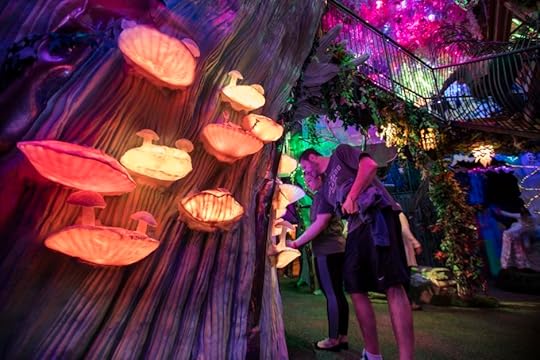
Photo: Kate Russell for Meow Wolf
After establishing a local presence in both music and other harder-to-define ventures, the Meow Wolf arts production collective opened what they call an “immersive art installation” at the House of Eternal Return. It thoroughly departs from the traditional museum model in its bold use of interactive space. If you’re a little hazy on what all this means, don’t worry — keep reading.
Maggie Thornton, a local artist at Meow Wolf, is one of the names to look out for. She splits her time between visual arts and sound for the installations, working in mostly “vinyl, plastics, and shiny stuff.” While her chosen art forms are certainly a departure from the traditional art that has drawn visitors and collectors to the city for decades, she and many area artists don’t really see it that way. “Meow Wolf is a counterpoint to much of the galleries, but there’s a compatibility between the two scenes,” she explains.
The fully interactive experience they’ve created at The House of Eternal Return pushes the envelope of what is possible for an exhibition space — an idea that quickly garnered national attention before opening its doors in 2016, thanks to city initiatives and backing by business partners like George R. R. Martin. (The Game of Thrones author also supported the reopening of the historic Jean Cocteau Theater in 2013).
The House of Eternal Return is now open Sunday – Thursday (skipping Tuesdays) from 10am to 8pm, and Fridays and Saturdays until 10pm (and afterwards operates as a music venue). Tickets for general admission can be purchased online or at the door.
2. The Center for Contemporary Arts
Another more tenured “up-and-comer” is the Center for Contemporary Arts, often known as CCA Theater among locals. With an exhibition space that has a constant rotation of visual artists (the CCA is known for their awesome collaborations) as well as regular showtimes of independent and documentary films, the CCA blends creative conversation with the idea of the Hollywood blockbuster — there’s no reason spaces like this shouldn’t see the same attendance movie theaters do.
Filmmakers from all over the world often show and discuss their films at this tiny, easy-to-miss venue tucked away at 1050 Old Pecos Trail. Keep an eye on their calendar — showtimes run every day, annual passes are available for film enthusiasts in the model of traditional museum memberships, and the exhibitions are constantly updating with never-before-seen works from emerging artists.
3. Santa Fe Artists in Residence

Photo: Caitlin Jenkins Photography
In an unconventional attempt to unify the overlapping worlds of local artists and hospitality, TOURISM Santa Fe initiated a program to give visitors and residents an intimate experience of the artistic process. Behold, Santa Fe Artists in Residence.
The idea in a nutshell: Hotels around the city give space and attention to different artists starting in November 2017, with events scheduled through the end of February 2018. From traditional wine and cheese meet-and-greets with the artists to the fact that they’re creating their works on-site, the program aims to create a new avenue for exposure and partnership between galleries, artists, and hotels in the city.
4. Studio Center of Santa Fe
Studio Center of Santa Fe sits in the heart of the Railyard District, within a squat rectangular building that looks like it was displaced from a West Coast shipyard. And it makes its presence very, very known with a technicolor mural and a recent installation that’s part park bench and part sculpture. Celebrating 21 years of service this year, it’s also planning some significant changes. Throughout those 21 years, the initiative was known as Warehouse 21 and was dedicated to supporting local youth artists. Now, the center is expanding its reach by incorporating new studio and gallery spaces, as well as a cafe.
One of the things that’s made the program so unique and unmistakably “Santa Fe” is its commitment to hosting performances and events of all styles, from book tours to deep-trance jam bands (several Meow Wolf members got their start here, so you can see the connection). A down-to-earth, non-judgmental space, Studio Center of Santa Fe taps into an ideal way for creative people young and old to engage with the broader community — by creating the type of place where we all wish we could have hung out in high school.
5. Shidoni Sculpture Garden
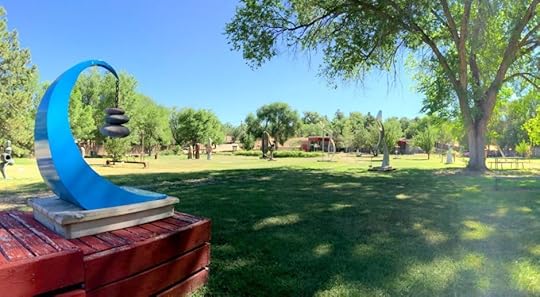
Photo: Shidoni Gallery
Slightly outside of the city proper, technically in the pueblo of Tesuque, Shidoni towers as a testament to the huge staying power of creativity in the Santa Fe region. The sculpture garden seems to be intentionally out of the way, requiring visitors to follow the winding Bishop’s Lodge Road along the edge of Santa Fe National Forest. But the chance to stroll the grounds that house these abstract and whimsical structures is well worth the journey.
Opened in 1975, the gallery’s sculptures are a mixture of so many styles and modes of expression that the only obvious commonality seems to be that they’re free-standing structures. Even if you come outside the normal hours for its in-house exhibit (Tuesday – Saturday from 10am to 5pm), you can still walk among the pieces outside, some of which tower like mountains, some with the fragility of pinwheels (metalworking at its finest).
6. Form & Concept
Form & Concept seeks to create a space to “explore the boundaries of perceived distinctions between art, craft, and design”…with a heavy implication that no such boundaries exist. Functioning as a gallery space and running workshops and artist residencies, the facility also advocates for artistic expression within the city at large — for example, by putting out a call for design ideas when a downtown plot becomes available for beautification. When they’re not contributing to the literal molding of the cityscape, they’re hosting InterPlanetary costume parties and serving as a venue for artistic movers and shakers in the area.
7. SITE Santa Fe
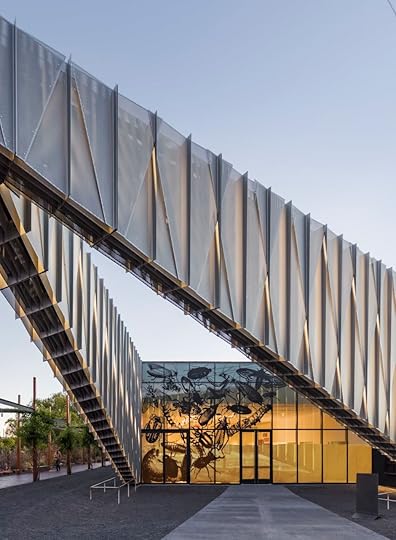
Photo: Jeff Goldberg for SITE Santa Fe
SITE Santa Fe is housed within an architectural structure that’s a piece of art in and of itself. SHoP, a firm best known for its innovative and sustainable buildings, designed the space, taking into account how SITE’s exhibits might be experienced. When the exterior lights illuminate the textured aluminum siding, the effect is profound — the outside seems just as much an artistic piece as what lies inside.
Recently revamped (in philosophy as well as aesthetic), SITE aims to push the boundaries of standard curatorial practices. And in a show of belief in emerging artists, SITE accepts unsolicited materials from creators twice per year. The exhibits in SITElab are open from 10am to 5pm, Monday through Wednesday, and all exhibits are open Friday and Saturday. There’s free admission all day on Friday and between the hours of 10am and noon on Saturday.
8. Santa Fe Botanical Garden
When you picture Santa Fe, you’re probably thinking shades of red, golds, and some adobe thrown in for good measure. But while Santa Fe is certainly set in high mountain territory, that doesn’t mean there is a lack of green. The Santa Fe Botanical Garden comprises acres and acres of striking local landscape at its most verdant and plants as colorful as many of the city’s art museums.
But what makes the garden an “experience” are the events it hosts and how they tie into the community. Check out Glow — the last two weeks of December — to see the garden lit up with thousands of lights and lasers, the “Garden of Earthly Delights” celebration during the summer solstice (and the accompanying themed cocktails), or get tickets in advance to Shakespeare in the Garden. Then there’s Community Day, where students and New Mexico residents get in free. The accessibility of the garden — and the focus on the community — couldn’t be more suitable for a come-as-you-are city founded around the arts.


December 10, 2017
How to experience Sigiriya
The ancient city fortress of Sigiriya is built on top of a massive 200-meter-high monolithic rock in the Matale District Central Province of Sri Lanka. Dating back to the 5th century, the stone fortress was constructed by King Kasyapa to avoid attacks from his brother Moggallana, the rightful heir.
The name Sigiriya originates from the Sinhalese word Sihagri, which translates to Lion Rock. About halfway up the ascent of the rock, Kasyapa built a giant lion gateway which is where the name derives. Kasyapa had selected this site for the new capital of Sri Lanka, and it remained so until he was defeated in 495CE. The capital and the palace were abandoned after his death, and today all that remains are ruins. That said, it is still one of the best architectural examples of urban planning. In 1982 it was designated a UNESCO World Heritage Site — some say it’s the eighth wonder of the world — and is the most popular tourist attraction in Sri Lanka.
After his defeat and death, Sigiriya reverted to serving as a Buddhist monastery until the 14th century when it, too, was abandoned. The rock-top fortress isn’t the only interesting site to behold at Sigiriya though. Surrounding the monolith are some of the oldest landscaped gardens in the world. The water garden channels fill in the rainy season and circulate throughout the entire area of Sigiriya. The fountains are equally impressive and are some of the oldest functioning. You’ll also find caves with ancient frescoes and what remains of the western wall of paintings — all examples of a Sri Lankan school of classical realism.
The site is architecturally and historically significant, and it absolutely worth a visit. It’s amazing now; imagine what it must’ve been like 1500 years ago!
How to get there
Sigiriya is located about 25km from the town of Dambulla. There are frequent buses that run between the two from 6:30AM to 6PM.
What to consider
Admission to climb the rock is ~$27.
The ticket office is cash only.
There are approximately 1200 steps to reach the fortress at the top of the 200-meter rock.
It’ll take you 1.5-2 hours to get up and back down.
A guide is not necessary, although there are several who will try to tell you otherwise and sell you their services.
The Sigiriya museum is an interesting visit. It shows excavation photos, fresco reproductions and some translations. If you plan to visit, allow an hour.
More like this: To the end of the world in Sri Lanka

December 9, 2017
Visit Thailand's Red Lotus Sea
Imagine floating on a lake surrounded by pink and crimson blooms for as far as you can see. That’s the Red Lotus Sea in Northeast Thailand — 26 square miles of brilliant floating lotus flowers.
Located in the province of Udon Thani, the lake’s name is officially Nong Han Kumphawapi, but the locals call it Talay Bua Daeng which translates to Red Lotus Sea, an appropriate name that stuck.
Every year, from November to late February (after the rainy season) and when Thailand begins to cool down, millions of pink lotuses bloom. They reach their full, miraculous, widespread, riding-on-a-floating-pink-carpet blossom in December and early January.
The freshwater lake is a special place for the Thai people for many reasons. Practically, it’s the primary source of the Pao River, which feeds the people of the Udon Thani province. Spiritually, the lotus is a sacred flower. It’s the traditional flower of Buddhism and represents feminine beauty. In 2001, the Thai government declared this lake a wetland of international importance.
If you want to get the total lotus experience, you’ll need to visit early in the day, as the flowers are only fully opened in the morning, closing to hide from the sun around noon and staying that way for the remainder of the day. However, if it’s cloudy, you might get lucky and see the flowers open from sunrise to sunset.
How to get there
Red Lotus Sea is in the Kumphawapi Reserve, about an hour south of Udon Thani city. Most people drive, as that’s the easiest way to get there. If you’re fancy with a GPS, the coordinates are 17.221091, 103.038136.
What to consider
The best time to visit is between 6am and 10am.
To take a boat, purchase a ticket from the small kiosk by the lake, then go down a few steps to “The Port” where several dozen hard plastic motorized boats are awaiting your arrival.
Tours last 45 minutes or 90 minutes and cost ~$9 and ~$15 respectively.
Most boats hold 10 people, but no matter how many on onboard, the ticket price remains the same.
Many hotels in Udon Thani can arrange tuk-tuk transport for you, which can be cheaper than renting a car if you don’t already have one.
It makes a great day trip, but you probably wouldn’t want to stay overnight as there’s not much to do other than the lake and a temple nearby.
More like this: 9 reasons a trip to Thailand is like medicine for your soul

5 best countries to teach ESL
Escaping your country to live abroad isn’t something everyone can do. Often, we hear stories of travelers with grand plans of never going home to relent at the first sign of trouble. Teaching English in another country can be even more of a challenge, with cultural differences potentially affecting your income, which is the whole reason many do it in the first place. Some areas stand out for ESL positions for their high pay, low cost of living, and ease in the hiring process.
1.South Korea
Anyone who’s a citizen of an English-speaking country can make the decision to work in South Korea, send out a resume, receive a response, interview, and be confirmed within a single day. Korea may not have much in the way of standards when it comes to teachers for hagwons (private schools), but joining programs like EPIK to teach in public schools at least give applicants the semblance of professionalism. Aside from that, many schools in Korea cover the cost of an apartment on top of paying you ~2,000,000 Won/month. It’s very easy for ESL teachers to save half their salary or more.
2. Taiwan
China isn’t necessarily a bad choice either, but finding the best bang for your buck usually means a university position or a school that pays more than average. Teaching in Taiwan, on the other hand, gives expats a comparable cost of living with a higher salary (about 2000 USD or more/month). Even if you’re not willing to survive on $1-2 bowls of noodles for every meal, it’s still possible to save quite a bit.
3. Turkey
Can you imagine teaching English in a city older than your entire country? Or just sipping some black tea before your shift starts? While it’s certainly possible to splurge well and often in Istanbul, working as an ESL teacher outside the larger cities can let your ~1800 USD monthly paycheck go further… just don’t be so quick to accept positions near the Syrian border.
4. Oman
The UAE may have the highest salaries for ESL teachers in the world (over 4000 USD), but it also boasts one of the highest costs of living. Oman, on the other hand, offers a comparable salary with significant lower rent and price for meals. Though not as liberal as nearby Dubai, with a huge foreign population, the country still has a better track record than Saudi Arabia in terms of comfort and safety for expats.
5. Dishonorable mention: North Korea
Though US citizens aren’t allowed to do this anymore, and anyone would be risking their life and sanity to do so, teaching English in North Korea is a perfectly viable option for those with a loose sense of morality and a willingness to accept the absurd. Despite the DPRK’s hatred of all things American, the regime seems particularly interested in hiring English speakers for elite universities in Pyeongyang.
The biggest downside, aside from the risk that you say the wrong words by mistake and get thrown in a labor camp for the rest of your life, is that the North Korean Won is illegal outside the country. Your only means of saving would probably be to wait until your contract is up, strap the cash to your body with duct tape, fly into Beijing, and find a black market currency exchange where hopefully you won’t be stabbed and robbed. On the plus side, it certainly is cheap to live over there.
More like this: How to become an ESL teacher

how to not be a white savior
The White Savior industrial complex is a well-established problem. Similar to the “voluntourist,” the White Savior travels to other countries with the idea of helping people, but often fails to understand the complexity of their problems and can even end up making things worse. One symptom of the White Savior is that they tend to perpetuate gross stereotypes on social media in posts also known as “poverty porn.”
So RustyRadiator and Barbie Savior started a new campaign called #NoStereotypes. The also published a guide with four basic principles (including a handy checklist!) for those who are dedicated to volunteering abroad on how to avoid these kinds of posts. The video can be a cringeworthy at times, but there’s nothing quite as influential as a bit of biting satire.

Photo: RustyRadiatior

Photo: RustyRadiatior
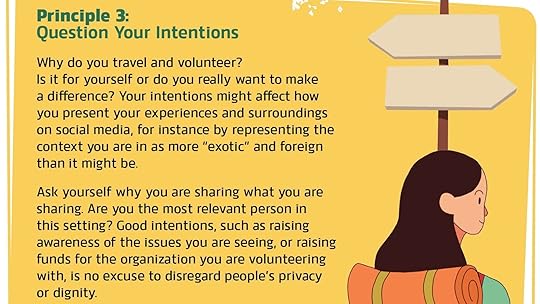
Photo: RustyRadiatior

Photo: RustyRadiatior
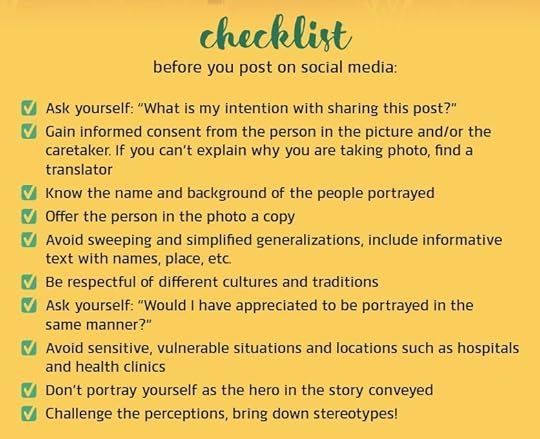
Photo: RustyRadiatior
More like this: How to plan an ethical voluntourism trip

December 8, 2017
Fight for Public Lands in the USA
The fight for public lands isn’t just about you.
Right now an unprecedented series of events is taking place around our public lands. Regardless of your political views, it’s important to understand the potential repercussions.
Back in May of 2017, during the (first ever) formal public comment process on National Monument designation, newly-elected Secretary of the Interior Ryan Zinke announced that he was “engaging with local communities and stakeholders.” Even if you don’t live near a National Monument; even if you’ve never visited one, it’s important to realize: you most definitely are a stakeholder in this.
1. WHAT ARE PUBLIC LANDS AND HOW ARE THEY CREATED?
The designation “public land” refers to land that belongs to the American people and held in trust for us by the federal government. Examples include National Forest land, National Park land, and designated Wilderness Areas.
Some of these areas are enormous, such as the 8-million acre Wrangell-St. Elias National Park in Alaska. Others are small and yet preserve beautiful pockets of wilderness such as the Chattooga National Wild and Scenic River in North Georgia.
While there are state lands–which may include state parks, state game lands, and other protected areas–state land has a fundamentally different status. Whereas all federal public land is ours–we, the American public, own it–states are not beholden to residents in determining state land usage. A good way to think about this is, “While we are all owners on federal public lands, we are customers on state lands.”
And overall, only a tiny portion, smome 8% of our total landmass, is public land.
The first US National Parks were created in the late 1800s (Yellowstone was first in 1872). But it wasn’t until the early 1900s and Teddy Roosevelt’s “Square Deal,” that conserving public lands became systematized. Under his administration, various public land systems were created, including the National Forest Service in 1905.
Then, in 1906 Roosevelt signed the Antiquities Act. Whereas the creation of new National Parks required an Act of Congress, the Antiquities Act gave the President the authority to declare an area a National Monument, thus giving it federal protection as public land.
Since then, the act has been used over 100 times. With the exception of Ronald Regan (and now Donald Trump), every president since has used the Antiquities Act to create new National Monuments.
2. WHY ARE PUBLIC LANDS SO IMPORTANT?
This past week, my kids and I visited Great Smoky Mountains National Park (GSMNP) near our home in western North Carolina. Even though it’s the most visited National Park in the US, it’s easy to hike up one of the many “prongs” (local name for creeks) into dense forests and ancient gorges.
As with GWMNP, nearly all public land is open to recreation. Depending on the designation, this can include hiking, camping, mountain biking, paddling, climbing, hunting, fishing, and other activities.
Outside of travel businesses and outfitters, few Americans seem to realize just how massive the economic potential is around these activities. For example, economic studies this year showed that here locally in the Nantahala and Pisgah National Forests, over $115 million in annual spending is generated from paddling, climbing, and mountain biking alone.
Taken on a national scale, outdoor recreation is a giant among America’s industries. As the Outdoor Industry Association reported this year, outdoor recreation contributed 7.6 million jobs and $887 billion in annual consumer spending. Many Americans may be surprised to know these figures are way ahead of jobs and spending created by the oil and gas industry.
But beyond the economic impact of public lands, there’s the more essential “big idea” of why they’re important. Simply put, having access to lands that are “ours,” knowing that key wildlife habitats, free-flowing rivers, undisturbed coastlines, wild prairies, and historic sites are protected and “in the bank” for future generations to explore: this is essential to who we are as Americans and the kind of America we pass down to our kids.
The essence-the big idea-of protecting key areas in perpetuity is just essential to civilization. And the way you know that is you take those out of the human story and see what you have left.
—Kris McDivitt Tompkins
3. BEARS’ EARS AND THE REDUCTION OF PUBLIC LANDS
For the last several decades, except for a tiny minority of powerful landowners in the American West, public land has enjoyed broad public support across the US. Nevertheless, beginning in the 2010s, anti-public lands legislation has been introduced and vigorously battled in Congress.
Back in April, the Center for American Progress investigated the discrepancy. They noted: “Polls indicate that overwhelming majorities of voters support the conservation of national parks and public lands and hold high opinions of the National Park Service, the U.S. Forest Service, and other federal land management agencies. Eighty-three percent of Americans, for example, would have a “favorable” reaction to their representative in Congress taking “a strong stand in support of policies to protect and strengthen national parks.”
In the face of this broad public lands support, it was the rise of an “anti-parks caucus,” a small group of lawmakers that steered many in Congress against public lands.
With that in mind, consider the following recent timeline:
March 1, 2017 – The Senate confirms new Secretary of the Interior Ryan Zinke.
May of 2017 – The Department of the Interior announces a first-ever formal public comment and review period concerning all National Monuments created under the Antiquities Act.
December 4, 2017 – President Trump announces huge reductions to the size of Bears Ears and Grand Staircase-Escalante National Monuments.
December 5, 2017 – 5 Native American tribes sue President Trump to restore the original National Monument.
December 6, 2017 – Outdoor Gear brand Patagonia, Inc. joins the lawsuit.
If we go back to the Senate confirmation hearing of Ryan Zinke, it’s not obvious at first what his position is. Early on, he declares himself an “unapologetic admirer of Teddy Roosevelt,” and that he was “absolutely against transfer or sale of public lands.”
But later during the hearing, when New Mexico Senator Martin Heinrich specifically mentions widespread local community support for Bears Ears National Monument and asks if he [Zinke] planned to “work in good faith with these gateway communities, including tribal communities..to make sure these monuments are a success?” Zinke quickly deflects, stumbles, and shows his true hand.
You can literally watch this moment happen at about 1:11:30 of the actual testimony. Notice how instead of answering Heinrich directly, Zinke backpedals into conflicting talking points. In the parts I’ve bolded especially, note how he can’t help bringing up the idea of the President “nullifying” a monument.
“There are some National Monuments that are more controversial than others. Uh, I think a monument when it falls in a state, a state should have a say…Larger monuments…that don’t have support of the community, uh, there’s no doubt the President has the authority to amend a monument. Uh, it’s always in the papers. It’ll be interesting to see if the President has the authority to nullify a monument.”
Heinrich: “What is your view on that?”
Zinke: “Legally, it’s untested.”
Now recall that this was back in March, just a few months after Trump’s inauguration. This is but one entry point into a complex conversation that can all be reduced single common denominator: Decisions to reduce the size of our public lands have nothing to do with the economy or public opinion or even what state governments are asking for, but literally a small group of people attempting to wield power over everyone else.
And in a frightening prospect, the Department of the Interior is reviewing literally every one of the National Monuments created under the Antiquities Act. So Bears’ Ears and Grand Staircase-Escalante National Monuments could be just the beginning of this fight. Two dozen other National Monuments — many with huge tracts of old growth forest and key wildlife habitat — could be eroded if we continue in the current direction.
As a citizen, and a traveler, consider how you can help raise your voice. Remember that it’s not about being progressive or conservative. Modern public land policies were born in Roosevelt’s Republican administration — and further environmental protections were set during Nixon’s presidency.
It’s about caring for public lands — your land, my land, our land, our children’s land.
Videos and Writing by David Miller
Opening timelapse of Bears’ Ears National Monument by Kati Hetrick

Experience an epic Bali resort
The Edge, a four-villa hotel spread out over 3.7 acres, gets its name from being perched on the edge of a 500-foot cliff in Uluwatu, Bali. Built by Mesa Hotels and Resorts, they focus on giving each guest the experience of opulence at the edge of the world.
500 feet above the Indian Ocean, The Edge’s villas vary in size — from a single bedroom to a five-bedroom suite — accommodating singles to multi-person families. The largest villa, called The View, is a mansion unto itself. At 3500 square meters, it has five bedrooms, two stone pools, and an eight-seat cinema, amongst other amenities.
No matter which villa you choose, you’ll have an epic view of the Indian Ocean, private pool, and a dedicated and certified butler who will personally prepare your breakfast each morning. The resort amenities also include a spa, cliff-hanging pool, gym, wine tasting, theater, and restaurant. The Edge is a popular wedding venue as well. If you’re feeling like going fully private, you can book out the entire resort. Contact the resort to arrange it.
If you’re staying elsewhere but still want to get a taste of The Edge, visit their cliff-top club, Oneeighty°. It’s a combination sky pool, bar, and lounge — the pool literally hangs over the edge of the cliff with a transparent wall. It’s wild.
While you might not want to leave the resort, you’ll be happy to know it’s centrally located and only a few minutes from some of Bali’s best beaches. Whether you stay for the day or a week, it’s definitely worth a visit.
How to get there
Located in Uluwatu, it’s about a 35-minute drive from Ngurah Rai Airport, 1.5 hours from Ubud, and 10 minutes from the Uluwatu Temple.
What to consider
The food is some of the best you’ll have in Bali.
The service truly is 5+ stars.
It’s family friendly, but still really private and quiet.
As a wedding venue, it’s unforgettable.
Room rates vary from $600 per night to $3,000 a night (for The View).
If you’re staying, your airport transfer is included.
General admission to Oneeighty° is currently ~$20 and includes a $15 food and beverage credit.
More like this: This video will make you want to travel to Bali right now

3 most amazing volcano hikes
An exceptional hike should have some distinctive attribute that makes it memorable. A five-mile stroll through a green tunnel can be a peaceful way to spend an afternoon, but as soon as you throw in a waterfall or a trail that hugs the edge of a cliff, it quickly becomes something much more noteworthy. Nothing meets the criteria more than summiting a volcano. Whether active or dormant, a volcanic hike is anything but your typical walk in the woods. There are plenty of opportunities to hike volcanoes around the world, but here are three unbelievable volcano hikes in the Western Hemisphere that will blow you away (not literally, hopefully):
1. Cerro Chato: Costa Rica
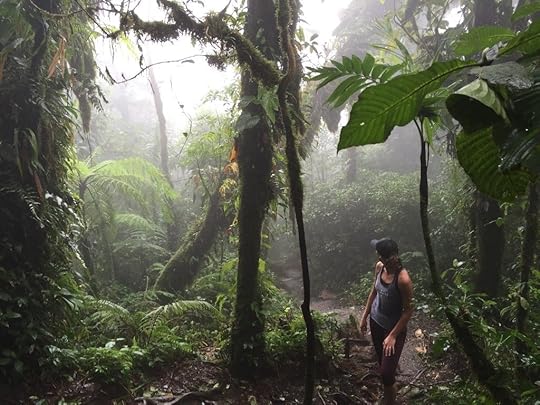
Photo by author
Hiking to the top of Cerro Chato in La Fortuna, Costa Rica provides visitors with the unique opportunity to take a dip inside a volcano. My wife and I did this hike on our honeymoon a couple years ago and it was far and away one of the highlights of the trip. The travel agents in the area will push the idea of doing this hike with a tour guide which can get expensive, but we would recommend taking a taxi to the trailhead, paying the nominal entrance fee, and climbing without a guide. That being said, the hike takes about 4-5 hours round-trip and is quite steep. Not to mention it is in a rainforest, so chances are that it will be raining heavily the entire time. If you’re willing to deal with some steep inclines and constant heavy rain, the reward of swimming in a volcanic crater is well worth it, and will certainly be more memorable than swimming in the pool at your resort. On a clear day, you will have a nice view of the entire water-filled crater from a vantage point at the summit; however, even on a viewless foggy day (which is more likely) the feeling of swimming in the crater lagoon is extremely eerie. If you’re concerned about getting boiled alive, the volcano hasn’t erupted for over 3,500 years, so the odds are in your favor.
2. Volcan Villarica: Chile
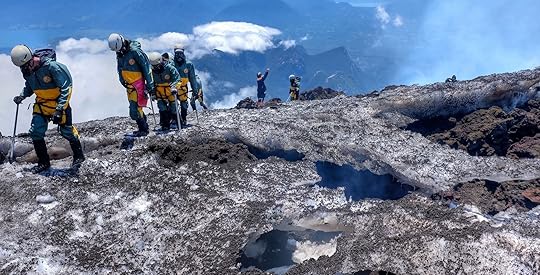
Photo: Amira_A
Volcano Villarica is exactly what you think of when you think of a volcano. It’s the stereotypical snow-capped cone with smoke billowing from the perfectly symmetrical peak. Upon arriving in the mountain town of Pucon, Chile back in 2011, I asked our taxi driver if the volcano is always this active. He replied, “No, there is more smoke than usual this week.” This obviously wasn’t the response I was hoping for the day before climbing to the top of this active volcano. The following morning, we met our tour group and were transported to the base of the 9,380-foot mountain to begin the ascent. The first leg of the 5-hour climb was dry and rocky, but the terrain quickly transitioned from rock to ice as we gained elevation. At this point we were instructed to take out the helmets, crampons, and ice axes from the packs provided to us by the tour group and we made the final push to the summit over. The views of the surrounding lakes and neighboring volcanoes were spectacular but hearing the magma bubbling below us as we stood on the edge of the volcanic crater almost made us forget about the views. The rising smoke prevented us from actually catching a glimpse of the magma, but the gurgling noise was unmistakable, and to be honest, a bit unsettling.
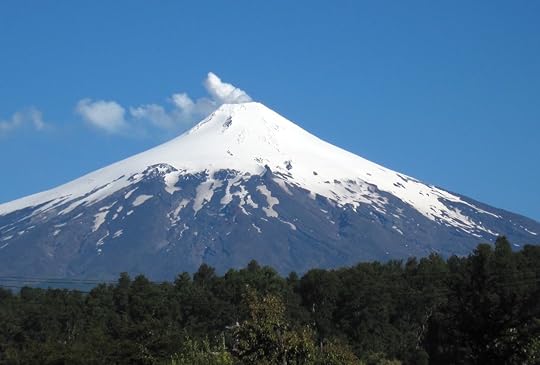
Photo: Nick Farr
The worst part of any hike is the descent. You’re tired, you’ve already accomplished the goal of reaching the summit, and the last thing you want to do is retrace your steps in the opposite direction while the cartilage in your knees slowly gets obliterated. You think to yourself, “if only there was a slide that could take me back to the bottom of this mountain.” Well, Villarica has exactly that. There is a series of channels dug into the ice through which hikers get to slide down the majority of the mountainside. It can get a little bit out of control so you have to use the ice ax at times to prevent yourself from flying over the lip of the channel. Just as a side note, Villarica erupted 2015. Hopefully that doesn’t dissuade anyone from attempting this incredible hike.
3. Mt. Pelee: Martinique
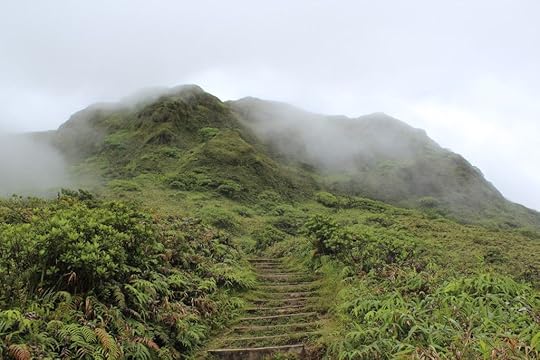
Photo by author
Mt. Pelee, located on the French Caribbean island of Martinique, is the third deadliest volcano in recorded history. The eruption in 1902 completely wiped out the city of St. Pierre, killing over 30,000 people in the process. The only survivor was a prisoner who was ironically saved by his poorly-ventilated jail cell. The 4,583-foot Mt. Pelee is one of the most prominent features on the island and a very popular hike among visitors. The hike takes anywhere from 2-4 hours round trip, and includes a steep descent into the volcano’s muddy crater. Since the mountain is almost always shrouded in fog, it is best to start the hike as early as possible in order to take advantage of the views from the summit. Even still, there is no guarantee that there will be unobstructed views since the mountain is a cloud magnet. We never even caught a glimpse of the summit during our week on the island. Views or not, the trail along the edge of the massive crater is stunning.
All three of these hikes can be done in a single day and each one offers a completely unique volcano experience. Whether you want to swim in a volcano, slide down one, or just admire the views from the summit, you’ll find what you’re looking for with one of these three hikes.
More like this: Here’s what swimming next to an erupting volcano looks like
Matador Network's Blog

- Matador Network's profile
- 6 followers

