
Matador Network's Blog, page 1432
December 13, 2017
Travel and don't take photos
I have a vivid memory of standing on a beach in Cape Town when I was 20 years old. The sky was crystal clear, and a hard wind was sweeping down from Table Mountain, over the beach, and into the ocean. The wind was catching the dry sand so that we, standing just on the edge of the surf, were getting sandblasted on any patch of open skin. The gale then whipped out over the water, so that even as the waves broke towards the shore, their spray gusted back out to sea.
It was a surreal, beautiful, painful moment — I stood stock still, trying to breathe through the stinging sand, while my friends doubled over in laughter in front of me. I remember this as clear as day. But strangely, I remember myself in the third person. I do not remember being there, clenching my hands, holding my sandals, looking at my friends in front of me. No, I remember seeing myself from about 15 steps back and to my left. Something like this:
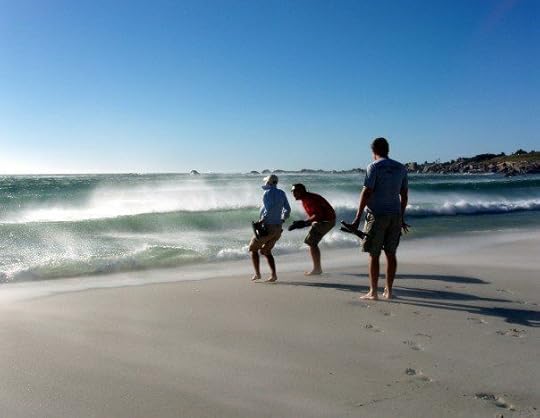
Photo by author
That photo haunts that trip. I can still smell the sea air, I can still hear the mountain breeze, and I can still feel the sting of sand on the back of my legs. But I can’t see any image of that day other than the one in that photo (and a few others that were taken at the time). The photos have cannibalized the actual memories.
Traveling without a camera
The internet loves wringing its hands about travel selfies and millennial narcissism, and while there are legitimate arguments against the Instagrammification of travel, those arguments tend to be focused on shaming people who have behaved badly or have inflicted damage on themselves and their environment. The girl who tries to take a selfie with an ancient statue and breaks it in the process; the guy who wants a selfie in Yellowstone, goes off the trail, and sinks into a pool of boiling mud; the crowds of Instagrammers who want the perfect shot of Horseshoe Bend in Arizona and are straining the park’s resources by flocking there by the thousand.
For me, though, the decision to stop taking photos while traveling was a personal one. Travel was a priority for me throughout my twenties. I obsessed about upcoming trips. I’d buy maps and plot routes, I’d live like a monk to save money, and I’d read everything I could on the next destination. What would be the point of doing all of that if I had no real memories of the trip? Was proving to other people that I was there and had the photographic proof more important than actually remembering the thing that, at the time, I told myself I lived for?
So I stopped bringing cameras. I obviously still had a phone, and if I met up with friends, I’d take pictures with them, and I would take pictures of things like funny signs if I thought of someone back home who would appreciate it. I never became so extreme that I would allow other people to take pictures of me. But if I was on a trip and I saw something beautiful, I would stop myself from reaching for my camera, I’d drink it in, and I’d hope that my memory would hold onto the moment.
Living in the moment
As a writer, I may be predisposed against photography. Photos can be a crutch when you’re writing (why try to describe a place when you can just show it to people?), and I’ve never used photography as a way to express myself artistically. For me, photography is an act of acquisition and release: it’s proof that I’ve been somewhere, it’s an excuse for me to move on to something else I want to see.
This isn’t the case for real photographers. For them, photography is something that forces them to take in what they’re seeing, to consider things like color and composition. It is something that brings them more fully into the moment.
And that’s the point — the most important thing you can do when you travel is whatever brings you fully into the moment. If you’re a compulsive picture-taker and bucket-lister, consider leaving the camera at home. Instead, when you see the sight that you want friends and family to know about, pause. Take it in. Notice the sights, smells, and sounds. Notice the emotion you’re feeling. Notice the weather, the looks on other people’s faces. And then consign all of that to memory. You may forget it, yes. But it’s better to have something and lose it than to never have it at all. 

More like this: 10 reasons to get off Facebook and into nature


Visit Cathedral Beach in Spain
Who said man made the best cathedrals? This coastline proves nature does a fine job of it. While officially it’s called the Praia de Augas Santas or “Beach of the Holy Waters” it’s known to the locals as Praia das Catedrais or “Cathedrals Beach.”
The raw power of the Atlantic Ocean and the relentless wind has carved sea caves, caverns, and arches all along this Galician coast in northwest Spain. This stretch between the beaches of Augas Santas and Carracelas is a natural work of fine art whose giant flying buttresses are as exquisite as any cathedral hands have built. Some of the arches are over 90 feet tall, and what seem like small cracks are actually entrances to vaulted sea caves carved out from the rock.
There’s just one catch: the sandy processional through these monuments is only accessible when the tide is out. At low tide, you’ll have 1400 meters of beach and caves to explore, but when the waters rise, the opportunity to wind your way through the coastline disappears.
In recent years this geological wonder has received a bit of press, so to preserve the pristine nature of the place, the government has limited the number of people on the beach per day in the summer months and over the Easter holiday. Reservations are free, but required.
How to get there
Cathedrals Beach is in the Lugo province 10km from the city of Ribadeo. If you’re on the Cantabrian Motorway (A8), it’s on the 516 exit. Coming from Ribadeo you can take the A8 or the N-634 towards A Rochela. It’s about a 10 minute drive. Alternatively, map it here.
What to consider
Be back to the main beach before the tide rises, which can happen rather quickly.
Reservations are free but are required to access the beach during the summer months and over Easter.
Only 5,000 people are allowed to visit per day.
You can book your reservation through the Galician regional government website but you must do it more than 30 days in advance.
Arrive a couple hours before low tide to give yourself adequate time to explore.
There is a boardwalk on top of the cliffs that makes for a nice stroll.
If you don’t like crowds, visit in winter or shoulder seasons (fall/spring).
You can check the exact tides on the booking page (even if you’re going in months that don’t require booking, go to this page to check the tides).
More like this: 27 things to do in Galicia before you die

Snow season on a budget
I’m a dirtbag ski bum. After growing up in ski towns, obtaining a ski industry degree, experiencing winters around the world, and working almost every kind of resort job offered, I have often struggled to survive on a budget. I’ve learned a few tricks along the way, here are some of my sure-fire tips for surviving the snow season on a budget.
1. Get trail advice from restaurant staff.
In most slopeside restaurants, some of the best skiers on the mountain are serving your drinks and food. Bring your ski map to lunch and get pointed to the best areas you won’t get shown in the ticket office. Getting off the grid and away from popularized slopes will save you major bucks.
2. Buy your boots, don’t rent them. Rent skis, don’t buy them.
Your boots are your most important equipment. Buy them new, get them fitted professionally, and both your comfort and performance will improve. You’ll know it’s only your sweaty socks they’ve been stuffed with, plus luggage will be much easier to transport.
For snowboards and skis — cost, maintenance, transportation, and storage can be eased by renting. Most rental fleets offer high-end demo equipment for reasonable prices while their low-end stock is up to date with modern designs. You may find a model you love. If not, most rentals shops will let you bring them back the same day and try something else. Drop them off when you’re done to avoid the hassle of shouldering them through the village, rinse yourself, and repeat the next day. Tip: show up with a box of beer, and expect the best for cheap.
3. Ask for discounts, but be nice.
Whether It’s 10% off that cotton sweatshirt or a discount on overpriced lift tickets, feel free to ask. Be prepared, the answer may depend on how you’ve been perceived. Manners matter in small towns, so be kind and open to conversation, it will help your social relationships as well as your bank balance.
4. Remember names.
You’ll start to note a theme here: when you’re in a small community you need to be extra polite. You need to remember and note down people’s names. It’s easy when your lift operator has a name tag on her jacket, if it’s not, ask. Everyone you meet who works in a ski town will not appreciate feeling like a robot or number. When you treat them like an individual, they’ll do the same to you.
5. Ride public transportation.
Parking lots can be a hassle and can fill up fast. Avoid adding to the problem by leaving your car near a bus stop in town and catch a ride to the mountain. You can save yourself both gas and walking distance when you take a bus. It’ll even drop you off front row. Leave the spot you would’ve parked for the Ford Expedition with four kids to headache over and treat yourself to another beer instead.
6. Buy a season pass early.
Even if you’re only skiing for a few days a year, getting a full season pass at early season prices can cost you less overall than individual tickets. Pass holder discounts are also available at most mountain-owned establishments, including discounts for spouses and family.
7. Tip early to receive better service.
Whether it’s a box of cold beers (the official currency of ski town locals) to a rental shop employee, or two soggy twenty dollar bills slipped to a snowboard instructor, when you first start talking, tipping ahead of time will ensure better service or savings. Starting a business transaction by showing appreciation creates a higher standard for workers to live up to, giving them the feeling of returning a favor, rather than assuming the cheapness they regularly receive at the end.
8. Don’t buy new gear, check the local lost and found.
If you forget your sunnies, don’t waste the $200 for a new pair of Oakleys, instead, borrow from your nearest lost and found. Whether it’s a restaurant or rental shop, most slopeside establishments have their fair share of left behind gear. Some items are left for months and are easily given to someone in need. Others, with the chance of still being reclaimed, may be borrowed for the day if you leave contact information. Bring them back when you’re done.
9. Locals give the best dining recommendations.
Don’t waste money on a bad meal, ask where to go. Locals have eaten or worked everywhere in town. They’ll honestly tell you where’s good or what’s not, even when sending you to their girlfriend’s bar to give her more business.
More like this: The best family ski trips in the US - 2018

Solo travel tips
Even if you’re a seasoned traveler, taking a solo trip can feel totally disorienting. You might get on each other’s nerves, but having a companion to lean on, complain to (and about), drink with, and get lost with, can really make the whole experience more comfortable. The idea of traveling alone might seem exhilarating when you book your flight, but when you arrive in the Prague and all the signs are in Czech, and you’re wandering around lost with your bags trying to find your hotel, it can be easy to regret going solo. Whether it’s a business trip, studying abroad, the desire for a new challenge, or you just couldn’t convince any friends to tag along, there’s no reason traveling alone should give you anxiety. Here are 5 ways to make sure your solo trip is memorable.
1. Resist the urge to compare.
I’ve always found that culture shock hits hardest when traveling alone. Language barriers, directions, and figuring out public transportation, are all a little easier to manage with a friend; without that safety net, it’s common to get overwhelmed. But traveling without a safety net is one of the exciting things about a solo trip, right?
When I went to grad school for a year in Edinburgh, I had to settle into a new city, new apartment, and new culture, without knowing anyone. Even in a western, English-speaking country like Scotland, I still found myself easily irritated by small things, like the constantly bad weather, small portion sizes at restaurants, and lack of good pizza options (a bigger deal than you’d think). The fact that I was alone in a new environment absolutely made these small gripes seem huge. I reminded myself that if everything was exactly the same as back home, I might as well have just stayed in Boston. I realized I didn’t want to see familiar faces in Scotland — that tackling this new culture by myself was why I had gone in the first place.
2. Do whatever YOU want.
We all love traveling with our friends, but let’s face it. You’re not always going to be on the same page. Sometimes you feel like Italian food, and they want pub fare. Sometimes you want to sleep in, and they want to wake up at 6am to watch the sunrise. Having complete control of your agenda is freeing. Want to sleep until noon before a full afternoon of exploring? Go for it. Want to hit that museum that your friends think is boring? Why not?
Last year I went on a business trip in Geneva, with nothing to do except attend a conference for two hours each morning. I was alone, and in a city that spoke largely French. It’s easy to feed off the energy of a travel companion and hit the town for the day, but by myself, I got lazy. Faced with having to figure out the bus schedule if I wanted to head into town, I stayed in my room the first night watching The Simpsons in French (no, I don’t understand a word of French). Luckily, I realized what a ridiculous waste of time this was, and spent the next few days exploring Geneva. Having no one to talk to was a surprisingly nice feeling. Nothing distracted me from a peaceful stroll around Lake Geneva, or taking in the Old Town sights, and I got to avoid everyone’s favorite debate — what to eat for dinner.
3. Don’t feel self-conscious about dining.
Speaking of dinner, I always felt most aware that I was alone while at restaurants. Surrounded by families, people on dates, groups of friends, etc., it was easy to get self-conscious. Work had given me a $75 per diem for food (which, in Geneva, might get you an appetizer), and my first night I wanted to have a nice meal. My first thought, however, when I pushed through the doors of the upscale French restaurant, was, “uh oh, everyone’s going to look at me. They’ll think I got stood up. Yeah. Who comes to a nice restaurant like this by themselves?” It wasn’t until midway through my meal that I realized absolutely zero people in that restaurant cared what I was doing. I have friends who, as a rule, never eat alone, and I can say confidently — no one’s looking at you. No one’s judging you. So don’t let irrational self-consciousness get in the way of a good meal.
4. Make meeting people a priority.
Just because you’re traveling alone, it doesn’t mean you should spend the whole trip by yourself. It might seem more intimidating, but meeting new people solo is actually easier. When you travel with friends you have that safety net to fall back on; there’s no need to go outside your comfort zone for socialization, and you can easily spend a week in a city without meeting a single person.
Whether it’s meeting locals and other travelers at bars, or quieter cafes, there’s no reason you can’t make a ton of new friends. When I was in Copenhagen, I was traveling with a friend of mine who wasn’t feeling well, so he decided to stay in on a Friday night. Not wanting to waste a night out, I went to a bar near the hotel. The “no safety net” feeling kicked in pretty quick, and I thought, “I either have to leave right now, or I have to meet some people.” So I went up to a table of Danish students, sat down, and told them the truth. “Hey, I’m from Boston and I’m here by myself. Don’t really know anyone. Mind if I sit?” I ended up spending the whole night with them, going to a few different bars, and we still keep in touch today.
5. Whatever you’d normally do… do the opposite.
Traveling, in general, is the perfect time to shatter your routine, but this is especially true of traveling alone. Take whatever anxiety you may feel about arriving solo in a new country, and turn it into excitement for the unknown. When I was in Monaco, I met a guy at Monte Carlo Casino who was there by himself. He had just turned 21 and had never gambled before, but figured this was probably a good place to start. He told me he had gone paragliding in Germany the week before and was on his way to Barcelona the next day for a diving excursion. I asked if he had done either of those things before. “Nope,” he said, shrugging his shoulders. “I’m here, though, right? Might as well.”
It seemed like a fairly obvious statement at the time, but he was right. He might have been a little nervous to gamble, paraglide, and go diving for the first time — all while traveling solo — but his attitude sums it up perfectly, and it’s what I tell myself whenever I’m in a position of doubt while traveling; alone or otherwise. “I’m here, though, right? Might as well.”
More like this: Why solo adventures in nature make you stronger

Wildlife of Antarctica
Most of us know very little about Antarctica and its wildlife, but these fascinating facts will help you discover this mysterious continent from the comfort of your home. Here are 15 facts about Antarctica and its wildlife that will leave you speechless:
1. All life in Antarctica depends on the ice around the continent.
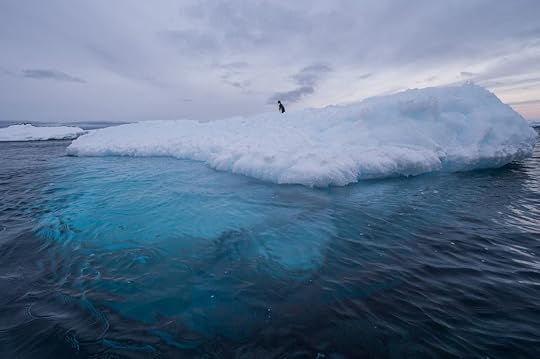
Photo: Audun Dahl
2. If Antarctica’s ice sheet melted, the world’s oceans would rise by 60 to 65 meters.
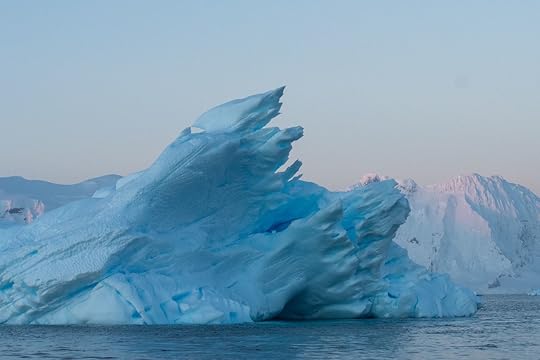
Photo: Audun Dahl
3. Penguins can dive to a depth of over 250 meters, although most dives will be within 10 meters below the surface. The deepest dive ever recorded was by a female emperor penguin, who dove to a depth of 535 meters!
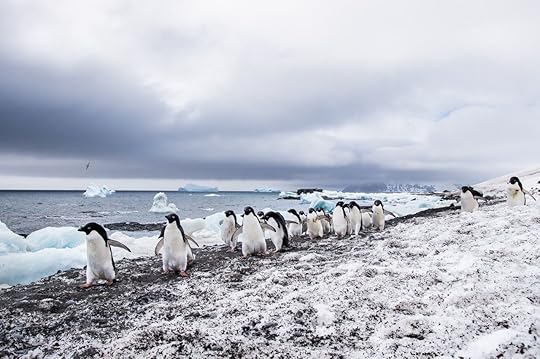
Photo: Audun Dahl
4. Snowy sheathbills are Antarctica’s vultures. They scavenge around in the penguin colonies.
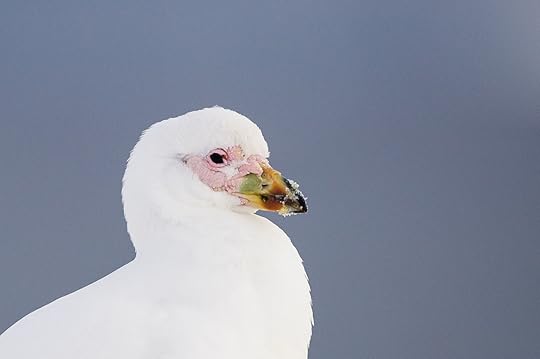
Photo: Audun Dahl
5. The fastest species of penguin is the gentoo penguin, which can swim up to 35 km/h (22 mph).
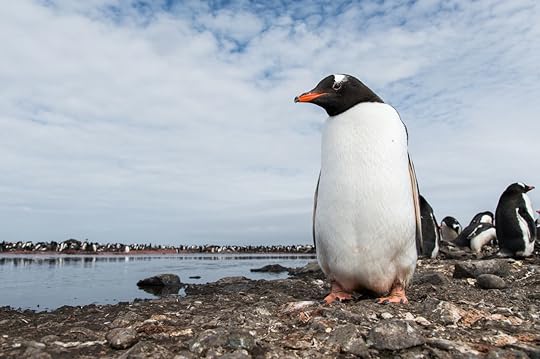
Photo: Audun Dahl
6. Albatrosses spend over 80% of their life at sea, visiting land only for breeding.
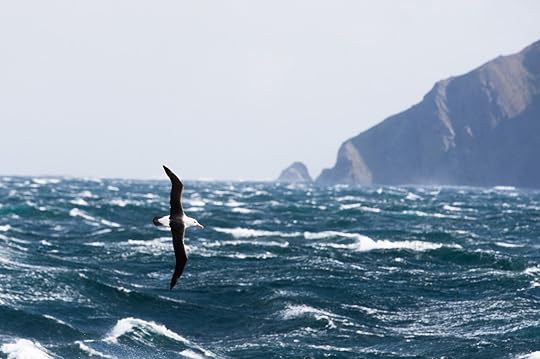
Photo: Audun Dahl
7. Many bird species have adapted to flying by having hollow bones, whereas penguins have dense bones, which makes diving easier.
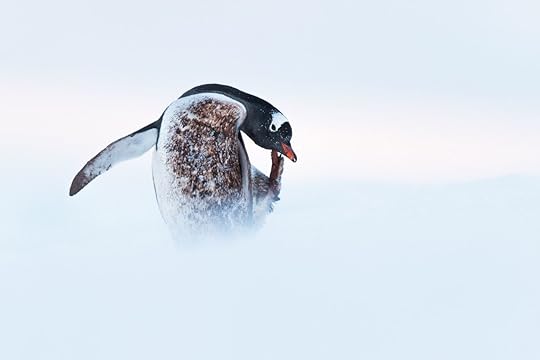
Photo: Audun Dahl
8. According to Audubon, The brown Antarctic skua “forages at sea […] and often steals food from other seabirds […] It also feeds on the eggs and young of penguins, and on carrion around penguin colonies.”
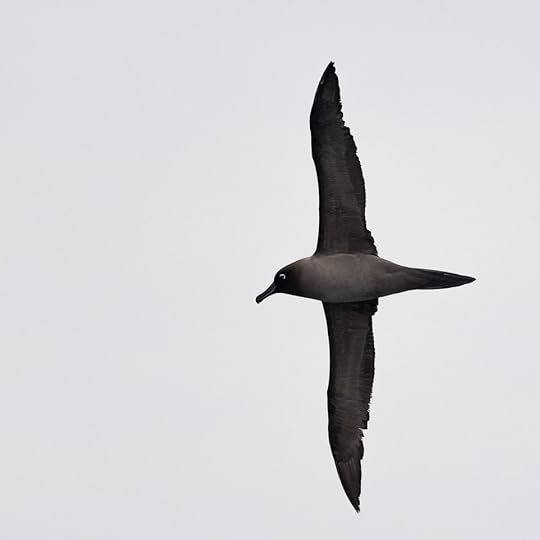
Photo: Audun Dahl
9. Penguins eat a variety of seafood including fish, squid, and crustaceans. The smaller penguins usually feed on krill. Because they eat so much seafood, penguins need to be able to cope with the high amount of salt they ingest. They have a gland located just above their eyes called the supraorbital gland, which filters salt from their bloodstream. This is then excreted through the bill, or by sneezing!
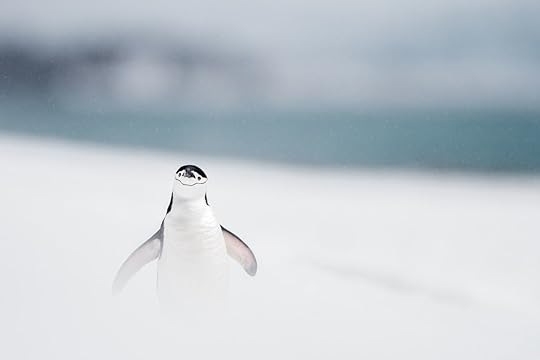
Photo: Audun Dahl
10. Climate change affects the number of krill, threatening penguins’ lives. Since the 1970s, krill density in some areas has decreased by 80%.
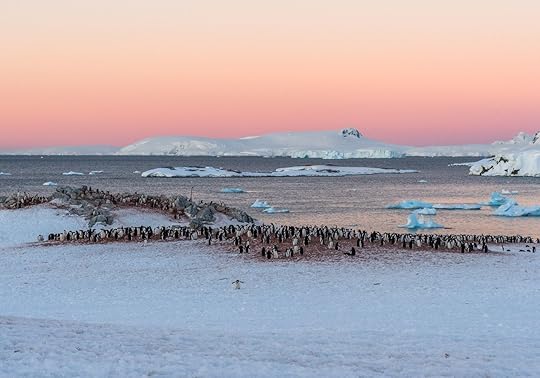
Photo: Audun Dahl
11. Leopard seals can live up to 26 years in the wild.
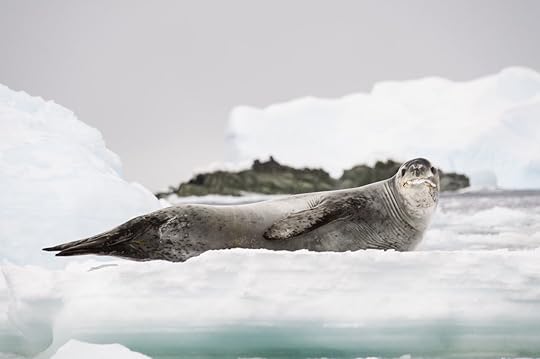
Photo: Audun Dahl
12. Fossil records show that there were at least 25 species of penguin and some were larger than the emperor penguins. One species, known by the scientific name of Anthopornis nordenskjoldi, was 170 cm tall!
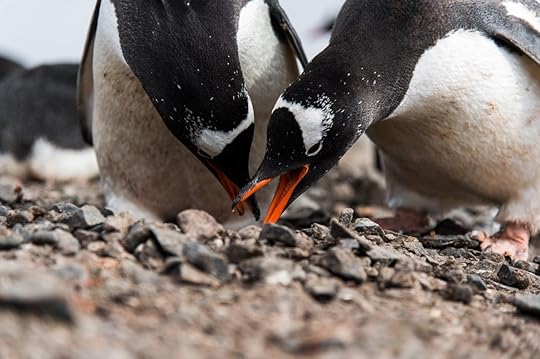
Photo: Audun Dahl
13. Weddell seals are impressive divers — they can dive to a depth of 600 meters and spend as long as 82 minutes under water.
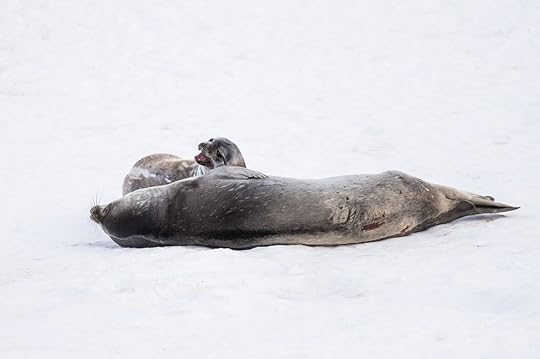
Photo: Audun Dahl
14. Penguins have a lifespan up to 60 years, depending on species.
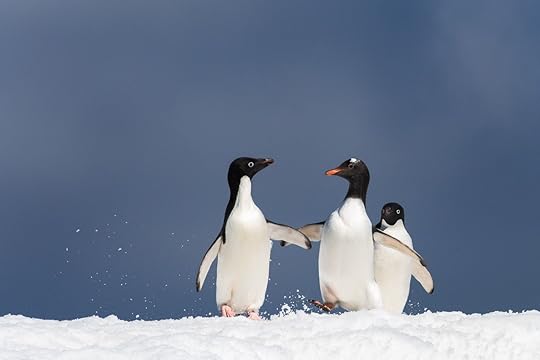
Photo: Audun Dahl
15. When a leopard seal grows tired of eating, but still wants to be entertained, they’ll seek out penguins or young seals to play “cat and mouse” with.
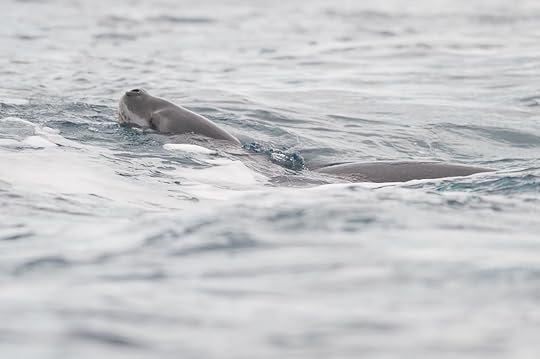
Photo: Audun Dahl
More like this: 25 things you did not know about Antarctica

December 12, 2017
Why we travel
When the new year sets in, those of us lucky enough to have escaped over break will have the jarring task of acclimating back to the rigors of daily life. Whether 9 to 5, shiftwork, freelance or funemployed, return from one journey begets the genesis of plans for the next. And so begins the process of combing through endless reviews and travel deals, and the alluring chain of daydreams about the next escape.
But what is it that causes so many of us to spend our precious time and resources crafting the next adventure away from home? What is the root of this seemingly insatiable desire for exploration? And what does it reveal about us, as a millennial generation slowly coming to its own as the largest and potentially most powerful demographic for the world’s largest industry?
A bit about nomadism
Human society traces its roots back to the primitive hunter-gather. As The Cambridge Encyclopedia of Hunter and Gatherers puts it: “Hunting and gathering was humanity’s first and most successful adaptation, occupying at least 90 percent of human history. Until 12,000 years ago, all humans lived this way.” Beyond a constant focus on existential survival, there was very little else to distract and complicate.
Hunter-gatherer societies were mobile, agile, and egalitarian. Women enjoyed parity with their male counterparts, and leaders emerged only for specific and temporary needs. Egalitarianism ruled because mobility requires minimization of material possessions. You only own what you can carry with you. This lack of accumulated material wealth meant that the surplus of resources needed to support non-worker members of the clans, such as priests or the aristocracy, was simply impossible. Material inequality could not exist.

Photo: Tirachard Kumtanom
Anthropologists have come to challenge the Hobbesian view of the primitive person’s life as “solitary, poor, nasty, brutish, and short.” In fact, nomads had to face less hours of work (only 6.5 hours a day), ate as well if not better than their sedentary equivalents, and found satisfaction easily due to lack of dependence on material wealth for validation. Economic relationships consisted of a thick web of sharing and resource exchange, a gifting economy.
The above is not intended to idealize pre-neolithic time. It may, however, provide a bit of perspective regarding the desire for a more just society, a call often derided by the establishment as naïve and attributed to the young and wide-eyed — currently a slot filled by the generation Y. It proves that humans are not hard-wired for zero-sum competition, that the economic “survival of the fittest” is not our “factory setting.”
Now, most of us do not, nor will ever, espouse a true nomadic lifestyle. But as with our ancestral counterparts, whose nomadic lifestyle was a routine of temporary spouts of migration in search of sustenance, with an ordained desire to return home, we desire escape for mental or spiritual manna. We seek exotic oases where like-minded individuals congregate for anecdote-production and raw human connection.
The ascent of humanity
Nomadic communities, mobile, egalitarian, and free, represented the sole model of living from the dawn of man until the Neolithic revolution. 12,000 years ago, the first signs of agricultural practices made their mark in regions such as the Middle East, South America, and East Asia. Adoption of technologies such a plant domestication, husbandry and related techniques lay the groundwork for an alternative form of living, sedentary in nature and complex in form.
As hunter-gatherers gave up the spears for hoes, newly minted farmers now had to build permanent structures to house family, livestock, and grain. Reaping what you sow meant long seasons of surviving by the sweat of your brow, and the guileless paradise of the nomadic life became a thing of legends and myths. Meanwhile, improving harvests yielded the caloric abundance necessary for larger familial and tribal units, and the surplus to afford all the facets of culture and society we have come to accept as given.
Farmers toiling away their days tied to the earth make easy targets for bandits and predators, resulting in the creation of armed defense forces. A method of communication with the supernatural was needed to ensure a prosperous future, leading to the establishment of a priestly class. Increased complexity and growth of disparate familial units now connected by proximity called for effective centralization of resources, begetting the ruling class with all its trappings of social dominance and splendor.
Those who were swallowed up by sedentary empires were forcibly injected into the system of perpetual inequality delineated above.
Artisans and craftsmen traded their works with the domineering classes for protection and favors, with the farming classes for food, and with other craftsmen to attain material wealth. A merchant class, the consummate middleman through whose tireless work technology, philosophy, and all other wonders of the human mind were transmitted globally, wove nascent settlements into interlinked societies. Through coercion, trade, and strategic alliances, simple societies moved onwards to fiefdoms, kingdoms, and even empires.
The nomad emerged as the slave of the plants and animals he sought to dominate; a victim of progress. This proverbial ball and chain was made all the more real by the advent of codified systems of laws and regulation meant to formalize class structure. Whether through the apparent edicts of the gods above as delivered by their representatives on earth, or the law put forth by the ruling class and reinforced by their monopoly on violence, the individual’s role was made calcified, preordained by birth.
As societies grew further in complexity and compartmentalization, uniform units of currency, represented first in shells and clay tablets and eventually in precious metals, were made necessary for the regulation and effective domination by the few, the minters. The king guaranteed the value of the coin, again both through his monopoly on violence and the indentured servitude of his subjects, held in place through economic debt, dogmatic fealty, and fear. Power is addictive, and so consolidation of power led to a hunger for further expansion.

Photo: Ertz
Nomadic tribes who refused to voluntarily give up their way of life were coerced to do so by brute force. Lands and resources were annexed and made private holdings of the ruling class. Nomads who were able to escape had to make due on increasingly barren and less-desirable territories. Meanwhile, those who were swallowed up by sedentary empires were forcibly injected into the system of perpetual inequality delineated above.
Naturally, history is never as linear as it seems, and nomads would play a significant role in the continuous flux of society in time. Names such as Genghis Khan and Attila the Hun are synonymous with the disruptive force of migration and culture clash. Yet a broad overview of the last 12,000 years reflects the steady decline of nomadism and the values it held in the face of a stratified, sedentary mode of living.
Adversarial, zero-sum competition became the law of the land.
The millennial traveler
By some accounts, travel is to be regarded as the world’s largest industry. It will account for almost 10% of global GDP by 2020, provides employment for one in eleven globally, and is considered the leading export for 83% of the world’s developing world. It is as ancient as humanity’s first steps and as wide as our desire for exploration can take us.
Within the next five to ten years, generation Y will represent the most high-value demographic in travel. It currently accounts for about $180 billion a year in expenditures and is expected to trend upwards as the millennials intend on taking longer and more frequent trips abroad.
As a result, this particular demographic has come to enjoy the industry spotlight, with industry groups and consultancy groups attempting to provide insight into the millennial traveler mindset, shaping a rising tied of generation Y focused campaigns from travel’s leading brands aimed at garnering millennial attention and loyalty.
Distilling the insights of recognized entities such as MMGY Global, Boston Consulting Group, and Skift, the millennial traveler can be can be summarized as thus:
They favor experience over material products. They seek self-fulfillment in their travels, desiring to be travelers rather than tourists.
They will rely first on peer reviews and word of mouth, preferring using their physical and social networks for insight. They are willing to spend the extra hours on research to secure the best trips, for the best price.
They prefer to travel in groups of like-minded individuals, and seek out experiences where they can connect with more of their kin.
They are generally more open to explore newer, off-the-beaten-path destinations, and travel abroad as much as possible.
Travel is another realm of “lifestyle”. Thus, choice in travel reflects the Millennial’s sense of identity.
In today’s world, where wealth and happiness are measured as the accumulation of material goods constantly marketed, travel provides an escape to a world we wish we knew. The attributes of the millennial traveler listed above correlate directly to the values espoused by our nomadic ancestors. They explored new territory with their kin, who served as their companions and councilors. Owning only what they could carry, wealth and happiness could not be attributed to earthly possessions. Travel, the very base of their lifestyle, formed every facet of the nomad’s identity.
The millennial generation sees experience as the new luxury. Anecdotes are recounted at parties and around the water-cooler in the same way the Epics were relayed time and time again around the campfires of the ancient past. The value of experience has only recently been rediscovered, yet it carries the same value it held before material goods made their debut. Your stories are badges of courage, strength, and virility. The gold watch you wear points to none of that.
We will always travel. It is ingrained in our DNA.
The dramatic rise in globally strewn festivals, events, and retreats represent a modern rendition of the oases, fabled sites where survival was made possible both physically and culturally. Beyond the provision of water and food, oases were places of meeting, exchange, and amelioration. Kinship was made and strengthened through the sharing of stories, gifts, and, of course, bodily fluids. The gatherings evolved from events needed for survival, to occasions of celebration eagerly awaited.
The festivals of today, while emerging from a different set of contextual needs, embody the same desire for connection and exchange. Attendees will travel across continents to take part in a Burning Man, a Kalu Yala or a Coachella. The events are a platform for transformation of all kinds, creating a temporary “mobility”, a society defined by shared values and rather than identities of birth. Upon return to the “default world”, attendees savor their transformative experiences through retelling of anecdotes and fantasizing about their next escape.
Millennials, at least most of us, will not be renouncing the trappings of western society in favor of the hunter-gatherer life. But a rising self-awareness and consciousness of desire to connect with those formative values lost in the ascent of Western hegemony forms our patterns as traveler,, and indeed our overall generational identity as well.
In providing some delineation for the roots of our desires to travel and the historical perspective connecting them in the very dawn of mankind, I hope we will have the courage to take the much-needed next step: to return those ancient/modern values to the helm. We will always travel. It is ingrained in our DNA. But just as the ancient nomads eventually returned bearing new knowledge and experience, we are tasked with planting at home the lessons and memories collected abroad, and nurturing the community and society in which we wish to live.
This article originally appeared on Medium and is republished here with permission.
More like this: The meaning of travel: a new guide for millennials

Las Vegas with kids
Kid-friendly Vegas? It’s not just real, it’s everywhere! While Las Vegas might not be the most obvious choice for a family-friendly destination, there is plenty for you and the kids to do together.
The best hotels for families
There are many sprawling casino-resorts on and around the Strip, and all of them cater to different kinds of clientele. Some are decidedly more adult; others are geared specifically at families with young children; others still fall somewhere in the middle, but have plenty to offer for vacationing families.
1. Circus Circus

Photo: Alex Proimos
If the name alone weren’t enough of a clue, Circus Circus is a family-friendly circus-themed resort and casino complete with a five-acre indoor theme park, Adventuredome. Get all-day ride passes for the family for just $32.95 for those 48 inches and taller, and $18.95 for those under 48-inches, and ride and play to your heart’s content on two roller coasters, Batman-themed laser tag, bumper cars, a pirate ship, 4-D Ice Age and SpongeBob SquarePants rides, and so much more. While you’re there don’t miss the famous Midway complete with carnival games, live circus performers, and a state-of-the-art arcade. Oh, and staying here is CHEAP.
2. Excalibur Hotel & Casino

Photo: Excalibur Hotel Casino
Excalibur is a casino resort styled as a Disney-esque castle of Camelot, and it’s the cheapest property on the south end of the Strip (so, basically, it’s the second-cheapest property on the Strip after Circus Circus). It’s a hotel built with kids in mind, and staying here puts you right in the heart of some of the top kid-friendly attractions on the Strip. Inside the Excalibur itself is the Medieval-themed dinner theatre complete with jousting knights and Cornish game hen. At the next property over, the Ancient Egypt-themed Luxor, you’ll find the Blue Man Group, a popular show for kids and grown-ups alike. The next property over from the Luxor is Mandalay Bay, where you’ll find 2,000 animals — over 100 different species — displayed throughout 14 different exhibits at the Shark Reef Aquarium, as well as the 1.3-million-gallon sprawling Shipwreck Exhibit with over 30 sharks, stingrays, sawfish, green sea turtles, and schools of colorful fish. There is also a “Touch Pool” where, yes, you can touch the ever-changing collecting of aquatic animals. And all three of these properties are connected via monorail, so it’s easy to get from one to the next.
3. New York-New York
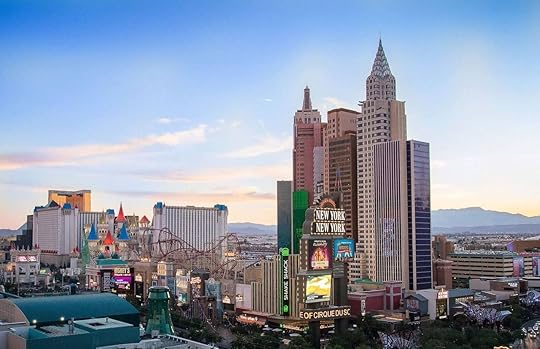
Photo: New York – New York Hotel
For a lot of kids, the New York-New York Hotel & Casino is their first experience of the Big Apple, simulated or otherwise. Another one of the more affordable properties on the Strip, New York-New York is another themed casino that takes its simulation of the city of New York as seriously as New Yorkers themselves take the actual one. The attention to detail here should not be overlooked: there are brick-paved “streets” with manhole covers lined with brownstone buildings with exterior fire escapes, not to mention real Jewish delis and Italian pizzerias throughout. The New York depicted here is the New York of the mid-’90s when it was built — the New York of Friends and Seinfeld. That New York is already all but extinct, making this casino also something of a throwback-cum-historical museum. And nothing beats seeing the Statue of Liberty and Empire State Building out front, especially with the Big Apple Coaster wrapping around them (a must-do when visiting Vegas with the kids). While you’re here, you also have to hit up the 13,000-square-foot Hershey’s Chocolate World in front of New York-New York (behind the Brooklyn Bridge), with its own Statue of Liberty made out of nearly 800 pounds of Hershey’s Milk Chocolate. Across the street at Showcase Mall you’ll find its competitor, M&Ms World, a 28,000-square-foot, four-level immersive M&Ms experience.
4. The Mirage
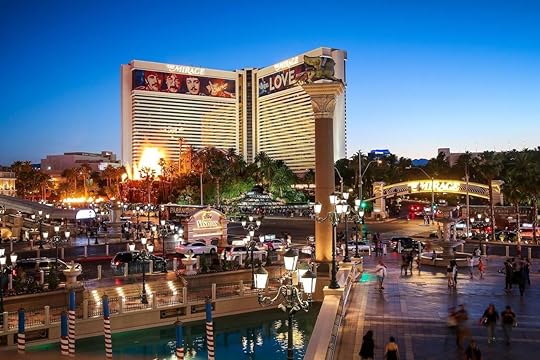
Photo: Mirage Hotel and Casino
The Mirage is known for one of the most iconic things in Las Vegas: The Volcano. Located out front on the Strip for all to see is the volcano that explodes every night at 8 PM and 9 PM (as well as 10 PM on Fridays and Saturdays), and is another Vegas bucket list attraction. This property is a bit more upscale than the others, though by no means outrageously expensive. Right next door to the Mirage is Treasure Island, where the kids will most certainly enjoy the Marvel Avengers S.T.A.T.I.O.N., a completely immersive experience that brings visitors into the world of The Avengers. And across the street at The Venetian is Madame Tussauds, where your kids can take selfies with all their favorite stars (in lifelike wax form).
The best shows for families
There are certainly a lot of naughty nudie shows in Vegas, and many of them are found in the very same properties where the most kid-friendly shows play. Gotta have something for everyone! That said, there are PLENTY of shows we haven’t yet mentioned that are appropriate for all (or most) ages that adults will enjoy too.
1. Jabbawockeez

Photo: Jabbawockeez
Voted “Best Family Show” and “Best Show for All Ages” three years in a row, Jabbawockeez brings the world’s most influential hip-hop dance crew with their positive message of tolerance and equality to the MGM Grand.
2. Circus 1903 — The Golden Age of Circus
A throwback to the pre-Cirque du Soleil days of the circus, the new Circus 1903 at the Paris Las Vegas features classic circus acts like jugglers, contortionists, high-flying wire acts, strong men, and even elephants! Except, these elephants are actually puppets. This show is appropriate for all ages, with no salacious adult humor and lots of audience interaction with the kids.
3. Nathan Burton Comedy Magic

Photo: Nathan Burton’s Comedy Magic Show
This all-ages magic and comedy show inside Planet Hollywood’s Miracle Mile Shops sees “Illusionist of the Year” Nathan Burton in his own high-energy show produced by him and his family. Not only is Burton widely acclaimed as a highly-entertaining and talented showman, but also tickets to this show are markedly cheaper than most other shows on the Strip.
4. IMAGINARIUM

Photo: David Goldrake
A new show at the Tropicana, award-winning illusionist David Goldrake’s IMAGINARIUM takes its spectators on a journey through a surreal place that lies somewhere between the real world and a world “full of dreams and fantasies.” Kids 12 and under are free with the purchase of one full-priced adult ticket.
5. Michael Jackson ONE

Photo: Michael Jackson ONE by Cirque du Soleil
Take all of the “wow” moments of any Cirque du Soleil show and add in the music and dance moves of Michael Jackson, and you’ve got ONE, a jaw-dropping spectacle tribute to the King of Pop.
6. Legends in Concert

Photo: Legends in Concert
Legends in Concert is a live celebrity tribute show with a constantly-rotating cast of dead-on-accurate singing celebrity impersonators performing medleys of the stars’ biggest hits. This is now the longest-running show in Vegas and has spanned additional shows all throughout the country. Impersonators look and sound eerily close to the real thing, and range from Elvis (of course) to Lady Gaga to Michael Jackson to Shania Twain to Frank Sinatra. Check the website for the latest celebrity line-up and enjoy a mash-up mini-concert of some of your favorite superstars of past and present!
7. Terry Fator

Photo: Terry Fator
Singer, comedian, ventriloquist, and celebrity impressionist Terry Fator has been named “Best All Around Performer” with the “Best Show” in Vegas. His unique blend of singing, comedy, impersonations, and talking puppets is appropriate for almost all ages. Younger kids will enjoy the puppets while older kids will appreciate more of the humor, and there will even be a few jokes that only the adults will appreciate (kind of like a Disney movie). This is an all-around great show for the whole family.
More like this: Traveling to Las Vegas: Where to have the most fun with the kids
Animals to see in Costa Rica
Laboring over the swells of the Pacific Ocean, our boat follows the coastline of Costa Rica’s Osa Peninsula that rises out of the ocean wrapped in a thick carpet of lush tropical rainforest and framed by the sandy strips of wild beaches. Most of the peninsula is protected by Corcovado National Park, and the sheer expanse of its wilderness is staggering.
Corcovado, which has been described by the National Geographic as “the most biologically intense place on earth in terms of biodiversity”, protects over 400 square kilometers of old-growth wet forests that host an unparalleled abundance of wildlife.
Led by a local guide, we arrive at a deserted beach that serves as the entry point to Sirena Ranger Station — one of the only four areas in the park open to visitors.
In the next three days, we see some of Costa Rica’s most incredible wildlife, including a number of threatened species that the park is designed to protect.
1
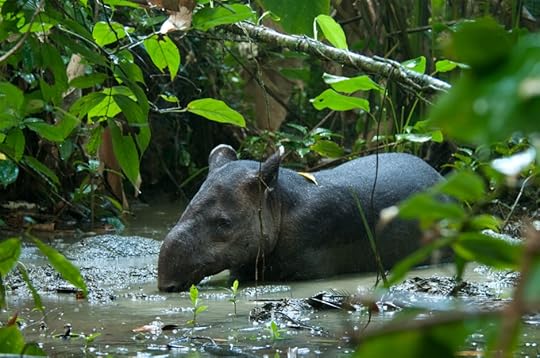
Baird's tapir
Within 20 minutes of landing on the beach, we are looking at the first endangered species of the trip. Two Baird’s tapirs are taking a nap in a shady puddle just off the trail that runs from the beach to Sirena Station. They allow us to approach the edge of their little swamp and sit with them for a few minutes under the light sprinkle of rain.
2
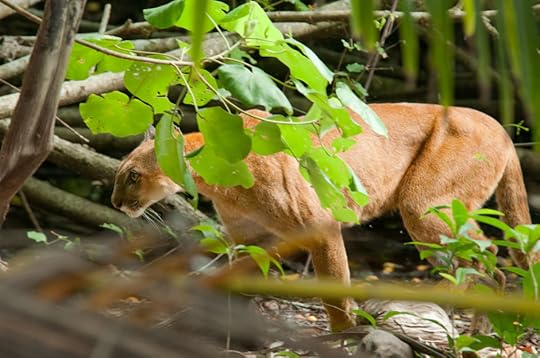
Puma
The following morning our guide leads us on a hike to Puma Valley - a tropical valley wedged between a series of wild beaches and a densely-forested ridge that runs through the centre of the peninsula. As soon as we walk into the valley, our guide grabs my arm and pulls me down into a crouch, pointing into the jungle. I look in the direction he is pointing and meet the intent stare of a Puma.
She appears undisturbed by our presence and after a minute’s hesitation continues on her way. For a moment, she walks across an open patch and we notice two almost-grown cubs following closely on her heels.
3
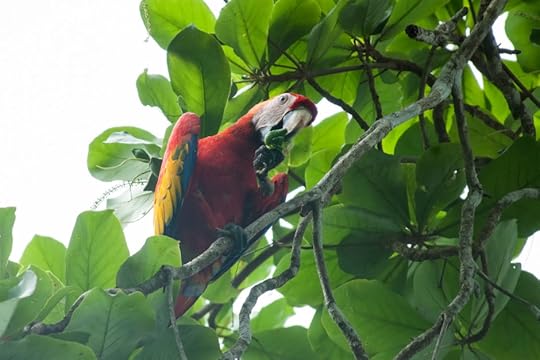
Scarlet macaw
When the pumas disappear out of sight, we become aware of the raucous squawks in the canopy above us. Startled, we look up and discover a pair of vividly coloured Scarlet macaws feeding on the seeds and bombarding us with discarded inedible parts.
Intermission
Trip Planning
35 of the world’s best places to travel in 2017
Matador Team
Trip Planning
11 travel experiences to have in Costa Rica before you die
Tyler McCloskey
Environment
What you can do to help save Utah’s National Monuments
Matador Team
4
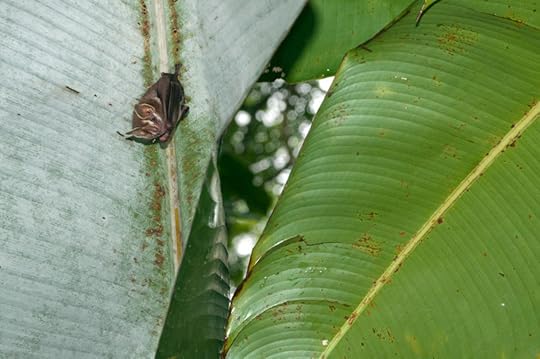
Tent-making bat
As we walk past a banana tree, our guide ducks under one of its huge leaves and finds a Tent-making bat snoozing in its shade. This curious bat builds its own home by biting the central vein of a large banana leaf until it folds in half, forming a V-shaped shelter that protects the bat from the sun and the rain.
5
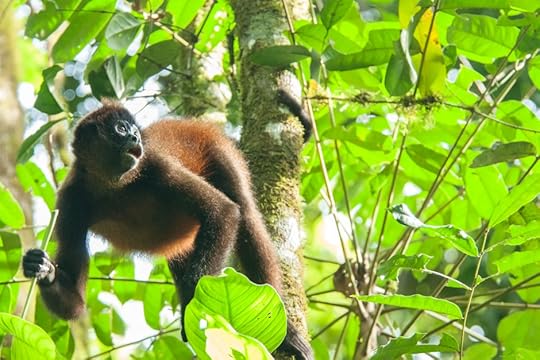
Black-handed Spider Monkey
In the late afternoon, we find a group of the endangered Black-handed spider monkeys feeding on fruit at the edge of the forest at the station. Famously dexterous, spider monkeys have extremely long limbs and a prehensile tail that functions as a fifth limb. They hang effortlessly from the branches using their hands to rip open the ripe fruit and gorge themselves on the soft and sugary inner parts.
6
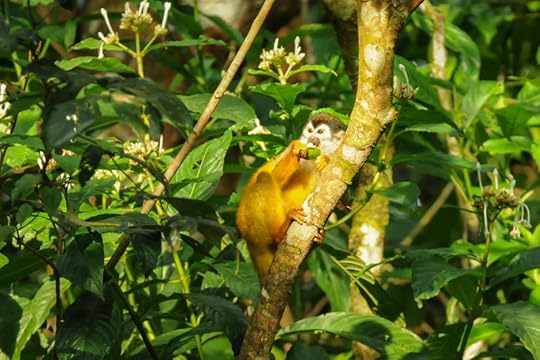
Central American Squirrel Monkey
A group of cheeky Central American Squirrel monkeys joins the feeding party. They squeal and chirp as they move through the branches reaching for fruit and squabbling with each other, bathed in the warm light of the late afternoon sun. Their animated cuteness is one of the reasons the species is in decline – they are very popular in the exotic pet trade.
7
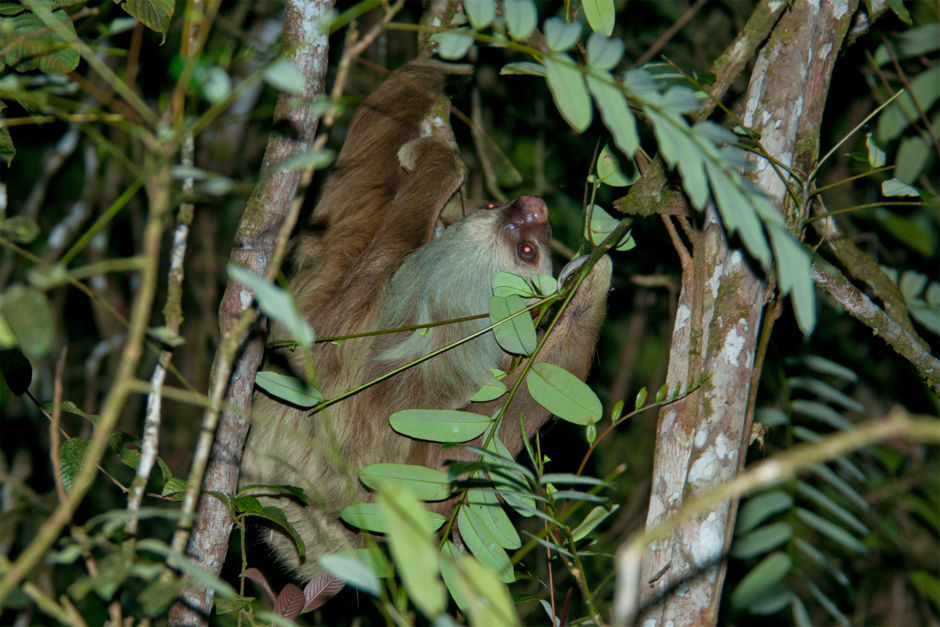
Hoffmann’s-Two-toed-Sloth
In the evening, a Hoffmann’s two-toed sloth visits the forest’s edge, moving through the canopy in a deliberately unhurried fashion. These shaggy animals are so slow that algae are able to grow on their fur. As a return favour, the algae give the sloth’s fur a greenish tint that helps the animal blend with its environment and avoid predators.
8
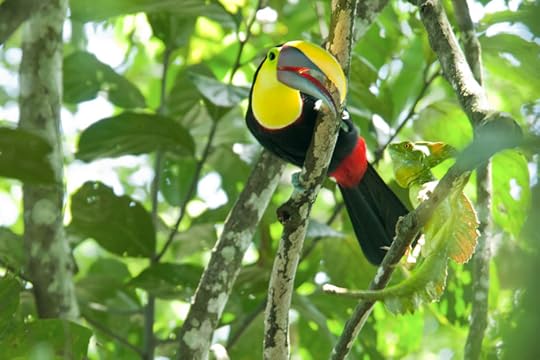
Yellow-throated Toucan and Green Iguana
Early mornings at Sirena are dominated by birds. We watch a Yellow-throated toucan land on a nearby tree and become a little agitated in the process. On closer inspection, we notice a perfectly camouflaged green iguana that did not anticipate the toucan’s arrival and is now making a hasty retreat, away from its formidable beak.

9
Eyelash viper
We spend the day hiking and almost walk past the dainty eyelash viper curled up on a branch on the side of the trail, perfectly camouflaged against the moss-covered bark. According to our guide, "she" can be found on this spot any day, frozen motionless for hours, waiting for an unwary prey to approach within her striking distance.
Intermission
Culture Guides
7 things Alaskans are total snobs about
Kaitlin Armstrong
Culture Guides
7 reasons Costa Rica is the ultimate vacation spot
Joseph Cyr
Environment
Clueless tourists damage thermal feature at Yellowstone National Park
Ana Bulnes
10
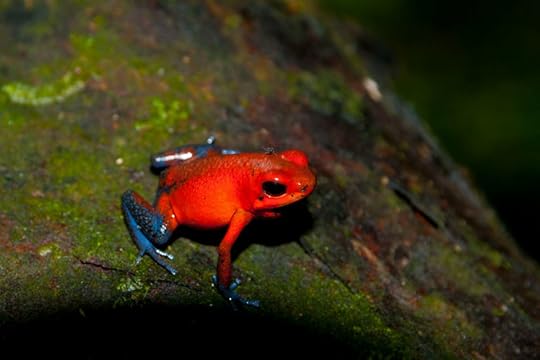
Strawberry Poison-dart Frog
Further up the trail we find the viper’s would-be prey - a tiny Strawberry poison-dart frog. The insects it feeds on cause its skin to become so toxic, that any unlucky predator that ignores the warning of its bright coloration and consumes the frog, would suffer convulsions, paralysis, and, eventually, death.

11
Fer-de-lance
On our last morning in Corcovado we find Central America’s most dangerous snake - the Fer-de-lance. This aggressive viper is responsible for most snakebite-related deaths among humans in the region. Curled up on the forest floor, a mere few meters away from the trail, it is perfectly camouflaged among the leaf litter.
12
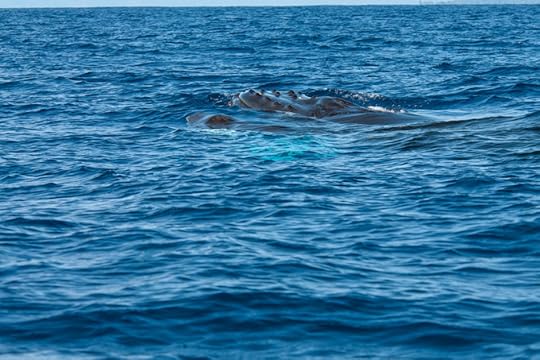
Humpback whale
The ocean surrounding the Osa Peninsula is the best place in Costa Rica to see Humpback whales. We take a whale-watching tour with Divine Dolphin from Drake Bay and spend an afternoon watching the Humpbacks that have travelled here from their feeding grounds in Antarctica to rest, mate, and give birth.
Conservation
For wilderness areas like Corcovado to exist, government action is required and Costa Rica’s government is serious about protecting its natural heritage. Over 25% of the country’s territory is preserved under some level of protection. Costa Rica’s private sector also contributes to conservation efforts by creating private reserves dedicated to ecotourism and research.
There is also something that each of us can do to help protect the world’s remaining wilderness areas. Walking through the pristine jungle of the Puma Valley we were confronted with the ugly side of our society’s obsession with plastic: a rubber sandal hanging on a low branch of a tree, a deflated basketball wedged firmly between its gnarled roots, a multitude of plastic bottles half buried under the leaf litter.
All this trash is brought to Corcovado by the ocean. It arrives with the high tide and gets trapped by the vegetation as the tide retreats. It is a sobering realization that some of the rubbish littering the otherwise-pristine wilderness of the valley could have come from our own backyards.
Each time you feel tempted to choose convenience over commitment, remind yourself that every bit of plastic you thoughtlessly discard may end up lining the stomach of a whale or a seabird or littering a puma’s den half the world away.
More like this: 11 facts about Costa Rica that will surprise you
white christmas united states map
Winter doesn’t get much prettier than seeing the reflection of Christmas lights in fresh snow on Christmas Day. Unfortunately, most Americans will not be so lucky this year. But if you are someone who absolutely must have a “White Christmas” every year, there are a few states you can move to to boost your chances.
Voucher Cloud did some research and found, unsurprisingly, that Alaska was the place where you are most likely (66.1%) to get the chance to catch snowflakes on your tongue after the presents have been opened and hot cider poured. Meanwhile, Vermont was the only contiguous state where that likelihood topped 50% (at 56.1%). Looking at the rest of the world, it seems like your best bet is to move to Russia or reevaluate your Christmas priorities.
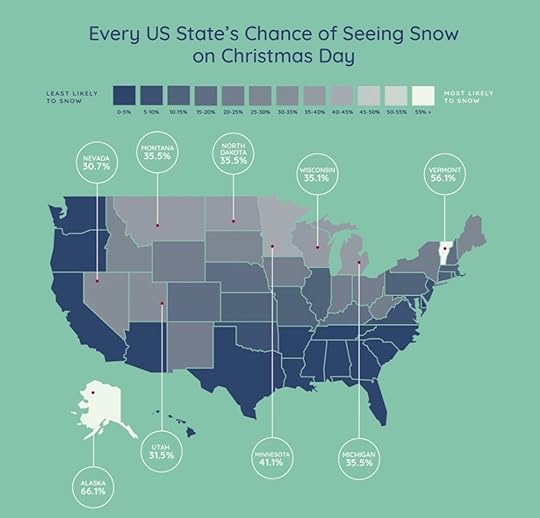
Photo: Voucher Cloud

Photo: Voucher Cloud
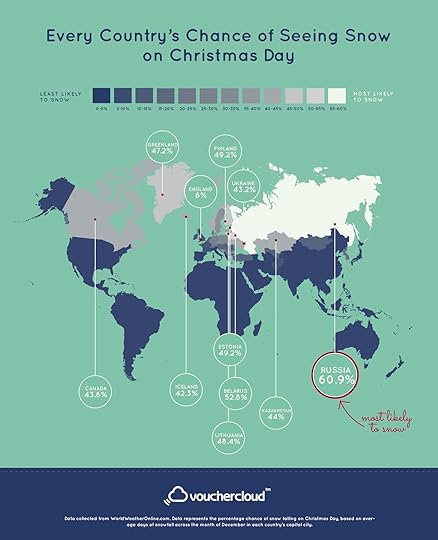
Photo: Voucher Cloud
More like this: Infographic: 12 Christmas traditions from around the world

Matador Network's Blog

- Matador Network's profile
- 6 followers


.jpg)