
Matador Network's Blog, page 1431
December 14, 2017
Moving overseas for love
There’s an old-fashioned romance to the idea of dropping everything to move halfway across the world for someone you love. While of course the reality is very different and visas, hours wasted in public offices, and grumpy civil servants do tend to kill a lot of that romantic expectation, the good still definitely outweighed the bad for me. Here’s what I’ve learned from my move to Italy.
1. Don’t use your move abroad as a bargaining chip.
Many times in the heat of an argument I’ve played the old “well I moved here for you” card and deeply regretted it later. It can lead to bitterness and resentment, and your partner feeling like they constantly owe you something. Plus, if you continuously think you are only in a different country because of your partner you will find it difficult to see your move as something for you, as an experience you can gain from.
2. Two languages are better than one.
You have so much more creativity with compliments (and insults…), saying ‘I love you’ in another language always seems more romantic, and you have a secret language you can use so when you’re at the in-laws you can discuss escape tactics openly.
3. Have independent interests and commitments.
Particularly if you move abroad to where your partner already lives, or even grew up, they’ll already have their group of friends, their hobbies, their favorite bars, their routine. Trailing along behind them in everything they do, and adopting their friends as yours, will crush your personality. Challenging as it is, you have start from scratch independently and find things that are YOURS. Make sure you are known as YOU, not as somebody’s partner. Also, remember that different is good. Italian grandmothers are the queens of the critical stare and have no shame in gawking if I look a little different or wear “strange” clothes. Children, too, are remarkably honest and will point out your “oddness”. But don’t change yourself to try and fit in, stay strong, be true to yourself, and fight the old people stares!
4. It’s adventure time!
Not many people get the chance to live abroad, let alone explore that country with someone they love. If your partner is from the country you moved to, then your excitement for everything new will also make them see their home with fresh interest. Recently, for example, I reminded my boyfriend of the beauty of being able to buy five-liter bottles of wine here in Italy for not much more than water.
5. It’s ok to ask for help, just not too much.
Bewildering bureaucracy, language faux pas, medical jargon, and weird customs: you need to re-learn so many things in a new country. Make sure your partner is aware of these difficulties, and ask for their help. But don’t burden them and don’t become complacent. If you’re going to survive and thrive in your new country, you also have to be able to tackle these things yourself. It goes without saying that you should make a serious effort to learn the language.
6. You’re even more interesting.
People in your new country will want to know all about your customs and your life in your old country, and people in your old country will be following all your discoveries in your new country (and probably be a little bit jealous), so take advantage of it! Write a blog, keep a photo journal, annoy people on social media with all the cool stuff you do.
7. You learn.
The list of things you learn is infinite: language, customs, empathy, new skills, new jobs, how to deal with in-laws you don’t understand, a new cuisine, how to love someone in a different language, patience, and anger management when dealing with bureaucracy. Expats must definitely have bigger brains than other people.
8. It’s totally normal to get frustrated sometimes.
When everything seems so easy for your partner, when someone calls you “foreign” in that tone of voice, when you just want to wring the neck of the woman in the post office who didn’t understand you but made no effort to help, it is definitely okay to feel a little sorry for yourself, to remind your friends and family of your struggles and to have a big glass of wine.
9. You’ll be surprised by your strength and determination.
When every day throws up challenges that in your own country you wouldn’t even think about, you will naturally become much stronger and more confident as you deal with them. You have to find courage where others don’t need to, like speaking in a foreign language, or trying to participate in baffling local customs or, perhaps the most difficult, breaking a social norm because you want to do something you like but they frown upon (like drinking a cappuccino in the afternoon in Italy…). Your partner will probably love seeing these changes and celebrate with you every time you overcome a new hurdle. 

More like this: Highlights of a week in Quebec


What it feels like to study abroad
When you show up to orientation
When you receive your first care package from home
When the care package just makes you really homesick
When you find your friend group
When you figure out the public transportation
When you successfully order in the local language
When you tell your friends from home you’re spending too much money
When your host family tries to feed you
When you’re not aware of a local holiday and show up to class
When a teacher understands school isn’t the number one priority
When a club doesn’t charge you to use the restroom
When class meets at a museum after a night out
When someone doesn’t smell like cigarette smoke
When absolutely nothing is open on Sundays
When a friend visits and tries to speak the language
When you find out none of the classes you’re taking will count towards graduation
When everyone back at home is posting about finals
When you have one week left
When you say goodbye to the people you didn’t like in the first place
When your friends ask you to describe your experience in just a few words
More like this: 7 differences between normal friends and the friends you make studying abroad

A journey across Mongolia
As a travel photographer and filmmaker, I have had the privilege of traveling to some very cool places. One country I can’t seem to get away from is Mongolia — for the last three summers, I have spent at least one month there filming different projects for the Mongol Ecology Center, an environmental NGO. This year, I was tasked with filming a motorcycle rally through the iconic Gobi Desert on the way to Otgontenger Mountain. Even though I had been to Mongolia before, this journey south was going to be very different from my previous trips to the northern Mongolian taiga.
The goal of this trip was to deliver 10 motorcycles to park rangers in Otgontenger’s protected area. The rangers usually patrol on foot or on horses, so having an all-terrain vehicle like a motorcycle would make their work a lot easier. The event is called Rally for Rangers. So far, this event has brought 47 Yamaha AG200 motorcycles to park rangers in Mongolia. The motorcycles are delivered at no cost to the rangers and are maintained with parts provided by Mongol Ecology Center.
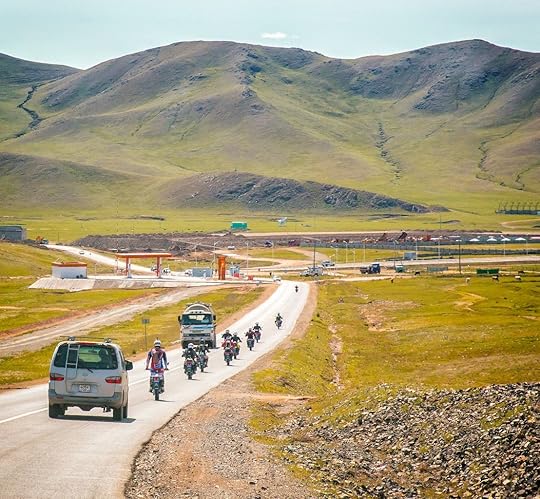
On the first day of the rally, we departed Ulaanbaatar and rode on a 200-kilometer paved road. Little did the riders know that that was the last pavement they would see for two weeks. My job had just started. I was in the support vehicle with my drones, cameras, and my trusty driver Boro.
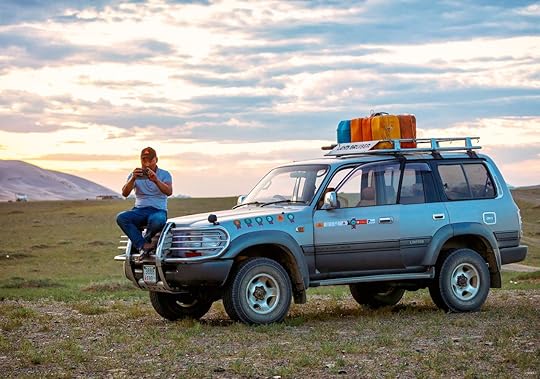
Boro and his Toyota Land Cruiser. He probably takes 300 photos a day with his camera phone.
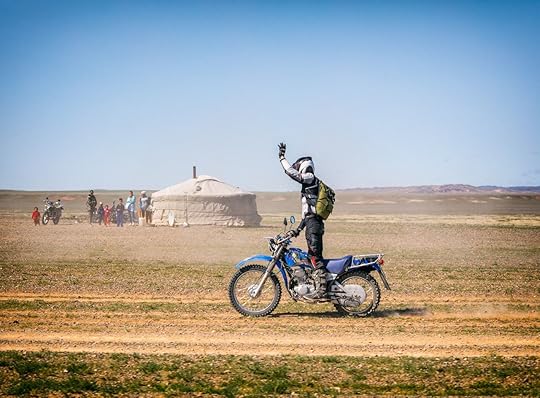
One of the riders, Michael Roberts, shortly after we got off road.
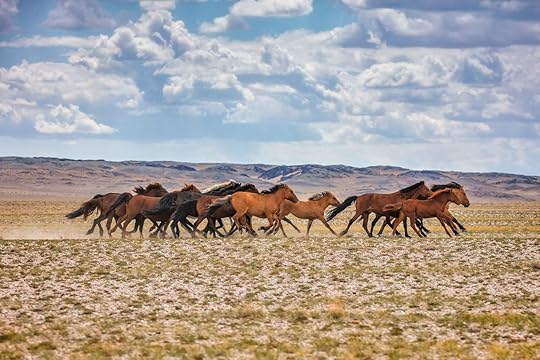
We spent our first evening at a ger camp in Baga Gazar just outside the Adaatsag Sum center. It was a lush, somewhat green area with horses and other livestock roaming.
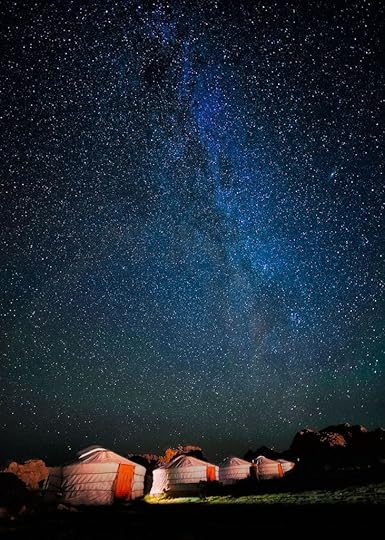
Our first night in the countryside was a new moon so the stars were out.
Sleeping in a ger is a very different experience from sleeping in a camping tent. There are carpets for floors, usually gaps in the doorway, and the ceiling has an opening for the stove pipe so you can see the stars — it’s best to avoid sleeping under that opening when it rains.
The next day we departed at 9 AM after a hearty breakfast. We were about to enter the Gobi Desert, which was something I had been wanting to do for 10 years.
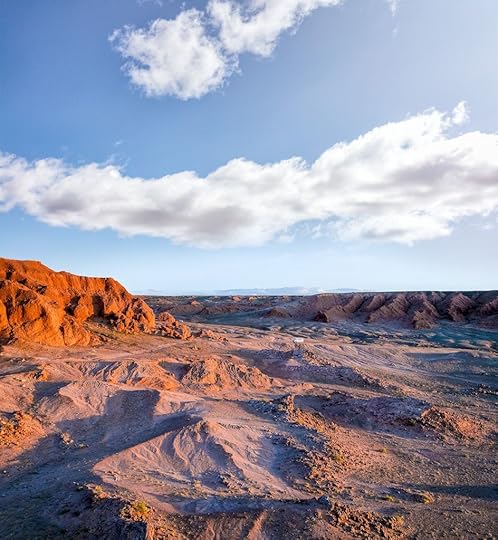
The Flaming Cliffs are an archaeological dig site where the first dinosaur eggs and velociraptor were discovered. You can find fossils everywhere but it is illegal to remove them without a permit.
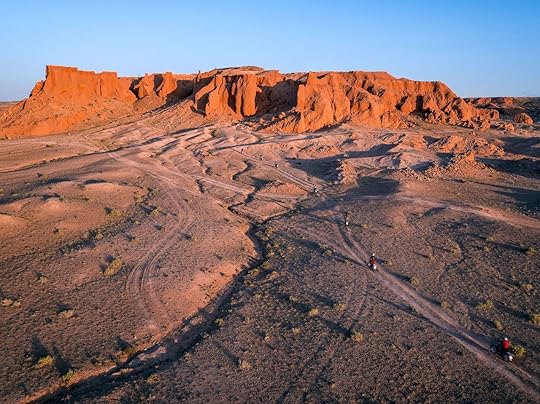
The Flaming Cliffs’ name comes from the red fire color they reflect when the sun is setting.
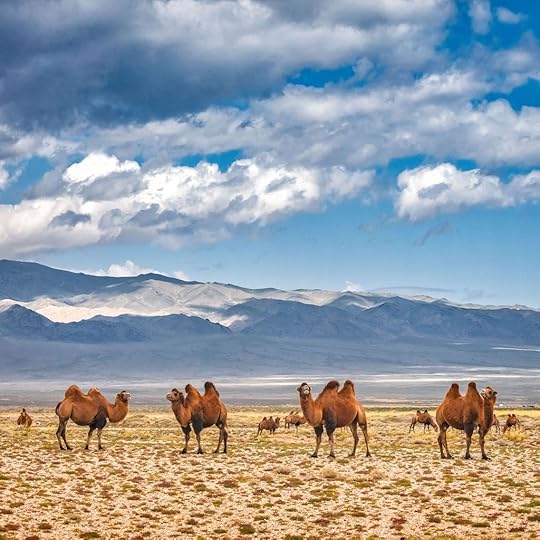
The camels in Mongolia are Bactrian camels with two humps, unlike their Dromedary cousins in the Middle East. They are everywhere and very friendly.
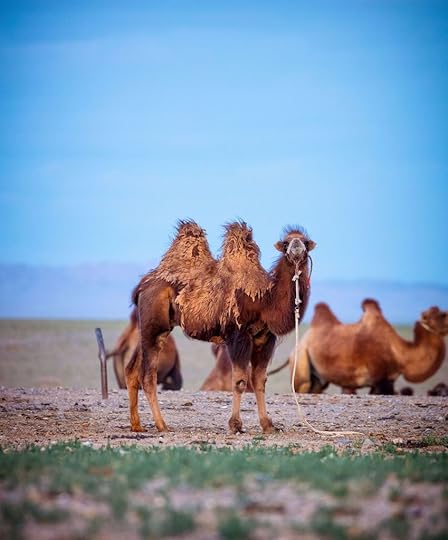
Mongols use the camel’s milk for butter, cheese, and to make a type of vodka that I recommend you stay away from.
We made it to the singing sand dunes later that day. I immediately pulled my drone out of the back and started burning battery packs to get the sun setting and some choreographed shots of the riders.
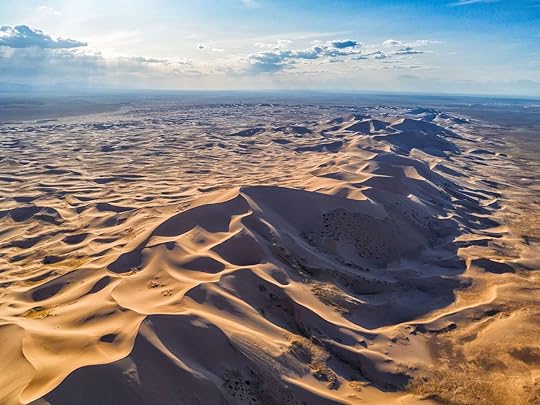
The dunes are 120 kilometers long and about 470 meters high, but they are constantly being shaped by the wind.
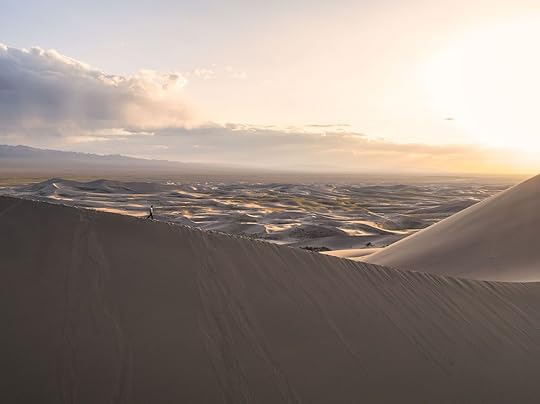
They get their name from the low-humming sound the sand makes as it moves.
We left the singing sand dunes the next day and started to make our way north towards the mountains.
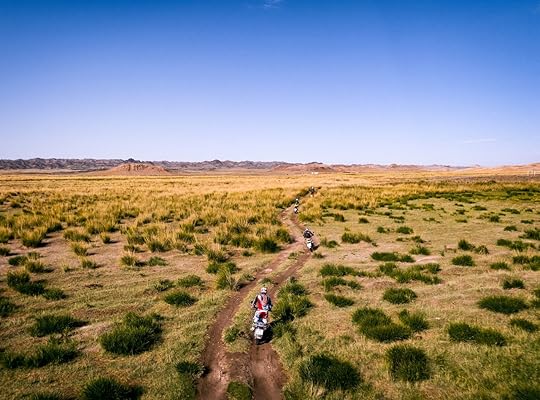
Riding through a bog on our way to the next camp.
The hospitality of the Mongolian people is like no other. We would come across small homesteads and the inhabitants would invite us into their homes and offer us cheese curds and airag (fermented horse milk). They would change the entire course of their day because a stranger had arrived.
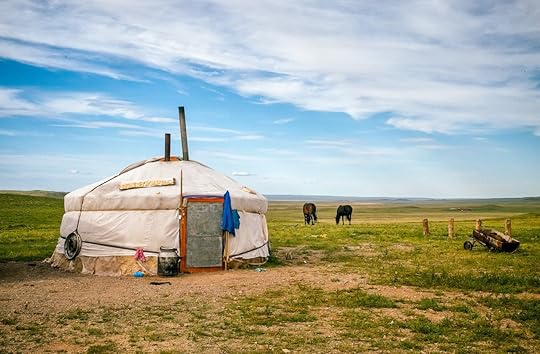
A ger on a family homestead with cheese curds drying out on its roof.
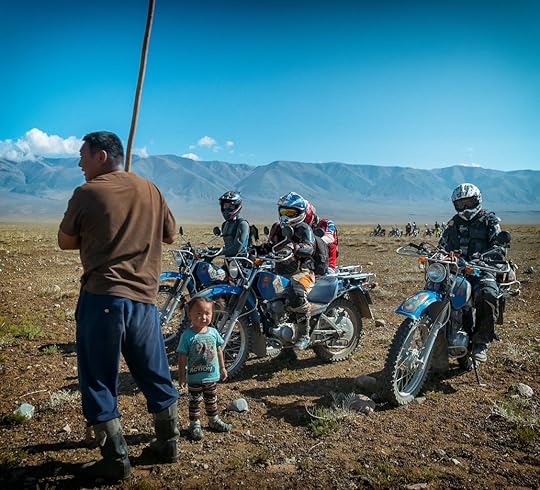
The riders had small gifts for the children we met along the way. They also needed to ask for directions as there was no actual road and the GPS units weren’t always cooperative.
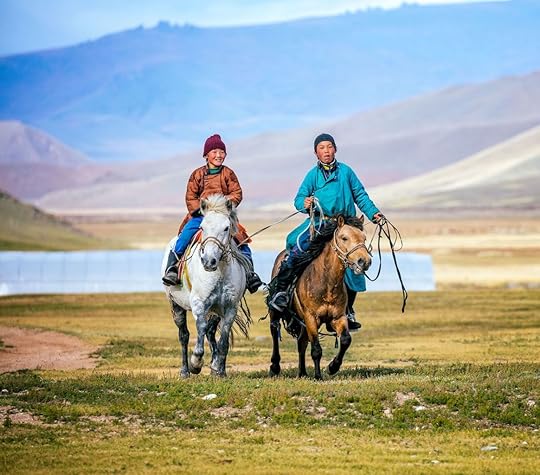
Riding horses is the best way to get around in rural Mongolia and Mongolian people are extremely talented riders.
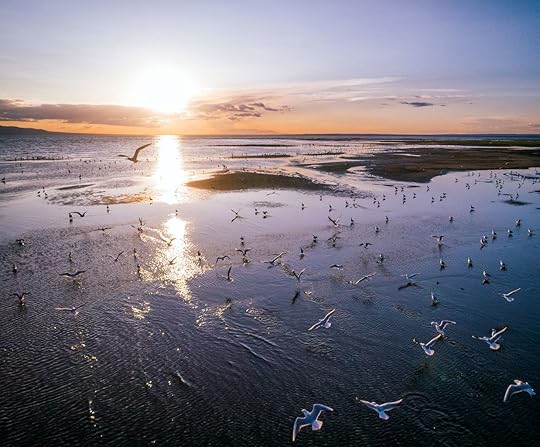
Our last night on the road was spent at White Lake. There was a large flock of migratory birds at the lake as the sun set.
Our last day was a long 300-kilometer stretch of patchy roads and river crossings into the mountains where rangers were patiently waiting for their new (slightly broken-in) motorcycles.
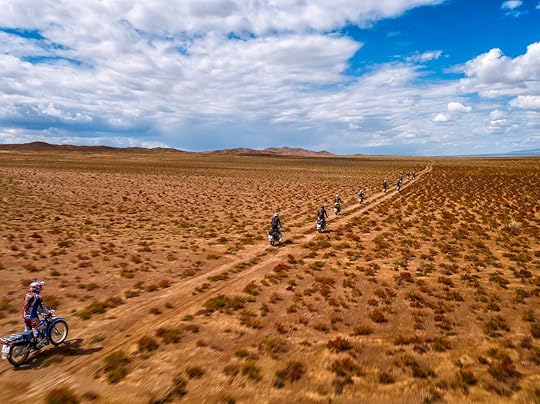
Cruising through the steppe.
Upon arrival, we were greeted by a big group and dinner party. I was looking forward to my first proper meal in 7 days, but first, I needed to capture the large glacier-covered mountain in the background that I had come so far to see.
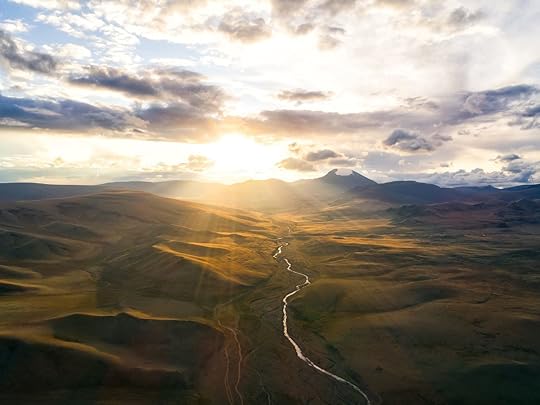
The next day, we headed to Otgontenger mountain. The riders took their bikes and I followed in the support vehicle with my driver Boro to the Sacred Lake at the base of the mountain. The lake is a place of offering and is off limits to women.
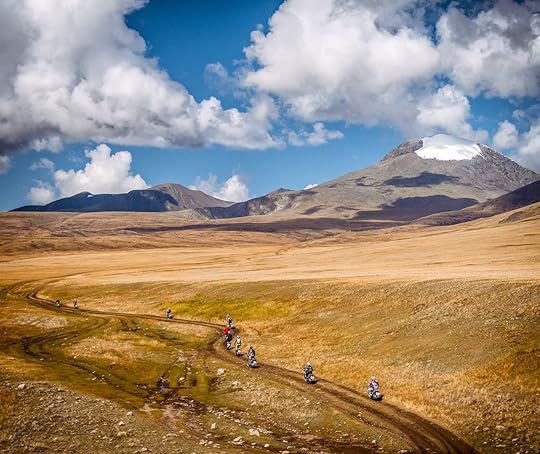
Approaching Otgontenger for the first time.
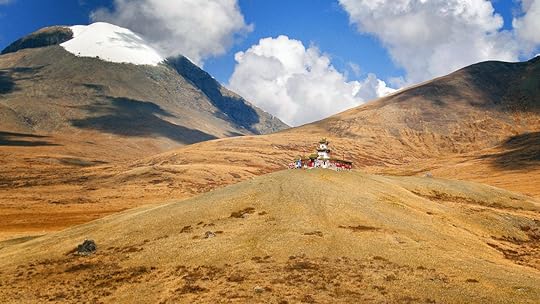
The temple at the base of the trail to the sacred lake.
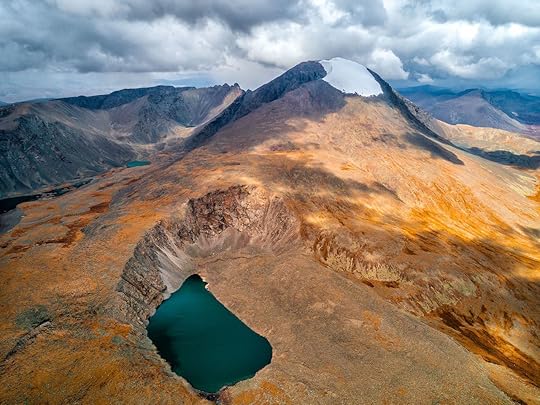
Otgontenger mountain from above.
I spent the next few days at Otgontenger filming my interviews and shooting as much as I could. There was a large ceremony where the riders handed off the bikes to the park rangers, who were thrilled.
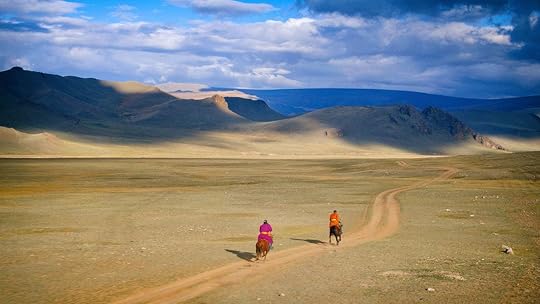
A few of the locals asked me to film them racing their horses.
On our last night at the base of the mountain, a party was thrown in honor of the riders and the crew. The night was filled with throat singing, traditional dance performances, and traditional Mongolian food.
I never thought I would go to Mongolia once, let alone three times, but when you go to Mongolia, you leave a piece of your heart behind and you always return to retrieve it.
More like this: Horidal Saradig: A pristine, unexplored region of Mongolia
Before traveling to Hawaii
Hawaii is one of the best destinations to escape the winter blues, so for you to make the most of your time away from the mainland, we’ve compiled a short list of things you should know before heading that way. Here are 11 things you need to be aware of before visiting Hawaii.
1. It may be warm in Hawaii, but head to the mountains or volcanoes, and you’ll need some winter gear.
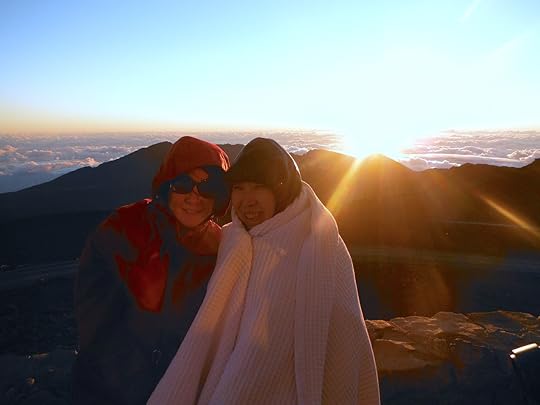
Photo: Diana Norgaard
While it may be 85 degrees and sunny down at the beach, if you head up to
Traveling with kids for the holidays
The winter holidays are not just rapidly approaching; they’re already here. Whether you celebrate Christmas, Kwanzaa, Hanukkah, or are just going somewhere nice and warm for your winter break, here are a few tips if you’re hauling your offspring out of your house in the next few weeks.
1. Check prices early.
Airfares skyrocket around the holidays — although you can often get good deals if you fly on the holiday itself — so check early and often. It is worth mentioning that the cheapest time to buy plane tickets for the December holiday season is the Tuesday after US Thanksgiving, as this is when major airlines have sales.
If you wait to book hotels and car rentals, you may find yourself without many options — I will say, though, that if you are renting a car, don’t bother reserving a top tier car at top dollar. Likely the agency will be out of many car options, and you will just get whatever they have no matter what you reserved; we actually walked in somewhere once and they just waved at a row of cars and told us to pick any one we wanted except the convertibles. Most car rental reservations are free, and many hotel reservations can be cancelled up to 24 hours beforehand, so it can’t hurt to throw down a reservation even if you think you might need to cancel it later — it will cost you nothing to reserve, and may save you a ton of money.
2. Leave early.
Blizzards, crowds, and staff who might be on holiday break themselves often result in overstretched airport situations. The earlier in the day you can fly, the more likely you are to take off on time — airport delays often stack up, with later flights bumping up against earlier ones and slowing everything down. Try to get nonstop flights if possible, and as early as you feel comfortable, even if it means hauling your offspring to the airport before their normal wake-up time.
Ditto if you’re driving — the earlier you can leave, especially if it’s before normal rush hour for your area, the less traffic you will hit. Most people like to sleep in a bit on their holidays, although sleeping in may be a distant memory if you have kids.
3. Expect crowds.
Even if you don’t celebrate the dominant holidays in your country, be aware that lots of other people do, and many of those people will be traveling at the same time as you. It is a fact of life that many people get time off from work in December — especially if they must use up paid vacation time by the end of the calendar year. Airports, train stations, and other travel hubs will be much more heavily trafficked than usual, which can make lines long and maneuvering difficult.
If you can, consider bringing a baby or toddler carrier rather than a stroller. Lots of irregularly-moving crowds around you mean negotiating your way to your airport gate could become a slalom; leave the stroller at home and strap your kid to your body for ease of transport. Added bonus: they can take naps in it, and also won’t grab all the breakable Christmas ornaments inconveniently placed at eye level.
Leave extra time to get through security and baggage check lines. Read the restrictions on your ticket carefully to see if you can check in online or electronically at kiosks in the airport, which will often allow you to print baggage check tags and boarding passes, skip the line at the check-in counter, and go directly to bag drop. More travelers moving through, and many of them who only travel once or twice a year, mean security lines get clogged with people who don’t know how to separate their gels and liquids, or whether or not to take off their shoes.
If you’re driving to your destination, expect lots of traffic.
4. Know your rights with TSA.
Be aware: just because there are lots of people does not mean you need to give up your rights. You DO NOT need to consent to a Millitron Wave Scanner at TSA — you can ask for a hand check or patdown. If you are traveling with a baby or toddler, you will often be allowed to go through the metal detector (usually as a whole family, rather than just the parent holding the baby) and you will also get wanded.
You may carry milk and/or formula for your baby or toddler (they say until the child is 2, but many TSA agents will allow it for older children unless they are obviously too old, like 9), beyond the liquid and gel restrictions. This milk or formula may be tested with a swab — I have asked what exactly is in these swabs before, and what they are looking for, and TSA refused to tell me. Internet research reveals that they are harmless, however.
5. Watch out for winter weather.
If you live in the Northern Hemisphere, you’re in winter right now, and this can mean varying degrees of severity. Be cautious when you are traveling.
If you are driving, drive within speed limits, and ensure that you have the correct tires for your car; if you need winter or all-weather tires, get them put on your car several weeks before your trip so you don’t forget about it. If you are traveling to an area that requires snow chains (say, if you need to drive over the Sierras in California, the only place I have ever been required to put snow chains on my car), ensure that you have them in your trunk. You cannot drive fast or far with chains on, so you cannot put them on early to prepare.
If you are flying, expect delays. Airplanes require de-icing if you are flying from a cold region, or if it is actively snowing or close to freezing. This can delay the takeoff process, so be appropriately prepared for waiting on the runway. Flights can also be delayed in arriving (depending on where they’re coming from and how conditions are in the airport you’re trying to leave from). Bring LOTS of toys, games, and snacks. More than you think you’ll need. Like ten times as many.
If you are traveling with a car seat, either driving or on a plane, be aware that you cannot tighten car seat straps over jackets or snow suits. You can put your child in a light jacket or sweater and tuck a blanket around them if you are worried about them getting cold while they’re in the seat.
6. Kids out of normal routines are wacky kids.
You know your own children best, but I know that my daughter gets wild when her routine gets compromised. Traveling to see relatives means a lot of time spent away from familiar spaces, normal dinnertimes, and possibly also compounds some jet lag into the bargain. You will likely also be doing a lot of high energy activities: visiting new people, going to new places full of overstimulating crowds and activities, and stretching out bedtimes for one more visit with great-grandma.
Try to keep routines as normal as possible. Try to ensure you have lunch and dinner at regular times, and if they still nap, make sure they get a good nap during the day. Even if they don’t nap, it’s not a bad idea to aim for some scheduled quiet time every day to help keep things calm. Try to keep outings or big activities to one or two a day — it can be tempting to fit in as many activities as possible while you’re with friends or family, especially if you’re introducing a new baby around, so resist the urge to overextend yourself.
If you are dealing with jet lag, sadly, a good guideline is: it takes kids one day to adjust per hour of time change. This means that if you travel across 10 time zones, it may take kids up to 10 days to adjust fully. When we go back to the eastern United States from Sweden, a difference of 6 hours, it usually takes our daughter about 5 days to stop waking up for hours every night. Be prepared and take naps yourself if possible. Get lots of daytime play and sunshine, if possible. Buy a ton of coffee.
7. Pack all your own necessities.
Bring your kid’s favorite comfort objects (don’t forget that beloved stuffie or blanket), and some good toys that can be used in small spaces. Baggies of Lego or PlusPlus are crowd pleasers. Load the iPad or your phone with apps and games, especially some new ones they haven’t usually played with. Download some movies or tv shows — Netflix often allows you to save a small number of shows for later viewing. Bring lots of favorite snacks for you as well as your kids; don’t forget you get hungry and thirsty, too. Water bottles are a great idea and can be refilled everywhere. Bring as many diapers as you think you might need, plus 3, just in case of emergency blowouts. If you’re facing long flights or drives, try to create situations where your child will be able to sleep if they have to; whether this means playing soothing music on your phone, changing them into jammies, or whatever else… an unrested kid makes everyone miserable.
8. Get travel insurance.
For your own peace of mind, consider getting travel insurance even if you are traveling domestically. Travel insurance is only a few bucks and can cover disasters, delays, lost luggage, and out of state or out of country medical bills. My favorite travel insurer is WorldNomads, but you may actually have travel insurance if you book through your credit card (check the guidelines before you leave), or through your home or renter’s insurance.
9. Prepare for sickness.
Winter is flu season and being stuffed inside enclosed spaces with either just your loved ones or 400 strangers (in the case of an airplane) is not exactly a pathway to supreme health. Take it easy and eat well, drink lots of water, and wash your hands as much as you can. Sneeze into your elbow and not into your hand. Try to wash your kid’s hands as much as you can, since they are more likely to be touching gross surfaces than you — my daughter once licked a poster in the Montreal metro before I could stop her — and are disgusting little disease vectors. Bring a little first aid kit along that includes items you like to have when you feel ill: fever reducers, favorite teas or tisanes, heating pads, whatever. Bring your kid’s thermometer or get some FeverBugz, which are stick-on fever indicators for children, and are fun and easy to read.
Echinacea and vitamin C actually do nothing, but zinc has been proven to reduce the duration of colds. Check dosage information before giving zinc to your children, since it can be toxic if overdosed, but consider getting some lozenges for yourself in case you need them.
More like this: The ultimate guide to flying with small children
11 facts about San Antonio, TX
San Antonio is having a birthday, and it’s a big one — the Alamo City is turning a whopping 300 years old. How many other places in the US can say that?
And there’s tons more you probably didn’t know about the city. Let’s celebrate its Tricentennial with margaritas and tres leches on the River Walk, but let’s also get down to business: Here’s what else you should know about San Antonio.
1. The only UNESCO World Heritage Site in Texas is right here.
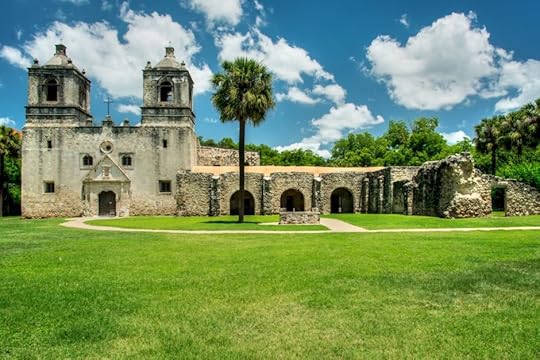
Photo: Visit San Antonio
You probably know the Alamo — it was a mission and fortress compound established in the 1700s and the site of the infamous Battle of the Alamo in 1836. But San Antonio has four other historical missions, too: Mission San Juan, Mission San José, Mission Espada, and Mission Concepción. In 2015, these sites were all given UNESCO World Heritage status, making them collectively one of only 23 in the US, as well as the only one in Texas. Together, the four missions (excluding the Alamo) also make up San Antonio Missions National Historical Park.
You could pick and choose which to see, but it’s easy enough to explore the four “others” via the River Walk’s Mission Reach extension, an eight-mile biking and walking trail connecting the sites along the San Antonio River. The trail is dotted with picnic areas, bridges, and pavilions, making this a solid day’s excursion. The park headquarters is at Mission San José (that’s where you’ll get the lowdown on the missions’ history), but all four missions offer weekly Catholic services and can be visited throughout the week for free.
2. This is one of the most haunted cities in America.
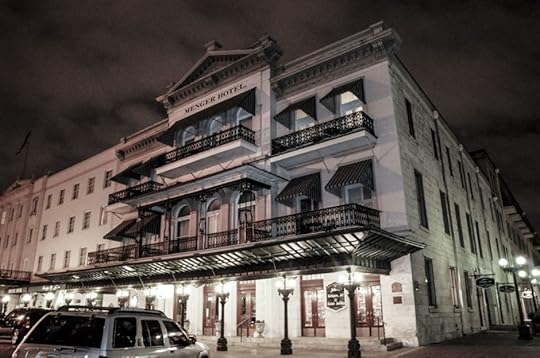
Photo: Amboo Who
Although such statistics are a teensy bit subjective, San Antonio often ranks as one of the top haunted cities in America. Remember how 2018 marks its 300th birthday? That’s a lot of years…and a lot of opportunities to accumulate ghosts.
Haunted hotels — like the Menger and Crockett — are part of every ghost tour, and so is the Alamo itself. Other local urban legends include ghostly sightings at the state hospital, along railroad tracks, and at the Alamo Street and Majestic Theatres. Ghost tour operators abound (check out Sisters Grimm, Alamo City, or RJA), though if you know where to go, you could simply DIY. You know, if you’re willing to risk it.
3. Phil Collins is inspiring the next San Antonio museum.
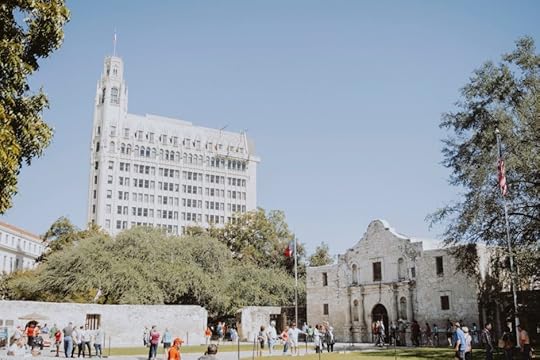
Photo: Haley Phelps
Rather than spending his rockstar money on what rockstars normally spend money on, musician Phil Collins (Genesis, Tarzan, the guy who can feel it coming in the air tonight) was so intrigued by the history of the Alamo, he started collecting memorabilia — almost anything he could get his hands on. Eventually, he amassed a collection of 204 items valued at over $15 million, and he then donated the entire lot of it to the Alamo.
Unfortunately, it’s not public — yet. Plans are still being drawn up, but when it opens, the exhibit is bound to be impressive. The collection includes a leather musket ball pouch and gun used by Davy Crockett, as well as an original Bowie knife used by Jesse Robinson (compatriot of Jim Bowie, for whom the knife is named).
4. Johnny Cash’s vandalism is in the Witte Museum.
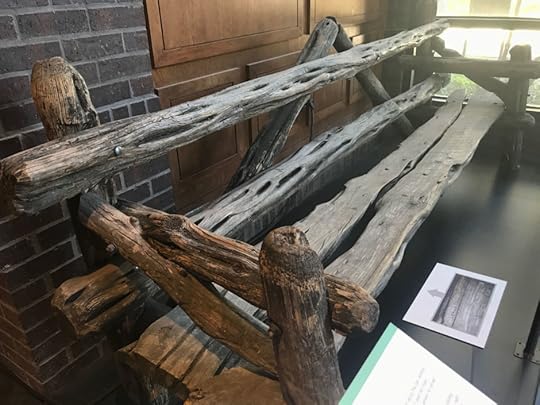
Photo: Visit San Antonio
When a not-yet-famous Johnny Cash met his first wife, Vivian, he carved “Johnny loves Vivian” into a park bench on the River Walk, immortalizing his passion for the San Antonio native and his soon-to-be-bride (they got married at St. Ann’s Catholic Church, not far away).
The bench was eventually relocated to the Witte Museum, where the Man in Black’s testimonial is displayed for all to see in the B. Naylor Morton Research and Collections Center. That’s in addition to the Naylor Family Dinosaur Gallery, the People of the Pecos Gallery, and the Texas Wild Gallery, to name just a few more reasons to visit. The Witte recently remodeled over 170,000 square feet of space, so don’t expect this one to be a quick pitstop.
Don’t miss: For 2018, check out the special Tricentennial exhibits like 300 years of San Antonio History: Confluence and Culture and Gathering at the Waters: 12,000 years of People at The Witte.
5. There’s history in the tea garden.
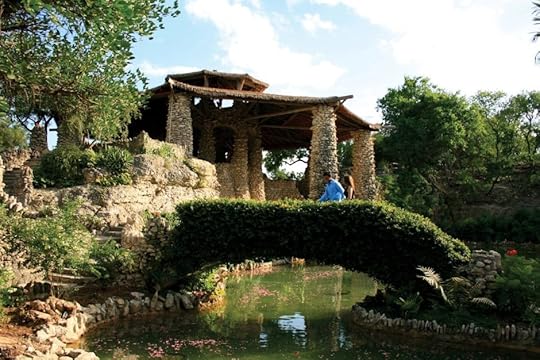
Photo: Visit San Antonio
Way back in the 1800s, San Antonio’s current-day Japanese Tea Garden (near what’s now the San Antonio Zoo) was part of a quarry. German masons worked there, extracting stone for many of San Antonio’s classic buildings, like the Menger Hotel. The area was later home to a cement company, explaining the kilns still standing on the property. Then, in 1918, the quarry was turned into the Japanese Tea Garden it is today (using a prison labor force to construct the walkways and bridges).
So what’s up with the “Chinese Tea Garden” sign you’ll see when you visit? After the bombing of Pearl Harbor, anti-Japanese sentiment was so high in the US that the name was changed to Chinese Tea Garden (even the Japanese caretakers were replaced). The name was changed back in the 1980s, but the Chinese Tea Garden sign still remains. The tricky past only makes the spot more interesting, adding a complexity to its beauty. And beauty it has — the grounds and stone bridges are so meticulously maintained that even the koi look content.
6. Fiesta San Antonio hosts the second-largest parade in the US.
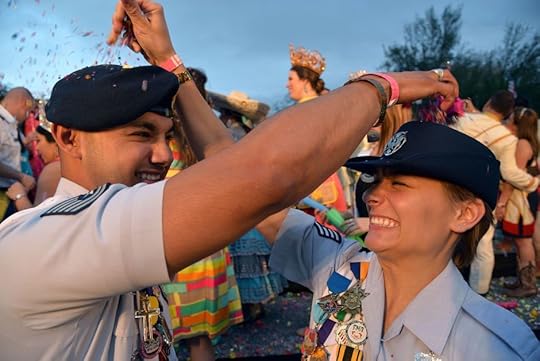
Photo: L.A. Shively
It may lose out size-wise to the New Year’s Day Tournament of Roses Parade in Pasadena, but did you know that San Antonio’s Battle of Flowers Parade is organized completely and entirely by women? Beat that. It’s also the historical genesis of modern-day Fiesta San Antonio, one of the most exciting times to be in the city.
The humble beginnings of the parade go back to 1891, when it started as a flower fight. Visitors arrived in their decorated buggies and, rather than use weapons to reenact the battles of the Alamo and San Jacinto, blossoms were thrown. As the Battle of Flowers became more popular, the parade grew, and carnivals, balls, and other parties were added to the festivities.
Today, this mega-event spills out across the city and even into neighboring towns and is a great time to visit — all 11 days of it. And you can bet that in 2018, it’s going to be huge. Texas huge. Tricentennial huge. Be there April 19-29.
7. The Alamo isn’t the only UNESCO claim-to-fame in San Antonio — so is the food.
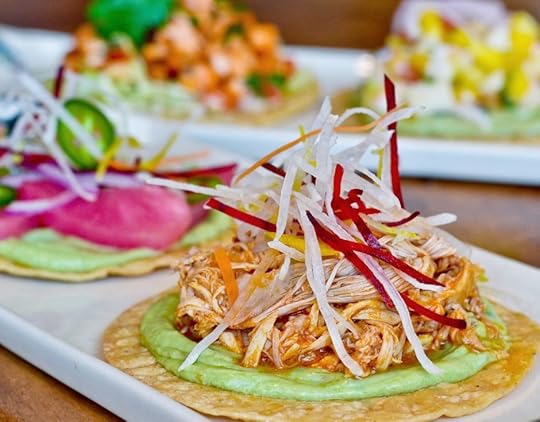
Photo: Visit San Antonio
In November 2017, San Antonio was officially recognized by UNESCO as one of two “Creative Cities of Gastronomy” in the US. You might take that to mean “awesome tacos,” but it goes about a hundred cuisines deeper (though yes, the tacos are incredible).
Centuries ago, Spanish colonists and Gulf Islanders arrived in the area, mixing their flavors and spices with the traditional tastes of the indigenous population. Since then, wave upon wave of immigration has left its mark on the local cuisine (German bratwurst, anyone?) — combine this with the fact that Mexico is right next door, and you’ve got an eclectic foodie scene here, to say the least.
And while it’s almost accurate to say San Antonio defines “Tex Mex,” anyone in the know is now calling it “Tex-Next.” Because what’s going to sweep the nation in the years to come is probably (definitely) already in San Antonio.
8. Yes, you can turn breweries into museums.

Photo: Visit San Antonio
What happens when you mix art with beer? Answer: the San Antonio Museum of Art. The museum acquired the former Lone Star Brewery in the 1970s and opened its doors in March 1981. In the beginning, the focus was on art from the Americas. Then, with the 2005 addition of the Lenora and Walter F. Brown Asian Art Wing, the museum gained one of the largest collections of Asian art in the US.
SAMA also has a respectable assemblage of Egyptian, Greek, and Roman items among its 30,000+ objets d’art. That’s 100 pieces for each year of San Antonio’s history. (Well, European-American history. The full San Antonio story goes back much, much further — some of which you can see at SAMA.)
Don’t miss: In 2018, check out the special Tricentennial exhibition, Spain: 500 Years of Spanish Painting from the Museums of Madrid.
9. Mark Twain considered San Antonio to be one of four unique cities in America.

Photo: Skeeze
America’s greatest humorist once penned, “There are only four unique cities in America: Boston, New Orleans, San Francisco, and San Antonio.” And Mark Twain should know — he traversed the country by covered wagon, sailed up and down the Mississippi River, and traveled by ship to Europe and the Middle East.
With the addition of cities like Las Vegas, and other places like New York doing an about-face since Twain’s time, the list might be a little longer today. However, San Antonio definitely still has its own vibe, and you’d be hard-pressed to find anywhere else like it. And just in case you’ve forgotten, it’s the only one of the four that can even talk about tacos.
10. The Tower of the Americas is the second-tallest observation tower in the US.
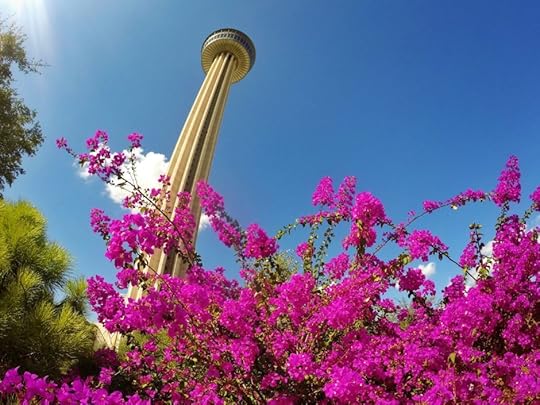
Photo: Joe Diaz
You probably picture Seattle when you think of famous skyline towers, but the actual winner in this contest is the Las Vegas Stratosphere (Seattle’s Space Needle comes in fourth). San Antonio’s Tower of the Americas is second on the list at 750 feet, only around 300 feet shorter than the Eiffel Tower. It was built for the 1968 World’s Fair, and it’s held the best views over San Antonio ever since.
The observation deck is awesome, but to get the most out of your experience, check out the revolving Chart House Restaurant. There’s also a 4D Theater Ride that takes you to and through the Texas skies. For what it’s worth, most people take the elevator to the top, but if you want to climb the 952 steps, by all means.
11. San Antonio is named for a Portuguese saint with an Italian name.

Photo: Stuart Seeger
San Antonio takes its name from the San Antonio River, “discovered” several years before the city was actually settled. Spanish explorers arrived in the area on the Feast Day of St. Anthony, and the name seemed a logical choice for the river.
Who exactly is St. Anthony of Padua? None other than Portuguese-born Fernando Martins de Bulhões. How Fernando of Lisbon ended up being St. Anthony of Padua is a longer story than how San Antonio got its name, but one thing is clear: In San Antonio, diversity and history both run long and strong. Happy birthday, SATX! 
December 13, 2017
The last true tattoo artist
AT SOMEWHERE AROUND 100 YEARS OLD, Whang-od is the last living Mambabatok (tattoo artist) of her generation in Buscalan, a remote mountain village in the Kalinga province of the Philippines. She is a living connection to ancient tribal culture, a time when tattoos were part of a larger ceremony known as batok, which included chanting and recognition of one’s honor.
a living connection to ancient tribal culture…
Whang-od first began at age 15, and continues today, with the simple setup of a thorn from a lime tree as the needle and a charcoal-water mix for ink. Thinking back to the earliest times when she gave tattoos to tribal headhunters and indigenous women, she jokes, “You [used to] get a tattoo when you kill because you have become a warrior. Now everyone gets tattoos.”
Whang-od has passed on the practice to her grandnieces, Grace Plaice and Ilyang Wigan, who tattoo alongside her, and will carry on the tradition, as she explains, “when I can no longer see.”
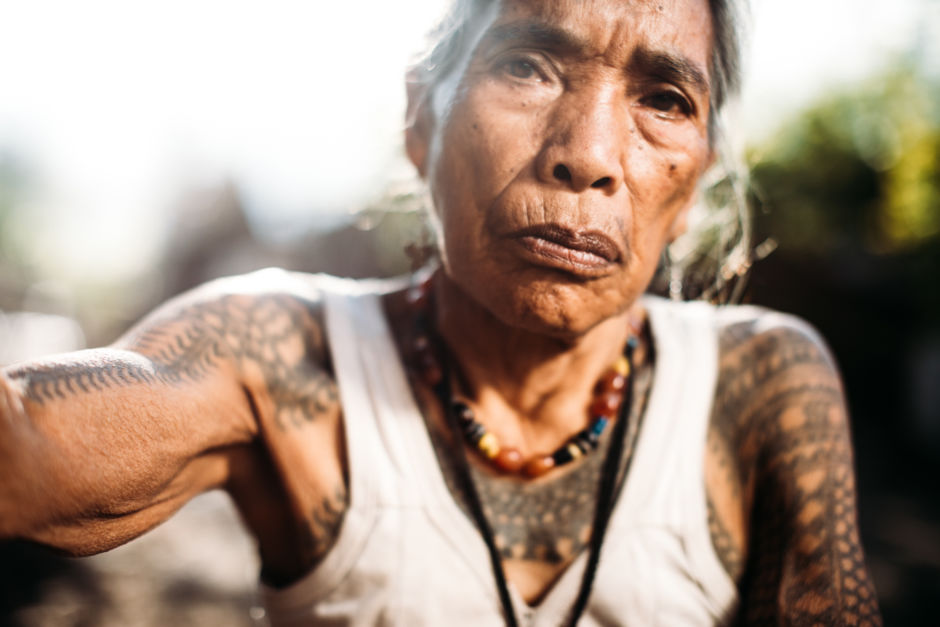
“Growing up in the mountains, you still see the elders with tattoos, and you hear that they all used to have them, but then when Christianity and modernization came, it died down.” — Ed Aga Mos
“I’m happy and proud to share our culture,” Whan’od’s grandniece Grace Plaice noted. “And I hope that people who come to visit us are happy too because it’s not easy to come all the way up here.”
Reaching the remote village to be tattooed by Whang-od has taken on the quality of a pilgrimage.
About a decade ago, the first outsiders showed up to Buscalan. They were either other tattoo artists who’d heard of Whang-od, or guests from Manila. Then, in 2009, a Discover Channel documentary about Whang-od led to a large number of people beginning to visit Buscalan, with upwards of 20-30 people a day coming to be tattooed. This has continued to this day. For many travelers, reaching the remote village to be tattooed by Whang-od has taken on the quality of a pilgrimage.
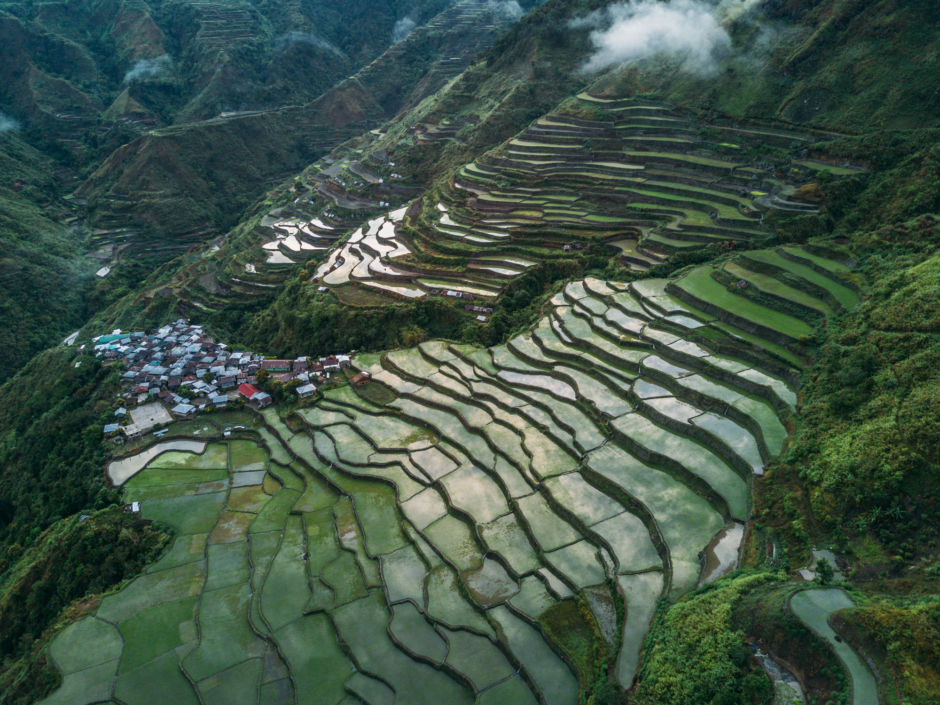
The remote village of Buscalan, in the Philippines’ mountainous Kalinga province. These mountain villages were strategically built high on mountainsides to be more easily defended from invaders, as well as to create terraces for agriculture.
“There’s good and bad things about this,” explained Ed Aga Mos, owner of the sustainable tourism outfitter Tao Philippines, which helps guests organize visits to Buscalan. “The bad side is the uncontrolled influx of tourism. So that means trash, more consumption of what they [the tourists] have, bringing in things to satisfy their visit.”
He adds, however, that “tourism gives them [the locals] the whole idea to preserve this culture, and that everyone benefits from tourism.” 
When Colorado people are snobs
348. By next week it could be 349. No, that’s not the number of consecutive Denver Broncos home-game sellouts, it’s the number of breweries we have here in the Centennial State. We take beer seriously here, and certainly don’t have time for any of that fluff from St. Louis.
Unless you want to look naïve when making happy hour plans, don’t suggest that bar down the street. You’ll attract much more enthusiasm by recommending the new brewery that opened up next to the King Soopers in that shopping center off the highway on the other side of town. We’ll all jump on our bikes and pedal over there after work.
2. The rest of the “Locavore” movement
I’ll take my wine and peaches from Palisade, my corn from Olathe, and my cantaloupes from Rocky Ford. Opening a restaurant in Denver? Do yourself a favor and stock local food, craft spirits, and throw a few Colorado flag-emblazoned art pieces on the wall. I won’t lie — I felt pride in my heart when I noticed the Chili’s I ate at as a kid had closed down.
3. Ski resorts
Recently I read an article touting the joys of skiing in the Midwest. I almost ralphed. We’ve all heard of a little place called Aspen. But what do you know about Telluride? Wolf Creek? Loveland? Hell, even Eldora on the windiest day of the year is better than anything east of Denver.
4. And the towns surrounding them
A good ski town has: a solid burrito place, slightly disheveled but super hospitable locals, welcoming hot springs, and a damn good bar-level music venue that books bluegrass, reggae, and the occasional ska band. If you’ve got a Serious Texas BBQ or Backcountry Delicatessen, that’s an added bonus. Slam dunk if the hot springs are clothing optional after dark.
5. Powder stashes
Inbounds or backcountry, everyone’s got their favorite place to shred the gnar on powder days. In fact, the best way to start a lively dinner conversation here is to ask the person sitting next to you about their favorite stash. Debates are sure to come, followed by several rounds of one-upping and chest-pounding stories of accomplishment. These conversations are a great way to build a bond with someone you just met. Once they trust you, they may even offer to hike you into their spot (but only if you swear not to come back with 12 of your friends).
6. Weed
I couldn’t find a bag of schwag if I spent all week trying. And let’s make sure one thing is crystal clear: Colorado did it first. Not Washington. Sorry Seattle, but in the US, January 1st, 2014, will forever be known as the day prohibition took a knee to common sense. Since then, we’ve mastered everything cannabis, from flower to oils to infused foods to entrepreneurship and policymaking. Feel free to use our success as a model.
7. Backpacking
Don’t try to act like that crawl to Hanging Lake was a hike! Your Raiders hat gives it all away: you didn’t trek even one section of the Colorado Trail last summer, and probably can’t even find the Continental Divide on a map. Actually, you look familiar: aren’t you that guy I met at the bar at Beau Jo’s that told me about how there’s nothing to do in Colorado except drink?
8. On that note: Not being from the Midwest, Texas, or California.
Look, bro. You can ride my ass all you want going up I-70 but I’m not going to move over if I’m going faster than the car in the lane next to me. End of story. This isn’t California, and it sure as hell isn’t Oklahoma. If you want the goods that bad, you should have woken up an hour earlier, or spent more time studying the topo map to be sure you’d get away from the crowds. I’ve been heading to Winter Park at the same time every Saturday for 30 years and I’m not changing. By the way, The Highlands used to be The Northside before the days of the $15 cocktail.
More like this: 6 things people from Colorado can be proud of
popular holiday meals around world
If the fastest way to a person’s heart is through their stomach, then it might also be said that the fastest way to the heart of different cultures is by partaking in their holiday meals.
After diligent research, Kitchen Cabinet Kings has put together an infographic showing the most popular holiday food and drinks in 20 countries from around the world. While the roasted turkey and ham have held the top spot in US holiday fare rankings for generations, other countries forego meat altogether in favor of sweet cocktails and/or seafood. Australia, for example, prefers a hearty seafood platter, while South Africans have an affection for Malva pudding. However, none of these are perhaps as surprising as a popular holiday meal in Japan: a good ol’ bucket of Kentucky Fried Chicken.

Photo: Kitchen Cabinet Kings
More like this: Infographic: 12 Christmas traditions from around the world

new island offers insight to Mars
Back in 2015, an underwater volcano near the main island of Tonga belched enough magma that it broke the ocean’s surface. This new land mass, smack-dab between the islands of Hunga Haʻapai and Hunga Tonga, is named “Hunga Tonga-Hunga Haʻapai” (or HTHH) and is officially the youngest island in the world.
HTHH is also only one of three volcanic islands to pop into semi-permanent existence in the last 150 years. This means that scientists at NASA can study its formation via satellite technology and use what they learn from the eruption to better understand the surface history of Mars. The more we know about Martian geology, the easier it will be to figure out if life existed there in the past and how difficult it would be for humans to terraform the red planet.
Check out the video provided by NASA Goddard to learn more.
On a side note, adventurers just got a huge incentive to visit the South Pacific, where they have the opportunity to set foot on the youngest landmass on Earth. While you can fly to Tonga from the US via Auckland or Fiji, you will have to rent a boat and possibly swim to shore (while facing the risks of being next to an active volcano), but what a check for your travel bucket list!
Follow Matador on
Vimeo
Follow Matador on
YouTube
More like this: Watch: Earth's lost 8th continent is in the South Pacific
Matador Network's Blog

- Matador Network's profile
- 6 followers

