
Matador Network's Blog, page 1429
December 19, 2017
The 8 people Alaskans love to hate
Alaskans are bound together by a distinct set of values. We’re independent, industrious, wilderness-savvy, passionate about the environment — and above all, tremendously proud of our lifestyle. Among Alaskans, certain codes are unbreakable. Outdoor safety is to be taken seriously. Don’t feed the bears. But our state has also always drawn curious outsiders, some of whom haphazardly disregard our way of life. We may hold diverse opinions about other topics, but Alaskans are united in their distaste for a few individuals. We don’t mean them any harm — we just find some of their actions to be truly incomprehensible.
Here are 8 people Alaskans love to hate.
1. Timothy Treadwell
Timothy Treadwell went down in Alaskan cautionary tale history in 2003, when he and his girlfriend were mauled by a bear in Katmai National Park. While their deaths were tragic, Treadwell isn’t exactly a sympathetic figure among Alaskans. Mainly because he broke a cardinal rule: keep your distance from wildlife. After reports surfaced that the man had spent 13 years petting grizzlies and playing with their cubs, Alaskans couldn’t help but feel he had it coming.
2. Cruise ship tourists
Alaska’s seasonal workers dread cruise ship days above all others. That’s because somehow, these tourists manage to be even more entitled AND clueless than most. Besides that, we have a bone to pick with the companies themselves, who dump illegal waste into our waters, try to take a flat percentage off the profits of local business owners, and occasionally, monopolize entire boardwalks.
3. Christopher McCandless
Oh, Christopher McCandless — the traveler with grand sensibilities seeking escape through some simple life in the Alaskan wilderness. We get the sentiment in theory, but our first reaction is: what the hell was he thinking? As Christopher learned, living off the land in the winter is no joke. If you recall, the last Alaskan he encounters before trekking off towards his demise only had to take one look at his footwear to know he was toast.
4. Anyone who comes after our subsistence lifestyle
One of the biggest controversies in the Alaska online-sphere this summer erupted when anti-whaling activists accosted a Yupik teenager after he proudly brought home his first bowhead whale. Alaskans unanimously rallied in the teen’s defense, because it strikes a nerve in us when our subsistence lifestyle is attacked, vilified, or misunderstood. Bottom line? Don’t tell us that traditional hunts or fishing are immoral or uncivilized unless you want to face our full wrath.
5. Governor Bill Walker
Poor Bill Walker faced the wrath of thousands of Alaskans when he cut our Permanent Fund Dividend checks in half last year in order to balance the state budget. Sure, Walker was in a pinch, but the whole ordeal taught him a valuable lesson: messing with our oil money is basically political suicide.
6. Lazy seasonal employees
Seasonal workers flood tourist towns in the summer, all wide-eyed and excited to live out their wilderness dreams. And we’re happy to embrace folks that are there to work hard, but if not — that’s another story. If you claim to be looking for a fishing job, but really just want to party all night and smoke weed on your break at the cannery, get ready for a rude awakening.
7. Joe Hazelwood
Joe was the captain of the Exxon Valdez, the boat responsible for the largest oil spill in U.S. history. To add insult to injury, Joe was infamously drunk at the time and admitted to sucking down a few vodkas in the hours before the incident. While prosecutors were unable to prove his intoxication in court, the public hasn’t let the man live it down since.
8. RV Drivers
In the summer, RVs are the bane of our existence – there’s nothing worse than being caught behind a caravan of them creeping along at 45 mph while we’re on our way to our next adventure. And if that’s not bad enough, they slow to a crawl at the first sight of a moose. Ugh. 

More like this: 18 commandments for living in Alaska


Capilano Bridge park light festival
The Capilano Suspension Bridge Park is already a huge nature draw to Vancouver, BC, but, once a year, its light festival becomes one of the biggest holiday attractions in the Pacific Northwest. Throughout the year, visitors of all ages can experience the region’s temperate rainforest by walking across a series of suspension bridges that leap from fir trees to rocky cliffs hundreds of feet above a rushing river . From the end of November through the end of January, the park’s team decorates the entire canyon with hundreds of thousands of lights, creating one of the most unique holiday events in the world. Seriously, it’s like someone crossed an Ewok village with a light show from Whoville.
Other attractions of the Canyon Lights festival include gingerbread cookie-decorating and ornament-making for the kids, as well as caroling and a holiday band.
A post shared by #CanyonLights (@capilanosuspensionbridge) on Dec 4, 2017 at 3:11pm PST
A post shared by #CanyonLights (@capilanosuspensionbridge) on Dec 1, 2017 at 9:06am PST
A post shared by Wander The Map (@wanderthemap) on Dec 14, 2017 at 7:26pm PST
A post shared by #CanyonLights (@capilanosuspensionbridge) on Dec 13, 2016 at 11:42am PST
A post shared by #CanyonLights (@capilanosuspensionbridge) on Dec 7, 2016 at 9:23am PST
A post shared by #CanyonLights (@capilanosuspensionbridge) on Nov 28, 2016 at 2:45pm PST
A post shared by #CanyonLights (@capilanosuspensionbridge) on Nov 24, 2016 at 5:05pm PST
Follow Matador on
Vimeo
Follow Matador on
YouTube
More like this: Montreal: Festival of Lights
Weirdest bars in San Francisco
From holes in the wall decorated with headless dolls and plastic rats to pubs so small the beers are kept in a bathtub, San Francisco has a notable collection of bizarre watering holes. Here are 13 of the weirdest.
Search by neighborhoods:
1. Nob Hill
2. The Mission
3. The Tenderloin
4. Cow Hollow
5. SoMa
6. Russian Hill
7. Chinatown
8. North Beach
9. Hayes Valley
Nob Hill
Tonga Room & Hurricane Bar
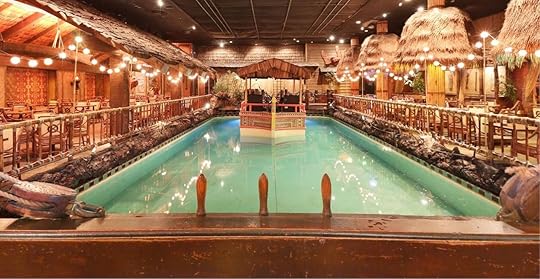
Photo: Tonga Room & Hurricane Bar
Come for the kitsch. Stay for the Asian snacks, like poke and pupu platters, and the old-fashioned mai tais. The
Why we need LGBT tourism
In 2014, my article 8 questions LGBT travelers should ask before going abroad went viral. As I read through some of the comments left for my piece on Facebook, I started to see a pattern. Lots of people were commenting: “why is this even an issue? Just don’t have sex or make out in public.” There were a few commenters who compared taking off your shoes in a Buddhist temple to being closeted while traveling. Some even went on to suggest that we should be closeted while traveling because it’s “respecting other cultures.” Several other folks remarked that they thought it was morally wrong to travel to countries that do not support LGBT people because the country would be benefitting financially from tourism.
The bewildering tone of some the comments got me thinking back to the International Gay and Lesbian Travel Association conference I attended a few years back. The conference was filled with people interested in learning about and investing in LGBT travel. The questions most business professionals were asking were coming from the same place of misunderstanding echoed in the comments. In an effort to set the record straight (pun intended) I’ve organized my thoughts on why we need LGBT tourism.
1. Meeting LGBT people increases visibility and decreases homophobia.
Studies by Caitlin Ryan’s Family Acceptance Project show that being able to identify someone who is LGBT reduces homophobic words and behaviors. Melissa Langley, a well-known lesbian travel blogger, says that LGBT tourism has a twofold effect. “LGBT tourism exposes LGBT people to the world and the world to LGBT people. It’s a mutual beneficial relationship that can help local communities boost their economies while simultaneously correcting bias and stereotypes.” We need LGBT tourism because LGBT people are still at a high risk for violence and discrimination around the world. Strength in numbers is a cliche, but it’s also true. LGBT people are being killed and experiencing hate-motivated violence. We saw this during Kiev Pride, in the IS executions of LGBT people, and in the numerous murders of trans women of color in the United States. Exposure to LGBT people creates empathy and educates communities about the lived experiences of LGBT individuals.
2. LGBT travelers are a diverse and nuanced community.
Many people assume that LGBT community is largely made up of gay white men with high paying jobs. These are stereotypes based on heteronormative images. LGBT people are a diverse group. David Paisley and Thomas Roth of Community Marketing spoke at IGLTA about the diversity of LGBT travelers.
Statistically, LGBT people tend to travel more than their straight counterparts, but it would be a mistake to assume that all LGBT people have large amounts of disposable income. LGBT identity is intersectional and we are just as much impacted by gender, race, ethnicity, social class, and ability as any other group of people.
LGBT people fall into all of the categories of travel. We are backpackers, luxury resort enthusiasts, festival goers, family travelers, and everything in between.
No single person can be representative of a collective of diverse people. The same goes for marketing campaigns targeting LGBT travelers. What appeals to urban white lesbians may not appeal to the suburban black gay male dads. Some LGBT travelers would prefer to tour in groups of their own and others would rather blend into the more mainstream crowd. Work on marketing campaigns that respect the diversity in our community and you will see an increase in sales.
3. There is a link between policy, cultural acceptance, and the pink dollar.
The decriminalization of LGBT identity in countries around the world has lead to the opportunity for LGBT people to experience other cultures more comfortably. Marriage equality, in particular, has lead to a whole new market for LGBT travel.
According to a study conducted by former New York City mayor Michael Bloomberg, marriage equality lead to $259 million in economic impact and another $16 million in direct revenues to New York City in the first year alone.
Community Marketing discovered that 29% of LGBT people are frequent travelers. We take five or more trips a year and our rates of travel have increased by 9% in the last year, despite the sluggish economy. With LGBT travelers paying an average of $259 a night for a hotel stay, being welcoming and affirming of LGBT people can have huge benefits on local economies.
That being said, tourism boards and industry professionals should realize that encouraging LGBT travelers to visit an area without the necessary safety precautions can have devastating consequences. The campaigns need to include marketing, local education, and sensitivity to the community.
Gender nonconforming travelers can be outted by their voice or mannerisms. LGBT identity goes far beyond sex.
4. Most people cannot hide their identity.
Identity is an intrinsic part of who we are. Some LGBT people, particularly those who are gender nonconforming or transgender, may not be able to pass as straight and cisgender.
My wife is 6 feet tall, wears men’s clothing, and has short buzzed hair. Even if she put on a dress and pretended to be straight, people would read her as gay. Identity goes well beyond the clothing we wear or if we engage in particular physical activities.
Even someone’s mannerisms and voice can be read as gender nonconforming and out them as a member of the LGBT community. It is nearly impossible to hide all of these subtle traits when visiting another country. Even if someone could, can you imagine having to be constantly worried about how you’re perceived in order to stay safe? That’s not an enjoyable vacation, at the least, or panic-attack-inducing at the worst.
While it is important to be respectful of other cultures by doing things like taking shoes off inside temples or wearing a head wrap in a mosque, educating tourist destinations about the realities of LGBT travelers helps to encourage empathy and understanding and prevents instances of violence.
5. LGBT travelers still may not feel comfortable traveling in straight tour groups.
Sometimes, I want to have a conversation with folks where I don’t have to explain that I’m queer. We can engage with people who “get it” without having to focus on educating others about identity.
I recently had an exchange with someone where I mentioned my girlfriend in the flow of our conversation. The person I was talking to felt the need to let me know how much she supports marriage equality and that she’s definitely not homophobic, but sometimes her parents are and she always tells them to knock it off.
I loved that she felt so passionate and supportive. However, she wasn’t well-versed on the topic and my basic human rights don’t feel like appropriate small talk in the first five minutes of meeting someone.
Sometimes, I just want to have a good time and not feel obligated to create teachable moments with those around me. It is not the responsibility of the oppressed to educate the oppressor, but because I’ve positioned myself as an activist all these years, I feel like I fall into a unique category of obligation.
At times, I just want to get my drink and get my dance on and not worry about the patriarchy for a moment, especially when I’m traveling. You know what? THAT’S OKAY.
6. LGBT tourists may want to find the local LGBT community.
When I’m researching for a trip, I always investigate the LGBT nightlife and hot spots in a city. I want to meet local LGBT people and experience what their community is like. In some cities, this is as easy as going to the local gayborhood and stopping in the bar with a rainbow flag. In other cities, it takes a lot more effort and local experience.
I’ve been on trips before where I felt guilty asking my straight counterparts to seek out LGBT venues. I didn’t want to make a fuss or a scene but I really wanted to find the parts of the city that looked and felt like me. Having tour groups and business target LGBT tourists helps alleviate some of this awkwardness and gives people a place to seek out information.
Constance Taylor did a six-month stint of long-term travel. She said, “When traveling, I always feel it’s good to create some sort of comfort bubble from time to time. We always plan ways to get in touch with our LGBT community, whether it’s booking with an LGBT owned hostel or going out to an LGBT bar. It makes traveling to foreign countries not so foreign after all.”
7. Safety is still the number one concern for most LGBT travelers.
LGBT people want to see and do most of the same things as straight people, but when we’re traveling there is this constant nagging perception that we will not be accepted or we could be in danger. Sometimes, this perception is real and sometimes it’s based on fear and previous experiences. Dani from Globetrotter Girls wrote about how frequently outting herself can lead to men eroticizing her. With instances of corrective rape being very real, these exchanges can quickly turn dangerous.
LGBT tourism is important because it helps build economies, educates communities, and establishes means of comfort and safety in exploration. Investing in pink travel is an investment in international equality.
This article originally appeared on Dopes on the Road and is republished here with permission.
More like this: 7 ways travelers can support LGBT communities

December 18, 2017
Working holiday visa in Canada
The land of northern lights, free-roaming moose, and 24-hour poutine might not be everyone’s idea of a fantastic working destination. But Canada’s beautiful and diverse environment and constant growth as a world leader in multiple fields make it an amazing place to travel, live, and work. Here is your step by step guide on how to get an IEC Working Holiday Visa in Canada.
Note: IEC visas are also available to Canadians who want to work and travel abroad, due to reciprocal agreements with other countries. Check the guidelines for more info.
How to get a working holiday visa (IEC) for Canada
1. Which visa do you want?
2. Determine your eligibility.
3. Become a candidate.
4. Receive an invitation to apply.
5. Prepare your work permit application.
6. Pay the fee.
7. Submit your work permit application.
8. If your application is approved, you can move forward with plans.
9. Arriving in Canada.
1. Which visa do you want?
Depending on your home country, there are three different types of visa available:
Working holiday visa. You will receive an open work permit of limited time, with which to fund your travel in Canada.
Young Professionals visa. This visa is employer-specific — if you already have a job offer and/or want to work for the same employer for your whole stay in Canada, and the job contributes to your “professional development”, you can get this visa.
International Co-op Internship visa. This is also an employer-specific work permit, but is geared towards students who must complete a work study or internship to finish their studies. Visa recipients must work for the same employer during their stay in Canada.
This article will focus primarily on the Working Holiday visa, but if you want to explore the other two options (say, you already have a job offer in Canada), you can look for more information on the Canadian immigration website.
2. Determine your eligibility.
You must hold a passport from a country that has a reciprocal agreement with Canada that allows you to apply for an IEC visa. If you do not hold a passport from one of these countries, you must apply through one of the Recognized Organizations. The United States DOES NOT have a reciprocal agreement with Canada.
33 countries participate in the Working Holiday visa program with Canada. The table at the end of the article also shows their age restrictions and length of time the visa is good for. You can check your country against the table for details.
Aside from age restrictions, you must meet the following criteria:
Your passport must be valid for the duration of your stay in Canada.
You must have a minimum of $2500 CAD to help cover your expenses in Canada.
You must have health insurance for the duration of your stay.
You must be admissible to Canada — that is, you must not previously have been denied entry or been deported from Canada.
You must have an onward ticket or sufficient funds to purchase one at the end of your trip.
3. Become a candidate.
Due to the high volume of applications, Canada has a “pool” system for issuing visas, rather than a “first come, first served” system. This means that quotas are met more fairly — previously, visas disappeared within days or sometimes hours of opening for applications. In order to enter, you submit your information so Immigration Canada can determine your eligibility and enter you into the pools. Once you are in the pool, you may receive an invitation to apply for a work permit. There are these steps to becoming a candidate:
1. Answer the eligibility questionnaire. You can do this two ways.
Sign in to your account and select “International Experience Canada”. If you already know you are eligible and just need to submit the information, do this first.
Complete an eligibility questionnaire without signing in. If you’re unsure of your eligibility, do this first.
2. Complete your IEC profile online. If you get a positive eligibility result, go to this step.
If you checked eligibility without signing in, copy down the personal reference code you receive at the end of the questionnaire, create an account, and enter the reference code when asked.
If you checked eligibility while signed in, click “Continue”. You will not get a personal reference code, and do not need one.
You will need your passport to complete the profile.
You must complete the profile within 60 days of starting, or you will have to begin again.
3. Submit the completed profile.
Click the button to submit to whichever pool you are eligible for.
Clicking submit does not mean you have applied for a work permit: it only means you have entered the pool of applicants.
There is no other way to apply for an IEC visa.
4. Get together all supporting documents you will need, in case you get an Invitation to Apply. Some documents take months to get, and you could receive an Invitation to Apply at any time.
You’ll need proof of the information you gave in your IEC profile (proof of identity, etc.).
You will need additional information about your work and education history.
You may need other supporting documents, based on your home country.
4. Receive an Invitation to Apply.
Invitations to apply for Working Holiday Visas are issued after the other two IEC visa pools — this means if you are in two different pools, you will get an invitation to apply for one of the other visas before you get your invitation for a Working Holiday Visa. The length of the application season varies per country of your citizenship; check here for your country’s timeframe.
If you receive an invitation to apply, you will get a message in your account. You may also get an email, depending on your account settings. Once you receive it, you have 10 days to decide if you are going to accept the invitation. Once you accept, you have 20 days to apply for the work permit. If you do not respond, the invitation will expire, and you must reapply to the pools from the beginning. If you want to wait for a different IEC visa, you may decline the invitation and remain in the pool.
To accept the invitation:
1. Go to the section called “Continue my profile/application, not yet submitted” in your account,
2. Find the application called “Work permit”, and
3. Click “Start application”.
5. Prepare your work permit application.
You may not apply for a work permit without being invited. Once you are invited and have accepted the invitation, you may fill out the work permit forms online. All of your answers must be true; if you misrepresent yourself, your visa may be immediately terminated or denied, and you may be ineligible to enter Canada in the future.
Note: If the application asks you for employer information when you are applying for a Working Holiday Visa
Type “A9999999” in the offer of employment number field
Select “No” to the question “Has your employer paid the Employer Compliance fee?”
Type “Non-applicable – Working Holiday” into the employer address fields.
You will be given a personalized document checklist when you complete your IEC profile. You must be able to make electronic copies of your documents, so must have access to a scanner or a camera. Here is a list of documents you may need:
Police certificates. Many applicants require police certificates, sometimes from more than one country (depending on where you have lived and traveled before application, and for how long). There is only one upload field, so multiple certificates must be collated into one document. If you do not have the police certificate by the time you are invited to apply, you may submit a receipt or copy of a confirmation page showing that you have requested a certificate.
CV. You will need to submit a curriculum vitae or résumé. It should include your current job and list the country where you currently live.
Medical exam. You may need to submit a medical exam if you are planning to work in a field that requires one (as a nurse or med tech), or if you have recently traveled to a restricted country for 6 months or more (see a list of those here). Your medical exam results are valid for 12 months — to ensure they don’t expire, wait until you are invited to apply before you make an appointment to get one.
Passport. You must provide a clear, readable copy of your passport. Your passport must be valid both when you apply for the IEC program and for the duration of your stay in Canada. You will not be issued a visa for longer than your passport is valid. Your passport must have empty pages in it.
Digital photo. You must provide a digital photo of yourself matching the guidelines laid out by Immigration Canada.
Family information. Depending on your country of origin, you may need to submit a family information form, which provides information about your spouse, parents, or dependent children.
Recognized Organization acceptance letter. If you are applying through a Recognized Organization (looking at you, US citizens), you must provide a letter of acceptance by that organization.
Note: You may list your sex as X on your documents, and then apply from within Canada for a supporting document that confirms your sex should be listed as X.
6. Pay the fee.
The fee is currently $150 CAD. Working Holiday applicants must also pay an open work permit holder fee ($100 CAD). If you withdraw your work permit application before you are notified of acceptance, your fees will be refunded.
7. Submit your work permit application.
Once you have filled out all the fields and provided all supporting documents, you may submit the application. If you have not provided all of the documents required, the system will not allow you to submit. Once it has been submitted, Immigration Canada will process the application and decide if you are eligible for a work permit. Usual processing time is 8 weeks.
8. If your application is approved, you can move forward with plans.
You should not purchase tickets to Canada or search for jobs until you receive a port of entry (POE) letter of introduction in your account. This letter of introduction will be shown to border guards, who will issue you a work permit on the spot when you enter. The letter does not guarantee that you will be issued a work permit; it only indicates that you are considered eligible for one. Only the border guards you encounter upon entry are able to issue valid work permits.
POE letters of introduction have a clearly marked expiration date on them. If you do not enter Canada before that expiration date, you cannot be issued a work permit.
9. Arriving in Canada.
When you arrive in Canada, tell a border official that you are there to work. They will likely request the following:
Your passport
Your POE letter of introduction
Proof of health insurance
Proof of sufficient funds or an onward ticket
Copies of the documents you provided in your application
Information about the address you will be staying in for at least your first few days in Canada
You do not need to apply for an ETA (an electronic travel authorization). While you will likely require one if you arrive by air, it will automatically be issued to you with your IEC visa.
You will need to apply for a Social Insurance Number with Service Canada once you arrive in Canada, or you cannot get a job. You may exit the country and re-enter as many times as you like during the course of your visa, providing that your medical insurance remains valid.
You may find further information about arrival here.
Country
Length of stay
Age restriction
Australia
24 months
18-30
Belgium
12 months
18-30
Chile
12 months
18-35
Costa Rica
12 months
18-35
Croatia
12 months
18-35
Czech Republic
12 months
18-35
Denmark
12 months
18-35
Estonia
12 months
18-35
France
24 months
18-35
Germany
12 months
18-35
Greece
12 months
18-35
Hong Kong
12 months
18-30
Ireland
24 months
18-35
Italy
6 months
18-35
Japan
12 months
18-30
Korea
12 months
18-30
Latvia
12 months
18-35
Lithuania
12 months
18-35
Mexico
12 months
18-29
Netherlands
12 months
18-30
New Zealand
23 months
18-35
Norway
12 months
18-35
Poland
12 months
18-35
Slovakia
12 months
18-35
Slovenia
12 months
18-35
Spain
12 months
18-35
Sweden
12 months
18-30
Taiwan
12 months
18-35
Ukraine
12 months
18-35
United Kingdom
24 months
18-30
More like this: How to get a working holiday visa in New Zealand
11 things I wish I had known before traveling with kids
Traveling with kids can be one of the most rewarding aspects of parenthood. Exposing your children to new sights, new sounds, and new cultures is one of the greatest gifts you can give them. Seeing the world through their eyes makes the journey even richer. But traveling with kids is not without its downsides. It requires a lot of planning and more patience than you ever thought possible. It also requires parents to shift their mindset; in other words, chill out. Following are the things I wish I knew before traveling with kids.
1. Everything will take twice as long.
It’s always a good idea to factor in extra time when traveling, especially when traveling with kids. However long you think something will take, double it. Things can and will happen. Favorite toys get left behind, diapers blow out and food gets spilled on shirtfronts. Accidents aside, kids are known dawdlers so even the simplest activities seem to take an eternity. Kids will spend 20 minutes making faces at themselves in the mirror after using the bathroom, pretend the ground is lava in a busy train station, or suddenly realize they’ve forgotten to tie their shoelaces during the rush to catch a flight.
2. Kids are surprisingly resilient.
Kids are picky about what they eat, what they do, and where they go. Traveling turns their routine on its head. There will always be some kids who just can’t adapt, but for the most part, kids can be more easygoing than we give them credit for. They might complain if the airline doesn’t serve their favorite brand of apple juice or if the restaurant puts red sauce on their spaghetti, but most kids will quickly figure out that they just have to deal with it.
3. It’s OK to push your kids’ boundaries.
Kids are notoriously stubborn when it comes to trying new things. Travel is all about stepping out of your comfort zone. Parents should encourage their kids to challenge themselves, whether tasting a new food, hiking a few more miles, or facing a fear of heights to go ziplining. That said, it’s also important to recognize your child’s unique personality. Expecting a rambunctious, high-energy kid to browse an art gallery is a bad idea, as is dragging an introverted bookworm along on a shopping spree in a crowded night market.
4. Household rules do not apply.
By its nature, travel is an exploration outside the ordinary. Parents who attempt to follow the same rules on the road as they do at home will find themselves stressed to the max. It’s really no big deal if your kids don’t eat all their veggies or have dessert before dinner. If burying their heads in their devices gets them through a day-long road trip without whining, so be it. It won’t harm them in the long run and everyone, mom and dad included, will be grateful for the peace and quiet.
5. Paying extra for conveniences is a good investment.
Cost is certainly a consideration for most travelers. But when traveling with kids, upgrades are often worth the extra expense. Choosing a direct flight, springing for your infant’s own seat, or reserving a hotel room with a kitchenette can make your trip a bit smoother. Even simple things like buying overpriced snacks from the hotel gift shop can ward off the stress of searching for a grocery store in an unfamiliar city. I know a traveler who missed a flight because he spent too much time searching for an affordable off-airport parking lot just to save a few bucks.
6. You are not special because you have a child.
You’re not the first person to travel with a child nor will you be the last. Expecting others to bend the rules because you have a kid is unrealistic at best and self-centered at worse. It’s thoughtful for strangers to give up a seat on a bus or let you jump the line for the restroom, but it isn’t mandatory. Too often, parents expect special treatment because they are traveling with kids. I once witnessed a mother demand a pilot hold the plane because her infant daughter was asleep and she didn’t want to interrupt her nap to board.
7. Kids need time to be kids.
Parents sometimes don’t understand why their kids are less-than-enthusiastic about sightseeing after traveling halfway across the world. But kids just need time to do their own thing. Visiting local playgrounds or parks is a great way for kids to let off some steam and do what they do best — play. It’s also a great way to interact with locals. Scheduling free time to let kids do what they want can recharge the whole family.
8. And they won’t sleep or eat when you want them to.
At home, most parents keep their children on a strict schedule. Stringent itineraries may be a necessity to get to school or soccer practice on time but they don’t always work while traveling. Nine times out of ten, kids won’t sleep on the airplane, they won’t be hungry by dinnertime, and they won’t have to use the bathroom before you head out for the day. In fact, it’s pretty much guaranteed your child will have to go potty at the worst possible time, like on a bumpy bus ride or at the top of a Ferris wheel.
9. People aren’t giving you dirty looks (usually).
Kids can be noisy. But those people in the seat behind you aren’t necessarily giving you dirty looks. Most likely, they are giving you looks of sympathy because they’ve been in your shoes. Sure, some people are kid-haters and have very little tolerance for rowdy tots. But as long as you’re doing your best to calm and redirect your child, most fellow travelers are more understanding than you think.
10. Adults do not have a monopoly on the world.
Children have a right to travel as much as anyone else. The days of children being seen but not heard are long gone. There’s no reason that the under-18 crowd should be relegated to zoos or amusement parks. They should wander museums, visit famous landmarks, explore cities and discover nature. Be proud that you’re giving your children a window into the real world.
11. It’s all worth it.
Travel-related stress can happen with or without a little one in tow. But in the end, it’s worth the extra time and expense. It may require more planning and more patience, but the downsides are dwarfed by the benefits. Traveling with your children teaches them important lessons and creates family memories that will last a lifetime.
More like this: 7 reasons to travel with your kids

soundscapes of world destinations
Photos of the world’s most famous destinations can be found just about anywhere. Think about it: when was the last time you went somewhere without having a vague idea of what it looked like already? The sounds of the world, however, are a bit more difficult to come across by accident. Expedia’s Viewinder blog just published this diverse collection of what a few places you may have dreamed of visiting sound like, and then turned those sounds into visual signatures. If you have always wanted to climb a sand dune in the Sahara, or cross a street in Manhattan, let these soundscapes tantalize you even further.
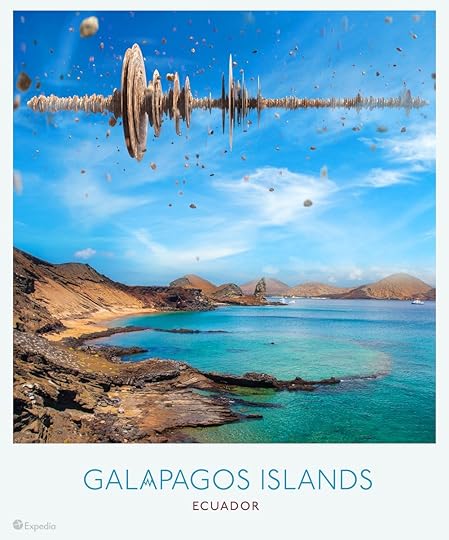
Photo: Expedia Viewfinder
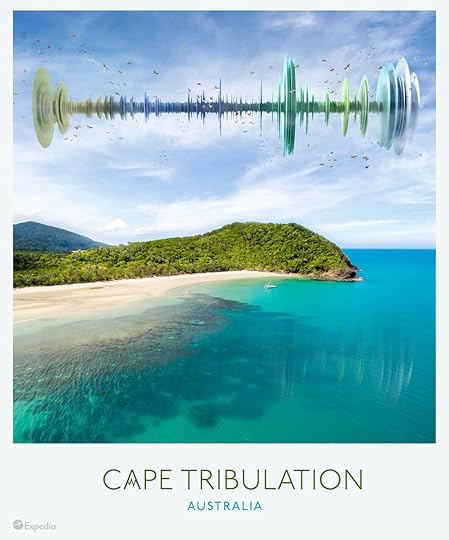
Photo: Expedia Viewfinder

Photo: Expedia Viewfinder

Photo: Expedia Viewfinder

Photo: Expedia Viewfinder

Photo: Expedia Viewfinder

Photo: Expedia Viewfinder

Photo: Expedia Viewfinder

Photo: Expedia Viewfinder

Photo: Expedia Viewfinder
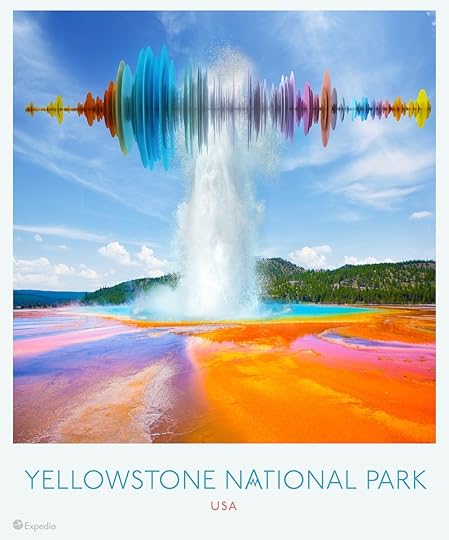
Photo: Expedia Viewfinder
More like this: Highlights of a week in Quebec


Wrong about bartenders
Non-bartender friends often assume we have crazy social lives just because we are out late most nights. But a 2 AM beer on a Tuesday night is usually just a quiet post-work cool down, not an epic party night. So, don’t get disappointed when we’d rather grab an early dinner than go out on our days off. Staying in can be a luxury.
2. We are all players.
Sometimes we flirt, it’s a part of the job. And some bartenders take advantage of the easy access to attractive singles. But for the most part, bartenders’ dating lives are like everyone else’s: a mix of marrieds, serial daters, singletons, and everything in between. Plus, working nights can put a crimp on dating.
3. We are mind-readers.
This happens every busy shift — a patron that we’ve never served before asks us to make them something fun — dealer’s choice. Or we get a phone call: “Will you be busy at 8 PM tonight?” I wish we had a crystal ball, but we can’t predict the future or what kind of drink you might enjoy.
4. We don’t have degrees or higher education.
Bartenders come from all different backgrounds — GED to PhD. Some of us choose to bartend because it is the best way for us to make a living, others because they love the work itself, others still for extra money or to fund different endeavors. As in any line of work, every individual has their own story.
5. We want you to ask us about our hopes and dreams.
Just because you share your issues with us doesn’t mean we want to open up to you. We want to make you a drink, not tell you our life story… unless it’s a really slow winter night and you are buying us Pappy Van Winkle’s.
6. We are all mixologists.
We have a drink list for a reason. Pick something from the menu or go with a classic cocktail. When it is a busy night, we often don’t have time to craft a drink for someone whose tastes we don’t know. There are specific cocktail bars that specialize in individually crafted drinks if that is what you are looking for. An exception: if you have been chatting with us all night, or you are a regular, we might concoct something special for you.
7. We wish we had weekends off.
One of the perks of the bar life is having a non-traditional schedule. Sometimes a weekend off would be nice, but in general, avoiding the morning commute, the two-hour wait for a table, and the 6 PM supermarket line is worth it.
8. We know everyone.
Working in the service industry, we do meet a lot of people every day, and we make connections with other bar staff along the way. Some nights out, we run into several acquaintances, but it is a bit of a mirage. It is an industry with a lot of turnover, so our favorite bar can change staff seemingly overnight. Plus, our regulars often don’t recognize us out of context, which can be a good thing.
9. We are going to sell you top-shelf and secretly pour you well liquor.
I’m sure there are some shady establishments out there that may pull this kind of move, but 99% of the time, a bar would never do this. But for some reason, customers often make this kind of comment, “Better pour me what I’m paying for, I can tell the difference.” Alright, buddy, watch me then. I’m getting the jigger out for this one.
More like this: 20 times it sucks to be a bartender
Books that took us somewhere
Even though we’re travel writers, we don’t get to be constantly traveling. So when we’re stuck at home, we turn to books to transport us around the world. Matador editors Matt Hershberger and Ana Bulnes give us their 7 books that took them somewhere in 2017.
1. The Wasp Factory by Iain Banks — Scotland
A post shared by Rick McCrank (@mccranker) on Mar 6, 2015 at 10:34pm PST
It would be hard for an author to have a more unsettling debut novel than Iain Banks’ 1984 The Wasp Factory. It features a teenaged psychopath named Frank Cauldhame, who lives on a lonely island off the Scottish highlands with his father. Frank spends his days conducting elaborate, deeply creepy rituals while preparing for the return of his insane brother, who just escaped from a mental institution. The book goes to some really dark places, but what was most striking about it to me was how effectively it used the Scottish landscape to set the scene. Rural Scotland is a wild and windy place, and Banks uses this landscape in just the creepiest possible ways. I can’t say I’d want to spend time with Frank if I was in Scotland, but it was nice to take the trip there nonetheless. —Matt Hershberger
2. The Yellow Rain by Julio Llamazares — Pyrenees
Matador Network's Blog

- Matador Network's profile
- 6 followers

