
Matador Network's Blog, page 1425
December 27, 2017
9 art experiences in Virginia Beach
Cruising the Boardwalk, hitting the beaches, grabbing a seaside brunch — that’s pretty much everything when it comes to Virginia Beach, right? Yeah, not quite. If you’re not also thinking theater, art museums, and world-class entertainment, you haven’t gotten the whole picture. Most visitors don’t even know the coastal city has a thriving art scene, but we can’t blame them — they just don’t know where to look. Here’s the fix.
1. The Virginia Museum of Contemporary Art
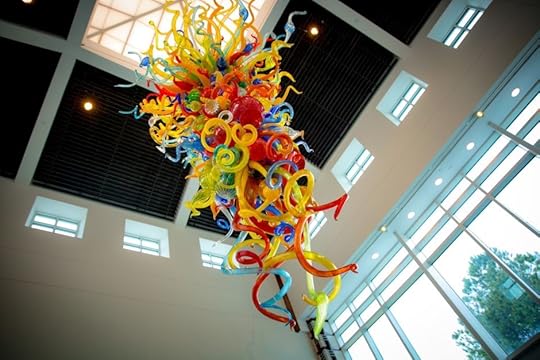
Photo: Visit Virginia Beach
The Virginia Museum of Contemporary Art, or MOCA, is the art museum in Virginia Beach. Definitely start here. With regularly changing exhibitions from national and local artists — we’re talking paintings, sculptures, glass, ceramics, photography, the whole nine yards — there’s always something new to see and discover, no matter how many times you visit. If it’s a nice day, don’t miss the self-guided walking tour of the grounds.
But whenever you visit, make sure to check out the permanent work called Mille Colori, or “One Thousand Colors,” in the Rodriguez Pavilion. It’s a 14ft Chihuly glass chandelier, composed of 520 hand-blown glass pieces (and you thought those wine-and-paint parties demonstrated artistic commitment…).
2. The ViBe Creative District

Photo: Visit Virginia Beach
Just a few blocks from the Oceanfront is the eclectic ViBe Creative District, basically a treasure trove of art galleries, restaurants, and artisan shops aimed to inspire locals and visitors alike. If you’re an artist at heart, make a beeline for right here. You can start your tour with coffee at Three Ships or a bite to eat at Java Surf, then get to wandering the shops. Hunt for anything and everything — artisan leather bags at North End Bag Co., handmade jewelry at Hardy’s, or unique furnishings crafted from local reclaimed wood at Benevolent Design Co.
If you’ve timed your visit wisely, you’ll be able to hit up one of ViBe’s First Fridays, when businesses host art pop-ups and events on the first Friday of each month. Pretty much all of the district and beyond is abuzz with pedestrians, shoppers, wine tastings, colorful displays, and the energy only hundreds of artists can create.
Pro tip: The ARTS + EATS ViBe Walking Food Tour has all the insider knowledge on local artist hotspots, plus a dip into Va Beach’s foodie scene.
3. The Oceanfront murals
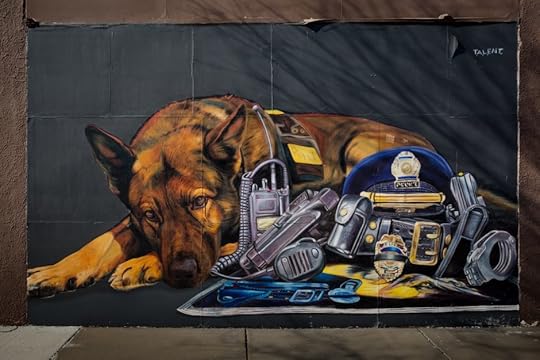
Photo: Visit Virginia Beach
There are some incredible murals easily accessible from the Oceanfront…if you know where to look. The first one to keep an eye out for is painted on two buildings between 19th and 20th Streets on Pacific Avenue. It’s titled “Great America Number 1: Our Fallen Heroes” and was created by local artist Sam Welty. The mural was unveiled for Memorial Day, 2017, in remembrance of fallen military and first responders.
Other murals honoring the brave (this is a military town, after all) can be found on Pacific Avenue at 5th and 6th Streets, and on 16th Street between Pacific and Atlantic Avenues. A police dog mural is located on 21st Street and Atlantic Avenue, and you’ll notice some colorful sealife behind Barr’s Pharmacy on 17th Street and Atlantic Avenue. Several murals live on the corner of 22nd Street and Atlantic Avenue, as well — scavenger hunt, anyone?
4. King Neptune (and his cronies)
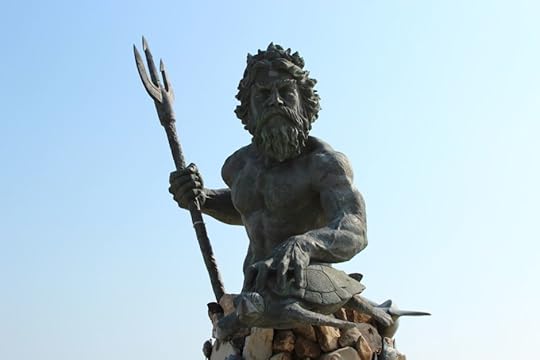
Photo: Visit Virginia Beach
The crown jewel on the Boardwalk is the statue of King Neptune — you can’t miss it. Sculptor Paul DiPasquale created the intimidating 12-ton, 34ft-tall bronze sculpture in 2005, and it’s been standing guard over the sea at 31st Street ever since. You can’t visit Virginia Beach and not take a selfie with the mythical god.
While you’re at it, look for these other sculptures near the Boardwalk:
Virginia Beach Law Enforcement Officers Memorial, 35th Street
Delight, 33rd Street
Norwegian Lady, 25th Street
Monument to Naval Aviation, 25th Street
Mallards, between 11th and 12th Streets
Anticipation, JT’s Grommet Island Beach Park
5. Sandler Center for the Performing Arts
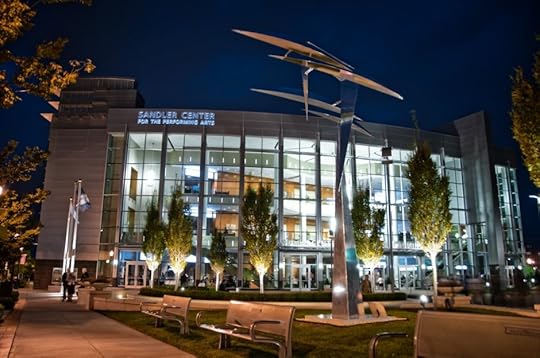
Photo: Visit Virginia Beach
Practically no two nights are the same at the Sandler Center for the Performing Arts in Town Center. The ultra-modern venue books regional and world-renowned entertainers and musicians, musicals, ballets, and the Virginia Symphony on the regular. Big-budget, kid-friendly shows like Disney’s Freaky Friday and Mary Poppins round out the schedule.
Pro tip: Arrive early to visit the art gallery on the second and third floors — the exhibits change twice per month and will likely feature an in-state artist.
6. The local theater scene…
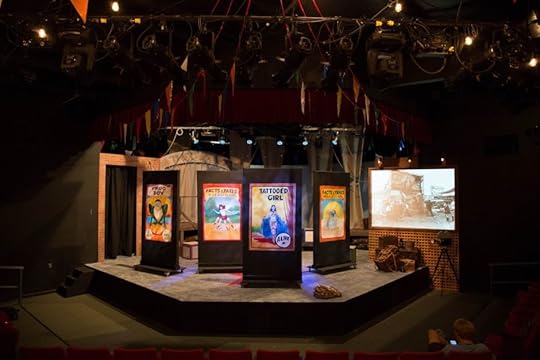
Photo: Stacy Pryce / Cute E’s Photography
Right next door to the Sandler Center, you’ll find the smaller Zeiders American Dream Theater, a venue dedicated to developing and showcasing the talents of local writers, playwrights, and musicians. Check the schedule to catch Va Beach improv, musicals, and the occasional magic show.
Then there’s the Little Theatre of Virginia Beach, located in a residential neighborhood six blocks from the Oceanfront. When you visit, it’ll likely be putting on something in its six-show season. Local performers take center stage, and tickets top out at $20.
7. …and the laughs, too.
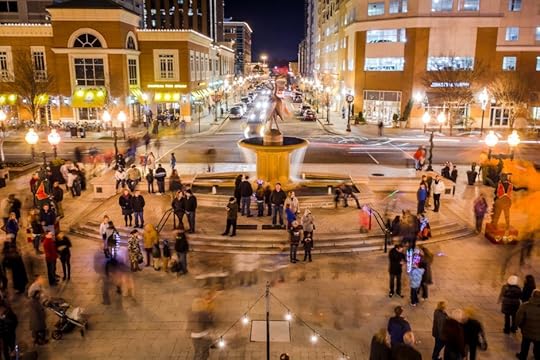
Photo: Visit Virginia Beach
Town Center’s Funny Bone Comedy Club & Restaurant always has a great weekend lineup — sometimes it’s whoever has the latest Netflix special, sometimes it’s local legends and up-and-comers. There’s a full restaurant menu, though a favorite combination is to head somewhere like Keagan’s Irish Pub & Restaurant for dinner first, then settle in for drinks during the show.
Arrive early either way, or you might be waiting in quite the line to be seated. Having said that, once the main seating fills up, they open the balcony upstairs. It’s usually less crowded and has a great view, though it’s a gamble as to whether you’ll be seated in the front rows or towards the back. The adventure is the thrill, right?
8. Summer events and festivities on the Boardwalk
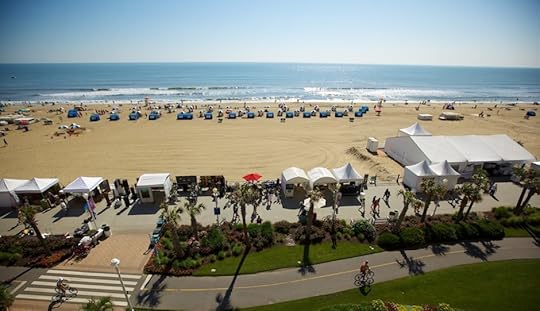
Photo: Visit Virginia Beach
When the weather warms up, the festivities begin on the Virginia Beach Boardwalk. From May to September, concerts, festivals, and special events take over, and those smart enough to be here get their pick of the litter. And, you know, it’s the Boardwalk — the miles and miles of open sand and epic views are icing on the cake.
One of the coolest events during the summer is the annual Chalk the Walk ARTsplosion. Artists — and gonna-be artists — use the Boardwalk as their canvas to create masterpieces with nothing but sidewalk chalk. Three entire blocks explode with color in ways that would totally embarrass your stick figures and smiley faces, so watch where you step. Then there’s the Boardwalk Art Show, an event so acclaimed that artists from all over the country vie for a chance to join — the number is limited to around 300. Put on by the pros at MOCA, this is the perfect opportunity to eat, drink, listen to music, and wonder why you’re not creating masterpieces in your free time.
The 31st Street Stage is another great spot to hang out in summer, as it’s one of the many venues for the free concert series along the Oceanfront. While you could stake out a spot on the grass or sand, arrive early to snag a table on the patio at Catch 31 Fish House and Bar. You’ll get food and beverage service while enjoying the free entertainment.
9. The Tar Roof

Photo: Visit Virginia Beach
When you’re ready, take a break from the coast and head to the countryside. The Tar Roof in Va. Beach’s Pungo farming community features the works and handmade goods of over 30 local artists within the walls of a 160-year-old farmhouse; and as if that weren’t enough, there’s free coffee.
The Tar Roof reminds us that Virginia Beach is so much more than just another coastal city. So when people ask you about the Boardwalk or the brunch scene, tell them, “But you’ve heard about the art scene, too, right?” 


December 26, 2017
Arizona friends
1. A normal friend freaks out about driving so fast on the open road.
An Arizona friend gets off on the autobahn-like thrill of the 75 mph highway speed limit “suggestion.”
2. A normal friend makes an appointment to gets their teeth cleaned at the dentist by the mall.
An Arizona friend breaks out their passport and walks over to Mexico for their annual checkup — for 75% less dinero.
3. A normal friend passes out from heat exhaustion when the temperature hits 95 degrees.
An Arizona friend only starts to complain about “being a little warm” when it reaches about 118.
4. A normal friend grounds their teenage kid by taking their phone for a week.
An Arizona friend takes away their Ford F150.
5. A normal friend might enjoy a dab of Pace picante sauce on their hard-shell taco.
An Arizona friend dumps a gallon of hot, authentic salsa on their carne seca chimichanga.
6. A normal friend wears flip-flops at the beach.
An Arizona friend wears flip flops to church, weddings, quinceañeras, and camping. And everywhere else.
7. A normal friend wants to go clubbing, so she buys a hot, tight, black dress.
An Arizona friend wants to go two-stepping so she buys a new tight pair of stonewashed Wranglers.
8. A normal friend orders a blended melon margarita with half salt, two limes, and an orange.
An Arizona friend orders a shot of mescal, no training wheels.
9. A normal friend sees an innocent little garter snake and runs away screaming.
An Arizona friend sees a five-foot, venomous diamondback rattler and gets the snake bucket and a stick. 
More like this: How to piss off an Arizonan
Comic books for travelers
Comic books, for a lot of Americans, are still thought of as a medium that’s mostly just for kids. Even while superheroes become a bigger and bigger part of our movie landscape, the idea is that, well, adults should just be reading. But this is unfortunate, because there are so many good comic books out there.
Travelers in particular could get a lot out of comics, because, since they are a visual storytelling medium, they are particularly good at transporting you to a totally new place. So — if you love travel but aren’t totally sold on comic books just yet, here are four to check out.
1. Bone by Jeff Smith
A post shared by oslo, norway (@carmantica) on Dec 12, 2015 at 6:25am PST
Bone is basically Lord of the Rings mixed with Saturday morning cartoons. It tells the story of three brothers who were chased out of their hometown and into a mysterious valley that’s haunted by dragons and “rat creatures.” It’s cartoon-y and funny while also managing to be sweeping and epic, and it’s really great for kids.
When I was a kid, it was the epic quest stories that really stoked my wanderlust — stuff like Indiana Jones and Lord of the Rings and Star Wars. The idea of leaving home to do something great was just endlessly appealing. If you have a kid and you want to get them into the idea of venturing out into the greater world, give them Bone. If you’re an adult and you feel nostalgic for the days of getting lost in a book of Calvin & Hobbes or The Chronicles of Narnia, pick up Bone.
2. Persepolis by Marjane Satrapi
A post shared by Kelsey Trautman (@kelseytraut) on Dec 21, 2017 at 11:27am PST
Marjane Satrapi was born in Iran in 1969, and so was a young girl when the revolution came. After seeing the repression of the fundamentalist regime, her parents sent her to Europe for her studies, but it was hard on her — she eventually became homeless and nearly died on the streets, before returning to Iran. Persepolis is the story of her life, and it is both heartbreaking and uplifting.
If you’ve ever left home and found it harder than you imagined, this book will ring particularly true to you. So much travel fiction is about going out into the world and achieving something great, but for many of us, living abroad is difficult and often exhausting. Persepolis is also a coming of age story set in a time of political upheaval, and it may be worth reading in these troubled times.
3. Saga by Brian K. Vaughan
A post shared by Gabriel (@thebatcavecomicsandtoys) on Dec 17, 2017 at 9:52pm PST
Saga is basically an R-rated comic book version of Star Wars. It tells the story of Marko and Alana, who are from two different, eternally-warring species, and fall in love and have a baby, Hazel. Hazel tells the story of what it’s like to grow up in wartime, on the run, and as a person who many people believe shouldn’t even exist.
The closest thing to compare Saga to, in terms of actually feeling like you’re in a totally different world, is Avatar. The series is illustrated by Canadian comic book artist, Fiona Staples, and oh my god, it’s stunning. The series is ongoing, it has yet to be concluded, but new chapters come out regularly, and it is absolutely worth the read. It’s transporting like only a few other books and movies are.
4. From Hell by Alan Moore
A post shared by Danne Palm (@palmdanne) on Feb 22, 2017 at 1:12pm PST
From Hell is one of the stranger true crime books you’ll ever read — the author, Alan Moore (of Watchmen and V for Vendetta fame) took a holistic approach to dealing with the Jack the Ripper murders. Which is to say, instead of solving the crime, he uses the crime to solve the society that it happened in. If that sounds weird, it’s because it is. But it’s also entrancing and beautiful and terrifying.
Travelers in particular will enjoy this because Victorian London is the main character, and in it, the city is almost alive. And, in some sense, aren’t cities literally living things? Every street corner is drenched in decades or even centuries of history — great people (and less great people) walked every alley, haunted every corner, and left traces of themselves wherever they went. Cities, in a very real way, are an accumulation of human lives, and they reflect this in their layouts and in their architecture.
This all makes it sound very heady, but it is still a murder story, and a harrowing one, at that. And if nothing else, it’ll make you want to go to London.
More like this: Brussels’ comic book murals
The best apps for the savvy traveler
I don’t remember the first time I traveled with a smartphone — it was a gradual process, anyway, my first smartphone didn’t really live up to its name — but I do remember traveling with a basic dumbphone. I trusted physical maps, my guidebook, a notebook where I wrote down all important info, and, of course: people. And while traveling like that is definitely cool (some might say that’s the only way to really travel), smartphones have made our lives easier.
What are the apps you use the most when you travel? Google Maps, TripAdvisor, Travelstoke… But what about an app to know how much you must tip depending on where you are? Or another one to find free wifi? The guys at dealchecker.co.uk have put together this useful infographic with some of the most helpful travel apps. Have fun!


Towns to visit near Venice
Veneto, one of the northeastern regions of Italy, is mostly known for Venice and Prosecco. Fair enough. But the northeast of Italy spans from the Adriatic Sea, to Lake Garda, to the Dolomites. In the shadow of La Serenissima are unique towns that are star-shaped; are much older than Venice and still inhabited; or simply offer sweeping views of the land.
1. Torcello and Burano
Sparsely-populated Torcello was an important port for centuries, benefiting from close ties with Byzantium. There’s even a Venetian-Byzantine-style Basilica of Santa Maria Assunta, founded in 639. The Basilica contains the earliest mosaics in the Venice area on top of being one of the most historic religious edifices in Veneto. On top of the recently restored bell-tower the view of the archipelago is unobstructed, the land virtually free of settlements except for the tiny yet eye-catching Burano.
Burano (not to be confused with the Murano) is the ferry stop before Torcello. Also of Roman founding, it is actually four tightly-packed islands connected by bridges. Burano is notable for two features: lace making by hand-and-needle, and the tiny houses’ brightly-colored patterns.
Zig-zag among the alleys of Burano, stop on the bridges (which might not have a parapet, like the Ponte del Diavolo in Torcello), and enjoy the buildings colors especially at sunset. In Torcello and Burano you’ll be immersed in history, canals, colors, but you’ll see few tourists.
2. Chioggia
A post shared by Elisa C. (@elyrockeggia) on Dec 10, 2017 at 8:19am PST
On the southeastern corner of the Venice Lagoon is Chioggia, a small island which resembles a miniature Venice. Calli (narrow alleys) are alternated by canals with bridges, with perfectly laid slab pavement. Some tiny roads allow (tiny) cars, but the island is virtually pedestrians only. Stop-and-go at the several Medieval churches along your walk. You can’t get lost (I tried), because the streets running east-west are uninterrupted.
If you want to walk for longer, cross the bridge connecting to Sottomarina. One of Chioggia’s frazioni (nowadays a quarter), Sottomarina sits on a triangle of land that closes the lagoon. The area is a bit more modern. It overlooks the Adriatic Sea on the west and the Lagoon on the east, which gradually part from each other as you go south. The two sights are pretty different. The Adriatic coast is straight, windy, with sandy beaches and an unobstructed view. The Lagoon coast is jagged, with calmer waters and no beaches. You can walk the long and very wide sandy beach on one side, and along a green car-free path on the other.
3. Arquà Petrarca
A post shared by Irene Callegaro (@irenecallegar0) on Aug 20, 2017 at 7:06am PDT
Moving inland east from the Venice Lagoon is the Colli Euganei Regional Park. These hills stand isolated within the Po Valley (Pianura Padana). Arquà Petrarca sits on top of the hills. The town doesn’t have a proper center, it’s all jagged and developed between the parte alta (high side) and parte bassa (lower side). Walking along the steep narrow roads includes a lot of going-and-coming from short streets but it is quite interesting. Medieval buildings open up to the green land without notice, such as at the XI century Santa Maria Assunta church. The almost-white stone-walled church stands over you on one side, the hills tower over you on the other side, and yet you have a sweeping view of the Colli. At one of the town’s highest points, the elegant Restaurant Montanella, you can see all the way to the Pianura Padana. It’s green all around you and very quiet (unless the restaurant is busy).
4. Valeggio sul Mincio
A post shared by Silvia Guerra (@silvia090373) on Jun 16, 2017 at 10:38am PDT
Just under the south-east corner of Lake Garda is Valeggio sul Mincio. This tiny town packs a punch in terms of history, architecture, and locations for visitors. It has been at the center of rivalling factions, empires, and armies since the Bronze Age, and the current town sports a variety of buildings and fortifications from the Medieval period onwards. They are all well-kept and open to the public, such as the Scaligero Castle, which overlooks the green countryside from the top of a mound. The town is just north of the Parco sul Mincio Nature Reserve and is the best urban stop along the 27-mile-long cycle path that runs north-south from Lake Garda to Mantova along the river.
The town’s hotspot is the frazione Borghetto sul Mincio, especially the cluster of water-mills (some still functioning) that sit in the river. You can visit them because they now host cafes, guestrooms, and restaurants. From there you have a great view of the still-in-use Visconti Bridge, which breaks the viewline of the river Mincio and is a favorite photo subject.
Walking through Valeggio you’ll pass narrow streets, archways and countless wooden shutters, but Borghetto is a perfectly restored Medieval town immersed in a lush countryside.
5. Bassano del Grappa
A post shared by Fabio (@edge62) on Nov 28, 2017 at 12:58pm PST
Bassano sits at the feet of the Venetian Prealps. Its name is inherently connected with the all-Italian Grappa, but the town offers more. Always look up while walking the narrow streets in the historic center. You have views of the rising green hills, a lovely backdrop for the lightly toned buildings, mostly white and ivory. You’ll also notice the various Venetian-style windows, such as the tripartite, or the more ornate Venetian-Gothic.
The snaking River Brenta, on the east side of town, is flanked by buildings which creates ever-changing views of the hills and the bridges, especially the Ponte Vecchio. Also called Ponte degli Alpini, just around the corner from the main square Piazza Libertà, it was originally designed by none other than Palladio and it’s one of the few (only one?) covered wooden pontoon bridges in Italy.
Right by the Ponte Vecchio are many grapperia, if you fancy grappa-tasting, while many osteria around the main square will satisfy your appetite.
6. Asolo
A post shared by Emmanuel Olufemi Adejumo (@emmanuel_oluadejumo) on Dec 19, 2017 at 1:24am PST
Called by G. Carducci, “La Città dei Cento Orizzonti” (The City of a Hundred Horizons), Asolo sits on the hills at foot of the Alps, not far east from Bassano del Grappa. It is a fortified town with a small stronghold. The streets are narrow and all the buildings are historic with quite a few portici. The cobblestone paving is a feature just as much as the narrow streets. This atmosphere contrasts with the 360° view of the land from the Rocca (the stronghold). It is quite spectacular from up there. The towering Dolomites are north, the Venetian Plain is south and green all around. It is very quiet, unless you hear cheering and laughing from the osteria in town.
7. Palmanova
A post shared by A Map A Day (@amapaday) on Nov 18, 2017 at 3:32am PST
Palmanova (in the Friuli-Venezia Giulia region) is simply the only town in Italy planned and shaped as a 9-pointed star. Originally a citadel, its walls are listed as a UNESCO World Heritage Site. Although the low buildings are not particularly decorated, the plan’s geometry has an interesting appeal because you feel its regular pattern while walking through the streets, and soon end up in the big central nine-sided square. The geometric plan is a nice contrast with the walk around the walls, because you catch a glimpse of the buildings on one side while you have a view of the sparsely populated, undulating green countryside on the other. Walk or bike the path, which also has a number of detours to wander around the fields. It’s never really busy.
More like this: Dear travelers to Venice: Please don’t come until you have understood these 11 things
Move to Greenland
Une publication partagée par Greenland Travel (@greenlandtravel) le 28 Nov. 2017 à 1 :08 PST
Literally the coolest place on earth with fresh air all year round. It might be cold, but with decent jumpers and good boots, you get to enjoy the humid-free and haze-free air. And don’t get fooled, summers are nice and warm.
2. You get your adrenaline fix daily.
Une publication partagée par Verena Bruening (@verenabruening) le 24 Déc. 2017 à 3 :32 PST
Greenland is the place for extreme athletes who are searching for off-track adventures. With our treacherous mountains and harsh weather, you will not get a better and tougher challenge than living here.
3. There’s live music every weekend.
If there’s a pub, there’ll be live, local music on Fridays and Saturdays. There are even bigger concerts with famous bands from Greenland and Denmark every summer and winter.
4. You can enjoy the view of the icebergs in the ocean while sitting in a hot spring.
Une publication partagée par Mark Whitaker (@redalderranch) le 2 Sept. 2017 à 9 :50 PDT
If you ever wanted to get away for the weekend to relax, head to Uunartoq in southern Greenland where you can jump in the hot spring anytime of the year and enjoy the view of the ocean filled with icebergs and snow peaked mountains behind. You can’t do that anywhere else.
5. Organic, local food is the real deal here.
Une publication partagée par Mirthe (@mirthevdberg) le 24 Déc. 2017 à 1 :18 PST
In Greenland, you can hunt or fish, prepare, and cook your own food. You don’t need to ask if the food is organic and fits your sustainability standards… It does, believe me.
6. Art is everywhere.
Une publication partagée par Maia Raigorodsky (@maiaraigorodsky) le 25 Déc. 2017 à 1 :17 PST
Whether it is painting, tattoos, dancing, or jewelry made out of bones, art is important in indigenous Greenlandic culture. We test the limits and mix the old with the new, always trying new ways to create art. Even if you’re not an artist, there is always some ways to contribute or appreciate art around Greenland’s towns.
7. Sustainable public transportation
Une publication partagée par Globalized Planet (@globalizedplanet) le 23 Déc. 2017 à 11 :24 PST
What could be more awesome than having 8-10 Greenlandic dogs pull you on a sled through the wilderness of Greenland?
8. You can hang out with the most life-loving people.
Une publication partagée par Greenland Travel (@greenlandtravel) le 16 Janv. 2017 à 10 :17 PST
Greenlanders have an energy and love for life you won’t find anywhere else. The harsh seasons can push us mentally and physically, and we do our best to enjoy our simple life. We know how to stay warm and do comfy activities during long dark winter days, and we know how to celebrate life in the summer.
9. Unlimited sunlight
Une publication partagée par Featured Destinations (@featured.destinations) le 25 Déc. 2017 à 12 :04 PST
Experience 24 hours of sunlight, during which you can go hiking or sailing at any time. Imagine watching the sun slowly “setting” (it does not really set) to see it rise again only one hour later. In summer, the fun never stops in Greenland.
10. Free education, dental, and doctor visits
If the reasons above have not convinced you to move to Greenland already, these will. Free education. Free dental services. Free health care.
More like this: Greenland is the new Iceland. Here’s why.
December 25, 2017
Mexico's ride of the dead mini-doc
The Trans Sierra Norte mountain bike race is a three-day ride across ancient Mexican paths that finishes at the Dia de los Muertos celebrations in Oaxaca City. The riders brave enough to tackle the challenging route on 1,000-year-old trails face a 3,000-foot elevation gain/loss, chilly nights, and stalking panthers in the Mexican jungle.
One of these riders, Yefra Ram, gave a Red Bull film crew the chance to learn more about both Dia de los Muertos and Mexico’s growing mountain bike scene. Dealing with the memories of a brother who died at a young age, Ram finds his own kind of meditation tearing across the countryside, remembering only when he is “in the entrance, and when I am in the finish of the trail.”
Follow Matador on
Vimeo
Follow Matador on
YouTube
More like this: Watch this dreamy never-ending mountain bike ride through snowy mountains and desert canyons
Things bartenders are snobs about
The very word pisses us off. It’s partly from an economic standpoint — it takes the same amount of time and effort to muddle up a $4 virgin mojito as a $12 regular mojito, which means a third of the money landing in our pocket for the same work. But it’s also a matter of principle. A cocktail is about the alcohol. When you say mocktail, what you are really asking for is a fancy soda.
2. Brunch
Invite us out to breakfast, lunch, or dinner, but please do not invite a professional bartender to brunch. Most of us have PTSD from Bloody Mary-filled shifts of our own. It’s hard for us to relax when surrounded by mimosas and eggs benedicts.
3. Rookie cocktail orders
There are the obvious choices — Long Island iced teas, Amaretto sours, Appletinis — the sweet, strong drinks that mean “I just turned 21, I don’t have the palate for alcohol, but I still want to get wasted.” Then there are the over-ordered drinks: old-fashioneds, Aperol spritzes, and rosé by the gallon. Drinks that are perfectly respectable, but represent a lack of imagination.
4. Amaro selection
When we are at a bar and we ask for a Fernet, Cynar, or Ramazzotti and the only option is Fireball, expect us to turn up our noses.
5. Martinis
Martini drinkers tend to know how they like their martinis. They can seem overly specific about it to non-Martini drinkers, but, as bartenders, we appreciate someone who knows exactly what they want. There’s nothing worse than guests who have no clue how they like their drink. You can’t just order a Martini. We need to know: Vodka or gin? Up or on the rocks? olive or twist? Let us know if you prefer your Martini shaken or stirred, wet or dry, with or without a Vermouth rinse and we’ll love you forever.
6. Wine and liquor trends
Bartenders tend to know about wine and liquor trends before everyone else. Think you are cool for ordering a whiskey? We’ve already moved on to aged rum. Want tequila shots? We shoot mescal. Sometimes we can be judgey when we are out and about and the drink list feels outdated. But just hold on to that bottle of Grey Goose — everything comes back around eventually!
7. Shitty service
Are we always going to tip at least 20% no matter how awful the service? Yes. Unless you spit in my drink in front of me, in which case, I’ll still leave 15%. It’s called tipping karma and we are a superstitious lot. But bartenders, in general, are easy customers — we’re knowledgeable, understanding, undemanding- — so if you piss us off by ignoring our table, never refilling our water glasses, or being unnecessarily rude, we will definitely never be back.
8. When our friends pick the bar or restaurant.
When bartenders go out for dinner or drinks, it is usually for one of two reasons. First, professional development — we want to try out new spots or well-loved institutions, so we can further our own knowledge of the industry. Second, we want to chill with our friends at our neighborhood haunt. Anything in between and we’d rather just have invited friends over and ordered a pizza.
9. Waiting in line for a bar or club.
When your workday is spent in a crowded bar, the last place you want to be on your day off is a crowded bar. And on those times when our friends talk us into going out, if there is a line at the door and a cover charge, we make a beeline to the dive bar across the street. Cheap beer and pool tables are much more our element than trendy clubs.
More like this: 12 fears only bartenders understand

December 24, 2017
See a big city over the holidays
In 2011, I decided I couldn’t afford a trip back from London, where I was in grad school, to Cincinnati, where my family lives, for the holidays. So I told them I’d see them in a few months, and hunkered down in my student housing with a few friends. Christmas season in London, in general, is amazing: there are carolers and bands playing just outside tube stations, there are quaint, wonderful little Christmas markets, there are pubs serving mulled wine, there are strange German Christmas carnivals that pop up in Hyde Park, there are beautiful symphonies in Royal Albert Hall. You’d be hard-pressed to find a better Christmas city.
But I was anxious about Christmas Day itself. I’d never spent the holiday away from my family, and I was feeling a bit sad about it. I’d planned dinner with a couple of friends, but it would be strange going a year without the traditions and rhythms of the holidays at home.
So on Christmas Day, I walked out into the city of London, and found something absolutely magical: nothing.
Abandoned cities
I’ve always loved apocalypse movies, and 28 Days Later in particular. The first scenes of that movie, when Cillian Murphy wakes up in his hospital bed and then wanders around a totally empty London, are spectacularly creepy.
And here, on Christmas Day, I was in the exact same London. The busses had stopped running. There were no cars. It was cloudy, with just a sprinkling of snow, and there was no one out. None of the stores, of course, were open, nor were any of the pubs, but that didn’t matter. I walked over to the bike share, took one out, and with a friend, rode around the empty streets of London for hours. It was magical and weird, a glimpse into what the world looked like before cars and when there were a bit less people, all juxtaposed against the curving, windy architecture of the London streets.
I have been told since that New York is similarly quiet on Christmas Day. So many of us who travel regularly aspire to finding the “untouched” places, the “hidden gems,” as advertisers call them, where there are no other tourists, just us and nature, or just us and the locals. But those places are harder to find, and, once they’re mentioned in an article somewhere online, they get swarmed with tourists.
And in major cities, it just doesn’t happen. There aren’t places without crowds, or if there are, you’re lucky if it’s just you and a dozen others. But seeing a new city on a major holiday is a kind of tourist hack, where you can basically live out the fantasy of being the last man alive in an empty city.
Every city shuts down at least one day a year
The trick, then, is to find the most important family and feast holiday for a country — the day when even people who hate their families can’t totally avoid spending time with their families — and to visit them on that day. It can’t just be any holiday — many holidays feature huge parades, fireworks shows, or widespread binge-drinking, and that, if anything, will only serve to crowd the streets. In Europe, the Americas, and much of Africa, the best day is Christmas. In Muslim countries, I assume — but am not remotely sure — it’s Eid.
For the record, it was super sad not being home with my family. We like to sit around and sip eggnog and sing Christmas carols, and then we watch Home Alone while paging through the books we got for Christmas. But if you find yourself caught in a major city, far away from home, on one of the big holidays, do yourself a favor — don’t mope. Go out and fantasize about fighting off hordes of zombies or vampires. It sucks being alone, but it sucks less if you have an entire city to yourself.
More like this: Traveling over the holidays? Check out these 34 holiday travel hacks
Matador Network's Blog

- Matador Network's profile
- 6 followers

