Matador Network's Blog, page 1422
January 2, 2018
Work on a cruise ship
If you are 21 or over and would love to travel the world for free — and get paid to do it — then working on a cruise ship is for you! You can apply to work with any of the numerous cruise lines worldwide. Read through and implement the following steps and you could be well on your way to a life at sea within a few short weeks!
How to get a job on a cruise ship:
1. Figure out if a life at sea is for you.
2. Assess which cruise line you would like to work for and which onboard position would be most suitable for you.
3. Create your customized cover letter and associated resume.
4. Apply.
5. Interview.
6. Get your first offer of contract, celebrate, and join your first ship!
1. Figure out if a life at sea is for you.
There are three main questions you need to ask yourself before making the choice to pursue a life at sea.
Do you enjoy meeting and working with diverse groups of people?
Are you flexible and adaptable?
Do you thrive in an ever-changing environment?
While working on a cruise ship is truly a once-in-a-lifetime adventure, and pretty luxurious (imagine port time off in Tahiti one day and an overnight in Maui a few days later), it is still a “job.”
If you show up expecting to get weekends off and to see each and every port, you will be disappointed. Prepare yourself for 7-day work-weeks, lots of split shifts, and being “on” all the time when in passenger areas.
But, if you love to travel, want to save a ton of money, and like the idea of working with people from around the world, then working on a cruise ship will be one of the best career moves you will ever make.
To gain some clarity, take the free “Are cruise ships right for me?” quiz to find out if a life at sea is for you in 2 minutes or less.
2. Assess which cruise line you would like to work for and which onboard position would be most suitable for you.
There is a lot of information online regarding cruise ship employment — some good, some not so great. Look for valid cruise ship recruitment and crew content. For example, check out YouTube for some awesome cruise line channels:
Get a Life at Sea – crew content, life onboard, how to apply and tons more.
Alana Travels – crew content, how to apply.
Michelle Tim – crew content, life onboard.
Additionally, many of the major cruise brands also have their own YouTube Channels. Be sure to check these out regarding branding, mission statements, cruise itinerary options, etc.
Choosing a Cruise Line
Each cruise line is different, caters to a specific market, provides a certain level of customer service, and has varying crew amenities and associated benefits.
Select lines that you feel match the type of service you want to provide to guests and what type of experience you are hoping for. For example, larger lines will offer broader itinerary/travel options and smaller lines will offer a more “tight-knit” crew atmosphere.
Go to each cruise line’s main webpage and search for their employment links. Keep in mind that crew employment links and official application pages are often difficult to locate as each cruise line’s website is designed with the passenger user experience in mind versus the prospective crewmember. Often prospective crew information can be found in the site’s footer.
For an easy, one-stop-shop for this info check out the How the Heck to Get a Job on a Cruise Ship guide, with over 50 pages of great cruise application information including all major cruise line contact details, step-by-step application information, etc. Use the promo code: getpaidtotravel for 50% off!
Determine which position(s) you are best suited for.
Look at all of your past employment, volunteer, and/or educational experience. Most cruise lines will require 1-2 years of relevant experience for their onboard roles, i.e. if you are interested in an onboard retail shop position, it will often require at least 1-2 years of retails experience in a luxury/high-end shop ashore.
If you’re not sure what onboard position would best suit you, speak with a cruise ship employment specialist for a free discovery call or check out the cruise ship jobs 101 course which includes information on all onboard positions, contract lengths, requirements, duties, salaries, catering your resume, and everything else you need to know about getting started with your life onboard.
3. Create your customized cover letter and associated resume.
Most cruise ship recruiters will initially only spend about 5-10 seconds skimming your resume when they first open your application email. It is imperative that you stand out from the sea of other applicants vying for the same position as you.
To do so, it is vital that you cater your cover letter and resume specifically for each cruise line that you are applying to.
If you’re not sure how to best customize your cover letter and resume, speak with a cruise ship employment specialist for a free discovery call or check out available cruise-specific resume consultations or cruise resume creation services.
4. Apply
Some cruise lines prefer that you apply directly to their main offices while others prefer that you apply via their official hiring partners in your home country. Some lines may require that you go through a specific concession agency. Application information can be found via each cruise lines career or employment section on their websites. Again, keep in mind that you may have to go on a bit of hunt through the cruise line’s site to locate this info.
Be sure to check out episode 8 on the Get a Life at Sea YouTube channel for great cruise line application tips and information!
Also review the How the Heck to Get a Job on a Cruise Ship guide which includes all required cruise application information, including major cruise line contact details, step-by-step application information plus loads more.
Note: Candidates who are of interest to a cruise line typically will have their applications processed within 30-90 days and be invited for an interview shortly thereafter. Your interview invite will often arrive via email. Be sure that your email is in good working order and that you also check your spam and trash filters and folders regularly. If you have not heard from a cruise line or associated partner within 30-90 days from the date of your application, it may be time to implement the 3 R’s: re-strategize, re-format (your documents), and re-apply.
5. Interview and wait.
If you are successful in receiving an invite for an interview, congratulations! Many cruise lines, and their official recruitment partners, now utilize Skype to interview candidates they are interested in. It is vital that you include your Skype information on your cover letter and resume and also have a good working knowledge of how to utilize this software when you start your application process.
You will usually hear back from a cruise line only if you have been successful in passing your interview. Keep an eye on your spam and trash folders for at least 1-3 weeks after your interview.
If you have not heard back from a line within 30 days after your interview date it is acceptable to then check in with your interviewer regarding the status of your application. Keep in mind that your interviewer will only be able to provide information as to whether or not your application/interview was successful and will not be able to provide you with details as to why you may not have passed the selection process. If you are not successful with one line, don’t panic, there are dozens of other lines out there. Sometimes the process for a candidate is quick and easy, other times it can take a year or more to go through the full hiring process prior to joining your first ship.
The key to the cruise line application process is to never ever give up — stay positive and keep going.
For in person and Skype cruise line interview tips check out Episodes 9-11 on the Get a Life at Sea You Tube channel or review info in the How the Heck to Get a Job on a Cruise Ship guide.
6. When you get your first offer of contract celebrate and get ready to join your first ship!
You’re hired – Congrats!
Before you go:
Ask your administrator or recruiter any and all questions that you may have.
Read all documents sent to you at least twice! Especially your contract.
Documentation: What do you need to provide? Pre-employment medical check (vaccinations), criminal records check, visas, seaman’s book, and passport?
Ask your admin if you are reimbursed for your medical and criminal checks, visas, luggage fees, and/or flight transportation to the ship.
You’re onboard! Are you having fun yet?
Give yourself time to adjust. The first two weeks are VERY difficult for most new crew members. You’re getting used to a new environment, you’re lost most of the time, and you have a new roommate and new job that you’re still learning. Most new joiners think about going home at some time during this period. If you can make it through the first few weeks, you will get to know your job, make new friends, and enjoy ports of call around the world. Soon, you won’t remember what it was like to work ashore. 

More like this: 9 things you’ll only understand if you’ve been on a cruise


Tourists behaving badly
I’ve always been skeptical of the introvert vs. extrovert dichotomy. A common interpretation of this theory suggests that people’s personalities belong in one category or the other. In reality, however, most of us likely lie somewhere on a spectrum between the two.
I’m generally a confident person — I’m comfortable with public speaking and I enjoy meeting new people — but I also have a healthy dose of British reserve. I’d rather avoid confrontation if possible and am more likely to silently seethe about manspreading or queue jumping than speak out and create a scene.
On rare occasions, I’ve entered altercations on the London underground (it’s virtually impossible not to), but this has usually been of the ticked-off-teacher variety instead of badass bitch.
Many a time on the road, I witnessed things that made me uncomfortable (tourists riding elephants, western men in eastern countries with girls who look too young, tourists taunting animals) — but I never spoke up.
In January this year, we were in Sri Lanka’s Kaudulla National Park when one such episode took place. At one end of the plain, a herd of gorgeous Asian elephants lumbered gently in the grass. At the other end stood a long line of 4x4s carrying at least four tourists each. There was something inauthentic about the situation but I couldn’t fault fellow tourists’ desire to see the elephants any more than they could mine. These creatures were astonishing after all.
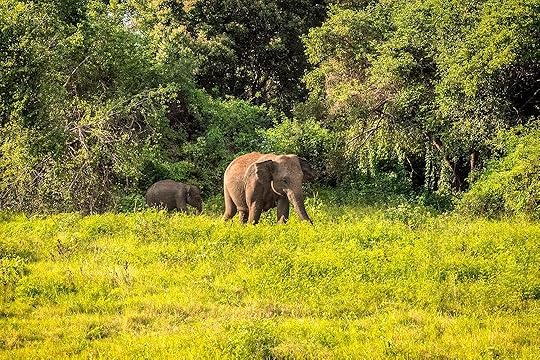
Photo: Atlas & Boots
We stared in awe, some of us taking photos quietly. And then, one group of tourists started whistling and singing at the elephants, trying to coax them closer. This went on for a few minutes, ruining the idyll and disturbing the elephants.
I shot the culprits my best death stare but they remained oblivious. After several more minutes of this whistling and shouting, a Dutch tourist from another vehicle leaned over to them and said, “This is a national park, not a theme park. Have some respect.” Immediately, they shut up.
Several of us thanked the Dutch tourist – but why hadn’t we spoken up ourselves? Were we scared of being rude? Being priggish? Being ignored? What’s the worst that could have happened?
I pondered this question for a while after. There had been no risk of physical retaliation, only the remote possibility of verbal remonstration. Why had so many of us remained silent when we were so clearly annoyed?
I thought of this episode on a more recent outing in Mauritius. We were at Seven Coloured Earths at which there is a small enclosure of giant tortoises. The tortoises were protected by two low barriers and a nearby sign asking tourists not to cross over or touch the tortoises. (Some people need to be told.)

Photo: Atlas & Boots
Alas, one group of tourists started leaning over to pet the tortoises and pose with them. One man skipped the first barrier and crouched next to a tortoise for a photo. Soon after, his wife followed suit and other tourists lined up for a photo opp, too.
I could feel the blood pounding in my head. I looked around for an official (yes, I’m that person) but failed to find one. When the couple skipped the second barrier, I shrugged off my British reserve and stalked up to them.
“There are barriers here for a reason,” I said. They looked at me, flummoxed. I tapped the fence. “These barriers are here for a reason.” I gestured for them to get out.
Peter joined me and in seeing reinforcements, the tourists climbed out and the queue dispersed. I felt partly victorious and partly furious. Here were these glorious creatures on a stunning island in the Indian Ocean, and we were all lucky enough to be there with them — but apparently that wasn’t enough.
I’ve spoken before about the fine line between conscientious environmentalism and smug arseholery and I really hate to be a jobsworth or tattletale, but seeing wildlife and nature mistreated really infuriates me.
I know that sometimes ignorance — and not intention — is to blame. For a long time, riding an elephant was on my bucket list and then I found out how this is made possible and took it swiftly off. In 2008, I petted a baby crocodile with its mouth taped shut at Miami Zoo — something I now regret doing.
Clearly, ignorance is a better excuse than a flagrant disregard for the welfare of animals, but it doesn’t free us of the responsibility to speak out against errant behavior. It’s important that we take action ourselves as there won’t always be a courageous Dutch on hand to speak for us. Let’s stop being bystanders and start speaking out.
How to speak out against bad behavior.
Be polite. I know from experience that it’s difficult to stay calm, but asking nicely goes a lot further than being rude. In many cases, tourists behave the way they do because they don’t know better, so treat them accordingly.
Speak out against badly behaving tourists but practice discretion with locals. Questionable behavior may be part of local culture or religious customs in which case you should try not to offend your hosts.
In cases where speaking out in person is risky or inappropriate, act on a broader level. Raise awareness of the issue, write a TripAdvisor review, tag the company on social media, and complain to the local authority.
Encourage others to speak out. If we all succumb to the bystander effect, nothing at all will change, so share this post and/or encourage your friends, family, and followers to speak out when they see errant behavior abroad.
This article originally appeared on Atlas & Boots and is republished here with permission.
More like this: 7 cringe-worthy cases of tourists defacing natural and cultural landmarks around the world

How to be happy according to science
All our resolutions, all the promises we make to ourselves and all our wishes, ultimately have one big goal — we want to be happy. Unfortunately, as we all know, it’s not as easy as it should be. On our way to happiness, there are two main problems. The first and most important one is we don’t really know what happiness is. The second one is that many of our ideas on how to get there are misguided.
But what does science say? What is happiness? What can we do to be happier? The guys at Happify created this useful infographic with the main things science has found out about humanity’s ultimate goal. The good news? It’s not as complicated as we thought. Here’s to a happy 2018.


The 12 side effects of living in Alaska
A couple years in Alaska and proper social conventions fly out the window. You’ll toss your formal wear piece by piece until your closet is an assemblage of t-shirts, hoodies, jeans, and Carhartts. Special occasions may call for your spiffiest pair of Danskos or an Alaska tuxedo, but ultimately casual wear grows on you. The longer you spend here, the less likely you are to ever meet Lower 48 fashion standards again.
2. Anything above 65-degrees feels sweltering.
Summers in Alaska are short, beautiful, and mild. We like it that way — a sixty-degree streak is more than sufficient to help thaw us out after a long winter. In fact, if it gets any hotter, we’ll run the risk of severe sunburn, sweating, and overall discomfort.
3. You refuse to buy anything white.
You learned the hard way that white shoes, coats, or vehicles don’t stand a chance up here. You steer clear of them because, with so many rugged landscapes and dusty roads, the upkeep is simply impossible.
4. Your pop culture knowledge is lacking.
Trends take a while to migrate this far north, so Alaskans tend to be 2-3 years behind the times on anything popular. Combined with our general disdain for celebrity gossip and low rates of cable TV subscription, on average our pop culture knowledge is subpar.
5. But your survival know-how is unmatched.
What we lack in Kardashian trivia and 90s TV references, we make-up for it in outdoors expertise. When it comes to tying flies, smoking salmon, building fires, identifying bear scat, piloting boats, and any other survivalist skills, Alaskans are your #1 candidate.
6. Outside of Alaska, things feel out of proportion.
When you leave the state, the size of everything from fish to mountains to mosquitoes feels off. You try not to be rude, but you find yourself genuinely confused as to why people are so impressed with dinky views and tiny mackerels. Soon enough you’ll realize you have an Alaska-sized measuring stick, and the rest of the world doesn’t quite stack up.
7. You can’t deal with traffic.
Back home, the worst traffic you had to face was 4 people lined up ahead of you at the stop sign… and you may remember when the first stoplight went up. You dread driving in the Lower 48, and you’re woefully unprepared to deal with city traffic, four-lane highways, or any kind of congestion.
8. You have a fierce independent streak.
Living in Alaska encourages you to value independence, creativity, and doing things your own way. It’s a blessing and a curse; there’s a freedom that comes with living life on your own terms, but you may not always take well to being told what to do.
9. Adjusting to 9-5 life is more difficult than it should be.
Growing up, working 9-5 was barely the norm. Most of the adults in your life were small business owners, fisherman, craftsmen, service-industry workers, or made their living seasonally. You’re all too familiar with the benefits of working independently, so the routine, the lack of travel opportunities, and general drudgery of corporate office life feel unnatural.
10. You can’t help but mess with people.
You’re used to fielding questions about life in Alaska, and you’ve learned to respond to ignorance tit-for-tat. When ridiculous queries are thrown your way, you relish in telling elaborate stories about your dog-sledge team, deluxe igloo, and prime views of Russia.
11. You’re prone to claustrophobia.
When wide open spaces are your norm, it’s easy to get accustomed to peace and quiet. After you shudder at the idea of population density. The sights, sounds, and smells of the city become sensory overload, and you need frequent escapes to get by.
12. You’re always up for an adventure.
Your friends may consider you an adrenaline junkie and marvel at your spontaneity because you never turn down a chance for adventure. Day or night, a trip to the beach, jaunt through the woods, or any outdoor encounter is welcome, and you’re ready to take off at the drop of a hat.
More like this: How to piss off an Alaskan

Most remote communities on Earth
Whether it’s astronomical distances, inhospitable climates, or extreme terrains that define these remote and hostile lands, there’s one thing they all have in common: they’re on our bucket list. That and the fact that people live there.
It’s unlikely that we’ll make it to many of these far-flung desolate realms in 2018, but we salute the hardcore residents who carve out an existence in the most remote places and communities on Earth.
1. Ittoqqortoormiit, Greenland
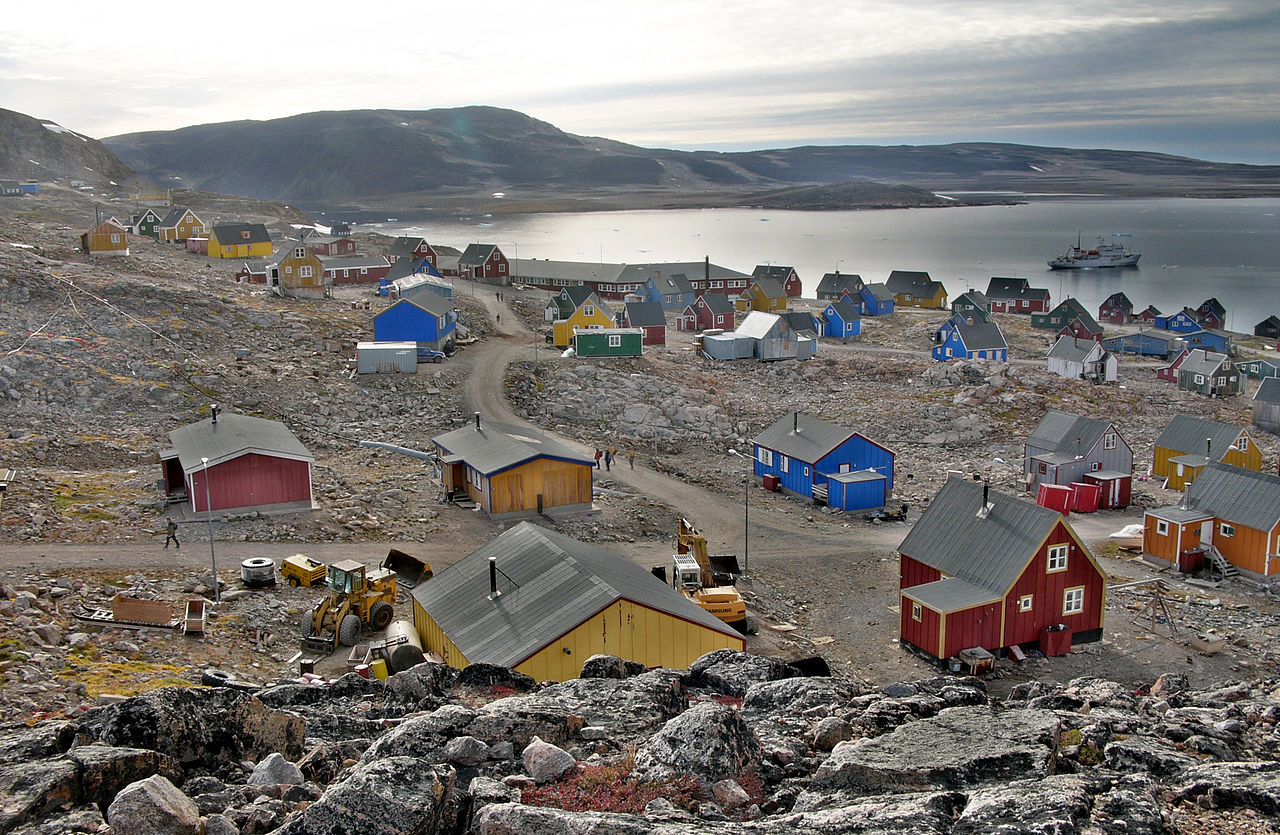
Photo: Hannes Grobe
Ittoqqortoormiit is located on Liverpool Land, a peninsula in eastern Greenland and one of the most remote towns in the country. It was first settled in 1925 by 80 Inuit settlers. Today, the declining population of 452 spend their time hunting whales and polar bears for meat and trading, while presumably also deciding what color to paint their houses.
2. Kerguelen Island
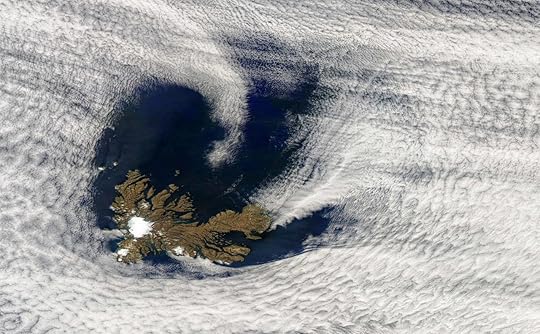
Photo: Antti Lipponen
This French Overseas Territory in the southern Indian Ocean is also known as the Desolation Islands, which gives you an idea of how remote they are: really remote, that’s how. More than 3,300 km (2,051 miles) away from the nearest populated location makes them one the most isolated places on the planet. The population fluctuates depending on the season: around 45 in the winter, rising to around 110 in the summer.
3. Pitcairn Island

Photo: DoubleCNZ
The British really don’t know what to do with this island of incestuous sex offenders. With a population of just 56, it is the least populous national jurisdiction in the world. This tropical paradise should be known for its fantastic history of mutiny and colonialism, and few would know that Pitcairn was one of the first territories to give women the vote in 1838 (some 80 years before the rest of the UK). Unfortunately, this was all somewhat overshadowed when it won the record for the highest number of sex offenders per capita.
4. Tristan da Cunha
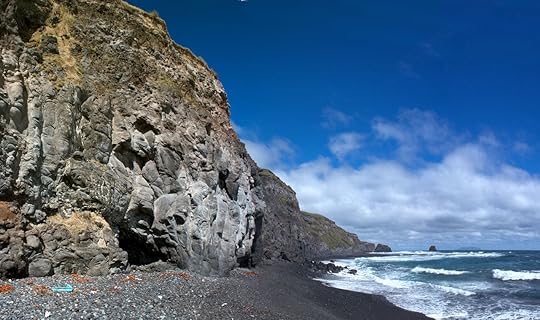
Photo: Brian Gratwicke
Known as Tristan to the 297 locals, this island is part of the most remote inhabited archipelago in the world, lying 2,000 km (1,243 miles) from nearest inhabited land, Saint Helena — which is another pretty remote island itself. Tristan is also 2,400 km (1,491 miles) from the nearest continental land, South Africa. Most of Tristan’s population lives in the main settlement of Edinburgh of the Seven Seas. What a name!
5. Oymyakon, Russia
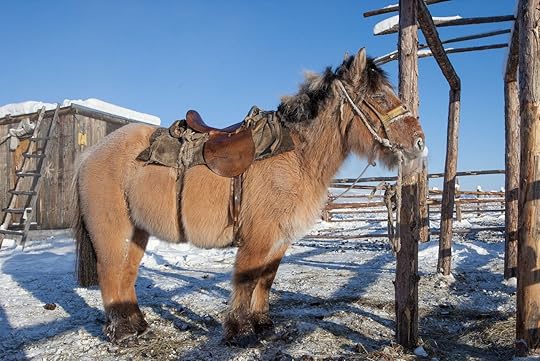
Photo: Maarten Takens
This is one of the coldest places on the planet. It has an extreme subarctic climate and on February 6, 1933, dropped to a temperature of −67.7 °C (−90 °F) making it a candidate for the Northern Pole of Cold (coldest place on earth). The 500 people who live there “enjoy” days ranging from 3 hours in December to 21 hours in June thanks to its northerly position. This place is brutal.
6. Chang Tang, Tibet
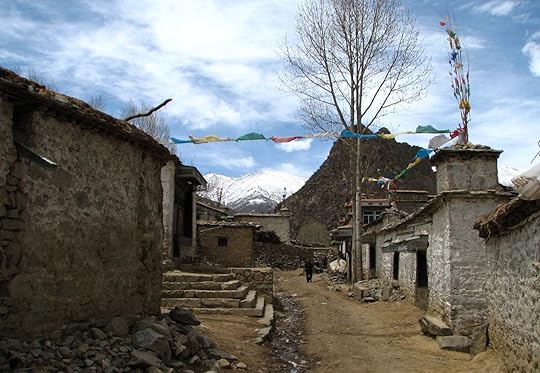
Photo: McKay Savage
Chang Tang is a vast, high-altitude plateau stretching 1,600 km (990 miles) across the Tibetan Plateau. The inhospitable land is inhabited by roughly half a million Changpa, but they’re hard to spot. The Changpa are a nomadic people who know all about hardship thanks to the near-Arctic climate in which they survive and the brutality of the Chinese occupation. When Swedish explorer Sven Hedin crossed Chang Tang, he reported not seeing a single person for 81 days. In 2009, the European Commission’s Joint Research Centre named the Tibetan Plateau as the world’s most remote place after compiling a map showing the most and least interconnected places on earth.
7. Mêdog County, China

Photo: Eigenes Werk
This was the last county in China to gain road access when in December 2010 the Chinese government announced the completion of a highway to Mêdog County. Mêdog only has 12,000 residents across the whole county — a tiny number compared with the rest of the country. Until the highway (and by highway we mean single carriageway that’s open for nine months a year) opened, the only access was by traversing a fairly challenging mountain range.
8. The South Pole
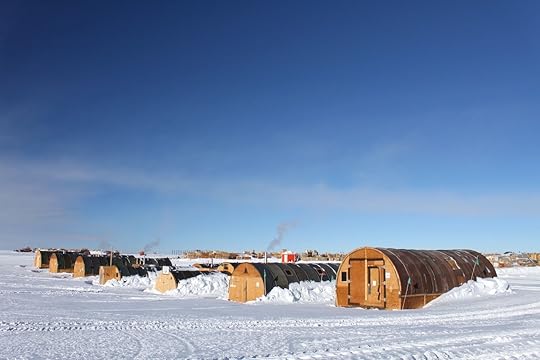
Photo: Eli Duke
The South Pole is part of the only landmass on Earth where the sun is continuously up for six months and then down for six months. There are just one day and one night every year, albeit one very long day and one very long night. Not only that, it also gets pretty chilly as temperatures can drop as low as −73 °C (−100 °F) — being 2,835 meters (9,301 feet) above sea level doesn’t help. It has been constantly occupied since its construction in 1956 — surprising, as it may well be the most remote place on earth.
9. Point Nemo: Oceanic Pole of Inaccessibility
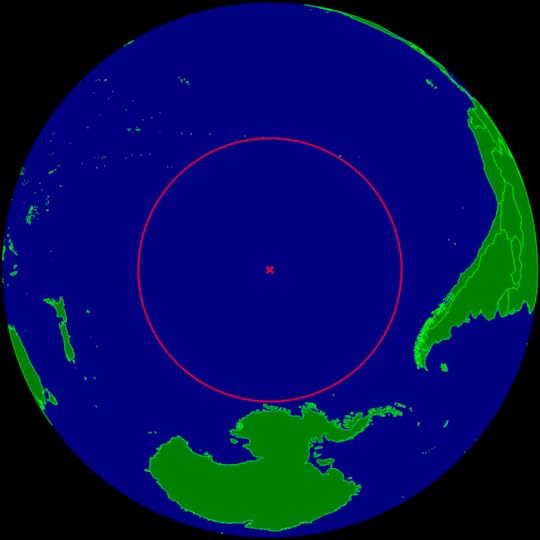
Photo: Timwi
Okay, so nobody actually lives here. They can’t. Point Nemo is scientifically the absolute middle of nowhere. It is officially 1,400 miles from anywhere, smack bang in the middle of the South Pacific Ocean. The Oceanic Pole of Inaccessibility is the place in the ocean that is farthest from land and can be found here: 48°52.6′S 123°23.6′W. Its closest (remote) landmasses are:
Ducie Island (part of Pitcairn Island) to the north
Motu Nui (part of Easter Island) to the northeast
Maher Island, Antarctica to the south
Chatham Island in the west
Southern Chile in the east
Like I said, the middle of nowhere.
This article originally appeared on Atlas & Boots and is republished here with permission.
More like this: 5 remote and undiscovered places you want on your bucket list

11 awesome experiences in Bluffton
Bluffton is a small Southern town just 10 minutes east of Hilton Head Island and 30 minutes north of Savannah, Georgia. The first thing that’ll hit you when you arrive is the oh-so-sweet smell of saltwater marshes. Then you’ll spot that classically Southern sight of tangled Spanish moss draping from age-old live oaks, see the May River winding its way through Old Town — and you’ll be hooked.
Prepare for a slow pace here, whether it’s at the local breweries, restaurants serving up fresh-caught oysters, first-class golf courses, or out on the water in a kayak. If you’re open to matching the town’s relaxed vibes, here are 11 moments you’ll experience in Bluffton — and 11 you won’t soon forget.
1. Walking through historic Old Town for the first time

Photo: Hilton Head Island-Bluffton Chamber of Commerce & VCB
When the town of Bluffton was first established in the mid-19th century, it consisted of just one square mile — a stretch of homes and shops that sat atop a bluff overlooking the May River — which is now the area known as Old Town. Though centuries have passed since the town’s humble beginnings, a walk through this district gives a good sense of its past, thanks to the antebellum-style buildings, many preserved in nearly original condition.
Head to Old Town at the corner of Calhoun and Lawrence for the Thursday Farmers Market of Bluffton, when farmers, vendors, and artisans of all kinds line the streets with goods. For a taste of true Lowcountry soul, try the Kinfolk Gullah’s shrimp and grits.
2. Shucking freshly caught Lowcountry oysters
In Bluffton, oyster season takes place in the ‘R’ months — meaning any month that has the letter in its spelling (i.e., September through April). Oysters are traditionally served steamed, but you can find these little mollusks in all forms, from raw to baked to cooked in stew.
For a real Lowcountry experience, hit up an oyster roast, where cooks literally shovel buckets of bivalves over open fires before dumping them on community tables for guests to shuck themselves. If you can’t find a roast during your trip, pay a visit to Bluffton Oyster Company for a taste of local oysters. Their team of pickers and shuckers — 27 in total — harvest every day, so you’re guaranteed a fresh catch.
3. Breathing in salt air — on a river
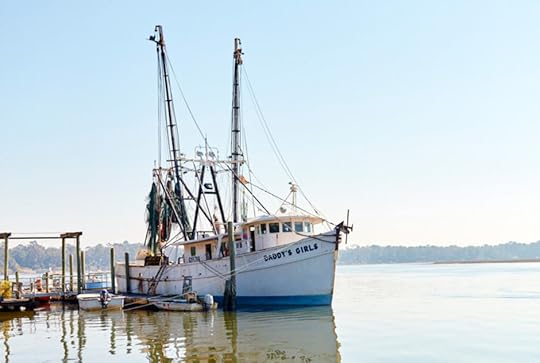
Photo: Hilton Head Island-Bluffton Chamber of Commerce & VCB
Sometimes referred to as “the last true coastal village of the South,” Bluffton is absolutely tangled with waterways. The May River, which flows around Old Town, is a great place for spotting dolphins (yep, you’re that close to the Atlantic) or fishing off one of the docks.
For a more adventurous way to experience the marshland, rent a kayak or canoe and paddle down the river. During low tide, head out to the May River sandbar, where people swim, dock boats, host picnics, and play beach games. A lazy afternoon on the river is pretty much guaranteed to get you into that Bluffton state of mind.
4. Knocking back some locally brewed beer
Bluffton — a town of fewer than 20,000 — takes its beer seriously. There’s a craft brewery right in Old Town, Salt Marsh Brewing, located upstairs at Fat Patties on Bluffton Road. Try their Southern blonde ale dubbed Alright, Alright, Alright (a nod to Dazed and Confused, of course). If you’re hanging around Old Town, also swing by Captain Woody’s, where the lineup includes traditional-style IPAs and seasonal brews from another Bluffton-area craft brewery, Southern Barrel Brewing Co.
5. Painting your masterpiece

Photo: Hilton Head Island-Bluffton Chamber of Commerce & VCB
If you’ve always wanted to try your hand at painting or sculpting — or photography or any other creative adventure — then the Society of Bluffton Artists (SoBA) may be just the place for you. Classes and workshops with first-rate talent run throughout the year, and the SoBA gallery on Calhoun Street features over 100 hanging artists. Art walks through Old Town are a fun way to meet the locals, in addition to getting up-close and personal with good art.
6. Visiting a potter’s studio
Jacob Preston, Bluffton’s Tallest Potter, has been creating hand-crafted stoneware in his retired church studio for four decades. He’s happy to make custom pieces, and “prices vary according to size and degree of weirdness.” Open by chance or appointment. This is just one of many memorable art experiences to have in town.
7. Discovering a classic Southern escape
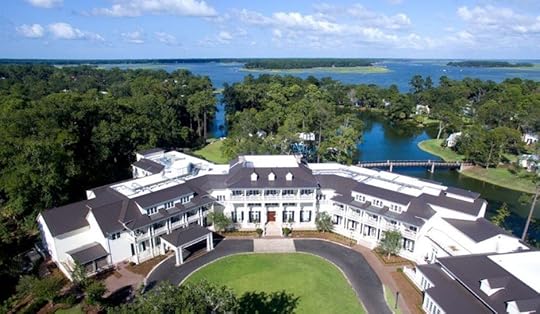
Photo: Hilton Head Island-Bluffton Chamber of Commerce & VCB
Find out what Lowcountry Luxury is all about at Montage Palmetto Bluff, one of the South’s most famous and finest resorts. In an area where golf is taken seriously, the guests- and members-only May River Golf Club is often cited as one of the best. Caddie service is required and golfers are encouraged to walk the course to best appreciate its fabulous views. The Inn at Palmetto Bluff is a mainstay on many “top 10” lists, and the annual Music to Your Mouth held every fall is a fantastic festival of food, libations, celebrity chefs, and music.
8. Brushing up on your Civil War history
Though the first shots of the Civil War were fired two hours up the road in Charleston, Bluffton’s history is certainly entangled in this time period. In 1863, Union troops descended on the town, burning most of it to the ground. But a bunch of signs remain — some are unassuming, like the small fort off Confederate Avenue east of Old Bluffon. Some are large but go incognito, like the “Secession Oak,” where crowds once gathered to spur on the eventual secession movement that took over the South.
Others you just can’t miss. Check out the Heyward House Historic Center, built in the 1840s, and give a keen eye to the mirrors — one is etched with “Flee Rebels. Hell is Here.” It also doubles as the town’s welcome center, and they offer guided walking tours of Old Town Bluffton, too.
9. Tasting a Southern-esque food and drink scene

Photo: The Bluffton Room
For breakfast, lunch, or brunch, The Cottage is the talk of the town (you’ve gotta try their Blue Crab, Corn & Bacon Pot Pie) — consider it a sort of new-age Southern, with classics like gumbo and jambalaya, too. If you’re looking for a fine dining experience, head to The Bluffton Room or FARM. And the laid-back tavern atmosphere of Old Town Dispensary is perfect for a beer and some cornhole or a burger out on the patio, if that’s more your thing (and it’d be a crime not to mention their $1 mimosas on Sundays).
Bonus: Bars around these parts are big on live music. Start the night at The Roasting Room Lounge & Listening Room by grabbing a table and watching the night’s performer.
10. Attending the Blessing of the Fleet
With temps rarely dipping below 50 degrees, Bluffton is an awesome spot for year-round festivals and events, and the annual Blessing of the Fleet is one of its most popular outdoor celebrations. This is basically the are-you-a-Bluffton-local litmus test.
The Blessing of the Fleet, part of the Bluffton Arts & Seafood Festival, held every October, is a tradition in many fishing towns, wherein a priest or pastor performs a ceremony to bring about a bountiful harvest season. In Bluffton, the ritual usually coincides with several days of festivities including a boat parade, block art, blocks of food vendors, and tons of live music and art exhibits (over 100 artists from across the country gather to showcase their work). Keep an eye out (or a nose?) for the fried shrimp from the Bluffton Oyster Factory, the crab balls from Gullah Fried Sweet, and the lobster mac and ceviche from Red Fish.
11. Touring the Garvin House

Photo: Hilton Head Island-Bluffton Chamber of Commerce & VCB
A small Lowcountry cottage built around 1870 by Cyrus Gardner — a freed slave who became one of Bluffton’s more illustrious citizens — the Garvin House was a ramshackle ruin painstakingly restored brick by brick and shingle by shingle by the Town of Bluffton in 2016-2017. Perched on the banks of the May River, the house was used for decades as storage for the Bluffton Oyster Company, and today it’s a great example of what public involvement can do to save culturally important structures.
Tours are offered through the Heyward House, Bluffton’s official welcome center. Afterwards, head next door to Oyster Factory Park for river views and to take advantage of their oyster-roasting pit. If this doesn’t get you in the Bluffton mindset, nothing will. 
January 1, 2018
Europe’s top 10 countries with the best work-life balance [INFOGRAPHIC]
Having a good work-life balance is one of those things we start appreciating more and more as we grow up. This will depend a lot on our own decisions and priorities, but it’s also true that in some countries, it is easier to achieve the ideal combination. If you’re living in Europe or considering moving there, you’re in luck — you’ll find there some of the world’s best countries for a healthy work-life balance.
Do you want to know the list? This infographic put together by TotallyMoney has all the information you need — the average hours worked per day, average time devoted to leisure, the average time in bed… where would you move to?

More like this: Is ‘vacation shaming’ killing your life balance?

world's affordable internet access
For having invented the internet, the US is certainly falling behind in keeping it affordable. While the FCC’s decision to reverse federal rules protecting net neutrality could make it much more expensive to access your favorite sites, Americans are already spending more than most of Europe, Asia, and South America just to get online. A map by HowMuch.net reveals that Americans spend $66 USD per month on average for a service that the United Nations Human Rights Council considers a basic human right. Canadians don’t fare much better, at $54.7 USD per month, but prices in India, Ukraine, Morocco, and Brazil all fall under $50 USD per month, often by double-digits.
Of course, other countries with cheap access also offer a heavily restricted internet (China), and you will have to pay over $500 USD a month to access internet in countries like Burkina Faso and Papua New Guinea.
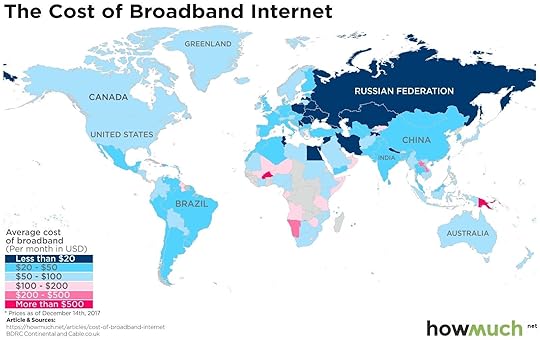
Photo: HowMuch.net
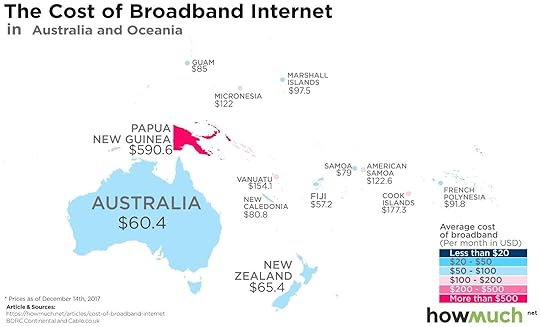
Photo: HowMuch.net

Photo: HowMuch.net
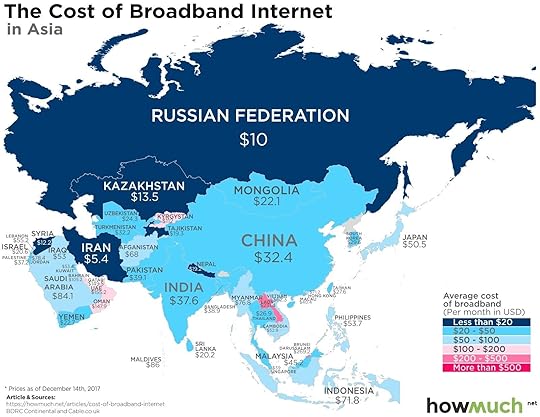
Photo: HowMuch.net

Photo: HowMuch.net

Photo: HowMuch.net
More like this: Watch: The U.S. invented the internet. Here’s the absurd ranking we received for internet speed


December 31, 2017
Unusual good luck charms
I don’t consider myself a superstitious person, but you won’t find me walking under a ladder if there’s enough space to walk around it. Why risk it, right? It’s the same with good luck charms — who hasn’t ever had a lucky pen or a lucky shirt? Sometimes, these good luck charms are cultural, and they are different around the world. Acorns in Norway, pigs in Germany, a three-legged bullfrog in China… If you’re tired of your same-old lucky charm and want to find good luck elsewhere, you can get inspired by this infographic by NetentStalker. Here are the world’s most unusual good luck charms.

More like this: 17 bizarre superstitions from around the world

Matador Network's Blog

- Matador Network's profile
- 6 followers