
Matador Network's Blog, page 1419
January 6, 2018
Travel Chile for cheap
As its name would imply, Chile is hot with travelers right now. Unfortunately, it is also one of South America’s pricier destinations, thanks in part to having one of the continent’s strongest and most stable economies, but also because of the not-insignificant transportation costs involved in even getting there, and then navigating up and down its more than 2,670-mile length.
But you can’t put a price tag on a once-in-a-lifetime adventure, so when doing your planning or during your trip, here are some ways to make that dollar last longer and get more out of your time in Chile.
1. Don’t waste money by taking the wrong sort of transport.
From planes to buses to autos, Chileans know how to travel for cheap. Case in point: Chile is master of the affordable and comfortable long-distance bus ride, with companies like Turbus and Pullman offering routes all over the country. Some longer rides even include amenities such as meals, bathrooms, and reclining seats. But if you’re in a time crunch, national airlines like Sky, JetSMART, and even LATAM have low-cost flights from Santiago to major regional airports for as low as $30 USD a leg. Taxis are expensive in Chile, so for getting around cities and towns, use colectivos, the original Uber Pool. These communal cabs service specific barrios or areas. Similarly, local buses (known as micros) are everywhere.
2. Learn Spanish beforehand.
Unless you’re in a tourist hub, English-speaking is pretty rare in Chile. Learning the basics of Spanish will help you in being able to talk to locals, find your way around, get insider tips, and, sometimes, avoid the “tourist tax” by being able to use Spanish-language sites for booking hotels, flights, or buses, or visiting attractions. Some prior knowledge of Spanish will also help in understanding “Chileno,” the Chilean version of Spanish which is spoken at a rapid-fire pace and uses lots of slang words like al tiro (right now) and cachai (you catch my meaning). Chileans are very warm, open people who love to help, so sometimes, after striking up a conversation, you might be invited to join them at their house for onces (tea time) or dinner.
3. Travel in low or shoulder season.
If your dream is to visit Torres del Paine or the Atacama desert, then by all means go, they are amazing places and should be experienced. But know that visiting these top destinations during their peak season means you’ll be paying high season rates and will probably be surrounded by more tourists than locals. If you want a less frenzied and expensive trip, plan to visit during shoulder or low season. High season in Chile usually runs from December to February, during the height of summer, so planning your visit for spring, fall, or even winter will have the added benefits of better prices, fewer tourists, and the chance to see Chile’s gorgeous landscapes either in fall foliage, in bloom, or covered in snow. There may be some drawbacks (such as less-than-ideal weather) but the chance to enjoy nature in peace and on your own terms makes the sacrifice worth it.
4. Find alternatives to the popular tourist sites.
If you can only visit during high season and are flexible about where you want to explore, a great way to forego pricey destinations or attractions is to seek out lesser-known alternatives. For example, if you want to see glaciers and mountains that are reminiscent of Torres del Paine, go instead to the Aysen region to visit the San Rafael Glacier and go trekking at Cerro Castillo National Park. They are just as beautiful, but with far fewer people and much cheaper.
5. Shop local
If you are planning on camping, cycling, or road tripping during your stay, stocking up on your own food is a good penny saver. But supermarkets like Lider and Jumbo usually have high prices on fresh food and the quality can be so-so, so just do like the locals do and hit up the local mercados and panaderias (bakeries). Chile has a ton of fresh, seasonal produce, so check out the local markets in whatever city or town you’re in, and you’ll walk away with bags full of delicious fruits and veggies at super-low prices. The same goes for panaderias. Chileans eat bread every day, so pop into a bakery for a bag of steaming marraquetas to make sandwiches or to just lather with avocado for a quick, on the go, bite. 

More like this: 19 epic adventures to have in Chile before you die


paraglider mountain descent at night
When confronted with a snow-capped mountain in all its glory, I often find myself struggling to understand just how big it actually is. Sometimes trees or alpine lodges can put the world’s largest objects in perspective, but speedrider Valentin Delluc has given us a new way to look at these silent behemoths.
In a new video from Red Bull, Delluc floats down Europe’s highest peak at night using a pair of skis and a paraglider mounted with 20 meters of LED lights. The sight is both nerve-wracking (he is using only the LED lights to guide him between ridges and over precipices) and awe-inspiring, as only one man, descending to Earth like a fallen crescent moon, illuminates the silent and indifferent Mont Blanc.
Follow Matador on
Vimeo
Follow Matador on
YouTube
More like this: Watch this soaring paraglider silhouetted against the Northern Lights
January 5, 2018
Best hot drinks
The best thing about cold temperatures is that you can get warm with a hot drink. Suddenly everything seems better — you stop shivering, your body gets relaxed, and you might even decide to get outside your blanket fort and venture into some other parts of your home. Tea, coffee, hot chocolate… but why not try a hot alcoholic beverage, too?
Many cultures, especially those used to enduring cold temperatures, have their own warm cocktails to make everything look less icy. Have we piqued your curiosity? This infographic put together by Crystal Ski Hotels will give you some ideas to make those hours you spend at home snowed in by the bomb cyclone more special.

More like this: Around the world in 14 hot drinks

10 travel hacks for full time travel
When the dust settles and the last wheels touch down just before the ball drops, I will have flown 154,755 miles this year. I spoke at a US Army Base in Japan, rode a camel across the dunes of the Arabian desert, and danced the night away in Cartagena. But, I also spent a cold and sleepless night on a concrete floor in a Tennessee airport, was curled in fetal position for 24 hours of food poisoning in Patagonia, and got harassed for hours while crossing the border from Jordan into Israel.
And yet, I’m still never happier than when I have a passport in one hand and a ticket to anywhere in the other. Whether it is with friends, family, or just by myself, I’m stricken by wanderlust of epic proportions. It is a fatal case, I’m afraid. Like with all fatal cases, there is no cure, just the opportunity to make the disease more bearable. (Get out your hankies and hear my tragic tale of woe, I know, I know.)
Friends gape in wonder when they keep tally of my volume of travel. (Mostly it’s because I chose not to share those fetal position moments in Patagonia and cold lonely nights in Oak Ridge as readily on social media.) But, here’s the thing: traveling is far easier when you do it all the time than when you do it sporadically. Why? Because one develops hacks and finds products that make the road feel like home.
Here are some of mine. And, if you do nothing else, do #10, all day, every day.
1. Have a “go bag,” and never ever (ever!) check it.
When you travel often, you get into a routine of what and how to pack, and have luggage suited to the task. Long gone are the days of dragging your spindly-wheeled, bulky case through the airport only to find out that it doesn’t fit in the overhead. (Gah, the indignity of that walk of shame back up the aisle!) I love the sleek and stylish hard-sided Rimowa, which comes in multiple sizes and designs but two are best: the smaller Multiwheel, which fits into every domestic overhead, and the larger Salsa, which goes internationally on the larger long-haul birds. As a bonus, you can sit on it when every seat in the gate area is taken except for the ones next to Smelly McSmellerson and Speakerphone Sally.
Every member of my family also has the less expensive, but still adorable Hideo Wakamatsu Jelly Bean, which is cheaper and comes in every color plus some super fun designs (my youngest has the cherry blossom explosion!). In whichever case you pick, place an extra set of toiletries in clear pouches to make packing (and unpacking) a breeze. (Bonus tip: these little pouches can be thrown into your gym bag too.)
2. Invest in good gadgets.
Yes, yes, they are expensive. But so is your time, your health, and your happiness. Pick gadgets that multi-task, like the charger/fuel cell from Anker CoreFusion, which charges two USB and one micro USB ported device at the same time, while also charging itself to be a fuel cell for when you are on the go. I belong to a secret society of people who speak and travel for a living, and this was recommended last month by one of our finest, so you know it’s good. My iPad Pro and Apple Keyboard and Apple Pen weigh next to nothing and multitask as a laptop, a movie screen, a catalogue of magazines, a library of books, and a notepad. I have the big, honking 12.9” version, and it’s big, but light as a feather and does it all. (In fact, I wrote this blog post on it.). I always wear Bose QuietComfort Earphones, not just because I’m an antisocial misanthrope, but also because I want to keep my hearing until death do us part.
Personally, I like the physicality of a real book, but my husband never boards a plane without a Kindle. And for the gadgets already in the hotel room, you know the ones with the blinking lights and the bright numbers and the laser beams right to your eyes in the middle of night? Light Dims will become your best friend.
3. Take your routine with you.
I am athletic at home, so I am athletic on the road. The first things that go into any bag are my running shoes; then again, I do check the hotel to see if there is a pool and force myself to swim a lap or two. I hate swimming but it’s damn good for you, so I treat myself with tunes and podcasts on my waterproof nano.
I also stay on my own time zone as much as I can. I live on the east coast, which means that in California, I get up super early, workout, and then start my day with breakfast meetings but rarely take dinner meetings. In Europe, I sleep late and eat dinner like a local at 10pm. In short: be your own time zone. Bringing a good dosage of Vitamin D and seeing the sun early helps with this. If you find self-motivation hard, check around for drop-in classes like SoulCycle and Orange Theory, or guest passes for local branches of your gym, which will force you to get your sweat on.
4. Set a maximum number of shoes, and start from the ground up.
I know, I know… it’s practically blasphemy for me to limit shoes, but if you are still reading, hear me out: you can get away with three pairs for almost every trip, and a fourth for adventure travel. I pick a color family, black or neutral, and build upwards. I take three pairs of shoes on every trip: workout sneakers, heels, and something casual which for you might be Prada flats, but for me are customized Converse Chuck Lows. If adventure travel is on the docket, then there is a pair of hiking boots or similar that I wear on the plane. Having two, or maximum three, pairs of shoes in your luggage increases your odds of not having to check said luggage.
5. Dress for travel.
I beg of you, stop traveling in sweatpants; sure they are comfortable, but your body is a storage unit of precious space that could be housing clothes that otherwise bulk up your suitcase. Unless you are going to wear your sweats on your trip — and, even then, we aren’t savages, after all — leave them home. Wear your bulkiest sweater or chunkiest shoes on board. (Ladies, you can keep a slim pair of travel flats in your purse, too, for an easy swap out.)
In addition to that, I bring three things on every overnight flight. First, a pashmina, which keeps me warm when wrapped around my body, blocks out the light when wrapped around my head, and blocks out the smells when wrapped around my face. Second, compression socks, which keep my toesies warm, but also thwarts little things like DVTs (deep vein thrombosis). Lastly, a wool cap, which keeps my noggin warm but also lets me cover my eyes when I roll it down without having to futz with eye masks all night. (Bonus for the ladies: if you part your hair opposite to your normal direction and put on the cap, when you take it off in the morning and flop your hair back to usual, et voila, volume!)
6. Less is more.
Unless you are traveling back in time to the 1600s, or going way off-the-beaten-path to lands without modern sanitation and medical supplies, you can provision anything you need once you hit the ground. Pack what you can’t live without, get the rest once you land. One exception: I usually carry a travel-sized toothbrush and toothpaste, which I use before landing for a mini-refresh.
7. Own your time.
Never check your bag. When you check your bag, you check the rights to your time. The only instances in which I checked a bag in all of 2017 were when I took hiking gear to Chile, and when the airline forced me on the way from Cairo to Dubai. (File Under: sometimes you know you’ve lost a fight before it’s even begun.) And, know that the key to fitting everything in your bag is to roll your clothes; it seems to break all laws of physics in my science-addled brain, but it really does save you space (and prevent wrinkles too). And, along that vein of preventing wrinkles, Downy Wrinkle Release, which comes in handy TSA-approved three ounce size, will change your life.
Get TSA PreCheck, and if you travel internationally, get Global Entry. If you travel a lot, consider a credit card that gives you loads of benefits, many of which give you a rebate for Global Entry. The Points Guy has a great website in which he totals the value of various cards so you can make an intelligent choice for what suits you best.
8. GSD. Get shit done.
I pack thank you notes and stamps in my carryall and endeavor to write at least one per flight, usually in the boarding time when I can’t settle in for a movie or dig into my work. I also put an appointment in my calendar “To Do” while I’m on the plane. My team fills this with items for which they need my attention, as well. They know that they will have me as a trapped audience and get what they need by a certain time, and I know that I have a deadline of the plane landing to stop procrastinating all the annoying tasks that I piled into this time window. (Bonus tip: because the WiFi is often slower than molasses, I try to use that flight time to blow through my to-do list, and leave the web surfing to my time on the ground.)
9. Don’t be a lizard.
Hydrate, moisturize, lather, rinse, repeat. The air on planes is poison. Dry, stale, recirculated poison. It will suck you dry, and laugh at you while doing it. Before I get on any flight, I use oil, during long flights I moisturize and defend, and after I use a hydrating mask for the 15–20 minutes while I’m unpacking. Yes, I’m high maintenance; but I travel 150,000 miles per year and I’d look 106, not 46, if I didn’t fight the flight tooth and nail. These are the brands I use, but I also am no snob when it comes to dropping free samples into my travel pouches; form over function when it comes to staying light on the road.
I also grab a liter of water at the airport and drop in a Nuun tablet in flight to help replenish the electrolytes or an Emergen-C if I’m feeling the threat of winter’s back-of-the-throat flu tickle. You can also rinse out that bottle of water and pop it into a travel humidifier to keep from desiccating overnight in your hotel room.
10. Be home more.
When you travel as much as I do, you have to be home more. Huh? What I mean by that is this: say no to everything that is non-essential when you are home. Do you have to go to that party? Is your attendance at that meeting vital? Would it kill you to miss that event? The best piece of life and work advice I ever got was, “You’re just not that important.” Yeah, it hurt my massively oversized ego to hear, but it was absolutely correct. Despite being flattered by invitations and guilted by peers (and self), I wasn’t actually all that important to every single one of the burdens I allowed (and recruited) to be placed on my precious and limited time; I was, however, exceptionally important to just a few.
Being spread too thin meant that I didn’t show up well enough for anything, so I stopped, recalibrated, and reorganized. I encourage you to do the same, such that travel remains as it should be: a joy. Decide what really matters to you, and then shut out everything else. Put away the technology and be present when you are home, pay attention to those and that about which you care deeply, and be home when you are home. It’s as simple as that.
This article originally appeared on Medium and is republished here with permission. The original publication features links and more information on how to purchase the products recommended. The proceeds from the purchases will go to College Bound Dorchester in the form of Amazon gift cards, so that they may buy supplies and other items necessary to continue to fulfill their mission of getting formerly gang-involved youth on a path to and through college.
More like this: 9 legit hotel hacks

Casa en el Agua
A hostel so surreal, you’ll never want to leave. Casa en el Agua is just that: a “house in the water”. This hostel is a little piece of paradise in the middle of the San Bernardo National Park in the ocean off the Caribbean coast of Colombia.
For about thirty bucks a night, you can book an experience of a lifetime. Seriously, how often do you get to stay in a house that’s in the water? But that’s not all, Casa en el Agua is an eco-hostel powered by solar power.
Before it was a hostel, the casa was a holiday home owned by a Colombian family. The structure itself is 23 years young and built on a concrete foundation under the water, which has since grown a collection of coral and attracted some pretty colorful sea life.
The hostel can only be reached by boat and is a 2-hour ride from Cartagena. Your stay includes a delicious breakfast, and for your other meals you’ll have some of the freshest fare in the islands. The on-site restaurant prepares dishes from fish caught daily by local fisherman.
Your days can be spent lounging in the sun, floating on the sea, or, for the more active, on one of their many tours of the surrounding area and activities. One of the best and rarest features is that there is NO wifi. Spend a couple days screen-free. Why not?
How to get there
The Casa is about a 2-hour boat ride from Cartagena. There are three ways to get there, but by far the easiest, quickest, and most reliable is to take the Tranq It Easy boat that is owned and operated by the Casa. You can check out the other options here.
What to consider
Book more than 1 night; you’re never going to want to leave.
The boat is organized and runs on time.
You have lodging options from hammock (~$25/night) to dorm room (~$30/night) to single suite (~$80/night).
The food is fresh, caught daily, and put on your plate within hours.
No wifi or connectivity.
There is limited space, so they recommend you leave your big bags in storage on the mainland and only bring what you need.
They don’t take walk-ins. Reservations required.
The Casa only takes reservations 60 days in advance.
Half of your booking is paid upfront in USD and the other must be paid IN CASH in Colombian Pesos upon arrival.
More like this: How to visit Caño Cristales in Colombia

Show don't sell in writing
One of the most important tools in an editor’s toolkit is the rule, “Show, don’t tell.” It’s something we say to amateur writers who are having trouble building a story. You could write, for example, “I went to a party,” but that doesn’t really give the audience much — they are probably all imagining different types of parties. Was it a house party? Was it at a bar? Was it at a club? Was it a kid’s birthday party? Was it a barbecue? What type of people were there? Were there clowns? Ladies dancing on poles? Snacks? Instead, we ask, write as if the reader is in your shoes. Make them see the party as you saw it. Describe it. Go into detail. Bring them into the story by showing it to them — don’t leave them outside by just telling it to them.
It takes a lot of practice, but it’s a necessary trick for a writer to learn if they want to become a good storyteller. Travel writing, in particular, depends on the “show, don’t tell” rule: the main feature in travel writing, after all, is the setting. If you can’t paint a picture with your words, then you’re not succeeding at the primary function of travel writing.
But over the last few years, travel writing has become infected with a different problem: we’ve started to adopt the language of advertisers. We’re not even trying to tell our stories anymore. We’re trying to sell them.
Marketing speak and advertising creep
Tourism is an absurdly huge industry. It contributes over $7 trillion dollars to the global economy, which equals a little over 10% of the global GDP. And this is the case for a good reason — there’s a lot of cool stuff to see out in the world, and a lot of us want to see it. There are also a lot of us who travel for more practical reasons than simple sightseeing — because we have a business meeting in another country, because we’re emigrating to look for more work, because we want to study abroad, because we met a girl on holiday and want to see if this thing works out. Wandering is a natural and inevitable part of being a human being.
A lot of people have gotten rich off of the travel industry — some of America’s first titans of industry were the people who built the railroads (or rather, were the people who paid extremely poor immigrants very little to build the railroads). Today, those titans are the owners of apps like Uber, or sites like Airbnb (which was founded a mere 10 years ago, and which is now valued at $68 billion). After the financial crash of the late ’00s, countries like Iceland turned their flagging economies around by focusing on tourism.
Where there’s a lot of money to be made, there’s a lot of advertising. And advertisers use different language than straight writers do. It’s what our Editor-at-Large David Miller refers to as “marketing speak,” and you’ve heard it all a trillion times before — “sweeping vistas,” “a Mecca for ____ (cheese-lovers/crevasse-spelunkers/pescatarian foodies),” “pristine beaches,” and so on.
It’s language that is basically meaningless, and it ruins good travel writing. But travel writing outside the context of the advertising is basically a cottage industry. There’s not a ton of money in it unless you’re an established writer like Bill Bryson or Elizabeth Gilbert or Paul Theroux. So enterprising young travel writers inevitably find themselves writing not only for straight travel publications but also for marketers. And those two jobs demand very two different styles of language.
How to differentiate between the two languages
If you’re starting out as a travel writer and you need to make some quick money — it’s fine. Write some sponsored content for an advertiser. Get paid. There are people and places that will look down on you for doing so: the New York Times, for example, doesn’t generally hire travel writers who have taken money from destinations at any point out of a journalistic worry about conflict of interest. But if the only travel writers who we accepted as legit were the ones who could afford to never get paid, then we’d be pretty seriously limiting the diversity of our field.
If you have to write for advertisers, learn to differentiate the different types of language. The rule to follow is “show, don’t sell.” A good travel writer is not trying to convince her audience to go to a place — she is trying to take them there. If, after dipping into her article and looking around at what she has to show them, they decide to go, all the better. But that is not the main goal of travel writing. The main goal is to tell a story and to reveal a truth that the audience might not have yet known.
The main goal in marketing is to sell something. And there’s nothing inherently wrong with that, but the art of persuasion has less lofty motivations than “beauty” and “truth” behind it. Say, for example, you are trying to get your friend to come to a party with you. You know it’s going to be a trainwreck, but you want company, so you omit some knowledge (“I don’t know anyone and the drinks are going to be terrible”) and emphasize other knowledge (“the host is a lovely person and the venue has a beautiful view”). That, in essence, is a sales pitch. All of those statements can be true without being necessary to the service of your larger purpose. If you were to be telling the story of the terrible party to the friend after the fact, you would be more likely to include the former bits of knowledge than that latter.
Because travel media is so intimately intertwined with the massive global industry that profits off of it, it can be easy, as a writer, to let those lines blur. Advertisers will love it when you call their destination “a Mecca for artisanal, farm-to-table bread enthusiasts,” but your audiences won’t love it. So hang it on your wall, post-it on your computer, tattoo it on your writing hand: Show. Don’t sell.
More like this: Notes on casual racism in travel and travel writing

Best long distance hiking trails
I’m always looking for new outdoor challenges (to add to my current bucket list of climbing the seven summits and sailing the Pacific Ocean). Completing some epic long-distance hiking trails sounds like the perfect challenge for me. Traipsing along quiet hiking trails in the backcountry for weeks on end is my idea of heaven. But, which one to choose?
Below, I list some of the best long-distance hiking trails from around the world. From trail hiking to trailblazing, these present perfect ways to enjoy the wilderness, nature, and seclusion I so often yearn for.
Defining long-distance hiking trails
How we define a long-distance hiking trail is clearly subjective. In the UK, anything over 50km (31mi) is deemed “long-distance”! For an international list, however, I have set the bar a little higher at a minimum of 500km (310mi).
With this in mind, the list could easily be ten times longer, particularly if we include all of the USA’s epic long-distance hiking trails. However, as we are looking at options from around the world, I have limited the USA to just one of their Triple Crown long-distance hiking trails.
1. Appalachian Trail

Photo: John Hayes
Location: USA
Distance: 3,500km (2,200mi)
Duration: 150-210 days
The “AT” is perhaps the most famous of the Triple Crown trails in the USA, passing through no fewer than 14 states! Made globally famous by Bill Bryson’s 1998 book A Walk in the Woods, and more recently made into a Hollywood film starring Robert Redford and Nick Nolte, the trail passes through eight national forests, two national parks, and crosses a road on average every four miles, making it easy to access the numerous trail towns along the way.
2. GR10
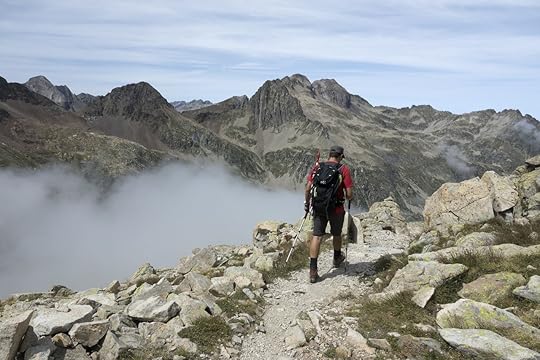
Photo: Kitty Terwolbeck
Location: France
Distance: 866km (538mi)
Duration: 50-60 days
This trail runs the length of the Pyrenees mountain range from the Atlantic Ocean to the Mediterranean Sea along the French-Spanish border on the French side. Over the entire route, hikers can expect an elevation change of over 48,000m (157,000ft) including light scrambling sections. Despite this, there is no need for actual mountain climbing or rope work; just strong thighs and plenty of determination.
3. Greater Patagonian Trail
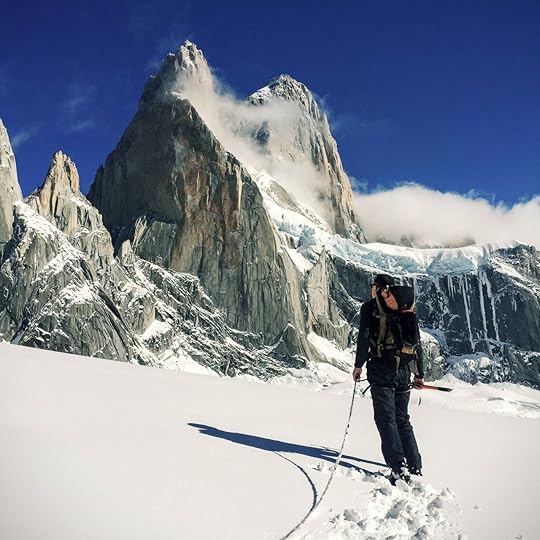
Photo: Daniel Burka
Location: Argentina, Chile
Distance: 1,500km (932mi)
Duration: 90-110 days
This is a real survivalist’s hiking trail that requires a lot of wild camping in the Patagonian Andes. The route crosses few roads and even fewer towns, so thru-hikers will find navigation and the logistics of staying supplied a real challenge. Although not an official trail, the route does incorporate some official ones as well as many local horse tracks that are maintained by local herdsmen. This hiking trail is one of the most isolated, underdeveloped and remote — which means it’s also one of the most pristine long-distance hiking trails.
4. Te Araroa Trail
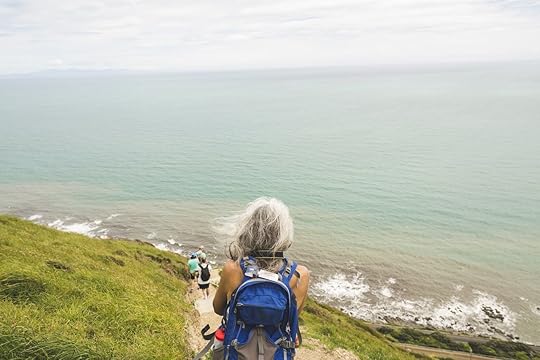
Photo: Daniel Walker
Location: New Zealand
Distance: 3,000km (1,864mi)
Duration: 80-110 days
Stretching from Cape Reinga on the northern tip of New Zealand’s North Island all the way to Bluff at the southernmost tip of South Island, the Te Araroa Trail (Maori for “Long Pathway”) is one of the newest long-distance hiking trails in the world. Along the way, hikers will likely encounter some of the most diverse topography in the world including sandy beaches thronging with seals and penguins, blossoming rainforests, active volcanoes, snow-capped Alpine mountains, and emerald glacial lakes.
5. Rim of Africa Trail
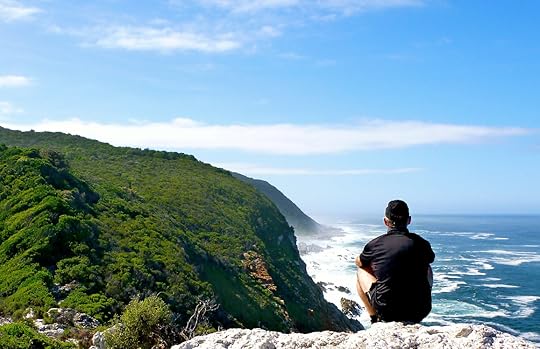
Photo: Rick McCharles
Location: South Africa
Distance: 650km (403mi)
Duration: 55-65 days
The best of Africa’s fledgling long-distance hiking trails, the Rim of Africa traverses the rugged Cape Mountains of South Africa. The trail begins at altitude in the Cederberg Wilderness Area north of Cape Town and ends to the northwest in the foothills of the Outeniqua Mountains along the Garden Route. The trail follows old pathways, existing hiking trails, and remote pathless ridgelines, and uses a series of “nine traverses” across remote and often inaccessible regions of the Cape Mountains.
6. Tokai Nature Trail

Photo: JJ Ying
Location: Japan
Distance: 1,697km (1,054mi)
Duration: 40-50 days
One of the gentler and more undulating long-distance hiking trails on this list runs from Tokyo to Osaka traversing 11 prefectures along the way. The route passes Japan’s iconic Mount Fuji, as well as plenty of lesser-known Japanese cultural and heritage sites, and vast areas of natural beauty. In fact, the route was designed to pass through areas usually hidden from national and international tourists. Hikers can expect to pass by traditional Japanese imperial gardens complete with cherry blossoms and maples, fertile hillsides, lush everglades, and deep, snaking river canyons.
Further reading: Hiking in Japan: An Adventurer’s Guide to the Mountain Trails
7. Great Divide Trail
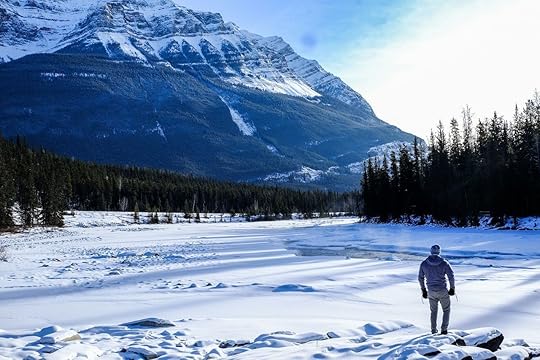
Photo: Ezra Jeffrey
Location: Canada
Distance: 1,200km (746mi)
Duration: 75-90 days
The GDT is a wild and epic long-distance hiking trail that stretches north to south through the Canadian Rockies. The trail closely follows the Great Divide, the mountainous hydrological divide that splits the North American continent in two. The trail crosses the divide no less than 30 times making for a punishing route. It starts in Waterton Lakes National Park on the Canada-US border (where it connects with the USA’s Continental Divide Trail) and ends in Kakwa Provincial Park north of Jasper National Park.
8. E1 European Long-Distance Path
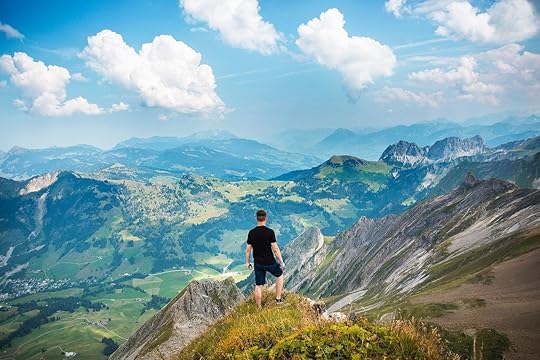
Photo: Joshua Earle
Location: Norway, Sweden, Denmark, Germany, Switzerland, Italy
Distance: 4,960km (3,082mi)
Duration: Unknown
Officially, no one has completed the longest hiking trail in Europe, the E1 path, one of the 12 long-distance paths designated by the European Ramblers’ Association. It stretches from the North Cape (Nordkapp) in Norway to Scapoli in central Italy. The path is broken briefly when it crosses Kattegat between Sweden and Denmark by ferry. There are even plans to extend the path further to the Italian island of Sicily. Perhaps someone should complete this one before it gets any bigger. Any takers?
9. South West Coast Path
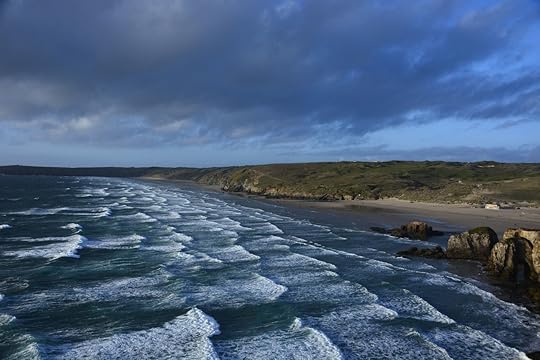
Photo: Gerrit Burow
Location: UK
Distance: 1,014km (630mi)
Duration: 40-45 days
This isn’t the most epic of long-distance hiking trails but I wanted to include one that’s more accessible for the Brits. The South West Coast Path is Britain’s longest hiking trail. The total height climbed over the course of the hike has been calculated as 35,031m (114,931ft), almost four times the height of Mount Everest. The trail runs from Minehead in Somerset along the coasts of Devon and Cornwall to Poole Harbour in Dorset, meaning there are plenty of opportunities to pause for a bag of fish and chips.
10. Great Himalaya Trail
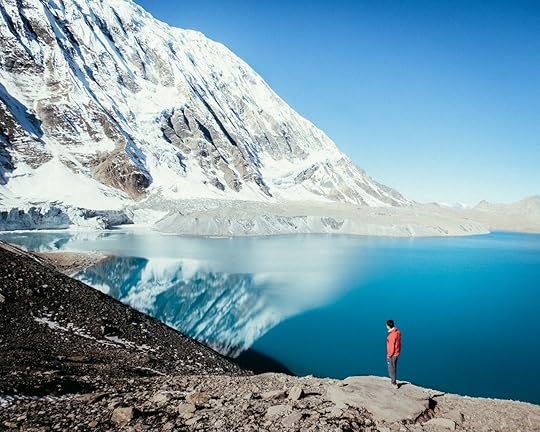
Photo: Iswanto Arif
Location: Bhutan, India, Nepal, Pakistan, China
Distance: 4,500km (2,800mi)
Duration: Unknown
When completed, this will be one of the greatest long-distance hiking trails in the world through the highest mountain range in the world, the Himalaya. No amount of hyperbole can do it justice. Currently, only a small portion through the Nepal and Bhutan sections has been hiked continuously and documented thoroughly. However, the planned unbroken trail is a network of existing treks and trails which together will form the completed Great Himalaya Trail.
This article originally appeared on Atlas & Boots and is republished here with permission.
More like this: When to climb the world’s greatest mountains in 2018

This is Africa is ugly prejudice
Africa, more than any other continent, has a PR problem. Popular culture tells the West that Africa is a land of conflict and famine where progress is slow and corruption is rife. Even the “better” half of Africa is riddled with cliché: the giant red sun, open savannah, and fearsome tribes in native garms.
The most pervasive cliché, perhaps, comes wrapped in a snappy epithet: “This is Africa” or its diminutive form, TIA.
TIA is used by Africans and non-Africans alike as both a term of endearment and a sigh of resignation. It’s used to shrug off a range of inconveniences, from power cuts and roadworks to general inefficiency, infuriating bureaucracy, and questionable ethics. TIA is an instruction to go with the flow, to take a chill pill, to sit down and relax because hey, this is what happens in Africa.
During our month in Ethiopia, we heard “This is Africa” numerous times explaining power cuts, tardiness, and a general low-level confusion.
We used it ourselves more than once to calm each other in times of stress (of which there were many). TIA has its uses as a calming mantra, but it’s fair to consider if the term is reductive.
Even today, Africa is widely seen as a homogenous entity. Kenyan author and journalist Binyavanga Wainaina satirizes this wonderfully in his essay How to Write About Africa: “In your text, treat Africa as if it were one country. It is hot and dusty with rolling grasslands and huge herds of animals and tall, thin people who are starving. Or it is hot and steamy with very short people who eat primates. Don’t get bogged down with precise descriptions.”
There have been websites, apps, and Twitter accounts dedicated to calling out pundits who treat Africa as a single country — but even Africans acknowledge that Africa as a whole has problems.
Me in Africa: why can’t we get it together what is wrong with us why are we like this
Me everywhere else: Africa is not a country goddamit it is a continent of nations completely different in colour and language be specific this reductive imperialism is the root of all our woes https://t.co/24XLc0SSth
— Nesrine Malik (@NesrineMalik) December 13, 2017
Nesrine Malik’s sentiments above were echoed by several people on our travels, most of whom had, or were trying to, set up businesses in African countries.
Haile, a hotelier based in Gonder, Ethiopia, explained the periodic lack of electricity, hot water, and wifi with a doleful smile and “This is Africa.”
Camie, a merchant based in Djibouti, told us that the Djiboutian government had recently repealed its visa-on-arrival facility for tourists. The repeal lasted for five days until angry local businessmen helped overturn it. Those five days just so happened to coincide with an international trade fair designed to strengthen the country’s economy. Camie shrugged plaintively. “This is Africa.”
TIA arguably synthesizes an accepted truth. It is a calming mantra and a knowing nod to the current state of affairs, but does using it so casually perpetuate harmful stereotypes?
Yes, say several luminaries. TIA has a number of negative consequences that are worth examining.
TIA promotes negative stereotypes
Jacqueline Muna Musiitwa, Founder and Managing Partner of Hoja Law Group in Rwanda, says: “Even though I surround myself with Afro-optimists, I have never heard TIA used in a positive context. As such, it perpetuates negative stereotypes of Africa.”
Lawyer and activist Rosalia Gitau agrees: “Since the Live Aid movement captured the hearts and wallets of people in the Occidental world, the sallow-faced Ethiopian child has come to emblematise Africa: exotic, needy, and victimised. But Africa is so much more than that. The continent hosts a panoply of language, cultures, skin-tones, histories, ambitions, dreams and futures.”
TIA impedes human connection
Author Chimamanda Ngozi Adichie says that lumping together all African nations impedes human connection. In her 2009 TED talk, she shares her experience of studying in the US as a teenager: “My American roommate was shocked by me. She asked where I had learned to speak English so well, and was confused when I said that Nigeria happened to have English as its official language.”
Adichie elaborates: “What struck me was this: she had felt sorry for me even before she saw me. Her default position toward me, as an African, was a kind of patronising, well-meaning pity. My roommate had a single story of Africa: a single story of catastrophe. In this single story there was no possibility of Africans being similar to her in any way, no possibility of feelings more complex than pity, no possibility of a connection as human equals.”
Adichie concludes: “Of course, Africa is a continent full of catastrophes… But there are other stories that are not about catastrophe, and it is very important, it is just as important, to talk about them.”
TIA affectes the economy
TIA, or the mindset it represents, can be detrimental to the stable countries on the continent. When civil war breaks out in the DRC, it can affect tourism to countries as far away as Senegal and Swaziland.
When Ebola is found in Guinea, it can affect visitor numbers to Botswana and Namibia. The conflation of 54 distinct nations means they are unfairly connected — for better or worse.
TIA breeds apathy
Rosalia Gitau says TIA breeds apathy. On the subject of corruption, she says: “[It is] a global crime. It affects everyone, everywhere, indiscriminately. Black, white, woman, man, rich or poor – corruption is truly an equal opportunity offender. But how is corruption so universal yet we don’t know what it is? Because we give it euphemistic expressions like, ‘that’s life’ or ‘c’est la vie’ or TIA. We take for granted that people get things done by ‘cutting some corners’, ‘greasing some palms’, or ‘looking the other way’. This social apathy, and accompanying epithets, must stop now.”
Jacqueline Muna Musiitwa agrees: “Africa is quickly changing and the notion of TIA is hampering people’s mental progress of these changes. How can you expect change to happen when you constantly repeat a vote of no confidence by expecting the worst or expressing shock when the worst does not happen?”
Revered British writer and critic A. A. Gill once said, “You either get the point of Africa or you don’t” as if the continent exists to serve a specific purpose instead of just existing. We found a pronounced difference between Ethiopia (very challenging) and Djibouti (very easy). We loved Mauritius but hated Morocco. Egypt was fun and so was Tunisia, and both of them were different to Kenya and Tanzania.
Perhaps the point isn’t whether you get the point of Africa or not; perhaps it’s that you get there’s not one Africa.
This article originally appeared on Atlas & Boots and is republished here with permission.
More like this: 3 ways to challenge the single story you’ve heard about Africa

11 moments on Alabama's Gulf Coast
Gulf Shores and Orange Beach, the main communities along Alabama’s 50-odd miles of Gulf of Mexico shorefront, have what nowhere else does: a combination of that famous laid-back Southern lifestyle and Caribbean-quality beaches. But that’s just the start. From premier music festivals to world-class fishing, fresh oysters to shipwreck dives, here are 11 moments you can expect to live out on your visit.
1. Realizing beach state parks are where it’s at
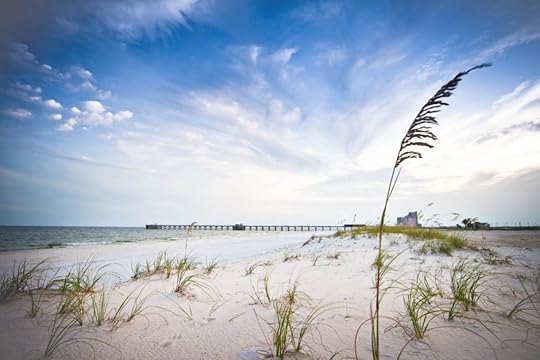
Photo: Outdoor Alabama
It’s shocking that more people don’t know about Alabama’s Gulf State Park, because it puts most other state parks to shame. It’s made up of 3.5 miles of beaches, many more miles of nature trails, a fishing pier, and a dog pond (yep, that’s a pond set aside specifically for your dog). There are pelicans, sea turtles, butterflies, gators, and puh-lenty of seagulls to keep you company, too.
If you’re looking for a gorgeous — and not super-crowded — public beach, definitely check out the entrance to the park near the main beach pavilion. For $6 a car, you’ll get access to the beach and the pavilion’s concession stand, showers, and fire pit. It’s perfect for a day trip — or for getting in one more Gulf-filled day after your hotel checkout.
2. Drinking a Bushwacker at the Flora-Bama Lounge
There’s no place in the world like the Flora-Bama Lounge & Oyster Bar. It’s a gigantic and somewhat ramshackle dive bar — in the absolute best way possible — that opened in 1964 and almost immediately became a classic. Consider it your gateway to the local culture when you visit.
The Flora-Bama straddles the Alabama-Florida state line and is made up of a restaurant, multiple bars, and live music venues, along with the package liquor store that started it all. Decorated with more discarded bras than you can count and almost always hopping on weekends, you really can’t have a bad time here (especially if you order a plate of oysters). Some consider it “the world’s best beach bar,” but you’ll have to decide for yourself. What I won’t let you decide for yourself is leaving without trying a Bushwacker: the chocolaty, coconutty, frozen rum cocktail the Flora-Bama is famous for.
3. Listening to your favorite bands right on the beach

Photo: Hangout Music Festival
Every May, the beaches of Gulf Shores are transformed into a major music festival, held right on the sand. Hangout Fest has featured some pretty impressive lineups in the past, including acts like The Weeknd, Lenny Kravitz, Foo Fighters, Zac Brown Band, and Kings of Leon.
If surfing the crowd isn’t your jam, don’t miss the photo-worthy “Hammock Beach” set up as part of the event, too — thanks to the Ferris wheel and the actual wedding chapel, you can’t miss it. And with its white sand and giant beach chairs, it’s just as Instagrammable as the stage.
4. Diving The LuLu and other shipwrecks
Your childhood pirate dreams are about to re-emerge in all their glory. In 2013, the Alabama Gulf Coast Reef and Restoration Foundation intentionally sank The LuLu, a 271-foot retired freighter ship reportedly named after Jimmy Buffett’s sister, Lucy “LuLu” Buffett. The ship is now a full-fledged marine habitat teeming with snapper, octopus, jellyfish, and crab. Several local dive shops, including Down Under Dive Shop, will take you on the approximately 90-minute boat ride out to The LuLu, as well as other nearby wrecks and dive sites.
Afterwards, round out the day by heading over to LuLu’s Gulf Shores, Lucy Buffett’s massive restaurant complex. You should expect a decent wait no matter when you go, but the almost comically outrageous number of activities available in the outdoor waiting area — a ropes course, live music, a marina, crafts for kids — mean the wait is almost as good as the Cheeseburger in Paradise and Krispy Kreme Bread Pudding you’ll be having for dinner and dessert.
5. Chasing dolphins and chasing sunlight
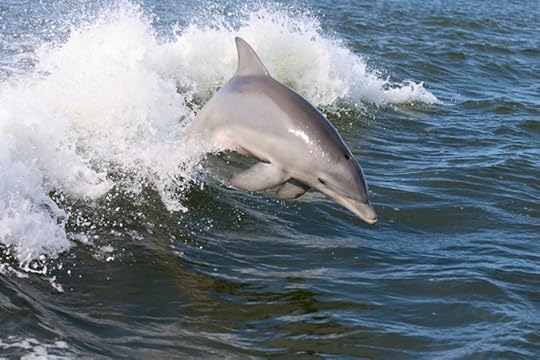
Photo: The Pug Father
If you don’t squeal with delight every time you catch even the slightest glimpse of a dolphin in the wild, we must have two different definitions of joy. I force everyone I’m with to stop what they’re doing and watch these majestic creatures with me. And at sunset? Oh, man.
While seeing dolphins from the shore is great, seeing dolphins from a boat on the open Gulf is downright amazing. There are countless tour operators who can take you on a variety of dolphin cruises, ranging from packed motorboats to private sailing charters to double-decker cruisers. There’s also sunset dinner cruises and options for the family — who’s down for a water fight or touching a live blue crab?
6. Hugging sloths and cradling baby kangaroos
You probably didn’t come to the beach to go to the zoo, but the Alabama Gulf Coast Zoo is not an ordinary zoo. You can touch a sloth at this zoo. You can hold a baby kangaroo in your own little cloth pouch at this zoo. You can cuddle a lemur (or a snake, if that’s your thing) at this zoo. You can hug a tamandua, realizing you’re touching a species you didn’t even know existed. Nope — not an ordinary zoo.
These animal encounters aren’t included with regular zoo admission, but are kid-friendly, don’t require advance reservation, and range from $5-$10 — an absolute bargain for this kind of exposure to wildlife.
7. Paddling to the Gulf and back again
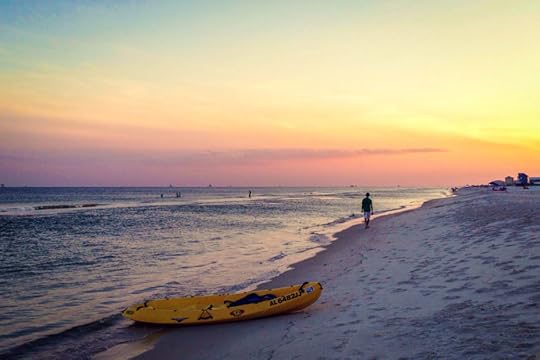
Photo: Sarah Buckley
One of my favorite things to do here is to rent a kayak or SUP for the day, or even for the week. The variety of paddle-able terrain keeps it spicy — there’s sea kayaking, sure, but so many other options as well. You have the Bon Secour River, Orange Beach’s back bays, Gulf Shores’ Little Lagoon, Cotton Bayou (dolphins!), Bird Island and Robinson Island, and the Orange Beach Canoe Trail.
Paddled By You rents SUPs and single, double, and triple kayaks in two-, four-, and eight-hour increments (and they’ll offer tons of suggestions for paddling spots, should you need them). Keep in mind you can also paddle out to restaurants like Anchor Bar & Grill and Pleasure Island Tiki Bar for when the hunger hits.
8. Taking a selfie with a vermilion snapper
No trip to Alabama’s Gulf Coast is complete without a picture of you holding your catch on a fishing charter (bait, gear, and the necessary fishing license is always included). Bonus points for wearing appropriately branded angler clothing and sunglasses. Seriously, the fish are massive, delicious, and everywhere in these waters — get out there and hook one!
9. Going for a spin to the top of The Wharf

Photo: Gulf Shores & Orange Beach Tourism
If you missed the beachfront Ferris wheel at Hangout Fest, check out one of the South’s largest Ferris wheels at The Wharf. There’s also a marina, a movie theater, loads of bars and restaurants, and the Red or White Wine & Gourmet Center — which means this is the perfect place for a romantic date night. The Wharf complex also has tons of shopping and other indoor activities, making it a great rainy day option, too.
10. Catching throwed rolls at Lambert’s
You read that correctly. “Throwed rolls” is the official term at Lambert’s, a sprawling country-style restaurant just north of Gulf Shores that serves gigantic portions, pass-arounds, and literally throws rolls across the restaurant at patrons. If nothing else, you’ll get a few ideas for how to make your family dinners more exciting.
Pro tip: Come early, be prepared to wait, bring cash, and if you’re not starving and don’t mind going meatless, try the sides plate and fill up on those giant throwed rolls. You’ll officially be a proud member of our Gulf Coast family afterward.
11. Parasailing above the Gulf of Mexico
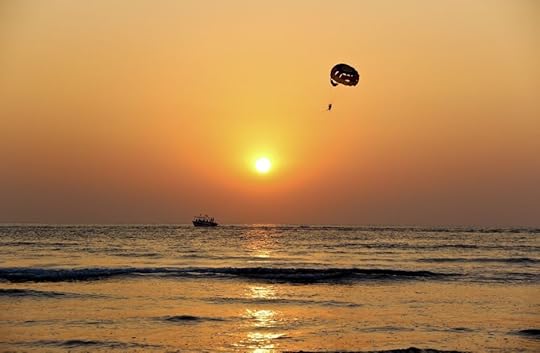
Photo: Pexels
Parasailing is a bit of a rite of passage for any frequent visitor to the Alabama Gulf Coast. It’s a thrill, and one that pretty much anyone can have, young or old (kids can even fly three at a time). And it’s probably more affordable than you’re imagining, running around $60 a person.
Online bookings take a second to nab, and most allow observers who aren’t quite brave enough to make the 800-foot flight to ride along in the boat. But don’t make excuses — this is a memory you shouldn’t put off for next time. 
Matador Network's Blog

- Matador Network's profile
- 6 followers

