
Matador Network's Blog, page 1418
January 24, 2018
map of the state of global democracy
Global freedom has declined for the 12th year in a row according to a report from US watchdog Freedom House. The NGO’s report ranks the world’s nations on a scale from 1-100 based on items like press freedoms, minority rights, electoral processes, and civil liberties. The annual report, which started in 1973, categorizes each nation “free,” “partly free,” or “not free” based on how close their score is to 100. The report stated that out of the 195 nations surveyed in 2017, 71 witnessed declines in “political rights and civil liberties, with only 35 registering gains.”
Perhaps the most troubling find was that the United States, long described as a bulwark for global democracy, saw its ranking drop three points from 89/100 to 86/100. The authors note the President’s verbal attacks on the press, the appointment of his children to important positions in the administration, and his criticisms of the judiciary system for blocking his decisions as a threat to the democratic standards of the nation. You can read more of the report’s findings here. 
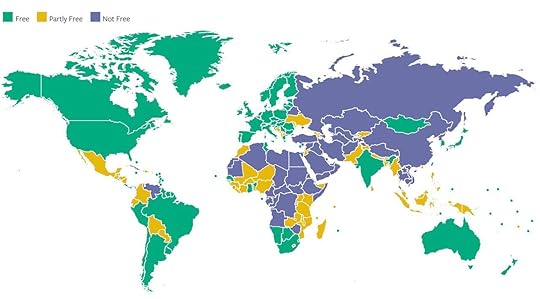
Photo: Freedom House

Photo: Freedom House
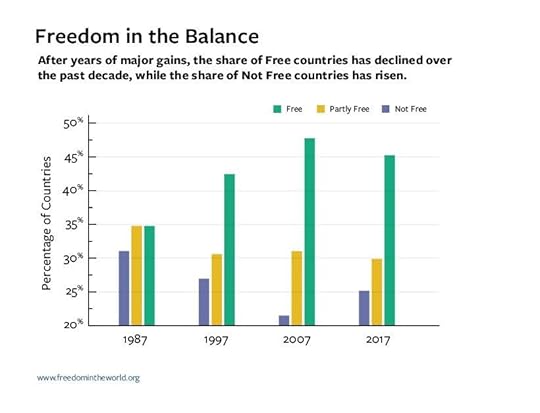
Photo: Freedom House

Photo: Freedom House

Photo: Freedom House

More like this: Muslim in Trump’s America


Save money on Whistler ski trip
Whistler is North America’s biggest and best ski resort. First in skiable acreage and vertical drop, it has slopes for every skill level, from first-timers to experts who crave its dopamine-rush-inducing off-piste terrain. But skiing ain’t cheap. Here’s how to enjoy this whistler without busting your budget:
1. Know your currency.
If you’re coming from the US, remember that one Canadian dollar equals less than one American dollar… by how much fluctuates. Know which currency something is priced in when making reservations. If you have flexibility on timing, go when the Canadian dollar is weaker relative to the US one.
2. Buy lift tickets in advance and for each day you’ll ski.
A one-day ticket purchased at the base of the mountain will set you back C$148 (that’s US$118 at publication). If you get on whistlerblackcomb.com and buy a week’s worth of tickets a week in advance, the price comes down to C$108 per day (or US$87).
3. Know your age.
Little kids ski free, and there’s tiered pricing for big kids, teens, and seniors.
4. Consider the Epic Pass.
When Vail Resorts, Inc. bought Whistler Blackcomb, they jacked up ticket prices. Not nice. But depending on where and how many days you plan to ski, their Epic Pass, a season pass for all of Vail’s resorts, may be worth it. If you’ve got a friend with an Epic Pass, ski with them. They can get you a discount on your lift tickets. Nice.
5. Go backcountry.
But only if you’re an expert. If you’ve got your avalanche shovel, transceiver, and backcountry training (and preferably “skins” or a backpack onto which you can hook your skis), you and your hardcore buddies can buy a one-use lift ticket to access Flute Bowl off Whistler or the top of the Blackcomb Glacier. From there you can hike into the backcountry and spend a powdery day, free of charge. Ask around first; if experienced guides aren’t taking folks out that morning, skip it. Avalanches suck and helicopter rescues are really, really expensive.
6. Ski off-peak.
Accommodations and lift prices drop in off-peak weeks, so avoid late December and go in March instead. Prices are lowest in April, and the snow can still be great. Don’t be lured by accommodation packages that include lift tickets; you can probably get cheaper lift tickets separately, especially late in the season.
7. Get out of bed.
If powder is promised, make the most of your day. Buy a Fresh Tracks pass (C$23; for use with a regular lift ticket) for early access to the slopes and a big breakfast. Line up at the Whistler Gondola in the pre-dawn darkness. You’ll arrive first at the Roundhouse Lodge for a buffet of scrambled eggs, sausages, fruit, and the like. Don’t get too comfortable, because when the ski patrol gives the go-ahead, they’ll ring a bell and everyone will race outside to be the first to make fresh tracks. Just stuff your pockets with banana bread and get out there!
8. Eat a hearty breakfast.
If you’re not an early riser, grab an egg and bacon sandwich at the kiosk by the Carleton Lodge and eat it on the way up. Unwrapping a greasy, bacon-scented sandwich in the gondola will be extremely awkward — but, hey, you’ll save precious ski time and maybe can skip a pricy lunch on the mountain!
9. Eat an early “dinner.”
You’ve skied through lunch and now you’re starving. Get your friends together for a massive plate of nachos and pints of beer. Dubh Linn Gate’s happy hour starts at 5 PM so sip slowly and then order another round at 5:01 PM.
10. Know the time.
The Dubh Linn Gate in Whistler has breakfast, après, and late night happy hour with pints, highballs, and glasses of wine for C$5. HandleBar in Blackcomb has happy hours at noon, 5:00 PM, and 10:00 PM, with $5 appetizers and wines and $4 craft beers.
11. Get a kitchen.
Plenty of Whistler accommodations come with kitchens. Get a unit with a kitchen, shop at IGA or The Whistler Grocery Store, and save money by cooking at home. (If you have a car, shop at Nester’s market. It’s a better grocery store).
12. Ask a local.
Locals know the less expensive spots for dinner, including El Furniture Warehouse, where every item — from fish tacos to burgers — is C$5.95. At Samurai Sushi in Creekside, the teriyaki chicken bento box is C$9.50 and sushi rolls are around C$4. All the burgers at Splitz Grill are well under C$10, and they’ve got salmon and veggie options too.
13. Don’t rent a car.
The Whistler Perimeter Bus from Vancouver International Airport to Whistler is C$150 round-trip for adults and half that for kids. The Epic Bus from downtown Vancouver is much cheaper. If you don’t mind lugging your gear, the Canada Line rail will get you downtown from the airport for a few dollars. From there, Epic has round-trip fares to Whistler for C$35. In Whistler, free bus shuttles will get you where you need to go.
14. If you have a car, use it.
The farther from Whistler Village you can stay, the cheaper your accommodations might be. You’ll find free ski parking in Whistler Day Lots 6-8 and in Whistler Creekside.
15. Cross-country ski.
You may be there for the downhill thrill, but if an alpine gale is keeping upper lifts closed, save the lift price and go Nordic. A short walk from the village, the Cross-Country Connection rents cross-country gear for C$30 and trail passes for C$21 (half that for kids). Prices are even lower after 3:00 PM. Ski around Lost Lake or tackle some serious inclines through the forest. Snowshoeing is even cheaper, and you can lose yourself (for real) in the woods. Snowshoes rent for C$20 and adult trail passes are C$10.50 all day.
16. Downward dog for free.
You don’t need to be in a fancy resort to enjoy some restorative yoga. Lululemon offers complimentary yoga classes at the Audain Art Museum on Wednesday nights.
17. Hit the sports center.
If your cheap accommodations don’t have a gym, take a shuttle to the Meadow Park Sports Centre, which is run by the city of Whistler. It’s got a huge gym filled with very toned locals, squash courts, an Olympic sized swimming pool, a sauna, and an ice rink. The locker room is nothing fancy, but the price is right… especially if you go in the middle of the day. (C$5.50 to use the fitness area, jammed with cardio equipment, weights, TRX ropes and bands, from 11:00 AM to 1:00 PM).
18. Shop right.
If you need some last-minute ski gear, check out The Whistler Clearance Center, in Whistler Village or Blackcomb, for a random assortment of jackets, skis, boards, helmets, gloves or anything else. You might find barely used GS racing skis with bindings for C$99. We did.
More like this: 14 unforgettable moments you’ll have skiing Banff and Lake Louise

Alaska's beautiful Turnagain Arm
I step out into a crisp Alaskan breeze that plays with my hair and a sweater loosely tied around my waist. A creaky screen door slams behind me, and I look down a quaint and quiet Anchorage street. Having arrived in the dark the evening before, I can finally see my surroundings. Our Couchsurfing hosts are still asleep, so my adventure buddy Doug and I leave a note on the kitchen table and start packing the car — it’s my first time in Alaska, and I’m anxious to start exploring. There’s no way a week can cover a fraction of what we want to see in Alaska, so we gathered a few suggestions, and decide to start exploring the Turnagain Arm.
1
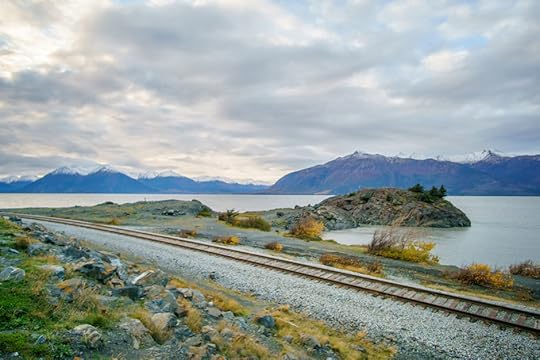
We watch as chilly water laps the shore at our first stop along the Turnagain Arm, Beluga Point Lookout. Panoramic views - and being right off the Seward Highway - make this a perfect place to watch the well-known bore tide rush in, as well as the chance to glimpse its namesake aquatic creatures, the beluga whales.
2
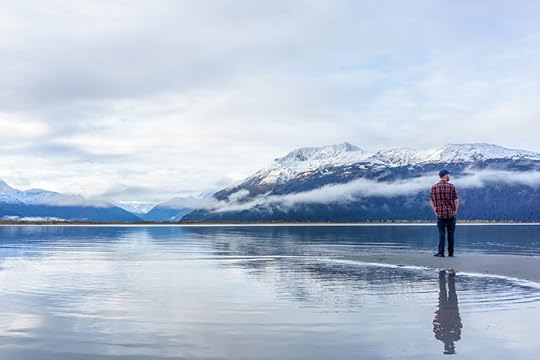
We watch out the window as mountains seemingly emerge from the still surface of the Turnagain Arm. We make our way down to the shore of one of the tiny pull-offs speckled along the highway, and we practically forget about the cars passing along the nearby highway as local fishermen take a break from their rusty lawn chairs and we breathe in the fresh air.
3
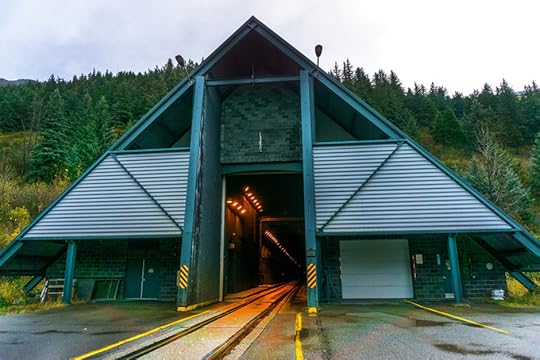
With the exception of a dim string of lights flanking its ceiling, darkness is absolute at the Anton Anderson Memorial Tunnel. At 2.5 miles, it is both the longest highway tunnel in North America and the only vehicular path to Whittier, besides a boat ride.
Intermission
Infographics
The 45 most disturbing mythical creatures from around the world
Ana Bulnes
Dec 5, 2017
Trip Planning
Travelers to Alaska: Do yourself a favor, don’t skip the town of Palmer
Maria Geary
Dec 22, 2017
Sponsored
24 stunning images of Colorado’s national parks
Jacqueline Kehoe
Jan 3, 2018
4
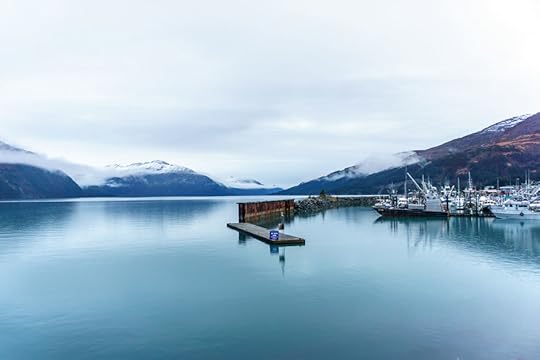
We stop in town to grab some supplies and take in the views of Prince William Sound before heading to our hike. Whittier Harbor nurses the sound of distant boats bobbing gently in the water as we walk along the water's edge and watch the clouds slowly engulf the surrounding mountaintops.
5
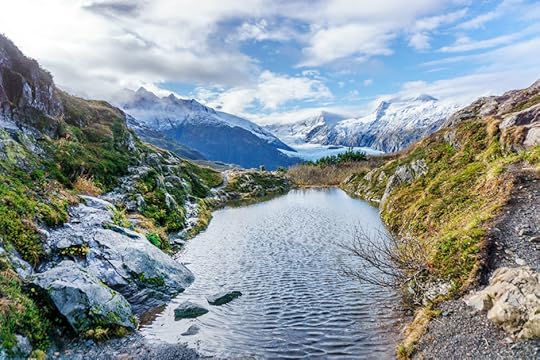
Starting just outside of town, the Portage Pass Trail leads visitors to the incredible Portage Glacier. Originally used by Alaskan natives, fur traders, and early settlers, the pass leads you steeply uphill before granting the view of the massive glacier standing below. Although it varies based on your exploration distance along Portage Lake, the trail typically clocks a little over 4 miles and is often rated as moderate to strenuous based on the pass's "uphill both ways" nature.
6
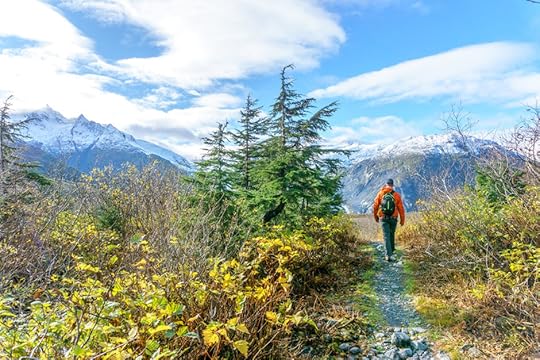
I watch as Doug makes his way down the other side of the steep pass towards the Portage Glacier, glancing behind me to see what we’ll have to ascend to return to our car. The Turnagain Arm is filled with endless hikes leading visitors to overlooks with panoramic views of peaks and lakes.
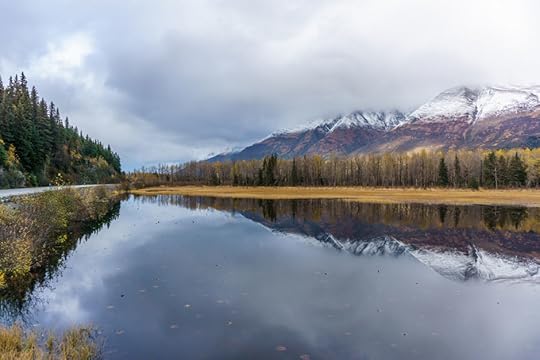
7
We cruise away from the Turnagain Arm on a quick detour trip to Seward. A stillness in the air calls us to a small pull-off where we stretch our legs and lose ourselves in Alaska’s views.
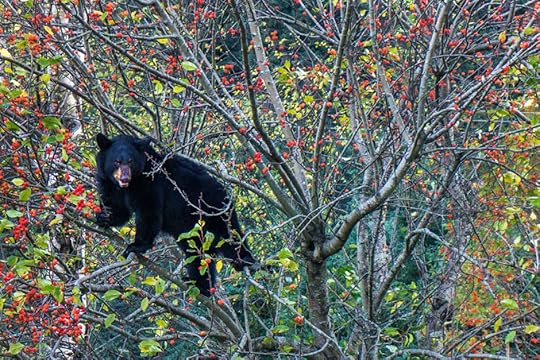
8
With a booming fishery port and a growing tourism industry, the streets were more crowded than we had expected. Even a nearby patch of small trees was occupied by a fuzzy black bear eating his lunch. It’s important to remember that although it may be tempting, you must not approach or feed wildlife, for their sake and yours.
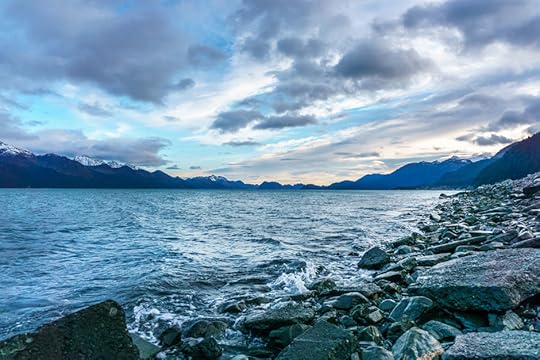
9
We sat along the broken shore of Resurrection Bay, watching as the last light of day disappeared. The clouds passed over us softly as we watched the world becomes quieter.
Intermission
Sponsored
9 of the most memorable hotel stays in the Alps
Caroline Sieg
Dec 4, 2017
Trip Planning
25 places we’re dying to explore right now
Matador Team
Jul 28, 2016
Galleries
This couple did their engagement shoot in the wreckage left by a hurricane, and it’s beautiful
STJ Creative Photography
Dec 1, 2017
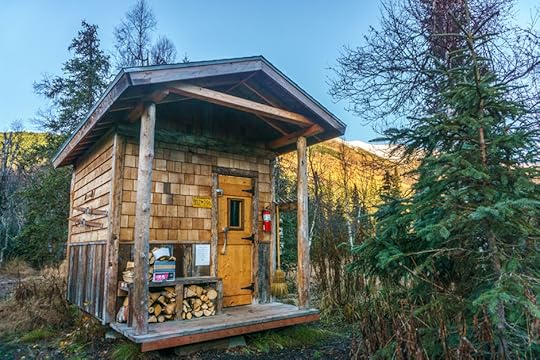
10
We booked this small cabin to spend the night on our way back to Anchorage. A cabin that would soon be filled with the smell of food and hot chocolate, and where we’d lay heavy heads on stiff pillows and fall asleep bundled in sleeping bags as the wood stove kept out the cold. A tiny sauna (above) welcomes visitors in to warm up after a day of adventuring.
11
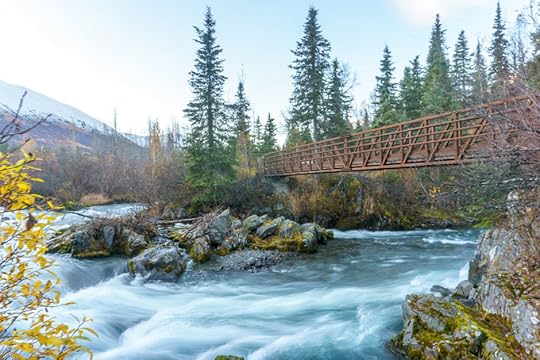
Early morning light trickles through the frosty windows of the cabin. Doug hands me a hot thermos of apple cider as I slip on moccasins and pad down a dirt path to the nearby rivers shore. Not ready to leave quite yet, I make myself comfortable against a mossy rock and watch as the world slowly wakes.
12
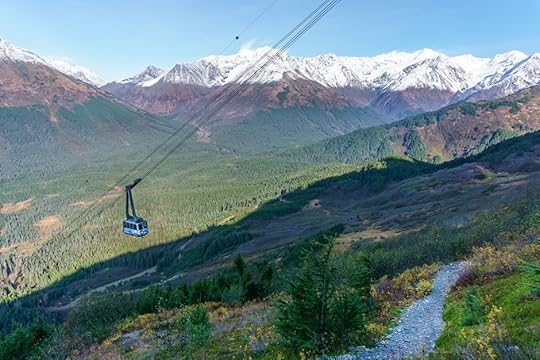
Early morning light trickles through the frosty windows of the cabin. Doug hands me a hot thermos of apple cider as I slip on moccasins and pad down a dirt path to the nearby rivers shore. Not ready to leave quite yet, I make myself comfortable against a mossy rock and watch as the world slowly wakes.
More like this: The 13+ most mind-blowing spots in Alaska

Amazing travel video with an iPhone
Don’t think you can make incredible travel videos with just an iPhone? Check out some of the amazing footage Matador Media House filmmaker Mike Dewey shoots here in Lake Louise on his iPhone 7.
Some of the simple tricks and tips he reveals here are absolute game-changers, and you can implement them into your videography right away.
1. Shoot in manual.
Dewey notes, “if you’re just shooting using the automatic settings that come with your iPhone camera, it’s going to look more amateur.” You can unlock manual controls of your iPhone camera with the Filmic Pro app.
2. Adjust your bitrate, frame rate, and other settings.
In this example, Dewey is looking for a slow-mo effect that he’ll set up in the editing process. To capture that, he uses a frame rate of 60 fps in 1080p. He also boosts the bitrate to “extreme” to make sure that the camera is shooting in the highest quality possible.
3. Lock in your exposure and focus.
Using the app’s exposure settings, Dewey locks in the precise exposure and focus. He notes that when people fail to do this, and that when the exposure and focus change in the shot, “it’s a dead giveaway that the iPhone footage is more amateur.”
4. Apply LUTs to your footage in post processing.
The next stage is to play with the color grading of your footage by applying a LUT in your editing software. You can do this in either Final Cut or Adobe Premiere as well as different video editing apps on your phone. (Note that LUTs are not usable in iMovie.) Adding them is less complicated than it looks in the video, and you can find free LUTs available online.
5. Apply a cinematic crop.
The last thing Dewey does to his footage in post-processing is to crop 10% off the top and bottom, giving it a Letterbox look, which is more cinematic.
What do you think? Hard to believe that footage was shot on an iPhone! Please stay tuned for more episodes of our original Matador Filmmaking series coming soon!

How to speak Pennsylvanian

This is where we go fishing.
2. Loyer
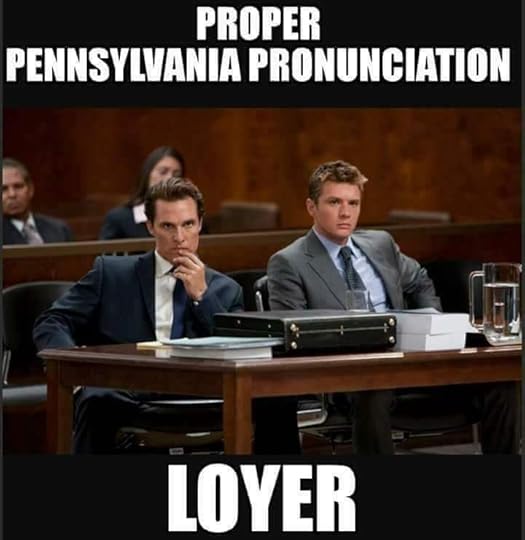
The person who defends you in court.
3. Neck-store neighbor
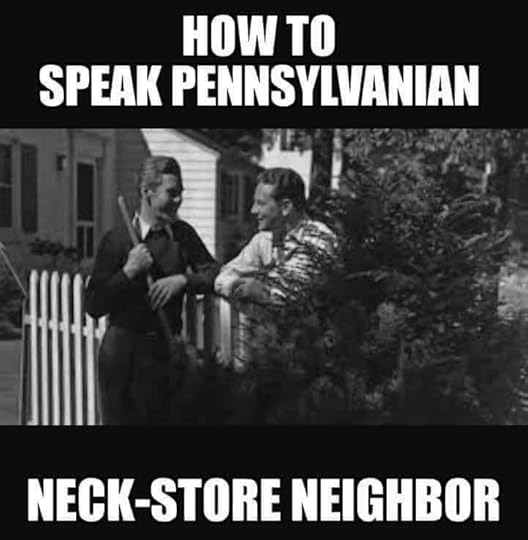
Love them or hate them, they live neck-store to you.
4. Lite-nin bug

These are the best to catch on a cool summer night.
5. PA

It’s not Pennsylvania. It’s “PA” (pronounced pee-ay).
6. Chock-lit bunny

My favorite thing about Easter!
7. Spicket

You use this and a hose to fill up the pool.
8. Yuge

“Look at the size of this fish I caught, it’s YUGE!”
9. Q-Pons

Every Pennsylvanian grandmother loves them.
10. Realitter

You call one of these when you’re ready to buy a house.
More like this: 10 signs you were born and raised in Pennsylvania
Protecting Maine's national monument
In August of 2016, President Obama proclaimed 87,563 acres of historic land to establish Katahdin Woods & Waters National Monument in northern Maine. The land, which sits adjacent to Baxter State Park, was generously donated to the government by the Quimby Family Foundation, along with $20 million in initial funding to support its establishment. Its designation grants the use of federal funds and resources to maintain the new monument for public recreation, along with protection and conservation. The monument offers spectacular views of Mount Katahdin, protects ecological features and historic cultural resources, and hosts a variety of outdoor activities like hiking, canoeing, camping, fishing, and hunting.
Local and national controversy has surrounded Maine’s recently established Katahdin Woods & Waters National Monument. While there has been plenty of noise generated by these debates in recent months, none of it has touched on the reason the monument was created in the first place: to protect and encourage public access to Maine’s natural beauty and outdoor adventures. World-class camping, canoeing, kayaking, mountain biking, hiking, hunting, fishing, wildlife, and sightseeing are all at every visitor’s fingertips. In September of 2017, a team of four Maine-born photographers and filmmakers set off into Katahdin Woods & Waters to document the land in hopes of encouraging more public use. Their film, Monumental, documents a five day, 64-mile-long human-powered circumnavigation of the park by canoe, bike, and foot.
Follow Matador on
Vimeo
Follow Matador on
YouTube
To produce this film, the production team partnered with several Maine-based outdoor brands — Old Town Canoes, Baxter Brewing, Hyperlite Mountain Gear, and Good To-Go Foods.
To see the full movie, click here.
More like this: What you can do to help save Utah’s National Monuments
Transformational festivals
As winter sets in, most festival-goers in North America and Europe go into some sort of hibernation. That’s because they have never considered the fact that there are festivals happening year round, all over the world. They may be a bit more out of your way to get to, but if you just can’t wait a few more months until summer, you should definitely consider attending one of them.
Transformational festivals specifically are a bit harder to come by. These are the types of festivals that don’t focus solely on the music and the lineup. They generally integrate a schedule of workshops and other events that promote self-growth, wellness, sustainability, and a sense of community. The average commercial festival tends to focus on the headlining DJ’s and the party, whereas transformational festivals encourage everyone to perform and participate. Here are 5 transformational festivals where you can dance and party, but also return home with new knowledge and skills.
1. Rainbow Serpent — January 26-29, 2018 — Lexton, Australia
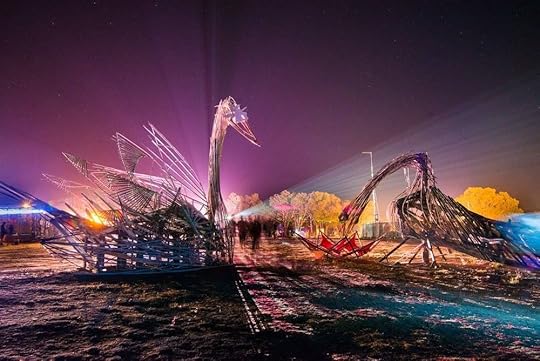
Photo: Organic Photo & VR
Rainbow Serpent takes place near Melbourne, Australia, and is the longest-running festival on this list. The annual event first started in 1997, so the organizers have plenty of experience making it the best it can be. The name “Rainbow Serpent” comes from an Aboriginal dreamtime story, and they integrate Aboriginal culture through ceremonies and workshops. Although it began mainly as a trance party, there are now five stages, each with a different style of music, so you’re bound to find something you’re into.
2. Earth Frequency — February 16-19, 2018 — Peak Crossing, Australia
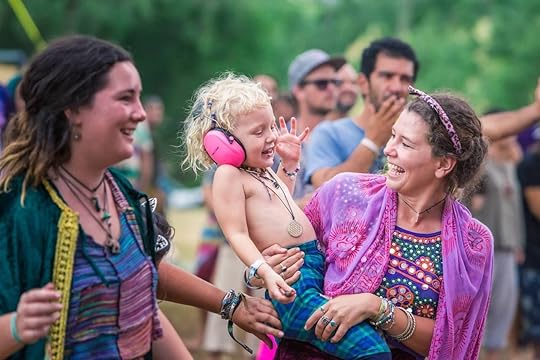
Photo: Yumiya/Earth Frequency
Earth Frequency is another long-running Aussie festival. It’s located in Queensland, about an hour’s drive from Brisbane. Although the festival integrates aspects of transformational festivals and tribal gatherings, they also aim “to go beyond these traditional tags and to exist as a multi-faceted gathering focused broadly on creativity, community, connection, intention and inspiration.” Earth Frequency is especially great for kids –there is a large area of the festival known as “The Family Realm” where families can connect and participate in child and parenting-focused activities together.
3. Envision — February 22-25, 2018 — Uvita, Costa Rica
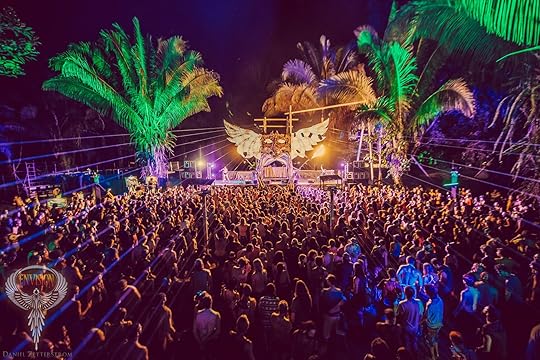
Photo: Daniel Zetterstrom
Envision takes place where the rainforest meets the ocean, and the combination of these two environments is one of the things that makes it so unique. Another is the art — it is always absolutely mind-blowing. Artists from around the world come together to build huge installations, beautiful stages, galleries, and more. Envision has 3 different musical stages and many performances lined up as well. And for the yogis out there, it has a jam-packed yoga schedule and even a dedicated yoga camp.
4. Tribal Gathering February 23 — March 12, 2018 — Playa Chiquita, Panama
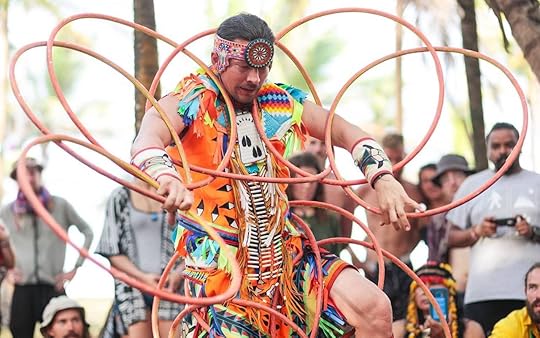
Photo: Jesse Thompson
As the name suggests, Tribal Gathering is a gathering of over 60 indigenous tribes from 30 different countries. Each one brings knowledge of their culture and teaches their ancient practices to attendees. This could range from learning traditional weaving techniques to participating in Shamanic ceremonies. During the second half of the festival, the main stage opens and it becomes more focused on the music and dancing. There is no other type of event that brings together so many tribes from around the world and combines their knowledge with modern dance and spirituality.
5. Festival Ometeotl — March 23-25, 2018– Morelos, Mexico
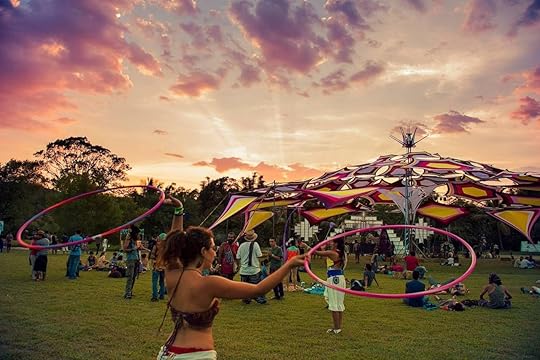
Photo: Festival Ometeotl
Festival Ometeotl is the smallest and least well-known festival on this list, but don’t let that discourage you. Small festivals often have a much stronger sense of community, as it is easier to get to know others. Festival Ometeotl is located about 2 hours away from Mexico City. Music-wise, there is a heavy focus on psytrance, but there’s also much more to see and do: workshops, performances, and visionary art. The festival name itself, “Ometeotl,” is an Aztec term that refers to the divine, sacred creation force, and they do a great job of incorporating Aztec culture and traditions.
More like this: 5 transformative festivals for experimenting with alternative lifestyles
Signs you learned to drink in NorCal
California has always been known for alcohol, but these days people seem to forget that Northern California was the birthplace of American wine and craft beer. After all, Napa Valley has been producing wine since the 1800s and the Bay Area heralded the new age of beer in the US in the 1970s and 80s, long before the rest of the country let go of their unhealthy attachment to Coors. Needless to say, if you came of age north of Fresno, you are bound to have a few discerning quirks around alcohol because let’s be honest, you learned to drink on the good stuff.
1. Your first true love was Sierra Nevada.
The Chico-based Sierra Nevada Brewing Co. opened in 1980 and forever changed the face of American beer. Their classic Sierra Nevada pale ale created a whole new category of beer, the American-style pale ale, and has since become so ubiquitous that I once found a bottle for sale in Phnom Penh. There is simply no way you learned to drink in Northern California if you didn’t fall in love with this little green bottle at least once.
2. You only drank the “big” beers as a teenager or at frat parties.
I drank Miller High Life exactly once and even then it was only because my college dorm was named Miller Hall. We thought it was funny until we tasted the piss water. You see, even as college-aged babies, we knew that wasn’t beer and only drank it as a last resort… unless we were playing beer pong, we knew not to waste good beer on that.
3. You are a snob about hops.
Okay, so sticklers will say, “Wait, I thought Cascade hops were first grown in Oregon?” and they would be right. However, those famous hops weren’t released to brewers until 1972, at which time only California and Colorado had entered the craft-brewing scene. California beer was an early adopter of the “more hops the better” mentality and if you grew up here, you probably agree. Let’s be honest, it’s not an IPA if it’s under 50 IBUs.
4. And while beer is wonderful, your second true love is wine.
Millennials and Gen X-ers came of age in a delightfully rich and diverse beer scene, but those who came before us weren’t so lucky on the hops and malt front. Instead, any true Boomer learned to drink on the very best of American grown grapes, courtesy of Napa Valley, Sonoma Valley, Mendocino, and more. Luckily for us Millennials, the beer scene has not replaced the wine scene in California and we have all learned to love the red stuff.
5. You’ve gotten drunk with your parents while wine tasting.
Boomers love wine, Millennials love free wine, thus wine tasting with your parents is probably the best thing since wineries introduced tastings. I mean who hasn’t spent a day pretending to know what tannins are while not so secretly getting drunk with your mom? If you haven’t, I highly recommend it.
6. Your hangover food of choice is a breakfast burrito.
Learning to drink means testing, and often surpassing, your limits. This is an unfortunate fact of alcohol, but if you grew up in the Golden State you know exactly where to head when your stomach roils and your head pounds… your local taqueria. That’s right, the best hangover food in town will always be a greasy, egg-y, carb-y breakfast burrito, the more chorizo grease dripping out the bottom the better.
7. You compulsively check any new city for a local brewery or winery.
With 3,674 wineries and 2,822 breweries that call California home, it is no surprise that any trip calls for a foray into the local booze scene. We Californians feel that the best way to get to know a new city is to get to know their booze and we aren’t often disappointed; after all, California is home to more wineries and breweries than any other state.
8. You probably took a class on beer or wine in college.
I may be biased, but at my alma mater, the University of California Davis, we took it a little further than your usual college drinking. At UC Davis we could make a career out of our love for the liquid with our world famous Viticulture and Enology and Brewing Science degree programs. While these courses may sound a bit new age-y and not at all pretentious enough for your classic university, they have been around for decades, with the brewing science program starting in 1958 and the viticulture and enology program starting in 1935 after the repeal of Prohibition.
9. You know that the beach can improve any beverage.
There is nothing more Californian than sipping your Double Bastard IPA while lounging on the warm summer sand of our beautiful coastline. If you grew up here, you have undoubtedly sipped at least once beverage on the beach. However, it is important to note that alcohol is not legal on all California beaches so check before you imbibe or just head over to Carmel, Paradise Cove, or maybe Kehoe Beach for a legal sunset sip.
10. You order margaritas approximately the size of your face.
We can wax poetic about our beer and wine, but we do not discriminate against any alcohol and will readily order massive margaritas to go with our superb Mexican food. Here’s a local tip: the cheaper the margarita, the more it will resemble a fish bowl.
More like this: 7 urban breweries, wineries, and distilleries blowing up in NorCal
8 winter adventures in Colorado
Winter is here, and if you’ve been to Colorado, you know what that means. When the snow covers these mountains and plains, the state’s ski towns light up like beacons in a wintry night. The best part? Many of the most enjoyable activities don’t require a lift ticket. Here are eight of them.
1. Dashing through the snow, the Colorado way
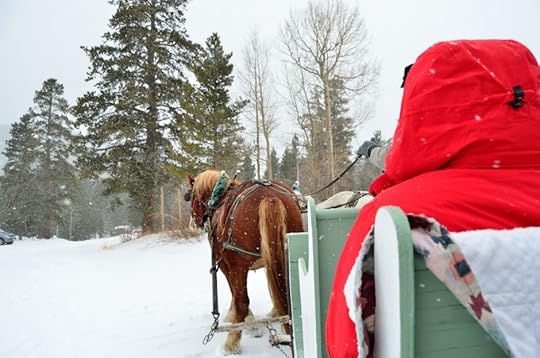
Photo: Mark Scott
Colorado culture, in most places, has a heavy reliance on the outdoors — with a bit of country western and the occasional flair for the dramatic thrown in. The winter season is a perfect example, where sleigh rides go much deeper (and longer) than a dash through the open snow.
Many outfitters, like Astraddle A Saddle outside of Pagosa Springs, combine a scenic ride with barbecue dinners, warm cocktails, and the kind of postcard mountain views everyone’s come to associate with Colorado. Others swap out the barbecue in favor of a picnic lunch or gourmet, chef-prepared dinner by the campfire. If you didn’t love winter before, you’ll definitely have a soft spot for it now.
2. Experiencing your first mountain-town winter festival
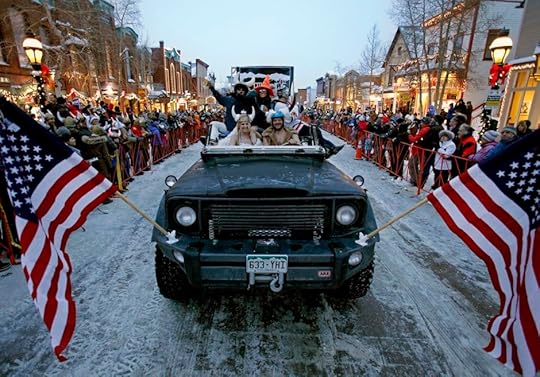
Photo: Austyn Dineen for the Breckenridge Tourism Office
Across the state, tons of mountain towns throw parties in celebration of the season. It doesn’t matter when or where you’re traveling — they’re all worth the experience. Here are a few to get you started:
Durango’s Snowdown , January 31 – February 4, 2018: This is one of the state’s best-known festivals, and it’s a “black tie affair” (which is saying something, given the puffy coats and boots we’re used to).
Fire & Ice Festival , Loveland, February 9 – 11, 2018: It’s ice and fire sculpting over Valentine’s weekend. Do you need more?
Nederland’s Frozen Dead Guy Days , March 9 – 11, 2018: It’s as irreverent as its name implies. Picture 30-some bands, plenty of heated tents, costumed polar plunges, and coffin racing, and you’ll be off to a good start.
Ullr Fest , Breckenridge: Horned Viking hats (Ullr is the Norse god of snow) and the biggest bonfire in town — that’s how Breckenridge rolls. The event typically spans a few days in min-January, so start thinking about planning that 2019 trip!
3. Soaking in one of the state’s bubbling hot springs
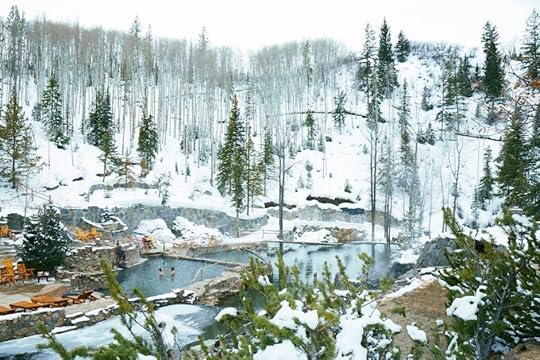
Photo: Jeff Nelson / Colorado Tourism Office
Hot springs are aplenty all over the state. While size, amenities, and accessibility vary greatly among the different sites, the end result is always the same: a soothing, relaxing soak underneath the gaze of the Rockies.
Choose your fancy: staying in a full-on resort with luxury rooms and 23 mineral hot springs in downtown Pagosa Springs; driving up a dirt road to Strawberry Park Hot Springs outside of Steamboat Springs; or taking in the soothing, apothecary-like healing atmosphere of Joyful Journey Hot Springs in the San Luis Valley. Of course, you could always opt for something that involves a backcountry hike, but I can’t help you there — half the fun of those is not really knowing where they are.
4. Hitching a ride on the Polar Express
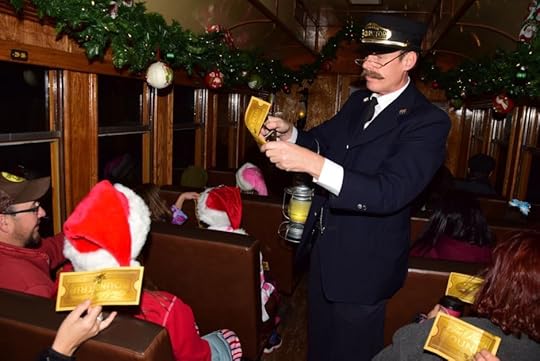
Photo: Yvonne Lashmett for Visit Durango
Colorado’s history is built around the railroad, and the Colorado Railroad Museum, in Golden, chronicles the story of our state’s rise. It’s a super impressive facility — there’s a depot museum, a railyard, a roundhouse, and a library — and the themed events throughout the year almost always involve hopping aboard a train car.
When the holiday season hits, rounding up the family and jumping on the Polar Express is a favorite winter tradition for many Coloradans. During the 75-minute train journey, Chris Van Allsburg’s The Polar Express is artfully acted out — complete with the story’s favorite characters, the same fun and engaging action, and, of course, plenty of hot chocolate.
5. Testing your skills on a hut trip…
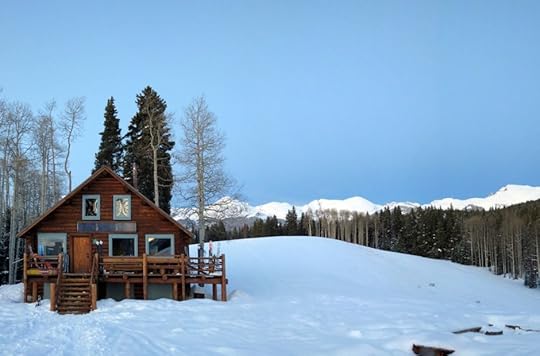
Photo: Ed Ogle
Scattered throughout the mountains of Colorado are a series of huts, often best accessed via snowshoe, skin/splitboard, or snowmobile. Some are luxurious, equipped with bunk beds, a hot tub, and good heating, while others are more bare-bones and rustic, preferred by the hermits and backcountry veterans among us.
Making your way to a backcountry hut requires ample planning, sufficient gear, and often a good dose of mountain savvy and wayfinding. But the rewards are more than worth it (and organized tours are often available for first-timers). I’ve yet to see a view that tops a Colorado sunrise taken in from the porch of a mountain hut at 10,000 feet. Start your daydreaming and research at Colorado.com, and be sure to pack warmly.
6. …and enjoying those turns you’ve earned
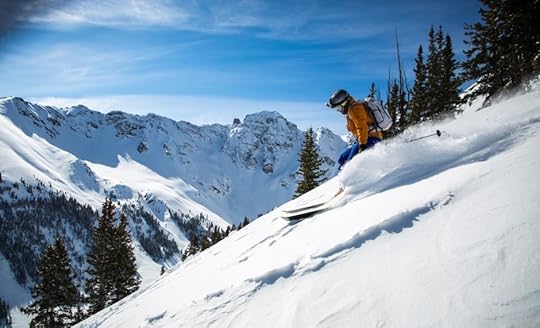
Photo: Zach Dischner
Ski touring and snowshoeing are growing in popularity, a nod to Colorado’s obsession with both the Rocky Mountains and physical fitness. Who needs chairlifts (or lift tickets) to get up the mountain? Rent a pair of skins for your skis and join a backcountry tour — or simply head out (and up) with friends. Those powder turns feel so much better when you work for them!
Backcountry skiing takes endurance and a practiced awareness of snow conditions and weather. Always bring proper backcountry gear, and never head out alone. First time? Rent a pair of snowshoes and find a local trail, or join a group tour — there’s no better way to spend a memorable day in Colorado’s high country.
7. Traveling with a half dozen (furry) friends
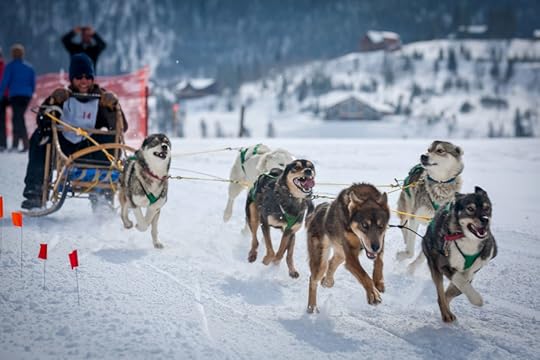
Photo: PhotoBobil
If the whole group can’t seem to agree on an activity, there’s always the one surefire idea that unites everyone: dogs. And being whisked around in the snow by a handful of particularly adorable ones, as aspen and pine speed past you, the sounds of “Mush!” filling the background, is winter on a whole other level. Everyone skis in Colorado, but who comes back with dogsledding stories?
Mid-November to mid-April is the general season, and you’ll find operators all across the state — Durango, Wolcott, Steamboat Springs, Breckenridge, the list goes on. Some will bundle you (and a partner) up in blankets to sit back and enjoy the ride, and others will literally give you a rein as you cruise over the aspen-covered hills. And if you’ve got a few animal-lovers in tow, most offer kennel tours, too.
8. Going ice skating in a ski-town plaza
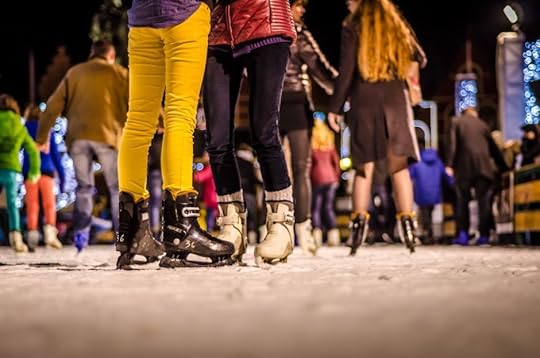
Photo: Michael Camilleri
Hollywood itself couldn’t create a more perfect winter scene than the ice skating rinks at Beaver Creek and Vail. Try not to picture it — skaters of all ages doing laps, friends and families socializing on the sidelines, all with festive music playing in the background. Both rinks are located within walking distance of hotels, shops, and dining, meaning there’s no excuse to not at least try your hand. No double axels required. 
Matador Network's Blog

- Matador Network's profile
- 6 followers

