
Matador Network's Blog, page 1416
January 27, 2018
See gorillas in Uganda
Deep in Bwindi Impenetrable Forest National Park in Uganda are tribes of some of the last remaining mountain gorillas. With only an estimated 880 individuals remaining worldwide, this animal is critically endangered and the only way to see them is in the wild.
While the park is open for all kinds of wildlife viewing, most people come for the gorillas. In Uganda, the gorilla trek is by permit only — with permits costing $600 in high season and $450 during the rainy season of April, May, and November. While it’s possible to do the trek on your own, it’s highly recommended to go with a guide if you want a chance of seeing a family of gorillas.
And you’ll want to see them. The male silverback can be up to 6 feet tall and weigh 500 lbs. But not to worry, these gentle giants are vegetarian, subsisting off roots, fruits, bark, and pulp, and the guides are experts in tracking and viewing.
There are seven distinct families in the Bwindi Park. It’s estimated there are about 340 individuals in the park. While the gorillas are making a slow comeback (there were only 240 remaining in the world in the 1970s), the biggest threat to them now is disease and loss of habitat.
Bwindi National Park is in the south-western part of Uganda. The Park is home to an almost unparalleled biodiversity for a couple reasons. One is the extreme altitude range. And the second is its age. Most of Africa’s forests were destroyed during the final ice age (12,000-18,000 years ago), but this swath of forest was not, making its vegetation over 25,000 years in the making. There are roads to get to the park, but it’s aptly named “impenetrable.” Bwindi actually translates to “impenetrable” in Runyakitara. Once inside, the forest must be traversed by foot.
With so few gorillas left and a dedicated contingent protecting them, investing in supporting and seeing them is once-in-a-lifetime worth it.
How to get there
Bwindi National Forest is 2-3 hours from Queen Elizabeth National Park, 6-9 hours from Kampala, or just 1-2 hours from Kabale. All roads converge at Butogota, which is 17km from the Buhoma entrance gate. Here are some detailed options on how to get there.
What to consider
Here’s a list of recommended tour companies to book with. A gorilla viewing permit costs $600 per person per trek so your tour should cost somewhere between $1,000 and $2,000, the latter being the more luxury option.
Most people prefer the mid-range tours.
If you book in the low season, from September-December and February-June, your costs should be reduced.
Wear layers. It gets cold, especially in the rainy season when the gorillas retreat to the mountains.
Check out the what to expect when booking with a tour company here.


More like this: On the trail of gorillas in Odzala National Park, Congo


Save money on trip to Barcelona
Barcelona is an incredible city, but it has become one of the most expensive cities in Spain and can cost a pretty penny. So we’ve put together seven awesome ways to save money and enjoy Barcelona on a budget.
1. Buy a T-10 ticket and take the train from the airport.
A taxi from Barcelona airport to Plaça Catalunya in the city center can cost over €30. The cheapest way to get downtown is to buy a T-10 metro ticket from the train station at Terminal 2 of the airport. Take the train to Sants or Passeig de Gracia station, then the metro to the stop you need. This whole journey will cost you less than 1 euro. The T-10 ticket costs €9.95, and is valid for 10 journeys of up to 1 hour and 15 minutes each, including changes onto metro, bus, and tram lines within zone 1. You can also use it for multiple people, so if there are two of you traveling, you can take five journeys together.
2. Buy food at the local markets.
Every neighborhood in Barcelona has its own market full of stalls selling fresh produce and tempting snacks. The Boqueria Market on La Rambla is the most popular with visitors, and is worth a look — but if you want to buy anything here, explore the stalls towards the back to find cheaper prices. Alternatively, check out the other local markets of Santa Caterina near the cathedral, San Antoni, or Gracia to find cheap and delicious fresh fruit, vegetables, meat & fish.
3. Eat where the locals do.
Avoid La Rambla, and the busy Passeig de Gracia streets; instead head to the more “local” neighborhoods like Poble Sec, Sants, and Gracia to find some of the best restaurants in town at much cheaper prices than the Gothic Quarter and el Born. My personal favorite is Carrer del Blai (Blai Street), which is full of Basque-style pintxo bars (mini tapas on sticks), which start from €1 each.
4. Visit on the first Sunday of the month.
Many of Barcelona’s museums are free to enter all day on the first Sunday of the month so you can visit the Picasso Museum, the Museum of Catalan History, the Hospital of Sant Pau, the MNAC National Museum of Catalan Art, and the Barcelona History Museum, among others, for free! Reserve your tickets online for the Picasso Museum in advance, as it is very popular. They also have free entry from 6pm to 9.30pm on Thursday afternoons.
5. Check out Gaudi for free.
Most of Gaudi’s architectural works, from his first commissioned work in Plaça Reial (funky lampposts) to Casa Batlló and La Sagrada Familia, his magnificent unfinished masterpiece, are all worth admiring from the outside. Some museums, such as Palau Guell (the townhouse Gaudi designed for his patron Eusebio Guell) have free entry on the first Sunday of the month, but make sure you reserve your ticket online to guarantee entry. Most of Parc Guell is open to the public, so you can still walk around the park and see some of the designs, as well as spectacular views of the city, for free. However, the most famous lizard statue and mosaic terrace are in the paid section.
6. Take a free tour.
There are tons of tours available in Barcelona, and some carry a pretty hefty price tag! However, there are several free walking tours in the Gothic Quarter and around some of Gaudi’s works, and there is even a free bike tour around the city. Although the tours themselves are free, tipping your guide is recommended.
7. Look out for free events in Barcelona.
There is usually some kind of special event going on in Barcelona, especially during the summer months, from free cinema on the beach to live jazz and street parties. Each neighborhood hosts its own “Festa Major” street party festival, one of the best is in Gracia in August when residents decorate their streets according to a specific theme, and host live concerts, dance classes and dinners in the street. Other major festivals include La Merced in September with live music stages around the city, Las Festes de Santa Eulàlia in February, and San Joan in June when everyone heads to the beach for fireworks.
More like this: 5 awesome travel itineraries out of Barcelona
January 26, 2018

See the largest amethyst cave
Home to the biggest crystals in the world, the Crystal Castle & Shambhala Gardens in Byron Bay, Australia has some miraculous geodes and caves on view. There’s so much to see and experience at this place that you’ll leave absolutely buzzing.
One stone, in particular, is especially amazing. First discovered in Uruguay, South America, this 120 million-year-old rock is the largest amethyst cave ever discovered in the world. It’s about 18 feet wide, large enough to sit in, and weighs 20 tonnes.
The owners of the Crystal Castle purchased it from an Uruguayan farmer as a celebration of the Crystal Castle’s 30th year. In order to experience it, you’ll want to book the Enchanted Cave Immersion, an hour-long guided experience for you and up to 3 of your friends to meditate in the belly of this geode.
The castle also has the tallest pair of bookmatched geodes in the world. The 18-foot tall smoky quartz geode was also purchased from the Uruguayan farmer. And in 2012, they added the only Kalachakra Stupa — a stupa (a mound-like structure containing relics used in Buddhism for a place of meditation) whose symbolism isn’t connected to the Buddha’s life but instead is used to protect against negative energies. It’s the rarest kind of stupa, and this project was blessed by the Dalai Lama.
When they first began their venture on their 12-acre property, Naren King, the castle’s “managing dreamer,” was scoffed at as one of the “offbeat hippies out of the back of Byron Bay.” He and his family have since watched the dream come to success. The Shambhala Gardens are world renowned and the castle is considered a significant tourist attraction.
How to get there
The Crystal Castle is 20 minutes driving from Byron Bay and 40 minutes from the Gold Coast Airport.
What to consider
The Crystal Castle is open every day in the winter from 10am-5pm except Christmas Day, Boxing Day, and Good Friday, and from 9:30-5:30pm in the summer (till January 21st).
Try to time your visit to include the free meditation class. It adds another layer of tranquility.
You may go to visit the crystals, but be sure to take time for the gardens.
The Lotus Cafe offers delicious, organic, and international vegetarian meals.
Much of the seasonal produce is grown in their own organic vegetable garden.
There’s a playground for children to play while you enjoy your meal — on weekends kids get free face painting!
No picnics are allowed on the premises.
Dogs are not allowed.
There’s so much to do here you could spend an entire day and not see everything.
More like this: How to road trip Australia

12 things I wish I knew before visiting Chichen Itza
Chichen Itza is one of the new seven wonders of the world, and one of the most popular destinations in the Yucatan Peninsula and Mexico. The Mayan site is definitely worth a visit, and although it can get horrendously busy, follow these tips and you’ll get the most out of your trip!
1. Arrive early.
Chichen Itza opens at 8 am, so plan ahead and arrive before the gates open so you can be among the first people inside. It gets very crowded, so early birds can get photographs of the magnificent temples without other people in the shots, and you beat the heat too.
Alternatively, arrive after 3 pm when the tour groups have gone. However, the site closes at 5 pm so you risk not having time to explore everything.
2. Or arrive late.
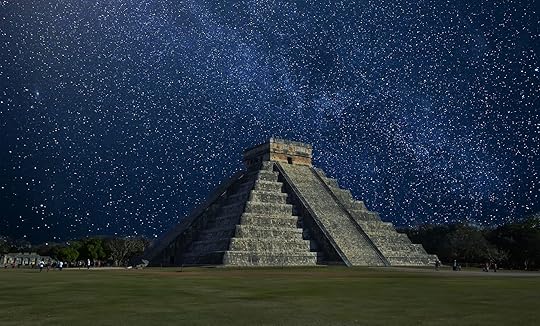
Photo: Walkerssk
There is a nighttime light show which allows you around 45 minutes to tour around the site (with a multilingual audio guide), followed by a 25-minute sound and light show projected onto the Temple of Kukulcan (El Castillo) pyramid. Visiting at night is a totally different experience, and you get the chance to explore without the heat and hassle from the souvenir sellers. You will need to buy your tickets in advance online, and although the audio guide is in several languages, the show is only in Spanish.
3. Avoid Sundays and national holidays.
On Sundays, Mexican nationals get free entry to Chichen Itza, so the site will be even busier than on other days of the week. Similarly, national holidays and peak times such as Christmas and Easter will be busier too, so try to plan your visit to avoid peak times.
4. Get prepared.
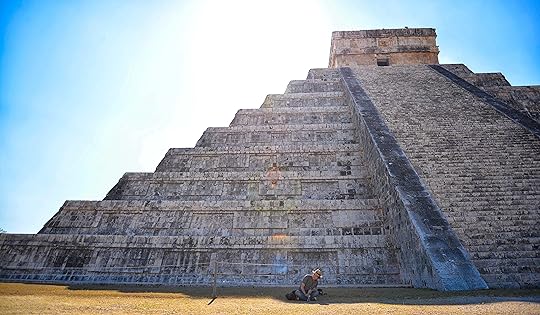
Photo: iorni
My oh my, does it get hot! There isn’t much shade around the main temples, and the sun beats down mercilessly. Bring plenty of water with you, sunscreen, and a hat or umbrella to protect yourself from the sun. There is a shop at the entrance where you can buy drinks and snacks, but once you are inside there is nowhere to buy refreshments during your visit. Be sure to wear comfortable shoes too.
5. Stay overnight.
You can visit Chichen Itza on a day trip from Cancun, either with a tour group, or independently, but if you have the time, plan to spend the night at the nearby towns of Pisté or Valladolid to explore the surrounding area. Every tour group from Cancun arrives at Chichen Itza at around 10 am, visits the site, then goes to the nearby Ik Kil cenote for a swim. While this is a great addition to the trip, as every group is doing the same thing, there are people everywhere! Skip the day tour, and spend a night or two here to visit both sites early, avoid the rush, and visit the night light show too.
6. Buy your ticket (twice).
Confusingly, there are two tickets required for Chichen Itza, one for $70 pesos, and another for $172 pesos, so $242 pesos (around $13) in total. You will be instructed to go to two different ticket windows to buy your tickets. Also, for professional photographers, film permits cost extra, and tripods are not allowed without a special permit arranged with INAH in advance, which is extremely difficult to get. Bring cash with you to buy your ticket as the card machine often doesn’t work, and although there is a cash machine available, if that doesn’t work either you are in trouble.
7. You can’t climb the pyramids or swim in the cenotes.
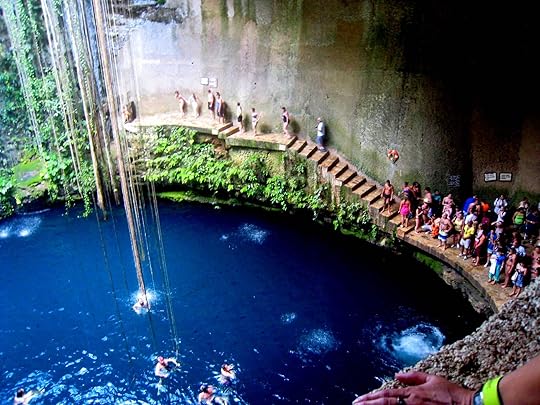
Photo: Travis Wise
Unlike some other Mayan archaeological sites, you can’t climb up any of the pyramids. The cenotes at Chichen Itza were used as a site for religious ceremonies and human sacrifices, so even if the water at the sacred cenote was less green I still wouldn’t fancy taking a dip in it, knowing that hundreds of years ago people were thrown in! Still bring your swimsuit though, you can make use of it at the Ik Kil cenote nearby.
8. It’s impossible to avoid the souvenir sellers.
The souvenir sellers are let in at 8 am along with the visitors, so if you arrive early you will get a bit of peace as you explore without constant harassment. However, once they have set up their stalls, it is relentless. Everyone will want to sell you something, for one dollar, practically free, the best price just for you. And worst of all, the jaguar “whistles” sound like a cross between a crying baby and a sick animal, it is the strangest and most irritating noise I have ever heard!
9. Explore all the areas.
The main “attraction” at Chichen Itza is the spectacular El Castillo Pyramid. If you arrive early, visit this first to get photographs while it’s still quiet. Then, make sure you explore all of the areas, including the ball court, El Caracol observatory, the Bonehouse, sacred cenote, and Temple of the Warriors to get a true picture of the magnificent Mayan site.
10. Take time to admire the work of the Maya.
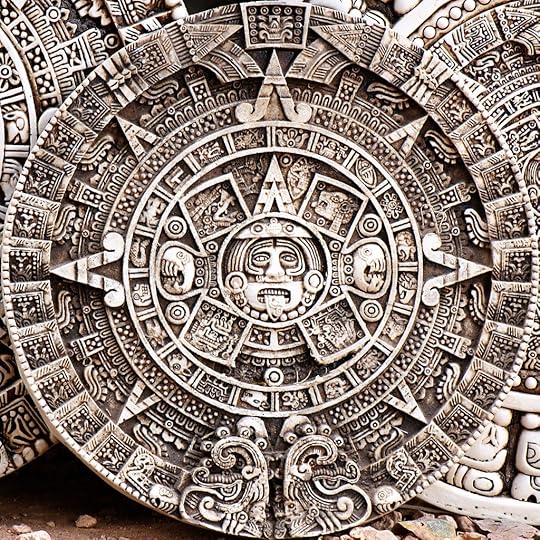
Photo: theilr
What really makes Chichen Itza so special is the architectural design and attention to detail. The design of the main pyramid, El Castillo, is so perfect that on the spring and fall equinoxes, the sun casts a shadow on the pyramid in such a way that a snake appears to slither up or down the huge steps. Beneath the pyramid, an underground cenote has recently been discovered, and hidden passageways remain unexplored. At its peak, Chichen Itza was home to an estimated 90,000 inhabitants, a thriving city that has only partially been excavated. Take time to appreciate all this, and you will realize why Chichen Itza earned its title of one of the seven new wonders of the world.
11. Know your stuff.
Without an organized tour, you can choose to wander freely around the site or hire a guide. There are plenty of people offering guiding services as you come into the car park, but wait until you get inside the complex for the official guides and best rates. Alternatively, bring a good history book, so you can understand more about the significance of the site.
12. Have Lunch in Pisté.
Although there are refreshments available at the entrance to Chichen Itza, they are expensive. Assuming you followed my advice to visit independently, drive or hop on the bus to the nearby town of Pisté where a delicious lunch is a much better value. Try Loncheria Fabiola (Carr. Costera de Golfo, Pisté) for local specialties like cochinita pibil (roast pork) tacos.
*Don’t forget that Cancun and Quintana Roo are in a different time zone to Chichen Itza and the rest of Mexico, so from October to April Cancun is an hour ahead of the rest of the country. During daylight savings time in Mexico from April to October the two zones have the same time, so if you’re traveling from Cancun adjust your journey time accordingly.*
More like this: 10 things I wish I knew before visiting Machu Picchu

Singapore on a budget
Singapore has been named the most expensive city in the world for four years in a row, making it really hard to imagine a trip to Singapore without breaking the bank, but it can be more affordable than you would think. The best and easiest way to save money on your trip is to stay away from tourist attractions with entrance fees and avoid shopping malls as most restaurants and shops will charge a 7% Goods and Services Tax (GST).
1. Go to the parks.
Forget theme parks and museums because they are too expensive even from a local’s point of view. Instead, spend a day at Pulau Ubin, one of the last rural areas left in Singapore. Rent a mountain bike or walk around the island, and don’t forget to also check out Chek Jawa, a wetland that is home to a diverse variety of animals and that was unveiled only in December 2000. The boat fare to or from Pulau Ubin costs only $2 (SGD$3) per trip. Make sure to bring cash, as credit cards are not accepted on the island. If cityscapes are your thing, add Merlion Park to your itinerary, where you can take some pictures of Singapore’s most iconic landmarks such as Marina Bay Sands and Esplanade. Just a stone’s throw away is Gardens by the Bay, which is also free unless you are looking to enter the Flower Dome or OCBC Skyway.
2. Go to the right hawker centers.
To save on food, head over to hawker centers in residential areas rather than touristy and overpriced hawker centers. Look out for long snaking queues, which almost always suggests good food or average food at worst. Find your way to Changi Village Hawker Centre if you decide on a day trip to Pulau Ubin since most local food at this hawker center will cost you no more than $5 (SGD$6). If you’re looking for laksa — one of the local dishes anyone coming to Singapore should try — Sungei Road Laksa is a good option. On top of being the only stall left in Singapore that still uses a charcoal stove to cook laksa, it is also one of the cheapest at $2 (SGD$3).
3. Use the supermarkets.
Even though it is safe to drink from taps in Singapore, sometimes you need to get bottled water. At times like this, avoid 24-hour convenience stores and expensive chain supermarkets like NTUC Fairprice Finest and Cold Storage. Get them cheaper at smaller marts like Valudollar or Sheng Siong, the third largest chain of supermarkets in Singapore. The prices of local snacks in these marts are also usually slightly cheaper compared to the other supermarkets.
4. Walk.
Most bus stops and Mass Rapid Transport (MRT) — Singapore’s subway system — stations are no more than a 10-minute walk apart. If you find yourself wanting to do some window-shopping at Singapore’s most famous shopping street, Orchard Road, keep in mind that although Orchard Station and Dhoby Ghaut Station are two stations apart, it only takes 20 minutes to walk from one to the other. The good news is that there are many shopping malls along the way, promising to keep any window shopper entertained for the whole day.
5. Shop in the right spots.
Shopping should not be on your itinerary if you want to save money, but if you must shop, make your way to Mustafa Centre, a 24-hour shopping center in Little India that boasts low prices and over 300,000 items to choose from.
6. Drink cheap.
Skip bars and pubs. Alcohol in Singapore is expensive and you can never spend the night at a bar or a pub without spending a ton. But don’t just rush to the nearest convenience store to get an alcoholic drink yet! Drinking is banned in all public places from 10:30 PM to 7 AM under the law, and retail shops are not allowed to sell takeaway alcohol during the same time period. You can, however, drink at coffee shops known by the locals as kopitiams. Alternatively, plan ahead and buy some beer during the day to drink in your own private space at night. Just be sure to not make a din.
More like this: 15 perfect Instagram shots of Singapore
Paradise at Soneva Jani, Maldives
These overwater villas are the epitome of luxury and relaxation. The Soneva Jani resort, the newest addition to the Soneva family of resorts, is in the Noonu Atoll in the Maldives. This particular atoll is comprised of five islands with Medhufaru being the largest (still only about 150 acres). The Medhufaru lagoon surrounds this spit of twenty-four villas, but the resort doesn’t stop at your doorstep.
The central location, called the Gathering, is a two-story open-air structure on the main island of Medhufaru. It houses all the amenities, like restaurants, bar, spa, 24-hour gym, coffee shop, library, and the ice cream, cheese, and chocolate rooms (what a dream!), overwater cinema, and wired and wireless internet.
Each villa (that’s a modest term, they’re positively palatial), has its own full-size private pool and easy access to the private lagoon (especially if you opt for the waterslide). There really is no bad option.
The resort also offers the only overwater observatory in the Maldives and keeps an astronomer in residence to give guests a guided tour of our night sky. If you’d like a private tour of the galaxy, they can arrange for you and the astronomer to journey to a local beach further away from the lights of the resort.
Soneva Jani is not just a honeymooners’ dream, but it’s wonderful for families as well. They have lots of activities for kids. And as if that wasn’t enough, at the end of a salt-soaked and sunbaked day, chill out at the overwater silent cinema (don’t worry, you get Bluetooth headphones for listening) which leaves the surrounding nesting wildlife at peace. Pass the popcorn and prosecco, please.
How to get there
The resort is accessible by seaplane, speedboat, or leisurely cruise.
The flight is the shortest at 40 minutes and can be boarded from Male International Airport. You’ll be greeted by Soneva’s representative and escorted to their private plane.
The speedboat takes about an hour and departs from Soneva Fushi, a sister resort on the Baa Atoll.
The half day cruise aboard Soneva in Aqua takes just that, a half day, and also departs from Soneva Fushi.
What to consider
Definitely opt for a room with a waterslide (or add one on), it’s totally worth the cost.
Wear slide proof swim attire (or be prepared to make adjustments).
Villas range from 3,315 sq ft – 13,401 sq ft.
If you’re in the market for property, you can purchase one of the villas.
As much produce as possible is grown on site.
Room rates start at $3300/night for a double occupancy.
More like this: Six Senses Laamu: How to stay in style in the Maldives

Things that don't faze bartenders
When drinking is a part of your job, the last thing that excites you is free booze. For non-bartenders, an open bar is often reason enough to go to a party or event. For us, the party itself better be worth it, or else we’d rather spend our day off drying out.
2. Working with a raging hangover.
The fastest way to lose respect at a bar job is to call out sick because you have a hangover. Professional bartenders chug a few liters of water, pop an aspirin, and get to work. Feeling sick? Take five, throw up in the bathroom, and get back behind the bar. It’s not rocket science, it’s just cocktails!
3. Collections of unattractive, slip-proof work clogs.
Whether they’re Crocs, Safesteps, Sketchers, or the crème de la crème, Danskos, a good pair of work shoes is essential for long shifts on your feet. At first, you’ll swear you’d never be caught dead in your clogs outside of work. But be warned, once you get used to that comfortable, supportive feeling, you’ll start “forgetting” to change into your street shoes after work.
4. Standing for long periods of time.
Thanks to our unattractive work shoes, bartenders are pros at standing. Some double shifts can be 14+ hours without a break. It doesn’t seem like much, but being good at standing can be a superpower when you live in a city where waiting in lines and standing on crowded trains and buses is a part of daily life.
5. Staying in on a Saturday night.
Weekends don’t have the same meaning for us. If you find yourself off on a Saturday night, sometimes you purposefully don’t make plans. When you work nights, spending the night in is a treat.
6. Being out till 6 AM on a Tuesday.
That being said, going out after work can also be fun. Especially those nights when a beer with co-workers turns into an epic party, and you end up heading home as the morning commuters are going to work. There are some perks to living life in reverse.
7. A dinner of tequila shots and bar garnishes.
At most restaurant/bar jobs, you don’t get a dinner break. Sometimes, you can sneak away for a snack, but on busy nights, you often resort to snacking on olives and fruit from your garnish tray. If you’re really hungry, maybe you’ll sip on a beer to hold you over. Though, oddly enough, by the time you finish your shift, you are not even hungry anymore.
8. Small talk with strangers.
So, you need a plus one for a random social event? Take your bartender friend. We can politely mingle for hours. And we can hold our alcohol.
9. Telling someone what they want.
You have three seconds to size up a stranger and confidently tell them what they want to order. What impresses people isn’t so much the order as it is your conviction. Nine times out of ten they enjoy the cocktail better because you told them that’s what they wanted.
10. Liquor trends.
Beverage trends, like most trends, are cyclical. It’s a part of our job to be knowledgeable about what’s gaining or losing popularity and stay abreast of innovations in the industry. But to most of us, there is a time and place for all booze. So mezcal negronis are in and French 75’s are out. I say drink what you enjoy. Next thing you know, grasshoppers could be making a comeback.
More like this: 15 bartender's worst nightmares
Someone from Kansas wouldn't say
1. Hold the ranch.
2. I don’t have allergies living here.
3. Driving through western Kansas is so scenic.
4. Texas barbecue is far superior to Kansas City barbecue.
5. I wish I lived in Missouri.
6. I love how much the weather fluctuates every day.
7. No, Kansas isn’t windy.
8. Our sunsets are terrible.
9. There’s a tornado? Better head to the basement.
10. Our governor has our best interests at heart.
11. There are too many Quik Trips around here.
12. I love “Wizard of Oz” jokes.
13. Kansas thunderstorms suck.
14. The Chiefs never disappoint in the playoffs.
15. What does “ad astra” mean?
16. Kansas has no history.
17. I love humidity.
18. So many famous people are from Kansas.
19. The KU/K-State rivalry is so much more exciting than the KU/Mizzou rivalry.
20. Barn party? What’s that?
21. This route doesn’t include dirt roads.
22. I’ve never been to a bonfire.
23. Kansas is such a blue state.
24. Snowstorm? I don’t need to stock up on provisions.
25. My family doesn’t own a gun.
26. I’m going to be really sad when the governor leaves office.
27. Kansas is one of the most progressive states in the Midwest.
28. There’s just too much to do around here!
29. I hate harvest season.
30. Please tell me another “Wizard of Oz” joke.
31. Kansas is flat?
32. The Chiefs are going to the Super Bowl!
More like this: 10 commandments for living in Kansas
worlds largest submerged cave system
The world’s largest underwater cave system has been discovered on the Yucatan peninsula in Mexico. Up until this month the 216-mile labyrinth of caverns and tunnels was thought to be two separate systems, the Sac Actun System and the Dos Ojos caves, but Mexican scientists from the Great Maya Aquifer Project (GAM) found the missing link between the two.
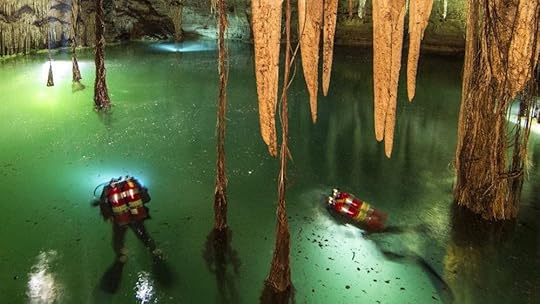
Photo: Gran Acuifero Maya
This discovery took 10 months of harrowing explorations into what GAM director Robert Schmittner referred to as “veins within a body.”
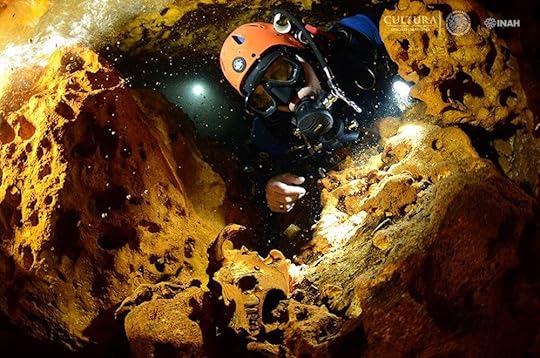
Photo: Gran Acuifero Maya
Even more exciting, these scientists/explorers also found a substantial collection of ancient Mayan artifacts and extinct fauna. The Mayan civilization saw these caves, also known as “cenotes“, as holy sites and portals for communication with the gods. The researchers are hoping to get a better understanding of the Mayans before the arrival of the Spanish conquistadores in the 16th century.
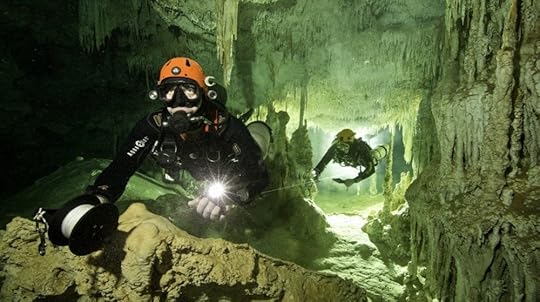
Photo: Gran Acuifero Maya
Speaking on the discovery that proves his job is as cool as it sounds, underwater archaeologist Guillermo de Anda described it as a “tunnel of time that transports you to a place 10,000 to 12,000 years ago.”
Follow Matador on
Vimeo
Follow Matador on
YouTube
More like this: How to go cenote cave diving in Mexico
Matador Network's Blog

- Matador Network's profile
- 6 followers

