
Ripley Entertainment Inc.'s Blog, page 60
October 21, 2022
Patient Played Saxophone Throughout His Own Brain Surgery
Featured in Ripley's Believe It or Not!

On October 10, a hospital ward in Rome’s Paideia International Hospital was filled with the smooth sound of jazz as a 35-year-old patient underwent brain surgery while fully awake and playing the saxophone!
A team of 10 surgeons led by Dr. Christian Brogna kept the patient, identified only as G.Z., awake for nine hours of surgery to allow them to navigate brain function while they worked to remove a brain tumor.
No-So-Easy ListeningThanks to local anesthesia, all the patient felt during the procedure was the rhythm of his jams as he blew through the surgery with a playlist that included the 1970 film “Love Story” theme song and the Italian national anthem.
Brogna and his team studied the compositions in depth before the operation to ensure they’d notice a wrong note, abrupt pause, or change in rhythm that may indicate that the area they were probing should be avoided.
Why Keep the Patient Awake?
️Surgeons in Italy have carried out an awake brain surgery on a 35-year-old patient as he played on his saxophonehttps://t.co/pcs7KCmS8U pic.twitter.com/AqAYWBI0ng
— The Telegraph (@Telegraph) October 15, 2022
This wasn’t Brogna’s first time attending a concert in the ward; the neurosurgeon performs about 50 awake surgeries every year, customizing the operations based on the patient’s lifestyle.
“Awake surgery makes it possible to map with extreme precision during surgery the neuronal networks that underlie the various brain functions such as playing, speaking, moving, remembering, counting,” said Brogna of the benefits of keeping patients active during surgery.
“Each person is unique because each brain’s unique,” he said, adding that it’s important to understand the patient’s wishes and lifestyle for a successful surgery that preserves the patient’s quality of life.
Operating Room Talent ShowsWhile some patients answer questions or read a book while on the table, others choose to sing opera or play guitar, as these talents are prominent in their lives. Playing an instrument allows surgeons to avoid areas responsible for several brain functions like motor skills, hand-eye coordination, and math!
In G.Z.’s case, his tumor was located directly in the difficult-to-operate-on regions of the brain responsibly for mobility. His left-handedness made mapping harder since his brain structure is different from that of a right-handed person.
Ultimately, the operation was a success, with tests showing that Brogna’s team was able to remove the tumor completely. G.Z. went home to his wife and children three days later!
By Meghan Yani, contributor for Ripleys.com
EXPLORE THE ODD IN PERSON! Discover hundreds of strange and unusual artifacts and get hands-on with unbelievable interactives when you visit a Ripley’s Odditorium!Source: Patient Played Saxophone Throughout His Own Brain Surgery



October 20, 2022
How a Hamster Is Helping Pioneer Space Tourism
Featured in Ripley's Believe It or Not!

When it comes to space travelers, most people think astronauts. But history tells a different story.
Animals have a long legacy of space exploration dating back to the 1940s. The first critters sent to space were fruit flies carried on a V2 rocket that left Earth’s orbit on February 20, 1947, and this swarm would soon be followed by many other lifeforms, from canines to monkeys, apes to cats and even adorable water bears. Hamsters have also fallen into the extraterrestrial mix, although most have been packed along on rockets or other conventional space vehicles.
But recently, one brave hamster did the unprecedented: He took a ride on a flying balloon into the outer stratosphere, reaching a height of more than 14 miles above the planet! For a little context, that’s high enough to see the curve of the Earth. Here’s what you need to know about this remarkable flight and what it could mean for the future of space travel.
Fly Me to the MoonHamsters in space may be nothing new but accessing extraterrestrial heights in a balloon is. Although the concept of reaching space via a balloon sounds like something out a Jules Verne novel, Sapporo-based Japanese space firm K.K. Iwaya Giken says it’s the stuff of tangible, scientific reality.
Based on this hunch, the firm is revamping the way humans think about venturing to outer space. In the process, they may open up new opportunities for individuals bent on flying to the Moon (or at least a bit closer to it).
1. A hamster has safely returned to Earth, after it was launched into the stratosphere on a flying balloon.
The balloon was launched from a city in Okinawa by Japanese company Iwatani Giken.
The company said the hamster could be seen comfortably snoozing during its journey. pic.twitter.com/HLpgjFzOvk
— BFM News (@NewsBFM) June 24, 2022
The hamster left the Earth’s surface on June 9, 2022, floating upwards in a balloon from Miyakojima, Okinawa Prefecture. As for the furry voyager, it chilled out in a cabin the company custom-tailored for the journey. The balloon traveled upwards gaining approximately 20 feet per second and traveling at a speed of 14 miles per hour — a gentle ascent for the little creature. K.K. Iwaya Giken hopes to use the data gathered about this journey to facilitate a human expedition.
No Hamster Was Harmed in the Making of This FlightThroughout the journey, K.K. Iwaya Giken relied on a variety of high-tech sensors to ensure the hamster passenger enjoyed a comfortable trip. The little guy’s plastic cabin measured 23 inches high by 20 inches in diameter and was cylindrical in shape. This design allowed the cabin’s internal levels of pressure, oxygen, and heat to remain relatively constant. These conditions almost mirrored those on the planet.
As a result, the hamster enjoyed an uneventful and harm-free ride. To date, the fearless passenger remains in good health. Of course, the successful experiment begs the question: What’s the next step for K.K. Iwaya Giken?
Perhaps they’ll stair-step up the food chain as NASA once did by sending a dog, monkey, and finally an ape into the stratosphere before the first humans pioneer the trip? Company officials haven’t laid out such plans publicly, yet. But it has hashed out plans to get humans onboard as soon as possible.
Officials are already working on a manned flight that’ll climb nearly 16 miles into the heavens. This will allow space tourists to see the same planetary curvature that the hamster got to witness. As a spokesperson from the company explains, “We will continue to carry out experiments so that people can get on board and return safely.”
While the leap from hamster to human appears gulf-sized, one thing’s for sure: K.K. Iwaya Giken has big plans for the future of space travel, thanks to their pipsqueak astronaut.
By Engrid Barnett, contributor for Ripleys.com
EXPLORE THE ODD IN PERSON! Discover hundreds of strange and unusual artifacts and get hands-on with unbelievable interactives when you visit a Ripley’s Odditorium!
October 19, 2022
What Does a Self-Portrait Made by an AI Look Like? Ask Ai-Da
Featured in Ripley's Believe It or Not!

Using artificial intelligence (AI) to generate photos from keywords is an exciting new way to create some really interesting art. In fact, using AI to create art has even started to become a viral trend on social media!
Aidan Meller however, took computer generated art to a whole new level by helping to design Ai-Da, a human-like robot who can paint!
Meet Ai-DaDespite being a machine powered by artificial intelligence, Ai-Da — the world’s first ultra-realistic robot artist — creates portraits of herself.
Ai-Da began her career working in abstract art, but the strangely lifelike AI has now moved into the realm of creating self-portraits.
Embed from Getty Imageswindow.gie=window.gie||function(c){(gie.q=gie.q||[]).push(c)};gie(function(){gie.widgets.load({id:'RtVhOGfHSfFC5h7DmFh5sw',sig:'GbLhiz9OJ7cAd-sbrFIigvo8v9dKaveJizsEjeLRrlA=',w:'594px',h:'395px',items:'1232959632',caption: false ,tld:'com',is360: false })});
How She WorksSo how does she do it? While looking into a mirror with her camera-eyes, Ai-Da’s algorithms drive the movement of her drawing hand across the paper. The purpose behind her self-portraits is to make people question “the nature of human identity and creativity.”
As one of her creators, Aidan Meller, noted, “It is literally the world’s first self-portrait with no self.” Nevertheless, Ai-Da’s work has been featured in museums and galleries around the world.
Making Her CaseMore recently, Ai-Da even addressed the UK Parliament about the future of AI, making her the first of her kind to speak at the UK Parliament after addressing the House of Lords, alongside her creator, artist and gallerist Aidan Meller.
Embed from Getty Imageswindow.gie=window.gie||function(c){(gie.q=gie.q||[]).push(c)};gie(function(){gie.widgets.load({id:'nY4PVeGfQjFdlpSN3cCJOA',sig:'y8-y5HTxoskx-3-rDKg_hQhnmNAV7zOpSHJ17meTh38=',w:'594px',h:'396px',items:'1243885904',caption: true ,tld:'com',is360: false })});
As inspiration for art begins to shift and advance, Ai-Da is likely just the beginning of a world of abstract and realistic art created by AI. Who knows, maybe the next Picasso won’t even be human!
Escape the Ordinary With Ripley’s Latest Book!Find this story and more inside Ripley’s all-new book! Escape the Ordinary‘s 256 pages spark curiosity, challenge perception, celebrate differences, and curate a sense of wonder for the weird world around us! Available now on Amazon and at most major retailers.

Source: What Does a Self-Portrait Made by an AI Look Like? Ask Ai-Da
Arctic-Dwelling Greenland Shark Caught off Coast of Belize
Featured in Ripley's Believe It or Not!
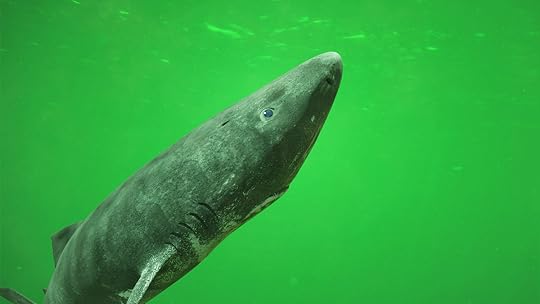
A Greenland shark, which has the potential to live between 250 and 500 years, was captured in July 2022 off the coast of Belize, surprising a group of researchers. That’s because these sharks (scientific name Somniosus microcephalus) usually reside in the Arctic — not the Caribbean Sea!
Sink or SwimWhen they first reeled in their catch, the group believed the black, haggard-looking fish with light blue eyes was dead. Ph.D. candidate Devanshi Kasana from the Florida International University Predator Ecology and Conservation lab described the animal as “really, really old” looking, according to NPR. Many of these sharks are blind because a parasite lives on their corneas.
Kasana explained that no one in the crew, even with their vast fishing knowledge, had ever seen anything like it, and she consulted with her professor for identification. Unfortunately, there was no way to determine the age of the shark; however, they are believed to be the world’s longest-living vertebrates.
Experts postulate that they live so long due to their slow metabolism. They only grow only one centimeter annually and likely don’t reach sexual maturity until a century into their lifespans, according to NOAA. They can reach a length of 23 feet and can weigh 1.5 tons.
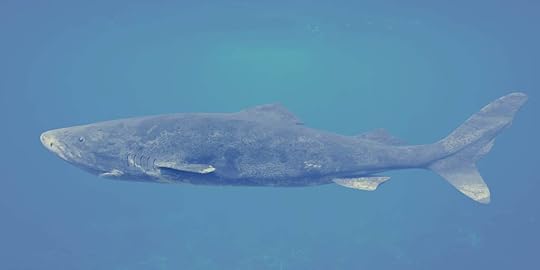
These sharks also travel slowly at a pace of approximately 1.8 miles per hour in order not to waste any energy. Their tissue has large levels of chemical compounds comparable to antifreeze that prevent the formation of ice crystals, allowing them to live in icy waters between 28.4 and 44.6 degrees Fahrenheit.
While Greenland sharks are more common in the Arctic because they prefer its colder temperatures, they are also known to wander to other areas on Earth, including the Atlantic Ocean off the coast of Georgia in the United States. They appear to prefer deeper water the closer they get to the equator, as researchers have had to search 7,000 feet below the surface to find them.
Greenland sharks have a diet of fish and squid, but it’s not uncommon for them to dine on mammal carcasses, including horses, reindeer, and polar bears that have sunk to the seafloor.
A Jaw-Some CatchKasana’s group was working with the Belize Fisheries Department and the local fishing community to tag tiger sharks, not Greenland sharks, when they reeled in the ancient fish over the summer. They were setting lines at Glovers Reef, which includes shallow areas as well as sudden, 2,000-foot drop-off areas that are very cold. It took the crew two hours to reel the Greenland shark in.
It’s believed that this was the first Greenland shark recorded in the Western Caribbean. Dave Ebert, a shark biologist and author of Sharks of the World, told National Geographic: “We don’t know a lot about the deep sea in the Caribbean. It was fortunate this student was able to get a snapshot of this shark, otherwise we might not have known it was there.”
Nope, still not done talking about this one.🦈 Check out what @devanshi_kasana had to say to @people Magazine about the Greenland #Shark encounter. @fiu @TheEllenFund https://t.co/0lW9HZoozZ
— FIU College of Arts, Sciences & Education (@FIUCASE) July 28, 2022
The researchers measured the fish and took some photos but did not collect its DNA or tag it because they feared it may injure or even kill the creature. If you extract one of these sharks from the ocean, it can have huge repercussions on the species and ecosystem. Scandinavians used to hunt them for their liver oil, which was thought to ward off cancer. Today, Greenland sharks are typically caught by accident after getting stuck in fishing nets.
By Noelle Talmon, contributor for Ripleys.com
EXPLORE THE ODD IN PERSON! Discover hundreds of strange and unusual artifacts and get hands-on with unbelievable interactives when you visit a Ripley’s Odditorium!Source: Arctic-Dwelling Greenland Shark Caught off Coast of Belize

October 18, 2022
Mystery Surrounding Penguin Egg Rejection Finally Explained
Featured in Ripley's Believe It or Not!

One of the most enigmatic birds on the planet is the erect-crested penguin. Native to New Zealand, this highly isolated species hasn’t been well studied over the years, which means many mysteries still surround them.
At the top of the list is what they do with the first set of eggs laid during mating season — instead of carefully incubating them, the penguins discard them, demonstrating a level of disinterest toward potential offspring rarely seen in the animal kingdom.
Until recently, scientists felt confounded by this behavior. After all, egg laying requires lots of energy. And energy isn’t something animals like to waste, especially when survival is on the line. Nevertheless, the penguins keep ditching eggs, and now scientists have an explanation for this behavior. Here’s what researchers have learned about these fascinating and remote birds.
The Forgotten PenguinsStudying erect-crested penguins is far from an easy task, thanks to geography. The birds inhabit New Zealand’s Antipodes and Bounty Islands, little more than rocky outcroppings located along the southeastern coast of the South Pacific Ocean.

But a group of scientists from the University of Otago in New Zealand has spent an impressive 250 hours observing these so-called “forgotten penguins,” a research effort first spearheaded in 1998. Their observations over the decades have led to some surprising and fascinating discoveries, especially regarding reproductive habits.
First Chicks Need Not ApplyAccording to Lloyd Davis, the lead author of the scientists’ most recent study, erect-crested penguins treat the first egg they lay as disposable. In nearly half of all cases, mother penguins make no effort to build a nest or incubate them. And 90 percent of these mothers lay their first eggs atop an uneven rock platform, more or less guaranteeing they’ll roll away.
So, what’s wrong with the erect-crested penguins’ first eggs? For starters, they’re significantly smaller than the birds’ second round of eggs. This bucks a common trend found in avifauna. As Davis explains, “In most birds, the clutch [of eggs] gets smaller as they’re laid, but in this case, the second egg is on average 85 percent larger than the first one.” The penguins’ weirdness doesn’t end there.

The difference in sizes of eggs within a clutch of erect-crested penguins, with the first-laid egg being far smaller than the second-laid egg. Credit: Lloyd Davis Photography (www.lloyddavis.com), CC-BY 4.0.
Docile Males During Mating SeasonThroughout the animal kingdom, the advent of mating season ushers in aggressive and competitive behavior among males. From head-butting rams to fighting lions, displays of strength and dominance are considered normal. The same goes for countless bird species… except for erect-crested penguins.
As Davis explains, “Normally, you would expect the males to have higher testosterone levels at the start of the breeding period, while the females’ levels would be lower, but we found something different.” As it turns out, the female penguins had more testosterone in their systems than their male counterparts, especially during the egg-laying period.
Scientists believe this might be why male erect-crested penguins buck the aggressive trend at mating season, acting downright docile around their lady friends and one another. Of course, this is just the tip of the iceberg when it comes to unanswered questions related to these unique birds. Davis means it when he declares, “They’re an enigma.”
By Engrid Barnett, contributor for Ripleys.com
EXPLORE THE ODD IN PERSON! Discover hundreds of strange and unusual artifacts and get hands-on with unbelievable interactives when you visit a Ripley’s Odditorium!Source: Mystery Surrounding Penguin Egg Rejection Finally Explained

October 17, 2022
Getting Chased by Skaters at NOLA’s Running of the Bulls
Featured in Ripley's Believe It or Not!

You have probably heard of Spain’s Running of the Bulls, an event held during the Festival of San Fermín in which people (voluntarily) flee from bovines rampaging through the streets of Pamplona in a stunning display of bravado and tradition.
In New Orleans, however, the city has put their own twist on the Spanish tradition that has people skating away!
Let the Good Times RollEvery summer, the city of New Orleans hosts a Running of the Bulls–inspired race featuring roller derby skaters instead of cattle — Believe It or Not!
Rather than risk being gored by angry bulls bent on destruction in the streets of Pamplona, Spain, participants of the N’awlins event get chased by a fleet of roller derby girls wearing horns and wielding giant plastic bats.

Credit: Infrogmation of New Orleans Via Wikimedia Commons (CC BY-SA 3.0).
The Spanish-inspired chase begins and ends at The Sugar Mill event venue, and along the route you’ll have plenty of opportunities to run for your life or risk a clobbering from bovine-channeling queens of the rink.
Just Roll With ItNew Orleans’ first Running of the Bulls took place back in 2007 with just 200 participants and 14 RollerBulls. Now the event sees around 10,000 runners and hundreds of RollerBulls running through the streets!

Credit: Howie Luvzus Via Wikimedia Commons (CC BY-SA 2.0).
This creative take on a long-held tradition is a fun way to unite the community while also getting a little exercise! Skaters have the opportunity to get creative with helmet and horn designs unique to their own style and flare. Meanwhile, runners are clad in all-white outfits and a red sash, making them easy-to-spot targets for the RollerBulls and their plastic bats!
So if you happen to be in New Orleans in July, maybe pack a pair of good running shoes to be safe.
Escape the Ordinary With Ripley’s Latest Book!Find this story and more inside Ripley’s all-new book! Escape the Ordinary‘s 256 pages spark curiosity, challenge perception, celebrate differences, and curate a sense of wonder for the weird world around us! Available now on Amazon and at most major retailers.
Source: Getting Chased by Skaters at NOLA’s Running of the Bulls
Ripley Entertainment Inc.'s Blog

- Ripley Entertainment Inc.'s profile
- 52 followers

