
Cynthia Sally Haggard's Blog: Cynthia Sally's Blog, page 65
February 12, 2020
Philippa Gregory’s THE WHITE QUEEN
[image error]THE WHITE QUEEN is the story of Elizabeth Woodville (1437-1492), Queen of Edward IV, mother of the Little Princes in the Tower, and also of Elizabeth of York, who married Henry Tudor after he defeated Richard III at Bosworth, and founded the Tudor dynasty.
The novel starts in 1464, when Elizabeth is sent by her family to beg the King for his favor. There has been a war. Her family was on the losing side. She has nothing to give her two sons because their dead father’s estates have been confiscated. She is chosen to go before the King, because she is a beauty and the young monarch is known to appreciate pretty women.
The rest, as they say, is history. Edward IV secretly weds Elizabeth on May 1, 1464. Even more remarkably, he keeps his promises to her by publicly declaring their union in September of that year, horrifying his counselors, his friends, his family, and most of all, his mother Cecylee, Duchess of York, who does all that she can to disturb the marriage.
Philippa Gregory is such a talented writer and this novel is an easy and enjoyable read. Like others, I did not feel that the extended references to Melusina helped the story. A few details here and there, slipped into the text, would have suited me better.
But the real problem with this novel is the ending. It ends in April 1485, before Elizabeth’s nemesis and brother-in-law Richard III is defeated at Bosworth, before her eldest daughter marries the victor and becomes Queen of England, and before Elizabeth’s own disgrace and exile in 1487, and her subsequent death at Bermondsey Abbey in 1492. Philippa Gregory has created such a compelling character, I was sorry to see her abandon the novel so early, depriving us all of the pleasure of hearing what Elizabeth would have said about these events.
The post Philippa Gregory’s THE WHITE QUEEN appeared first on Spun Stories.


February 10, 2020
Philippa Gregory’s LADY OF THE RIVERS
[image error]LADY OF THE RIVERS is Philippa Gregory’s latest foray into the world of the Wars of the Roses. Ms. Gregory has a talent for picking out a female heroine, who is both very interesting and totally unknown. She managed that feat with Elisabeth Woodville in THE WHITE QUEEN and Lady Margaret Beaufort in THE RED QUEEN. Now we have Jacquetta de St. Pol, a Burgundian princess born to wealth, fortune and arranged marriages, who seemingly threw it all away for the sake of love, in the shape of the well-favored Sir Richard Woodville, a mere knight.
Fast forward twenty-eight years, and Jacquetta resumes her position as the aristocrat she was born to be, through a very fortuitous marriage. So fortuitous was this marriage, that the people of the time whispered that she had practiced the Black Arts in order to secure it.
Philippa Gregory is so talented, and I thoroughly enjoyed the beginning of the novel where she introduced us to Jacquetta’s world, seen through the eyes of a fourteen-year-old, and her encounters with Joan of Arc. But Ms. Gregory knows how to handle her material, and although Joan was riveting, at no time did I feel that she was overpowering Jacquetta or Jacquetta’s story. (This is not true of other novels I have read, which have included Joan as a “minor” character).
However, I did think that the pacing of the novel could have been improved. There were a couple of times where the novel went too fast. One was the death of Joan, which I felt was cut too soon. All I needed was more of a response from Jacquetta, some image or physical response that made you understand that this experience was seared into her forever.
The other time where I felt that Ms Gregory lost an opportunity was with John of Bedford, Jacquetta’s first husband. Although he was menacing, he wasn’t menacing enough. I would have liked to have seen real fear on the part of Jacquetta about this man who was not only the cause of her friend’ death, but was also asking her to do what he’d killed the other young woman for. Of course, all of this was presented to the reader. But I felt that its handling was too intellectual.
Apart from these concerns, this novel is an enjoyable read for those of you interested in 1400s England.
The post Philippa Gregory’s LADY OF THE RIVERS appeared first on Spun Stories.
Interview Questions 26: Answered by Cynthia Sally Haggard
What are three things people may not know about you?

My ballet slippers look like these (i.e. I DON’T dance on pointe – too dangerous)
I learned to play violin when I was 3 years old. I have a PhD in Experimental Psychology. I wanted to study ballet.
What do you like to do when you aren’t writing?

One organized husband…organization courtesy of his wife
Ballet lessons, play piano, walk, hike, exercise at the gym, play landlady, organize my husband.
The post Interview Questions 26: Answered by Cynthia Sally Haggard appeared first on Spun Stories.
February 8, 2020
Reading Sundays: SHADES OF UNREALITY (Part 5), a short story by Cynthia Sally Haggard
Augustus the Bear ignored her. “You’re not quite real,” he declared rather foolhardily, for Pandora looked as if she were on the verge of throttling him. Then she said something that amazed me.
“I must be real,” she declared. “I have ideas. What about Duchess Cecylee?[image error] Is she real? I thought she was just a figment of the imagination of our companion, who writes historical novels.”
As she pronounced my name, those shimmering curtains dissolved and I found myself standing right there in front of these two beings who persisted with their argument.
“She was alive once,” said Augustus the Bear.
“She’s dead now,” replied Pandora the Cat, swishing her tail, “whereas we are very much alive.
I daresay I should have kept my peace, but Pandora annoyed me so with her supercilious tone. I decided to intervene.
“What mean you that I be dead?” I demanded. As I became more fully present, I realized I was dressed in my court gown, a deep plum velvet with a train several feet long. I put my hand out to feel for my headdress. Judging by the weight, it was that pointed one with the fluttering silk veil. I had to keep my chin jutted out in order that it did not fall off. As I adjusted my posture to balance it on my head, these pets turned to stare at me. They seemed surprised. And now I thought of it, I had never met a pet, or toy, in that long-ago Land of England that could talk.
I spied a piece of furniture that looked as if it might be a chair, and made my way slowly out of the guardroom towards a carpeted area with tables and chairs.
“What be this matter I hear concerning Robber Rights?” I remarked, seating myself.
“They’re called robots,” snapped Pandora.
“Robots use technology,” said Augustus coming forward. He took the chair opposite. Both chairs curved in a half circle at the back, perched on silver legs, and were covered all over in brown velvet. Between us sat a table made of some substance like glass, for I could see the carpets on the floor through it. I regarded it dubiously. Would it shatter if I placed a goblet of mulled wine on it? I was dying for some refreshment, but I had to put that thought aside as Augustus continued to speak…[Continued next week.]
The post Reading Sundays: SHADES OF UNREALITY (Part 5), a short story by Cynthia Sally Haggard appeared first on Spun Stories.
Setting, Farewell My Life by Cynthia Sally Haggard, BERLIN, GERMANY in the 1930s
FAREWELL MY LIFE is in three parts.
The third part, FAREWELL MY LIFE opens in Berlin, Germany in July 1938. At that time, Berlin was like a patient in a dentist’s chair as Adolf Hitler poured money into various construction projects with the aim of building a new capital for the third Reich.
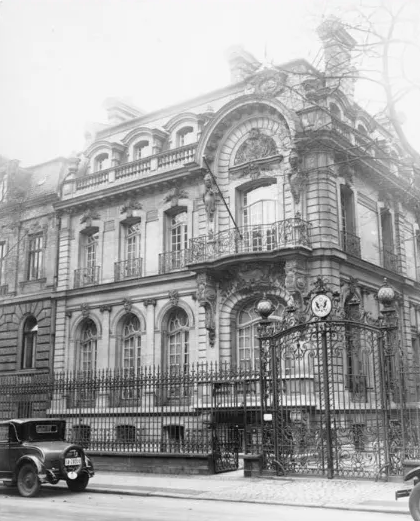
The US Embassy in Bendlerstrasse, Berlin in the 1930s
The American Embassy – housed in a temporary building in Stauffenbergstrasse (Bendlerstrasse) features in this part of the novel, as it was where Russell worked during his time in Berlin.
Hitler was building a capital to Germania this new German State that would last a thousand years. It is one of the ironies of history that all this building was going on in 1938, only to be bombed to smithereens a few years later…
The post Setting, Farewell My Life by Cynthia Sally Haggard, BERLIN, GERMANY in the 1930s appeared first on Spun Stories.
February 5, 2020
A KING’S RANSOM by Sharon Kay Penman, narrated by Emily Gray
This novel is the sequel to LIONHEART, also narrated by Emily Gray. If you haven’t experienced this first novel, I suggest you do so BEFORE experiencing this one, as much of what happens will make better sense if the books are read in order.
A KING’S RANSOM picks up where LIONHEART ended. In this novel we follow Richard as he sets off for Europe in the Fall of 1192, only to be captured by Leopold V, Duke of Austria, only to be turned over to his bitter enemy Henry VI the Holy Roman Emperor, who imprisons him in Trifels Castle.[image error]
This novel is just as strong as it’s predecessor in taking a much-vaunted hero and making us understand him. Richard’s 15 months of imprisonment and mistreatment at the hands of his enemies changed him forever. Five stars.
The post A KING’S RANSOM by Sharon Kay Penman, narrated by Emily Gray appeared first on Spun Stories.
February 3, 2020
Sharon Kay Penman’s LIONHEART, narrated by Emily Gray
LIONHEART by Sharon Kay Penman is the story of Richard I during the early years of his reign, form 1189 when he ascended the throne of England to the end of 1192, when he left the Holy Land. In this novel, we see Richard, “the Lionheart” (Coeur de Lion)[image error] reckless, brave, brilliant as he battles the Emir of Egypt Salah ad Din (Saladin) for control of Jerusalem. Imagine medieval knights in their iron armor fighting in a desert in temperatures of 40 degrees centigrade (110 degrees Fahrenheit) and you can see why Richard finally gave up and returned home to England. (It didn’t help that his faithless brother John was claiming he was dead, so that he could inherit Richard’s throne.)
Narrator Emily Gray does a wonderful job with the accents of these people, whose first language was NOT English. I especially loved her portrayal of Eleanor of Aquitaine (Richard’s mother) and Richard himself.
This novel was a rich & insightful look at someone who is a hero to British Schoolchildren, a book that humanizes him and brings him vividly alive with all his faults & contradictions. Five stars.
The post Sharon Kay Penman’s LIONHEART, narrated by Emily Gray appeared first on Spun Stories.
Interview Questions 25: Answered by Cynthia Sally Haggard
What historical time period do you gravitate towards the most with your personal reading?
That depends on what I’m working on.
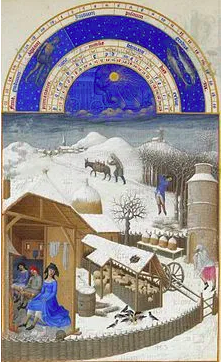
February from the Tres Riches Heures of the Duc de Berry (circa 1410)
When I was writing Thwarted Queen I read historical fiction about the Middle Ages.
Hotel Adlon Berlin, circa 1928
When I created Farewell My Life I read historical fiction about the 19th and 20th centuries.
What appeals to you most about your chosen genre?
I love living in the past, so historical novels are the perfect venue for my imagination.
The post Interview Questions 25: Answered by Cynthia Sally Haggard appeared first on Spun Stories.
February 1, 2020
Reading Sundays: SHADES OF UNREALITY (Part 4), a short story by Cynthia Sally Haggard
He must be talking about the children that own these toys. What were their names? I always pride myself on my ability to remember the little one’s names, they get so upset if one forgets them. But Roomba and Scooba? What strange names to bestow on children. Poor little things.
But the bear hadn’t finished. What a talkative toy he was.
“When she’s switched them on, you take off for the nearest spot out of reach,” he remarked.
I had no idea what he was talking of. But that cat twitched her tail, and grimaced.
“They un-nerve me. Ugh! I cannot bear the touch of their sensors. And those funny noises they make aren’t natural. If Roomba and Scooba can glide off to Whitehall and beep for their rights, why not us?”
Where were we? The only clear thing I understood is that we must be somewhere near the Palace of Whitehall,[image error] which is in London. I was back in the Land of England, but ’twas very strange, scarce recognizable from when I left it. Where were the servants scurrying around? The guards? Where were the wall hangings, and the elaborate furniture? Most of all, where were the fireplaces with their roaring fires? Truly, I found myself in a strange place. But I had to pin down my wandering thoughts, for the conversation was heating up. As I stood between them, moving my head from side to side as if watching a game of shuttle-cock, these two strange beings began to argue.
“We’re not robots,” declared the bear.
“We’re animals, Augustus,” said the cat. “We should have rights too.”
“We’re not animals, Pandora,” remarked Augustus. “Do we bleed, when we are pricked?”
“Why does having blood matter?” demanded Pandora the Cat.
Augustus the Bear ignored her. “You’re not quite real,” he declared rather foolhardily, for Pandora looked as if she were on the verge of throttling him. Then she said something that amazed me.
“I must be real,” she declared. “I have ideas. What about Duchess Cecylee? Is she real? I thought she was just a figment of the imagination of our companion, who writes historical novels…[Continued next week.]
The post Reading Sundays: SHADES OF UNREALITY (Part 4), a short story by Cynthia Sally Haggard appeared first on Spun Stories.
Setting, Farewell My Life by Cynthia Sally Haggard: BERLIN, GERMANY in the 1920s
FAREWELL MY LIFE is in three parts. The second part, AN UNSUITABLE SUITOR opens in Berlin, Germany in January 1922.
At that time, Berlin was a poor and impoverished city, still recovering from World War I, which brought not only many deaths & disfigurement, but also political unrest in which the Monarchy collapsed and various factions took over, such as the Sparticists in Berlin in 1919, who wanted a government based on local worker’s councils, rather like the newly-formed Soviets in Russia.
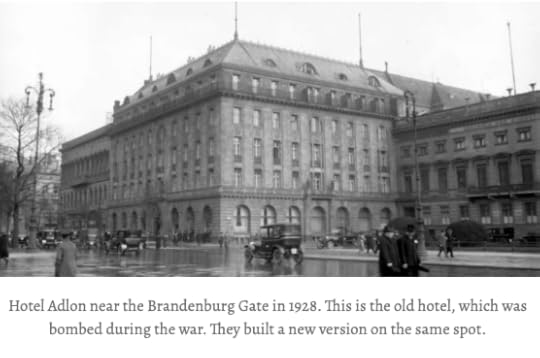
Hotel Adlon near the Brandenburg Gate in 1928. This is the old hotel, which was bombed during the war. They built a new version on the same spot.
The Hotel Adlon near the Brandenburg Gate features in this part of the novel, as it was the place where foreign journalists gathered to share news and gossip.
The post Setting, Farewell My Life by Cynthia Sally Haggard: BERLIN, GERMANY in the 1920s appeared first on Spun Stories.
Cynthia Sally's Blog

- Cynthia Sally Haggard's profile
- 129 followers

