
Jimmy Lo's Blog
February 12, 2014
kitchen light orchestra
My newest video features kitchen + light


February 11, 2014
New Scanner
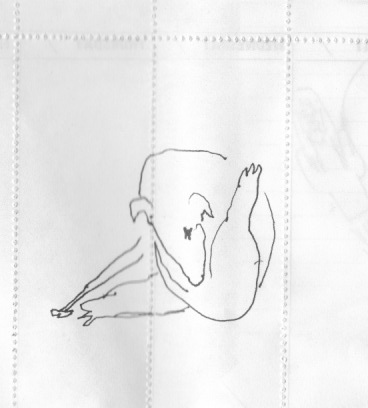
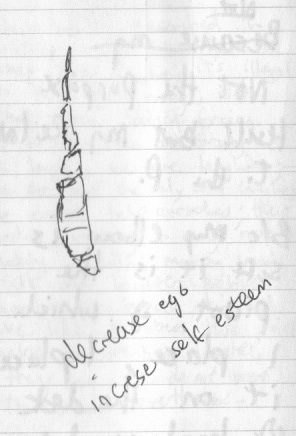
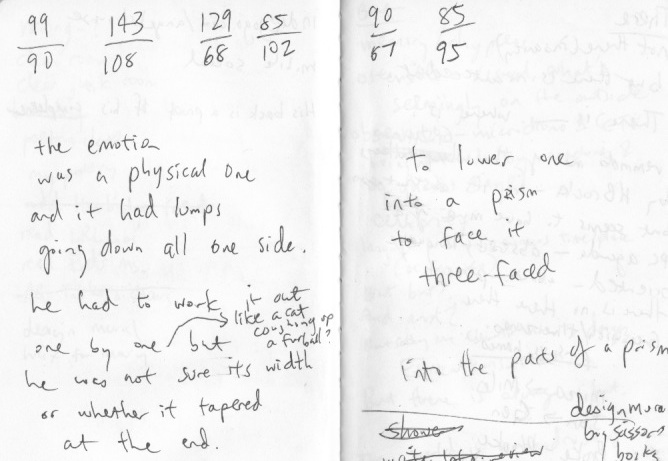
I got a new scanner. It’s a printer/scanner combo, and I got it free from a friend in exchange for writing him a free poem about donuts. In addition, the weather in Atlanta has been crazy lately. I got a snow day today simply because of fear of what might happen. After last time, I guess the whole state is overcompensating. Well, I am not complaining. Free scanner + day off = perfect storm (if you excuse the expression) for me to scan all my unmentionables—little bits here and there from this notebook or that, things that are not really worth sharing or publishing, but I find amusing for one reason or another.

Favorite Reads 2013
 I just noticed that this blog has become a once a year blog about my favorite books. Oh well. I am not going to apologize. However, I do plan to do more with it very soon. In the meantime, here is my 2013 list…
Whenever I encounter an all-time favorite book for the first time, it is always a blessing and a curse. The blessing is obviously the enjoyment of the book itself. But then comes the curse… pretty much everything I read for weeks afterwards seems bland in comparison—just something to pass the time. I didn’t read too many books in 2013, and this is mostly because I encountered three of these life-changing books, all of which incapacitated me for a time to further voracious reading. I had to take a break, a breather if you will. Three separate times. Here are those three books:
The Book of Ebenezer Le Page – by G.B. Edwards
Probably more than any other character in literature, Ebenezer Le Page comes to life as the most flesh-and-blood real. He’s an ornery old man who’s lived his whole life on one of the channel islands (Guernsey) and through an accumulation of stories he slowly reveals a full and rich life. His voice is unique, with a charming patois and much humor, and his story is an extremely moving one, with real characters you fall in love with. This is the only book the author has ever written. Read it.
My full review: https://www.goodreads.com/review/show/469820382
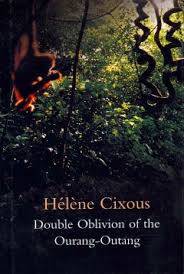
Double Oblivion of the Ourang-Outang – by Helene Cixous
I’d only heard the name Cixous associated with literary theory, and that’s not an area I cared for much. However, I had the good fortune to discover that she also wrote novels… many of them, which are mostly ignored by her more academically-inclined fans in American Educational Institutions. Well, I say “novels” but really this is a blend of novelistic fiction, memoir, literary essay, poetry, and pure creative thinking through and through. A truly uncategorizable book that had me riveted.
My full review: https://www.goodreads.com/review/show/631682830
Joseph and His Brothers – by Thomas Mann
A 1,500 page re-telling of Genesis 27-50 does not sound fun, but that’s exactly what this book is. It was a page-turner, full of philosophical goodies, action/adventure, dramatic twists and turns. Even if you know the story (as I did, vaguely), this will give you new perspective. What is most impressive about this book is that Mann was able to inject every little detail of the story with moral ambiguity and human complexity. He really just uses the Bible story as a springboard for something much greater.
My full review: https://www.goodreads.com/review/show/335101476
Very Honorable Mentions:
Lands of Memory – Felisberto Hernandez
The Moment of Freedom: The Heiligenberg Manuscript – Jens Bjorneboe
Malina – Ingeborg Bachmann
The Bachelors – Adalbert Stifter
The Day I Wasn’t There – Helene Cixous
Zeitoun – Dave Eggers
Impossible Object – Nicholas Moseley
A Place in the Country – W.G. Sebald
You can find my reviews for all of these books and more on my Goodreads page.
December 27, 2012
Favorite Reads 2012
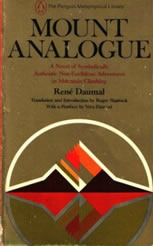 Mount Analogue by René Daumal
My favorite read this year. Playful and soulful. Daumal died before he finished it, so it ends in mid-sentence, which is itself a perfect analogy of the accessible yet impossible Mt. Analogue that is at the center of the book.
There but for the by Ali Smith
An engaging novel about language, society, the overlooked, and so much more. Almost no plot to speak of, this novel sounds academic, but is actually a riot to read.
Piano Stories by Felisberto Hernández
The story ‘Stray Horse’ alone makes this one of the best books ever. The inner-life of objects, memory, and the battle between versions of the self slowly sprawls itself across this long meandering story. What a delight.
Gazelle by Rikki Ducornet
What I loved most about this book is that it showed me the real world in a magical way. It’s not magical realism, it’s just a magical perspective. I felt like a kid again.
Midwinter Day by Bernadette Mayer
A long poem written over the course of one day, this book hijacked my own thought patterns and made me live under the haze of its strange continuous rhythms of mundanities and insights. Awesome.
Mrs. Dalloway by Virginia Woolf
Re-reading this has been an eye opening experience on how much I missed the first time through (in my 20s), and how much more emotionally close to home these people’s lives and stories are now. I was totally blown away and need to revisit all of Woolf’s catalog now.
The Poetics of Space by Gaston Bachelard
Philosophy written as a form of poetry, using the poetic image as a reverberating medium, Bachelard attempts to examine our deepest associations to those most intimate and secret spaces we’ve created in our imaginations. One of the most quotable books I’ve ever read.
I have longer reviews of these books and many other ones on Goodreads.
April 10, 2012
The Inchworm Experiments
A few weekends back, the weather was turning warm, and I started noticing inchworms everywhere. They would dangle from trees on their little silken strings and let the wind carry them somewhere. I found it incredibly beautiful (and probably pretty fun for the inchworm too). I'm not sure if anybody's ever filmed inchworms dangling before. I found YouTube videos of their incredibly cute walk, but not of them dangling about, so I decided to make a few. These are quite long and possibly boring, but that's why they're experiments:
February 9, 2012
Some Reflections on Dolls
 I've been reading Rainer Maria Rilke's Rodin and Other Prose Pieces. The title essay is great, of course, but some of the shorter lesser-known essays are also quite good. I especially loved 'Some Reflections on Dolls' which you can read online here. The essay feels a little like a writing exercise at first, but whereas most essays of this kind may be merely academic, Rilke is able to take this metaphor into strangely moving territory. Here are some quotes:
"Fed like the 'Ka' on imaginary food, when it seemed absolutely essential that they should be given real food, they messed themselves with it like spoiled children, being impenetrable and incapable of absorbing, at any point, even a drop of water in their extreme state of well-enough known solidity"
"as it was their habit, during the day, to be lived unwearyingly with energies not their own."
"When one thinks how grateful other things are for tender treatment, how they recover under it, indeed, how they feel even the hardest usage to be a consuming caress, provided only that they are loved, a caress which, no doubt, wears them away, but beneath which they take, as it were, courage which permeates them the more strongly, the more their body gives way (it makes them almost mortal, in a higher sense, so that they are able to share with us that grief which is our greatest possession)"
"I know, I know it was necessary for us to have things of this kind, which acquiesced in everything. The simplest love relationships were quite beyond our comprehension, we could not possibly have lived and had dealings with a person who was something; at most, we could only have entered into such a person and have lost ourselves there."
"It made no response whatever, so that we were put in the position of having to take over the part it should have played, of having to split our gradually enlarging personality into part and counterpart; in a sense, through it to keep the world, which was entering into us on all sides, at a distance."
"It was silent then, not deliberately, it was silent because that was its constant mode of evasion, because it was made of useless and entirely irresponsible material, was silent, and the idea did not occur to it to take some credit to itself on that score, although it could not but gain great importance thereby in a world in which Destiny, and even God Himself, have become famous above all because they answer us with silence. At a time when everyone was still intent on giving us a quick and reassuring answer, the doll was the first to inflict on us that tremendous silence"
"Are we not strange creatures to let ourselves go and to be induced to place our earliest affections where they remain hopeless? So that everywhere there was imparted to that most spontaneous tenderness the bitterness of knowing that it was in vain? Who knows if such memories have not caused many a man afterwards, out there in life, to suspect that he is not lovable?"
"The child must accustom itself to things, it must accept them, each thing has its pride."
"Beginners in the world, as we were, we could not feel superior to any thing except, at most, to such a half-object as this, given to us the way some broken fragment is given to the creatures in aquariums, so that it may serve them as a measure and landmark in the world around them. We took our bearings from the doll. It was by nature on a lower level than ourselves, so that we could flow towards it imperceptibly"
"dumb soul of the tube of the good little trumpet: how amiable you [were] and almost comprehensible."
"Sexless as the dolls of childhood were, [the doll-souls] can find no decease in their stagnant ecstasy, which has neither inflow nor outflow."
December 15, 2011
Favorite Reads in 2011
Trying something different this time… I'm going to actually list these in a somewhat loose order of personal significance. Full reviews of all books mentioned can be found on My Goodreads page.
The Man Without Qualities by Robert Musil
in which a difficulty is earned not by modernist wordplay, but by tackling mercurial and impossible ideas head on, and not without humor. A novel of ideas that is (among other things) also an argument against ideas (or at least against systematizing or simplifying them).
My Friends by Emmanuel Bove
in which the most simple, self-evident language is contained in a perfect novel of quiet humor, sadness, and crystallized beauty; a criminally underread masterpiece.
 Ludwig Wittgenstein: The Duty of Genius by Ray Monk
in which the life of one uncompromising SOB is laid out, showing all the seeming contradictions therein, which in the end turns out to be the perfect vehicle for his ideas (or perhaps the idea itself). A thought provoking book, in which I saw many parallels to Musil's musings.
Hopscotch by Julio Cortázar
in which the trick of hopping around randomly is ultimately trumped by the non-trick of great writing. A very serious game, as one Cronopios was known to say, one that you can put your whole life into.
The Unconsoled by Kazuo Ishiguro
in which a frustrating amount of things keep getting added to the to-do list, though nothing that truly matters is ever addressed; the uneasy feeling produced by this novel rings true for me, and in the end, though nothing is solved, I feel refreshed as if emerging from an ineffably sad dream.
The Atoms of Language by Mark C. Baker
in which a linguist explains the curious logic of all languages, how even the most radically different ones are made up of similar ingredients in different ratios. Also: find out why English is more similar to Indonesian than any other European language.
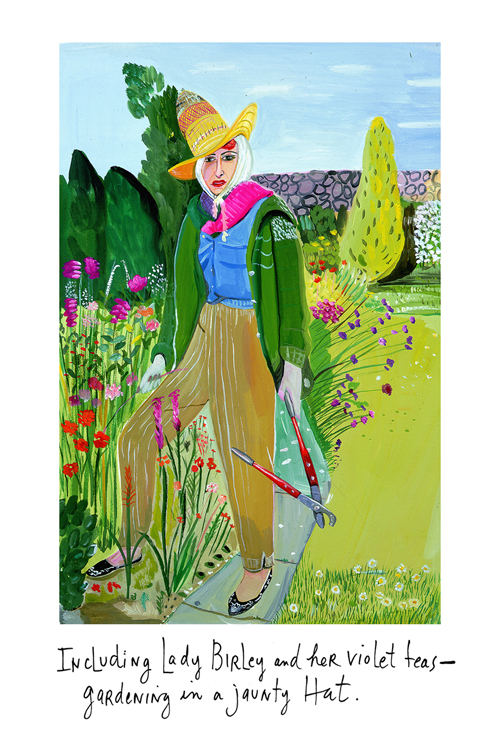 The Principles of Uncertainty by Maira Kalman
in which Ms. Kalman charms us with her drawings of dodos and superfluous tassels and ladies with big hair from the back and hats hats couches hats. A year of jottings and journalings by a quirky and interesting woman.
g-point almanac: passyunk lost &
g-point almanac: id est by Kevin Varrone
in which is found the best contemporary poetry I've read in the last 5 years or so.
Visitation by Jenny Erpenbeck
in which time-lapse photography is transfigured into written form, the episodes building one on another like a photograph superimposed, significances becoming apparent that aren't there for the myopic characters themselves. Surprisingly affecting.
Speaking of the Rose by Robert Walser
in which sentences are like contortionists, able to keep your interest in all ways but what is actually being said (and sometimes in that way too).
 A Few "I Must Also Mentions" (in no particular order):
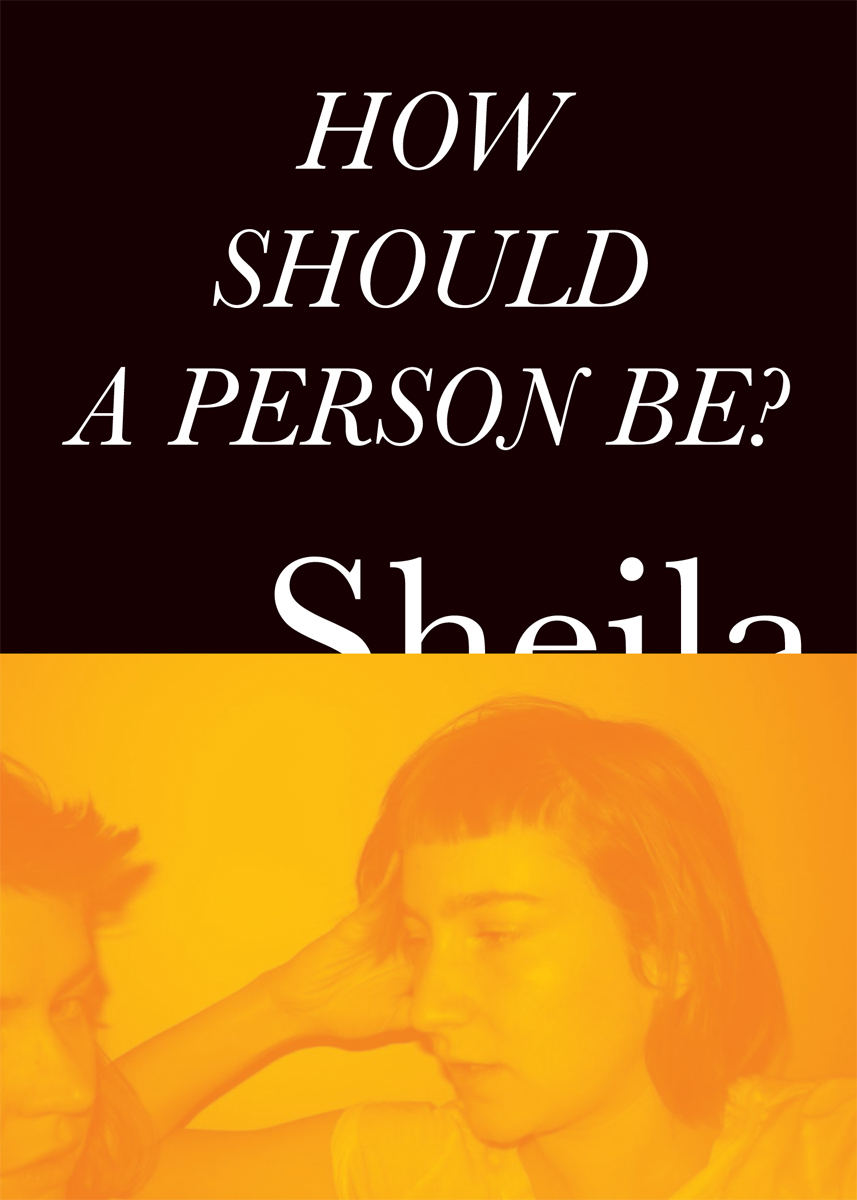
How Should A Person Be? by Sheila Heti
Wittgenstein's Mistress by David Markson
In the Land of Invented Languages by Arika Okrent
Winter's Journal by Emmanuel Bove
Illuminations by Walter Benjamin
Out of Sheer Rage by Geoff Dyer
Malone Dies by Samuel Beckett
The Tanners by Robert Walser
Fermat's Enigma by Simon Singh
August 15, 2011
A City Apart
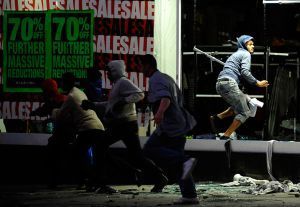 I'm quite ignorant of politics in general, and even more ignorant of politics in other countries, but recently I've been wondering about the riots in England. To an American who knows nothing of the context, it seems quite puzzling. But reading some articles online, it seems to make more sense:
Edinburgh might wall off its poor in Muirhouse or Leith, and Oxford might try not to think about Blackbird Leys, but in London, Manchester/Salford, Liverpool, Birmingham, Bristol, Nottingham—the cities that erupted on Monday 8th August—the rich live, by and large, next to the poor: £1,000,000 Georgian terraces next to estates with some of the deepest poverty in the EU. We're so pleased with this that we've even extended the principle to how we plan the trickledown dribble of social housing built over the last two decades, those Housing Association schemes where the deserving poor are 'pepper-potted' with stockbrokers. We've learnt about 'spatial segregation', so we do things differently now. Someone commenting on James Meek's great London Review of Books article on parallel Hackneys mentioned China Miéville's recent science fiction novel The City and The City, where two cities literally do occupy the same space, with all inhabitants acting as if they don't. Miéville set it in Eastern Europe, but the inspiration is surely London.
This is illuminating. But is this situation any better than over here, where we mostly segregate the poor from the rich so as to avoid conflict? That is equally disturbing. Neighborhoods are cut off from each other, in little pockets of comfortable isolation. Less conflict, maybe, but also less awareness.
Reading about the riots has reminded me of a great passage in The Tanners by Robert Walser that I was reading just yesterday:
How reprehensible it is when those blessed with commodities insist on ignoring the poor. Better to torment them, force them into indentured servitude, inflict compulsion and blows—this at least produces a connection, fury and a pounding heart, and these too constitute a form of relationship. But to cower in elegant homes behind golden garden gates, fearful lest the breath of warm humankind touch you, unable to indulge in extravagances for fear they might be glimpsed by the embittered oppressed, to oppress and yet lack the courage to show yourself as an oppressor, even to fear the ones you are oppressing, feeling ill at ease in your own wealth and begrudging others their ease, to resort to disagreeable weapons that require neither true audacity nor manly courage, to have money, but only money, without splendor: That's what things look like in our cities at present (p. 172)
Walser writes in a stylized hi-falutin manner (often for comic effect), so there is a jarringness, at first, to his diatribes that sound exaggerated when taken outside the context of his books (the speakers often waffle back and forth between hilarious extremes, i.e. he usually delivers a completely opposite speech the next day), but ultimately there is something very truthful in what is said.
July 5, 2011
Nights of Cabiria
SPOILER ALERT: The following contains spoilers. The YouTube clip shows the very end of the movie, and what I write underneath also gives away everything. Needless to say, I recommend this movie unreservedly (it is my favorite movie along with only 3 others that I can call my 'favorite'). So watch it, then come back and read this entry.
What is it about the celebrations at the end of Fellini's movies that are so moving? Is it, partially—precisely—that they are so unwarranted? Only after everything is lost does Fellini think the party should start.
I've been haunted by that image of Cabiria's teary eyes looking into the camera right before the movie ends. It resonates so deeply. And much like the rest of the film, it touches the viewer without words, because her actions, body language, and facial expressions say more than any line of dialogue ever can.
At one point she is in a ritzy district of town and walks down a lane. Coming opposite are two tall, obviously wealthy, cultured ladies, their backs to the camera. Cabiria's short frame is dwarfed by comparison, and on her face, an expression of 'I'm just as good as you, I can play with the best of them'. But right after she passes them, the facade drops, and you can see on her face all her insecurities and doubts. What a great scene.
This reminds me. Somewhere I heard an interview with an actor who said his best lesson in acting came when he realized that to play a drunk person is not about falling all over the place, but instead it's about trying your best not to fall all over the place. To show the effort in not falling… because a drunk person is all the time trying to convince people he isn't drunk.
Likewise, how easy it is to create a character who is naive. But how much more believable it is when that character is trying her best not to be naive, to project a facade of world-weary toughness as Cabiria does. This detail is what makes her character work, what makes you believe that she can actually exist, despite her cartoony proportions.
The attention to detail here is stunning, to the subtleties of every character in the movie, and not just the main ones. In one scene, Oscar the swindler spits out a toothpick before meeting with Cabiria. In another, towards the end, he is wearing sunglasses, a sure sign that he's ashamed of what he's about to do.
A scene that was cut: Cabiria finds herself on the outskirts of town, among the poverty of the homeless. But Criterion included it in their version, which was a wise decision. It should never have been cut, because it lends so much more power to the movie as a whole. Here we can imagine Cabiria's likely fate after the movie ends, after she sold her house and had been cheated out of all her money. Knowing this makes the scene so much more powerful on repeat viewings.
As are many of the foreshadowings of the movie. The push into the river at the beginning is a parallel to the movie's final betrayal.
Likewise, will the viewer be betrayed? This is what I wonder when Guilietta Masina looks into the camera. For it is Guilietta Masina looking into the camera, and not Cabiria. Or, rather, the possibility that it is both the character and the actor in that one moment, joining the viewer in empathy, is poignant.
She has no right to be smiling here, but she does. Cabiria looks at the audience as if to say 'It's okay. Everything will be fine'. The gall of her to be comforting us! Meanwhile Masina is saying 'It's okay, it's just a movie'. But will it be okay? Will Cabiria be okay after the end of this movie? Likewise, will we the viewers be okay out in the world once the fantasy of the movie has ended?
Some say this is a hopeful ending, but I am not so sure anymore. You can see it as naive hope in the face of the cynicism of the world.
Or maybe the ending is a dare. Maybe Fellini is daring the viewer to do exactly that: to interpret the ending as hopeful. Because to feel hopeful after what we've been shown is to put yourself in Cabiria's shoes: naive and willing to imagine a better future despite all evidence to the contrary. Will we dare to take on Cabiria's fate?
Wendell Enjoys a Storm
It's been raining a lot here lately. We've run out of options. Everyone has taken to looking out of windows. Here is my cat doing some of that:
Jimmy Lo's Blog
- Jimmy Lo's profile
- 10 followers

