Mark Matthews's Blog, page 46
June 7, 2012
Your Dog On The Cover Of A Novel
Your Dog's Picture On The Cover Of Stray, The Novel
One of the joys of being independently published is you can make your own cover, change your own cover, and pretty much scribble whatever you want all over.
The initial cover of my novel STRAY was a strung out heroin addict, fixing up with a needle. This seemed a bit too alarming, and even made some label it occult horror. Lots of suggestions came in to switch the cover, and since this period, a steady stream of dogs have graced the cover.
When I changed it recently a friend whimsically suggested I put her rescue dog on the cover, a dog who had actually spent some time wandering around 8 mile. So, what a cool promo.
Your dog on the cover of STRAY . Stray traces the harrowing paths of addicts at the West Oaks treatment center, the stray pets at the next door animal shelter, and the caregivers who serve them both. And, if you are interested, the the kindle Version is free today and tomorrow on amazon as part of the Amazon Prime promo. (June 7th and 8th only). Interested in a mish-mash of reviews? Click here.
First, you should know that the novel does contain some dark scenes of drug addiction (yet not nearly as dark as the real thing). There is also one scene where a dog is hit by a car, and it deals with euthanasia that happens in many shelters. However, ultimately, the novel is about the power of redemption, salvation, and yes, many animals are rescued in a unique and freeing way for both the rescuers' and the pet rescue-es. (but no spoilers).
Feedback from those who work with rescue dogs has been tremendous. I spent 100 hours in a Detroit area humane society and did hours of research into the subject matter.
By the way, it is based on a true setting. As for the rest of the events? Well, they are also true, even if they didn't happen.
So, If you are interested, email me a picture of your dog, include the dog's name if you want that included, and any background story (such as if they were a rescue or shelter dog.) Maybe include more than one photo. By sending the photo, you are allowing me to use it on the cover for both the print and paperback version, for 2 -4 weeks, depending on the response.
Thanks so much! Email to xmark(AT)yahoo or @matthews_mark


 .
.
"The Jade Rabbit" - A story of a miraculous marathon run
"STRAY",
One of the joys of being independently published is you can make your own cover, change your own cover, and pretty much scribble whatever you want all over.
The initial cover of my novel STRAY was a strung out heroin addict, fixing up with a needle. This seemed a bit too alarming, and even made some label it occult horror. Lots of suggestions came in to switch the cover, and since this period, a steady stream of dogs have graced the cover.
When I changed it recently a friend whimsically suggested I put her rescue dog on the cover, a dog who had actually spent some time wandering around 8 mile. So, what a cool promo.
Your dog on the cover of STRAY . Stray traces the harrowing paths of addicts at the West Oaks treatment center, the stray pets at the next door animal shelter, and the caregivers who serve them both. And, if you are interested, the the kindle Version is free today and tomorrow on amazon as part of the Amazon Prime promo. (June 7th and 8th only). Interested in a mish-mash of reviews? Click here.
First, you should know that the novel does contain some dark scenes of drug addiction (yet not nearly as dark as the real thing). There is also one scene where a dog is hit by a car, and it deals with euthanasia that happens in many shelters. However, ultimately, the novel is about the power of redemption, salvation, and yes, many animals are rescued in a unique and freeing way for both the rescuers' and the pet rescue-es. (but no spoilers).
Feedback from those who work with rescue dogs has been tremendous. I spent 100 hours in a Detroit area humane society and did hours of research into the subject matter.
By the way, it is based on a true setting. As for the rest of the events? Well, they are also true, even if they didn't happen.
So, If you are interested, email me a picture of your dog, include the dog's name if you want that included, and any background story (such as if they were a rescue or shelter dog.) Maybe include more than one photo. By sending the photo, you are allowing me to use it on the cover for both the print and paperback version, for 2 -4 weeks, depending on the response.
Thanks so much! Email to xmark(AT)yahoo or @matthews_mark


 .
."The Jade Rabbit" - A story of a miraculous marathon run
"STRAY",


June 4, 2012
The Inaugural Ann Arbor Marathon In June
On June 17th, the Inaugural Ann Arbor Marathon is set to take place. Yes, that’s right, I said Ann Arbor, and I said June 17th. Unique date, unique place, and I was so geeked when I heard about this, I signed up within hours after registration opened. I expect to get a single digit racing bib.
Well, No good deed goes unpunished, and from what I have seen, heard, and read, The Champions for Charity has received lots of grim responses for bringing an inaugural marathon to Ann Arbor. The main concern is the date they chose, with other complaints about the actual course For example, this message board on the Ann Arbor news announcements is full of negatives.
I am not sure how widespread the negative reaction has been, but recently they felt the need to draw attention to a section of the FAQ titled “ How did you decide on your date--were you concerned about Dexter-Ann Arbor races being 2 weeks earlier and heat in mid-June?
I don’t believe it is lost on Champions for Charity, who has been putting on major events for years, that this is not the ideal time of year to run a fast 26.2 mile race. Their answer on the FAQ explains their reasons. The fall has a ton of area marathons, Detroit, Chicago, Columbus, Grand Rapids, and they would also be "hostage to the U of M football schedule" trying to schedule it every year.
As for a spring marathon, May is loaded with major races, Kalamazoo, Midland, Bayshore, and there is also the Martian Marathon. And with respect to the Dexter to Ann Arbor half marathon, a very popular, beautiful course, they offered it respect by choosing after this event rather than before it. While 13.1 miles two weeks before a marathon seems a near perfect training run, (some may be even able to race it and be ready to run the Full), the other way around isn’t true. Meaning, you can’t run a marathon and then enjoy a half-marathon 2 weeks later. Well, unless you’re a running god-like freak.
In other words, scheduling it before Dexter Ann Arbor would have been met with major blowback and upset the whole running community.
All this might sound like I’m in the PR department of Champions for Charity, but all I'm hoping for is to put out some positive feedback, some grateful electric Karma out there, and hoping it gets blown the Ann Arbor way, just to make it a fair mix. I suspect this is largely a case where the complaints scream much louder than those who are content and excited.
Sure the course zigzags and outs and backs too much, and there’s that lame bit around briarwood mall, which isn’t Ann Arbor but Michigan suburbia. And sure it could be hot enough to make you drop to the ground and faint. I think all of these concerns are valid, and every marathon has things we worry about. That’s part of what makes them so great, the mental concerns leading up to the event that nag at your tapering brain.
For me, the hills of the course are the story. 525 feet of gain, 300 more than Boston, with a nice mile long climb starting at mile 23. So, if you are running this race for a PR rather than just the experience, well, I’m thinking you should have another one scheduled in the fall, keep it in your back pocket, just in case. For me, it’s a warm up before the New York Marathon in November.
But damn it, they brought a marathon to Ann Arbor.
The experience is what I am looking forward to
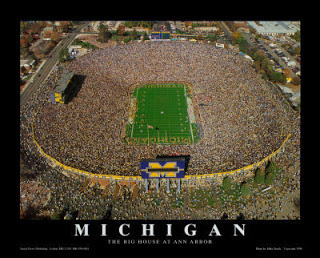
I want to walk up to the Big House and Feel the excitement in my gut I have felt so many weekends before. The same place I've walked to so many Saturday afternoons to see Anthony Carter, Harlan Huckleby, Desmond Howard, Jim Harbaugh, and that other pretty good quarterback icon, Tom Brady.
I want to soak up memories from the city with my run-intoxicated brain, and see my previous life flash before my exhausted eyes. I want run along riversides and duck into parks like the arb, and duck back out past classes where I learned astronomy from professors who canceled class on sunny spring days if we promised to stay quiet. I want to run by classes where socialist professors walked in late due to organizing graduate-assistant protests, and run by the lecture halls where Ralph Williams dazzled crowds teaching the Bible as literature with a hypnotizing smile, or Professor Rabkin taught Fantasy and Science Fiction and introduced me to The Phantom TollBooth and Where The Wild Things Are with a new child's eyes. Ralph Williams
I want to add Bob Seger, Iggy Pop, and the Stooges to my playlist.
I want to run past Yost arena and hear echoes of the most obscene hilarious chants from Hockey fans, and yes, perhaps echoes of myself, taunting a goalie with “It’s all your fault, It’s all your fault.”
I want it to be 85 degrees, and to have my sun-baked head be deliriously bent up, to see mirages on the horizon and to battle not just the miles and hills but the environment, and then run by some bars at 6:45 am to see some poor sap who just barely made it out of the bar last night before he fell and slept in his own vomit.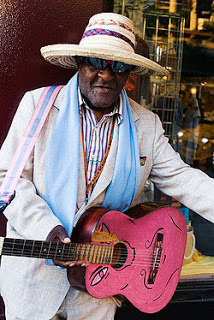 Shakey Jake RIP
I want to see the ghost of Shakey Jake, wearing sweet-ass suits and his guitar case carrying an always out of tune ax. Add captionI want to smell Blimpy Burgers, Zingermans, the West Quad dorm food, and some left over hash-bash fumes in the air.

I want to run through the city streets where I once stumbled, with cars cleared, aid-stations before me, and thousands of new friends, all to add to some already great memories.
And I want the option to be able to do this again next year, so I’m hoping it will be a success. I'm thinking the whole running community will be watching too, all wishing for the same.
Sure, there will be some first year logistic issues, and some dreaded unknown unknowns, but with lessons learned it will improve each year.
In the end, this marathon needs to find its niche to stick, and it would seem running in the summer, in the heat, over the hilly arb and up and down hilly Washtenaw, would seem to be the challenge. I am reminded of the adage of nearby Running Fit's Trail Marathon tagline: “No Wimps.”
See you at The Big House in 12 days. In Michigan. In June. No Wimps.
Until then. "I'm a street walking cheetah with a heart full of napalm."
"The Jade Rabbit" - A story of a miraculous marathon run
"STRAY", now just $2.99

Well, No good deed goes unpunished, and from what I have seen, heard, and read, The Champions for Charity has received lots of grim responses for bringing an inaugural marathon to Ann Arbor. The main concern is the date they chose, with other complaints about the actual course For example, this message board on the Ann Arbor news announcements is full of negatives.
I am not sure how widespread the negative reaction has been, but recently they felt the need to draw attention to a section of the FAQ titled “ How did you decide on your date--were you concerned about Dexter-Ann Arbor races being 2 weeks earlier and heat in mid-June?
I don’t believe it is lost on Champions for Charity, who has been putting on major events for years, that this is not the ideal time of year to run a fast 26.2 mile race. Their answer on the FAQ explains their reasons. The fall has a ton of area marathons, Detroit, Chicago, Columbus, Grand Rapids, and they would also be "hostage to the U of M football schedule" trying to schedule it every year.
As for a spring marathon, May is loaded with major races, Kalamazoo, Midland, Bayshore, and there is also the Martian Marathon. And with respect to the Dexter to Ann Arbor half marathon, a very popular, beautiful course, they offered it respect by choosing after this event rather than before it. While 13.1 miles two weeks before a marathon seems a near perfect training run, (some may be even able to race it and be ready to run the Full), the other way around isn’t true. Meaning, you can’t run a marathon and then enjoy a half-marathon 2 weeks later. Well, unless you’re a running god-like freak.
In other words, scheduling it before Dexter Ann Arbor would have been met with major blowback and upset the whole running community.
All this might sound like I’m in the PR department of Champions for Charity, but all I'm hoping for is to put out some positive feedback, some grateful electric Karma out there, and hoping it gets blown the Ann Arbor way, just to make it a fair mix. I suspect this is largely a case where the complaints scream much louder than those who are content and excited.
Sure the course zigzags and outs and backs too much, and there’s that lame bit around briarwood mall, which isn’t Ann Arbor but Michigan suburbia. And sure it could be hot enough to make you drop to the ground and faint. I think all of these concerns are valid, and every marathon has things we worry about. That’s part of what makes them so great, the mental concerns leading up to the event that nag at your tapering brain.
For me, the hills of the course are the story. 525 feet of gain, 300 more than Boston, with a nice mile long climb starting at mile 23. So, if you are running this race for a PR rather than just the experience, well, I’m thinking you should have another one scheduled in the fall, keep it in your back pocket, just in case. For me, it’s a warm up before the New York Marathon in November.
But damn it, they brought a marathon to Ann Arbor.
The experience is what I am looking forward to
I want to walk up to the Big House and Feel the excitement in my gut I have felt so many weekends before. The same place I've walked to so many Saturday afternoons to see Anthony Carter, Harlan Huckleby, Desmond Howard, Jim Harbaugh, and that other pretty good quarterback icon, Tom Brady.
I want to soak up memories from the city with my run-intoxicated brain, and see my previous life flash before my exhausted eyes. I want run along riversides and duck into parks like the arb, and duck back out past classes where I learned astronomy from professors who canceled class on sunny spring days if we promised to stay quiet. I want to run by classes where socialist professors walked in late due to organizing graduate-assistant protests, and run by the lecture halls where Ralph Williams dazzled crowds teaching the Bible as literature with a hypnotizing smile, or Professor Rabkin taught Fantasy and Science Fiction and introduced me to The Phantom TollBooth and Where The Wild Things Are with a new child's eyes.
 Ralph Williams
I want to add Bob Seger, Iggy Pop, and the Stooges to my playlist.
I want to run past Yost arena and hear echoes of the most obscene hilarious chants from Hockey fans, and yes, perhaps echoes of myself, taunting a goalie with “It’s all your fault, It’s all your fault.”
I want it to be 85 degrees, and to have my sun-baked head be deliriously bent up, to see mirages on the horizon and to battle not just the miles and hills but the environment, and then run by some bars at 6:45 am to see some poor sap who just barely made it out of the bar last night before he fell and slept in his own vomit.
 Shakey Jake RIP
I want to see the ghost of Shakey Jake, wearing sweet-ass suits and his guitar case carrying an always out of tune ax.
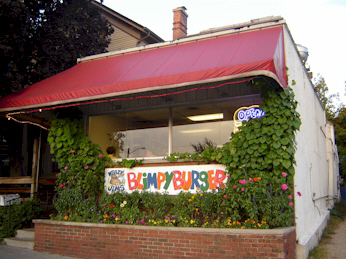 Add captionI want to smell Blimpy Burgers, Zingermans, the West Quad dorm food, and some left over hash-bash fumes in the air.

I want to run through the city streets where I once stumbled, with cars cleared, aid-stations before me, and thousands of new friends, all to add to some already great memories.
And I want the option to be able to do this again next year, so I’m hoping it will be a success. I'm thinking the whole running community will be watching too, all wishing for the same.
Sure, there will be some first year logistic issues, and some dreaded unknown unknowns, but with lessons learned it will improve each year.
In the end, this marathon needs to find its niche to stick, and it would seem running in the summer, in the heat, over the hilly arb and up and down hilly Washtenaw, would seem to be the challenge. I am reminded of the adage of nearby Running Fit's Trail Marathon tagline: “No Wimps.”
See you at The Big House in 12 days. In Michigan. In June. No Wimps.
Until then. "I'm a street walking cheetah with a heart full of napalm."

"The Jade Rabbit" - A story of a miraculous marathon run
"STRAY", now just $2.99
An Inaugural Ann Arbor Marathon In June
On June 17th, the Inaugural Ann Arbor Marathon is set to take place. Yes, that’s right, I said Ann Arbor, and I said June 17th. Unique date, unique place, and I was so geeked when I heard about this, I signed up within hours after registration opened. I expect to get a single digit racing bib.
Well, No good deed goes unpunished, and from what I have seen, heard, and read, The Champions for Charity has received lots of grim responses for bringing an inaugural marathon to Ann Arbor. The main concern is the date they chose, with other complaints about the actual course For example, this message board on the Ann Arbor news announcements is full of negatives.
I am not sure how widespread the negative reaction has been, but recently they felt the need to draw attention to a section of the FAQ titled “ How did you decide on your date--were you concerned about Dexter-Ann Arbor races being 2 weeks earlier and heat in mid-June?
I don’t believe it is lost on Champions for Charity, who has been putting on major events for years, that this is not the ideal time of year to run a fast 26.2 mile race. Their answer on the FAQ explains their reasons. The fall has a ton of area marathons, Detroit, Chicago, Columbus, Grand Rapids, and they would also be "hostage to the U of M football schedule" trying to schedule it every year.
As for a spring marathon, May is loaded with major races, Kalamazoo, Midland, Bayshore, and there is also the Martian Marathon. And with respect to the Dexter to Ann Arbor half marathon, a very popular, beautiful course, they, (I believe,) offered it respect by choosing after this event rather than before it. While 13.1 miles two weeks before a marathon seems a near perfect training run, (some may be even able to race it and be ready to run the Full), the other way around isn’t true. Meaning, you can’t run a marathon and then enjoy a half-marathon 2 weeks later. Well, unless you’re a running god-like freak.
In other words, scheduling it before Dexter Ann Arbor would have been met with major blowback and upset the whole running community.
All this might sound like I’m in the PR department of Champions for Charity, but all I'm hoping for is to put out some positive feedback, some grateful electric Karma out there, and hoping it gets blown the Ann Arbor way, just to make it a fair mix. I suspect this is largely a case where the complaints scream much louder than those who are content and excited.Sure the course zigzags and outs and backs too much, and there’s that lame bit around briarwood mall, which isn’t Ann Arbor but Michigan suburbia. And sure it could be hot enough to make you drop to the ground and faint. I think all of these concerns are valid, and every marathon has things we worry about. That’s part of what makes them so great, the mental concerns leading up to the event that nag at your tapering brain.
For me, the hills of the course are the story. 525 feet of gain, 300 more than Boston, with a nice mile long climb starting at mile 23. So, if you are running this race for a PR rather than just the experience, well, I’m thinking you should have another one scheduled in the fall, keep it in your back pocket, just in case. For me, it’s a warm up before the New York Marathon in November.
But damn it, they brought a marathon to Ann Arbor.
The experience is what I am looking forward to
I want to walk up to the Big House and Feel the excitement in my gut I have felt so many weekends before. The same place I've walked to so many Saturday afternoons to see Anthony Carter, Harlan Huckleby, Desmond Howard, Jim Harbaugh, and that other pretty good quarterback icon, Tom Brady.
I want to soak up memories from the city with my run-intoxicated brain, and see my previous life flash before my exhausted eyes. I want to duck into parks like geddes and the arb, and duck back out past classes where I learned astronomy from professors who canceled class on sunny spring days if we promised to stay quiet. I want to run by classes where socialist professors walked in late due to organizing student teacher protests, and run by the lecture halls where Ralph Williams dazzled crowds teaching the Bible as literature with a hypnotizing smile, or Profesor Rabkin taught Fantasy and Science Fiction and introduced me to The Phantom TollBooth and Where The Wild Things Are with a new child's eyes.
I want to add Bob Seger, Iggy Pop, and the Stooges to my playlist.
I want to run past Yost arena and hear echoes of the most obscene hilarious chants from Hockey fans, and yes, perhaps echoes of myself, taunting a goalie with “it’s all your fault, it’s all your fault.”
I want it to be 85 degrees, and to have my sun-baked head be deliriously bent up, to see mirages on the horizon and to battle not just the miles and hills but the environment, and then run by some bars at 6:45 am to see some poor sap who just barely made it out of the bar last night before he fell and slept in his own vomit.
I want to see the ghost of Shakey Jake, wearing sweet-ass suits and his guitar case carrying an always out of tune ax.
I want to smell Blimpy Burgers, Zingermans, the West Quad dorm food, and some left over hash-bash fumes in the air.
I want to run through the city streets where I once stumbled, with cars cleared, aid-stations before me, and thousands of new friends, all to add to some already great memories.
And I want the option to be able to do this again next year, so I’m hoping it will be a success. I'm thinking the whole running community will be watching too, all wishing for the same.
Sure, there will be some first year logistic issues, and some dreaded unknown unknowns, but with lessons learned it will improve each year.
In the end, this marathon needs to find its niche to stick, and it would seem running in the summer, in the heat, over the hilly arb and up and down hilly Washtenaw, would seem to be the challenge. I am reminded of the adage of nearby Running Fit's Trail Marathon tagline “No Wimps.”
See you at The Big House in 12 days. In Michigan. In June. No Wimps.
Until then. I"m a street walking cheetah with a heart full of napalm.
"The Jade Rabbit" - A story of a miraculous marathon run
"STRAY", now just $2.99
Well, No good deed goes unpunished, and from what I have seen, heard, and read, The Champions for Charity has received lots of grim responses for bringing an inaugural marathon to Ann Arbor. The main concern is the date they chose, with other complaints about the actual course For example, this message board on the Ann Arbor news announcements is full of negatives.
I am not sure how widespread the negative reaction has been, but recently they felt the need to draw attention to a section of the FAQ titled “ How did you decide on your date--were you concerned about Dexter-Ann Arbor races being 2 weeks earlier and heat in mid-June?
I don’t believe it is lost on Champions for Charity, who has been putting on major events for years, that this is not the ideal time of year to run a fast 26.2 mile race. Their answer on the FAQ explains their reasons. The fall has a ton of area marathons, Detroit, Chicago, Columbus, Grand Rapids, and they would also be "hostage to the U of M football schedule" trying to schedule it every year.
As for a spring marathon, May is loaded with major races, Kalamazoo, Midland, Bayshore, and there is also the Martian Marathon. And with respect to the Dexter to Ann Arbor half marathon, a very popular, beautiful course, they, (I believe,) offered it respect by choosing after this event rather than before it. While 13.1 miles two weeks before a marathon seems a near perfect training run, (some may be even able to race it and be ready to run the Full), the other way around isn’t true. Meaning, you can’t run a marathon and then enjoy a half-marathon 2 weeks later. Well, unless you’re a running god-like freak.
In other words, scheduling it before Dexter Ann Arbor would have been met with major blowback and upset the whole running community.
All this might sound like I’m in the PR department of Champions for Charity, but all I'm hoping for is to put out some positive feedback, some grateful electric Karma out there, and hoping it gets blown the Ann Arbor way, just to make it a fair mix. I suspect this is largely a case where the complaints scream much louder than those who are content and excited.Sure the course zigzags and outs and backs too much, and there’s that lame bit around briarwood mall, which isn’t Ann Arbor but Michigan suburbia. And sure it could be hot enough to make you drop to the ground and faint. I think all of these concerns are valid, and every marathon has things we worry about. That’s part of what makes them so great, the mental concerns leading up to the event that nag at your tapering brain.
For me, the hills of the course are the story. 525 feet of gain, 300 more than Boston, with a nice mile long climb starting at mile 23. So, if you are running this race for a PR rather than just the experience, well, I’m thinking you should have another one scheduled in the fall, keep it in your back pocket, just in case. For me, it’s a warm up before the New York Marathon in November.
But damn it, they brought a marathon to Ann Arbor.
The experience is what I am looking forward to
I want to walk up to the Big House and Feel the excitement in my gut I have felt so many weekends before. The same place I've walked to so many Saturday afternoons to see Anthony Carter, Harlan Huckleby, Desmond Howard, Jim Harbaugh, and that other pretty good quarterback icon, Tom Brady.
I want to soak up memories from the city with my run-intoxicated brain, and see my previous life flash before my exhausted eyes. I want to duck into parks like geddes and the arb, and duck back out past classes where I learned astronomy from professors who canceled class on sunny spring days if we promised to stay quiet. I want to run by classes where socialist professors walked in late due to organizing student teacher protests, and run by the lecture halls where Ralph Williams dazzled crowds teaching the Bible as literature with a hypnotizing smile, or Profesor Rabkin taught Fantasy and Science Fiction and introduced me to The Phantom TollBooth and Where The Wild Things Are with a new child's eyes.
I want to add Bob Seger, Iggy Pop, and the Stooges to my playlist.
I want to run past Yost arena and hear echoes of the most obscene hilarious chants from Hockey fans, and yes, perhaps echoes of myself, taunting a goalie with “it’s all your fault, it’s all your fault.”
I want it to be 85 degrees, and to have my sun-baked head be deliriously bent up, to see mirages on the horizon and to battle not just the miles and hills but the environment, and then run by some bars at 6:45 am to see some poor sap who just barely made it out of the bar last night before he fell and slept in his own vomit.
I want to see the ghost of Shakey Jake, wearing sweet-ass suits and his guitar case carrying an always out of tune ax.
I want to smell Blimpy Burgers, Zingermans, the West Quad dorm food, and some left over hash-bash fumes in the air.
I want to run through the city streets where I once stumbled, with cars cleared, aid-stations before me, and thousands of new friends, all to add to some already great memories.
And I want the option to be able to do this again next year, so I’m hoping it will be a success. I'm thinking the whole running community will be watching too, all wishing for the same.
Sure, there will be some first year logistic issues, and some dreaded unknown unknowns, but with lessons learned it will improve each year.
In the end, this marathon needs to find its niche to stick, and it would seem running in the summer, in the heat, over the hilly arb and up and down hilly Washtenaw, would seem to be the challenge. I am reminded of the adage of nearby Running Fit's Trail Marathon tagline “No Wimps.”
See you at The Big House in 12 days. In Michigan. In June. No Wimps.
Until then. I"m a street walking cheetah with a heart full of napalm.
"The Jade Rabbit" - A story of a miraculous marathon run
"STRAY", now just $2.99
May 31, 2012
Do We Really Need To Know If She Pooped?
Do we really need to know if she pooped before the marathon?The Jade Rabbit has gotten many reviews, and I am grateful for all of them. They range from, literally “it's the best” to “it’s the worst”, and “the author obviously understands his genre” to "it's easy to see the author knows nothing about running or training for a marathon."
I am thankful for all of them, and only wish I could have coffee with each and every reviewer.To respond to them is to risk sounding defensive and bitter, so all I can say is I’m thrilled I’m being read.
As someone who likes to write book reviews myself, it’s not a personal thing, and if we all liked and connected with the same material, what’s the point and what a boring world.
But, when someone asks this question; “do we really need to know if she pooped before a race or the entire menu of what she ate?” about Janice, the main character and narrator of The Jade Rabbit, I felt the need to respond. Not as an author, but as a runner. Plus, the older I get, the more I need to talk about B.M.’s, so I can’t resist the chance to respond. (If the writer of this review is reading this, I think your discussion is awesome I thank you for your comment.) I can see why the discussion and detail had no artistic value, especially to this reviewer, but isn’t that really one of the two most important things when running a marathon? What did you eat? And, Did you poop?
We marathoners usually all know well in advance what our diet will be the days before the marathon, and have probably experimented many times with the best combo and timing of food that works for us. I can picture my last meal now, and I also fully know that I’ll be eating some afternoon fiber the day before the event (frosted shredded wheat) to assure a great meeting with the commode the next morning.
What goes in and what goes out is huge. I think the reason there’s always 50 people in line at each port a potty marathon morning is not because everyone has the urge to go, they just know they will feel so much better to purge themselves of any extra bowel-cramping material. We've all been on runs when our intestines attacked, and to have this happen during your grand moment is simply tragic.
I know I’m not the only marathoner who wants to micro-manage all these little details, who eats at a specific time, and lays out my clothes the the night before, putting the body glide in my shoe so I don’t forget to lube up, and having sixteen alarms set and a wake up call, just in case.
Controlling these things reminds me of the way we try to control things and clean in never before cleaned places when tragedy strikes. We need routine and control when about to throw ourselves into the unknown hazards of a marathon than can metaphysically kill us.
Janice from The Jade Rabbit has her marathon evening routine mapped out weeks in advance, including the decision whether or not to have sex the night before the race. (She does, since studies have shown a high percentage of those who ran a PR did have sex the night before, and because it was essential for me that she did so that the rest of the climatic end could come to fruition.)
And then marathon morning my senses all seem so acute. Every last step I check off in my brain, coffee and eating and showering and pooping and dressing. I do it methodically like some warrior putting on his gear to go for battle. This immediacy is something I tried to capture by changing the novel from past tense to present tense marathon morning, so you seem listening to Janice at the very moment the marathon is taking place
There is a general pattern to the reviews where runners wanted more running, and non-runners felt the running was too much. This was true when I got the novel into the hands of a prominent Chinese adoption writer and publisher. She read it for the adoption theme and not the running theme, and was concerned that was there was too much running and she asked, ‘who is your audience?’ And suggested I write with more of an audience in mind next time.
Perhaps the problem was I didn’t have an audience in mind when writing it, and that the book was fully personal. As an adoptive father I wanted to immerse myself into what an adopted woman might feel and then to turn up the heat in her life, and nothing turns up the heat in your life like a marathon. I wanted to demonstrate that when a runner is in the zone of their training, their life is their training and their training is their life, that battles fought in personal life are reflected in runs, and vice versa, so you can’t talk about running without talking about life. Running is the background music we live by, and the volume slowly gets ramped up the closer the race day. We bring our lifelong baggage with is during every training run, and hopefully return a little lighter or at least stronger to carry the load.
As it is, I followed the adage of writing the book I’d like to read, as I pretty much cry every time I read the ending.
The novel is free today and tomorrow, June 1st, on kindle, as part of Amazon’s Prime promotions, and I invite you to read it.
Oh yeah, spoiler alert. Janice wasn’t able to poop marathon morning as usual, but had to stop along the course to go, which, as you know can be devastating if you are trying to break a sub 3 hour marathon and shatter your already fractured life back into place. Read all about it, and then give a shout back.
"The Jade Rabbit" - A story of a miraculous marathon run,
Reviews of The Jade Rabbit
Read "STRAY", by Mark Matthews, now just $2.99Reviews of "STRAY"
I am thankful for all of them, and only wish I could have coffee with each and every reviewer.To respond to them is to risk sounding defensive and bitter, so all I can say is I’m thrilled I’m being read.
As someone who likes to write book reviews myself, it’s not a personal thing, and if we all liked and connected with the same material, what’s the point and what a boring world.
But, when someone asks this question; “do we really need to know if she pooped before a race or the entire menu of what she ate?” about Janice, the main character and narrator of The Jade Rabbit, I felt the need to respond. Not as an author, but as a runner. Plus, the older I get, the more I need to talk about B.M.’s, so I can’t resist the chance to respond. (If the writer of this review is reading this, I think your discussion is awesome I thank you for your comment.) I can see why the discussion and detail had no artistic value, especially to this reviewer, but isn’t that really one of the two most important things when running a marathon? What did you eat? And, Did you poop?
We marathoners usually all know well in advance what our diet will be the days before the marathon, and have probably experimented many times with the best combo and timing of food that works for us. I can picture my last meal now, and I also fully know that I’ll be eating some afternoon fiber the day before the event (frosted shredded wheat) to assure a great meeting with the commode the next morning.
What goes in and what goes out is huge. I think the reason there’s always 50 people in line at each port a potty marathon morning is not because everyone has the urge to go, they just know they will feel so much better to purge themselves of any extra bowel-cramping material. We've all been on runs when our intestines attacked, and to have this happen during your grand moment is simply tragic.
I know I’m not the only marathoner who wants to micro-manage all these little details, who eats at a specific time, and lays out my clothes the the night before, putting the body glide in my shoe so I don’t forget to lube up, and having sixteen alarms set and a wake up call, just in case.
Controlling these things reminds me of the way we try to control things and clean in never before cleaned places when tragedy strikes. We need routine and control when about to throw ourselves into the unknown hazards of a marathon than can metaphysically kill us.
Janice from The Jade Rabbit has her marathon evening routine mapped out weeks in advance, including the decision whether or not to have sex the night before the race. (She does, since studies have shown a high percentage of those who ran a PR did have sex the night before, and because it was essential for me that she did so that the rest of the climatic end could come to fruition.)
And then marathon morning my senses all seem so acute. Every last step I check off in my brain, coffee and eating and showering and pooping and dressing. I do it methodically like some warrior putting on his gear to go for battle. This immediacy is something I tried to capture by changing the novel from past tense to present tense marathon morning, so you seem listening to Janice at the very moment the marathon is taking place
There is a general pattern to the reviews where runners wanted more running, and non-runners felt the running was too much. This was true when I got the novel into the hands of a prominent Chinese adoption writer and publisher. She read it for the adoption theme and not the running theme, and was concerned that was there was too much running and she asked, ‘who is your audience?’ And suggested I write with more of an audience in mind next time.
Perhaps the problem was I didn’t have an audience in mind when writing it, and that the book was fully personal. As an adoptive father I wanted to immerse myself into what an adopted woman might feel and then to turn up the heat in her life, and nothing turns up the heat in your life like a marathon. I wanted to demonstrate that when a runner is in the zone of their training, their life is their training and their training is their life, that battles fought in personal life are reflected in runs, and vice versa, so you can’t talk about running without talking about life. Running is the background music we live by, and the volume slowly gets ramped up the closer the race day. We bring our lifelong baggage with is during every training run, and hopefully return a little lighter or at least stronger to carry the load.
As it is, I followed the adage of writing the book I’d like to read, as I pretty much cry every time I read the ending.
The novel is free today and tomorrow, June 1st, on kindle, as part of Amazon’s Prime promotions, and I invite you to read it.
Oh yeah, spoiler alert. Janice wasn’t able to poop marathon morning as usual, but had to stop along the course to go, which, as you know can be devastating if you are trying to break a sub 3 hour marathon and shatter your already fractured life back into place. Read all about it, and then give a shout back.
"The Jade Rabbit" - A story of a miraculous marathon run,
Reviews of The Jade Rabbit
Read "STRAY", by Mark Matthews, now just $2.99Reviews of "STRAY"
May 29, 2012
22 Miles On A Record-Breaking Memorial Day
The last long run of a marathon training program is a climactic event. In some ways, more so than the actual marathon, which is sort of a victory lap. I always approach them trying to mimic race day; eating the same, wearing the same things, running at the same time, twisting my thoughts in the same exact bent.
Ideally I look for a sponsored training run, and Running Fit was having one Saturday in Ann Arbor. Unfortunately, my family was taking a weekend trip so couldn’t attend, so instead chose a solo run on Monday morning,
Since I like to run this last long run on semi-rested legs, my challenge was taking a three day trip without running. This wasn’t easy, as Grand Haven had wonderful running routes along a lake front boardwalk and tons of trails. I feel like I experience any new area best through the eyes of, and on the adventure of, a nice morning run. As it was, I stayed inside with the kids while my wife went for her workout along the lakeside. The only movements I did was lots of walking and chasing Frisbees. Lake Michigan was frigid so I imagined the water icing my still sore knees while we waded in the waves. My shoes remained at home, also resting in my closet.
The next challenge was mapping a route around my hometown’s very popular and quite large memorial day parade. It cut me off from my main running routes along 8 mile, so I spent a good chunk of time on Mapmyrun, and found a route that connected two gas stations (where I go to buy water and other needed supplies, and then hide them in shaded areas.) The route included the much needed hills to prepare me, and a way to run around the parade and return home.
The weather was 70 degrees at the start, but soon lifted up to 85 for much of the run, on its way to a Detroit Memorial Day-record breaking heat of 95 degrees. All under a perfectly (monstrously) blue sky. After all the comments on posts I had written across the blogosphere on not canceling races due to heat, and threatening to still run these races using water from the sewer to hydrate and the bile of passerby’s for Gu, I certainly couldn’t let the heat dissuade me.
My legs were eager, and I started off way faster than I should have, and my whole plan to make this a progressively faster run was shot. Instead it was a sporadically faster run, with four 7:50’s and a couple of 8 minute miles mixed in with the rest averaging 8:20.
I took more breaks than usual at my self-made aid stations to pour water over my neck or swallow some s-caps in the shade. Same way, I assume, that if (when) it’s 80 plus degrees during the marathon I will walk through aid stations to make sure to grab more than one cup of water. I swear with every s-cap I took, I immediately tasted the salt streaming down my face into my mouth.
Oh, the strange skills we use. In order to space out the water, I grabbed a a smaller water at the gas station and carried it for a a couple miles to hide it in the middle of my route. I stashed it amongst some trees, but realized, like a pot of gold, I may never be able to find where I buried it, so I broke off some branches, and laid them on the other side of the sidewalk pointing to the life-saving water for a later miles. A water cairn.
And while I am sure the heat effected my time, I sort of enjoyed it. Anything that makes my head a bit more hazy, makes me more prone to running hallucinations, and increases the running stud factor is all good.
The route had some nice hills, about 4 miles of a 2-3% incline and 2 miles of 3-5 % incline. Overall, the 22 mile route had 322 feet of elevation gain. This was a fair challenge, but just a minor sparring partner for the 525 feet that the Ann Arbor 26.2 has waiting for me.
Never try anything new on marathon day, is a familiar adage, but for this long run I did. I hardly ever use Sunscreen, but since my noggin was roaring red from the weekend at the beach, I applied a high-grade Walgreen 30 SPF to my head and nose. Well, as the sweat poured out my body, the blinding cream poured into my eye, and in my attempt to wipe it away, the leftover Vaseline on my hand I had used for body lube to stop from chaffing was added to the mix. The result was a blinding venom, and I did at least 3 miles with one eye closed and cleansing tears filling my eye.
“I can’t see nuthing," I mumbled, "You gotta open my eye. Cut me Mick, cut me Mick....”

But it was the aching legs that were the real challenge. They already felt sore at mile 14, where in previous trainings this doesn’t happen, and I know it’s a function of my low weeky mileage. This whole Ann Arbor marathon thing was just supposed to be a warm up to train for New York, and I’ll need to remind myself of that more than once I’m sure.
The greatness of a last long run allows me to change my self-talk a bit. “After this, your training stops, it's all over, just this one left...” I could yell at my legs. I told them the usual lies, like ‘we’ll take a whole week off after today” which of course isn't true. “There is no tomorrow” I also screamed at them in my brain, not a full lie but maybe a half-truth. I did what I could to summon everything out of me to get to that place where my greatest running passion springs forth.
And yes, there’s nothing like what gets pulled out of you during a long run, and that feeling when you finally arrive home, 3 Gu’s, 6 S-caps, and 22 miles later. Another thing I took note of is, (as narcissistic as this could sound) I am always anxious to look at myself in the mirror after a long run. I want to see the slime on my face, the look in my eye, the beating blood-red head, all to see the metamorphosis of what the experience has done to me, since every time I accomplish these things I feel like a new beast. It’s like the run is a full moon, and sucks the werewolf right out of me.
And, the beast I had turned myself into felt deliciously exhausted and hungry, and began to devour things. Here's what I ate the rest of the day:
8 ounces of strawberry recoverite 8 ounces of chocolate milk A chobani yogurts Carrots
Peach
Cheeseburger
Hot dog Franks and beans Corn 3 scoops of ice cream Apple Pie Handful of Honey BBQ chips Kit kat.
Ah, taper time. Time to eat, get fat, rest, and have my mentally deranged, tapering mind fight to roll back every mile I ran and tell myself I'm under-trained, I'll never finish, what the hell was I thinking, and of course, imagine all sorts of phantom injuries.
Read "The Jade Rabbit" - A story of a miraculous marathon run,
Reviews of The Jade Rabbit
Read "STRAY", by Mark Matthews, now just $2.99Reviews of "STRAY"

May 24, 2012
Running and Reality Therapy - Assesing Efforts Towards Your Running Goals.
Yet another post where I put my therapist hat on along with my running shoes.
I had a blast writing about being diagnosed with a running addiction based on the new DSM criteria.
Then I followed it up with William Glasser's alternative perspective of running as a Positive Addiction.( I'ts worth noting that Glasser felt that "The DSM is the most destructive book to human relationships that have ever been written.")

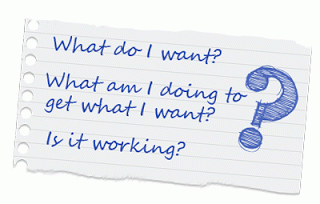
Glasser is the brain behind Reality Therapy, a here and now approach that promotes personal responsibility, self-evaluation, and planning and commitment to change. Reality Therapy asks us to decide:
1. What do we really want?
2: What are we doing to get what we want?
3: Evaluate, is it helping? And then,
4. What can we do differently? At this point, it's time to commit.
In this sense, Dr. Phil's saying "and how's that working for you" comes straight from this theory.

And in this sense, most runners are actively practicing Reality Therapy, or if not, might want to think about their running goals in this framework.
For example asking yourself:
What do you want? To run injury free? to qualify for boston? to finish a marathon? to qualify for the olympics? run in a zombie run and not get caught? run a full marathon taking pictures along the way, tweeting every half mile, and live podcasting your run? If your goals aren't yours then you're just not gonna show up. And there's no reason to chop down a bunch of trees making a path through a forest you have no desire to be in.
This can of course be boiled down to individual runs. What do I want from this run? Just to warm up and recover? speedwork? endurance? to reduce stress so I stop yelling at the guinea pigs?
What have you done to get it?
This is where I think a training log really helps. Your brain won't remember things accurately, but if you can have multiple marathons' training programs on paper - and not what you were supposed to do but what you really did - it can help. You can look back and see where you've been, and you can let others provide their feedback as well. Us runners are data freaks. Data Junkies. We would bath in data if we could.
Is it helping? Is what you are doing getting you closer to what you need? Measure your wants versus your realities. Is training providing the the results you want? do I keep bonking out at mile 21, yet not changing my training pattern? Am I constantly injured?Am I never happy during an event yet always finding something to blame besides my own training? Go on any golf course, and you'll see the duffer out there, always swearing and cussing at his game, yet never changing his swings or changing his expectations.
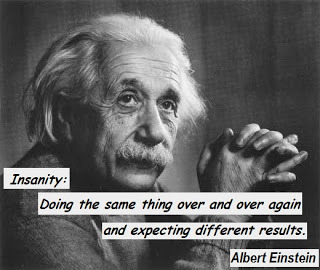
Yes, insanity is doing the same thing over and over again and expecting different results.
And one of the unique things about marathon training is, since you typically only run one or two a year, it takes incredible patience and persistence to mix up your training and then wait months to see if it is working or not. Yes, as it is said, it's all an experiment of one. I did a similar training pattern for nearly ten years trying to qualify for Boston (yes, I"m sick and suffering and hard-headed) and then I finally changed it up with a training plan that would look ridiculous if put into a runners world article, but it was this change that finally allowed me to nail my BQ.
What else can you do? Brainstorm ideas, something to break your pattern, get suggestions from everywhere and every person you can, and then commit to something new, but something personal. (I think many runners are as hurt by following template training plans as they are helped. Here's my secret formula). Do you need to throw in more miles or less? recover more, do more long runs, more speedwork, eat better, take more fiber? If someone told you to stand on your head and whistle because it will help in your recovery, are you willing to try?
 Then it's time to commit, and with reality therapy, that's where the therapist/client relationship increases your accountability, gives you someone to get feedback from, as you constantly assess and evaluate if you are self-sabotaging your efforts. And this is not just through behavior but erroneous thoughts and feelings and undue self-criticism.
In running, the feedback to constantly evaluate comes from your body, your race times (possibly), your joy in running, your coach if there is one, those pains in your knees and your calves and your arse or wherever it hurts, and all those tingly little endorphins that are buzzing through your blood and seeping their way into your heart telling you "I must be doing something right."
Read "The Jade Rabbit" - A story of a miraculous marathon run,
Reviews of The Jade Rabbit
Read "STRAY", by Mark Matthews, now just $2.99Reviews of "STRAY"

I had a blast writing about being diagnosed with a running addiction based on the new DSM criteria.
Then I followed it up with William Glasser's alternative perspective of running as a Positive Addiction.( I'ts worth noting that Glasser felt that "The DSM is the most destructive book to human relationships that have ever been written.")

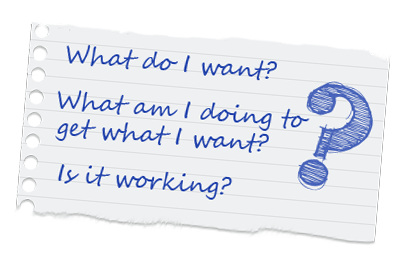
Glasser is the brain behind Reality Therapy, a here and now approach that promotes personal responsibility, self-evaluation, and planning and commitment to change. Reality Therapy asks us to decide:
1. What do we really want?
2: What are we doing to get what we want?
3: Evaluate, is it helping? And then,
4. What can we do differently? At this point, it's time to commit.
In this sense, Dr. Phil's saying "and how's that working for you" comes straight from this theory.

And in this sense, most runners are actively practicing Reality Therapy, or if not, might want to think about their running goals in this framework.
For example asking yourself:
What do you want? To run injury free? to qualify for boston? to finish a marathon? to qualify for the olympics? run in a zombie run and not get caught? run a full marathon taking pictures along the way, tweeting every half mile, and live podcasting your run? If your goals aren't yours then you're just not gonna show up. And there's no reason to chop down a bunch of trees making a path through a forest you have no desire to be in.
This can of course be boiled down to individual runs. What do I want from this run? Just to warm up and recover? speedwork? endurance? to reduce stress so I stop yelling at the guinea pigs?
What have you done to get it?
This is where I think a training log really helps. Your brain won't remember things accurately, but if you can have multiple marathons' training programs on paper - and not what you were supposed to do but what you really did - it can help. You can look back and see where you've been, and you can let others provide their feedback as well. Us runners are data freaks. Data Junkies. We would bath in data if we could.
Is it helping? Is what you are doing getting you closer to what you need? Measure your wants versus your realities. Is training providing the the results you want? do I keep bonking out at mile 21, yet not changing my training pattern? Am I constantly injured?Am I never happy during an event yet always finding something to blame besides my own training? Go on any golf course, and you'll see the duffer out there, always swearing and cussing at his game, yet never changing his swings or changing his expectations.
Yes, insanity is doing the same thing over and over again and expecting different results.
And one of the unique things about marathon training is, since you typically only run one or two a year, it takes incredible patience and persistence to mix up your training and then wait months to see if it is working or not. Yes, as it is said, it's all an experiment of one. I did a similar training pattern for nearly ten years trying to qualify for Boston (yes, I"m sick and suffering and hard-headed) and then I finally changed it up with a training plan that would look ridiculous if put into a runners world article, but it was this change that finally allowed me to nail my BQ.

What else can you do? Brainstorm ideas, something to break your pattern, get suggestions from everywhere and every person you can, and then commit to something new, but something personal. (I think many runners are as hurt by following template training plans as they are helped. Here's my secret formula). Do you need to throw in more miles or less? recover more, do more long runs, more speedwork, eat better, take more fiber? If someone told you to stand on your head and whistle because it will help in your recovery, are you willing to try?
 Then it's time to commit, and with reality therapy, that's where the therapist/client relationship increases your accountability, gives you someone to get feedback from, as you constantly assess and evaluate if you are self-sabotaging your efforts. And this is not just through behavior but erroneous thoughts and feelings and undue self-criticism.
In running, the feedback to constantly evaluate comes from your body, your race times (possibly), your joy in running, your coach if there is one, those pains in your knees and your calves and your arse or wherever it hurts, and all those tingly little endorphins that are buzzing through your blood and seeping their way into your heart telling you "I must be doing something right."
Read "The Jade Rabbit" - A story of a miraculous marathon run,
Reviews of The Jade Rabbit
Read "STRAY", by Mark Matthews, now just $2.99Reviews of "STRAY"
May 22, 2012
"That's Not A Feeling" by Dan Josefson - Book Review:
So, this is my first book review as a "Great Minds Think Aloud" reviewer. It's a little verbose, and I may have gone a little overboard, but I am going to chalk it up to 25% excitement and 75% to the very complex novel that landed at my doorstep.
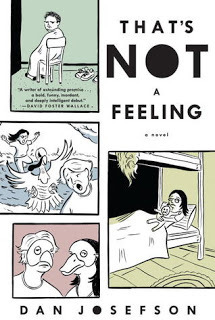
That’s Not A Feeling, by Dan Josefson, is the story of Roaring Orchards, a boarding school for troubled youth, and traces the experiences of Max, a new student who encounters this strange world following two failed suicide attempts. After smashing out his parents windshield in the facilities parking lot, and believing he was ‘just on a tour,’ Max’s parents leave him without a goodbye in the hands of staff who adhere to the school’s philosophy that few can explain or understand. The journey of Max, along with other students, including one particularly endearing and quirky girl named tidbit, is told in mixed narrative. Max is admitted as Aubrey, the school ‘headmaster’ and creator of this world, is sick and may be dying.
The title, That’s Not A Feeling, comes from the list of accepted feelings a student, and a staff member, is allowed to identify when being challenged and confronted, and it just one of the many ways forced and feigned ways of being are put upon the cast of memorable and distinct characters.
I received an Advanced Review copy of the novel for my role as a Great Minds Think Aloud reviewer, and my interest came partially from my short-lived experience as a social worker/counselor in similar facilities where they use what is called Positive Peer Culture, and yes, it is certainly its own culture. In Roaring Orchards, groups have to physically gang up on others who act out, students have to face walls, have their shoes taken away, and there is a whole esoteric dictionary of words, terms, and acronyms.
Children and staff alike in Roaring Orchards struggle with how much ‘buy-in’ to have for the schools curriculum. Students can explain the reasoning behind the therapeutic interventions, but it is certainly not something they have faith in, and ultimately they feign issues so that they can then impress their therapists and show progress. Staff spends time mocking the children and seem to be as adolescent as those they serve, some pledging allegiance to the mission but others planning to sue the facility or finally tell the administrator off and demand it close. Just as the children plot to run, staff think of leaving, turning over “states-evidence,” while those with idealistic visions are met with a steel shovel to the shins and a rude awaking. Parents who object to the punishments tone down their words when offered the chance to bring their child home, since then the rules don’t seem so bad. The ultimate existential crisis for the Max, and the rest of the youth, is to run, or not to run, and youth are often chased sprinting from the grounds of the school. The only true relationships in the novel are those that are undercover, with children bonding through secrets, shared rule-breaking, and secret plots to leave.
Genuine longings and hopes go unfulfilled, and it seems the author and the reader want more for these characters. The world the author has created is all game playing with various interventions that make it comically but darkly absurd. When you FIB you are using functioning intimacy blockers. Students get ghosted and nobody can speak with them since they aren’t really there. They are put in their rooms until they remember things correctly, made to sit facing corners, split up into oddly named groups, and in an incredible birthing scene gone wrong (that just may have stolen the show) students recreate their own struggles in the womb, emerge to an idealistic mother, and ‘relearn’ how to form bonds.
The author doesn’t seem to be making a statement on a boarding school, what seems to fit more is that this is just a microcosm of the world we all live in. True relationships and connections that are ached for are not found in easy, outwardly ways, feelings are feigned to get along, masks are created with beaks to appease others. Sure, we can run, but where to? We may be incapable of surviving without these rules, and we want to stick around, just to see what kind of drama happens next. The author loved all of his characters, none of them are evil, their intentions and longings are very human and even grand at times, and the dialogue between them flowed wonderfully. Ironic passages where characters are constantly feigning how they are supposed to feel, unwittingly mocking the rules, all of them aware of the absurdity, and once in while rebelling with an axe or a fire.
The oft-occurring childhood violence is not searing, nor are the actions necessarily evil, they are matter of fact, done on a whim, with little spite and seem to be the only way a student can have any true impact on the environment. When they come, they often make sense, or at least aren’t some sort of reflection of a dark human nature, and there’s just enough empathy for the children and supposed theoretical principle to the school to make it seem legit, and just enough mastery by the God of his Universe, Aubrey, to keep it going.
Aubrey, like any charismatic leader, has tremendous personal power and abilities to persuade others. He asks questions, spins truths, and interrogates others in a way that undress any last bit of defenses. Yet this God is dying, maybe losing his sanity, because when he finally lets it all explode in a bit of a mea culpa; telling the children and staff what he really thinks of them, it’s barely noticed. Their leader is lost, utterly disappointed in his failing and the flaws of those around him, but .everyone moves on without notice. This is chilling. Aubrey was maybe the best part of the novel and sprinkled about in just enough doses that you wanted more.
What made my jaw drop was actually not what was inside the novel, but when I saw that David Foster Wallace, author of Infinite Jest, has a blurb on the cover.
"Dan Josefson is a writer of astounding promise and That's Not a Feeling is a bold, funny, mordant, and deeply intelligent debut." --David Foster Wallace, author of Infinite Jest
Nuff said, right? Why is anybody else even bothering doing a review? This is Warren Buffet admiring your stock picks, and Martha Stewart oohing and awwing at your decorative dishware. Wallace is the modern day face of so called “difficult fiction,” fiction you have to work at as a reader. It was the last book blurb Wallace wrote, reportedly doing multiple rewrites to make the 22 words give the right emotional impact, and That’s Not A Feeling was perhaps the last novel he ever read, before taking his own life in September, 2008.
This novel did take a bit of work, and my guess is there will be a splatter of one and two stars or “I gave it a chance, but I just couldn’t finish it” where others will applaud the efforts and speak of its subtle hypnotizing nature. I was both of these during different moments, but I’m a marathoner, and I know that the first miles can be the toughest and once you get warmed up, it flows smooth and sweet. The novel is published by Soho Press, who pride themselves in presenting works that other houses ignore since they are not so quickly and easily digestible by the public. There’s something noble in that.
The difficult parts were the inexplicable narration change. The novel begins in third person, but then switches to first person, and the reader wonders how the narrator knows things where he isn’t even present, and how he can describe how other people felt as if he’s omniscient, . You learn later that it’s a retrospective, and at one point the narrator self- reflects about writing the actual book you are reading.
“Mr. David Wallace,” if I could only ask, “were you referring to this unusual narrative stance in your praise?” Because what I kept feeling was that the author was cheating, using the immediacy and intimacy of a first person narrative, yet also the more universal storytelling tools of the third person narrative. Despite the intrusive narrative changes, however, it was a world I don’t’ want to run from, but certainly wanted and needed to stick around, just to see how it may end. In fact, after finishing the novel, I didn’t’ want to read anything else for a bit. It felt like having a unique dish, a rarely tasted flavor in my mouth, and I didn’t’ want any new flavor to spoil it.
It seems kind of cheap to use traditional ratings to grade a non-traditional novel; to buy-in to this 5 star system for a novel that mocks superficial buy-in, but like a Roaring Orchards child I’ll play along, rather than run, and give it 4 stars, and will wait for the many future novels to see if indeed George Foster Wallace’s spirit has lived on in the body of Dan Josefson.
That’s Not A Feeling is scheduled to be released on October 2, 2012, by Soho Press.
Get the novel here on Amazon or click here for Goodreads.
~Mark Matthews, Author of Stray and The Jade Rabbit

That’s Not A Feeling, by Dan Josefson, is the story of Roaring Orchards, a boarding school for troubled youth, and traces the experiences of Max, a new student who encounters this strange world following two failed suicide attempts. After smashing out his parents windshield in the facilities parking lot, and believing he was ‘just on a tour,’ Max’s parents leave him without a goodbye in the hands of staff who adhere to the school’s philosophy that few can explain or understand. The journey of Max, along with other students, including one particularly endearing and quirky girl named tidbit, is told in mixed narrative. Max is admitted as Aubrey, the school ‘headmaster’ and creator of this world, is sick and may be dying.
The title, That’s Not A Feeling, comes from the list of accepted feelings a student, and a staff member, is allowed to identify when being challenged and confronted, and it just one of the many ways forced and feigned ways of being are put upon the cast of memorable and distinct characters.
I received an Advanced Review copy of the novel for my role as a Great Minds Think Aloud reviewer, and my interest came partially from my short-lived experience as a social worker/counselor in similar facilities where they use what is called Positive Peer Culture, and yes, it is certainly its own culture. In Roaring Orchards, groups have to physically gang up on others who act out, students have to face walls, have their shoes taken away, and there is a whole esoteric dictionary of words, terms, and acronyms.
Children and staff alike in Roaring Orchards struggle with how much ‘buy-in’ to have for the schools curriculum. Students can explain the reasoning behind the therapeutic interventions, but it is certainly not something they have faith in, and ultimately they feign issues so that they can then impress their therapists and show progress. Staff spends time mocking the children and seem to be as adolescent as those they serve, some pledging allegiance to the mission but others planning to sue the facility or finally tell the administrator off and demand it close. Just as the children plot to run, staff think of leaving, turning over “states-evidence,” while those with idealistic visions are met with a steel shovel to the shins and a rude awaking. Parents who object to the punishments tone down their words when offered the chance to bring their child home, since then the rules don’t seem so bad. The ultimate existential crisis for the Max, and the rest of the youth, is to run, or not to run, and youth are often chased sprinting from the grounds of the school. The only true relationships in the novel are those that are undercover, with children bonding through secrets, shared rule-breaking, and secret plots to leave.
Genuine longings and hopes go unfulfilled, and it seems the author and the reader want more for these characters. The world the author has created is all game playing with various interventions that make it comically but darkly absurd. When you FIB you are using functioning intimacy blockers. Students get ghosted and nobody can speak with them since they aren’t really there. They are put in their rooms until they remember things correctly, made to sit facing corners, split up into oddly named groups, and in an incredible birthing scene gone wrong (that just may have stolen the show) students recreate their own struggles in the womb, emerge to an idealistic mother, and ‘relearn’ how to form bonds.
The author doesn’t seem to be making a statement on a boarding school, what seems to fit more is that this is just a microcosm of the world we all live in. True relationships and connections that are ached for are not found in easy, outwardly ways, feelings are feigned to get along, masks are created with beaks to appease others. Sure, we can run, but where to? We may be incapable of surviving without these rules, and we want to stick around, just to see what kind of drama happens next. The author loved all of his characters, none of them are evil, their intentions and longings are very human and even grand at times, and the dialogue between them flowed wonderfully. Ironic passages where characters are constantly feigning how they are supposed to feel, unwittingly mocking the rules, all of them aware of the absurdity, and once in while rebelling with an axe or a fire.
The oft-occurring childhood violence is not searing, nor are the actions necessarily evil, they are matter of fact, done on a whim, with little spite and seem to be the only way a student can have any true impact on the environment. When they come, they often make sense, or at least aren’t some sort of reflection of a dark human nature, and there’s just enough empathy for the children and supposed theoretical principle to the school to make it seem legit, and just enough mastery by the God of his Universe, Aubrey, to keep it going.
Aubrey, like any charismatic leader, has tremendous personal power and abilities to persuade others. He asks questions, spins truths, and interrogates others in a way that undress any last bit of defenses. Yet this God is dying, maybe losing his sanity, because when he finally lets it all explode in a bit of a mea culpa; telling the children and staff what he really thinks of them, it’s barely noticed. Their leader is lost, utterly disappointed in his failing and the flaws of those around him, but .everyone moves on without notice. This is chilling. Aubrey was maybe the best part of the novel and sprinkled about in just enough doses that you wanted more.
What made my jaw drop was actually not what was inside the novel, but when I saw that David Foster Wallace, author of Infinite Jest, has a blurb on the cover.
"Dan Josefson is a writer of astounding promise and That's Not a Feeling is a bold, funny, mordant, and deeply intelligent debut." --David Foster Wallace, author of Infinite Jest
Nuff said, right? Why is anybody else even bothering doing a review? This is Warren Buffet admiring your stock picks, and Martha Stewart oohing and awwing at your decorative dishware. Wallace is the modern day face of so called “difficult fiction,” fiction you have to work at as a reader. It was the last book blurb Wallace wrote, reportedly doing multiple rewrites to make the 22 words give the right emotional impact, and That’s Not A Feeling was perhaps the last novel he ever read, before taking his own life in September, 2008.
This novel did take a bit of work, and my guess is there will be a splatter of one and two stars or “I gave it a chance, but I just couldn’t finish it” where others will applaud the efforts and speak of its subtle hypnotizing nature. I was both of these during different moments, but I’m a marathoner, and I know that the first miles can be the toughest and once you get warmed up, it flows smooth and sweet. The novel is published by Soho Press, who pride themselves in presenting works that other houses ignore since they are not so quickly and easily digestible by the public. There’s something noble in that.
The difficult parts were the inexplicable narration change. The novel begins in third person, but then switches to first person, and the reader wonders how the narrator knows things where he isn’t even present, and how he can describe how other people felt as if he’s omniscient, . You learn later that it’s a retrospective, and at one point the narrator self- reflects about writing the actual book you are reading.
“Mr. David Wallace,” if I could only ask, “were you referring to this unusual narrative stance in your praise?” Because what I kept feeling was that the author was cheating, using the immediacy and intimacy of a first person narrative, yet also the more universal storytelling tools of the third person narrative. Despite the intrusive narrative changes, however, it was a world I don’t’ want to run from, but certainly wanted and needed to stick around, just to see how it may end. In fact, after finishing the novel, I didn’t’ want to read anything else for a bit. It felt like having a unique dish, a rarely tasted flavor in my mouth, and I didn’t’ want any new flavor to spoil it.
It seems kind of cheap to use traditional ratings to grade a non-traditional novel; to buy-in to this 5 star system for a novel that mocks superficial buy-in, but like a Roaring Orchards child I’ll play along, rather than run, and give it 4 stars, and will wait for the many future novels to see if indeed George Foster Wallace’s spirit has lived on in the body of Dan Josefson.
That’s Not A Feeling is scheduled to be released on October 2, 2012, by Soho Press.
Get the novel here on Amazon or click here for Goodreads.
~Mark Matthews, Author of Stray and The Jade Rabbit
New York City Marathon Fundraiser: Anonymous Donor
I'm closing in on my last huge training run for the Ann Arbor Marathon this week, a 22 miler in what looks to be a 80 degree hot weekend.
And although I'm training for the Ann Arbor Marathon, I am also using it as a warm up to run my first New York City Marathon. I'm running to raise funds for a cause I fully believe in, Covenant House of Michigan. For more information, see here: My First Giving, New York City Marathon, Charity Page
Two cool bits of information: For one, a local anonymous donor has agreed to match dollar for dollar whatever I can raise on my own. I know, right! Very cool. So, whatever you think you may give, as little as it may seem (it's not!) double it in your brain.
Also, a not so anonymous donor, myself, has agreed to ship a copy of both of my novels, The Jade Rabbit and Stray, to anyone in the United States who donates 50 dollars or more. I know, right! Very cool.
The Covenant House serves a population very similar to the youth served in The Jade Rabbit, and, in fact, is the type of facility Janice, the main character, feels can assist the homeless 18 year old Sharleen. I know, this means little if you haven't read the book, but just know that I have seen dozens and dozens of non-profits, some of which waste and squander money. Covenant House is not one of those. Sure, I've always wanted to run the NYCM, but it was a no-brainer and a perfect fit when I saw on the Covenant House website that they had NYCM entries available.
Thanks for listening.
My First Giving, New York City Marathon, Charity Page

And although I'm training for the Ann Arbor Marathon, I am also using it as a warm up to run my first New York City Marathon. I'm running to raise funds for a cause I fully believe in, Covenant House of Michigan. For more information, see here: My First Giving, New York City Marathon, Charity Page
Two cool bits of information: For one, a local anonymous donor has agreed to match dollar for dollar whatever I can raise on my own. I know, right! Very cool. So, whatever you think you may give, as little as it may seem (it's not!) double it in your brain.
Also, a not so anonymous donor, myself, has agreed to ship a copy of both of my novels, The Jade Rabbit and Stray, to anyone in the United States who donates 50 dollars or more. I know, right! Very cool.
The Covenant House serves a population very similar to the youth served in The Jade Rabbit, and, in fact, is the type of facility Janice, the main character, feels can assist the homeless 18 year old Sharleen. I know, this means little if you haven't read the book, but just know that I have seen dozens and dozens of non-profits, some of which waste and squander money. Covenant House is not one of those. Sure, I've always wanted to run the NYCM, but it was a no-brainer and a perfect fit when I saw on the Covenant House website that they had NYCM entries available.
Thanks for listening.
My First Giving, New York City Marathon, Charity Page
May 21, 2012
Running As A Positive Addiction
Last Friday, I posted this on Running as an addiction, as diagnosed by the DSM. I took some liberties and had fun with the comparing 'running addiction' to addiction to alcohol, partially inspired by upcoming changes in the DSM which would include other behaviors as an addiction, and diagnosis them as "Behvioral Addiction - Not Otherwise Specified." ( Article here.) My thoughts are a craving to do something that can't be controlled that is hurting your life can be loosely classified as an addiction, if it meets the seven criteria over a lengthy period of time, but it may just as likely fit into some sort of obsessive compulsive disorder, since to call it addiction may actually change the nature of the other biggies: Alcohol, Opiates, Stimulants, and so on.However, the other, more likely category most of us runners fit into is the Positive Addiction realm, championed by William Glasser. Glasser is the guru beyond Reality Therapy, and also the concept of Positive Addiction - Things that we are drawn to do, crave to do, maybe even "have to do" that enhance our life.
 Glasser described activities that allow a person to achieve a meditative state where the mind can “spin free.” Positive addictions are activities that take a person to this mental state, are addictive in that missing the activity results in various symptoms of withdrawal, and are positive in that they are a creative, controllable period that endows an individual with strength in the form of both mental capacity and increased neurological horsepower. These strength gains carry over into all other aspects of life. These changes are even biological, and the addictions can forge new neuronal connections in the brain to help you think more creatively. Ever wonder why you get all those grand thoughts during your run? Glasser wrote much of this book with a focus on running.
A positive addiction can be anything at all that a person chooses to do as long as it fulfills the following six criteria: (reprinted by permission of: "I think it's okay, since it's on about 5 million sites on the internet", May, 2012)(1) It is something noncompetitive that you choose to do and you can devote an hour (approximately) a day to it. (2) It is possible for you to do it easily and it doesn't take a great deal of mental effort to do it well. (3) You can do it alone or rarely with others but it does not depend upon others to do it. (4) You believe that it has some value (physical, mental, or spiritual) for you. (5) You believe that if you persist at it you will improve, but this is completely subjective -- you need to be the only one who measures that improvement. (6) The activity must have the quality that you can do it without criticizing yourself. If you can't accept yourself during this time the activity will not be addicting.My guess is that's where 95% of us runners and marathoners fit.
One concern is if the noncompetitive point of number 1 rules running out, but I think where this fits is that 'most' of your runs you are not competing. Sure, you may be training to compete, but the daily events aren't always measured against someone where there is a winner and loser. (that little running dude on your Garmin notwithstanding). Also, the hour a day doesn't' really include allowances for activities that inherently need more time spent. For example, a marathoner may 'average' an hour a day easy during training, probably more, but an ultra-marathoner, who certainly has all the positive addiction traits, might smash through this.
Number 2, to me says that you don't' have to spend a ton of time convincing your brain to go. Sure, maybe some days, but mostly it's automatic otherwise you would dread lacing up your shoes. Finally, as described in number 6, if you are overly -critical of yourself, the process will either be a form of gluttonous self-punishment and thus not a Postive Addiciton, or else you will give it up entirely.
So, take heart, tell that therapist dude or dudette you don't have an Axis 1 diagnosis, you have a Positive Addiction, and sure you may have held on to your teddy bear a little too long as a child and you got daddy issues, but running will help take care of all of that, costs less than a 50 minute therapy hour, and you get your Vitamin D. Plus, nobody ever got a cool shirt for completing a course of therapy.
Next up: a post on how many of us runners who evaluate and modify our running are probably already practicing Reality Therapy on a daily basis.
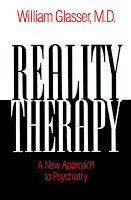
STRAY, Now Just $2.99 on Amazon Eleven Reviews of STRAY
The Jade Rabbit; $3.99 on Amazon Reviews of The Jade Rabbit

 Glasser described activities that allow a person to achieve a meditative state where the mind can “spin free.” Positive addictions are activities that take a person to this mental state, are addictive in that missing the activity results in various symptoms of withdrawal, and are positive in that they are a creative, controllable period that endows an individual with strength in the form of both mental capacity and increased neurological horsepower. These strength gains carry over into all other aspects of life. These changes are even biological, and the addictions can forge new neuronal connections in the brain to help you think more creatively. Ever wonder why you get all those grand thoughts during your run? Glasser wrote much of this book with a focus on running.
A positive addiction can be anything at all that a person chooses to do as long as it fulfills the following six criteria: (reprinted by permission of: "I think it's okay, since it's on about 5 million sites on the internet", May, 2012)(1) It is something noncompetitive that you choose to do and you can devote an hour (approximately) a day to it. (2) It is possible for you to do it easily and it doesn't take a great deal of mental effort to do it well. (3) You can do it alone or rarely with others but it does not depend upon others to do it. (4) You believe that it has some value (physical, mental, or spiritual) for you. (5) You believe that if you persist at it you will improve, but this is completely subjective -- you need to be the only one who measures that improvement. (6) The activity must have the quality that you can do it without criticizing yourself. If you can't accept yourself during this time the activity will not be addicting.My guess is that's where 95% of us runners and marathoners fit.
One concern is if the noncompetitive point of number 1 rules running out, but I think where this fits is that 'most' of your runs you are not competing. Sure, you may be training to compete, but the daily events aren't always measured against someone where there is a winner and loser. (that little running dude on your Garmin notwithstanding). Also, the hour a day doesn't' really include allowances for activities that inherently need more time spent. For example, a marathoner may 'average' an hour a day easy during training, probably more, but an ultra-marathoner, who certainly has all the positive addiction traits, might smash through this.
Number 2, to me says that you don't' have to spend a ton of time convincing your brain to go. Sure, maybe some days, but mostly it's automatic otherwise you would dread lacing up your shoes. Finally, as described in number 6, if you are overly -critical of yourself, the process will either be a form of gluttonous self-punishment and thus not a Postive Addiciton, or else you will give it up entirely.
So, take heart, tell that therapist dude or dudette you don't have an Axis 1 diagnosis, you have a Positive Addiction, and sure you may have held on to your teddy bear a little too long as a child and you got daddy issues, but running will help take care of all of that, costs less than a 50 minute therapy hour, and you get your Vitamin D. Plus, nobody ever got a cool shirt for completing a course of therapy.
Next up: a post on how many of us runners who evaluate and modify our running are probably already practicing Reality Therapy on a daily basis.

STRAY, Now Just $2.99 on Amazon Eleven Reviews of STRAY
The Jade Rabbit; $3.99 on Amazon Reviews of The Jade Rabbit
May 18, 2012
Runner Addict? Or "Behavioral Addiction Not Otherwise Specified"
Runner Addict – It’s on bumper stickers and peoples' minds everywhere.

Every wonder what really makes someone an Addict? I mean, in a professionals opinion
Addiction, of course, goes beyond the “it's something I really like to do,” “I can’t stop doing it,” “I do it so much that other people think I’m crazy,” or, “I think about doing it, dream about doing it, then I wake up and realize that I am actually doing it.”. Actually, my favorite is, "if its the first thing you reach for in the morning when you wake up, then you may be addicted."
Addiction is a word thrown around pretty loosely and casually, but there is actually a criteria for a diagnosis, decided upon by a big alphabet soup of PH.D's and MA’s and LLP’s. If you have ever seen that big maroon/purpley/redish color giant volume on someone desks called the DSM, or Diagnostic and Statistical Manual of Mental Disorders, that's where you will find it. Yes, there are zillions of diagnoses, and probably more than a few where we could all fit into. When folks say things like “I am clinically depressed” what they mean is they fit the clinical criteria as described in the DSM, which is constantly being revised like the menu at Denny's.

This manual is currently being redesigned again, and for the first time the smart psycho mumbo-jumbo folks might introduce a catch-all category — “behavioral addiction — not otherwise specified” — that some experts think would be too readily used by doctors to diagnose addictions to a whole plethora of things, including, yes, Running.
So, are we ‘clinically addicted to running’?
Let's look at how someone gets diagnosed an alcoholic, or Alcohol Dependent, as the DSM says, and see if there’s a running equivalent. There are 7 criteria listed below, three or more of which have have to simultaneously occur anytime in the same 12 month period for you to call yourself a member of the Alcoholic club. And as Groucho Marx said, I wouldn't trust any group that would have me for one of their members.
1. Tolerance – this is the alcoholic who used to barf after a pint of Vodka, that now drinks it for breakfast like it's nothing, and eventually needs to drink much more for the same effect. They can drink incredible amounts and become "ultra-drinkers." where before they could just drink a 5k worth of dixie cup shots.
The Running Equivalent : You used to get excited when you ran 3 miles, now you need to run 10 miles to get the same high, and 3 just doesn’t do it anymore. I suppose we could just call this endurance, right?
2. Withdrawal – when the alcohol is not in your body, your body revolts. Every cell begs for it, shakes and quivers and sweats, and it makes the regular flu look so tolerable. Ultimately, you take the substance to relieve these symptoms.
The Running Equivalent: when your body doesn’t have the endorphins flowing you get cranky, moody, depressed, your body craves the substance to relieve this pain and your brain starts working overtime trying to figure out how to fit in a run, maybe in the middle of the night when nobody will notice - just a little one will get me through, a little bit can't hurt. (note: this is the plight of the injured, and you may start trying all sorts of bizarre alternative aerobic options)
 3. Alcohol is taken in larger amounts or over a longer period than was intended. This is the drinker who tells themselves 'just 3 beers tonight' but drinks 30. They stop off for a beer after work but end up closing the bar. They go to the liquor store for a half-pint only but then do the half-pint shuffle back and forth for another and another.
 The Running Equivalent: You head out on a run, tell yourself you only have time for 5 miles, but then you feel better than you thought, keep going, say just one more, just one more. Or you sign up for a race, promising you won’t do another this season, but then you get a free entry, you see the t-shirt and it looks really cool, all your friends are doing it and it's only a half-marathon, plus you never been to such and such place so why not…
4. A desire or unsuccessful efforts to cut down or control alcohol use. This is the alcoholic who swears it off repeatedly, I will stop! usually announcing "I will never drink again!" quite ceremoniously. Then they go back to the substance and swear, "I will drink less, I will drink only beer, I will drink only after work, I will drink only after noon, I will never have those six shots of Jack after a 12 pack."
The Running Equivalent: You tell yourself its time to stop training so hard, time to just run for enjoyment,
don't' need to run every day, but after a few good runs you realize, "Hey, I'm rested up and ready for some age-group awards, a new PR, maybe a new distance..." and your promise to reduce your running obsession, that you previously knew was harming your qualify of life, turns to instead some new passion to run farther and faster. We can't have just a little bit, can we? Once you've had the taste, you can either abstain, or go all out. There is no moderation. Nothing Exceeds like Excess!
5. A great deal of time is spent in activities necessary to obtain alcohol, use alcohol or recover from its effects. You start drinking way before the party, you hate when the bar is closed during dinner at weddings, you buy a new pitcher of beer when your current one is halfway empty, and you have multiple hangovers that last all day rather than just the occasional January 1st flu symptoms. You have a special hangover routine you follow, and you do it quite often.
The Running Equivalent : you spend time thinking about it, planning it, it becomes the sun of your solar system, the apple in your eye, the meat of your potatoes. And where before you used to have to just ice yourself once a week, now you are sticking a pack of frozen peas on your legs every day from running so hard. Your physical therapist says "The usual?' when you walk in, your sports doctor starts booking vacations based on your copays, and the family gets used to waving goodbye to you as you run off.

6. Important social, occupational, or recreational activities are given up or reduced because of alcohol use. Almost all of your events start to revolve around alcohol. You won't go to a restaurant unless they serve drinks. You used to play softball, used to go to movies, played flag football, spent time with your kids, but all of that starts to fade. You have about sixteen words with friends games going but just can't get to any of them anymore.
The Running Equivalent: You used to go to work and then run after work. Now you skip out early and take long lunches to do a RUNch. You used to also bowl, knit, read, watch movies, breath, but now you spend your time running, reading running blogs, thinking of your last running route, folding your race event t-shirts, looking over your training log, reading every review on marathonguide.com. The softball team or book club wonders where you went. You're off running, of course, cause who has time for softball, reading, your kid's wedding, or your marriage anymore.
7. Alcohol use is continued despite knowledge of having a persistent or recurrent physical or psychological problem that is likely to have been caused or exacerbated by the alcohol..This is the alcoholic who drinks, loses his temper and explodes at his wife and his kids, cusses at the toaster, gets a few DWI’s, starts bleeding from his ulcer, misses work, gets more depressed, has the shakes, thinks about killing themselves, the whole sad laundry list, all with knowledge that this has come from drinking, yet they continue to drink , often times, actually increasing their drinking as the walls start to come crashing in around them. The guilt builds and so does the rationalizing that maybe it wasn't the alcohol starts to follow. Your brain develops all sorts of twisted thought patterns, self-deceit, and after years and years of this you turn into a major sick and suffering addict.
The Running Equivalent: This is perhaps the biggest one and single biggest predictor. You continue to run 50 miles a week even after it injures you. When you get a running injury you still run and make it worse. You continue to run the same schedule even though your family is begging for more time with you. You're losing sleep, missing work, thinking about running too much to focus, yet you still let your training plan remain the same. This is the area where running seriously detracts from your life, part of your brain can't help but notice, but the other part needs to rationalize and say "hey, I'm just hard core," or "I'll stop once I qualify for Bostons, break a 3 hour marathon, run that next turkey trot backwards, or fill in the blank ."
So, be careful, pretty soon you may find yourself with a brand new diagnosis, starting next year when the new DSM comes out, and you can say I have a " behavioral addiction - not otherwise specified " and everyone will go AWWWW, wow! That's cool, how do I get one of those?
If you don't want that diagnosis, I'll arm you with some comebacks based on William Glassers "positive addiction" theory in a post coming sometime soon.
And by the way, you can always just tape the ice pack of peas to your knees, that's what I've started to do.
STRAY, Now Just $2.99 on Amazon
Eleven Reviews of STRAY
The Jade Rabbit; $3.99 on Amazon Reviews of The Jade Rabbit