Mark Matthews's Blog, page 10
November 19, 2015
PAPERBACK GIVEAWAY ON GOODREADS
The sequel to MILK-BLOOD has been given a name. It is:
ALL SMOKE RISESMILK-BLOOD REDUX
I am giving away two paperback copies of MILK-BLOOD (Part one) on Goodreads. Ends on November 22.
.goodreadsGiveawayWidget { color: #555; font-family: georgia, serif; font-weight: normal; text-align: left; font-size: 14px; font-style: normal; background: white; } .goodreadsGiveawayWidget p { margin: 0 0 .5em !important; padding: 0; } .goodreadsGiveawayWidgetEnterLink { display: inline-block; color: #181818; background-color: #F6F6EE; border: 1px solid #9D8A78; border-radius: 3px; font-family: "Helvetica Neue", Helvetica, Arial, sans-serif; font-weight: bold; text-decoration: none; outline: none; font-size: 13px; padding: 8px 12px; } .goodreadsGiveawayWidgetEnterLink:hover { color: #181818; background-color: #F7F2ED; border: 1px solid #AFAFAF; text-decoration: none; }
Goodreads Book Giveaway Milk-Blood by Mark Matthews Giveaway ends November 22, 2015.
See the giveaway details at Goodreads. Enter Giveaway
ALL SMOKE RISESMILK-BLOOD REDUX
I am giving away two paperback copies of MILK-BLOOD (Part one) on Goodreads. Ends on November 22.
.goodreadsGiveawayWidget { color: #555; font-family: georgia, serif; font-weight: normal; text-align: left; font-size: 14px; font-style: normal; background: white; } .goodreadsGiveawayWidget p { margin: 0 0 .5em !important; padding: 0; } .goodreadsGiveawayWidgetEnterLink { display: inline-block; color: #181818; background-color: #F6F6EE; border: 1px solid #9D8A78; border-radius: 3px; font-family: "Helvetica Neue", Helvetica, Arial, sans-serif; font-weight: bold; text-decoration: none; outline: none; font-size: 13px; padding: 8px 12px; } .goodreadsGiveawayWidgetEnterLink:hover { color: #181818; background-color: #F7F2ED; border: 1px solid #AFAFAF; text-decoration: none; }
Goodreads Book Giveaway
Milk-Blood by Mark Matthews Giveaway ends November 22, 2015. See the giveaway details at Goodreads. Enter Giveaway


November 12, 2015
A HEAD FULL OF GHOSTS, MONEY FOR NOTHING, AND WHY MARJORIE NEEDS ZYPREXA
THERE WILL BE SPOILERS. I WILL SPOIL YOU
Lots of things to say about A Head Full of Ghosts, but first a disclaimer: this is not a book review. This is a nearly incoherent blog post about buying books, about reader engagement, about body guards, psychosis, family systems theory, and of course, about the book.
When deciding what to book to buy next, I am certainly guided by book reviews, but am less interested in the number of reviews as opposed to who it is doing the reviewing. When those with tastes similar to mine are pimping the product, I’m an easy customer.
Well, A Head Full of Ghost was given such praise from those whose interests aligned with mine (Stephen King said "it scared the living hell out of me") that it was a must-buy, but the price made me hesitate. It was $12.99 kindle, and $14.99 paperback. I probably tithe 10% of my paycheck to writers through buying books, but when the kindle version is over $10, I usually wait for a price drop.
So, there I am on twitter, and a writer tweeted how irritated she was when readers say they won’t pay a certain price for a book. I responded how I am one of those, and often follow a 10 dollar limit. She told me I have no idea how hard authors work, how much editors cost, and how there are a lot of expenses I wasn’t aware of, like security for the author.
Well, it’s my dream to be killed by a deranged fan, so I guess I’m lucky that way. Plus, I get my money for nothing and my chick (editors) for free.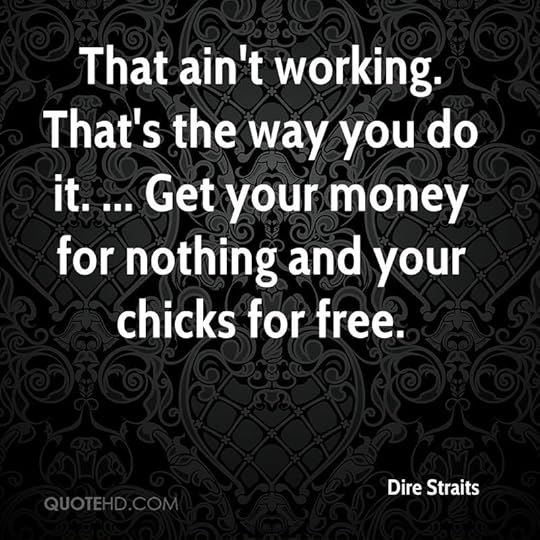
Author Paul Tremblay himself responded on twitter after I had used A Head Full of Ghosts as my example. He pointed out that he had no say in the price but then tweeted, ‘there will be a significant price drop next month.’
Now there’s a guy acting against his own best interest, perhaps. Soon enough, the book was $1.99 and a bookbub deal, and I snagged it up.
On to the book, which was excellent. A page-turner. The kind of book you say, this is the kind of book I’ve been looking for. It stays with you when you aren’t reading it, and calls you back. It is the kind of horror book that the mass audience reads, but then says, “that wasn’t really horror, it was about a family and real characters,” as if other horror is not.
Lots to be amazed at about this book, and one of them was the skill at which Tremblay got into the point of view of eight year old Merry, and then the adult version of this same character. I loved the secret pacts that siblings Merry and Marjorie had, always having their own negotiations and treaties and events with their parents fully unaware. (In my family, my siblings smoked weed in the garage and promised me a present if I didn’t tell on them). It is no coincidence that these two characters have similar names, for while they are distinctly different, they compliment each other like Tyler Durden and the narrator of Fight Club.
The book was self-reflective, examining exorcism movie culture via the voice of the blogger who pointed out parts of the story that were ripping off other exorcism books and movies, and used this to beg the reader to question if Marjorie wasn’t mimicking what she’s seen. This part was straight up fun. It was a conversation you have with someone who has geeked out just a bit more than you, but not so much that you can’t listen to them all day. Using blog posts as chapters seems overused these days, but I enjoyed the blogger in Head Full O’Ghosts more than most I spoke with.
The reality show dynamics struck me as sincerely done. Another stress to the family. Far from glamorous. Real House Demons of Orange county
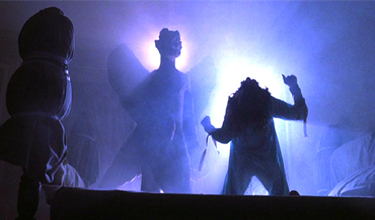
I rushed through the first 50% of the book, but then slowed down because I didn’t want it to be over so fast. There are so many ways this book could go, I tweeted out before powering the kindle off one night, and then as I lay in the dark, I thought of my own children in their rooms, and waited for the terrifying sounds that might come should a demon possess their soul. Possession stories tap into a parent's worse fear that they don’t know what the hell they are doing and are powerless to stop their children from suffering. The forces working against them are too much, and their hopes and dreams are slowly being vomited out their daughter’s mouth, (shortly after their head spins and they crawl on the wall) . The powerlessness of Regan’s mother in The Exorcist is what scared me most.

Here’s where some spoilers come in, so For God's Sake, GET OUT! Get Out!
There wasn’t nary a demon in A Head Full of Ghosts. Not really. I wanted demons. I wanted possession. Sure, I wanted twists, like maybe so and so is the one who is truly possessed, but the idea of no demons at all? Everything was faked? I ain’t hearing all that.
The book played on our expectations and then gave us a left hook, the real demons are us. Families fighting, all of them damaged goods, damaging other goods, and poisoning each other in the end. A child acting out in order to play the role as the sole focus of the family’s pain. This is straight from family systems theory.
I don’t think I am the only one to be disappointed that there was no apparent demon. I wanted to see the devil, God Damn it, not a mirror. I wanted something with horns so I could then say , “come into me, come into me!” and then jump out the window. Instead it was just human nature, and hurt people hurting people.
 There was some ambiguity regarding the question of if Marjorie was truly possessed. I was left wondering how did that drawer open? Who really poisoned the family? Was the narrator herself a bit possessed? (She was certainly wounded from it all) The book lends itself to a reread to pick up on details that I am sure I missed first time through, but upon my first read, it didn’t really keep me guessing. There was no possessed girl, just one fucked up family. Not so fucked up, however, that it might not be yours.
Perhaps we as readers are as guilty as the parents of the family for jumping to this conclusion. We also thought it was a possession. And, like Marjorie, we had A Head Full of Ghosts at the end, voices arguing with each other about what the hell is going on.
The most terrifying part of the book for me was the moment during the exorcism when Marjorie says, with a sincere child’s voice, "I'm scared and I'm cold and I want it to stop." She thought she could go through with the exorcism since her family needed her to do it --needed her to be scapegoated. needed her to be reality show fodder – but she changes her mind mid-way, asks for help, but nobody helps her. (of course not, for the devil is full of tricks). When her parents don’t come to their child’s aid due to fear of demons and allegiance to the priest’s requests, not to mention the importance of catching everything on reality TV; that moment was worth ten dollars plus change.
Not sure if the author intended it so, but I did see Marjorie as suffering from psychosis. In my day job, I deal with psychotic patients who hear derogatory voices every day. (despite mass media depicting otherwise, ‘psychotics’ are rarely killers, it is usually those with an Axis 2 diagnosis. Big difference) Marjorie seemed to be truly suffering from psychosis and needed zyprexa, grounding skills, education, and understanding more than a priest. Upon rereading some of the passages, the ‘demon’ Marjorie warning her family how they are all going to hurt, (in so many words) could as much be the words of a confrontational family therapist as from some devil.
Buy this book and tell me what you thing happened. I’d be happy to hear. You’ll probably want to talk with others about it, about what you liked and didn’t like, and that’s because it engages you so much. Chances are you will not feel indifferent and it will leave you with your own head full of ghosts. In the end, that’s the power of fiction, and this is the kind of book they make sites like goodreads for.
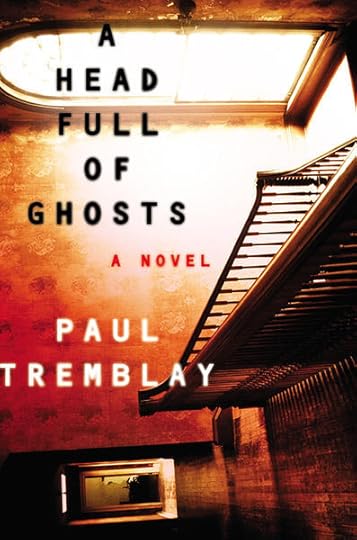 A HEAD FULL OF GHOSTS ON AMAZON
PS: if you are worried about paying full kindle price, as it's back to full price now, I'll make you a deal. email me here after you buy the book , and I will email you back a gift voucher to download MILK-BLOOD , absolutely free. (That's like money for nothing, and your MILK-BLOOD for free)
Lots of things to say about A Head Full of Ghosts, but first a disclaimer: this is not a book review. This is a nearly incoherent blog post about buying books, about reader engagement, about body guards, psychosis, family systems theory, and of course, about the book.
When deciding what to book to buy next, I am certainly guided by book reviews, but am less interested in the number of reviews as opposed to who it is doing the reviewing. When those with tastes similar to mine are pimping the product, I’m an easy customer.
Well, A Head Full of Ghost was given such praise from those whose interests aligned with mine (Stephen King said "it scared the living hell out of me") that it was a must-buy, but the price made me hesitate. It was $12.99 kindle, and $14.99 paperback. I probably tithe 10% of my paycheck to writers through buying books, but when the kindle version is over $10, I usually wait for a price drop.
So, there I am on twitter, and a writer tweeted how irritated she was when readers say they won’t pay a certain price for a book. I responded how I am one of those, and often follow a 10 dollar limit. She told me I have no idea how hard authors work, how much editors cost, and how there are a lot of expenses I wasn’t aware of, like security for the author.
Well, it’s my dream to be killed by a deranged fan, so I guess I’m lucky that way. Plus, I get my money for nothing and my chick (editors) for free.

Author Paul Tremblay himself responded on twitter after I had used A Head Full of Ghosts as my example. He pointed out that he had no say in the price but then tweeted, ‘there will be a significant price drop next month.’
Now there’s a guy acting against his own best interest, perhaps. Soon enough, the book was $1.99 and a bookbub deal, and I snagged it up.
On to the book, which was excellent. A page-turner. The kind of book you say, this is the kind of book I’ve been looking for. It stays with you when you aren’t reading it, and calls you back. It is the kind of horror book that the mass audience reads, but then says, “that wasn’t really horror, it was about a family and real characters,” as if other horror is not.
Lots to be amazed at about this book, and one of them was the skill at which Tremblay got into the point of view of eight year old Merry, and then the adult version of this same character. I loved the secret pacts that siblings Merry and Marjorie had, always having their own negotiations and treaties and events with their parents fully unaware. (In my family, my siblings smoked weed in the garage and promised me a present if I didn’t tell on them). It is no coincidence that these two characters have similar names, for while they are distinctly different, they compliment each other like Tyler Durden and the narrator of Fight Club.
The book was self-reflective, examining exorcism movie culture via the voice of the blogger who pointed out parts of the story that were ripping off other exorcism books and movies, and used this to beg the reader to question if Marjorie wasn’t mimicking what she’s seen. This part was straight up fun. It was a conversation you have with someone who has geeked out just a bit more than you, but not so much that you can’t listen to them all day. Using blog posts as chapters seems overused these days, but I enjoyed the blogger in Head Full O’Ghosts more than most I spoke with.
The reality show dynamics struck me as sincerely done. Another stress to the family. Far from glamorous. Real House Demons of Orange county
I rushed through the first 50% of the book, but then slowed down because I didn’t want it to be over so fast. There are so many ways this book could go, I tweeted out before powering the kindle off one night, and then as I lay in the dark, I thought of my own children in their rooms, and waited for the terrifying sounds that might come should a demon possess their soul. Possession stories tap into a parent's worse fear that they don’t know what the hell they are doing and are powerless to stop their children from suffering. The forces working against them are too much, and their hopes and dreams are slowly being vomited out their daughter’s mouth, (shortly after their head spins and they crawl on the wall) . The powerlessness of Regan’s mother in The Exorcist is what scared me most.

Here’s where some spoilers come in, so For God's Sake, GET OUT! Get Out!
There wasn’t nary a demon in A Head Full of Ghosts. Not really. I wanted demons. I wanted possession. Sure, I wanted twists, like maybe so and so is the one who is truly possessed, but the idea of no demons at all? Everything was faked? I ain’t hearing all that.
The book played on our expectations and then gave us a left hook, the real demons are us. Families fighting, all of them damaged goods, damaging other goods, and poisoning each other in the end. A child acting out in order to play the role as the sole focus of the family’s pain. This is straight from family systems theory.
I don’t think I am the only one to be disappointed that there was no apparent demon. I wanted to see the devil, God Damn it, not a mirror. I wanted something with horns so I could then say , “come into me, come into me!” and then jump out the window. Instead it was just human nature, and hurt people hurting people.
 There was some ambiguity regarding the question of if Marjorie was truly possessed. I was left wondering how did that drawer open? Who really poisoned the family? Was the narrator herself a bit possessed? (She was certainly wounded from it all) The book lends itself to a reread to pick up on details that I am sure I missed first time through, but upon my first read, it didn’t really keep me guessing. There was no possessed girl, just one fucked up family. Not so fucked up, however, that it might not be yours.
 Perhaps we as readers are as guilty as the parents of the family for jumping to this conclusion. We also thought it was a possession. And, like Marjorie, we had A Head Full of Ghosts at the end, voices arguing with each other about what the hell is going on.
The most terrifying part of the book for me was the moment during the exorcism when Marjorie says, with a sincere child’s voice, "I'm scared and I'm cold and I want it to stop." She thought she could go through with the exorcism since her family needed her to do it --needed her to be scapegoated. needed her to be reality show fodder – but she changes her mind mid-way, asks for help, but nobody helps her. (of course not, for the devil is full of tricks). When her parents don’t come to their child’s aid due to fear of demons and allegiance to the priest’s requests, not to mention the importance of catching everything on reality TV; that moment was worth ten dollars plus change.
Not sure if the author intended it so, but I did see Marjorie as suffering from psychosis. In my day job, I deal with psychotic patients who hear derogatory voices every day. (despite mass media depicting otherwise, ‘psychotics’ are rarely killers, it is usually those with an Axis 2 diagnosis. Big difference) Marjorie seemed to be truly suffering from psychosis and needed zyprexa, grounding skills, education, and understanding more than a priest. Upon rereading some of the passages, the ‘demon’ Marjorie warning her family how they are all going to hurt, (in so many words) could as much be the words of a confrontational family therapist as from some devil.
Buy this book and tell me what you thing happened. I’d be happy to hear. You’ll probably want to talk with others about it, about what you liked and didn’t like, and that’s because it engages you so much. Chances are you will not feel indifferent and it will leave you with your own head full of ghosts. In the end, that’s the power of fiction, and this is the kind of book they make sites like goodreads for.
A HEAD FULL OF GHOSTS ON AMAZON
PS: if you are worried about paying full kindle price, as it's back to full price now, I'll make you a deal. email me here after you buy the book , and I will email you back a gift voucher to download MILK-BLOOD , absolutely free. (That's like money for nothing, and your MILK-BLOOD for free)

November 3, 2015
THE LAST LEAF ON THE TREE
In writer heaven, Tom Waits reads my work at open mic night, a glass of bourbon in his hand, a cigarette dangling between his fingers, and a tear drop in his eye.
Here he is with a song that captures autumn and resiliency:
Here he is with a song that captures autumn and resiliency:
October 27, 2015
HALLOWEEN WEEK TREATISE ON THE SUBJECT OF HORROR
Back when I was a Professional drunk, my obnoxious term for New Years Eve was AMATEUR NIGHT. Well, maybe Halloween is HORROR AMATEUR NIGHT. Better analogy: just like everyone's Irish on St. Patrick's Day, we're all horror fans on Halloween.
Horror for me is part nostalgia. I was raised on Godzilla movies and The Ghoul and Sir Graves Ghastly in Detroit. It is my connection to my deceased brother. Childhood memories are
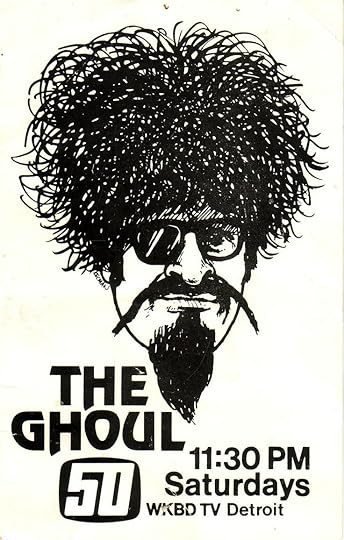 intertwined around horror movies, and this continued through my adolescence.
And now, as refined adult and self-proclaimed most interesting man alive, I still love that old time horror, and also find that horror literature has a potential to have the biggest impact of any words I'll ever read. Same goes for cinema.
Unfortunately, people will say "I dont like horror." What about movies like The Sixth Sense? Oh, that isn't horror, that has Bruce Willis.
Shaking my damn head.
Horror is considered cheap, and to label something horror runs the risk of having it dismissed as unserious art. I don't willingly shun away from the horror label (MILK-BLOOD's sub-title is "A Tale of Urban Horror") but I do think Horror is as much technique as it is genre.
I enjoy artfully done gore such as in The Evil Dead, and straight-out creative storytelling that is fun and thrilling, but I want my horror to be an extension of the intensity of life. To illuminate the universal human experience. Candy Man is one of my favorite horror movies, and not because of it's hook-for-a-hand monster, but for its story of urban isolation and betrayal. The Exorcist is about our greatest fear of being a helpless parent: that our love isn't enough, that we don't know what we are doing, that we can't really help our child while they suffer, and the forces that have possessed our children are way beyond our reach.
I loved season one of American Horror Story. The horror back then was just a metaphor for the damaged, fractured souls of a hurt family. The past hangs around like ghosts in a basement and stops them from loving one another. I eagerly watched the most recent season of American Horror Story, and had to turn it off after 45 minutes. Trite, tacky, cliche, with cheap scares. So maybe I'm not a horror fan.
The Walking Dead isn't about zombies, as you all know, but about finding a moral compass in a savage world that will eat you alive if you don't pack together. But be careful, for once you find yourself sticking to this moral center as your only guide, you'll be killed. Just ask Dale or Hershel, and now Glen. We're sad he died because we want to believe that people like him will live and thrive. (btw, the trick photography that showed Glen getting supposedly getting eaten was well done, but you are only allowed one of these fake deaths, Walking Dead). We are all infected, we are all the walking dead, and we watch the show not just for fun, but to learn about ourselves since the world it shows us isn't much different from the one we live in.
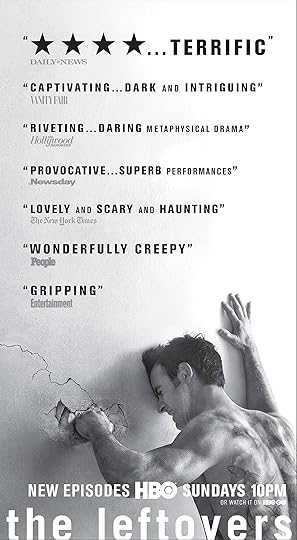 Scariest show on TV right now for me to watch is, hands down, The Leftovers. While not considered horror, the premise is certainly horrific: Millions of people suddenly disappear from the earth without a trace. How individuals, family, and society reacts in The Leftovers is nothing less than the intensity of life turned up. Pressure doesn't create character, it reveals it. While this premise may seem outlandish, it is actually reality. All of us will suddenly have a loved one disappear from our lives, usually unexpectedly. The horror is reality magnified, like good horror is. The result is a chilling portrayl of life in suburbia. One of isolation, fear, mistrust, questions of faith and human nature. One of the main characters is a middle-aged suburbia dad who has to fight to keep his family and his sanity and someone I can closely relate to (though i'm not nearly as hunky).
Perhaps the most popular piece of horror literature out right now is A Head Full of Ghosts ("Scared the living hell out of me" said Stephen King) I'm 50% done and think its genius. It's not just about a demonic possession, but about the terrifying world of a 8 year old and how moments growing up can have a permanent psychological imprint on our psyche. The author has created an incredible portrayal of those secret pacts all of us had with our siblings. I know i had mine. (We're going to smoke pot in the garage, Mark, don't tell mom and dad and we'll get you a present.) There's also a masterful 'meta-ness' about the piece of work, and a statement on multi-social media. I'm only halfway done, so this is all subject to revision, but so far it's a must read.
I don't know how much of a horror fan I am, but I know I am a fan of anything that makes me think intense thoughts and feel intense feelings. Fear is at the base of our emotions and human experiences. It's our spine. I don't write horror to scare others, I write it because I am the one that is scared. (and you know what? you are scared too, and so is the last person you talked to, and so is the next person you'll talk to) Fear is the most basic thing to overcome in order to reach the spiritual and emotional heights of being a human, so when it is done right in art, it's the best art there is.
Horror for me is part nostalgia. I was raised on Godzilla movies and The Ghoul and Sir Graves Ghastly in Detroit. It is my connection to my deceased brother. Childhood memories are
 intertwined around horror movies, and this continued through my adolescence.
And now, as refined adult and self-proclaimed most interesting man alive, I still love that old time horror, and also find that horror literature has a potential to have the biggest impact of any words I'll ever read. Same goes for cinema.
Unfortunately, people will say "I dont like horror." What about movies like The Sixth Sense? Oh, that isn't horror, that has Bruce Willis.
Shaking my damn head.
Horror is considered cheap, and to label something horror runs the risk of having it dismissed as unserious art. I don't willingly shun away from the horror label (MILK-BLOOD's sub-title is "A Tale of Urban Horror") but I do think Horror is as much technique as it is genre.
I enjoy artfully done gore such as in The Evil Dead, and straight-out creative storytelling that is fun and thrilling, but I want my horror to be an extension of the intensity of life. To illuminate the universal human experience. Candy Man is one of my favorite horror movies, and not because of it's hook-for-a-hand monster, but for its story of urban isolation and betrayal. The Exorcist is about our greatest fear of being a helpless parent: that our love isn't enough, that we don't know what we are doing, that we can't really help our child while they suffer, and the forces that have possessed our children are way beyond our reach.
I loved season one of American Horror Story. The horror back then was just a metaphor for the damaged, fractured souls of a hurt family. The past hangs around like ghosts in a basement and stops them from loving one another. I eagerly watched the most recent season of American Horror Story, and had to turn it off after 45 minutes. Trite, tacky, cliche, with cheap scares. So maybe I'm not a horror fan.
The Walking Dead isn't about zombies, as you all know, but about finding a moral compass in a savage world that will eat you alive if you don't pack together. But be careful, for once you find yourself sticking to this moral center as your only guide, you'll be killed. Just ask Dale or Hershel, and now Glen. We're sad he died because we want to believe that people like him will live and thrive. (btw, the trick photography that showed Glen getting supposedly getting eaten was well done, but you are only allowed one of these fake deaths, Walking Dead). We are all infected, we are all the walking dead, and we watch the show not just for fun, but to learn about ourselves since the world it shows us isn't much different from the one we live in.
 Scariest show on TV right now for me to watch is, hands down, The Leftovers. While not considered horror, the premise is certainly horrific: Millions of people suddenly disappear from the earth without a trace. How individuals, family, and society reacts in The Leftovers is nothing less than the intensity of life turned up. Pressure doesn't create character, it reveals it. While this premise may seem outlandish, it is actually reality. All of us will suddenly have a loved one disappear from our lives, usually unexpectedly. The horror is reality magnified, like good horror is. The result is a chilling portrayl of life in suburbia. One of isolation, fear, mistrust, questions of faith and human nature. One of the main characters is a middle-aged suburbia dad who has to fight to keep his family and his sanity and someone I can closely relate to (though i'm not nearly as hunky).
Perhaps the most popular piece of horror literature out right now is A Head Full of Ghosts ("Scared the living hell out of me" said Stephen King) I'm 50% done and think its genius. It's not just about a demonic possession, but about the terrifying world of a 8 year old and how moments growing up can have a permanent psychological imprint on our psyche. The author has created an incredible portrayal of those secret pacts all of us had with our siblings. I know i had mine. (We're going to smoke pot in the garage, Mark, don't tell mom and dad and we'll get you a present.) There's also a masterful 'meta-ness' about the piece of work, and a statement on multi-social media. I'm only halfway done, so this is all subject to revision, but so far it's a must read.
I don't know how much of a horror fan I am, but I know I am a fan of anything that makes me think intense thoughts and feel intense feelings. Fear is at the base of our emotions and human experiences. It's our spine. I don't write horror to scare others, I write it because I am the one that is scared. (and you know what? you are scared too, and so is the last person you talked to, and so is the next person you'll talk to) Fear is the most basic thing to overcome in order to reach the spiritual and emotional heights of being a human, so when it is done right in art, it's the best art there is.
October 12, 2015
I've Got A Movie Contract!! MILK-BLOOD is Being Adapted to Film (and it's getting a sequel)
I have been sitting on this news for six months. I am incredibly thrilled to officially announce:
My novel, MILK-BLOOD , along with its companion shorty story, The Damage Done , have been optioned by Monkey Knuckle Films for a full length feature film.
No April Fooling this time.
The movie producer contacted me six months ago after reading On the Lips of Children. This novel was their first interest, but after reading MILK-BLOOD, both novels were part of the discussion. Over multiple emails and a phone discussion, we discussed the nature of my novels, and the re-emergence and popularity of horror movies.
It was like emailing that potential prospect from an online dating site, things were clicking and my hopes were high.
It was a privelege when they invited me to the set of Elder Island , a movie they were filming in Michigan. I met the potential director and screenplay writers for MILK-BLOOD, and talked to many different folks on the set, including a fairly lengthy discussion with Danny Hicks about the Evil Dead series.
I left there as one leaves a first date; hoping I would get a call back and that it would lead to something more formal down the line.
Soon after this, Michigan voted to end tax incentives for films being made in-state, and I feared this could kill the deal since MILK-BLOOD is set in Detroit. Fortunately, interest remained, and two weeks ago, we worked out a contract. MILK-BLOOD is not next on their que, so a timeline is impossible to set out, but one benefit of a smaller production company is a closer relationship with those who are making the film.
Monkey Knuckle Films is a newly created, independent, smaller budget production company, but the founders have worked with famous names in horror movies including Sid Haig from The Devils Reject's and much of the cast of The Evil Dead. Elder Island included both Timothy Quill and Danny Hicks from The Evil Dead, as well as Michael Robert Brandon, The Demon in the TV series Salem. Being on the set with them was just all around good vibes.
Huge thanks to Michael Bradford and Darrin James, and the rest of the crew.
BUT WAIT, THERE'S MORE
I'm happy as hell to announce that the sequel to MILK-BLOOD will be released in early 2016. It's going to be a unique piece of work. I WANT JAWS TO DROP. Cover Reveals. Preorders. All of that is coming in 2016. You want one of 50 amazon vouchers for a free preorder? You can be the first to sign up, by writing me here.
Lastly, I've chatted with some incredible people in this land of independent publishing, and want to thank some of those who have agreed to help me make this announcement.
Huge thanks to:Cassie Carnage from Bloody Whisper (she's from Michigan!), Rich from The Horror Bookshelf (his blurb is on the cover), David Spell from The Scary Reviews , Charlene from Char's Horror Corner (David and Char have also agreed to beta-read the milk-blood sequel), Jim from Ginger Nuts of Horror. (Ginger Nuts is legendary.) Also thanks to author Latashia Figueroa , (Go read Ivy's Envy!), and author Julie Hutchings (Harpy Author by night, and expected editor of the Milk-Blood sequel by day).
Also want to thank to some who helped bring MILK-BLOOD to life including editor Richard Thomas and cover artist Kealan Patrick Burke, and John FD Taff for random acts of goodness. Last but not least: thanks to my family (wife and chiildren) for dealing with my writing obsession.
[image error]Lilly Says: "See you in the theaters."
My novel, MILK-BLOOD , along with its companion shorty story, The Damage Done , have been optioned by Monkey Knuckle Films for a full length feature film.
No April Fooling this time.
The movie producer contacted me six months ago after reading On the Lips of Children. This novel was their first interest, but after reading MILK-BLOOD, both novels were part of the discussion. Over multiple emails and a phone discussion, we discussed the nature of my novels, and the re-emergence and popularity of horror movies.
It was like emailing that potential prospect from an online dating site, things were clicking and my hopes were high.
It was a privelege when they invited me to the set of Elder Island , a movie they were filming in Michigan. I met the potential director and screenplay writers for MILK-BLOOD, and talked to many different folks on the set, including a fairly lengthy discussion with Danny Hicks about the Evil Dead series.
I left there as one leaves a first date; hoping I would get a call back and that it would lead to something more formal down the line.
Soon after this, Michigan voted to end tax incentives for films being made in-state, and I feared this could kill the deal since MILK-BLOOD is set in Detroit. Fortunately, interest remained, and two weeks ago, we worked out a contract. MILK-BLOOD is not next on their que, so a timeline is impossible to set out, but one benefit of a smaller production company is a closer relationship with those who are making the film.
Monkey Knuckle Films is a newly created, independent, smaller budget production company, but the founders have worked with famous names in horror movies including Sid Haig from The Devils Reject's and much of the cast of The Evil Dead. Elder Island included both Timothy Quill and Danny Hicks from The Evil Dead, as well as Michael Robert Brandon, The Demon in the TV series Salem. Being on the set with them was just all around good vibes.
Huge thanks to Michael Bradford and Darrin James, and the rest of the crew.

BUT WAIT, THERE'S MORE
I'm happy as hell to announce that the sequel to MILK-BLOOD will be released in early 2016. It's going to be a unique piece of work. I WANT JAWS TO DROP. Cover Reveals. Preorders. All of that is coming in 2016. You want one of 50 amazon vouchers for a free preorder? You can be the first to sign up, by writing me here.
Lastly, I've chatted with some incredible people in this land of independent publishing, and want to thank some of those who have agreed to help me make this announcement.
Huge thanks to:Cassie Carnage from Bloody Whisper (she's from Michigan!), Rich from The Horror Bookshelf (his blurb is on the cover), David Spell from The Scary Reviews , Charlene from Char's Horror Corner (David and Char have also agreed to beta-read the milk-blood sequel), Jim from Ginger Nuts of Horror. (Ginger Nuts is legendary.) Also thanks to author Latashia Figueroa , (Go read Ivy's Envy!), and author Julie Hutchings (Harpy Author by night, and expected editor of the Milk-Blood sequel by day).
Also want to thank to some who helped bring MILK-BLOOD to life including editor Richard Thomas and cover artist Kealan Patrick Burke, and John FD Taff for random acts of goodness. Last but not least: thanks to my family (wife and chiildren) for dealing with my writing obsession.
[image error]Lilly Says: "See you in the theaters."
October 9, 2015
WICKED RUN PRESS and THE MYTH OF SELF-PUBLISHING
Raising two kids rather than one is said to be easier at times, for the two can play with each. Writing two blogs at the same time, however, is not so fun, for they don't play so well. That's why I have shut down the Wicked Run Press blog and will co-opt the material here. Wicked Run Press has five published books, three short stories available on amazon, and IT"S MINE!!! ALLL MINE!!!!
Why does a writer make their own imprint?
Because I firmly believe that THERE IS NO SUCH THING AS SELF-PUBLISHING. We are all just small publishers here, of our own device.
These self-pub vs. traditional-pub wars being fought on the social media channels are nonsense (and they are being fought). It often goes something like this: traditional pub saying that self-publishers just slap together an error-riddled POS with minimal content editing and put it up on amazon soon as the first draft is complete (which is sometimes true) and self-pub folks saying traditional pub writers get taken advantage of because their press has no marketing plan except the author doing all the work, they get crappy percentages, and that their books also contain errors (which is sometimes true.)
The obvious secret about the Emperor who wears no clothes is, (besides his exposed weenie) We are all small publishers and need to act like it. That's the thing. Look at all the small presses out there, and they are often hiring the same editors, cover artists, and exploring the same marketing and advertising venues as a solid self-publisher guy. Small publishers load books up onto KDP same way as anyone. We are all fighting for space with Bookbub, all hiring editors who are mercenaries to the highest bidder, and it's all become a hybrid creation. WE ARE ALL JUST MONSTROUS INBREDS BORN OF INCESTUAL LUST. The hills indeed have eyes.
 Self-Pub or Traditional Pub? You can't tell, can you.Of course, some 'self-publishers' certainly do publish wayyyyyy before they should, don't hire the appropriate help, and soon learn their lesson (I did) but I have also seen some traditional publishers make some mistakes that baffle me (put out a paperback but zero kindle version, no advance blurbs or reviews, etc..).
The best way to become a small-publisher, and take advantage of that 70% royalty rate, is to hire the same folks small-publishers do. Do it. Look at the first page of a book you admire for the contact names, and then reach out to the editor or cover artist and ante up. Get beta readers, revise. Be patient. Wash, rinse, repeat.
Then, when you have your best work, email your manuscript to yourself with a formal submission, query letter and all. Sit back and wait 6-8 weeks. Reread. Then, if the material sucks, return a message to yourself saying, "Thank you very much for your interest, but your project isn't right for us at this time."
Do these things before publishing that 'POS' on amazon. Then, after you hear folks talk about crappy self-published works, they may turn to you and say, "oh, but we don't mean you, of course." You'll have to work hard to decide if you're flattered or offended.
Why does a writer make their own imprint?
Because I firmly believe that THERE IS NO SUCH THING AS SELF-PUBLISHING. We are all just small publishers here, of our own device.
These self-pub vs. traditional-pub wars being fought on the social media channels are nonsense (and they are being fought). It often goes something like this: traditional pub saying that self-publishers just slap together an error-riddled POS with minimal content editing and put it up on amazon soon as the first draft is complete (which is sometimes true) and self-pub folks saying traditional pub writers get taken advantage of because their press has no marketing plan except the author doing all the work, they get crappy percentages, and that their books also contain errors (which is sometimes true.)
The obvious secret about the Emperor who wears no clothes is, (besides his exposed weenie) We are all small publishers and need to act like it. That's the thing. Look at all the small presses out there, and they are often hiring the same editors, cover artists, and exploring the same marketing and advertising venues as a solid self-publisher guy. Small publishers load books up onto KDP same way as anyone. We are all fighting for space with Bookbub, all hiring editors who are mercenaries to the highest bidder, and it's all become a hybrid creation. WE ARE ALL JUST MONSTROUS INBREDS BORN OF INCESTUAL LUST. The hills indeed have eyes.
 Self-Pub or Traditional Pub? You can't tell, can you.Of course, some 'self-publishers' certainly do publish wayyyyyy before they should, don't hire the appropriate help, and soon learn their lesson (I did) but I have also seen some traditional publishers make some mistakes that baffle me (put out a paperback but zero kindle version, no advance blurbs or reviews, etc..).
 The best way to become a small-publisher, and take advantage of that 70% royalty rate, is to hire the same folks small-publishers do. Do it. Look at the first page of a book you admire for the contact names, and then reach out to the editor or cover artist and ante up. Get beta readers, revise. Be patient. Wash, rinse, repeat.
Then, when you have your best work, email your manuscript to yourself with a formal submission, query letter and all. Sit back and wait 6-8 weeks. Reread. Then, if the material sucks, return a message to yourself saying, "Thank you very much for your interest, but your project isn't right for us at this time."
Do these things before publishing that 'POS' on amazon. Then, after you hear folks talk about crappy self-published works, they may turn to you and say, "oh, but we don't mean you, of course." You'll have to work hard to decide if you're flattered or offended.
October 5, 2015
Love/Hate Relationships With my Work-In-Progress. Fear the Walking Dead. The Leftovers. And Sanity in Numbers
When I wrote MILK-BLOOD, there was a period of about 5 weeks that I was going to delete it from my hard-drive. I hated that I even started it and cursed myself for thinking I could hammer out such a concept. I didn't have (nor do I believe in) writer's block, I just couldn't get any traction on plotting.
Well, like a good marriage, I did the work, remained patient, and fell back in love with my partner all over again.
My current work-in-progress is in the loving it phase. I can only write about 30 minutes a day, but when I do, it's with excitement and enthusiasm. New ideas, new dialogue, unexpected ideas; all of these flow effortlessly. It reminds me of miles 8 through 14 of a marathon which seem to be the easiest of the whole event, and you feel like nothing can stop you. Of all the highs I've had, I cherish this one since it certainly gives a unique buzz to my brain. I'm writing some weird, twisted material. Things that make my fingertips talk back to my brain and say, "You really want me to write that? Well, okay, here goes."
Ah, but I know soon enough I'll hate the damn project. For now, I'll enjoy this portion.
I'm also trying to hammer out a title. So far, (although it has nothing to do with the book) this has the best ring to it:
All Dance Moms Must Die
*Last night was the season one finale of Fear the Walking Dead. I heard it was pretty good. Of course, if the season was pretty good, I would have been compelled to watch it live rather than DVR it. I've been feeling bored and cheated with the series. There are better zombie apocalypse premises in a zillion books on amazon, this one doesn't do it for me. It feels rushed, and cheaply made. Still, I will watch.
I didn't watch last night because I was watching the season premier of The Leftovers, perhaps my favorite HBO series outside of Game of Thrones. What an interesting show. The tone of season one, the intelligence, all the unspoken isolation and coldness and emotion it evoked without forcing you. It never tells you what to feel in any scene, just makes you feel that way by creeping into your senses.
My explanation here sucks. Let me try to explain something else.
Recently someone wrote me and thanked me for helping them through a hard time in recovery. I provided what support I could, but was like, "What? I didn't do anything." Even after he said what it was, I wasn't convinced I deserved any kind of thanks. But then it hit me: just being "out" as a recovering addict might have an impact. Just knowing there are others out there. Sure, they are in AA and NA meetings, but having those in recovery from addiction in everyday life, I think, just provides comfort.
There's sanity and safety in numbers.
Stay tuned for a blog post next week that I've been waiting 6 months to write.
Well, like a good marriage, I did the work, remained patient, and fell back in love with my partner all over again.
My current work-in-progress is in the loving it phase. I can only write about 30 minutes a day, but when I do, it's with excitement and enthusiasm. New ideas, new dialogue, unexpected ideas; all of these flow effortlessly. It reminds me of miles 8 through 14 of a marathon which seem to be the easiest of the whole event, and you feel like nothing can stop you. Of all the highs I've had, I cherish this one since it certainly gives a unique buzz to my brain. I'm writing some weird, twisted material. Things that make my fingertips talk back to my brain and say, "You really want me to write that? Well, okay, here goes."
Ah, but I know soon enough I'll hate the damn project. For now, I'll enjoy this portion.
I'm also trying to hammer out a title. So far, (although it has nothing to do with the book) this has the best ring to it:
All Dance Moms Must Die
*Last night was the season one finale of Fear the Walking Dead. I heard it was pretty good. Of course, if the season was pretty good, I would have been compelled to watch it live rather than DVR it. I've been feeling bored and cheated with the series. There are better zombie apocalypse premises in a zillion books on amazon, this one doesn't do it for me. It feels rushed, and cheaply made. Still, I will watch.
I didn't watch last night because I was watching the season premier of The Leftovers, perhaps my favorite HBO series outside of Game of Thrones. What an interesting show. The tone of season one, the intelligence, all the unspoken isolation and coldness and emotion it evoked without forcing you. It never tells you what to feel in any scene, just makes you feel that way by creeping into your senses.
My explanation here sucks. Let me try to explain something else.
Recently someone wrote me and thanked me for helping them through a hard time in recovery. I provided what support I could, but was like, "What? I didn't do anything." Even after he said what it was, I wasn't convinced I deserved any kind of thanks. But then it hit me: just being "out" as a recovering addict might have an impact. Just knowing there are others out there. Sure, they are in AA and NA meetings, but having those in recovery from addiction in everyday life, I think, just provides comfort.
There's sanity and safety in numbers.
Stay tuned for a blog post next week that I've been waiting 6 months to write.
September 23, 2015
The Reported Death of the Paperback Has Been Largely Exaggerated
Stop the digital presses.
According to this this recent New York Times article, the reported death of print books has been largely exaggerated. Ebook sales have declined, print book sales are up, and it seems some digital readers are returning to the kind of books you can read should the apocalypse ever befall upon us. (Just make sure you protect your reading glasses)

In that spirit, I have created a discount code to get MILK-BLOOD on paperback for just $6.99
Use the discount code SEGZMFPS and order MILK-BLOOD in paperback from here and the paperback version is yours for $6.99
 The first person to
message me here
with a receipt that they have ordered a paperback copy of MILK-BLOOD will also receive a paperback copy of
On the Lips of Children
mailed to their doorstep, absolutely free. No shipping and handling. (US only please)
The first person to
message me here
with a receipt that they have ordered a paperback copy of MILK-BLOOD will also receive a paperback copy of
On the Lips of Children
mailed to their doorstep, absolutely free. No shipping and handling. (US only please)
According to this this recent New York Times article, the reported death of print books has been largely exaggerated. Ebook sales have declined, print book sales are up, and it seems some digital readers are returning to the kind of books you can read should the apocalypse ever befall upon us. (Just make sure you protect your reading glasses)

In that spirit, I have created a discount code to get MILK-BLOOD on paperback for just $6.99
Use the discount code SEGZMFPS and order MILK-BLOOD in paperback from here and the paperback version is yours for $6.99
 The first person to
message me here
with a receipt that they have ordered a paperback copy of MILK-BLOOD will also receive a paperback copy of
On the Lips of Children
mailed to their doorstep, absolutely free. No shipping and handling. (US only please)
The first person to
message me here
with a receipt that they have ordered a paperback copy of MILK-BLOOD will also receive a paperback copy of
On the Lips of Children
mailed to their doorstep, absolutely free. No shipping and handling. (US only please)September 14, 2015
A Marathon Horror Story I Will Never Write
While vacationing in Northern Michigan this summer, I went walking along country roads I used to run for miles on end, only now I couldn't run them. I had to walk a snails pace.
I have woken in a strange nightmare. I have no mouth, and I must scream, is the expression that I keep thinking over and over. I am now superman stuck on a planet full of kryptonite, unable to run.
I am Maleficent with her wings cut off.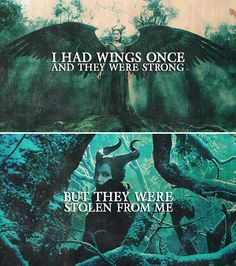
As always, I had big plans to write out the darkness in a piece of fiction. Here's how it would go:
**A story about an injured marathoner, who makes a deal with the devil to run one last race. The devil is happy to oblige, and provides health and stealth and fleet of foot. In exchange, the devil needs to be paid. In blood. As the runner lines up at the starting chute wearing a red Nike shirt, bib number 538, he knows that in order to keep going, he needs to spill the blood of another runner at each mile.
This happens, of course, and our obsessed, cunning runner does everything he can to slice into the unsuspecting thighs of other runners which pushes him towards an amazing pace. He is, in fact, the leader with one mile to go.
Only problem is, mile 25, and there is nary a runner in sight. No blood to spill to satisfy the devil, he will be unable to finish.
Ah, but behind him the pattering of footsteps. One runner has caught him, one runner whose blood will spill and take him to the end. So he turns, and there, right beside him now, the other runner with bib number 538, same red Nike shirt, same ugly mug, same salty sweat, and in fact, his doppelganger. That doesn't stop him, so he pulls his exacto knife from his belt and plunges it into the runner's neck with more fury than all the previous cuts combined. The runner falls to the ground after a crimson sprinkler spray, and our protagonist runs the last mile with his biggest split and breaks the tape and has the biggest runnorgasm of his life.
Not far behind him, his dead self lays in a pool of blood, unable to go on. Our protagonist has ultimately sacrificed his own life for one last race. Obsession, tunnel vision, regrets, lack of acceptance: all of it has killed him. The triumph of victory is temporary, but the tragedy eternal
I would write that, but, I already have enough folks calling me a psychopath, so, I shall not. Or if I do, I will save it to draft, leaving it unpublished, and certainly not blog about it.
I have woken in a strange nightmare. I have no mouth, and I must scream, is the expression that I keep thinking over and over. I am now superman stuck on a planet full of kryptonite, unable to run.
I am Maleficent with her wings cut off.

As always, I had big plans to write out the darkness in a piece of fiction. Here's how it would go:
**A story about an injured marathoner, who makes a deal with the devil to run one last race. The devil is happy to oblige, and provides health and stealth and fleet of foot. In exchange, the devil needs to be paid. In blood. As the runner lines up at the starting chute wearing a red Nike shirt, bib number 538, he knows that in order to keep going, he needs to spill the blood of another runner at each mile.
This happens, of course, and our obsessed, cunning runner does everything he can to slice into the unsuspecting thighs of other runners which pushes him towards an amazing pace. He is, in fact, the leader with one mile to go.
Only problem is, mile 25, and there is nary a runner in sight. No blood to spill to satisfy the devil, he will be unable to finish.
Ah, but behind him the pattering of footsteps. One runner has caught him, one runner whose blood will spill and take him to the end. So he turns, and there, right beside him now, the other runner with bib number 538, same red Nike shirt, same ugly mug, same salty sweat, and in fact, his doppelganger. That doesn't stop him, so he pulls his exacto knife from his belt and plunges it into the runner's neck with more fury than all the previous cuts combined. The runner falls to the ground after a crimson sprinkler spray, and our protagonist runs the last mile with his biggest split and breaks the tape and has the biggest runnorgasm of his life.
Not far behind him, his dead self lays in a pool of blood, unable to go on. Our protagonist has ultimately sacrificed his own life for one last race. Obsession, tunnel vision, regrets, lack of acceptance: all of it has killed him. The triumph of victory is temporary, but the tragedy eternal
I would write that, but, I already have enough folks calling me a psychopath, so, I shall not. Or if I do, I will save it to draft, leaving it unpublished, and certainly not blog about it.
August 6, 2015
"Redemption Isn't My Thing" An Interview With Jon Bassoff
"What realy knocks me out is a book that, when you're all done reading it, you wish the author that wrote it was a terrific friend of yours and you could call him up on the phone whenever you felt like it. That doesn't happen much, though."
The words of Holden Caulfield from The Catcher in the Rye.
Well, Holden didn’t live in the age of twitter.
After reading Jon Bassoff’s first two novels, I was salivating over his latest release, The Disassembled Man. It is the story of Frankie Avicious, a sadly tragic, sociopathic character desperate to get what he feels he's deserved. Bassoff took this character, cut off his skin, sewed me up inside, transplanted half a lobe of his brain into me skull, and sent me on my way for 300 pages or so.
I reached out to Bassoff after finishing the book, and he graciously agreed to be interrogated. Thanks to Jon for his answers which definitely enrich the experience of reading his books.
Your style has been described as Mountain Goth, and your bio reports you live in a Colorado Ghost Town. How does the mountain setting you live within guide your stories? Yeah, I spend a lot of time thinking about that sense of place. Most of the towns I’ve created have been composites of lonely, derelict places I’ve spent time in. In Corrosion, for example, the creepy mountain town was a composite of places like Ward, Gold Hill, and Leadville, all very different mountain towns, but each with a literary element I was looking for. But more so than physical terrain, the setting usually represents some void in my characters’ psyche. There is always a menacing emptiness which, eventually, is acted out by my characters.
All three of your books are different, yet they all seem to occur in the same world, within the same universe. (For example, Frankie Avicious could easily find a home in Factory Town.) How much, if any, did you mean to have your three novels connect? I’ve never had any interest in writing a series, mainly because I get bored very quickly. Also, it would be hard to spend more than a year with my characters, as you might imagine. But I do think there are common themes that run through all my novels—repressed memories, generational abuse, repetition of sins to name a few. Most of my characters have nothing to lose, and they have no meaningful sense of connection. And without that connection—anything can happen.
Your characters. Holy shit. They are so tragically humane, at times monstrous and often sadly evil. You suck readers into their brains, never step out of character, and trust the reader will realize they are dealing with an untrustworthy and deranged narrator.
The author that made me want to become a novelist was Jim Thompson. When I read The Killer Inside Me, I was stunned. I’d never read anything like it before. All of those things you said—monstrous, untrustworthy, deranged—could describe Thompson’s narrators. I knew that’s what I wanted to do. I wanted to explore the unrestrained Id. While my books aren’t traditional mysteries, I’ve always tried to challenge the reader to figure out who the hell the narrator really is. In the real world, every person is unreliable and untrustworthy. We’ve all got demons, sins, and insecurities we try to hide and repress. My narrators are no different, except that their demons and sins tend to be monumental.
Your metaphors are long, detailed, full of wit, but they also create tone, develop characters, and add to a setting that seems larger than life. How much work does this take? Do they just slip right from your mind to your fingers, or do they require lots of resizing and editing. Well, growing up I read my share of Raymond Chandler and other crime fiction writers and enjoyed those metaphors and similes—no matter how heavy handed they were. For The Disassembled Man, I wanted to play off that tradition. I wanted to make them as goofy and ridiculous as possible because our protagonist, Frankie, sees the world as nothing more than a joke. In some ways, that’s what’s so terrifying about him. So he says things like: “As tired as an anemic anaconda after eating an oversized antelope.” In my other novels, I’ve tried to be a bit more subtle. Sometimes, I think, using too many metaphors and similes makes the reader hyper aware of the author and how hard he’s trying.
What music do you listen to as you write, if any? Or, what music do you feel captures the tone of your books? Who do you want to do the movie soundtracks? I have a tough time focusing if I’m listening to music with words. So mainly, I listen to classical music. Brahms, Sibelius, Vaughn Williams, Rachmaninoff. Guys like that. When I wrote Corrosion, however, I wore out the soundtrack of Paris, Texas. Ry Cooder is just brilliant. If Corrosion indeed becomes a film, I would love to have him do the music.
Your first two novels have the characters’ dialogue inside the chapters not as quotes, but as part of the passage. It is done so well that it felt natural by page two, and sucked me deeper into the character. What was the inspiration for this? Did any editors or beta-readers try to talk you out of it? My narrators tend to be unreliable, so I decided that eliminating the quotation marks added to this sense of unreliability. Sometimes it becomes difficult to determine if the character is actually speaking or just fantasizing. Having quotes gives off a sense of reliability. This is exactly what he said. I wanted to eliminate that. Also, I thought it added a certain starkness to the page, which I was going for. But it was distracting enough for enough readers that I’ve gone away from that and I don’t know if I’ll return.
As I read about the meat factory in The Disassembled Man, I couldn’t help but think of Sinclair Lewis’s comment about his novel The Jungle; “I aimed for their hearts, and hit their stomachs.” Your book featured some of the same type of slaughter-house scenes, only you have portrayed humans seemingly as doomed as cattle at the end. Are you vegetarian? Ever been in such a slaughter-house?
I live near a lot of slaughterhouses, but I have never been inside. They make it almost impossible to see what’s actually happening, for reasons you can imagine. So I relied on plenty of research. They are obviously pretty gruesome places. Better not to think about where our food is coming from. And, yeah, the slaughterhouse was an ongoing metaphor for the tragic destiny that awaits some of the characters. And of course, there is the reality that working in a place like that must take an incredible spiritual and emotional toll. But no, I am not a vegetarian. My sensory impulses, I guess, outweigh my morality and logic.
Lewis’s comment about his novel The Jungle; “I aimed for their hearts, and hit their stomachs.” Your book featured some of the same type of slaughter-house scenes, only you have portrayed humans seemingly as doomed as cattle at the end. Are you vegetarian? Ever been in such a slaughter-house?
I live near a lot of slaughterhouses, but I have never been inside. They make it almost impossible to see what’s actually happening, for reasons you can imagine. So I relied on plenty of research. They are obviously pretty gruesome places. Better not to think about where our food is coming from. And, yeah, the slaughterhouse was an ongoing metaphor for the tragic destiny that awaits some of the characters. And of course, there is the reality that working in a place like that must take an incredible spiritual and emotional toll. But no, I am not a vegetarian. My sensory impulses, I guess, outweigh my morality and logic.
I do feel there is a deep empathy for the human condition in your novels, and a love for humanity in their tragically damaged stated, but imagine this: One hundred years from now and your work is being studied at University of Colorado. You walk into a lecture entitled: " Is God Dead in a Bassoff novel, or Just Insane? ” What kinds of things do you hear in the discussion? (things to consider, your fabulous passage: “And then silence, God hanging from a noose.”) Oh, man! That’s got to be the best question I’ve ever been asked in an interview. Please, University of Colorado, create this course! I don’t know what I’d hear in the discussion, but I do know that my characters have a very complex relationship with God. I think they badly want to believe in a power greater than them, but the landscape they inhabit seems bereft of any biblical blessings. One of my favorite quotes is from a Tom Waits song: “Don’t you know there ain’t no devil, there’s just God when he’s drunk.” So I guess my characters would lean toward God being insane as opposed to dead. I mean, if God lives inside of each of us, that would certainly give credence to the insane God theory. In some ways, however, I think they are hoping that God is dead, or that God doesn’t exist, because they know any type of judgement wouldn’t be pretty.
 Does your family read your work, do they ‘get’ you? How about your students?
My wife has tried, believe me she has. She doesn’t share my passion for depravity, though, so it’s been tough for her to wade through those pages. My parents and sister have read my stuff and they haven’t disowned me. As far as my students—that’s an interesting one. A lot of them have read the books and dug them, but it’s not so easy for them to separate the author from the narrator. After reading, I had one student tell me, “Mr. Bassoff, I will never look at you the same way.” Do they think I’m a sociopath or a murderer? It’s hard to tell. I’m just thankful that no parent has tried to get me fired.
Does your family read your work, do they ‘get’ you? How about your students?
My wife has tried, believe me she has. She doesn’t share my passion for depravity, though, so it’s been tough for her to wade through those pages. My parents and sister have read my stuff and they haven’t disowned me. As far as my students—that’s an interesting one. A lot of them have read the books and dug them, but it’s not so easy for them to separate the author from the narrator. After reading, I had one student tell me, “Mr. Bassoff, I will never look at you the same way.” Do they think I’m a sociopath or a murderer? It’s hard to tell. I’m just thankful that no parent has tried to get me fired.
All of your books seem to feature characters who can’t escape from something in their past. Any chance a character in your world can defy their past and become heroic in a traditional sense? I’ll answer this question as simply as I can. Redemption isn’t my thing.
Darkfuse is a tremendous publisher of dark fiction, and a culture onto its own with it subscription services, reader community, and what seems like a well-knit darkfuse author network . (y’all seem part of a secret society, in other words, with Gifune bringing the bagels each day and Meikle having to skype himself in from Scotland). What’s it like to work with Darkfuse? It’s the best. Shane Staley is a tremendous publisher—he’s very receptive and innovative, and is always looking for ways to promote the authors and the “brand.” Greg Gifune is such a tremendous writer in his own right, and he’s been my personal psychologist when I’ve been insecure about the stories I’ve allowed into the world. Then you’ve got Dave Thomas, a fantastic editor, and Zach McCain who is one of the best designers out there. It’s just the perfect little press. I’m tremendously proud and humbled to join all the great writers at DarkFuse.
The Incurables comes out in the fall, and I’ll be reading it soon as possible. What can I expect?
Well, the main character is based on a historical person—Walter Freeman Jr. He was the guy who revolutionized the lobotomy in the United States. He was this tragic figure—a doctor who really thought he was doing good, really thought he was saving the world. He used to drive across the country in his Lobotomobile, giving lobotomies to anybody and everybody who was suffering from mental ailments. Of course, most of his patients ended up being more damaged after the surgery. Still, until the day he died, he was convinced he had done the right thing. He used to contact all of his former patients—and there were tens of thousands of them—trying to convince himself that he had saved them. In addition to Freeman, there is a man who is convinced that his son is the Messiah, a sociopathic prostitute, and a group of machete wielding brothers. Typical Hallmark Channel stuff, you know? Actually, this one is less about evil and more about tragedy of obsessive faith. I hope you dig it.
 Check out the works of Jon Bassoff on Amazon
The words of Holden Caulfield from The Catcher in the Rye.
Well, Holden didn’t live in the age of twitter.
After reading Jon Bassoff’s first two novels, I was salivating over his latest release, The Disassembled Man. It is the story of Frankie Avicious, a sadly tragic, sociopathic character desperate to get what he feels he's deserved. Bassoff took this character, cut off his skin, sewed me up inside, transplanted half a lobe of his brain into me skull, and sent me on my way for 300 pages or so.
I reached out to Bassoff after finishing the book, and he graciously agreed to be interrogated. Thanks to Jon for his answers which definitely enrich the experience of reading his books.
Your style has been described as Mountain Goth, and your bio reports you live in a Colorado Ghost Town. How does the mountain setting you live within guide your stories? Yeah, I spend a lot of time thinking about that sense of place. Most of the towns I’ve created have been composites of lonely, derelict places I’ve spent time in. In Corrosion, for example, the creepy mountain town was a composite of places like Ward, Gold Hill, and Leadville, all very different mountain towns, but each with a literary element I was looking for. But more so than physical terrain, the setting usually represents some void in my characters’ psyche. There is always a menacing emptiness which, eventually, is acted out by my characters.
All three of your books are different, yet they all seem to occur in the same world, within the same universe. (For example, Frankie Avicious could easily find a home in Factory Town.) How much, if any, did you mean to have your three novels connect? I’ve never had any interest in writing a series, mainly because I get bored very quickly. Also, it would be hard to spend more than a year with my characters, as you might imagine. But I do think there are common themes that run through all my novels—repressed memories, generational abuse, repetition of sins to name a few. Most of my characters have nothing to lose, and they have no meaningful sense of connection. And without that connection—anything can happen.
Your characters. Holy shit. They are so tragically humane, at times monstrous and often sadly evil. You suck readers into their brains, never step out of character, and trust the reader will realize they are dealing with an untrustworthy and deranged narrator.
The author that made me want to become a novelist was Jim Thompson. When I read The Killer Inside Me, I was stunned. I’d never read anything like it before. All of those things you said—monstrous, untrustworthy, deranged—could describe Thompson’s narrators. I knew that’s what I wanted to do. I wanted to explore the unrestrained Id. While my books aren’t traditional mysteries, I’ve always tried to challenge the reader to figure out who the hell the narrator really is. In the real world, every person is unreliable and untrustworthy. We’ve all got demons, sins, and insecurities we try to hide and repress. My narrators are no different, except that their demons and sins tend to be monumental.
Your metaphors are long, detailed, full of wit, but they also create tone, develop characters, and add to a setting that seems larger than life. How much work does this take? Do they just slip right from your mind to your fingers, or do they require lots of resizing and editing. Well, growing up I read my share of Raymond Chandler and other crime fiction writers and enjoyed those metaphors and similes—no matter how heavy handed they were. For The Disassembled Man, I wanted to play off that tradition. I wanted to make them as goofy and ridiculous as possible because our protagonist, Frankie, sees the world as nothing more than a joke. In some ways, that’s what’s so terrifying about him. So he says things like: “As tired as an anemic anaconda after eating an oversized antelope.” In my other novels, I’ve tried to be a bit more subtle. Sometimes, I think, using too many metaphors and similes makes the reader hyper aware of the author and how hard he’s trying.
What music do you listen to as you write, if any? Or, what music do you feel captures the tone of your books? Who do you want to do the movie soundtracks? I have a tough time focusing if I’m listening to music with words. So mainly, I listen to classical music. Brahms, Sibelius, Vaughn Williams, Rachmaninoff. Guys like that. When I wrote Corrosion, however, I wore out the soundtrack of Paris, Texas. Ry Cooder is just brilliant. If Corrosion indeed becomes a film, I would love to have him do the music.
Your first two novels have the characters’ dialogue inside the chapters not as quotes, but as part of the passage. It is done so well that it felt natural by page two, and sucked me deeper into the character. What was the inspiration for this? Did any editors or beta-readers try to talk you out of it? My narrators tend to be unreliable, so I decided that eliminating the quotation marks added to this sense of unreliability. Sometimes it becomes difficult to determine if the character is actually speaking or just fantasizing. Having quotes gives off a sense of reliability. This is exactly what he said. I wanted to eliminate that. Also, I thought it added a certain starkness to the page, which I was going for. But it was distracting enough for enough readers that I’ve gone away from that and I don’t know if I’ll return.
As I read about the meat factory in The Disassembled Man, I couldn’t help but think of Sinclair
Lewis’s comment about his novel The Jungle; “I aimed for their hearts, and hit their stomachs.” Your book featured some of the same type of slaughter-house scenes, only you have portrayed humans seemingly as doomed as cattle at the end. Are you vegetarian? Ever been in such a slaughter-house?
I live near a lot of slaughterhouses, but I have never been inside. They make it almost impossible to see what’s actually happening, for reasons you can imagine. So I relied on plenty of research. They are obviously pretty gruesome places. Better not to think about where our food is coming from. And, yeah, the slaughterhouse was an ongoing metaphor for the tragic destiny that awaits some of the characters. And of course, there is the reality that working in a place like that must take an incredible spiritual and emotional toll. But no, I am not a vegetarian. My sensory impulses, I guess, outweigh my morality and logic.
I do feel there is a deep empathy for the human condition in your novels, and a love for humanity in their tragically damaged stated, but imagine this: One hundred years from now and your work is being studied at University of Colorado. You walk into a lecture entitled: " Is God Dead in a Bassoff novel, or Just Insane? ” What kinds of things do you hear in the discussion? (things to consider, your fabulous passage: “And then silence, God hanging from a noose.”) Oh, man! That’s got to be the best question I’ve ever been asked in an interview. Please, University of Colorado, create this course! I don’t know what I’d hear in the discussion, but I do know that my characters have a very complex relationship with God. I think they badly want to believe in a power greater than them, but the landscape they inhabit seems bereft of any biblical blessings. One of my favorite quotes is from a Tom Waits song: “Don’t you know there ain’t no devil, there’s just God when he’s drunk.” So I guess my characters would lean toward God being insane as opposed to dead. I mean, if God lives inside of each of us, that would certainly give credence to the insane God theory. In some ways, however, I think they are hoping that God is dead, or that God doesn’t exist, because they know any type of judgement wouldn’t be pretty.
Does your family read your work, do they ‘get’ you? How about your students?
My wife has tried, believe me she has. She doesn’t share my passion for depravity, though, so it’s been tough for her to wade through those pages. My parents and sister have read my stuff and they haven’t disowned me. As far as my students—that’s an interesting one. A lot of them have read the books and dug them, but it’s not so easy for them to separate the author from the narrator. After reading, I had one student tell me, “Mr. Bassoff, I will never look at you the same way.” Do they think I’m a sociopath or a murderer? It’s hard to tell. I’m just thankful that no parent has tried to get me fired.
All of your books seem to feature characters who can’t escape from something in their past. Any chance a character in your world can defy their past and become heroic in a traditional sense? I’ll answer this question as simply as I can. Redemption isn’t my thing.
Darkfuse is a tremendous publisher of dark fiction, and a culture onto its own with it subscription services, reader community, and what seems like a well-knit darkfuse author network . (y’all seem part of a secret society, in other words, with Gifune bringing the bagels each day and Meikle having to skype himself in from Scotland). What’s it like to work with Darkfuse? It’s the best. Shane Staley is a tremendous publisher—he’s very receptive and innovative, and is always looking for ways to promote the authors and the “brand.” Greg Gifune is such a tremendous writer in his own right, and he’s been my personal psychologist when I’ve been insecure about the stories I’ve allowed into the world. Then you’ve got Dave Thomas, a fantastic editor, and Zach McCain who is one of the best designers out there. It’s just the perfect little press. I’m tremendously proud and humbled to join all the great writers at DarkFuse.
The Incurables comes out in the fall, and I’ll be reading it soon as possible. What can I expect?
Well, the main character is based on a historical person—Walter Freeman Jr. He was the guy who revolutionized the lobotomy in the United States. He was this tragic figure—a doctor who really thought he was doing good, really thought he was saving the world. He used to drive across the country in his Lobotomobile, giving lobotomies to anybody and everybody who was suffering from mental ailments. Of course, most of his patients ended up being more damaged after the surgery. Still, until the day he died, he was convinced he had done the right thing. He used to contact all of his former patients—and there were tens of thousands of them—trying to convince himself that he had saved them. In addition to Freeman, there is a man who is convinced that his son is the Messiah, a sociopathic prostitute, and a group of machete wielding brothers. Typical Hallmark Channel stuff, you know? Actually, this one is less about evil and more about tragedy of obsessive faith. I hope you dig it.
Check out the works of Jon Bassoff on Amazon