Eric C. Sheninger's Blog, page 59
May 12, 2014
Inquiry vs. Memorization
Memorization often gets in the way of learning and yet the practice continues unobstructed in schools. Fortunately the sciences provide schools and educators with many natural opportunities to move away from the boring, meaningless task of memorizing facts and information to a more constructivist approach associated with inquiry-based learning. Recently Ms Chowdhury’s Consumer Chemistry classes conducted testing on various consumer products as related to chemistry topics. While the students were learning about acids and bases, they had played with a simulation where their task was to create solutions of different pH. They also worked with another simulation that demonstrated acids and bases at a molecular level.
 Image credit: http://adaptedinnovation.blogspot.com...
Based on their learning from the two simulations, with the facilitation of Ms Chowdhury, the students discussed about a design for testing different brands of antacids. They knew they needed a sample acid and a pH indicator. The students were given lemon juice as acid, grape juice as base and they had three brands of antacid (Equate regular strength, Equate maximum strength, and Rolaids). The students used the idea that the grape juice (pH indicator) will change color when enough of the antacid has been added to neutralize the acid. They recorded the number of drops used from each brand of antacid, and decided on Rolaids being the best among the three based on their results.
Ms Chowdhury believes that experiments such as this helps students contextualize their learning at a more practical level rather than mere memorization of what acids and bases are. The students also thoroughly enjoy any hands on activities. Regardless of the level of the course high school students today need to think. Memorization of facts does now allow for students to truly grasp concepts, let alone apply and then demonstrate mastery. Science is primed for inquiry-based learning, but school need to do more by promoting this pedagogical technique across all content areas.
 Image credit: http://adaptedinnovation.blogspot.com...
Based on their learning from the two simulations, with the facilitation of Ms Chowdhury, the students discussed about a design for testing different brands of antacids. They knew they needed a sample acid and a pH indicator. The students were given lemon juice as acid, grape juice as base and they had three brands of antacid (Equate regular strength, Equate maximum strength, and Rolaids). The students used the idea that the grape juice (pH indicator) will change color when enough of the antacid has been added to neutralize the acid. They recorded the number of drops used from each brand of antacid, and decided on Rolaids being the best among the three based on their results.
Ms Chowdhury believes that experiments such as this helps students contextualize their learning at a more practical level rather than mere memorization of what acids and bases are. The students also thoroughly enjoy any hands on activities. Regardless of the level of the course high school students today need to think. Memorization of facts does now allow for students to truly grasp concepts, let alone apply and then demonstrate mastery. Science is primed for inquiry-based learning, but school need to do more by promoting this pedagogical technique across all content areas.


May 5, 2014
Students Explore Space in the Palm of Their Hands
Towards the end of March and throughout April, Mrs. Moutafis' Science & Society class at New Milford High School studied Space Exploration. Students created a timeline of the key events that helped shape space exploration, answered questions using the Padlet website, and created travel brochures of a planet of their choosing within our solar system - using the NASA website and additional resources to obtain information from. They compared their chosen planet in the solar system to Earth, and described what it would be like to vacation there. The students listed components necessary for comfortable living, tourist attractions, and possible excursions based on the terrain of their planet or neighboring satellite.
 Image credit: https://play.google.com/store/apps/de...
Using star manipulatives, the class created their own zodiac sign and the Big Dipper. They also downloaded SkyMap (or similar programs specific to their app market) and roamed the classroom to find where their zodiac sign was during the day. They also commented on other interesting features they discovered using the app, such as the location of satellites and other planets. The class was also introduced to the Stellarium program. To begin, the class researched the longitude and latitude of New Milford, NJ. They took this information and set the default location of the program to their local sky. Students were able to navigate through the program to identify famous constellations in the night sky, their own zodiac signs, and planets visible to us at specific times. After locating them using the program guidelines, they removed them to be able to locate them without any help. Once they located them in the New Milford sky, they selected their own location in the southern hemisphere to compare it to our night sky, and also find specific constellations.
They also researched the history of their zodiac sign, and the story unique to their specific sign. As an added component to the lesson, the class created their own astrolabe and used them to navigate in the building, just as explorers did as they navigated the seas to discover new worlds. They used it in a modified way, where they instead looked to the time and location of a constellation to determine the direction to turn in the hallway. After they found the location, they scanned a QR code located there to find a famous explorer that used the astrolabe.
Image credit: https://play.google.com/store/apps/de...Using star manipulatives, the class created their own zodiac sign and the Big Dipper. They also downloaded SkyMap (or similar programs specific to their app market) and roamed the classroom to find where their zodiac sign was during the day. They also commented on other interesting features they discovered using the app, such as the location of satellites and other planets. The class was also introduced to the Stellarium program. To begin, the class researched the longitude and latitude of New Milford, NJ. They took this information and set the default location of the program to their local sky. Students were able to navigate through the program to identify famous constellations in the night sky, their own zodiac signs, and planets visible to us at specific times. After locating them using the program guidelines, they removed them to be able to locate them without any help. Once they located them in the New Milford sky, they selected their own location in the southern hemisphere to compare it to our night sky, and also find specific constellations.
They also researched the history of their zodiac sign, and the story unique to their specific sign. As an added component to the lesson, the class created their own astrolabe and used them to navigate in the building, just as explorers did as they navigated the seas to discover new worlds. They used it in a modified way, where they instead looked to the time and location of a constellation to determine the direction to turn in the hallway. After they found the location, they scanned a QR code located there to find a famous explorer that used the astrolabe.
May 1, 2014
Childhood is Expendable to Some Education Reformers
The following piece is cross-posted at the Huffington Post.
When I reflect on my childhood nothing but fond memories come to mind. Growing up in a rural part of western New Jersey sure had its benefits in the 1980's. Upon returning home from White Township Consolidated School (K-8) my brothers and I would complete our assigned homework in well less than an hour, which was reasonable in my opinion. More often than not as soon as we finished we whisked out the door of our house to get outside regardless of the weather. The next couple of hours before and after dinner were then spent playing with friends outdoors, exploring, riding bikes, fishing, shooting hoops, or hiking. If by some chance the weather were really bad we would then play with toys, tinker with Legos, or challenge each other to the coolest games of our young generation on the Atari and later Nintendo. For good measure some time was also spent on the Commodore 64 and Apple IIe computers.
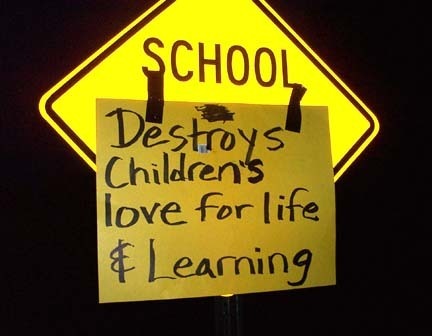 Image credit: http://www.laurieacouture.com/wp-cont...
The childhood years were some of the best of my life as they should have been. Three was enough time dedicated to learning during my elementary years, but also ample time for play, exploration, competition, and leisure. These experiences definitely helped mold me into the adult I have become today. School complimented my activities at home as education was structured in a way that focused on experiential learning, play, performance, and building self-esteem. I learned and acquired array of skills that prepared me not only for college and careers, but also life. I can't even begin to imagine what my life would have been then or become today if these experiences had been ripped from me. Unfortunately this has now become reality for our youngest students in 2014 and the near future in the name of education reform.
Education reform is destroying childhood as we know it at both home and school. As a parent of two elementary students (first and third grade) in Staten Island, NY, I witness daily the negative impacts that Common Core and standardized testing, under the guise of education reform, are having on them. They come home each day and spend hours on homework that makes little sense to them and absolutely no sense in some cases to us, especially in math. Their love for learning is squashed as more of an emphasis has been placed on instructional scripts aligned to the Common Core, test prep, and homework designed to make them relive the torture they just went through in school. I do not fault the school, principal, or teachers for the wretched environment that my kids are exposed to each day, but rather the reformers who are making them hate school with a passion. Shouldn't we be instilling a passion for learning in each and every child?
Education reform will be the demise of our once great educational system if politicians and other stakeholders do not get a grip soon. A recent story from an elementary school in Long Island, NY should make the dire predicament we are in very clear. Just the title of the article alone painfully illustrates the monumental mistakes that are being made for the sake of "improving" education - Kindergarten show cancelled so kids can study to be 'college ready'. Here is an excerpt that should make every parent and educator's blood boil:
This post provides me with a stark reminder that current education reform has absolutely nothing to do with authentic learning, success, and student achievement. It has become a financial pipeline to line the coffers of anyone associated with Common Core, standardized testing conglomerates, and test prep. The pressure put on teachers to prepare young students for college and careers is utterly ridiculous and should be replaced with inspiring them to explore and discover their learning passions. After all, this is what our system was based on for years and success followed. As a society we cannot stand idly by while crucial foundational elements for learning such as play, creativity (driven by students), discovering one's identity, and the showcasing of non-tested skills are eradicated from elementary schools. If we do I fear that our education system will hit rock bottom in a few mere years and we will have no one to blame but ourselves for not acting.
When I reflect on my childhood nothing but fond memories come to mind. Growing up in a rural part of western New Jersey sure had its benefits in the 1980's. Upon returning home from White Township Consolidated School (K-8) my brothers and I would complete our assigned homework in well less than an hour, which was reasonable in my opinion. More often than not as soon as we finished we whisked out the door of our house to get outside regardless of the weather. The next couple of hours before and after dinner were then spent playing with friends outdoors, exploring, riding bikes, fishing, shooting hoops, or hiking. If by some chance the weather were really bad we would then play with toys, tinker with Legos, or challenge each other to the coolest games of our young generation on the Atari and later Nintendo. For good measure some time was also spent on the Commodore 64 and Apple IIe computers.
 Image credit: http://www.laurieacouture.com/wp-cont...
The childhood years were some of the best of my life as they should have been. Three was enough time dedicated to learning during my elementary years, but also ample time for play, exploration, competition, and leisure. These experiences definitely helped mold me into the adult I have become today. School complimented my activities at home as education was structured in a way that focused on experiential learning, play, performance, and building self-esteem. I learned and acquired array of skills that prepared me not only for college and careers, but also life. I can't even begin to imagine what my life would have been then or become today if these experiences had been ripped from me. Unfortunately this has now become reality for our youngest students in 2014 and the near future in the name of education reform.
Education reform is destroying childhood as we know it at both home and school. As a parent of two elementary students (first and third grade) in Staten Island, NY, I witness daily the negative impacts that Common Core and standardized testing, under the guise of education reform, are having on them. They come home each day and spend hours on homework that makes little sense to them and absolutely no sense in some cases to us, especially in math. Their love for learning is squashed as more of an emphasis has been placed on instructional scripts aligned to the Common Core, test prep, and homework designed to make them relive the torture they just went through in school. I do not fault the school, principal, or teachers for the wretched environment that my kids are exposed to each day, but rather the reformers who are making them hate school with a passion. Shouldn't we be instilling a passion for learning in each and every child?
Education reform will be the demise of our once great educational system if politicians and other stakeholders do not get a grip soon. A recent story from an elementary school in Long Island, NY should make the dire predicament we are in very clear. Just the title of the article alone painfully illustrates the monumental mistakes that are being made for the sake of "improving" education - Kindergarten show cancelled so kids can study to be 'college ready'. Here is an excerpt that should make every parent and educator's blood boil:
A Long Island school has canceled its traditional end-of-year kindergarten show -- saying the children can't afford to take time off from getting themselves "college and career'' ready. "The reason for eliminating the Kindergarten show is simple," reads a letter sent by the principal at Harley Avenue Primary School in Elwood, Suffolk County, to parents last week. "We are responsible for preparing children for college and career with valuable lifelong skills and know that we can best do that by having them become strong readers, writers, coworkers and problem solvers."Are you kidding me? How can anyone with a good conscious do this to little kids? It is these experiences that make learning relevant, meaningful, and fun. The fact that schools feel they even need to prepare elementary students to be college and career ready is appalling in my opinion. This is not even the worst of it though. Other priceless elementary experiences that define the childhood years are being dramatically cut such as the arts and language programs, recess, and extracurricular activities. Developmentally young students need these experiences, but they become quite expendable as only Common Core aligned math and language arts associated activities will create a college and career ready student down the line. What is being done to them in essence is robbing them of some of the most important, life-defining moments of their long lives that will provide the foundation for future successes.
This post provides me with a stark reminder that current education reform has absolutely nothing to do with authentic learning, success, and student achievement. It has become a financial pipeline to line the coffers of anyone associated with Common Core, standardized testing conglomerates, and test prep. The pressure put on teachers to prepare young students for college and careers is utterly ridiculous and should be replaced with inspiring them to explore and discover their learning passions. After all, this is what our system was based on for years and success followed. As a society we cannot stand idly by while crucial foundational elements for learning such as play, creativity (driven by students), discovering one's identity, and the showcasing of non-tested skills are eradicated from elementary schools. If we do I fear that our education system will hit rock bottom in a few mere years and we will have no one to blame but ourselves for not acting.
April 24, 2014
Simple Yet Effective
Social media provides educators with a wealth of tools that can be used to engage students and enhance learning. Unfortunately many schools are either too focused on sustaining their testing factories, implementing an array of top-down mandates, or are influenced by the perception and stigma that accompanies social media tools. Since this is an educational technology post I will only focus on the latter. Many districts, schools, and administrators are convinced that social media has absolutely no place in education, even though the whole entire world using it for some reason or another.
 Image credit: http://www.elephantcreative.co.uk/201...
Even if they might see some value they are still convinced that it cannot be used safely in schools as it is a violation of the Child Internet Protection Act (CIPA), goes against the Family Educational Rights and Privacy Act (FERPA), promote cheating, and are a catalyst for cyberbullying. Thankfully many schools have realized that social media can be used safely and effectively in schools. In my latest book (Digital Leadership: Changing Paradigms For Changing Times) I debunk the many myths that surround social media use in schools while providing numerous examples of educators who consistently integrate it to authentically engage learners of all ages. The are also many resources that can be utilized immediately to usher in changes leading to a transformation of school culture that embraces the value of these free tools. At New Milford High School we have been integrating just about every social media tool under the sun for the past five years and the sky has not come falling down.
Case in point. In Mrs. Luzuriaga’s Sociology class, students were working on understanding the roles and functions of groups as well as how to read facial expressions, gestures and body language. Using a popular social networking tool, Instagram, students worked in group of six to eight people to create and develop a series of eight photographs that represented the group’s personalities as well as significant issues and themes occurring in both society and the life of a teenager today. Once each group was completed, the rest of the class had to analyze the images and come to a conclusion as to what message or theme was trying to be conveyed. The experiment proved an interesting experience for all.
Simple, yet effective. When will others get on board?
 Image credit: http://www.elephantcreative.co.uk/201...
Even if they might see some value they are still convinced that it cannot be used safely in schools as it is a violation of the Child Internet Protection Act (CIPA), goes against the Family Educational Rights and Privacy Act (FERPA), promote cheating, and are a catalyst for cyberbullying. Thankfully many schools have realized that social media can be used safely and effectively in schools. In my latest book (Digital Leadership: Changing Paradigms For Changing Times) I debunk the many myths that surround social media use in schools while providing numerous examples of educators who consistently integrate it to authentically engage learners of all ages. The are also many resources that can be utilized immediately to usher in changes leading to a transformation of school culture that embraces the value of these free tools. At New Milford High School we have been integrating just about every social media tool under the sun for the past five years and the sky has not come falling down.
Case in point. In Mrs. Luzuriaga’s Sociology class, students were working on understanding the roles and functions of groups as well as how to read facial expressions, gestures and body language. Using a popular social networking tool, Instagram, students worked in group of six to eight people to create and develop a series of eight photographs that represented the group’s personalities as well as significant issues and themes occurring in both society and the life of a teenager today. Once each group was completed, the rest of the class had to analyze the images and come to a conclusion as to what message or theme was trying to be conveyed. The experiment proved an interesting experience for all.
Simple, yet effective. When will others get on board?
April 18, 2014
Instilling an Early Passion for History
At New Milford High School we are always encouraging collaborations resulting in interdisciplinary projects. Recently students from Mr. Manzo’s 9th Grade Honors World History classes were assigned to create children’s books about the rise and fall of Napoleon Bonaparte in France during the late 18th and early 19th centuries. Students were to incorporate all of the associated subject matter, vocabulary, and major concepts whilst creating a narrative that a small child could not only understand but also be entertained by. Mr. Manzo’s students went above and beyond all expectations of the assignment by creating themes that were not only appealing to children but also an accurate reflection on the rise and fall of Napoleon. Some of the titles include “The Fall of the French Freezer”, “The Lessons Learned by Tadpoleon” “Nappy’s Adventures”, “Napolarbear: A Cold Tale”, “Eat or Be Eaten” (Cat and Mouse Theme) and several more.
 Photograph: Archivo Iconografico
A major component of the assignment was for the students to present these stories to the children involved in the Early Childhood Development program at NMHS. Mrs. Beiner, who is in charge of the ECD program agreed to allow the children in her program to be read to by Mr. Manzo’s students. This took place in the high school cafeteria where stations were set up for the students to read the books to the children. The excitement of the children was contagious not only to Mr. Manzo and Mrs. Beiner, but also to me. All in all, the presentations were a success for all those who participated and/or were involved. Moving forward, they may be attempting to put some of these rise and fall of Napoleon Bonaparte children’s books into a digital format in order to reach more children in New Jersey, the U.S. and maybe even the world. His ultimate goal is to get students excited about history at an early age.
 Photograph: Archivo Iconografico
A major component of the assignment was for the students to present these stories to the children involved in the Early Childhood Development program at NMHS. Mrs. Beiner, who is in charge of the ECD program agreed to allow the children in her program to be read to by Mr. Manzo’s students. This took place in the high school cafeteria where stations were set up for the students to read the books to the children. The excitement of the children was contagious not only to Mr. Manzo and Mrs. Beiner, but also to me. All in all, the presentations were a success for all those who participated and/or were involved. Moving forward, they may be attempting to put some of these rise and fall of Napoleon Bonaparte children’s books into a digital format in order to reach more children in New Jersey, the U.S. and maybe even the world. His ultimate goal is to get students excited about history at an early age.
April 14, 2014
Using EdTech to Enhance Science Learning
Miss Ginter’s Biology students at New Milford High School have been using Padlet as a forum to post answers to teacher created questions, as well as student created questions. A KWL chart on Mitosis was created in class, and the questions that students wanted answers to were posted on the Padlet. Students have the opportunity to post their response with the approval of the teacher. They are also able to pose their own questions on Padlet allowing their peers or teacher answer them. Students are also able to refer back to the Padlet to review for a test/quiz.
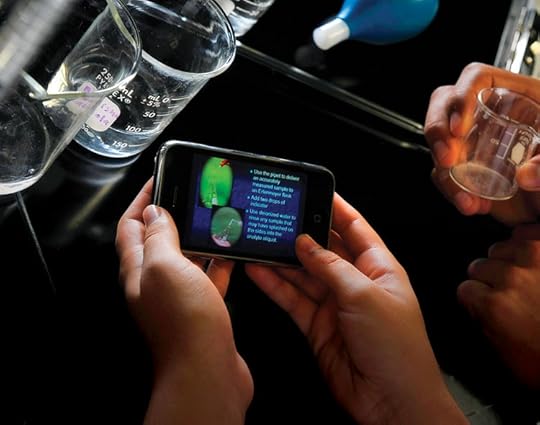 Image credit: http://www.educause.edu/visuals/share...
As an extension of Mitosis, students used the chromosome bead kits and the Stop Motion Video app used by Mr. Devereaux’s class and created a Stop Motion Video, which is a series of pictures taken that play back as a video clip. The students aligned the chromosomes appropriately for each stage and labeled the stages accordingly. These videos will were then uploaded to Vimeo and shared on Twitter using the handle @MrsMoutafis. Below are some of the student stop motion videos:
Example 1Example 2Example 3
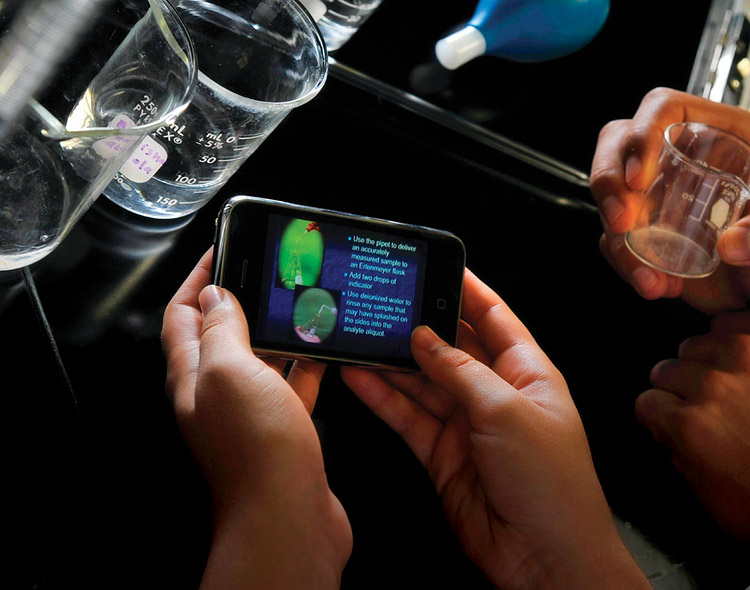 Image credit: http://www.educause.edu/visuals/share...
As an extension of Mitosis, students used the chromosome bead kits and the Stop Motion Video app used by Mr. Devereaux’s class and created a Stop Motion Video, which is a series of pictures taken that play back as a video clip. The students aligned the chromosomes appropriately for each stage and labeled the stages accordingly. These videos will were then uploaded to Vimeo and shared on Twitter using the handle @MrsMoutafis. Below are some of the student stop motion videos:
Example 1Example 2Example 3
April 10, 2014
Bucking the Trend
The following is a guest post by Michael Warren, a Social Studies Teacher at Hasbrouck Heights High School in NJ. Michael recently visited New Milford HS and reflected on hist visit below. You can follow him on Twitter at @mrwarren29.
Over the past several years in both politics and education, the word “change” has created a buzz that incites people to believe that something big is about to occur or that there will be a dramatic shift from the status quo. This is not necessarily the case in all matters and in particular the matter of education. In a world where politics and education are colliding more than ever, there is a desperate sense of hopping onto the latest trend or buzzword from educational companies and authors that will fix all of our educational problems. This is not the solution. There is another way, I’ve seen it.
 Image credit: http://www.softwarepromotions.com/new...
Recently, I had the opportunity to visit New Milford High School in Bergen County, NJ and spent a couple of hours meeting and touring the school with Principal Eric Sheninger. Like anyone who has followed this rockstar principal on social media (and he knows he’s a rockstar despite his humble protests) there is something happening at NMHS. As an eager teacher and someone who is looking for a renewed sense of purpose in a field that is becoming mind-crushingly data driven, I expected to walk away with the answers to the big questions in education. That did not happen. Mr. Sheninger couldn’t provide me with any of those answers. Instead, he showed me something else. Something I found much more important and revealing of the type of school he runs.
Oh, don’t get me wrong, Mr. Sheninger (and the team that works with him) has enacted a laundry list of changes at New Milford since he became principal several years ago in 2007. However, these changes were not spurred by the need to develop his students into test taking machines or to succumb to test prep ad nauseum and to strip away choices for his students in order to continuously meet the demand that our state’s politicians keep piling onto our schools. He centered his changes around a culture. This culture can be seen as soon as you set foot on campus. It’s intangible yet completely surrounds you. There is a focus on responsibility, engagement, and understanding that learning can take shape in an insurmountable number of forms.
Mr. Sheninger explained to me that these changes to the school culture happened slowly over time and that if a district can be consistent with carrying out these changes, all stakeholders from the highest level of administration to the parents in the community will see the payoff in a well rounded and educated student. Mr. Sheninger is on a mission to turn every piece of space in his school into an area of learning by investing funds and donations to repurpose old/outdated space. He is also calling upon the students to become a “maker” and create the space they want using their own abilities and talents by letting them be a major stakeholder in the school. After all, it is all about them, right?
Needless to say, I walked away with a few pages of notes from my visit. I could list an incredible amount of things I saw that day (BYOD for instance) but if you are reading this blog than you probably already know what NMHS is up to. While most of us deal with a bureaucratic mess of redundancies when it comes to developing educational policy, New Milford is bucking the trend of reactive policies that come from a changing political landscape. It is well on their way to becoming a center for true college and career readiness by doing just the exact opposite.
Over the past several years in both politics and education, the word “change” has created a buzz that incites people to believe that something big is about to occur or that there will be a dramatic shift from the status quo. This is not necessarily the case in all matters and in particular the matter of education. In a world where politics and education are colliding more than ever, there is a desperate sense of hopping onto the latest trend or buzzword from educational companies and authors that will fix all of our educational problems. This is not the solution. There is another way, I’ve seen it.
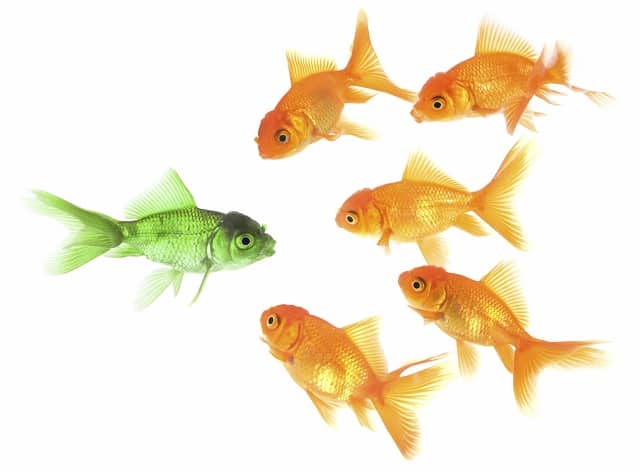 Image credit: http://www.softwarepromotions.com/new...
Recently, I had the opportunity to visit New Milford High School in Bergen County, NJ and spent a couple of hours meeting and touring the school with Principal Eric Sheninger. Like anyone who has followed this rockstar principal on social media (and he knows he’s a rockstar despite his humble protests) there is something happening at NMHS. As an eager teacher and someone who is looking for a renewed sense of purpose in a field that is becoming mind-crushingly data driven, I expected to walk away with the answers to the big questions in education. That did not happen. Mr. Sheninger couldn’t provide me with any of those answers. Instead, he showed me something else. Something I found much more important and revealing of the type of school he runs.
Oh, don’t get me wrong, Mr. Sheninger (and the team that works with him) has enacted a laundry list of changes at New Milford since he became principal several years ago in 2007. However, these changes were not spurred by the need to develop his students into test taking machines or to succumb to test prep ad nauseum and to strip away choices for his students in order to continuously meet the demand that our state’s politicians keep piling onto our schools. He centered his changes around a culture. This culture can be seen as soon as you set foot on campus. It’s intangible yet completely surrounds you. There is a focus on responsibility, engagement, and understanding that learning can take shape in an insurmountable number of forms.
Mr. Sheninger explained to me that these changes to the school culture happened slowly over time and that if a district can be consistent with carrying out these changes, all stakeholders from the highest level of administration to the parents in the community will see the payoff in a well rounded and educated student. Mr. Sheninger is on a mission to turn every piece of space in his school into an area of learning by investing funds and donations to repurpose old/outdated space. He is also calling upon the students to become a “maker” and create the space they want using their own abilities and talents by letting them be a major stakeholder in the school. After all, it is all about them, right?
Needless to say, I walked away with a few pages of notes from my visit. I could list an incredible amount of things I saw that day (BYOD for instance) but if you are reading this blog than you probably already know what NMHS is up to. While most of us deal with a bureaucratic mess of redundancies when it comes to developing educational policy, New Milford is bucking the trend of reactive policies that come from a changing political landscape. It is well on their way to becoming a center for true college and career readiness by doing just the exact opposite.
April 6, 2014
Inquiry-Based, Constructivist Learning in Physics
Every year New Milford High School teacher Tahreen Chowdhury teaches Newton’s laws of physics and most of the students are able to grasp the first and the second law. However, Newton’s third law is the one that is most contrary to their everyday intuition. This law, as the students know it, is “every action has an equal and opposite reaction”. The students have learned this concept since their first science classes, but are puzzled by this concept when they see small cars being demolished by bigger SUV’s.
 Image credit: http://nancyrubin.files.wordpress.com...
So this year, Mrs. Chowdhury decided to take a different approach to teaching this law in physics. The lesson started with Mrs. Chowdhury having two students pull on each other with spring scales. She asked the students to pull so that the two spring scales read different forces. The students were unable to do so, each time one pulled with a certain force, the other spring scale read the same force. Normally, students agree when Mrs. Chowdhury says that pulling with the spring scales attached and pulling hand to hand are the same except spring scales just reads the strength of the pull. This year, the students completely disagreed and said that using the spring scales make the forces the same. So Mrs. Chowdhury decided to use the Vernier Force Sensors. She set up an air track and two carts with motion sensors attached to them. She asked the students to come up with different collisions and predict how the forces will compare to each other based on the collisions. The students changed the carts’ mass and velocity so the collisions were different.
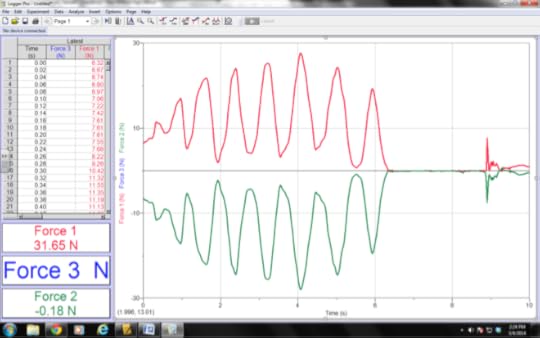
In the end, they saw on the force sensor software that the readings were identical from the two sensors. One student summarized their learning from that lesson as “when two things collide with each other, they exert the same force on each other regardless of their mass and how fast they are coming at each other”. Below is a screenshot of the convincing data of two students pulling on the force probes from two different directions, each time the measured forces were identical regardless of who pulled harder. Mrs. Chowdhury believes that this year the students have a much better understanding of Newton’s third law instead of mere memorization of the phrase “every action has an equal and opposite reaction”.
 Image credit: http://nancyrubin.files.wordpress.com...
So this year, Mrs. Chowdhury decided to take a different approach to teaching this law in physics. The lesson started with Mrs. Chowdhury having two students pull on each other with spring scales. She asked the students to pull so that the two spring scales read different forces. The students were unable to do so, each time one pulled with a certain force, the other spring scale read the same force. Normally, students agree when Mrs. Chowdhury says that pulling with the spring scales attached and pulling hand to hand are the same except spring scales just reads the strength of the pull. This year, the students completely disagreed and said that using the spring scales make the forces the same. So Mrs. Chowdhury decided to use the Vernier Force Sensors. She set up an air track and two carts with motion sensors attached to them. She asked the students to come up with different collisions and predict how the forces will compare to each other based on the collisions. The students changed the carts’ mass and velocity so the collisions were different.

In the end, they saw on the force sensor software that the readings were identical from the two sensors. One student summarized their learning from that lesson as “when two things collide with each other, they exert the same force on each other regardless of their mass and how fast they are coming at each other”. Below is a screenshot of the convincing data of two students pulling on the force probes from two different directions, each time the measured forces were identical regardless of who pulled harder. Mrs. Chowdhury believes that this year the students have a much better understanding of Newton’s third law instead of mere memorization of the phrase “every action has an equal and opposite reaction”.
April 2, 2014
Makerspaces Provide a World of Opportunities
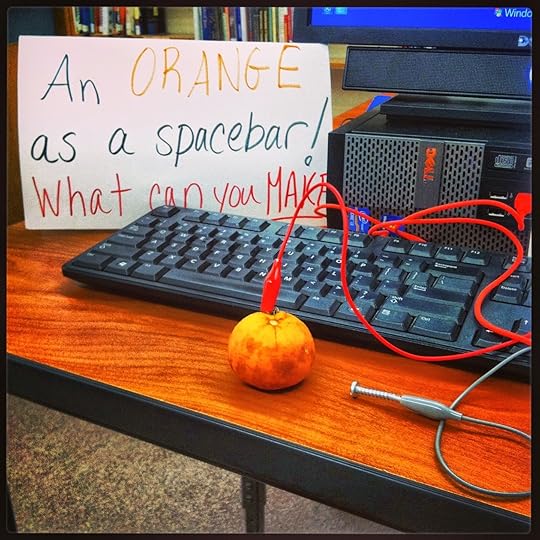
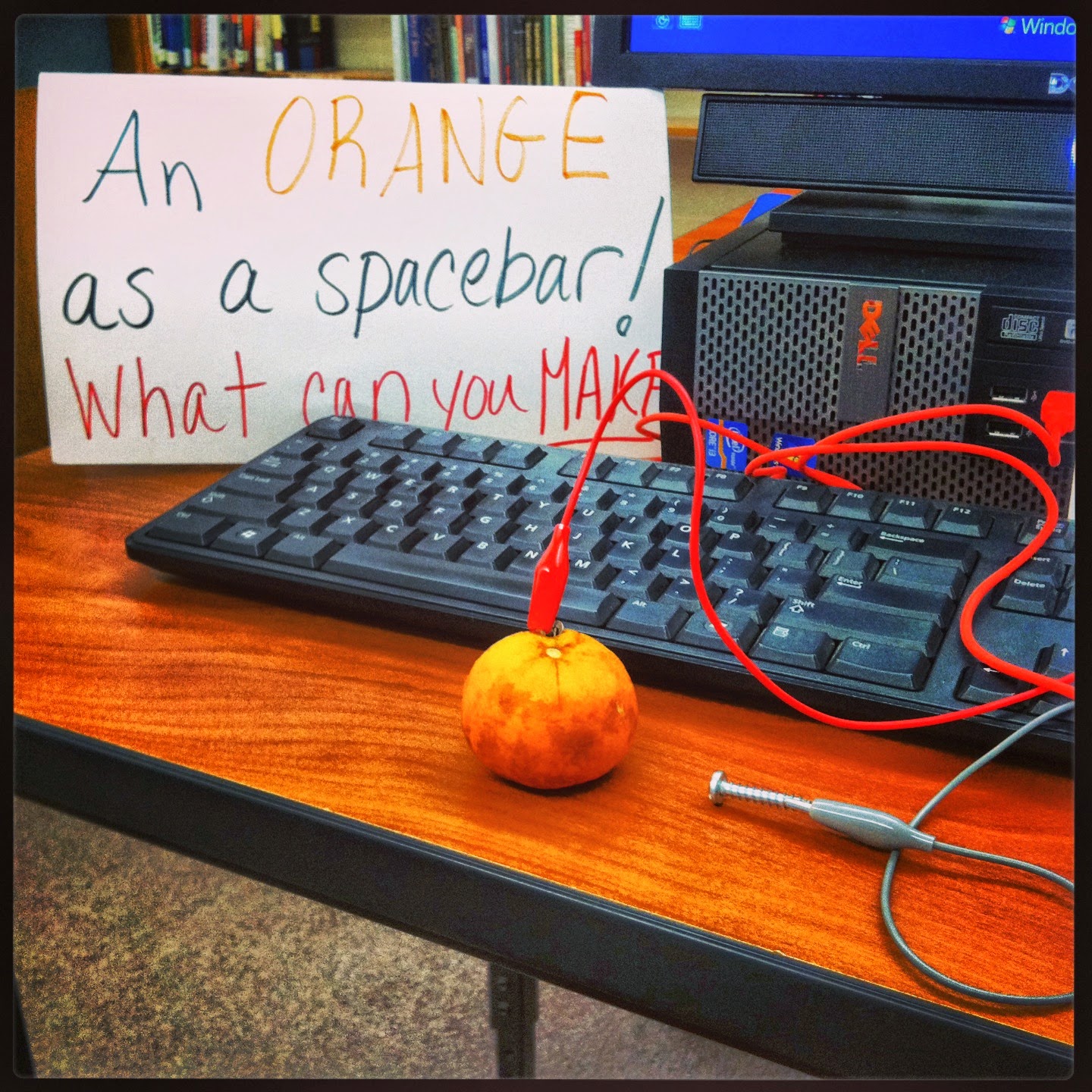
As of late it seems that I have been blogging a great deal about our makerspace here at New Milford High School and with good reason. Not only is the space being overrun with students during their lunch periods, but teachers here have begun to explore how the process of making can enhance the learning experience for the students in their classes. Just last week I shared on my blog how physics classes were exploring concepts related to circuitry in a more hands-on, authentic fashion in our constantly evolving space through a collaboration between Mr. Fowler and Mrs. Fleming. It seems that this might have been a catalyst for even more collaborations in order to fully take advantage of what a well-designed makerspace can provide.
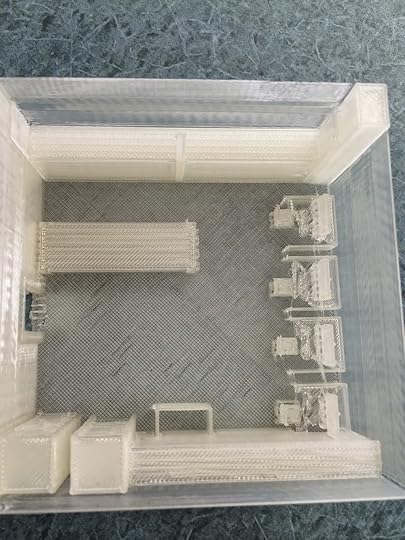
While studying the unit on Promotion in Marketing class and addressing the chapter of Visual Merchandising and Display as a form of promotional strategies to sell products and services, Mrs. Vicari thought about a design project that was assigned last year. In an effort to make this project more meaningful, she thought about our school store, which is currently being redesigned and reopened. She then challenged the students to use all the elements of Visual merchandising and display to create a model of what our school store should look like.
Their project was to consist of designing NMHS’s school store that included a storefront, sign, entrance, window display, selling space, storage space, personnel space, customer space, color, lighting, graphics, paint, fixtures, a point of purchase display and props. Collaborating with NMHS media specialist Laura Fleming, who introduced Mrs. Vicari to Tinkercad, she challenged the students to use this website to create a 3-D model of their school store, which could be printed out in plastic using the Makerbot 3-D printer that is a main component of our makerspace. The students also elaborated on their design with a written explanation that included all the elements of visual merchandising.
You can check out the written portion of this project HERE.
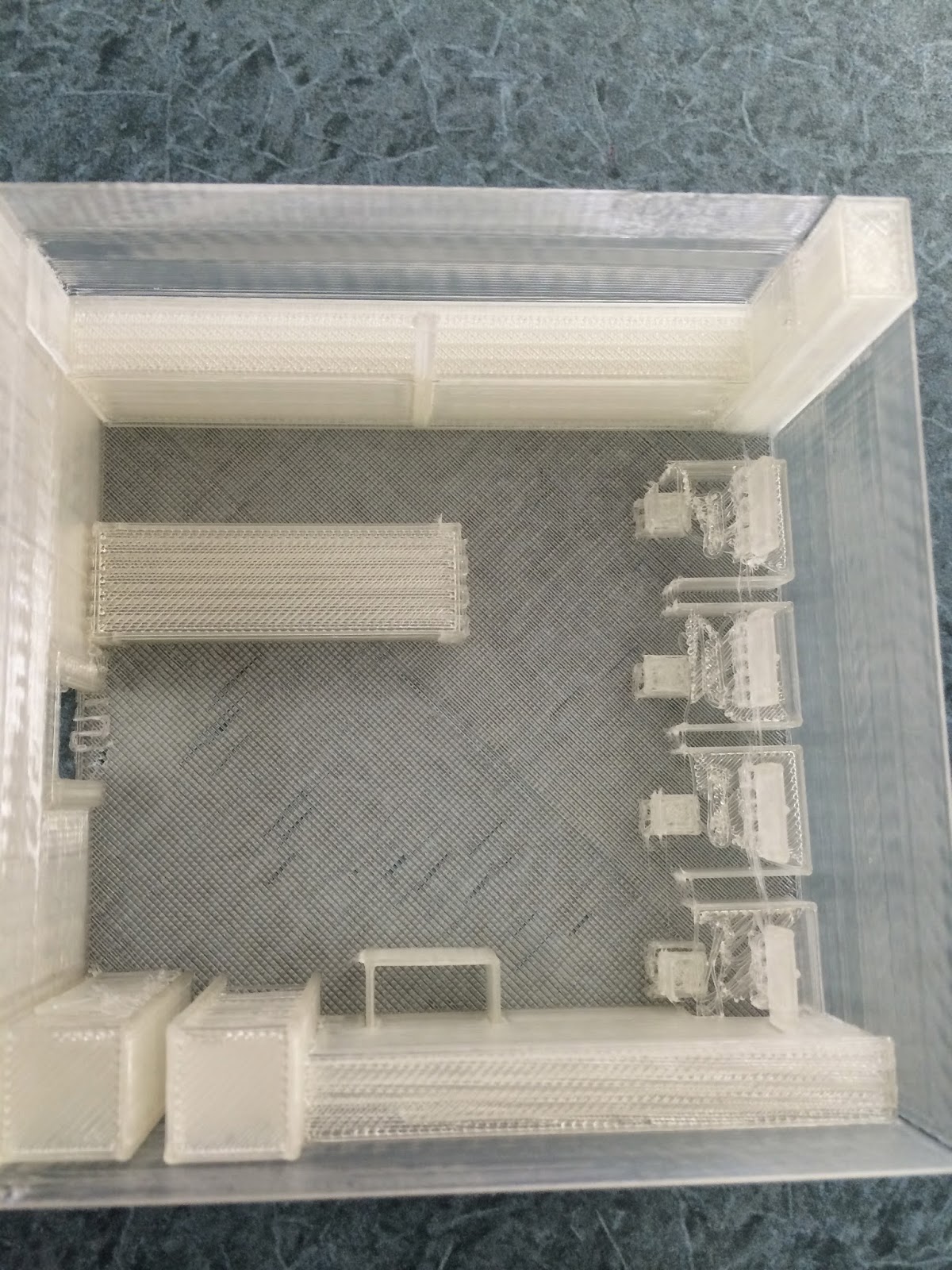
While studying the unit on Promotion in Marketing class and addressing the chapter of Visual Merchandising and Display as a form of promotional strategies to sell products and services, Mrs. Vicari thought about a design project that was assigned last year. In an effort to make this project more meaningful, she thought about our school store, which is currently being redesigned and reopened. She then challenged the students to use all the elements of Visual merchandising and display to create a model of what our school store should look like.
Their project was to consist of designing NMHS’s school store that included a storefront, sign, entrance, window display, selling space, storage space, personnel space, customer space, color, lighting, graphics, paint, fixtures, a point of purchase display and props. Collaborating with NMHS media specialist Laura Fleming, who introduced Mrs. Vicari to Tinkercad, she challenged the students to use this website to create a 3-D model of their school store, which could be printed out in plastic using the Makerbot 3-D printer that is a main component of our makerspace. The students also elaborated on their design with a written explanation that included all the elements of visual merchandising.
You can check out the written portion of this project HERE.
March 30, 2014
Students Yearn For Creativity, Not Tests
The other day as I was sitting in my office, sophomore Sarah Alemeda popped into my office, as she usually does. After day three of PARCC field-testing I was catching up on some dreaded paperwork, one of the least favorite aspects of my job. Sarah, bubbly as ever, asked if she could email me her presentation as part of the Academies at New Milford High School. I said sure, but then asked her when she would be giving the actual presentation. Her reply was later today. I immediately looked at my calendar, cleared the time, and told her that there was no need to email the presentation to me as I was going to attend in person.
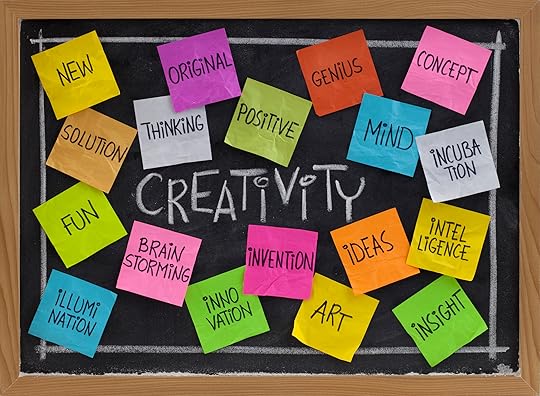 Image credit: http://nobhillchick.files.wordpress.com
As part of our Academies program, students engage in authentic learning activities outside the school day in the form of field trips or special projects. These are in addition to the added coursework required for an Academies designation. For this particular activity, which was developed by Danielle Shanley (Director of Curriculum & Instruction for the New Milford Public Schools), students had to read Out of Our Minds: Learning to Be Creative by Ken Robinson. They then watched a video and had to create a presentation where each student was required to share their “creative” experiences with the group. Total freedom was given to create a presentation in any format they wanted to including but not limited to: a written document, a poster, a collage, pin board, a chart etc. The entire assignment and rubric can be accessed HERE. Each student had to be prepared to answer/explain the items below.
Tell the group about your creative self. Explain how you are creative (what’s your medium?).Tell when you feel the most inspired. What stifles your creativity?Tell us about (at least) one other person whose creativity you admire, and how he or she inspires you. Explain what you believe schools need to do better for students to promote, enhance their creativity. Provide an example of something that would have helped you to be more creative or something/someone who did help you. Now back to Sarah. After watching some amazing presentations, one of which I will highlight later, Sarah’s turn came. I had to use my administrative privileges to get the YouTube video to work for her (students will be advocating soon for unrestricted access). Once her video began everyone was floored. I can honestly say that this was one of the best, most inspiring, thought-provoking student presentations I have ever seen. Not only was it created entirely through self-directed learning, but also it sent a strong message about how powerful creativity is to learning for our students. Please take a few minutes to watch the video below in it's entirely. She created it using her graphics tablet and the software Bamboo Pad both by Wacom, Quicktime to record the. computer screen as she drew, and iMovie for editing. If you like it I encourage you to share and send a comment Sarah’s way.
Days like today inspire me to keep pursuing an aggressive agenda for growth while promoting the work we are doing at New Milford HS. It provides affirmation as to what students want in an education and how we are striving to provide it. Throughout the presentations I heard student after student discuss through their presentations about how important creativity is to their learning. Their words expressed how they yearned to have freedom over how they could demonstrate what they know and a true desire to have ownership of their learning. Like Adobe, I strongly feel that creativity is essential in a students learning experience. As this report shows creativity matters and it's value beyond high school in terms of potential success in careers cannot be overstated.
Many students expressed gratitude for the culture that has been cultivated at NMHS, a culture that supports creativity, choice, and authenticity in learning. A presentation by sophomore Stepany Lazieh put into perspective how creativity is stifled, ways schools can promote more creativity, and ways she has become more creative as a result of the established learning culture at NMHS. Check out her amazing PowToon presentation below.
As a principal and educator you could not ask for a better day. We witnessed our students shine when given the autonomy to produce a learning artifact that was meaningful, relevant, and reflected the importance of student voice. The conversations that resulted during and after the presentations acted as catalysts to empower students to take action and work with us to create an even better school. There was one other significant takeaway that I learned from my students this day. When it comes to creativity and learning, standardized tests are one of the most significant inhibitors. I leave you with one of the many images that students willingly integrated into their presentations to hammer home this point.

We need to let our students MAKE GOOD ART!
P.S. Due to the amazing response from educators across thew world Sarah made an afterword video. Check it out below.
 Image credit: http://nobhillchick.files.wordpress.com
As part of our Academies program, students engage in authentic learning activities outside the school day in the form of field trips or special projects. These are in addition to the added coursework required for an Academies designation. For this particular activity, which was developed by Danielle Shanley (Director of Curriculum & Instruction for the New Milford Public Schools), students had to read Out of Our Minds: Learning to Be Creative by Ken Robinson. They then watched a video and had to create a presentation where each student was required to share their “creative” experiences with the group. Total freedom was given to create a presentation in any format they wanted to including but not limited to: a written document, a poster, a collage, pin board, a chart etc. The entire assignment and rubric can be accessed HERE. Each student had to be prepared to answer/explain the items below.
Tell the group about your creative self. Explain how you are creative (what’s your medium?).Tell when you feel the most inspired. What stifles your creativity?Tell us about (at least) one other person whose creativity you admire, and how he or she inspires you. Explain what you believe schools need to do better for students to promote, enhance their creativity. Provide an example of something that would have helped you to be more creative or something/someone who did help you. Now back to Sarah. After watching some amazing presentations, one of which I will highlight later, Sarah’s turn came. I had to use my administrative privileges to get the YouTube video to work for her (students will be advocating soon for unrestricted access). Once her video began everyone was floored. I can honestly say that this was one of the best, most inspiring, thought-provoking student presentations I have ever seen. Not only was it created entirely through self-directed learning, but also it sent a strong message about how powerful creativity is to learning for our students. Please take a few minutes to watch the video below in it's entirely. She created it using her graphics tablet and the software Bamboo Pad both by Wacom, Quicktime to record the. computer screen as she drew, and iMovie for editing. If you like it I encourage you to share and send a comment Sarah’s way.
Days like today inspire me to keep pursuing an aggressive agenda for growth while promoting the work we are doing at New Milford HS. It provides affirmation as to what students want in an education and how we are striving to provide it. Throughout the presentations I heard student after student discuss through their presentations about how important creativity is to their learning. Their words expressed how they yearned to have freedom over how they could demonstrate what they know and a true desire to have ownership of their learning. Like Adobe, I strongly feel that creativity is essential in a students learning experience. As this report shows creativity matters and it's value beyond high school in terms of potential success in careers cannot be overstated.
Many students expressed gratitude for the culture that has been cultivated at NMHS, a culture that supports creativity, choice, and authenticity in learning. A presentation by sophomore Stepany Lazieh put into perspective how creativity is stifled, ways schools can promote more creativity, and ways she has become more creative as a result of the established learning culture at NMHS. Check out her amazing PowToon presentation below.
As a principal and educator you could not ask for a better day. We witnessed our students shine when given the autonomy to produce a learning artifact that was meaningful, relevant, and reflected the importance of student voice. The conversations that resulted during and after the presentations acted as catalysts to empower students to take action and work with us to create an even better school. There was one other significant takeaway that I learned from my students this day. When it comes to creativity and learning, standardized tests are one of the most significant inhibitors. I leave you with one of the many images that students willingly integrated into their presentations to hammer home this point.

We need to let our students MAKE GOOD ART!
P.S. Due to the amazing response from educators across thew world Sarah made an afterword video. Check it out below.