Virginia S. Anderson's Blog, page 37
January 14, 2016
10 things that red-flag a newbie novelist.
This is one of the best compendia of guidelines for troubleshooting a novel-in-progress that I’ve recently come across. My own constant struggle is the interior monologue, wherein my character thinks through her motives. Some of this is necessary, but in my current very rough draft I’m noting again and again, “Too long! Cut!” Fortunately, I have an excellent writing group that will call me out on this sin.
I’m working on a post about what has stopped me from finishing some of the books I’ve been reading in my quest to understand the indie landscape. Hamilton’s list captures many of the problems that I’ve encountered (and fight like crazy not to commit): 1) Lack of a story arc–in a couple of cases, everything seemed to be resolved mid-novel; why keep reading? 2) Detail-heavy, clunky prose I had to wade through. 3) Pages and pages of setting and character-building before anything happens. I love the comment that we all should wish to see ourselves as others see us! Hooray for honest readers. May they long thrive!

THE PUBLISHING BUSINESS, WRITING CRAFT
10 THINGS THAT RED-FLAG A NEWBIE NOVELIST

by Anne R. Allen
Beginning novelists are like Tolstoy’s happy families. They tend to be remarkably alike. Certain mistakes are common to almost all beginners. These things aren’t necessarily wrong, but they are difficult to do well—and get in the way of smooth storytelling
They also make it easy for professionals—and a lot of readers—to spot the unseasoned newbie.
When I worked as an editor, I ran into the same problems in nearly every new novelist’s work—the very things I did when I was starting out.
I think some of the patterns come from imitating the classics. In the days of Dickens and Tolstoy, novels were written to be savored on long winter nights or languid summer days when there was a lot of time to be filled. Detailed descriptions took readers out of their mundane lives…
View original post 2,153 more words



January 12, 2016
Follow up to post on headers and page numbers
 I’m following up here on Connie J. Jasperson’s post from Life in the Realm of Fantasy (previous post) with some strategies that have worked for me. (As is so often the case, I found my way to this post via Chris the Story Reading Ape!)
Jasperson’s post confirms for me that some of these procedures aren’t common knowledge, so they’re worth posting about. If they are common knowledge for you, and you have other pointers to include, please share!
a) If you need to remove tab marks or spaces, as Jasperson rightly directs, you can do so via search-and-replace. I am a Mac person, but as Jasperson says, the general idea is usually the same across versions and major platforms, so you may just have to find where a particular button lives.
In your manuscript, Select All by using CTRL (Command on a Mac) + A. (I sometimes do all this in smaller chunks, like chapters, because I also have to deal with centered chapter numbers—see below.)
CTRL (or Command on a Mac) + F will take you to the Search (Find) dialogue box. On my Mac, Shift+Command+H opens the “Replace” option as well, but I can also open this from a tab in the Find box.
At the bottom of the Find box is a tiny downward-pointing arrow. Clicking on this will open a set of options. Clicking on “Special” will allow you to select the tab character for the “Find” line in the Find box. Or, if you like true simplicity, you can type in ^t. This is the tab symbol. Make sure letters you use with the caret (^) are lower case.
Leave the “Replace” line blank.
Click “Replace all.” The computer will sweetly get rid of all the tabs.
You can use this same method to eliminate spaces you’ve used for indents as well. Simply type however many spaces you used into the “Find” line and leave the “Replace” line blank. Want to make sure you didn’t miss any spaces at the beginning of paragraphs? Type in ^p for “hard return” (paragraph return) and a space. Then use “Find Next” a couple of times to make sure you’re catching the right things. Then type ^p in the “Replace” line (IMPORTANT!), and click “Replace All” This will preserve your paragraph returns but eliminate the space.
Similarly, you can use this to get rid of those extra spaces that sometimes get typed by fast-moving fingers, or you can correct consistent misspellings.
b) You can use Jasperson’s method to center chapter numbers or titles. Just select the number or title, then use the paragraph format box to center it. In a later post, I will discuss using Word’s “Styles” to accomplish some of these same effects.
c) My version of Word allows me not just to choose “different first page” but also to “format page numbers.” I can set the document to begin paginating at zero. This means that the title page has no number; the manuscript text itself begins at one. If you’re an editor who would prefer that the title page start with number one, so that the ms. begins on 2, please let us know!
And again, if you have quick tips to build on these, please share!



#amwriting: headers and page numbers
Thanks for some important information. Like you, I’ve found in my writing group that some fairly basic formatting moves aren’t common knowledge.
When I reblog, I’ll follow up with a couple of additional things that work for me!

 I’ve blogged before on this subject, but it is time to talk about it again: making your manuscript ready for submission to an editor, agent, or a publisher. All agents, editors and publishing companies have specific, standardized formatting they want you to use, and these guidelines are posted on their websites.
The submissions page for TOR Forge, one of the Big Boys in the publishing world, clearly says: “Standard manuscript format means margins of at least 1 inch all the way around; indented paragraphs; double-spaced text; and Times New Roman in 12 pitch. Please use one side of the page only. Do not justify the text. Do not bind the manuscript in any way. Make sure the header of the ms. includes your name and/or the title of the book as well as the page number (on every page).”
For the most part this formatting is basically the same from company to…
View original post 702 more words


January 11, 2016
Draft of New Cover for King of the Roses
I’m looking for a cover that will look better in thumbnail. Here’s an effort. All feedback welcomed! 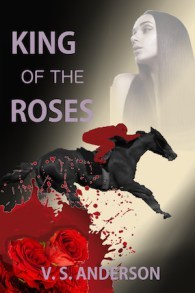


January 10, 2016
For Authors: E-mail Marketing Companies Compared
Thanks to Brittney Sahin for a look at some of the promotion options available! I haven’t tried this yet, but this post encourages me to consider it!

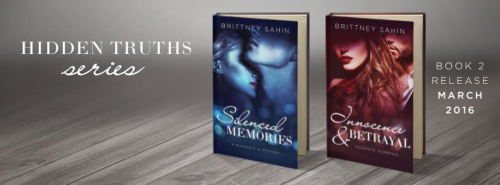
During the holiday season I decided to try out 3 different e-mail marketing companies for my first novel, Silenced Memories. I will discuss the results of each below. I did attempt to submit my book to 3 other websites as well, but they were booked (because many other authors were probably thinking the same thing-holiday promotion!)
December 5th- ENT- E-Reader News Today
Sale price Dec. 5th-Dec. 6th
Price for ‘romance suspense’ – $45 (price varies depending on genre)
E-book discounted from $2.99 to $.99
Books sold on day 1: 208 Amazon; less than 10 between ibooks & nook
Books sold on day 2 (no promo running): 46 Amazon; less than 5 (ibooks/nook)
Overall results: I think this campaign was very successful. Gaining that many new readers was great. I also reached #69 on romance suspense on Amazon (for a few hours!) & #49 on romance military. I made my money back…
View original post 532 more words


January 9, 2016
Victoria Strauss’s Year-End Post List

Something here for every aspiring writer! Strauss is one of the best resources around! Info on contracts, social media, marketing, promotion—check it out!


January 8, 2016
Important advice on publishing contracts!
 Found this at Writers in the Storm today. Here’s what I wrote as a comment:
I had old contracts that required me to give notice and then wait 90 days for the publisher to decide whether or not to re-activate the titles. While I was pretty sure the rights to at least one of the books had already been passed on and then returned to me by another publisher, I went through the steps as laid out in the contracts. The hard part was finding the right place to send my notice. The web site (of a major publisher) was no help. I found a “permissions” link and wrote asking that my request be forwarded to the right person. That eventually happened. and I eventually received written confirmation of the reversion.
The clauses you provide would have saved me a lot of trouble. I’m not sure they were standard when my books were originally published, but for future publications, I’ll be on the lookout! Thanks for some solid advice!


January/February 2016 Writing Contests
Wish there were more contests for novels or parts of novels! If you have lists of these, please share!

 January 2016
Type: Narrative Travel Writing
Hosted by: Transitions Abroad
Deadline: January 15, 2016
Entry Fee: None
Type: Fiction
Hosted by: Literal Latte
Deadline: January 15, 2016
Entry Fee: $10
Type: Power of Gratitude
Hosted by: Chicken Soup for the Soul
Deadline: January 15, 2016
Entry Fee: None
Type: Short Short Story
Hosted By: Writer’s Digest
Deadline: January 15, 2016
Entry Fee: $25
Type: Fiction or Poetry
Hosted by: Dream Quest One
Deadline: January 24, 2016
Entry Fee: $10
Type: Spirit of America
Hosted by: Chicken Soup for the Soul
Deadline: January 30, 2016
Entry Fee: None
Type: Fiction
Hosted by: Chicago Tribune
Deadline: January 31, 2016
Entry Fee: None
Type: Short Memoir
Hosted by: Fish Publishing
Deadline: January 31, 2016
Entry Fee: $16
February 2016
Type: Poetry and/or Short Story
Hosted by: Westmoreland
Deadline: February 16, 2016
Entry Fee: $10
Type: Flash Fiction
Hosted By: Fish Publishing
Deadline: February…
View original post 65 more words


January 6, 2016
Show, Don’t Tell: Try the Screenplay Exercise
 We fiction, memoir, and essay writers are all bombarded—understandably—with the need to SHOW, not tell. The temptation to tell rather than show—at its simplest level, to write “he felt sad” rather than letting his actions and dialogue reveal his reactions—haunts us all. It’s easier: We don’t have to hunt for ways to describe expressions and behaviors. And after all, “he felt sad” takes up a lot less space than “The room around him seemed to darken, the sounds of cheerful conversation to slow to dirge-like rhythms.” And hey, will readers interpret such descriptions the way you intended? Maybe the guy is just having a heart attack.
Hardest of all may be recognizing when we’ve slipped into telling. In my writing group, we all get called on it regularly.
One exercise I’ve found extremely useful in helping me recognize telling is the SCREENPLAY exercise: convert a troublesome scene to screenplay format.

Why does this work? For me, it works because, unless you allow yourself the indulgence of a voice-over, filmgoers must rely on action and dialogue to interpret characters’ moods and thoughts and to understand what’s going on.
The rules are simple: at no point in the conversion of your scene can you indicate in your stage directions that “he thought” or “he worried” or “he felt—afraid, tired, hopeful, disappointed.” You may never enter your character’s mind. After all, your audience can’t. They can only see and hear what’s on the screen.
Too stifling? Surely in a mystery, for example, the character has to speculate internally about the meaning of clues. In a romance, the protagonist has to tell us of her ecstasy. Well, maybe. The screenplay exercise can clarify just how much telling we really have to include.
For a sense of what this exercise can contribute, here are a few lines from my novel King of the Roses and the corresponding lines structured as a screenplay.  Note that I converted the whole book, a choice that requires me to scrutinize every word because screenplays are radically length restricted (a 358-page book becomes a 100-page play). But casting individual scenes can provide some of the same benefits.
Set-up: A criminal who demands that Chris hold the Derby favorite finds Chris alone in a restaurant and escalates his threats. The criminal speaks the first line.
From the novel:
“I tried to get a hold of you last night. Why didn’t you answer the phone?”
“I was out.”
“No you weren’t. You just didn’t answer the phone. This isn’t a little romance we have here. This is business. What about it?”
Chris felt his spine crawl as if he were already dead, with demons dancing on his grave. The man stared at him steadily, tilting his head a little so that Chris could see his white, speckled scalp where his hair thinned on top.
“So when would I get paid?”
“You jocks is all the same. Money, money.”
“I haven’t seen any money.”
The man’s lower lip went on curling, but his eyes hardened. He stood up suddenly, clutching his overcoat to his paunch.
“I’ll tell you one thing I bet you have seen,” he said. “I bet you’ve seen what a jock looks like when he falls off in a race and gets his face stepped on. I bet you’ve seen that. Huh?”
From the screenplay:
BALDING MAN
I tried to get hold of you last night. Why didn’t you answer your phone?
CHRIS
I was out.
BALDING MAN
This isn’t a little romance we have here. This is business.
CHRIS
So when would I get paid?
BALDING MAN
You jocks is all the same. Money, money, money.
CHRIS
I haven’t seen any money.
The man stands, clutching his coat to his paunch.BALDING MAN
I tell you one thing I bet you have seen. I bet you seen what a jock looks like when he falls off and gets his face stepped on. I bet you seen that, huh?
So what has this exercise done for me? Above all, it has forced me to look really hard at the inner reactions I’ve chosen to include in the prose-narrative format. Obviously they aren’t essential to meaning. I get to ask myself whether they add enough to justify the departure from action, from showing.
So the conversion allows me to see where my dialogue on its own takes readers. It also forces me to find the actions that express the characters’ reactions. I have to convert feelings into motion. Once discovered, these motions and actions can go back into my prose.
Again, you don’t have to go this spare. But you might make decisions about where to cut and where to add with more insight if you’ve tried the bare-bones telling that screenplays require.
You don’t need fancy software to do this. For the actual screenplay, I used Microsoft Word’s “styles” to create the various format patterns screenplays require. (The formatting didn’t translate directly into this blog post.) By the way, learning to use “styles” helps when you convert your Word document into the format for various e-publishing contexts. The important thing, however you structure your exercise, is to remember: no “feelings.” Just things viewers can see: action and dialogue.
Do you have strategies for detecting “telling”? Share!


This is how you get your book onto a bookstore shelf
Reblogged on WordPress.com
Source: This is how you get your book onto a bookstore shelf
Have you had success at getting your books into stores in the U.S.? My guess is that we can best count on independent booksellers–or is Barnes and Noble completely out of the question? In any case, I’m inspired to get going on POD versions of my books to find out. Let me hear about your experiences!