Darian Rodriguez Heyman's Blog, page 6
June 19, 2015
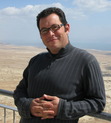
A Week Later and Still Inspired to Change the World
Last month, I was provided an opportunity to travel to the historic Oxford, England for the 2015 Skoll World Forum. There, I was joined by over 1,000 social entrepreneurs who are working towards ending poverty and addressing some of the world’s most profound social challenges. I was able to attend thanks to the vision and support of both the Skoll Foundation and The Mastercard Foundation, who sponsored the Young Leaders Initiative. As part of the program, I had the opportunity to work intimately with nine other young emerging social entrepreneurs from Africa, Cambodia, China, and England throughout the entirety of the conference.
Coming to the Forum, I did not know what to expect; I only knew that I would be discussing issues revolving around poverty. As a person who grew up in a single-parent, low-income home, I came convinced that I knew all that there is to know about poverty. In addition, as an Alumni and Advocate for YouthBuild, I thought I knew all that there is to know about storytelling. However, when I finally arrived and began having conversations with others and learned the art of storytelling from the Sundance Institute, I quickly realized that I had a lot to learn. I immediately became the student and took a seat in the back of the class – ready to learn and put aside my own ego. At one point, I felt shame and a deep sense of ignorance when I realized I was living in my own little bubble. I was so focused on poverty in America that I failed to recognize that the United States is only one small piece of a very large puzzle.
Some of the highlights of the Forum included networking with many of the world’s social entrepreneurs and leaders, getting a tour of the many colleges of Oxford, and attending sessions regarding youth unemployment, the need for self-care and emotional healing in this field of work, and methods to scale up. Most importantly, my paradigm of the world shifted and I found myself caring about issues outside of America. I realized the shift during one of the lunch breaks: As I was scrolling down my Facebook newsfeed, I came across an article regarding turmoil in Zimbabwe. Before, I would have kept scrolling but when I saw it this time I thought, “Hey my friend, a fellow young leader, is from Zimbabwe.” I started to ask myself, “Will this affect him when he goes back home? Will this affect his family?” In that process, I discovered my love for the world!
In addition, as I learned from all of the social entrepreneurs, one thing that really struck me was how they each viewed and embraced failure. I learned that failure was not the end but just the beginning of a new challenge to overcome. For example, while at the conference, I lost all my business cards and all those that I had collected from others. I felt like it was the end of the world. That same day I learned of the great work of Bassem Youssef, who was once the most popular television stars in Egypt, and then overnight, the government demanded his show be shut down and masses of people publicly protested against him. Despite it all, he continued to persevere and he is still respected by many across the globe for his work. Seeing failure as an opportunity for growth will help me as I aspire to be a social entrepreneur myself.
In closing, I would just like to reiterate how much I enjoyed being a part of this year’s Forum. I am inspired to develop my own initiative and position myself to be a future Skoll Award recipient. I have a vision to address inequality in education and justice systems across the world.


June 18, 2015
The Power of Belief
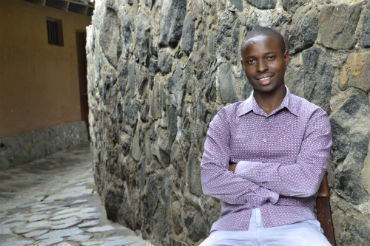
Belief was this year’s theme for the Skoll World Forum. This really resonated with my own personal beliefs – I believe that the world can be a better place for all of us, and I believe that we can defeat poverty and raise human dignity.
This was my first time attending the Forum and hopefully not my last! I was among the 2015 cohort of Young Leaders, joined together with eight other young and ambitious social entrepreneurs. I spent time attending workshops organized specifically for us and listening to the inspiring stories of each and every young leader that was present.
When we attended the general sessions of the Forum, I was tremendously inspired as well, but in a different way. I learned about amazing social entrepreneurs being celebrated for their impactful work, and I was able to hear from leaders working on girls’ empowerment and the strides they were making. Included in the conversation was the wonderful Graça Machel – her words empowered and inspired us all.
I was encouraged to be in the midst of seemingly extraordinary people working hard to transform lives in different corners of the world. I was deeply encouraged to hear innovative solutions from people driven by the belief of a better tomorrow and what they had to say to help us.
For example, I heard a quote that stuck with me, which went something like this: “Action without knowledge is ignorance, and knowledge without action is selfishness.” This made me reflect deeply on my personal leadership style and my work back home. Currently, I am the Founder and CEO of Kito International, a non-profit social enterprise that works with reformed street youth to enhance their livelihoods and enable them to be self-sufficient. The youth in our project are not designated as beneficiaries, but rather partners in building their future and the futures of their peers. I look forward to applying some of my knowledge directly into my organization and the young people who are our partners.
Thanks to the Skoll World Forum and The MasterCard Foundation for providing me and my fellow young leaders this amazing opportunity. The Forum offered me an opportunity to connect with potential funders and advisors and I am already following up with those contacts. Through this experience, I have grown my family of peers to global levels, and we will remain in touch to continue learning about the amazing work everyone is doing in their communities.
June 17, 2015
Reflections from China
Shortly after my baby was born, I was sitting with my mom, tired from lack of sleep and I asked her, “Mom, what is the most essential thing you’ve valued in your life?”
My mom said, “Well, you have different priorities in different life stages. For me right now, it’s happiness.”
I followed-up, “What makes you happy?”
She replied, “When I achieve goals I have set for myself.”
I thought about it and asked, “What if I don’t even know my goals?”
Wisely, she replied, “You have to work on it yourself. And you need some sleep now.”
With the above conversation ringing in my ears, I asked myself many questions while on the long-distance flight to Oxford, England, where I was about to join other young leaders at the Skoll World Forum. Jenny Bowen, the Founder of Half the Sky Foundation nominated me to be a part of the Young Leaders Initiative coordinated for young leaders at the Forum. I felt so lucky to have been chosen to attend. Despite my excitement, a nagging voice from deep inside asked, “Am I a leader?” What is the definition of a leader? I know it’s different than a manager. I know leadership involves charisma that draws people to follow you. I thought to myself, “I’m not quite ready for this.”
Luckily, I had traveled to England in my past and had really positive experiences. In fact, when I studied there in my younger years, I regarded England to be a good friend! They were some of the best days of my life (if I may say so), where I lived for a year purely on my desire to explore and meet new people. It was a year I framed in my mind as special and have kept deep in my heart. Like many people, I guess, I’m curious. I love the surprises that come with uncertainty and new people, but I also know myself, and I can cling to certainty as it is sometimes the easiest way. This new trip, at a different stage in my life, would prove to be just as intriguing.
When I arrived and started to engage in the program and with the other young leaders, I was blown away. This intense, carefully designed, well implemented, eye opening program really was meant for me! Our program helped me craft my own, personal three minute story using professionals in the field of storytelling. I was also able to use this new skill when I attended the general Forum sessions that were filled with global leaders making change nearly everywhere.
Our group spent the entire week together accompanied by several people from the Skoll Foundation and others who attended the Young Leaders Initiative the year before. We had our sessions on speech, body language, and the classic theory of a story arc. We practiced together before going to face a panel of experts for their advice. We proactively walked up to new people to introduce our work to practice our introductions.
I was immersed into great ideas, models, and people. I cheered for the Chinese Skoll Award winner Ma Jun of IPE, and every night I reached out to talk to new people. I have never felt more proud about the work I’ve been doing as I spoke to all these receptive audiences. I feel the firmness of it now. At the opening plenary, we were invited to see, talk, laugh, cry, enjoy, sing, and dance to the music. We did all that. We were brought together as sisters and brothers and were reminded that we are a family making change and that we can continue on this journey together.
It’s not only the Development and Communication departments work to share stories – we all share that responsibility. We all represent our organizations and ourselves. And we will excel at what we believe.
I’m ready to serve, learn, and serve more. About the goals in life, isn’t that an easier question now?
June 16, 2015
Simple Solutions Are Solving World’s Most Complex Issues
Who said it was impossible?
Gathering a group of villagers to work together and improve their community, increase their income and have a better life. Done.
Stop a fisherman from fishing in an area for two months, have him double or triple his catch after that. Done.
Open a training restaurant, train marginalized youth, get them well-paid jobs. Done.
Do you want me to continue?
I can. I’ve just met these people, and they’ve told me what they’ve done, and how it worked. It was simple. It took time, but it worked. It was in Oxford in April. People like you and me. They were open to talk to anyone about their work, or my work, or anyone’s work. These people actually exist and more and more are coming. Working hard every day, for years and years, solely focused on achieving that impact and making a positive change for people and the communities around them.
All those years of hard work…do they have fun at all?
Oh yeah, some of them put fun into their work. They create clothes and hats made of condoms to encourage people to protect themselves during sex. They make funny photos of themselves on the toilet seat to promote sanitation and decrease open defecation. And studies say it works even better if you make the message funny and edgy. This session talks about their work.
It’s remarkable to think that some solutions can be simple and that they can work. Even when I question myself, the answer is still the same. I do believe these social entrepreneurs can change the world we live in.
You still don’t believe me?
You should come to the Forum one day and watch the videos of the sessions. Or maybe just look around you, there’s someone who’s doing what I am talking about right now. One day they will also come to the Forum, they will get support from the Skoll community, they will link with others and make their simple solutions simply work even better. I’ll keep on going and working on these solutions with my team, knowing that so many people who were in Oxford last month are doing the same, willing to share what they know, support each other and simplify all this complexity of trouble around us.
June 15, 2015
The Coding Pyjama Girl: My New Nickname
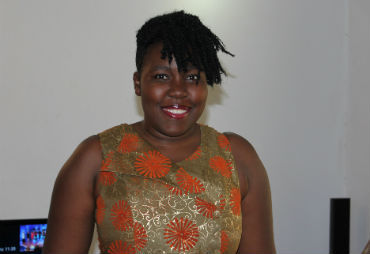
I decided to embrace a new nickname I acquired at the 2015 Skoll World Forum – “The Coding Pyjama Girl.” Before I got the email inviting me to join the 2015 Young Leaders Initiative, I didn’t know about the program. By the end, I was known as the girl who is helping young women learn new skills from home by teaching them to code. I looked at the invitation, and being true to my strength, which is OPTIMISM, I accepted the challenge.
Some would say my journey to the Skoll World Forum was doomed from the start. From a delayed flight that made me miss my connection, to spending a day in Dubai, to my very interesting arrival in Oxford the next day. Despite the bumpy beginning, I wanted to be true to my strongest instinct, so I made a decision to leave those negative things in the past and begin the Forum on a great and positive note. On the first day, each of the Young Leaders was nervous and reserved as we all observed personalities and behaviours of one another. But soon, the ball was rolling, as our colleague Jamiel connected us all with different bonding activities and we eventually loosened up.
I came to the Forum expecting to mostly share my story, but I learned something very important in Oxford…listening. Stories are not only meant to be shared but also listened to. As a result of listening, I was able to meet a possible future partner, Idit Harel, who also teaches kids how to code and keeps them off the street in America. My experience allowed me to listen to stories from the other Young Leaders, and I realized that I am not in this alone. Before, I was never really sure if what I was doing was the right path for me, especially because I lost my parents and did not have voices to tell me they were proud of what I was doing. I got that chance when I attended the Forum. I felt like I had parent figures, who were also friends, encouraging my decisions.
For example, I met Dawn Porter, who may not realize just how much her comments raised my spirits even higher than they already were raised. She, among others, offered great critical advice on my personal story which will help me make connections within the world of social entrepreneurship.
I was with the Young Leaders for only a week but I am pretty sure I can describe each of them in detail. Everything they did and said just seemed so much smarter than anything in my mind. And I remember thinking, “I am so glad to be working on the same team as these guys and not against them!”
When I was younger, I asked my parents why they named me Regina, and my mother told me, “Because it means Queen and you are destined to be great.” I am just starting to believe her. At the Forum, I met people who had done great things themselves yet regarded me as an equal and even praised me for the work my co-founders and I are doing. Now my friends can call me the “Rebel Queen who teaches coding in her night wear…!”
June 12, 2015
States and Provinces Rise to the Challenge on Climate Action
As we enter another summer of record heat and news of accelerating climate change, there are also signs of hope. They’re coming not from the big players gearing up for the Paris climate talks, but from states and provinces around the world, mostly in tropical forest countries, already doing the hard work of stopping climate change and building resilient, sustainable communities.
These leaders come from places like Indonesia, Brazil, and Mexico, whose lush forests are critical to slowing climate change, and where deforestation, if unchecked, is a major threat to climate stability. Many of them have already committed to reduce 80 percent of deforestation-related emissions by 2020 under the Rio Branco Declaration. They will gather next week for the annual meeting of the Governors’ Climate and Forests Task Force (GCF Task Force) in Barcelona to enlist more partners, and more funding, for these critical efforts.
For these tropical states and provinces, sustainable forests and agriculture are the key to development, especially in the face of extreme weather. They are pioneering pathways to a green, fair, emissions-reducing economy, and they are making steady progress.
So yes, we need an international climate agreement in Paris. But that’s not all we need. Today, we look to the state and provincial governments who are already leading the way, learn from them, and bring the lessons they represent to the national decision makers gathering in Paris at the end of this year.
We look to Central Kalimantan (Indonesia), where Governor Teras Narang has launched a roadmap (in partnership with indigenous communities) to low-emissions development and is working with palm oil companies to create sustainable sourcing strategies at jurisdictional scale.
We look to Mexico, where Chiapas and Campeche are leading an effort to reduce deforestation and promote low-emissions rural development in partnership with NGOs and the federal government. And we look to Mato Grosso, Brazil, where a robust multi-stakeholder dialogue is underway that brings government, civil society, and soy producers together in a historic effort to make climate-smart agriculture a reality and build on that state’s already remarkable record in reducing deforestation.
These innovations are taking root in a world of rising pressures on land use – driven by growing demand for food and natural resources – and spring directly from the need to reduce deforestation and build viable pathways to forest-maintaining rural development. The twin interrelated crises of climate change and land use, which feed on each other, together pose what is arguably the greatest challenge facing the effort to secure a sustainable and just society for the future.
GCF member states show us how to develop and bring together the laws, policies, programs, institutions, and network of civil society partners needed to create durable frameworks for making low emissions development happen on the ground. These jurisdictional programs are the critical pathways to and pillars of robust national programs.
The value of the jurisdictional approach is manifest in the remarkable innovations and strong record of performance in GCF states and provinces, and in their willingness to step up and do more than their part in the effort to reduce carbon pollution, protect forests, and enhance livelihoods. Their commitments, embodied in the Rio Branco Declaration, the Under2MOU, and the recently signed Carta de Cuiaba offer powerful signals of hope and action in a world that needs both.
But we need to make their voices louder. We need to work harder to show the world not only what states and provinces are doing, but what they can do if they get the support they need and deserve. Most of the international funding dedicated to reducing emissions from land use and deforestation has not made it down to states and provinces, even though they are doing most of the work and the source of so much of the important policy innovations. It is time for the international community to step up and give these states and provinces the support they need to continue the crucial work they are doing.
Feeling Like Part of a Family

My train journey from London to the Skoll World Forum in Oxford started, and I really didn’t know what to expect. I had an overwhelming feeling of self-doubt. Reading over the profiles of the other Young Leaders I would soon meet, I continued to question myself….Why had I been chosen as a Young Leader? I had managed to convince myself that the other young people were more impressive than me, and quite frankly, that I didn’t deserve to be a Young Leader at the Skoll World Forum.
Meeting the Young Leaders and facilitators instantly eased my doubts. From the moment we met, we were sharing stories and ideas, and learning things that we could take back to our own projects and work. It was clear that whilst we are all from very different parts of the world, trying to solve very different problems, we actually all have very similar themes at the heart of what we do.
As Young Leaders, we were spoilt for choice. Not only did we have access to the entire Skoll World Forum schedule, but we also had additional workshops planned, giving us the opportunity to meet Skoll scholars and practice our storytelling. I learned storytelling is an essential skill for any social entrepreneur, so I was honoured that so many prestigious people came along to listen to our stories and offer us advice on how we could improve. Leaving the Skoll World Forum with the perfect way of telling my story is more than I could have ever hoped for, and I have already gone on to put the story in to practice when representing CDI Apps for Good at education conferences and events across the United Kingdom.
Over the course of the week, I had the opportunity to join a range of scheduled workshop sessions. I challenged myself to not only go to sessions that were relevant to my current role but actually opting for workshops that I had no previous experience in. This opened my eyes even further to the potential future opportunities and the following quote stuck with me throughout my time at the Skoll World Forum.
“If not me, who? If not now, when?
For me, the most powerful part of the Skoll World Forum was the Skoll Awards for Social Entrepreneurship Ceremony. Having the opportunity to hear stories of all of the amazing winners and witnessing their passion to do good was truly inspirational. It was like a constant flow of spine tingling moments.
Overall, my experience of being a Young Leader at the Skoll World Forum was amazing and like nothing I could have ever expected. I arrived feeling slightly unworthy but left feeling like I deserved to be part of the movement. I’ve already put many of my learnings into practice and I’m sure I will continue to do so. I’m glad to have a new group of worldwide friends who I can now call on for support, advice and a friendly catch up!
June 11, 2015
How the Skoll World Forum is Engaging Young People
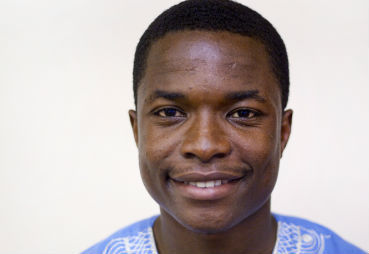
When I first read about the Skoll World Forum on Social Entrepreneurship two years ago, I was quickly drawn to its awesomeness. Never had I thought about the world’s most distinguished social entrepreneurs deliberating on issues under one roof. The Forum has made this a reality. As a young person, my major point of interest was whether young people had an opportunity to take part in such a prestigious conference of more experienced individuals. Through my work with The MasterCard Foundation Youth Think Tank, it had become apparent to me that a lot of organizations are detached from young people and are unaware of the energy and fresh ideas they can contribute within the organization. My experience at the Skoll World Forum was different. Through the support of The MasterCard Foundation, a Young Leaders Initiative has been instituted as part of the Forum and young people are invited through the program to participate.
Being invited to participate and speak at the Forum was a dream come true. I had finally been invited to a conference whose participants were taking on the most pressing challenges and were revered by many around the world. It was an exciting but scary moment for me. Although I had done a lot of public speaking in the past, this was frightening, and I constantly found my hands shaking in an attempt to type the content of my speech. To me, I had to impress and make a strong case for young people. After several days of reflecting on what I was going to share, I realized the message was one that had to come from the heart; it had to be personal and speak to the plight of many young people from my side of the world – “no room for impressionist business,” I said to myself. After this shift in mindset, a message came to me easier than I expected.
The thought of attending the world’s largest gathering of social entrepreneurs was very exciting. On my flight from Chicago to London, I put together a strategy on how to navigate the large numbers of social entrepreneurs present.
My approach was centered on three main objectives: 1) Learning about their work, 2) Learning where they draw their inspiration, and 3) What keeps them going when things gets tough. The world today is plagued by several challenges that threaten our very existence. However, through the work of social entrepreneurs we move towards solving some these problems. We are constantly reminded that there is hope for a better and brighter future for the world’s most marginalized communities. I wanted to know how these people create such large scale impact projects and possible ways to collaborate with the Youth Impact Workshop, the social innovation lab I spearhead in Ghana. At the Forum, I was inspired by these great minds and was convinced that I could do more than I was already doing. Seeing and hearing from thought leaders like Archbishop Desmond Tutu, Graça Machel, Jeff Skoll and Patrick Awuah made me reflect on why I was at the Forum and the need to maximize the network around me to improve my work.
During ‘The Age Before Impossible: Young Voices, Big Dreams’ session, the energy of young people came to the fore. I had a unique opportunity to share the story of my childhood in a small village in Ghana, and how that shaped my interest in youth development. A lot of social entrepreneurs share a unique story that transformed their lives and inspired them to work towards social good. Mine included seeing and experiencing challenges like the unavailability of schools, healthcare facilities, and safe drinking water and sanitation facilities – a cause which I am dedicated to working with other social entrepreneurs to make a thing of the past. I have started this process by continuously pushing myself to learn so I will constantly be empowered to change the world around me. The engagement of young people on this panel was a clear indication of how crucial young voices are in platforms like the Skoll World Forum. It also emphasizes the fact that young people can be seen, heard and make meaningful contributions to discussions around social change.
June 10, 2015
“As Global Citizens We Have To Take Action Now Rather Than Wait”
This past year, I went to England to attend the Skoll World Forum. My experience at the Forum can be summed up as a rare, life changing experience. The first day I arrived, together with my fellow young leaders, we were taken around Oxford University. I couldn’t have been inspired more as I saw the rooms where famous economists like Adam Smith studied and lived.
As though that was not enough, there I was, in one of the Forum workshops, when I looked to the right and saw a managing director of a very large, global organization I had never dreamt of ever meeting. To my left, I noticed more executives from organizations that I had been excited to know more about. They were all around me!
I quickly realized this was a serious place, where high profile people come to exchange ideas. This challenged me to embrace the fear and reality of introducing myself to them. Needless to say, I did my best and I look forward to the impact those meetings will make going forward!
The open-heart of every delegate I met challenged me, and I realized that my contribution to global development is meaningful. I learned so much during the conversations I had with nearly everyone I met. We discussed wide-ranging issues from water problems, climate change and the difficulty of access to education. I realized that throughout the world, many people are doing something positive to contribute to these global problems.
During the Plenary sessions, there were renowned global leaders like Jeff Skoll, Archbishop Desmond Tutu and Graça Machel. The message I received from them included the profound notion that we are all living on one earth. As global citizens we have to take action now rather than wait. The aspect of never giving up in life was reiterated by Mama Graça Machel, who said she won’t give up until every girl child goes to school. Such energy is what I wanted. I told myself, “Yes! I am going to accelerate my resolve to make a positive change.”
The Forum also afforded me an opportunity to meet up with staff for The MasterCard Foundation Scholarship program and I received further inspiration from the people who are empowering the next generation of young leaders for Africa.
In Zimbabwe, where I come from, the challenge for young people is the disconnect between opportunities and talent and in some cases, the lack of any economic opportunities for young people at all. The Forum enabled me to connect and accelerate my learning about how to solve these problems. I learned problems are the same from one continent to the next. How we work on them may be different, but pollution is the same whether in New Delhi or Harare.
Going forward, I believe I will tap into the connections I made at the Forum. I will use my contacts to accelerate positive change on the ground, on an ongoing basis.
I couldn’t ask for any better experience and any more inspiration than this experience. Thanks to the Skoll Foundation and The MasterCard Foundation. To be able to meet and connect with so many change makers from across the globe is a rare, lifetime opportunity I will forever cherish!
June 8, 2015
Nine Young Leaders Reflect on 2015 Skoll World Forum
The MasterCard Foundation and Skoll Foundation are committed to meaningfully engaging young people in the decisions that affect them. It is our belief that education and employment programs are improved when young people have the opportunity to participate in the design, implementation, governance and monitoring and evaluation of initiatives that impact them. Providing opportunities for young people to develop leadership skills and learn from other leaders and social entrepreneurs helps to both equip them with greater skills and showcase the power and relevance of young voices.
For the past two years, the Foundation and Skoll have collaborated to identify a diverse cohort of young, global leaders and sponsor their participation at the Skoll World Forum. On April 15-17, nine young leaders from nine countries came to Oxford to share their experiences, present their ideas on panel discussions, network with other social entrepreneurs and further develop their leadership skills. This included youth representatives from MasterCard Foundation partners including International Youth Foundation, University of British Columbia, African Leadership Academy, Fundación Paraguaya and our Youth Think Tank.
Together with Skoll colleagues and the Sundance Institute, and in addition to the Forum itself, a full set activities was organized to support young leaders to tell their personal stories and share their inspirations and goals for the future. Most importantly, they were able to connect with Fellows from last year who returned to participate in the Forum as mentors this years’ cohort of Fellows — expanding a global, active network of committed social entrepreneurs.
In the coming days we’ll be sharing blogs from each participant and a video which showcases their time at Oxford. Their stories tell us about their backgrounds, their experiences at the Skoll World Forum and, most importantly, how they intend to apply their newfound skills and insights to their personal and professional endeavours.