Darian Rodriguez Heyman's Blog, page 5
July 10, 2015
Raising Returns and Saving Lives: Malaria Control is Smart Business
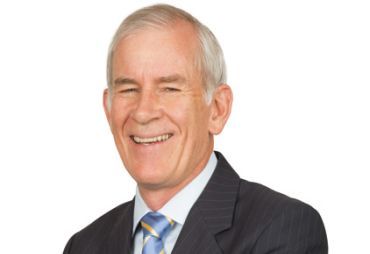
In the 30-plus years I have worked to fight infectious disease across Africa as Chief Medical Officer for Anglo American and as a private sector delegate to the Global Fund, I’ve seen tremendous value at the intersection of health and business in the developing world. As international governments, non-governmental organizations and business sector entities gather for the July 13-16 Third International Conference on Financing for Development, it is imperative that corporate partners join the battle against a deadly but preventable disease – fighting malaria is not just the right thing to do, it is the smart thing to do for sustainable business.
In 2013, malaria caused approximately 198 million infections worldwide and an estimated 584,000 deaths, largely in sub-Saharan Africa. By taking on a stronger role in global malaria control, companies stand poised to not only ensure the health of employees in developing countries, but also to reduce disease burden in many markets, a factor crucial to economic growth.
We know that malaria presents a clear challenge for companies looking to operate in emerging markets. Many of the fastest growing economies are in countries where high burdens of malaria have huge economic costs – for companies, which are faced with high absenteeism and reduced productivity; for patients, whose treatment costs cut into savings; and through opportunity costs, because business cannot fully flourish in societies struggling to overcome disease.
Seventy-two percent of companies in sub-Saharan Africa report a negative impact on business from malaria. At AngloGold Ashanti’s mine in Ghana, prior to implementing malaria control efforts, the estimated cost of treating malaria-burdened employees and dependents was $2.2 million in 2004. And during the construction of BHP Billiton’s aluminum smelter in Mozambique, malaria cost $2.7 million.
The good news is that these costs can be greatly mitigated through malaria prevention and control programs.
In 2011, Roll Back Malaria (RBM) evaluated the programs of three companies operating in Zambia: Konkola Copper Mines Plc, Mopani Copper Mines Plc and Zambia Sugar Plc. From 2001-2009, these companies spent an average of $34 per employee annually on malaria control. During that period, the number of workdays lost to malaria and the number of cases diagnosed in the companies’ clinics both decreased by 94 percent, averting an estimated 108,000 cases over nine years. By analyzing the costs (amount spent on malaria control) and benefits (treatment costs and lost workdays averted), RBM found that these companies experienced a 28 percent rate of return, or a net benefit of $9 per employee annually. The program’s financial benefits began to outweigh the costs in just one year.
Private sector malaria control success stories are not exclusive to Zambia. In 2005, AngloGold Ashanti implemented a program in Ghana that extended its reach beyond the mine to include the local town and surrounding villages. Year one of the program cost $1.7 million and subsequent years cost $1.3 million. From 2005-2009, the number of monthly reported malaria cases at the mine’s hospital fell nearly 83 percent, decreasing AngloGold Ashanti’s average monthly medication costs from $55,000 to $9,800. A healthy workforce also resulted in far less absenteeism – the average number of lost workdays per month fell by a staggering 96 percent.
The Global Fund is working to increase such business partnerships and amplify the impact of innovative private sector investments in health care and health system strengthening. AngloGold Ashanti became the first private company from Africa to be designated as a Global Fund Principal Recipient, receiving $130 million over five years to oversee Ghana’s malaria reduction programs. Lessons learned through the company’s malaria program have been transferred to operations in Tanzania and Guinea, increasing investments that both benefit society and create a more sustainable business practice.
The global malaria mortality rate decreased 47 percent between 2000 and 2013, and could fall by a remarkable 55 percent by the end of 2015. While this marks significant progress, it is still fragile; to sustain and accelerate global progress, we must continue mobilizing a diverse group of stakeholders.
There is no acceptable excuse for a high burden of malaria in any region – it is simply a case of insufficient investment and technical skills. Financial innovations and partnerships among private sector partners, donor governments and civil society will make the disease’s defeat possible. The private sector’s geographic reach, efficient processes and ability to react quickly makes it an ideal partner; and, without that partnership, malaria will be an ongoing obstacle for companies operating in emerging markets. Controlling malaria saves lives, improves productivity and offers a sustainable return on investment for any business.


Betting the Farm and the Future

In the last 50 years we have radically changed the way we produce and process our meat, dairy products and eggs. Global meat production has quadrupled, and farming methods have shifted from traditional pasture-based systems to an industrial model of production. Over 70 percent of the world’s farm animals are now factory farmed –in the US it is closer to 99 percent. The industrialization of meat production is gathering pace as emerging economies harness these methods.
Although factory farming has become the dominant mode of production, surprisingly little analysis has been done into the societal and financial risks that it poses. This should ring alarm bells, because we are rapidly reducing our options for feeding the world. As the risks become clearer we need to take action, and this is where there are also exciting opportunities for social entrepreneurs.
Betting the farm
Uncovering the potential risks and opportunities around factory farming is one of the reasons that the Farm Animal Investment Risk & Returns (FAIRR) initiative was created; and why it is supported by the likes of Aviva Investors, the Health Foundation and Joseph Rowntree Charitable Trust.
In the words of FAIRR founder, and Chief Investment Officer at Coller Capital, Jeremy Coller, “Investors currently have a dangerous blind spot when it comes to the long-term risks that the rise of factory farming poses to their portfolios. From pollution to pandemics, we urgently need to close the knowledge gap that exists.”
Four inconvenient truths
New research from FAIRR, set to be formerly released in autumn 2015, highlights four “inconvenient truths” about the factory farming sector that question its long-term sustainability. These are:
Threats to human health. Intensive farming methods have been shown to lead to the spread of deadly viruses such the H1N1 Swine Flu which in 2009 killed over 150,000 people and wiped billions off the value of many agriculture investments. The massive overuse of antibiotics by factory farms also makes them breeding grounds for antibiotic-resistant superbugs.
Unsustainable levels of emissions. Animal agriculture is responsible for 5 percent of all greenhouse gas emissions, more than the transport sector. Similarly, about 75 percent of soybean production, which is a major contributor to deforestation and climate change, is used to feed livestock.
Unsustainable use of natural resources. Natural resources such as water are increasingly scarce yet factory farming uses a disproportionate amount. For example, it takes 1,000 litres of water to produce 100 calories of beef, compared to just 38 or 51 litres to produce the same amount of calories from potatoes or pasta.
Famishing, not feeding the world. Instead of providing a solution to the way we feed ourselves, factory farms are exacerbating world hunger by feeding more to livestock than to ourselves. A third of the world’s grain harvest is fed to animals and more lost along the supply chain. To produce 1 kg of farmed salmon, we use 4 kg of wild fish in feed.
What is the role for social entrepreneurs in finding a solution?
I believe there is a role for both small and large social enterprises to help find alternatives to the industrial model.
On a small scale this might look like city farms, which grow affordable food in the heart of urban centres. Just one great example is Stepney City Farm in London, which last year hosted eight pigs fed on food waste to show how the food that humans throw away could be reused as animal feed.
On a larger scale we are seeing exciting food technology enterprises that are developing plant-based alternatives for the meat, eggs and dairy that many of us eat.
For example, Hampton Creek is a food technology company in California that uses plant proteins as egg substitutes, to create products such as ‘Just Mayo’ and ‘Just Scrambled’. Their products are cheaper and use less natural resources than egg-based equivalents. Since the outbreak of avian flu in the US this year (which is argued by some to have been catalyzed by intensive farming), the company has reported enquires from most major food chains and is now on track to become the fastest growing food company in history.
Another example is Impossible Foods which uses proteins and other nutrients from greens, seeds, and grains to recreate the complex taste of meats and dairy products.
The relationship between what we eat and how it is produced is looking increasingly unsustainable. If we are going to satisfy global demand for the sort of proteins we get from meat without causing risks to human health and the environment then we need innovative social entrepreneurs to step up and help meet the challenge.
Breaking Boundaries to Solve Global Development Problems
There is no silver bullet to fix societal inequality. There is no one solution; there is no one answer. The truth is we must unleash a generation of creative thinkers, with big ideas across a wide range of issues, each ready and willing to challenge the status quo. When those individuals are empowered and supported to put forward new ideas to decades-old problems – that’s when we see dramatic change instead of incremental change. Meet a new generation of leaders ready to do just that.
Last week, Echoing Green announced the 2015 class of Fellows, a group of social entrepreneurs working on everything from improving early childhood education in the slums of Nairobi to government accountability in Nepal. While global funding structures tend to be siloed – focused on specific issues or target countries – we know that social entrepreneurs are best-in-class at breaking down silos. They bring together unlikely partners and see beyond their sectors: their ability to collaborate across organizations, countries, and issues is what holds great promise for social change – no matter what issue they are trying to solve.
What do these boundary-breaking leaders look like?
Jehiel Oliver, founder of Hello Tractor, is working to bring tractor services to smallholder farmers in Nigeria using an innovative SMS texting platform. Hello Tractor produces affordable “Smart Tractors” whose owners offer farmers timely tractor services contracted via SMS. But it’s about more than farming. Jehiel has broken the mold by giving farmers, mostly women, access to improved planting technology, which equips women with the tools they need to improve the livelihoods of themselves and their families.
Etienne Mashuli and Wendell Adjetey, founders of Tujenge Africa Foundation, catapults post-conflict youth upward through quality education, leadership, entrepreneurship, and peace-building. Their social intervention looks to young entrepreneurs, scholars, and artists to participate in their countries’ post-war reconstruction rather than relying on governments alone to rebuild and sustain their communities.
Afzal Habib and Sabrina Premji, co-founders of Kidogo, are transforming the trajectory of children living in urban slums in Kenya by providing high-quality, affordable early childhood care and education for less than one dollar per day. Kidogo is not just about affordable access to education: their innovative “hub and spoke” model combines daycare and preschool services with the scalability of a microfranchising program to support local “Mamapreneurs” starting or growing their own childcare “spokes.” By empowering mothers, and giving young children the best start to life, Kidogo is transforming the trajectories of families living in slums and helping break the cycle of poverty.
While these leaders are working to improve farming, peace-building, and childhood education, it’s clear that they all have the potential for great impact outside their specific issue-areas. Innovation cannot be boxed into a silo; these solutions cross boundaries and bring in new ideas and new players. This is the key to global development and why Echoing Green, working in partnership with the U.S. Global Development Lab of USAID and others, supports entrepreneurs across the world and across issues.
Because there is no one solution to the world’s biggest problems. But there are plenty of problem-solvers ready to challenge the status quo.
July 7, 2015
Empowering Women Business Owners in Honduras

The international NGO GOAL has engaged with Cambridge University Judge Business School in an MBA student-led project designed to strengthen small stores in the capital of Honduras, Tegucigalpa. GOAL has been working with these small enterprises for many years and was keen to leverage the skills of outstanding business students in order to take these small enterprises, which play an important part in the social and economic fabric of their neighborhoods, to the next level.
Pulperias are small neighborhood corner stores that are found everywhere in Latin American countries. In Tegucigalpa, Honduras, pulperias are primarily owned by women, operated inside the home of the owner and characterized by low margins and low sales volumes. At the same time, pulperias act as the primary source of basic food items and daily supplies for the bottom-of-the-pyramid population.
Approximately 12 percent of Honduran households own a pulperia, and the stores are of paramount economic importance in Honduran society. A key challenge is to align the objective of making each pulperia profitable with the goal of overall livelihood improvement for the entire neighborhood.
From intense field work, which included local observations, surveys and interviews with various market players, the Cambridge team provided recommendations for developing a sustainable business model for the pulperias with a focus on hands-on application to three neighborhoods in Tegucigalpa. The primary objective of the recommendations was to support GOAL Honduras in promoting a new sustainable business model for Honduran communities, supporting GOAL’s vision of long-term poverty reduction. The heart of this concept was to develop a community-based approach, where each community would be self-sufficient in sourcing its daily necessities by enabling each neighborhood pulperia to offer a specialized set of products.
At present, most pulperias offer a similar range of products. The investigation revealed that pulperias that specialize in a single product or service segment generate higher profit margins. Due to the high density of pulperias in Tegucigalpa neighbourhoods, product and service differentiation must be adopted for sustainability. This is also important due to the fact that in low-income neighbourhoods there are limited options for services or specialty products other than those offered by pulperias.
Since most community members do not own cars, a huge business potential exists if pulperias start offering products and services that community members currently travel to other parts of the city to obtain. If diversification of pulperias is performed strategically so that each pulperia offers one or two specialized products or services, in addition to its current offering of general merchandise, this will allow each community to develop a network of pulperias offering products and services essential for the entire community. GOAL and fellow NGOs operating in the region must help the low-income neighbourhoods to adopt this model and associated best practices.
The success of this model depends heavily on co-operation between pulperia owners in a given neighbourhood. Although most pulperia owners are bound by common experiences and social connections, no formal network exists today. Pulperia owners’ networks need to start in informal settings and then gradually progress towards a formal association process. Again, NGOs like GOAL need to play a vital role in catalysing this process. With pre-determined mandatory stock levels of non-perishable food items and medical essentials, pulperias can also be used as part of a support network when communities are impacted by natural disasters.
Lack of training and awareness are the key barriers to success for pulperias and therefore blended learning techniques should be adopted to help them. Simple app-based technology, not requiring a live internet connection, can potentially be adopted with cheap tablets to make training available in low-income neighbourhoods. GOAL has already implemented regular training sessions for the pulperias. These sessions need to be supplemented by electronic training. NGOs need partnerships with universities and tech companies, to develop easy-to-use training material and simple apps, helping the pulperia owners to become more business and technology savvy.
The Cambridge research project reveals the crucial role that business-led decision making and use of innovative technology can play in making small enterprises sustainable even in view of strong competition and a crowded market. For this, realizing the potential of partnerships amongst small store owners, as well as between large corporations and small enterprises is crucial. NGOs such as GOAL have a crucial role to play in supporting these partnerships, and equipping businesses with the business and technology skills needed to thrive in this environment.
June 29, 2015
Social Entrepreneurship in 1960s Singapore: The Story of My Mother

I was born in a slum in Singapore in 1957. Except for the British, almost everyone else was poor. My father worked in a grocery shop and his salary as a shop assistant could hardly feed his family – three kids, our mother, and our grandmother.
By necessity, my mother Tan Siam Kheng had to think up new ways to raise the income level of our household, as her kids were growing and needed to go to school.
At first, she tried cooking pancakes, hoping to piggy-back on our neighbor who peddled fresh fruit from a pushcart.
But the attempt failed, as our neighbor did not promote the pancakes and instead returned all the unsold products in the evening. My mother gave up her first start-up enterprise after three nights of distributing free pancakes to all the neighbors.
Having suffered losses, she had only one dollar left to invest. She invested her last dollar at the community center, learning how to sew smocking cushions.
The next evening, she’d return to our village to teach six neighbor students the same lesson for one dollar each, thus earning a net profit of five dollars. She used the five dollars to buy yards of cloth, cut them into small pieces and sell them as kits together with needles, thread, buttons and cotton wool. She became a profitable haberdasher!
She invested another dollar for another lesson at the community center and taught it in turn to the six students again. But after the fifth lesson, she realized she could design her own patterns and did not have to attend any more lessons.
Instead, she bought blank exercise books for 10 cents each, and made them into pattern books. My brother, sister and I would hand-copy her original designs and produce copies for her to sell to her students at two dollars per book. By selling the pattern books, our haberdashery business grew as more people made the cushions and relied on my mother to sell them to car owners to decorate the back seats of their cars.
The simplicity of her business model was amazing: She had multiple streams of income, from training fees, to material sales, to publications, to end product distribution. It not only generated a good income for our family, it also created incomes for her students.
Unfortunately, two years into the business, smocking went out of fashion and there were no customers for the cushions. Mother had to think of a new business.
She went to the CK Tang shopping center and saw an opportunity. She volunteered for the cosmetic girls and allowed them to make her up. She remembered the whole sequence from cleansing lotion to foundation, lipsticks, mascara, eye shadow, and so on. She bought a set of cosmetics, went home to test it out on my sister and she was satisfied with the results. The next morning, she declared herself a wedding beautician.
In 1960s Singapore, the only time a girl had makeup on her face was on her wedding day. Soon, my mother was taking orders months ahead, and on auspicious dates she’d be inundated with bookings. She started a beauty school and trained students.
Later, she extended her business to become a one-stop wedding planner with comprehensive services, including masters of ceremony, wedding dinners, photography, bridal gown rentals, flower bouquets, bridal cars, ribbons and match-making. The supplementary profits she earned became a substantial part of her revenues.
My brother and I helped with procurement. We’d take the bus to Chulia Street downtown to buy cosmetics from the wholesalers, for 30 percent less than our retail prices.
We also started a new business for her. We bought Nivea cream at three dollars per big tub, repacked it into six smaller capsules and sold them under the brand name “Pearl Cream” at three dollars each. As my Mother couldn’t read, write, or understand mathematics, my brother became the accountant.
She trained about 50 students and created jobs for them, but while many worked for her as freelancers, others became competitors. She explained that it is better not to bad-mouth competitors so as to conserve energy to focus on the business. I learned very early from her that competitors are normal in business and there is nothing to be upset about.
In cases where customers could not afford to pay, she often helped them out. She also donated generously to many relatives who were in financial hardship.
She became the most popular low-cost beautician in Singapore over the next 25 years, helping over 3,000 brides prepare for their wedding days.
I was glad to begin attending “Mother’s Business School” at the age of six. Later in adulthood, my brother and I started a series of 16 profitable businesses together despite the fact that both of us failed our secondary school examinations.
My mother was illiterate, but you do not need an academic education to start a business. She created a sustainable social enterprise even before the term was invented. She also proved to me that common sense, seizing opportunities and maintaining a good reputation all go a long way to bring continuous success.
This was how our family moved from poverty into the middle class. Looking back, I think I’ve learned more from my mother’s common sense than from my schools.
Today, mother is 85 and very frail. If you look at her now, you’d not imagine that this was a courageous, enterprising woman of gumption who built her pathway out of poverty in times of adversity.
This is but one of the many stories of how Singaporeans built a nation of entrepreneurs.
At 40, after attaining financial independence, I retired from business to devote the rest of my years to social work, founding the Restroom Association of Singapore, World Toilet Organization, BOP HUB, and others along the way.
I’m confident that entrepreneurship is the only way for the four billion poor people around the world to also escape from poverty.
June 26, 2015
High-Flying Executive Goes Nuts in Africa
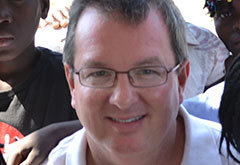
Not many people walk around an orphanage in Africa and say, “Hey, that kid would be a great factory worker some day!”
But not many people go nuts – literally. Four years ago I was a high-flying executive, but then I sold it all and moved to Mozambique. I had worked at a number of food companies, including Hershey’s Chocolate.
It was through a cocoa purchasing trip that I made my first visit to Africa. While surveying cocoa yields in Ghana I was confronted with striking poverty. Children were walking miles for water, living in huts, and unable to attend school. Amidst what seems like unresolvable poverty, there seemed to be tremendous agricultural potential.
A few years later in Tanzania I was asked by the government to come help them. I did it for free. The fields and local markets of the villages were full of fresh produce, but only in season. Consultants were advising the government to export fresh produce to Europe, but I examined the situation and thought the crops would surely spoil in transport. I believed that African agricultural potential would best be achieved through food preservation.
Realizing we could help, the entire Larson family sold it all and moved to Mozambique, the former world leader in cashew production. We purchased a building and renovated it to world-class standards to become the factory for Sunshine Nut Company. We hired 30 young men and women, the majority of whom grew up as orphans or vulnerable children.
By locating near the orchards we are able to go from “tree to pouch” in a very short time. This results in an incredibly fresh cashew. Many cashews go through middlemen and warehouses and can take up to two years to make it to market. We are redefining the way a fresh cashew should taste.
A former Porsche-driving suburbanite, I now drive a beat up 90s minivan, fondly named “The Love Van”, through the bush of Africa – often to survey potential expansion sites.
On our last trip to one of the growing regions we met with some supportive leaders of the Mozambican government. They asked us how much land we needed, as if there was no limit to what we could ask for. When I told them we just need an acre or two for each factory, they were a bit stunned. We want to work with the farmers, not work them off their land.
Our big plans are mini-sized. In an era when multinationals are coming in and parceling up land for big plantations which dislocate villages, Sunshine Nut Company is pursuing a different approach.
The plan is to build many mini-factories where no one else would. By locating in rural areas we can bring opportunity right to the poorest growing regions. Every mini-factory will have a community room where we can offer medical care and microfinance, educate growers on best practices, deliver educational support for local teachers, and provide other hand-ups which promote growth from within.
In 1975 Mozambique was the world leader in cashew production. Upon gaining independence, a civil war started, investors pulled out, and World Bank policies decimated the industry. The country slipped to the third-poorest in the world. The annual cash income for a rural farming family is as low as $31 per year. In a nation where 80 percent of the population are subsistence farmers, cashews can provide opportunity.
Each cashew requires hand shelling and peeling. It is a labor-intensive project which can bring employment to thousands, if done in-country. With 50 employees at our roasting plant, we employ about 1000 people to shell and peel, and provide fair pricing to 50,000 smallholder farmers.
On a typical day, I head off to the factory while my wife Terri, a former schoolteacher, goes to the children’s centers that the company supports. She is the Director of Social Impact for the company and oversees the raising and dispensing of funds for the 501(c)(3) Sunshine Approach Foundation. But at the centers, she is simply Mama Terri – stopping here and there to kiss a forehead or hold a little one.
Sunshine Nut Company aims to give back 90 percent of the distributed profits – 30 percent to the cashew growing communities, 30 percent to orphan care centers, and 30 percent to create new transformational food companies. Already the company has planted 2,000 cashew trees as gestures of kindness and formed many partnerships with children’s centers. We paired orphans with a widow, and they are now living together as a family, in what they are calling their first Sunshine House. We plan to replicate this family living opportunity for more orphaned children.
I drew inspiration from Milton Hershey, the philanthropist and founder of Hershey’s, my former employer. Outside the Milton Hershey School – a boarding school for orphans – there is a quote: “If we had helped a hundred children it would have all been worthwhile”. One of the hundreds of children the school helped is my father in-law, a 1955 graduate.
We don’t want you to buy our product out of pity for the poor and orphaned in Africa. We want you to buy our product because it is a quality product, sold at a fair price, that you enjoy eating. We don’t want to just compete, we want to win. Our supporters are hardcore. We launched in the US last October and have since landed retailers like Stop & Shop, Giant, Whole Foods, Martin’s, and a number of natural foods stores from coast to coast. We want to be the leading cashew brand – synonymous with hope, opportunity, and transformation.
As for the kids at the orphanage being future factory workers – that’s a serious goal that will transform their lives for the better. But only one that is made possible by fans and supporters.
Here’s my recent TEDx talk about our work in Africa:
Center a Model For Extending Surgical Care To Billions

One of the great accomplishments of medicine is to treat not only that which is external, but also that which is internal. This is the purpose of surgery: treating that which cannot be resolved with changes in nutrition, exercise, drug therapies, vaccinations or rehabilitation. Access to quality surgical care can have broad ramifications for a country, both social and economic.
Surgical conditions represent approximately 30 percent of the global burden of disease. Surgical care is needed throughout life, across all levels of care, and is used to treat a broad range of diseases. Surgery has proven to be a cost-effective intervention, while failure to treat surgical conditions threatens the productivity of countries. Five billion people lack access to safe and affordable surgical and anesthetic care.
An important initiative in global public health partnerships is the development and support of surgical centers of excellence, where surgical specialties are developed and implemented in line with the needs of a particular region. A prominent example is the Salam Center for Cardiac Surgery in Khartoum, Sudan, which is a project of the international NGO EMERGENCY, based in Milan, Italy.
EMERGENCY provides high-quality, free health care to people affected by war and poverty. The organization views health care as a basic human right, even in war and conflict, and it operates clinics, first aid posts, birthing centers, rehabilitation centers and hospitals in Afghanistan, Iraq, Sudan, Central African Republic, Sierra Leone and Italy. Since 1994, the organization has treated more than six million people in 16 countries, free of charge.
The Salam Center, which opened in 2007, is a response to the pandemic of rheumatic heart disease in Africa, caused by rheumatic fever resulting from a bacterial infection. It is estimated that 15 million people worldwide are affected by rheumatic heart disease every year, leading to 200,000 deaths. Sub-Saharan Africa has the greatest prevalence of the disease.
In early 2013, while searching for an NGO with a focus on cardiac surgery, I came across the trailer for the Oscar-nominated documentary, Open Heart by Kief Davidson. It’s the story of eight Rwandan children, all of whom required cardiac surgery to correct heart valves damaged as a result of rheumatic fever, that travel to Sudan for surgery at the Salam Center. I was immediately convinced that I should be a part of the Salam Center’s efforts. I resigned from my job as a perfusionist, applied for a position at the center, and made preparations to leave my life in Los Angeles.
In the course of six months working with the Salam Center, I participated in about 120 surgeries that included adults and children from Sudan, South Sudan, Ethiopia, Eritrea, Senegal, Sierra Leone, Chad, Central African Republic and Afghanistan. The center is very impressive in its capacity to deliver high quality cardiac care, its attention to efficiency and cost effectiveness, its employment of local staff, and its commitment to reduced environmental impact. Personally and professionally, I will long remember the opportunity to spend six months there, offering the best of my clinical skills, and restore health and bring life to those who needed help.
Recently, the Salam Center extended its impact beyond Africa by treating a 17-year-old boy from the Philippines named Reynaldo Nilo. After his sister Sarah watched Open Heart, she got in touch with EMERGENCY. Reynaldo had suffered from rheumatic heart disease since the age of 15 and had few treatment options available to him in the Philippines. At the Salam Center, he will undergo cardiac surgery, free of charge, and the medications he needs will be provided by the hospital at no cost.
The Salam Center for Cardiac Surgery represents a model for planning, implementing and developing global surgical centers of excellence. We hope to replicate this model in other regions, and adapt it to the treatment of other health problems, in order to have an even greater impact and benefit even more people.
Innovative Distribution Channels to Serve the Base of the Pyramid
Before we met Ana Veronica Ojeda Quispe in the state of Puno, Peru, she was a single mother struggling to provide for her five children through small, part-time jobs. She ran away from home when she was just 11 years old to escape abuse and was living without the support of her family.
Ana Veronica’s story is not unlike those of the many women who live in rural and peri-urban communities in Peru. They can’t find good jobs and they become trapped in a cycle of poverty. Their communities, which are often far from city centers, have minimal access to essential products such as shampoo and fortified food for children, which contribute to a good quality of life. At the same time, many multinational and national companies face challenges in getting their products to rural, base of the pyramid (BoP) customers.
We, at the Clinton Giustra Enterprise Partnership (CGEPartnership) saw this as a market opportunity. We created a distribution social enterprise model that closes the market gap by training and empowering female entrepreneurs as a door-to-door distribution network in remote regions. Our model aims to create livelihoods for female entrepreneurs and to increase the access and affordability of essential and pro-poor goods to BoP communities.
Entrepreneurs receive sales and financial training, a uniform, and a basket of products on consignment. They sell door-to-door, in markets, or from storefronts in their homes and earn commission on all their sales. The long-term goal of our distribution enterprises is to improve the health and quality of living for our entrepreneurs, their families, and communities.
The innovation in our model is not only in the direct sales network of our female entrepreneurs, allowing for the highest level of market penetration, but also comes from our product range. Our product range is broader and more dynamic than any single traditional outlet or proprietary direct selling channel. It includes items ranging from fortified foods to personal care items to household products to solar lamps.
We achieved this product basket by partnering with large national and multinational companies such as Unilever, Procter & Gamble, and Nestle as anchor suppliers. These companies understand that the BoP market will drive innovation and economic growth within the next decade and they are responding to the growing demand of the BoP. We are continually adding new partners and we encourage companies to partner with us in order to grow their market reach as well as their social impact.
In Peru, our distribution enterprise has almost 300 entrepreneurs actively selling in four regions: Puno, Juliaca, Cusco, and Abancay. We are adding a new peri-urban region in Lima soon. By the end of the year we will reach nearly 1,000 entrepreneurs and at scale, over 3,000.
We will be forming our second distribution enterprise in Haiti in a few months where we are currently working with 70 entrepreneurs as part of a pilot. By the end of the year we plan to reach 350 women in Haiti, and 2,000 at scale. Future enterprises are planned in Mexico, Nigeria, Colombia, and Bangladesh, among other countries.
All enterprises are for-profit. By taking an enterprise-based approach we are able to replicate successful models and recycle profits to grow and sustain our businesses and impact well beyond the reach of traditional donor-funded programs.
Since joining us, Ana Veronica has increased her income by 70 percent, enabling her to save enough money to buy school supplies for her children. She is proud to be a role model for them in teaching them how to work hard, generate income, and prioritize their education.
I am looking forward to attending the IDB BASE Forum in Mexico City later this month where I can share more of our stories and lessons learned, and meet new partners who are interested in joining CGEPartnership to bring opportunity to BoP populations in Latin America and beyond. To learn more, visit cgepartnership.com/our-enterprises/distribution/ and www.forobase2015.com.
June 25, 2015
Recasting Budgeting as a Team-Building Opportunity
Budgeting: The word can, more often than not, elicit a collective groan in a nonprofit. Program directors resent what feels like an administrative distraction from their primary mandate. Finance dreads being the messenger of budget cuts to program staff. Everyone emerges from the annual exercise fatigued and a little bruised.
Imagine, instead, budgeting as a collective activity where leadership makes choices as a team around organizational priorities and financial resources. Cast in this light, budgeting shifts from being a copy-and-paste template to the stuff of strategy, vision, and, dare I say, optimism.
Together, three simple principles can help transform budget development at your organization.
1. Democratize planning
Budgeting often occurs among the top echelons of leadership — the Executive Director, the Chief Financial Officer, the Board. But, limiting financial information to this closed circle overlooks a key constituency: those actually running the programs. Program staff experience the effects of financial decisions firsthand, and yet, are frequently absent from the decision-making.
I recently worked with a social services agency that had successfully shared the work of budget development and monitoring out to the ranks of line managers. In this paradigm, program leaders are active participants in the financial planning process: They feel a strong sense of ownership, even a healthy competition, over the financial performance of their programs. They also get, intuitively, how individual program decisions add up to an overall financial bottom line — both in experience and on paper. Today, the agency as a whole has a far greater understanding of its activities and how much they truly cost.
This type of shared financial set-up is fairly radical for the average small to mid-sized nonprofit. Program managers typically don’t join a mission-driven organization with financial management aspirations in mind, at least not the ones I’ve met. Despite being the primary spenders at the organization, program staff often make decisions in the dark, unaware even of their own budgets and accustomed to operating in an information vacuum. This disconnected relationship to their finances breeds frustration, and invariably strains working relations between finance and program staff.
Trust your program leaders to make financial decisions about their programs and build their own budgets. By doing so, you empower your staff with knowledge of the numbers behind their programs. In the process, you create a far more democratic and collaborative organization.
2. Set and communicate clear targets
Targets bolster the planning process. Before diving into your Excel template, ask yourself: What are the goals of this year’s budgeting process? Based on the organization’s programmatic aspirations, do you expect to meet, surpass, or shrink the prior year’s expense budget? Is your revenue static, or do you anticipate major shifts in your funding sources in the upcoming year? And, how do these organizational realities translate to the level of individual programs?
Goals will vary by business model. For example, a foundation I worked with articulated two central mandates prior to budgeting: (a) the percentage of their expenses that would be dedicated to grant-making; and (b) the portion of their expenses that would fund their administrative activities. These two numbers anchored their planning exercise, and created a sense of larger purpose for all budget owners. They also provided leadership with a rationale for budget cuts and modifications.
All budget managers — not just the Executive Director and Chief Financial Officer — should intimately know and understand the rationale for this year’s budget targets. Do not leave this to chance. Bring all your budget players together in an official “kick-off” meeting. By creating time and space to discuss this year’s budget goals, timeline, and other key information, you build momentum and foster a sense of collective effort. As anyone in a functioning team can attest, a well-coordinated group with a common, shared purpose is a powerful force. Make thoughtful financial planning that shared purpose.
3. Imagine beyond the current year
Budgets have limited meaning without a larger context in mind. Multi-year financial planning may seem like a luxury, but without this longer timeframe, you risk becoming myopic in your thinking and vision. A year-to-year plan certainly makes it easier to copy-and-tweak last year’s numbers. But, reverting to this mode of budget building hamstrings the exercise’s full potential.
The financial plan should take its marching orders from the program vision. Whatever the desired outcomes and milestones of your programs are, they risk going unfulfilled or being short-changed without an accompanying financial plan. In turn, the program vision provides the backbone for the financial plan — in the absence of this bigger picture, a budget is just numbers.
The rigor and discipline of a nonprofit’s financial planning process is also often a proxy for its overall health. An organization that routinely starts its fiscal year without a Board-approved budget often manifests other dysfunctions — for example, an anemic leadership team and non-standard, broken business processes.
One of the reasons that budgeting is such a readymade team-building exercise is because it is a core and recurring organizational activity. Rather than striving for overnight transformation, think of each year as practice, and as an opportunity to build upon the strides made the prior year.
What is budgeting season like at your organization? This year, try something new: make finances a shared responsibility; use targets to create momentum; and seed a bigger-picture vision that gets actualized through your financial plan.
June 20, 2015
Energy Access Doesn’t Have to Wait
To achieve universal energy access for more than a billion people living in energy poverty by 2030, the International Energy Agency (IEA) estimated in 2010 that it would would cost $700 billion and take 20 years. Even as the United Nations and member states have identified universal energy access as an imperative, the prospects for achieving it are dim. Last month the UN’s Sustainable Energy for All Forum released an update that admits little progress has been made.
If the current framework is failing, it is time to challenge the $700 billion mindset.
Power for All, a global campaign founded by businesses and NGOs – including d.light, GOGLA, Greenlight Planet, Off-Grid Electric, Practical Action, and Solar Aid – challenges the conventional wisdom that we need to spend the equivalent of the GDP of Saudia Arabia to achieve universal access. Power for All advances decentralized renewable energy (DRE) solutions as the fastest, most cost-effective and climate-resilient approach to universal energy access. Together, we know we can end energy poverty before 2030, for one-tenth of the cost that experts predict.
How do we know? Together the Power for All founders – all focused on decentralized renewable energy – are already providing energy to nearly 15 million customers; that is more than some of the largest electrical utility companies in the world. Our sector’s success is based on giving customers in rural un-electrified areas (who account for the vast majority of those without access) an opportunity to create their own power at a scale they can use, and a price they can afford. The result? A revolution in the way power is generated, used and paid for.
A growing range of proven, scalable off-grid options – encompassing a wide range of distributed generation and decentralized renewable energy solutions, including pico solar, pay-as-you-go home systems, mini-grids and mobile solar farms – are immediately deployable and widely affordable.
At the same time that the $700 billion mindset has failed to drive change at an acceptable pace, the DRE sector has been hard at work creating a new paradigm that is democratizing energy access through social enterprise. Energy consumers have proven in large numbers that they can and will pay market prices for modern power solutions. The under-electrified want to be active participants in creating energy access for themselves, their families, and their communities.
What’s more, evidence suggests that DRE, based on an achievable growth rate, can deliver universal energy access in half the time for 10 percent of the cost predicted by the IEA.
Power for All’s predictions rest on leveraging the power of the market to rapidly sell quality energy access products and services to the energy impoverished at a scale they can use and price they can afford. To achieve this, we must challenge the $700 billion mindset and the policy framework behind it. The cost, timelines, and recommendations proposed by the IEA excuse the slow growth in access to power, and must be questioned in order to create a new paradigm for change.
We must pursue better, faster paths to universal energy access: market-based distributed solutions that directly engage the energy impoverished in creating their own renewable energy and controlling their own destinies. We all have a role to play. The ecosystem of universal energy access – industry, governments, donors, NGOs, investors and energy consumers – all need to respond to specific calls to action that will advance decentralized renewable power and help bring power to millions by 2025:
Include decentralized renewables in energy policy: Governments can facilitate the market with policies such as reducing tariff barriers on renewables (duties and value-added taxes) and including distributed renewables in national energy policies.
Mobilize capital for the entire value chain: Investors, multi-lateral agencies, banks and global finance initiatives can accelerate the market by earmarking funds specifically for decentralized renewables, including financing for pay-as-you-go and distribution.
Focus on market-building and policy grantmaking: Development agencies and foundations can accelerate universal energy access by directing funds toward sustainable market-building that directly engages the energy impoverished in creating their own energy.
Drive higher quality and efficiency: The broader decentralized renewable sector can accelerate access by ensuring high-quality, affordable, clean and safe products and services; expanding the range of efficient devices; and making energy access more affordable.
Choose renewable, distributed, democratized power: Energy consumers who choose renewable and decentralized power – ranging from zero net energy buildings to solar home systems – grow legitimacy for the sector and the solutions needed to deliver universal energy access.
By focusing on these key accelerators that will help leapfrog “business as usual” energy delivery – just as mobile phones leapfrogged landlines in the developing world – we know we can achieve universal energy access in half the time for a fraction of the anticipated costs. Energy access doesn’t have to wait.