Darian Rodriguez Heyman's Blog, page 4
July 23, 2015
Envisioning a World With Sanitation For All
Safe drinking water and basic sanitation are essential to human health. While the two are often lumped together under the acronym WASH (Water, Sanitation and Hygiene), we here at the Skoll Foundation see them as distinct, though closely related issues.
The world achieved the Millennium Development Goal (MDG) of halving the proportion of the population without sustainable access to safe drinking water in 2010, ahead of schedule, but sanitation lags far behind, with 2.5 billion people still lacking access to improved sanitation.
There are a host of explanations that contribute to this gap:
Unrealized demand. Most people understand the importance of clean water for wellbeing, but there is often a lack of understanding about why sanitation services, too, are essential for good health.
Behavior change is hard. For those not accustomed to using toilets or washing their hands, it takes extra effort to help them change their ways.
Sanitation systems are complex. Effective sanitation services require coordination between actors at different steps, from developing customer demand, to delivering services, to removing the waste.
The Sustainable Development Goals (SDGs), set to be finalized later this year, are expected to include universal access to clean water and sanitation by 2030. The goal is ambitious, and if the world is to meet it, there is some significant catch-up to do on sanitation.
Momentum is building, led in particular by the Clean India campaign’s pledge that everyone in that country will have access to a toilet by 2019. This is an enormous undertaking. Though thousands of toilets have been built as a part of the campaign, a number of early reports mention difficulties with getting people to use them, to the point where the city of Ahmedabad is actually implementing a one rupee reward system for residents who use public toilets.
The funding landscape has presented challenges as well. More funding is consistently directed towards water provision, despite the fact that the needs are greater in sanitation.
The goal of reaching universal sanitation access seems daunting, especially considering that the world did not meet the less ambitious MDG of halving the proportion of the world lacking access to improved sanitation services.
Given that sanitation has much further to go but still garners less attention and funding than clean water, how can the WASH sector accelerate to achieve universal sanitation access by 2030? What low-cost models must be embraced, and by whom?
At the Skoll Foundation, we see social entrepreneurs making a difference in the lives of those who are underserved by existing sanitation solutions:
They help develop community-led solutions, engaging with local governments and service providers to understand the business case for extending coverage to the poor.
They mobilize capital from the investment community to increase financing for services.
They monitor the solutions that have been put into place to track the durability of their interventions.
They empower local entrepreneurs and community groups to manage and maintain the systems that have been put in place.
In the rest of this series, we will hear more about some of these approaches, and the perspectives of some of the leading organizations in the sector on how we can achieve universal access to sanitation by 2030.


July 22, 2015
You Too Can Hack for Social Change

Feeding Forward is a mobile application that is on the frontlines of a battle against food wastage in the United States. Since its launch in 2013 the app has helped recover more than 690,000 pounds of food to feed more than 570,000 homeless people in the San Francisco Bay Area. Feeding Forward won the AngelHack Silicon Valley Hackathon in 2012.
This innovative solution is yet another example of how technology is triggering social change. But it also reflects a growing trend: collective citizen impact. Indeed, citizens from all walks of life and sectors are hacking socio-economic problems – whether local, regional or global.
Hacking for good
Hackathons offer developers and coders opportunities to design new software and hardware, usually in an intensive day-long session.
Seeing the success and potential, the tech world started to leverage hackathons to design digital solutions for social and economic challenges, spending caffeine-stimulated sleepless nights coding for change.
Yet many promising prototypes failed to yield the expected outcome because when implemented, the solutions rarely matched the real problems. Why?
Even though hackathon participants were genuinely interested in social change, they were not armed with the all the necessary information, especially about realities on the ground.
Over the past couple of years, a much stronger wave has emerged that combines technical and practical expertise in the form of civic hackathons. These events are an effective way to raise awareness about issues, understand the real needs and develop relevant solutions.
Social good hackathons have sprouted around the globe with a mission to tackle major issues such as access to education, health, climate change, disaster management and even food and clothing.
From San Francisco to Seoul, community organizers, developers, designers, entrepreneurs along with government staff are increasingly turning to hackathons in a bid to put their heads together to find concrete and achievable solutions.
For instance, Human Dignity was the winning pitch at this year’s XPrize Visioneering gathering. The concept aims to provide a scalable and sustainable pack-and-go housing solution for refugees around the world.
Online platforms such as OpenIDEO maintain a hackathon approach but the challenges are often stretched over months to allow users to understand people’s needs before diving into solutions.
Grand challenges led by XPrize, OpenIDEO, Sankalp’s Social Design Jam in India or Harvard’s Data Fest are just some of the major initiatives that are cultivating change from the grassroots.
Buzzing with energy and motivation
I recently attended an education hackathon organized by Cartes Blanches in Paris, France. Buzzing with energy and motivation, the room was full of people, young and old, employed and unemployed, from the public and the private sectors. More than that, it was an event that connected like-minded people who were rallying for a common cause: rethinking the link between education and the world of work.
In my opinion, these hackathons are an ideal way to empower and engage young minds to become future agents of change. Millennials are eager to leave a mark on the world and are on the lookout for inspiration to launch their own start-ups and initiatives. They are also frustrated due to the shortage of opportunities to develop their ideas and creativity. Social good hackathons and jams can help fill the void.
So what skills do participants need to take part in a social good hackathon? The essentials include creativity, team spirit and an open-mind with plenty of enthusiasm to solve problems. And FYI: coding is not a necessity.
In fact, not all challenges are linked to technology. Civic hackathons that incorporate human-centered research are also on the rise.
A global campaign that remains etched in my memory is the Gates Foundation’s in 2012. The Foundation challenged universities around the world to design affordable toilets that could transform human waste into useful resources such as energy.
Hackathons – be it massive gatherings, an online hub or a large-scale global challenge, are creating opportunities for communities to solve problems with the appropriate talent and skills set. In a day and age when one size does not fit all, community-driven solutions are the key to solve local challenges. And this happens when citizens are understood, involved and engaged.
How Do We Get Businesses Working Towards the Sustainable Development Goals?
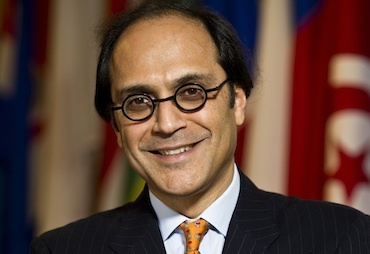
“Let us put aside what divides us and overcome narrow self-interest in favor of working together for the common well-being of humanity.”
With those inspiring words, UN Secretary General Ban Ki-moon kicked off last week’s Addis Ababa conference on Financing for Development. It was the first of a series of major events that could make 2015 a turning point in sustainable development, the next two being the launch of the Sustainable Development Goals (SDGs) in New York in September, and the Paris conference on climate change in December.
One of the most significant changes since the declaration of the Millennium Development Goals, set to conclude this year, is that the private sector is now seen as a key stakeholder. With governments reneging on prior commitments, and given the projected $3 trillion to $4.5 trillion price tag to achieve the SDGs, corporate participation is essential.
Secretary General Ban’s plea to overcome narrow self-interest may, however, be the wrong signal for businesses responsible for meeting earnings expectations and delivering returns to shareholders. With the majority of growth expected from the developing world, self-interest may be the most compelling reason for businesses to participate in sustainability and inclusive growth.
It is fitting that the conversation about financing development was kicked off in an African city rather than in New York or Paris. Africa has emerged as the last frontier for corporations seeking untapped growth opportunities – a perfect lab for perfecting sustainable and inclusive business models. However, Africa is also a perfect reminder that getting these models right will be far from easy.
Case in point: Nestlé executive Cornel Krummenacher recently announced that his company is scaling back massively on its Africa operations. “We thought this would be the next Asia,” Krummenacher said, “but we have realized the middle class here in the region is extremely small and it is not really growing.”
Nestlé’s retrenchment could deter other private investment in sustainable development, just when the world is expecting businesses to lean in. Had this been another company, an about-face on Africa may not have been as worrisome. But Nestlé is a bellwether for sustainable and inclusive business models. With 40 percent of its Africa sales from “popularly positioned products” – versions of its famous brands targeted at lower-income consumers – it has outsold its major competitors.
In parallel, the company has a broad portfolio of sustainability and inclusion initiatives: the Global Healthy Kids Program in Mauritius, Kenya and Mozambique; the New Hope Project in the DRC to promote female entrepreneurship; and productivity-enhancing programs for corn and cassava farmers in its supply chains. It also developed many regional partnerships: with the East African Dairy Development Board in Kenya, Uganda and Rwanda; the Uganda Coffee Development Authority; and the Tanzania Coffee Research Institute.
In 2012, over 133,000 people in the Africa/Middle East region earned their living from Nestle – of whom only 26,000 were employees.
There are three important lessons for stakeholders – in both the private and public sectors – to take from Nestlé’s retrenchment:
1. Interpret market growth forecasts in context, know the territory, and do your own math. Companies must be clear about the true opportunities in developing markets, and the payback periods. It is important to do reality checks with continuous on-the-ground observations and local insight.
Even definitions of “middle class” should be scrutinized. A Standard Bank analysis – cited by Nestlé’s Krummenacher – estimated that the middle class in the 11 top African countries would reach 22 million by 2030, a far cry from the 500 million estimated by the African Development Bank.
Beyond markets, the context can be sobering. Africa is home to 75 percent of the world’s poorest countries. Around 30 percent of the population went hungry in 2010, more than half lack access to electricity, over 270 million lack access to clean water, and over 500 million suffer from waterborne diseases. Eleven million people are stateless or returnees. One in 16 women will die during childbirth or pregnancy, and an African child dies from malaria every 30 seconds.
Business and policy strategies in Africa must be based on a granular understanding of the full picture, including a recognition of the unevenness across the continent’s 50-plus countries.
2. Prepare to be surprised, create options to grow as the market grows – and help the market grow. Africa is the youngest region in the world, with few formal safety nets, recent penetration of mobile phones, and increasing urbanization. There are chances of an African entrepreneurship boom.
Technology could enhance even traditional sectors; the Kenyan venture iCow, for example, provides dairy farmers with market and meteorological data on a mobile app. Predicating an emerging market strategy on a narrow view of sizing and serving the middle class would be self-limiting. The entrepreneurial ecosystem could evolve as a powerful partner in growth.
Companies like Nestlé could re-consider their product strategies, think beyond their existing brands, and adopt products being developed in the market itself. They could explore partnerships with entrepreneurs, home-grown competitors, other players in the value chain, as well as the public sector. With their global resources and scale they can catalyze growth, avoid over-commitment, preserve the option to play in the market, and grow with it.
3. Funding plans for the sustainable development goals must factor-in commercial imperatives. Given the size of the investment necessary to achieve the SDGs, private investment is essential, but we must be realistic about what to expect. Businesses, especially those that trade in public equity markets, operate under constraints. Getting to the development goals has to be compatible with core business interests; otherwise much of this activity will be relegated to adjunct units that are considered discretionary, and are first on the chopping block during cost-cutting phases.
As we launch the next 15 years of sustainable development, it is good to be aware of lessons emanating from the continent that hosted last week’s conference. For business to play its part, social goals and narrow self-interest – realistically crafted business goals – must find an overlap.
July 21, 2015
Starting From Scratch: Rebuilding Liberia’s Health System After Ebola
In 2014, the world watched as the Ebola virus rapidly spread across West Africa. The countries of Liberia, Sierra Leone and Guinea were simply overtaken by the disease.
While many agencies were on hand to provide emergency medical assistance, one of the biggest challenges faced by the ministries of health in these countries was the lack of a reliable means to reach remote rural communities with treatment, surveillance and education. The Ebola crisis highlighted how a lack of reliable transport can make health systems weak, with devastating consequences.
During the crisis, Riders for Health were on hand to advise the Liberian ministry of health on how to manage their vehicle fleet. Now we’ve established a brand new program in Liberia helping to re-build the health system after Ebola.
Starting from scratch is a daunting prospect. It is a huge logistical feat – building new workshops, importing the vehicle parts and tools, and training technicians to maintain these vehicles to ensure there are no preventable breakdowns. Since the beginning of this year, seven Riders staff have been on the ground training technicians, drivers, managers and motorcycle couriers, working on building six workshops around the country and recruiting in-country staff.
Key to implementing the new program has been harnessing the expertise of staff from across our current programs in Africa and the UK. Led by myself and our Partnership Director Kameko Nicholls, staff from Zimbabwe, Zambia and our flagship programme in The Gambia have all been working around the clock to get this program up-and-running. Their roles vary greatly – from mechanics to logistics experts to driving and riding trainers. We have standardized systems across our programs – the same tools, paperwork, training methods – to make it as easy as possible for staff to transfer from one country to another
We are establishing two projects in Liberia. One is a sample transport system, which uses trained motorcycle couriers to transport blood samples for diseases such as Ebola between health clinics and laboratories. The other is a fleet management service – maintaining the ministry of health’s vehicle fleet to keep health care on the road. Both of these systems already run successfully in other programs – in The Gambia, for example, we manage the ministry of health’s entire vehicle fleet.
Our national sample transport program in Liberia is already operational and our motorcycle couriers are playing a vital role in diagnosing cases of Ebola and measles quickly and effectively to ensure patients are put on the right treatment, fast. We were able to establish this quickly, because we could replicate the highly successful transport systems we already run in countries such as Lesotho and Malawi. All our programs are designed to be replicable on any scale, and we now have 25 years of experience in establishing our sample transport system in countries across Africa.
This has been a real team effort, but has not been without difficulties. From the basic logistics of trying to get staff and equipment into an Ebola-hit country, to overcoming issues of terrain and weather conditions – establishing a new program is not always an easy ride.
We have had to be flexible in our approach, and in this environment the situation changes daily. In such mountainous and wet conditions, trucks have struggled to operate because they get stuck in the mud on poor roads that lead to the most remote rural communities. This has led to us using a greater number of motorcycles, relying on local knowledge of roads and routes, and employing techniques from our other programs to avoid sample couriers and health workers being delayed.
As with all of our programs, our ultimate aim is to hand over responsibility to Liberian nationals. We have already begun to recruit senior staff, as well as couriers and technicians, to lead the program, and our staff from other programs are involved in their training and development. Throughout the process, however, Riders UK staff will continue to support and monitor the program to help ensure its success.
The Internet of Wildlife
With the recent surge in the illegal wildlife trade, stories about the fight for survival of endangered species are on the increase. With forest cover quickly disappearing, the oceans growing more polluted, and animal populations dwindling towards extinction, there are only pockets of good news – despite the efforts of conservation organizations and individuals to reverse the trend. Our struggle to co-exist peacefully with nature gets more difficult every day.
Forces driving the problems include a growing human population and increasing competition for land and food, resulting in habitat loss, poaching, depletion of natural resources, pollution, climate change, poor environmental and tourism practices, and disease. These are hard problems just to understand, let alone develop solutions for.
The wildlife conservation sector has some of the most difficult challenges to solve, with the fewest resources. In the absence of innovative and universally accepted approaches to derive financial value from wildlife, animals and those that believe in protecting them are bound to lose.
The commercial sector has long turned to technology to get insights into complex challenges and optimize resources. Increasingly governments and the social sector are doing the same. There are some great examples of how technology is being used for conservation but by and large, the wildlife conservation sector has been behind in embracing and scaling modern technology for its purposes. The gap between what technology can do and what it is doing for wildlife is widening.
The Internet of Things (“IoT”) offers new opportunities for conservationists. IoT refers to the network of physical objects embedded with electronics, sensors and connectivity to enable greater value and service by exchanging data with other connected devices, individuals, or organizations. IoT makes it possible to better understand human behavior. Take grocery stores that can predict when a couple will end their relationship by analyzing their purchasing patterns, or that can tell their customers the name of the farmer who grew their cabbage, creating a closer connection to the food they eat.
In the social sector, IoT is being applied to food, education, water, and healthcare. Let’s also think about how IoT can be directly applied to saving wildlife. When we know as much as about animals as we do about humans, what they do, where they go, and when they go there, we can use that information to make better decisions about how to co-exist with them.
IoT is only limited by our imagination. Let’s imagine how:
Farmers could manage their crops and livestock to minimize human-animal conflict while living sustainably off shared land.
Scientists and NGOs could glean invaluable insights that could help develop techniques and programs to save them.
Governments could better allocate anti-poaching resources.
Park managers could more effectively and efficiently manage the parks and eco-systems they are tasked with protecting.
Tourism operators could provide a more powerful and memorable experience for their clients.
People worldwide could become more emotionally connected with individual animals whose lives are brought virtually into their homes.
Technology presents a tremendous opportunity for conservation organizations and developers to come together and more aggressively fight the loss of wildlife.
To start:
Conservation organizations can hire chief technology officers who spend their time thinking solely about how to apply technology to conservation problems.
Conservation funding organizations can allocate a larger percentage of their grants towards forward-thinking technology solutions that support their grantees.
Technology organizations can allocate more resources to applying their solutions to conservation.
These steps position all organizations to collaborate with each other on a world of possibilities. Time is running out, yet tools exist that can make a difference. I can’t wait to see how we put them to use.
Some articles on using technology to save wildlife:
“Biotech startup creates rhino horns – without rhinos” (CNN)
“Can you use big data to track an elephant poacher” (Foreign Policy)
Feasibility Study on the use of drones to support anti-poaching activities (MIT)
“Tag a tiger: How facial recognition can help track endangered animals” (Fast Company)
“How zoology has been transformed by mobile technology” (The Guardian)
“Elephants in the midst: warning system prevents human-elephant conflics in India, saves lives” (Mongabay)
“Can technology developments save what’s left of India’s wildlife?” (Times of India)
July 17, 2015
Why the Two Percent Can’t End Poverty
About two percent of America’s GDP is fueled by donations to charities — just two percent.
If you really want to get serious about fighting poverty, you need to follow in the footsteps of Starbucks, Apple, and Exxon: Find someone who has a reason to pay you to fulfill your mission, whether that mission is making coffee, selling gadgets, filling gas tanks, or fighting poverty.
Nonprofits can’t solve large-scale problems because they can’t scale, and poverty – like many big social problems – can’t be addressed without scale. Profit-driven ventures will drive the repetition of a behavior or transaction as long as that transaction has a financial benefit for the people involved. The challenge is to direct the profit-making engine at a social problem.
Many companies have addressed social problems by promising that every sale will deliver a benefit to those who are less fortunate, such as Toms.
My company, BeneStream, took a different approach. Tens of billions of dollars in Medicaid and food stamp benefits are unclaimed each year. The benefit of that transaction to its recipient is insufficient to drive utilization, so we asked, “Who else would benefit from this transaction?” and “Would they pay for it?” Answering “yes” to the second question meant the formation of a transaction that would drive a market and create change. We saw a need in the market, and we created Benestream to offer Medicaid-enrollment services to employers looking to provide healthcare solutions to their low-income employees.
Fighting Poverty With Profit
Here are the three biggest reasons for-profits are key to solving America’s poverty problem:
Market Strength: As long as people will pay for it, more businesses will repeat the transaction, and the transaction will have a life of its own and create a market. If the transaction has a powerfully good result like providing a family with healthcare, that result will be repeated until the market is saturated.
Scalable Sustainability: Many organizations that address poverty must pursue charitable dollars every year. They’ll survive as long as they please donors — whether their programs are the best way to help those in need or not. But if a company can help someone after paying to reduce poverty in some way with a replicable and profitable transaction, it can put a dent in poverty. More success breeds more profit and provides the organization the ability to continue to do its work.
Mission Alignment: When a company achieves a high level of alignment, its profit and impact become correlated. The more impact it has, the more revenue it generates. That revenue can then be re-invested into the operation. This is the epitome of “doing well by doing good” — a philosophy that underpins much of the work in the social venture space.Because fundraising — not social reach or revenue — is the primary driver of nonprofits, these organizations can’t achieve this type of growth correlation.
Increasing Social Value Without Decreasing Profit
A number of for-profits have begun to emerge and prove that this model has social value.
Pigeonly, for example, provides prison inmates and their families with a variety of communication options that make it easier and more affordable to keep in touch. The company meets a demand that’s disproportionately found among low-income people, and its services are offered at a more reasonable price point than traditional means, such as collect calls. The result is a direct correlation between impact and revenue: The more lives it touches, the more revenue it brings in.
So how can we launch for-profit companies that help fight poverty without sacrificing revenue?
Fund the creation of thoughtful business plans. Building business plans requires time-consuming, expensive market research. Building these plans to do good requires thoughtful consideration of problems that business doesn’t usually tackle. Innovative foundations spending millions to combat poverty should direct a portion of that funding to entrepreneurs to consider how these problems can be solved with market interventions.
Build social innovation incubators. Incubators are the most powerful tools for building businesses by investing in entrepreneurs. Social entrepreneurship must embrace incubators that bring together talented individuals and support them with money and experts that can help them go from idea to replicable prototype. People starting a business for the first time need access to lawyers, marketers, graphic designers, accountants, etc.
Find the right people. There’s no greater force than talented people pursuing a mission. They must be cultivated and given outlets for their work.
Fund projects that build markets or connect people to existing markets. There’s still a role for philanthropy in this new vision. Philanthropists should fund projects that attempt to build new markets or connect people to the larger market around them. These projects need to start from a place of understanding that they’re entering the rough-and-tumble world of fighting for dollars.
The war on poverty is a struggle worth fighting, but if we’re going to win, we have to use every tool at our disposal — not just two percent of them.
July 15, 2015
Mobile Solution Defeats Counterfeit Drugs

The proliferation of counterfeit products, particularly in developing countries, is rapidly reaching epidemic levels. According to the World Customs Organization, fake goods account for nearly 10 percent of worldwide trade, an estimated $500 billion annually. The counterfeit drug market alone is estimated at $200 billion.
Fake drugs are not regulated, and thus are particularly dangerous. In fact, the International Policy Network estimates that over 700,000 people die each year due to fake malaria and tuberculosis drugs alone – that is the equivalent of five jumbo jets filled with people crashing every single day.
The most obvious danger in counterfeit medicine is the use of toxic ingredients, such as pesticides, antifreeze, and even rat poison. Ingestion of these products can cause severe illness or death.
Another less evident danger is medication that includes incorrect doses of the drug’s active ingredient, if it is present at all. Incorrect doses can lead to the development of drug-resistant disease strains – which has been well documented in the case of malaria.
Many approaches to combat counterfeiting have been explored – with varying degrees of success. One approach, chemical testing, has yielded positive results.
Chemical tests evaluate products for authenticity in minutes and are very reliable. Since the tests interact chemically with products, they are suitable for batch sampling only – not for testing each individual product. This makes the tests useful within the supply chain, but not at the consumer level or for smaller pharmacies.
Historically, strong anti-counterfeiting technologies have catered to the supply chain and retail levels. However consumers, who arguably stand to lose the most from counterfeits, have no other means of protecting themselves.
Ironically, the solution for such a complex, widespread problem may lie in a simple technological solution: mobile phones. A number of independent organizations have been exploring the use of mobile phones as a way to root out counterfeit products and the criminals producing and distributing them.
One such solution is being implemented by Sproxil. The company’s Mobile Product Authentication (MPA) solution empowers consumers to verify that the products they purchase are genuine simply by sending and receiving an SMS text.
The MPA technology is being used by pharmaceutical companies to curb the multi-billion dollar counterfeit drug industry. MPA is already being applied to products across other industries such as health and beauty, personal care, automotive aftermarket parts, agri-business and electrical products.
MPA uses two established solutions that are in abundance even in emerging markets: mobile phones and scratch cards.
Consumers can access the solution using any mobile phone. Before purchasing a product, consumers scratch a panel on Sproxil’s security label, revealing a one-time use code. They then text the code to a phone number on the package. Within seconds, the end user is notified, via text, of the result.
Alternatively, consumers can call a local call center to get results in their local language, use the MPA mobile app, or visit Sproxil.com to verify their product instantly.
Authorized manufacturers and distributors can access a web-based data visualization portal to view market information pertaining to their products, which can facilitate smarter data-driven business decision-making.
The technology can also be used as a track and trace solution. By establishing security checkpoints across the supply chain and authorizing only trusted agents to verify shipments, manufacturers and distributors gain greater transparency across their distribution networks. The track and trace solution can support a variety of mobile devices and scanners, ensuring that implementation is cost-effective and flexible.
The technology even creates a conduit of communication between manufacturer and consumer, thus opening up opportunities for important information exchange, such as medical adherence reminders, loyalty rewards programs, and product and brand messages.
While counterfeit products continue to endanger the lives of people who consume them, there is still hope: significant strides are being made to eradicate fake products.
Yet technology alone is incapable of winning the war against fakes; success requires strong concerted efforts between committed governments, manufacturers, distributors, and retailers. Consumer education and engagement are also crucial for fighting counterfeiting on all fronts.
Leveraging Private Investment to Achieve Development Goals
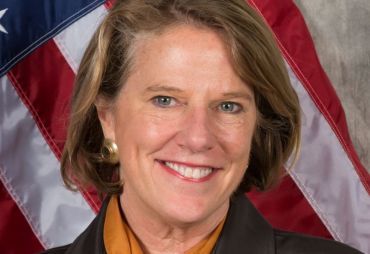
Above: Ghada El Sheikh, a small scale farmer in Lebanon, used a loan from Global Communities to purchase fertilizer and irrigation equipment to help her generate more income for her family. Global Communities’ microfinance lending in Lebanon is supported by $20 million in OPIC financing, which has helped it provide nearly 36,000 loans to small businesses, entrepreneurs and farmers like Ghada.
Business as a force for good
If one were to take stock of the biggest gains in helping the poor around the world over the past generation, which ones would come to mind in a blink? And what might these solutions have in common?
Certainly a major gain has come through the dramatic rise of microfinance. It is a market-based solution to a development problem, not what some people might call to mind for poverty alleviation. Yet it has produced promising momentum towards lifting many people out of poverty.
Microfinance has markedly expanded access to financial services for millions of poor people, often in rural areas. It has enabled them to have access to loans and a safe place to save money outside the household. And it has helped them to smooth out disruptive fluctuations in income levels and deal better with financial emergencies.
Another success story would be the astounding spread of mobile telephony. There are now 5.4 billion mobile subscriptions in the developing world. This is a more than a technological marvel. It is a major contribution to economic efficiency and development progress.
Having a cellphone can mean the difference between breadwinners sending money home to rural families securely and instantaneously rather than hand-delivering it. It can mean the difference between getting a fair market price for agricultural produce or getting cheated. It can mean the difference between getting life-saving advice from a distant hospital or seeing family members suffer from lack of appropriate care. Again, this is a market-based solution to development problem that has unquestionably worked.
Another, more recent, success story is the meteoric rise of renewable energy in developing nations. In 2004, developing nations were attracting about $9 billion in new investment in renewable energy – one quarter of the rate in the developed world. As of last year, developing nations were attracting more than $130 billion in such investment, almost equal to the amount being invested in advanced economies.
This investment does more than expand access to power. It allows some of the poorest consumers to take advantage of some of the most advanced technology. It stabilizes energy prices. It advances political autonomy and stability by making nations less dependent on distant sources of power. And, of course, it makes a long-term contribution to addressing climate change. So this too would be a market-based solution that unquestionably works.
Perhaps the biggest success story has been the ability of several key developing nations to maintain private sector growth rates that roughly double those of advanced economies. Incomes are rising so rapidly that more than 35 countries may graduate from lowest rung of poverty by the end of this decade. That does not mean those countries will have escaped chronic deprivations in regions or sectors, but it is an encouraging marker of progress.
What is the common denominator among all these success stories?
They all represent cases where progress was prospected and then pioneered, in part, by a combination of aid organizations and development finance institutions (DFIs) working with and through the private sector.
Consider the challenge presented in 1995 to create a mobile telephone payment system across Africa. None of these types of organizations could have accomplished such a feat alone.
Rather than rely on the market alone or aid alone to address entrenched poverty, this one-two combination of using development finance institutions to channel the market for the purpose of development has had a powerful effect.
Institutions such as the Overseas Private Investment Corporation, the U.S. government development finance institution, have a catalytic role once investors reach the critical decision point. OPIC provides loans, guarantees, and political risk insurance that help companies go into or expand in markets ranging from Kenya to Egypt to Pakistan – altogether more than 100 developing nations.
Just one example of this critical intersection of aid, DFI financing, and private sector leadership, is the OPIC financial commitment to NextGen Solar, a U.S.-based renewable energy company which is will constructing a grid-connected, solar power facility in Tanzania. This progress was made possible in part because of USAID technical assistance to the Tanzanian national energy regulatory agency.
OPIC is helping to provide clean water in arid nations such as Jordan, affordable housing across Latin America, healthcare, energy, and education in Africa—all through sustainable private sector investment.
Our goal is not simply to spur capital for the sake of economic growth. It is to ensure that private sector growth results in tangible economic, social and environmental benefits that reach the poor.
Ahead, we see extraordinary opportunities for development finance. Ever more and ever larger investors now look to the emerging markets for growth. At the same time, the development needs of these nations far, far outstrip the domestic resources of developing countries or the traditional aid budgets of advanced economies. Using private investment to achieve development goals, then, is a case where we can and should make a virtue out of a necessity. Market-based solutions to development problems have proven that they can work.
Elizabeth Littlefield is the President and CEO of the Overseas Private Investment Corporation, the U.S. government development finance institution. She was part of the official U.S. leadership delegation to the UN’s 3rd Financing for Development Conference in Addis Ababa, Ethiopia in July, 2015.
July 10, 2015
“It’s Hard and Brutal Out There”: The Realities of Fundraising for Social Entrepreneurs

I am an entrepreneur embedded in the world of social enterprise. I believe that you can do good for the world through a sustainable for-profit business model.
Over the last year I have been working on my social startup GreenChar, a clean cooking energy company in rural Kenya. I’ve experienced firsthand what it truly means to build a social enterprise from the ground up.
Though I am proud of the work that we have done at GreenChar, I am still learning and growing within the social space, adding the necessary tools to succeed as a social entrepreneur.
Every day I make tough decisions on strategy, fundraising, and the direction of the company. I have seen the team grow from two co-founders to a team of over 15 individuals working across two different locations.
Over the last twelve months, I have had the privilege of travelling around the world working on and raising money for GreenChar. From Geneva to Seattle, New York to Johannesburg, San Francisco to New Delhi, I have participated in incubators, accelerators and fellowships. From Fledge, the conscious company accelerator, to Echoing Green, the social startup seed funder; from Anzisha Fellowship, the premier fellowship for young African entrepreneurs, to Innovate Kenya, a teenage entrepreneurs incubator. I have met with mentors, investors, angels and advisors. I have talked to venture fund firms, angel groups, philanthropists and donors.
Through my experiences and my interactions I have come to terms with the realities of fundraising for a social enterprise. While I don’t claim to be an expert in fundraising, my experiences have taught me that fundraising for social good is still as hectic and difficult as traditional startup fundraising.
There are startups all over the world, on every corner and every street. It is the phenomenon of our age. We are more and more disgruntled by the status quo. Now more than ever, we can take risks, bold risks that decades ago were unfathomable. People can now start enterprises for different reasons: some for the thrill, some for the money, and some for a social purpose.
While startups are growing at an exponential rate, funding for these startups is not growing as fast. Social enterprises, just like traditional startups, are competing for the same funding and the same limited resources. Every year, the competition gets stiffer and more difficult. More startups get started, few get funded, and many fail. It’s hard and brutal out there.
The reality of fundraising is cold and vicious. The majority of social companies will never get funded. The majority of them will close up shop, to the heartbreak of their founders. They were competing against traditional companies and other social startups for a limited pool of funding. They were not exemplary, well-presented or competitive enough. As in every system based on survival of the fittest, they had to fold.
The good news is that there are angel and impact investors, social venture firms and fellowship programs that are ready to invest in social startups. While most of these groups have social impact close to their heart, more often than not they still require a well-crafted and foolproof business and financial model. They will weed out social companies that, even though they address crucial social problems, are not sustainable. However their focus on social startups makes them the easiest and most accessible for early stage entrepreneurs.
Social enterprises need to put themselves in a position where they can raise traditional venture capital (equity and debt) as they grow. They need to prove traction and meet metrics. They need to rake in revenues. They need a strong. sustainable business model. An enterprise that does not make money is a non-profit. Once a social enterprise has these in place, they can be in a better position to recruit traditional investors, and scale up their ventures.
Though difficult, raising money for social enterprises is possible. More people are getting into the space: investors, funders and philanthropists. However, at the heart of any successful social enterprise is a strong business model and financial plan that allows them to not only affect social change but also get enough financial return from the venture.
That is the true purpose of a social enterprise, to prove that you can do good with a sustainable for-profit model. Entrepreneurs in the space need to embrace and live with that fact. Then and only then will they be able to build and raise capital for a thriving social enterprise.
Targeting Investors: Four Elements of the Justifiable Ask
Over the last 12 years the Global Social Benefit Institute (GSBI®) – housed at the Miller Center for Social Entrepreneurship at Santa Clara University – has worked with over 360 social enterprises. During that time, GSBI staff have seen far too many social entrepreneurs waste precious time chasing the wrong investors.
There are many criteria to consider when targeting investors and that is why the GSBI concentrates on helping social enterprise become investment ready. After focusing on things like their value proposition, business model, and unit economics, our social entrepreneurs work with their GSBI mentors to get to a justifiable ask.
A justifiable ask has four elements:
1. Amount of capital. How much money is needed by the social enterprise?
What is important to consider is not just the specific amount, but whether it makes sense in the context of where the social enterprise is in its lifecycle. An enterprise that has raised $200,000 in grant funding and then goes out to ask for $1,500,000 won’t pass muster for investors. That gap is too large to bridge.
An organization that is running on $200,000 won’t have the systems or management team in place to deploy that amount of capital. The question becomes how to reduce the size of the ask, and achieve a proof point along the way that justifies a larger amount.
On the other hand, asking for an amount of money that will barely achieve the next milestone isn’t the right solution either. Experience demonstrates that it takes more time and therefore more money to achieve important milestones.
It is not prudent to budget to a best-case scenario. There is a danger of getting locked into a constant fundraising mode, which no one enjoys, and that doesn’t allow the social entrepreneur to focus on what they are passionate about – creating impact.
2. Type of capital. Program staff at the GSBI hear many social entrepreneurs say, “We are looking for $250,000 in grants, debt, and equity.” Which is it? These are very different forms of money with very different consequences.
If debt is taken on, there needs to be a well-understood path to paying it back. Equity means taking on long-term business partners. Is that what is truly desired? Are these the right partners? And for equity to work, there needs to be an exit, an initial public offering, or an acquisition where another entity will buy the shares sold. Is there a possibility of that?
For many of the social enterprises we see, equity isn’t the right form of capital and yet it is used because it tends to be the default. But there are innovations happening in impact investing to create other financial vehicles to get capital into the hands of social entrepreneurs to help them achieve their goals in a way that works for them.
The Demand Dividend being piloted by the Miller Center’s Impact Capital team is one example. It is a debt vehicle that is friendly towards social entrepreneurs with payback based on free cash flow instead of a fixed term.
3. Use of capital. How will the funds be used? It is important to be specific – “growing our operations” isn’t good enough. What are the plans to do that?
Examples may be to open a new hospital, expand to a new state, build a sales and marketing team. Possible funders need to see that a social entrepreneur has thought critically about what it takes to get them to the next level.
4. Impact of the capital. Be clear about what will be achieved with the capital. In some cases the impact may be purely social; in other cases there may be both social and financial impact.
An early stage social enterprise looking for grant funding most likely will be purely social, and that is fine; that’s what grant funders expect. However, as the social enterprise matures, demonstrating both social and financial impact is expected.
When stating impact results, remember that you are making a commitment to potential funders: You invest your capital in me and I will achieve these stated results. On one hand, a social entrepreneur should be comfortable knowing how to achieve the results; and on the other, there should be some discomfort. Stretching, but not to a break point. Social entrepreneurs need to learn to live with this tension, among others.
To ease the tension, the response can’t be to give vague answers, for example “we will train thousands of youth.” A far better statement is, “in 2016, we will train 2,300 youth.” Again, a level of specificity demonstrates critical thinking and understanding of the business.
With a justifiable ask a social entrepreneur can now target impact investors that are most likely to be interested in their endeavor. This cuts down the time and frustration spent fundraising, by getting to high-quality meetings that can result in funding commitments.