Darian Rodriguez Heyman's Blog, page 3
September 8, 2015
How Ugandan Banks and Microfinance Lenders Keep Profiting Off a Pyramid Scheme

Efforts to achieve financial inclusion for the poor will never succeed until regulators better monitor and control financial markets, and take action to prevent fraud that preys on the poor and desperate.
A 2010 survey found that Kenyans had lost more than US$300 million to pyramid schemes. This loss not only harms poor people, but also diverts funds which could spur economic growth.
The situation is equally dire in neighboring Uganda, where the Global Alliance for Legal Aid, with pro bono legal support from Simmons & Simmons law firm, is representing more than 3,000 victims of a pyramid scheme, innocuously named Caring for Orphans, Widows and the Elderly (COWE). The victims lost millions of dollars to this scheme.
In Uganda, there are thousands of unregulated financial services providers. Semi-literate consumers are on their own to determine whether a financial services provider is legitimate or a criminal. Even legitimate financial sector gatekeepers played hot potato with the COWE pyramid scheme, to the detriment of thousands of poor people.
The Bank of Uganda and the Ministry of Internal Affairs were also aware that COWE was taking deposits from the public in violation of the Financial Institutions and the Micro Finance Deposit-Taking Institutions Acts.
COWE operated for years, collapsing in 2007. After its collapse, Ugandan parliamentarians questioned the source of COWE’s funds, but didn’t investigate further.
Victims attempted a collective legal action, which was filed and shelved. Some eight years later, no one affiliated with COWE has been punished for this crime. Quite possibly they are still plying their trade.
The victims of the fraud, however, continue to suffer. There have been at least 11 suicides connected to the case. Divorce became common, and hypertension and diabetes increased significantly amongst the victims.
When the scheme collapsed, victims lost their life savings, and many are still mired in debt, in connection with loans they took out to invest in COWE. By law in Uganda, if a debtor defaults, their creditors can send them to jail. I interviewed one mother of three incarcerated in the border town of Kabale due to her inability to repay COWE-related loans; she has at least six loans outstanding.
The COWE fraudsters were skilled con artists. They preyed on the desperate and they imitated microfinance operations, pretending to have foreign donors who wanted to alleviate Ugandan poverty. They also hired from within the community; often retaining preachers’ wives and other respected members of the community to help attract new victims. These low-level staff were not aware of COWE’s criminal nature.
COWE took deposits and promised high returns. An investment of 65,000 Ugandan shillings would pay 100,000 shillings (about US$28) at the end of the month. The first repayment was generally made as promised, convincing victims to invest more; to tell their friends and family; and worse, to seek out loans from banks, microfinance institutions, savings and credit co-operatives, and money lenders.
Other financial institutions were very willing to issue loans, rarely inquiring about why the borrower needed the money. Their profits also soared thanks to COWE.
In fact, a leading Ugandan microfinance institution came up often in our interviews with COWE victims. Many victims received loans from this institution to invest in COWE, and its profits rose from 30 percent to 70 percent in 2007. COWE’s own directors even banked there.
Ugandan lenders are continuing to refinance the victims’ debts, digging the hole deeper. Other lenders have elected to jail defaulting COWE victims.
For eight years, the financial institutions have continued to profit from the COWE fraud. It is time for the regulators to intervene and help the victims.
Existing loans related to the COWE fraud should be forgiven and a victims compensation fund should be established. This initiative could be funded in part by the Ugandan deposit protection scheme.
The international community should also support debt forgiveness for the victims – recognizing that there can’t be financial inclusion without consumer protection and market regulation.


August 15, 2015
“Transparent Until it Hurts”: What Does It Mean?
At Possible, one of the principles in our For-Impact Culture Code states, “We are transparent until it hurts.”
It’s a bold statement, but also a common one. Many nonprofits boast transparency in order to dodge skeptics and satisfy donors. I was extremely curious about what transparency meant for Possible before I made the decision to join the team last May.
Over the past 15 months, I’ve learned not only what transparency means for Possible, but why it’s crucial to our core mission. While external perception is a part of it, transparency is really about solving problems for our patients, and providing high-quality, low-cost healthcare to Nepal’s poor.
How? I’ve broken down Possible’s approach into two kinds of transparency: internal and external.
Being transparent internally forces our team to be more accountable, effective, and motivated. Everyone on our team (which includes our Nepali teammates, who make up 98 percent of our team) use the project management platform Asana, which is open to all employees so we can see what others are working on.
Anyone on our impact team can see what our marketing team is doing; anyone from our community health team can see what our CEO’s daily tasks are. We also publish individual and organizational objectives and key results (OKRs) so teammates have a deeper understand of everyone’s goals and how they tie into larger company objectives.
Asana’s open platform simultaneously creates accountability, which directly lends itself to more effective work. We always say it’s everyone’s job to turn time into resources and opportunity for our patients. Asana allows teammates to assign tasks to others, follow projects, and comment openly, which adds an important layer of “social pressure” to do high-quality work in a timely way.
Transparency also breeds motivation. In a team-wide announcement space, employees can write announcements from strategy scenarios, welcome letters to new teammates, and pieces of media our work is featured in. The variety of announcements allows all 295 of us to get a better understanding of what we’re all working towards, whether it’s a funding, hiring, programmatic, or communications goal.
External transparency means being open about our impact, data, finances, failures, and successes to current and prospective funders and supporters. We do this formally in our Quarterly Impact Reports (QIRs), which are similar to a business’s quarterly earnings report. Here we update people on the progress of our Key Performance Indicators, which we measure on a quarterly and annual basis. We also take milestones we’ve identified at the beginning of the year and report on whether we’ve accomplished or missed them, or if our strategy has shifted and why. Our QIRs also include quarterly expense summaries, a complete set of data reporting, and quarter-by-quarter financial comparisons.
We also publicly share many of our internal documents. Our most recent one was a letter our CEO Mark Arnoldy wrote, which he sends to every job applicant before making them an offer. The purpose wasn’t only to inspire other entrepreneurs, hiring leads, and CEO’s to do the same, but to provide additional insight into our organizational culture for people who are thinking about joining our team.
In the letter, many people learn if Possible is or isn’t for them. In it, Mark writes:
“We value hard work and long hours. But we value smart work, productivity hacks, and incredibly well-run meetings even more. We don’t need you to be a martyr or live an extraordinarily austere lifestyle to fit in. We just need you to care about getting the most important work done most efficiently and pushing everyone to be better at doing the same. To keep it simple, a bit crass, and put into popular parlance of the times — we have a ‘get shit done’ culture where concision and results are king.”
This automatically filters out candidates who are not up for this particular challenge. And that’s vital, because only remarkable teammates create remarkable work in order to solve problems for our patients.
Other internal documents we share externally are The Role of Management and Why Meetings Matter.
On a daily basis, we approach our communications in a way that provides a realistic look into our work. We’re not a fluffy nonprofit that only shows pictures of smiling kids coupled with success stories. Rather, we highlight important stories that illustrate the challenges and barriers we face, along with the resilience we put in practice to break through them.
We don’t believe there’s value in pretending that our work is easier than it actually is. As Mark explains, “Hiding challenges and failures for fear of punishment from the media or funders hurts the ability of our own organization and others to learn, iterate, and improve.”
An example is this piece, This Story Doesn’t Have an Ending, which details a successful C-section, but explains that there is so much more work for us to do to ensure that every pregnant mother in our catchment area understands, and can have access to a safe delivery.
Ultimately, transparency allows our team to work more efficiently and effectively, attracts the right team members, and helps develop the right partners and funders who understand and appreciate the honest realities of our work – and deep commitment to constantly improve so our patients get the best care they can.
August 12, 2015
Five Mistakes That Social Entrepreneurs Make When Crafting Their Brands

As a brand developer, I’ve met countless social entrepreneurs all over the world: people with an extreme passion for social or environmental impact. They have a lot to master in order to make their ventures succeed – from setting up a production chain, to technology, HR, complex investment structures, and more.
Branding is yet another discipline to conquer, and though entrepreneurs see it as crucial, they often feel they lack the knowledge and skills to make it work for them. When entrepreneurs approach me, it is usually after having undertaken some form of branding on their own, and often they have run into difficulties.
Here are some common branding mistakes made by early-stage social entrepreneurs:
Mistake #1: Forgetting to build a solid value proposition into the brand, beyond social impact
Social entrepreneurs are often so passionate about their social and environmental impact that they forget to highlight the other value their product or service brings. This can be a risk when a competitor with the same impact goals comes along.
Whether you sell a solar-powered lamp, legal aid for all, or a piece of software, you need to be clear about the value of what you offer, and why a customer would choose your product over someone else’s.
Is your solar lamp a cheap way to power devices quickly while on the road, for example? That is the reason people will buy your product, talk about it, and gift it to others. For customers, the social and environmental impact may just be a big cherry on the cake.
Mistake #2: Asking for free creative work
Most entrepreneurs have a cousin or a friend who is a designer, and who is willing to do some work for them on a tiny budget. Unfortunately a design project based mostly on good will has several downsides.
It’s hard to steer a creative process when the outcome is gifted to you, and it’s hard to manage your own internal process and team input when there is no budget cap.
Then there is the risk of hidden interests. Behind pro bono work there is often an emotional expectation. You expect to get the design work that you want, while your pro bono designer might expect a lot of creative freedom. Make sure both parties open up about their motivations, so you can create a win-win situation.
Instead of pro bono work, consider alternatives. Ask yourself if you really don’t have a budget, or if you are simply unwilling to allocate it at this early stage. You could find a designer whose work you respect, and build a long-term relationship where a small initial budget is offset by larger budgets down the line, or even a stake in the company. A strong relationship with a designer or agency is a great asset for any new company.
Mistake #3: Picking a name without doing research
Naming is arguably the toughest part of the branding process. If a great name didn’t magically pop into your head at the start of your endeavor, it can become a really tough process. Will you choose a functional name or create a novel word?
Do you love your name? Will your audience love it? Is it even legally available? The naming process is full of questions.
An entirely novel name will require more effort to load with meaning. A more functional name makes clear what it represents, but will be harder to protect and more difficult to differentiate from the competition.
Be wary of names that are too generic, hard to pronounce or spell, or have unfortunate alternate meanings in languages that are spoken in the markets where you are active.
Always check for the availability of domain names and social media handles. Also look at the names of competitors before making your choice. You don’t want to do a forced rebrand under the threat of a lawsuit if you accidentally choose a name that is in use by someone else.
If you happen to choose poorly, there is one consolation: while a bad product cannot be saved by a great name alone, a good product will make people forget its awful name (iPad anyone?).
Developing brand names is a real art, so if you can’t figure it out on your own, find a professional namer.
Mistake #4: Only looking at your primary customer as your brand’s audience
A few years ago, I was asked by a maker space (an open workshop where people can work on electronics, woodworking, robotics and 3D printing) to do an analysis of their brand. They had just failed to secure the funds they needed for the next four years, and were desperate to find out why their funders did not see the value of their business.
Was there a leak in the brand, and could it be repaired? As we dug through all the touchpoints between their brand and their audiences, it became clear that they only communicated directly to the makers themselves. The organization never made an effort to reach the most important customer they had: the one that provided their funding.
Defining your brand’s audience is crucial, and you can define it as broadly (e.g. the press) or as narrowly (e.g. that particular New York Times columnist) as you want. Being creative about designing the experiences they all have with your brand helps you develop better relationships.
Mistake #5: Expecting people to care
Your brand is done! You have your name, your messaging, and your visual identity; your website is up; your social media accounts are claimed, and… absolutely nothing happens.
The plain fact is that beyond your circle of friends, family, and partners, few people will care as much as you believe they should. The result is that you can hit a dip after launch.
Brand building is a marathon, not a sprint. Brand development should always be followed up by a good communication strategy: who do you need to reach, and how will you reach them? What do you offer them, and how do you want them to respond? Create a communication plan for marketing, advertising or PR throughout the year, based on your goals and your resources. People care, but we can’t leave it to chance whether they take action.
It’s time to arm yourself with a knowledge of branding to help move your social venture forward. Enjoy the process, see your business become a brand, and thrive.
August 10, 2015
Sustainable Development Goals Must Tackle Neglected Tropical Diseases

With the Millennium Development Goals (MDGs) about to expire, the global health community is looking back on major accomplishments in reducing poverty and improving health over the last 15 years. Perhaps one of the greatest surprises has been the success of international efforts to tackle neglected tropical diseases (NTDs).
The World Health Organization estimates that nearly 1.8 billion people, including more than 800 million children, require annual treatment for NTDs. These parasitic and bacterial infections affect people for years or decades, mostly striking the world’s poorest, most marginalized communities.
Adults and children living with chronic NTDs in Africa, Asia, and the Americas endure horrific disfigurement, blindness, and often extreme and debilitating pain. Children with NTDs often do not attend school, or have great difficulties learning in school, while adults cannot work. As a result, NTDs are leading causes of poverty in less developed nations. Yet, despite the scale of the NTD problem, just over 40 percent of those at risk receive the treatment they need.
Neglected tropical diseases fail to generate MDG interest
When the MDGs were created, NTDs were placed in a category of “other diseases.” To nobody’s surprise, this vague label did not generate much interest, compared to specifically named diseases like HIV/AIDS and malaria. In fact, AIDS and malaria stimulated multibillion-dollar initiatives for mass treatment and prevention, including the President’s Emergency Plan for AIDS Relief, the President’s Malaria Initiative and the Global Fund.
In response to the lack of interest, a group of committed investigators who have devoted their lives to research, treatment, and prevention of NTDs worked with the World Health Organization to target these diseases through mass drug administrations, using a package of pills that could be delivered annually for only 50 cents per person.
By 2006, USAID initiated an NTD Program that produced achievements as impressive as those of other bilateral and multilateral organizations. According to USAID’s statistics, this program has delivered more than one billion NTD treatments in 25 low- and middle-income countries over the last decade. This support is complemented by the UK Department for International Development’s (DFID) efforts, demonstrating a good case of donor harmonization.
By 2012, the average cost of treatment was reduced to 22 cents per person per year, by delivering treatment for many diseases at the same time. This freed more resources for distribution of the expanded drug donations that were pledged in the London Declaration on NTDs by 13 pharmaceutical companies.
Impressive gains in control and elimination
Following its Global Burden of Disease Study (GBD) in 2013, the Institute for Health Metrics and Evaluation at the University of Washington released data for 301 diseases and conditions, and some of the numbers reflect impressive gains in NTD control and elimination. This progress is due in large part to USAID- and DFID-sponsored interventions. It includes a 39 percent decrease in the prevalence of trachoma and a 32 percent drop in lymphatic filariasis (LF). Impressive reductions in the prevalence of Ascaris roundworm (45 percent) and onchocerciasis, or river blindness (51 percent), have been achieved through other mass drug administrations.
But this is a modest reflection of the true impact of NTD programs. When researchers looked at age groups that tend to have the most infections, the decrease in trachoma and LF prevalence was even greater: 65 percent for trachoma and 53 percent for LF. The world is on track to achieve USAID’s objective of eliminating these diseases by 2020.
Thankfully, NTDs have been included in a number of critical inputs into the post-2015 development agenda process, including the High Level Panel report released in May 2013 and the Open Working Group (OWG) proposal for Sustainable Development Goals (SDGs) released in July 2014. The OWG report included a specific target for NTDs, alongside AIDS, tuberculosis, and malaria.
Choose the right indicator for SDGs
The next critical step for NTDs in the post-2015 process is to ensure that the right indicator is used to measure progress over the next 15 years. The NTD community strongly recommends the following indicator, as a global measurement tool: A 90 percent reduction in the number of people requiring interventions against NTDs by 2030.
In addition, we also need to consider the overlap between NTDs and other factors: nutrition; water, sanitation, and hygiene; maternal and child health; and education. Development goals cannot be achieved in isolation. In fact, NTDs are so inextricably linked to these development issues that their prevalence is seen as an effective proxy for broader socioeconomic and human development. The recently-published “worm index” demonstrates a high correlation between the prevalence of intestinal worms and development.
Finally, the SDGs need to incorporate a research and development agenda for NTDs, particularly for diseases not currently benefiting from major gains in mass treatment. This would include developing vaccines for hookworm infection, whose prevalence has decreased only five percent, and schistosomiasis, which has not decreased at all.
Hookworm vaccines are under development by our Sabin Vaccine Institute Product Development Partnership (Sabin PDP) in collaboration with the European HOOKVAC consortium, as is a vaccine for river blindness through The Onchocerciasis Vaccine for Africa Initiative. Most likely, vaccines would be combined with mass drug administrations.
In addition, NTDs such as Chagas disease and leishmaniasis urgently require new interventions, including new drugs being developed by the Drugs for Neglected Disease Initiative, and the Sabin PDP’s therapeutic Chagas vaccine. Despite the lack of traditional market incentives to develop drugs for poor communities, the pharmaceutical industry has engaged in product development partnerships, and many have opened their compound libraries to academic and NGO partners.
Out of the spotlight, the NTD community has made significant strides. With explicit inclusion of these diseases in the SDGs, we can do even more. We have the opportunity to eliminate LF and trachoma before 2030, and reach key milestones in combating all NTDs through mass treatment efforts and the creation of new tools through research and development.
On Former Battlefields, Pepper Harvest in Vietnam Yields a Brighter Future
In Vietnam, on land that was recently riddled with landmines and unexploded ordnances, now stands a thriving pepper orchard. It is harvest time in central Vietnam and all over the region, working through the scorching heat, farmers and their families collect the valuable peppercorns from twenty-foot tall vines and prepare their crops for export.
Harvesting pepper is a process that usually involves the entire family. This is the time of year when the long bamboo ladders come out, propped precariously against pepper poles. Farmers, armed with satchels slung around their shoulders that are ready to be filled with vibrant green peppercorns, climb to the top to collect the fruits of their labors. For farmers working as part of a Roots of Peace pilot project who have waited a bit longer to harvest, these peppercorns turn a burgundy or deep red color, indicating their additional ripeness and increased value.
This year, the Roots of Peace pepper farmers in Vietnam are experiencing an excellent harvest, producing much higher yields and higher quality pepper than even the most positive predictions had expected. In Quang Tri, a province in the former DMZ, most Roots of Peace farmers have about 200 pepper trees in their orchards, which each tree producing between one and two kilograms of dried pepper. With pepper prices exceeding the $10/kg mark this year, a 30% jump on last year, this bountiful harvest means that most of our partner farmers will receive an average income of $2,000 for their pepper crop – a significant amount in rural Vietnam where the average total income per capita is about $850.
Since 1997, Roots of Peace has been working to improve the lives of communities in post-conflict regions around the world by making the land safe for farmers to work and restore their economic livelihoods. In places like Afghanistan, Croatia, Israel and the West Bank, our programs have facilitated the removal of landmines, and other remnants of war, and returned the land back to profitability.
Roots of Peace focuses on post-conflict communities where agriculture is a fundamental industry and a major source of employment. Our programs provide technical assistance to farmers and traders, helping them improve their crops and meet the demands of local, regional, and international markets in order to maximize their income.
In Vietnam, Roots of Peace has worked with over 2,000 pepper farmers to improve their economic livelihoods through the SHADE Program. SHADE provides a series of classroom and field trainings, covering contemporary farming techniques for activities ranging from planting to disease prevention to harvest and post-harvest handling. The program also offers farmers a set of discounted inputs (seedlings, tools, etc.) as part of its buy-in criteria. Farmers contribute at least 50 percent of the cost of these items, which drives their commitment and ensures that participants feel respected as partners, rather than recipients of handouts.
Tran Thi Van of Quang Tri province is just one example of a Roots of Peace pepper farmer who has greatly benefited from the program. A mother of five, Mrs. Van has been participating in SHADE for over a year now and the results are obvious; her pepper orchard is healthy and thriving thanks to the training she received, “We had a bad pepper orchard before. But since we participated in the trainings, we’ve been able to successfully apply the input package with a real visible improvement. I feel happier, more encouraged by the higher yields of the pepper trees.”
For farmers like Mrs. Van, the increased income she is now earning from her thriving pepper orchard means that she can cover the costs of her basic needs and invest in the future of her children and grandchildren. With the success of this year’s harvest, the future for Mrs. Van, and all other Roots of Peace farmers, is bright.
Latin America: Low-Income Millennials Present Big Market Opportunities
Hardly a day passes without a new article on how businesses are analyzing the needs, wants and spending trends of millennials. In the US alone, millennials (or Generation Y), those born between 1980 and 2000, represent 30 percent of the population. By 2025 they will be 75 percent of the workforce.The impact that millennials are starting to have on the global economy, the environment, and politics is enormous.
But “millennial mania” is dominated by studies, research and marketing efforts that focus on affluent individuals. Meanwhile, in Latin America and the Caribbean a market of 77 million low-income millennials goes almost unnoticed.
Latin American GenYers who live on less than US$10 a day (the base of the economic pyramid, or BoP) will shape the demands of the future middle class in this region in the coming decades. The people in this segment – roughly 20 percent of a Latin American BoP market of 405 million people, worth $759 billion per year – are more connected, more educated, and have more disposable income than ever before.
Their economic appeal is undeniable. Any company or financial institution interested in running profitable businesses that serve the low-income segment must consider BoP millennials in their business plans and growth strategies.
As these millennials reach adulthood, they start having families, deciding what’s consumed at home, how to save, what to eat, how to access the internet, and how important health is. This has big implications for markets, ways of doing business, and the BoP consumer profile.
Business opportunities abound: data collected by the Inter-American Development Bank (IDB) in Peru, for example, shows that 50 percent of millennials between the ages of 18 and 35 have money left at the end of the month. Eighty-nine percent of them save it, and only 18 percent put it in a savings account.
If this is not a business opportunity, what is? It opens the door for financial institutions to strengthen their financial literacy efforts and expand their client base. It’s also an opportunity for insurance companies who could target the segment and identify how much of those savings are earmarked for emergencies.
BoP millennials become even more attractive as they enter the middle class, a segment characterized by more discretionary spending in recreation, eating out, financial services and technology. The good news is that by 2020, 35 million low-income Latin Americans will move into the middle class and a significant percentage will be millennials.
Additionally, almost half of these GenYers will be educated women, often heads of households and active in the workforce and the economy. The result: a segment of female consumers and new mothers with the power to influence which goods and services the family purchases.
If you’re wondering how to access this market, technology and the internet are the answers. Mobile phone penetration in Colombia is 105 percent, and in Peru 91 percent of millennials have a cellphone. Seventy-six percent of Mexican heads of households between 18 and 35 use the Internet.
While the BoP market for information technology and communications represents only about three percent (US$25 billion annually) of total expenditures at the base of the pyramid, the market grew at an annual rate of four percent between 2000 and 2010.
According to Lexia, a Mexican firm that specializes in low-income markets, smartphones are a primary need for BoP millennials in Mexico. Interestingly, they’ve discovered that Mexican millennials primarily use the Internet to connect with people, as opposed to looking for information.
This hints at how different the interests of the BoP are in contrast to more affluent market segments, and could help direct marketing efforts aimed at BoP millennials; for example, those that promote higher education or preventive health practices.
Technology and the internet are already enabling companies to reach BoP millennials. Mexico’s Barared is an example: it is a network of more than 1,000 kiosks in convenience stores in BoP neighborhoods. The kiosks are equipped with iPads with high-speed broadband that clients can use to access to a myriad of financial and telecommunications services, such as phone calls, cellphone top-ups, bill payments, email access, Skype videoconferences, and banking services.
Daviplata, in Colombia, is a mass mobile money platform that allows BoP consumers to manage their cash with only a feature phone. Clients can transfer money, withdraw cash, pay utilities and receive remittances, among other services.
Don’t miss this opportunity. The market for new, impactful businesses that target BoP millennials’ unmet needs and desires is vast. And those who start building bonds of loyalty with this segment today will be the preferred brands of tomorrow.
August 6, 2015
Social Value and Impact – The Next Bull Market or The End of Capitalism?
This is the first of a three-part series by Dan Ebanks, where he looks at the growing role of social value in the way our social and economic resources are allocated, the future role therein for national and supra-national governments, and how technology can support this transition.
Shifting investor attitudes and a place for social impact
Social impact will soon be almost as important a consideration as earnings per share and cash flow when making investment decisions. Shareholders of the future will not only care about the return on their investment, but how it is made. This may run counter to what a lot of people feel, perhaps unfairly: that investors don’t care.
It’s difficult to find evidence that shareholders are increasingly manifesting a social conscience in their investment decisions, given today’s levels of economic inequality. Research published in 2003 by Thomas Piketty and Emmanuel Saez showed that income inequality had returned to the levels of the 1920s, and it’s unlikely that the situation has improved over the last 12 years.
It would appear that people invest where they believe they will receive the greatest return. Social impact is increasingly important, but not necessarily because investors are developing a conscience.
Why non-financial value is increasingly important in the global economy
If the notion that investors are developing a conscience is questionable, we should consider the wider context. How do investors understand value today’s environment? And what does that environment look like?
We are increasingly living in a global economy driven by information, ideas, and networks. And these things are essentially priceless – the market cannot assign them a price.
As Thomas Jefferson said, “he who receives an idea from me, receives instruction himself without lessening mine; as he who lights his taper at mine, receives light without darkening me.” In more prosaic terms, ideas are used freely and information is abundant.
But price is based on scarcity. In the new economy, how does the market set prices? How does it assign value? Neither the cost of gathering ideas and information, nor their market value, nor the income from their future use can be adequately calculated.
Work by Professor Karel Williams at the University of Manchester shows how the meaning of value changed in justifying inflated tech-stock prices before the crash of 2000. Companies with no assets, no history, no cost recovery strategy, no earnings and no profits, had initial public offerings often valued higher than established blue chip companies that had been around for decades. Last year, $4.7 trillion was raised by new peer-to-peer platforms like Uber, Airbnb and WhatsApp.
Private sector companies, public goods and social impact
These new platforms enable a vast number of users to slice and dice untapped resources to turn them into new and highly accessible products and services. It is because of this that these open, collaborative, peer-to-peer platforms have the potential to deliver the greatest amount of shareholder return.
Yet these platforms are typically free and open to everyone – Facebook, Twitter and Google, for example. And the benefits they produce are non-rivalrous and non-excludable. In other words, one person using it doesn’t stop anyone else from doing the same, and everyone benefits whether or not they pay for it. Private companies, then, are increasingly creating public goods.
Is this the reason why markets are becoming increasingly interested in social impact? Is it all to do with “doing good”? Or is it actually the increasing shareholder returns found in peer-to-peer platforms that create public goods through the trade in ideas, information and spare capacity, for which it is impossible to set a fair price?
Oscar Wilde said that nowadays people know the price of everything and the value of nothing. It seems that increasingly that will be turned on its head.
August 4, 2015
New Approach to Funding Education Asks Graduates to Commit a Share of Their Future Income
Education offers a pathway out of poverty – yet for many, higher education is out of reach. In sub-Saharan Africa, only about five percent of the population attends university.
University education is paid for through personal funds, scholarships, and financial aid. However, in developing countries few have the money to pay for university, and scholarships and financial aid are grossly insufficient to meet the level of need.
Banks do not typically give out student loans, because uncertainty about inflation makes unsecured loans very risky, and because students are evaluated on their current credit ratings rather than their future potential. Yet in developing countries, a university degree multiplies a young person’s earning potential by three to five times. This means that after graduating, students should earn more than enough to pay for their degrees.
A new approach to funding higher education
Our Vancouver-based social enterprise startup, Brighter Investment, is approaching higher education funding in a new way. We enable private investors to fund the university degrees of students in developing countries, in return for a percentage of these students’ future income.
Qualified students receive full funding for university, including tuition, student fees, accommodation, and a living stipend. In exchange, they repay a fixed percentage of their income for a set period of time after graduation (typically six years or less). Our company manages the investment, provides mentorship and career support to help students maximize their potential, and charges a fee to cover these operations.
Our team at Brighter Investment is gearing up to support its first cohort of students in Ghana this September. Ghana was selected as a country with significant financial needs, a relatively stable government, and a high return on investment for higher education. On August 4, we launched a crowdfunding campaign to support our first cohort of students.
The ethics of private investment in education
Not everyone agrees that private investment in education is the way to go. For some, expecting students from disadvantaged backgrounds to repay wealthy investors raises ethical questions.
However, few people take issue with the notion of student loans, and our team believes a model with income-dependent repayment carries advantages over a traditional loan. Graduates of our program only repay for the duration of their contract (typically five to six years), and are free to choose their line of work. They are not required to repay the full amount if they end up with low-paying work, nor are they required to make repayments if they are unemployed or if their wages fall below a minimum earnings threshold.
Since a university degree can increase a young person’s earning potential by up to five times, on average, student repayments are sufficient to incentivize investors with a nine percent targeted return. Our team at Brighter Investment believes this system empowers students, because they are participating in the creation of value rather than receiving charity.
Impact investing vs. charity
Our model reflects a new wave of thinking on how to address social issues such as income inequality. Historically, investing was about making money, while philanthropy was about helping others. The growing movement known as impact investing challenges this dichotomy, and strives to identify areas where social impact can accompany financial return.
Some may question whether it is appropriate, even ethical, for an organization to target both social and financial returns. However, our team believes our model is more powerful than charity because it is self-sustaining (not reliant on donations) and scalable. Why not enable investment in something with real social benefit?
Shouldn’t education be equally accessible to the rich and the poor? Thijs Mathot, founder of Brighter Investment, says: “I enjoyed free university education in the Netherlands, and am very aware of the benefits that has provided me. Unfortunately I don’t have the money to pay for these students, nor does the Ghanaian government. With our model, we can help growing numbers of students to realize their dreams.”
Getting off the ground
On August 19, I will be travel to Ghana to launch the program alongside Richard Adarkwah, the company’s Ghanaian representative. Adarkwah, a fourth-year applied physics student born and raised in Ghana, is confident that Brighter Investment’s model will benefit young people in his country.
“In the end, the empowerment is about seeing people as equals,” says Richard. “I want to help other young people help themselves.”
Our team, which also includes Adan Uribe and Bruno Lam, raised an initial capital round from friends and family to support our operations. On August 4, we launched a crowdfunding campaign on Indiegogo with the goal of raising $20,000 CAD to fund our first cohort of 10 students in Ghana. Learn more on our campaign page.
July 27, 2015
RECODE Aims to Redesign Institutions from the Inside Out

“We used to invest in bricks and mortar,” says Chad Lubelsky, program lead for RECODE at the J.W. McConnell Family Foundation. “Now, we also invest in ideas that can transform society.”
The J.W. McConnell Family Foundation is located in Montreal, Canada. Launched in 2014, RECODE is a collaborative hub for social innovation, social enterprise, social finance, and impact investing. It involves the public, private and not-for-profit sectors, and provides information and opportunities for college and university students. These students can learn, but most importantly, they can also experiment by becoming social entrepreneurs and social innovators.
RECODE targets many goals, from education to ecosystem building and incubation. But above all, RECODE aims to contribute to an essential cultural shift.
“In order to achieve a more just and more sustainable and more beautiful society, we need to redesign institutions from the inside out,” says Lubelsky. “RECODE is our contribution to redesigning academic institutions.”
“Society needs more social entrepreneurs and social innovators. We should not have to wait for students to graduate to join the movement. They can do it while in school, if we give them the tools and the means.”
RECODE received proposals from 37 schools across Canada, and 18 recipients were selected, among which Concordia University figures prominently. The Montreal institution received $383,000 (US) to create social innovation fellowships, promote co-curricular activities, enable incubation, and pilot an alternative for‐credit model for projects that are co‐designed with community partners.
The essence of RECODE lies in partnerships formed across institutional and sectorial boundaries. RECODE Concordia is built on collaboration. It will give access to the best academic and practitioner expertise both in English and French in universities across Quebec.
RECODE Concordia will be working with four major partners: Territoires innovants en économie sociale et solidaire (TIESS), an organization whose mission is to facilitate the transfer of innovation in the social and solidarity sector; the Chantier de l’économie solidaire, which brings together networks of the social economy, social movements and economic development intermediaries from all regions of Quebec; the Centre de recherche sur les innovations sociales (CRISES), an inter-university and multidisciplinary research centre; and Université du Québec à Montréal (UQAM), who will contribute through its community unit, which promotes and coordinates training and research activities in collaboration with community organizations, women’s groups and labour unions.
RECODE is not a grant-giving initiative. It is a mind-shifting, ecosystem-building movement, says Lubelsky. For those who are inspired by the idea and want to replicate it in their communities, he has the following insight: “This cultural shift can only be attained through the right mix of support, networking, learning, incubation, and financing.” For RECODE, this means:
Supporting the development of ecologies of social innovation and entrepreneurship both within and in proximity to colleges and universities, along with business, community, and public sector partners.
Establishing a national network to advance systems-level change through collaboration, knowledge mobilization and storytelling, research and experimentation, the dissemination of competency and capacity-building tools.
Providing opportunities for students to learn about (and experiment with) social innovation and entrepreneurship through experiential, cross-curricular and multi-disciplinary learning on campus, online courses and other online learning platforms, student clubs, conferences and competitions, exchanges and events.
Supporting the incubation and growth of new social enterprises and social innovations.
Fostering the growth of social finance and impact investing.
ORS Is a Magic Elixir That Saves Lives
As the world rallies behind the soon-to-be finalized Sustainable Development Goals, the Bill & Melinda Gates Foundation continues to stay focused on our bottom line – saving lives. We are especially focused on increasing access to proven interventions that save children’s lives – a lot of lives. And interventions that have the potential to save thousands more every year.
Thanks to increased investments in global health in the last 25 years, we have seen dramatic improvements in child health – the number of children dying has been cut in half since 1990. It is unconscionable that children are still dying by the hundreds of thousands every year from diseases that are preventable and curable. The fact is that one in five children dies before the age of five from preventable diseases.
Governments – rich and poor alike – must prioritize child health so that young people can grow and unlock their full potential. Closing the gap on preventable deaths, which disproportionately affect the poorest communities, should be the first order of business. Affordable and effective interventions like vaccines, oral rehydration solution (ORS), zinc, hand-washing and breastfeeding have proven track records and yield immediate impacts.
We can’t afford to wait any longer to prevent these senseless deaths – countries need to step up and provide all children with vaccines and the other lifesaving tools they need to survive and thrive.
Diarrhea: A top childhood killer in South Asia and sub-Saharan Africa
A mere inconvenience for people in wealthy parts of the world, diarrheal disease is the most common cause of childhood illness and the second-leading infectious killer among children worldwide. Approximately 90 percent of childhood deaths from diarrheal disease are in South Asia and sub-Saharan Africa, where access to safe water, sanitation, and urgent medical care can be limited.
When children experience serious bouts of diarrhea, they lose an excessive amount of fluids and can become severely dehydrated. These infections play a role in compromising health more broadly and can lead to a vicious cycle of infection, stunted growth, cognitive impairment, and poor immune response to vaccines, preventing children from reaching their full potential.
Proven, lifesaving interventions to prevent and treat diarrheal diseases exist. In the last three decades, millions of children’s lives have been saved thanks to access to improved sanitation and simple hydration treatments, and more recently, with new vaccines.
Low-cost sugar and salt mixture saves lives
One critically important intervention the health community has used for decades is a low-cost sugar and salt mixture called oral rehydration solution (ORS) which helps rehydrate children in a matter of hours. Recently it has been used in new situations and with new diseases.
If you are familiar with ORS, you may have heard of it being used in response to cholera outbreaks following natural disasters, such as the major earthquakes in Haiti in 2010 or Nepal earlier this year. Cholera and other diseases that cause severe diarrhea have the potential to kill thousands during an outbreak, but ORS is a low-cost and effective tool that can stand in harm’s way.
ORS has also proven adept in the face of new challenges. When little else was working to help people suffering from Ebola in West Africa, ORS helped relieve symptoms stemming from severe dehydration and was even credited with saving lives. The CDC recognized the power of ORS and recommends administering it immediately to patients who show signs of the Ebola virus.
ORS was also instrumental recently in Pakistan, where a record-breaking heatwave killed more than 1,200 people died in a week. Patients arrived in hospital emergency rooms with extreme dehydration, showing signs of confusion, dizziness and weak pulse after enduring temperatures up to 113 degrees Fahrenheit. Many healthcare providers and members of the public turned to ORS to prevent dehydration and the loss of essential body salts during this trying time, likely preventing many more deaths.
Affordable anywhere
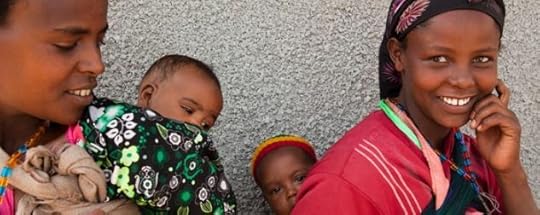
ORS is affordable almost anywhere, costing as little as $0.10/packet. It is typically given free-of-charge to children in poor countries who are sick with diarrhea and at risk of dehydration. The benefits of ORS are so great that they outweigh the risks of using contaminated water to mix the solution.
There is no doubt that this simple solution is a magical elixir, and many people have worked hard to promote its continued and increased use.
Bangladesh is one example of a country that has achieved consistent improvement in ORS coverage and uptake over the last 30 years. Bangladesh is an impoverished country that has nonetheless made steady gains in improving health and child survival. The supportive collaborations between the government of Bangladesh, the private sector, and organizations like BRAC are leading to improvements in infrastructure and successful scale-up campaigns.
The campaign for the treatment of dehydration due to diarrhea using ORS began in 1979. Through the 1980s, the primary form of treatment was homemade solutions. Use of pre-packaged oral rehydration salts (ORS) gained momentum in the 1990s and continues to expand. The campaigns are seen as a sustained success.
ORS use remains low where it is most needed
ORS is most certainly a lifesaver, but use of this essential intervention remains low where it is needed most. The Gates Foundations’ treatment strategy for diarrheal disease focuses on ensuring the availability of proven treatments in the highest-burden countries. We invest in research to improve diarrheal treatment and case management and ways to increase care-seeking and use of appropriate therapies. We collaborate with a network of partners to use the research findings to advocate for policy changes related to child health and increased funding to expand the availability of key treatment commodities and delivery systems.
We must continue to work to promote the use of ORS wherever people may benefit from it – from heat waves in Pakistan, to Ebola patients in Sierra Leone, Guinea and Liberia, to parents throughout the world with young children experiencing diarrhea. Lives depend upon it.