A.K. Frailey's Blog, page 3
February 14, 2025
Not the Same Test
Not The Same Test reminds us that we are not identical parts of a machine society. Our individuality might cause communication challenges, but it remains one of our greatest societal assets.
Education is meant to offer wings not a cage. I was a public and private school teacher for many years before I home-educated my own children. Recognizing the individual needs of each child and responding to their personal hopes and dreams prioritizes the motivating forces that take a person from “forced learning” to a love of learning.
Home education success led me to volunteer work where I assisted GED students. While the GED testing process is straightforward and there are resources to assist students, I have discovered a misalignment in meeting the needs of disabled students.
My student, Matt, is wheelchair-bound, has limited use of his hands, and has poor vision. While his spirit is strong, his body does not reflect his inner person. He has been working toward his GED for several years now. When I came on board to help him prepare for his exams, his drive to succeed propelled him through the first few tests. He passed the English, science, and social studies tests the first time around.
But the math test has been another matter altogether.
He has taken and failed the test four times, by only three points twice. Though he is given “accommodations” in the form of an aide to read and write for him and double the testing time, the exam morphs from a math test to an endurance test.
The math tests (There is more than one version.) start with seven computational problems unaided by a calculator. For an able-bodied person who can write the problems down and see his or her own work, it is a matter of navigating through basic math and computing the answer. Simple, right?
For Matt, this first part of the test involves explaining to his assistant what to do in detailed steps, trying to read his or her writing if he or she attempts to follow along on a written sheet, (making the writing legible and large enough for Matt to see) and forcing Matt to work much of the multi-step problem in his head. Then he has to communicate the answer to his assistant. That takes more time and effort. What would normally take a person a few minutes takes Matt up to an hour to accomplish because of the additional steps and communication difficulties.
The next part of the tests involves algebra, word problems, percentages, geometry, graphs and functions, and the ability to apply these concepts to solve real-world problems. For an able-bodied person who can read the screen, use his or her hands, take notes and work through problems, pull up the formula sheet and read through it quickly, pull up a calculator and see it well enough to use it, manipulate the online environment so as to move tools around the screen and choose the correct answer in a timely manner, this is a doable task.
For Matt, who can’t manipulate the tools himself or see the screen well unless it is enlarged, which involves more tools, this standard test becomes a labyrinth of pitfalls. His assistant has to read the problem, he has to imagine it in his mind, communicate to the aide what he wants him or her to do, remember the question while working through the problem, and constantly communicate to the aid what the tools (for example – enlarge the screen so he can see the geometric figures, pull up the formula sheet and enlarge and search for the particular formula he needs, pull up the calculator and input the equation according to his directions…and various other steps required during the test). Some aides do not know or understand all the math tools so he might have to educate the aid on what tool he is asking for and how to use it.
For an able-bodied person, the test can take up to two hours. Matt needs every minute of the double time, which means, added to the first hour, he is working for five hours on the math GED test.
He is in a wheelchair, unable to adjust himself. He can’t drink or eat anything during that time because that will likely make him need a bathroom break, which would be impossible in the ten minutes given every forty-five minutes. By the time he gets home, an hour’s drive from the testing center, he has missed his meds and not been able to eat or drink for close to seven hours.
I brought this issue to the attention of the GED State Relationships Manager & Special Populations Coordinator and the Manager of the Accommodations Team. We had a Team Meeting where I explained the difficult steps Matt must work through. After explaining Matt’s challenges and offering several possible solutions, I was presented with the statement: “You’re not going to like what I have to say. We have to give the same test to everyone.” The fact that Matt has an aide and extra time is seen as “accommodating his special needs.” But they do NOT accommodate his needs. An aide adds new communication difficulties and the extra time becomes a physical endurance test.
My suggestions to meet both the GED standards and Matt’s needs were ignored.
My possible solutions?
Have Matt retake the part of the test he failed so that he can prove his competency while not having to endure multiple versions of the full test.Break the test into shorter more digestible parts so that he isn’t forced to do everything in one sitting.Have two GED paths: One with a humanities focus and another with a math focus. The humanities focus could involve a much simpler math test while the math-focused test could involve the higher math skills. This way, all students could get the GED that fits them more appropriately and would assist all students to move forward in their individual career paths.Matt has to face serious challenges every single day of his life. He has dreams just like everyone else. And he has something valuable to add to the human conversation. But because of this GED math exam roadblock, he has not been able to move forward in any meaningful career. He would love to assist game and educational developers in designing their technology to better fit a handicapped population.
Insisting that we have to “give everyone the same test” when it is clearly not the same test for Matt is a cruel absurdity that has denied our society the benefits of Matt’s insight and assistance.
Maybe someday we will grow out of the “one test fits all” mentality and enable disabled men, women, and children to break free of the cages that hold them back and fly free, finally able to make this a better world for all.
A. K. Frailey is the author of 21 books, a teacher for 35 years, and a homeschooling mother. Make the most of life’s journey. For novels, short stories, poems, and non-fiction inspirational books, check out https://www.amazon.com/author/akfrailey BUY HERE
“The author blends articles that bring fresh inspiration for the day on life, love, and overcoming obstacles with faith.” ~CBM Christian Book Review
“Sometimes I feel sad about things, personal and…the world, and find inspiration in your stories.” ~Edith N. Mendel Fréccia
“The author uses the virtues and vices of Tolkien’s creations to remind us that those same virtues and vices are present in modern days.” ~Joan
For a complete list of books by A. K. Frailey, book trailers, and reviews, check out A. K. Frailey’s Books Page For translated versions of A. K. Frailey’s Books, check out A. K. Frailey’s Translated BooksPhoto https://pixabay.com/illustrations/ai-generated-disability-wheelchair-8903475/
The post Not the Same Test first appeared on The Writings of A. K. Frailey.


February 7, 2025
The Future of Education
The Future of Education might be dystopian if the human race doesn’t take life lessons to heart. Old systems have become roadblocks in a world where AI offers unlimited information, but our children still need experience, understanding, and purpose.
Education isn’t what it used to be. The idea of being educated—able to read and write, know historical timelines, speak in more than one language, understand the basics of math and science, and reach outside family and cultural settings—was usually limited to the wealthy and powerful. Today’s technology has put a universe of information systems into nearly everyone’s hands. So, what impact does this have on our education systems?
Technology affects everything.
Through the eighties and nineties, I taught in public and private schools, continuing an age-old practice of standardized learning. Books and papers, references, libraries, and lectures were the building blocks of teaching kids in a classroom tethered to the local school for six to seven hours of the day. It wasn’t the best of systems, but for some, it worked well. At least, it created a setting where learning could take place. The fact that children had to sit still for hours at a time, the child-to-adult ratio was often twenty or more to one, and the environment was only as positive as the teacher’s spirit, meant that many children were ushered through a process that did little for their self-esteem, personal vision, or creative spirits. Ask C. S. Lewis. His dim view of standardized education blazes across his stories like an avenging angel.
I never considered homeschooling until I was teaching at Wood River, IL, and was pregnant with my first child. The school principal, a man I came to admire, homeschooled his children with the assistance of his wife. That fact spoke volumes. Once I had children of my own and a fairly wide breadth of educational settings to look back upon, I realized I didn’t want to systemize my children. Education could mean a whole lot more.
Individualizing education to fit each child while offering a broad base of learning experiences became the bedrock of my homeschool. I wanted to do more than fill my kids’ brains with information; I wanted to offer them life skills, a world of fresh possibilities, new perspectives, and, of course, the nuts and bolts of standardized education. They learned to read and write. Print and handwriting skills mattered. Spelling, no matter how unreasonable, reflected a larger world in which particular preferences gave way to uniformity for the sake of clear meaning. The logic of mathematical building blocks offered not only the reason for linear thinking but also the framework for understanding the various sciences in our world.
Though the information age was expanding, the basics were much the same. What changed for us in the homeschooling setting was the opportunity to make learning specific and meaningful. We read such a wide variety of books, fiction and non-fiction, that reading became a lifelong conduit to the outer world. Reading also meant pleasure, a happy place where minds and spirits could rest in an enchanted world or explore a well-ordered text. In much the same way, writing wasn’t based on prompts that had nothing to do with our daily lives or were so mind-numbing and boring that a child felt ridiculous responding honestly. Starting slow and building from the base of what kids know has always been a helpful stairway for us. And so, it was with each subject. There was so much to discover and such a variety of ways to learn that the possibilities were nearly endless.
One of the hardest parts of modern education is getting over the idea that everyone of a certain age needs to know the same things. No two children process information the same. They can’t help but see everything from their unique perspective. Rather than seeing that as a problem, the sheer variety of views should be considered an educational high point, offering the world new insights, answers, solutions, and dreams.
While teaching adult GED, I have run into new standardized roadblocks, very similar to the ACT standardized testing system, which, thankfully, some universities have deleted from their entrance requirements. One of my students is physically handicapped. To accomplish the standardized GED Math test, he must explain every step to an assistant who attempts to follow his directions, solve the problem, and hit the correct button on the computer before the clock runs out.
When I tried to explain the heightened difficulty my student faced trying to complete the test, the GED board gave him the assistant to tap the answers in place, since his hands don’t work so well, and extended the time limit. My student can only sit upright for a certain amount of time before he must deal with unpredictable seizures. His eyesight is weak, his speech a little blurred, and he is wheelchair-bound. But his mind works wonders. I stand back amazed at how deftly he maneuvers through technological systems and learns things. We have spent months and made four attempts to pass the GED Math test. In his last attempt, he fell short by only three points. From my experience tutoring him, I am well aware that he has learned high school math far better than average. The test is a roadblock that doesn’t reflect his knowledge or abilities.
If the test were shortened, surveying the math spectrum with fewer questions, he would have a better chance of navigating through and getting a passing score. Part of me wonders why this standardized roadblock is even necessary. As a home-schooling mother who directed my kids through grade school and high school into college, where three have gone on to earn higher degrees, three are in various stages of earning their degrees, and all have maintained high scores, I appreciate the trust that allowed me to move them forward without so many systemized roadblocks. Is there a way that a trusted teacher could evaluate a GED student and, after a dedicated period, recommend him or her to the next educational step or graduation of a particular step? A personal approach can offer far more hope than an insensitive system.
No one can know all the information available today. The influence of AI on our education system is a problematic influence that we must take into consideration as well. Modern education isn’t about gaining knowledge through online resources and writing organized rebuttals to particular positions, it demands the navigational expertise of a skier during an avalanche or a surfer in a full-blown hurricane. We can’t afford to hold good minds back because they can’t climb over a particular roadblock that has no meaning in their lives. Kids need to run and jump and explore the world physically, mentally, and emotionally. Less time spent sitting and more time spent experiencing their world in close collaboration with a caring, trusted adult would go a long way toward preparing the next generation for a future that no one can predict but we must face. We have crafted artificial intelligence to such a degree that it’s practically ready to take over the world. Let’s hope our kids will shape a world worth keeping.
A. K. Frailey is the author of 18 books, a teacher for 35 years, and a homeschooling mother of eight. Make the most of life’s journey. For novels, short stories, poems, and non-fiction inspirational books, check out A. K. Frailey’s Amazon Author Page
“The collection creates an evocative set of life scenarios that explore good intentions, real-world situations, and acts of quiet love, desperation, and redemption.” ~California Bookwatch

“The book portrays a nostalgic and wholesome view of family life stripped of modern technology that I found refreshing to read. The author strikes a pleasing tone of calm and reassurance throughout the three related texts, and the illustrations are subdued and delicate. Perfect bedtime reading.” ~Nigel, UK
“I loved every word of this charming poem…You have created an enchanting landscape and your words have illustrated it expertly with panache…” ~Diana
“You are an inspiration. I think a lot about your stories and even tell my daughters about them.” ~Edith N. Mendel Fréccia
For a complete list of books by A. K. Frailey, book trailers, and reviews, check out A. K. Frailey’s Books Page For translated versions of A. K. Frailey’s Books, check out A. K. Frailey’s Translated BooksPhoto Pixabay https://pixabay.com/photos/mother-child-family-daughter-girl-3793521/
The post The Future of Education first appeared on The Writings of A. K. Frailey.
January 31, 2025
Clickbait Is Not Wholesome
Clickbait is Not Wholesome, deforming minds by inflaming emotions. I choose not to read headline news because bold commentary might inform me on one aspect of a particular event, but to be truly formed, I need more than one point of view. News articles offer “up-to-date” information, but it takes honest, in-depth, age-old human experiences to show me where the human race has been, highlight where we are now, and suggest where we might be heading.
Considering a variety of perspectives and being open to the reasoning behind them allows shadows and light to interplay, creating a fuller three-dimensional picture of events in our world. It makes it much harder to judge people, but perhaps that would be a good thing.
I read a variety of books; some are recommended to me, while others serendipitously fall into my hands. It is the juxtapositions of ideas—past, present, and futuristic—that I find most fascinating. Of late, my omnivorous reading has included titles that entertain, inform, and advise, changing the old me into a person of wider vision if not greater wisdom. Here is a snippet of my reading pleasure these last months:
The Eye of the World by Robert Jordan, 1990
Boundaries…Take Control of Your Life by Henry Cloud, 1992
All About Dreams by Delany Gayle, 1998
Evening in the Palace of Reason by James R. Gaines, 2005
Mockingbird, A Portrait of Harper Lee by Charles J Shields, 2006
Blood and Thunder, The Life and Art of Robert E. Howard by Mark Finn, 2013
The Art of Beatrix Potter, text by Emily Zach, 2016
The fascinating power behind these books was their immediate influence on society and the authors’ lives continuing impact on the human race.
Beatrix Potter was a sheltered child and grew into a woman who stayed much to herself. She “self-published” her first works, later republished by F. Warne & Co., and yet both Tolkien and C. S. Lewis—men who had an immeasurable impact on both literature and culture—have been recorded as stating that she had a vast influence in their imaginative creations. In her day, Beatrix Potter became a beloved children’s author, but Beatrix was also, to my stunned recent appreciation, an accomplished naturalist who painted specimens so perfectly she shone a light on the innate glory of mushrooms! She lived from 1866 to 1943, but only now is her larger body of work being seen and understood.
Robert E. Howard lived from 1906 to 1936 and struggled to get his unique story-telling style, a cross between “weird fiction and horror,” published. After his death, his work was badly treated, and it took years to clear his name and his literary accomplishments from the taint of those who did not appreciate him as a writer or as a human being.
As an innovator, Robert Howard broke boundaries and cracked open old genres, allowing for new interpretations. He was a remarkable man, taking care of his ailing mother through much of his life despite suffering from a grim view of the world. Tragically, he took his own life at the age of thirty. My sons discovered that Howard’s work resonated deeply with them. On their recommendation, I found not only a new version of literary genius but gained insight into the workings of my sons’ worldviews.
Harper Lee lived from 1926 to 2016 and wrote one noteworthy novel—To Kill a Mockingbird, which according to her life and times, she lifted in great measure from her family and society. The power of her work resonates not simply with the personal story she told but with the larger national narrative unfolding at that epoch in history. Understanding her life from a distant perspective offers insight into the power of her work, why it mattered when she wrote it, and why it still matters today. It was not simply a story of racial inequality but also a powerful testimony of a daughter’s admiration for her father despite the convolutions of her broken world.
All About Dreams by Gale and Boundaries by Cloud are both relatively “recent works” (1990s), meaning that they speak to modern society’s concerns. In surveying the best-selling books of recent years, I discovered a trend—works that focus on immediate needs, covering everything from modern hairstyles and travel guides to cookbooks and baby name books. The most recent bestselling novel I came across focused on WWII themes, a haunting specter that has yet to leave the human imagination.
Evening in the Palace of Reason is a fairly “new book,” though its topic is decidedly historic: Bach Meets Frederick the Great in the Age of Enlightenment. Why look back on such well-known people? Hasn’t the Enlightenment been discussed enough? As with the other titles and authors—Gaines is brilliant and witty—the newer, larger, and better-informed perspective allows us to comprehend the world we live in today more fully. This is what the human race has wrestled with in the past, and perhaps if we look at our trajectory, we might consider our future steps a little more carefully.
Finally, I ponder Robert Jordan’s Wheel of Time series, or I could refer to Bandon Sanderson’s The Way of the Kings or George R. R. Martin’s The Game of Thrones—all of which I have read, which surprised me with their deeply flawed human struggle to manage in worlds that seem to baffle the best of the characters—perhaps the authors, too. Fantasy and sci-fi delve into the mysterious “what ifs,” where the human race, set in a fantastically new universe and time, leads us where we may not want to go.
To understand our world today, I do not find insight from bald facts or narrowly focused reading. I find comfort, warning, and a reluctance to judge in reading a wide variety of books, both fiction and nonfiction. Unwholesome, inflammatory clickbait isn’t on my reading list.
A. K. Frailey is the author of 21 books, a teacher for 35 years, and a homeschooling mother. Make the most of life’s journey. For novels, short stories, poems, and non-fiction inspirational books check out https://www.amazon.com/author/akfrailey
“…bring fresh inspiration for the day on life, love, and overcoming obstacles with faith” ~CBM
“Highly imaginative and intelligently executed, Last of Her Kind is a spellbinding science fiction that is rich in imagery, rippling with conflict, and peppered with deeply moving scenes.” ~Cristina Prescott, The Book Commentary
“I highly recommend Frailey’s collection of stories to any reader seeking a memorable experience that makes you feel and think in unexpected ways. Well done.” ~Jim
“This was a wholesome book, with nice illustrations, taking kids through the lives of rural living and sharing the simple things in life.” ~Erika
For a complete list of books by A. K. Frailey, book trailers, and reviews, check out A. K. Frailey’s Books Page For translated versions of A. K. Frailey’s Books, check out A. K. Frailey’s Translated BooksPhoto https://pixabay.com/illustrations/news-press-newspaper-newspapers-644847/
The post Clickbait Is Not Wholesome first appeared on The Writings of A. K. Frailey.
January 17, 2025
A Fatherhood Story
A Fatherhood Story doesn’t always reflect long-range plans and fulfilled dreams. The most profound fatherhood experiences are in the surprise of discovery—a background story for my newest novel: Brothers Born.
Wiley could not believe his eyes. He blinked and then glared wide-eyed. Wearing only a grungy pair of sweatpants, he stood frozen in his apartment doorway and considered the tiny child wrapped in a bulky winter coat standing before him. The kid probably didn’t feel the cold swirling down the dim hallway, but Wiley did. His fingers ached to shut the door.
He could clearly hear the woman’s voice as it replayed in his head. Wiley Bortov? That you?
Just awoken from a sound sleep by the buzzer, Wiley hadn’t recognized the thin, tinny voice through the intercom system. It seemed vaguely familiar, but no name came to mind. Shaking his head in a vain hope that the child would dissolve like an unwanted dream, Wiley tried to remember what else the woman had said. I’ve got a package to deliver. Be a good man and look decent, okay?
Annoyed beyond measure at the insult to his character, if not his dress style, so early in the morning, Wiley had jerked open his apartment door ready to fling a few well-chosen words at his agonizer.
No woman in sight. Only an over-dressed little kid. The child wiped his nose with the back of a light brown hand, apparently waiting for permission to enter.
A shiver worked over Wiley as he craned his neck out the doorway. Swiveling it right and left didn’t change the dim, lonely hallway one bit. Empty and silent. No strident voice to explain the presence of a mysterious miniature man standing on his doorstep.
With no other thought than to shut out the chilly breeze, Wiley grabbed the front of the puffy coat, dragged the child inside, and slammed the door.
The hood fell backward, revealing a little boy’s head covered with dark locks of hair.
While slapping one hand against his lean, empty stomach, Wiley snapped his words. “Who are you? Why are you here?”
A shrug that lifted the puffy shoulders against the boy’s ears suggested a mystery that would not be solved before breakfast.
All through a simple repast of cold cereal and toast slathered in grape jelly, Wiley stared at the kid who perched on the edge of the stool at his counter as if he was quite used to strange people and strange places. The boy, not more than four, slurped his cereal clumsily and seemed to have difficulty keeping his toast balanced in his hand. It had dropped to the floor twice and each time the child stared patiently at Wiley, waiting for it to be replaced on the counter, as if that was the known procedure and Wiley was just a tad slow catching on.
The words Be a good man and look decent, okay? ringing in his ears, Wiley retreated to his bedroom and tugged on a sweater. He considered putting on shoes but didn’t want to get too formal. After all, the kid wasn’t staying. He’d call the cops and explain that some miscreant had abandoned a child on his doorstep. It was no business of his.
Wearing his puffy coat in the stiff way a medieval knight might wear armor, the boy shoved the last particle of toast into his mouth and then slid from the stool, nearly toppling to the floor.
Instinct kicking in, Wiley threw out a hand and tried to brace the child, but the boy shrugged him off and bounded over to the couch. He climbed up and flipped himself as only a limber child can into a comfy corner. He then folded his hands on his lap and stared at the blank television screen as if it might blink on at any moment.
After collecting the two milk-slopped bowls and setting them into the sink already accommodating an unwashed dinner plate, a bowl, cutlery, and a glass, Wiley fought a memory that insisted on filling his brain. Himself, at about age four, sitting on his father’s couch, waiting for his half-brother to turn on the television. He hardly ever saw his older brother, Kai, since they lived with their respective mothers. But a few times their father had cajoled visitation rights, and they had gathered together in a “guys’ night” and watched thrillers into the late hours and then fallen into uneasy sleep.
His father, Jano Malik Bortov, and his mother, Karina Sue Hale, were as different as two human beings could be, but it must have been the rule of “opposites attract” since Kai’s mother, Elya Ann Curran, broke the mold when it came to predictable human beings. Wiley was too young to understand the ramifications of a father with two very different mistresses who liked each other better than the father of their sons, but he did know that his half-brother treated him with kindness. As far as Wiley had been concerned, Kai was right out of a superhero movie and could be counted on to protect him during their parents’ frequent, sometimes violent, arguments.
The kid began to rock on the couch, a primate getting anxious and in need of comfort.
Wiley shook off the image of Kai turning on the television while he had hunkered down on his father’s old couch with a blanket wrapped around his shoulders. Taking a steadying gulp of air, he strode across the room and knelt in front of the boy, nearly touching the little feet that poked over the edge of the seat. “Your mom didn’t tell me your name.”
His face squished as if he’d just been told to eat a squid, the child shook his head. “Not my mom.”
Blinking rapidly to process this tidbit, Wiley grasped for something solid to hold onto. “What’s your name, son?”
“Tam.”
Wiley’s knees ached on the thin carpet. He dragged over a footstool and sat down, eye-level with the boy. “So, who brought you, Tam?”
“A friend. Mom got sick. She told her to bring me so my dad would take care of me.”
A lump the size of the Rock of Gibraltar lodged in Wiley’s throat. He practically gasped his next words. “Who—is—your—dad?”
When he narrowed his eyes, Tam resembled a troubled gnome. He sat up and poked his finger at Wiley. “You.”
The next three hours blurred in Wiley’s mind as he tugged the ridiculously huge coat off Tam’s body, turned on a cartoon channel, left the boy satisfied, washed the dishes like a mindless robot, meandered to his bedroom and had a mini-breakdown, stuffing his face into his pillow and groaning as loud as he dared, and then returned to see if the little guy was still in his apartment.
As Wiley considered the boy staring intently at the colorful action figures flying across the screen, the notion of calling the police fled into the stratosphere. He didn’t even notice it had gone. He just knew that he wouldn’t be able to breathe properly until he knew if the boy was actually his son.
A thousand lines of questions bubbled through his brain, but as a part-time driver for a package delivery system with more broken relationships behind him than he could count and an uncertain bank account, Wiley knew his strength had never been in logical decisions—only emotional ones.
After a hot shower, he returned to the kitchen counter fully dressed in a V-neck sweater over worn jeans, his black dress shoes announcing his decency to the world. He considered the kid for the hundredth time. It was nearly noon, and he had to make a decision. It being Saturday, he had a couple of days to think, but on Monday he’d have to call in sick at work until he made proper plans for the boy. Plans that would not involve the police or social services or any of the other horrors he had endured as a child when his mother overdosed and his father had disappeared. The memory of Kai’s mother carrying a cardboard box stuffed with his belongings to the first of a series of homes that would begin his miserable journey to manhood twisted his stomach into a hard knot. I won’t let that happen. Never again.
As he blinked back tears, a vision of Kai’s face filled his mind. Kai had clutched his hand all the way up the broken sidewalk to the shabby split-level apartment. When Kai’s mom had tugged her son aside, Kai stared over his shoulder at Wiley and seemed to be saying something, but Wiley could never figure out what it was.
They never met again.
A tug on his pant leg redirected Wiley’s attention. He peered down.
With a huff, Tam took matters into his own hands as he launched into a right-to-the-point speech. “Mom said you got a big brother. Maybe, he’ll help.”
Wiley’s mind jumped into overdrive, choking all hope of a clear response.
A sigh and Tam seemed to figure that Wiley needed more immediate direction. “What’s for lunch? I’m hungry.”
No longer blinking, Wiley stared at the child who might be his son, and the nearly forgotten comfort of sitting with his brother on the couch filled him. Kai, where are you now?
His stomach relaxing enough to grouse that it had been hours since his last meal, Wiley slipped on his long black overcoat and then grabbed the puffy kid coat off the end table. “We’re going out to eat and then we’re going to stop at the library. A nice gal, who might be an undercover detective—she’s that sharp, works there. If anyone can help me find my brother, she can.”
After squiggling into his coat with minimal grimaces, Tam slipped his hand into Wiley’s.
Startled at the softness of the boy’s grasp, Wiley clutched it tighter and opened the door. As they passed over the threshold, unmindful of the sudden chill, he made a bold proclamation, “Kai can help us track down your mom, and we’ll get everything straightened out.”
The child’s hesitation only lasted a second, but as Wiley closed the door, he glanced down and ran smack into the doubt in Tam’s eyes. He had to pluck his courage off the floor as he started forward. “Well, let’s start with lunch, okay?”
In a wise gnome way, the boy nodded as he stumble-hopped forward.
His gaze unblinking and clutching the small hand, Wiley marched into the cold December day, surprisingly glad that he wasn’t dreaming.
A. K. Frailey is the author of 21 books, a teacher for 35 years, and a homeschooling mother. Make the most of life’s journey. For novels, short stories, poems, and non-fiction inspirational books, check out https://www.amazon.com/author/akfrailey
“…heartfelt, down-to-earth stories are filled with real-life experiences and emotions that you can almost feel like you are experiencing them as well as you read. She’s one of the best authors I’ve ever read.” ~Ron
“Many of the stories are very moving. Some are humorous. And they are all well written.” ~McEvoy
“Frailey writes in a crisp, lean, and richly detailed style, building a fascinating, absorbing world.” ~Blue Ink Review
For a complete list of books by A. K. Frailey, book trailers, and reviews, check out A. K. Frailey’s Books Page For translated versions of A. K. Frailey’s Books, check out A. K. Frailey’s Translated BooksPhoto https://pixabay.com/illustrations/fathers-day-father-child-silhouette-8839798/
The post A Fatherhood Story first appeared on The Writings of A. K. Frailey.
January 3, 2025
Natural Order
Natural Order speaks to my world and the world within me. Each season has something new to say, a lesson to teach, if only I am willing to learn.
Winter whispers of enduring virtues and bears testimony to the wisdom of healthy slumber, common sense survival skills, and the quiet companionship of human spirits with nature. The further I get away from the harmony of God’s created world, the worse my body responds and the more dispirited my mind. In an ever-growing desire to untether myself from frenetic routines, I turn to simple, long-standing examples of harmony. Though modern advancements in medicine, communication, and technology have a great deal to offer my daily life, I’ve found myself sliding into dangerous habits simply because I don’t pause and think, consider, and choose my actions and reactions thoughtfully. Staying up and active for too long, not getting enough rest, and refusing to accommodate seasonal realities affect my mood as well as my health. Reflecting on the seasons offers me a space for deep healing in a world where I can so easily run myself ragged and then wonder why I’m feeling so despondent.
Animals respond to the shorter days and longer nights sensibly. They tend to sleep more. But I feel guilty if I sleep past my usual time or go to bed early. Something must be the matter with me if my mid-winter brain wants to relax when the sun slides behind the horizon. I glare green-eyed at my cats and dogs, wishing I could follow their example and curl up in a quiet corner somewhere. Granted, I have to pay the bills; they don’t, but still, I see the value in their altered habits. Perhaps I shouldn’t imitate the energizer bunny all the time. Perhaps batteries need to be run down, plugs pulled, and slowness appreciated. Is it any wonder that the slowest animals on earth also tend to be the longest-living? They aren’t literally wearing themselves out.
I’ll never know what my dog, Misty, dreams about, though I suspect there have been some dreamy escapades where she is outrunning our other dogs and, perhaps, finally catching the golden squirrel. But I have to admire her ability to sleep soundly. She does it so well! No pills, no unplugging routine, no detoxing from the hyperventilating online media. I have to wonder why I need to take a life lesson from a dog. How did I get so far from the harmonic peace of routine life that I find myself unable to sleep well?
When I walk the trails and hike into winter woods, I feel very much like I am entering a gentle dreamscape, crossing a mystic border, and stepping into a land where the trees are napping. Like seeing Misty breathe in rhythmic patterns, so everything in the winter woods inhales and exhales in slow motion. Peaceful and serene, my heart rate settles into a somnolent stillness. Again, I sense a life lesson. When did I get so frantic that I lost the joy of simply being?
Writing is the opportunity to step outside the demands of the day, shove my to-do list aside, and walk a quiet path with an introspective character who is doing what I always wish I had more time to do—ponder life, nature, choices, consequences, and whatever spirit-troubling reality might be haunting him or her…or me. I suspect that is why so many people write books these days. The beguiling dream of making money is soon stripped of its lie, but the power of stepping out of “real life” and living intentionally through imaginary introspection, (some might call it prayer, meditation, or contemplation) offers a powerful antidote to the mindless whirlwind endured in the modern world. Why must I pretend to be someone else to consider my own life?
If writing has taught me anything, it is the purpose of intentional living. Winter, like a good rest, offers the recharge needed to think clearly with a revived spirit. My nature companions don’t tell me what to do. They remind me of a simple truth: I am part of my Creator’s natural order, and when I reject that, I’m rejecting a healthy part of myself.
A. K. Frailey is the author of 18 books, a teacher for 35 years, and a homeschooling mother of eight. Make the most of life’s journey. For novels, short stories, poems, and non-fiction inspirational books, check out A. K. Frailey’s Amazon Author Page
“People I can relate to and actually care about have become few and far between. These characters were so real. I love that.” ~Sandra
“Newearth is a place to start over…gives us a chance to re-think many of the propositions that we take for granted, a chance to discover anew what is needed to live a good life.” ~Dr. Eileen Quinn Knight
“One of the strengths of the collection is the author’s ability to create an entire world in just a few pages, leaving the reader wanting more. The stories are compact and move at a brisk pace, yet are filled with drama and excitement.” ~Gina Mitchell

“I found reading her book enjoyable and relaxing, and a way to refocus my mind away from daily negativity and the monotony of life. Simply put, readers will enjoy her openness, wisdom, and positive writings from a person that really appreciates life and the little things. I can resonate, so will readers, as they reflect, absorb, and renew their energy by letting a little of the light in from her writings.” ~CBM Christian Book Review
For a complete list of books by A. K. Frailey, book trailers, and reviews, check out A. K. Frailey’s Books Page For translated versions of A. K. Frailey’s Books, check out A. K. Frailey’s Translated BooksPhoto https://pixabay.com/illustrations/snow-book-scene-house-tree-winter-7652184/
The post Natural Order first appeared on The Writings of A. K. Frailey.
December 27, 2024
AI and Our Creative Nature
AI and Our Creative Nature speak to the intersection of intelligence and imagination, warning us that unregulated gain might cost us everything.
Last night I dreamed that I was walking down a long road at twilight when I came upon a long line of children at the top of a hill. The odd thing about these children was that they were all draped in black and wearing masks that struck me as weirdly familiar—like Darth Vader’s headgear on Star Wars. The other disturbing factor was that these children had stopped moving and some guy, (or woman) I could not see clearly, was trying to get them to move forward. They were blocking the road, just standing there small and indomitably silent.
To say that I woke up “out of sorts” would be putting it mildly.
In my limited lifespan, the human race has attempted to adjust to so many startling changes that one more sci-fi reality hardly seems worth losing a night’s sleep. But the image of those silent children might haunt me forever.
The human race may be late in considering AI’s influence on our ability to express ourselves in art, but before we find ourselves facing a hilltop of kids wearing masks and unable to speak, it would be best if we are not too late in choosing where we place our next footsteps.
The scary thing about opening a conversation involving artificial intelligence—much less the intersection of art and technology—is that I had to search the term on Google, which uses AI, to answer my question. So basically, I asked AI who it thinks it is.
“Artificial intelligence is the science of making machines that can think like humans.”
“Cogito, ergo sum.” meaning, “I think, therefore I am.” ~Rene René Descartes 1637.
Trying desperately not to slide down the Alice in Wonderland rabbit hole, I only skimmed through a few top quotes, which left me more perplexed than ever. I must admit that I laughed and then lingered on one quote in particular:
“Before we work on artificial intelligence, why don’t we do something about natural stupidity?” ~Steve Polyak
There lies a huge issue—we humans take ourselves into every new adventure. So then, I asked Google what art is and received a very human-biased answer:
“Art is the expression or application of human creative skill and imagination.”
The definition of art hasn’t caught up with the newest AI-generated art. Yet.
Personally, I think that AI tools offer a great deal to improve and supplement our creative endeavors. It took nearly ten Google searches to fact-check and correct a recent essay. Spell check assists me no end—I can finally lay my 6th-grade spelling tests’ Fs to rest. Grammarly helps me edit authors’ papers with an amazing level of accuracy. All good and well.
Then there is the downside—the termination of creativity. I find myself overriding the squiggly red lines that warn me of English incorrectness, when in fact, my whole literary endeavor involves a new way of expressing myself—something the program is not prepared to deal with. Not every writing effort should read like a term paper!
So, I am back to those kids again, wondering why they are on a hilltop and why on Earth I am dreaming about them. Without a doubt, dreams connect to my creative nature. They are an aspect of the “otherness” of my human existence that I cannot define and don’t particularly want to corral. My spiritual faith in God and my personal relationships that transcend death in their “aliveness” in a realm that I can’t possibly explain to anyone unwilling to believe are all aspects of the “moreness” of human experience that AI can’t fathom.
If I substituted my awkward human creative nature for a more streamlined, “perfected” version of a story, a painting, or any other creative endeavor, I would lose the glory of that unseen, unquantifiable otherness which is a definite part of my literary creations. When I joke with my kids that the characters in my latest book have taken over and left me behind, they smile. They know that I had a plotline worked out but, inevitably, the novel will not develop according to my plan because some creative “otherness” asserts itself in the process and shapes something wildly beyond my expectations.
In the end, I don’t think a discussion focused solely on AI does us much good. I suspect it will be in removing the masks and seeing the faces of those children that matters. If we hide ourselves and each other in AI masks—be they wonderful or terrifying—we might find ourselves at the top of a hill unable to move. There might be a view, but we won’t see it. There might be a road, but we won’t travel down it. We might be human, but we won’t be alive.
If we don’t value our humanity here and now—AI has nothing to offer us.
A. K. Frailey is the author of 21 books, a teacher for 35 years, and a homeschooling mother. Make the most of life’s journey. For novels, short stories, poems, and non-fiction inspirational books, check out https://www.amazon.com/author/akfrailey
“I loved reading Ann’s wise, hope-giving thoughts about life and love. Truly, life is the art of overcoming obstacles and becoming stronger to live a fuller life. Beautiful work!” ~Ksenia
“Aram was an imaginative, creative work…action-packed. Keen insight by the author…filled each page with compassion.” ~Linda
“With a spectacular story of Justine Santana, a human-Android hybrid, this book also reveals some exciting insights about the future—Robots and Artificial Intelligence.” ~Adiba
“Many of the stories are very moving. Some are humorous. And they are all well written.”~McEvoy
For a complete list of books by A. K. Frailey, book trailers, and reviews, check out A. K. Frailey’s Books Page For translated versions of A. K. Frailey’s Books, check out A. K. Frailey’s Translated BooksPhoto https://pixabay.com/illustrations/robot-paint-artist-artistic-8817528/
The post AI and Our Creative Nature first appeared on The Writings of A. K. Frailey.
December 20, 2024
Spice of Life
Spice of Life can do more than revitalize everyday menus, it can widen perspectives, inform hearts, and make an old town young again.
Tara Bhatt slid into the back booth of the Let’s Eat Café and dropped her laptop and notebook on the smooth surface mildly annoyed that a few grains of salt were highlighted in the slanting rays of the evening sun under the napkin dispenser. She scowled and leaned forward, squinting. Or is that sugar? She tried to shake off the irritation climbing onto her shoulders like a vengeful Sumu wrestler.
A fierce November wind howled at the front picture window while supper guests comforted themselves with grilled sandwiches, piping hot fries, savory stews, and warm biscuits.
Tomorrow was Friday, and Tara planned on a Fish and Chips special with a side of coleslaw. Her head ached with the thought. When did I stop caring about coleslaw? Vegetables used to be the joy of my life!
Her afternoon server, Caden, strolled by, an empty tray tucked under one arm. He glanced aside and jerked to a stop. The Tin Man caught by rusty joints. “What’s got you?”
Tara treated her staff like her adult kids—respectfully but fully aware that she paid all the bills around the place. She tapped the computer top meaningfully. “I’ve got to place the orders for next month.” One finger grazed the notebook. “I’ve kept my old lists going back through the years, thought I might remember some oldie but goodies.”
A snort suggested that oldies but goodies should have been dispatched to cyberspace long ago. Then his eyes widened, a hint of fear in their depths. “You’re not going to revive that fruitcake thing, the one you tried a few years ago! Gawsh, I thought my stomach would never forgive me.” Leaning closer, his broad frame filling Tara’s vision, Caden lowered his voice to tremulous depths. “There’s been a lot of upset around here, cause, well, you know why.” A slight shake of the head warned of doomsday soon approaching. “Hollywood types, sports stars, even big influencers are up in arms!”
Without actually collapsing, Tara propped her hand against her head to keep it from smacking the tabletop. A second-generation Indian-American, she never paid attention to celebrity news cycles. Her grandparents spent their lives trying to start a business. Her parents worked frantically to build the business. She did everything she could not to lose the business entrusted to her care. With three meals to prepare for a hungry crowd six days a week, she didn’t have time for social media, clickbait news, or the latest AI outburst. If aliens arrived, she’d take their order, same as everyone else, and pray that their debit cards were good.
She blinked. Caden was still there and, apparently, he had continued speaking in his hushed tone, warning her of disastrous portents should she push Oldtown’s citizenry too far and retrieve the failed fruitcake experiment. Exhausted by his concern, she waved him off.
Only after he had stopped to chat with customers at table number six, did she remember the salt—or sugar—under the dispenser. The sun had set and the overhead lights brightened accordingly. The dispenser’s shadows hid her shame.
She flipped open her notebook and tapped on her laptop, wondering if it would actually kill anyone if she tried a few of her grandmother’s old family recipes. She leaned back in the booth, her favorite place in the whole restaurant, enjoying the wide view of the dining room. Over half the booths and tables were filled and the after-work crowd hadn’t even made it in yet. She imagined setting trays of savory rice dishes, naan flatbread, vegetable biryani, saag paneer, and samosas before her friends and long-time patrons.
She surveyed the room. Rhona and Derm snug in booth three with Syn chatting happily opposite them would probably be willing to taste and see. Her gaze roved over to Lucia and Maisie, owners of the Quilt & Sew Shop down the street. She bit her lip. They may like to travel and explore new places, but whenever they took a night off cooking, they always shared their favorite meal—a deep-dish lasagna. They’d probably be gracious in the face of new offerings, but they’d be disappointed. Most others would be much the same. The reason they came to the café was the comfort of familiarity. The menu might rotate but it was as regular as the seasons.
The doorbell chimes rang merrily as a medium-sized man with wavy black hair and dark eyes strode in, one hand clutching the high collar of his leather jacket, which clearly wasn’t protecting him from the biting wind.
Caden hitched his way over and pointed out the closest table.
The stranger glanced at the back booth, the one across from Tara.
Despite his absurd obsession with celebrity media, Caden knew how to serve the average customer with perfect civility. A neat bow and he led the way, his head high, a snatched menu tucked under his arm.
A quick confab about drinks, the man ordered a decaf coffee, and Caden was off on his next mission.
Tara flipped open her notebook and sighed. Nothing enchanted her. Rousing her determination the way a general might threaten reluctant troops with charges of mutiny, Tara tapped to the order page with links arranged in a neat row on the right side and menu selections on the left.
Hamburgers, fries, coleslaw, spaghetti, lasagna, French bread, Texas Toast, potpies, stews, soups, salads… Her eyes glazed.
“Excuse me?”
Startled, Tara gathered her wandering thoughts and sat straighter. In an instant, she appraised the strange man who had startled her. Dark brown skin, not Indian, Middle Eastern possibly. But something else, the eyes spoke of European roots, a haunting shade of green, that suggested so many possibilities she could not narrow it down.
“Sorry to interrupt. I’m new to town, and I just wondered if you could recommend a hotel or something. Any rooms for rent around here?”
Tara hardly had a chance to blink her eyes, an answer popped into her mind so suddenly. Odd that. Mr. Thompson and his new wife, Elspeth Gillis, who owned and managed the Literary Enlightenment Bookstore had just mentioned this morning during the breakfast rush that they had refurbished two rooms with a central living area on their third floor and were looking for renters.
She narrowed her eyes at the man young enough to be her son. He seemed interested, sure, but was he trustworthy? Nancy Drew had been a childhood heroine, so playing detective captured Tara’s imagination the way a kitten seized a ball of yarn.
Tapping the tabletop, she motioned for the stranger to sit opposite her in her booth.
Disconcerted hesitation, a glance around, and a quick exhale, and the guy threw caution to the wind. He slid into the seat, clasped his hands on the tabletop, and met her gaze head-on—a student with an open mind willing to be instructed.
Tara offered her hand with a grin. “I’m Tara Bhatt, the owner of this café, so I know almost everyone in town. Anyone who gets hungry and wants a night off cooking comes in here eventually. Most return regularly.”
The man’s eyes widened and appreciation rose to the surface. After the handshake, he nodded through another glance around the thriving business. “You’ve got a great place here. I’m Kia Curran, originally from up north, Chicago area, but then moved to St. Louis.” He shrugged through a sigh. “Not a great fan of city life these days.”
Tara tilted her head and pushed her computer to the side so there was nothing between them. “You’re just looking around?”
A quick head dip and Kia channeled charm through his humility. “I know, right? Sounds like I’m checking out all the prospects like some dating site.” A quirked smile and he shook his head. “I came through here a few months ago, back in the summer, just as an excursion; I hadn’t decided to move for sure at that point. Stopped in here, as a matter of fact. Didn’t see you, but I sure heard a lot of interesting conversations.” Momentary alarm filled his eyes. “Not that I was trying to eavesdrop or anything. Just couldn’t help hearing some things. There was so much going on—some kind of art exhibition on Main Street, an online poetry contest, movie nights, a fall festival, and the park was being refurbished with new playground equipment. I even noticed a big sign offering free vegetables at the community garden on the way in.
Tara laughed. The innocent shock in his eyes suggested that Oldtown’s revitalization efforts seemed as strange as an interstellar dance contest. “You don’t get all that in the big city?”
“Oh, sure. There are all sorts of activities and events going on. I’m not knocking city advantages. But…” His eyes dimmed into a memory. “Two months ago, while driving to work, I unknowingly got between two irate drivers, and I was nearly killed. Another person, a young woman, wasn’t so lucky. She was driven off the road and…well, she didn’t survive. There wasn’t anything I could do to stop it. Happened so fast. But it happens too much.” He shrugged. “Plus, some other stuff.” He sucked in a deep breath. “I liked what I saw here, the enthusiasm in people’s voices. And after all the places I’ve visited, this is the one I’ve wanted to return to.”
Tara nodded. On an odd hunch, she turned her computer around and exposed the menu selections. “Just curious, what do you think of these options?”
Without missing a beat, Kia leaned forward and zeroed in on the screen. He didn’t exactly smush his face but there was a definite hint of dissatisfaction. He tapped the screen and toured the entire selection, then leaned back. “Well, it’s probably what people want, right? You’ve been doing this awhile, I take it. So, you know better than anyone.”
A soft sigh and Tara’s brief hope deflated. “Yeah. It’s what they want.”
Kia propped his head on one hand, his elbow poised on the edge of the table. “But you’re missing something?”
A shrug and Tara could hardly explain.
“Bet you know some recipes that would spice things up around here.”
A snort and Tara exhaled a long breath as she turned her computer back in her direction. “I do. But this community knows what it likes, and they hardly want my grandmother’s cuisine to oust their baked lasagna.”
Kia grinned. “How about one new recipe a month? Some kind of special deal? By the end of the year, you’ll have a few winners and enriched Oldtown’s culinary experience.”
Tara’s revived hope didn’t float, it dug roots. She considered the man in front of her and then pulled out her phone. “I’ve got a number you can call. The owners of the Literary Enlightenment Bookstore, Mr. John Thompson and his wife Elspeth, live over on Maple Street and are looking for renters for their top floor. Good people who will treat you right. And being a bookstore, the customers are pretty lowkey.” The image of the car crash that killed the young woman filled Tara’s mind, and sadness crept into her voice. “No place is perfect, but you won’t have to deal with road rage around here. Just tractors and combines during the seasonal rush.”
Caden stepped over with a steaming cup of coffee and a place setting. His glance took in the scene, and his eyebrows rose into question marks. “You want to sit here and eat? Or—” He jerked his thumb to the abandoned booth.
Kia started to rise.
Tara lifted her hand in command. “He’ll eat here, free on the house.” Her brows knit in mock severity as she frowned at her server. “As soon as you get the mess under the napkin dispenser cleaned up. We can’t be giving our newest Oldtown citizen a bad impression on his first day.”
A soldier reporting for duty could not have snapped to attention with greater alacrity. Caden arranged the coffee mug and place setting with dutiful care and then practically saluted as he took his marching orders.
A grin dancing in his eyes, Kia thanked Tara and then ordered a hamburger and fries.
Caden tucked the useless menu under his arm and nodded at his boss. “I’ll be right back to clean that up. The morning crew was obsessed with the latest news! Can hardly get anyone to pay attention to details these days.”
As Tara watched Caden stride away, her fingers rested on the computer keyboard. She looked over at Kia. A new spice to add zest to our lives? That might be just the recipe this Oldtown needs.
A. K. Frailey is the author of 21 books, a teacher for 35 years, and a homeschooling mother. Make the most of life’s journey. For novels, short stories, poems, and non-fiction inspirational books, check out https://www.amazon.com/author/akfrailey
“As usual, Ann Frailey doesn’t disappoint. Her heartfelt, down-to-earth stories are filled with real-life experiences and emotions that you can almost feel like you are experiencing them as well as you read. She’s one of the best authors I’ve ever read.” ~Ron
“Many of the stories are very moving. Some are humorous. And they are all well written.” ~McEvoy
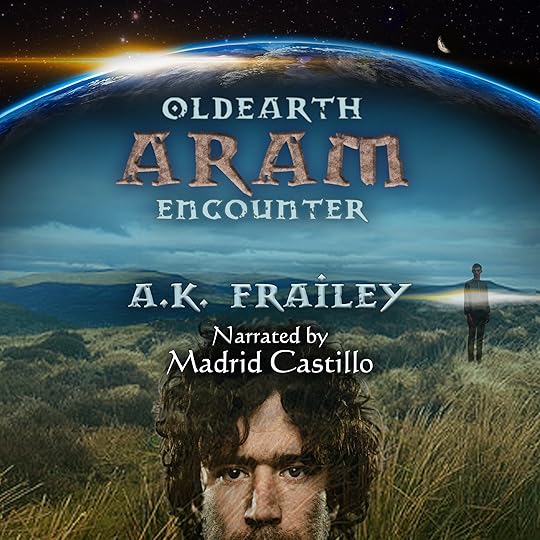
“Frailey writes in a crisp, lean, and richly detailed style, building a fascinating, absorbing world.” ~Blue Ink Review
For a complete list of books by A. K. Frailey, book trailers, and reviews, check out A. K. Frailey’s Books Page For translated versions of A. K. Frailey’s Books, check out A. K. Frailey’s Translated BooksPhoto https://pixabay.com/illustrations/ai-generated-village-landscape-town-9101329/
The post Spice of Life first appeared on The Writings of A. K. Frailey.
December 6, 2024
In Light of Faith
In Light of Faith, I find an optimism that stays with me, transforming my life beyond human limitations. Where there is hope, there is life.
The season is deepening into winter, (for those in the northern hemisphere anyway) a dark time where sunlight dims and days grow short. Ironically, it is also the time when we celebrate the greatest Light in our midst, faith in a human-God communion, “Thy will be done on Earth as it is in Heaven” hope.
Writing about faith in today’s world feels very much like poking a hornet’s nest. There is no easy way to approach what has become a volatile topic without irritating readers and getting stung in response. Yet, faith is the walk-on-water trust that helps us get up in the morning, face the day, steer through traffic, march into work, engage with co-workers, family, and friends, support charities, and take the next life-giving breath. Let’s face it, no one understands AI completely, yet it rules everything from our phones to our banking systems. We have faith, but in what, we prefer not to delve too deep.
In writing about faith (my own or my characters’) I try very hard not to slide into a reflection on religion. I am Catholic and find a conduit of grace through my accepted religion, but I do not confuse religion with the Almighty Creator of the universe. God is God. Religion is not.
I have a great respect for humanity’s reaching toward the Light. Rather than discussing the merits or demerits of particular religions or the tenants therein, I find comfort in the human search for understanding our relationship with our Creator. Circumstances of birth, heredity, physical status, cultural environment, and societal pressures eradicate any sense of a level playing field. We are all so different! Yet, free will unifies us like nothing else. Of course, even free will is mitigated by pressure points like abuse, addiction, and out-of-control life events. Which leads to a basic Christian tenant: Forgive as you would be forgiven.
And that is an exciting thought. The very nature of forgiveness is so beyond our natural proclivities that it demands attention. It’s impossible to forgive cruelty, injustice, and evil acts. Yet people can and people do. I find that so startling that I can’t help but stare, metaphorically speaking, at a race of beings who can be the source and recipient of both great evil and its antidote. Only in forgiveness is a hate cycle broken.
Some actions are so horrific and some pain so terrible that all thought of forgiveness seems like betrayal. In such experiences, there is no human will strong enough to join hands in a Kumbaya moment and say that all is forgiven. Yet the true nature of Kumbaya is one of surrender. We may not have the will to achieve perfect natures, to be as good as we would like to be in a thousand ways, to forgive even small transgressions—our own or others—but that is where faith steps in.
Faith is not adherence to laws, rules, and reasonable conjecture. Faith is surrender to God. Being open to a transformation we, as mere humans, can’t possibly understand—mutable beings in transmutable hands.
Though the days are dark, the Light stays bright. Perhaps we see better in the dark. Too often we stand before the sun, then turn and proclaim our own shadows. In this season of faith in the dark, I hope to follow my best characters’ examples and love the Light.
A. K. Frailey is the author of 18 books, a teacher for 35 years, and a homeschooling mother of eight. Make the most of life’s journey. For novels, short stories, poems, and non-fiction inspirational books, check out A. K. Frailey’s Amazon Author Page
“I loved reading Ann’s wise, hope-giving thoughts about life and love. Truly, life is the art of overcoming obstacles and becoming stronger to live a fuller life. Beautiful work!” ~Ksenia
“I found myself enchanted by the stories. I laughed and cried. I got some time to think about many things related to the world and to myself as a human being.” ~Edith N. Mendel Fréccia
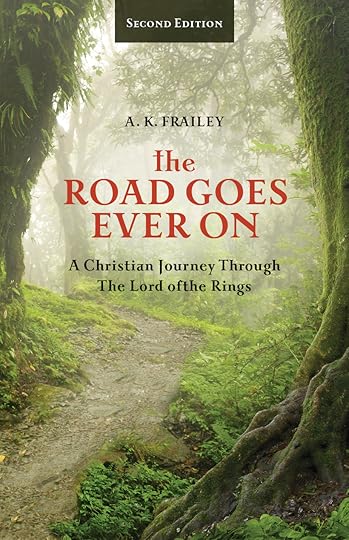
“Thank you for writing such a wonderful, encouraging book.” ~Dobbins
For a complete list of books by A. K. Frailey, book trailers, and reviews, check out
For translated versions of A. K. Frailey’s Books, check out
A. K. Frailey’s Translated Books
Photo https://pixabay.com/photos/winter-snow-forest-winter-magic-270160/
The post In Light of Faith first appeared on The Writings of A. K. Frailey.
November 22, 2024
We Live in a Mad World
We Live in a Mad World suffering from woundedness. But at this moment now, I have a choice.
Some might say that madness runs in my family, but the words would be spoken with an ironic smile and a twinkle of understanding. No one admits to madness these days. Yet, as I watch the last of the glorious multi-colored autumn leaves fall from my favorite maple tree, I must admit that the term “madness” rings as true to my ears today as ever. Perhaps more so. What haunts the human race is not a case of inherited mental illness, though that may factor in; it’s a spirit-killing grief that chains the strong and saintly as well as the weak and cruel into dark dungeons. Mad fury, justified anger perhaps, insists that things are not as they should be, therefore, life as we know it deserves to be destroyed. If I lived by that rule, I’d be dead already.
Growing up in a family where addictions ruled, I escaped the typical rinse-and-repeat pattern through the do-good notion that I could make my life better by making other lives better. It wasn’t a bad idea. I taught in various big cities and even served in the Peace Corps with the noble endeavor of “helping out.” The idea that I had to help myself first never occurred to me.
I was surprised that assisting the Dominican Sisters as a third-grade school teacher in Chicago’s south side didn’t free me from loneliness, especially when I encountered so many sad lives bravely trying to survive against terrible odds. A thirst for justice and a hope for happiness was hardly a bulwark against cultural insensitivity and generational failure to thrive.
I moved on to the Peace Corps in the Philippines, then taught at a private school on Milwaukee’s south side, and then got a job in a rough-tough neighborhood in L. A.—a city with enough weird and wild to keep daytime soap opera writers busy for eons. Still, despite my best efforts, I hardly made a dent in the troubles of the world and made very little progress on my own. Loneliness haunted me, creating a fog of soul-worn depression. The world made little logical sense, and deep down, I knew as well as anyone that things were not as they should be. Anger didn’t do much good, so exhaustion filled in the gaps.
When I started looking at the map, wondering where to go next, I realized that there was only one small problem with the move-on solution—I had to take me with me. A new location wouldn’t heal my hurt or erase old anger issues.
I went to a counselor instead.
Despite extensive traveling, I had always been a very private person. I rarely shared much about myself or my family with anyone, so seeing a counselor was the equivalent of standing naked in front of a stranger. Not a situation I was comfortable with under any circumstances.
My counselor turned out to be a middle-aged woman with three marriages behind her, a new marriage in front of her, a strong religious background jettisoned for I knew not why, a penetrating stare, and a firm grasp of the obvious. Her extra-large, self-determined nature scared the heck out of me. Which ended up being the best thing in the world. I could hand my troubles on to her and never feared that she would break under the strain.
Once I started to unload my sorry burdens, my childhood traumas and constant guilt, stomach-crunching loneliness, and cyclical nightmares, she walked me through each of the significant relationships of my life and then offered a startling revelation: Crippled people can’t dance. Broken parents can’t parent. Sick kids don’t radiate health. In other words, the world wasn’t as it should be. To move beyond my pain, I had to accept that reality first.
She was right. My problem was no longer being a helpless child in an out-of-control world. My problem was thinking that I could fix an out-of-control world. I could not fix the world. But I could allow myself to heal from the wounds inflicted by an out-of-control world. That was another whole process.
Taking responsibility for my choices—where I worked, what I ate and drank, who I associated with, and how I spent my free time offered me a measure of hope. My family’s past did not have to be my future. Honest grieving did not mean I was stuck crying as an aimless wanderer forever. At some point, I could move in a healthy, chosen direction.
Some months later, I did just that. My counselor said I was the first person to graduate from her program in less than a year. Filled with gratitude, I promised myself that I would not forget the life lessons she taught me, the first being the most obvious—Life here on Earth isn’t what it ought to be.
Soon after, I met a good-looking guy at church, and after a year-long engagement, we decided to make a fresh start—move to the countryside, raise a passel of kids, and stick close to nature.
Let me say—I love chickens and possums and wild critters of all kinds as much as the next person, but hey, they aren’t all that nice if you disturb them while they are eating your garden vegetables. That was the least of my struggles.
My husband got a job teaching at a prison, and he was great at it for one excellent reason—he cared about the guys he worked with. In the meantime, I was busy reinventing myself, exchanging the world-traveling teacher for a stay-at-home mom fussing with wild things that I couldn’t even name properly. Don’t get me started with the hens and the roosters. It became crystal clear that all was not quite right in the animal kingdom either.
And then came the kids. Eight of them, in short order. Life was full. No, take that back, life was abundant and hectic! But I loved it, even as shadows of my former life occasionally ran over my mind like a haunting specter visiting a graveyard.
I kept troublesome memories away with the inner assurance that I had made good choices. I had finally taken control of my life to the best of my ability, and my husband was doing his part. So, for a time, though challenging and tiring, life was as it ought to be.
Seven months after my eighth baby was born, my husband came down sick. He had never been seriously ill before, so I didn’t worry. Life was good. Everything would be fine.
Except it wasn’t. Cancer became the new out-of-control monster that chased us down the corridors of our days and nights. For four years. And then my husband—we’d been married nineteen years—died in an emergency room.
My eldest son was seventeen, and my youngest had just turned five. Suddenly, I was a single mom in the rural countryside with no way to make a living without leaving my traumatized kids alone. I had been homeschooling them, so leaving wasn’t an option.
My body revolted as much as my mind. I felt sick and depressed. But I remembered the promise that I had made years ago. I had to accept the obvious—Life here on Earth is not as it ought to be. In time, I could heal from trauma and move on.
Over ten years have passed since my husband passed away. In that time, my parents passed, two brothers died in tragic circumstances, and I have attended more funerals than I ever imagined possible. Life is not what it ought to be. Childhoods should not be violated. Disease should not take our bodies apart. Death should not separate us from loved ones.
As the years have passed and tragedies have accumulated, the practice of acceptance still hurts, but it has become easier. I know, as does my body, that nothing here lasts forever. But at this moment now, I have a choice. I can be mad at what isn’t right, or I can accept this particular day and make the best of it. Any good, no matter how small, is still good. Life is not as it ought to be, but the fact that I know an “ought to” exists makes all the difference. Despite woundedness, I do not have to be mad.
A. K. Frailey is the author of 21 books, a teacher for 35 years, and a homeschooling mother. Make the most of life’s journey. For novels, short stories, poems, and non-fiction inspirational books check out https://www.amazon.com/author/akfrailey
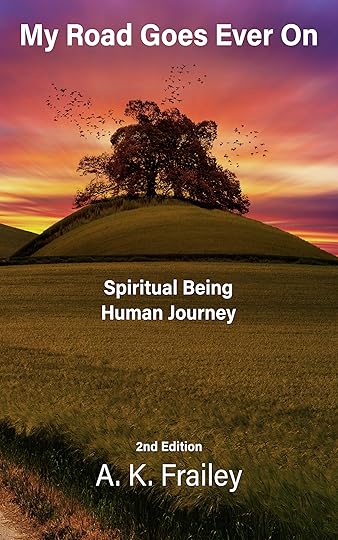
“A collection of insightful and encouraging blog posts from the author. This book is a daily devotional style book, as the author blends articles that bring fresh inspiration for the day on life, love, and overcoming obstacles with faith.” ~CBM
“Sometimes I feel sad about things, personal and…the world, and find inspiration in your stories.” ~Edith Fréccia
“Readers finish this novel feeling enlightened and able to return to their lives with increased faith.” ~Kaye
For a complete list of books by A. K. Frailey, book trailers, and reviews, check out A. K. Frailey’s Books Page For translated versions of A. K. Frailey’s Books, check out A. K. Frailey’s Translated BooksPhoto https://pixabay.com/illustrations/angry-little-girl-mad-girl-child-8765881/
The post We Live in a Mad World first appeared on The Writings of A. K. Frailey.
November 15, 2024
Sisters’ Short Story
Sisters’ Short Story reflects the close bond between siblings who have endured much together. In unspoken understanding, they build upon an imperfect past, hoping for a better future.
Under the crescent moon,
Starlight glory strewn,
Owl spoke to the young.
Chest with wisdom sprung.
“You gathered here today
Think not only of your prey!
Night will not last,
Bright the sun will blast
Lessons unlearned and long forgotten,
Leads to futures ill-begotten.
Sky warriors, unmindful of changes we do not see.
Yet danger lurks, harken to my plea!
.
With a hooting cry,
Claw, fight, and fly!
We are not of this world,
From the earthen clay hurled.
Wings take us where we need to go.
Our territory we know.
But nests need more than old owls to contain,
‘My kill, my fill’ must not be life’s refrain.
A time for tender care
Nurtures hope – if we dare.
Our bloody best,
Be put to rest.
For meat today,
Will not stay.
Our repast cannot last.
When death comes, as it must someday,
Remember tomorrow’s young and pray.”
Lucia gripped the porch railing and held on tight. Luminescent moon rays washed her lithe figure in ethereal white. Her mother’s raised voice splintered the air, silencing the owls, while her father’s rage rose in catastrophic fury. How they hate each other. She wanted to keep on her feet, but waves of dizziness engulfed her.
A strong hand gripped her arm, a voice breathed against her ear. “Come with me. There’s nothing for us here.”
Maisie, her sister, older, larger, stronger in every way, stepped off the porch into the darkness.
Lucia had to follow, though fear rippled over her skin. Into Owl territory. Masters of the night. Do they mind? But her sister was right. There was nothing for them in the house or on the porch but their parents’ skin-ripping, flesh-tearing hatred. Despite night creatures’ warnings, they had a chance in the woodlands. Owls probably wouldn’t attack her. Certainly not Maisie! Lucia almost chuckled at the thought.
Maisie’s voice rose, beckoning.
Lucia hurried and tripped over a tuft of grass beside a mole hole. Stay underground where it’s safe!
Mild for November, but soon winter would strip the last leaves from the trees, leaving the world stark and bare. A shiver ran over Lucia’s arms.
After a short tromp, Maisie pulled her onto a fallen log and wrapped a warm arm over her shoulders. “I’m hardly ever cold. Here, sit close and rest a bit.”
An owl hooted, and in the distance, another answered in a companionable conversation. Lucia heard herself speak before she had a chance to think out her words. “My teacher said that owls are vicious creatures, eating innocent animals alive.”
A long sigh and Maisie’s chest heaved as if the pronouncement weighed heavy on her soul. Finally, her voice deep for a fourteen-year-old, rose softly against the night. “They are only acting according to their natures. Owls need to feed. But even they know how to nurture their young.”
That last part, mysterious in its contradiction, seemed to speak of greater things. The image of an owl feeding its owlet the bloody remains of its prey didn’t distress Lucia as much as she thought it would. She understood. They could be no other way. She looked over and could just make out her sister’s profile in the moonlight. “Mama and Daddy are not taking care of us when they fight, are they?”
Maise heaved another sigh from her chest into the autumn night. “Not us. Not them. Not anyone.”
Another question rose, her nine-year-old mind trying to make sense of quivering reality. “Owls don’t hate, do they?”
Only Maisie’s head shook in answer. No words needed.
A voice called in the distance. Mother yelled in a plaintive cry, “Girls! Where are you? Come in from the cold. It’s all right now. Daddy has gone off.”
A silent moment. Neither Maisie nor Lucia moved.
Mother’s voice rose again, her irritation pecking at them. “Get inside before the coyotes eat you!”
Maisie rose, one hand gripping Lucia’s.
Perplexed, Lucia hung back. “I don’t think coyotes would eat me. Not with you here.”
Maisie started forward, towing her sister as she plodded through the undergrowth. “I’ll take care of you. But Mama needs us right now. She’ll get worried and angry, and that’ll make everything worse.”
Compassion rising over fear, Lucia tromped along through the woods. At the edge of the porch light, she stopped and glanced over her shoulder. The owls hooted to each other. “I want to stay with them.”
A rueful chuckle and Maisie crouched at her side, peering into her face. “Someday, we will make a new nest. A place of love. And we will live there.”
Lucia nodded. With a sigh that echoed her sister’s, Lucia climbed the porch steps and went inside. As she stared at her mother’s red-rimmed, flashing eyes, she knew that though she could never have lived with the owls, she did feel a kinship. Hate was not her nature.
A. K. Frailey is the author of 21 books, a teacher for 35 years, and a homeschooling mother. Make the most of life’s journey. For novels, short stories, poems, and non-fiction inspirational books, check out A. K. Frailey Amazon Author Page
“The stories are compact and move at a brisk pace, yet are filled with drama and excitement.” ~Gina Mitchell
“This book of short stories evokes smiles, tears, and reflection. The author has a unique writing style that captures your attention from the first sentence.” Discovery ~Gale Kaufman
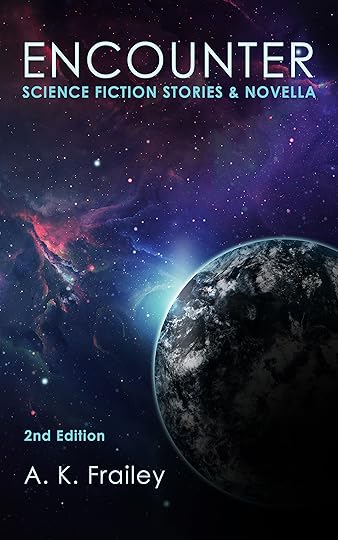
“When I found out she had a new collection out, this volume, I grabbed it immediately and started reading it that day.” ~Steven
For a complete list of books by A. K. Frailey, book trailers, and reviews, check out A. K. Frailey’s Books Page For translated versions of A. K. Frailey’s Books, check out A. K. Frailey’s Translated BooksPhoto https://pixabay.com/photos/the-great-grey-owl-predator-owl-2762192/
The post Sisters’ Short Story first appeared on The Writings of A. K. Frailey.