
David W. Tollen's Blog, page 4
November 11, 2019
This week in history: The Mayflower
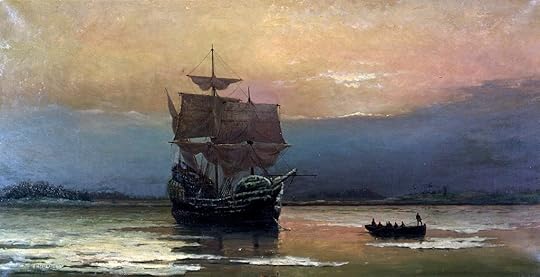
Painting by William Halsall
This week in 1620, passengers and crew aboard The Mayflower got their first glimpse of the New World, sighting modern-day Cape Cod in Massachusetts. The travelers spent a couple of days trying to sail further south to Virginia, their intended destination, but strong winds pushed them back to the natural harbor at Cape Cod. After anchoring on November 11, the settlers drafted and signed The Mayflower Compact, which established a form of government for the colony. Arguably, it was North America’s first written constitution.
Sadly, the expedition fared pretty poorly after that. The settlers weren’t prepared for Massachusetts’ harsh winter, and by the Spring, half were dead. Little did the Pilgrims realize, however, that they had actually enjoyed a stroke of luck, though a grim one. European diseases born by fisherman had infected the local Native Americans recently, wiping out most of the Wampanoag population. So the land nearby was both partly cleared and relatively empty when the settlers arrived: well-suited for colonists. And the remnant of the Wampanoag were too few to protect themselves from their enemies, so they were eager for allies. As a result, the natives befriended and helped the desperate Pilgrims.
The post This week in history: The Mayflower appeared first on DavidTollen.com.


November 5, 2019
This week in history: The Sistine Chapel
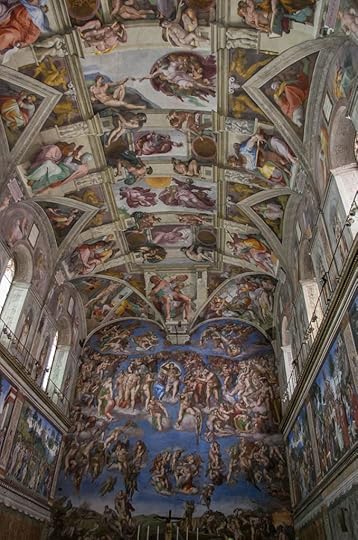
Photo by Antoine Taveneaux, reproduced with permission under the Creative Commons License Attribution-ShareAlike 3.0 Unported license
This week in 1512, the Vatican revealed the newly-painted ceiling of the Sistine Chapel, for the first time. Renaissance master Michelangelo had begun the work in 1508, under commission from Pope Julius II (often called the warrior pope). The master had actually resisted the project at first. The scale of the job intimidated him (with good reason). And – amazingly from the viewpoint of history – Michelangelo considered himself more a sculptor than a painter. He also thought that his enemies had arranged the commission, assuming he would fail. But Pope Julius was relentless.
To most of us today, the Sistine Chapel ceiling is a dignified work of art, painted in dark hues. But many art historians believe that, before the centuries dimmed the paint, the masterpiece glowed with bright colors, like a holy comic book.
The post This week in history: The Sistine Chapel appeared first on DavidTollen.com.
October 29, 2019
This week in history: Annie Edson Taylor
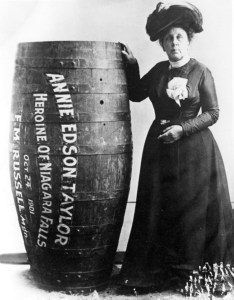
On October 24th 1901, Annie Edson Taylor became the first person to “raft” over Niagara Falls in a barrel and survive. She accomplished this feat on her 63rd birthday with the intent of securing her finances, through speaking engagements and other publicity. Unfortunately, she never made much money from the venture – mostly because her associates swindled her during post-stunt publicity tour. Annie did write a memoir that briefly improved her finances, but not for long. She died in 1921 in relative obscurity. Today, however, Kathleen Ordiway portrays Taylor at the “Encounter Niagara” tour at the falls, ensuring the survival of her legacy.
The post This week in history: Annie Edson Taylor appeared first on DavidTollen.com.
October 17, 2019
This week in history: Louis XIII
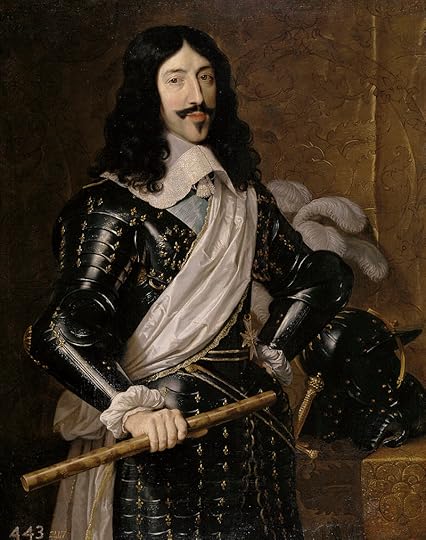
On this day in 1610, Louis XIII was crowned King of France, following the assassination of his father, Henry IV. The new king was only nine, so his mother, Marie de’ Medici, ruled as regent. Her mismanagement, however, along with widespread hostility toward her Italian favorites, led the teenage Louis XIII to take over in 1617. He then exiled his mother and execute several of her followers. Louis XIII ruled well, thanks in large part to his brilliant chief minister, Cardinal Richelieu. The king died in 1643 and was succeeded by his son, Louis XIV, a.k.a. the Sun King, who made France the greatest power in Europe.
The post This week in history: Louis XIII appeared first on DavidTollen.com.
October 14, 2019
This week in history: Theodore Roosevelt
This week in 1910, former President Theodore Roosevelt became the first U.S. chief executive to fly in an airplane. More than 10,000 people attended the event at Kinloch Field in St. Louis. The pilot, Archibald Hoxsey, flew Roosevelt around the field twice, for a distance of about three miles, in a flight lasting three minutes and twenty seconds. Roosevelt greatly enjoyed the experience and waved to the crowd from the circling airplane. Hoxsey, on the other hand, suffered great anxiety, fearing what might happen if the former President were injured or killed. But the plane landed with both pilot and passenger in great spirits.
The post This week in history: Theodore Roosevelt appeared first on DavidTollen.com.
October 4, 2019
This week in history: Sputnik I
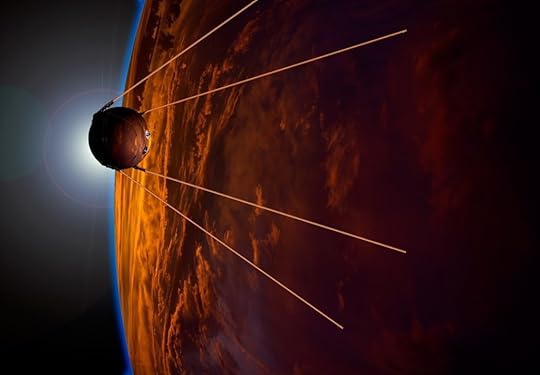 Photo by Gregory R Todd, provided under a Creative Commons Attribution ShareAlike license
On this day in 1957, Sputnik I became the first artificial satellite to orbit the Earth. The beachball-sized Soviet machine circled the planet in a low elliptical orbit for three weeks before its batteries finally died. Then it continued for two more months before finally falling back into the atmosphere. The unexpected success of Sputnik I triggered the great 20th Century space race between the Soviet Union and the United States. Sputnik gave the Soviets a tremendous head start, but arguably the U.S. won the race when it put the first human beings on another astronomical body—on July 20, 1969, when Apollo 11 landed on the Moon.
The post This week in history: Sputnik I appeared first on DavidTollen.com.
September 27, 2019
This week in history: The Rosetta Stone
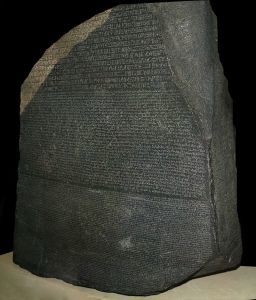
Photo courtesy of Hans Hillewaert via Wikimedia Commons.
On this day in 1822, Jean-Francois Champollion announced that he had deciphered the Rosetta Stone, twenty-three years after its discovery. The Rosetta Stone records a 196 BC decree from the reign of King Ptolemy V Epiphanes of Egypt, and it’s written in 3 different languages. That made it the key to translating ancient Egyptian hieroglyphs, as well as the Egyptian demotic script. The bottom language was Ancient Greek, which was well-known in the 1800’s, and the demotic and hieroglyphic scripts were inscribed above. So Campollion used the ancient Greek version of the decree to translate the other two, giving historians the key to reading hieroglyphs and demotic script on temple walls, ancient manuscripts, and everywhere else. Much of what we know about the ancient Egyptians—including those from far before 196 BC—comes to us thanks to Campollion’s work.
The post This week in history: The Rosetta Stone appeared first on DavidTollen.com.
September 23, 2019
This week in history: Wright Flyer II
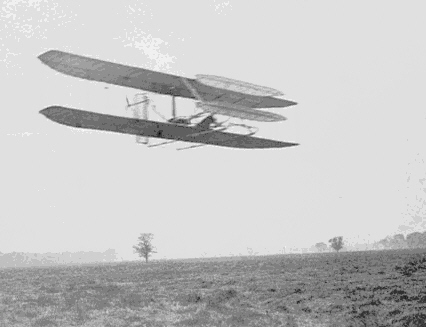
This week in 1904, Wilbur Wright achieved humanity’s first “circular flight.” He did this in the 2nd plane he and his brother Orville built. The Wright Flyer II, pictured here, took one minute and sixteen seconds to complete a circle in the air. The plane made a total of 105 flights in 1904, but this one—on September 20—was the first complete circle.
The post This week in history: Wright Flyer II appeared first on DavidTollen.com.
September 13, 2019
This Week in History: David & Michelangelo
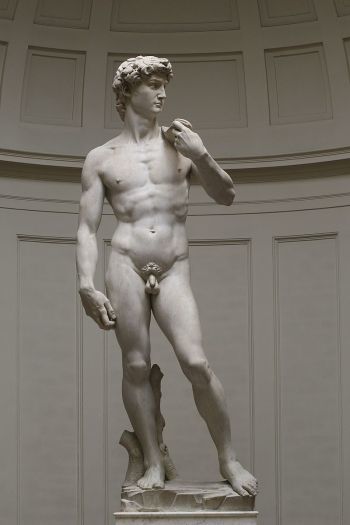
Michelangelo’s David, photographed by Jörg Bittner Unna, courtesy of Wikimedia
This week in 1501, Michelangelo began work on his statue of David, one of Renaissance Italy’s most famous works of art. The artist took three years to complete the piece, unveiling it in 1504. David was originally meant to stand on the roof-line of the Florence Cathedral, but it (he) was instead placed at Palazzo Vecchio in the public square. In 1873, David was moved to the Gallery of the Academy of Florence, with a replica standing in the original site.
The post This Week in History: David & Michelangelo appeared first on DavidTollen.com.
September 10, 2019
Magellan: This Week in History
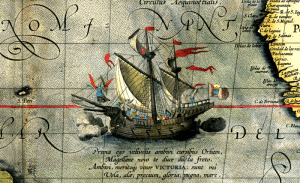 This week in history, in 1522, the Spanish carrack Victoria returned home with just eighteen crew-members. She had completing the first circumnavigation of the globe. The expedition had begun in 1519 with five fully-crewed ships under the command of Ferdinand Magellan. During the long journey across the Atlantic and Pacific and beyond, most of the initial 260 crew members deserted, died of malnutrition, or were killed in battles. Magellan himself met his end at the Battle of Mactan in the Philippines in 1521. His body was never recovered, but he is still credited with the first circumnavigation of Earth.
© 2019 by David W. Tollen. All rights reserved.
The post Magellan: This Week in History appeared first on DavidTollen.com.



![[image error]](https://davidtollen.com/wp-content/uploads/2019/10/Theodore_Roosevelt_and_Archibald_Hoxsey_1910.jpg)

