Brainard Carey's Blog, page 54
February 11, 2021
Adeeba Shahid Talukder
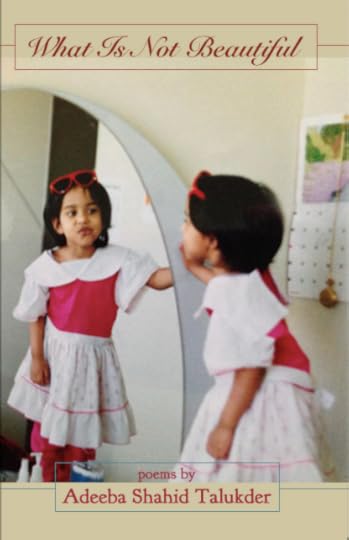
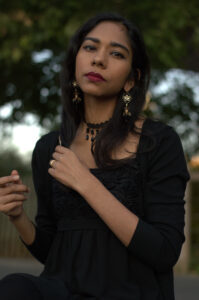 Adeeba Shahid Talukder is a Pakistani American poet, translator, and singer. She is the author of
What Is Not Beautiful
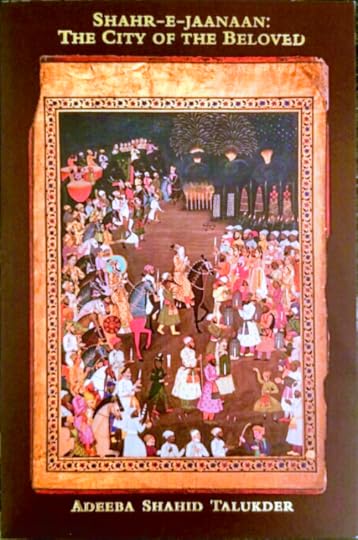
(Glass Poetry Press, 2018) and her debut collection, Shahr-e-jaanaan: The City of the Beloved (Tupelo Press, 2020), is a winner of the Kundiman Poetry Prize. Her poetry has appeared in Poem-A-Day, Glass, Gulf Coast, Meridian, and The Margins, and her translations in PBS Frontline and Words Without Borders. Adeeba holds an MFA in Creative Writing from the University of Michigan and an Emerging Poets fellowship from Poets House.
Adeeba Shahid Talukder is a Pakistani American poet, translator, and singer. She is the author of
What Is Not Beautiful
(Glass Poetry Press, 2018) and her debut collection, Shahr-e-jaanaan: The City of the Beloved (Tupelo Press, 2020), is a winner of the Kundiman Poetry Prize. Her poetry has appeared in Poem-A-Day, Glass, Gulf Coast, Meridian, and The Margins, and her translations in PBS Frontline and Words Without Borders. Adeeba holds an MFA in Creative Writing from the University of Michigan and an Emerging Poets fellowship from Poets House.Below is the film trailer for An American Prayer, featuring “A Song For My Nation”


Arhm Choi Wild
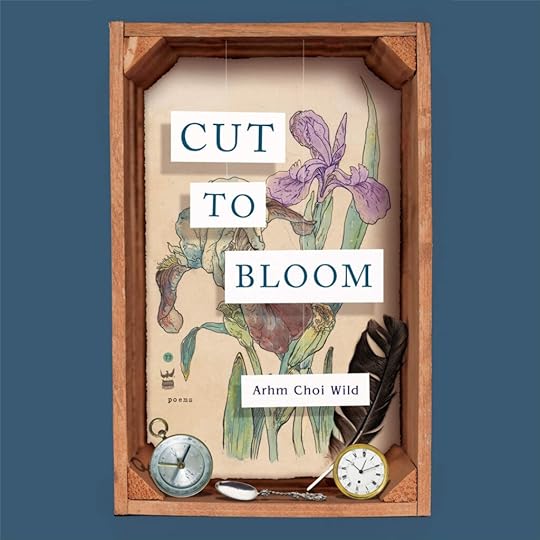
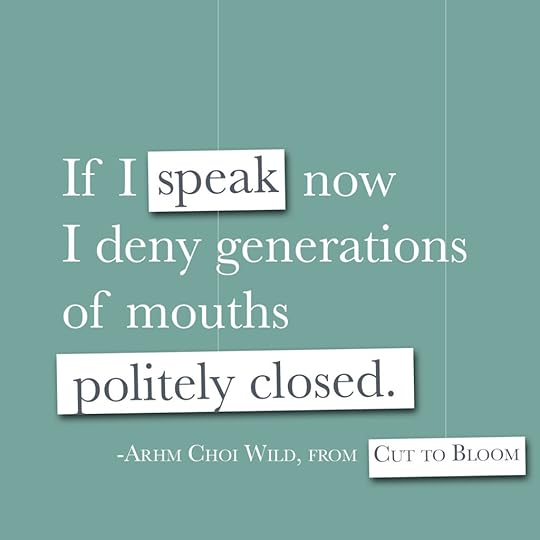
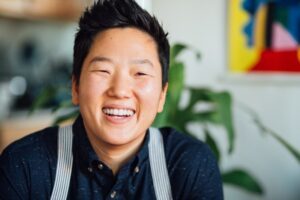 Arhm Choi Wild is a queer, Korean-American poet who grew up in the slam community of Ann Arbor, Michigan, and went on to perform across the country, including at Brave New Voices, the New York City Poetry Festival, and Asheville Wordfest. Their debut book of poems, CUT TO BLOOM, was the winner of the 2019 Write Bloody Book Contest. Arhm is a Kundiman fellow with an MFA in Poetry from Sarah Lawrence College, and was a finalist for the Jake Adam York Prize in 2019. They have been anthologized in Daring to Repair by Wising Up Press and The Queer Movement Anthology of Literatures, and their work appears in Barrow Street, The Massachusetts Review, Pleiades, Split this Rock, and other publications. They work as the Director of the Progressive Teaching Institute and as a Diversity Coordinator at a school in New York City.
February 10, 2021
Mark Jason Weston
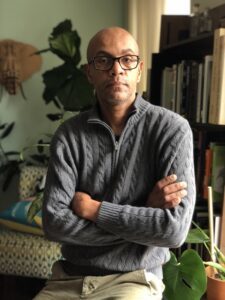 Mark Jason Weston was born in Jamaica, and now lives and works in Philadelphia.
He studied English Literature and Creative Writing at Central Connecticut State University, and has had poetry published in various American and UK literary magazines.
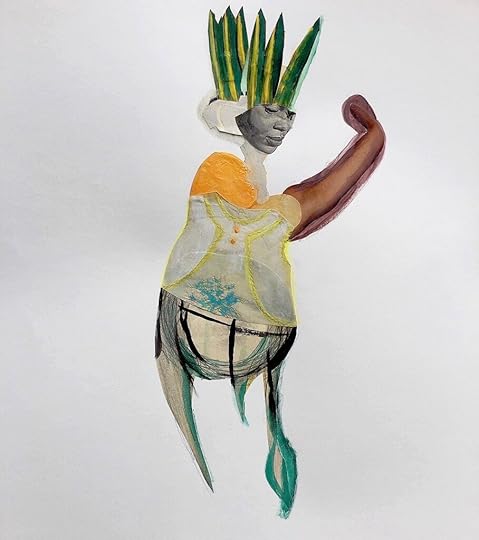 Somewhere on the Island
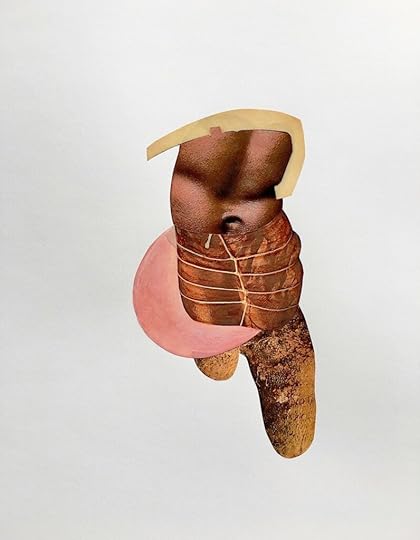 Ground Provisions
February 9, 2021
Brian Curtin
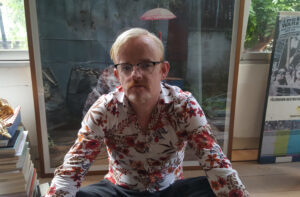 Portrait of Brian Curtin, 2021, by Be Takerng Pattanopas
Brian Curtin is an Irish-born art writer, lecturer, and curator of contemporary art. He has been based in Bangkok since 2000 where he lectures in the Department of Communication Design at Chulalongkorn University.
Brian’s work explores dialogues between contemporary art, Queer theories and studies in visual and material cultures. His commentary, essays, interviews and reviews have been published in Art Journal, Artforum, Art Asia Pacific, Circa, Craft Research, Flash Art, Frieze, Journal of Curatorial Studies and Parachute, amongst others. Brian’s monograph Essential Desires: Contemporary Art in Thailand will be published by Reaktion Books in June 2021.Research work addresses challenges in thinking through hierarchies and antagonisms that limit critical approaches to modern and contemporary art; and published essays in this respect explore the art-historical marginalizing of ‘decoration’ and also problems of national identity as a frame for recent art. Brian has presented at conferences and symposia in Kuala Lumpur, Kyoto, London and Singapore. And has held writer’s residencies in Beijing and Kuala Lumpur.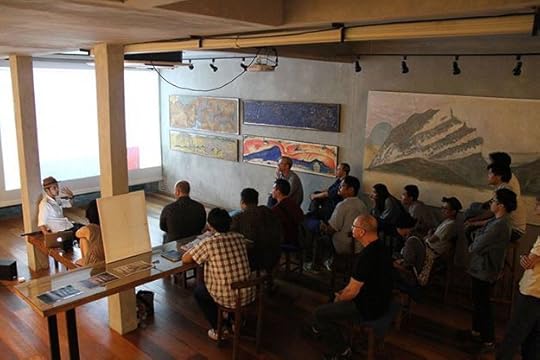 Seminar with artist Lim Sokchanlina at Toot Yung Gallery Bangok 2014
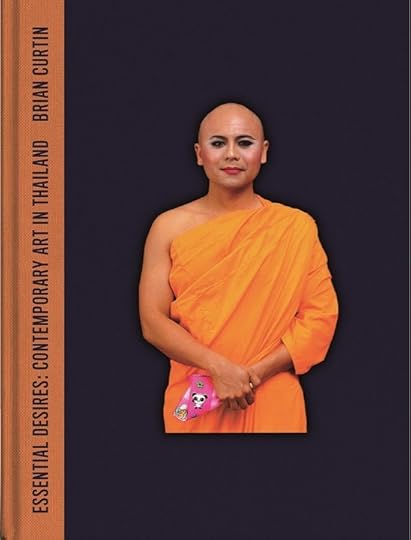 Essential Desires Publication in June 2021
Marta Obiols Fornell and Tomas Hed
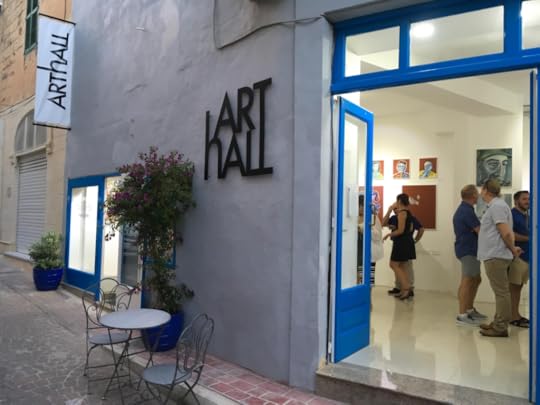
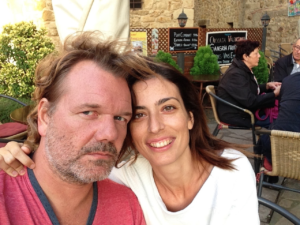 Marta Obiols Fornell is a curator and an art gallery owner in Gozo, Malta. She runs the gallery together with Tomas Hed with a focus on modern, contemporary art.
She studied Philosophy in Spain and Germany and also Religious Sciences. Her strong motivation and determination in dealing with artists in Malta, especially in Gozo, has enabled her to launch a number of exhibitions, art talks, philosophy meetings, music sessions, etc. Having created interest and curiosity around art related activities, she plans to develop her gallery as a centre of culture, innovation; as a place to enjoy and share art and ideas.
She has established contacts with other galleries from Europe and continues to grow in her dealings with locals and foreigners artists. Marta’s art experiences have been quite an exciting adventure and more is to come! Marta received the Gozo’s Best Female Entrepreneur of the year 2019 Award. And she has recently published in Malta “Easeful Death”, a philosophical essay.
Tomas Hed, originally from Sweden, lives in Gozo (Malta), where he lets his imagination and creativity go wild. Here he has found his place to exploit his talents: composing music, writing and, of course, painting. He worked for many years as an Art Director in Stockholm, having his own studio in Gamla Stan, the old part of the city. As a seeking youth Tomas developed in an artistic atmosphere, living in a community with other artists. Tomas’ father was an artist too; therefore paint and canvases have always been around him.
Always polemical, provocative and with strong opinions, it’s impossible to be indifferent to his creations. The spirit of his art is inspired by an indomitable character, with a special obsession for challenging values, or “bubbles” as he calls them, of our daily life.
February 7, 2021
Edgar Oliver
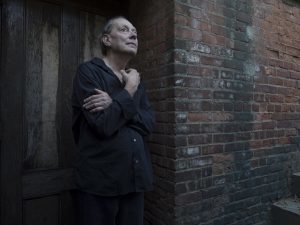 Edgar Oliver, photo by Pavel Antonov
Edgar Oliver is a writer and performer who has lived and worked in New York for many years. He started out reading his poems and performing monologues at the Pyramid night club in the early 1980’s.
This is his third interview with Brainard Carey in this series.
From 1988 to 2001 he wrote and staged a series of autobiographical plays – premiering a new play almost every year in the Club at LaMama on east 4th Street.
Titles include The Seven Year Vacation, The Ghost of Brooklyn, Mosquito Succulence, Motel Blue 19, and The Drowning Pages.
In recent years he has written and performed a series of one man shows that have won much critical acclaim.These shows include Helen and Edgar – directed by Catharine Burns of The Moth – and East 10th Street: self-portrait with empty house, In the Park, and Attorney Street – all three directed by Randy Sharp of the Axis Theatre Company.The images below are book covers and spreads from the poetry books mentioned in the interview that are published and sold by Oilcan Press.February 4, 2021
Bek Andersen
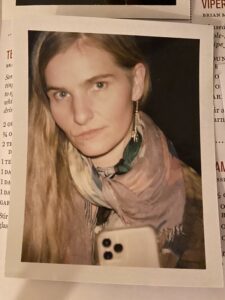 Bek Andersen received an MFA in photography from the Yale School of Art in 2017 after working for several years as a fashion and entertainment photographer in New York City.A queer spiritualist raised by devout Mormon parents in a suburb of Oklahoma City, Andersen’s work is concerned with the fictive and performative identities of power, gender, sex and the mythologies through which the present claims authenticity.This background situates the work between a variety of technologies and attendant politics of display. Her photographs and installations present visions of truth as a provocation to look more closely at the narratives that shape our worldview.The book mentioned in the interview was
She Said
, by Jodi Kantor and Megan TwoheyWho Governs? by Robert A. Dahl
Bek Andersen received an MFA in photography from the Yale School of Art in 2017 after working for several years as a fashion and entertainment photographer in New York City.A queer spiritualist raised by devout Mormon parents in a suburb of Oklahoma City, Andersen’s work is concerned with the fictive and performative identities of power, gender, sex and the mythologies through which the present claims authenticity.This background situates the work between a variety of technologies and attendant politics of display. Her photographs and installations present visions of truth as a provocation to look more closely at the narratives that shape our worldview.The book mentioned in the interview was
She Said
, by Jodi Kantor and Megan TwoheyWho Governs? by Robert A. Dahl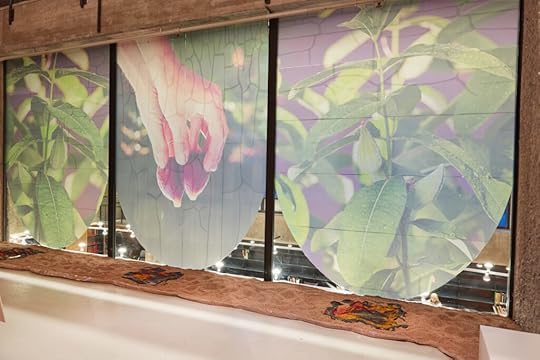 Garden Pleasure, Yale Architecture Gallery, Jan 2020 Window Triptych: (Pods, Figs, Pods). Common Milkweed, Camille holding figs. Materials: Newsprint, face mounted with Vegetable Oil. This Piece is 100% Compostable. 10 1/4′ h x 23 1/2′ w.
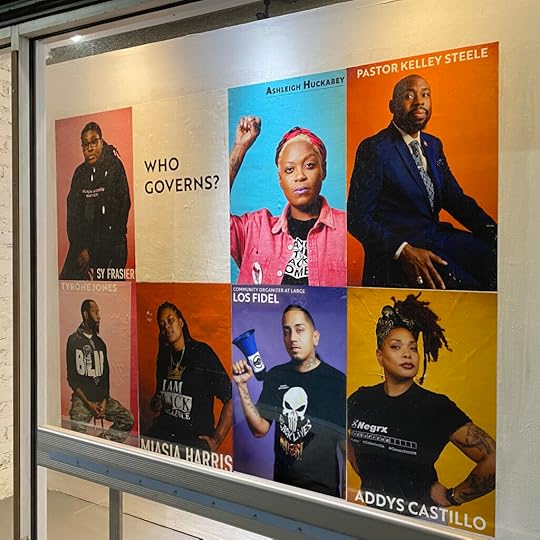 Who Governs? Artspace New Haven, Oct 2020 Power Portraits: The official unofficial leadership of New Haven’s social justice movement Materials: Fiber Inkjet prints, Wheatpaste 6′ h x 8′ w
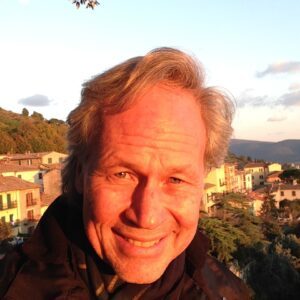
Daniel Foster
 Art Values & Philosophies
By Daniel Foster
Art is fundamentally about the pursuit of beauty and/or truth. Beauty is not always truthful, and truth is not always beautiful. Very few professions work with such important content and tools for change and the humanistic benefit of the individual, family, groups, organizations, communities, and society.
Everyone’s “Wow” is equal and authentic. We are all visual creatures that become experts about what we love to look at a very early age – and then institutionalized child development and educational processes work to undermine our confidence in our own eyes and natural “response system”, further reinforced in adulthood by the art world elitist establishment and its intellectual and cultural arrogance. Eventually, too many adults don’t know or are too scared to express what they like or don’t like in art.
Trend towards collective vs. isolated impact models. Competition in the capitalistic marketplace may be good; but, it’s ‘poison’ in the charity/nonprofit world. Funders/philanthropists create grant competitions for funding between similar-missioned nonprofit organizations in the same definable community. Ultimately, this produces highly siloed, fragmented, and disorganized community efforts that DO NOT address the systemic causal factors — but, simply place a “band aid” on the year-after-year problem. Sustainable impact models require collaborative, coordinated, and leveraged approaches utilizing many diverse leaders/organizations with adequate long-term resource support. After a century of American philanthropy, the nonprofit sector needs a revolutionary change (like every other major industry/institution in America over 100 years old). The nonprofit “operating system” has grown arcane, wasteful, and ineffective in addressing the needs of its citizens/communities. Read “Collective Impact” by Stanford Social Innovation Review.
Art is Content AND Context. The realm of content has been explored extensively in the 20th century – particularly in the postmodern era…The new frontier in art is comprehensively exploring the ‘contextualization’ of this content into our daily public and private lives and hour-by-hour “consciousness”. Many civic-public arts programs are a crude form of “tokenism” …A token nod or gesture to the local arts community. The difference between a ‘good’ and a ‘bad’ arts community is generally about 2-3 dozen outdoor sculptures/artworks scattered around many square miles of land, walkways, and streets! Most residents in a ‘good’ art city live without any ‘good’ art in their visual public/outdoor landscape, other than an occasional sculpture or mural observed for a few seconds while in transit. Most offices and workplaces are devoid of ‘good’ or ‘original’ art that reflect the values (and artists) of the local community; and, the same is true for most people’s homes. It’s befuddling that many people who spend $500,000 on a home; and $50,000 on a car; won’t even spend $500 on a good original artwork, instead opting to spend $50 on a generic framed art poster over the sofa. FYI, the art in your home speaks as loudly about YOU to your family and friends as the car or the home, maybe even more so!
Art is the “artifact” of a creative journey/process designed/executed by the artist. Most great artists are firmly committed to the “process”, recognizing that good ingredients and good processes produce good outputs and results…usually. The “artifact” is like an artist’s snapshot of his/her journey at a certain moment in time and place.
Art is spiritual technology. Many artists find their source of inspiration from deep within their soul – a powerful portal to connecting with their deepest spiritual, religious, and philosophical beliefs and sense of purpose. Thus, artmaking can be a form of spiritual practice which can produce powerful and enlightened moments of personal transformation, identity, and/or spiritual awareness.
Diversity is everything. Whether derived from ethnic, age, gender, cultural, socio-economic, political, and/or religious backgrounds, diversity of thought and approach is increasingly and exponentially growing in importance in society, community building, organizational management, best practice problem-solving, and the art world.
Freedom of the Artist in the marketplace. Historically, the artist has been highly dependent on the gallery-museum world to validate their talent and careers (and sales/income for the artist). Serious collectors and curators often find, and support artists represented by galleries. Dealers are the “scouts” for collectors/curators. Many/most artists struggle mightily to break into the gallery-museum system. The 21st century art marketplace will be on the internet and undoubtedly art collectors/buyers and artists will find each other more directly and cut out the “middleman” gallery dealer. Important Note: There will always be the need for galleries-museums to research, present, and educate the public about art and how it reflects on and impacts our society and daily lives.
Art is an important tool for economic development, downtown revitalization, and positive quality-of-life community branding/identity. Strong and healthy communities utilize the arts as a critical tool for higher quality of living for its residents and visitors. The arts are a cheap investment for its positive branding and economic development opportunities vs. the alternative quality of life factors that are highly expensive to make a noticeable improvement. Historically, art is the best tool for downtown revitalization. The problem is increased property values and “gentrification” that typically drives the artists out of the revitalized area.
Art is a healing force. The power of art as a form of formal or informal therapy that can heal the body (and our mind, heart, and soul) is very well established and growing in the medical fields. For many of our most desperate and vulnerable individuals and groups in our communities, art can be the last resort/safety net to maintain some sense of hope, escape, or belonging. Art can heal in ways that medicine is ineffective…
Art is an excellent tool of communication – particularly with youth and neglected/marginalized individuals. Many individuals (particularly youth) struggle with conventional forms of communication…but, art is a powerful tool for self-expression and connecting to the world and it can easily transcend barriers (i.e., language, socio-economic, cultural, etc.).
Art is in us all. Artmaking is an instinct in us all – children express their creative voices early and uninhibitedly, and then over time tend to grow artistically shy and insecure with adulthood. The “critical eye” of judgment applied too early in life can be toxic to the artistic spirit growing confident with its own voice/creativity.
Art can defeat ignorance and hatred. Art is the light that defeats darkness. Art educates and enlightens people’s knowledge and understanding for the diversity of cultures and peoples in the world—often building tolerance, understanding, acceptance and appreciation for the commonalities and differences between us all.
Art is not a luxury—rather a necessity. Throughout history, whether its “primitive” tribes or sophisticated civilizations, art is a fundamental element of human and social expression, relatedness, identity, belonging, and consciousness. Art contextualizes the important content of our lives.
Formal education needs to prepare artists for careers. Some of the world’s greatest artists never developed because of “real life” obstacles towards pursuing a full-time career in the arts. Formal higher education institutions are generally inadequate in preparing artists for developing a sustainable and viable career.
Work ethic is essential. Some very talented artists are nonetheless lazy, undisciplined, and/or unfocused. Professionalism usually requires a strong standard of work ethic to reveal and strengthen an artist’s raw talent.
Establish the “Inner Sanctuary”. Often referred to as the “inner studio dialogue”, artists often mature by establishing an “inner sanctum” that their inner creative voice and spirit feels safe and free to “soar” and express itself freely… Artists need to know how to shut out and eliminate the external “noise” and “critical eye”.
Art gives us meaning and identity. Our individual and collective lives and attitudes are heavily defined and influenced by the creative/artistic/cultural environment that we live and work in. Art softens and humanizes the built landscape and our utilitarian world.
Hybridization and Multi-Disciplinary Practices are the Future. Specialization and compartmentalization of all traditional and contemporary disciplines, art forms, and practices are trending towards disintegrating into hybridization, pluralistic, and multi-disciplinary practices via postmodernism. The “generalist” is coming back…
21st century minds will adapt to exponential vs. arithmetic growth. From an evolutionary perspective, humanity is hardwired to live in a world of arithmetic progress and growth. However, the world is now growing exponentially, which challenges individuals and communities to adapt to this new “paradigm”.
New technologies are often the “cutting edge” of the art world. To compete in the art world and develop niches and/or differentiation in the marketplace, new technologies, materials, and media offer tremendous opportunities for artists.
Pursue life-long learning. At its best, life-long learning is a constant on-going process that regularly feeds and rewards the individual or group. When learning slows or stops…status quo conditions prevail giving birth to stagnation and decay. Organizations/groups function best when they operate in a “learning culture” environment.
Daniel Foster is currently the Executive Director & Founder of Shumway Ranch.Org since February 2018 in partnership with the State of California/Coachella Valley Mountains Conservancy. Shumway Ranch is an historic 640-acre homestead overlooking eastern Coachella Valley and within the Santa Rosa & San Jacinto National Monument situated pristinely in a rare 12,000-year-old Pinyon Pine/Elfin Forest.
Foster is the past Executive Director of the Oceanside Museum of Art (2012-15), Riverside Art Museum (2003-08), and past President/CEO of The Community Foundation Serving Riverside/San Bernardino Counties (2009-12). Foster was a front-page weekly Columnist/Writer for the Press Enterprise from 2007-12; and monthly Columnist/Writer for 951 Magazine from 2006-09.
Earlier in his career, Foster held professional positions with the San Diego Art Institute, San Francisco Art Institute, University of California San Diego (Visual Arts Department), Headlands Center for the Arts-Sausalito, CA.
Foster has also founded and led several important community-based/nonprofit organizations such as:
Arts Connection (Arts Council for San Bernardino County)North County Arts Network (North County San Diego Arts Council) Inland Empire Funder’s Alliance Riverside Cultural ConsortiumOceanside Cultural ConsortiumInland Regional Arts Forum.Foster received the “Executive Director of the Year” Award from the Riverside County Agency Executives Association in 2008. The same year, Foster was selected by The James Irvine Foundation as one of the top 10 community leaders in the State of California (a $25,000 award).
Educationally, Foster received a Master of Fine Arts double degree with honors in New Genres and Sculpture from the San Francisco Art Institute. He received his Bachelor of Science degree in Entrepreneurship from the University of Southern California Marshall School of Business, plus an additional 3 years of full-time studies at the University of California, San Diego (Revelle College, undergraduate majors in philosophy & art).
Creatively, Foster has been an intentionally isolated, non-commercial, non-exhibiting multi-disciplinary conceptual artist and poet for nearly 35 years; with the notable exception of two solo public art exhibitions in 2016 in San Diego before leaving to move to Pinyon Crest, CA. Art practices involve painting, drawing, conceptual, outdoor site-specific/installations, photography, found objects/sculpture, and assemblages. Foster has also produced 25 unpublished books of poetry/word drawings since 1995. Foster was a full-time artist from 1986-2003 — transitioning heavily to social/community/nonprofit leadership practices via “collective impact” strategies in 2003.
Foster moved from San Diego to Pinyon Crest with his nine-year old son, Kenneth, in August 2017 to start a new chapter of life in the Coachella Valley…
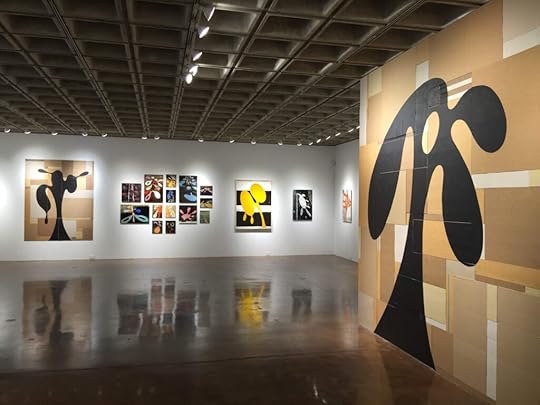 2016 Southwest College Solo Exhibition
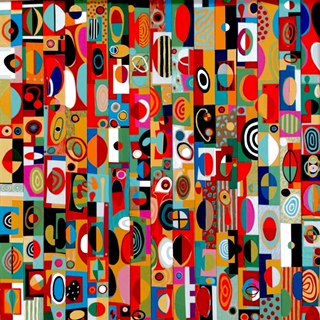 Untitled, 1997 – Day
Jared Ledesma
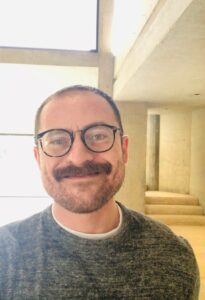 Jared Ledesma is Associate Curator at the Des Moines Art Center in Iowa. The Des Moines Art Center is a nationally renowned modern and contemporary art museum with an esteemed permanent collection, and an art school that offers studio classes for artists of all ages. Since arriving at the Art Center in 2017, Ledesma has organized more than a dozen exhibitions. This includes Queer Abstraction (2019-2020), the Art Center’s first exhibition in its 70-year history to focus on gender and sexuality. The exhibition earned a commendation from the 2019 Sotheby’s Prize jury for its groundbreaking scholarship and the 2020 SECAC Award for Outstanding Exhibition and Catalog of Contemporary Materials. Other exhibitions Ledesma has organized include Hedda Sterne: Imagination and Machine (2020), Jeffrey Gibson: I Was Here (2019), The Art Students League of New York (2018-2019), and I, too, am America (2017). Currently, Ledesma is working on Louis Fratino: Tenderness revealed, a major exhibition opening on November 13, 2021.
Before working at the Des Moines Art Center, Ledesma was curatorial assistant in the department of painting and sculpture at the San Francisco Museum of Modern Art (SFMOMA). Ledesma is originally from the San Francisco Bay Area and holds both a BA and MA in art history from San Francisco State University.
The book mentioned in the interview was The Householders by Robert Duncan and Jess.
The images below are from an upcoming show by Olivia Valentine who has also been interviewed previously here.
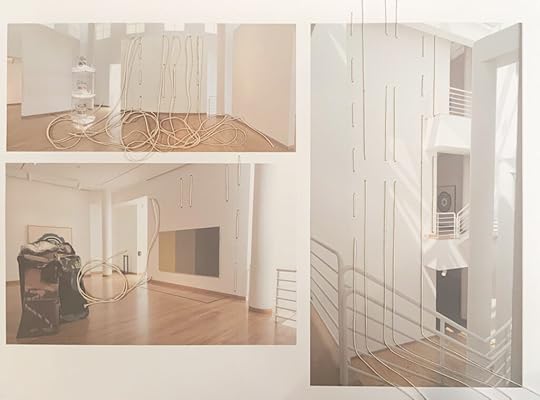 Olivia Valentine, Mediate/Equivocate mockup for the exhibition “Iowa Artists 2021: Olivia Valentine,” presented at the Des Moines Art Center, March 12–May 16, 2021.
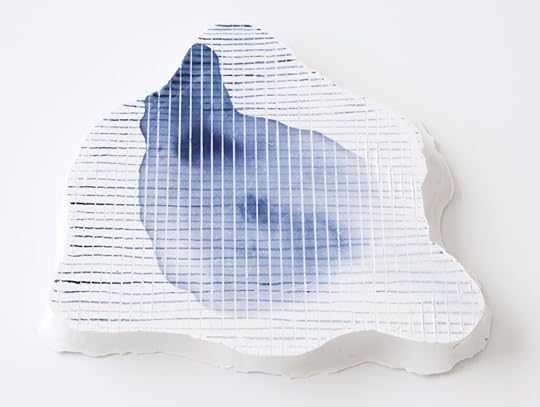 Not of longing, but of light, 2019 Plaster, rabbit skin glue, watercolor. Photo: Olivia Valentine © Olivia Valentine
February 3, 2021
Alison Ward
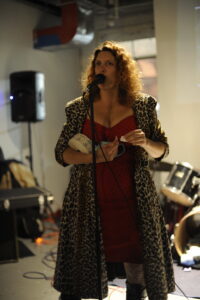 Alison Ward is a multimedia artist based in Kingsbury, Texas. Her work spans the gamut from vaudeville to multimedia installation sculptures, but in everything she does she creates pieces that involve a larger audience, getting them directly involved and participating in the work. She is currently working on a collective project called Habitable Spaces. Habitable Spaces is part ecovillage, part living sculpture. It is a continually evolving project that invites a community of artists and farmers in to help visualize utopia.
Before arriving in Kingsbury, Alison lived and worked in New York city showing and performing at the Queens Museum, The Dumbo Arts Center, the Bronx Museum, the CCCB Museum in Spain, RAW Space Gallery in Australia, Castlefield Gallery in England, and the Ponce Museum in Puerto Rico. She has done residencies at Raw Space in Australia, The Artist in the Marketplace Program, the LMCC studio program, Swing Space, Flux Factory and the Islington Mill in Manchester. She has received grants and awards from the Brooklyn Arts Council, the Lewisham Arts council in London, the Idea fund in Houston, the GVEC Power up grant, Union Pacific, the San Antonio Area Foundation and the Texas Commission on the Arts.