Brainard Carey's Blog, page 39
May 2, 2022
David Claerbout
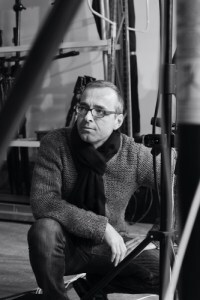 Courtesy Studio David Claerbout
This interview discusses the work of Claerbout in the context of an exhibition at Sean Kelly gallery in New York City..
Throughout his career, the Belgian artist David Claerbout has investigated the conceptual impact of the passage of time through his use of video and digital photography. As scholar David Green has explained, “Claerbout’s work subtly proposes a relationship of similitude between film and the objective world that lies outside and beyond the narrative space of cinema. In doing so he poses a set of questions about how we experience film and about the nature of the medium itself.”
Specifically, Claerbout manipulates both moving and still imagery to suggest an otherworldly level of existence, something that might refer to a specific place or event, but the timeline of which is not clear, oscillating between both past and present. The element of sound is critical in many of the works, often used as either a narrative device or a “guide” for the viewer to navigate the architectural space in the film. Claerbout’s oeuvre is characterized by a meticulous attention to production details, painstakingly created often over a period of years. The resultant works are immersive environments in which the viewer is invited to engage both philosophically and aesthetically.
Claerbout studied at the Nationaal Hoger Instituut voor Schone Kunsten in Antwerp from 1992 to 1995 and participated in the DAAD: Berlin Artists-in-Residence program from 2002 to 2003. Claerbout’s work is included in major public collections worldwide, including: Centre Georges Pompidou Musée National d’Art Moderne, Paris, France; Pinakothek der Moderne, Munich, Germany; Art Gallery of Ontario, Toronto, Canada; The Museum of Contemporary Art, Los Angeles; Walker Art Center, and many others.
David Claerbout lives and works in Antwerp, Belgium and Berlin, Germany.
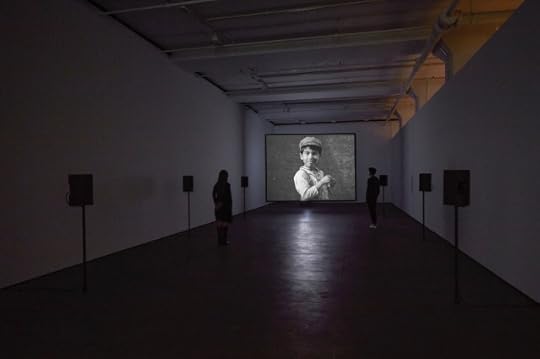 Installation view of David Claerbout: Dark Optics at Sean Kelly, New York, April 27 – June 4, 2022, Photography: Jason Wyche, New York, Courtesy: Sean Kelly, New York
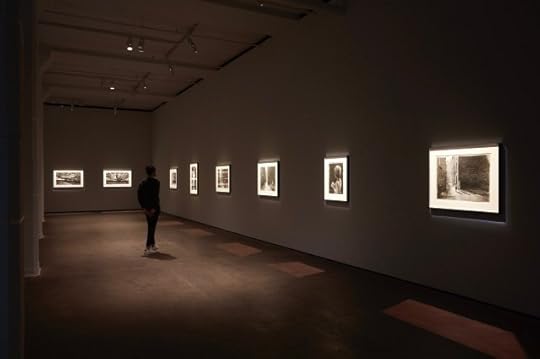 Installation view of David Claerbout: Dark Optics at Sean Kelly, New York, April 27 – June 4, 2022, Photography: Jason Wyche, New York, Courtesy: Sean Kelly, New York
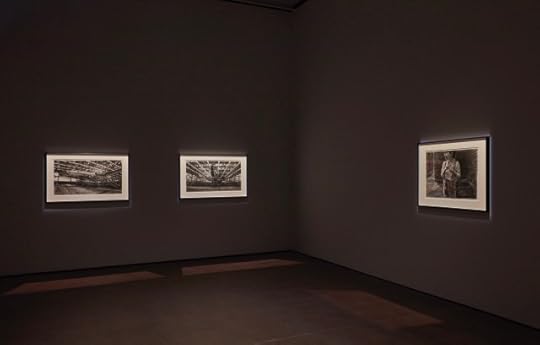 Installation view of David Claerbout: Dark Optics at Sean Kelly, New York, April 27 – June 4, 2022, Photography: Jason Wyche, New York, Courtesy: Sean Kelly, New York


April 22, 2022
Scott Lyall
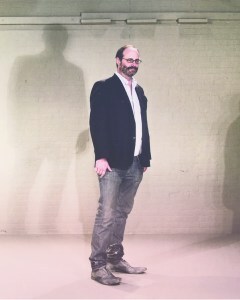 Scott Lyall
Scott Lyall (b. 1964, Toronto) lives and works in Toronto and New York. Scott Lyall combines drawing, painting, sculpture, and found objects into what he describes as a ‘scenography without actors,’ or ‘plastic supports for an almost clientless sense of design.’ His production revolves around issues related to sculptural display, the relationships between graphic processes, and the design legacies of conceptualism.
While Lyall’s earlier work involved installations created from construction and everyday materials such as particleboard, styrofoam, and other ephemeral fragments, his recent practice is predominantly comprised of graphic assemblages and printouts produced without direct mediation of an image. Referencing Bruno Latour, the artist describes his Nudes and EVEs series as “design all the way down,” a statement that resonates with Mark Rothko’s use of pigmented gessoes to achieve what he called “color all the way down.”
Originating from the basic and most abstract unit of the digital realm—the single color pixel—the pale hues of Lyall’s color wave paintings and stickers are formed through a method of mathematical interpolation that generates a unique and potentially infinite bitstream. The resulting information is sent directly to the print heads, which apply sheer layers of ink such that the gradient color-deposits are mixed directly on the substrate. The immediate relationship between the numerical formula and the printer is akin to a “fauve” effect of releasing color from the received image. Embodying a movement from pure quantity—a digital field of dispersions and exchange—to form, these works are inherently split objects that exist first immaterially, and materially in the last instance. They address the informational fetish of recent art and the dissolution of visible signs.
The Nudes stand slightly detached from the wall, affixed to hand-painted monochrome MDF panels of corresponding dimensions, which are in turn attached to the wall directly – digital dust on canvas, one might say, over compressed and solidified wood powder. The pieces combine ink and its erasure in canvases subjected to multiple passes through a UV-based printer. The result is a subtle residual ‘tan’ that suggests an index of rays ‘beyond color’ that affect the tonal assemblage. Lyall describes the EVE vinyl adhesive sheets as ‘thin reliefs,’ and relates the printed posters to a generalized artistic space between painted, sculptural, and architectural forms. A glued sticker on one side of the panel and a spray of cartridge inks on the other establish a relationship between plastic and graphic determinations of the print. The interaction of the surfaces of the ultrathin paste-up and the façade of a smooth wall creates an implication of depth. Because of the use of non-archival inks in the instance of the adhesive sheets, each printout will eventually fade to white, thus merging with and disappearing into the wall that houses it. In this sense, these works exist beyond the traditional confines of the wall and architecture more generally. A further constitutive feature of the file is its capacity to circulate electronically freely around the globe and beyond before the moment of incarnation. The owners of unique bitstreams are then entrusted to printout new iterations of the color fields at will. This is painting engaging the digital realm and pushing it to the limit of its material and conceptual possibilities by reducing it to a sequence of three discrete and subjective gestures: 1. The random selection of an entry point among the 284 million color options. 2. The algorithmic unleashing of the infinite expansion of the file. 3. The final decision to cut the color progression in a particular place, that is finding the edges of the gradient before outputting its content onto a chosen substrate. As such, the painting object is suspended until the last impulse of incarnation.
In line with the dehierarchization proposed by monochrome painting in the 1950s, Lyall considers his work to be a function of its interaction with the surrounding space. The environment provides a space of aleatory, open representation, which might be captured by Cage’s description of Rauschenberg’s White Paintings as “airports for the lights, shadows, and particles.” To the most limited form of commercially printed material, Lyall adds the speculative image of mental projection without an end. The works become advertisements for this ‘grey matter.’ In Lyall’s words, “It will be whatever reality does not prevent it from becoming….”
Scott Lyall earned his MFA from the California Institute of the Art in 1993. His solo and two-person exhibitions include Superstar at Miguel Abreu Gallery (2019), Susan Hobbs Gallery, Toronto (2018), DRAGONS at Campoli Presti, London (2017), Dragons. SLStudio.clone 1/2/1 – SLStudio.clone 1/10/1 at Campoli Presti, Paris (2017), Black Glass at Miguel Abreu Gallery (2015), οἴνοπα πόντον [Winedark Sea] at Campoli Presti, London (2014), Indiscretion at Miguel Abreu Gallery (2013), Hasta Manaña at Greene Naftali (2011), An Immigrant Affection at Miguel Abreu Gallery (2010), The Color Ball at The Power Plant in Toronto (2008), the little contemporaries at SculptureCenter (2007), and an eponymous exhibition at Greene Naftali (1996), among others. In 2012, he participated in Anti-Establishment, curated by Johanna Burton, at the CCS Bard Hessel Museum. Previously Lyall’s work was included in group shows internationally such as Ballistic Poetry, Hermès Foundation, Brussels (2016); Schnitte im Raum, Museum Morsbroich, Leverkusen (2011); Tentation d’Hazard, The Montreal Biennial (2011); New York to London and Back: The Medium of Contingency, Thomas Dane Gallery, London (2011); Collatéral, Le Confort Moderne, Poitiers (2009); The Lining of Forgetting, curated by Xandra Eden, Austin Museum of Art, Weatherspoon Art Museum; and SITE Santa Fe, 7th International Biennial (2008). Lyall’s work is in the collections of the Albright-Knox Art Gallery, Buffalo, NY; the National Gallery of Canada, Ottawa, Canada; and the Whitney Museum of American Art, New York.
Scott Lyall’s essay “From “The Surface of Design” to the Poet-Engineer?” as part of The Poet-Engineers exhibition reader can be found on the Miguel Abreu Gallery website.
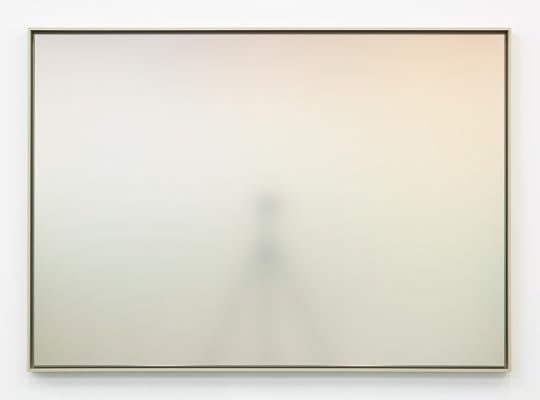 Talent 29, 2022. Gold nano particles and acrylic gel medium on ink printed glass, mirror. 48 x 67 1/2 x 2 inches (121.9 x 171.5 x 5.1 cm) © Scott Lyall, Courtesy Miguel Abreu Gallery. Photo: Stephen Faught.
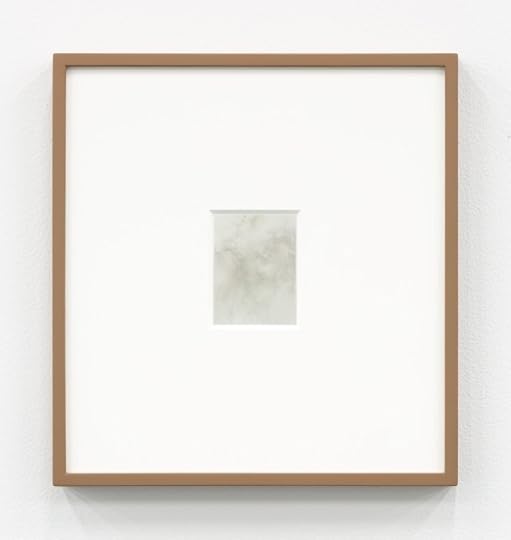 Nanofoil (SLStudio.clone_1/16/2), 2018. UV-engraved photonic structures in aluminum foil, polymer coating, casein painted frame. 3 5/8 x 2 11/16 inches (9.2 x 6.8 cm). Framed dimensions: 13 x 12 inches (33 x 30.5 cm) © Scott Lyall, Courtesy Miguel Abreu Gallery. Photo: Stephen Faught.
Jon Davis
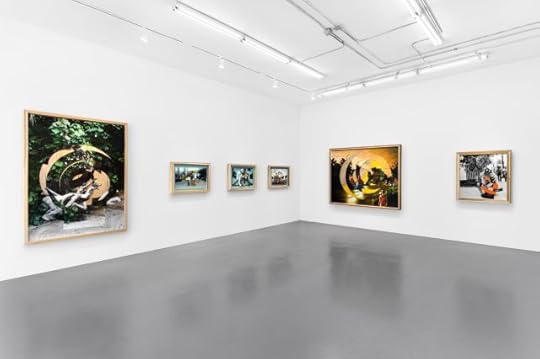
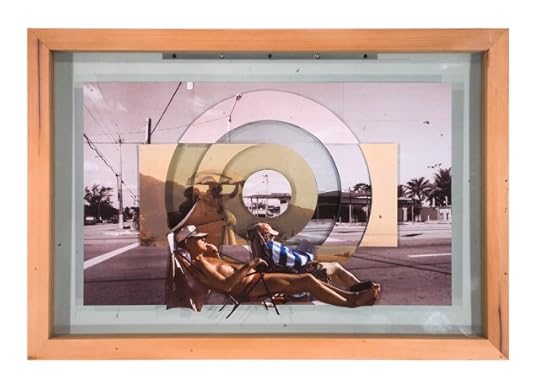
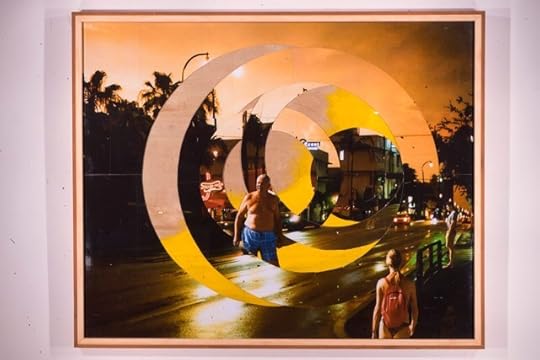
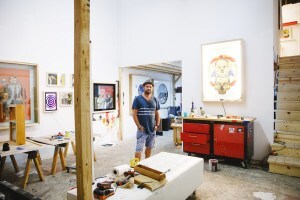 Miami-based collage artist, Jon Davis, presents his most recent body of work as an homage to the city he calls home. Throughout “Brokedown Palace” images capturing ‘moments’ of Miami are fractured, stratified, and presented through a renewed understanding of not only the space they represent, but as they currently exist within each seamless rendering. After undergoing a year-long distillation period, this most recent body of work can be expressed as the culmination of Davis’s practice over the past 30 years.
In previous iterations of his work, Davis has used found photographs to curate narratives that express the nuanced, often untranslatable, realities that exist within the human experience. In this tangential vein of new work, “Brokedown Palace” brings this concept closer to come featuring photographs taken by the artist throughout the tropical metropolis, placed in conversation with imagery pertinent to the larger story of Art History, and translated through Davis’s conceptually based process.
Davis’s work is comprised of synthesized realities, dissolving the gap between past and present. He merges each selected image to question a conventional understanding of reality while simultaneously highlighting their similarities. He flattens the chronological distance between each facet within each collage as they are flush, mounted on canvas or wood. Davis’s work shows that regardless of the technological changes that develop with the passing of time, the symbiotic relationship between art and life never ceases.
Through the duration of his artistic career, Davis’s self-taught practice creates his distinctly unique visual language, pulling inspiration from the philosophical, and ensuing formal, evolution of the arts in the late twentieth century. Davis’s work can be understood as a personal rendition of ready-mades, as he transforms present happenings provided by his surroundings through each synthesized reality contained within panes of glass. In this, Davis uses skills of everyday life to reflect a higher creative culture.
He is currently reading Once Upon a Time in Hollywood by Quentin Tarrantino.
April 21, 2022
Gabriel de la Mora
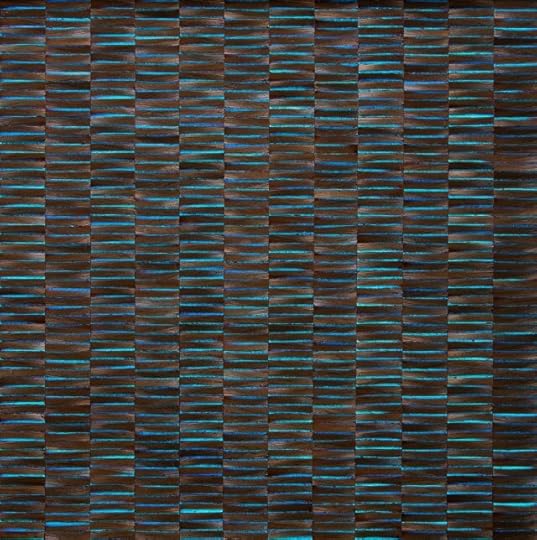
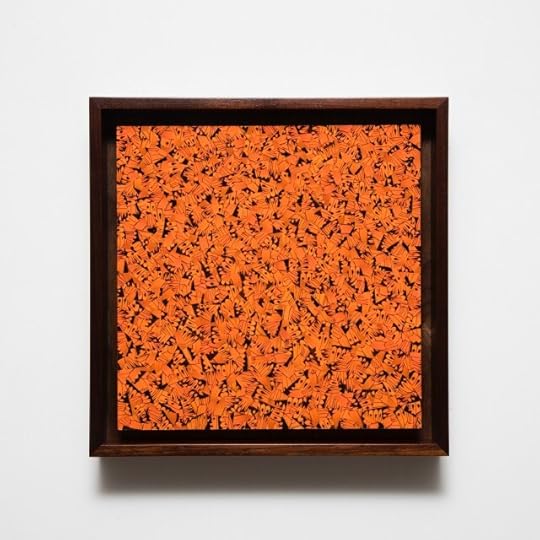
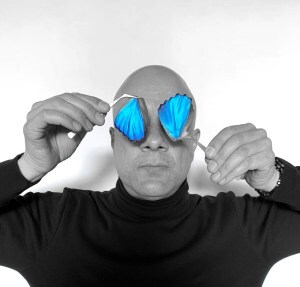 Gabriel de la Mora, born in 1968 in Mexico City where he currently lives and works, is best known for constructing visual works from found, discarded, and obsolete objects. In an obsessive process of collecting and fragmenting materials – eggshells, shoe soles, speaker screens, feathers – the Mexican artist creates seemingly minimal and often monochrome-looking surfaces that belie great technical complexity, conceptual rigor, and embedded information.
De la Mora has exhibited at the Drawing Center, New York, and the Museo Amparo, Puebla, Mexico. His work is part of collections including the Albright-Knox Art Gallery, Buffalo, New York; El Museo del Barrio, New York; Colección Jumex, Mexico City; the Museum of Contemporary Art, Los Angeles; the Museum of Fine Arts, Houston; and Pérez Art Museum Miami.
Luisa Rabbia
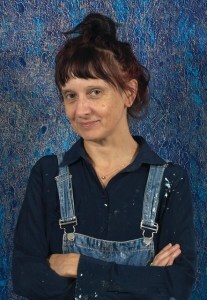 Luisa Rabbia (b. 1970, Turin, Italy) blends the distinctions made between the human and the natural, expressing solidarity with the cosmos through the organic, bodily landscapes of her expansive paintings. The scale of Rabbia’s paintings suits the themes she explores, oftentimes depicting overlapping abstracted figures joining and breaking apart, seemingly overcoming their physicality. She alludes to interconnected natural processes forming a thread between microcosms and macrocosms and interweaving them in a nebulous primordial state. Continually in flux and transforming, her forms created in expressive hues also evoke spiritual transitions. Upon closer viewing and bringing this substantial work to a more intimate level, her physical and intuitive process becomes visible with its rhythmically scraped paint, the stratification of pencil marks, and imprints of fingertips. Rabbia alludes to the minute traces that each person leaves over the course of a lifetime, yet simultaneously asserts an expansive and interconnected vision of a wider universe.
Luisa Rabbia lives and works in Brooklyn, NY and is represented in NY by Peter Blum Gallery. She received her MFA from the Accademia Albertina di Belle Arti in Turin, Italy. Solo museum exhibitions include: Collezione Maramotti, Reggio Emilia, Italy; Isabella Stewart Gardner Museum, Boston, MA; Fundación PROA, Buenos Aires, Argentina; Fondazione Querini Stampalia, Venice, Italy; Fondazione Merz, Turin, Italy. Group exhibitions include: Magazzino Italian Art Foundation, Cold Spring, NY; Manifesta 12, Palazzo Drago, Palermo, Italy; Palazzo delle Esposizioni, Rome, Italy; Biennale del Disegno, Museo della Citta, Rimini, Italy; Lismore Castle, Waterford, Ireland; Shirley Fiterman Art Center, New York, NY; Maison Particulière, Brussels, Belgium; Carpenter Center for the Visual Arts, Harvard University, Cambridge, MA; Museo del Novecento, Milan, Italy; MAXXI Museo Nazionale delle Arti del XXI secolo, Rome, Italy; Shanghai Museum of Contemporary Art, Shanghai, China.
Rabbia was a Visiting Professor in Drawing at Harvard University, Cambridge, in 2013/2014. She received the Pollock-Krasner Foundation Grant in 2022 and NYSCA/NYFA Artist Fellowship in Painting in 2007.
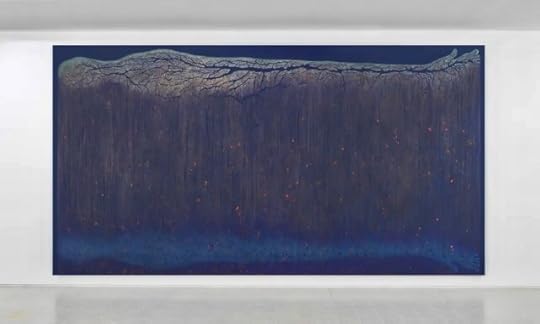
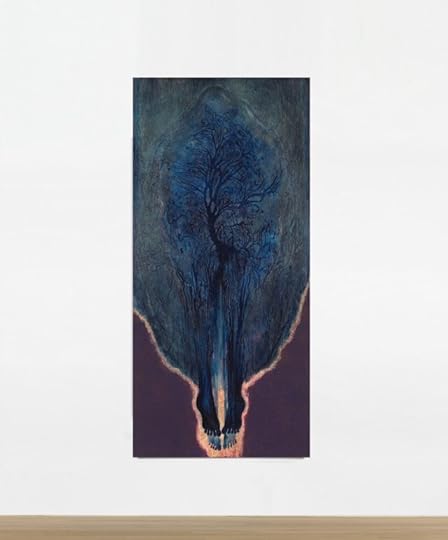 Ecstasy, 2019 colored pencil, pastel, acrylic and oil on canvas 102 x 47 inches (260 x 119 cm) Courtesy Peter Blum Gallery, New York Photo credit: Dario Lasagni
April 14, 2022
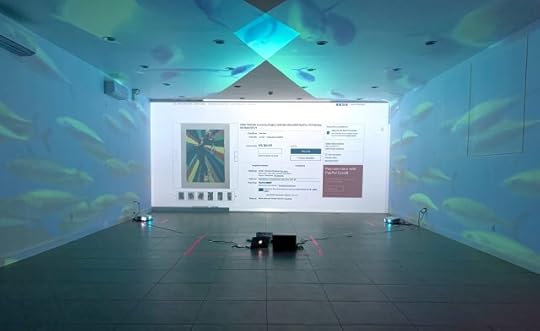
The Currency Project
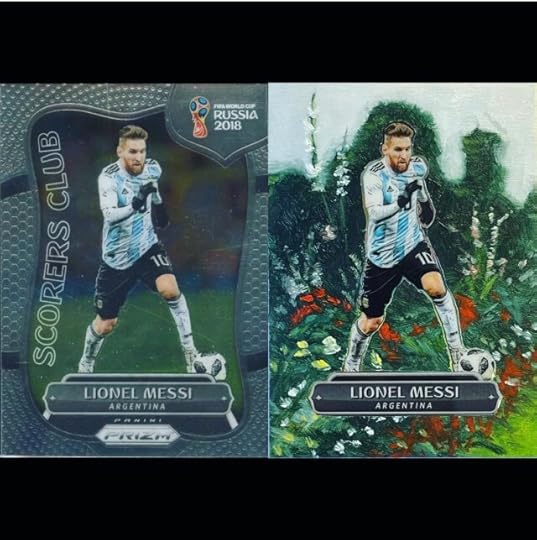
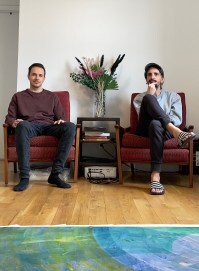 The Currency Project is a conceptual art piece that explores value creation and value transfer.
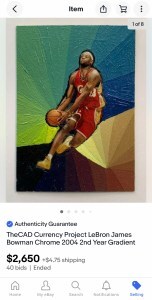 Created and implemented by Abdul Mazid and Julian Lombardi in March 2020, The Currency Project seeks to use social engagement as a platform to explore contemporary theories surrounding currency, value and markets. By using tradeable sports cards as the basis for the project, Mazid and Lombardi are able to engage an economy and marketplace that already exists while exploring spaces surrounding art and the creative process.
The social practice element of the piece elicits engagement from the public through multiple platforms, social media, and through transactions. Ultimately, the project seeks to understand concepts surrounding currency as a form of transactional storage of value.
Elaine A. King
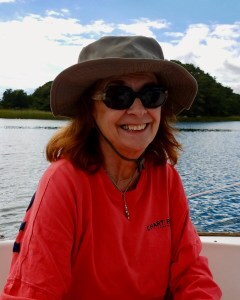 Elaine A. King was born in Oak, Park, Illinois and grew up in the Chicago area. She was a Professor, at Carnegie Mellon University teaching the History of Art/Theory/Museum Studies. King received an interdisciplinary Ph.D. from Northwestern University in 1986 from the School of Speech (Theory and Culture) and History of Art. Dr. King holds a joint Masters Degree in Art History and Public Policy, from Northern Illinois University and her B.A. was awarded from Northern Illinois University in Art History and American History [Pre-Law]. In 2002 she received a Certificate of Fine Arts and Decorative Arts Appraisal New York University. In May 2011 she was invited to become a member of the National Press Club in Washington, DC.
 She is a freelance critic who frequently writes for Sculpture, ARTES, Grapheion and the Washington Post.
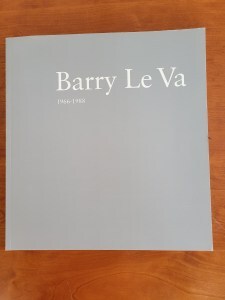
Dr. King served as the Executive Director and Curator of the Carnegie Mellon Art Gallery [1985-1991, and was the Executive Director and Chief Curator of the Contemporary Arts Center in Cincinnati, [1993-1995] following the Robert Mapplethorpe debacle. Throughout her career as a curator she organized over forty-five art exhibitions, including a wide range of one-person exhibitions and catalogues for artists, Barry Le Va, Martin Puryear, Tishan Hsu, Gordan Matta-Clark, Elizabeth Murray, Mel Bochner, Nancy Spero, Robert Wilson, David Humphrey, and Martha Rosler. In addition, she has curated a wide range of group exhibitions including Light Into Art: Photography to Virtual Reality, New Generations, New York, Chicago, The Figure As Fiction, Abstraction Today, Drawing in the Eighties, and Art In the Age of Information. In February 2007 she was the guest curator for the Maria Mater O’Neill mid-career survey exhibition for the Museo of Art Puerto Rico, San Juan that opened in February 2007 and compiled a catalogue titled Artist Interrupted, 1986-2006. In the fall of 2009 she was a guest curator at the Mattress Factory, in Pittsburgh for the exhibition titled Likeness: Transformation of Portrayal After Warhol’s Legacy. King has been the guest curator several times for the Hungarian Graphic Arts Biennial in Gyór between 1993-2005. The International Studies Art Program American University’s selected her to be the distinguished Art Historian/Critic in-residence to teach in Corciano, Italy, in the fall 2006. Additionally Elaine King and Kim Levin were asked to nominate artists for the Venice Biennale.
 She has been awarded numerous grants from diverse agencies including: United States Office of Information –Curatorial Grant for the American Section of the Master of Graphic Arts Biennial, Györ Hungary [shipping] Pennsylvania Arts Council Grant, Art Criticism Fellowship, The Trust for Mutual Understanding, Rockefeller Foundation, (research in Slovakia) The National Endowment for the Arts (In 1989,1988,1985, 1983) Museum s/catalogues, Hillman Foundation, Warhol Foundation, Richard K. Mellon Foundation Grant, French International Fund from Artists’ Action, for the Michel Gerard exhibit, American Association of Museums, Award of Merit for the Tishan Hsu catalogue Award of Distinction, American Association of Museums for the Mel Bochner catalogue. She was awarded an IREX grant to do research in Prague on changes in contemporary art after the fall of the wall. King was part of a panel discussion on Censorship and the Culture Wars at the Ann Arbor Film Festival and a reviewer for Bullfrog Films.
In September 2006, Allworth Press published the anthology titled Ethics and the Visual Arts that she and Gail Levin co-edited. Elaine King. In 2001 she was awarded a Senior Research Fellowship by the Smithsonian Institution’s American Art Museum to research contemporary portraiture. Also King was awarded a Short-term Research Fellow in 2003 from the Smithsonian Institution National Portrait Gallery as well as a Short-term Fellowship at the Smithsonian Archives of American Art.
Elaine King spends her free time reading, gardening, sailing, cooking, visiting with friends, walking and traveling. She is an avid fan of mystery novels and likes Sherlock Holmes—a topic she shared with Barry Le Va.
Currently Elaine King is working on an anthology of her writings that will be divided into four sections— Interviews, Talks, Review and Papers. Hopefully within 1.5 years this volume will be published.
Elaine King
Elaine A. King was born in Oak, Park, Illinois and grew up in the Chicago area. She was a Professor, at Carnegie Mellon University teaching the History of Art/Theory/Museum Studies. King received an interdisciplinary Ph.D. from Northwestern University in 1986 from the School of Speech (Theory and Culture) and History of Art. Dr. King holds a joint Masters Degree in Art History and Public Policy, from Northern Illinois University and her B.A. was awarded from Northern Illinois University in Art History and American History [Pre-Law]. In 2002 she received a Certificate of Fine Arts and Decorative Arts Appraisal New York University. In May 2011 she was invited to become a member of the National Press Club in Washington, DC.
She is a freelance critic who frequently writes for Sculpture, ARTES, Grapheion and sometimes for Pittsburgh Post Gazette, and the Washington Post.
Dr. King served as the Executive Director and Curator of the Carnegie Mellon Art Gallery [1985-1991, and was the Executive Director and Chief Curator of the Contemporary Arts Center in Cincinnati, [1993-1995] following the Robert Mapplethorpe debacle. Throughout her career as a curator she organized over forty-five art exhibitions, including a wide range of one-person exhibitions and catalogues for artists, Barry Le Va, Martin Puryear, Tishan Hsu, Gordan Matta-Clark, Elizabeth Murray, Mel Bochner, Nancy Spero, Robert Wilson, David Humphrey, and Martha Rosler. In addition, she has curated a wide range of group exhibitions including Light Into Art: Photography to Virtual Reality, New Generations, New York, Chicago, The Figure As Fiction, Abstraction Today, Drawing in the Eighties, and Art In the Age of Information. In February 2007 she was the guest curator for the Maria Mater O’Neill mid-career survey exhibition for the Museo of Art Puerto Rico, San Juan that opened in February 2007 and compiled a catalogue titled Artist Interrupted, 1986-2006. In the fall of 2009 she was a guest curator at the Mattress Factory, in Pittsburgh for the exhibition titled Likeness: Transformation of Portrayal After Warhol’s Legacy. King has been the guest curator several times for the Hungarian Graphic Arts Biennial in Gyór between 1993-2005. The International Studies Art Program American University’s selected her to be the distinguished Art Historian/Critic in-residence to teach in Corciano, Italy, in the fall 2006. Additionally Elaine King and Kim Levin were asked to nominate artists for the Venice Biennale.
She has been awarded numerous grants from diverse agencies including: United States Office of Information –Curatorial Grant for the American Section of the Master of Graphic Arts Biennial, Györ Hungary [shipping] Pennsylvania Arts Council Grant, Art Criticism Fellowship, The Trust for Mutual Understanding, Rockefeller Foundation, (research in Slovakia) The National Endowment for the Arts (In 1989,1988,1985, 1983) Museum s/catalogues, Hillman Foundation, Warhol Foundation, Richard K. Mellon Foundation Grant, French International Fund from Artists’ Action, for the Michel Gerard exhibit, American Association of Museums, Award of Merit for the Tishan Hsu catalogue Award of Distinction, American Association of Museums for the Mel Bochner catalogue. She was awarded an IREX grant to do research in Prague on changes in contemporary art after the fall of the wall. King was part of a panel discussion on Censorship and the Culture Wars at the Ann Arbor Film Festival and a reviewer for Bullfrog Films.
In September 2006, Allworth Press published the anthology titled Ethics and the Visual Arts that she and Gail Levin co-edited. Elaine King. In 2001 she was awarded a Senior Research Fellowship by the Smithsonian Institution’s American Art Museum to research contemporary portraiture. Also King was awarded a Short-term Research Fellow in 2003 from the Smithsonian Institution National Portrait Gallery as well as a Short-term Fellowship at the Smithsonian Archives of American Art.
Elaine King spends her free time reading, gardening, sailing, cooking, visiting with friends, walking and traveling. She is an avid fan of mystery novels and likes Sherlock Holmes—a topic she shared with Barry Le Va.
Currently Elaine King is working on an anthology of her writings that will be divided into four sections— Interviews, Talks, Review and Papers. Hopefully within 1.5 years this volume will be published.
April 9, 2022
Donald Sultan
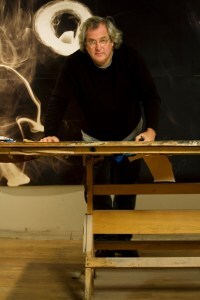 Donald Sultan (b. 1951 Asheville, NC) is an artist who rose to prominence in the late 1970s as part of the “New Image” movement. Sultan has challenged the boundaries between painting and sculpture throughout his career. Using industrial materials such as roofing tar, aluminum, linoleum and enamel, Sultan layers, gouges, sands and constructs his paintings—sumptuous, richly textured compositions often made of the same materials as the rooms in which they are displayed. Intrigued by contrasts, he explores dichotomies of beauty and roughness, nature and artificiality, and realism and abstraction. Weighty and structured, Sultan’s works are simultaneously abstract and representational: his imagery is immediately recognizable— flowers, daily objects, idle factories—but ultimately reduced to simple geometric and organic shapes. As Sultan says, “I try to pare down the images to their essence, and capture the fleeting aspect of reality by pitting the gesture against the geometric—the gesture being the fluidity of the human against the geometry of the object.”
Sultan’s early experiences building theatre sets at school, working in his father’s tire company in Asheville, and later in construction as a young artist in New York had a profound influence on his artistic development. These various lines of work led to an interest in industrial reproduction, heavy materials, and a practice of painting on floors and walls, à la Jackson Pollock. Sultan’s works, constructed horizontally, denote a purposely flat quality that borrows the synthetic flatness of stage sets while also utilizing the monumental weightiness of industrial materials— which harkens back to Asheville’s strong roots in manufacturing.
Interested in the artifice of nature as it is sold and packaged within a consumerist society, a major theme within Sultan’s work is studying the representation of an object or idea—how a flower, a factory, or a fruit is consumed in the Zeitgeist of the twentieth and twenty-first centuries. In the 1980s, Sultan began depicting lemons in the style of traditional still lives. The blinding brightness of the yellow against the pitch black hue of the roofing tar he used as background make Sultan’s interpretations of these fruits hard to look at, while deferring monumental dignity to the common household good. The contrast of these natural organic shapes against the industrial materials and grid format has led Sultan to describe these works as pieces with “heavy structure, holding fragile meaning.” Playing with the dichotomy of meaning and material, perception and reality, the Lemon works began Sultan’s longstanding interest in depicting how an object is looked at, rather than the object itself.
His 1990s series on dominos and dice continue this reflection on the still life—the ultimate, slow, and concentrated gaze upon an object. A style entrenched in repetition and tradition, the repertoire of this style is ultimately limited, but the combinations endless. In his compositions of back dots and mathematically endless arrangements of dominoes, Sultan creates a visual metaphor for the limitations and possibilities of the still life tradition, and the liberties allowed within its set parameter.
The artist’s heavy use of industrial materials in the late twentieth century naturally led to his famous series of “catastrophic” paintings in the 1980s and 1990s. These industrial landscapes, titled the Disaster Paintings, illustrate the fragility of robust man-made structures, such as industrial plants and train cars, when faced with catastrophic events. This series was exhibited across the United States in a traveling exhibition in 2016 through 2018. The exhibition originated at the Lowe Art Museum at University of Miami and then traveled to the Museum
of Modern Art, Fort Worth; Smithsonian American Art Museum, Washington, DC; North Carolina Museum of Art, Raleigh; and Sheldon Museum of Art, Lincoln.
In recent years, Sultan has pursued his interest in disrupting the established gaze cast upon everyday objects. His recent depictions of tulips, poppies, mimosas and camellias continue to interrogate how these flowers have been manipulated in art history—and this interrogation is aimed to destabilize a wider culture of visual status quo.
Sultan studied at the University of North Carolina, Chapel Hill and later received his MFA from the School of the Art Institute of Chicago. He lives and works in New York, NY.
His first solo exhibition was mounted in 1977 at Artists Space in New York. He has since exhibited worldwide in solo and group exhibitions, including at the Cameron Art Museum (2022), Huntington Museum of Art (2021), Parrish Art Museum (2020), British Museum (2017), Royal Academy of Arts (2017), Contemporary Arts Center, Cincinnati (2009), Delaware Art Museum (2008), Corcoran Gallery of Art (2000), Museum of Contemporary Art, Chicago (1987), Memphis Brooks Museum (2000), Museum of Modern Art (1988), Musée d’art Contemporain, Montreal (1984), Nationalgalerie, Berlin (1993), Solomon R. Guggenheim Museum (1988), and the Whitney Museum of American Art (1979).
His work is included in the collections of the Art Institute of Chicago, IL; British Museum, London; Cincinnati Art Museum, OH; Cleveland Art Museum, OH; Dallas Museum of Fine Arts, TX; Detroit Institute of Arts, MI; Fogg Art Museum at Harvard University, MA; Hirshhorn Museum and Sculpture Garden, Washington, DC; Ludwig Museum, Budapest; the Metropolitan Museum of Art, NY; Museum of Contemporary Art, Tokyo; Museum of Fine Arts, Boston, MA; Museum of Fine Arts, Houston, TX; Museum of Modern Art, NY; National Gallery of Australia, Canberra; Neuberger Museum at SUNY Purchase, NY; San Francisco Museum of Modern Art, CA; Singapore Museum of Art; Solomon R. Guggenheim Museum, NY; Tate Gallery, London; and the Walker Art Center, Minneapolis, MN.
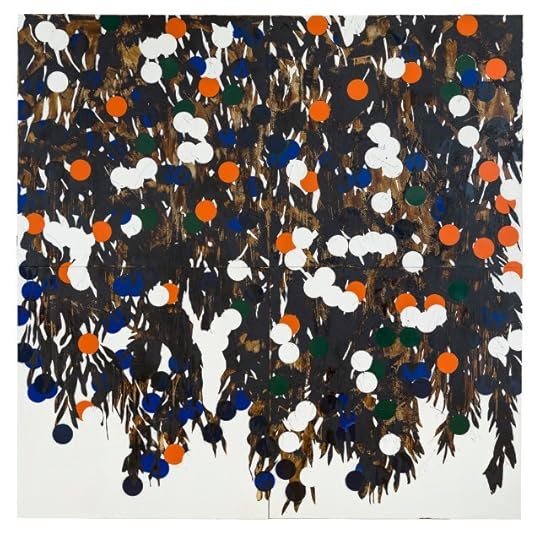 Donald Sultan, Mimosa Jan 16 2019, 2019. © Donald Sultan; Collection of the Modern Art Museum of Fort Worth, TX. Courtesy of the artist and RYAN LEE Gallery, New York
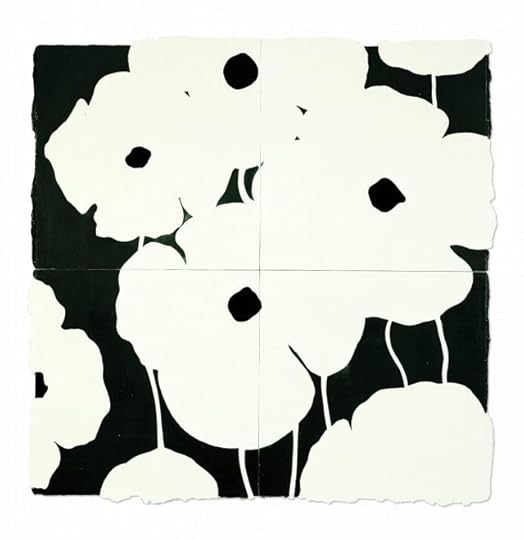 Donald Sultan, White Poppies with Flocked Centers March 3 2002, 2002. © Donald Sultan; Collection of the Parrish Art Museum, NY. Courtesy of the artist and RYAN LEE Gallery, New York.
Terry Haggerty
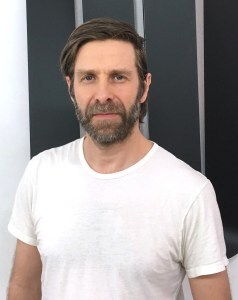 Terry Haggerty was born in London, England and studied at the Cheltenham School of Art, Gloucestershire. His work has been exhibited widely in galleries and museums around the world, including solo presentations at the Norton Museum of Art, West palm Beach, FL; Modern Art Museum of Fort Worth; and Hammer Museum, Los Angeles.
He is the recipient of several awards including the FOR-SITE Foundation Award (2009), John Anson Kittredge Award (2003), and the NatWest Art Prize (1999). Commissions include wall drawings for AT&T Stadium in Dallas, Munich Re in London, and private collections around the world.
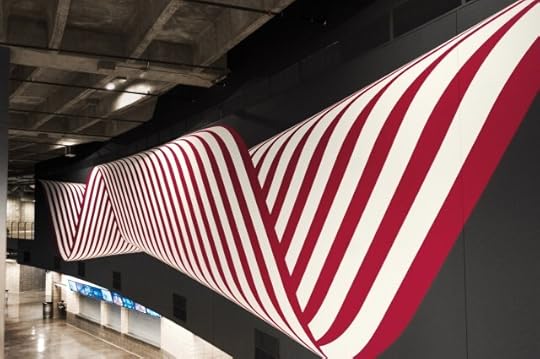 Terry Haggerty Two Minds, 2009 Acrylic on wall The Art Collection Cowboys Stadium, Arlington, TX Photo: Richie Humphreys/Dallas Cowboys © Terry Haggery, courtesy of Sikkema Jenkins & Co., New York.
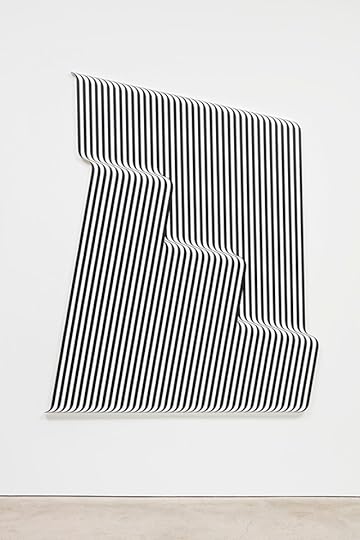 Terry Haggerty Step by step, 2016 Acrylic on wood panel 72 x 58.625 inches (183 x 149 cm) © Terry Haggery, courtesy of Sikkema Jenkins & Co., New York.