Brainard Carey's Blog, page 38
June 10, 2022
Erik Lindman
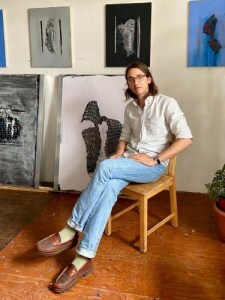 Since the beginning of his artistic practice, Erik Lindman’s incorporation of anonymous found surfaces as compositional elements in painting has occupied a central place in his work.
Reinterpreting and repurposing cast-aside materials such as shards of steel or canvas webbing, he combines a variation of surfaces in a cascade of decisions with a focus on scale and negative space. Lindman lays down and builds up marks and gestures, ultimately articulating value and attention while asserting the materiality and tactile nature of each painterly composition. His topographical surfaces become the final result of what is buried beneath them, and upon closer inspection, layers of paint reveal further color and traces of discarded elements. As Lindman states, his practice and methods are the most efficient means he has discovered to create a space of reflection and contemplation for viewers to generate their own meanings. His practice with its inherent content and subject matter intends to add to the complex discourse of abstract painting for his own generation and time. Lindman pursues a new mediation of abstract traditions, both original and eclectic, while instilling subjective importance into his multifaceted process.
Erik Lindman (b. 1985, New York) lives and works in New York. He earned his BA from Columbia College, Columbia University in 2007 and received a Yale Norfolk Painting Fellowship in 2006. Lindman was honored at the Hirshhorn Museum’s Artist x Artist Gala in 2019. He has also received The Louis Sudler Prize for Excellence in the Arts from Columbia University in 2007, and has also received an Ellen B. Stoeckel Fellowship for Yale Norfolk School of Art in 2006. His work has been included in exhibitions at the Kunstalle in Freiburg, Switzerland, the Museum of Contemporary Art, Chicago, White Columns in New York, le 109 in Nice, France, Kaviar Factory in Henningsvær, Norway, and Foundation Hippocrène in Paris among others.
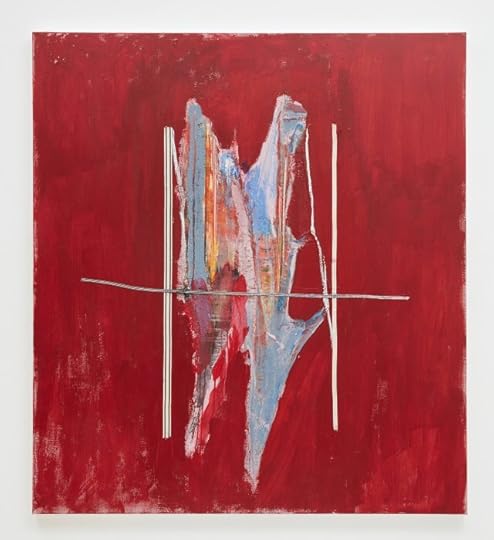 Tamarack, 2021, acrylic and collaged cotton webbing and tarlatan on linen, 63 x 56 3/4 inches (160 x 144 cm)
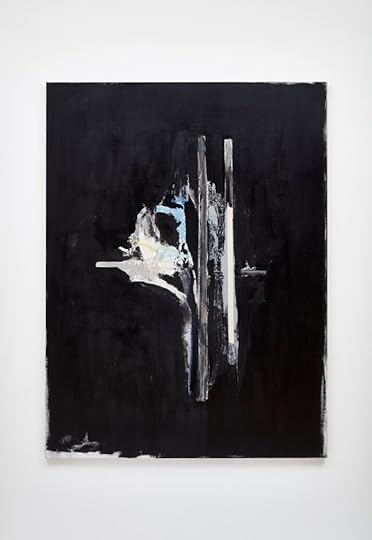 Dahlia, 2020, acrylic and collaged canvas webbing on linen, 78 3/4 x 59 1/8 inches (200 x 150 cm)


May 25, 2022
Erica Baum
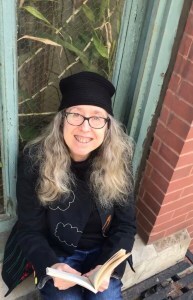 Erica Baum lives and works in New York. She is well known for her varied photographic series capturing text and image in found printed material, from paperback books to library indexes and sewing patterns. She received her MFA from Yale University in 1994 and her BA in Anthropology from Barnard in 1984.
Her work is held in the collections of the Whitney Museum of American Art, New York; Solomon R. Guggenheim Museum, New York; The Metropolitan Museum of Art, New York; SFMoMA, San Francisco; Sparkassen Stiftung Collection, Kunstpalast, Dusseldorf; MAMCO, Geneva; Albright‐Knox Art Gallery, Buffalo, New York; Centre National des Arts Plastiques, Paris; FRAC Ile de France, Paris; and Yale University Art Gallery, New Haven.
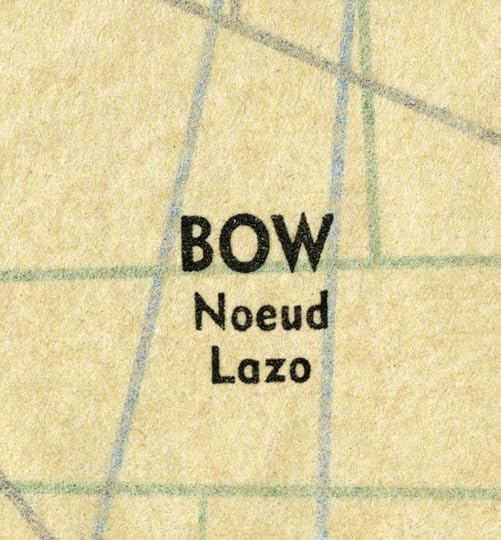 Erica Baum Bow, 2022 (Patterns), Archival pigment print, 15 × 13.9 in. (38.10 × 35.31 cm), Edition of 6 plus II AP
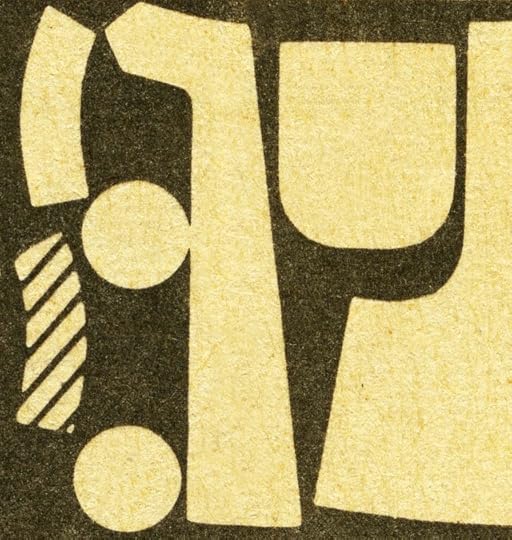 Erica Baum Pant Pant Skirt, 2022 (Patterns), Archival pigment print, 15 × 14.23 in. (38.10 × 36.14 cm), Edition of 6 plus II AP
May 24, 2022
Edoardo Ballerini
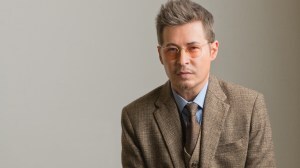 Edoardo Ballerini is an actor, narrator and writer. On screen he is best known for his work in The Sopranos and the indie classic Dinner Rush.
As a narrator, he is a two time winner of the Audio Publisher Association’s Best Male Narrator Award, and a two time winner of Society of Voice Arts awards.
In 2021 he co-created the Audible Original “The Angel of Rome,” with Jess Walter, named one of Audible “Best of 2021.”
May 22, 2022
Ben Coonley
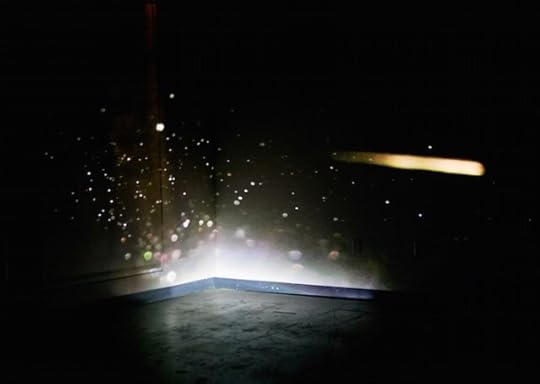
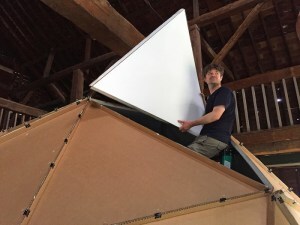 Ben Coonley is an artist working with video, computers, 3D, and cats. His work has exhibited in “3D: Double Vision” at LACMA in Los Angeles; “Dreamlands: Immersive Cinema and Art, 1905-2016” at the Whitney Museum of American Art, New York; “Flat is Beautiful: The Strange Case of Pixelvision,” at Lincoln Center, New York; “Continuing Education for Dead Adults,” New Museum, New York; “3D in the 21st Century,” Brooklyn Academy of Music (BAM), Brooklyn, NY; and “Greater New York: Cinema,” MoMA PS1, Queens, NY, among others. Coonley’s works have also been screened widely including at Performa, Anthology Film Archives, the Moscow Biennale, and the International Film Festival Rotterdam (IFFR), Rotterdam, The Netherlands. His works are in the permanent collection of the Whitney Museum of American Art, among others, and have appeared in Art in America, Artforum, Artsy, Frieze, Hyperallergic, The Wall Street Journal, among others. Ben Coonley studied Art Semiotics as an undergraduate at Brown University, and received an MFA from Bard College in 2003. He was born in Boston, MA and currently lives and works between New York City and the Hudson Valley, New York.
Robert Zandvliet
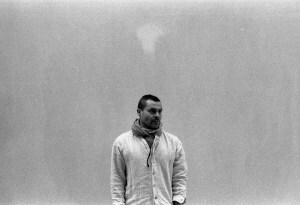 Robert Zandvliet is one of the foremost Dutch painters working today, whose work has been on the cusp of abstraction and representation since the early 1990’s. He examines the tension between self-reflective artistic practice and painting bound to a representational function. His pictures arise out of a movement between opposites, a symbiotic relationship between deliberate composition and chance occurrence, abstraction and figuration, part and whole, space and surface, and in which these elements are fused into polyphonic structures that re-envision the history of painting through his own lens. Oftentimes using landscape as a conceptual frame of reference, recognizable representations of a landscape become replaced by a gestural play of lines, colors, and surfaces that shift and merge foreground and background, reorienting the viewer’s perception of depth and surface.
Robert Zandvliet (b. Terband, Netherlands, 1970) lives and works in Haarlem, Netherlands. He received an MFA from De Ateliers, Amsterdam, Netherlands (1994). Solo exhibitions include Dordrechts Museum, Netherlands (2019); De Pont Museum, Tilburg, Netherlands (2014, 2005, 1997); Gemeentemuseum, The Hague, Netherlands (2012); Kunstmuseum Bonn, Germany (2005); Stedelijk Museum, Amsterdam, Netherlands (2001); Neues Kunstmuseum, Lucerne, Switzerland (2001); Musée d’art moderne et contemporain, Strasbourg, France (2000).
Public collections include Stedelijk Museum, Amsterdam, Netherlands; Kunstmuseum Luzern, Switzerland; Musée d’art moderne et contemporain, Strasbourg, France; Gemeentemuseum, The Hague, Netherlands; Kunstmuseum Bonn, Germany; Museum Voorlinden, Wassenaar, Netherlands; Museum de Pont, Tilburg, Netherlands; Dordrechts Museum, Netherlands. He is a recipient of the Prix de Rome (1994).
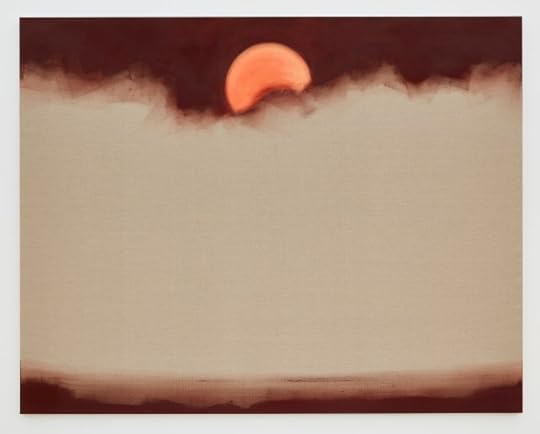 Tangerine, 2019, acrylic and egg tempera on linen, 83 7/8 x 106 1/4 inches (213 x 270 cm)
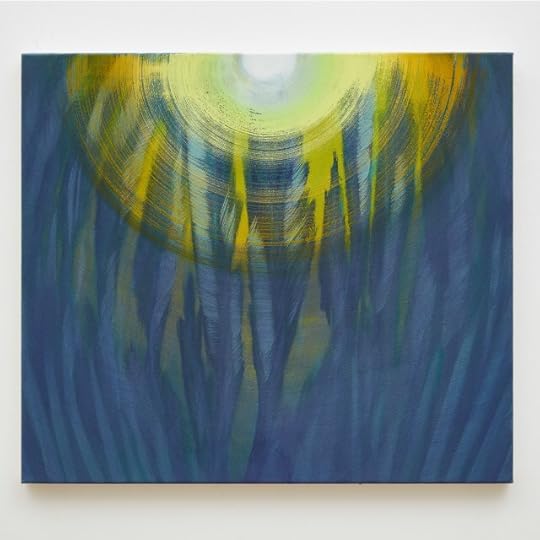 Untitled, 2019 egg tempera on linen 24 3/4 x 28 3/8 inches (63 x 72 cm)
Sarah Slappey
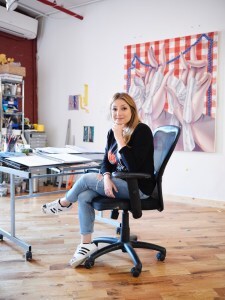 Sarah Slappey (b. 1984, Columbia, South Carolina) is a painter based in Brooklyn, NY. Slappey received her MFA from Hunter College in 2016. She has had solo exhibitions at Maria Bernheim Gallery (Zurich, Switzerland) and Sargent’s Daughters (New York, NY). Her work has been included in group exhibitions at the Schlossmuseum (Linz, Austria); Carl Kostyal Gallery (London, UK); Deanna Evans Projects (New York, NY); König Galerie (Berlin, Germany); White Cube (Paris, France); The Pit (Los Angeles, CA); and Andrew Edlin Gallery (New York, NY). Her work is included in the permanent collections of the Museum of Modern and Contemporary Art (MAMCO) Geneva, Switzerland; the Institute of Contemporary Art, Miami, FL; The Columbus Museum of Art, Columbus, OH; and the Hirshhorn Museum, Washington, DC. Slappey’s work has been reviewed by Artforum, The New Yorker, The Art Newspaper, Artnet, Artsy, ArtSpace, Vogue Italia, and Flash Art, among others.
She is represented by Sargent’s Daughters.
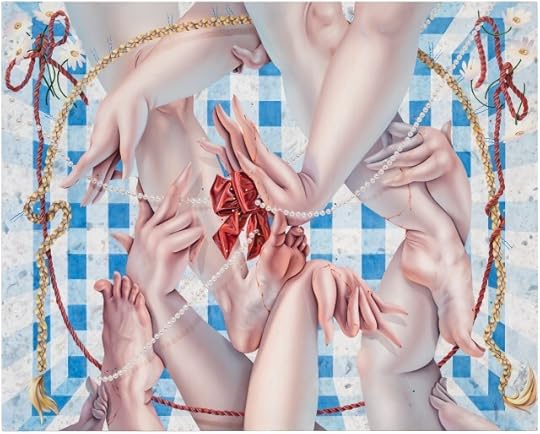
Sarah Slappey, Blue Gingham, 2021, oil and acrylic on canvas, 80 x 100 inches
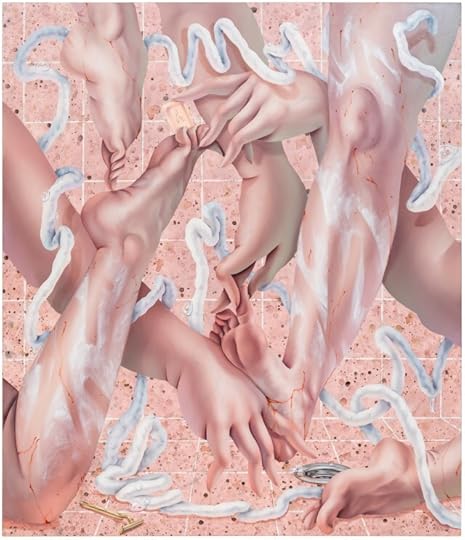 Sarah Slappey, Shower Scene, 2021, oil and acrylic on canvas, 72 x 62 inches
Antoine Catala
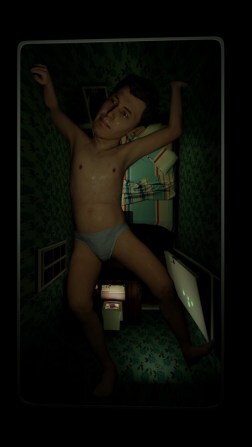 Antoine Catala is French. He has lived in the US for the past 17 years. He has exhibited at the Whitney Museum, New York, New Museum, New York, Sculpture Center, New York, Carnegie Museum of Art, Pittsburgh, Kunsthalle Wien, Austria, MACLyon, Lyon, Fridericianum, Kassel, MoMA PS 1, New York, Palais de Tokyo, Paris, Moscow Museum of Modern Art, Moscow, among other institutions and galleries. He was part of the Venice Biennale in 2019. He is represented by 47 Canal, NYC and Galerie Christine Mayer, Munich.“I am interested in the banal, everyday use of communication tools. I look at platforms and devices, and scrutinize how they are used to communicate, or miscommunicate. So at the center of all I do, there is language. New platforms of communication (such as smart phones, texting, net 2.0) allow language to evolve in radical new ways (images as words, short form messages, audio messages, etc). Language is by essence playful, and this playfulness flourishes in any form. More and more language develops a symbiotic bond with technology. In studying these new forms of language, I am interested not as much in what is changing about us, but what remains uniquely, deeply, human in communication.
As time progresses, I am more and more fascinated in how art communicates about its presence in a room.” – A.C.
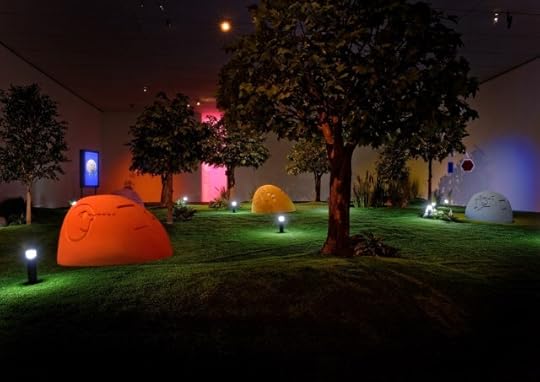 Jardin Synthétique à L’isolement, Installation View at MacLyon, 2015, photo Blaise Adilon
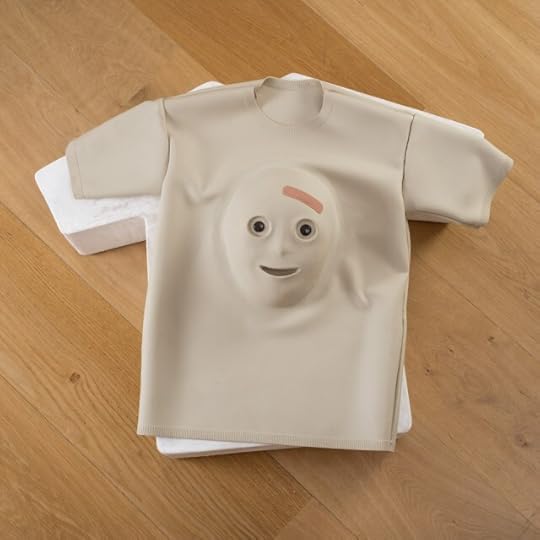 I am here for you (t-shirt), 2017, silicone rubber, coated foam, resin coated foam, electronics, 15 x 34 x 31 in., 38.1 x 86.4 x 78.7 cm, courtesy 47 Canal and the artist, photo Deniz Guzel
May 10, 2022
Nicholas Galanin
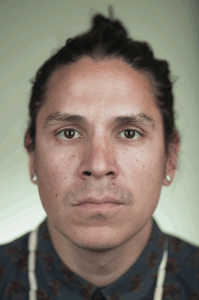 Examining the complexities of contemporary Indigenous identity, culture, and representation, Nicholas Galanin works from his experience as a Tlingit and Unangax̂ artist. Embedding incisive observation and reflection into his oftentimes provocative work, he aims to redress the widespread misappropriation of Indigenous visual culture, the impact of colonialism, as well as collective amnesia. Galanin reclaims narrative and creative agency, while demonstrating contemporary Indigenous art as a continually evolving practice. As he describes: “My process of creation is a constant pursuit of freedom and vision for the present and future. I use my work to explore adaptation, resilience, survival, dream, memory, cultural resurgence, and connection and disconnection to the land.” Galanin unites both traditional and contemporary practices, creating a synthesis of elements in order to navigate “the politics of cultural representation.” Speaking through multiple visual, sonic, and tactile languages, his concepts determine his processes, which include sculpture, installation, photography, video, performance, and textile-based work. This contemporary practice builds upon an Indigenous artistic continuum while celebrating the culture and its people; Galanin contributes urgent criticality and vision through resonant and layered works.
The online viewing room at Peter Blum can be seen here.
Nicholas Galanin (b. 1979, Sitka, Alaska) earned a BFA at London Guildhall University (2003), an MFA at Massey University, Palmerston North, New Zealand (2007), and apprenticed with master carvers and jewelers. He currently lives and works with his family in Sitka, Alaska. Galanin participated in Desert X, Palm Springs (2021); Biennale of Sydney (2020); Venice Biennale (2017); Whitney Biennial (2019); and Honolulu Biennial (2019). Galanin’s work is in permanent collections including The Museum of Modern Art, New York; Whitney Museum of American Art, New York; Philadelphia Museum of Art; Art Institute of Chicago; The Phillips Collection, Washington, D.C.; Art Bridges, Bentonville, AR; Detroit Institute of Arts; The National Gallery of Canada, Ottawa; The Museum of Fine Arts, Houston; Denver Art Museum; Los Angeles County Museum of Art; Princeton University among others. He received an award from American Academy of Arts and Letters (2020) and received a Soros Arts Fellowship (2020).
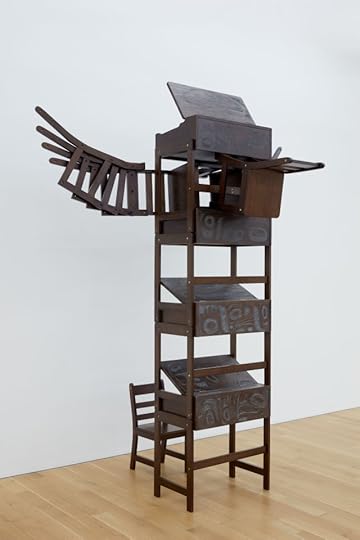 Loom, 2022 prefab children’s school desks and chairs with graphite and pencil carving, 100 x 83 x 54 inches (254 x 210.8 x 137.2 cm)
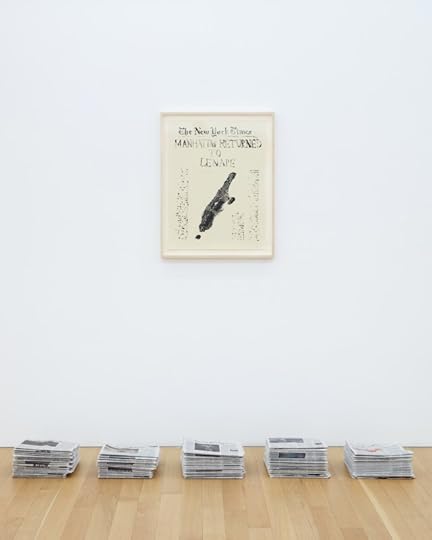 World Clock, 2022 monotype on paper and accumulating stacks of The New York Times installation: dimensions variable monotype: 30 x 22 1/2 inches (76.2 x 57.1 cm) The New York Times: 11 1/4 x 12 inches, each
May 5, 2022
Chris Regner
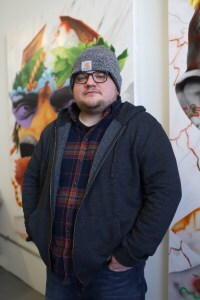 Chris Regner is an artist born and raised in Milwaukee, Wisconsin. He works serially, using autobiography as a jumping-off point for satire, humiliation, and explorations of the grotesque. His work tackles a variety of topics, including religious and cultish indoctrination, the effect of technology on societal discourse, how to navigate adulthood as a male with no strong role models, and stereotypical notions of masculinity that find their way into every subject he explores. Using his personal experiences as a foundation, his paintings have questioned archetypes found within these themes, all the while challenging his own values and beliefs. He positions himself as an anti-proselytizer, complicating the easy answer and presenting morally questionable individuals with the intent of causing contradictory interpretations by the viewer. Navigating this discomfort is vital when searching for a greater truth.
Chris is a recent graduate of RISD’s MFA Painting program. He is represented by Kravets Wehby Gallery. He has shown his work internationally. His work is a part of multiple private collections internationally. His work is in the Pizzuti Collection of the Columbus Museum of Art.
He is represented by Kravets Wehby Gallery.
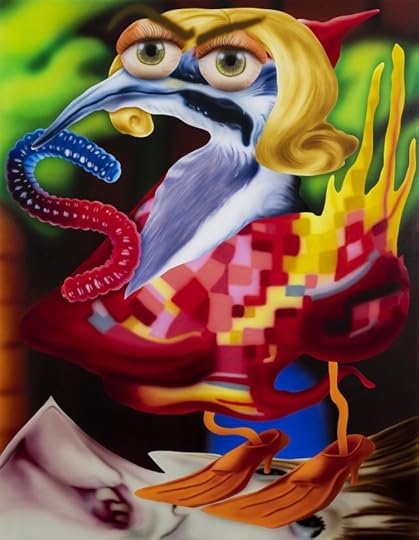 Give a Boy a Worm…, 2021, 45″x35″, Acrylic on canvas over panel
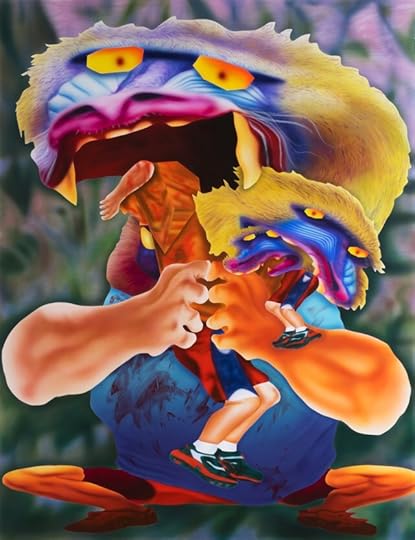 That’s My Boy No. 5 (Father Devouring Son Devouring Son), 2020, 45″x35″, Acrylic on canvas over panel
May 3, 2022
Rainer Gross
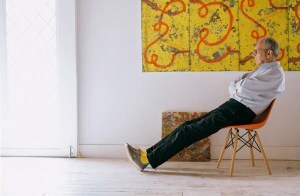 Rainer Gross in his studio – photo by David Benthal
Rainer Gross was born in Cologne, Germany in 1951. In 1973 he left Cologne to come to New York City, where he continued his art career at a time when many proclaimed the “end of painting.” Gross’ reaction to this proclamation was to draw on his connection to the painterly heritage of traditional European Art and its usage of iconography, and to establish a vocabulary capable of taking these historical traditions into the present. The dense and weathered surfaces of his paintings, realized through layers of pressed pigments, do just this.
He has exhibited his works in numerous solo exhibitions nationally and internationally at venues such as the Ludwig Museum (Koblenz, Germany), Musée cantonal des Beaux-Arts (Lausanne, Switzerland), Krannert Art museum (Champaign, Illinois) and many others.
Gross’ paintings are in numerous public collections, including the AT&T Corporate Art Collection, the Cohen Family Collection, the UBS Union Bank of Switzerland, Hirshhorn Museum in Washington, D.C., and the Lowe Art Museum amongst others. His works have been reviewed by The Paris Review, The New York Times, Art in America, The Boston Globe, ArtNews, The Brooklyn Rail, and many more.
The book he is reading now is The History of Jazz by Ted Gioia,
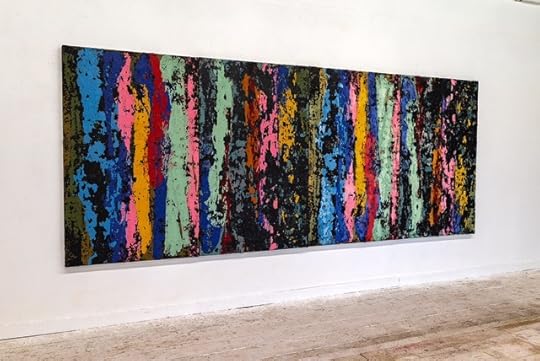 Double Twins X -Münstereifel, 2021, 54×132” in four parts, oil and pigments on canvas
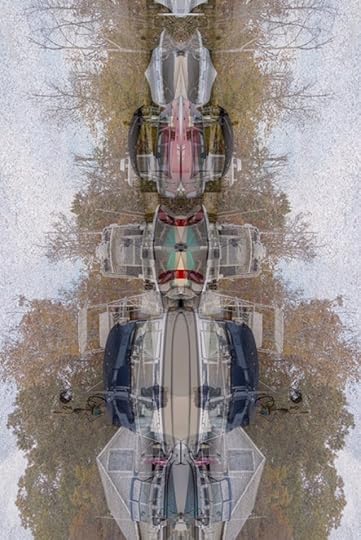 Double Take – NoFo X 2022, 24×16″, 61x41cm, framed 26×18″, 66x46cm Archival pigment high-quality giclée print on Photo Rag Ultra Smooth Matte FineArt Paper from Hahnemuhle, mounted on wood panel.