
Michelle Ule's Blog, page 73
June 26, 2015
The Writer’s Dime
 We received an extraordinary gift recently: a writer’s dime.
It came from our friend Bill who had given great thought into the gift.
As a coin collector, he had heard a story and went in quest of the writer’s dime.
When he found it, he brought it and the tale to us.
A terrific gift.
I wasn’t taking notes as he told us, but my memory of the story went like this.
In May 1864, American writer Mark Twain arrived in San Francisco with his pockets bulging with promise from the gold fields.
[image error]
Young Mark Twain (Wikipedia)
He and a friend lived a high life in the city by the bay and enjoyed themselves as only twenty-something unattached bachelors could at the time.
As a writer, Twain expected his words to keep the money flowing, or if nothing else the shares he owned in what surely was a profitable mine could help.
Reality eventually intervened, and he had to find a job at the local Daily Morning Call.
During his time in San Francisco, Twain made a close friend, writer Bret Harte.
Harte has found a sinecure at the San Francisco mint, an office job, and Twain often stopped in to chat.
It soon became clear that a reporter’s job on an editor’s terms didn’t really appeal to Twain and he was fired in October.
As Twain himself put it: “It was awful drudgery for a lazy man, and I was born lazy.”
Twain had some income from articles he wrote for the Californian magazine, but it wasn’t sufficient.
He and his roommate moved lodgings five times.
At the end of October, according to biographer Fred Kaplan in The Singular Mark Twain,
“A local reporter for the Morning Call published a paragraph about ‘a melancholy-looking Arab, known as Marque Twein,’ who by necessity, like an Arab folding his tent, moves often.”
The proud Twain was mortified by his situation and took to avoiding his friends.
He wandered the streets with only a dime in his pocket, “clinging to his dime in the fear that actual pennilessness ‘might suggest suicide,’ according to Kaplan.
Twain’s family was no help–he had bragged about his ability to make money, he couldn’t tell them the truth.
Bill handed me the dime. “Harte worked at the mint, Twain carried a dime in his pocket as a talisman. This may or may not be that writer’s dime.”


Fun to consider the possibilities, isn’t it?
Mark Twain, of course, picked himself up and went on to greater glory. Not having any money forced him back on his cleverness and to explore other opportunities. He went back up to the California foothills and while in a mining camp, wrote several stories that he sold to the Californian.
His writing career eventually felt secure enough he didn’t need to carry that dime anymore.
We’re not collectors, though we do own a possible Chagall painting (you can read that fun story here and here).
The writer’s dime, though, represents a thought gift from a friend, to a writer who lives not far from San Francisco.
It’s encouraging to think what having a dime like this in my pocket could mean, isn’t it?
Tweetables
The writer’s dime–owned by Mark Twain? Click to Tweet
A fun gift to a writer: the writer’s dime. Click to Tweet
Did Mark Twain own the writer’s dime or not? Who cares? Click to Tweet
The post The Writer’s Dime appeared first on Michelle Ule, Author.


June 23, 2015
Writer/Editor Spotlight: Becky Miller
 I’m asked occasionally about the writing life and editors. Today I’m interviewing a friend from both worlds: Becky Miller.
Becky Miller and I met ten years ago at Mount Hermon Christian Writer’s Conference when we were in the same critique group (facilitated by the wonderful Gayle Roper).
Our eight-member critique group spent four days together discussing each others’ manuscripts–an exhilarating and horrifying experience.
I’d written a women’s fiction story about an editorial assistant for a literary agent (write what you know, right?).
A junior high teacher, Becky had written a fantasy novel.
I was more out of my element reading her prose than she was in reading mine!
Why fantasy? Becky felt God called her to write after attending her first writer‘s conference, long ago.
“At the time I was uncertain what kind of writing I should pursue, but I came away from that conference with a commitment to fiction, particularly fantasy. In my heart I’m a fantasy writer, but because I blog daily, I am currently writing more nonfiction.”
She blogs mostly on current events within the church, along with discussions of fantasy and speculative fiction, which are close to her heart. You can read her posts about A Christian Worldview of Fiction here. The subtitle is: “a look at fiction and other bits of the culture through the lens of the Bible.”
Her editing website is reserved for craft issues and suitably titled: Rewrite, Reword and Rework.
After retiring from teaching junior high school English, Becky branched out into editing and within the last year has released two ebooks (out of a planned four) on the writing craft, entitled Power Elements of Fiction. The books are designed as “practical tools for a writer wanting to know more about the broad subjects I’m covering—story structure in the first book and character development in the second.”
Her thirty-year teaching career was a good introduction to the editing craft, and she was encouraged by the responses from writers she critiqued:
“I had great training in my first critique group which carried over into a critique exchange I did for Bryan Davis before he published. He was so happy with the editing help, he asked his publisher to hire me for the next several books.”
Many readers recognize the days of a detailed editor like Maxwell Perkins are long gone, and problems can crop up in professionally published books.
“Unfortunately I don’t think books are edited with the same care they once were. In recent published books (some I’ve judged for various contests), I’ve seen structural issues, two-dimensional characters, and any number of problems with grammar or basic writing mechanics.
I don’t know that readers can do more than mention the problems in their reviews or write to the publishers (or in the case of a self-published book, to the author) about the problems. Perhaps if “the powers that be” realize readers don’t like the errors, there will be a greater concern to eliminate those.”
Fortunately, her Power Elements ebooks can help writers overcome some of those issues!
“I hope writers of all experience levels will find both books helpful. The books introduce beginners to a variety of concepts. At the same time, they give intermediate authors ways to raise the level of their storytelling, and they remind advanced writers what makes their books successful.”
Becky also provides exercises to help writers recognize how to practice the principles introduced in the books.
Has writing books about craft effected her own writing?
“I think editing has been a huge help in my own writing. I noticed this when I first joined a critique group—as I spotted things in the stories I was critiquing, I realized I did the same things.”
While Becky edits across genres, from devotional books to young adult fantasy to college master’s theses, she prefers to write fantasy.
“Initially I started writing fantasy because I wasn’t finding the kind of story I liked to read. That’s still a part of my motivation. But beyond that, I write because I believe our culture can be reached for Christ through story.”
Writing fantasy turned out to be more complicated than she anticipated.
“When I started writing fantasy, I thought I’d escaped research. I can just make things up, right? Except, I’ve learned there are still places I need to do research—generally for worldbuilding.
I included a swamp in one scene, for example, and I have no first hand experience in a swamp. I needed to learn some basics about what wandering in a swamp would look like.
The bulk of my “research,” is to keep track of things in my world, from language to the history of various groups, the timeline of events, and cultural peculiarities.”
Among Becky’s favorite fantasy writers within the Christian community are two in particular:
“I love Jill Williamson’s writing. She makes her fantasy places come alive and her characters seem so real. Anne Elisabeth Stengl is another favorite. She writes fantasy also, though it’s very different from Jill’s. Her stories are artful, almost poetic, and so full of imagination.”
If you’re looking for help in your own writing, or are interested in fantasy fiction written from a Christian Worldview, Becky Miller and her websites are excellent places to begin.
Tweetables
Becky Miller: editing and writing fantasy. A coincidence? Click to Tweet
Fantasy and the importance of writing from a Christian worldview. Click to Tweet
An editor writes on character and structure in Power Elements ebooks. Click to Tweet
The post Writer/Editor Spotlight: Becky Miller appeared first on Michelle Ule, Author.
June 19, 2015
Sunbonnets: 2015 Pleasure or 1875 Necessities?
 Even though I grew up in Southern California, I never gave a thought to wearing a sunbonnet.
In those days, we frolicked in the sunshine and watched our hair sun-bleach and our skin turn brown. Some of us got freckles but no one would be caught dead in a sunbonnet.
It’s different now, and it was long ago.
My first introduction to the concept was from Mrs. Ingalls in the Little House books and her continual admonition, “Laura, wear your sunbonnet.”
Why? Was she worried about ultra violet light?
Of course not. Mrs. Ingalls was concerned about her daughter’s complexion. A sunbonnet was designed to protect her skin. A tan was abhorrent.
Women have been wearing hats and bonnets for hundreds of years to protect their skin. A pale white visage was considered a fashion ideal. Some women went so far as to take small doses of deadly arsenic in an effort to keep their faces pale.
Today, a calico sunbonnet is a throw-back to our pioneer past. Women working on the farm, hiking across the prairie, threshing the crops and spending so much time out of doors are almost always depicted as wearing a sunbonnet.
That’s how you know what era it is.
The title for my novella, The Sunbonnet Bride, was deliberately chosen for several reasons: to identify the time period, to focus the story on a young woman, to suggest outdoor work, friendliness and homespun practicality.
I put all those characteristics into my heroine Sally.
But I also wanted to write a story about a young business woman in a man’s world and at that time, women tended to work alongside their husbands or as teachers or seamstresses.
Sally is a seamstress. The sunbonnet is her signature product in 1875 Nebraska.
But Sally is more than just a young woman who can sew—most women could sew at that time. She’s determined to have a future off the family farm and where she can use her creative gifts.
Early in the story, her younger sister Lena marvels at the clever sunbonnet Sally constructed for her. Sally’s bonnet in my story, makes use of the same reeds that Ewan, Kate and Malcolm turned into reed pipes in The Yuletide Bride.
Sally cuts the reed when it’s smaller, gentler and more pliable. She soaks it in water to keep those thin reeds bendable until she can form them into the brim of her prize sunbonnets.
I’m sure it’s been done before, but I wanted her to create a product that would withstand the instigating drama of the story: a tornado.
When Lena’s sunbonnet comes through the tornado in one piece, the traumatized teenager picks up a needle at her sister’s work and embroiders a reminder. Using gray silks, Lena whips her fingers round and round to create a small tornado on the side of her sunbonnet.
 Sort of like a team logo.
Sally loves what her sister has done and the two set to work to help redeem the horror of that damaging tornado for the women whose lives were changed. Sally dreams of opening her own shop one day and creating beautiful clothes and hats for women in town.
I used to be a budget counselor and I know that many small businesses have trouble after they are launched. Capital is the major problem, along with keeping the cash flowing in a timely enough way to get the bills paid.
Sally was sewing the bonnets from gift fabric, but what did it really cost her to make them?
The answer to that question took me on a quest to learn the cost of both calico fabric and thread in 1875.
Fortunately, you can find anything on the Internet.
In 1875, calico cost seven cents a yard; a spool of thread could be had for a dime.
I’ve known too many talented women whose businesses have failed—in part because of their generosity and lack of knowledge about just how business works.
They didn’t quite understand how to count the cost of producing their beautiful goods for sale.
The Sunbonnet Bride doesn’t lack for businessmen interested in a pretty young seamstress with definite promise.
But when the young men come to call and try to advise Sally on how to manage her money—well, she struggles with which business concept makes the most sense–to her mind and her heart.
Tweetables
Sunbonnets for fashion or health? Click to Tweet
Profit, capitalization and a sunbonnet business.Click to Tweet
Sewing for redemption, profit or love? Click to Tweet
The post Sunbonnets: 2015 Pleasure or 1875 Necessities? appeared first on Michelle Ule, Author.
June 15, 2015
Thank you, Elisabeth Elliot
 One of my spiritual mentors died on June 15: Elisabeth Elliot.
I first “met” her through books years ago when I was a young wife and before children were added to the chaotic mix of my life.
Another Navy wife friend introduced us and I read everything she wrote.
She spoke in pragmatic terms through her books, calling me to a discipleship that forced some backbone into me.
The list of pithy statements is long (See my twitter feed where I retweeted twenty of them on June 15: https://twitter.com/Michelleule
Here are some of my favorites:
“Does it make sense to pray for guidance about the future if we’re not obeying in the thing that lies before us today?”
“How I treat other people is exactly how I treat Jesus Christ“
“If your goal is purity of the heart, be prepared to be thought very odd.”
See what I mean? Elisabeth Elliot didn’t beat around the bush.
During a four-year period of my life, I listened to her daily radio program, Gateway to Joy.
June 12, 2015
Do Society a Favor: Hire a Young Person

Look around you. Do you have work that needs doing? Listen to me. Hire a young person to do it.
I don’t usually order people around on my blog, but I’m stepping out of my normal to tell the world–young people need jobs and we all need to be looking for ways to hire them.
Yes. That means you.
Look at that photo.
See the smile on her face? 11 months after graduating from college, she finally found a job in her field.
Wouldn’t you like to help put a smile on a kid’s face like that one?
You’re probably thinking, what sort of job? I don’t have a job for a young person.
Really?
Maybe you don’t have a job for a brilliant, charming and experienced biology graduate-but I bet you have tasks you could hire a high school kid to do for you.
Consider hiring a young person for tasks like these:

Tape of my late father’s voice will be made into a CD/mp3 by a college sophmore engineer this summer
Do you have a box of photographs that should be scanned into your computer?
Do you have gutters that need to be emptied?
Any yard work at all?
Do you need someone to drive you to the store or run your errands for you?
Do you have old videos of your children that should be transferred into DVDs?
Do you have floors that need to be washed?
Kids that need to be taken to the movies?
An elderly friend or neighbor who needs some assistance with a variety of things?
Dirty windows? Hire a kid.
Weeding? Even a young child can do that task.
Garage picked up?
Clothes sorted–you could hire a teenage girl to go through your closet with you and toss the things you shouldn’t be wearing anymore.
Do you know how your phone works? I bet a young person can give you a personal tutorial with ease.
You need work done. Kids need jobs. Society needs kids to work jobs.
CAVEATS:
*Do NOT expect the young person to know how to do the task you’ve hired them to perform. You may have to and you probably should, show them how you want your task done.
*You should work beside them for awhile to ensure they are confident in what they are doing and that you’ll be satisfied with the task.
*Stop by and check on them every fifteen minutes the first hour, then half hourly after that. Offer them a popsicle or a glass of water if they’re outside.
*Let go any expectation of professionalism or perfection–they’re young people and you are doing society as a whole, a favor by giving the young people a chance to learn how to work.
*Don’t judge their performance through the lens of your years of experience.

Designed by us, work done by a music student
We’ve hired young people to do the following jobs at our house in just the last two years:
Put in a tree and stone planting for our street meridian.
Put in a gray water system for our garden.
Transfer cassette tapes to mp3s to make CDs.
Fix the ducting under our house.
Install insulation
Put in a garden bed.
Plant bushes.
Read a manuscript.
Put together an excel spread sheet of tweets.
Clean house.
Run errands–including grocery shopping.
Take donated items to the Redwood Gospel Mission thrift shop.
Serve during a party–keeping glasses filled, taking photographs, cleaning up afterwards.

Gray water garden system designed by us, put into place by a filmmaker
House sitting.
In the past, I’ve paid kids to:
plant gardens, weed, trim bushes, paint, play with my children when my knee was injured, babysit, put together a photograph album of my son’s wedding, sew, return books to the library, walk my dog (another injury), dig up a lawn and replace it, bake cookies (time crunch), drive me to the airport, pick up my children, and sweep the driveway.
One glorious weekend the entire youth group came over and laid down weed guard for my yard and then covered it with bark. They used the money for their mission trip.
I’m sure there’s more.
Am I rich?
No, but I know that kids need both the opportunity to make money and some training.
I could have done a lot of this work cheaper and faster myself, but they needed work and I needed time. I had to be organized so they could work, but it gave me time to do the tasks I needed to do that were more important to me than the above.
I had to write a book in 10 weeks once. I hired everything out–including going to the post office and the library. But it worked for both my employee and me.
We’re busy at our house, but we’re also interested in hiring kids not only to do work we could do ourselves, but because we know so many need work experience.
One of the young men my husband trained to do odd jobs got so good at it, that lots of people hired him and it helped him get through college.
My husband hires interns at work for the same reason–to give society a well-trained worker who ultimately will give back to that same society.
Where to find young people willing to work.
Church youth groups.
Children of friends.
Scout troops (they need money for camp).
High school counselors
Friends of your children.
Neighbor kids you’ve observed as responsible.
Boys and Girls clubs?

Landscape project just starting
Money
You should check with your local community and your insurance company to clear up any potential problems with liability and/or taxes.
You may want to argue you have no money, but you know what? Neither do a lot of these kids. Make an offer and see what they say.
And if they say “no” time and again, consider offering more money.
The reason is two-fold: for you to get some of these chores done and for them to learn the value of work and to earn some money. (See the movie The Ultimate Gift).
If the kid is in college, trust me, they need money.
Find out the rate your community and neighborhood pays for work–start with how much a teenage babysitter receives for an hour of sitting.
We pay several dollars over minimum wage at our house, to encourage our workers.
Additional points
*If you interview a young person, PLEASE let them know if they got the job or not.
It’s WRONG to not get back to someone if you’ve met face to face to discuss employment.
I know it’s hard to say no, we reject people all the time at my job, but AT LEAST send an email to tell them–either way.
Otherwise, they wait and wait and wait, believing you’re going to call them back.
The days, weeks, tick by with their expectations dying bit by bit because the interviewer did not get back to them.
Totally unfair.
*Remember, the work may not be done perfectly or the way you would have done it yourself.
If you feel strongly about HOW you want a task done, TEACH them.
That’s the main reason you should hire a young person.
They need to learn.
Tweetables
Do society a favor: hire a young person. Click to Tweet
All those chores you never get around to doing? Hire a young person. Click to Tweet
Young people need work; you’ve probably got something they could do. Click to Tweet
The post Do Society a Favor: Hire a Young Person appeared first on Michelle Ule, Author.
June 9, 2015
Grasshoppers and Tornadoes
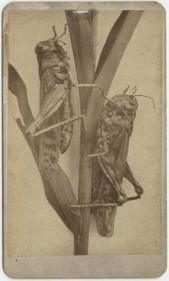
Rocky Mountain Locust
While writing my recently released novella, The Sunbonnet Bride, I needed a devastating natural event to occur and so I researched grasshopper plagues, tornadoes and other acts of God.
The Sunbonnet Bride is a sequel to my The Yuletide Bride, set in southeastern Nebraska in 1874. The following summer was a grasshopper plague summer and it seemed a perfect catastrophe for my characters.
I remembered reading about the horror of a grasshopper plague in Laura Ingalls Wilder‘s On the Banks of Plum Creek, as well as By the Shores of Silver Lake. The Bible describes grasshopper plagues as well, brought down upon Egypt at Moses‘ command.
I examined photos, read recounts, shook my head over the devastation, imagined the sound of all those tiny jaws scissoring their way through crops and got a little depressed myself!
Here’s a video about the 1874 plague of locusts in Nebraska:
https://m.youtube.com/watch?v=To48K5E4ULM
According to Wikipedia, the rocky mountain locust that destroyed so many farms in the later half of the 19th century eventually went extinct. The last recorded sighting was in 1902.
Still, the clouds of grasshoppers were enormous. According to Wikipedia:
“one was estimated to cover 198,00 square miles, weighing 27.5 tons, and consisting of some 12.5 trillion insects.”
Between 1873 and 1877 the grasshoppers caused $200 million in damage through the prairie states of north America.
1875 was known as the year of the locusts.
Oh, the horror.
The more I read, the more I realized that when the grasshoppers went through, life changed for everyone within a broad swath.
The Sunbonnet Bride is a summer romance. I didn’t think the 15,000 words I had to tell the story would work with such a grim catastrophe.
While I was plotting the novel and wrestling with the grasshoppers, my daughter and I saw an IMAX film, Forces of Nature, which centers on earthquakes, volcanoes and tornadoes.
A tornado chaser friend in Nebraska had described the devastation caused by twisters–noting it could be limited in scope.
While a tornado was dangerous and horrible, it didn’t destroy all the crops for an entire area of the state.
A tornado’s path could be localized.
[image error]
(Wikipedia)
Capricious, too.
A tornado would work better than a grasshopper plague for The Sunbonnet Bride.
Still, I needed to learn about tornadoes and that was sobering, too.
Many learned about tornadoes from watching movies, whether Tornado, or The Wizard of Oz.
Many years ago while living in Washington state, I happened to glance out the window at a curious cloudy sky.
The color was a bruised gray-yellow and moving quickly.
I grew up in Los Angeles, yet those skies looked vaguely familiar.
I actually said, “it looks like the sky just before the tornado strikes in The Wizard of Oz.”
Hail began to fall, an odd funnel-shaped knot of frozen water. My toddler and I examined the pieces I brought into the house, marveling at the spiraling lines.
The hail abruptly ended, leaving me puzzled by the odd weather until the announcer on the radio reported a waterspout on Dye’s Inlet, not a mile from my house.
It’s a good thing we were in the basement at the time!
A storm cellar saves several characters in The Sunbonnet Bride.
No one died in my story, but the wreckage provided a vehicle for demonstrating the different ways people react to a calamity.
A community came together, appreciation and respect blossomed, and the small church in Fairhope served as God’s hands and feet.
It was much easier to believe without the grasshoppers!
Tweetables
Grasshoppers and Tornadoes! Click to Tweet
Choosing which catastrophe serves a novella better! Click to Tweet
Grasshopper plague or a tornado–which would you rather face? Click to Tweet
The Sunbonnet Bride is available as a 3-in-1 ebook in The 12 Brides of Summer Collection # 1, available for purchase here.
The post Grasshoppers and Tornadoes appeared first on Michelle Ule, Author.
June 5, 2015
Sequel Writing: The Sunbonnet Bride

Old woman in sunbonnet by Doris Ulmann (Wikipedia)
I did not plan to write a sequel for my Christmas novella, The Yuletide Bride, but when the opportunity arose, I figured out how to write one.
Before The 12 Brides of Christmas e-books were released last fall, Barbour Publishing gave the writers an opportunity to write sequels.
We had several days to come up with a synopsis.
Our editor liked the dozen story lines and thus The 12 Brides of Summer Collection was born.
But how do you write a satisfying sequel to a story you hadn’t written with a sequel in mind?
Here are five steps to fashioning a romance sequel that I used to write The Sunbonnet Bride.
1. Determine your central character.
While The Yuletide Bride is the winter romance of Ewan and Kate MacDougall, I had a significant minor character in her brother, Malcolm MacDougall.
Malcolm showed wit in the first story, character growth and insight into his sister and her bagpipes.
I liked him.
Unmarried, lumbering, thought of as slow, but light on his feet, Malcolm had enough interesting facets to form a story around him.
He deserved a tale of his own and I had unknowingly given him a potential love interest in the cute blond girl he danced with while Ewan played his fiddle.
I’d even described how he came alive, and danced light on his feet while the music played.
What could be better than that?
I just had to figure out the identity of the cute blond girl!
2.Determine the love interest in a romance and add characters as necessary.
She was blonde and danced like a dream with Malcolm.
Was that enough?
The Sunbonnet Bride is a romance, so the convention called for scenes told from two different perspectives. Of course I needed more backstory on her.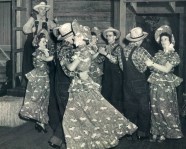
I had her name, Sally, but now it was time to build her character.
Who else would be in the town of Fairhope? How about a new seamstress?
But she was at the winter dance, so she must have come from nearby.
A local farm would work, but why?
Opportunity. Both professional, I wanted her to have a goal,and personal—her father thought she should pave the way for finding his two daughters a less risky place to live their lives than on a farm.
Because she was a seamstress, I could use her desire for her own shop to help examine one of the themes I wanted to explore in the story.
Sally made it easy.
3. Who’s the antagonist?
Traditionally, the antagonist is an individual trying to stop the hero from obtaining his goal. In this particular story, I needed another man to give Malcolm a run for his money—or there would be no story.
As it happened, I had a worthy antagonist left over from The Yuletide Bride—another hard working young man looking for a wife to make him happy.
(Indeed, I felt so sorry for him that I sent an ad to my other 12 Brides co-writers, asking if they had a match for him).
Josiah Finch is a good guy—earnest, hardworking, just different from Malcolm.
Sally wanted to own her own shop someday. Josiah was a well-groomed and dressed banker.
Maybe he would be a better match for a young woman who loved sewing beautiful clothing who had a creative flair for hat making?
While I was the “god” in control of the story, Sally needed to make the choice for her future.
Josiah presented an excellent foil, in a nice way, to hard working sweaty Malcolm.
Which man would Sally choose and why?

The baddest guy
4. Inciting incident.
You don’t have a story unless something prompts the characters to change.
In looking at the timing for The Yuletide Bride, winter 1874 Nebraska, I realized the following summer was a “grasshopper” summer in that corner of the Midwest. Why not use the tragedy of grasshoppers marching through to prompt the actions of the story?
That’s a great idea and very interesting, but research determined such a catastrophe would not suit my theme.
I was still thinking about how to make it work when I happened to attend an IMAX film with my daughter on earthquakes, tornados, and other natural disasters.
Watching the tornadoes blow through the towns reminded me they were localized disasters and as such would fit my writing needs much better than the grasshoppers.
I hated to give up the grasshoppers, but a community recovering from a grasshopper invasion needs more than 15,000 words!
So it’s a tornado that brings the feelings of Sally, Malcolm and Josiah to a head.
5 What to do with characters from the earlier story?
That was easy. Ewan and Kate were so much fun– particularly in their sparring over the bagpipes– that I had to bring them back. I added a friendly dog, other refugees and a musical reprise.
What could be better than that?
Except, what was the theme and how did it all play out?
You’ll have to read The Sunbonnet Bride to discover how a young woman comes to terms with the two different methods attractive men use to help those in need.
 You can read it in The 12 Brides of Summer Collection #1, available here.
And if you’re interested in the prequel, The Yuletide Bride is still for sale for only 99 cents, here.
Tweetables
5 Keys to writing an unexpected sequel! Click to Tweet
What goes into plotting a sequel? Click To Tweet
Building a sequel to an earlier novella in 5 easy steps. Click to Tweet
The post Sequel Writing: The Sunbonnet Bride appeared first on Michelle Ule, Author.
June 2, 2015
Michelle Ule: Summer Brides

Available for purchase at http://amzn.to/1Fj2twW
Michelle Ule’s story, The Sunbonnet Bride, appears in the first 12 Brides of Summer Novella Collection .
A sequel to her 12 Brides of Christmas story, The Yuletide Bride, The Sunbonnet Bride revisits the community of Fairhope, Nebraska during the summer of 1875.
The players are all the same, except for the new seamstress in town, Sally, and her family and neighbors from nearby farms.
While Kate and Ewan from The Yuletide Bride have settled down into married life together, Kate’s brother Malcolm is struggling to find peace of mind. He’s working as a teamster, has finally mastered basic math skills, but feels large and awkward around the beautiful new seamstress in town: Sally Martin.
Sally has come to the town of Fairhope in a tizzy of joy. A larger community, clothes and hats to make, people to meet, a church to attend. Life looks glamorous compared to the farm eight miles away where she lived with her father and younger sister.
Her father understands the odds and wants the best for his girls. He sends Sally to work in town to pave the way for a brighter future than farm life.
Her clever needle, vivacious charm and earnestness attract Malcolm, but also banker Josiah Finch, returned to town to take over his father’s bank.
The polished, comparatively urbane Josiah paints a pretty picture for Sally of a life making hats and dressing the local townswomen from her own shop.
She likes the idea of her own business, but she’s got to earn some money first.
Things come to a head when a tornado sweeps through the farmlands and her father and neighbors lose their home and barns.

Still available for 99 cents!
While Malcolm harnesses his horses and heads out with Ewan to help, Josiah trails behind on his fine stallion.
One of the men gets his hands dirty.
The other does not.
As Fairhope rallies to help those in need, Sally and her father see the difference between the men’s hearts.
But are they so different in their desire to help or in their ways of helping?
Josiah, perhaps, puts the question best: Do you want to marry a man who gets his hands dirty or one who uses his brain?
Is it a sin to make a profit on someone else’s fund raiser?
Will Ewan and Fairhope ever really love the bagpipes?
All this and more, including an incident with a blackberry pie, await readers of The Sunbonnet Bride.
Inspiration
Inspiration for The Sunbonnet Bride came from several areas.
“I’d been thinking about how a community comes together to help those in need and how that played out in a prairie setting. I took some of my inspiration from events in the Little House books as well as movies.”
Malcolm’s fear of finding leeches on his legs while helping Sally cut reed, came directly from Laura Ingalls Wilder‘s On the Banks of Plum Creek. The pie contest and dancing scenes come from two of her favorite movie musicals: Oklahoma and Seven Brides for Seven Brothers.
While she originally planned to use the infamous grasshopper invasion for the natural calamity, a 15,000 word novella wasn’t long enough to explore the idea well. A trip to an IMAX film about natural disasters convinced her a tornado would serve the purpose much better.
Michelle also explores the morality of making a profit.
“I’ve had a number of friends start businesses that ended up being under capitalized. I wanted to encourage anyone thinking about starting a business to think through some of the questions both Josiah and Malcolm ask the aspiring shop owner, Sally.”
The two stories, The Yuletide Bride and The Sunbonnet Bride, provide fun bookends for two seasons of the year.
The Yuletide Bride is still available for 99 cents here.
You can purchase The 12 Brides of Summer Collection #1 featuring The Wildflower Bride, Susan Page Davis’ Blue Moon Bride and Michelle Ule’s The Sunbonnet Bride here.
Who is Michelle Ule?
Michelle Ule is the author of five historical novellas and the Navy SEAL novel, Bridging Two Hearts, all published through Barbour.
A native of southern California and a graduate of UCLA, she trained as a newspaper reporter and loves writing her blog on Tuesdays and Fridays each week.
This is her fourth book with Margaret Brownley and third with Vickie McDonough. Both The Log Cabin Christmas and The Pioneer Christmas Collections were best sellers.
For more about her, examine this website! 
You can also follow her on
She has a Pinterest board for The Sunbonnet Bride here.
Tweetables
Tornado, leeches, a strong teamster and a pristine banker. How’s a girl to choose? Click to Tweet
Sunbonnet Bride–a sequel to Yuletide Bride with music, romance and fun! Click to Tweet
Is it a sin to make a profit on someone else’s fund raiser? Click to Tweet
 Some select Walmart stores will be carrying physical copies of Prairie Summer Brides–a four-novella collection of stories from this series featuring the 12 Brides of Summer novellas written by Margaret Brownley, Amanda Cabot, Vickie McDonough and Michelle Ule starting June 9.
The ebook versions of The 12 Brides of Summer will be available in four ebooks with three stories in each. One will release the first of each summer month beginning in June and continuing in July, August and September. Mark your calendars for the first of the month, because you won’t want to miss a single one.

The entire collection will be released in summer 2016 in one deluxe edition book.
And for those looking for a complete collection of The 12 Brides of Christmas novellas, they’ll be published in one book in October 2015.

Releasing October 1, 2015. You can preorder at
http://amzn.to/1FclW0u
The post Michelle Ule: Summer Brides appeared first on Michelle Ule, Author.
May 31, 2015
Susan Page Davis: Summer Brides
Available for purchase at http://amzn.to/1Fj2twW
Susan Page Davis will lead off The 12 Brides of Summer with her Blue Moon Bride, joining two other novellas in the first collection releasing on June 1.
Blue Moon Bride is a sequel to last Christmas’ The Christmas Tree Bride, though it introduces two new characters who cross paths via the Union Pacific Railroad.
Susan explained how the stories are connected:
“In my Christmas novella, The Christmas Tree Bride, the main character, Polly, received a Christmas card from her friend Ava.
“The card had a colored picture of a Christmas tree and caused Polly to long for New England, the friends and family she’d left behind, and also for a yule tree.”
As Blue Moon Bride opens, Ava Neal is nursing a disappointment when her younger sister marries in 1871 New England.
When her father consoles her about her marital chances disappearing, she asks to travel to Cheyenne, Wyoming on the train to visit Polly.
The railroad has only been open four years, but her determination to travel it speaks of a strong willed young woman eager to see more of the world.
Along the way, she encounters far more adventure than she’d ever expected.
Joe Logan loves to draw, but he also need money to eat. When a courier opportunity arises to take a package–probably containing jewelry–all the way across country to San Francisco, he jumps at the chance to get ahead financially.
After the train crosses the Mississippi River at St. Louis and leaves a lot of civilization behind, he meets the fetching Miss Neal. They’re sitting together not far from Cheyenne when bandits board the train.
Joe manages to save Ava’s one piece of sentimental jewelry, while being deprived of his own package and the chance of further employment.
Stranded in Cheyenne without a job, the only consolation is he might be able to see Ava again.
But then he uses his drawing skill to help the local marshall and a surprising chain of events unfold for a young man without prospects from Hartford, CT.
How does a blue moon fit into the story?
[image error]
English: The Union Pacific 618 at Heber Valley Historic Railroad. Photo by Evan Jennings,
You’ll have to read it to find out.
Susan enjoyed writing both novellas:
“They’re light and fun, and they speak to that romantic dream inside all of us.”
But they also broach interesting topics:
“The first story was more about Polly’s yearning and nostalgia. Blue Moon Bride is more about Ava’s independence.”
Susan approached the sequel with an interesting twist on research:
“When the editor asked for summer bride stories, I thought of the full moon, and then the blue moon. I looked up the years I could use on a historical calendar site, and I found that July, 1871 did have a blue moon—that is, a second full moon in the month.”
She also did a lot of research about early Cheyenne, Wyoming, and railroad detectives during the period.
Susan has written numerous projects over the years, in a variety of genres: children’s, mystery, historical, romantic suspense. She’s teamed with her daughter, Megan Elaine Davis to write Mainely Mysteries in the past, but in 2015, is co-writing with her son, Jim.
In writing an historical novel set at sea in the 1840s and involving a trip to Australia, the Davis mother-son team is learning about each other, and how to work with differing schedules to put together a compelling story.
“So far, working together has been a joy. Yes, we’ve had some disagreements. This usually leads to both of us scrambling to research a term or event.”
Susan’s latest release is The Outlaw Takes a Bride.
The rest of 2015 will include several more releases: The Not-So Civil War in August, Lights and Shadows in September (both from Guideposts); and The 12 Brides of Christmas Collection (deluxe volume edition) in October.
You can purchase The 12 Brides of Summer Collection #1 featuring The Wildflower Bride, Susan Page Davis’ Blue Moon Bride and Michelle Ule’s The Sunbonnet Bride here.
Who is Susan Page Davis?

Susan Page Davis is the author of more than fifty published novels and novellas. Her historical novels have won numerous awards, including the Carol Award, the Will Rogers Medallion for Western Fiction, and the Inspirational Readers’ Choice Contest.
She has also been a finalist in the More than Magic Contest and Willa Literary Awards. Susan lives in western Kentucky. She’s the mother of six and grandmother of nine.
Visit her website at: www.susanpagedavis.com
Susan blogs on the twenty-third of the month at Heroes, Heroines and History, www.hhhistory.com
In addition, you can find Susan on
The Christmas Tree Bride can be purchased here.
Tweetables
Who is Susan Page Davis? Click to Tweet
Yearning, nostalgia, the old West and a blue moon. Summer romance at its best! Click to Tweet
Fleeing disappointment, meeting train robbers and an artist. Summer romance! Click to Tweet

Available ONLY in select Walmart stores
Some select Walmart stores will be carrying physical copies of Old West Summer Brides–a four-novella collection of stories from this series featuring the 12 Brides of Summer novellas written by Mary Connealy, Susan Page Davis, Davalynn Spencer and Miralee Ferrell starting July 14.
The ebook versions of The 12 Brides of Summer will be available in four ebooks with three stories in each. One will release the first of each summer month beginning in June and continuing in July, August and September. Mark your calendars for the first of the month, because you won’t want to miss a single one.
The entire collection will be released in summer 2016 in a deluxe edition book with actual pages.
And for those looking for a complete collection of The 12 Brides of Christmas novellas, they’ll be published in one book this October 2015.
Releasing October 1, 2015. You can preorder at
http://amzn.to/1FclW0u
The post Susan Page Davis: Summer Brides appeared first on Michelle Ule, Author.
May 29, 2015
Amy Lillard: Summer Brides
Available for purchase at http://amzn.to/1Fj2twW
With summer heating up, Amy Lillard’s written The Wildflower Bride for the first of four ebook 12 Brides of Summer Collection .
As a sequel to last winter’s The Gingerbread Bride, The Wildflower Bride follows the fortunes of the second sister, Grace Sinclair
Older sister Maddie is married in the opening scene, set in the 1875 Ozarks, and we get to celebrate with the family.
Maddie makes a gorgeous bride and Grace rejoices with her, all the while wishing someone as handsome as Harlan would sweep her off her feet. But she knows everyone in Calico Falls and so has resigned herself to staying home and helping her widowed pastor father with his congregation.
Then she gets a look at the best man.
[image error]
Oliver tartan kilt (: Wikipedia)
Wearing a kilt, no less.
And her heart sinks.
Just hired at his dream job as an assistant pastor, Ian McGruer is on top of the world standing up for his closest friend, even if he has had to travel all the way from upstate New York.
And then he sees the girl.
Could that really be the hand of God tugging at both Grace and Ian?
But hasn’t God already determined where they’ll live and minister?
Does God remember how far apart Arkansas and New York are?
And what do wildflowers have to do with it all?Preview
Writing the story
Amy Lillard has had a busy 2015 with several new releases, but she relished writing of The Wildflower Bride and revisiting Calico Falls, “after all, her sister got a chance at happily ever after. Grace deserved one too.”
She enjoyed exploring a new angle on a love story.
“The Gingerbread Bride is all about trusting God, but The Wildflower Bride is about understanding what God’s plan really is.
I had a great time writing Grace and Ian’s story. It is a love at first sight-but you’re all wrong for me- story. Each one of them feels God has a different plan for their lives and it doesn’t include moving away from their home in order to be with each other.”
It took a little research to put the story together, mostly for the wedding scene and the question of whether Scottish men wore kilts to weddings in the 1800’s. “It was great fun reading about all the kilt standards, plaids and tartans and all things Scottish.”
The original idea started with the title.
“I loved the idea of wildflowers in the mountains. From that came the field of wildflowers between the two houses (their home and the house that Harlan is building for Maddie). Just the thought of wildflowers makes me smile and that’s what I wanted from this story: I wanted to give my readers a smile.”
You can purchase an ebook copy of The Gingerbread Bride for 99 cents: here.
You can purchase The 12 Brides of Summer Collection #1 featuring The Wildflower Bride, Susan Page Davis’ Blue Moon Bride and Michelle Ule’s The Sunbonnet Bride here.
Who is Amy Lillard?
Published author, expert corn bread maker, and Squirrel Princess. Amy is a native of Mississippi who currently lives in Oklahoma with her husband and son. She writes both historical romances and contemporary novels, including two Oklahoma Amish novels releasing in 2015: Courting Emily and Lorie’s Heart.
For more information about Amy, please visit her website: amywritesromance.com
You can also find Amy on
 Some select Walmart stores will be carrying physical copies of Small-Town Summer Brides–a four-novella collection of stories from this series featuring the 12 Brides of Summer novellas written by Pam Hillman, Diana Brandmeyer, Maureen Lang and Amy Lillard starting June 30.
The ebook versions of The 12 Brides of Summer will be available in four ebooks with three stories in each. One will release the first of each summer month beginning in June and continuing in July, August and September. Mark your calendars for the first of the month, because you won’t want to miss a single one.
The entire collection will be released in summer 2016 in a deluxe edition book.
And for those looking for a complete collection of The 12 Brides of Christmas novellas, they’ll be published in one book this October 2015.
Releasing October 1, 2015. You can preorder at
http://amzn.to/1FclW0u
The post Amy Lillard: Summer Brides appeared first on Michelle Ule, Author.



![[image error]](http://commons.wikipedia.org/wiki/File:Mark_Twain_young3.JPG)
![[image error]](http://commons.wikipedia.org/wiki/File:Dszpics1.jpg)
![[image error]](http://en.wikipedia.org/wiki/File:Union_Pacific_Logo.svg)
![[image error]](http://commons.wikipedia.org/wiki/File:Heber_UP618.JPG)
![[image error]](http://commons.wikipedia.org/wiki/File:Kilted.jpg)