
Michelle Ule's Blog, page 70
October 9, 2015
Needed: Someone to Say No

Do you have someone in your life who can say “no” to you and you’ll accept it?
Why not?
Are you never wrong?
Passages in the Bible admonition us to love one another and to speak the truth in love. Sometimes that means saying “no,” and it’s important we all have someone who we’ll listen to and either reconsider, or agree with.
A long time ago a celebrity businessman divorced his first wife. I shook my head. “What a foolish man.”
My husband stared at me. “Why would you even have an opinion on that subject?”
I smiled at my accountability partner. “We all need someone to say “no” to us. He may be a successful businessman but he just threw away the one person who could stop him from himself.”
In my case, and for many, it’s a spouse.
The Bible alludes to such a need in Ephesians 5: 15-17 and 21:
15 See then that you walk circumspectly, not as fools but as wise, 16 redeeming the time, because the days are evil. 17 Therefore do not be unwise, but understand what the will of the Lord is. . . . .21 submitting to one another in the fear of God.
(I’ve cut out passages about drinking wine and praising God)
God wants us to be wise, but because we operate in a world in which our perceptions can become muddied and we’re influenced to act in contradiction to Biblical truth, we need someone to hold us accountable. A group of someones can be helpful, too.
One of our children once was involved in a relationship we didn’t trust. We spoke to him, but he was determined. He was at an age when he no longer welcomed nor valued our “no.” We could only pray.
Fortunately, he actively participated in a young men’s accountability group. They studied the Bible together but also played together–these were his close friends.

NOT my child.
They recognized the same problem we did, but at that time in his life, their “no” was more acceptable to him. He listened and eventually let the relationship go.
(Good news–it all worked out beautifully in his life and for the other party!)
We are so thankful he had people he’d listen to for a “no.”
We all need a trusted individual we can go to for an opinion and know they have our best at their heart.
I’ve given permission to my husband and my prayer partner to say “no,” to me. Others chime in as appropriate–my boss, my pastors, my choir director, my woodwind ensemble leader (same person), anyone in authority over me.
I don’t always like hearing their “no.”
I don’t always like God’s “no,” to me.
But you know what?
Years of living and submitting to the “no” given by people to whom I’ve granted authority or accountability, has made my life much easier and often protected me from stupidity and worse.
Sometimes the “no,” didn’t work out well.
We shrugged and regrouped.
But most of the time the word “no” has been a lifesaver.
Thanks be to God– and to everyone willing to hold me accountable to a no.
How about you? Are you accountable to someone else’s no?
Tweetables
Are you willing to accept a “no” from someone? Click to Tweet
The value of someone telling you “no.” Click to Tweet
We all need accountability. Have you got someone? Click to Tweet
Goodreads Book Giveaway
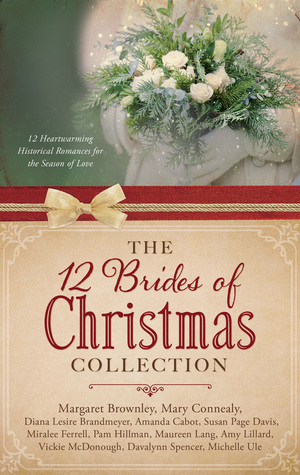
The 12 Brides of Christmas Collection
by Mary Connealy
Giveaway ends October 12, 2015.
See the giveaway details
at Goodreads.
The post Needed: Someone to Say No appeared first on Michelle Ule, Author.


October 6, 2015
12 Brides of Christmas–in Book Form!

For Christmas 2014, Barbour Publishing tried a new idea involving an ebook series called The 12 Brides of Christmas.
Like the weekly serial format of stories as done in Charles Dicken’s time, The 12 Brides of Christmas were twelve distinct novellas centering on a gift given at Christmas time and a resultant wedding.
In the busy season leading up to the holiday, we thought readers might enjoy having a simple novella, easy to read in an hour with a warm drink by your side, to look forward to each week in the three months leading up to Christmas.
For those with ebook readers, it worked.
But for the many who prefered to read physical books, hearing about the stories without a way to read them was frustrating.
Your frustration has ended.
On October 1, Barbour collected all twelve stories into one 544-page book!
Now you can read them all in one sitting from a book held in your hand or give a copy to a friend. Novella collections make great teacher gifts and are something people can enjoy in a short time
The twelve stories center on festivities, nutcrackers, stars, trees, creches, gifts, gingerbread and fruitcakes; they also are festive, advent-related, snowbound, evergreen and my favorite, yuletide.
All set in the mid and western United States, they cover the country from Illinois to Mississippi to Arizona to Wyoming and everywhere in between in the 19th century.
For detailed descriptions of the individual stories, see the 12 Brides of Christmas webpage here.
In the fall of 2014, I posted stories about each writer and her story. Here’s a brief story summary with links to each writer’s full interview:
The Festive Bride by Diana Brandmeyer: When Roy Gibbons finds Alma Pickens as a mother to give his daughters for Christmas he thought it would be a simple arrangement. But this is the only wedding Alma will have, and she is determined to make it festive. Will this bride be more than Roy bargained for?
Diana’s novella is a poignant story of love between a widow and a widower, which reflects her own personal experience–though she didn’t have to fall in love quite so fast!
The Nutcracker Bride by Margaret Brownley: While gathering walnuts, someone throws a bag of money into Lucy Langdon’s wagon. Now Chad Prescott, a Texas ranger, is determined to recover the bag, but not before he is shot as a prowler.
Waking up in a house full of German nutcrackers is rather disconcerting for this lawman, but not as troublesome as feeling his heart fall for the lovely Lucy.
The Christmas Star Bride by Amanda Cabot: Esther Hathaway lost her one true love at Gettysburg twenty years ago, but she is still willing to celebrate her niece’s wedding by commissioning Jeremy Snyder to paint her portrait.
Will Esther’s prayers for God to ease her loneliness be answered by a wounded vet?
The Advent Bride by Mary Connealy: Melanie Douglas attempts to connect with a troubled student using an advent box with hidden rewards. When Henry O’Keeffe sees a remarkable change in his son, he has to meet the new teacher.
Will more than one prayer be answered in the small Nebraska town?
The Christmas Tree Bride by Susan Page Davis: Polly Winfield lives at the stagecoach station that her father operates and often sees Jacob Tierney, one of the drivers. But winter arrives on the
prairie bleak and uneventful, and she confesses to Jacob that all she longs for is a Christmas tree.
Will a stagecoach accident prevent him from making her wish come true?[image error]
The Nativity Bride by Miralee Ferrell: Deborah Summers has waited five years and prayed for Curt Warren to return to Goldendale, Washington, passing up another marriage proposal by believing in her first love.
When tragedy finally brings him home, will a rift with his father drive him away too quickly?
The Evergreen Bride by Pam Hillman: Mississippian Annabelle Denson dreams of visiting cousins in Illinois and seeing a white Christmas. In the face of her excitement, Samuel Frazier hides his growing affection for her behind a quiet smile and a carpenter’s lathe.
Samuel starts to worry that if she goes, Annabelle won’t return. Can he convince her to stay?
The Gift-Wrapped Bride by Maureen Lang: Sophie Stewart’s family has just moved to Chicago to join her brother and help start a church. Sophie is an artist with big dreams, but she feels her parents are pushing her to marry someone like Noah Jackson, a young man from their Ohio hometown.
But forgiving the past and recognizing Noah’s maturity and changes may take a miracle. [image error] The Gingerbread Bride by Amy Lillard: Maddie Sinclair loves Harlan Calhoun, but feels like she can’t get his attention, so she visits an eccentric woman in the Ozark Mountains for an herbal mixture—a love potion—that she bakes into a batch of gingerbread cookies.When Harlan suddenly proposes, Maddie is torn by guilt and confusion. Is this true love or just the herbs talking?
The Fruitcake Bride by Vickie McDonough: Pastor Clayton Parsons waited a year to bring his fiancée, Karen Briggs, to his new church post. They plan a Christmas wedding, but in the meantime Karen helps the church ladies with various projects, including a bake sale.
But revealing her fruitcake recipe could spell disaster for her future in Bakerstown, Missouri.
The Snowbound Bride by Davalynn Spencer: On the run from a heartless uncle, Arabella Taube hides in Nate Horne’s farm wagon just as a harsh winter storm sweeps into Colorado.
Despite Ara’s mysterious background, Nate’s mother thinks she is the answer to a prayer and the hope for his future.
The Yuletide Bride by Michelle Ule: Ewan Murray and Kate McDougall hold a mutual appreciation for music—and each other. But as she comes of age, Ewan realizes he must do something to prove his worth to her merchant father.
Will a refurbished heirloom and a sudden snowstorm be the key to earning permission to marry?
It’s amusing to read through this list, now that we’ve all written sequels to these stories. The 12 Brides of Summer ebooks released in four groups of three stories each during the summer of 2015. The full volume, an actual book, of The 12 Brides of Summer will be available in summer 2016.
In the meantime, the authors of The 12 Brides of Christmas are offering a Goodreads Giveaway. You can read about it here:
Goodreads Book Giveaway
The 12 Brides of Christmas Collection
by Mary Connealy
Giveaway ends October 12, 2015.
See the giveaway details
at Goodreads.
Merry Christmas!
Tweetables
Finally, the 12 Brides of Christmas as a BOOK! Click to Tweet
12 Christmas novellas in one book for 2015 Click to Tweet
12 ebook novellas make one 544-page book! Click to Tweet
The post 12 Brides of Christmas–in Book Form! appeared first on Michelle Ule, Author.
October 2, 2015
Living a Faith Life in a Frame

See? I know the boundaries.
Do you live your faith life within a frame?
I hadn’t thought about that aspect until I met up with a friend from my childhood several years ago.
26 years had passed since we’d last seen each other (curiously, in line at the 1984 Los Angeles Olympics!), and we met at a Starbucks to get a look at each other.
She was as clever and fun as ever, and of course we talked about the books we read–both then and now.
But she was aghast to hear I was a Christian. “Why? How?”
I smiled and thought before answering.
With the grace of forgiveness, I have found being a Christian liberating.
“I see the Bible as providing a framework within which to live my life. God provides the frame–the borders–and then I’m free to make my life whatever I want within the frame.”
She shook her head and we went on to other topics.
I’ve thought about that description often in the intervening years (and yes, we’re still in contact) and I like it.
“Boundaries” of course, is a topic often discussed in Christian circles, in part because of the Townsend books, but I like to remember a story I heard while raising small children.
The gist is, kids need a boundary, a frame, to feel secure.

Obviously you need boundaries to play a sport
Years ago, a new school deliberately did not fence in the playground. The earnest parents and administrators wanted to give the children a sense of freedom–that they did not need to be hemmed in.
But something peculiar happened when they released the children for recess.
They stayed close to the buildings to play their games.
The wide open areas which beckoned to adults, frightened the children.
They weren’t sure of the limits and rather than test them, they remained where they knew it was safe.
(I’m sure there were several children who ran all over, but the majority of the children huddled close).
This, of course, was the opposite of what the site planners had envisioned.
How could they reassure the children a sense they could play everywhere?
They put up a fence around the perimeter.
And then the children felt free–and safe– to play all the way over the area up to the fence.
They needed to know where the limit was.
I see my faith in the same sort of frame.
I know the Ten Commandments. I understand the teachings of Jesus and the new (as well as the old) testaments.
I know where the lines are drawn and what I should steer clear of.
But because I know that frame of my life, I feel perfectly free to exercise my beliefs and actions within the frame.
I can “color” my life with bold speech and writings, just as long as it doesn’t violate the Bible.
It’s helpful to know where that line is–as well as to recognize when I’ve crossed it.
Because then, I merely have to confess the sin (of crossing the line, falling short of the mark), and I’m forgiven.
And totally free!

My newsletter, Michelle’s Musings, will be out next week. If interested in reading what I’m up to–over the summer and with my writing– subscribe over on the right (above the tabs)!
Tweetables
Living a faith life within a frame. Click to Tweet
The secure advantage of a playground fence. Click to Tweet
Boundaries, the Bible and freedom. Click to Tweet
The post Living a Faith Life in a Frame appeared first on Michelle Ule, Author.
September 29, 2015
This Writer and Her Friends
 Writing is notoriously a solitary work, but this writer could not do her job without her writer friends.
The fact I’ve been part of five different novella collections means I’ve worked with other writers my entire career.
But two writers in particular have been with me through half these collections and I want to talk about them and our work together.
Here’s to Margaret Brownley and Vickie McDonough!
Both these writers are terrific and professional co-writers. I trust their judgments; I listen to their marketing advice; they respond when asked a question.
Margaret convinced me on the importance of Twitter and taught me a few skills.
Vickie listened to suggestions from co-writers when we read each others stories for The 12 Brides of Christmas, and then approached Barbour and suggested a sequel, which they agreed to.
Because of Vickie, Margaret and I got to return with stories for The 12 Brides of Summer–coming out in a book next summer.
Well, what are friend writers for?
Encouragement, yes, but also for fun and professional admiration. I’m honored to have worked with them.
Margaret Brownley
Margaret and I have been part of four collections together, starting with my first book, A Log Cabin Christmas Collection.
As part of the marketing for that book, we met at a book-signing event in southern California. She’s one of the few co-writers I’ve ever met.
Her stories are fast-paced.
Margaret is funny.
She’s also a hard worker but a bit free-form. A dedicated “pantser” writer, she starts off with her idea and by the end of the story is just as surprised as the reader is at how it all works out!
You have to be a quick witted writer to pull that off!

Michelle and Margaret
The stories Margaret has shared with me feature kids at schools with a vexing teacher who breaks the rules (The Snow Angel), Christmas spent in a Pony Express Station (the heroine was a feisty spinster driving herself to California!), a couple who don’t realize they own the same dog (The Dog Days of Summer Bride) and The Nutcracker Bride which has this great line in the second paragraph referring to a potential crisis:
“Or maybe Mr. Jones had been attacked by one of his chickens again.”
She makes me laugh and when I consider how many of her stories take place during pioneer days in challenging circumstances–well, Margaret’s a gifted writer.
I smile every time I open up my personal copy of A Log Cabin Christmas Collection and read what she wrote: “sending love and laughter your way!”
Thank you, Margaret. I laugh every time I learn you’re writing with me.
For those interested, Margaret’s webpage is here.
Vickie McDonough
Vickie McDonough and I have joined Margaret on three collections: A Pioneer Christmas Collection, The 12 Brides of Christmas and The 12 Brides of Summer.
A steady writer who seldom gets flustered, as perhaps befits a woman who raised four sons, Vickie loves the western genre and has sold more than a million books.
Her A Pioneer Christmas Collection story, is about a young woman who really doesn’t want to get out of her buckskins and settle down. Vickie understood some of her feelings:
“My heroine, Maddie, has dressed in buckskins most of her life. She’s comfortable in them, and it makes riding horses, hunting, and doing chores easier. She has no desire to wear dresses—and neither do I, although I don’t wear buckskins. I only own two–and one is the dress I wore in my son’s wedding, thirteen years ago!”
A native of Oklahoma, Vickie is interested in how people trust God in hard times, and that theme appears in many of her stories.

Vickie McDonough
In The Fruitcake Bride (from this fall’s compilation The 12 Brides of Christmas, originally released as an ebook last Christmas), Vickie explores the frustrations of living with a very bossy older sister with too many opinions, who nearly spoils a young woman’s wedding.
Vickie turned the tables on that strong-willed sister in her summer sequel, The County Fair Bride, when Prudy finds herself not being able to control the situation and having to realize that submitting to God might get her what she really wants.
It’s a delicious twist.
You can learn more about Vickie here.
Both these co-writers are the authors of many books, but they’ve always been generous with their answers, encouragement and willingness to work with me.
I’m very grateful for Vickie and Margaret.
And I like their stories, too!
The 12 Brides of Christmas releases as a book on October 1, 2015. (All twelve stories released weekly last Christmas as individual ebooks. This is a compilation into a physical book)
We’re having a Goodreads giveaway and if you’d like to enter, follow the instructions here:
Goodreads Book Giveaway
The 12 Brides of Christmas Collection
by Mary Connealy
Giveaway ends October 12, 2015.
See the giveaway details
at Goodreads.
Tweetables
Getting by with 2 author friends: Margaret Brownley and Vickie McDonough. Click to Tweet
How novella writers work together. Click to Tweet
Laughing and writing through Log Cabins, Pioneers, brides and Christmas Click to Tweet
The post This Writer and Her Friends appeared first on Michelle Ule, Author.
September 25, 2015
Turning a True Story into a Fictional Tale
 How do you turn a true story into a fictional tale?
Carefully.
The mythology of stories is there are, really, only seven basic plots an author can write.
A quick glance around suggests that can’t possibly be true. How can there be millions of books if there are only seven plots?
The creativity of the authors–which involves their ability to “recast” a plot into a different time and place (Shakespeare was a master at this, when he wasn’t just stealing the story from antiquity)–and the endless variations of those seven plot lines.
History can be an excellent place to find stories to retell and I did so when writing my novella “The Gold Rush Christmas” for A Pioneer Christmas Collection, newly rereleased in September 2015.
As good ‘ole Mrs. Klocki, my 8th grade history teacher used to say, “I don’t know why you bother with fiction. You should read nonfiction. Not only is it even more hair-raising than fiction, but it’s also true.”
That’s probably why I enjoy reading and writing historical fiction.
Adapting Primary Source Material

English: Muddy street scene, Skagway, Alaska, October 1897. (Photo credit: Wikipedia)
I like to use primary source materials while writing historical fiction because it makes the story feel more real. I start with basic information about the location and history, and then scour the Internet and libraries to find actual information written by people during the time frame.
For my novella “The Gold Rush Christmas,” my best source was Rev. R. W Dickey who spent the 1897 winter in Skagway, Alaska and wrote about building the Union Church. He mentioned townspeople, described what he encountered, and quoted unusual events in his book Gold Fever: A Narrative of The Great Klondike Gold Rush, 1897-1899.
He was the primary source of the amazing tale of the Skagway “sporting women,” “soiled doves” and “unfortunates,” as polite society called prostitutes.
When church member Mollie Walsh asked him to visit one of these women, the as-yet-to-be-ordained Rev. Dickey hesitated. But he went, reminded the dying woman about Jesus and “how he came to search for us and bring us home to our loving heavenly Father.”
“The funeral service two days later was held in the church, which scandalized some people. The girls of her own class were in attendance–practically all of them–their painted faces and showy ornaments marking them out from the few women of the other class. Some of the latter sat aloof and looked their disapproval.”
You can picture them, can’t you?
“It was a strange scene–probably fifty girls on their knees as we carried the coffin down the aisle.”
Rev. Dickey needed to visit the hospital and didn’t go to the cemetery,
“but I paused long enough to watch the men reverently carrying the body of their erring sister toward her last early resting place, confident that Jesus to Whom she had looked had brought the wandering lamb home.”
I didn’t have enough extra words in my tightly-written 20,000 novella to include all of Rev. Dickey’s details or lovely turns of phrase, even though he appears in a cameo role. I had to condense the story line and so many of his actions were transferred to Miles, a not-ordained seminarian whose sense of propriety ran into a number of “how can you not?” questions in “The Gold Rush Christmas.”
On his way to the hospital, Rev. Dickey met Captain O’Brien of the steam ship Hercules, who was curious about local news. He told the story of the sporting woman’s death and the sobbing unfortunates in his church, mentioning his sermon. The captain listened with interest and then had a question:
“Do you think any of them want to leave off? I mean . . . Get word to them that on my return trip . . . I’ll take all who want to go to Vancouver or Seattle. It won’t cost them a cent.”
When the reverend pointed out they’d have no money and would have to return to their trade, a packer standing nearby butted in:
“I’ll give the Captain a check for whatever he thinks he may need. Would a thousand do?”
The town con-man, Soapy Smith, wasn’t likely to let his primary source of income go without a fight. The good men of Union Church, however, led by Rev. Dickey prevailed on the fearful sheriff to help the women. As the sun set that night, a group of church people escorted 40 prostitutes to the Hercules and waved them south.
An amazing story.
I’ve read a lot about the Alaskan Gold Rush. I’ve been to Skagway, Alaska and seen the Mollie Walsh statue in the park. I’ve read countless tales of missionaries, but had never heard of this one before.
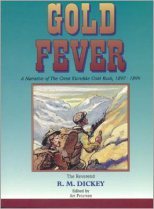
I enjoyed the true stories–and the photos–in this book!
I had to go to the primary source material to find out.
Where do you read for information when you want to know history? Do you like to read memoirs and personal histories, or do you prefer the history books?
Tweetables
How 40 prostitutes escaped 1897 Skagway Alaska. Click to Tweet
Using Primary Source materials for a better story Click to Tweet
Stranger that fiction: 1897 Skagway prostitutes escape Click to Tweet

The post Turning a True Story into a Fictional Tale appeared first on Michelle Ule, Author.
September 21, 2015
Preparing Your Life for a Fire
 We’ve lived in high fire areas ever since my husband retired from the Navy.
Lake County’s Valley Fire has been raging 35 miles north of our house for more than a week.
The local paper today singled out our community as being a high fire area. We’re only six houses from a steep hill covered in dry grass and trees.
Fire prevention has been a discussion topic among my neighbors for weeks.
As a result, I’ve got five tips on how to prepare in case a fire heads your way and your life and possessions are in peril.
It should go without saying, get yourself out immediately if your life or that of your family, is in danger.
But, if you’ve got a little time–half an hour say–you can prepare for what to do now and improve your chances of salvaging something of your life.
Here are five tips you can do, or start to do, now.
1. Make a list of what you would want to save and then put the items in order of importance.
I’ve had a list like that for years. I’ve also noted where to find the items so I can get them quickly.
My list looks something like this:
1. Family members, especially small children
2. Lock box–which houses our important documents that would be hard to replace: passports, deeds, birth certificates, marriage certificate, shot records, that type of thing
3. Medications
4. Jewelry
5. Non scanned photos
6. Small, portable family momentoes
7. Laptops, chargers, sleeping bags, clothing, baby pictures, etc. if there’s lots of time.

I’d hate to lose Grammy’s organ.
2. Establish with your local family members, a contact out of the area and a potential meeting location nearby.
The largest number of my relatives live locally at the present time. We need to establish where we would gather to meet in case of a catastrophe.
Many of our relatives live in Southern California, with a scattering around the country–oddly, we have several in-laws and outlaws in Idaho.
We need to figure out who we will call, probably in either Southern California or Idaho, in an emergency to relocate each other if we can’t make it to the local meeting spot.
3. Ensure your computers are backed up off site.
We’ve happily used Mozy for years and I have no worries about losing my digital photos, my writing, our taxes (Turbo Tax ), and other items that have become part of our life.
As a side note, we’ve already proved Mozy’s handiness by downloading everything onto new computers over the years.
You don’t have to use Mozy, but find something that backs up your data AWAY FROM YOUR AREA. I’m not worried about not getting to my hard drives in a fire because I know everything is available again through Mozy.
The Cloud works, too.
In this day and age in the United States, many papers you might need are computerized and available through pertinent sources. It will be easier if you have your own copies, but not catastrophic if you don’t.
4. Start scanning important documents and photos. Methodically take photos of every room in your house.
Scanners and cameras can be keys to your peace of mind.
Start scanning important documents (health records, credit card information, diplomas, passports, shot cards, anything like that) and put them on your computer.
You might consider scanning valuations on jewelry or other possession to prove how much you paid for them. (Expensive cameras, extraordinary media systems, anything worth a lot of money. We don’t need a file like this . . . )
Scan all your old photos, particularly unreplaceable ones. (I’ve hired kids to do this as a summer job).
Take pictures of every room in your house, slowly turning in a circle to document everything. If your house burns (or, if movers loses your shipment), you can prove what you owned for insurance purposes.
If you still have negatives, send them to a family member who doesn’t live near you. I asked my brother to store ours in a dry spot in his garage. I hope he’s still got them!
If you’re a genealogist like am, you should have been scanning original documents to share all along. (Which I haven’t done . . . but I did make copies of my grandmother’s 110 year old photo album!)
5. If you own a house, cut back shrubbery and make other modifications per your local fire requirements.
When we lived at the end of an isolated road in a very high fire district, I asked the local fire marshall to examine our property and tell me what to do in case of fire.
He made a number of recommendations.
I spent weeks outdoors lopping lower branches off pine trees. We cut down a eucalyptus tree too close to the house.
When he returned for a reinspection, he congratulated us and pointed to our neighbor across the street. “If we had to make a stand, we’d save yours and let that one burn. You’ve obviously done the work needed to give us a chance of saving your home.”
I was happy for us, but felt guilty about my neighbor.
No fire has come through that area yet, thanks be to God.
Bonus–
Give serious thought to what truly is important in your life.
Is it family or possessions?
Pets or possessions?
Your life or possessions?
Possessions come and go. Save those you love.
Anyone else got ideas of things I missed?
Tweetables
5 things to do to prepare for a catastrophic fire. Click to Tweet
5 Things to do before a fire strikes. Click to Tweet
Making life easier for after, by preparing for a fire before. Click to Tweet
The post Preparing Your Life for a Fire appeared first on Michelle Ule, Author.
September 18, 2015
Books and Other Helps in Writing The Gold Rush Christmas

Where would you start?
I sat down one November day, not long after I’d signed the contract for The Gold Rush Christmas, and stared at the computer screen. What was this novella about?
I’d just finished another project and had been awarded this contract on the basis of a short description. I knew the location and basic plot, but I didn’t know the characters or much more about what would happen in this story beyond boy/girl twins and boy next door journey to Alaska in search of the twin’s missionary father.
Where would you start?
I went to the Internet and the history books and began reading as much as possible about 1897 Skagway, Alaska. I’d been there 20 years before with my husband, his father, our godson, and our three sons–in other words, Michelle and six guys went camping.
I’d done my research before that trip, taken all four boys to the Klondike Gold Rush Museum in Seattle and watched White Fang. A lot of it was hazy but when I picked up the books again, it came back pretty quickly.
I remembered the bad guy Soapy Smith, though not why he was bad. I knew lots of “sporting women,” went to Alaska, but had forgotten details about their life. I remembered the Chilkoot Trail photo vividly–and figured I’d work it into my tale. I picked up Jack London’s stories and read a fantastic recent book, The Floor of Heaven: A True Tale of the Last Frontier and the Yukon Gold Rush by Howard Blum.
The Internet provided many nuggets to consider when crafting the story line. Mollie Walsh’s story caught my imagination, particularly when I learned she had sailed to Skagway in the right time frame with the first real missionary to the Klondike, the Reverend R. M. Dickey.

The real Mollie Walsh
And somewhere–I don’t remember where, now–I read a fantastic story that became the hinge of The Gold Rush Christmas.
The Reverend R. M. Dickey published a narrative of his experiences: Gold Fever: The Great Klondike Gold Rush, 1897-1899. I knew the book could give me insight into a lot of life in Skagway and so I ordered it on line.
Three different times before I finally got a copy.
And when I did read Rev. Dickey’s actual descriptions of his life, I discovered the details of that fantastic story.
I even quoted him!
The sporting women “incident” became useful when I considered the pompous book-loving “hero” of The Gold Rush Christmas. He needed to learn some lessons and the details found in Dickey’s book, along with several others, gave me the hooks I needed to turn Miles into a full fledged character, not a stereotype.

The Aliki
The Harris twins and Miles spend several chapters traveling to Skagway. In my search for information about the type of ship, I ended up at an amazing website: The Steamship Historical Society of America. Astrid Drew was a cheerful and terrific help and even turned up photos of the Aliki!
A visit to my local used bookstore, Treehorn, also produced photo essays about the time which enabled me to learn the telegraph station in Skagway was bogus, Dr. Runnals ran the mail, and Peter Harris would work on the White Pass Trail, rather than the Chilkoot. I was sorry to lose that dramatic photo from above, but plenty of folks wrote about the horrors of the White Pass–most of which were too graphic to describe for an historical romance.
A Christmas totem pole plays a part in the ending. I knew I could figure one out by reading Tlingit legends, but what if someone had actually already designed one? The Reverend David Fison beat me to it and graciously asked me to include his design in the story.
But the fictional people, where did they come from?
Donald Harris exemplified the attitude of Nehemiah in the Old Testament–a man who disregarded the siren call of comfort to stay at the task God had sent him to do. Nehemiah’s story has set in my heart for 25 years; I’m glad to finally get to honor it!
Peter is just as tall, self-assured and powerful as my own brother.
And our heroine, Samantha?
Easy.
I know her all too well.
Do you like such attention to detail in reading? What do you know about the Alaskan gold rush?

Tweetables
From Jack London to the Floor of Heaven; Gold Rush research Click to Tweet
Extraordinary tales from the Alaska Gold Rush Click to Tweet
A little romance and a lot of rough living: Alaska Gold Rush Click to Tweet
Goodreads Book Giveaway
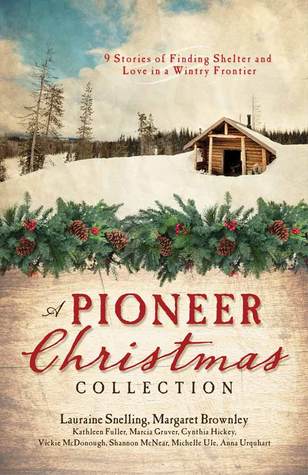
A Pioneer Christmas Collection
by Kathleen Fuller
Giveaway ends September 19, 2015.
See the giveaway details
at Goodreads.
The post Books and Other Helps in Writing The Gold Rush Christmas appeared first on Michelle Ule, Author.
September 15, 2015
A Pioneer Christmas: Reprise 2015
 Barbour Publishing has just rereleased A Pioneer Christmas Collection, two years after it was first published.
Now’s your chance to get and enjoy a copy if you missed it the first time around!
As one of the nine authors, I’m pleased to see the book again–full of fine stories that can entertain and give readers a gift of their own as Christmas approaches.
(I know, but it’s sooner than you think!)
It’s a beautiful book, but it’s also a rich read. It appeared on several best-sellers lists in the winter of 2013-14, and it holds up well this year.
We think A Pioneer Christmas Collection</em> is a special treat. I asked several of my co-writers to explain why.
Lauraine Snelling, who wrote The Cowboy’s Angel, reflected on the basic qualities:
“A Pioneer Christmas is different from other Christmas novellas because it is set in differing time and places . . . In addition, there is an element of the reality of living in all of these differing times and places added by details as basic as the houses the characters live in. Some are in teepees, some cabins, some sod houses, all contributing their owns set of problems.”
The stories range over 120 years of American history, beginning with Shannon McNear’s RITA award finalist Defending Truth, set during the American Revolution, all the way to Michelle Ule’s The Gold Rush Christmas--which took place in 1897 Skagway, Alaska.
“What makes this collection great is the heart-warming stories of love and Christmas,” said Cynthia Hickey, author of A Christmas Castle.
In A Pioneer Christmas, several writers tweaked the genre for a different angle on pioneer romance. I found them delightfully satisfying and a bit bemusing, wondering more than once, “how is this one going to end?”

The stories are inspirational romances, easily read in about an hour. They’re not your average romance, however, in that a third of the stories reveal unusual depictions of pioneer marriages. The romance is young and passionate, but also consummated.
So, where’s the romance in that?
I’m not giving away any spoilers . . .
It’s helpful to remember life on the prairie was difficult and spouses frequently died prematurely. Marriages sometimes had to be made for convenience and “falling in love,” may not have been practical when stock needed tending.
Cynthia’s A Christmas Castle is upfront about marital challenges between virtual strangers: her heroine is a mail order bride. Or, in this case, a mail order widow upon arrival in a small Arizona ranch town riven with controversy.
Without ever laying eyes on her husband, the new wife/widow takes to her inheritance with dash and aplomb, not to mention instant motherhood. She displays the deering-do necessary to survive, particularly when neighbors attempt to steal her late husband’s property.
Lauraine’s The Cowboy Angel features an anxious pregnant woman whose husband is long overdue from town with the necessary supplies. What will happen to her out in that sod house property they’ve fought so hard to “own up” if he does not return?
Her cheerful example in the face of tragedy, a determination not to give in to despair, resonated with me and I marveled at her strength.
Anna Urquhart’s A Silent Night begins with a young couple fully in love but facing a voyage across the Atlantic to a new life. When her husband goes missing with blood left on the ground, the heroine scarcely has time to mourn before being forced to consider the unthinkable: marriage to an older neighbor.
How else is she to survive the winter in a half-built cabin with a small child to protect?
Even Margaret Brownley’s story A Pony Express Christmas features an unusual twist: the hero is rescued from certain death by the matter-of-fact heroine in an abandoned Pony Express station.
But what was that single woman doing out on the prairie to begin with?

Anna Urquart, MFA
Anna Urquhart, a newly minted Master of Fine Arts, had this to say about the collection:
“What makes A Pioneer Christmas Collection different is that every story is set “in transit”—the settings (especially the Christmas scenes) are at times precarious and at times surprising, and they show the reality for people of that time that Christmas wasn’t necessarily a day “set apart. Christmas was a day still filled with challenge and requiring courage. It was more about the people and finding contentment and joy amidst difficult circumstances.
“I love that all of the writers of this collection didn’t shy away from making things hard for their characters. I also love that they didn’t shy away from acknowledging that joy and hope is always possible, regardless of circumstances.”
If you’ve got a copy from 2013, why not join us in rereading these fine stories of love and courage?
Or, if you’d like a copy, enter our Goodreads Giveaway–contest ends THIS Friday, September 19.
Goodreads Book Giveaway
A Pioneer Christmas Collection
by Kathleen Fuller
Giveaway ends September 19, 2015.
See the giveaway details
at Goodreads.
.
Or, of course, you can buy one yourself!

Tweetables
Hard times, joy, Christmas and love: A Pioneer Christmas Collection.Click to Tweet
Christmas: a great time to reprise wonderful stories. Click to Tweet
Romance with a twist: some of these folks are married! Click to Tweet
The post A Pioneer Christmas: Reprise 2015 appeared first on Michelle Ule, Author.
September 11, 2015
But I Didn’t Want That Past
 Some friends and I have been discussing the past today and more than one grew up with an alcoholic parent.
In the midst of our discussion, I reminded them of this:
“It’s no surprise to God what family we’ve been born into. He knew what he was doing when he put me in the family he did all those years ago. The adventures and the agonies, the joys and the fun, all went into the person I am.
Today I have a choice. I can condemn God for making me into the pot I am, or I can embrace the pot I’ve been modeled into by circumstances and situations. (See Romans 9:20-22)
I understand far better, now, that people are hurt and not everyone chooses a healthy or responsible way of dealing with that hurt. It’s been of immeasurable help for my work at Pregnancy Counseling Centers. It has informed my writing. It has shut my mouth at times when I would judge. And it’s left me with a heart that aches and eyes that tear up.
But I’ve had to embrace the hurt and the forgiveness.
Like the velveteen rabbit, I’d like to think it made me more real.”
When you don’t believe in a loving God who created you for a purpose, it’s got to be more difficult to wrap your brain around the challenges you’ve been given.
I can’t possibly comment on the horrors so many people have endured in their lives. I have no words to express my sadness for the grief visited on them by people who should have loved them. I cannot explain why anything happened in anyone’s life–including my own–but I believe that all life has purpose and meaning.
I do not need to be a victim to my past.
Some of the difficulties in my life were self-inflicted. Some were the products of another person’s failings. Many I had no control over–especially the blessings.
It’s important to remember how little control I’ve had over my blessings when I complain about my challenges.
Blessings out of my control–and yours
[image error]
English: A Dentist and her Dental assistant (Photo credit: Wikipedia)
When the chair is tilted back at the dentist and a friendly dental assistant asks me to open my mouth, I always think of King Tut.
The man lived millennium ago, the richest man in the world, but he did not have glass windows, much less screens to keep out the flies. Someone may have cleaned his teeth, but they could not fill the cavities. His mouth probably hurt most of the time.
King Tut drank out from rude goblets, though they may have been made of gold. He didn’t own a single plastic item, nor did her listen to music with the great-high fidelity I can pick up on my car radio, not to mention my Ipod.
He died young from an illness curable today.
I have to say, given a choice, I’d rather live in the United States today than be the pharaoh of Egypt long ago.
In 21st century north America, the majority, if not all of us, live in a better home with more resources than the most important ruler of the world–for most of the history of the world.
Even women. In a history book I read once (I cannot remember if it was Barbara Tuchman‘s In a Distant Mirror or Antonia Fraser‘s The Weaker Vessel), the author noted that if we were suddenly transported
back into time (15th century or 17th century England, it doesn’t matter which) we would be shocked by three facts:
1. Every woman between 15 and 45 would be in some stage of pregnancy.
2. Everyone’s face would be covered in small pox scars.
3. Everyone’s teeth–what there were of them–would be a disastrous mess
My husband and I have laughed for years, even before I worked out my genealogy, that had I lived in any age I would not have been among the wealthy. I would have been one of those slaves for King Tut, or a peasant in the 17th century and probably would be scarred with awful teeth.
I’m thankful I was born in 20th century California.
This takes me back, as always, to 1 Thessalonians 5:18: “in everything give thanks; for this is the will of God in Christ Jesus for you.”
It’s all about turning the prism and looking at your life from a different angle. If you make an effort, you can find something to be thankful for.
Even if it’s just living in a house with glass windows.
Tweetables
Glass windows, clean teeth and music: a life better than King Tut. Click to Tweet
All our life has purpose, whether we want to recognize it or not. Click to Tweet
Pregnant, small pox scars and miserable teeth: modern US lives are better than all of history. Click to Tweet
The post But I Didn’t Want That Past appeared first on Michelle Ule, Author.
September 8, 2015
Vickie McDonough: Summer Brides
 What better way to end a 12 Brides of Summer of inspirational ebooks than with Vickie McDonough’s The County Fair Bride?
Vickie wrote last fall’s The Fruitcake Bride with a sequel in mind. Finding the story was easy and fun.
“My heroine in The County Fair Bride is Prudy Willard, who was the antagonist in The Fruitcake Bride. She’s been away for a while and gone through a big change.”
A year and a half after she made a fool of herself trying to catch Pastor Clay, Prudy has returned to 1891 Advent, Texas to help care for her ailing father. She’s still embarrassed at what happened before and is nervous about seeing Pastor Clay and his wife Karen again.
Changes have occurred in Advent. The town has grown and with her mayor father ill, a handsome newcomer has stepped in as interim mayor.
“Prudy isn’t too happy about this interloping Adam Merrick taking her father’s job and decides to offer her “assistance” to make sure he’s doing things properly. Needless to say, Adam doesn’t appreciate her help.”
(Courtesy Longmont, CO Museum)
The theme of The Fruitcake Bride was trusting God when things don’t go as planned, Vickie said.
“In The County Fair Bride, it’s more of Prudy learning she needs to change and trust God, and that she can’t always change things herself.
Sometimes we need to yield our plans to God’s plans for us.”
Vickie enjoyed writing this story. “It was fun giving snooty Prudy her own story and redeeming her.”
What made such a proud woman a County Fair Bride?
You’ll have to read it to find out!
The Fruitcake Bride, which enables readers to see how badly Prudy behaved before she changes, is still available as an ebook for 99 cents: here.
You can purchase The 12 Brides of Summer Collection #4 featuring Vickie’s The Country Fair Bride, Diana Brandmeyer’s The Honey Bride and Davalynn Spencer’s The Columbine Bride through ebook retailers found on the 12Brides.com website.
Who is Vickie McDonough?

Vickie McDonough is the author of 36 novels and novellas. More than a million copies of books with her name on them have sold.
Vickie has been married 39 years. She and her husband live in Oklahoma and have four grown sons, one daughter-in-law and a precocious granddaughter. When she’s not writing, Vickie enjoys reading, antiquing, watching movies, and traveling.
In addition to the 12 Brides of Summer, Vickie has written two other projects with Michelle Ule and Margaret Brownley, including A Pioneer Christmas Collection and The 12 Brides of Christmas.
For more information about Vickie and her books, visit her website: www.vickiemcdonough.com
You can also find her on
Tweetables
Vickie McDonough: over a million readers can’t be wrong! Click to Tweet
A Country Fair: the best place for summer romance? Click to Tweet
Learning to trust God and not take matters into your own hands. Click to Tweet
 Some select Walmart stores carried physical copies of Prairie Summer Brides–a four-novella collection of stories from this series featuring the 12 Brides of Summer novellas written by Margaret Brownley, Amanda Cabot, Vickie McDonough and Michelle Ule.
The ebook versions of The 12 Brides of Summer are available in four ebooks with three stories in each. All four are sold at ebook retailers a mere click of the way.

The entire 12 Brides of Summer Collection (all twelve stories) be released in summer 2016 in a deluxe print edition.
And for those looking for a complete collection of The 12 Brides of Christmas novellas,they’re available in one book in October 2015: http://amzn.to/1FclW0u.
Releasing October 1, 2015. You can preorder at
http://amzn.to/1FclW0u
The post Vickie McDonough: Summer Brides appeared first on Michelle Ule, Author.



![[image error]](http://commons.wikipedia.org/wiki/File:Leuchtstern.jpg)
![[image error]](http://commons.wikipedia.org/wiki/File:Xmas_tree.svg)
![[image error]](http://commons.wikipedia.org/wiki/File:Gingerbread_men.jpg)
![[image error]](http://commons.wikipedia.org/wiki/File:Christmas_pudding.JPG)
![[image error]](http://commons.wikipedia.org/wiki/File:Dentist.2.jpg)