
Michelle Ule's Blog, page 69
November 10, 2015
The Sound of Music Tour Part I

At Hellbrunn Palace, now.
“But you have to take The Sound of Music tour if you’re going to Salzburg,” insisted my daughter.
Several other friends chimed in with the same advice.
My husband and adult son didn’t see it that way. They wanted to visit the castle and admire the armaments.
So, feeling silly, I went by myself in March 2015.
I faltered at the sight of a large bus with Julie Andrews, er, Maria von Trapp, dancing through the mountains with a guitar case in one hand and a suitcase in the other, but I was committed.
Fortunately, I got the first seat behind the driver for a splendid view of the scenery.
The tour escorts a bus load of tourists to the sites where the movie was filmed in 1964. Most of them are still there.
On a cloudy day that cleared to beautiful sunshine, the four-hour tour became a wonderful opportunity to see the mountain areas around Salzburg, while remembering great scenes.
Our fast-talking clever tour guide hummed familiar tunes as we started. Cheerful and full of information, he held the tourists spellbound as he recounted backstage stories from the filming, real life anecdotes of the von Trapp family and the occasional comment about Austria in general.
Okay, it was fun.
As we traveled through the old town, our guide pointed out the actual Abbey. No filming was done there, but you could admire the Abbey.
The Von Trapp mansion actually was a composite: the front of one villa and the back of another. (The family never lived in either house).

Can’t you see yourself riding by on a bicycle–or carrying a guitar case?
Probably the most memorable spot was at the glass gazebo. You remember–where Liesl and the German telegram-delivering pseudo-boyfriend danced to “I am Sixteen Going on Seventeen,” and she got a kiss.
Wheeeee!
The gazebo is locked (a 90 year old tourist attempting to recreate the dance missed a bench and hurt herself, thus denying anyone else the opportunity), but we could admire it.
(True confession: I thought it would be fun to jump from bench to bench, too).
It looks exactly as I expected though it’s not located at the alleged von Trapp family home on the water as depicted in the film.
Too many tourists. The gazebo is now on the lovely grounds of Hellbrun Palace.
We wandered around, admired it and then climbed back in the bus. Our guide took a headcount. “Good, we’re missing two.”
Turns out a young man was proposing at the gazebo.
“We’ll watch when they come back,” the guide said. “If they look happy we’ll applaud. If they’re upset, everyone ignore them and look out the windows.”
They were full of smiles and she was waving her hand to show a beautiful ring.
We applauded.
“Shouldn’t we sing a song from the movie, too?” I asked. (Which one would you suggest?)
“No,” he said.
I asked him about some of the most ridiculous things that had happened on the tour.
He didn’t want to answer the question, but finally admitted he became concerned one time a young woman sat in the back and sobbed the entire tour.
“She said she had watched The Sound of Music twice a day for years. She couldn’t believe she was actually on the tour and just felt so happy.”
I’ve since learned of other tourists reacting to the tour. Some wore nun outfits, some came dressed in lederhosen and traditional Austrian dresses.

Maria’s abbey in Salzburg
One family brought three children: one wearing deer antlers, one dressed in gold and they other looking ordinary.
Who were they supposed to be?
A doe, a drop of golden sunshine and one little girl dressed as herself: “Me!”
Absolutely fun, of course.
(Are you humming yet?)
Next time–the beautiful Austrian scenery as backdrop to the film.
Tweetables
A fun morning on The Sound of Music Tour. Click to tweet
Romance in the gazebo: not just in The Sound of Music film. Click to Tweet
Riding a bus to see where The Sound of Music was filmed. Click to Tweet
Meanwhile, The 12 Brides of Christmas giveaway continues.
You can sign up for opportunities to win a copy of The 12 Brides of Christmas and The 12 Days of Christmas Cookbook 2015, here:
a Rafflecopter giveaway
The post The Sound of Music Tour Part I appeared first on Michelle Ule, Author.


November 6, 2015
12 Days and Brides of Christmas: Raffle!
So while we’re still six weeks out from Christmas 2015, the authors of The 12 Brides of Christmas are sponsoring a giveaway!
Over the next twelve days, we’ll give you an opportunity to win TWO books:
 What better way to prepare for the Christmas celebration, than to have one book to read for fun and one to concoct treats for your family!
The two books are not connected except for the title, so you’ll be moving from 12 Brides on the American frontier to 12 Days of recipes to try yourself.
What can be better?
We’re giving away four sets of the two books through Rafflecopter.
You have 24 different opportunities to toss in your name for a chance to win.
The raffle runs from today, November 6 to Tuesday, November 17 at midnight–12 days away.
Just sign up through the form:
Each author newsletter you sign up for counts as one opportunity to win. (12 authors x one each newsletter = 12 opportunities)
Each of the 12 days, we’ll post a new Tweet. If you’re on Twitter, retweeting that tweet will give you another opportunity.
12 days x 12 tweets = 12 more opportunities to win the two books.
Winners will be announced here on Friday, November 20, on the 12 Brides Facebook page, and by email.
Winner should receive their two books well in time for . . . their own 12 days of Christmas!
Join us, starting here: a Rafflecopter giveaway
Questions? Make a comment.
Here are descriptions of the two books.
Christmas is the time for love, and twelve historical women are on their way to the altar, whether they know it or not. In settings across the heartland of America, readers will experience heartfelt gifts, old-fashioned Christmas traditions, sweet romance, and inspiring faith from twelve acclaimed Christian authors.
The twelve stories center on festivities, nutcrackers, stars, trees, creches, gifts, gingerbread and fruitcakes; they also are festive, advent-related, snowbound, evergreen and my favorite, yuletide.
All set in the mid and western United States, they cover the country from Illinois to Mississippi to Arizona to Wyoming and everywhere in between in the 19th century.
For detailed descriptions of the individual stories, see the 12 Brides of Christmas webpage here.
The 12 Days of Christmas Cookbook:
Wonderfully unique, The Twelve Days of Christmas Cookbook: 2015 will delight taste buds and make your Christmas even merrier! Featuring tasty recipes organized into fun categories including:
Appetizers on a Platter; Beverages a-Blending; Breads a-Rising
Breakfast Dishes a-Baking; Candies a-Boiling; Cookies a-Cooling
Desserts a-Delighting; Kids a-Cooking; Main Dishes a-Mixing
Salads a-Crunching; Sides a Steaming and Soups a-Simmering
With easy entertaining tips and ideas, this sure-to-be-a-favorite cookbook is overflowing with fantastic recipe ideas for the entire holiday season and beyond!
Merry Christmas!
 Tweetables
Raffle: 12 Days of Christmas; Brides and a Cookbook Click to Tweet
Christmas brides and cooking: what could be better? A raffle! Click to Tweet
Celebrate Christmas raffle: two books, romance and food! Click to Tweet
The post 12 Days and Brides of Christmas: Raffle! appeared first on Michelle Ule, Author.
November 3, 2015
Ignorance and The Sound of Music
 When my daughter was eight years old, I realized she had never seen The Sound of Music. So, I went to the local video store to rent it for a weekend. I couldn’t find it amid all the musicals and other garbage in the store, and went to the counter to ask about the 1965 Academy Award’s best picture Oscar winner.
The young man asked, “How do you spell that?”
“Music? Sound?”
What could he possibly have meant?
“Yeah.”
“Wait a minute. You’ve never heard of The Sound of Music?”
He shrugged. “Nope.”
“But everyone’s heard of The Sound of Music.” I turned to the man beside me (the way Woody Allen does in his films) and asked him. “Have you ever heard of The Sound of Music?”
“Sure. Chick flick.”
My jaw dropped.
Resisting the temptation to dance around the store, I broke into song, “Doe, a deer, a female deer.” The young woman at the cash register joined me while the kid at the counter looked like one of those deers caught in the headlights.
Alas, I’m ashamed to admit I returned to the young man. “Tell your mother she did a poor job raising you if you’ve never heard of The Sound of Music.”
I bought the movie at the department store around the corner.
I’m glad I did.
My daughter loved The Sound of Music.
So did my 20-year-old niece–who has terrific parents, but had never seen it before! She watched it with us and then stayed up late to watch it a second time that night!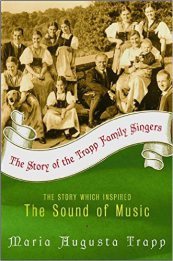
In later years, I read the book upon which the musical production–sort of–was based. The Story of the Trapp Family Singers tells a slightly different history, with the large family’s life centered around their Catholic faith. Time and again, they prayed their way through the many difficulties that confronted them.
While the family had major financial reversals even before World War II, they reached a point where the head of the household Georg (Captain Von Trapp), gathered them together and asked a very pertinent question:
“Children, we have a choice now: do we want to keep the material goods we still have. . .our friends, and all the things we are fond of? . . . Then we shall have to
give up the spiritual goods: our faith and honor. We can’t have both any more.”
They moved to the United States where they eked out a living giving concerts, playing the recorder (I learned to play from their book Enjoy Your Recorder: The Trapp Family Singers New Method Recorder Book), and eventually opening a ski resort in Stowe, Vermont: The Trapp Family Lodge.
Georg was buried on the land near the chapel, which was one of the first buildings the family built. Rather than Max Detwiler, their musical manager was a Catholic priest who traveled with them for twenty years. He advised the family on business matters, but also attended to their spiritual needs. The heart of the family was Jesus.
The family’s devotion to God is only briefly touched on in the movie, but it was obvious and real. Everyone should see the movie at least once for a variety of reasons. Ignorance of the events surrounding the family, and of the God who motivated them, is no excuse.
Though I still think I was rude when I spoke to the young cashier about his mother.
Do you have a favorite Sound of Music memory?
Tweetables
How could the video store guy never have heard of The Sound of Music? Click to Tweet
The truth behind The Sound of Music Click to Tweet
A childhood movie for all: The Sound of Music Click to Tweet
The post Ignorance and The Sound of Music appeared first on Michelle Ule, Author.
October 30, 2015
Clearing After a Fire: Personal Thoughts

Hung by twine in a manzanita tree, a bird feeder–including seed–survived the fire.
After spending a day sifting ashes and clearing up after a fire, I and my companions have personal thoughts.
A fire is a terrible thing, as I’ve written about here, here and here.
I’ve also planned what to do in a fire, which I wrote about here.
But seeing the devastation and my reaction to it, I have several other thoughts.
Resilience
L’s resilience in the face of devastation was a great encouragement to the stunned volunteers who gathered at her property.
“I’m amazed,” a teacher wrote, about
“L’s gentle spirit and acceptance of what is. I have no doubt that there have been tears unseen by us, and there will be more, but her spirit the day we were working can only be attributed to her faith and trust that God is still with her and He will use this in some way.”
Her ability to see good in what looked like a war zone to us, cheered us to work harder to help. It was an honor to serve her and her husband.

100 year-old bulbs survived the fire.
We’re all thankful for the opportunity to be there for them.
As a talented musician wrote:
“I was spiritually re-energized after working at L’s property. Now that my children are grown, it is a rare sensation to feel truly useful and there, working to clear away the rubble and ashes, I not only felt I was helping but also being obedient to God’s call to action. The combination of being useful and obedient gave me joy, so it was all good all around.”
The 100 year-old amaryllis bulbs, growing three weeks after the fire swept through, amazed us and reminded us of nature’s resilience, too.
Serendipity
Why did one house remain and another burn?
Why did the china fracture and yet the snowman mug with a carrot nose survive?
Hanging a bird feeder in a manzanita tree–that endures fire–leaves bird seed for birds afterwards!
 A teacher was struck by
“the magnitude of the destruction, and yet, at times, the randomness of it. On the one hand, large sections of the hillside/forest burned, brown, etc., then random green sections. Or the hillside near the Lions Club that was black, and only one house burned – in between two other houses.”
Possessions
The remains surprised a metallurgical engineer:
“If it was combustible it was gone – there was no soot, just ash where the house stood. Actually quite clean and sterile.
“The ants survived.”
I was amazed at how many wires were in a house, until I realized everything that’s plugged in has three strands of wire in it.
A scientist commented,
“You could see where everything was in the house: the couch here, the TV there, the pipes traced the walls.I dug through a mound that turned out to be a closet, I found the desk. Most of the structures aren’t there, but you can tell what was there.”
Humility and Community
Another musician appreciated
The blessing of organization, the framework we volunteers could attach ourselves to, along with L’s gratitude and the role of cocktail hour in building community. Or was it the coconut cream pie and champagne? LOL!
L had a treat for the volunteers after we finished for the day!
 Closing Thoughts
A singer:
“God doesn’t cause the bad things in our lives, He is in the good that comes out of them.”
A Marine:
“My thoughts are a mixture of pride and sadness. Pride in a job well done, and sadness at the great loss of treasured memories for all the fire victims. Only faith in the Risen Lord, Jesus Christ can help to ease the pain they must feel. It hurts to think of their losses.”
Tweetables
Volunteers reflect on cleaning up after a fire Click to Tweet
Humility, Serendipity, Thankfulness: after a fire Click to Tweet
A bird feeder–with seed–survives a fire Click to Tweet
The post Clearing After a Fire: Personal Thoughts appeared first on Michelle Ule, Author.
October 27, 2015
Sifting the Ashes: Finding a Few Treasures

In the corner where the jewelry box sat, sifting with fingers
A dozen of us spent five hours sifting through the ashes of a friends’ home following the Valley Fire in Lake County, California.
Four weeks after the fire roared through the neighborhood and destroyed everything around it in minutes, we descended on an ash-filled house.
As explained here and here, our task was to clear a cement pad that used to house the garage, as well as hunt for some of the treasures in what was once a family home.
We found several small items intact in the former house.
It was unsettling to look at the cement foundation of a house filled with twisted metal and ash. It turns out ash looks different based on what burned.
In the corner where a bookcase stood, it’s flaky and pure white.
Where a wooden table once stood, the metal hinge survived and the wood became charcoal.
Stories come out, too.
“This was the hinge for the dropleaf table,” L said. “It came around Cape Horn in 1852 from New England when my husband’s family came to California. All that remains of that history is this hinge.”
We were sobered at the destroyed Baldwin baby grand piano. The soundboard and strings remained; it was too heavy for the men to lift.
Two people sat on the foundation in the bedroom corner and sifted carefully with a colander and sieve. They hoped to find remains of jewelry.

A family heirloom
The gold melted into lumps.
But then, there was a 1922 diamond ring.
L’s grandmother’s. Several of us were in tears with her.

R found a loose diamond!
Most amazing of all, R’s young eyes spied a loose diamond!
We found a ceramic coiled urn L made years ago. It had cracks and had to be handled carefully, but was only broken into three large pieces!
My son found the Christmas closet and turned up a snowman mug and Santa Claus to match.
“We never thought the carrot nose on this snowman would last!” L laughed, “and here it went through a fire!”

There will always be Christmas with these two mugs
I was captivated by the burned kitchen tools, the flattened front door.
We worked for quite a while before anything else was found.
But then, underneath what had been a ceramic Christmas creche, my son found the rest of the Christmas story: Mary, Joseph, camels, wise men. Ceramic and each one whole!
Baby Jesus, however, was missing.
Late in the day, the sharp eyed R spied him in the rubble. One leg missing, but recognizable!
L was plucky, upbeat and positive as we worked through the remains of her house. But often, an unusual finding would bring a sudden remembrance of what else was lost.

With baby Jesus in his place!
The piano was big and heavy; but then she turned to another corner, remembering her harp.
Gone.
I unearthed a ceramic doll head, which puzzled her until she recognized it as a marionette.
Again, she turned, as it to find all the others.
Gone.
More stories.
It was an honor to hear them, and mourn with her.
Sifting the ashes was not simply hunting and looking; it was sifting the memories, too, and remembering.
Tweetables
Sifting the ashes and the memories. Click to Tweet.
A diamond in the ash! Click to Tweet
Finding Baby Jesus and a creche: out of a fire’s ashes. Click to Tweet

This is what it looked like when we finished!
The post Sifting the Ashes: Finding a Few Treasures appeared first on Michelle Ule, Author.
October 23, 2015
Digging through an Ash-filled House

Our task was to clear this cement pad of ash, metal and rubble.
We traveled to Cobb Mountain on Saturday to dig through an ash-filled house.
A sobering, dirty job for friends.
Some eighty of us gathered at the Middletown Lion’s Club in the morning. After being given general directions and specific supplies, our leader spoke to us about our “mission” that morning.
“You’re here to help, of course,” a fire captain explained, “but you’re also here to listen. Don’t worry about completing a task if the homeowner needs to talk. They’ve been through a traumatic experience. For many people, just having people who care and who will listen will make a difference.”
That’s exactly what happened.
As described here, a dozen of us drove about half an hour west from Middletown to the home of members at our church. (The church is some 45 miles away in Sonoma County.)

He’s holding a piece of glass from the oven window. The cookies were lost . . .
The owner met us with hugs and thanksgiving. Her husband had to work that day and would not be there. She read a statement from him, thanking us but assuring us they planned to rebuild and were grateful to God for many things.
We prayed together and then she explained that the house had no hazardous materials and we didn’t need to worry about asbestos. She had been working without a mask or tyvek suit.
We wore them both.
The goal that day was to clear the cement pad that had been their garage.
It was knee deep in burned out appliances, twisted metal, potential dangerous metal shards and everything needed to be sifted.
Someone was coming to buy the metal. We needed to clear all the metal into a pile for the metal hauler.

Sifting through the ash
We had two sifters: two people manned each. Metal went into the pile, everything else into a heavy duty plastic bag. Our gloves were thick.
It took us five hours to clear off the garage pad. We had to deal with a burned out washer, dryer, refrigerator, stove, tools, lawnmower and even a crumbling chain saw. The iron tools survived–a crowbar, needle-nosed plyers, the dented Craftsman tool chest (do you suppose Sears will replace it?)
I unearthed several radial arm saw blades, still savagely sharp but nothing to keep.
We found distorted wine glasses, readable paper and pools of melted metal. A mechanical engineer with metallurgical expertise, estimated the fire’s heat at over 1400 degrees–which is where aluminum melts–but less than 1800 or so, since the iron tools were intact.
We were shocked to unearth what was once a fibreglass handle hammer–the hammerhead was fine, the fibreglass shaggy strings. The maul’s wooden handle was gone, too.
What little remained intact was ceramics or buried under ceramics. The doll house burned, but not the tiny ceramic pitcher.

But the lightbulb didn’t shatter!
The ash drifted as it was shoveled through the sifters, so we were thankful for the masks. The tyvek suits were comfortable on that overcast morning and by afternoon when the sky stretched a beautiful blue, we pushed back the hoods.
The fire began two miles downhill from where the house stood.
The couple have already parked a fifth wheel beside the garage pad. Going inside to use the cramped bathroom, it felt like a comfortable home. KDFC out of San Francisco–classical music–wafted from the radio and comfortable chairs looked to the view.
And then you stepped outside into ash and destruction.
Surreal.
Next time I’ll talk about the finds we made in the house.
Interested in more photos? Check out my Visiting Cobb after the Fire Pinterest board here.

From the doll house
Tweetables
Sifting through ash of a burned out house. Click to Tweet
How hot was the fire? Pools of melted metal tell. Click to Tweet

The remains of the toolchest
What remains in a house after a 1400 degree fire? Click to Tweet

The crowbar still worked!
The post Digging through an Ash-filled House appeared first on Michelle Ule, Author.
October 20, 2015
Visiting a Community Burned Down

Scenes from the drive up the mountain
We drove out to Cobb Mountain on Saturday to work on the site of a house that burned down last month.
A dozen of us, total, from St. Mark Lutheran Church arrived at the home of a church member who was burned out.
I hadn’t been up to Lake County since the Valley Fire, and really, had never been to a scene quite like it before.
Middletown was pocked with burned out houses in between those that escaped unscathed. Driving out of town up the hill to Cobb, we saw hillsides scorched and trees reduced to nothing but blackened toothpicks.
It reminded me of past wildfire sites in Yellowstone National Park (Visited five years after the big fires of 1988, where as far as you could see were black dead trees) and 2000 Mesa Verde National Park (we elected not to claim our campsite the day after the park opened again. The park smelled like the interior of an ash tray).
Sobering.
Intimidating.
“Welcome to Mordor,” my husband said.

The steep hillsides were covered with ashe. You had a sense if you stepped in, the whole hillside would puff up into a cloud.
Yet, after climbing Highway 175 for a time, we came to the little dell that is Cobb proper. That area didn’t burn–the pizzeria is open, the video store, fire station, Lion’s club, the golf course–all looked perfectly normal and green. The elementary school, too, was unscathed.
But higher we went, and hell descended.
All the trees burned, neighborhoods full of ash, soot, cement remains of what was a house. Fireplaces stood alone; scorched and buckled appliances were the only things rising out of the ground.
Everything else remained piles of burned out rubble, knee deep in many places.
Punctuated, though, by brand new telephone and electrical poles, fresh wires strung between and many running vehicles parked between the burned out hulks.
“Really, P,G & E and Caltrans have worked overtime, getting things working again,” explained one fire coordinator at the Middletown Lion’s Club. “They’be been heroes getting things put back together.”
We saw lots of trucks from tree removal companies, most pulling chipping machines behind. This would be a good year to buy wood chips if you need them in Northern California.
The fires burned through a month ago. This particular housing area was among the first to burn, only two miles from where the fire began. By the time our friends heard there was a fire (they were 45 miles away in Sonoma County at the time), their home was long burned to the ground.
 My husband, a mechanical engineer with a specialty in metallurgy, examined some of the melted materials we found at the homesite. “The fires must have been between 1450 and 1600 degrees fahrenheit by the time they got to the house, based on the melted aluminum, but the steel that was unaffected (besides being blackened).”
On a street with 17 houses, everything was gone.
Nothing stood for as far as we could see.
Yet, as the homeowner said, “it was a miracle the fire came through on a Saturday. If that school down the road had been in session . . . ” our jaws dropped open just imagining it, “People would have died trying to get to their kids.”
We sifted for six hours. By the end of that time, destruction, ashe, burned out twists of metal, were the norm. It didn’t seem so grim anymore. Come back on Friday to read about the sifting.
I’ve put together a Pinterest board of my photos, which you can view here.
Tweetables
First visit to Cobb after Valley fire Click to Tweet
Valley fire remains? Welcome to Mordor. Click to Tweet
Ash so thick, puffing into a cloud. Click to Tweet
The post Visiting a Community Burned Down appeared first on Michelle Ule, Author.
October 16, 2015
Heeding the Holy Spirit

Can the Holy Spirit , which often turns up in flames, prompt a birthday present?
This is a story about heeding the Holy Spirit‘s direction.
People ask all the time, “how do you know God is telling you to do something?”
This is an example of what happened to me.
And since my friend wrote about how it affected her, you get “both sides of the tapestry.”
My friend Hillary lives in Sicily where she teaches English and works for Christian Associates.
She periodically asks me to buy something she cannot get in Sicily and I mail it to her.
In August, she asked for an object that required a large box. I saw no reason to “waste” the space, so I filled it with other things, like magazines, my latest book (Prairie Summer Brides), a baby gift for a friend, and a variety of other lightweight odds and ends.
When we stopped at a local department store, I remembered Hillary’s birthday was coming.
I picked up some colorful socks but then paused at the maxi dresses.
An idea whisked through my brain: “You should buy her a dress.”
I fingered the dress. Would she want a halter dress like this? Would it be too long? What size?
I shrugged and moved on.
But then I came to a magenta-colored dress, completely different style and thought, “maybe that one would be better.”
[image error]
Well, no, there were no birds in the department store, nor cherubs either.
But what size?
I moved on.
And came back.
I fingered the fabric, I imagined the color on her.
Hillary has dark black hair; she looks Italian though her skin is fair.
Nah.
But then I went back to the maxi dress.
Too dull.
The magenta dress.
Why did I keep coming back to it?
I laughed. “What do you think, Lord?”
No answer.
But I’d seen her wear a dress in that style.
It cost only $25.
I sighed and decided–if it doesn’t work or doesn’t fit, she can give it away.
So I bought it and packed it in with everything else and mailed the box the next day.
Meanwhile . . . over in Sicily . . . Hillary wrote:
A week before my birthday, I found myself at a shopping mall looking for a light fixture. As I passed by one clothing store after another, I had the following dialog with myself:
“I sure would love to have a new dress to wear to my birthday party…
Yes, but I don’t need a new dress nor should I be spending money on one…
but I don’t want to wear the same dress I wore to the last party I hosted…
but I don’t have to wear a dress. Surely I can find something nice to wear in my closet… ”
…And so it continued until eventually the part of me in favor of buying a new dress resigned itself to my more practical side that argued the dress wasn’t needed.

Not the box I sent
My box arrived the day before Hillary’s birthday.
She recognized a number of the items, but then her eyes grew wide:
Hillary continued:
To my surprise and delight, in a small bag with my name on it, was a beautiful, magenta-colored dress.
“Lord, you heard my conversation with myself about wanting a new dress to wear to the BBQ tomorrow night?!?!”
As soon as I saw the dress, I grabbed it and ran to the bedroom to try it on.
As I was slipping it over my head, I remember thinking:
“this dress is my size. I know without a doubt it will fit me perfectly. I am not trying it on to see if it fits, only to see what it looks like on for God would not go through the trouble of sending me a dress to wear to my birthday party only for it not to be the right size. If he knows the number of hairs on my head, surely he also knows my dress size!”
And, just as I suspected, it fit perfectly.
Not only that, it was me. The color, the style . . . everything.
Out of curiosity, I checked the postmark for when Michelle sent it.
August 4, four days before the idea had even crossed my mind about wanting a new dress for the party.
Isn’t that just so like the Creator of time and space to gently prove to us again and again He cannot be contained by His own creations?
Had Michelle waited just a day longer to send the package, it may not have come in time.
It arrived just in time.
So, how exactly did the Holy Spirit work in this story?
The Holy Spirit surprised me with an idea–I had not gone to the store planning to buy Hillary a dress.
The Holy Spirit prompted the idea with one dress, but when I discard it and wandered past another dress, pricked my imagination.
Even though I walked away from the magenta dress three times, the Holy Spirit kept putting the imagine in my mind.
The Holy Spirit reassured me there was a solution if my fears were warranted–it did not fit–and the price easily fit my budget.
It did not occur to me the Holy Spirit was behind the prompting, even though I mentioned my concern to God.
It felt right–and I laughed when I wrapped it up.
I did not second guess myself once I made the purchase.
Meanwhile, on the other side of the world, the Holy Spirit put a longing in Hillary’s heart–an unexpected longing for something she didn’t need.
And then he blessed us both when my response to the Holy Spirit’s prompting answered a desire in Hillary’s heart.
Thanks be to God.
What’s one way to heed the Holy Spirit? When YOU get a prompting from God, take time to examine it, ask him about it and then act.
Because you never know when a blessings for someone is staring you in the face!
Tweetables
A prompting, a dress and a happy surprise. Click to Tweet
What does it look like to heed the Holy Spirit? Click to Tweet
The Holy Spirit gives the desire and fills it! Click to Tweet
The post Heeding the Holy Spirit appeared first on Michelle Ule, Author.
October 13, 2015
Edith Cavell and Personal Sacrifice

Red Cross Poster; Wikipedia Commons
October 12, 2015 marked the 100th anniversary of British nurse Edith Cavell‘s execution by a German firing squad fifteen months after the start of World War I.
Hailed as a saintly British nurse-martyr by some and called a victim of the British propaganda machine by others, Cavell’s life and the reason for her death was more nuanced than that.
Many people know the basic story. Or do they?
Edith Cavell travelled to Belgium at the start of WWI, not because of her desire to support the British government but because she had been living there for seven years and had set up the nurses training school in Brussels. Belgiums considered her the “Florence Nightingale of Belgium.”
Cavell (rhymes with travel) just happened to be visiting family in Norfolk when war broke out.
She returned to her hospital, which was taken over by the Red Cross, and there she oversaw the treatment of all wounded, civilians or military from either army. She often prayed with her patients.
She did not go to Belgium as a spy.
The German Army invaded Belgium–it was a stopping ground on their way to France, they didn’t necessarily want to acquire the Lowlands. They aimed to reach Paris quickly by going wide to the west and capturing it from an unexpected corner. The Schlieffen plan had been devised in 1905 and many in the German military felt it was the only way they could win a war against France.
Unfortunately for the German Army, the Belgiums didn’t roll over as quickly as anticipated.
Under orders from their king, the Belgiums broke the dikes holding back the sea and flooded their low lying farm land. The flooding bogged down the German advance and, ultimately, though it wasn’t known for four and a half more years, destroyed the German chances of winning the war.

Her statue off Trafalgar Square in London
The daughter of a Church of England vicar, Cavell was raised in the church and a devout Christian. A woman of strong constitution and conviction, she also had worked and trained nurses in France.
When two British soldiers were brought to her in November 2014, she helped get them smuggled into neutral Netherlands.
The first time Cavell assisted, she sealed her fate with the Germans.
Over the next year Cavell assisted 60 British and 15 French soldiers to escape, hiding many in her home on their way to the border. She also aided 100 French and Belgium civilians.
Helping enemy combatants across the border was punishable by death in the Germany army. When, after a lengthy investigation, Cavell was arrested, she signed a statement admitting all.
The British government couldn’t help her, but the Americans tried. They pointed out to the German army that the American public did not hold the Germans in high favor, particularly after the sinking of innocent civilians on the Lusitania.
The American ambassador warned that executing a 49 year-old British nurse would only make matters worse.
The German high command paid no attention. Instead of processing Cavell’s “crime” using the First Geneva Convention rules that would have exonerated her, the Germans used German law which held aiding a combatant punishable by death.
She was not tried for espionage, but treason against the German state.
Of the 27 people who assisted her, five were sentenced to death but ultimately only Cavell and one other were executed. The others served their time in hard labor or were reprieved.
Cavell accepted her sentence.
Held for ten weeks, she was kept in solitary confinement for the final fortnight as she awaited her punishment. Cavell spent that time in prayer and contemplating Thomas a Kempis’ The Life of Christ.
The night before her execution, she cleared her soul with the Anglican chaplain, Reverend Stirling Gahan, whom the Germans allowed to visit and provide Holy Communion. It is from that meeting that her famous quote survives, an apt one for a follower of Christ:
“I have seen death so often that it is not strange or fearful to me…life has always been hurried and full of difficulty. This time of rest has been a great mercy…This I would say, standing as I do in view of God and Eternity, I realise that patriotism is not enough. I must have no hatred or bitterness towards anyone.”
Prior to her execution, the Army allowed a German Lutheran prison chaplain to sit with her. He passed on a message to her family:
“Ask Father Gahan to tell my loved ones later on that my soul, as I believe, is safe, and that I am glad to die for my country.”
Did she really die for her country?
Yes in the sense she was executed for enabling soldiers to escape capture and punishment by the German army.

The collie on the right, Jack, survived the war and returned to England.
But I suspect her willingness to go to her death had more to do with her peace as a believer in the resurrection. She had cared for those who were suffering–even if it meant risking her life by helping them to freedom.
As for the German army, Cavell needed to die for German propaganda purposes. They used her execution to discourage others from helping soldiers escape.
As explained by the German Undersecretary for Foreign Affairs :
“It was a pity that Miss Cavell had to be executed, but it was necessary. She was judged justly…It is undoubtedly a terrible thing that the woman has been executed; but consider what would happen to a State, particularly in war, if it left crimes aimed at the safety of its armies to go unpunished because committed by women.”
The Germans feared to not execute Cavell would result in far more women joining the fight and “getting away with” spying because they were women.
Unfortunately for the German army, the British government controlled the cable lines to the rest of the western world.
They turned Cavell’s death into an indictment of the inhumanity of the German army–which ultimately backfired on the Germans, particularly in places like the neutral United States.
100 years later, Edith Cavell is remembered for her patriotism and unflinching courage before the German army when faced with death.
I believe she may, instead, be more readily linked to a verse from the Bible she loved: “Greater love hath no man than to lay down his life for a friend.”
She was a nurse and a Christian.
There really wasn’t another choice.
Her body was returned after the end of WWI to great ceremony which can be viewed here.
You can read in greater depth about Edith Cavell at a website dedicated to her honor, here.
Tweetables
Edith Cavell and personal honor. Click to Tweet
Why did the Germans execute Edith Cavell? Click to Tweet
Patriotism or Christian duty? Edith Cavell’s execution. Click to Tweet
The post Edith Cavell and Personal Sacrifice appeared first on Michelle Ule, Author.
Edith Clavell and Personal Sacrifice
Red Cross Poster; Wikipedia Commons
October 12, 2015 marked the 100th anniversary of British nurse Edith Clavell‘s execution by a German firing squad fifteen months after the start of World War I.
Hailed as a saintly British nurse-martyr by some and called a victim of the British propaganda machine by others, Clavell’s life and the reason for her death was more nuanced than that.
Many people know the basic story. Or do they?
Edith Clavell travelled to Belgium at the start of WWI, not because of her desire to support the British government but because she had been living there for seven years and had set up the nurses training school in Brussels. Belgiums considered her the “Florence Nightingale of Belgium.”
Clavell (rhymes with travel) just happened to be visiting family in Norfolk when war broke out.
She returned to her hospital, which was taken over by the Red Cross, and there she oversaw the treatment of all wounded, civilians or military from either army. She often prayed with her patients.
She did not go to Belgium as a spy.
The German Army invaded Belgium–it was a stopping ground on their way to France, they didn’t necessarily want to acquire the Lowlands. They aimed to reach Paris quickly by going wide to the west and capturing it from an unexpected corner. The Schlieffen plan had been devised in 1905 and many in the German military felt it was the only way they could win a war against France.
Unfortunately for the German Army, the Belgiums didn’t roll over as quickly as anticipated.
Under orders from their king, the Belgiums broke the dikes holding back the sea and flooded their low lying farm land. The flooding bogged down the German advance and, ultimately, though it wasn’t known for four and a half more years, destroyed the German chances of winning the war.
Her statue off Trafalgar Square in London
The daughter of a Church of England vicar, Clavell was raised in the church and a devout Christian. A woman of strong constitution and conviction, she also had worked and trained nurses in France.
When two British soldiers were brought to her in November 2014, she helped get them smuggled into neutral Netherlands.
The first time Clavell assisted, she sealed her fate with the Germans.
Over the next year Clavell assisted 60 British and 15 French soldiers to escape, hiding many in her home on their way to the border. She also aided 100 French and Belgium civilians.
Helping enemy combatants across the border was punishable by death in the Germany army. When, after a lengthy investigation, Clavell was arrested, she signed a statement admitting all.
The British government couldn’t help her, but the Americans tried. They pointed out to the German army that the American public did not hold the Germans in high favor, particularly after the sinking of innocent civilians on the Lusitania.
The American ambassador warned that executing a 49 year-old British nurse would only make matters worse.
The German high command paid no attention. Instead of processing Clavell’s “crime” using the First Geneva Convention rules that would have exonerated her, the Germans used German law which held aiding a combatant punishable by death.
She was not tried for espionage, but treason against the German state.
Of the 27 people who assisted her, five were sentenced to death but ultimately only Clavell and one other were executed. The others served their time in hard labor or were reprieved.
Clavell accepted her sentence.
Held for ten weeks, she was kept in solitary confinement for the final fortnight as she awaited her punishment. Clavell spent that time in prayer and contemplating Thomas a Kempis’ The Life of Christ.
The night before her execution, she cleared her soul with the Anglican chaplain, Reverend Stirling Gahan, whom the Germans allowed to visit and provide Holy Communion. It is from that meeting that her famous quote survives, an apt one for a follower of Christ:
“I have seen death so often that it is not strange or fearful to me…life has always been hurried and full of difficulty. This time of rest has been a great mercy…This I would say, standing as I do in view of God and Eternity, I realise that patriotism is not enough. I must have no hatred or bitterness towards anyone.”
Prior to her execution, the Army allowed a German Lutheran prison chaplain to sit with her. He passed on a message to her family:
“Ask Father Gahan to tell my loved ones later on that my soul, as I believe, is safe, and that I am glad to die for my country.”
Did she really die for her country?
Yes in the sense she was executed for enabling soldiers to escape capture and punishment by the German army.
The collie on the right, Jack, survived the war and returned to England.
But I suspect her willingness to go to her death had more to do with her peace as a believer in the resurrection. She had cared for those who were suffering–even if it meant risking her life by helping them to freedom.
As for the German army, Clavel needed to die for German propaganda purposes. They used her execution to discourage others from helping soldiers escape.
As explained by the German Undersecretary for Foreign Affairs :
“It was a pity that Miss Cavell had to be executed, but it was necessary. She was judged justly…It is undoubtedly a terrible thing that the woman has been executed; but consider what would happen to a State, particularly in war, if it left crimes aimed at the safety of its armies to go unpunished because committed by women.”
The Germans feared to not execute Clavell would result in far more women joining the fight and “getting away with” spying because they were women.
Unfortunately for the German army, the British government controlled the cable lines to the rest of the western world.
They turned Clavel’s death into an indictment of the inhumanity of the German army–which ultimately backfired on the Germans, particularly in places like the neutral United States.
100 years later, Edith Clavell is remembered for her patriotism and unflinching courage before the German army when faced with death.
I believe she may, instead, be more readily linked to a verse from the Bible she loved: “Greater love hath no man than to lay down his life for a friend.”
She was a nurse and a Christian.
There really wasn’t another choice.
Her body was returned after the end of WWI to great ceremony which can be viewed here.
You can read in greater depth about Edith Clavell at a website dedicated to her honor, here.
Tweetables
Edith Clavell and personal honor. Click to Tweet
Why did the Germans execute Edith Clavell? Click to Tweet
Patriotism or Christian duty? Edith Clavell’s execution. Click to Tweet
The post Edith Clavell and Personal Sacrifice appeared first on Michelle Ule, Author.



![[image error]](http://commons.wikipedia.org/wiki/File:Xmas_tree.svg)
![[image error]](http://commons.wikipedia.org/wiki/File:Christmas_Cookies2.jpg)
![[image error]](http://commons.wikipedia.org/wiki/File:Giaquinto%2C_Corrado_-_The_Holy_Spirit_-_1750s.PNG)