
Michelle Ule's Blog, page 54
March 24, 2017
Using Ancestry.com for Research Part I
 I’ve been using Ancestry.com for book research the last year.
It’s been surprising and fantastic.
As a genealogist, I avoided it for years.
But when I began writing my biography of Mrs. Oswald Chambers, I started with one question: “Where did this woman come from?”
Ancestry.com provided the information and so much more.
English records
I live in California. I was unable to travel to England and do the in depth, on site research I’ve done on my own family history.
So, I purchased a subscription to Ancestry.com.
As a genealogy “purist,” who finished her research in 2000, I didn’t realize Ancestry makes available primary source materials with a click of the mouse.
Oh, my. It was a dream to this experienced genealogist and avid researcher.
Past experience
I’ve spent countless hours in libraries scanning indexes in books, flipping pages trying to imagine odd angles and names to search.
Microfiche and microfilm readers consumed hours of my time in genealogical libraries from Washington, D. C. to Honolulu, Hawai’i.
Musty basements, brown-spotted volumes, pencils (no pens allowed in genealogical libraries), scribbled notes and photocopies filled my days.
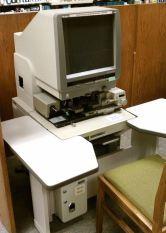
A microfiche reader; by Arbitrarily0 (Wikipedia)
Sitting here at my own desk examining obscure materials and downloading for the last fifteen months was incredibly easier and much less time consuming.
Oh, my. I couldn’t believe what I turned up.
And not just about Biddy.
It’s not just family trees
Family trees are interesting and give a hint of a person’s family life, obviously, and relations.
Many people look at the family trees and import them into their personal lines.
But the deep research serious genealogists and biographers perform involves much more than a list of names.
To fully understand a person, a researcher needs working knowledge of the times, the places and the circumstances in which an individual lives.
You have to dig.
Sometimes that digging takes hours, days, weeks or even months.
When you find a nugget, however, joy overflows.
I’ve embarrassed myself too many times in hushed libraries shouting, “Yes!” Or “Finally!”
When I did that at home, my husband might look up (he’s usually downstairs reading), but no one whispers an exasperated, “shhhh!”
Cost
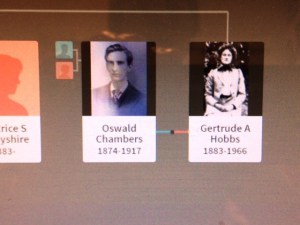
A photo from the Chambers tree
My subscriptions costs me money and I’ve reupped it three times.
For this book, it’s one of the best uses of money I’ve spent–and, of course, it’s a business expense.
Because I can gather this information here at my computer, I don’t have to leave the house.
In the past working on my family tree, I’ve traveled long distances to use libraries in Salt Lake City; Fort Wayne, Indiana; Washington, D. C; San Francisco and even at UCLA.
I lived in Hawai’i when I did research at the local family history center, Honolulu’s central library genealogy section and the DAR library in Manoa.
But even living locally, going to those libraries took time, energy and coordination with my family members and babysitters.
Here, I just sit in my office in type.
It’s wonderful
The results?
I have turned up all sorts of unusual information that appears in my book.
I’ve found answers to questions that have long dogged Chambers researchers.
Ancestry.com has also been an excellent resource to track other people involved in Biddy’s life.
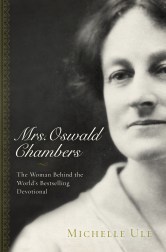
Now available for pre-order
I’ll be using the next couple blog posts to show how.
Meanwhile–what is the best tool you’ve found for research?
Tweetables
Using Ancestry.com for biography research. Click to Tweet
Ancestry.com and the researcher. Click to Tweet
It’s not just for family history: Ancestry.com Click to Tweet
The post Using Ancestry.com for Research Part I appeared first on Michelle Ule, Author.


March 21, 2017
Favorite Lines–and Why I Love Them
 We all have favorite lines–phrases–that haunt us or echo in our mind.
I’m recounting some of mine today and why I like them.
Haunting
“She shivered on the birthing bed and sobbed. She couldn’t believe her life was ending so soon.”
I read this line in a Slovenian family history someone brought to a party. It came with the photograph of the young woman who died of puerperal fever.
I’ve never forgotten it and it haunts me with the sadness of a 21 year-old new mother who didn’t get to raise her child.
Ironic
“You can’t exactly dislike a child you’ve given birth to.”
This favorite line comes from Mary Ellis’ The Woods and the Trees, where a mother voices exasperation with her grown son.
He’s embarassed her and, unbeknownst to him, made a fool of himself before his birth father.
It makes me laugh every time.
I always love my children, of course.
Creative language use
“I came home and there were shards of Lego all over my floor!”
[image error]Shards, right? (Wikipedia)
My ten year-old son uttered this terrific line after returning from school to find someone had been playing in his room.
Isn’t the word shard perfect for describing Lego pieces scattered and awaiting bare feet?
Haunting
“Stories are for eternity, when memory is erased, when there is nothing to remember except the story.”
I read this line last night in Tim O’Brien‘s The Things They Carried.
It echoes with my own experience–as long as someone remembers you, you’re never really lost.
Prize winners
“Max stepped into his private boat and waved goodbye and sailed back over a year and in and out of weeks and through a day and into the night of his very own room where he found his supper waiting for him-and it was still hot. “
What book does this very long line come from?
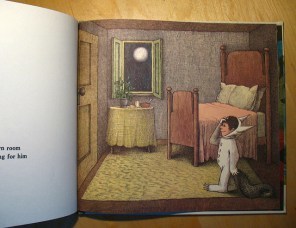 Will it help if I tell you I submitted it to World Magazine‘s “best last lines contest,” and won a prize?
(You can see my name and read the other submissions here!)
This is my favorite line from Maurice Sendak‘s Where the Wild Things Are.
Song
“You’re rich in love And You’re slow to anger Your name is great And Your heart is kind.”
This is my favorite line in a recent hymn, Bless the Lord Oh My Soul.
Who can say why I tear up at those last four words about God: “Your heart is kind.”
I just like it.
The best
“I love you.”
Does this favorite line ever get old?
I’ve been blessed to hear it, and say it, often in my life.
What are some of your favorite lines?
Tweetables
These are a few of my favorite lines! Click to Tweet
Sendak, O’Brien, Lego and God is kind: favorite lines. Click to Tweet
Poignant, funny, haunting and kind: favorite lines. Click to Tweet
The post Favorite Lines–and Why I Love Them appeared first on Michelle Ule, Author.
March 17, 2017
Following Biddy’s Steps
 Following Biddy’s steps took us to several spots in 2013 London.
I was hunting details for a novel about Oswald and Biddy Chambers.
We began the morning in Clapham Common, looking for the beautiful building where the Chambers couple lived.
The Bible Training College
I had the address of the Bible Training College Oswald and Biddy ran, so visiting it only involved checking Google maps.
I also had a photo, so I knew what I sought.
#45 Clapham Common North hid behind a wall of thick cedar trees, but was easily recognized.
Particularly since a British Heritage Blue Plaque marked the spot.

A sign marks the BTC.
I stared at the steps Oswald, Biddy, Kathleen and hundreds of students climbed daily from 1911-1915.
Then I climbed them myself. Standing in Biddy’s steps on the front porch, I surveyed what she saw every time she walked outside.
The building looked across the road toward sprawling Clapham Common, but even 100 years ago, the thicket blocked the street.
How often had she paused there, just as I did?

I paid close attention to the surroundings as we walked through Clapham Commons (the largest park in London), as well as the streets surrounding the Clapham Common Tube station Biddy must have used.
It’s been there for more than 100 years.
St. Paul’s Cathedral
From Clapham Common we walked to St. Paul’s Cathedral.
We know Biddy and Oswald visited the cathedral from time to time and it was there Oswald proposed.
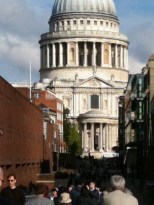
St. Paul’s cathedral
They stood before a painting which in 2013 hung just north of the altar.
“The Light of the World” by Holman Hunt has been there since 1908.
Such a curious feeling to realize, within the Chambers story, I stood in Biddy’s steps facing her future.
She returned to the cathedral on November 15, 1919, as well, to remember Oswald on the second anniversary of his death.
The neighborhood around the cathedral held poignant memories for Biddy.
The WWII London blitz changed her life when bombs fell nearby.
But I didn’t know that then.
St. Martin in the Fields
From St. Paul’s we walked to St. Martin in the Fields church facing the National Art Gallery and Trafalgar Square.
Biddy’s steps often took her there post-World War I, to hear Oswald’s brother Franklin play the organ.
We’ve always visited during a concert–held daily at noon–and we sat in the pews to hear one that stormy day in 2013.
Biddy loved to visit the National Gallery–and so do I.
Biddy’s steps we missed
In 2013, I didn’t know I’d be writing Biddy’s biography Mrs. Oswald Chambers.
Had I known, I would have visited Woolwich and Muswell Hill–places where she lived during her long life.
Fortunately, other research techniques have enabled me to walk in Biddy’s steps down those streets through the wonders of the Internet.
But I’d love to go back with a more focused itinerary another time!
Tweetables
Walking in Biddy Chambers’ footsteps. Click to Tweet
Biddy Chambers’ biographer walks in Biddy’s steps. Click to Tweet
Biddy and Oswald Chambers sites in London. Click to Tweet

If you’re interested in learning about the stories and amazing coincidences that occurred to me while writing Mrs. Oswald Chambers, consider signing up for my newsletter.
Every month in 2017, I’ll be telling the stories about God’s leading and my blessed–and astonished–reactions.
The next newsletter comes out March 18: In which an international novelist confronts me and I have a choice. You can sign up here.
The post Following Biddy’s Steps appeared first on Michelle Ule, Author.
March 14, 2017
The Good Friday Passion of Tenebrae

The Tenebrae service is our favorite service during Lent at our Lutheran church.
From the Latin for shadows or darkness, Tenebrae is an ancient service that underscores the solemnity of Jesus’s last day on earth as a man.
The solemn, sober service takes place on Good Friday.
Tenebrae services usually involve candles lit in a darkened church.
As writer Carolyn Weber recounts about Tenebrae, “those of faith will extinguish candles, rather than light them, in symbolic movement toward crucifixion.”
At our Missouri Synod Lutheran Church, the pastors wear black robes. The cross is shrouded in dense black, the altar stripped to bare wood from the Maudy Thursday service the night before. Seven lit candles sit on the altar.
The officiant reads passages of Scripture about Jesus and a hymn is sung, as one-by-one the acolyte extinguishes candles until the service ends in total darkness.
We sing the grand hymns of the faith to experience Good Friday’s melancholy emotions.
We begin with the haunting spiritual “Were You There when they crucified my Lord.”
My soul trembles as we move through a veritable “stations of the cross,” to the anguished shutting of the tomb.
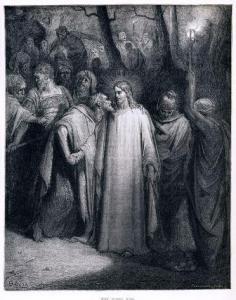
Judas’ Kiss by Dore (Wikipedia)
The readings and the music
The readings begin with Jesus’s experience at the last supper (Matthew 26:20-25), “the Shadow of betrayal.”
We sing Go to Dark Gethsemane:
“all who feel the tempter’s power, Your Redeemer’s conflict see. Watch with him one bitter hour, Turn not from his griefs away, Learn from Jesus Christ to pray.”
The acolyte snuffs out the first candle..
The lack of one candle hardly make a difference.
The Shadow of Desertion (Matthew 26:30-35) marked Peter’s vow to stay with Jesus no matter what.
“Jesus, I Will Ponder Now on Your holy passion. With your Spirit me endow For such meditation Grant that I in love and faith May the image cherish Of your suffering pain, and death That I may not perish.”
The second candle didn’t change the light either, but as the service intensified, the room felt darker, heavier, grimmer.
The Darkness of Praying Alone (Luke 22: 39-46). His disciples asleep, Jesus pleaded with his Father to take the cup away–if that was His will. “O Darkest Woe! Tears, overflow! What heavy grief we carry! God the Father’s Only Son In a grave lies buried.”
The acolyte quashes another flame.
Tenebrae goes darker
In The Shadow of Accusation (Mark 14: 43-63 ) Judas led the Roman guards to Jesus in the Garden of Gethsemane and they hauled Jesus to the rulers. It was noticeably darker in the church now as we sang a hymn like “O Dearest Jesus, What Law Have You Broken?
Another candle is extinguished.
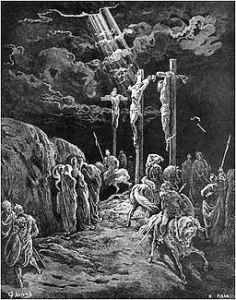
Crucifixion by Dore (Wikipedia)
The Darkness of Crucifixion (Matthew 27: 27-38) reflected on the Son of God hanging on the cross. Stricken, Smitten and Afflicted described Jesus–“see him dying on the tree.”
Another candle’s death underscores the gravity of Jesus’ death.
The Shadow of Death ( Luke 23: 44-49) told of Jesus’ anguished cry of triumphant: “it is finished,” and Bach’s music written 450 years ago underscores the agony: “ O Sacred Head, Now Wounded.
After this candle is snuffed, the sanctuary sits in near-blackness.
The Darkness of the Tomb (John 19: 38-42) ends the service by marking the moment Jesus was laid in the tomb. One last candle extinguished ends with Surely He Hath Borne Our Griefs?
The pastors carry out of the church the still lit Christ Candle from the sanctuary to symbolize the death of Christ–Jesus leaving the earth.
After the back door closes softly behind them a dramatic thud rings through the church symbolizes the stone rolled shut on Jesus’s tomb.
Our congregation sings one last song to provide a smidgen of hope: There is a Redeemer.
We’ll exit in silence, trembling from the grim majesty of the service: the Son of God laid in a tomb.
It is finished.
Sin and death reign no more.
But Easter Sunday morn is just around the corner.
Thanks be to God.
How do you experience Good Friday?
Tweetables:
What is a tenebrae service? Click to Tweet
What are the elements of a tenebrae service? Click to Tweet
Remember the sacred on Good Friday’s Tenebrae Click to Tweet

The post The Good Friday Passion of Tenebrae appeared first on Michelle Ule, Author.
March 10, 2017
On Being Biddy Chambers’ Biographer
 I’m a biographer.
Such a strange word and one I wasn’t expecting and yet, I like it.
It took me a long time, as my friend Wendy said, “to own the title biographer.”
As far as I was concerned, I was telling a story. It just happened to be about Biddy Chambers.
Circumstances surprised me into realizing it was something else.
Biographer as Expert
I was chatting with an Oswald Chambers expert one day about how Biddy compiled My Utmost for His Highest.
He’s creative and in his irrepressible way tossed out idea after idea.
I’d respond with, “well, she did this.” Or, “this is how that worked.”
Finally he stopped and said, “Wow. How do you know that?”
Momentarily confused–why didn’t he know that fact?–I stuttered out an answer.
But of course he wouldn’t know all the information I had. He wrote about My Utmost for His Highest, not about Biddy.
Until then, I hadn’t realized I had become an expert–but of course I am, because that’s what a biographer is.
What about heaven?
On All Saint’s Day, our pastor sat on the floor with the children to talk about what the day meant.
“Think about how much fun it will be to arrive in heaven–the people you’ll see.
“‘Look, over there! It’s Peter and the apostles. Is that Abraham? Let’s go talk to David about his harp.
“Heaven is a wonderful place, and you’ll get to see all sorts of people from the Bible and talk to them.”
I took his point, but also thought of other people we’ll see in heaven.
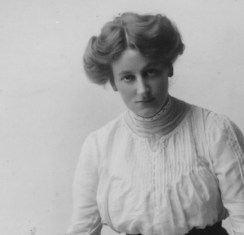
What have you written about me?
Why didn’t Lutheran Pastor Beyer include Martin Luther?
Pascal and Bach will be there; we’ll see Dietrich Bonhoeffer.
Why, even–I caught my breath– Oswald and Biddy will be there.
I confess a moment of horror. What will they say to me?
Maybe I could slip in the back and avoid them? They wouldn’t come looking for me would they?
I had never realized I’ll have to meet the person I’m writing about. What if I got something wrong?
Laughter and this biographer
When I described my misgivings about meeting the Chambers couple someday, my husband shook his head.
“Oswald will be laughing. He’ll be happy you ‘outed’ his wife. You don’t have to worry about meeting him.
“Biddy, though, probably won’t be pleased. She hid herself so well and you’ve just told the world all about her.”
It’s reassuring to think Oswald will be on my side, but I’ve wondered if any other biographers feel the same way?
Will Eric Metaxas be avoiding Dietrich Bonhoeffer and Martin Luther, or engaging them in lively conversation?
That actually made me feel better. Metaxas will be talking with and correcting his subjects.
(Fancy listening to those three chatting!)
I’ll just be asking questions like, “Did I get that right?” or “What were you thinking, Biddy?”
As long as Oswald and my husband-the-saint-(whenever he arrives), are there standing by, I’ll be fine.
Won’t I?
The title biographer becomes real to the world
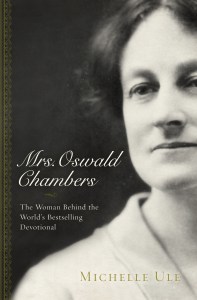
Preorder: http://bakerbookstore.com/product/810183
While everyone in my family, church, Bible study, work and circle of friends–including many of you– knows I’ve been writing a biography, I lost track of the final truth.
Mrs. Oswald Chambers will be released to the world someday–actually, on October 17, 2017.
While discussing the coming publication, my colleague Rachel asked, “When will the book be available for preorder?”
I shrugged. “I don’t know. The publisher has been so very good about everything so far (thank you, Baker Books), I expect they’ll let me know.”
“You haven’t been checking every day?”
It had never occurred to me.
She turned to the computer and opened up a webpage.
There it was–for preorder.
I blinked and widened my eyes.
I’d seen the cover–and certainly know the story. I’d ordered the photos. I’ve lived with Biddy’s face, actions and words for four years.
But there she was in black and white, with gold filigree on the side and my name beneath.
It’s an honor to be able to introduce Gertrude Annie (Biddy) Hobbs Chambers’ life story to the world.
I must be her biographer.
Tweetables
Accepting the surprising title: biographer of Mrs. Oswald Chambers. Click to Tweet
A biographer considers meetings Mrs. Oswald Chambers in heaven. Click to Tweet
Why didn’t I realize I was Mrs. Oswald Chambers’ biographer until now? Click to Tweet
I was too busy relishing the adventures God took me on while writing about Oswald and Biddy Chambers to factor in my “title.”
If you’re interested in what all those behind the stories and amazing coincidences were, consider signing up for my newsletter.
Every month in 2017, I’ll be telling the stories about God’s leading and my blessed–and astonished–reactions.
The next newsletter comes out March 18: In which an international novelist confronts me and I have a choice. You can sign up here.
The post On Being Biddy Chambers’ Biographer appeared first on Michelle Ule, Author.
March 7, 2017
Giving Up Sin for Lent
 Giving up sin for Lent sounds like a great idea, but is it possible?
No.
Romans 3:23 tells why:
“For all have sinned and fallen short of the glory of God.”
All have sinned–or fallen short of the mark of what and who God created us to be in our lives.
Jesus and temptation to sin
Pastor James Beyer spoke on Matthew 4:1-11 this week at our church, describing how Jesus dealt with sin following his 40 days in the desert.
(This is the story of how Satan tempted Jesus when he returned from his retreat. Satan taunted Jesus–“if you’re so holy and hungry, turn these stones into bread,” was the first example.)
I was struck by Pastor Beyer’s observation about Satan’s temptation:
“Satan was not tempting Jesus to do something, but he was tempting Jesus to be something God didn’t design Jesus to be.”
Pastor Beyer went on:
“The temptation was to break Jesus’ relationship with God–to turn Him away from God.
“Satan wanted Jesus to demand His own desires and purpose over His life rather than accept God’s.”
That’s about as good a definition of sin as I’ve heard in a long time.
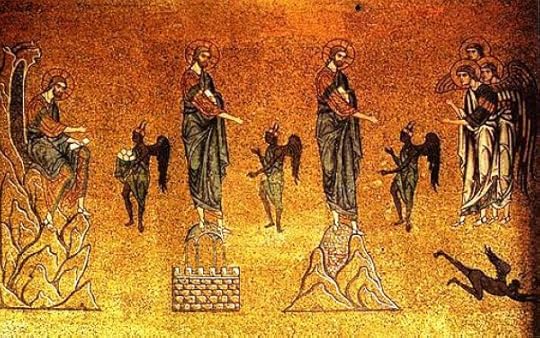
A mosaic telling the story in St. Mark’s basilica in Venice (Wikipedia)
Me and temptation to sin
I think about my personal sin a lot–because I’m a sinner and in constant need of confession.
I’ve discussed before how important the PRAY system of prayer is to me–because it reminds me to praise God and repent before asking for something.
(And then yielding my expectations to God’s will).
Pastor Beyer pointed out “temptations often encourage us to be less than what God intended us to be,” and cited the Garden of Eden story as another example.
1 Corinthians 10:13 reports:
“No temptation has overtaken you except such as is common to man; but God is faithful, who will not allow you to be tempted beyond what you are able, but with the temptation will also make the way of escape, that you may be able to bear it.”
That tells me I should not be ashamed when I’m tempted, but ask God for help in dealing with the temptation.
Which brings me to Lent.
Dealing with Temptation
In the Matthew 4 passage, Jesus had just returned from 40 intense days with God.
[image error]
Jesus tempted by Satan (James Tissot)
Jesus had been praying in the desert, fasting from food and any other distraction that would keep Him from hearing what God wanted Him to know.
His public ministry was about to begin. Jesus needed to be strengthened and prepared.
He was on a spiritual “high” when Satan encountered him.
Pastor Beyer explained:
“Jesus was famished from hunger, but full of the Holy Spirit.
“Look how quickly He responded with Scripture [to Satan’s “suggestions”].
“He was more prepared than at any other moment because of that time with God.
“Jesus was His true self, and therefore it was ‘easy’ to deflect temptations.”
Like you, I have many temptations in my life, every day.
God doesn’t judge me because I’m tempted, He watches how I deal with the temptation.
When I spend time reading the Bible and praying, it’s easier to recognize the temptation and not fall into it.
Which is why I view Lent as an opportunity to deal with some of my besetting sins.
(Besetting sins to me = things I frequently fall into sin over).
One of those temptations is a food issue. So I give up that food product for Lent.
It helps me deal with the temptation that always comes–and reminds me who I trust with my life.
Pastor Beyer, like others, suggested that Lent should not simply be about giving up something.
His recommendation, out of this sermon, was clear:
“Instead of giving up something, take on something: the identity of Jesus to be like Him.”
I want to be the person God created me to be for His purposes.
I don’t want a besetting sin or a temptation to separate me from God–whether as a result of gluttony or something else.
Jesus’ example in Matthew 4 is a great place to begin.
Tweetables
How about giving up sin for Lent? Click to Tweet
Doing or being? Satan’s temptation to Jesus. Click to Tweet
Tempting Jesus to do something God didn’t intend him to be. Click to Tweet
If you’re interested in behind the scene stories and amazing coincidences while I wrote Mrs. Oswald Chambers, consider signing up for my newsletter.
Every month in 2017, I’m telling the stories about God’s surprises and my astonished reactions.
The next newsletter comes out March 18: In which an international novelist confronts me and I have a choice. You can sign up here.
The post Giving Up Sin for Lent appeared first on Michelle Ule, Author.
March 3, 2017
An Eclectic Book Reader: Oswald Chambers
 Oswald Chambers was an eclectic book reader, in addition to being a noted teacher and writer.
He loved the Bible, poetry, novels, and theology–probably in that order.
His many letters and talks are littered with references to poetry and books he read.
Baffled to Fight Better, the only book listing him as author that Chambers saw, took its title from a poem by Robert Browning: Asolando.
Biddy used his favorite poets to title other books published after his death. (With two exceptions, books listing Oswald as author all were published after his death).
What should Christians read?
Obviously, Oswald revered the Bible and studied it every day. But he thought a well-rounded thinker needed to read other material.
When friend John Skidmore complained about his inability to express spiritual truth he knew in his heart, he went to Oswald.
Oswald asked him what he read.
When the man explained he stuck to the Bible and associated texts, Oswald shook his head.
“The trouble is you have allowed part of your brain to stagnate for want of use.”
Oswald then provided a list of more than 50 books covering philosophical, psychological, theological and other types of books devoted to current thought.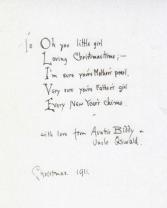
Later, he wrote John:
“My strong advice to you is to soak, soak, soak in philosophy . . . It is ignorance of these subjects on the part of ministers and workers that has brought out evangelical theology to such a sorry plight.”
The need to know more was apparent when his Bible Training College students and those he taught in Egypt went out into the world.
Oswald relished honest debate and discussion with agnostics, atheists, lazy Christians and the like.
Following a March 2017 class, he described the satisfaction of being quizzed by three Australian soldiers:
“These rough ‘old dogs’ were acquainted intimately with Calvin’s Institute, Pascal, Coleridge, Hugh Miller, Thomas Guthrie, Thomas Boston and the Bible.
“Altogether it was the most delightful question class I have had.”
What kind of reader and book lover was Oswald?

An inscription for Biddy
He always traveled with a box of books–he generally read them all on a 10-day trip to America.
Oswald described the delight of opening one of his boxes in 1907:
“My books! I cannot tell you what they are to me—silent, wealthy, loyal lovers. To look at them, to handle them, and to re-read them!
“I do thank God for my books with every fibre of my being. Friends that are ever true and ever your own. Why, I could have almost cried for excess of joy when I got hold of them again.
“I see them all just at my elbow now—Plato, Wordsworth, Myers, Bradley, Halyburton, St. Augustine, Browning, Tennyson, Amiel, etc. I know them, I wish you could see how they look at me, a quiet calm look of certain acquaintance.”
While on a trip to Niagara falls, he wrote to a friend:
“If you have never read Victor Hugo’s Toiler of the Sea, read it. It gives you something akin to the impressions you have when face to face with this power of nature.”
The Chambers family library contained copies of Shakespeare, Robert Louis Stevenson, George MacDonald, Ibsen and even Rider Haggard:
“I have read two books the last few days, very different but both well worth referring to. One is Marmaduke Pickthall‘s Children of the Nile. Pickthall is to my mind the best and most unpretentious analyser of this people.
“The other is Rider Haggard’s The Brethren, it is really a noble idealization of supreme emotions.”
Several days later Oswald laughed his way through J. M. Barrie‘s Little Minister.
Biblical commentary reader
Oswald Chambers spent the last years of his life at Zeitoun’s YMCA camp outside of Egypt.
He relished living in the Bible lands he knew so well from the Scriptures.
(The alleged place where Mary, Joseph and Jesus stopped while fleeing Herod to Egypt was not far away).
Friends sent him the books he needed such as Dr. George Adam Smith‘s Geography of the Holy Land, Dean Inge’s Truth and Falsehood, Dr. Glover’s The Jesus of History and Dr. Orchard’s The Outlook for Religion.
Most evenings, Oswald and Biddy sat around the table following a late dinner to talk about books, God, and life.
Gift Books for Readers
Biddy and Oswald generally exchanged books for gifts.
One of the few treasures their daughter Kathleen had from her father was a book given to her on her second birthday.
While he inscribed other gifts, The Life of Jesus of Nazareth is the only one he wrote in for her:
“To our flower of God on her second birthday, May 24, 1915, from Daddy and Mummy.”
Biddy gave Kathleen a children’s copy of The Pilgrim’s Progress for her fifth birthday.
How did Oswald become an author?
Because Biddy chose to honor his words, taken down in shorthand for seven years, and turn them into books.
Oswald would have approved. As his mentor Reader Harris stated:
“The most lasting of all preaching is with the pen.”
(All the quotations come from Chambers, G. (1933). Oswald Chambers : His life and work London: Simpkins Marshall.)
Tweetables
What kind of books did Oswald Chambers recommend? Click to Tweet
Oswald Chambers reader: Rider Haggard, Browning, Ibsen and others. Click to Tweet
Those interested in Oswald and Biddy Chambers might enjoy short monthly stories about God’s leading in writing Mrs. Oswald Chambers (to be released in October 2017 by Baker Books).
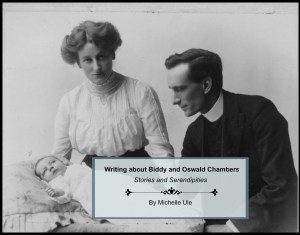
Sign up for the newsletter at: http://eepurl.com/2l7F9
March’s story:“In which an international novelist confronts me and I have a choice.”
Sign up for my newsletter here.
The post An Eclectic Book Reader: Oswald Chambers appeared first on Michelle Ule, Author.
February 28, 2017
What Belongs in a Modern Hope Chest?
 The concept of a modern hope chest occurred to us 20 years ago.
You know what a hope chest is, don’t you? Here’s a definition:
“A hope chest, also called dowry chest, cedar chest or glory box is a chest used to collect items such as clothing and household linen, by unmarried young women in anticipation of married life.”
Hope chests, traditionally, were used to store up items that a woman would need someday for her home. 200 years ago, it would be filled with linens, embroidered cloths, dish towels, pillows, maybe even woven blankets–usually something a woman or the women in her family made specifically for when she married.
Today, a traditional hope chest–for men or women–really isn’t as necessary as it once was. Now, anyone can visit a local store and pick up whatever they need for daily life, at least in the United States.
Indeed, wedding registries take the role once filled by relatives, friends and hardworking folks focused on building a household.
But my husband and I recognized long ago that possessions for a “hope chest,” were not so important.
In the 21st century, people need skills.
Modern Hope Chest= Practical tools and necessary skills
At high school graduation, we gave them rudimentary tool chests–our daughter’s was pink. (Our niece refers to hers as “Barbie tools.”)
They contained a simple hammer, screwdrivers, jeweler’s screwdrivers (for their computers), a tape measure and other items they might need in a dorm room or apartment.
When the children graduated from college or married, my husband purchased a “real” tool chest–gray metal– filled with saws, wrenches, electric drills and other items needed in the “real” world.
We also make copies of all their important papers, including their passport and birth certificate, and put them into a binder. (We keep the copies).
%2C_cassone%2C_1450-90_ca..JPG)
This is an Italian version of a hope chest, a cassone, from the 15th century. It’s been a popular idea for a long time!
But in the knowledge-based United States, we think other things are needed in a modern hope chest.My husband required the children to do their taxes starting in high school.
They learned how to change a tire on the car, as well as check the fluids and air pressure (I may have taught them some of these skills as cub scouts).
Given free reign in the kitchen in high school–sons and daughter alike–they became pretty good cooks.
Laundry, yard work and managing money are easy for them.
(Notice I did not say checkbook. They don’t really use a checkbook except in extreme situations).
Other life skills
As a former budget counselor, I taught them the difference between a need and a want.
They learned how to question whether something was a good deal or a bad deal.
On every used car they bought (they only bought used cars), my husband demonstrated how to tell if the engine was well taken care of or not. (Check the exhaust pipe).
We taught them to value members of the opposite sex–particularly in the dating years–and how to be courteous to old and young alike.
They all babysat at one time or another–sometimes each other.
We’ve met m any young people who don’t have these simple skills.
They don’t know how to hammer a nail, don’t understand how to do their taxes, would never think of buying a used car and certainly don’t know how to paint a room.
We all need such skills.
Even I, a disaster waiting to happen with tools, know how to find a wall stud, turn off the water valve on the toilet and can even tighten the handles on my pots and pans.
I didn’t have the tools to do those type of household chores before I got married.
Therefore, my husband’s tool box served as my hope chest, too.
What types of skills and tools do we all need for our hope chests?
Tweetables
Items all folks need for their adult hope chests. Click to Tweet
What belongs in a modern hope chest? Click to Tweet
Are hope chests outdated? How about tool boxes? Click to Tweet
The post What Belongs in a Modern Hope Chest? appeared first on Michelle Ule, Author.
February 24, 2017
Oswald Chambers, Job and Baffled to Fight Better
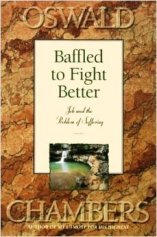
 Baffled to Fight Better, comments on the Book of Job, is one of the few books Oswald Chambers worked on in his lifetime.
Even at that, Baffled to Fight Better did not appear in book form until after his death.
The book was based on talks Oswald gave at Zeitoun YMCA camp in Egypt during the early months of 1917.
Biddy, as usual, took down everything in her shorthand and then edited the manuscript into a readable form.
Oswald discussed the format with her, read through the galleys, but beyond that, left everything to her.
Or, as he wrote to a friend:
“[I] hope to send you a book on Job soon (at least Biddy does, I take no more responsibility after having spoken my mind).”
Why the book of Job?
By early 1917, World War I had battled on for more than two years.
The numbers of dead boggle the mind–millions.
Many of the ANZAC troops who trained next door to the Zeitoun YMCA camp would fight in either the miserable Sinai desert against the Turks, or ship overseas to the trenches of France.
They all knew it.
In writing about this time, memoirist Macy Halford (My Utmost: A Devotional Memoir) recounted Oswald’s challenging thoughts on the war, God and the men he loved: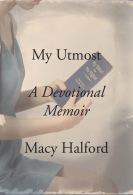
“God, Oswald said in these lectures, was a God of order and morality but also of ‘permissive will,: He permitted His children to suffer.
God was not synonymous with His blessings, and, though He was good, He didn’t always spare the faithful.”
Halford’s explaination is a tough message and one I learned–the hard way–many years ago.
It sobered me and took me, always, to a favorite verse out of Job 2:10 where Job’s wife challenges him to curse God and die after the tragedies in their family.
Job replied:
“You speak as one of the [spiritually] foolish women speaks [ignorant and oblivious to God’s will]. Shall we indeed accept [only] good from God and not [also] accept adversity and disaster?” (Amplified Bible)
Oswald’s comments reflect hard-line Christianity, but it came from the mouth of a man who knew and determined to love His God–come what may.
True of Job; true of Oswald Chambers; and more than once, true of me.
I still didn’t like it.
Why such a message?
 If you are facing the possibility of death or dismemberment–and most World War I soldiers were–what sort of message would you want to hear?
Halford observed:
“What did this mean for the soldiers? It meant first, Oswald said, that they didn’t need to be blindly positive or optimistic about the situation they found themselves in.
“They didn’t need to apologize or argue for God, or accept the platitudes forced upon them by “priggish” ministers.”
She went on to explain the thinking man’s reaction to tragedy would always be despair, but “God never blames a man for despair,” said Oswald.
Instead, Oswald pointed back to Job who voiced honest emotion, “I will complain in the bitterness of my soul.”
Halford quoted Oswald again:
“Nothing is taught in the Book of Job, but there is a deep, measured sense of Someone understanding.
She knew, as do I and hopefully you, that it was God and grace who stood with Job, Oswald, and all the soldiers who embraced Oswald’s teachings at Zeitoun.
“To Job, who’d lived in the world of the Old Testament, God had offered reparations; to those living in the New, He offered redemption.
“The Cross.”
Job ultimately received riches and land returned, plus more children–though I always think that’s a bittersweet ending.
On this side of the Cross, we receive grace and Heaven.
What does it mean?
For the soldiers who died in the Great War, for Oswald, for Job, for me and for you, it means God is always there, no matter the circumstances in which we find ourselves.
It doesn’t mean we’ll be spared pain, horror or death, but simply we will not be alone nor forsaken.
The nature of life means everyone will die someday.
The meaning of Job and the nature of God as described in Baffled to Fight Better, means everyone has an opportunity to not die alone nor forsaken.
I know this because of men not afraid to look at their God and circumstances and choose to believe.
Thanks be to God.
Tweetables
God, Job, Oswald Chambers and facing horror. Click to Tweet
Baffled to Fight Better–how and why? Click to Tweet
Talks and a book to prepare men for battle and eternity in WWI. Click to Tweet
The post Oswald Chambers, Job and Baffled to Fight Better appeared first on Michelle Ule, Author.
February 21, 2017
What Motivated Job’s Friends?

Job’s friends is often a derogatory term for people whose attempts to console make a sufferer feel worse.
I’ve been one, I’ve had Job’s friends in my life and I’ve observed them frequently in the wild.
They mean well but, like so many in our American generation, they don’t really know how to comfort well.
I suspect it’s because they’re afraid.
What do Job’s friends fear?
A lost of control.
Who can blame them?
Fear
Fear visits all of us in many guises.
As a noun: “an unpleasant emotion caused by the belief that someone or something is dangerous, likely to cause pain, or a threat.”
As a verb: “be afraid of (someone or something) as likely to be dangerous, painful, or threatening.”
But Job was the one suffering, what was their issue?
In a sense, Eliphaz the Temanite, Bildad the Shuhite and Zophar the Naamathite were possibly superstitious–but not deliberately.
If Job’s friends could figure out what Job had done to cause God to treat him so poorly, they could avoid doing the same thing.
[image error]
Job arguing with his friends about God and suffering By Gerard Seghers. (Wikipedia)
Pretty simple–and isn’t that what most stumbling consolers seem to do?
Even though Job’s exemplary behavior was famous throughout the region, they were convinced he must be hiding a secret sin for which God was punishing him in this over-the-top way.
They knew Job as a godly man–what could he have done to make God treat him so?
Trust
Job’s friends did not know what God was up to in the torments that befell Job. Neither did he.
Their view of God did not match Job’s–they knew he had done something for such catastrophes to fall upon him.
Job, on the other hand, knew his God better, even going so far to announce, “though He slay me, yet I will praise Him.” (Job 13: 15)
He did not know why his family had to suffer such horrors, nor why he had so many sores.
Job’s friends did not comfort; his wife suggested he curse God and die.
Job refused to back away from his conviction God’s hand was on his life and something Job did not understand was at work.
He, of course, was correct.
(God and Satan made a deal described in the opening chapters of the book).
Job’s friends wanted to calm their fears by controlling God.
How often are our behaviors and attitudes toward God motivated by fear?
God shows up
When God arrived after 36 chapters of mourning and debate, He pointed out He:

The Trials of Job by Leonaert Bramer -(Wikipedia)
controlled the universe,fed the birds,
put the oceans in their place,
originated the concept of “greenhouse effect,”
and He didn’t need to be scolded by Job and his friends for His decisions.
God chastised Job’s friends for their poor behavior and challenged Job on his attitude, but in the end rewarded Job with a double portion of everything God had allowed Satan to take away.
(We don’t hear in this book what happens to Satan, but those who’ve read through Revelations know God wins).
While Job received back all his possession and more, his ten children were not raised from the dead and that’s why I think this book has a bittersweet ending.
Ten more children were born to Job and his wife; ten children were in heaven with God.
Job and his friend learned the hard way, they could not control God–no matter what fear tactic they used.
What inaccurate understandings about God has fear driven you to presume?
Tweetables:
What is a Job’s comforter and how do they work? Click to tweet.
Fear, control, what else were Job’s friends thinking? Click to tweet.
How to insult God from Job’s friends. Click to tweet.
The post What Motivated Job’s Friends? appeared first on Michelle Ule, Author.



![[image error]](http://commons.wikipedia.org/wiki/File:Lego_Color_Bricks.jpg)
![[image error]](http://commons.wikipedia.org/wiki/File:Seghersjob.jpg)