Michelle Ule's Blog, page 52
June 2, 2017
The Drama of High-Rez Photos
 High-rez photos are “high resolution photos.”
High resolution photos are needed for sharpness of image when printing.
It’s based on the number of pixels–the higher the number, the more dense the photo, the clearer it will print.
While writing Mrs. Oswald Chambers, I discovered how important they are–especially for research.
Low resolution
While researching Oswald and Biddy Chambers, I found a superb site for photos at the Cadbury Research Library in Birmingham, England.
There, a collection of World War I photos from the YMCA‘s work in Egypt provided plenty of sleuthing.
An Australian, Peter Wenham, found my blog posts about Oswald Chambers and informed me of the site.
Wenham also sent me photos of Oswald Chambers’ burial.
We’d not seen them before and I stared in amazement, trying to make out who was in the photo.
He pointed out his grandfather -which is how he discovered the picture–but no one else was clear to me.
Here’s the photo from Cadbury Research Library’s digital file on line:

The low-rez photo taken off the Cadbury Research Library, Special Collections, University of Birmingham (UK) website
Low-rez and the sepia color make it unclear.
I blew it up to see if I could recognize anyone and made a few guesses, but it just wasn’t as clear as my eyes needed.
Wenham pointed out his grandfather, and I saw him, but wasn’t sure about anyone else’s identity.
High-rez instead
My publishing house, Baker Books, required all photos for Mrs. Oswald Chambers to be high rez.
I contacted the YMCA-UK for permission to use their photo and then sent that permission to the Cadbury Research Library.
A few days later, on November 16, 2016–or exactly 99 years after the photo was taken–I received my copy.
Oh, my!
Here it is:

(Cadbury Library)
WordPress won’t let me post a photo with such high resolution.
Here are details I could see in high-rez:

(Cadbury Library)
The man looking at the camera is Wenham’s grandfather George Shapley, a YMCA chaplain newly arrived in Cairo during the war.
In the background on the right, you can see the officers who served as the 100-man honor guard that escorted the artillery caisson carrying Chambers’ body.
They are leaning on their rifles–which, of course, will be fired in salute at the end of the service.
In the next photo detail, you can see the pall bearers (in uniform) who shouldered Chambers’ coffin into the cemetery for burial.
I believe that is missionary Samuel Zwemer on the right with his back to the camera and not in uniform. He conducted the service.

The service (Cadbury Library)
And, the last detail that jumped out at me.
Where was Biddy Chambers?
Draped in black and standing beside Lord Radstock, the senior British YMCA official in Cairo at the time.

Biddy standing beside Lord Radstock (Cadbury Library)
Daughter Kathleen is not visible in this photo, but would have been standing beside her mother.
The woman in the white dress beside Biddy probably was Eva Spink–who accompanied her on a trip to grieve immediately following the service.
This high-rez photo will appear in Mrs. Oswald Chambers–along with 39 others.
Tweetables
High-rez photos of Oswald Chambers’ burial reveal guests. Click to Tweet
The importance of high-rez photos in biography. Click to Tweet
The post The Drama of High-Rez Photos appeared first on Michelle Ule, Author.


May 30, 2017
How Composer David Voss Composes
We had a long conversation about how he composed it and I saw parallels with the writing life.
So, that’s what this post is about–composing and the writing life.
It also will introduce you to a fine composer and his music.
Who is Composer David Voss?

Original Photo by Elise Aileen Photography
A 23 year-old pianist out of Santa Rosa, California, David studied composition and music at Lawrence University in Wisconsin.
(Yes, he was cold).
He’s about to begin a master’s program in composition at the State University New York, at Stony Brook.
I’ve watched him grow up, have played and sung with him for years. He’s an excellent pianist and accompanist–plus a great deal of fun.
How David began writing an Easter Cantata
This is how he did it:
“My cantata The Resurrection Promise came about as a result of a generous commission from a friend of the family. They requested I compose an Easter cantata for their church choir, giving a few requests regarding length, instrumentation, difficulty level, and musical style.
“While I had never really considered writing a cantata prior to this commission, I set to work on the project, using my past experiences writing for vocalists and organ to guide my writing.”
I’ve published six novels and written a biography. I understand planning a project, but how did he put together both lyrics and music?
It started with the lyrics.
“I thought a lot about the form I wanted, particularly in terms of the lyrical, textual content of the piece. Since I didn’t want to summarize the events of Holy Week , I chose to focus on Jesus’ resurrection, with references to his ascension.
“I divided my cantata into three movements, the first one containing Old Testament prophecies of Jesus’ coming and salvation, the middle movement containing Jesus’ own words about his death and resurrection as well as the events of Easter morning, and the final movement focusing on the promise of resurrection for all who believe in Christ.
“Once I settled on this form, I was able to approach every other aspect of the creative process.”
I begin a writing project the same way–figuring how how long it should be and dividing the ideas into chapters.
See how writing and composing are similar?
Which came first, lyrics or music?
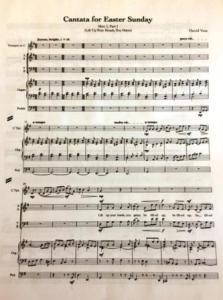 Since composing is taking an additional step to writing–adding music to the words!–I couldn’t imagine how this worked. David had personal parameters which helped.
“The words came first. Once I settled on an overarching form and structure, I looked for passages that fit various sections. Also, being a sacred work, I believed the words were of the utmost importance and solidified the text before I composed a single note.”
He honored, too, the meaning of the words.
“I decided to set solely biblical texts. Having no experience writing about Christianity or theology, I didn’t want to write my own text and wind up saying something contrary to Christian teaching or doctrine.
David combed through hundreds of verses online, using either the English Standard Version (ESV) or the New International Version (NIV). He sought verses that fit his “storyline,” but also would work with the music he planned.
Since he also incorporated well-known hymns into his cantata, he adjusted some lines.
“I took some writings by Martin Luther and Saint Augustine and turned them into rhyming phrases, more suitable for the hymn melodies.”
Technical writing issues cropped up I never would have suspected:
“Since the Bible isn’t written like a poem, it’s often difficult to find a regular meter and finding a rhyme is almost as miraculous as some of the miracles the Bible contains!
“As a result, I had to use the natural stresses of the English language to guide my musical setting, trying to stick to a regular metrical meter whenever possible.”
Finally, the music!
Once Composer David Voss established his text, he could turn to his real talent: writing the music.
“Most of the music that I used in my cantata was original. I wrote some music specifically for the cantata, whereas other pieces were based on musical motifs and ideas I wrote years ago..
“As a composer, you often come up with a snippet of music you like but it doesn’t fit with whatever you’re writing at the moment.
“This cantata allowed me to go back in “the vault” and use some of my older ideas.”
Repurposing other music
How did he come up with such diversity of sound and music in only six months of writing?
He adapted music he didn’t write, but which Easter traditions recognize.
“Two of the pieces in my cantata were actually based on preexisting melodies. The second part’s melody is actually an Eastern Orthodox chant often sung in Orthodox Easter services. Other portions are derived from an 18th century American hymn in the Sacred Harp singing tradition.
“I wanted to bring in other Christian musical traditions, celebrating the diversity of our faith and bringing new sounds to my work.”
How did Composer David Voss orchestrate the music from his keyboard?
“I was familiar with the [particular] church’s music program and knew what instruments to write for.
“I couldn’t write for a small orchestra like Bach does in his cantatas, so I focused on what I knew would be possible. A choir and an organ were obviously mandatory.
“From there, I included limited handbell parts, writing them so choir members could sing and play the handbell parts without too much difficulty,. I included a trumpet part, which seemed appropriate for Easter. I wanted to keep the instrumentation small so it would be manageable easier to program for other churches.”

He used the music notation software Sibelius to create a professional and easily legible score of the work.
“I wrote most of the music down on paper as I went along, using Sibelius closer to the end of the process and inputting what I’d written into that software.”
Influences?
I asked if Handel’s Messiah or Bach’s cantatas influenced his work.
“To write a cantata without listening to Bach, the master of the form, would be a tragic oversight! I went straight to Bach!”
He listened to Bach cantatas 140 and 150, as well as more recent sacred works like Pepper Chopin’s, Come Walk With Me and Dan Forrest’s Requiem for the Living.
“With this context of old and new, I was able to base my work within the long cantata tradition while seeing how contemporary composers worked within the form.
David noted Handel’s Messiah is five times as long as his cantata as well as being an oratorio. He didn’t compare himself to the classic Easter work, except for one section.
“I found myself very much in Handel’s shadow while working with Job 19:25-27: “I know that my redeemer lives…”
“Nearly 300 years before me, Handel set these words in his Messiah, so it was difficult to get his music out of my head when working with that particular text.
“I think I managed it.”
We’ve read through David’s cantata. It’s wonderful–even though it hasn’t been performed or recorded . . . yet!
Tweetables
How a young composer wrote an Easter cantata Click to Tweet
Which came first: the lyrics or music? An Easter cantata. Click to Tweet
Sacred Harp, Handel and Jesus influence an Easter cantata. Click to Tweet
Composer David Voss doesn’t have samples of the cantata, but here’s a lengthy Youtube video of his senior recital at Lawrence University.
The post How Composer David Voss Composes appeared first on Michelle Ule, Author.
May 26, 2017
Happy Wedding Day, Oswald and Biddy!
 Oswald and Biddy Chambers’ celebrated their wedding on May 25, 1910.
A small gathering met at Walford Green Memorial Wesleyan Methodist Church in Eltham, for the nuptials of Miss Gertrude Annie Hobbs and Mr. Oswald Chambers.
An almost ideal day, the weather provided bright and clear skies, a cooling breeze from the north and a high of 62 degrees.
Guest included the families of both Mr and the new Mrs. Chambers.
The bride
Gertrude Annie Hobbs, the 27 year-old daughter of the late Henry Hobbs, gas clerk, and his relic Mrs. Emily Hobbs, was escorted down the aisle by her brother, Herbert Hobbs.
She was attended by her sister, Edith Mary Hobbs of London, and the sister of her new husband, Miss Gertrude Chambers of Dulwich.

May 25, 1910: Percy Lockhart, Edith Hobbs, Gertrude Chambers, Herbert Hobbs, OC, Biddy and Doris in front.
In addition, her new husband’s niece, Doris Chambers, served as flower girl.
The new Mrs. Chambers carried a large bouquet of sweet-smelling roses.
She wore a white high necked gown with lace yoke.
Miss Hobbs and Miss Chambers wore pleated matching dresses and black hats with feathers.
Mistress Doris Chambers wore a white dress like bride’s and a white hat that tied under her chin.
The couple were married at Walford Green Memorial Wesleyan Methodist Church because the bride’s home church, Eltham Park Baptist Church is not yet licensed to hold weddings.
The Reverend Arthur Chambers of Eltham Park Baptist Church, the new Mrs. Chambers’ pastor and brother to the groom, performed the ceremony.
A graduate of the Pittman Stenography course, Miss Hobbs grew up in Woolwich and is a stenographer in London.
The groom
Mr. Chambers, a 36 year-old lecturer for the League of Prayer, is a native of Scotland.
The son of the Reverend Clarence Chambers and his wife Hannah, Mr. Chambers was attended by his League of Prayer friend Percy Lockhart of Dunstable, and his new brother-in-law Herbert Hobbs of London.
Wearing the white collar suitable for his position as a noted Bible teacher, Mr. Chambers plans to open a Bible Training College in the future.
His wedding groomsmen wore cut-away morning suits as is customary.
He is a graduate of London’s National Art Training School with an Art Master’s Certificate and attended the University of Edinburgh, as well as Dunoon College (Scotland).

RMS Coronia (Wikipedia Commons)
Honeymoon
Following an outdoor garden reception at Reverend Arthur Chamber’s parsonage, the couple left for Liverpool. They will set sail next week on the RMS Coronia for New York City.
The new Mr. and Mrs. Chambers plan to spend the summer traveling up and down the American sea board attending camp meetings, where Mr. Chambers will speak.
All their friends wish the newly married couple God’s richest blessings for a happy life.
Tweetables
What was the Biddy and Oswald Chambers wedding like? Click to Tweet
May 25, 1910: a happy wedding day for Mr. and Mrs. Oswald Chambers. Click to Tweet
The post Happy Wedding Day, Oswald and Biddy! appeared first on Michelle Ule, Author.
May 23, 2017
Kali, the Feisty Cat: an Elegy
 We had to put down our feisty cat recently.
Kali was 21.5 years old, a feral native of O’ahu.
She and I had a love-hate relationship. Everyone else in the family loved her.
The only cat our daughter every knew, the whip-thin, yowling tortoiseshell Kali survived and reinvented herself at least four times.
Hawai’i
I chose her out of a litter box at the Honolulu Humane Society.
As my family liked to point out, I couldn’t complain about not getting a kitten because I selected a “teenage” cat.
Owing to the animal quarantine issues then in place, we’d had to leave behind our terrific 16 year-old cat, Cleo (with friends). We’d been petless for more than two years.
The children were excited.
Kali–rhymes with “pali” the Hawai’ian word for cliffs– fit right in. Confident, proud, efficient and oblivious to anyone’s feelings, she soon captured our attention.
She climbed palm trees, escaped marauding moongooses (I know, but the dictionary says so), walked on the roof and slept with one child or another.
Her feisty personality became obvious and this cat prefered to vex me.
Other people could feed her, why did she constantly yowl at me?
Interlude–or a summer in Los Angeles

Kali on the move–always
When my husband retired from the Navy, we returned to the mainland where we spent the summer traveling.
Kali stayed with my brother and his family.
Cowed by the trauma of riding in the luggage hold of an airplane, she behaved in a reasonable manner that summer. At least they never complained–but maybe they never saw her?
A small town in northern California
We bought a house surrounded by acreage in northern California and Kali was in her element.
She hunted small rodents in the yard, avoided wild turkeys and quickly learned to climb to the rooftop to escape our new dog.
One torturous night when I had a 4 am wake up call the next morning, she slipped through the open door with a bird she’d found somewhere.
I woke, heart racing, to squawking and thumping.
Finally, I dragged Kali out from under the bed and took her to my husband working late on the computer.
He locked her in the garage, retrieved the bird and set it free.
An hour later the two returned, thumping, squawking and chasing through our bedroom.
My husband apologized and locked Kali in the bathroom–where she yowled.
It was a tough drive to San Francisco the next morning.
Kali also developed an uncanny knack for finding–under her paw, can you imagine?–the hamster, Phil, every time he escaped.
A city in northern California
After four years in the wilds, we returned to suburbia.

The only cat my daughter ever had.
Kali adapted with the blink of a yellow eye.
More birds to catch–these of the plump and stupid kind–raccoons to avoid and a picket fence to travel.
Neighborhood cats threatened, squirrels chirruped from the trees and then we got a Gordon Setter who liked nothing better than to point her out.
(My husband always disappointed the dog because he never shot the cat).
She didn’t climb on that high roof much, but she did get sealed into the wall when we remodeled the bathroom.
(When the builder stopped by that night, we asked, “how do get our cat out of the wall?”
(He laughed, until we took him to the bathroom and he heard the crying. A man seldom without words, Jim’s jaw dropped.
(Our daughter coaxed her out from under the house–which was how she had gotten in).
Kali put up–grudgingly–when our son’s cat came to stay for nine months. Shadow remained an indoor cat locked in a room while Kali roamed.
One son often woke in the night to find Kali perched beside hamster Phil III’s cage, keeping watch, just in case.
(Phil III disappeared one night, never to be seen again).
The children all peeled away to college from that house and Kali was stuck patrolling for a comfortable bed to share.
She often ended up with my husband and me. He loved having her.
That’s because Kali always wanted to sleep on my feet, next to my pillow, in my face, or across my chest.
I didn’t like it and regularly shoved her off the bed.
The final house
One summer all the children and grandchildren but a handful returned–along with Shadow the other cat–to live.

It helped the dog was blind in this photo.
Kali gratefully escaped with us to the new house.
Here she sat in the sun, put up with obnoxious blue jays who liked to pick on her, and guarded the catnip from pirating neighbor cats.
Our veterinarian niece advised special food for her delicate stomach as she ended her teens.
While picking up that expensive food, I purchased a special “aged cat” food to help her joints.
Kali liked the food designed for “elderly cats over 12 years,” and soon showed signs of friskiness once more.
I’d hear the blue jays going wild outside, dive bombing the feisty cat.
(It finally occurred to me they probably had a nearby nest).
One day, however, the cries became more hysterical than ever.
A muttering Kali ran through the open door and up the stairs.
She surprised me–I didn’t think she could move that fast anymore.
But above my head I heard a thump, a smash, and screaming blue jays at the windows.
When I followed the noise, I found a gummed-to-death blue jay beside my side of the bed.
I didn’t know to be proud or horrified; the twenty-year old Kali had successfully hunted once more.
Why do pets die?
Kali reached her end a few weeks ago, and I admit, I cried.
She was one of ten aged pets my friends and I have lost in the last three months.

Kali loved beds–and getting down from them!
We all cried and mourned those companions.
Perhaps having a pet with a much shorter life gives us perspective on our own lives.
Have I lived the life I’ve been given to the fullest?
Our feisty cat flew over an ocean and moved from house to house.
Kali loved her kids fiercely, and in recent months wanted nothing more than to sit beside one of her boys and watch him work on his laptop.
She’d often lounge on his lap and watch the cursor move.
A pet who dies prepares all of us for death–that is especially true for our children.
The sadness a child experiences losing a pet means tears and questions, but it helps them process life.
Talking about our cat, our dogs, our hamsters, prepares us for the big conversations that will inevitably come.
That’s important.
Rest in peace, oh feisty Kali.
I may have complained about you–just as you yowled about me–but I always admired your independent spirit.
You loved my family well. And we–all of us–loved you, too.
Thank you.
Tweetables
The death of a feisty 21 year-old cat. Click to Tweet
Why do pets die before us? Click to Tweet
The post Kali, the Feisty Cat: an Elegy appeared first on Michelle Ule, Author.
May 19, 2017
The Phone Book–Ancestry Part 5
Ancestry.com
I just spent a Friday night turning the cyber-pages of the London phone book. It broke open a mystery I’ve been hunting for 18 months.
 Amazing.
Tedious.
Valuable.
A short diversion to talk about names
Listen, if like several of my ancestors, you marry a man named Smith (or are a Smith) and you elect to have children, watch the names.
I don’t care if, like my mother-in-law, your name is Mary. Please name your daughter something unusual like Hepzibah and Zipporah.
Name your sons Ashram or Ezekiel.
Just NOT Mary or John, particularly if you are John Smith III.
It will drive your genealogist descendants crazy!
(Our lines stop at several John Smiths married to Mary–on both my side of the family tree and my husband’s).
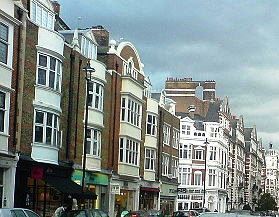
Not the actual address, but a fair likeness. (By Xakaxunknownx at Wikipedia)
The phone book hunt
I sought a woman with a common name, Mary Riley.
She never married.
I’ve tried every detail I had about her, few, but nothing turned up anything in Ancestry I could build a tree upon.
But I had her address and because her friends used it too (coming and going through immigration), I knew it never changed.
Tonight the light bulb went on. What if I checked the phone book?
By matching her common name with her address, I might be able to trace her through the years until I could make an educated guess at when she died.
From there, I could check the probate records.
It was worth a try on a rainy Friday night while my husband watched a James Bond movie.
I’m not sure if it was easier she referred to herself as “Miss Riley,” but after I found her in the London phone book for 1931, 1945 and 1948, I switched to “Miss Riley.”
By double checking the name against the address, I followed her right through time all the way up until 1964.
Back to Google and now JSTOR!
I then tried Google with the name and address.
A curious item turned up through JSTOR–which stands for “Journal Storage,” a digital powerhouse library for academic journals.
Since I’m not attached to a university, I don’t have personal access via my computer to JSTOR. I’d have to visit the local university library to read the article.
I was able to read enough of what was in it to see a new first name.
Fortunately, Mary’s parents gave one child a more unique name: Lottie Emily.
I paced, frustrated my search might be delayed. On a whim, I posted my request on Facebook and to my surprise, I got an answer!
My high school Physics lab partner works at USC. He looked it up and sent me the article.
Eureka! Thanks, Lance Hill.
It explained a few interesting points.
One more try with Google and I turned up an obscure family history tree.
It had both Mary’s and Lottie’s name, with appropriate birth dates
Ancestry’s Search Engine
Back at Ancestry with a few more names, several birth years and now a father and mother turned up: William and Rose.
I had her family and Mary’s middle name.
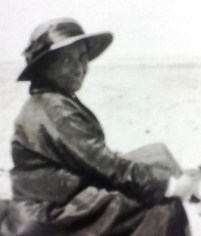
Mary Riley in Egypt circa 1916 (Wheaton College Special Collections)
The less common middle name enabled me to follow her through several rounds of census records.
Eventually I learned her death date and read the probate report.
A genealogist knows, however, the story is often found in the “collateral” family members.
Mary had many siblings and by tracing their census, death and probate records a fuller picture arose.
As a result, I have a better idea of where she came from.
A lot about her makes sense now.
I’ll be able to explain who she was and why she made her choices in my book.
I always liked Miss Mary Riley.
But I understand her better today.
All because of a Friday night with the phone book.
What odd resource have you used to learn a fact?
Tweetables
A night with the phone book sparks discovery. Click to Tweet
London’s phone book, Google and JSTOR provide clues. Click to Tweet
Have you used the phone book to solve a problem? Click to Tweet
Every month in 2017, I’ll be telling the stories about God’s leading and my blessed–and astonished–reactions while writing Mrs. Oswald Chambers
The next newsletter comes out May 20: In which a friend sends me on a mission to meet a stranger in Scotland
If you’re interested in reading about those amazing coincidences, sign up for my newsletter here.
The post The Phone Book–Ancestry Part 5 appeared first on Michelle Ule, Author.
May 16, 2017
Learning to Read: the World Becomes Knowable!
 A seven year-old sweetheart in our life is learning to read.
“It’s so amazing,” she told me. “Everywhere I look I see words to read!”
When we sat together with an open book, her younger sister told me not to bother, “she can read it now herself.”
(I continued reading. I’m more fluid than she is, especially a book like A House is a House for Me.)
A three year old we know is having trouble at preschool during circle time.
He won’t stop reading the words on the walls–outloud–and disrupts the class in his sudden awareness.
(They know he’s unusual).
Do you remember?
Do you remember how your head swung around when you first began to recognize words outside of a book?
A kindergarten teacher reminded me children beginning school actually can read sort-of by their ability to decode.
Most children recognize key words like “McDonalds,” “oreo,” “Burger King,” and so forth. It’s not necessarily the words they recognize, but brand recognition.
They can differentiate, for example, between oreos and fig newtons by what the packaging looks like.
Can you remember, however, when you couldn’t read anything–when you were illiterate?
The impetus to read
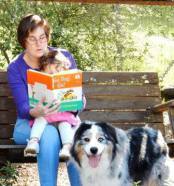
The best book for a two year-old–not to mention a dog!
I taught myself to read at four, using a Dr. Seuss book, by asking my harried mother, “does the letter a also mean the word a?”
Desperate to be entertained by a story, I wanted to decode the words.
The younger girl above can quote her favorite books, explaining she, too, knows how to read.
“She’s just memorized it,” the seven year-old said.
And why not? I, personally, have read Go Dog, Go out loud to her countless times!
Being able to read gave me the freedom to no longer rely on my mother to discover new stories.
A foreign language reminder
I read avidly throughout my childhood until one summer day in Prague, Czechoslovakia.
Twenty years old, I traveled with Swiss relatives on a German tour. They all spoke four languages, so this was not an issue for them.
I spoke English, some Spanish and a smattering of Italian.
The tour guide did the best she could, she had me sit beside her to mutter quickly in my tongue.
Otherwise I was on my own and staring at the dark city, couldn’t read a thing.
I hadn’t been in that situation in 16 years. I didn’t like it.
Six years before I’d traveled in Europe not knowing what anyone said, but as German and French words looked familiar enough, I managed.
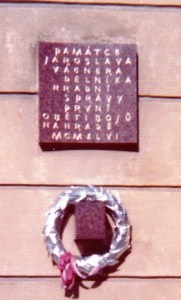
I have no idea what this says, even now!
The Czech language incorporated symbols I didn’t know.
I was lost. The signs didn’t help except for the handful I recognized by brand: Coca-Cola, for example.
I felt cut off from everything, vulnerable with my inability to communicate or read.
Have you ever considered what it would be like for someone who can’t read?
If you can read, the world is open to you
My teacher mother always challenged me: “If you can read, you can do anything.”
I haven’t found that to be exactly true, but being able to read may be the most important, and satisfying, skill I ever learned.
Knowledge is power. I learn best through reading–which can also chase away fear.
Protestants of the Reformation agreed with my mother.
That’s why Gutenberg’s press was so important–to provide the material average people could read to better understand their God.
The first published book was the Bible.
From that book came knowledge, freedom from fear, and an awareness of not only the world, but of God.
That, in my opinion, is why being able to read brings power.
Just ask my Adorable new reader.
Tweetables
The joy of learning to read! Click to Tweet
Learn to read and the world becomes knowable. Click to Tweet
The post Learning to Read: the World Becomes Knowable! appeared first on Michelle Ule, Author.
May 12, 2017
Biddy and Oswald Chambers: Tourists
 Tourists would not be the first description that comes to mind about Biddy and Oswald Chambers.
Yet, they traveled together often.
They went with a purpose and worked, but occasionally took time off for some fun.
(The photo in the pinnable, by the way, is the only silly one of Oswald I’ve seen.)
Meeting
They met on a boat, the SS Baltic, sailing from Liverpool to New York.
Oswald liked to behave as a tourist when he sailed. The ten days it took in 1908, enabled him to read, relax and stare at the sea.
He lived a perpetual whirlwind of travel at his volunteer job as the chief lecturer for the League of Prayer.
Oswald planned for his down time at sea, packing a case of books, his Bible, prayer list and concerns.
Biddy, however, had never been anywhere before. She planned the same voyage as a gateway to a new life.
It didn’t quite work out the way either expected.
Despite Biddy’s confident 25 years, her mother had asked the kind, older family friend to look after her on that ten day transit.
Oswald set aside his books to do so–and they fell in love.
Honeymoon
They next traveled together on the RMS Coronia out of Liverpool to New York, this time as Mr. and Mrs. Oswald Chambers in 1910 on their honeymoon.
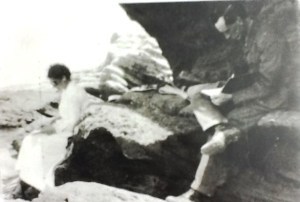
In Egypt on the Mediterranean. (Photo courtesy Wheaton College Special Collections library)
Once in America, they traveled as far south as Denton, New Jersey, as far west as Ohio, as far north as Maine–Oswald was speaking at camp meetings.
During the one week they spent alone together, in the Catskills, Oswald dictated at least one article and perhaps an entire book to his stenographer wife!
Around the British Isles
Oswald returned as lecturer for the League of Prayer upon return from their honeymoon.
He trained between London, Stoke a Trent, Blackpool and Manchester. Biddy took notes of everything he said.
During their life together in England, they vacationed every summer, often with friends, at Askrigg in the Yorkshire Dales.
Egypt
They did not travel to Egypt together during World War I.
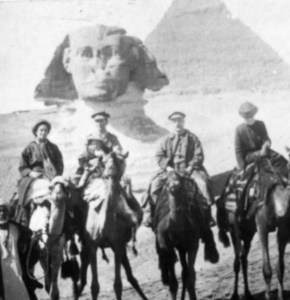
Biddy, Oswald with Kathleen, Jimmy Hanson and Miss Ashe. (Photo courtesy Wheaton College Special Collections Library.)
Oswald went ahead to join the YMCA in Cairo, traveling on a troop transport ship. (Where he found privacy only in a lifeboat to study his Bible and pray!)
Biddy, two year-old Kathleen and friend Mary Riley voyaged through the same U-boat infested waters three months later.
While in Cairo, they saw tourist sites.
On three separate occasions, Biddy and Oswald rode camel to the pyramids and Sphinx!
Two of those trips happened under the moonlight.
They visited the narrow granite obelisk known as Cleopatra’s Needle, not far from Zeitoun where they lived surrounded by ANZAC troops.
Like many, they stopped to see the Virgin’s Well near Heliopolis—allegedly the spot where Mary, Joseph and Jesus rested on the flight to Egypt. Kathleen loved the zoo at Giza.
Curiosity and a love of nature
Two intelligent, art-loving and curious nature-lovers made for perfect tourists.
Oswald loved to fish the streams of Askrigg and photos exist of both of them sitting on rocks and reading.
Vacation–which for Oswald included teaching small groups of people everywhere he went–relaxed them.
Travel certain made for the grand adventures they both enjoyed.
Tweetables
Biddy and Oswald Chambers: tourists. Click to Tweet
The UK, the US and Egypt–Oswald Chambers at home in the world. Click to Tweet
Every month in 2017, I’ll be telling the stories about God’s leading and my blessed–and astonished–reactions while writing Mrs. Oswald Chambers
The next newsletter comes out May 20: In which a friend sends me on a mission to meet a stranger in Scotland.
If you’re interested in reading about all those amazing coincidences, sign up for my newsletter here.
The post Biddy and Oswald Chambers: Tourists appeared first on Michelle Ule, Author.
May 9, 2017
Five Little Monkeys and Learning to Read
 The Five Little Monkeys
books by Eileen Christelow are a hit in my county.
The Five Little Monkeys
books by Eileen Christelow are a hit in my county.My husband has used the books as a tool for reading enrichment the last four years.
He’s part of a group that spends half an hour a week in a local elementary school reading with first and second graders.
His company supports the activity and he and several workers spend Monday mornings with an assigned child.
He’s on his fourth child now.
Boys or girls, they have one thing in common: they love the Five Little Monkeys books.
Who are the Five Little Monkeys?
Oh, you know–five little monkeys who jump on their bed?
One fell off and bumped his head.
What did Mama do?
Called the doctor. He repeated this warning with each incident:
“No more monkeys jumping on the bed.”
(Hey, say that with gusto!)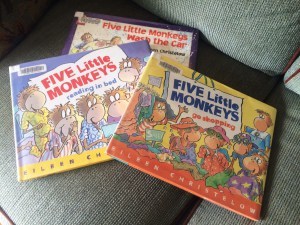
Christelow has turned the monkeys into a franchise.
Those five little monkeys get into all sorts of mischief besides jumping on the bed.
They wash cars, go on a picnic, play hide and seek, bake a cake and a host of other activities.
Their hapless mother loves them, despite their well-intentioned troublemaking.
Why are the Five Little Monkeys popular with new readers?
My English Literature degree tells me their scansion is part of the appeal.
(Scansion is the rhythm, the meter, of rhyme in a verse).
My experience teaching children to read is the repetition helps, along with the colorful pictures.
According to my husband, the children giggle at the silly stories, the expected conclusion and the fact the children never learn.
Their mother hugs them every time, too.
Why does my engineer husband love the Five Little Monkeys?
He’s had the experience, four times now, of seeing a child begin sounding out words in September with no comprehension.
When they finish that laborious process, he rewards them by reading a picture book.
Sometimes he reads a story brought from home, usually a Dr. Seuss they may have heard before.
Within a month or two, he brings in our copy of The Five Little Monkeys Treasury and starts with that bed jumping.
(He always asks the kids what the Mama is doing on the last page of the book. They don’t usually notice Mama is jumping, too!)
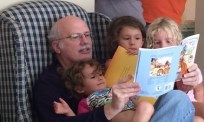
He likes to read to children!
The next week, they want him to read it again.
Indeed, they usually want to skip their work and have him just read.
He shakes his head and opens the book. It’s their turn.
Their eagerness delights him, but their desire to read better–so they can read the book themselves–is a major motivator.
I love the days he comes home and says, “she got it. She understands the meaning of the words and can hardly wait to read about the Five Little Monkeys.”
This year he has a second grader and she, who stumbled in September, is fluent in April.
He still makes her read her prescribed school work, but then just hands her the book.
Getting to read a Five Little Monkeys story is her reward.
Five Little Monkeys at the library
She’s read all five stories in our treasury, now, and so I’ve gone afield to the library to check out more.
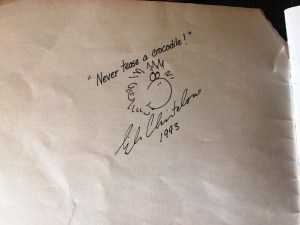
I met Christelow at a book signing many years ago and purchased Five Little Monkeys on a Picnic.
My husband laughed as he looked at the stack yesterday.
“Wow, you found one I haven’t even read!”
His reader will join him on Monday to learn what happens when The Five Little Monkeys Go Shopping!
(The Five Little Monkeys have their own website with interactive games. Check it out here.)
Do you remember the picture book that made reading come alive for you?
Tweetables
Five Little Monkeys teach children to read! Click to Tweet
Rhythm and rhyme: Five Little Monkeys and early readers. Click to Tweet
What children’s picture book made reading come alive for you? Click to Tweet
The post Five Little Monkeys and Learning to Read appeared first on Michelle Ule, Author.
May 5, 2017
Generous Family Members–Ancestry Part 4
 Generous family members contributed to my research while writing Mrs. Oswald Chambers.
Ancestry.com posts information from people all over the world.
People upload their family histories and share their data, stories and even photos.
Their generosity makes researcher’s tasks much simpler.
Uploading a family tree
By simply uploading family trees, many genealogists provided me with information I sought.
Knowing a birthdate or birthplace meant I could access official records like immigration reports. I could investigate phone numbers, census data or even military records.
I could trace individuals by their sibling’s stories or recognize patterns if, say, cousins married.
Birth order made some of the people I sought more understandable in their choices. Significant births and deaths in their families gave me facts to consider.
Investigative skills I honed long ago gave me a sense of other ways to look at seemingly innocuous data.
I got to know the family history of some individuals better than they knew themselves.
Some of the stories were fantastic. I followed unnecessary tangents to the Congo, India, New Zealand and even China.
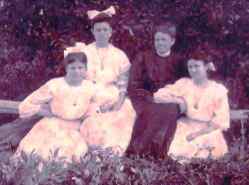
Looking for examples, just discovered the girls are my grandfather’s cousins.
Eventually, though, I ran into blank walls.
Then I learned family members could help.
How to contact relatives
Ancestry.com provides a forum to contact people who have uploaded information.
Generally speaking, their names are not provided.
I worked through Ancestry’s message board by clicking on the link provided and writing a simple email.
It often went like this.
Subject line: Seeking information on ______________ .
The text explained I was a biographer and sought stories or any information family might have about a given relative.
I provided what I did know about their ancestor. I explained why I sought the information and always ended with, “any help will be gracious appreciated.”
People almost always responded. (Genealogists love to share clues).
Several provided invaluable information, including photographs.
Where do they live?
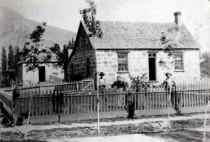
My 2xs great-grandmother lived in this house.
Because I used Ancestry’s international venue, I spoke with people around the globe.
I contacted family members throughout the United States, England, Hong Kong and even Australia.
A few hesitated since they were writing their own books, but most answered specific questions.
Their responses enabled me to “flesh out,” some of the historical people in the biography I’ve been writing.
One woman put me in contact with her cousin. The woman lived in Hong Kong and was the daughter of one of my heroine’s close friends.
It was an honor to exchange emails with someone who met my heroine as a child, even if she didn’t remember.
Care
People willing to talk about their families need to be respected.
Their information should be treated with the honor they deserve.
Anyone whose information I used appears in my acknowledgements.
They made my book richer.
I’m grateful.
Their generosity prompts a question. How much information about your ancestors would you be willing to share with a stranger?
If they were writing a book, would that change your answer?
(I’ve posted my family tree. And yes, I answer questions and send information!)
Tweetables
Family members aid a biographer’s task. Click to Tweet
How much would you tell a stranger about your ancestors? Click to Tweet
Using Ancestry.com to meet family members. Click to Tweet
My research serendipities while writing Mrs. Oswald Chambers?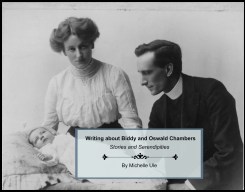
Every month in my newsletter I provide a pin and a story. If you’re interested, sign up here for my newsletter.
May’s story: In which a friend sends me on a mission to meet a stranger in Scotland
The post Generous Family Members–Ancestry Part 4 appeared first on Michelle Ule, Author.
May 2, 2017
A Visit to a Submarine Museum–or Remembering Old Friends
 We visited the submarine museum in Pearl Harbor recently.
For my young adult daughter, it was fun to see the boats.
For me, it was like old home week as I saw many submarines I knew in person, fact and fiction.
It gets that way when you spend 20 years of your life linked to one submarine or another.
The World War II submarine fleet
The diesel subs from WWII are not part of my personal experience.
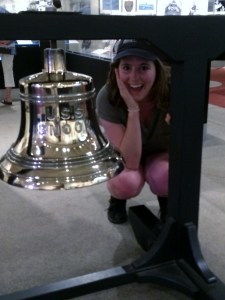
Pretty daughter of a submariner with the ship’s bell.
However, when we attended chapel services at the Pearl Harbor subase (that’s shorthand for “submarine base.”), services always concluded with the name of a WWII era boat, “still on patrol.”
A friend’s father, whom I met frequently in Hawai’i, served on “pigboats” during WWII out of Hawai’i.
Chet also helped overhaul the USS Pampanito (SS-383) when the Navy put it on permanent display in San Francisco.
The Snook
After completing SOBC (Submarine Officers Basic Course), the Navy assigned my husband to the USS Snook (SSN-592) then undergoing overhaul in Mare Island.
(He got the job because he’s an excellent engineer).
The work consumed him for 18 months before the boat returned to the fleet.
While we lived there, the Navy decommissioned the USS Nautilus (Our friend Rick’s hair turned white within six months of reporting aboard her).
The museum hosts a photo of the Nautilus decommisioning ceremony--in which I searched for a very young version of myself!
(As it happened, I was in Groton, Connecticut several years later when the Nautilus made its final trip up the Thames River–to be moored as part of the submarine museum at the subase.)
My daughter found the Snook’s bell, and we took a photo for her father.
The Michigan
From the Snook, my husband moved to the USS Michigan (SSBN-727) then being built at Electric Boat in Groton.
He went from one of the oldest submarines in the fleet to the newest one–the second Trident class submarine.
I found its plaque and a model of the USS Ohio (SSN-726), the original boat.
For my daughter, a Trident submarine was a big sub her father worked on.
For me, it was people I knew and love–along with two years of my life catering to its whims and needs.
We’ve known COs of the Ohio as well as the initial engineer for all the Trident submarines.
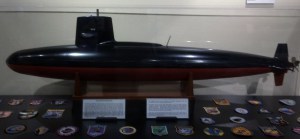
USS Skipjack model
The Skipjack
My most intimate experience was with the USS Skipjack (SSN-585).
It consumed 42 months of my life as that smart engineer became the chief engineer of the oldest submarine in the Atlantic Ocean.
She’d call in the middle of the night, that HY-80 steel mistress, demanding my husband’s attention–pretty much all the time.
Her teardrop shaped hull was famous and high tech when she took to the fleet–two years after my husband’s birth!
The Pearl Harbor submarine museum has a big model of her.
I surveyed with mixed–extremely mixed–emotions.
Long ago, I won the unofficial prize, “wife with worst deployment,” three times in a row while my husband served on that submarine.
The Skipjack forced me to grow up. My husband started balding.
Other submarine treasures
It didn’t take me long to visit all my old friends in the Pearl Harbor museum.
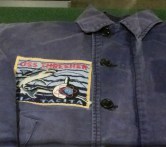
I saw a shirt donated by someone who served on the USS Thresher--which made me gape in surprise.
The USS Boston plaque reminded me of my horror reading Tom Clancy’s book Red Storm Rising. He sank the Boston. A friend’s husband was on that boat!
I knew the CO. I couldn’t bear the thought Clancy killed him–even if it was fiction.
The “Louisville slugger bats,” given to a friend who served on the USS Louisville during the first Iraq war reminded me of the shot fired and his wife’s experience.
My daughter took longer to tour the museum–she needed to read all the information and stories.
They’d already been written on my heart.
Tweetables
A Navy wife visits her submarine history. Click to Tweet
Visiting Pearl Harbor’s submarine museum. Click to Tweet
A submarine to you is personal memory to me. Click to Tweet
The post A Visit to a Submarine Museum–or Remembering Old Friends appeared first on Michelle Ule, Author.