Michelle Ule's Blog, page 40
October 5, 2018
St. Mark Lutheran & the Sonoma County Fires
A year ago, we worshiped about 270 people in two services.
29 families connected to St. Mark Lutheran Church lost their homes.
That’s families. Obviously, more people were involved than 29.
In addition, 15 members of our congregation died in the last quarter of 2017.
Too many have moved away for a variety of reasons.
We miss them.
What St. Mark officially did to help
We have excellent and hard working members at our church and they went right into action the first day of the fires.
Both pastors were available to anyone who needed help.
Our church administrator, well-connected with the community, started making phone calls and gathering information.
The church building itself sheltered families–particularly those who were not sure where to go.
But that’s what any church would do–and the Sonoma County churches all sprang into action immediately.
What St. Mark members specifically did to help
Here are a number of the ways our members helped each other and the greater community.
Prayer, of course, is the greater work. Everyone was praying!
Called around to find everyone. This was particularly poignant when an elderly couple, without a cell phone, left their house and visited friends in San Francisco. Their absence sparked a mention on national news. When they finally turned up, they were touched the church family (as well as their relatives!) cared so much about them.
Took in another family to share their home. Most of us bunked with friends or relatives in the early days. But one family of five took in a family of four for 8 months.

While I evacuated, traffic stopped me in front of the church. I took a picture just in case the fires swept through this neighborhood, too.
Provided training for those who wanted to help. Two weeks after the fires started, a team came for a one-day seminar on ways to help people process natural disasters.
Brought over the Lutheran Comfort Dogs to help. These dogs had just returned from the east coast when they deployed to our county. The children, in particular, enjoyed being with them.
(How do you prepare before a fire? This post provides some tips).
Practical concerns
Individuals and churches from around the country made generous financial donations. Their gifts enabled (and continue to enable) the church to share those gifts with our families in crisis.
Quilting ministries from two churches and the Santa Rosa Quilt Guild provided quilts for everyone who lost their homes.
Our Lutheran potlucks ceased for the rest of the year. Donated funds were used to purchase all the food we served at what traditionally would have been a potluck.
As our church administrator, Debi, explained,
“The feeling was, how can we bring our family together for a meal without causing additional work/stress to our people? The answer was to provide the meal so our church family could dine and connect and share with one another.”
Donated new mattresses for anyone who lost a home. A “son” of the church provided monies from his family’s foundation fund to provide a new mattress to anyone who lost one.
Practical helps
Listened to stated needs, didn’t just respond in ways that made them feel good.
One member who lost her home asked us please not to give them anything–they had nowhere to store possessions except the trunk of their car. So, friends put together a list of items to provide later.
Helped sift homes ashes hunting for valuables. Church members had done the same thing two years before for the Cobb Fire–we were experienced and willing to help.
Provided a junk drawer for someone who just needed encouragement. (You can read the blog post here)
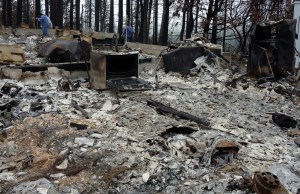
The member’s house we sifted at Cobb in 2015
Pastors, parishioners, and elders attended fire survivor meetings with widows and single women who were uncertain where to begin and wanted an extra set of ears to hear the information provided.
Simplified worship and Christmas activities. Holiday activities were important, but we needed to keep them simple. With so much going on in the congregation, familiar–rather than new and elaborate- activities helped.
Anything else?
This list is what came to mind immediately, many more activities took place.
Teams continue to visit a survivor encampment to bring water and pray. They helped build shelters, Debi also pointed out,
“Beginning weekly last October, members from our church and other churches have been bringing bottled water and living water to the residents living in FEMA trailers. They will continue to do this until the last trailer is gone.”
Many members participated in community fire-relief activities.
We continue to check on our friends–and, always, pray.
“We are committed to walk this journey with our families for however long it takes, weeping and rejoicing with them,” Debi said.
This past summer fires swept through the town of Redding, three hours north of Sonoma County.
A friend of mine pastors a large church there. On day two of their agony, I connected Debi, our church administrator, with theirs. They spoke for 90 minutes.
““I didn’t realize how much I’d learned, or how quickly I could transition back to those early days of the fires, and share the critical things that we had learned,” Debi said.
“There’s a part of me that is sad about having experienced the fires and trauma, but on the other side I’m thankful that I was able to help someone else assist their community.”
What have we learned?
How precious our fellowship is, and how necessary when crisis envelopes us.
The first Sunday after the fires started, my husband and I drove 90 minutes to worship with our church family.
But the service started a little late. We all needed to hug each other and to start listening to the stories.
We cried and we mourned.
And then we worshipped together.
Just like a family–because we are a family at St. Mark Lutheran Church.
Tweetables
What specific things did one church do during the Sonoma County fires? Click to Tweet
Practical and personal ways to help during a natural disaster. Click to Tweet
Loving a congregation through a natural disaster. Click to Tweet
The post St. Mark Lutheran & the Sonoma County Fires appeared first on Michelle Ule, Author.


October 2, 2018
Our Kids and the Sonoma County Fires
 Our kids were the center of our concern, after survival, during the Sonoma County fires of 2017.
We’re reaching the one year anniversary this month, and I thought I’d reflect on that year.
Bear with me–we live under the shadow of grief here in San Francisco’s north bay.
Nearly 100,000 school children witnessed some form of trauma during the weeks the fires raged.
The horror may not have been from fleeing their homes in the middle of the night while flames blew up and fire rained from the sky.
But, from anywhere in the valley, they saw flames, they breathed smoke, they watched horrifying images on television.
They saw their parents uncertain and many were afraid. Many people did not go to work for at least a week.
Certainly, it wasn’t as bad as Rwanda or the continual worldwide refugee crisis. Few children, if any, lacked food.
But their American world turned upside down.
Fortunately, many caring people in Sonoma County did their best to make it easier on our kids.
The Schools
I’m so thankful for the wise educators in Sonoma County.
The administrators remained in the high schools printing every senior’s transcript before pulling the computer hard drives and shutting down the schools.
Their quote was significant:
“We want to make sure our seniors do not lose their chance at college.”
None of the five high schools in my town burned, but the fires reached within two blocks of the high school just up the road from us.
I’m tearing up remembering their determination to do the best they could for the students.
(The University of California delayed the application deadline a few extra weeks for students in the fire zone.)

A very scary night
The school districts also insisted school would not open until everything was cleaned.
Smoke sat nearly to the ground in Santa Rosa for almost a week.
The Santa Rosa school districts remained closed for three weeks to ensure school would be safe.
Once back, everyone worked on math to try to catch up, but in the elementary schools, the teachers devoted themselves to the arts.
The point was to help the children process what we, as a community, had been through.
Our kids needed to be able to express their emotions.
Many teachers lost homes. Getting back into the classroom with their kids helped them.
Learning appreciation
For our kids, the Sonoma County Fires presented an opportunity to learn gratitude.
Many classrooms wrote letters of appreciation to the first responders who saved many lives and homes.
Firefighters from around the world came to Sonoma County to help in this catastrophe.
One fire chief later wrote our newspaper that he had never received so many thank you notes.
Our kids rose to the occasion. They knew.
Everyone expressed gratitude for so much.
Mr. Rogers’ helpers were everywhere.
Our community came together to help.
Our kids and extended family
From the first day, our out-of-the-area relatives were involved.

Photo by Tong Nguyen van (Unsplash)
My daughter monitored events from Los Angeles, reporting things she saw on television that we didn’t know.
Relatives insisted we take the kids and go to a beach house they owned.
He was persistent, and his wife and family chimed in.
After we were evacuated a second time, on day two, we all headed, in fear but with gratitude, to the beach.
The air was clean and we didn’t fear fire. We all could sleep at night. No adult had to stay awake in case of fire.
(Or earthquake. We had an earthquake the first night after the fire started).
The neighbors in that community brought us food the first late night. They checked on us, People knew we were evacuees and were concerned.
We were so very blessed by their generosity and kindness.
They, in turn, were charmed by the thank you notes the children wrote and delivered to them.
Our kids and recovery
My five adorable grandchildren spent the first week with their grandparents, parents, aunt and uncle, three cats and one dog.
By day three, the horror–except for adults monitoring fire on television–passed for them.
They were at the beach.
They played in the sand, danced to the CD player and listened to stories.
From Mad Libs booklets they learned about nouns, verbs, adjectives, and adverbs.
They howled with laughter, often.
Our kitten provided distractions, particularly her interaction with the terrier.
With school out, they left the beach after a week and visited their other grandparents.
For them, once away from home, the fires were nothing more than an excuse for a holiday.
Long-term results?
We were out of our homes for nearly two weeks. Our family’s five homes came through the fires intact.
(Fire came within five blocks, however).
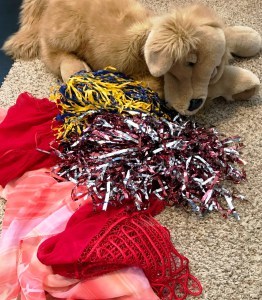
The props from which a fire play is made.
A month or so later, I asked the girls (ages seven, six, five and four) to do a play for me about the fires.
“Sure!” They ran to the dress up box for costumes and before I turned on my camera, began.
The oldest entered first wearing a hat. “I’m the fireman!”
#2 came in waving a piece of red cloth. “I’m the fire!”
The four-year-old crawled in barking. “I’m the fireman’s dog!”
Our third granddaughter carried a set of pom-poms: “I’m the water putting out the fire!”
They laughed, acted and when it was done (the red cloth fire stamped onto the floor) they grabbed hands.
“Thank you first responders!”
And then those four little evacuees bowed. “All done.”
We’re not worried about our kids at all.
Thanks be to God.
And great thanks to the Sonoma County schools, the first responders, our family’s generosity and for all of you who prayed for us.
(Note: make sure your computer is backed up; you never know when a crisis will hit, and take a look at these pointers on preparing for a crisis.)
Tweetables
Thanks to Sonoma County schools for helping kids after a fire. Click to Tweet
Singing, art, stories, and family. How to survive a crisis. Click to Tweet
How kids weathered the Sonoma County fires of 2017. Click to Tweet
The post Our Kids and the Sonoma County Fires appeared first on Michelle Ule, Author.
September 28, 2018
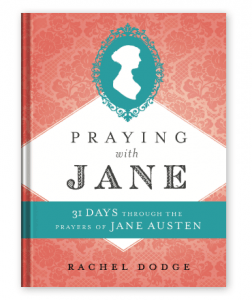
Praying with Jane Austen: A Devotional
 is a new book written by Austen scholar Rachel Dodge.
The devotional releases October 2, 2018, in the United States and is full of insight for Austen fans.
Rachel Dodge is a great lover of Austen’s work and holds degrees in English Literature. (She wrote her master’s thesis on Pride and Prejudice).
She teaches literature on the college level, speaks frequently about Jane Austen and also writes for the popular blog Jane Austen’s World.
I recently visited with Rachel and here’s the interview.
Why did you write Praying with Jane ?
“Quite simply because I’m passionate about Jane Austen and I’m passionate about prayer. Combining Jane Austen and prayer in one book has been a dream come true.
“Because I’m a Christian, I was always curious about her faith. The more I read, the more I was convinced that she was a devout Christian, not just someone who attended church and participated in the rituals of religion.
“When I began to read her prayers more closely (and in more depth), I wanted to make her prayers my own. I wanted to delve into their meaning and find out more about Austen’s personal faith.
“Most of all, I wanted to make her prayers personal. I wrote this book because there is no devotional book focused solely on Austen’s prayers.
“I wanted to write a book that invited Austen’s readers to know her better – and the God she loved.”
What impressed you the most about the way Jane prayed?
“Jane prays with such emotion and gusto! (And lots of exclamation points!)
“She spends a lot of time in each of the prayers thanking God for his help, his provision, and his love. Jane also spends time in confession and petition.
“Her prayers are absolutely beautiful.”
As Rachel researched, she recognized several prayers written in the style of the Book of Common Prayer. The Church of England liturgy was part of her life growing up in a clergyman’s household.
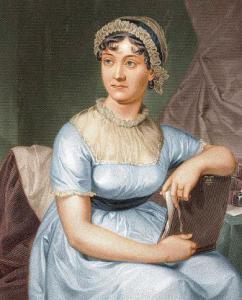 Jane lived in a simpler time with little travel (see Persuasion) in a small village. Dramatic prayer needs did touch her life.
“She had two brothers in the Navy during wartime. Jane lived at a time when ambulances and antibiotics did not yet exist. She understood the realities of childbirth for women.
“In addition to praying for orphans, widows, and prisoners, Jane also prayed for comfort for those in any kind of affliction.”
It’s clear that while Austen had a wonderful, loving family and a happy life (and outlook on life), she was no stranger to the real need for God’s help, comfort, and guidance in daily life.
Nurture or Nature?
Jane Austen grew up in a clergyman’s household and famously wrote at the dining room table.
Her loving and devoted father had a huge and positive influence on her life.
Reverend George Austen taught his daughters at home and ran a small boarding school there as well.
“He encouraged Jane and Cassandra to make use of his library and to read widely. They were a close family, and it’s clear they discussed and shared everything with one another.
“They had morning and evening prayers as a family. Reverend Austen also taught his children to have their own individual prayers morning and evening.”
The family prayed before and after meals and naturally attended church every Sunday (mornings and evenings).
“Jane was intimately familiar with the devotional literature and sermons of her day. She is known to have made constant use of William Vickers’ Companion to the Altar.
“She most likely knew many of the prayers in the Book of Common Prayer by heart and would have read the prayers and Psalms in it daily.”
Research
Rachel visited the Austen homes and her father’s parishes in Steventon and Chawton during several visits to England,
“Her prayers are posted at each of the churches. I gleaned a lot from the information available at the churches regarding her father’s work as a clergyman in the Steventon church and parish, the manner of worship Austen would have been familiar with, and more about Austen’s spiritual life.”
However, Rachel did most of her research closer to home.
She owns plenty of Jane Austen material and made good use of the college library where she works. She read every biography and scholarly articles focusing on Jane’s faith or prayers.
Rachel also examined Jane’s personal letters and various family memoirs.
She spent hundreds of hours with Jane Austen’s novels, searching for evidence and examples of the powerful effect her faith had on her writing.
There are numerous scholarly databases on the Intenet as well.
The most exciting research?
“I had the great honor of viewing the original manuscripts of Austen’s prayers at Mills College in Oakland, CA. I transcribed the prayers in their entirety, exactly as they appear in the original manuscript in my book.”
Rachel wanted readers to see Austen’s punctuation and capitalization, both of which are much different than what we use today.
Personal prayer life changed?
Spending so much time reading and analyzing Austen’s prayers effect Rachel in two specific ways.
“First, Austen’s prayers themselves created a profound shift in the way I come to God in prayer.
“Her prayers are reverent, specific, and heartfelt. Her prayers remind me that God is intimately interested (and involved) in every detail of my life.”
More profoundly, personal prayer undergirded the way Rachel wrote On Praying with Jane Austen.
“This book was birthed in prayer, bathed in prayer, and written as the result of my own desperate prayers for God’s guidance in writing it.
“I prayed every day, as I sat down to write, that the Holy Spirit would lead me and guide me.
“I offered myself as a vessel, and I asked God to use every ounce of my creativity, writing ability, and wiliness to write a book that would honor His name and draw people closer to Christ.”
In addition, Rachel “fasted” several times from writing the book to pray herself.
“Those times of prayer, when I ceased “all work” on the book, were times of incredible fruit. In those stopping places, I saw God move and work in ways I could never move or work on my own.”
About Jane Austen’s books and characters
Pride and Prejudice is Rachel’s favorite book. However,
“I always say that my favorite Jane Austen novel is the Jane Austen novel I’m currently reading.”

Rachel Dodge
She noted several instances of prayer appear in the novels, particularly in Mansfield Park.
“Whenever a character spends time in “quiet reflection” or “reflection,” which occurs in several of her novels, most scholars agree that Austen is referring to prayer.”
Rachel thought Edmund Bertram in Mansfield Park would be a good candidate for the Church of England.
As to Edward Ferrers in Sense and Sensibility?
“I think Edward’s gentle nature will serve him well as he shepherds the flock in his parish.
“His wife will be quite a sensible and suitable helpmate! Hopefully, his sister-in-law will give pointers as to his style and presentation.”
Given a choice to hear either one preach, Rachel had a ready answer: “I’d rather listen to Edmund, hands down!”
Tweetables
Using Jane Austen’s prayers as a devotional. Praying with Jane. Click to Tweet
Which Jane Austen clergyman would a scholar prefer to hear preach? Click to Tweet
31 days of devotions with Jane Austen, bathed in prayer itself. Click to Tweet
The post Praying with Jane Austen: A Devotional appeared first on Michelle Ule, Author.
September 25, 2018
Mary Riley: Oswald and Biddy’s Friend
She first met them in London, cooked at the Bible Training College (BTC), went to Egypt as Kathleen’s nurse and actually helped Biddy move to Oxford.
Tried and true, the plucky native of Essex devoted herself to the Chambers family and her God.
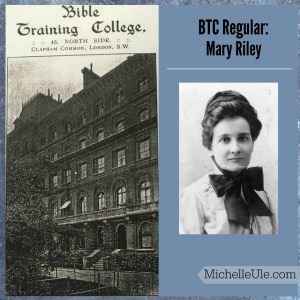 Who was Mary Riley?
As one of twelve children born to a coachman and his wife, Mary went into the workforce early.
Mary was one of four Rileys who attended the Bible Training College.
I wrote about her family, including her fellow student siblings Nellie, Arthur and Kate here.
Born in 1878, Mary’s listed in the 1901 census as a servant for Reginald Slader, a religious organization secretary. His two daughters worked as a church organist and a secretary to a bookseller.
Described as a “dream of a cook,” she was working for an elderly woman in London when she first met Oswald Chambers during a League of Prayer lecture at Speke Hall.
“The grip that held me then made me want to hear more of the Lord Jesus as presented by him.”
Shortly thereafter, the BTC needed a cook and Mary took the job.
Kathleen Chambers knew Mary Riley her whole life.
“Mary could cook like nobody’s business. She was a wonderful cook.
She was a lovely lady. I loved Mary very much.”
At the BTC
Anyone remotely linked to the BTC could attend classes and Mary climbed the stairs from the basement kitchen like everyone else.
She loved being at the BTC. Mary Riley wrote about the years in Oswald Chambers: His Life and Work.
They were very full days, up often before six o’clock Mr. Chambers would be in his study preparing for the day, and the whole atmosphere of the College was charged with the presence of God, as he continually prayed that it might be.”
According to Kathleen,
“Mary was very, very downright in her beliefs about God. And she would contradict anybody absolutely to the utmost of her ability. There was no two ways about it, everything was black and white.”
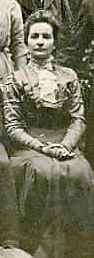 She cooked at the BTC–often for an unknown number of guests–every day for four years.
The family trip to Askrigg in August 1915 following the closure of the BTC for the duration of the war, included Mary and several other BTC students, along with Oswald’s brother and sisters.
Oswald traveled to Egypt in October, leaving Biddy and Kathleen behind, with Mary, in the echoing #45 Clapham Common north.
Mary had agreed to travel with Biddy and Kathleen, serving as a nurse, to Egypt when Oswald made arrangements.
Mary Riley in Egypt
Biddy’s decision to join her husband was unusual, but why did 38 year-old Mary join her?
“She was very fond of my mother and father; would have done anything for either of them,” Kathleen recalled. “Mary was a very true friend.”
Still, the dangers were real and Mary had never traveled outside of southern England.
She never complained.
The home in the desert, a two-bedroom bungalow with sandy floors and an outside kitchen, made for primitive living.
The YMCA arranged for the British army to provide a soldier to aid Mary with the cooking.
Soldiers at the nearby Zeitoun ANZAC camp, realized something new was happening right away.
“Mrs. Chambers and Kathleen and Miss Riley arrived, and things got better and better.
“They kept open house for us all. Whatever they had they shared, and with . . . Miss Riley’s cooking, we began to feel almost as if we were home again.”
Oswald’s lectures in Egypt
When she had time, Mary attended Oswald’s lectures in the big YMCA hut.
“The sermons at Zeitoun in those years of strain and stress were the very sacrament of preaching.
“No one could doubt it who heard with the keen hearing of the spiritual ear, the miracle of authentic stillness that falls upon an assembly of men in those rare moments when a man speaks to his hearers; spirit to spirit, and he and they alike know it.
“The moment passes, but the “inward and spiritual grace” abides—a sacramental permanent possession.”
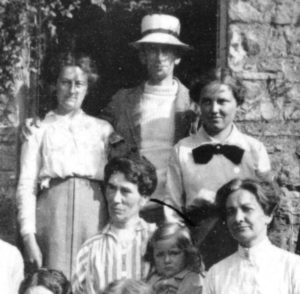
Mary traveled to the Suez Canal with the Chambers family and would take Kathleen with her in the early mornings to haggle over food at the stalls.
She bore it all cheerfully and even managed to join the family on a camel ride to the pyramids!
After Oswald’s death
Mary Riley stayed behind to continue cooking while Biddy and Kathleen left for two weeks of mourning.
She supported her dear friend and the YMCA ministry, bowing to God’s unknowable will:
“When God called our shepherd and teacher into His presence, and we were left without nay explanation saving that “He doeth all things well.”
They were encouraged that so many soldiers returned to Zeitoun, even without Oswald there.
Biddy began a class that studied Oswald’s book Biblical Psychology.
Mary soon recognized,
“The students came to the realization that he was our teacher yet, and we continue still to see new meaning in all the words he left us.”
Steadfast to the end, she remained in Egypt with Biddy and Kathleen until the very end. They traveled back to England together in June, 1919.
Post-Oswald life
 Biddy and Kathleen lived with friends while Mary returned to her family’s home in St. John Woods.
As Biddy ran another class that read through Oswald’s teachings, Mary regularly attended.
She traveled with Biddy and Kathleen when they retrenched to Oxford, not leaving until that humble cottage was liveable.
Over the years, Mary helped with Biddy’s “ministry of the books,” by storing some volumes at her home.
Mary Riley never lost her appreciation for Oswald’s teachings, later writing:
“To all who knew Oswald Chambers, his life was the interpretation of his teaching.
“To those to whom it comes now in another form the meaning opens in the hidden individual ways of God.
“The writer believes that the Spirit of God is using this teaching in many lands to very many lives as a corrective to the wave of shallow thinking, and of shallower religious values that has swept across a section of the Christian communities everywhere.”
Mary never married and lived the rest of her life with her spinster sisters at the family home. She died December 8, 1955.
About Mary, Oswald wrote in his diary in1917:
Of Mary Riley what can I say? To have been with her and known her during these months and past years has been to see a Christian woman indeed and a joyous mixture of Mary and Martha. God bless and be blest for Mary Riley.
A good friend to the end, Mary’s devotion at the BTC and in Egypt enabled Biddy to take the notes she later used to compile the books of Oswald Chambers’ words.
We might not have My Utmost for His Highest without her practical help.
Tweetables
How Biddy and Oswald Chambers’ friend helped their ability to write My Utmost for His Highest Click to Tweet
The importance of ministry even in the small things. Click to Tweet
The post Mary Riley: Oswald and Biddy’s Friend appeared first on Michelle Ule, Author.
September 21, 2018
A Book Cover for Poppy
 A Poppy in Remembrance.
It was the number one priority after the manuscript.
But I’d never been involved in choosing a book cover before–other than affirming ones my publisher offered.
How was I supposed to get one?
Starting with research, of course.
I began by examining sites that discuss book covers–pros and cons, how to find a designer and so forth.
As it happened, the American Christian Fiction Writers association held an auction that weekend to raise scholarship funds.
Two of the offerings were for a book cover.
So, I bid. I won.
Problem solved, right?
Not quite.
Working with a book cover designer
While the book cover designer I worked with had a fine reputation and many covers, our conversation made it clear I didn’t know what I wanted.
I’m very grateful for the time and trouble that designer went through with me, but his mock-up just weighed me down.
I couldn’t seem to articulate what I wanted and we went back and forth.
“How exciting to choose a cover!”
my sister-in-law said.
I thought about her comment and realized I wasn’t excited at all.
It’s my book. I should get what I wanted. She was right!
But what did I want?
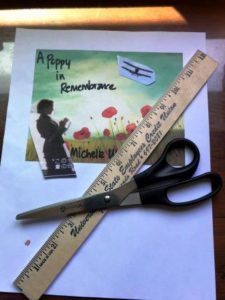
I drew an obviously poor quality sketch and then went hunting on the Internet for photos.
After that, I went to printer, scissors and tape.
And came up with a concept that appealed to me.
Testing the mock-up book covers
I took to Facebook, my writer page and my monthly newsletter and asked my readers to choose one.
(You’ll have to visit my Michelle Ule, Writer Facebook page on July 14 if you want to see the other choice)
 What an interesting exercise.
When I tallied up the numbers, after having to explain several times both examples were mockups that would be properly finished, I had a clear winner.
Now, however, with time running out, I had to find an artist.
Fortunately, after asking God for an idea, I remembered a friend of mine has a Bachelor’s Degree in Illustration from Academy of Art University in San Francisco.
Score!
Mary Wyatt Moen of Mary Grace Illustrations was willing to do it.
Harder to prepare than I expected
She went right to work.
Mary checked out books from the library, watched a WWI film series and gave my poor little sketch close scrutiny.
Like many foolish and ignorant non-artists, I underestimated how much work this entailed.
To get a better feel for the project, she needed to find the proper props and ultimately, needed to feel the role for the cover.
Which meant I spent an hour one Sunday taking photos of her–dressed as the cover character!
This enabled Mary to see variations on the shot and catch a glimpse of how best to portray the cover.

The phone enabled her to check for the right shot as we photographed.
It was a lot of fun and while I shot photos, she tried different positions.
Her clothing, taken from vintage clothes she already owned, enabled her to see how they would move in a breeze-which we had that day.
It didn’t take long for her to find a shot she thought would work.
(They all looked alike to me. She caught the details I couldn’t see–like the rim of the glasses).
First pass
Once Mary got an idea for the measurements needed for the size of the book (5.5 x 8.5 inches– I measured off an historical novel I liked), she went to work.
We had a three-way discussion between Mary, the book designer Nicole Miller of Miller Media Solutions and me about which direction the woman should face on the cover.
Nicole pointed out since a reader would want to open the book, the woman should face left.
So Mary drew her facing left.
She first did a preliminary sketch of the whole cover–back cover information would go to the left, obviously.
Here it is:
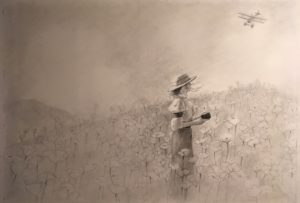
Mary Grace Illustrations
She referred back to the photos:
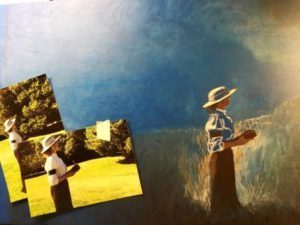
Mary Grace Illustrations
She then sought a color palette and presented this:
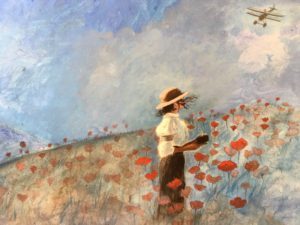
Mary Grace Illustrations
We all loved it.
But this is a World War I coming of age story. The sky needed to be darker to reflect it wasn’t merely a woman out sketching on a summer day.
We needed drama.
So, she overlaid it with a darker color, giving us this:
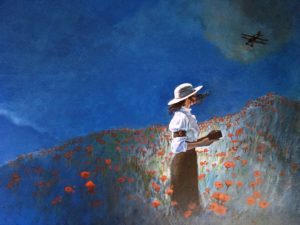
Mary Grace Illustrations
Fine alterations
Nicole stepped in again and overlaid the cover with the dimensions. We quickly realized the plane got lost once the white lettering went on the cover.
Mary picked up her paintbrush and lightened the airplane, making it more visible.
That worked.
Looking at the completed work, I’m amazed at Mary’s skill and artistry.
If you look closely, she’s got Claire’s curls blowing in the breeze and the hint of her glasses, too.
She’s wearing the WWI correspondent C armband and her Mary made sure her pencil is historically accurate.
It’s so much more than I had dreamed.
I’m thrilled.
Here’s the final cover:
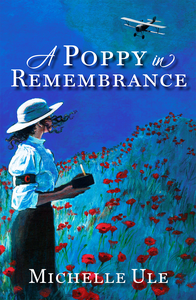
Available for pre-sale at https://amzn.to/2OwLrCg
What do you think of her work?
You can pre-order A Poppy in Remembrance here. Coming in November 2018!
Tweetables
How an artist designed a cover for a WWI coming of age novel. Click to Tweet
Following a book design from primitive sketch to painting. Click to Tweet
The post A Book Cover for Poppy appeared first on Michelle Ule, Author.
September 18, 2018
Mary Lee: the General’s Daughter During WWI
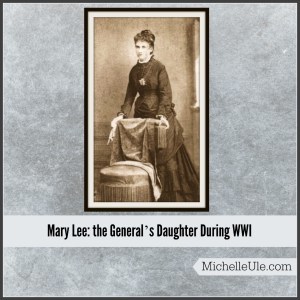 Mary Lee, General Robert E Lee’s oldest daughter was still alive during World War I.
Indeed, the southern lady was one of the most surprising people I discovered while researching A Poppy in Remembrance.
I had to put her in the book!
She had some fascinating comments to make about the Great War.
Who was Mary Lee?
Born in 1835 and the oldest daughter, Mary Custis Lee grew up in Arlington, Virginia, in the mansion that still stands in the national cemetery.
Raised by the educated and religious Mary Anna Randolph Custis Lee, Mary Lee the daughter learned her first lessons at home.
When Mrs. Lee’s rheumatoid arthritis debilitated her, the running of the household, however, went to a cousin who lived with the family.
Her biography on the National Park Service website describes Mary Custis Lee as
“bright, willful, intelligent and cultivated, but she seems to have been somewhat of an outsider to the affairs at Arlington.
“By traveling, skating, riding and taking long walks, she stayed away from the house. She refused to help with the housework or to accompany her mother and sisters on their summer visits to the resorts.
“She was most outspoken and regarded by her sisters as bossy and self-absorbed.”
Mary enjoyed Richmond’s society during the war and had several beaus, but never married.
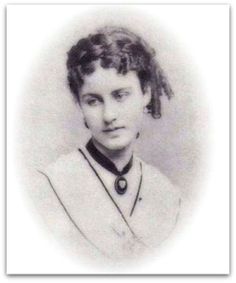 Along with the rest of her sisters, she moved to Lexington when her father became the president of what eventually became Washington and Lee University.
Devout like her mother, Mary often invited people to Sunday School and was recognized as a ” person of strong, almost eccentric character, wholly devoid of fear, as were all the Lees.”
After her father’s death, Mary traveled the world collecting postcards and no doubt dining out on her fame as Bobby’s Lee’s last surviving child.
World War I reference
I came across her in a New York Times article written October 22, 1914, upon her arrival in London.
The correspondent asked about the seventy-nine year old woman’s reaction to the war:
“I am a soldier’s daughter and descended from a long line of soldiers, but what I have seen of this war, and what I can foresee of the misery which must follow, have made me very nearly a peace-at-any-price woman.”
She had been in Hamburg at the outbreak of the war.
The correspondent, understandably, wanted a reaction from the daughter of the Civil War’s premier general.
“My father often used to say that war was a terrible alternative, and should be the very last.
“I have remembered those words in the last three months, and I often wonder and wonder with many misgivings if in this case war was the last alternative.”
Historians have debated her point ever since August 5, 1914.
The Press
Mary Lee held scathing views of the press, then torn by propaganda from both sides.
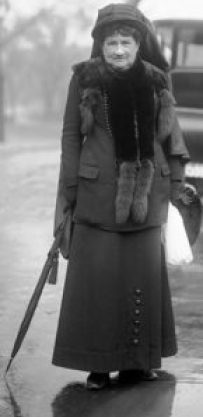
Mary Lee, 1914, Library of Congress
“Much of what I see in the English press seems hysterical and without reason.
“The spy mania, for instance, and the senseless calling the Germans Huns and Vandals. I have known many German military men, and I cannot believe that these men are what the English imagination has painted them.”
Jock Meacham, one of my fictional characters, agreed with her.
A reminder of the American Civil War.
When I read the New York Times article, I realized both World War I and the Civil War had occured within the lifetimes of many people still alive.
Soldiers from both the north and the south had gathered in July 1913 to commemorate the 50th anniversary of the battle of Gettysburg.
That nearness of history came up several times in A Poppy in Remembrance for the Americans in the story.
Mary Lee’s memories overlapped as well.
“I am a soldier’s daughter, and got my first full view of life in the dark days of one of the world’s great civil wars, but it has been an altering experience for me to watch, one week in Germany and the next week in England, the handsome, the strong, the brave of both countries marching away to kill or to get killed, perhaps to return no more, perhaps to return maimed and useless men.”
Prescient about the war?
Mary Lee was a Southerner who respected the 1914 president of the United States, Woodrow Wilson.
But she held realistic views about war and its aftermath.
“My sympathy is with suffering wherever it exists–with the brave men who are fighting and suffering in the trenches and the brave women who, in practically all the homes of Europe, are waiting and suffering.”
Perhaps some of that sympathy came from her father.
“My father used to say it was not those who were killed in battle–often a quick and always a glorious death for a soldier–but those who, crippled and mangled and enfeebled, faced after the war a world that they could not understand and that had no place for them.”
Mary returned to her home in Virginia after the interview and lived long enough to see the entire war. She died in Virginia on November 22, 1918.
Tweetables
What was General Robert E. Lee’s daughter doing in a WWI novel? Click to Tweet
The closeness of time: Robert E. Lee’s daughter on the tragedy of WWI. Click to Tweet
Available for pre-sale at https://amzn.to/2OwLrCg
The post Mary Lee: the General’s Daughter During WWI appeared first on Michelle Ule, Author.
September 14, 2018
God’s Promises to You–Why Not Count Them?
Of course, all the promises are for all of us, but there seem to be ones particularly special to my heart.
I suspect the same is true of you.
Stop right now. Which of God’s promises do you particularly love?
It makes for an interesting exercise.
The idea came to me after listening to an interview with Eric Metaxas and noted Pastor/writer Max Lucado.
You can listen to the podcast here.
(Lucado comes on at 14:15.)
Lucado is the author of a new book looking at this concept: Unshakeable Hope: Building Our Lives on the Promises of God.
I know you didn’t stop.
I didn’t either. But let’s do the exercise.
Off the top of your head, list ten of God’s promises.
I’ll list mine. (I dug out the Bible references later, FYI)

Photo by Kelly Sikkema (Unsplash)
He will never leave me nor forsake me. (Deuteronomy 31:6)
God is love. (1 John 4:8)
Nothing can separate me from the love of God that is in Christ Jesus. (Romans 8:38)
If anyone lacks wisdom, let him ask. (James 1:5)
God will forgive my sins (1 John 1:9)
His banner over me is love (Song of Solomon 2:4)
The rainbow is a promise. (Genesis 9)
God is with me always–to the ends of the earth. (Matthew 28:20)
God will not allow you to be tempted beyond what you can bear. (1 Corinthians 10:13)
A bruised reed, He will not break. (Isaiah 42:3)
Nothing happens without God’s notice. (Lamentations 3:37)
Jesus is familiar with our weaknesses. (Hebrews 4:15)
It took me a couple minutes to come up with ten.
God’s promises in songs?
Maybe like me, you kept listing hymns or praise songs:
Great is thy faithfulness
The redeemed of the Lord shall be glad.
God has promised. He will not fail.
I rejoiced when they said, “Let us go to the house of the Lord.”
If we call to Him, He will answer.
A mighty fortress is our God.
Jesus loves me.
What do you see about yourself in God’s promises?
This was an interesting exercise–what types of promises do I cling to?
My lists suggests a need for comfort and security.
I learned most of those songs as a young believer many years ago.

Photo by Jordan Whitt (Unsplash)
The simple promises are ones I taught my children.
What an interesting exercise to ask those whom you love.
What would you learn about them and their needs?
Let’s count our many blessings–God’s promises are always available for us to claim.
Which promises mean the most to you?
Tweetables
Which of God’s promises mean the most to you? An exercise. Click to Tweet
What do your favorite promises of God mean about you or your loved ones? Click to Tweet
The post God’s Promises to You–Why Not Count Them? appeared first on Michelle Ule, Author.
September 11, 2018
Why a New Zealand Hero?
I chose Nigel specifically because I wanted to honor the great sacrifice made in World War I by New Zealand.
 They lost a lot of men and I want to acknowledge their sacrifice.
Memorial in Auckland
I knew nothing of the New Zealand sacrifice during WWI before I arrived in Auckland.
That 2002 first day, my family dumped our luggage at the motel and then went into the capital.
We ended at the Auckland War Memorial Museum–where the top floor honored New Zealand soldiers lost in wars.
It’s a lovely, poignant spot.
We also visited a facsimile of trenches at that museum and got a sense of life at the Western Front–so far away from New Zealand.
Memorials in small towns
I didn’t think much of it at the time, but as we camped around the country, we traveled through small towns.
It seemed like every town had a reminder of men lost in battles far from their beautiful island home.
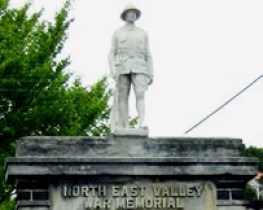
Not the one I saw, but similar. North East Valley School memorial, NZ War Memorial Commission
One in particular stuck with me.
At a little town near the ocean a statue stood in the middle of a roundabout.
A young soldier stood tall, WWI hat on his head, rifle in hand, backpack in place.
His face turned away, looking far above our tall caravan’s roof–as if wistfully remembering where he lost his life so long before.
Two weeks into our trip, the enormity of how many men died hit me.
New Zealanders mourned men everywhere.
A New Zealand hero
The casualty rates for New Zealanders was appalling.
More than 100,000 soldiers went to war over WWI’s four years, out of a population of about one million people. 2700 soldiers were Maoris, the indigenous people of New Zealand.
42% of military aged men in New Zealand served (Men ages 18 to 40). Nearly 16,700 soldiers died, 42,000 were injured.
If you include New Zealanders who died from war-related injuries within a few years following the war, the casualty rate hit 58%–the highest rate in the world.
They’re often lumped together with the Australian army and most people know the acronym: ANZAC. (Australian, New Zealand Army Corps).
They trained in many places, fought in France, Gallipoli and the Middle East.
A number of them visited Oswald Chambers’ YMCA hut at Zeitoun–since their camp was right next door.
Since my character Nigel in A Poppy in Remembrance served in the army, I made him a New Zealand native who happened to be in England at the start of the war studying at Oxford.
Why fight?
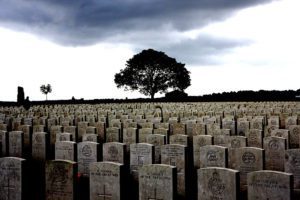
Caterpillar Valley Cemetery (Wikipedia Commons)
New Zealand and Australia were both members of the British Empire.
As “colonialists” they had something to prove–they were as good as the nation their ancestors left behind.
Many were wranglers, farmers and one of the slang terms used for them was “diggers.” (They spent a lot of time digging trenches).
They proved their merit well and fought at the Somme–which is where my husband and I visited, for that reason.
Many are buried at the cemetery in Longueval called “Caterpillar Valley Cemetery,” where they fell.
In A Poppy in Remembrance, Claire asked Nigel why men go to war.
His answer:
Nigel stared at his typewriter, his face a mask, his voice without inflection. “A man enlists because he has no choice. His nation demands it of him; his father suggests he’s unworthy if he does not; and strangers bedevil him for cowardice. A man volunteers for a hundred reasons; few of them good.”
He was commissioned a week later and served honorably.
Far from home
The lands down under are a long way from the Western Front that coiled across France during World War I.
By the time my New Zealand hero Nigel arrived at the Somme any beauty was long gone–scraped away by the horrors of trench warfare and continual barrage.

(Wikipedia Commons)
In those muddy trenches it must have been so difficult to remember the clear blue sky, flourishing green fields and beauty of their home lands.
So many fought, so many died.
I wanted to honor them with Nigel Bentley-Smith.
You’ll have to read the novel to find out if he got the girl in the end.
Tweetables
A New Zealand hero for a WWI romance. Click to Tweet
The need to honor New Zealand soldiers’ sacrifice during WWI with a hero. Click to Tweet
The post Why a New Zealand Hero? appeared first on Michelle Ule, Author.
September 7, 2018
White Feathers and Cowardice
 White feathers are a symbol of cowardice.
Self-righteous, patriotic women and suffragettes in England during World War I handed them out to men not in uniform.
Their reasoning?
They must be cowards if they did not enlist to fight in the British Expeditionary Force (BEF).
Were they right?
Or were they wrong?
How could anyone know?
Why did men enlist in the BEF during World War I?
In A Poppy in Remembrance, reporter-in-training Claire asked.
“Jim straightened papers and cleared his throat. “To protect their families and homeland.”
Nigel stared at his typewriter, his face a mask, his voice without inflection.
“A man enlists because he has no choice. His nation demands it of him; his father suggests he’s unworthy if he does not; and strangers bedevil him for cowardice. A man volunteers for a hundred reasons; few of them good.”
Claire removed her glasses. “Are you enlisting?”
“You can’t escape the army when you’re twenty-three years old and your country is at war. You can only hope your intelligence lands you in a safe spot. How about you, Jim?”
Many men felt pressured to join the BEF.
After the first month, when rigidly controlled casualties numbers began to filter through, many doubted the wisdom of fighting.
But society was against them.
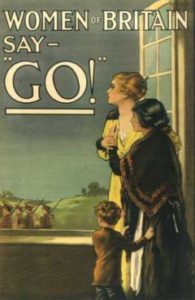
Poster issued in 1915 by the British Parliamentary Recruiting Committee
Where did the white feathers come in?
According to Wikipedia, the notion of cowardice and white feathers harkens back to cockfighting.
“It’s a belief that a cockerel sporting a white feather in its tail is likely to be a poor fighter. Pure-breed gamecocks do not show white feathers, so its presence indicates that the cockerel is an inferior cross-breed.”
That may be why women handing out white feathers tended to be from the upper classes of British society.
At its core is shame.
A British Admiral during WWI even came up with his “Order of the White Feather,” and many women flocked to help hand them out.
Of course, they sometimes made a mistake in handing them out.
Who deserved white feathers?
“Two women marched toward them with zeal in their eyes.
“My good man, you’re not in uniform,” the taller one declared in a haughty voice. She wore a sweeping hat decorated with spring flowers.
He paused and his face went expressionless.
The shorter woman spoke in a cultivated accent. “You should be ashamed of yourself. You need this.” She handed him a white feather.
“What are you doing?” Claire shouted. “You don’t know anything about him.”
Flower Hat sniffed. “Young men should be in uniform. He’s a disgrace to manhood.”
But how should a man respond?
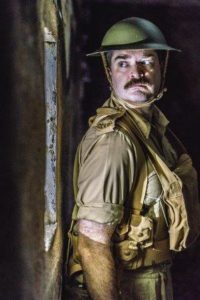
Photo by Ivan Leung (Unsplash)
It depended on his reason.
A woman sitting behind Private Ernest Atkins on a tram handed him one.
On leave from the Western Front, Atkins slapped her across the face with his pay book.
“Certainly I’ll take your feather back to the boys at Passchendaele. I’m in civvies because people think my uniform might be lousy, but if I had it on I wouldn’t be half as lousy as you.”
Another man dressed in civilian clothes was on his way to an elegant affair in his honor where he would be presented with the Victoria Cross for bravery while fighting at Gallipoli.
But perhaps there is some room for sympathy?
I concluded the above scene from A Poppy in Remembrance with a different reaction:
“I’m sorry.”
He tucked the feather into his pocket. “I’m getting quite a collection. This is number five.”
“I apologize for them,” Claire said, “I didn’t—”
“God examines the attitude of our hearts,” he said. “It’s helpful to keep that in mind when we want to judge. I know your heart.” He watched the women badger another man near Twining’s.
“He knows theirs too. Perhaps their loved ones are serving in the army, and this is how they deal with their fears.”
Shame
Shame is never a good way to motivate anyone.
It can also be presumptuous and cruel.
Stories have been written when, instead of encouraging enlistment, a white feather provoked suicide.
World War I killed nearly a million BEF soldiers over four years of fighting.
White feathers did not help anyone.
Tweetables
Why were some men handed white feathers during WWI in England? Click to Tweet
What did white feathers mean during World War I? Click to Tweet
Another reaction to cowardice? Or something else? White feathers. Click to Tweet
The post White Feathers and Cowardice appeared first on Michelle Ule, Author.
September 4, 2018
Biblical Fiction and Bible Study Preparation
 I’m using biblical fiction as I prepare for this fall’s Bible study.
I know fiction means not-true and therefore isn’t the best way to prepare to lead a study if I’m not reading scripture.
Silly. Of course I’m studying the Bible passages. I just need some context for the history.
This year that involves reading Lynn Austin’s The Restoration Chronicles.
They’ve been very helpful.
Biblical fiction as a tool
Biblical fiction can serve to present a narrative in a way that’s easier to understand.
If you want to know political history, the saying goes, read a history book.
If you want to know social history–how people lived–read historical fiction.
But what if you’d like to know both?
Then you read a trusted author, check and confirm.
Why The Restoration Chronicles help
It can be easy to get confused by the history of Jerusalem during a volatile time.
The stories are told across Zechariah, Esther, Ezra and Nehemiah.
Events of the day can be difficult, including some of the issues.
For me, a lover of story, reading a novel as a backdrop to the biblical events was helpful.
I better understood the allure of Susa (located in present day western Iran) and Babylon (located in present day Iraq). Austin’s books enabled me to see how the lifestyles bear similarities to the present.
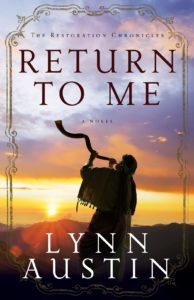 Understanding events will help me explain some of the powerful scenes in the book of Nehemiah to my Bible study ladies.
Even now, working through the prep of the InterVarsity Press Nehemiah Lifeguide study we’ll be using, I stumbled on, again, why did Nehemiah need a census?
Ah, the third book, On This Foundation explained.
I read all three books because it’s important to understand how and why the Hebrew’s return to Jerusalem took place over 100 years.
Return to Me–Zechariah and Zerubbabel
In Return to Me, Austin described the longing the people had for a place most didn’t remember.
Seventy years for a people who had been cast out of Jerusalem because of disobedience to the Law, is a long time.
Given a chance to return to their homeland, many decided to stay. It was too hard to start over; the allure of Babylon cast a spell.
Austin’s description of what Jerusalem looked like when they finished crossing the desert was sad.
Solomon’s temple no longer towered above the mount; everything had been destroyed.
How can we find hope when weeds choke what stones still stand?
Reading about that return, reminded me that it wasn’t an obvious decision to return to Jerusalem.
It took genuine pioneer gumption, not to mention hard work.
That’s important to know–God’s people did not have it easy.
Keepers of the Covenant–Esther and Ezra
Many novels have been written about Esther’s story, but Austin turned it upside down.
As it would have been for Jews living in Susa and outside of Babylon, no one understood the why of Haman’s shocking edict to slaughter the Jews.
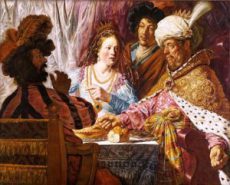
The Feast of Esther by Jan Lievens (Wikipedia Commons)
Can you imagine your reaction if your government, for no apparent reason, decided to kill you on a specific day?
And since that day was months in the future, what it would have been like to have your Gentile neighbors eyeing your possessions and calculating whom they wanted to kill?
The scenes were poignant and helped explain why some wanted to leave Babylon behind for the uncertainty of Jerusalem.
Discussions of faith and descriptions of the sacrifice on the rebuilt Temple mound–nothing like its previous glory–challenged me.
That’s why you read historical and biblical fiction–to better understand your place in history.
On This Foundation –Nehemiah
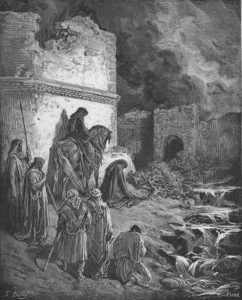
Doré’s English Bible; Gustave Dore (Wikipedia Commons)
Who would have thought of Nehemiah, the King’s cupbearer, as an expert in security?
And yet, it made perfect sense and formed the backbone of the final book.
Is it true? I don’t know, but in Austin’s capable hands, the book provided insight I lacked.
And how did they physically build the wall?
With their weapons at their sides, yes, but Austin fleshed out the description to include pulleys and plumb lines.
As I printed a map for my bible study, I saw Shallum’s daughters repaired one section of the wall.
Austin provided an excellent reason why.
I enjoyed this book the best.
What’s true and what’s not true?
Only what we see in Scripture is true.
I didn’t see any dubious embroidery on the biblical facts in Austin’s work.
If I read something I question, I check it against the Scriptures.
God calls us to do that, remember? He invites us to “Come now, let us reason together.”
I’ve also told my ladies what I’m doing and I encourage them to question me if they suspect something is amiss.
Our conversation is frequently lively and I’m looking forward to examining the book of Nehemiah with them.
Do you read biblical fiction when you’re studying a specific book to match?
Tweetables
Should the Bible study leader read biblical fiction to prepare to teach? Click to Tweet
How biblical fiction can provide a Bible study leader with insight and context. Click to Tweet
Using biblical fiction in Bible study. Click to Tweet
The post Biblical Fiction and Bible Study Preparation appeared first on Michelle Ule, Author.