
Heather Solos's Blog, page 19
September 5, 2017
Vinegar as Laundry Detergent?
Dear Home-Ec 101,
I really appreciate all the advice on your website. I was wondering if you would know whether it’s alright to use white vinegar as a laundry detergent. Thank you very much.
Sincerely,
Tart in Tahoma
Dear Tart in Tahoma,
The short answer is not if you want to have clean, fresh smelling laundry as a result.
I’m going to go out on a limb and assume that you’re a human being. We, fallible creatures that we are, have skin that secretes sweat and oils. These oils are transferred from our bodies to our clothing while we wear them. It’s more noticeable in places that receive a lot of contact with your skin, for example the collar of button down shirts. In fact, there used to be commercial campaigns about which laundry detergent was best for handling “ring around the collar”.
Your sheets, towels, and pillow cases all come into contact with you, resulting in the same kind of dirt and oil deposits. Any kind of of material that comes into contact with food or cooking will also pick up grease and proteins. You can use your imagination for other types of stains created by the human body. Most of those qualify as protein stains.
Now keep in mind all of the above is just your normal, everyday dirt and grime. This conversation isn’t about stains, which will take special treatment and sometimes that treatment involves using vinegar to treat the stain itself. It isn’t contradictory to suggest using vinegar to treat a stain or to help improve the rinse cycle.
The laundry you don’t send out for dry cleaning is cleaned while immersed in water. The water passes through the fibers of the material bringing tiny bits of dirt into solution. Vinegar added to that water would lower the pH of the water, which does increase the solubility somewhat. Solubility is the ability for particles to dissolve in water.
That’s great, right?
Just add vinegar and all the dirt goes away. No, oil and grease are not water soluble. That’s where detergents comes into play. Here’s where the wording can get a little confusing. Chemically speaking, a detergent is a type of molecule that has one end that is attracted to water (hydrophilic) while the other end is repelled by water (hydrophobic). Detergents help clothes get clean when the hydrophobic end of the molecule gloms onto an oily particle. When the oily particle is completely surrounded by detergent molecules it now can come into solution as the water loving sides of the molecule face outward.
The water your laundry is cleaned in is a solution.
Every solution has a saturation point. This means the point at which nothing else can come into solution. You can play with this concept in your kitchen. Just get a small glass of water and slowly begin to add salt. When the salt can no longer dissolve, no matter how much you stir, you’ve just passed the saturation point. If you heated the water, you could dissolve more salt. This is why it’s easier for clothes to get cleaner in warm or hot water and why the general rule of thumb is to wash your really dirty clothing in the hottest water the fabric can tolerate.
Laundry detergent has quite a few ingredients, including surprise! detergents.: surfactants, which reduce the surface tension of water, water conditioners which soften hard water, brighteners, which help whites not look gray, enzymes, which can break down some organic material, and fragrances. Finding the formula that works best for the water in your home can take a bit of trial and error, especially if you have hard water.
Some laundry detergents are more environmentally friendly than others, but if you have to run clothes through several cycles to get them clean, you have to consider the cost of the energy used, too.
Not sure if you have hard water?
You can usually find out from your water treatment plant. If you use a well, you can call your county’s extension office and ask about the area in general or they may help you find a water testing service. If you do use a well you should have your water quality checked regularly to ensure that it is not contaminated.
If you have really hard water, you may want to consider conditioning your water.
Long story short, vinegar only deals with a portion of the laundry solution and is ineffective without help from detergents.
Send your questions to helpme@home-ec101.com.
The post Vinegar as Laundry Detergent? appeared first on Home Ec 101.


August 4, 2017
Why Is the Ice in my Ice Machine Melting?
Dear Home-Ec 101,
I have a fairly new ice machine at the beach, a house we use roughly every other weekend. Lately, the ice machine does not seem to be cold enough to keep the ice it makes frozen. I have vacuumed the coils, ran a “Clean cycle” with the cleanser, turned it off and completely cleaned and dried. Once restarting, it seemed to work fine for the first day but now the top layer of ice is softer and melting. The gasket seems to seal the door shut. Not having a warranty and the business that I purchased from is now defunct. I’m reaching out for your expertise. Any guidance greatly appreciated.
Best,
Melting in Mulberry
Dear Melting,
When I was a kid, my dad had a timeshare in Myrtle Beach. We thought the coolest thing about it was the ice machine, because at home we were still using ice trays and getting fussed at for not refilling them. Thank you for the memory.
I also remembered that the bin, while full of ice, was never particularly cold, so I began doing some research. I found somewhere in the depths of GE’s online user manuals and FAQs that the ice machine is actually not a freezer like a deep freeze or attached to your refrigerator. Ice melting is actually perfectly normal and to be expected.
The good news is: Ice melting in the bin of your ice machine is actually perfectly normal and to be expected.
The bin itself is nothing more than a large, cooler to hold the ice while it slowly melts. You’ll likely notice more melting when it’s too hot for the AC to keep up and less on cooler days.
You did nothing wrong cleaning out the ice machine. It’s a good idea to do that once in a while so that the dirt introduced into the machine by careless hands can be cleaned out and none of that nasty black gunk builds up. (Give some serious thought to cleaning out the drain line once in a while, too.)
Enjoy your beach house and why not make some a nice lemon shake-up with some of that perfect ice?
Send your questions to helpme@home-ec101.com
Aside: For those who asked, I’m feeling much better, thank you.
The post Why Is the Ice in my Ice Machine Melting? appeared first on Home Ec 101.


June 21, 2017
Off-Topic: Checking In
Hey there,
I hope all of you are well. I know things have been pretty quiet here on the site. Initially, things were just getting quite busy at work, but one thing is never enough. Very recently my father was in the ICU with sepsis, but he’s home and doing much better. That unexpected trip to Illinois, the boatload of unwanted stress, and a nasty case of strep seem—according to doctor visit #2—to have built up to a case of mono. Who in their thirties gets mono?
I knew something was really off last Friday when I was so tired I was in tears and told my husband I was thinking of shutting down the site completely. I was really feeling guilty about not responding to any questions or working on making it nicer.
Working my day job and trying not to spread the germs to my family is all I can handle right now. I will be back, but it might be a few weeks.
I have the questions you’ve submitted, and I’m saving them to answer when my head doesn’t feel like the voice of adults in Charlie Brown.
Keep on keeping on. Do the best you can and cut yourself plenty of slack if you need to. I’m trying hard to abide by this, too.
Always,
Heather
The post Off-Topic: Checking In appeared first on Home Ec 101.

CommentsTake care of yourself. I also got mono in my thirties! Coughed ... by Karen LI'm sorry for all your troubles. You do your thing. We'll be ... by JennPart of being an adult is recognizing when to say “enough”. ... by LouiseFeel better soon and rest! We'll all be fine until you're back! ... by wendytake care of yourself, Heather. We will miss you, but the world ... by Jess
June 6, 2017
Removing Body Soil and Other Grunge from Furniture Upholstered with Microsuede
Dear Home Ec 101,
In 2006, we bought several pieces of microsuede furniture in a chocolate brown. Over time, the arms and headrests have become oily and dirty. The code on the label is “WS”. Can we remove the grime from our couch and recliner? How hard is it to clean microsuede without damaging the material?
Sincerely,
Maybe Aunt Edna’s Plastic Covers Weren’t That Silly
I can relate to this issue, we have four children—that says enough, right?
Before we get started, it’s time to repeat the Home-Ec 101 Safety Oath:
I solemnly swear to always read the label, consult the manufacturer, test in an inconspicuous area, never feed the mogwai after midnight, and to never, ever mix chemicals without lots of research and coffee.
With that said, you did exactly the right thing to check the care tag first before trying any cleaning method. On upholstered furniture, the code WS generally means the fabric can be cleaned with water or a solvent-based cleaning solution.
Important: Even if the cushions’ covers are removable and water safe, do not wash them in your machine. They will likely stretch and never fit quite right agin.
It is best to do two things before trying either:
Google the furniture’s manufacturer and the cleaning code e.g. “Ashley Upholstered Furniture Care WS”. The manufacturer’s guidelines trump anything that follows.
Spot test no matter what the guidelines are.
To clean the ground in grunge created from sweat and hair oil—possibly oil from pet coats, too— you’ll want to use a mild detergent with as little water as possible for your furniture.
How? You have two methods to choose from:
Method 1:
Grab the old, gentle stand-by Dawn, you want the plain, original formula without added bleach, a whisk, deep bowl, several clean, white rags, and a soft brush with nylon bristles.
1/2 cup of the mild dish soap
1/2 cup water
*Bonus item* a fan
Add the water and dish soap to the bowl and whisk until you’ve created a lot of foam. Dip the first rag into the foam until it’s damp. If it’s a couch, grab one of the cushions first and flip it over and look for a spot that is the same material and rub the material with the white detergent dampened rag in parallel strokes. Check the rag to be sure no color has transferred from the upholstery to the fabric.
If you are cleaning a piece of furniture where you can’t remove a cushion (it just makes it very convenient to test). You’ll need to find an area that doesn’t show.
To be clear, I’m not talking about the transfer of any grunge from the upholstery to the rag.
All good?
Excellent. Work in sections, blot and gently stroke the fabric in parallel strokes. Frequently rinsing, wringing, and re-working the foam you created into the fabric. When no more grime is showing up on the rag, grab a new, clean one, dampen it in fresh water, wring and wipe in parallel strokes in the other direction.
The goal is to not soak the material, you don’t want the padding getting wet, you’ll invite mildew to the party.
Set up a fan, to help the fabric dry quickly.
Do not be surprised if the fabric is stiff. That’s what the soft brush is for. Gently scrub the material until it soft again. Do not use force with this process, you’ll tear the microfibers and it’ll never be the same.
Option 2:
Go to a box store like Target and look for upholstery cleaner that says it is safe for microsuede fabric. Amazon works, too, of course.
Apply the product as directed, dry thoroughly and use a soft brush to restore the feel of the fabric.
Best of luck getting the grime out of your furniture. Do keep in mind that the
While I am not a fan of throwing out an item just because it is no longer trendy, do keep in mind that the expected lifespan for a couch is dropping and is now somewhere between 7 – 15 years. If your recliner is anything like upholstered furniture, the end of that lifespan is approaching rapidly. You may be able to get a few more years out of it, but the padding, if it isn’t already, may soon reach the point where it rapidly seems to disintegrate.
Submit your questions to helpme@home-ec101.com.

The post Removing Body Soil and Other Grunge from Furniture Upholstered with Microsuede appeared first on Home Ec 101.


April 19, 2017
A Day Late, A Dollar Short, No More: Life Skills are Frugal
 Heather says:
I was once asked how I could call Home-Ec 101 a frugal site when overall money isn’t mentioned. The short answer? I believe life skills are some of the most underutilized assets of the general population.
Use it up, wear it out, make it do, or do without.
This is the mantra of the frugal mindset and I believe it applies.
Cleaning a home?
This goes far beyond extending the life of your carpet or getting the mold out of the shower.
There are psychological aspects in play, many of us perceive clean as newer, better, even shiny! Growing up we had a joke that clean cars drove better. It is a familiar phenomenon; as humans, there are only so many things we can take in at once and we rely on general impressions. Walking into a home littered with dirty dishes, laundry, and scattered items does nothing for our general mood or impression of the place—perhaps most significantly when it’s our own home.
Who wouldn’t want to go out and escape a pigsty? Going out usually involves spending at least some money.
Going out is fine when it’s a choice rather than an avoidance tactic.
Organization—and I’m not talking about the going out and buying fancy boxes kind- helps a person avoid late fees and replacement costs.
Ok, but. . .
Laundry?
Simply keeping an item wearable by removing a stain or by not ruining a delicate item gives a person the ability to keep a little more money in their pocket.
Buying underwear because nothing is clean is the antithesis of frugality.
Cooking?
Heather, I’ve seen other websites with cheaper recipes. How can you call your method frugal?
Learning to cook is a process. I strongly believe a series of successes in the kitchen will give a person confidence and potentially a desire to try again.
I want to meet cooks where they are. Some people grow up believing stirring a boxed mix together is cooking and my goal isn’t to create feelings of guilt or shame. Instead, I want to introduce people to the pleasure of preparing real, enjoyable food.
Using a convenience food because it is convenient is one thing, relying completely on them is expensive long term. Each time someone decides to try their hand at a dish instead of opening a box or ordering out? I call that a win. I get a lot of email from people who are just finding their legs in the kitchen. It absolutely makes my day when someone sends an email to say, I made my girlfriend dinner and she loved it! Yes, there are a lot of men who read this site.
Nutritionally I’m trying to broaden palates. It’s hard to be healthy—over time—with a three vegetable rotation, but if you’re a three vegetable reader I’m not judging, I’m just saying it’s your starting point.
Economically and ecologically
I believe it makes sense to take advantage of seasonal and local products when it is possible. I see this as frugality in the broadest sense of the term, it’s making an informed choice to purchase the most beneficial product rather than the one offered at the lowest immediate cost. There can be longterm financial impacts caused by short-term savings. Supporting a local farmer keeps money in the local economy including the local tax system which supports local schools. Long term, that can impact the willingness of other companies to invest in the area, an educated work force is important.*
For the TL;DR crowd here’s the takeaway.
Self-sufficiency both as an individual and as a community saves money.
Are we on the same page now?
*I say this living in an area and culture that needs to place a higher value on education and technology. It’s depressing to watch the best and the brightest leave for higher ground. In no way do I blame them, it’s just a sad sight to see. There are pockets of people fighting the current, but too often they feel like the exception.
Send your questions to helpme@home-ec101.com
The post A Day Late, A Dollar Short, No More: Life Skills are Frugal appeared first on Home Ec 101.


CommentsI am standing up and clapping at my desk. This is exactly how I ... by Windy Taylor"Heather, I've seen other websites with cheaper recipes. How ... by CJ McDI always understood that's why they called it Home Economics. ... by ShelleyI thought it was kind of obvious that learning to do things ... by StacyMost of people are on a budget and I watch the money very ... by P J @ home decorPlus 29 more...
April 17, 2017
How Does Your Water Affect Your Laundry?
I have well water and found out that using bleach in the wash will turn my cloths brownish. And yes they have become dingy and not as bright. What can I use, if anything, to make them white again or keep this from happening again to newer cloths I get? And also am I supposed to use the borax and my laundry detergent together when washing or just the borax or is it the borax and the soda ash?
Please help!
Sincerely,
Worried Washer
The first thing to do is to find out exactly what you are dealing with. As a well owner, it is important to have your water tested every year for bacteria. Having your well water tested for metals and minerals is often a separate tests. Here in South Carolina these tests are handled by DHEC, the Department of Health and Environmental Control. This map, provided by the CDC, links to the appropriate department for each state. In South Carolina it’s $20 to have your water tested for bacteria and they do not list the price for mineral and metal testing.
You can also order a water testing kit from Amazon (if you click the link in a newsletter, it’ll redirect to this post, it’ll point to the right product once you’re on Home-Ec101.com).
It sounds like you have iron in your water. For those of you who have hard water without a lot of iron, this post may be helpful.
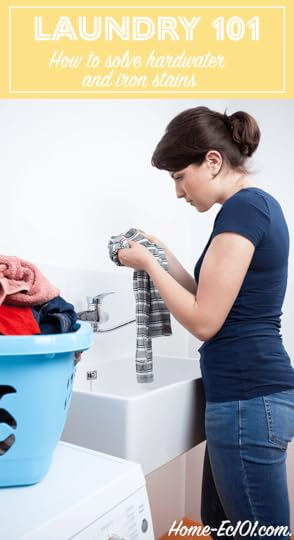
When you wash clothing in water with iron, using chlorine bleach causes the iron to rust and deposits on your clothing. Even if you didn’t use bleach, you’d still have yellowish staings forming. It’s also rust, just in smaller amounts.
Once heat, from your dryer has set the iron stains, they can be difficult, if not impossible to remove from your lighter clothing. If the clothing has not been through the dryer, you have options. The second link is also useful for removing rust stains from the toilet.
Your next step is to prevent the rust stains from occurring. There are several methods to remove the iron from your water, the one you choose will be determined by how much iron is in your water and your budget, of course. You can remove the iron before it reaches your machine, you’ll need to research the kind of water softener you buy carefully and it may be worth talking to a professional before investing. Why does it matter? Water softeners use negatively charged beads to attract the calcium and magnesium that makes water hard, these beads are also exceptionally good at attracting the iron in water. The problem occurs when the machine backwashes to get rid of the removed particles. The problem is that if there is a lot of iron in the water the backwash may not be enough to remove the iron, creating a sludge that clogs the resin bed or the machine.
If your iron issues aren’t severe, you might be able to use a water conditioner in the laundry itself. You’ll know more after you test.
Best of luck!
Send your questions to helpme@home-ec101.com.
The post How Does Your Water Affect Your Laundry? appeared first on Home Ec 101.


CommentsIt will help, but it's going to also depend on how much iron in ... by Heather SolosWhite vinegar is the way to prevent whites from yellowing ... by Marialana Lenhart
April 4, 2017
Removing Peanut Butter from Nubby Upholstery/Fabric
Dear Home-Ec101,
My husband dripped peanut butter on our nubby weave couch and rubbed it in when he tried to clean it off. Can you tell me and your readers how to get messes like this out without further ruining the upholstery?
Signed,
Excuse the Mess, We Just Live Here
I dream of the day when stain resistant materials actually are, don’t you? Do you hear that fabric manufacturers? We don’t need paparazzi defeating jackets, we need comfortable, attractive fabrics that laugh in the face of peanut butter.
Until then, peanut butter can be a tricky mess to deal with as not only do you have the solids to contend with, but also the oily residue left behind.
As with any stain, we will work from the mildest solution to the harshest. Sure strong chemicals may work really well, but if it reduces the lifespan of the couch, they may not be the best choice.
Step One: Cornstarch
From your letter, it sounds like the bulk of the solids have been removed and now you’re dealing with the remaining oil. The first thing to try is cornstarch or if you have it, dry shampoo. Both substances soak up oil and grease. Get an old toothbrush and gently work the cornstarch into the stain. Please note that I’m not suggested you scrub the area. Gently tap the cornstarch into the fabric so that it can work between the fibers, drawing out the oil. This isn’t a fast process and it might take a few attempts before giving up and moving on to the next step. Vacuum up all of the cornstarch before proceeding. Don’t use a rotating brush, just the end of the hose, if you lack the right attachments.
Step two: Dish soap
If there is still an oily stain, pick up some of the plain blue Dawn dish soap. Make sure it is not the kind with bleach, but the one they advertise as used to rescue wildlife that has run afoul of an oil spill. Even if it is safe for waterfowl, you’ll want to test it on an inconspicuous area of your couch. Not many couches have been rescued from Deep Horizon, so we don’t have much documentation.
Once you’re sure it won’t harm the fabric, dab a few drops of the soap onto the stain and remove by blotting with a wet cloth. (Wet, not dripping, but not nearly wrung dry, either). Dab gently until all of the soap has been removed. The goal here is to remove the soap without tearing up the fibers.
Important: Dry thoroughly
Do you have access to a wet/dry shop-vac? You can use that to extract the remaining water. You don’t want to leave the area wet or you’ll just invite mildew to the party. No shop-vac? No problem. Just get a dry towel and continue blotting. If the stain is on a horizontal surface, you can fold the towel over several times and place your husband some heavy books to wick the water from the couch to the towel. If it’s on the side of the couch, set up a box fan to blow on the area until it is fully dry.
Step 3: Ammonia
If the stain is STILL there, you have my sympathy, but there is one more thing to try. Dilute ammonia. Mix two tablespoons of ammonia with one liter of water. Put on gloves. Dampen a clean rag with the solution and test in an inconspicuous location. No color damage? Great. Proceed to dab the spot with the damp rag until the stain is gone. Then remove the ammonia solution with a rag dampened with only water and follow the above procedure to remove the water.
Step 4: Acceptance
If that doesn’t work, invest in some throw pillows and try to let it go.
Send your questions to helpme@home-ec101.com.

The post Removing Peanut Butter from Nubby Upholstery/Fabric appeared first on Home Ec 101.


CommentsI can honestly say that you have hit upon a subject I never ... by Michael
March 28, 2017
Help, how do I get rid of drain flies?
Dear Home-Ec 101,
I have three window wells in my finished basement. I am forever finding little black dead flies. I have sprayed, thrown gallons of bleach and ammonia down the window wells. In the window wells I found something like yellow cocoons that I think they have built. There were several in each well. I knocked them down and covered them with bleach. No help. Lately, I have been finding a couple dozen dead on the kitchen floor. The minute you touch them they fall apart. Could you tell me what they are, and what I need to do to get rid of them?
Signed,
Shoo-Fly
Dear Shoo-Fly,
Please tell me gallons of water and a lot of time came after the use of bleach and before the ammonia was used in the same drain. This tactic could have had tragic consequences.
I have good news and I have bad news. First, what you are dealing with is a nuisance pest known as drain flies or drain moths. Yes, they are kind of gross, but they don’t spread disease. The flies are not responsible for the cocoons. Without knowing where you live, I would consider spiders as the likely culprit for the cocoons and they probably moved in once they heard about the drain fly buffet in the window well. I would leave them alone until you get the drain flies under control, which could take a while.
Another cocoon builder to consider, if you found them with grass or straw, is a type of wasp that eats stink bugs. If you’ve ever dealt with stink bugs, you’d probably roll out the welcome mat for this insect.
The bad news is that in your situation the drain flies are likely going to be difficult to fully clear up. You’ll need to address the issue on several fronts and decide if it is worth the bother or not.
The drain fly lifecycle is semi-aquatic, the larvae live in the organic matter that builds up on the inside of drains. Outdoor drains, such as the ones that are probably in your window well can become partially or fully clogged with organic matter like grass, dirt, other bugs. This organic matter, plus the water that will pool due to the clog, creates the perfect drain fly nursery. You may as well be playing Barry White and offering wine.
Later the spiders and wasps heard about the party and decided to crash.
All would be well and ignorable if they hadn’t found a way into your basement and the rest of the house. Job one is to figure out where bugs can squeeze into your house and fix those gaps.
Once you have stopped the invasion, it is time to tackle the indoor issue.
Some of your window well friends spread their little wings and moved in. Many basements have a floor drain(s) or a laundry sink. Both of these tend to get ignored until they become a problem. Chlorine bleach is not a good solution as it doesn’t take care of the organic matter. As your drain fly colony expands, they seek new territory and are moving on to your kitchen and sooner or later any drain in your house.
While I’m not a fan of using heavy duty drain cleaners as a first solution for a clogged drain, you’re an exception. To fully conquer the indoor issue, it is imperative for you to clean every drain in your home on the same day. Work from the top floor to the basement. You need to use the tactic or you’ll spend a very long time chasing the little buggers from drain to drain, eventually using more chemical than if you’d tackled it correctly the first time. You need to clean your indoor drains fully and many of them won’t be easily accessible due to being partially underground. If you were writing to me about a slow drain, I’d suggest other methods, this is an insect infestation and entirely different.
Go ahead and get the Draino. If this approach really bothers you, plant a tree when you’re done.
Finally, consider cleaning the drains in your window wells so they can’t find a new way in. If you don’t have actual drains you have water pooling and stagnating in the bottom of the well. You’ll definitely need to address this before it begins seeping into your basement.
Good luck!
Send your household questions to helpme@home-ec101.com.
Klass, Carolyn. “Drain Flies or Moth Flies.” Insect Diagnostic Lab Factsheet. Cornell University, Revised Jan. 2016. Web. 28 Mar. 2017. .
“The BugGuide.” The BugGuide.University of Iowa Entomology Department, n.d. Web. 28 Mar. 2017. . Various entries searching for cocoons

The post Help, how do I get rid of drain flies? appeared first on Home Ec 101.


March 23, 2017
How Much Vinegar Should I Use in the Laundry?
Dear Home-Ec 101,
I read your information on why liquid fabric softener causes stains on dark clothing and that you use white vinegar instead.
I have a front loading machine.
How do I add the vinegar and how much?
Sincerely,
Washing in Walhalla
Dear W.W.,
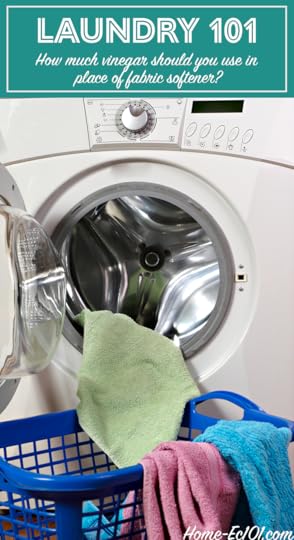
To add the vinegar to your washer, use either the fabric softener dispenser or one of those balls you toss in with the clothing. If you are using chlorine bleach in your load of laundry be VERY careful and don’t mix the two.
Important:
Consult your washing machine’s manual before making the switch. If your washing machine has gaskets or tubing that is vulnerable to a mild acid, it should have a warning. (When we’re discussing white vinegar, we are referring to the 5% dilution. Never use the concentrated 25% in the laundry)
Next, I wish your question about the amount of vinegar to add to your washer were as simple to answer as how to add it.
If your laundry had a Facebook page, its relationship status would be: It’s complicated.
Did you know that there are chemists who work for major corporations whose job it is to study the efficacy of detergents and softeners and their effect on the clothing they clean and soften?
Their job is made harder every year with the rising trend of fast fashion (think of it as the fast food of clothing). Consumers buy clothing expecting it to last even if it isn’t made to and consumers like to misplace blame when their clothing wears out quickly. Regarding the vinegar, too much acidity and the fibers will weaken even faster.
The manufacturers of your washer also spent a lot of time and resources researching just which materials to use to create the gaskets and tubes that will withstand the usually caustic conditions of the laundry process? Granted manufacturers use this information in two ways, first to maximize profit and second to keep their reputation. Is vinegar safe for your machine?
How hard is your water?
Did you know that the water coming from your tap contains a lot more than good old H₂0? Depending on where you live and its mineral content, the water may be considered hard or soft. The hardness of your water is measured in grains and if you want to turn your laundry room into a science lab you can call your county’s extension office and ask about the water quality in your area. (You can also have your water tested if you want even more precise knowledge).
How big is your washer?
You could then look up your washing machine’s capacity, usually somewhere in the range of 4.2 – 5 feet in the US. Then determine the appropriate size load of clothing it can accommodate.
How big is the load of laundry you’re washing?
When adding your clothing to a front loading washer, you should loosely fill the tub until it naturally—without shoving—meets the first row of holes from the opening. You don’t want to pack the clothing in so tightly that it’s pushing against the door. Some manufacturers suggesting adding clothing by weight, check your manual, with practice you’ll get really good at knowing the right amount of material. If the clothing is extra dirty, leave more room.
Are you using hot or cold water?
Do you have cold ground water, like people in Minnesota or are you in the subtropics of Florida? Don’t forget to consult the fabric labels to determine the temperature at which the items can be safely washed.
Do you use the right amount of detergent?
The amount of detergent in the rinse water will affect how the vinegar performs. Consult the owner’s manual and the label of the high-efficiency detergent to determine how much detergent to use per load.
So how much vinegar, Heather? That’s all I really want to know.
::drumroll::
You’re going to have to experiment.
You see, without knowing the size of the machine, the hardness of your water, the amount of clothing, the type of clothing, the temperature it will be washed, or your expectations of the outcome, I really can’t give a precise answer. The answer could even be to skip the vinegar altogether and stick with fabric softener; you have to figure out what works best for you.
The good news is that every day comes with more laundry and another opportunity to experiment.
Send your questions to helpme@home-ec101.com
The post How Much Vinegar Should I Use in the Laundry? appeared first on Home Ec 101.


CommentsGreat article!! I've been using white vinegar for quite awhile, ... by M. Len
March 10, 2017
Wilted Spinach Salad with Peppered, Candied Bacon
Wilted Spinach Salad with Peppered, Candied Bacon

Spinach salad:
6oz fresh baby spinach
1/2 sweet or red onion sliced thinly
1 granny smith apple cored and cut into bite size pieces (if you are making this ahead of time, store in cold water with lemon juice to prevent browning)
4 hard boiled eggs cut into wedges
7 slices candied peppered bacon
Toss ingredients in a large bowl, reserve some egg and bacon for garnish.
Optional additions:
Toasted pecans
Grilled chicken
Berries (strawberries, raspberries, or blueberries)
Walnuts
Goat cheese
Cooked beets
Candied Peppered Bacon
7 slices bacon
2 TBSP brown sugar
fresh ground pepper to taste
Preheat oven to 425. Arrange the bacon in a single layer on a baking sheet and sprinkle with brown sugar and fresh ground pepper. Bake for 10 – 12 minutes, watch closely. Drain on a rack, NOT on paper towels. . . trust me. Reserve drippings for dressing.
Arrange the bacon in a single layer on a baking sheet lined with aluminum foil. Sprinkle with the brown sugar and fresh ground pepper. Use clean fingers to even out the topping’s coverage.
Bake for 10 – 12 minutes, watch closely. Do not try to make this bacon super crispy, you’ll break a tooth. It’s better to take it out a bit too soon and zap it for 30 seconds in the microwave than to risk burning in the oven.
Drain on a rack or plate NOT on paper towels. . . trust me. Reserve drippings for dressing.
Dressing:
2 TBSP bacon drippings
3 TBSP balsamic vinegar
3 TBSP dijon mustard
4 TBSP brown sugar
In a microwave safe bowl whisk together the ingredients. Microwave covered on high for 1 minute, stir, microwave for an additional minute. Drizzle over the spinach salad and toss to coat. Garnish the salad with the reserved bacon and eggs. Serve immediately. If you want to prep the salad early, store the dressing separately in the refrigerator (before microwaving) and heat just before
Tip: If you want to prep the salad early, store the dressing separately in the refrigerator and heat just before you’re ready.
Bonus Tip: If you have an Instant Pot*, you can hard boil the eggs by pressure cooking in a steamer basket with 1 cup of water on high for 8 minutes and quick-releasing the pressure. Dunk the eggs immediately in an ice bath. Each batch I’ve done has been easy to peel once cool enough to handle.
Yields two main course salads or four side salads.
Grilled chicken would be a nice accompaniment for this dish.
* Our family of six, needs the 8qt model.
The post Wilted Spinach Salad with Peppered, Candied Bacon appeared first on Home Ec 101.


CommentsI made this salad tonight and loved it, I will definitely make ... by QGirl17that looks delicious!! as a child my mother would make a wilted ... by And Miles To Go....Bacon make almost everything better! Yum! by StephanieMake It From Scratch #26… Hello everyone. I am this ... by Balance In DietSounds yummy . . . and fattening!
Heather Solos's Blog

- Heather Solos's profile
- 12 followers

