Lee Martin's Blog, page 28
July 20, 2020
The Obsessive Narrator
 I’ve been posting the last couple of weeks about the reflective first-person narrator who looks back upon experience from a greater and wiser perspective. Today, I’d like to talk about the first-person narrator who isn’t very wise or perceptive through most of the story. These sorts of narrators find themselves so deeply immersed in the events of the dramatic present they have little time for reflection or meaning-making until the pressures of the present demand it of them. It’s as if these narrators have blinders on. For the most part, they can only see what’s immediately present.
Perhaps the most famous example of this sort of narrator would be James Joyce’s story, “Araby,” the story of a young boy who’s quite smitten with a friend’s older sister, so smitten that, when he finds out she can’t go to the bazaar of the title, he tells her that if he goes, he’ll buy something for her. “What innumerable follies laid waste to my waking and sleeping thoughts after that evening,” the narrator tells us. “I wished to annihilate the tedious intervening days. I chafed against the work of school. At night in my bedroom and by day in the classroom her image came between me and the page I strove to read.” As with the reflective narrator, here we have a narrator telling a story of something that happened in his past. Joyce makes that clear with the opening sentence: “North Richmond Street, being blind, was a quiet street except at the hour when the Christian Brothers’ School set the boys free.” Whenever a first-person narrator speaks in the past tense, we can only assume the act of the telling is taking place at some degree of remove from the story being told. That fact alone, though, doesn’t merit the status of a reflective narrator.
For the most part, as Joyce’s story opens, the narrator focuses on the details of setting and character that were known to him at the time: “the short days of winter dusk,” the shadow of the friend’s sister on her doorstep, the coin (a florin) the narrator’s uncle gives him to spend at the bazaar. There’s little or no attempt to interrogate the past, to speculate on meaning, as is the case with the reflective narrator. This choice of narrative approach serves the intention of the story. Joyce’s narrator is caught up in the whirl of first, obsessive infatuation. To utilize a reflective narrator would be to take the character out of that whirl and to lessen its effect. Joyce’s narrative strategy which gives the narrator tunnel vision is appropriate for the intended effect. Even at those moments when the narrator clearly speaks from a wiser position, as in the passage I quote above about his impatience with “the tedious intervening days” before the bazaar, the narrator doesn’t interrogate or speculate on the whys of his obsession. He is simply obsessed, and when one is obsessed there is, of course, little room for contemplation.
Joyce creates the world of the adolescent boy, immerses us in it, and sweeps us along to the night of the bazaar and his uncle’s late arrival home which makes our narrator arrive at the bazaar just as it’s shutting down. Joyce keeps the narrator firmly under rein within the sequence of events until the very end when a young lady at one of the stalls asks if he wishes to buy something. It’s clear to the narrator, though, that she really doesn’t want to sell him something. She wants to pack up and go home: “The tone of her voice was not encouraging; she seemed to have spoken to me out of a sense of duty.” The young girl pricks the balloon of adolescent infatuation that that the narrator has been living in, and, once she does, the narrator’s obsession begins to fade, and he’s able to be just a tad bit reflective as he notices the tone of the young girl’s voice: “I looked humbly at the great jars that stood like eastern guards at either side of the dark entrance to the stall and murmured: “No, thank you.” The stage is set, then, for the final move of the story, the one that forces the narrator to look closely at himself and his obsession, a passion for which the world at large has little use as evidenced by the young girl’s perfunctory question of whether the narrator wanted to buy something and then the gradual shutting off of the lights in the great hall. Rising up in this story is the truth that our obsessions are rarely acknowledged or validated by the world around us. The last sentence of the story, spoken from a wiser narrator, makes clear what the pressures of the plot have forced him to see: “Gazing up into the darkness I saw myself as a creature driven and derided by vanity; and my eyes burned with anguish and anger.” This is what we might call, the come-to-Jesus moment, the one that requires the narrator to leave his obsession—“I allowed the two pennies to fall against the sixpence in my pocket.”—and to face the undeniable truth about it and about his own vanity. Charles Baxter says in his essay, “Against Epiphanies,” prefers to think of these moments as “unveilings.” “We watch,” Baxter says, “as a hidden presence, some secret logic, rises to visibility and serves as the climactic revelation. . . .The world of appearances falls away, and essences show themselves.”
So the narrator with blinders on comes to a place where the circumstances of the plot demand his attention. The tunnel vision prior to the unveiling is necessary for the effect of the story, which is one of a narrator coming to know. The knowing comes with a swiftness the blinders narrator can’t see. This approach requires a focused attention on the details and the elements of the dramatic present—in the case of “Araby,” the obsession with the friend’s sister, the delay in getting to the bazaar, and the disappointment that follows. To write this type of first-person story, writers must practice a good deal of restraint, as they let the plots of stories and the choices of people exert their pressures on the characters. Finally, in these kinds of stories, the writers must imbue their narrators with their own astute observations of human nature. To be obsessed is to close off the world and to operate from the demands of the ego.
The post The Obsessive Narrator appeared first on Lee Martin.


July 13, 2020
The Reflective Narrator in Memoir
 Last week, I made a post about the reflective first-person narrator’s attempt to make meaning from a past experience. I talked specifically about the art of fiction. The reflective narrator has always been essential to writers of memoir, and that’s where I’d like to put my focus now.
Writers of memoir simultaneously serve as players in their stories from the past and interrogators and interpreters of those stories. Sometimes a large moment of impact provides the impetus for thought; at other times a small anomalous detail becomes significant. Take, for instance, Sue William Silverman’s essay, “The Pat Boone Fan Club,” about her adoration of the wholesome singer during the time her father was molesting her. The essay tells the story of how Sue went to a Pat Boone concert as an adult and told him how his image on television, in magazine ads, had led her to believe that if he would only adopt her, she’d be saved from her father and his unwanted and hideous attentions. Then at the end of the essay, after she’s managed an audience with Mr. Boone, she questions whether it’s really true that he saved her. Her conclusion?
Yes, his image. His milky-white image.
That sterile pose. I conjured him into the man I needed him to be: a safe father. By my believing in that constant image, he did save me, without my being adopted, without my even asking.
Notice how Sue is thinking out loud on the page in this brief passage, coming to conclusions as she sifts through the evidence. She has moved from her role as participant in the narrative to that of spectator and interpreter.
Pivotal moments in memoirs aren’t always those of trauma, as they are in Sue’s case. Sometimes it’s the small, closely observed detail that makes all the difference. In Bernard Cooper’s essay, “Burl’s,” his father gives the eight-year-old Bernard a dime to buy a newspaper at the box outside the restaurant from the title. Outside on the sidewalk, Bernard sees two women walking toward him, women with Adam’s apples. One of the women catches a stiletto heel in a sidewalk crack, and the observant eight-year-old narrator notices “a rift in her composure, a window through which I could glimpse the shades of maleness that her dress and wig and makeup obscured.” This first encounter with transvestites for the yet-to-be acknowledged gay Bernard, shakes him:
Any woman might be a man; the fact of it clanged through the chambers of my brain. In broad day, in the midst of traffic, with my parents drinking coffee a few feet away, I felt as if everything I understood, everything I had taken for granted up to that moment—the curve of the earth, the heat of the sun, the reliability of my own eyes—had been squeezed out of me.
At the end of the essay, Cooper shifts fully into the reflective mode of the adult narrator looking back on experience:
It would be years before I heard the word transvestite, so I struggled to find a word for what I’d seen. He-she came to mind, as lilting as Injijikian [the last name of a girl in his class whom he thinks he loves because she’s pretty but also because he wants to be like her.] Burl’s would have been perfect, like boys and girls spliced together, but I can’t claim to have thought of this back then.
The point is he thinks of it as he looks back. The reflective narrator, whether in memoir or in fiction, is always dramatizing experience for the purpose of examining it and finding out what’s to be known in the here and now. As novelist Rachel Kushner says, “One of the strategies for doing first-person is to make the narrator very knowing, so that the reader is with somebody who has a take on everything they observe.”
The post The Reflective Narrator in Memoir appeared first on Lee Martin.
July 6, 2020
The Reflective Narrator
 I’ve been thinking a bit about first-person narration lately, particularly the sort that uses what I’ll call a reflective narrator. In this type of first-person narration, the narrator speaks at a remove in time and space from the events being narrated. “This is not a happy story,” the narrator of Richard Ford’s “Great Falls,” tells us in the story’s first line. “I warn you.” With that simple and direct start, the narrator attempts to establish his ability to faithfully recount the events of the story. “It is vital,” the natural historian David Attenborough says, “that there is a narrator figure whom people believe.”
Ford’s narrator in this story, and the narrators of other tales from his collection, Rock Springs, are upright tellers, who narrate their stories in an attempt to better understand them, the people involved in them, and the effect the central dramatic event had on their futures. These narrators create an experience for the readers similar to the one the narrators have as they tell their stories some time after the events have passed. In these types of first-person narratives, the narrator, from a position far in the future from the central dramatic episodes from the past, seeks a deeper understanding of what happened and what it meant to those involved.
In Ford’s story, “Optimists,” an adult narrator recalls an incident from his teenage years that changed him and his family forever. One night, in their home, the narrator’s father became so angry with a visitor that he punched him hard in the chest, so hard in fact that the visitor actually died. While the father is outside waiting for the police to come, the mother and her son (the boy our narrator was) wait inside the house. At this point in the story, our narrator, from the greater perspective time has given him, says,
I don’t know what my mother could have been thinking during that time, because she did not say. She did not ask about my father. She did not tell me to leave the room. Maybe she thought about the rest of her life then and what that might be like after tonight. Or maybe she thought this: that people can do the worst things they are capable of doing and in the end the world comes back to normal. Possibly, she was just waiting for something normal to begin to happen again. That would make sense, given her particular character.
This what I like to call a “thinking out loud” section. Here the adult narrator tries out various hypotheses to help him understand what must have been going through his mother’s mind that night. As the narrator thinks, he asks us to think along with him as he tries to make sense of the facts that his mother didn’t inquire about his father’s state of mind and didn’t ask the narrator to leave the room. From his greater distance, he speculates that she may have been thinking about how her life was going to change. Then he offers a counter narrative when he says maybe she was thinking about the fact that “people can do the worst things they are capable of doing and in the end the world comes back to normal.” That has a ring of truth to it. When I read those words, something clicks into place for me, and I say to myself, “Yes, that sounds right. That sounds like the truth.”
The reflective narrator has to be willing to interrogate and speculate. This narrator has to be capable of bringing us to a deeper level of understanding. This means the reflective narrator has to be willing to be our guide through a sequence of events, highlighting the telling moments—those puzzling moments, perhaps, upon which the rest of the characters’ lives depend. This type of narrator has to be capable of feeling the events of the narrative deeply—so deeply in fact that he or she can’t help but tell the story. But the reflective narrator also has to be capable of a nuanced intellectual response to the events of the story. To put it plainly, the reflective narrator is both a participant in the past events and also a spectator of those events. The reflective narrator is a meaning-making presence in the act of telling stories. To utilize this type of narrator, you have to have faith in your ability to see the greater truth in actions both large and small.
The post The Reflective Narrator appeared first on Lee Martin.
June 29, 2020
The Precise Names of Things
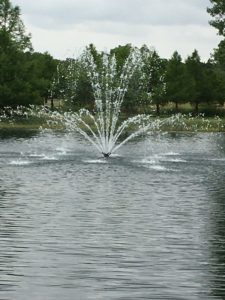 Yesterday evening, Cathy and I drove down to the lake in Fryer Park, which is located off Orders Road about a mile from our home. It was a pleasant evening—humid, but overcast and with enough of a breeze to make things comfortable. We sat awhile on a bench overlooking the lake and then decided to walk around it. Along our way, we stopped to read the plates that identified various trees—tulip, gingko, sweet gum, black gum. We ended our walk by sitting awhile on another bench and watching the spray of the fountain at that end of the lake. Nothing much happened on our visit to the lake—nothing story-worthy. In fact, our only interaction with anyone else came when Cathy told a woman that she had the cutest dog. It was a corgi. To be precise, it was a Pembroke Welsh corgi, the short-legged cattle herding breed that originated in Pembrokeshire, Wales.
I start with these details—the tulip tree, the gingko tree, the sweet gum, the black gum, the Pembroke Welsh corgi—as a reminder to writers that the exact names of things matter. If one of our first obligations to the readers is to convince them that the world we’re creating on the page actually exists, then we have to be precise. For instance, people just don’t drive cars; they drive specific makes and models of cars. If you think such a detail doesn’t matter all that much, try putting your main character in a Mustang GT instead of a Toyota Camry and see how your impression of that character changes. Furthermore, people don’t just live in houses. They live in bungalows, ranch homes, shotgun houses, Cape Cods, and on and on. You get the idea. The more precise you can be with your characters’ details, the richer your development of those characters will be.
Sometimes a precise detail fits perfectly with what the readers have been led to expect from a certain character. The quiet, modest schoolteacher drives a Volkswagen Beetle, for example, and we think, how appropriate. Sometimes, though, a precise detail seems anomalous. This same quiet, modest schoolteacher drives that Mustang GT. All of a sudden, an aspect of this character opens up to us, and the character becomes rounder. Precision is everything when it comes to making our characters persuasive.
Our settings must be precise as well. A town doesn’t nestle itself into the crook of a river. That river has a name, as do all the streets and the stores and the parks. Clovis Ottwell, for example, lives in a bungalow at the end of Locust Street not far from the banks of the White River and a block from the Save A Lot Food Store. Each Monday, he walks that block to buy a pouch of Beech-Nut Chewing Tobacco, and then, if the mood strikes him, he takes up his Zebco rod and reel and his tackle box and goes down to the White to wet a hook. One day, while he’s fishing. . . (you fill in the blank with something that makes Clovis and his fishing story-worthy).
You get the idea. Precise details not only make a world convincing, they help create round characters. I could put Clovis Ottwell in a different sort of house in a different location, and I could give him a different hobby and a different habit, and the story would change. Our stories and their characters are always made richer by the specific details. That’s why the names of things matter. They’re taking us places only that character in that place can go. Try it sometime. Take a story that you’ve already written and change the details of the place and the character. See what avenues that closes off in the plot and what other possibilities open up for you.
The post appeared first on Lee Martin.
June 22, 2020
Mercy on Father’s Day
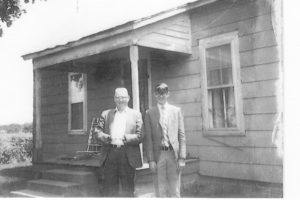 I may have posted something like this before, but here on Father’s Day, I want to acknowledge the sons and fathers who find, or have found, the smallest moments of mercy and love in the midst of their difficult relationships.
When I was a boy, I was my father’s helper. I helped him with chores on our farm, I slipped his eyeglasses onto his face, I held a Pepsi bottle or a drinking glass so he could spread the pincers of his hook wide enough so he could get a grip on it. When he was finished drinking, I took the bottle or glass from his hooks and set it in the sink. Before his accident, he’d been a tobacco chewer. After, he was never without chewing gum. Often, I was the one to roll two sticks of Wrigley’s into a wad and then put it in his mouth.
I remember one summer evening toward dusk when I went with him to check on our wheat crop. He wanted to know whether it was ripe for the cutting. We stood at the edge of the field, the golden wheat browning in the dying of the light, and he told me to snap off a head and to roll it between my palms until the kernels of grain came free.
The grasshoppers snapped against our pants legs when they jumped. In the distance, mourning doves cooed. Red-winged blackbirds flitted over the wheat. A breeze came up after the hot day, and the bushy foxtail danced in the fencerow. This was the quiet time, the time of almost light, that last grace before the dark.
I rolled the head of wheat between my palms and then delicately picked out a kernel. My father opened his mouth. “Put it on my tongue,” he said. I took the grain between my thumb and forefinger. I felt his tongue as I put the kernel into his mouth. At the time, it may have been as close as I’d ever felt to him. I wiped saliva on my pants leg as he stood there chewing. “It’s ready,” he finally said, and we went back to the truck. “Tomorrow,” he said, “we start cutting wheat. You and me. We’re a team.”
I remember afternoons when clouds gathered over the fields and the air smelled like rain, and my father finally said, “C’mon.”
He drove the tractor into the machine shed. I parked the truck in the farmyard and made sure the windows were up. We met on the front porch of the house, and he told me to fetch us Pepsi-Colas. We sat in folding lawn chairs and drank, watching the rain come across the fields, moving up our lane, until finally it was upon us and we had to scoot our chairs a little farther back on the porch. I remember how the rain dripped from the leaves of the maple tree in our front yard. The wind came up and the air cooled, and we had nothing to do but to sit and watch as the rain kept falling. I remember the ecstasy of it. I remember the release from labor. I remember my father saying, “Just look at it come down.” And that’s what we did; we sat there and watched it rain.
Sometimes in the field, he’d lift his head and look off toward the horizon. “Hear them?” he’d say, and I’d listen to the call of mourning doves. “Rain,” he’d say and then he’d be still, and in his silence, I’d feel his hope, his longing. I’d know his want. Now when I think back on these moments, it seems to me that it was a want born from that moment in the corn field when the snapping rollers of the picker’s shucking box caught first one hand, and then the other, that moment he’d always wish he could change. “Just listen to them calling for rain,” he’d say in a whisper those days when the mourning doves were cooing. “Mercy, just listen.”
The post Mercy on Father’s Day appeared first on Lee Martin.
June 15, 2020
Patience and Detours: Writing and Living in a Time of Pandemic
 As we enter the heart of summer, I can tell that folks are coming down with quarantine fatigue. Patience is wearing thin, and people are antsy. Now isn’t the time to let down our guard. My wife Cathy, the Risk Management/Corporate Compliance Director at a small hospital shared a reminder yesterday on Facebook, encouraging people to remember that the virus hasn’t magically disappeared, our immune systems haven’t changed, and there’s still no vaccine or cure. We are, therefore, still in a time of trying to stay safe and to be mindful of those around us.
I understand the desire to want to believe that the world is going back to where it was before we were all encouraged to stay at home, but I imagine it might be some time before we all can freely move about and gather with others as we did in what we considered our normal lives. That’s the public service announcement of this post.
Today, Cathy and I surrendered to our own quarantine fatigue and decided to go out for a while. With masks at the ready, we drove out to one of our metro parks to see what we could see. We were particularly intrigued by the prospect of spotting the bison that roam freely on two enclosed pastures. When we got to the park, we were disappointed that many of the roadways were closed, so we couldn’t drive very far. Because of Cathy’s bad knee, we didn’t want to walk the trails. We did see some bison, but from such a distance it wasn’t possible to appreciate their magnificence.
So we headed back into Columbus to do some shopping at Whole Foods. We wanted some dairy-free naan to go with the Indian food we were going to prepare later. Our route to Whole Foods would take us through our old neighborhood, a drive we like to take whenever we’re in that area just to recall fond memories, but there was bridge construction on Trabue Road which required us to detour to Roberts Road and then circle back. The detour was another wrinkle in what we’d envisioned when we first set out, but we persisted. We drove through our old neighborhood and found our former townhouse, then made our way down Lane Avenue to the Whole Foods, where, wouldn’t you know it, we found no dairy-free naan.
Nothing about our trip really worked out the way we’d imagined it would—and, oh, isn’t this so often the way with the things we write—but we saw things we wouldn’t have otherwise: a sod farm, a newly planted cornfield, a beautiful farmhouse. Because our plans didn’t work out, we found new roads.
This is what we do as writers. We persist. If option A doesn’t work, we turn to option B and so on. This is what we do in this pandemic as well. We persist in what keeps us safe while finding low-risk ways to recall the old way of living that lies now somewhere behind us. We can’t do everything all at once. To try, I’m afraid, would be foolhardy. The returns from the 1918 influenza outbreak, or from the Great Depression, or from 9/11 didn’t happen all at once, or without significant sacrifices and changes in our world. Such will be the case with the COVID-19 pandemic. Be patient. I’m talking now to writers and to anyone so antsy to get back to “normal” that they foolishly disregard the social distancing practices that will lower the transmission of the virus. The manuscript doesn’t get written in a hurry or without missteps along the way. Often, we start, we stop, we go back and take another route. Make that your goal in this time of pandemic. Your routes may not be the ones you’re accustomed to taking, but they can carry you through some excellent times. Writing and living in a pandemic is all about patience, perseverance, sacrifice, accommodation, and finding what pleases you in what you might consider the out-of-the-way places. Remember, detours are is often the best routes.
The post Patience and Detours: Writing and Living in a Time of Pandemic appeared first on Lee Martin.
June 8, 2020
Writing the Query Letter
 In response to a recent post intended to encourage writers not to give up and to keep writing, someone asked me if I might offer some thoughts to those who have done exactly that and ended up with a book manuscript looking for a publisher. I imagine there are plenty of people who know much more than I about how to query agents and editors, but I’m glad to offer what I’ve picked up over the years.
The query letter, or the pitch letter, as it’s sometimes called, is a courtesy, but more than that it’s an attempt to get a gatekeeper interested in seeing a part of your book, or, if you’re lucky, the entire manuscript.
A good query letter should be concise and particular. If you can keep it to a single-spaced page in conventional letter format, all the better. The reader of the letter will want to know the following: (1) What’s the book? (2) Who wrote it? (3) What other books is it like?
The letter should begin with a succinct description of the book. This shouldn’t be a synopsis but rather a brief introduction to the characters, the setting, and just enough of the narrative to make the reader of your letter curious to know more. Here’s how I might describe my newest novel, Yours, Jean:
Yours, Jean portrays the events of September 3, 1952, the day when one man’s actions reverberate through a number of families in the small towns of Vincennes, Indiana, and Lawrenceville, Illinois. On this day—the first day of school—Jean De Belle, the new librarian, is eager to begin the next phase of her young life after breaking off her engagement with her fiancé, Charlie Camplain. She has no way of knowing that in a few short hours, Charlie will arrive at the school, intent on convincing her to take back his ring. What happens next will challenge the bonds within the families whose lives intersect with those of Jean and Charlie on that fateful day. In the vein of The Heart Is a Lonely Hunter, by Carson McCullers, Yours, Jean is a novel about small town manners and the loneliness and the desire for connection that drive people to do things they never could have imagined. “When she refused me,” Charlie says of Jean at his trial. “Well, I had that gun. When she said no, what else was I to do?”
The second section of the letter should offer some pertinent information about you, the author. If you’ve published before, give the reader of your letter some of your most eye-catching credentials. If you’ve not published but have attended an MFA program or gone to writers’ conferences, be sure to include that information. If you have any special connection to the subject matter of the book—if something about your biography notably qualifies you to write this book—don’t hesitate to say so. If you have no credentials to offer and if there’s nothing unique about your biography, don’t despair. Just be straight forward. Tell the reader of the letter who you are and how you came to write this book. The Jack Webb approach from the old TV series, Dragnet, is best: “Just the facts.”
Finally, there’s the custom of telling the reader of your letter which two books yours might be compared to. The “comps” have become, for better or worse, an important part of the query letter. I tend to resist this part of the letter because if your book is really good, it isn’t like any other book, but I understand this from a marketing viewpoint, so it’s probably best to play the game with enthusiasm. I suspect you’re money ahead if your comps are recently published books, which will give editors and agents a sense of how your book would fit into the current marketplace.
The conclusion of your letter should offer to send the first fifty pages of the book, or the entire manuscript if the reader would prefer. Remember to be courteous and professional throughout. Never whine. Never be angry or bitter. Never go off on tangents. Be specific and make your writing personable and energetic. Be confident, but not overly so. Remember, your objective is to make your book sound so interesting an editor or an agent won’t be able to refuse to read some of it. I wish you all the luck in the world.
The post Writing the Query Letter appeared first on Lee Martin.
June 1, 2020
One Foot in Front of the Other: Keep Going
 It’s a beautiful day here in central Ohio—sunny, temps in the mid-sixties, low humidity—a perfect day for a run. After years of running outside, I made the switch to a treadmill a few years ago. Then the pandemic hit and the gyms closed, and I was back on the streets.
I’ve been running since the early eighties. Each time I entered a new decade, I wondered whether I could keep running to the end of it. Would I still be running when I was forty, fifty, sixty? I had interruptions, most notably a stroke in 2012 that sidelined me for a while, and then sciatica nerve pain which flares up from time to time. Somehow I’ve always managed to lace up the running shoes again and get back out there even though there have been times when it felt like I was starting from scratch. Now, I’m a few months away from my sixty-fifth birthday, and I feel fortunate to still be running. Over the years, I’ve logged a lot of miles, just by putting one foot in front of the other.
A writing career happens the same way, one word after another. As Confucius said, “It does not matter how slowly you go as long as you do not stop.” Regularity, it seems to me, is essential to productivity. The more often you write, the more you write, and the more you write, the better you write. There are those days when I don’t feel like writing or running, but I know if I just try—if I make that first mark on the page, or take that first step on a run—I’ll end up somewhere I wouldn’t if I refused the opportunity. As I age, I come to understand more and more that our lives are made up of such opportunities. Time dwindles, the opportunities don’t last forever, and therefore, become more precious. I don’t know how long I’ll be able to run or write. I can only know the present moment, and when an opportunity comes, I don’t want to waste it.
Sometimes when I don’t feel like writing, I open a document that I’m working on and start to reread the last few pages. Inevitably, I’ll find myself rewriting a sentence, and that small intervention ignites the creative impulse and the next thing I know I’m writing new pages. More often than not, I get to the end of the writing session, having pushed a narrative further along and in the process coming to know more about my characters and their situations. Putting oneself into motion becomes a creative act.
I sometimes think about all the times, especially early in my writer’s journey, when I was tempted to quit. The piles of rejections, the gatekeepers I couldn’t manage to budge, and a world that in general had no understanding of why one would want to sit in a room for hours on end telling stories made it easy to consider giving it all up in favor of a more accepted, and in some ways, more comfortable, way of spending my days. “How we spend our days,” Annie Dillard says, “is of course, how we spend our lives. What we do with this hour, and that one, is what we are doing.” At some points in our lives we all have to face the question of how we want to spend our days. In spite of the rejection, the disappointment, and the hurt, I knew I wanted to spend my days telling stories, so I kept writing. “Many of life’s failures,” Thomas Edison said, “are people who did not realize how close they were to success when they gave up.” Let that sink in. How close you might be to success if only you’ll keep going.
This morning, I intended to run a few miles on the large soccer fields behind a Baptist Church near my home, but the church was having outdoor services, so I ran on past and kept going on a route I hadn’t previously run. One foot in front of the other. In spite of the twinges of pain in my hips and lower back, one foot in front of the other. Five miles later, I was home.
The post One Foot in Front of the Other: Keep Going appeared first on Lee Martin.
May 25, 2020
Research and Resurrection: Writing the Dead
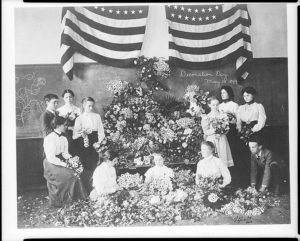 The peonies are late this year. Here we are, Memorial Day weekend, and the buds have yet to open. When I was a boy, my mother made arrangements from peonies and irises in coffee cans anchored with gravel in their bottoms, and we drove from country cemetery to country cemetery, leaving those flowers on the family graves. These were the days when Memorial Day was known as Decoration Day. What began as a holiday to commemorate our Civil War dead, became a way to honor all our dead ancestors whether veterans or not.
So I became familiar with the names of the family members I never had the chance to know: John A. Martin, James Henry Martin, George William Martin, Elizabeth Gaunce Martin, Mary Ann Inyart Martin, Stella Inyart Martin, Warren Read, Harrison Read, Abigail Dean Read. All of them at one time in the bloom of their youth.
The public library in the county seat where I grew up has an online newspaper project that catalogs entire issues from the county newspapers beginning in 1840. There was a time when these newspapers had what they called “items” from all the rural communities, places like Petrolia, Pleasant Hill, and Lukin where my family lived. Each community had a correspondent who reported the week’s comings and goings. I can search for my ancestors’ names and find, for instance, that on a Sunday afternoon July, 1961, my parents and I and my grandmother, Stella Martin, paid a visit to Mr. and Mrs. John Inyart to celebrate John’s birthday. John was my grandmother’s brother. His wife was named Lillie and they lived on Maple Street in Lawrenceville. I remember my great-uncle as a gregarious sort who liked to play the harmonica and sing and dance a jig. Reading this item in a long-ago newspaper brings him back to me. I remember that when we visited, if three p.m rolled around, all conversation stopped so he could listen to the local news on WAKO radio. I remember the linoleum on their living room floor, the side porch of their clapboard house and the gingerbread corbels of its screen door. I can hear the squeal of that door’s spring when someone pushed it open and the tap against the frame when it came closed. Tall maple trees that shaded the backyard, the smell of chicken frying for supper, the rustle of a wall calendar every time the oscillating fan disturbed its pages, on summer days the chirring of the locusts and the bumping of the June bugs against the porch light, hollyhocks at the front steps, the squeak of the porch swing, and finally—off in a future I couldn’t begin to imagine—the sweet scent of carnations and the containers of gladioli and chrysanthemums around John’s and Lillie’s caskets at the funeral home.
This one item in this old newspaper has brought all these details back to me. Just the fact of our visit on that July Sunday in 1961 has invited me to go back in memory. I can’t say I recall that particular day, but I do remember many such visits. Research can stimulate a writer’s memory. It can also tell stories the writer may have forgotten or never known. Using the Find a Grave website, I learn that John Inyart died at 11 a.m. on January 1, 1971. Lillie died the next morning at 7 o’clock. Funeral services were held for Mr. and Mrs. Inyart at the Nichols Chapel with the Reverend M. E. Haynes officiating. Burial was in the Derr Cemetery near Pinkstaff.
The dead are never far from us. They leave behind them the signs of their living, sometimes in old newspaper items, sometimes in letters or journals or lawsuits, and sometimes in the ruffled petals of peonies and their fragrant scent. For writers—particularly memoirists, but even poets and fiction writers—research can be like the unfolding of those petals, each detail a resurrection. We find the facts of a life, and through the careful arrangement on the page those who have gone return. “The bottom line,” Dorothy Allison says, “is I’m writing to save the dead. I’m writing to save the people I have lost, some of whose bodies are still walking around.”
The post Research and Resurrection: Writing the Dead appeared first on Lee Martin.
May 18, 2020
Using a Sensory Detail to Invent a Narrative
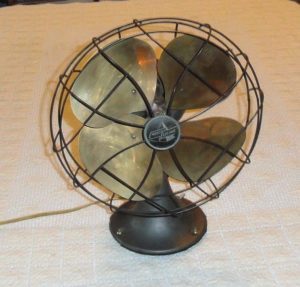 It’s a summer Sunday here in central Ohio—temp in the low eighties, humid and mostly still, just the slightest stir of air from time to time. Such Sundays always remind me of similar days from my adolescence in tiny Sumner, Illinois—days when people could be lazy if they chose, days that could truly be days of rest. There weren’t many places to go anyway. For the most part, the stores were closed. Only Piper’s Sundries and Billy Jones’s drug store stayed open so folks could pick up their Sunday newspapers and whatever items they might need. A small neighborhood market stayed open for anyone needing a grocery item for their Sunday dinners. The other grocery stores were closed as were the hardware stores and the gas stations and the cafe. It was a pretty darned quiet time in our town of a thousand people, a time that asked us to slow down, not unlike the request the pandemic is making of us now.
Quiet though those days may have been, they were still filled with sound—an oscillating fan ruffling the edges of a magazine’s pages, the rustle of the Sunday newspaper as my mother read it, the creak of a porch swing, the bang of a screen door coming shut, the low murmur of a St. Louis Cardinals’ baseball game on the radio. Sounds can be particularly nostalgic, but so can smells and tastes and textures and sights. The senses take us back into the past. For writers they can also propel a story into being.
It doesn’t take much to start a story. We can take sensory details from our memories and use them to invent a narrative. That oscillating fan, for instance. What if it belongs to a woman named Emma Springerton? By the way, Emma and Springerton are two towns in my southeastern Illinois. Town names, maybe two you pluck from an Interstate exit sign, can begin to suggest a character. But back to Emma Springerton. Let’s say she works six days a week as a laundress at the local nursing home. She’s a woman in her sixties, but she has to keep working because her husband Calvin has trouble holding down a job. Sundays are her days to put her feet up and to escape the heat of the laundry room and the detergent that causes rashes on her hands. It’s her day to enjoy, but on this day (obviously we’re either in a time before most people had air conditioning, or we’re in the present and the Springertons don’t have enough money to afford even a window unit) her oscillating fan stops working, and the house is stifling, and she just can’t stand it, so she asks Calvin to take her for a ride down the shade lined roads of the local state park just so she can feel the breeze on her face—doesn’t she deserve at least that?—and Calvin, though he’s content to nap to the sound of the baseball game, finally agrees when Emma says to him, “You’ve never cared a snap about my comfort.” Oops, there we are, beginning to touch the resentment Emma carries with her, and Calvin’s sensitive nature because, of course, he’s always loved her and wishes he could give her all the things she’s wanted. Only now, he’s hurt beyond words because she’s pointed out how he’s failed her, so the two of them start out on their drive with a lot of unspoken hurt in that car between them.
Let the story begin. What happens on that drive that’s out of the ordinary? What complications do Emma and Calvin encounter? What truths does the narrative bring to them?
I’d like to point out here that I didn’t know any of the details about Emma and Calvin until I began to write about them. The sound of the oscillating fan comes from my own memory, but everything else is imagination. We can use sensory details to touch some resonant part of ourselves—something unresolved perhaps—so we’ll be invested in the people’s lives we’re creating in a narrative. The rest is a matter of letting the sensory detail kick the narrative into motion. A fan stops, a wife makes a request, a husband balks, the wife claims he’s never cared about her comfort, she carries her resentment and he carries his hurt into the car. What’s out there waiting for them?
The post Using a Sensory Detail to Invent a Narrative appeared first on Lee Martin.