Lee Martin's Blog, page 26
December 14, 2020
Patience: Tips for Writing While You Wait
 I haven’t been able to run in over a month due to sciatica nerve pain down my right leg. It’s a familiar discomfort, one that put me in physical therapy for seven weeks in 2014. I’ve been doing all the stretching exercises and applying heat. I just finished my third round of prednisone. Things get better but never enough so that I can run except in my dreams. I’ve had more than one dream in which I’m running, and it’s always glorious. Of course, my limitations are leading me to an appreciation of patience, a quality that’s important to any writer.
It takes time for a piece of writing to take shape. We often begin with something that intrigues us without thought of where it might lead. Sometimes we creep along, a sentence at a time as if we’re feeling our way out of a dark room. Other times, we sit and stare out windows for hours and hours, hoping to get a glimpse of our next move on the page. Days, months, and sometimes years go by and we feel we’re nowhere closer to knowing what the heck we’re doing. We have to be patient. The piece we’re working on doesn’t care that it’s being slow in revealing itself to us. It will do so in its own time.
A writing career is like that, too. We can go a long time wondering when things might finally take off. We may wonder if indeed they ever will. What can we do but keep writing? We love moving words about on the page. Nothing should be able to stop us from doing that. Our desire for external validation is natural, but what’s even more innate is the inclination toward expression. We write to give a shape to all that mystifies us. Our satisfaction comes from within, and we should always remember that.
All of this said, there are some things we can do to hasten our own writing process.
We can daydream a piece. We can close our eyes and imagine our characters in motion. If we don’t try to force them, we can slip into a state where they start to speak and act independently of our intentions for them, and in the process they can reveal where the piece wants to go.
We can read in another genre. As a prose writer, reading poems often causes me to want to respond to the music I’m hearing. A close attention to language and tone can sometimes open up a piece of my prose. I can only imagine that poets might get a similar benefit by reading prose narratives that illuminate the mysteries and complexities of the heart.
We can think smaller. Instead of trying to grasp the entire, story, novel, or piece of creative nonfiction, we can tell ourselves our only objective is to render a particular scene or a piece of description, or a character. We can grab onto a detail and take a look at how it may be imagistic or even expand into a metaphor. Metaphor is a way of thinking and can often show us things about our piece we didn’t previously know. We might even challenge ourselves to reduce the piece we’re working on to 750 words or fewer. A miniature version might show us the entire scope of the project.
We can leave breadcrumbs. We can sketch out a plot by concentrating on what our main characters might do. Try repeating this sentence, filling in the blank in different ways, all with an eye toward creating a narrative made up of cause and effect. The sentence is, “So one day she decided to. . . .” Of course, in the final version, these sentences will end up being revised, but for the time being their only purpose is to put a series of actions on the page and to invite us to think about where the sequence is heading.
We can write in another genre. We can take our prose project and make it a poem. We can take an image from a poem and use it to tell a story. We can invent narratives to help us think about a piece of creative nonfiction, and we can write a piece of memoir that somehow informs our fiction. Crossing over into another genre can return us to our piece with more clarity.
In my dreams of running, I always run faster than I’ve been able to in some time. My stride is easy. I have no pain. Such is what I hope for all of us when it comes to our writing, knowing, of course, that there will be days when our efforts are labored. While I wait for the day I can run again, I take satisfaction from walking. I’m still in motion. Even though we may have to practice patience when it comes to our writing, there’s no rule that says we can’t also take action. I hope the tips I’ve offered above will invite you to do just that, to keep you writing without resistance.
The post Patience: Tips for Writing While You Wait appeared first on Lee Martin.


December 7, 2020
The Deep Dive: Tips for Revising
 Here we are, about three weeks before Christmas, and then, at least for us here in central Ohio, the turn into the gray days of January and February. It’s always been a time when I’ve been inclined to hibernate, and even more so these days of the pandemic. I’m trying my best to embrace the hunkering down, the burrowing in, the necessary rest where I remind myself to just breathe. Complicating that acceptance is, of course, all that I miss from the days before COVID-19: the dinners with neighbors at our favorite local restaurants, the in-person writing workshops and the spontaneous interactions and energies inhibited by meeting now via Zoom, the intimate gatherings with friends in one another’s homes, the travel.
Life is about to slow down in a big way, and I’m looking for the positives in that fact, chief among them the invitation to take note of the small graces that bless us each day—blessings I may have taken for granted in the rush of what used to pass as normal: the purr of my cat Stella when she flops down beside me and wants her belly rubbed; the beauty of my wife Cathy in nearly everything she does, in the meals she prepares, in the way she wraps a package, in the way she calls me, “Baby”; the way sunlight slants across our family room floor late in the afternoon; the call of geese as they fly over at dusk. All these small things grown large in the threat COVID poses. The possibility of never experiencing them again draws me up short while at the same time inviting me to really look and feel each moment that brings me pleasure.
This close examination of what blesses me—and by extension all that threatens those blessings—has become necessary to my living and has reminded me of the necessity of such to my writing. This past semester, I asked my graduate students to write one piece, rather than the customary two, and then to take that piece through two revisions. I’ve been reading their “final” versions, and I’ve been amazed by how each piece has deepened. By asking these writers to look more closely at elements of the piece that were absent or barely developed in the first drafts, I’ve invited them to burrow down, to do a deep dive of sorts, to open up the little moments that may have gotten short shrift early on, and to live with their pieces longer than they may have if they’d been moving on to write a second piece. In short, I asked these writers to hibernate with their pieces for a while in hopes that they would see aspects that were there just waiting to be realized. The results have been amazing.
So I guess I’m asking all of us to do that deep dive into the material, to not be impatient with the work we’ve put on the page, to live with it long enough to know it fully, to let it have its full range of expression.
Here, then, are five places to look in a first draft, places where the piece wants to say more than it is:
The back story. Any narrative contains one—the lives our characters have lived before the action begins. What’s happened before those characters step onto the page that resonates when placed in the dramatic present?
The small details: Pay attention to the things your characters pay attention to. They’re things, yes, but they’re also containers for the characters’ desires and fears. Use the props you give your character in the action of the narrative. Ask yourself why these objects are important to the characters. Perhaps one of those objects will even turn into a metaphor that will help the narrative better express itself.
The setting: The landscape can also be expressive. Don’t ignore it. Often we sketch in a setting in a first draft without understanding how it helps move a narrative along. Our next drafts can expand that setting. They can evoke more details and then make them more, well, evocative. Do the setting in detail and it can show you the story.
The structure: Ask yourself what scenes you’ve omitted in the first draft. You should be particularly alert to what I’ll call the obligatory scenes, the ones the narrative is obliged to include based upon what gets set in motion in the opening. Make sure you write those scenes. These days, I often observe first drafts that avoid scenes of conflict. Write those scenes. See what they open up.
The opposites: Our narratives resonate and become memorable when something contradictory rises at the end, something present from the beginning but submerged, something that requires the pressures of the narrative in order to rise. Our characters and their situations are comprised of opposites. Challenge yourself to identify the thing we’d least expect in any given character and situation and then see if you can construct a narrative that will allow that opposite thing to rise in a surprising and yet convincing way.
When we take the time to do a deep dive into our pieces, we allow them to show us more of what they want to be. In the winter days ahead, I hope you’ll all find the blessings of patience, endurance, admiration, inspection. I hope you’ll all take time to appreciate the nuances of all that life gives us, not only in our personal lives, but in the lives we put on the page as well.
The post The Deep Dive: Tips for Revising appeared first on Lee Martin.
November 30, 2020
How Do You Do?: A Story Exercise
 Of course, you’ve probably heard the joke about the man who was so old he refused to buy green bananas because he wasn’t sure he’d be around to see them ripen. Indeed there comes a time when we learn to shorten our vision into the future. Long-term dreams that sustained us when we were younger, perhaps don’t have the same appeal as the years ahead get shorter. To put it plainly, I’m learning to keep my eyes on the things that give me more immediate pleasure.
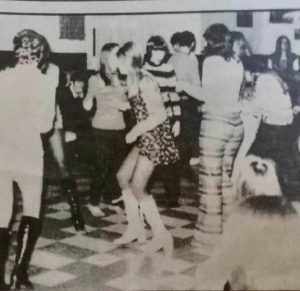
Today, for instance, I’m helping Cathy clean house and we’re listening to classic 70s rock and a song called “How Do You Do?” by a Dutch duo, Mouth and MacNeal, comes on. My god, I haven’t thought of that song in years, but as soon as I hear it, I’m transported back to 1971, and Dave Kunkel, a dee-jay from Mt. Carmel, Illinois, is playing that tune at a post-basketball game high school dance, and I’m sixteen, wearing my CPO jacket and skinny-legged jeans and penny loafers, wishing I had the nerve to get out on the floor and dance, but my friends and I are the edgy sort—this is my troubled year—and we think we’re too cool for all that when really we’re just scared to death. So we sit high in the bleachers, and we fool around with my friend’s switchblade and make fun of the people we wish we could be.
I’m sixty-five years old and I’m cleaning my house, but because of that song, I’m remembering what it was like when I was sixteen, and music was everything to me, and it gives me great pleasure to greet the boy I was who listened to “How Do You Do?” while wishing he had the courage to dance. This small grace comes to me, and I know I’ll relish it the rest of the day and maybe even on into the evening when I’ll let it remind me of the long-ago joy of a high school basketball game on a cold night in a small southeastern Illinois town, and the smell of Hai Karate aftershave and Heaven Sent cologne, and the dim lights of the gym and the music (“Superstar” playing at the end of the night—“Don’t you remember you told me you loved me, baby?”—and the way a glance or a smile could lead me to believe that maybe, just maybe, I’d found true love.
Our characters can exist within a shorter frame of desire. Particularly in the short story form, we might get mileage by letting a character’s mishandled desire drive the complications of the narrative. A story is always more interesting when the trouble comes from something the main character does or doesn’t do, or says or doesn’t say. Our main characters drive the story from the choices they make.
So here’s an exercise for you that should help you start a story:
Give your main characters something that gives them immediate pleasure. Maybe it’s a hobby. Maybe it’s a talent. Maybe it’s another character. Open the story with a description of the main character enjoying something. Perhaps desire accompanies the enjoyment. Maybe the main character wants something connected to the pleasure.
Foul up the pleasure, or better yet, let the main character foul it up. Something said, something done, a refusal, maybe even something that has an unintended effect. Something, in other words, that creates trouble and requires the main character to make other choices. Let each choice increase the pressure on the main character until a final choice in this causal chain causes something to rise in the story that was present from the beginning but submerged. Maybe it’s some truth about the main character that wasn’t apparent at first. Maybe it’s a shift in perspective, or a temporary insight, or something about a relationship that the people involved previously refused to acknowledge. You get the idea. A change comes.
Powerful changes can come from letting a character ruin a small pleasure. That ruination is a good place from where to launch a narrative. Choice and consequences. Characters who make mistakes, either intentionally or unintentionally, are interesting story makers. Put them into action and watch them go. One thing leads to another until we get to the most important thing in a story, the final move that seems both surprising and yet inevitable.
The post How Do You Do?: A Story Exercise appeared first on Lee Martin.
November 23, 2020
Mad Libs for Creative Nonfiction Writers
 Cathy and I, the past few years, have been opening our home on Thanksgiving Day, providing a welcome table to anyone who might need a place to go. Of course, we’re disappointed that the pandemic has made that impossible this year, but our gathering’s loss is a small price to pay for the sake of everyone’s health. Still, I’ve been thinking quite often of those who will have to spend this Thanksgiving alone.
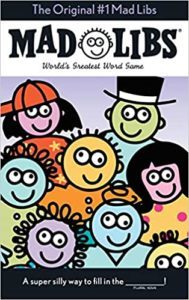
For that reason, I’ve decided to re-print an old post with a writing exercise utilizing a Mad Libs approach with the hope that if you decide to do it, you might find it entertaining. Possibly, you might even find connections with people, memories, and feelings that will surprise you. If you find yourself confronting material that’s uncomfortable for you, look for the good and the beautiful that so often co-exists with the bad and the ugly. In other words, I hope this exercise will allow you to open your hearts to all we have to be thankful for even in the difficult pandemic time where we find ourselves this Thanksgiving. Please know you’ll all be welcome at our virtual table this Thursday, as well as in our very real hearts.
When I designed this exercise for a creative nonfiction workshop a few years ago, I purposefully didn’t do something a good teacher should have done (stating the objective of the exercise before leading the students through it). I eliminated that step and jumped right in. I didn’t want the students to write toward an objective, thereby thinking too much about the purpose of their responses to my cues. Instead, I wanted them to be open to leaps and associations and surprises and the texture such things can lend to a piece of creative nonfiction.
Here are the steps in the exercise:
Make a list of three adjectives. Any three. Don’t think too hard. Just do it.
Make a list of three objects that have recently become “unforgettable” to you in some way. Three objects from the current time or the past that you can’t get out of your head.
Make a list of three abstractions, but try to avoid nouns that could also be transitive verbs. Nothing that could be turned into a statement such as “I love x,” or “I hate y.” Stick with things like “limbo” or “harmony.”
Choose an adjective from your list, an object, and an abstraction. Do it in that order. Add a preposition or an article as necessary. Write the title of your essay (e.g. “Pretty Dog Leash in Limbo”). Note: now that you know you’re creating a title, feel free to switch out any of the words for others on your lists.
Write a few lines about the object you’re chosen. Why have you been thinking about it lately? Give us a context for why this object is important to you.
Write a few lines that evoke the abstraction you’ve chosen without naming it. How does the abstraction convey your emotional response to the object? In what way does thinking about the object leave you unsettled, uncertain, or whatever your emotional response turns out to be?
Write a few lines that evoke the adjective you’ve chosen without naming it. Give us a sense of its relationship to the object. Is it ironic, for example, or genuine?
Write a few lines about another object, story, or memory that comes to you right now. We’re working with free association here. Look for words or phrases or images that subtly connect to what you’ve already written. If you need a prompt, here’s one: “When I think of that dog leash, I remember (fill in the blank with another object, a story, a memory).”
Make a direct statement about where the second object, story, or memory takes you in your thinking. Here’s a prompt: “I begin (or began) to think about (fill in the blank however you’d like).” The emphasis with this last step is to let the texture of the writing invite an abstract thought, conclusion, question, speculation, etc., thereby allowing the central line of inquiry of the essay to grow organically from what precedes it.
My students, in our post-writing debriefing, talked about how the exercise led them to unexpected connections, became a process of discovery, forced them to “push through” material that was a bit uncomfortable for them, and in general led them to things they wouldn’t have gotten to otherwise.
Happy Thanksgiving to you all!
The post Mad Libs for Creative Nonfiction Writers appeared first on Lee Martin.
November 16, 2020
Writing the Familiar Landscape
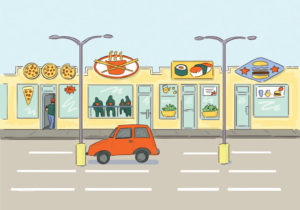 Target, Walmart, PetSmart, Famous Footwear, Panera Bread, Olive Garden, and on and on and on, this gathering of stores and restaurants that make up the strip malls and shopping centers of our communities. Set me down here or there in our country, and I’ll find myself in familiar environs. What does such homogeneity mean for the fiction writer who must make settings individual and unique? How do we make use of the familiar without making it too familiar? We know the feeling we get when we read a piece of fiction that seems as if it could be happening anywhere—that feeling of it never really happening at all.
One of our first obligations when we write a story or a novel is to persuade the readers that the world of the narrative actually exists. Setting, as Eudora Welty pointed out in her essay, “Place in Fiction,” is a crucial conduit to a reader’s acceptance: “The moment the place in which the novel happens is accepted as true,” she says, “through it will begin to glow, in a kind of recognizable glory, the feeling and thought that inhabited the novel in the author’s head and animated the whole of his work.” Setting, then, isn’t mere window dressing. It’s a necessary gathering of particulars from which emerges characters and their actions. Welty also encourages the writer “to disentangle the significant — in character, incident, setting, mood, everything — from the random and meaningless and irrelevant that in real life surround and beset it.” And there we are, up against the question of how to use setting in our contemporary fiction when so many of our landscapes have repeated themselves into irrelevancy.
So much depends upon the lens through which we’re invited to view the locale where a narrative takes place. Are we utilizing a point of view that’s capable of noting the significant, the unique, and the strange in what to others has become familiar? A setting comes to life via the engagement of a particular point of view. Our point of view characters’ consciousnesses become critical to the depiction of place. We might challenge ourselves to consider a familiar location such as a strip mall, from first one character’s perspective and then from anothers. What would one notice that another wouldn’t? What responses might one have that another wouldn’t?
We should also consider that a point of view character will notice different things and have different responses based upon what they’re carrying with them at any particular time. What are they living through outside the world of the strip mall, for instance, that comes to bear on their interaction with place?
Finally, we should note that just because our communities are filled with these homogeneous sites, doesn’t mean our fiction has to contain the same. We’re fiction writers. We make stuff up. We can invent the unexpected within the familiar: the Olive Garden waitperson who sings arias while serving the customers, the PetSmart employee who’s afraid of dogs, the Famous Footwear manager who limps. You get the idea. The unique always resides within the familiar. Sometimes, especially these days, we just have to be extremely observant to see it—or to invent it if we’re indeed practitioners of the liar’s art.
The post Writing the Familiar Landscape appeared first on Lee Martin.
November 9, 2020
Try Again: Hope and the Writer
 Such a beautiful day in early November—sunny and warm with temperatures in the 70s. I’ve noticed a number of people putting up their outdoor Christmas decorations—all right, I’ll admit I hung lights from my eaves yesterday, taking advantage of the good weather, so I wouldn’t have to be freezing in the cold later. Outside of the fact that darkness is falling early, it’s difficult to believe that winter is fast approaching.
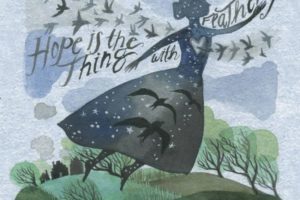
For the record, I’m writing this the day after Joe Biden became our president-elect, and Kamala Harris became the first woman to become vice-president-elect. Not only the first woman, but also the first woman of color. This news comes in the gap between autumn and winter. On this summery day before we face the challenges of the cold and gray that lie ahead, we find ourselves in what I’ll call a season of change and a time of hope. The potential disappointments of the future aren’t yet clear to us. Instead, we hold the swell of our faith in what might be. Don’t we want to trust in the better parts of ourselves? Isn’t it only human to embrace optimism and desire?
A writing career is full of hope challenged by disappointment. How do we maintain our optimism when often it seems that everything is against us? I wrote, and gathered my rejections, for a number of years before I got the first, “yes.” The literary journal, Sonora Review, accepted one of my stories. Before that, I’d received a few handwritten rejections inviting me to “try again,” but the Sonora Review was the first literary journal to include my work in their pages. I was thirty-two years-old at the time—too late for a writer, some may have thought—but that one acceptance made me feel as if things were just beginning. All those “try-agains”—all those hours spent putting words on the page and all the times I’d threatened to stop only to find I couldn’t—had brought me to the point where someone finally said, “yes,” and I rejoiced.
I won’t go on to recount all the highs and lows since then. Suffice it to say, I’ve had them in equal measure. I’m sixty-five now, and still the rejections come, and from time to time someone still says, “yes.” When they do, I feel the way I felt the first time, like the world got a little brighter. The “yeses”—or even the “try-agains”—can send us back to our work with renewed dedication and vigor.
Still, the rejections will come, and we have to accept that. We have to see them as opportunities for us to learn what we need to know, even if what we need to learn is that some criticism is worthless. We can thumb our noses at that sort of commentary, the kind that perhaps comes from someone with a different aesthetic or an egotistical agenda, or the kind that comes from an inability to see what we’re trying to do on the page, but no writer ever got very far without opening heart and mind to the hard things teachers, peers, and editors have to say—the things that will make a difference if we’ll let them. “Being ignorant is not so much a shame,” Benjamin Franklin said, “as being unwilling to learn.” If we’re smart, we’ll acknowledge our bruises and then set them aside, so we can continue practicing our craft with passion and conviction. That’s what I wish for us all—that our talents be unimpeded, our desires irrepressible, our hearts and minds open, and our capacity for hope boundless.
The post Try Again: Hope and the Writer appeared first on Lee Martin.
November 2, 2020
A Tourist in a Familiar Place: Making Our Settings Distinct
 Cathy and I live in a suburban subdivision that was supposed to have Trick or Treat last Thursday, but, because it was cold and rainy, our homeowners’ association took matters into its own hands, and we decided to postpone Trick or Treat until Saturday. So yesterday evening in sunshine and much warmer temperatures we sat in our driveway prepared to hand out candy. Across the street at our neighbors, I noticed their oldest daughter dressed in khaki pants and a polo shirt with a wide-brimmed straw hat on her head. She was wearing white sneakers, a fanny pack around her waist, and a camera around her neck. Cathy guessed she was in costume as a tourist, which indeed turned out to be the case when we went across the street to ask her. She and her fiancé were going to a costume party later, and they were both going to be tourists.
“I hope you enjoy your visit to our fair city,” I told her.
“I’ll be sure to post lots of pictures,” she said.
This makes me think about the fact that sometimes we can be so accustomed to our surroundings that when we write about them we neglect to dramatize what makes them unique. I seem to recall reading something John Irving said about the pats of butter at a cafe in Paris being the things that brought his native New Hampshire into sharp focus for him. Indeed, sometimes we have to get a bit of distance from our native lands in order to see them more clearly and to be able to make them come alive for our readers.
“I like to spread myself out,” Irving said. “I like to describe people and rooms and plot. I don’t like to write novels about gray people floating through the mall and you can only decipher who they are through the brand of their tennis shoes. I don’t care to write that sort of thing.”
Neither should we. The generic becomes the inconsequential and the invisible. It becomes easy for a reader to dismiss a setting lacking in distinct detail. We have to take the time to see our worlds clearly. Rather than rushing a plot onto the page, we have to let it build from the landscape and the particulars of the setting, the particulars that matter to the characters who live among them.
Take the barber shop of my youth, for instance. It had a row of fold-down wooden seats that looked like they’d once been in a theater or auditorium of some sort, smoking stands at the ready, Police Gazette magazines and Archie comic books to read, a large ceiling fan to move the air in hot weather, a squeaky screen door, a pop cooler, the smell of Butch Creme, and Wildroot hair tonic, the sound of a straight razor being honed on a strop, the dust of Pinaud Clubman Talc. The barber was also a woodworker and sometimes the scent of pine would drift in from the back where he did that sort of work. Or the grocery store with the oiled wooden floors and the narrow aisles and the meat counter at the back where Spec Atkins would gladly slice you off as much bologna or Braunschweiger as you’d like or sell you a shotgun if that happened to be your preference.
I could go on and on about the particular details, many of them unexpected—the barber who was also made fine furniture, the grocer who sold guns—of my small Midwestern town, but you get the point. We have to know our worlds, but sometimes as writers we have to forget we know them. We have to be those tourists dramatizing the details as if experienced for the first time. We have to be eager to be surprised by what we encounter.
The post A Tourist in a Familiar Place: Making Our Settings Distinct appeared first on Lee Martin.
October 26, 2020
Stories That Matter
 I’m going to be presenting a session at the Erma Bombeck Writers’ Workshop on Friday, a session called “Writing Stories That Matter.” In preparation for that event, I had to think about exactly what I mean by stories that matter. William Faulkner, in his 1950 Nobel Prize acceptance speech, said, “. . .the young man or woman writing today has forgotten the problems of the human heart in conflict with itself which alone can make good writing because only that is worth writing about, worth the agony and the sweat.” Faulkner went on to say that writers should focus on “the old verities and truths of the heart, the old universal truths lacking which any story is ephemeral and doomed.” The human heart in conflict with itself. The old verities and truths of the heart. Notice how each of these statements locates us in character and reminds us once again that plot is always in service of characterization. Weave whatever sequence of events you choose. Without multidimensional characters, often made up of contradictions, storylines may linger for a while and then fade from our memories because writers have failed to recognize that plot exists because of the contradictory layers of a character making choices and then facing consequences. Plot exists, we might say, to reveal truths about characters that are present from the beginning but submerged. The pressure that plot exerts causes these truths to rise by the end of the narrative.
So when I say stories that matter, I’m thinking of stories that leave an impression on a reader, stories to which readers have an emotional connection, stories that form a connection between writer and reader, stories that are memorable. The contradictory emotions of our main characters can help in this regard, but for our characters to have complicated emotions we must be able to recall the times in our lives when we felt the human heart in conflict with itself.
What are those moments for you? Spend some time daydreaming, letting your memory call forth the incidents from your own experiences that you’ve never been able to forget. Notice how many of them revolve around someone doing or saying something that seemed out of character. Don’t neglect yourself as a character. What are the moments from your past that still haunt you? How many of those moments were ones you created by your own actions and/or words? Did dramatic irony ever come into play, which is to say, did you ever say or do something you thought would produce a certain result only to find you created an opposite result instead? The key is to recall moments that were emotionally complicated for you, moments when you felt opposing emotions simultaneously. These are the sorts of moments that make for memorable characters, and memorable characters almost always create unforgettable stories. I call these moments touchstone moments because even if I’m writing fiction I find myself tapping into them to feel the emotional complexity I want to transfer to my invented characters. In short, I tap into my own heart in conflict with itself in order to better understand the contradictory layers of my characters.
Sometimes we have to go about this in an indirect manner. One of my favorite writing activities that I’ve used in workshops for years is to ask people to recall pairs of shoes they remember wearing when they were kids and then to do a freewrite beginning with, “I was wearing them the day. . . .” The key is to use the shoes to recall your own touchstone moments, those moments when you felt emotionally torn. Our characters carry such moments with them. Recalling our own emotional turmoil from the past—the times that held both love and hate, happiness and sorrow, right and wrong, etc.—can help us create characters with depth and stories that matter for the universal truths they dramatize.
The post Stories That Matter appeared first on Lee Martin.
October 19, 2020
Hidden Blessings: The Novel I Never Published and the One I Did
 Many years ago, when I was first starting out in this writing game—I’d published stories in some pretty good places and I’d even been able to publish a collection with a new independent publisher—my agent was sending around my first novel. One day, she called with the good news that a very senior editor at a very important New York publishing house had called to say she loved the book and was going to make an offer. She just had to run it by a few folks, and then she’d be back in touch. “She’s very well thought of,” my agent told me. “She won’t have a problem getting approval to make this offer.”
I was, needless to say, over the moon. I even told a few close friends—that was mistake number one—and I let myself imagine what this might mean for me, which is to say I bought in fully to the idea that I would soon have a contract and then a novel out from a major New York house, and, of course, that was mistake number two. Remember Murphy’s Law? Anything that can go wrong will go wrong.
So this is the story of the novel that never got published—the very senior editor never made an offer—and the heartache that followed until enough time had passed for me to be able to see that disappointment for the blessing that it was.
I’ve long forgotten most of that novel. It exists somewhere on an old floppy disk and it’s best that it stay there. It was the very first novel I finished, and though there was something in it that caught this editor’s eye, it wasn’t the book I would one day write, the book I probably never would have written had this first novel been published.
What I do remember about that first novel was there was an element that involved a missing child. This story had been with me ever since I was sixteen, a tragic story of a young girl who didn’t come home one night in the county seat eight miles from where I lived, the story that nearly ten years after my disappointment over the offer that never came became my novel, The Bright Forever, a book that ended up having a fair amount of success. Had that very senior editor made her offer and had the very important publishing house brought the very first novel I wrote out into the world, I seriously doubt I’d ever have written The Bright Forever. Often we don’t know why things work out the way they do, but sometimes patience shows us exactly why the universe makes us wait for the hidden blessings to become clear.
So what does this mean for writers? First, I truly believe we all have one book we’re meant to write. It’s the story that only you can tell. It’s the story you know so well, it’s in your DNA. I also believe that we have to wait until we’re ready to write that book. That first novel? The one the senior editor never made an offer for? I was learning how to write a novel when I wrote that one. I’d go on to write another one that never saw the light of day before writing what would become my first published novel, a book called Quakertown. Three novels written and two left in the drawer. Three novels to let me find the voice, to feel the structure, to know my world so I could write The Bright Forever. The other important thing I learned was to keep writing. Disappointment comes in many ways over the course of a writing career. Things will happen that you can’t control—things that will knock you to your knees and tempt you to throw in the towel and quit. Don’t. The only thing you can do is keep writing with the confidence that you’ll eventually write the book you’re destined to write, and one day the call or the text or the email will come, and the answer will be a glorious, resounding yes.
The post Hidden Blessings: The Novel I Never Published and the One I Did appeared first on Lee Martin.
October 12, 2020
Writing the Worlds We Know Best
 Many years ago, when I was in my mid-twenties, I drove from Fayetteville, Arkansas, where I was living at the time, to my native southeastern Illinois for the Christmas holidays. I was in the MFA program at the University of Arkansas at the time, and we were on semester break. The drive took ten hours, and by the time I’d looped around St. Louis and found my way to Illinois State Route 50, it was dark. It was cold and dark, and I was driving through one small town after another, looking at Christmas light displays, and then, as I left those towns and drove on through the countryside, I saw the barn lot lights and the stars lit up on the tops of silos and the Christmas lights at farmhouses in the distance. Then, and even now, each time I cross the state line into Illinois, no matter from what direction, I feel something inside me—something like the comfort of an old quilt pulled to my chin, or the soft denim of a favorite pair of jeans pulled on at the end of a day spent in my grownup clothes—that tells me I’m home.
So it was that night in the early 1980s. As I drove down the main streets of the small towns and out into the country, I focused on the Christmas lights, and I knew I was back in the part of the world I knew the best. I knew the courthouses with their war monuments and their clock towers. I knew the bars, their windows illuminated with Christmas lights and neon Schlitz signs. I knew the way the houses along the main streets dwindled with just a few beyond the city population sign, and then the dark of the country, the red reflectors marking the turns into the farm lanes, the flares burning at oil wells, the sweep of my headlights over the fields where broken corn stubble poked up from the snow. More than that, I knew the hearts of the people in those homes. I knew the work they did—oil field roughnecks, refinery workers, farmers, factory workers, teachers. I knew some of them were just barely holding on, going from paycheck to paycheck hoping they’d be able to make ends meet. I knew the sounds of the tissue-thin pages turning in their Bibles, and the corn popping on a gas stove, and the cold water pumped from a cistern, and the slap of a straight razor against a leather strop, and a twelve-gauge shotgun fired at rabbits, squirrels, deer, and quail. I knew the prayers said around the kitchen table before a meal, and the slap of cards played out in a game of euchre or pitch, and the crack of the cue ball at the pool halls.
I could do on and on about all that I realized that night when I let those Christmas lights invite me into the homes I passed. I could tell you how I started to feel a sadness because the lights were on in those homes, and I was out in the cold, tired of driving and eager to be in the my mother’s brightly lit house among people who loved me. Once I was back in Fayetteville, I tried to give a character in one of my stories that feeling of sadness that came from looking at those Christmas lights. It wasn’t a very good story, but the point is, maybe for the first time, I was writing about the places and the people I knew so well. I’d always thought no one would be interested in my stories of the small towns and farming communities of southeastern Illinois, but the night I felt that sadness was an important night for me as a writer. It was the start of everything that would eventually follow.
If you’re a writer just starting out on this life-long apprenticeship to the craft of writing, maybe I can save you a little time. What are the worlds and the people you know most intimately? Write about them. Write about all you know—the work they do, the foods they eat, the hobbies they have, the way the sunrise looks at a particular season, the way the light falls at dusk. If you can’t make what you know best interesting, you’ll never be able to interest readers in what you don’t know. Write your worlds from the inside out, from the perspective of one who’s been there and knows the lay of the land.
The post Writing the Worlds We Know Best appeared first on Lee Martin.