Lee Martin's Blog, page 24
May 3, 2021
Fail Better: The Importance of Falling Short
 The lawnmower saga from last week continues. My neighbor said he thought it would be a good idea if I mowed my lawn with his zero-turn before I committed to buying one. My neighbor is a smart man. I later told him I thought my mowing was a success because, one, I didn’t damage his mower, and two, I didn’t kill him trying to get it out of his garage, though I may have come close with the latter. Those zero-turns aren’t fooling around. Any slight error in steering can send one spinning in a circle.
I mowed our side yard in lines that looked like I’d either been drunk or perhaps attacked by a swarm of bees. “You have to find center,” my neighbor told me when he gave me a tutorial. He was referring to the two handles that you have to manage in order to drive one of these things. I thought I was starting to get the hang of it when Cathy pleaded with me to, “Please stop.” I finished with my push mower.
Here’s the thing. I’m pretty sure that given time I could have learned to drive that zero-turn like a pro, but the whole idea of getting a riding lawnmower is so Cathy can share in the mowing duties or take them over if, as she says, something ever happens to me. Cathy insists a steering wheel is a must, so it looks like we’ll be considering lawn tractors.
I feel like a bit of a failure because I couldn’t master the zero-turn right away. I use to feel the same way when, as a boy, I worked with my father on our farm. No matter how patient he was when he showed me how to do some sort of mechanical work, I’d usually end up botching it and my father would grow impatient when I said I just couldn’t do it. “Can’t never did nothing,” he’d say, and he’d make me keep trying until the job was done.
The feeling of failure was always connected to the watchful eye of my father who made me feel like I had to be good at everything he’d been good at before he lost his hands in that corn picker accident. When it comes to writing, the truth is we don’t have to be as good as someone else; we just have to be better than we were before. We need to stop measuring ourselves against other writers and instead evaluate our progress as we keep practicing our craft.
In order to improve, we often need time away from the watchful eyes of others. Sometimes we need years and years to write and write before we’re ready to submit to the evaluation of agents, editors, and contest judges. We need to see ourselves getting better before we’re ready to expose ourselves to the judgment of the gatekeepers. It’s not an easy thing to do, especially these days in a culture that insists on immediate gratification, but if we can find in within ourselves to accept a slower process, one in which our understanding of craft will deepen and deepen, we’ll save ourselves a lot of heartache. We’ll free ourselves to make mistakes and to learn from them in the privacy of our writing rooms. This famous quote from Samuel Beckett expresses the importance of being willing to fall short: “Ever tried. Ever failed. No matter. Try again. Fail again. Fail better.” Falling short of perfection is necessary to our progression. In time, we’ll see our work getting better until finally one day we’ll be ready to show it to the world. Be patient. Work steadily. Be forgiving. No writer ever succeeded without first failing, again and again and again.
The post Fail Better: The Importance of Falling Short appeared first on Lee Martin.


April 26, 2021
Lawn Mowing and the Fictive Dream
 Cathy claims it’s time we had a riding lawn mower. I’ve been hesitant. Moving away from my walk-behind feels like a concession to the advancing years. Damn it, if I could use that walk-behind last week, I can use it again this week. Cathy says, “What if something happens to you? My knee won’t let me push that mower.”
“What’s going to happen to me?” I ask her.
She arches one eyebrow. “You never know,” she says.
I’m not sure what she’s plotting but there was a mention recently of either getting a riding mower or having to depend on a cabana boy for the lawn care. Again, that arched eyebrow. As if to say, you know what I mean by lawn care. She has me thinking of the Alberta Hunter tune, “My Handy Man Ain’t Handy No More” from the Amtrak Blues album. I’d give anything if you could see the way he handles my front yard. Wink, wink.
So if I don’t want to be traded in for a cabana boy, it’s time to buy that riding lawn mower. Which leads me to choices—choices in style, size, and brand. Sometimes it seems like every question begets another. So much to consider as I try to logically figure out the best purchase. I’m lucky to have a neighbor who knows a good deal about these mowers and is willing to guide me. He’s the sort of wise voice of reason we all long for when we write, the voice telling us exactly what to do as a plot unfolds.
When it comes to writing a first draft, though, that sort of rational voice, can often get in our way. First drafts require our immersion into the subconscious part of our brains—the dream world of leaps and turns and associations; the world of the imagination. In that world, we can allow ourselves to make all sorts of wild choices as the narrative moves along, knowing we can always go back and make different choices in revision. Knowing that gives us the security we need in order to trust what John Gardner in The Art of Fiction called “the fictive dream.” He’s talking, of course, about the imagined world that, as we write, seems as vivid and as convincing as the real world we occupy in the here-and-now:
. . .in his [the writer’s] imagination, he sees made-up people doing things—sees them clearly—and in the act of wondering what they will do next he sees what they will do next, and all this he writes down in the best, most accurate words he can find, understanding even as he writes that he may have to find better words later, and that a change in the words may mean a sharpening or deepening of the vision, the fictive dream or vision becoming more and more lucid, until reality, by comparison, seems cold, tedious, and dead.
Entering the fictive dream puts us in a world of possibilities, one where husbands can be traded for riding lawn mowers or cabana boys, for instance. We follow the dream wherever it wants to take us. We have to refrain from trying to plan too much in those first drafts. Think of writing as daydreaming on the page. We know we can always go back in revision and make other choices or bolster or eliminate our initial ones. Lawnmowers can cut the grass in a number of patterns—vertical, horizontal, diagonal, circular, squared, rectangular—but they can’t do anything unless you put them into motion. Likewise, writers won’t accomplish much unless they engage the blades of the imagination without the restrictions of the conscious mind.
The post Lawn Mowing and the Fictive Dream appeared first on Lee Martin.
April 19, 2021
Writers Helping Writers: The Virtual Book Tour
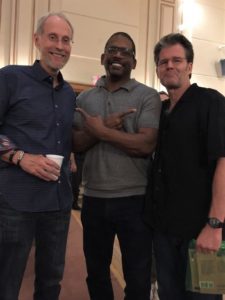 Cathy and I went to Home Depot twice this weekend, hoping to get some answers to questions we had about a riding lawnmower we were interested in buying—simple questions, really, like, “How do you change the oil?” On our first attempt, we asked for assistance that never came, so we gave up and left. Today, we actually found someone who knew nothing about the mowers but was persistent in finding someone who might. A very nice man named Ron was the riding lawnmower “expert,” but he didn’t know anything about how the mowers worked or how to maintain them. “They won’t give me any of that information,” he said. “They just say be here to help the customers.” Wait a minute. Help the customers by not knowing anything they want to know? At stores like Home Depot, you’re often on your own.
Arranging publicity for an upcoming book can often seem like this, like you don’t quite know what you’re doing and are flying by the seat of your pants. I’m about two weeks away from the publication date of my new memoir, Gone the Hard Road, and I’m putting the finishing touches on my self-arranged virtual book tour. I’m grateful for the independent bookstores and the one history center who have agreed to host an event. Here’s the slate so far, with maybe a couple of additions to come.
May 18, 7pm, Eastern time: Hub City Books in Spartanburg, South Carolina (in conversation with Jessica Handler)
June 1, 7pm, Eastern time: Atlanta History Center in Atlanta, Georgia (in conversation with Jessica Handler)
June 10, 7pm, Eastern time: Gramercy Books in Bexley, Ohio (in conversation with Dinty W. Moore)
July 12, 7pm, Eastern time: Literati Bookstore in Ann Arbor, Michigan (in conversation with Sue William Silverman
The conversation route seems to be the “in” thing these days. Pairing yourself with someone who has some regional appeal for an individual bookstore can be a good thing, and if that other writer has some national appeal, all the better. I got lucky when Jessica, Dinty, and Sue agreed to help me out as they each have a broad audience base across the country. As for me, I doubt I would have ever gotten anyone to respond to my email requests on my own. Each event I’ve scheduled is happening in a place where I’ve done events before or in places where my conversation partner has connections. No matter how much we may dislike the truth that such connections are sometimes the only means we have to make our way forward, it’s undeniable. That’s why networking is so important. Moving forward in a writing career is often a matter of identifying the people who might be able to help you, knowing, of course, that you’ll gladly repay the favor if the opportunity presents itself.
I’m lucky to have been around long enough to know a few people who have some sway, but I still feel there are writers who are much better at networking than I. Out here in the Midwest, it’s easy to sometimes feel removed from the heart of the publishing industry and the sorts of networks that can more easily lead to a writer’s success. As the man who works at my local Home Depot proved today, out here in the Midwest, we sometimes don’t know anything about the products we’re trying to sell.
We writers should be kind to one another, particularly to those who are just starting out. Surely, we can remember when we were one of their number. Surely, we sometimes feel as if we still are. I keep saying a writing career is a lifelong apprenticeship, not only the craft but the marketing as well. It’s all part of the writing life these days. We learn as we go. We reach out for help. If we’re lucky, as I’ve been with this virtual tour, good people answer.
The post Writers Helping Writers: The Virtual Book Tour appeared first on Lee Martin.
April 11, 2021
Inciting Episodes and Significant Actions
 Cathy and I went to the zoo yesterday. On the way, we went to Menards to exchange some landscape lights that had stopped working. Then we stopped at McDonald’s so Cathy could get a sweet tea. We parked in the lot at the zoo and then walked to the entrance and scanned our tickets. Easy peasy.
So far, we don’t have a story. We just have a sequence of events, none of them remarkable in any way. In fact, we won’t have a story for quite some time, and then we’ll only barely have one. At the end of the day, as Cathy and I were walking toward the exit, a zoo volunteer driving a golf cart stopped and asked if we wanted a ride. My first thought was, yes, please. Then I thought, wow, when did Cathy and I get to an age that such assistance was warranted?
Here we have what could be considered an inciting episode for a short story. By inciting episode I mean something that happens that sets a significant sequence of events in motion. Notice, I said “significant.” In other words, the sequence of events that follows must have a profound effect on the characters involved. Anything less is merely anecdote. Stuart Dybek’s story “Sunday at the Zoo,” for instance, begins like this:
We decided to stop drinking and spend Sunday at the zoo. It was going nicely until she worked herself up over the observation that it was a horrible thing to cage the animals.
“That’s not very profound,” I said, “everybody who goes to the zoo feels that sometime.
“Oh, you cruel bastard,” she screamed. “I’m not everybody.”
She bellied over the guardrail and flung herself against the bars of the wolves’ cage.
The story of the zoo volunteer and her offer of a ride to Cathy and me could be an inciting episode because it caused a shift in the way I looked at myself. I’m sixty-five years old, and I think I’m in pretty good shape. I run four miles every other day, and, in fact, had done so prior to leaving for the zoo. I certainly didn’t think of myself as someone in the need of rescue.
So we almost have a story. We have a character for whom something has become unstable. But do we have a significant sequence of events? No. Cathy and I accepted the ride, and outside of a brief conversation about how weary we must have looked, nothing between us changed. We got in our car, and on the way home, we stopped for Indian takeout and had a lovely evening.
But let’s say the kernel of discontent caused by the volunteer’s offer of assistance rubbed against us more than it did in real life. Let’s say, I declined the volunteer’s offer out of pride, and Cathy said to me, “I really think we should,” and I told the volunteer to go on, adding, “Spend your time with someone who really needs your help.” So now we’ve got Cathy and me trudging on to our car in silence, and let’s say that earlier that morning when I ran my four miles, I half-joked with Cathy that she should have been exercising as well. Now, she’s carrying a resentment she didn’t even know she had until the memory of that morning met the fact that I refused the ride, leaving Cathy to make that walk, and she’s mulling all this over as we look for an Indian restaurant, and I go in to order, and when I come out, Cathy and the car are gone, and I end up having to walk home, knowing that something has risen up in our relationship, something ugly and profound—something significant.
This is how to think of stories. Open with something that sets the narrative into motion—something that requires your main character’s action, something out of the ordinary. Let the action be significant. Let it burrow down into the lives of your characters to the places they’ve kept submerged. Let what rises because of the pressures of the narrative events bring your main character to a different way of thinking or feeling about another character, themselves, or the world around them. Beginning with an inciting episode will invite significant action and lead to something profound rising at the end.
The post Inciting Episodes and Significant Actions appeared first on Lee Martin.
April 5, 2021
To See What You Couldn’t See Then
 Another Easter Sunday has come, and, again, I’m thinking of my mother. I’ve written often of my years between third grade and high school when we lived in Oak Forest, a southern suburb of Chicago. We traveled back to our downstate farm some weekends, and on holidays, and in the summers. We were always on the road on Easter, heading north up route 49. Somewhere north of Cissna Park, just before we hit route 50, which would take us into Oak Forest, we stopped at a smorgasbord restaurant. By this time, it would be late in the afternoon and the Easter rush would be over, and we’d linger over our meal in the nearly empty dining room, almost home, but not quite. It was there one rainy Sunday when my mother said it was a sign that it would rain the next seven Sundays. “Mercy,” she said, looking out the rain streaked window near our table, “just look at it rain.”
At the time, I was, like most kids, totally self-absorbed. If something didn’t involve me, I pretty much ignored it. When my mother said what she did about the rain, though, I got curious. How could she forecast seven consecutive Sundays of rain? It was an old wives’ tale, my father explained. Not a bit of truth in it.
Except the fact that my mother was, to put it bluntly, an old wife. She was forty-five when I was born, and at the time I’m remembering she would have been well over fifty. I’d grown accustomed to the age difference between my parents and those of my friends, so even though I took note of the lore that rain on Easter meant seven consecutive Sundays of similar weather, I failed to hear what my mother was really saying when she said, “Mercy, just look at it rain.” Subtext often escapes the young, and that was certainly the case with me that day. Looking back on it now, I hear what my mother didn’t say—that she was tired. The burdens of her life—her parenting at an advanced age, her teaching, her work on the farm come summers, my father’s often explosive temper and all she had to do for him after he lost both of his hands in a farming accident—were bearing down upon her, and looking out at the rain on this dreary day had caused her to ask for mercy. I was too young to realize that at the time, but the memory stayed with me and even haunted me from time to time. It still does.
So here’s a writing activity designed to express something you know now that you didn’t know then. The exercise is designed with the writer of memoir in mind, but it could easily work in a piece of fiction or a poem like this one from Robert Hayden:
Those Winter Sundays
Sundays too my father got up early
and put his clothes on in the blueblack cold,
then with cracked hands that ached
from labor in the weekday weather made
banked fires blaze. No one ever thanked him.
I’d wake and hear the cold splintering, breaking.
When the rooms were warm, he’d call,
and slowly I would rise and dress,
fearing the chronic angers of that house,
Speaking indifferently to him,
who had driven out the cold
and polished my good shoes as well.
What did I know, what did I know
of love’s austere and lonely offices?
The speaker in the poem catalogs the facts of those winter Sundays when his father would rise early to attend to the furnace that would warm the house before the son woke and found his father had polished his good shoes. This is what the speaker knows at the time. What he doesn’t know, and can only know in retrospect, is “love’s austere and lonely offices,” and how the tending of the furnace and the polishing of the shoes express a father’s unconditional love.
Please feel free to go back in memory to a moment that has stayed with you, probably because it was more complex than you could realize at the time. Put that moment on the page—perhaps it was something a family member said or did—and use the greater wisdom time and distance have given you to see what you couldn’t see then.
The post To See What You Couldn’t See Then appeared first on Lee Martin.
March 29, 2021
Cutting, Filling, Adding: Tips for Revision
 Yesterday, I fired up the mower and gave our lawn the first cut of the season, thereby ending a winter of having nary a thought about the dormant grass. As I mowed, I took note of a dandelion or two, a bit of clover, and broadleaf—intruders each and every one. I also noted a bare spot or two that will need filling. Thus began my awareness of all that needs my attention.
Revising a piece of writing similarly requires a period of dormancy, a stretch of time when we don’t think about the thing we’ve written, when we let it recede in our conscious mind to a point where we actually forget it. Our forgetfulness will actually put us in a better position to see the piece with new eyes when we finally look at it again, as of course sooner or later we will. We’ll see the flaws that we couldn’t see during the first draft stage. Here are some things we can do to make ourselves more alert to what needs to be done in revision.
Read aloud. I’ve always found it useful to read a draft aloud as my first step in revision. When I read a draft aloud and I find myself stumbling over a certain passage, I take note. It’s usually a sign that something is off. This can happen on the sentence level as well as on a larger level.
Track your main character. Follow your main character from scene to scene. Ask yourself whether that character is evolving. Are they, for instance, revealing aspects of their personality that aren’t evident as the narrative begins? Have you found something about the character that surprises you and will surprise your reader in a convincing way? Have you complicated your character by depicting opposing qualities? Memorable characters are those who frustrate any attempt to pigeonhole them. The saint has a tendency toward pettiness. The villain weeps while listening to opera. Charles Baxter puts it this way when he talks about the fact that sometimes street gangs act like families, and sometimes families act like street gangs.
Start at the end. Read your narrative backwards. Start with the final move. As you go back through the narrative, ask yourself how each scene is contributing to the end. If you see the connection, ask yourself whether you can enhance it in any way. If the connection is lacking, ask yourself what you can do to make it more visible. If you can’t think of a way, ask yourself whether you really need that scene.
Consider pacing. As you read aloud, think about the pacing of the narrative. Are there important moments that seem to happen too quickly. The degree of significance for any one scene, for instance, should make itself clear in the amount of space it occupies. Likewise, are there places where the narrative lags. Back story, for instance, can sometimes slow down a narrative. Keep your ear open for places where what happened before the narrative opens can be condensed.
Think about your stage and its props. Narratives happen in specific places. Have you drawn the landscape of your narrative with precision? Have you immersed your readers in a particular world that gives rise to the narrative that’s set there? Also, have your characters put to use the props around them? Are these props doing significant work in the narrative? We build our lives from the places we live and the things we handle.
Revision is often an act of considering what needs to be removed, what needs to be filled, and what needs to be added. A significant period of dormancy can help us better evaluate a piece of writing with such things in mind. Revision should be a creative process, one in which you realize aspects of character and situation previously unknown to you. I hope some of my thoughts in this post will help make your revision process more efficient and exciting.
The post Cutting, Filling, Adding: Tips for Revision appeared first on Lee Martin.
March 22, 2021
Try Again: Suggestions for Dealing With Rejection
 I’ve always loved the sport of basketball, so this time of year—NCAA tournament time—is one I savor. I was especially looking forward to it this year because my beloved University of Illinois was a number one seed and many people’s pick to get to the championship game. Alas, number eight seed, Loyola of Chicago, upset them. That’s why they play the games instead of automatically awarding them to the favorite. As my high school coach always said, “Boys, you just can’t throw your jock on the floor and expect to win.” Translation: “You have to put in the work.”
So it is with writing. We can’t expect to get better if we don’t do the work. We can’t expect validation if we don’t earn it. It takes a certain measure of faith to bring ourselves to the blank page time and time again. It takes a lifetime of devotion to have a career. It also takes a tough skin. People will say no to us. Sometimes, they’ll say it with great frequency. Sometimes they’ll say it for reasons outside our control. We need to accept that as part of this thing we love so much. We need to find a way of moving on past our disappointment. We need to believe that soon the answer will be yes.
What can we do, then, to keep ourselves going? Here are three suggestions.
Have a short memory. Great athletes have an ability to forget disappointing performances. Writers need to do the same. We shouldn’t let ourselves fall victim to obsessing over rejection. That’s just negative energy that produces nothing. Better to direct that energy to our writing. Better to look forward to the future.
Work harder. Great athletes also know how to turn disappointment into production. They know how to use loss as additional motivation for success. We can make a choice to let rejection intensify our efforts. We can read published works with an eye toward how they got made. We can zero in on specific artistic choices other writers have made and then add them to our repertoire. We can work by imitation. Writers used to internalize a writer’s moves by typing the works of the masters. Does anyone do that anymore? We should remember this famous quote from Samuel Beckett: “Ever tried. Ever failed. No matter. Try again. Fail again. Fail better.” We should take rejection as an invitation to work harder.
Stop caring. Great athletes toughen their resolve. They know there’s always a next game, a new slate, another chance. We can scoff at the disappointments that threaten to destroy us. We can make ourselves stronger than they are. If we’re submitting our work, we should have a list of places prepared so if a rejection comes we can quickly and easily move on to the next submission, the next possibility, the next chance. We never know how close we are to someone saying yes, so we have to keep going.
I know, especially during this pandemic, there are plenty of reasons to languish in disappointment and sadness. There are plenty of reasons to quit. That’s a choice we all have to make. We make it every single day. For those of us who want to keep going, we might take heart from this quote from Mary Anne Radmacher: “Courage doesn’t always roar. Sometimes courage is the little voice at the end of the day that says I’ll try again tomorrow.” Successful writing is the result of endless days of trying again. Be strong, my friends. Keep doing the good work.
The post Try Again: Suggestions for Dealing With Rejection appeared first on Lee Martin.
March 15, 2021
It’s Time: Prose and the Ticking Clock
 Once again, we’ve reached the season for setting our clocks forward an hour and entering daylight saving time. Just like that, we jump ahead with that hour of our lives to be recovered in the autumn when we go back to standard time. This jump ahead, which brings us longer light, isn’t without its challenges. Our bodies often struggle to make the adjustment. The good news for writers, though, is the lesson the changing of the clocks brings to us. Time speeds up, and as it does, it reminds us of how to use time to put pressure on our characters. The forced motion of the clock’s hands can also alert writers to the fact that time is ticking and requires us to answer the question, “How do we want to spend our days?”
Let’s take the second question first. If you’re like me, you’ve long ago decided that writing isn’t just something you do; it’s also who you are. The way I spend my days is trying to make sense of the complicated people we are by putting characters, either real or invented, into motion in fiction or creative nonfiction. We write to give shape to the lived life, and in the process, we attempt to better understand what Faulkner called “the verities and truths of the heart.” I’ve always thought I’m better equipped for that task if I keep the pressures of advancing time out of my writing room—if I, in other words, stop worrying about how much I’m getting done, or how far ahead another writer may seem, or what it may take to finish a project. If I can make time disappear, I can keep my focus on the creative process and let the results take care of themselves. I’ve always believed the journey will take us where we’re meant to go, and disregarding time helps me stay true to the faith I have in moving words about on the page.
When I think about the worlds of my stories, or novels, or memoirs, though, the pressures of time can be my friend. I feel it’s my job in any narrative I write to exert pressures on my main characters until something significant that’s been submerged rises to the top. Sometimes, though, we forget the role time can play in that pressure. For the purpose of illustration, let’s say you’re on a shopping trip with a family member. It’s a beautiful spring day, you have no pressing obligations, you’ve got all the time in the world. That doesn’t make for a very interesting story because there’s no tension and there’s no pressure on the characters. For the purpose of contrast, let’s say you’re on this same shopping trip, but this time it’s late in the day and you have to be home by six o’clock because if you’re not, you’ll miss a very important phone call. Now the clock is ticking, and you’re feeling the pressure of time, and what might have been your husband’s good-natured attempt at a joke becomes irritating and you realize you’ve always disliked that part of him. Or let’s say the shopping trip is because a family wedding is coming up soon, and it’s important to you that you make the right impression because an estranged family member will be in attendance and you want everything to go well. A time constraint will always add pressure to your characters.
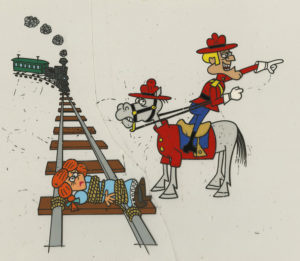
As a writing exercise, you might look at a piece you’ve written or one you’re thinking about writing and consider how time might be a way of adding tension. I remember a cartoon character from my childhood, Dudley Do-Right. Dudley, a well-intentioned yet dimwitted Canadian Mountie, was always trying to save the fair Nell Fenwick from the villainous Snidely Whiplash. Often, poor Nell would be tied to a railroad track or bound on a log and moving ever closer to a buzz saw. Of course, no harm ever came to her, but as a kid, knowing the train was coming or Nell was getting closer to the saw blade, made me worry about her. I felt the pressure of time passing. The future lay just beyond my realm of knowing, and I was breathless as I waited to see what would happen.
The post It’s Time: Prose and the Ticking Clock appeared first on Lee Martin.
March 8, 2021
Irony as Plot Strategy
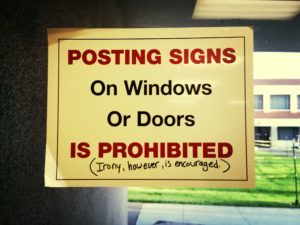 Last week, along with my students, I was thinking about irony and how it can often be a useful strategy in constructing plots. Here, then, is an example from my forthcoming memoir, Gone the Hard Road, offered up here in hopes of being useful to anyone wishing to add resonance to their narratives.
One day, I told my mother I wanted a kite. She and my father were going to a grade school basketball game in Claremont that evening. This was the school where my mother, just the year before, had still been teaching.
“We’ll show ‘em,” my father said. “We’ll walk into that gym as big as day.”
I can’t imagine my mother was keen on the idea, but my father said they were going, so indeed they were. I was staying with my Grandma Martin, who lived with us on the farm. I was sick with a cold, otherwise I would have gone to the game, too. I loved basketball. I loved the players with their white shoes. I loved the gleaming hardwood floor. I loved the noise the ball made—that swish of the net—when it went cleanly through the hoop. And I loved the cheerleaders with their white sweaters and the red “C’s” on the front, and the red and white streamers of their pom-poms. It was at one of these games that I first saw what, for some reason, I thought was called a kite. I’d seen some student organization selling these items for a fundraiser. The best I can remember now is that what they were selling was some sort of home-made boat: a piece of Styrofoam cut the proper shape. A mast made of Popsicle sticks, a sail of some sort of material. Perfect for floating in the bathtub I didn’t have because we didn’t have running water in our farmhouse. Something I had no real use for, and something I’d misnamed as well. I only knew it pleased me, and I wanted it.
My mother said she would bring me one, and I couldn’t wait until she came home so I could have it.
“Here it is,” she said when she and my father came into our farmhouse. She was holding in her hand exactly what I’d asked her to bring me—a kite—but I was crestfallen and angry with myself because I hadn’t known what to call the thing I really wanted.
“What’s that?” I said.
“It’s a kite,” my mother said. “Isn’t that what you wanted?”
I began to whine. “I wanted a kite,” I said.
“This is a kite,” my mother said.
“But I wanted a kite,” I said. “A real kite.”
My mother stood there mystified. My father, irritated because I was talking in italics and had obviously taken leave of my senses, said he could give me something to cry about—something real to cry about—if that’s what I wanted.
I knew what I wanted. I’d just gotten confused about what to call it. I have no idea why I’d decided that the Styrofoam ship was called a kite, but I had, and now I was in the midst of an absurd situation in which I was whining about wanting a kite when I was obviously holding exactly that in my hands.
This was, perhaps, one of my first lessons in irony. Someone wanted something, or intended something, and what they got or what they created was the exact opposite. That turn—that surprise—that was what could make something very funny, or very sad, or sometimes a little of both.
The post Irony as Plot Strategy appeared first on Lee Martin.
March 1, 2021
To Say the Secret Things: Tips for Memoirists
 I’m sure we’ve all had the experience of swapping stories with a group of friends, maybe out on the patio on a summer’s evening, or back in the pre-pandemic days at a dinner party. Someone starts to tell a story and then hesitates and says something like, “I really shouldn’t be telling you this.” Maybe the teller has even been you. You start the story and then you realize it’s going to be embarrassing, or it’s going to paint you in a bad light, or you’re going to wonder what people will think. The self-censoring kicks in, and you stop, afraid to go any further. Only by this time, your friends are interested. You’ve aroused their curiosity, and they say to you, “Well, you’ve got to tell it now. You’ve gone too far to stop.”
Those of us who write memoir experience this all the time. More often than not, we deal with sensitive material, and if we’re doing it properly, we have to look as truthfully at ourselves as we do others. Often those others include family members and family secrets, ones we’re not sure we want to share. By the time that hesitancy arises, though, we’re usually in the midst of the writing. We’ve gone too far to stop. We want to push on into the difficult material, but we’re afraid of the potential real-life consequences that might occur. We’re also afraid of what readers will think of us when we share our secrets and our shortcomings. We want to tell, and at the same time we want to stay silent. This can lead to a paralysis of our writing process as we struggle to figure out how to say the secret things.
Here, then, are three strategies for how to overcome this paralysis and trick ourselves into saying what we hesitate to say.
Change the POV: The upright pronoun, “I,” is often a terrifying position from which to speak. It demands you claim the experience you’re describing as your own. Saying, “I embarrassed the unpopular girl who’d worked up the courage to lay a note on my desk by knocking it to the floor,” is very different from saying, “You embarrass the unpopular girl who’d worked up the courage to lay a note on your desk by knocking it to the floor.” Or “He knocked the note to the floor.” Shifting the point of view to the second or the third person often eases the personal stakes for the writer and invites a more candid portrait.
Change the Camera Angle: Often we can trick ourselves into writing about sensitive material by changing the perspective. Instead of doing a scene from your own perspective, why not try imagining the scene as viewed by someone else? Maybe from the imagined perspective of a stranger observing the scene. “What would anyone think if they happened to see me bathing my handless father?” Or, “If anyone would have seen us there, they might have thought they were observing a scene of tenderness when really a deep-seated anger simmered between my father and me.” This shift of the camera can often invite us to tell the things we’d rather not tell. We can even try to imagine a sensitive scene from the perspective of another person involved in the experience. “What must it have been like for my father to stand naked in front of me? Maybe he was thinking of my mother. Maybe he was missing her. Maybe he feared what the rest of his life would be like if he happened to lose her.”
Change the Mode: Writing memoir is often a mode of confession, one in which writers willingly open their lives to readers. Changing that mode to one of resistance can often lead to a covert confession. What if you approach sensitive material by saying, “I don’t want to tell you. . . .” Write down everything you want to keep hidden. Put it all on the page. Hold nothing back. Once you’re finished, you might find that writing it took away the power it held over you. Saying it all might give you the distance you need to shape the scene in a way that will invite your readers to be your fellow-travelers through what once terrified you.
Writing memoir is an act of discovery. We know more at the end than we did at the beginning. We come to understandings we weren’t capable of having when we were in the midst of the lives we were living. We write memoir to come to the point where the sensitive material loosens its grip on us. We control it by saying it. I hope this post will give you some strategies to do just that. We write memoir to be able to move on into our futures. We can’t do that unless we make ourselves say the difficult things.
The post To Say the Secret Things: Tips for Memoirists appeared first on Lee Martin.