Lee Martin's Blog, page 23
July 12, 2021
Finding the What Via the Why
 Many years ago, I wrote the title story of my first collection, The Least You Need to Know. I remember when the narrative reached a point of resolution, and I sat there knowing something was still missing. I realized I didn’t know why my narrator was telling this particular story. That’s when I heard him say, “But that’s not the story I need to tell.” Okay, I thought, what is the story he needs to tell, a story so urgent he can’t help but speak. To answer that question, I had to recall a particularly shameful moment from my teenage years, a moment that still haunts me.
We spend a good deal of time facing the question of what to write, but we rarely consider why we write. The latter may be the more important question because its answer often taps into the heart of any individual piece, which is a way of saying the intention of the piece gets more fully realized. We become more aware of the nuances of characters and their situations. We more vividly portray the worlds we’re putting on the page. We have a better appreciation of image, metaphor, irony, surprise, and truth. If we know why we’re writing, we know more intimately what we’re writing.
The answer to why you write can change, of course, depending on each piece. To help you consider some possibilities, allow me to make some suggestions from my own inventory.
I sometimes write from guilt. Who doesn’t have regrets? Writing gives us the chance to dramatize the moments when we were less than we should have been. If we’re writing fiction, we can do so without explicitly confessing our shortcomings and sins. Do I confess, either directly or indirectly, in order to seek forgiveness, to hope for redemption, to better understand my motivations? Whatever the answers, the consideration of the questions gives me a more nuanced appreciation of my characters and their actions.
Shame is slightly different from guilt. The latter needs an awareness of wrongdoing. The former, though, adds the element of humiliation. Again, who doesn’t have moments of embarrassment that come from acts of poor judgment? If I put characters into a shaming sequence of events, I look at them through the lens of the humiliation I felt. In other words, I transfer my own complicated emotions to my characters. As a result, I feel what they feel more deeply, and I end up creating more complex characters.
What about curiosity? We sometimes forget that even as we’re writing, we’re also reading. What better way of increasing our investment with a particular piece than by making ourselves wonder what’s going to happen next? If we can remember times in our lives when we were on tenterhooks, we can better create the tension on the page. We can make better use of pacing, complications, and surprises. Likewise, if we can recall the emotions we felt, we can better portray our characters in similar anxiety.
So why do you write? To celebrate, to consider revenge (be careful that this one doesn’t cloud your vision while portraying characters and situations), to mourn, to love, to seek justice, to . . . you fill in the blank. Find out why you’re writing and you’ll better know what you’re writing. Knowing where we are in the work we’re doing will show us the many facets of what we’re trying to put on the page.
The post Finding the What Via the Why appeared first on Lee Martin.


July 5, 2021
Making the Small into Something Large
 One of my favorite short stories is “Killings” by Andre Dubus. The major event of the story, the revenge killing of a man who has murdered the main character’s son, is large, but within the narrative that moves to this climax, there are smaller, quieter moments that are equally significant.
One such moment occurs in Richard Strout’s apartment on the night the father, Matt Fowler, has come to exact revenge for his son’s death. Inside Strout’s apartment, Matt Fowler notices how tidy it is—“no dishes in the sink or even the dish rack beside it, no grease splashings on the stove, the refrigerator door clean and white.” Matt Fowler continues to catalog “the magazines and newspapers in a wicker basket, clean ashtrays, a record player, the records shelved next to it.” He then notices a photograph of Strout’s estranged wife, Mary Ann, the woman Matt Fowler’s son, Frank, had been involved with at the time of his murder. In the photograph, Mary Ann is sitting on the grass with her two boys, and she’s smiling at the camera. This is the place where the small moment becomes large. The photograph reminds Matt Fowler of an earlier time when he’d noticed Mary Ann’s smile when she was with Frank: “He recalled her eyes, the pain in them, and he was conscious of the circles of love he was touching with the hand that held the revolver so tightly now as Strout stopped at the door at the end of the hall.”
“The circles of love he was touching”—this is what Richard Strout’s tidy apartment and the photograph of Mary Ann smiling during a happier time brings to Matt Fowler’s awareness. Indeed his revenge will ripple out through many circles of love, even his own with his wife, Ruth, who at the end of the story conspires with him to keep his killing of Strout a secret, who holds him in bed, not knowing “the sob he kept silent in his heart.” So many lives touched by the action Matt Fowler chose, the one that at the end of the story drives him into a deep and complicated emotional response that he can’t share.
It takes courage to stay in the small moments until they swell with significance. Sometimes writers avoid them or else string them together, praying for a plot to arise, to the point that everything becomes banal. Dubus, in “Killings,” illustrates how a writer can have a big plot while still paying attention to the small details of clean apartments, and family photographs, and smiling eyes filled with pain. Without the former, not much happens. Without the latter what happens doesn’t mean much.
Here’s the point I hope I’m making: a writer who can’t make something of significance from the small things will never be able to make the large things matter. The success of a good piece of fiction depends on a narrative to make readers wonder what will happen next as well as the close observation of details that takes us deeper into the main character’s heart, that place of complication and contradiction, that place that can’t quite be fully explained. We never get it exactly right. That’s why we keep telling stories.
The post Making the Small into Something Large appeared first on Lee Martin.
June 28, 2021
Restarting the Writing Process after Time Away
 Cathy and I are back home after a splendid week away on the shore of Lake Erie, and now, like some of you, perhaps, I’m faced with getting back to work on an unfinished manuscript that I left alone while I was gone. “You don’t get good by wishing to be,” the poet, Stephen Dunn, said when asked the similarities between poetry and basketball. “A kid goes to the schoolyard every day and shoots if he wants to be good. You do your poetry that way, too.” A regular writing practice becomes generative while also sharpening our skills. The more regularly we write, the better we write. A steady work habit, gradually over time, creates better work, but how do we get ourselves back in motion after a period of not writing?
One strategy involves easing ourselves back into the writing by taking the time to reread what we’ve already written. We need to refresh ourselves on the current state of things before we try to push the piece along. This is particularly true for any long-form work. I’m currently working on what I hope will be a novel-in-stories. I have a large cast of characters, and sometimes, even when I’m working steadily, I have a hard time remembering things about them—their concerns, their fears, their details, and the directions they take the plot—so when I come back to the manuscript tomorrow, I’ll need to remind myself of who these people are, how they interconnect, and what’s left to be resolved in their storylines. Sometimes writing doesn’t involve putting new words on the page. Sometimes it requires your close attention to what you’ve already written. Often, while I’m rereading, I’ll find myself rewriting a sentence, or adding a brushstroke here and there. This is all part of the necessary process of re-immersing myself in the world I’m creating.
Another possibility is to jump right in with courage and abandon. When I was growing up on a farm in southeastern Illinois, boys often learned to swim when their fathers tossed them into ponds, and natural instincts had to take over. Just like that, boys were swimming. Maybe this approach could work for writers as well. Try not even looking at your incomplete manuscript. Just write. Write anything. A scene of dialogue, a passage of description or interiority. Don’t worry about where what you write might fit in, or even if it will. Write as a way of reintroducing yourself to the work in progress. Write until you feel something begin to take hold. Write until you’re ready to fully engage with what you’ve already written. You might feel like you’re flailing at first, but just relax and before you know it your strokes will be more sure, and you’ll be making significant progress.
Cathy and I had a marvelous time on our vacation, and we miss Lake Erie dearly. We had to come home, though. Stella the Cat was waiting for us, having been cared for handsomely by her pet sitter, and we’re now all ready to get back into our regular routines. It was good to have a break, but, of course, the work continues. I hope that something in this post will be helpful to you when you find yourself returning to a manuscript in progress after some time away. Try not to make your writing routine one of interruptions, but when they’re necessary, find a way to re-engage with the work in a way that will allow you to produce pages more easily. Remember, the more you write, the more you write, and the more you write, the better you write. Keep going!
The post Restarting the Writing Process after Time Away appeared first on Lee Martin.
June 21, 2021
Keep Doing the Good Work
 Cathy and I going on a vacation. We’re going off the grid, we keep saying, but here I am writing this blog post so I can share it with you. Yesterday I said to her, “I’m not sure I know how to do this vacay-thing. I mean, what am I supposed to be doing?”
“Relaxing,” she said.
That’s the hard part for me. I’ve spent a lot of years believing that if I worked hard enough I could achieve what I wanted to achieve, and sure enough, everything has turned out better than I could have hoped. Here in my mid-sixties, I find it difficult to slow down. For one thing, I love writing, and for another, there are still stories I want to tell.
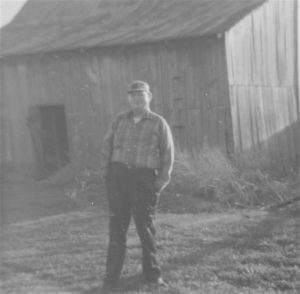
I inherited my work ethic from my father, a farmer. Here on Father’s Day, I’m thinking about all he taught me: how to walk the beans, hoe in hand, cutting weeds, back and forth over a field; how to disk a field by setting my sights on the far end and then turning to return, over and over, until I was done; how to loosen a stubborn nut with force, a lubricant, or, if need be, a pipe over the wrench handle to give me extra leverage. The lesson was always the same: I wasn’t to give up; there were numerous ways to get the job done. I can’t begin to tell you how often over the years I’ve relied on that extra dose of perseverance to deal with a problem with something I was writing.
The lesson for writers? Keep at it. When you hit an obstacle, figure out a way to beat it. Sometimes it takes a number of tries to get it right. There are no extra points for speed, only for the right solution to a problem. If something doesn’t work, keep going at it until it does, no matter how long it takes. Like my father always said when I complained that I couldn’t do something, “Can’t never did anything.”
When I was a teenager, I hated working on our farm, but since then I’ve been thankful that I did, and, despite the difficulties I had with my father in those days, I remain grateful for what he taught me about work and determination. He thought he was teaching me how to be a farmer, but really he was teaching me what I needed to know to have the life of a writer—to love the work, both its joys and its frustrations; to dedicate myself to a regular writing schedule; to handle success and defeat with a level head, knowing that a lifetime of writing or farming is made up of peaks and valleys; to keep going even if it means resting once in a while to recharge. Of course, when I was young, I couldn’t see the gift my father was offering me, the gift I was receiving in spite of how much I resisted.
So, this post now done, I’ll sign off and do my best to relax and do nothing. In the meantime, all of you keep doing the good work. Let it fill you. Let it carry you to the places you’ve always dreamed you’d one day go. Let those who’ve come before you be your guides.
The post Keep Doing the Good Work appeared first on Lee Martin.
June 14, 2021
A Father’s Legacy
 My father was born on June 14, 1913—Flag Day. Each year, when he was still alive, he’d drive down the main street of our small town and point to all the flags flying and say, “They’ve put the flags out for my birthday again.” He took great pleasure in saying this; it was just a little joke that delighted him.
Of course, anyone who’s read my work already knows my father was a man with plenty to be bitter about, but he was also a man who was eager for happiness. He was always on the lookout for something that might please him. He was the man whose own carelessness had resulted in the farming accident that cost him both of his hands, but he was also the man who could be quick to laugh and to enjoy the company of others. He could whip my legs with his belt when I misbehaved, and he could call me “honey,” and pet my head with the curved edge of his prosthetic pincers when I needed comfort. He was, simply put, a man of contradictions. To be perfectly frank, there were times when I thought I hated him, and I told him so, and there were other times when I loved him dearly.
Perhaps, above all, he loved farming his land. I’m still mystified over the fact that when I was starting third grade, he gave it up. My mother had lost her teaching job in our native southeastern Illinois, and upon my father’s insistence, she looked for another school. Arbor Park School District 145 in Oak Forest, Illinois, a southern suburb of Chicago, ended up hiring her. My father leased our eighty acres, and we moved five hours north. My mother told me after he was dead that he thought we needed the extra money, but she said she thought we’d have been all right without her teaching salary. I’ll never know exactly what he was thinking, but I do know he gave up something he truly loved for the sake of his family.
I never saw him happier than I did when, six years later, my mother retired from teaching and we moved back downstate. He was back in business as a farmer, and though the work eventually demanded more from his body than he was able to give, he gave in reluctantly at the end. His heart, diseased, simply wouldn’t let him go on.
I’m thinking about him on this day before his birthday. If he were still here, I have no doubt he’d make the same corny joke about the flags, and I’d allow him that pleasure. When I was younger, I couldn’t appreciate the burden he carried with him after his accident. How many times did he berate himself for not turning off the power take-off before trying to clear the clog from his picker’s shucking box? How many times did he relive the agonizing minutes with the snapping rollers mangling his hands before he could attract the attention of another farmer passing by the field? How often did he wish he could go back in time and make a different choice? Still each morning he put on his prostheses and he got to work.
I think of him every time something gets hard. I think of what he always told me when I said I couldn’t do something: Can’t never did anything. He taught me determination and endurance. He gave me fire. He also showed me how to take pleasure in the smallest things. All of this is necessary for the life of the writer. We keep going in spite of all that stands in our way. We keep going because we love what we do. We find things to delight us even in the darkest times. When we fail, we try again. The trying makes us better. It makes our writing stronger. It makes us stronger. There was pain and suffering and sorrow in my relationship with my father, but there was also the repeated attempt to be a better father, a better son. We didn’t always succeed, but we kept trying, and who can ask more than that?
The post A Father’s Legacy appeared first on Lee Martin.
June 7, 2021
Using Relics in Narratives
 Yesterday, my wife Cathy was sorting through her purse when she came upon her now-expired YMCA membership card.
“I guess I don’t need this anymore,” she said.
Indeed our membership cards are now relics of a before-time that no longer exists, that time when COVID had yet to arrive. During the pandemic, we bought our own home gym equipment and eliminated our need to go to the YMCA.
I’m curious now about what other objects might be considered relics of a past life altered forever. What will we dredge up in the future that will remind us of a time when we didn’t have to worry about COVID? What have we shed that future generations will look at with curiosity or wonder?
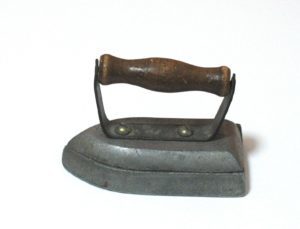
My first home was an old farmhouse that had been in our family for years prior to my birth. I remember the old flat irons we used as doorstops. I remember how heavy they were, particularly for a little boy to lift. These flat irons were relics from a time before rural electrification when the only way to iron clothes was to get a few of these irons hot on a stovetop and then use them in rotation, making sure there was always a hot one at hand. The ones I’m recalling had detachable wooden handles, thereby giving a cool surface by which to hold the heated iron. These irons were suggestive of a life that had gone on in that house before I arrived, as were the strips of cloth wound into balls from which my grandmother had sewn rag rugs, and the oil lamps, and the Hoosier cabinet now used for storage on our wash porch. Other people had walked the floors of that house and had lived other lives before sickness or age or death had passed them along to other ways of being.
What are the relics of your own or your family’s or your invented characters’ pasts? Emily Bronte once wrote, “Any relic of the dead is precious, if they were valued living.” The things we leave behind are never merely things. They’re containers. Those flat irons, for example. I didn’t know when I was a child that they were also known as sad irons. A synonym for “sad” in nineteenth century dictionaries was “heavy,” and as I’ve already said, these irons were exactly that. When I think of these irons today, I see how they’re emblematic of the sorrow that was often our companion after the farming accident that cost my father both of his hands—how they hold that sadness and how they speak of the burden we carried from that day forward. When I think of the weight of those irons—when I see the boy I was trying to lift them—I feel in my body the story of my family. This is what objects from the past can do for the writer of memoir and of fiction. They can open up the life lived in the before time and allow a more palpable expression of what the people in your nonfiction or fiction carry with them onto the page.
Recalling or inventing these objects can be a great aid to portraying characters. Regret, shame, longing, joy—a wide range of human emotions, some of them probably contradictory, can help us add depth to our characters, can even create narratives and lead us to a deeper understanding of what it was like for this person or that character to live a previous life, one altered by choice or by circumstance. There’s always a before and an after for the people we put on the page, and the relics from the past can clearly define the journey between the two.
The post Using Relics in Narratives appeared first on Lee Martin.
May 31, 2021
The Scent of Peonies: Sensory Details and Memoir
 Compared to a year ago, the world seems a bit more open. With COVID positivity rates dropping and mask mandates relaxing, a certain degree of normalcy is returning to our lives. I fear, though, that too many people think this signals the end of the pandemic, but, of course, it doesn’t. There’s still too much we don’t know about how long our vaccines will be effective, new variants, and what will happen once cold weather drives us all inside when fall and then winter arrive. Still, there’s reason to hope, but there’s also sufficient reason to respect this virus and to remember the many lives it’s taken.
On this Memorial Day weekend, the peonies are in bloom. When I was a boy, we called this holiday, Decoration Day because it was the day when we decorated the family graves with flowers. I helped my mother make bouquets of peonies and irises. We cut the flowers and arranged them in coffee cans with foil wrapped around them. We put gravel in the bottoms to give the cans weight, and we added water. I rode in the backseat of my parents’ car, cans of flowers on the floorboards. Each time I smell a peony, no matter how old I get, I always remember those days when we took the flowers to Ridgley and Gilead and Shiloh where generations of Martins and Reads were buried.
What scents will we remember from our pandemic days? Hand sanitizer, paper mask, bleach, soap? Or in the worst-case scenarios, no smells at all. So much of the fabric of our lives resides in our bodies. Sensory details evoke specific time periods and people and emotions. This can be particularly important for writers of memoir. In this case, the smells we remember can call up our most poignant memories and help us access the stories we have to tell.
What are your scents, the ones that immerse you in a particular time of your life? I remember the sweet smell of the peonies and how careful I was when I carried the coffee cans full of flowers to the graves. At the oldest cemeteries, the ones off gravel roads deep in the country, I remember the chattering of squirrels, the breeze moving through the cedar trees, the scent of honeysuckle in the fence rows. I remember how my mother told me not to run across the graves because people were sleeping there. I remember her soft, sweet voice and how patient she was with me even at the times when I didn’t deserve her patience. I remember so many times when I seemed to stretch that patience to its limit before she tapped some bottomless well of love within her, and she never lost faith in me.
Decoration Day is a day for remembering the dead. Let your body take you to them. Find the sensory details that help you resurrect those who are now gone. Settle on a particular time period of your life. Remember the specific moments—the ones that shaped who you are in the here and now, the unresolved events that still haunt you in the middle of the night, the days unlike any others, the ones you want to preserve on the page. Start writing the scenes, trusting the particular details to make them resonate for your readers. Look for a causal chain of events, one creating another. Find the shape of your narrative. All things are possible if we trust the sensory details we carry in our bodies, the details that take us back to the dead.
The post The Scent of Peonies: Sensory Details and Memoir appeared first on Lee Martin.
May 24, 2021
Hidden Power: Where Are You in Your Narratives?
 Our new battery-powered riding lawnmower had its maiden voyage yesterday, and Cathy, who took the wheel, reports that it did great. When you turn the key, you don’t hear anything, and you might be tempted to believe there’s a malfunction. When you put the mower in gear, though, and back up or go forward, it moves with deceptive quiet. When you engage the blades, you hear only the sound of them turning, a sound akin to that of a robust fan. Sometimes you just don’t know the power that lurks beneath the silence.
Such is the case for the work we fiction writers do. The power often comes from something only the writer can detect. When I write a novel, for instance, and the writing is going well, I sense myself—my fears, my desires, my passions, my contradictions—accompanying my characters through the events of their lives. You don’t have to know where I am in a novel, but trust me, you’ll know if I’m only pretending to be there, if I’m not invested, not vulnerable, if there’s nothing at stake for me in the writing. At some point, I need to know why the story matters to me, so I can make it matter to you.
Here, then, are some tips for how fiction writers can be more fully invested in the characters and the plots they invent.
Engage yourself. If the writing feels wooden to you and the characters aren’t fully engaged with the world and the events of the novel or story, it may be because you are likewise disengaged. Try stopping the writing. Then use the premise, or what there is of a plot, or the characters themselves, to suggest intersections with you and your own experiences. Free-associate. Say to yourself, “When I think of this plot, or this character, I remember. . . .” Just make a list until you feel something click. Maybe it’s a physical sensation—a squiggle in your gut, a lump in your throat—that says to you this is why I’m telling this story.
Daydream yourself. For those of you who are more visual thinkers, try the approach in number 1 by using the power of the daydream. Daydream your characters and your plots into your own memory. Again, look for that click that announces your stakes in the telling of this story.
Pressure yourself. What parts of the plot make you uncomfortable? Or what is it about your main characters that makes you squirm in your chair? These are usually the aspects of the narrative that will contain the most contradictions or ironies, and they often come from something you’ve experienced. Don’t let yourself off easy. Press down into that discomfort. Feel it. Then transfer it to your characters. Let them create and then try to find their way out of trouble.
The key is to do anything you can to make yourself aware of why you’re telling a particular story and what its stakes are for you. You never have to share that personal information with a reader. You only have to know and feel it yourself.
The post Hidden Power: Where Are You in Your Narratives? appeared first on Lee Martin.
May 17, 2021
Complicated Motivations: Doing Work with Our Characters before The Writing Begins
 For those of you following our lawnmower saga, I thought you might be interested to know that Cathy and I decided to order a 38-inch-cut rider from Ryobi. Yep, we’re going electric. Two hours of cutting time on a single charge, no gas, no oil, no spark plug. It’s supposed to arrive by June 1.
So decision made, we decided to go to the garden center yesterday in search of a couple of tomato plants. Again, we had choices to make. Darned life, always full of choices. I like an orange or yellow tomato, and we set out to find one. A nearby customer, overhearing our conversation, showed us that section of the plants. We didn’t know this gentleman, but we were grateful for his assistance.
Which leads me to wonder. If this were a piece of fiction, who might that man be. He’d be a different man, of course, depending on what he was carrying with him. Was he a widower, perhaps? Had he just recently lost his wife? Or was he a bachelor, never married? Or a man under criminal investigation? Or an FBI informant? The possibilities, of course, are limitless for a fiction writer imagining a character. When this man said, “I saw some Lemon Boys right over here,” do you hear him slightly differently given each of the choices I listed? The grieving widower, the lonely bachelor, the guilty criminal, the eager-to-talk stool pigeon. Each would have a different motivation for pointing out the Lemon Boys. Each would say his line with a different inflection, given his particular past and his motivation for speaking.
The lesson for writers is to pay attention to our characters’ histories, what they’re carrying with them in the present, and their motivations for the choices they make. If we can complicate those motives, all the better. If the grieving widower is, for instance, simultaneously longing for comfort and resentful of those who can give it—those who in his mind have been untouched by loss, those who stroll with their partners through the garden center—then we have a memorable character made up of contradictions.
Try it for yourselves. Start with a simple action. A character goes to a garden center in search of a tomato plant (or wherever you decide to have them go and whatever you decide to have them search for). Introduce another character. Give them a particular past. Make them contradictory. Give them conflicting emotions. Let them act, either in speech or deed, from their complicated motivation.
Conceiving a narrative is often a matter of putting interesting characters into motion. Doing some pre-planning with characterization can lead to richer interactions, richer characters, richer plots. Don’t be afraid of making choices and don’t be afraid of requiring your characters to make choices. Look for the complicated ones. Nothing should be easy. Complicated motivations create an interesting story that leads to a memorable resolution, the sort that, in the words of Ralph Waldo Emerson, “reveals the truth that reality obscures.”
The post Complicated Motivations: Doing Work with Our Characters before The Writing Begins appeared first on Lee Martin.
May 10, 2021
A Memory of My Mother
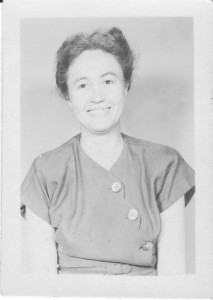 In honor of all mothers on Mother’s Day, I offer this section from my new memoir, Gone the Hard Road.
On one of the last visits that I made to the nursing home when my mother still had language, she told a fantastic story about just getting back from Florida where she’d been at the St. Louis Cardinals’ spring training camp. She’d tried out to play first base, but she hadn’t made the cut.
There’s a part of me that still thinks this is a happy story. I delight to the thought of my mother taking ground balls at first in the Florida sun, digging out low throws from third and short, charging hard to field a sacrifice bunt, leading the pitcher with a perfect toss when he has to cover the bag.
She was so often the only playmate I had when I was young. My father couldn’t play catch with me, but my mother could. She hit grounders and fly balls. She pretended to be the first baseman for my throws, the catcher for my pitches. We spent countless summer hours at play, hours away from her work, because I was her son and she knew that boys needed someone to throw the ball to them, to pitch to them, to encourage them.
I was crazy about sports, especially basketball and baseball. I remember October of 1962 when the New York Yankees played the San Francisco Giants in the World Series. The series came down to a decisive game seven at Candlestick Park. I was a Yankees fan. Somehow in southeastern Illinois, where everyone’s team was either the Cardinals or, to a lesser extent, the Cubs, I fell in love with the Bronx Bombers. These were the teams of Mickey Mantle, Yogi Berra, Roger Maris, Whitey Ford. They were often on the Game of the Week on Saturday afternoons, the only game we could see on television, unlike today when games are readily available via broadcast or streaming, and, of course, they were winners. I loved the pinstripe uniforms, I loved the history of the team, and I loved watching Mickey Mantle hit those long home runs. October meant the World Series, and the World Series meant the New York Yankees, and the New York Yankees were supposed to win.
But here they were in a game seven against San Francisco, the Giants of Juan Marichel and the two Willies—Mays and McCovey—and I was stuck in school. This was long before the days when all the games were played at night. These were the days of kids in school dying to know the score, hoping that perhaps a teacher would bring in a television and let everyone watch, or at least turn a blind eye to the thin strands of a transistor radio’s earpiece if a kid decided to bring one to school and to sneak a listen.
All I had was my mother.
I will always cherish this memory. This is the year she doesn’t teach, and when I run off the school bus and into our house, there she is in our living room, her ironing board opened in front of our Philco console, where in black and white, the game has come down to the last out. The Yankees are ahead 1-0. Matty Alou is on third base, Willie Mays is on second, and Willie McCovey is at bat. Ralph Terry is on the mound for the Yankees. I get there just in time to see McCovey lash a scalding line drive that threatens to knock Yanks’ second baseman, Bobby Richardson, to his knees. But he holds on, and like that the game is over and the Yankees are World Champions.
This is the first World Series I can remember, and there we are, my mother and I, on a beautiful Indian Summer day, and I’m so happy that I made it there in time. The living room smells of my mother’s hot iron and spray starch. The windows are up, and outside, the maple leaves are starting to redden. I notice a piece of paper on the ironing board, a pencil lying on top of it.
My mother picks it up and reaches it out to me. “I kept score for you,” she said. There in her neat handwriting is the box score. “Now you can see what you missed.”
Each year, when the World Series starts, I think of that moment. I wish I still had that piece of paper so I could imagine my mother watching the game as she ironed, making her marks on the paper, knowing they would matter to me, doing all that because I was her son and she loved me.
The post A Memory of My Mother appeared first on Lee Martin.