Lee Martin's Blog, page 22
September 19, 2021
And So We Begin

It’s been an uneventful week here in the Martin household. A neighbor who recently moved away paid a visit and there was much hilarity on our patio. Cathy attended her first meeting of The Daughters of the American Revolution. Lettuce and kale and spinach are producing like crazy in our garden. Cathy and I had a lovely Saturday brunch with a new MFA student and her partner, and then Cathy found the perfect dress for a wedding in late October. A pleasant week but nothing noteworthy.
From time to time, our writing lives are like that. We have the time and initiative, but when we face the blank page or screen, for whatever reason the words won’t come. We stare off into space, we check email, we browse the web. We do everything we can to keep ourselves from having to admit the well has run dry, and we’re not writing.
Sometimes we need a little nudge, something to get ourselves into motion. Here, then, are a few prompts that you can easily apply to your fiction, poetry, or creative nonfiction.
Is it just me, or is that weird? Take an inventory of your quirks, or if you can’t stand to face them, take note of someone else’s oddity, or make one up. Choose a quirk and let that open a piece of writing.
I just can’t leave it alone. Obsessions eventually demand action. What better way to open a piece than by getting things into motion by considering the pressures and pleasures of someone’s obsession.
It’s simply extraordinary. Find the memorable—the story from the news, the interesting object, the unforgettable image. Put it on the page and see where it might lead.
I can’t believe I said that. I expect you’ve been there, those moments where you say something and then later, reviewing the events of the day, you find yourself shaking your head with regret, knowing that what you said unintentionally caused someone harm. Or maybe you realize your mistake at the time, but there’s just no way to make amends. Why not open a piece with that moment of offense?
If only I could. We all have those moments we wish we could rewrite, those moments that keep us up at night because we’re so ashamed of what we did or said, or of what someone perhaps did to us. These moments of regret can often lead to interesting writing.
We don’t have to tolerate stagnant writing periods. We merely have to put the words in motion. Any spark will do. Feel free to find your own triggers, especially if none of the ones I’ve offered work for you.
The post And So We Begin appeared first on Lee Martin.


September 13, 2021
The Small, Good Things
 Friday, while I was running on the treadmill, I felt my left knee lock up. I got off the treadmill and moved about until my knee felt fine again. I finished my run with no further difficulty until I got off the treadmill and had a pain in my hip, leg, and knee. Having experienced sciatica nerve pain before, I was pretty sure that was the culprit. I knew that meant a period of rest—no running until I can do so without pain—along with anti-inflammatories, heat, and stretching. I’m a person who has a tough time with not being able to exercise—so much of my energy and my physical and mental well-being relies on it—but age has taught me that when my body talks to me, I have no choice but to listen.
So on Saturday, Cathy and I, after a light breakfast, went to the apple orchard. I was moving gingerly, but it was the first day Honeycrisp apples were ready, and I wasn’t about to miss that. While we were at the orchard, we also picked up some of the best pumpkin donuts I’ve ever had. We then went to our favorite international food market and shopped for all our favorites. Then it was on to Trader Joe’s to do the same. Cathy enjoys such shopping because before she married me she lived in a county where the only place to buy groceries was the local Walmart. The first time I took her to a Giant Eagle Marketplace here in Columbus, she went up and down every aisle, taking in the wide selection of items. She said she could have lingered for hours. Deprivation can lead to either over-indulgence or reverence. For Cathy, it’s the latter, and nothing gives me more pleasure than to be with her when she’s delighted.
Small moments like buying Honeycrisp apples and pumpkin donuts, and sharing a donut in the car with the windows down and the breeze blowing, or being excited about finding the naan Cathy likes so much, or the crumpets we both love, or okra and new potatoes we know we’ll have for Sunday’s supper, are the moments that make a life. We can be so busy or so scared or so worried we forget to treasure them. I could have been so angry over my injury I might have denied the exquisite pleasure of sharing a Saturday shopping trip with my wife.
The ordinary moments are there to remind us of all we stand to lose one day when our lives come to an end. In Thornton Wilder’s Our Town, the deceased Emily Webb is granted her request to revisit one day of her life. She chooses her twelfth birthday. As she watches her mother in the kitchen, she says,
I can’t. I can’t go on. It goes so fast. We don’t have time to look at one another. I didn’t realize. All that was going on in life, and we never noticed. Take me back – up the hill – to my grave. But first: Wait! One more look. Good-by, Good-by, world. Good-by, Grover’s Corners. Mama and Papa. Good-bye to clocks ticking. And Mama’s sunflowers. And food and coffee. And new-ironed dresses and hot baths. And sleeping and waking up. Oh, earth, you’re too wonderful for anybody to realize you.
I’m sure you have your own ordinary pleasures—the coffee and the sunflowers, the Honeycrisp apples and pumpkin donuts. Such things are the small graces we often overlook in the shadows of the larger moments of our lives, but I’ve come to believe that, like Emily, such will be the blessings we’ll miss the most. We’ll miss, to borrow from Raymond Carver, the small, good things. The baker at the end of that remarkable Carver story, serves the grieving parents some of his hot rolls, and he says to them, “Eating is a small, good thing at a time like this.” We’re all looking for the small, good things that give us comfort and pleasure in what can often be a frightening, ugly world. Don’t forget that your characters are doing the same. Don’t forget to look at what sustains them in their darkest hours. Make space for new-ironed dresses and hot baths. Their inclusion alongside your characters’ troubles will make their plights more deeply felt. The small, good things are precious because they can be fleeting and so easily lost.
The post The Small, Good Things appeared first on Lee Martin.
September 6, 2021
Until It’s Done: Writers and Work
 On this Labor Day weekend, I’m thinking a good deal about work and what it takes to keep doing it. My father farmed all his life until his heart disease forced him to stop. His second heart attack, the one that killed him, happened when he was mowing the yard on one of the hottest days of the year. My mother taught grade school for thirty-eight years. Many of those years she was also working other jobs. She helped my grandparents by working evenings and weekends in the general store they ran; she worked summers in the local shoe factory; and once she was married to my father, she worked on the farm. She drove grain trucks, greased machinery, milked cows, gathered eggs, fed the hogs. She tended a large vegetable garden. She canned green beans and tomato juice. She put up freezer corn. And there was the house to clean and the countless meals to cook and the clothes to wash and iron and put away.
After she retired from teaching, she worked as a laundress and a housecleaner at a local nursing home. I could go on and tell you about the time she walked a mile through a heavy snow because my father couldn’t get our car out of our driveway, and she had to be at work at five a.m. She didn’t once think about calling to say she was snowbound and wouldn’t be able to be there. She worked in that laundry even though the detergent left her hands raw and rash-eaten. I was a teenager at the time. I had no idea whether we needed the money her job provided or whether she kept working because that’s what she did all her life.
My parents weren’t exceptional. All sorts of fathers and mothers were working hard in our small Midwestern town. Like most teenagers, I whined when I had to work on the farm or in our garden, but somehow I got the message. Work was necessary. Work was my inheritance. Work was my duty. So it came to pass that I did a number of manual labor jobs before I became a teacher. I worked in that same shoe factory where my mother had spent her summers. I worked in a garment factory and a tire repairs manufacturing plant. I worked on a Christmas tree farm. I worked in the hayfields. I detasseled corn. I walked the beans, hoe in hand, cutting weeds. I plowed and disked and harrowed. I gradually learned that the paycheck I received wasn’t nearly as important as what I was learning about the nature of work itself. It asked of me a dedication that would eventually serve me well as a writer. I learned that the job didn’t get done unless I did it. I learned to concentrate on the task at hand, knowing that each thing done brought me closer to completing the work before me. I learned perseverance. I learned how to meet and overcome challenges. I learned the feeling of accomplishment that came to me when I knew I’d taken on and met all that the job required of me.
“It always seems impossible until it’s done,” Nelson Mandela once said. So I encourage all you writers to keep doing what you’ve been called to do. Be steady and earnest with your habits. Be diligent. Dedicate yourselves to the tasks before you. Everything is possible if you put forth the effort. Keep doing the good work!
The post Until It’s Done: Writers and Work appeared first on Lee Martin.
August 30, 2021
Let’s Make a Scene
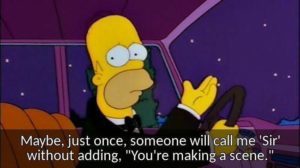 When children misbehave in public, parents often tell them, “Don’t make a scene.” What an unfortunate reprimand for any child who one day might be a writer, particularly if we’re prose writers. We spend our days making scenes on the page. I want to get down to basics in this post; I want to illustrate some of the elements of scene-making.
We need to know what our point of view characters carry with them into any scene. In Barry Lopez’s narrative essay, “Murder,” for example, we know that the narrator is a twenty-year-old college student driving from Santa Fe to Jackson Hole, Wyoming, where he’ll spend the summer working on a friend’s ranch. We know he’s looking forward to seeing his girlfriend that night in Salt Lake City. We know that he’s “innocently in love,” and that he takes great pleasure from his driving. He moves with the privilege and confidence his youth and his gender afford him.
We need to earn the space a scene will take up on the page, which means the central action of the scene must be significant in the sense that it will cause our point of view characters to be slightly or dramatically changed as they exit. Some word or action should cause a shift. In Barry Lopez’s narrative essay, for instance, Lopez, while driving in Utah, comes to the crest of a hill where a police car is making a K-turn. With no time to slow, Lopez speeds by on the shoulder and then makes sure he stays at the speed limit as he drives into Moab. The encounter with the police car significantly alters the freedom and pleasure Lopez has been enjoying. The stakes will intensify as the narrative continues, but for the time the near miss with the police car has made Lopez a slightly different character than he is in the very opening of the narrative. The action has indeed been significant.
We need details. Our basic job is to convince readers of the authenticity of what’s happening on the page. Even when we’re writing personal narratives, we have to persuade readers that what we claim happened really did take place. One way we do that is through sensory details. In the Lopez essay, he pulls into a drive-in restaurant in Moab where a young woman surprises him by getting into his car. Scenes feature moments that are out of the ordinary, and this is indeed an example of that. A stranger gets into his car and strikes up a conversation. Lopez paints the scene with the senses: sweat beading up on the woman’s small hands, her maternity blouse billowing, the cool air under the metal awning. Because of those details, we’re with him in this world made of marks on the page, this world that’s as real to us as the room where we sit as we read. We’ve left our rooms, though, and are operating now in the world of the author’s making.
We need significant dialogue. The dialogue must move the narrative along while also putting pressure on the characters and perhaps revealing something new about them. The woman in Lopez’s car asks him, “What do you think you might do for a woman?” “What’s that?” he answers and we hear how wary he is. The dialogue continues at a rapid pace building to its climax:
“For a woman who might be in trouble, might have lots of trouble.”
“What kind of trouble is that?”
“Family trouble.”
“You need money?”
“Would you kill my husband?”
We need a moment of decision. Our point of view characters have to come to a place where the pressure on them is so great they have to act either through word or deed. In the Lopez essay, that moment comes with the woman’s request: “If you want to do it, no one would know. You could throw the gun away. I wouldn’t say anything. I don’t even know your name.” Lopez is unable to speak, and in his silence the climactic moment has its release. The woman says, “Well, forget it. Just forget it. Forget I even got in here.” His non-answer is the answer, and the woman gets out of the car and goes back to her own. All that remains is the denouement, the brief falling away from the climax. In the case of the Lopez essay, it’s a small scene of him driving slowly out of town: “The peculiar tone of muscle in my young body, the quickness of my hand reflexes that made driving seem so natural, so complete a skill, was gone.” In the opening of the narrative, he’s “innocently in love.” That innocence has been shattered by his encounter with the woman who’s desperate to have her husbanded killed. Our narrator is no longer the same.
Unlike parents who don’t want their children to make a scene, I hope these tips will help you prose writers make all the scenes you want. Our stories rely on them.
The post Let’s Make a Scene appeared first on Lee Martin.
August 23, 2021
Round Characters
 As some of you know, Cathy and I have two raised beds in a community garden. The garden is along a busy road and highly visible. This may explain, at least in part, why it’s tempting for someone to steal vegetables. No one has taken anything from our beds, perhaps because they’re at the rear of the garden, but still it saddens me to know that others have suffered loss. I can only hope that whoever is committing these thefts is someone who desperately needs the food. I want to believe this because I don’t want to believe the opposite—that someone is taking just because they can.
This community garden was an Eagle Scout’s project, and it’s been such a welcome addition. One of its objectives was to build a stronger sense of community. We’ve met and enjoyed conversations with a number of our fellow-gardeners. It’s also been glorious to watch the individual beds put forth their array: the red tomatoes, the purple eggplants, the yellow sunflowers, the orange pumpkins, the lush green of squash vines and pole beans, the magenta stems of Swiss chard.
Gardening takes a certain amount of faith. You put your seed in the ground and trust that it’ll grow. To plant in a community garden requires an additional degree of trust—trust in your fellow citizens not to take what isn’t theirs, trust in the decency of your neighbors.
When it comes to writing fiction, a trust violated can often be the impetus for narrative. Our characters become more interesting when they knowingly or unknowingly deceive or betray. Our better angels don’t make very interesting characters unless they step out of character and commit acts that create narrative momentum. In other words, the main characters in fiction have to be capable of moving a narrative forward because at least temporarily they allow themselves to not be completely angelic.
Likewise, satanic characters quickly become boring if they have no other aspects to their personalities. Main characters who are evil and only evil have no room to evolve and therefore are incapable of dimension and surprise. They are in the end who they were in the beginning. In this way, they’re flat characters, and we’re looking for the round characters, the ones we find difficult to define.
It’s really simple. Interesting characters are those who are a little bit of this and a little bit of that. A good person compromised by a character flaw, perhaps, or a bad person who also demonstrates something we wouldn’t expect—an inclination toward sympathy, maybe, or an appreciation of beauty. Maybe that’s why I choose to think of the garden thief as someone who’s food-deprived and in need. A good person driven by necessity to commit a bad act. A little of this and a little of that. When we write fiction, we need to think about what pushes our main characters in certain directions and what pulls them in others. Round characters are interesting because we haven’t seen them before. They’re unique in the contradictory layers of motivations that they hold within them.
The post Round Characters appeared first on Lee Martin.
August 16, 2021
Hope and Love: A Writer’s Choice
 Each year, in August, I finish teaching a workshop at the Vermont College of Fine Arts Writers’ Conference and then turn my attention to a new school year at Ohio State University. For teachers and students, hope springs eternal in autumn. A new academic year; a new beginning.
Writing is an act of faith and love—faith in the efficacy of the written word and love for the world and its people, no matter how imperfect. If we didn’t love—if we didn’t hope—why would we devote our time to moving words around on the page?
It seems to me that writers choose hope over despair each time they sit down to do their work. Even on the days when the work isn’t going well, writers choose hope. I saw evidence of this faith last week in my VCFA creative nonfiction workshop. People were writing about all sorts of unsettled and unsettling things, trying to give shape to chaos in hopes of better understanding experiences that are seemingly beyond understanding. These fearless writers, though, were intent on seeing what they could make of challenging material. A writer’s well of faith is deep.
It’s not an easy thing to keep choosing hope and love. The world presses in on us. From time to time, we lean toward pessimism and despair, and sometimes we lose our balance and fall into the chasm. Sometimes we wonder whether we’ll ever make our way back to solid ground.
Just because we choose despair one day, doesn’t mean we’ll choose it the next day or the one after that. There have been times in my writing career when I’ve tried my best to turn away from faith and love only to find it impossible. Sooner or later, I made my way back to the blank page. Gradually, the glorious world, along with the irrepressible desire to communicate and interrogate through story, made it difficult to turn away forever.
Young writers can be impatient. I know I was. I was in a hurry to see my work published, eager for that validation. At the time, I couldn’t see that the work itself was validation enough. The very attempt was worth the effort. The journey had its own worth. That’s what I wish for every student whose work I have the privilege to read. It’s what I wish for myself. I wish us all the ability to appreciate the journey.
As we approach the autumn, that time associated with the dying away of things, I take the opportunity to reconfirm my devotion to the craft. Each thing I write, no matter whether you end up seeing it or not, is one more chance for me to engage with the complicated world in which we live—that world that often makes no sense, that can wound us at the same time it can lift us up, that can bring us to our knees with its beauty and its ugliness, or leave us breathless with everything we know and everything we don’t. This world—this splendid, maddening world. No matter how far we may wander—how close we might get to losing ourselves in despair—I wish us a return to hope and love.
The post Hope and Love: A Writer’s Choice appeared first on Lee Martin.
August 9, 2021
An August Assortment: One Writer’s Musings
 Here we are in August, a time of transition. Summer is lumbering toward autumn like an old dog circling before finding a place to lie down and rest. Cooler days are ahead; we just don’t know exactly when they’ll arrive. These times of pause before transition are suspenseful in a way. Maybe we’re tired of the heat and the languid days. Maybe we’re ready for something to happen. Each August, I can’t help but think of Gatsby and his awareness that he hasn’t used his pool all summer. The scene of him floating on his air mattress is a moment of calm just before George Wilson’s gun fires, ending Gatsby’s dreams forever. That pause in the narrative is eerie, of course, because we know that Wilson is on his long walk to seek revenge for his wife’s death. We know something is indeed coming, and its prospect is all the more tantalizing because Fitzgerald slows the narrative for that swimming pool scene. We know the tranquility will be shattered, and we hold our breath to see how it will all play out. These sorts of pauses in narratives are often essential to the climaxes to come.
*
Last night, we held a neighborhood gathering because two of our cherished friends are moving away at the end of the month. August is a time for changes, and this one will be deeply felt among the group of close friends we’re fortunate to have where we live. We make family where we can, and Cathy and I have done just that with our neighbors. Comings and goings provide rich grounds for narratives. The journey and the visitation—each contains a story. The one who comes and the one who goes—each causes a shift in the ordinary days. Stories of arrival and departure are full of heightened emotions. Each love one who leaves and each stranger who comes has the potential to alter our lives forever. Our lives become different, changed. Narratives have a way of highlighting the moments beyond which nothing will ever be the same.
*
Next week, I’ll be teaching a creative nonfiction workshop (virtually) at the Vermont College of Fine Arts Postgraduate Writers’ Conference. I’ve taught this workshop, as well as novel workshops, the past twelve years. Each August, I look forward to this gathering of writers. The faculty is accomplished and highly accessible. Egos and hierarchies have no place in this family. Instead, we concentrate on a coming together of folks with a common interest—the word on the page. The work itself takes center stage. There are no visiting editors or agents. The faculty’s talks are craft-centered. There’s a vibrant esprit de corps rising from a shared goal of improving one another’s writing. So we’ll kick things off tomorrow evening, and we’ll spend the week immersed in the study of the word, egos checked, hearts and minds open, supportive and encouraging. What more could we ask, not only in August, but in each stage of our writers’ journeys, but to know, as William James once said, “We are like islands in the sea, separate on the surface but connected in the deep.”
The post An August Assortment: One Writer’s Musings appeared first on Lee Martin.
August 2, 2021
Revision by Indirection
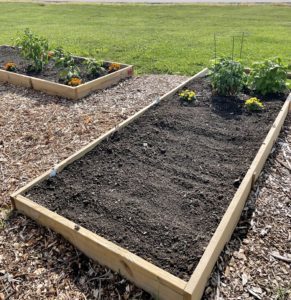 Summers, when I was a teenager, my father made me work in our vegetable garden. I would have rather been doing anything else. Running a tiller, hoeing around plants, hilling potatoes—none of it was much fun. Instead, it was sweat and dirt and what seemed like endless trips up and down the rows.
My father was an expert gardener. He grew typical vegetables like corn and beans and lettuce and tomatoes, but he also had a flare with the more exotic things like cantaloupes, watermelons, eggplants, strawberries, and raspberries. Nothing seemed to be beyond his capability. He even had peach trees and apple trees. He had a large garden, both at our home in town and on our farm, ten miles to our south. The last summer of his life, he grew enough fruits and vegetables to sell them from the back of his pickup truck at local farmers’ markets. By this time, he’d survived his first heart attack and had stopped farming, leasing our ground to another farmer instead. My father wouldn’t survive his second heart attack, which happened when he was cutting the grass in our back yard near the garden and the fruit trees he loved so much.
I wish, when I was young, I could have loved it as much as he did, but the truth is, like most teenagers, I felt imprisoned by the work my father demanded of me and spent hours whining and trying to wheedle my way out of the chores he set before me. From my perspective now, I understand how much it must have hurt him each time I balked. He loved the land and the things it could grow, and I’m sure it would have pleased him had I only been able to love it, too.
Wisdom comes in its own time, not only for teenagers but for writers as well. Sometimes we need the distance time can give us to fully understand our intentions in a piece of writing. Sometimes we just need to be patient in order to know our characters and their situations better, to be able to add and cut and rearrange as we revise. Other activities such as. . .well, such as gardening. . .can provide a silence that quiets our rational, critical minds so we can better hear the voices from our imaginative, dream-like states. Running is another such activity for me. Sewing or crocheting might provide the same function for others. Whatever the case might be, doing something disconnected from the writing process can often put you more in touch with it. We feel and we intuit when we don’t try too hard to think. While we’re gardening or running or sewing, our unconscious minds are revisiting what we’ve created on the page, opening it in new and exciting ways, and waiting for the right time to bring it to our awareness. This revision by indirection can send us back into the draft with a clearer vision of our intentions The piece seems new to us. Our revision process, then, can be creative rather than just editorial. Forgetting can often lead us back into our imagination.
As a young adult, I thought I’d put my time laboring in my father’s gardens behind me, but gradually I began to plant my own gardens. Today, Cathy and I put seeds in the ground for our cool weather crops—lettuce, kale, radishes, carrots, spinach, parsnips. As we worked, the sky turned dark, the wind came up, and thunderclouds started to roll in. “Step it up, Bubba,” Cathy said, and together we marked the rows, laid the seeds, and covered them with our hands, each of us working from separate ends, meeting, finally, in the middle. I like to think someone else was there helping us along—my father and mother who worked together planting so many gardens. When the rain finally came, I remembered the way I’d sit with my father on the porch of our farmhouse in the middle of a thundershower, and he’d say with such a voice of wonder and appreciation, “Mercy, just listen to it rain.” I listened today, and I heard the ticking of my father’s high-wheeled cultivator as he pushed it through the loose soil of the worked up seedbed, marking the furrows for the rows, a sound I’d nearly forgotten, but not quite.
The post Revision by Indirection appeared first on Lee Martin.
July 26, 2021
The Long Haul
 Last week, while I was in my native southeastern Illinois, I ran at the high school track. One morning as I was running, a grounds person was mowing grass. I’d just finished my run and left the track for my stretches and cool-down, when the man on the mower stopped and asked me how far I’d run.
“Four miles,” I told him.
“What are you?” he asked. “Sixty?”
“I’m sixty-five,” I said.
“Whew.” He shook his head. “I’m sixty and I doubt I could even run one lap around that track.” This is where I could have told him I started running nearly forty years ago, and I was afraid to stop because I knew once I did time would catch up with me. I’m learning, as the years go on, I don’t like making concessions to age. Before I could say anything, though, he said, “Keep it up, man!” And with that he put the mower into gear and was gone.
I’m here this morning to tell you sometimes it gets hard to keep going—with the running and the writing. Years ago, I made what I knew was a lifetime commitment to both, and I intend to honor it as long as I can. I run and I write because each activity opens me to the world and allows me to engage with it with more curiosity, more energy, more appreciation for how glorious—and yes, how sometimes maddening—our living can be. In short, both running and writing make me feel more alive.
I remember the days when I feared my writing would never amount to anything. I also remember those early running days when, like the man on the mower, I couldn’t run a lap without gasping for breath. I could have easily stopped, but for whatever reason, I didn’t. I suppose I kept at it because I liked the way the run or the writing session made me feel like I had control over something—over my characters and their invented worlds and over my being, both physical and mental. Little by little, I came to realize that both writing and running weren’t just pastimes; they were essential to the way I saw myself. They weren’t just what I did; they were who I was.
Maybe you’re out there struggling with your writing, wondering whether it’s worth your time going on. Ask yourself how important it is to you. If you can’t imagine yourself being happy without the writing, then by all means keep going. Don’t worry about the results. Take the word “publication” out of your vocabulary. Do what you love—what you have to do—and trust the process to take you where you’re meant to be.
Each run I take begins with a single step; each thing I write begins with a single keystroke or the press of pen to paper. I do my best, though, to remember all those years ago when I took that first running step or when I first faced the blank page. Years and years have gone by, and I don’t want the journey to end. That’s why I keep going. I could have told the man on the mower that. I’m in it for the long haul. I keep going because I want to keep living.
The post The Long Haul appeared first on Lee Martin.
July 19, 2021
New Beginnings
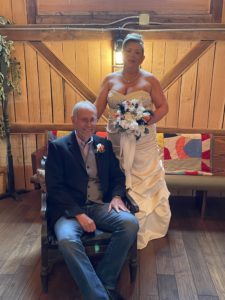 By the time she reads this, she’ll be married, and I will have had the honor of walking her down the aisle and dancing the father/daughter dance with her. Her husband, as far as I can tell, is a good man, a kind and decent man, exactly the sort of man any parents would wish for their daughter. Jason and Shonda are perfect for each other. They have the kind of partnership—the easy give and take—that lasts.
For those of you who don’t know the story of my wife Cathy and me, the fact is we fell in love in 1974 when I was eighteen and Cathy was sixteen. Then, as young couples often do, we went our separate ways only to reconnect thirty-four years later and to eventually marry. The last time I talked to Cathy before those years of silence was in 1976. She’d just given birth and was a single mother putting herself through nursing school so she could offer her daughter a stable life. The biological father was no longer in the picture.
“What did you name her?” I asked.
I was in a payphone booth seventeen miles from where Cathy lived. I was trying to convince her to see me, but she wasn’t having it since I was married at the time. I’m not proud to admit that I was calling a former girlfriend and trying to persuade her to see me so we could “just talk,” but there it is, the truth. I admire Cathy for turning down my request. Who knows what might have happened if she’d agreed?
“Shonda,” she said.
Then I said something I immediately felt I had no right to say.
“Give her a kiss for me,” I said, and Cathy said she would, and I hung up the phone, not knowing how long it would be before I once again heard her voice, not knowing I would never have a child of my own.
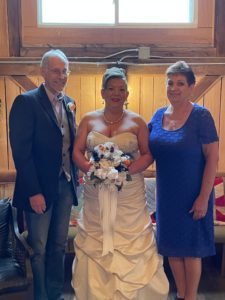 A long life is made up of new beginnings. Sometimes we don’t where they start until enough of the story has unfolded. Sometimes we have to get to the end of a story before we know how it began, or how it should begin. Yes, I’m talking about revising a piece of writing, but I’m also talking about the events of a life that connect to moments to come. That day in the payphone booth, I had no idea that Shonda’s birth held the story of what’s to come this weekend. Perhaps I had no right to ask Cathy to give her a kiss for me all those years ago. I only know, come Sunday, I’ll give Shonda that kiss, and then, like any proud father, I’ll walk her down the aisle, and when the officiant asks, “Who gives this woman to be wed,” I’ll answer, with all the love in my heart, “Her mother and I.”
The post New Beginnings appeared first on Lee Martin.