Lee Martin's Blog, page 18
June 27, 2022
The Marks We Leave Behind: A Writing Exercise for Memoirists
 After my father died, I found the marks he’d left: the wooden handles of tools, scraped and splintered from the pincers of his prosthetic hands—his hooks as he always called them; the clamped edges of pages in his Bible from where he’d held them. I can still recall him sitting at our dining table, working patiently with the point of one hook to lift the corner of those tissue-thin pages enough so he could clamp it with his other hook. For me, these marks begin to build a metaphor for what his life must have been like in the years following his accident—the constant effort to maintain some degree of delicacy in a world that often looked upon him with a freakish curiosity, and that effort rubbing up against the anger and temper that often rose in him and the brute force it took to do the work he did, those scraped tool handles evidence of the strength and power he often had to exert in order to hoe and saw and hammer. Perhaps I saw my father most clearly in these marks he left behind.
This is a post primarily for those who write memoir, but I imagine what I have to say might easily apply to fiction and poetry as well. This is a post about the signs the dead leave us to decipher. It’s a post about how to resurrect our loved ones via memory and detail and metaphor.
Miller Williams’s poem, “Let Me Tell You,” is one of those poems whose title becomes part of the first line. It’s a poem about how to write a poem, and its first two lines are: “how to do it from the beginning./ First notice everything:” Although the poem goes on to express how important it is to shape experience into something artful, the advice with which Williams begins is this: “Miss nothing. Memorize it.”
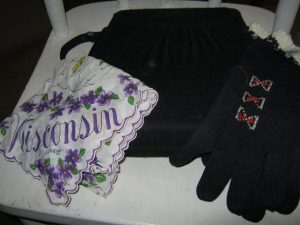
So it is for the memoirist. We can’t begin to write until we know the details. One way to access those details is to begin with what people leave behind them when they go. My mother left a pocketbook with an embroidered handkerchief from the Wisconsin Dells, a pair of black knit gloves, and a wallet containing a coupon to be used at a Druther’s restaurant. Taken together, these items speak to what my mother’s widowhood must have been like for her—the handkerchief and the gloves representing her gentle, and often meek, nature; the coupon that promised a lunch out with friends (my mother didn’t drive) standing for the loneliness she must have felt.
Here’s a writing exercise. Take an inventory of what a family member left behind them—the scraped tool handles, the clamped Bible pages, the embroidered handkerchief, the knit gloves, the coupon. Let one of those details be your first step onto the page. You might begin with something like, “After my mother died, I found. . .” Let the detail become a way of writing about your relationship with a person who played a significant role in your life. Can you use that detail to build a metaphor for what that person’s life may have been like? Or can you build a metaphor for what was at issue when it came to your interactions with that person? Details hold the marks of how we rub up against one another during our lifetimes. Metaphors provide a way to think more deeply about our own experiences and the lives of others. As Orson Scott Card says, “Metaphors have a way of holding the most truth in the least space.” If we begin in the concrete world, we have a better chance of portraying the emotional truths we’ve come to the page to explore.
The post The Marks We Leave Behind: A Writing Exercise for Memoirists appeared first on Lee Martin.


June 20, 2022
What We Know Now That We Didn’t Know Then
 For the second summer, Cathy and I are renting space in a community garden. We have a 4-foot by 12-foot raised bed. We’ve enjoyed our spring plantings of lettuce, spinach, and radishes, and now we’re watching the summer crops take hold: peppers, tomatoes, purple hull peas, Kentucky Wonder pole beans, and okra. I’ve never grown okra, but like my father, I’m up for trying anything when it comes to the garden. My father grew cantaloupes, watermelons, strawberries, raspberries, cauliflower, broccoli, and just about any vegetable you can think to name. He took great pride in his garden, and, when I was a teenager, he demanded I work in it. I ran the rototiller, I hilled potatoes, I hoed weeds, and all the while I resented the fact that I had to spend my summer hours doing such work. Now, of course, I wish he were alive so we could work in the garden together. We know so little when we’re young. We think, for instance, we have all the time in the world when the truth is the sand keeps running through the hourglass at a rate we can’t begin to imagine. How quickly we find ourselves looking back at the people we’ve had to say goodbye to, including our younger selves. From our perspective now, we see how foolish, how self-centered, how unaware we really were.
It’s long been my tradition on Father’s Day to post this poem by Robert Hayden:
Those Winter Sundays
Sundays too my father got up early
and put his clothes on in the blueblack cold,
then with cracked hands that ached
from labor in the weekday weather made
banked fires blaze. No one ever thanked him.
I’d wake and hear the cold splintering, breaking.
When the rooms were warm, he’d call,
and slowly I would rise and dress,
fearing the chronic angers of that house,
Speaking indifferently to him,
who had driven out the cold
and polished my good shoes as well.
What did I know, what did I know
of love’s austere and lonely offices?
What stories can we tell about those who are gone, perhaps those whom we never appreciated? What detailed facts can we offer from memory? The blueback cold, the cracked hands, the banked fires, the good shoes polished and waiting. What details would you offer to represent your relationship, no matter how complicated, with a loved one? Where would those details lead you? What do you know now that you didn’t know then?
The post What We Know Now That We Didn’t Know Then appeared first on Lee Martin.
June 13, 2022
Little Things: Returning to a Book-in-Progress
 Today, Cathy and I cleaned up our landscaping. We deadheaded rose bushes, trimmed shrubs, pulled weeds. Just a little tidying up on a beautiful day in early summer.
I’ve reached the point of the year when my teaching duties at Ohio State are finished until late August, and I’m trying to get back to a novel-in-progress, one I had to leave unattended once Spring Semester swallowed up all my time. It’s been my experience that writing a novel requires an uninterrupted stretch of days during which I immerse myself in its world. Living in that world with minimal distraction creates momentum. It also deepens my understanding of the characters and their situations. Sometimes after an absence, as is the case now, the novel doesn’t want to let me back in. It feels like an artificial object rather than an organic world. I see too clearly the seams of its stitching. Beginning to write again feels clumsy. Where is this book going? What drew me to the story in the first place? Where am I in this novel? How does it connect to something that matters to me? These are some of the questions I confront to help me ease my way back in with the hopes of getting to a point where it feels like the novel is writing me rather than the other way around.
The work Cathy and I did in our landscaping took minimal effort—a snip here, a tug there—but such small shaping often sparks more intense efforts. Maybe that bush needs to go. Maybe those day lilies need to be separated. Maybe this space would be better served with a new planting. So it is with returning to a novel. Devoting your efforts to small changes can draw you back into the world you’re creating. Sometimes this happens on a very small scale. For instance, I found myself the other day just fiddling with sentences, rewriting them to make them stronger. Sometimes all it takes is making a different word choice or correcting the punctuation. These small touches increase your intimacy with the text. Little by little, it starts to live again.
I also found myself tinkering with the timeline of a sequence of scenes, moving one here and another there to make a clearer chronology. Clarifying the sequence led me to write new scenes. Suddenly, I was inside my main characters, letting them surprise me as they moved through their world. I was starting to feel what they felt, and I was understanding why they did what they did.
The lesson in all this? When you’re picking up a project that you’ve left for way too long, lower your expectations. Start small. Direct your attention to things that are easily revised, things like sentences and chronology. The stakes in the writing process will be lower for you, thereby giving you more accessibility. As you go, you’ll feel your momentum begin to build. Before you know it, you’ll be writing at a brisk pace. You’ll be living inside your novel instead of experiencing it from the outside. “Great things are not done by impulse,” Van Gogh said, “but by a series of small things brought together.” When you’re coming back to something in progress, something you’ve lost touch with, let the re-acquaintance begin with small steps. As the great college basketball coach, John Wooden, once said, “It’s the little details that are vital. Little things make big things happen.”
The post Little Things: Returning to a Book-in-Progress appeared first on Lee Martin.
June 6, 2022
The Golden Times: Adding Texture to Our Characters and Their Stories
 Cathy and I have had a pleasant weekend. Yesterday, we hosted a few graduate students from Ohio State and inducted them into our Patio Club. (By the way, anyone is welcome. Just let us know if you’d like to join.) Today, we attended a high school graduation party. At the latter event, Cathy watched all the young people—how nonchalant they were with their beauty and the grace of their bodies—and she said, “Oh, to be fifteen again.” I’m not sure we actually long for a return to our teenage years or if we only want the memory of being at the beginning of our adult lives. The next thing Cathy said was, “Of course, I didn’t look like that when I was fifteen.” I can’t say one way or the other because I didn’t know her until she was sixteen, and then she was beautiful, and she still is today.
There’s something so exciting and alive about a young person about to step into a new phase of life. It’s a time full of hope and promise and possibility. Of course, disappointments and setbacks and missteps are bound to occur, but what I remember most clearly are the dreams and aspirations and the feeling of knowing something thrilling lay just ahead.
As writers, we sometimes neglect the golden times of our characters’ lives. We concentrate on the present-day troubles that drive the narratives to the point of forgetting the younger lives our characters once lived. To add depth to a character and texture to a story, we might spend more time shading in our characters’ golden times. Here’s a brief writing exercise that might help either with revision or with the creation of a new story.
Ask yourself this question: What was the time of a character’s life when they felt the most alive, the most confident, the fullest of possibility? What was their golden time?
Think about the present-day trouble of the story. What is it about that trouble that causes the character to long for a return to that golden time? What’s the connection between the present and the past?
Consider embracing the bittersweet at the end of the story. How does the memory of a past golden time collide with the trouble from the dramatic present?
Here’s an example from Richard Bausch’s “The Fireman’s Wife.” Jane, who’s been considering leaving her husband, Martin, is surprised to have him brought home from his fireman’s shift with his hands badly burned while fighting a fire. Once she has him settled, she goes outside, and this is what happens:
Later, while he sleeps on the sofa, she wanders outside and walks down to the end of the driveway. The day is sunny and cool, with little cottony clouds—the kind of clear day that comes after a storm. She looks up and down the street. Nothing is moving. A few houses away someone has put up a flag, and it flutters in a stray breeze. This is the way it was, she remembers, when she first lived here—when she first stood on this sidewalk and marveled at how flat the land was, how far it stretched in all directions.
This is only the start of her memory of her and her husband’s own golden time. She finds herself in the garage looking at his model airplanes, and “She remembers that when they dated, he liked to tell her about flying these planes, and his eyes would widen with excitement. She remembers she liked him best when he was glad that way.”
The story ends, then, with her knowledge that she will eventually leave him, but she doesn’t have to be in a hurry. The sadness of a marriage ending becomes more textured because of Jane’s memories of the two of them just starting out. The dark and the light—the gold and the rust—co-exist, each adding texture to the other and making for a memorable end.
I hope this exercise invites you to pay more attention to the golden times that shadow any troubled narrative. Keep doing the good work.
The post The Golden Times: Adding Texture to Our Characters and Their Stories appeared first on Lee Martin.
May 30, 2022
Any Dark Cloud: Memoir, Obsession, and Loss
 Here we are at the end of another academic year, only this year we’re facing an uptick in COVID cases at a time when too many people, pandemic-weary, have forsaken protocol, and we’re grieving in the aftermath of another school shooting, this time in Uvalde, Texas, not to mention the ongoing war in Ukraine. It’s enough to flatten any optimism we may have managed to maintain.
A friend once told me I could find the dark cloud in any silver lining. Guilty as charged. My inclination toward pessimism may come in large part from the story of my family, a story of loss, a story of before and after. If you’re a regular reader of mine, you know my father lost both of his hands in a farming accident when I was barely a year old, an accident to which he contributed by not shutting down the tractor’s power take-off which would have stopped the snapping rollers of his corn picker from turning before he tried to clear the clog in his shucking box. His choice dictated the future of our family, particularly the relationship I had with him once he was damaged and angry. I’ve written about this numerous times, enough times that you’d think I could write it out of me. But here’s what I’ve learned about memoir. The moments we wish we could change—the ones that haunt us and keep us up at night—are necessary. We write from our obsessions. Their shadows fall over the rest of our days. Like the sailor in Coleridge’s The Rime of the Ancient Mariner, we can’t stop telling our stories.
I tell my own to remember it because I never want to forget the fire and the hammer that forged me. I tell it to shape the flames and the blows into something coherent. I go back to my family’s story time and time again with the hope that I can change it, but of course, I never can. The facts are the facts. I can, however, adjust my angle of vision. I can recall, for instance, my father’s kindness to strangers, his generosity, his love of a good joke. Here on a Sunday afternoon on the eve of Memorial Day, I can recall the sound of a St. Louis Cardinals game on the radio, Harry Caray and Jack Buck at the microphone, and my father’s gentle breathing as he napped on his one day of rest. I can remember how sometimes when I was sad about something, he’d call me honey and pet my head with the curve of his hook. Here at an age near the one he reached a few months before he died, I can see how hard he fought, in the aftermath of his accident, to find joy in his life.
None of us escape loss. The older I get, the more painfully clear that becomes to me. I feel the clock ticking, and because I do, I try to pay more attention to small blessings—the scent of peonies from our garden, the bright red and white of the radishes Cathy and I grew, the feel of our orange tabby’s fur when I pet her, the faith in the love and care of a good woman. Oh, don’t get me wrong, I can still find the dark lining in any silver cloud, but I try my best to keep my eye on everything that redeems our imperfect lives. I give myself to the current of time, doing everything I can to keep myself from looking at the horizon, that place where the land seems to drop away to leave us with only the blue expanse of sky.
The post Any Dark Cloud: Memoir, Obsession, and Loss appeared first on Lee Martin.
May 23, 2022
The Year When: A Writing Exercise
 This past week, I had the pleasure of being with the Phoenix Writers Network. What a delightful and talented group of writers. I shared a writing prompt with them, and the results were so impressive I thought you might find it useful.
A writing problem I have from time to time is getting started on a new project. I go through a series of starts and stops, unable to get traction and narrative momentum. This exercise, then, is meant to cut down on the hesitation and to move you away from time spent staring out windows to putting words on the page.
We begin with the opening of a Richard Ford story, “Optimists”:
All of this that I am about to tell happened when I was only fifteen years old, in 1959, the year my parents were divorced, the year when my father killed a man and went to prison for it, the year I left home and school, told a lie about my age to fool the Army, and then did not come back.
With this opening, Ford has essentially provided a map to all that has to happen in this story. Some people might object to giving away the major events, but I’m simply curious to know how these things came to be. Plus, Ford’s language is so marvelous I’m eager to listen to his narrator.
This writing exercise can work with both fiction and creative nonfiction, particularly memoir. Here are the steps:
Using either facts from your own experience, imagined facts, or some combination of both. . .
Choose an age for your main character.
Choose a year, or some other time span, from their life.
Come up with three significant events from that time.
Test your facts to see if they establish a causal chain. Does the first fact help create the second one, etc?
Signal an irrevocable change in the life of your main character.
Sometimes we need to spur ourselves into writing by distilling the story line before we begin. I hope this exercise brings you to something you want to work on. If we have the major events of a narrative in mind, how can we refuse to write? We put ourselves into the role of the curious reader who’s eager to find out how our characters came to pass through these major events of a particular slice of their lives.
The post The Year When: A Writing Exercise appeared first on Lee Martin.
May 16, 2022
Brutal Necessity: Applying Pressure to Our Characters
 This is the time of year when carpenter bees make their appearance as they hunt for wood on houses to drill into. Last year, Cathy and I purchased a trap which is essentially a block of wood with an entry through a couple of holes that provide no exit. The bees have no choice but to fall into a glass jar that screws into the bottom of the wood block. Last year, we didn’t catch a single bee, but this year we’ve caught a few of them. It’s proven difficult to watch them in the jar, knowing if we leave them there, they’ll cook in the sun. We’ve taken down the trap. It turns out we aren’t really committed to the process. . .that is until today when we saw three spots on our pergola where the bees were drilling into the wood. The trap is back up. Now we’ll see how truly committed we are.
This issue of commitment comes up all the time in our writing rooms. Not only is there the question of how committed we are to the writer’s life and all it asks of us, there’s also the matter of committing ourselves to bringing our characters to some sort of trouble and then watching them struggle to find a way out of their difficult situations.
Sometimes we make the mistake of liking or admiring our characters too much. Such affection can keep us from applying pressure to those characters. We may be all right with letting them get themselves into tough spots—I’m talking about the kind of spots where lives can change forever—but then we hesitate to hold their feet to the fire. We find a convenient way to relieve the pressure because we can’t stand to see how characters in dire straits. We fail to realize that trouble and the struggle against it can bring something precious to the surface.
Think of the grandmother in Flannery O’Connor’s “A Good Man Is Hard to Find.” Her insistence on altering the route of a family vacation puts her, her son, her daughter-in-law, and grandchildren in the path of an escaped killer, The Misfit. O’Connor doesn’t make things easy for any of her characters. The grandmother tries to talk her way out of the trouble she’s found by insisting that The Misfit is a good person and if he’ll only pray, he’ll be able to find redemption. The pressure increases as the final extended scene unfolds. The tension builds until she says to The Misfit, “Why you’re one of my babies. You’re one of my own children!” At that point, she reaches out and touches The Misfit on the shoulder. This is the point in the scene from which nothing can be undone. The trouble the grandmother has helped create by taking the family on a wild goose chase to find a house she remembers from her childhood (a house, she realizes too late, that’s in a different state) has reached its highest point of tension. Resolution is only a beat away. O’Connor’s narrative keeps its thumb on the grandmother. She makes this final action, and the resolution depends on it. I’m purposely withholding the resolution of this story, although I doubt that very few readers don’t already know it. My point is this. The bees enter the wood block by virtue of their own instincts. If I unscrew the jar and let the bees go free, I relieve them from the fates their actions have created. I deflate the tension of the narrative. If I commit to the process of the trap, though, consequences of the bees’ actions await. I allow the narrative arc to complete itself. That arc may be brutal and yet necessary.
We do our narratives no service if we’re too easy on our characters and the situations they create. As O’Connor herself once said, “I often ask myself what makes a story work, and what makes it hold up as a story, and I have decided that it is probably some action, some gesture of character that is unlike any other in the story, one which indicates where the real heart of the story lies.” Pressure brings these gestures to the light. The grandmother reaches out and touches The Misfit, and that ignites the end of the story.
The post Brutal Necessity: Applying Pressure to Our Characters appeared first on Lee Martin.
May 9, 2022
(In memory of my mother on Mother’s Day, I re-post this):...
 (In memory of my mother on Mother’s Day, I re-post this):
My Mother’s Hands
Because my father lost his hands, my mother made a gift of hers. Cuticles ragged, knuckles scraped, fingernails smashed—farm work showed her no mercy.
Her hands were made for more delicate things, but she gladly sacrificed them because, really, what else was she to do? My father needed her, and she loved him, so she put her hands to work on our farm. She should have had the soft and beautiful hands more suited to her soft and beautiful heart, but life had other plans for her.
My father continued to farm after his accident, his prosthetic “hooks,” as he always called them, levied recklessly, the steel used to hammer and pry, to gouge and pull. Often, while working on machinery, his hook pinched or smashed my mother’s finger, and she took in a breath. If I were nearby, I’d hear her swallowing air. She might drop the wrench she’d been using. She might shake her finger. My father looked sheepish. Sometimes he asked her if she was all right. Sometimes he cursed. “Goddamn it,” he might say, angry with himself because he’d hurt her. Other times, he said nothing, just looked down at those hooks and maybe banged them together, angry with the fact of them as he waited for my mother to once more take up the wrench. He spoke to her gently. “Let’s try again,” he said.
I’m remembering all this today as we draw closer to the start of another school year. My mother was a grade schoolteacher for thirty-eight years. Her hands were meant for turning the pages of books, for cutting paper into lacy snowflakes to decorate her classroom in winter, for moving across a tablet page with a red marking pencil, for petting the heads of girls and boys who for whatever reasons needed her affection.
But she gave her hands to my father. I never heard her utter a single word of complaint. She put away her nail files and emery boards and fingernail polishes, and her hands became rough with the signs of her work and her love.
When my father died, she wept over her casket. She said, “I’ve taken care of him all my life. Now what am I supposed to do?”
She lived six years beyond him, spent so many hours alone, her hands resting on the arms of her chair, her fingers lifting and falling, one after the other, as if she were a young girl, playing scales on a piano. I lived away from her then. We wrote letters. She wrote to me once toward the end of summer about watching the schoolgirls pass her house. She wrote about the sound of their bright voices, the way they interlaced their fingers and skipped along the sidewalk. Oh, their bright voices, she wrote. Oh, those beautiful hands.
The post appeared first on Lee Martin.
May 2, 2022
Questions for Revision
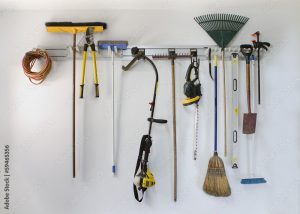 “I’m tired of all these tools leaning up against the wall,” Cathy says, and I know there’s no use to argue. We’re about to Marie Kondo the heck out of our garage. It’s a pretty Sunday at the start of May, and we are going to or-gan-ize. The hoe, the shovel, the rake, the this, and the that are soon going to hang by their handles from the wall. Furthermore, I know we won’t stop there. After we put up the organizer racks and hang the tools, we’ll move on to sorting, discarding, cleaning, and arranging. Like a writer facing the task of revision, I grimace, but I also know the work is necessary, and what can I do but begin?
Here, then, are some questions for those of you who may be revising something.
Does everything have a place? Read the end of your piece. Remind yourself of its landing place. Then ask yourself if everything has played a role in making that end possible? If something doesn’t contribute in some way to the end, consider letting it go.
Is there something missing? Ask yourself if there’s anything you might add to enhance the end. What have you left out? It might be a hole in the plot, or it might be an aspect of character, or more work with the setting, or better use of a detail. Reread your work and ask yourself what you can add that will be in service of the end.
What needs to be cleaned? In the rush to get a first draft on the page, we often skim over or bypass areas that need attention. Revision is your chance to look more closely at these oversights. Have you made the world of your piece vivid and convincing? Have you used a combination of sensory details to give the piece authenticity and authority? Have you seen the aspects of your characters that they often keep hidden? Maybe they’re not even aware of them. What is there in these characters that surprises you? How does the pressure of the plot bring those aspects to the surface?
Does your structure need attention? Is there integrity in the shape of your piece? Is there a clear beginning, middle, and end? What about the pace? Are there places where you’ve gone too quickly or slowly? Do the large moments in the plot—the events, the changes in characters—taken up the appropriate amount of space? Big things need big spaces.
Are you ready to polish? Once you’ve addressed some of the larger issues, you’re ready to do a close read, paying attention to things on the sentence level. Read your work out loud. You’ll hear awkward sentences, repetition of words or phrases, or hiccups in plot or character development.
Bernard Malamud, who called revision “one of the exquisite pleasures of writing,” also said, “I would write a book, or a short story, at least three times — once to understand it, the second time to improve the prose, and a third to compel it to say what it still must say.” Like Malamud, we should embrace the joy of revision for the creative activity it can be if we enter it with an open mind. I can’t say that organizing and cleaning our garage was an “exquisite pleasure,” but I can attest to the fact that our results were pleasing to us. We stood in our clean and tidy garage. We saw the results of our efforts and called our work good. May you all have a similar experience with your revising.
The post Questions for Revision appeared first on Lee Martin.
April 25, 2022
Writing the Uncomfortable Places
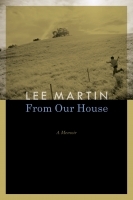 When I wrote my first memoir, From Our House, I dramatized pivotal moments in my family’s difficulty following the farming accident that cost my father both of his hands. I wrote about my father’s anger. I wrote about how I was often the target of his rage. Sometimes I deserved it, and sometimes I didn’t. I wrote about the good times, too. My father’s generosity, his love of a good joke, his moments of vulnerability. I also wrote about my mother’s faith and her belief in our goodness. I wrote about her endurance and how it ultimately saved our family. I remember reaching the end of the first draft, a scene describing my father’s baptism. When it was done, I helped him dry off and dress, and then we went to find my mother. She was standing in the foyer of the church: “. . . I knew she was content to wait as long as she might have to, confident that, finally, my father and I would find her there, and, together, we would go home.”
When I wrote that last word, I couldn’t hold back my tears. I had reconstructed a journey that had brought me home. I’d lived it all again, but this time, I’d also been a spectator. I could narrate my participation in the story of my family, but I could also look at it from a slight remove, a reflective position from which I could interrogate my experience. I could think out loud on the page. I could speculate. I could be the interpreter of my life. To do all that, I had to touch the uncomfortable places. I had to be honest. I had to hold myself to account. Above all, I had to do so from a desire for empathy. What had brought us to the painful love we somehow managed? What had made my mother a woman of such strong faith? From where had her devotion come? What was it like for my father in the years after his accident? Was there love in his bluster and rage if only I looked closely enough to find it? What did it mean to him to have a son?
These questions, and many more, drove the writing of this memoir. I wrote not only to document but also to understand. By the time I reached the end of the first draft, I’d lived inside my father’s skin. I’d seen the world from his perspective. I’d done the same with my mother as I attempted to understand how she’d tolerated my father’s anger. I’d also looked at the shaping of my personality through the moments I remembered, the ones I scenically represented on the page. I cried because the writing brought me more deeply into my parents’ lives, and mine as well. I cried because I forgave my father for all the times he lashed out at me. I forgave my mother for allowing his violence. I forgave myself for sometimes provoking it. I cried to release the legacy of anger my father had left me. I cried because I knew how hard we’d fought to finally love one another the way we deserved to be loved.
For the writers of memoir: Are there people in your life who deserve your empathy and understanding? Are you one of those people? What questions haunt you? What moments do you relive over and over? Where does your story start? What sore places will you have to touch in order to tell it? When will you be ready to try to tell the story of your life?
The post Writing the Uncomfortable Places appeared first on Lee Martin.