John H. Carroll's Blog, page 14
September 16, 2011
Bookata - Personalized ebooks.
Why am I telling you about this?
I seem to start a lot of these blog posts by asking questions that I'm supposed to answer. It seems a bit silly, but . . .
Anyway, in March of this year (2011) I received an email from a person who had read "The Emo Bunny that Should" and one of the poems I wrote to my wife. He liked my work and wanted me to write a story that could be customized.
I wasn't too sure about it at first, but took a look at the website and decided it had amazing potential. The stories on it are completely customizable to fit anyone's situation. There are drop down choices for a person to select from for starters. Once all the choices are made, a person can edit every section to make adjustments to fit their personal situation. The illustrations that go with it are exceptional work and add extraordinary life to the work.
The story I wrote is called "A New Pet in the Family". It was a challenge to write all the different options, but it was also a great deal of fun. The experience has made me a better writer too. I'll be writing a customizable love poem for them soon too. I'm looking forward to seeing how it turns out.
I highly recommend checking out these stories to see if there's one that may fit your personal situation.
What is Bookata?

From their website:
Bookata is an online platform addressing children's life events through personalized stories. Families and friends use our engine to adapt beautiful narratives and art into unique stories, for actual people, who have a name, a personality, a unique history.
Started in 2009 by three dads (as an amusement for their 7 kids, combined), Bookata aims to become a much appreciated, friendly and familiar provider for content personalization on all tablets and eReaders. We don't target a massive success - we just want one reader at a time to fall in love with our portable, unique, personalized e-books.
A New Pet in the Family
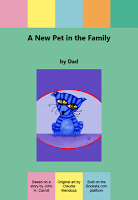
This is the story I wrote. Artwork was done by the amazing Claudia Mendoza
Kids are willing to promise anything in order to get a new pet. The parents should open their heart but also be prepared to have a bumpy ride, full of adventures, sometimes funny, sometimes less. It is a serious medium and long term commitment and the decision should be wisely taken, with all the family members. To make the enlarging of the family an exciting moment the parent can take elements from the child life into this charming story of love, transition and humor. Like in all Bookata books, the whole story can be personalized. In this case the new rules and responsibilities surrounding the pet, as well as the usual child and sibling gender, age, race, and name. And, of course, the pet: name, breed, color, etc.
A Soft Place to Fall
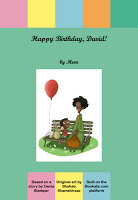
Birthdays are important milestones that celebrate who we are, who we were, and who we will be. Personalized birthday wishes are a perfect way to honor a child's birthday. With unforgettable moments that illustrate unconditional love, the birthday child will feel the way everyone should feel on their birthday, cherished, unique, extraordinary.
Patch Pirates

Despite two decades of public health initiatives, stricter government dietary guidelines, record growth of farmers' markets and the ease of products like salad in a bag, American children still aren't eating enough vegetables. Pediatricians and nutritionists concede that perhaps simply telling people to eat more vegetables isn't working. There is nothing a parent can say that will get the kids willingly to eat more veggies. Eating vegetables is a lot less fun than eating flavor-blasted Doritos. Bookata is repositioning vegetables as fun filled adventures with pirates characters included. And, of course, your child in the center of the story.
We Had Such A Great Time!
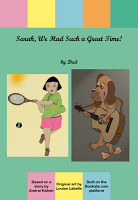
The loss of a pet is hard on everyone. Children can be especially sensitive at this traumatic time. Because it is often a child's first encounter with death, it is important that the situation is handled with care. With this book, a parent can thoughtfully create a remembrance space where the family honors the pet. By integrating real life elements, and events meaningful specifically to the individual pet and family, the parent is better adept at guiding their child in a positive direction toward closure.

I seem to start a lot of these blog posts by asking questions that I'm supposed to answer. It seems a bit silly, but . . .
Anyway, in March of this year (2011) I received an email from a person who had read "The Emo Bunny that Should" and one of the poems I wrote to my wife. He liked my work and wanted me to write a story that could be customized.
I wasn't too sure about it at first, but took a look at the website and decided it had amazing potential. The stories on it are completely customizable to fit anyone's situation. There are drop down choices for a person to select from for starters. Once all the choices are made, a person can edit every section to make adjustments to fit their personal situation. The illustrations that go with it are exceptional work and add extraordinary life to the work.
The story I wrote is called "A New Pet in the Family". It was a challenge to write all the different options, but it was also a great deal of fun. The experience has made me a better writer too. I'll be writing a customizable love poem for them soon too. I'm looking forward to seeing how it turns out.
I highly recommend checking out these stories to see if there's one that may fit your personal situation.
What is Bookata?
From their website:
Bookata is an online platform addressing children's life events through personalized stories. Families and friends use our engine to adapt beautiful narratives and art into unique stories, for actual people, who have a name, a personality, a unique history.
Started in 2009 by three dads (as an amusement for their 7 kids, combined), Bookata aims to become a much appreciated, friendly and familiar provider for content personalization on all tablets and eReaders. We don't target a massive success - we just want one reader at a time to fall in love with our portable, unique, personalized e-books.
A New Pet in the Family
This is the story I wrote. Artwork was done by the amazing Claudia Mendoza
Kids are willing to promise anything in order to get a new pet. The parents should open their heart but also be prepared to have a bumpy ride, full of adventures, sometimes funny, sometimes less. It is a serious medium and long term commitment and the decision should be wisely taken, with all the family members. To make the enlarging of the family an exciting moment the parent can take elements from the child life into this charming story of love, transition and humor. Like in all Bookata books, the whole story can be personalized. In this case the new rules and responsibilities surrounding the pet, as well as the usual child and sibling gender, age, race, and name. And, of course, the pet: name, breed, color, etc.
A Soft Place to Fall
Birthdays are important milestones that celebrate who we are, who we were, and who we will be. Personalized birthday wishes are a perfect way to honor a child's birthday. With unforgettable moments that illustrate unconditional love, the birthday child will feel the way everyone should feel on their birthday, cherished, unique, extraordinary.
Patch Pirates
Despite two decades of public health initiatives, stricter government dietary guidelines, record growth of farmers' markets and the ease of products like salad in a bag, American children still aren't eating enough vegetables. Pediatricians and nutritionists concede that perhaps simply telling people to eat more vegetables isn't working. There is nothing a parent can say that will get the kids willingly to eat more veggies. Eating vegetables is a lot less fun than eating flavor-blasted Doritos. Bookata is repositioning vegetables as fun filled adventures with pirates characters included. And, of course, your child in the center of the story.
We Had Such A Great Time!
The loss of a pet is hard on everyone. Children can be especially sensitive at this traumatic time. Because it is often a child's first encounter with death, it is important that the situation is handled with care. With this book, a parent can thoughtfully create a remembrance space where the family honors the pet. By integrating real life elements, and events meaningful specifically to the individual pet and family, the parent is better adept at guiding their child in a positive direction toward closure.


September 12, 2011
Options to replace the word said
This is a list of words I've compiled to use in the place of "said". I've catagorized them to a degree, but probably not as much as I could. The list of most common are the ones I use the most. They may not match yours. Hopefully this will help you. :) If you should have others that aren't on this list, feel free to let me know in the comments and I'll add them.
Most commonadded, asked, assured, began, claimed, commented, confessed, confided, continued, explained, finished, guessed, informed, inquired, insisted, mentioned, mumbled, observed, pointed out, promised, reassured, remarked, repeated, replied, responded
Genericadmitted, advised, answered, articulated, assumed, called, cautioned, chatted, cited, consulted, conveyed, debated, decided, described, directed, disclosed, divulged, echoed, elaborated, emitted, estimated, exposed, expressed, forced, foretold, gasped, gawped, held, hesitated, hinted, implied, indicated, instructed, maintained, mimicked, mouthed, narrated, noted, notified, obeyed, offered, panted, petitioned, predicted, prescribed, prodded, professed, prompted, proposed, purported, purred, pushed, quivered, quoted, rambled, rationalized, reasoned, reckoned, recounted, reflected, related, relished, remonstrated, reported, restated, resumed, returned, revealed, ruled, shrugged, shuddered, slurred, smiled, speculated, spoke, started, stated, stressed, suggested, swooned, testified, thought, told, touted, trailed, twitted, twittered, understood, urged, uttered, verified, voiced, voted, wondered, yawned, yelped
Agreeaccepted, acknowledged, admitted, affirmed, agreed, concurred
Disagreecontended, denied, disputed, argued, corrected, countered, disagreed, retorted
Interruptcut in, cut off, interjected
Positiveapplauded, approved, beamed, complimented, cooed, empathized, emphasized, encouraged, enlightened, illuminated, invited, lilted, praised, sympathized
Negativeaccused, alleged, bellyached, berated, boasted, bragged, chided, choked, complained, criticized, cursed, disrupted, faltered, feared, fretted, frowned, fumed, fussed, gloated, glowered, gossiped, grated, grieved, griped, groaned, growled, grumbled, grunted, hissed, interrogated, interrupted, jabbed, jibed, judged, lamented, lectured, leered, lied, moaned, mocked, mourned, nagged, nitpicked, objected, preached, protested, scoffed, scolded, scowled, seethed, snapped, snarled, sneered, sniffled, sniped, sniveled, snorted, sobbed, spat, sputtered, stammered, struggled, stumbled, stuttered, swore, taunted, teased, threatened, warned
Askingqueried, questioned, requested
Strong positiveannounced, asserted, cheered, chorused, commanded, crowed, declared, dictated, exclaimed, howled, persisted, persuaded, proclaimed, pronounced, rejoiced, sang, sang out, vocalized, vowed, whooped, yelled
Strong negativebarked, bellowed, bossed, chastised, demanded, hollered, ordered, raged, ranted, roared, screamed, screeched, shouted, shrieked, stormed, thundered, vented
Quietbreathed, comforted, consoled, dreamed, murmured, muttered, whispered, yawned, sighed
Musicalchanted, chimed in, chirped, crooned, droned, harmonized, sang, sung
Humorchortled, chuckled, giggled, grinned, guffawed, joked, laughed, smirked, snickered
Twaddlebabbled, blubbered, blurted, clucked, croaked, drawled, exaggerated, gurgled, jabbered, quipped
Angstyagonized, appealed, bargained, bawled, beckoned, begged, beseeched, cried, cried out, entreated, implored, pleaded, pouted, prayed, quaked, trembled, wailed, wept, whimpered, whined
Most commonadded, asked, assured, began, claimed, commented, confessed, confided, continued, explained, finished, guessed, informed, inquired, insisted, mentioned, mumbled, observed, pointed out, promised, reassured, remarked, repeated, replied, responded
Genericadmitted, advised, answered, articulated, assumed, called, cautioned, chatted, cited, consulted, conveyed, debated, decided, described, directed, disclosed, divulged, echoed, elaborated, emitted, estimated, exposed, expressed, forced, foretold, gasped, gawped, held, hesitated, hinted, implied, indicated, instructed, maintained, mimicked, mouthed, narrated, noted, notified, obeyed, offered, panted, petitioned, predicted, prescribed, prodded, professed, prompted, proposed, purported, purred, pushed, quivered, quoted, rambled, rationalized, reasoned, reckoned, recounted, reflected, related, relished, remonstrated, reported, restated, resumed, returned, revealed, ruled, shrugged, shuddered, slurred, smiled, speculated, spoke, started, stated, stressed, suggested, swooned, testified, thought, told, touted, trailed, twitted, twittered, understood, urged, uttered, verified, voiced, voted, wondered, yawned, yelped
Agreeaccepted, acknowledged, admitted, affirmed, agreed, concurred
Disagreecontended, denied, disputed, argued, corrected, countered, disagreed, retorted
Interruptcut in, cut off, interjected
Positiveapplauded, approved, beamed, complimented, cooed, empathized, emphasized, encouraged, enlightened, illuminated, invited, lilted, praised, sympathized
Negativeaccused, alleged, bellyached, berated, boasted, bragged, chided, choked, complained, criticized, cursed, disrupted, faltered, feared, fretted, frowned, fumed, fussed, gloated, glowered, gossiped, grated, grieved, griped, groaned, growled, grumbled, grunted, hissed, interrogated, interrupted, jabbed, jibed, judged, lamented, lectured, leered, lied, moaned, mocked, mourned, nagged, nitpicked, objected, preached, protested, scoffed, scolded, scowled, seethed, snapped, snarled, sneered, sniffled, sniped, sniveled, snorted, sobbed, spat, sputtered, stammered, struggled, stumbled, stuttered, swore, taunted, teased, threatened, warned
Askingqueried, questioned, requested
Strong positiveannounced, asserted, cheered, chorused, commanded, crowed, declared, dictated, exclaimed, howled, persisted, persuaded, proclaimed, pronounced, rejoiced, sang, sang out, vocalized, vowed, whooped, yelled
Strong negativebarked, bellowed, bossed, chastised, demanded, hollered, ordered, raged, ranted, roared, screamed, screeched, shouted, shrieked, stormed, thundered, vented
Quietbreathed, comforted, consoled, dreamed, murmured, muttered, whispered, yawned, sighed
Musicalchanted, chimed in, chirped, crooned, droned, harmonized, sang, sung
Humorchortled, chuckled, giggled, grinned, guffawed, joked, laughed, smirked, snickered
Twaddlebabbled, blubbered, blurted, clucked, croaked, drawled, exaggerated, gurgled, jabbered, quipped
Angstyagonized, appealed, bargained, bawled, beckoned, begged, beseeched, cried, cried out, entreated, implored, pleaded, pouted, prayed, quaked, trembled, wailed, wept, whimpered, whined
September 5, 2011
Alien Coffee
What is a novella?
This is where I wait for you to answer the question, right? No? *sigh* Fine, I'll answer it. Sheesh; making me do all the work. A novella is a girl novel *nods* . . . actually, that's not true. A novella is a story in between 17,500 - 40,000 words. It's bigger than a short story and smaller than a novel. There's another type of story called a novelette that's between 7500 and 17,500 words, but nobody likes them.
Okay, now that we have that out of the way, let's get to the important stuff.
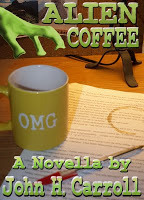
Alien Coffee
I recently published a novella titled "Alien Coffee". The concept came about because a friend of mine who I talk through yahoo IM (Instant Messaging) to most days always runs out of coffee while talking. Then she goes downstairs to get more, does dishes, cleans up cat puke, then comes back and realizes she forgot the coffee.
So I started making jokes about how aliens were drinking her coffee. I'm really big on running jokes. (the emo bunnies are rolling their eyes at me) One day she told me I should write a story about it, so I did. She now knows better than to tell me to write about anything. ;)
What about the rest of the story? How did that come about?
I know, I know. You're not going to answer that either. Fine; I will. Using the concept of my friend's missing coffee was one thing, but after that all similarities stopped. So I made up the rest of the character.
Jillian is a 30's something married woman living in the community of Priest Lake, Idaho. http://www.priestlake.org/ A google search turned up the town and it worked perfectly for the beginning scene. I made Jillian an editor for Indie Authors. It allowed for a bit of irony and an opportunity to poke fun at myself and others like me.
Aliens
Next I had to decide about the aliens. I'll tell you a little bit without giving away spoilers. Aliens are kind of hard to create and kind of easy all at the same time. One of the hardest parts is coming up with something that hasn't been done. I tried to do that with the first one. With the second two, I went the alternate extreme and made them stereotypes, but had fun with them.
I made Sclurp a bit of a weirdo pothead. I had to describe him physically in a way that would be interesting, but mostly believable. Sometimes, the key is not to over-describe.
Its skin was yellow green and mottled, appearing somewhat slimy. The being was dressed in a tight silver suit with a utility belt and what appeared to be a holstered gun on one of its three legs. The limbs were set at even intervals, two to the sides and one behind; like a tricycle. Its face was wide with three horizontal, deep set blue eyes. It had four ears, two set vertically on each side of its oversized bald head. Its mouth was a tubular appendage with big puckered lips like those found in a bad comic book.
The next alien is Nyxulla. I decided to make her the stereotypical type of alien girl that Captain Kirk would totally hit on.
"Hello, Jillian. I'm Nyxulla" a woman's sensual voice lilted through the air. Sensual was the only word to describe it; like one of those sultry sirens portrayed in old detective movies. Only the individual coming into the sitting room was not human. She had creamy, dark green skin, emerald eyes and violet hair cascading down her back like silk. She was everything a virile starship captain would want in a five and a half foot tall alien woman.
The next stereotypical alien is Buffy the BEM, which is short for Bug Eyed Monster. I decided to make him a mostly likeable, sophisticated alien.
Jillian stared at the BEM for a moment. "That's just silly."
"Buffy?" Jillian asked in timid amusement. "There's an alien named Buffy?"He grinned, the protruding lips turning upward. "Its real name is too hard to say for any race and it spends all its free time watching vampire shows. It's super smart though.""It?" Jillian asked, not knowing what else to say."Yeah, everyone of their race is androgynous, so we can't say he or she. It's a BEM on top of that.""BEM?" One word questions were all she could come up with. Maybe it would delay her death or transmutation a little longer if she kept asking them."Don't you know anything?" he demanded, throwing his hands in the air. "BEM is short for bug-eyed-monster. Buffy has the biggest bug eyes I've ever seen and its race is classified as monsters. I wouldn't hold that against them though. They're really wonderful people."
Emo Bunnies
Remember the part where I mentioned running jokes? Yeah, I put emo bunnies into the story. It was a lot more fun than blood and violence. It's a lot easier to hide bunnies than it is dead bodies too; so it made complete sense.
Snails
One of the coolest things I came up with is snails as spaceships. I was trying to decide what to make the spaceship look like. At first it was going to be black and sleek, but that's been done; as have flying saucers. I finally decided to make them snails. Then I came up with the idea that snails are really spaceships. It was a really neat idea, so I ran with it.
"Snails aren't spaceships exactly; they're the biological coding for spaceships. A device is needed to transform them. The good news is that they reproduce quite well, which helps keep costs almost non-existent." Nyxulla turned the main lights back off, leaving only the few that were on before they entered. "Every planet and moon in the galaxy has snails."
Plot
Then I had to figure out the plot. I'm not going to tell you anything other than it involves a Columbian drug lord, his army and intergalactic teenagers, and coffee. All and all, it was a lot of fun to write and a light-hearted read. :)
You can find it for $.99 or the equivalent price in international stores (the price it will be at permanently) at these stores:
Smashwords (My favorite store for Indie Authors)
Amazon
Amazon UK
Barnes & Noble
This is where I wait for you to answer the question, right? No? *sigh* Fine, I'll answer it. Sheesh; making me do all the work. A novella is a girl novel *nods* . . . actually, that's not true. A novella is a story in between 17,500 - 40,000 words. It's bigger than a short story and smaller than a novel. There's another type of story called a novelette that's between 7500 and 17,500 words, but nobody likes them.
Okay, now that we have that out of the way, let's get to the important stuff.
Alien Coffee
I recently published a novella titled "Alien Coffee". The concept came about because a friend of mine who I talk through yahoo IM (Instant Messaging) to most days always runs out of coffee while talking. Then she goes downstairs to get more, does dishes, cleans up cat puke, then comes back and realizes she forgot the coffee.
So I started making jokes about how aliens were drinking her coffee. I'm really big on running jokes. (the emo bunnies are rolling their eyes at me) One day she told me I should write a story about it, so I did. She now knows better than to tell me to write about anything. ;)
What about the rest of the story? How did that come about?
I know, I know. You're not going to answer that either. Fine; I will. Using the concept of my friend's missing coffee was one thing, but after that all similarities stopped. So I made up the rest of the character.
Jillian is a 30's something married woman living in the community of Priest Lake, Idaho. http://www.priestlake.org/ A google search turned up the town and it worked perfectly for the beginning scene. I made Jillian an editor for Indie Authors. It allowed for a bit of irony and an opportunity to poke fun at myself and others like me.
Aliens
Next I had to decide about the aliens. I'll tell you a little bit without giving away spoilers. Aliens are kind of hard to create and kind of easy all at the same time. One of the hardest parts is coming up with something that hasn't been done. I tried to do that with the first one. With the second two, I went the alternate extreme and made them stereotypes, but had fun with them.
I made Sclurp a bit of a weirdo pothead. I had to describe him physically in a way that would be interesting, but mostly believable. Sometimes, the key is not to over-describe.
Its skin was yellow green and mottled, appearing somewhat slimy. The being was dressed in a tight silver suit with a utility belt and what appeared to be a holstered gun on one of its three legs. The limbs were set at even intervals, two to the sides and one behind; like a tricycle. Its face was wide with three horizontal, deep set blue eyes. It had four ears, two set vertically on each side of its oversized bald head. Its mouth was a tubular appendage with big puckered lips like those found in a bad comic book.
The next alien is Nyxulla. I decided to make her the stereotypical type of alien girl that Captain Kirk would totally hit on.
"Hello, Jillian. I'm Nyxulla" a woman's sensual voice lilted through the air. Sensual was the only word to describe it; like one of those sultry sirens portrayed in old detective movies. Only the individual coming into the sitting room was not human. She had creamy, dark green skin, emerald eyes and violet hair cascading down her back like silk. She was everything a virile starship captain would want in a five and a half foot tall alien woman.
The next stereotypical alien is Buffy the BEM, which is short for Bug Eyed Monster. I decided to make him a mostly likeable, sophisticated alien.
Jillian stared at the BEM for a moment. "That's just silly."
"Buffy?" Jillian asked in timid amusement. "There's an alien named Buffy?"He grinned, the protruding lips turning upward. "Its real name is too hard to say for any race and it spends all its free time watching vampire shows. It's super smart though.""It?" Jillian asked, not knowing what else to say."Yeah, everyone of their race is androgynous, so we can't say he or she. It's a BEM on top of that.""BEM?" One word questions were all she could come up with. Maybe it would delay her death or transmutation a little longer if she kept asking them."Don't you know anything?" he demanded, throwing his hands in the air. "BEM is short for bug-eyed-monster. Buffy has the biggest bug eyes I've ever seen and its race is classified as monsters. I wouldn't hold that against them though. They're really wonderful people."
Emo Bunnies
Remember the part where I mentioned running jokes? Yeah, I put emo bunnies into the story. It was a lot more fun than blood and violence. It's a lot easier to hide bunnies than it is dead bodies too; so it made complete sense.
Snails
One of the coolest things I came up with is snails as spaceships. I was trying to decide what to make the spaceship look like. At first it was going to be black and sleek, but that's been done; as have flying saucers. I finally decided to make them snails. Then I came up with the idea that snails are really spaceships. It was a really neat idea, so I ran with it.
"Snails aren't spaceships exactly; they're the biological coding for spaceships. A device is needed to transform them. The good news is that they reproduce quite well, which helps keep costs almost non-existent." Nyxulla turned the main lights back off, leaving only the few that were on before they entered. "Every planet and moon in the galaxy has snails."
Plot
Then I had to figure out the plot. I'm not going to tell you anything other than it involves a Columbian drug lord, his army and intergalactic teenagers, and coffee. All and all, it was a lot of fun to write and a light-hearted read. :)
You can find it for $.99 or the equivalent price in international stores (the price it will be at permanently) at these stores:
Smashwords (My favorite store for Indie Authors)
Amazon
Amazon UK
Barnes & Noble
August 29, 2011
Who am I when I write?
Who am I really?
In that nasty thing people refer to as real life, I'm a 41 year old married man with 3 children, the oldest of which has gone off to college and the youngest of which is just in the second grade. There's a middle child in there somewhere, but he's used to being ignored, so we'll leave him out. ;)
I've lived a simple and mostly pleasant life. My parents weren't perfect, but they did their best by me and honestly loved me and my siblings. I was raised with decent values and do my best to honor my parents.
My wife and I have been married for 15 years and love each other dearly. We are each other's best friends and cling to each other desperately in the violent storm called life.
Other than that, I'm stable, dependable and mostly boring. I'm okay with that.
Why not write from my real life viewpoint?
I don't write from the viewpoint of a 41 year old man. Many of my life experiences and observations make their way into the writing, but they don't dominate the words. My real life viewpoint just isn't very creative or interesting, so I have to pull from the inner recesses of my being.
Some of the crap I'm aware of is kinda scary. I don't know why it's there or how it got there. I don't like some things I'm aware of. Part of the problem is that I look at the suffering much of humanity has experienced throughout history and still experiences. Those things fill me with dread. Life on Planet Earth is not pleasant for most. Humans make do the best they can, but it's seriously frightening.
Poetry was the first thing I started writing. I took scenes and memories in my mind. The first few were of sunsets, deserts, snow and mountains. Then I wrote about some of the things I imagined, like knights and princesses. There was a sort of innocence in the poems. They were safe to write and helped me to learn the craft.
As time went by, I found myself relaxing and letting the words flow. I tried not putting any restrictions on anything and opened myself up to deeper parts of my mind. After a while I found a place where I was comfortable writing from.
Who am I when I write?
When I write, I'm a bit of an emo teenager and a bit of an ancient intergalactic soul. It's an odd combination, but it works for me.
When I was a teenager; I didn't wear black, have piercings, cut myself or anything like that. At the same time, I never, ever talked to anyone if I could avoid it. I was in band throughout school and on the golf team for a year, but other than that, I never belonged to any groups. I spend recesses and lunch sitting by myself. Whenever possible, I looked for solitude. When not at school, I spent all of my time walking or riding my bike around in the desert where I lived. It was rare that I went to anyone's house. As a result, I was socially inept. This shows in some of my writing, especially works like "Blue Haired Alien Girlfriend". I like it though. There's irreverence in that viewpoint that allows me to be childish and have fun with the events of a story as I write it. I have a dark playfulness that oozes through the cracks.
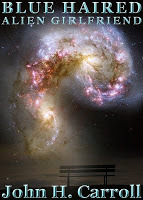
As far as the ancient intergalactic soul thing goes: some days I don't look at Planet Earth as anything more than an unfortunate moment in my existence. (Time with my family being the exception; they're the only thing keeping me sane most days) When I look at the stars, the possibilities of other civilizations throughout time come to my mind. Amazing potential exists for beings to play among the cosmic dust of the galaxies. Then I look at Earth from that potential and I'm saddened by the violence and suppression that exists. It's such a terrible place where people have been suffering at each other's hands for millennia. If only humanity worked hard to overcome the terrible oppression we suffer and join together to find enlightenment and the potential we have to reach the stars and excel.
When I write, the universe around me adjusts itself to fit my mind. The worlds my characters are thrust into are frightening and sinister with danger at every turn. I don't write about the people who succumb to that danger though, I write about characters who somehow manage to overcome the obstacles thrown at them. There's always a touch of oddity in the events and the way they unfold. Everywhere is an unexpected turn that I'm not always aware of.
Somehow everything will be okay in the long run. I believe that because I have to. Both the person I am while writing and the person I am in real life have to believe that. Otherwise, both universes are much too scary to confront.
In that nasty thing people refer to as real life, I'm a 41 year old married man with 3 children, the oldest of which has gone off to college and the youngest of which is just in the second grade. There's a middle child in there somewhere, but he's used to being ignored, so we'll leave him out. ;)
I've lived a simple and mostly pleasant life. My parents weren't perfect, but they did their best by me and honestly loved me and my siblings. I was raised with decent values and do my best to honor my parents.
My wife and I have been married for 15 years and love each other dearly. We are each other's best friends and cling to each other desperately in the violent storm called life.
Other than that, I'm stable, dependable and mostly boring. I'm okay with that.
Why not write from my real life viewpoint?
I don't write from the viewpoint of a 41 year old man. Many of my life experiences and observations make their way into the writing, but they don't dominate the words. My real life viewpoint just isn't very creative or interesting, so I have to pull from the inner recesses of my being.
Some of the crap I'm aware of is kinda scary. I don't know why it's there or how it got there. I don't like some things I'm aware of. Part of the problem is that I look at the suffering much of humanity has experienced throughout history and still experiences. Those things fill me with dread. Life on Planet Earth is not pleasant for most. Humans make do the best they can, but it's seriously frightening.
Poetry was the first thing I started writing. I took scenes and memories in my mind. The first few were of sunsets, deserts, snow and mountains. Then I wrote about some of the things I imagined, like knights and princesses. There was a sort of innocence in the poems. They were safe to write and helped me to learn the craft.

As time went by, I found myself relaxing and letting the words flow. I tried not putting any restrictions on anything and opened myself up to deeper parts of my mind. After a while I found a place where I was comfortable writing from.
Who am I when I write?
When I write, I'm a bit of an emo teenager and a bit of an ancient intergalactic soul. It's an odd combination, but it works for me.
When I was a teenager; I didn't wear black, have piercings, cut myself or anything like that. At the same time, I never, ever talked to anyone if I could avoid it. I was in band throughout school and on the golf team for a year, but other than that, I never belonged to any groups. I spend recesses and lunch sitting by myself. Whenever possible, I looked for solitude. When not at school, I spent all of my time walking or riding my bike around in the desert where I lived. It was rare that I went to anyone's house. As a result, I was socially inept. This shows in some of my writing, especially works like "Blue Haired Alien Girlfriend". I like it though. There's irreverence in that viewpoint that allows me to be childish and have fun with the events of a story as I write it. I have a dark playfulness that oozes through the cracks.
As far as the ancient intergalactic soul thing goes: some days I don't look at Planet Earth as anything more than an unfortunate moment in my existence. (Time with my family being the exception; they're the only thing keeping me sane most days) When I look at the stars, the possibilities of other civilizations throughout time come to my mind. Amazing potential exists for beings to play among the cosmic dust of the galaxies. Then I look at Earth from that potential and I'm saddened by the violence and suppression that exists. It's such a terrible place where people have been suffering at each other's hands for millennia. If only humanity worked hard to overcome the terrible oppression we suffer and join together to find enlightenment and the potential we have to reach the stars and excel.
When I write, the universe around me adjusts itself to fit my mind. The worlds my characters are thrust into are frightening and sinister with danger at every turn. I don't write about the people who succumb to that danger though, I write about characters who somehow manage to overcome the obstacles thrown at them. There's always a touch of oddity in the events and the way they unfold. Everywhere is an unexpected turn that I'm not always aware of.
Somehow everything will be okay in the long run. I believe that because I have to. Both the person I am while writing and the person I am in real life have to believe that. Otherwise, both universes are much too scary to confront.
August 26, 2011
How to Publish and Distribute Ebooks with Smashwords
What in the world is Smashwords and why would anyone want to smash words anyway? What did words ever do to you? It's not like they're sticks and stones.
 Smashwords is the name of the most awesome company in the world; just ask them. In all seriousness, if you're an author or reader, Smashwords is one of the best things every to happen. They make success possible for writers who were once shut off from plying their craft by draconian publishing institutions. Smashwords is a distributor of eBooks written by Indie Authors from around the world for readers around the world.
It's especially valuable for readers who are tired of the same old stories written by formulas that are considered popular by individuals who judge writing by its profitability rather than by its art. Until now, publishing companies, the so-called "Gatekeepers", have been deciding what you get to read and what's no good for you. They know best and take care of all the hard decision making for you. It's offensive.
Smashwords is the best place to publish your books in a brave new world for writers. They distribute your eBooks to B&N, Apple, Sony, Kobo and Diesel. It doesn't cost anything to publish and they pay higher commissions than any traditional publisher ever has. It's the best place to publish especially for international authors. Even better, international readers can buy from Smashwords. You can find out more in their FAQ.
eBooks
Many people like the feel and smell of a paper book while sitting next to a warm fire with a glass of wine or other fine beverage in hand. It's a time honored tradition that's been slowly dying in the face of action films and video games.
eBooks are the new fad of the future. eReaders like the Nook, Kindle, Kobo and tablets like the iPad, Galaxy Tab, and others are becoming popular methods of reading books. A person can store thousands of books in one reader smaller than most hardback books.
All of that is well and good, but why give up the comfort of a good book for a cold piece of computerized hardware? One of the biggest reasons is price. Most Indie Authors sale their books for $.99-$5.99. It's much less expensive than established authors. A lot of them also give books away for free just to get readers to check them out. It makes sense for the authors to do this, especially when they're making 60-85% off the sale of each and every book.
Another reason is the incredible variety of new ideas and genres that can be found without the restrictions of having to make everything fit a formula for profit.
Indie Authors
The best thing to happen to books since the golden age of Pulp Fiction is Indie Authors. These are people who like writing, but have been discouraged by hundreds of rejection letters. Or they're writers who never even tried because the process of getting published was just too daunting. With companies like Smashwords, they can self-publish their own works, thereby becoming an independant author - Indie Author for short. Plus, Indie Author just sounds cool.
Many people out there have considered writing a book. Some have been writing in journals or jotting down poetry, but never showing anyone for fear of being told they were fools for having feelings and dreams. They would never stand a chance of getting published, so why bother? Other people tried writing the next great novel, but it's sitting in a box up in their attic collecting dust. Some may have dreams or ideas rattling around in their head that have never even seen paper.
Perhaps it's time to let those dreams out into the world.
How did I become a writer?
Well? How did I? Tell me. I'm dying to know . . . Oh . . . wait, you want me to tell you. Right. That would probably make more sense.
One day I decided to give writing a shot, thinking maybe all those dreams floating around in my head deserved to escape. The poetry I wrote at first was pretty cheesy and not all that good, but I had fun with it. I continued to write the poetry off and on before finally getting serious about writing a book. My first attempt at a novel was more of a learning experience than anything. I started over after 40,000 words. Then I set it aside for a while. The first thing I finally succeeded at writing was a short story called "Blue Haired Alien Girlfriend". It's a bit cheesy and my inexperience still shows in the writing.
It took a couple more years to finally get around to writing a book again. I couldn't find my original work, so I started with a brand new story. Writing it was one of the most enjoyable experiences of my life. I spent 4 months writing and another 5 thoroughly editing it. On November 24th, 2010, I finally published it to Smashwords. :)
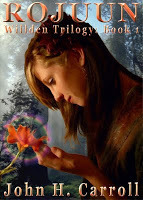
It's done moderately well in the 9 months since I've published it. Through all the stores it's been distributed, I've sold about 230 copies so far. I've also published 2 more novels and 4 more short stories through Smashwords. I've got another novel, a novella and a few more short stories coming out in the next few months too.
So how does a person publish?
Publishing an eBook is now easy. It does take a little work though. Be willing to spend a couple of hours getting everything right. It's worth it in the long run.
The first step is going to seem silly, but it's important: Write something! It's a bit silly to publish blank pages, plus they don't normally sell well. You can make it a short story, a novel, a collection of poems, a recipe book, or just about anything really.
I highly recommend editing next, although a lot of Indie Authors seem to be skipping it. Go over it with a fine tooth comb and make sure all the words are spelled correctly and that the grammar is in proper shape. If you can, get your friends to go over it too. If you have money, get a professional editor. The better your work, the more likely you are to sell copies.
Once you have you're work written and edited, it's time to format your book and publish it. To publish through Smashwords you'll need to put everything in .doc form, which is what Microsoft Word 2003 uses. Throughout the different forums I've visited, I've seen some complain about this. They work their manuscript into html or epub format before publishing to Smashwords and it's upsetting to have to redo everything in this way. Here's the thing: It's worth it. Indie Publishing is a long term prospect. If you publish your book now, you can leave it published for years and decades. 50 years from now, you can still have your eBook published. (Barring meteors hitting the planet, blood sucking alien invasion, or zombiepocalypse)
Your best bet is to take the time to go through the Smashwords Style Guide. It's free. Have your document open and spend the few hours making sure everything is right. It will be easier with each successive submission.
Here are the things I really found important and that a lot of people have trouble with.
My biggest advice is to keep everything simple. It's pretty easy for me writing fantasy which doesn't have a lot of pictures, tables or anything but words, words and more words. If you want everything to go smoothly and get approved for premium distribution, follow these steps.
Some of the keys I have for making it work every time. Every single one of my submissions has made premium distribution first time.
1. Turn off auto correct while you're doing this. It messes everything up.2. I added maps with a couple of paragraph returns between them. No page breaks or anything else. 3. Each of my chapters is simply named Chapter 1, Chapter 2, etc.4. I use size 12 Times New Roman font. Readers of eBooks get to choose their own font, so it's best to keep to the most basic font. I use size 16 bold font for title and chapter names.5. No tabs. Don't ever use them. Go to 'format' at the top, go to 'paragraph' and set it so that it's "first line" .5 That will give you indented paragraphs that work every time.6. Get rid of page breaks. A lot of authors seem determined that they have to be there. Get rid of them for your Smashwords document.7. Use the style guide. It works. 8. Self-publish your books through Smashwords. It's one of the best things you can ever do. Leave them published for years and years. Write more books and publish them too.
Marketing
Once you have your book published, the easy part is done. The author has to get it noticed by people, which is no easy task. There are thousands of other authors learning and trying the same things who also want to get noticed. One of your best tools is the Smashwords Book Marketing Guide. Mark Coker, the founder of Smashwords is always adding new information to it.
I'm not the best marketer, but I'm not the worst either. I have three keys:
1. Write more good books. This is true for everyone and any successful Indie Author will to you to do exactly this.2. My favorite is to give away free short stories. Those old pulp fiction writers got into magazines with short stories and those got them noticed by publishers who commissioned novels. I have 5 free stories that have been downloaded over 80,000 times. They bring new readers to my novels consistently.3. Be yourself in your marketing. I see too many writers just promoting their books over and over. Take your time and let your personality show through in forums, facebook, twitter, your blog and anywhere else you promote.
Run a marathon
If you choose to self-publish, keep in mind that it's a marathon. People want to sell a million copies and get rich fast. I do too, but it's not going to happen for most. Keep writing more books. Market gradually and get more readers. Give it a year. Give it five years. Give it time. eBooks are perfect for long term profits. The market is expanding at an amazing speed internationally. There are more and more readers just as there are writers.
Most of all, enjoy the experience. Writing can be fun. Selling books can be fun too. Give it a shot and see where it goes. :)
You can find my Smashword's profile here: John H. Carroll
Smashwords is the name of the most awesome company in the world; just ask them. In all seriousness, if you're an author or reader, Smashwords is one of the best things every to happen. They make success possible for writers who were once shut off from plying their craft by draconian publishing institutions. Smashwords is a distributor of eBooks written by Indie Authors from around the world for readers around the world.It's especially valuable for readers who are tired of the same old stories written by formulas that are considered popular by individuals who judge writing by its profitability rather than by its art. Until now, publishing companies, the so-called "Gatekeepers", have been deciding what you get to read and what's no good for you. They know best and take care of all the hard decision making for you. It's offensive.
Smashwords is the best place to publish your books in a brave new world for writers. They distribute your eBooks to B&N, Apple, Sony, Kobo and Diesel. It doesn't cost anything to publish and they pay higher commissions than any traditional publisher ever has. It's the best place to publish especially for international authors. Even better, international readers can buy from Smashwords. You can find out more in their FAQ.
eBooks
Many people like the feel and smell of a paper book while sitting next to a warm fire with a glass of wine or other fine beverage in hand. It's a time honored tradition that's been slowly dying in the face of action films and video games.
eBooks are the new fad of the future. eReaders like the Nook, Kindle, Kobo and tablets like the iPad, Galaxy Tab, and others are becoming popular methods of reading books. A person can store thousands of books in one reader smaller than most hardback books.
All of that is well and good, but why give up the comfort of a good book for a cold piece of computerized hardware? One of the biggest reasons is price. Most Indie Authors sale their books for $.99-$5.99. It's much less expensive than established authors. A lot of them also give books away for free just to get readers to check them out. It makes sense for the authors to do this, especially when they're making 60-85% off the sale of each and every book.
Another reason is the incredible variety of new ideas and genres that can be found without the restrictions of having to make everything fit a formula for profit.
Indie Authors
The best thing to happen to books since the golden age of Pulp Fiction is Indie Authors. These are people who like writing, but have been discouraged by hundreds of rejection letters. Or they're writers who never even tried because the process of getting published was just too daunting. With companies like Smashwords, they can self-publish their own works, thereby becoming an independant author - Indie Author for short. Plus, Indie Author just sounds cool.
Many people out there have considered writing a book. Some have been writing in journals or jotting down poetry, but never showing anyone for fear of being told they were fools for having feelings and dreams. They would never stand a chance of getting published, so why bother? Other people tried writing the next great novel, but it's sitting in a box up in their attic collecting dust. Some may have dreams or ideas rattling around in their head that have never even seen paper.
Perhaps it's time to let those dreams out into the world.
How did I become a writer?
Well? How did I? Tell me. I'm dying to know . . . Oh . . . wait, you want me to tell you. Right. That would probably make more sense.
One day I decided to give writing a shot, thinking maybe all those dreams floating around in my head deserved to escape. The poetry I wrote at first was pretty cheesy and not all that good, but I had fun with it. I continued to write the poetry off and on before finally getting serious about writing a book. My first attempt at a novel was more of a learning experience than anything. I started over after 40,000 words. Then I set it aside for a while. The first thing I finally succeeded at writing was a short story called "Blue Haired Alien Girlfriend". It's a bit cheesy and my inexperience still shows in the writing.
It took a couple more years to finally get around to writing a book again. I couldn't find my original work, so I started with a brand new story. Writing it was one of the most enjoyable experiences of my life. I spent 4 months writing and another 5 thoroughly editing it. On November 24th, 2010, I finally published it to Smashwords. :)
It's done moderately well in the 9 months since I've published it. Through all the stores it's been distributed, I've sold about 230 copies so far. I've also published 2 more novels and 4 more short stories through Smashwords. I've got another novel, a novella and a few more short stories coming out in the next few months too.
So how does a person publish?
Publishing an eBook is now easy. It does take a little work though. Be willing to spend a couple of hours getting everything right. It's worth it in the long run.
The first step is going to seem silly, but it's important: Write something! It's a bit silly to publish blank pages, plus they don't normally sell well. You can make it a short story, a novel, a collection of poems, a recipe book, or just about anything really.
I highly recommend editing next, although a lot of Indie Authors seem to be skipping it. Go over it with a fine tooth comb and make sure all the words are spelled correctly and that the grammar is in proper shape. If you can, get your friends to go over it too. If you have money, get a professional editor. The better your work, the more likely you are to sell copies.
Once you have you're work written and edited, it's time to format your book and publish it. To publish through Smashwords you'll need to put everything in .doc form, which is what Microsoft Word 2003 uses. Throughout the different forums I've visited, I've seen some complain about this. They work their manuscript into html or epub format before publishing to Smashwords and it's upsetting to have to redo everything in this way. Here's the thing: It's worth it. Indie Publishing is a long term prospect. If you publish your book now, you can leave it published for years and decades. 50 years from now, you can still have your eBook published. (Barring meteors hitting the planet, blood sucking alien invasion, or zombiepocalypse)
Your best bet is to take the time to go through the Smashwords Style Guide. It's free. Have your document open and spend the few hours making sure everything is right. It will be easier with each successive submission.
Here are the things I really found important and that a lot of people have trouble with.
My biggest advice is to keep everything simple. It's pretty easy for me writing fantasy which doesn't have a lot of pictures, tables or anything but words, words and more words. If you want everything to go smoothly and get approved for premium distribution, follow these steps.
Some of the keys I have for making it work every time. Every single one of my submissions has made premium distribution first time.
1. Turn off auto correct while you're doing this. It messes everything up.2. I added maps with a couple of paragraph returns between them. No page breaks or anything else. 3. Each of my chapters is simply named Chapter 1, Chapter 2, etc.4. I use size 12 Times New Roman font. Readers of eBooks get to choose their own font, so it's best to keep to the most basic font. I use size 16 bold font for title and chapter names.5. No tabs. Don't ever use them. Go to 'format' at the top, go to 'paragraph' and set it so that it's "first line" .5 That will give you indented paragraphs that work every time.6. Get rid of page breaks. A lot of authors seem determined that they have to be there. Get rid of them for your Smashwords document.7. Use the style guide. It works. 8. Self-publish your books through Smashwords. It's one of the best things you can ever do. Leave them published for years and years. Write more books and publish them too.
Marketing
Once you have your book published, the easy part is done. The author has to get it noticed by people, which is no easy task. There are thousands of other authors learning and trying the same things who also want to get noticed. One of your best tools is the Smashwords Book Marketing Guide. Mark Coker, the founder of Smashwords is always adding new information to it.
I'm not the best marketer, but I'm not the worst either. I have three keys:
1. Write more good books. This is true for everyone and any successful Indie Author will to you to do exactly this.2. My favorite is to give away free short stories. Those old pulp fiction writers got into magazines with short stories and those got them noticed by publishers who commissioned novels. I have 5 free stories that have been downloaded over 80,000 times. They bring new readers to my novels consistently.3. Be yourself in your marketing. I see too many writers just promoting their books over and over. Take your time and let your personality show through in forums, facebook, twitter, your blog and anywhere else you promote.
Run a marathon
If you choose to self-publish, keep in mind that it's a marathon. People want to sell a million copies and get rich fast. I do too, but it's not going to happen for most. Keep writing more books. Market gradually and get more readers. Give it a year. Give it five years. Give it time. eBooks are perfect for long term profits. The market is expanding at an amazing speed internationally. There are more and more readers just as there are writers.
Most of all, enjoy the experience. Writing can be fun. Selling books can be fun too. Give it a shot and see where it goes. :)
You can find my Smashword's profile here: John H. Carroll
August 17, 2011
Rojuun
The idea for my first book: "Rojuun" came about in February of 2010. I decided that I was finally going to write a book like I had been saying I would do for the last 20 years. I had started a book called "Pelya" a few years earlier, but realized that it needed to be started over as I learned more about writing.
When I went to look for my outline and what I had written on that book, I couldn't find it. After a few days of searching and cussing, I sat down at the computer and decided to start from scratch.
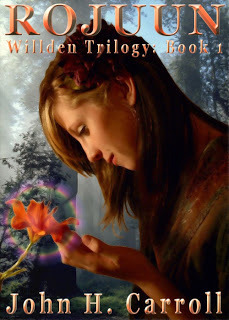
There was an image in my head that had been there since I was a child. I'm not certain where it came from, but it was very vivid. It was an image of a valley and a young man coming home after a long journey. In that image, a terrible thing happened.
I decided to start with the image of the valley and created a man named Tathan. He had a dark past and was running from something. I took him to his home and the same bad thing that happened in my memory happened in the book.
After that, I had no idea what would happen. My image didn't go beyond the incident. So I decided that I would take a journey with Tathan and his cousin Liselle. Everything in the book was decided as I wrote the words. I didn't know what was going to happen next any more than the characters in the book did.
Along the way, the characters and I met Vevin and Sir Danth. I found them fascinating as I wove their personalities into being. Further on, we met Druids and eventually the Rojuun. I'll let you in on a little secret: I still don't know how I feel about the Rojuun. By the time you're done with the trilogy, you won't either. ;)
The price of Rojuun is 99 cents. It's a good deal for a full length novel and worth the risk. If you like it, the next two books are $2.99 each and can be found in the same place you buy this one.
The list of online stores where you can find Rojuun:
Smashwords: http://www.smashwords.com/books/view/31154
Amazon: http://www.amazon.com/gp/product/B004TXS0DI
Amazon UK: https://www.amazon.co.uk/dp/B004TXS0DIApple: http://itunes.apple.com/us/book/rojuun/id409277486?mt=11# B&N: http://search.barnesandnoble.com/Rojuun/John-H-Carroll/e/2940011140402/?itm=6 Sony: http://ebookstore.sony.com/ebook/john-h-carroll/rojuun/_/R-400000000000000323599Kobo: http://www.kobobooks.com/ebook/Rojuun/book--UHyosT0W0eQr7KjeGTSWA/page1.htmlDiesel: http://www.diesel-ebooks.com/item/SW00000031154/Carroll-John-H./Rojuun/1.html
When I went to look for my outline and what I had written on that book, I couldn't find it. After a few days of searching and cussing, I sat down at the computer and decided to start from scratch.

There was an image in my head that had been there since I was a child. I'm not certain where it came from, but it was very vivid. It was an image of a valley and a young man coming home after a long journey. In that image, a terrible thing happened.
I decided to start with the image of the valley and created a man named Tathan. He had a dark past and was running from something. I took him to his home and the same bad thing that happened in my memory happened in the book.
After that, I had no idea what would happen. My image didn't go beyond the incident. So I decided that I would take a journey with Tathan and his cousin Liselle. Everything in the book was decided as I wrote the words. I didn't know what was going to happen next any more than the characters in the book did.
Along the way, the characters and I met Vevin and Sir Danth. I found them fascinating as I wove their personalities into being. Further on, we met Druids and eventually the Rojuun. I'll let you in on a little secret: I still don't know how I feel about the Rojuun. By the time you're done with the trilogy, you won't either. ;)
The price of Rojuun is 99 cents. It's a good deal for a full length novel and worth the risk. If you like it, the next two books are $2.99 each and can be found in the same place you buy this one.
The list of online stores where you can find Rojuun:
Smashwords: http://www.smashwords.com/books/view/31154
Amazon: http://www.amazon.com/gp/product/B004TXS0DI
Amazon UK: https://www.amazon.co.uk/dp/B004TXS0DIApple: http://itunes.apple.com/us/book/rojuun/id409277486?mt=11# B&N: http://search.barnesandnoble.com/Rojuun/John-H-Carroll/e/2940011140402/?itm=6 Sony: http://ebookstore.sony.com/ebook/john-h-carroll/rojuun/_/R-400000000000000323599Kobo: http://www.kobobooks.com/ebook/Rojuun/book--UHyosT0W0eQr7KjeGTSWA/page1.htmlDiesel: http://www.diesel-ebooks.com/item/SW00000031154/Carroll-John-H./Rojuun/1.html
August 10, 2011
When is an author successful?
When I'm successful . . .
I keep telling my wife: "When I'm successful . . ." She keeps responding with "You're already successful." The fact of the matter is that there are different definitions of success in every field. However, I'm going to talk about the field writers are in. (Different than fields with cows . . . unless you happen to have your desk in a field of cows, but that would just be silly)
So what is successful for a writer? (Or an author if one wishes to sound sophisticated *ponders* what is the difference?) How does each person define their own success?
The beginning success.
I truly believe the first part of being a successful writer is writing something . . . I'll give you a minute to digest that revolutionary concept . . . got it? Cool. It's true though. You can't get to the other levels of being a writer if you don't actually write something. I supposed you could talk about a story, but then you'd be a talker and nobody likes that.
So you write something, a poem *runs screaming before you can recite it to me*, a short story or maybe even a novel.
Here's the thing: just writing something is an accomplishment. I was very proud of my first poem even though I cringe in horror when I look at it now. For me, writing a novel was when I considered myself a successful writer. That's what my wife means when she tells me that I'm successful. I did it. I accomplished my goal of writing a book. It is something to be very proud of and it still feels good, even after I've written a few more now.
So what's the next step?
From here, there are a few ways to go. Some people are done after the first book. They've said all they want to say in writing or they get hit by a car, like Margaret Mitchell who wrote "Gone With the Wind".
Others (like me) start immediately on their next book. Actually, I edited my first one a few times and let it sit while I began the second. If one wishes to make a living doing this, then writing more and more books is the best way to go, especially with the advent of epublishing.
That brings us to our next level of success:
Becoming a published author
There are different ways to go about becoming a published author and different definitions of success here too. For some it can be as simple as getting a poem included in a book (pretty much a scam, but hey, if you want to pay to see your work in writing, well . . .) For others, it can be getting an article in a newspaper, even a local one. But the one most people shoot for is getting that book published.
The traditional way of publishing consists of trying to find an agent who will then distribute your work to a publisher. The problem is that it can take years to find an agent that will actually read your novel. Then it can take years for them to convince a publisher that it's a good bet. All the while, you're editing it and rewriting it to try to make it more appealing. It's a frustrating process.
If the writer does succeed at this, then there's only a tiny chance that they will make it big and become the millionaire version of successful. There's a good chance that only a few books will be published and the publisher will lose interest and go find someone else, trying to find that magical lightning strike. It's honestly a rather depressing and soul crushing process. (Full disclosure: I decided not to go through it, choosing to self-publish instead)
Another option is to write short stories and submit them to magazines. Traditionally, there are magazines like Asimov, or Astounding. Recently, online magazines have been popping up for just about every genre you've heard of and a few you haven't. It's a good way to get noticed and if the stories are popular, it makes novels an easier sale.
And then we come to a new avenue of success:
Self-Publishing
This used to be called vanity publishing and required a significant investment, but the world has changed. Self publishing had created a new breed of writers who call themselves Indie Authors. The key to this has been the rise of eReaders and eBooks. Gadgets like the Kindle, Nook, iPad, Galaxy tablet, readers by Sony, Kobo and others have become popular in the U.S. and are beginning to find their way to the rest of the world.
Amazon is the obvious leader in this field with their Kindle, but companies like Barnes & Noble and Apple are putting up fierce competition. A new company called Smashwords is creating a massive change in ways that greatly benefits Indie Authors and readers.
Smashwords
Smashwords was started a few years ago by Mark Coker. He created a site with tools that greatly help a writer get their works published as eBooks. The meatgrinder takes a writer's document and turns it into formats that work on every eReader available. They distribute to companies such as Apple, Barnes & Noble, Sony, Kobo and Diesel in order to broaden the author's availability. It costs nothing and the author gets 60-85% royalties on all sales.
It's great for the reader too. Once a book is purchased, they have access to it no matter what reader they own. Many of these new authors are trying desperately to gain an audience so they sell their books at insanely cheap prices, like $4.99, $2.99, $.99 or even free! They're worth checking out at those prices.
Indie Publishing
So this brings new definitions of success. Getting a book published is now easy. Seeing it on sites like B&N, Apple and Amazon is thrilling. For some that's enough even if they only sell a couple of copies. Most people (like me) want to sell much more. So what is success?
The obvious answer is lightning in a bottle. That random sequence of events that lead to millions of sales and make the writer suddenly rich enough that they can afford a desk chair with all the wheels on it and a very nice house to put it in.
For me, the definition of success will be to sell enough books on a regular basis to make a living and support my family. I figure I need to sell about 3000-4000 books a month. It seems like a lot, but I know it's possible. Two authors who write fantasy (the genre I write) are Michael Sullivan and David Dalglish (I linked their Smashwords profiles, but you can find them at other bookstores too. They also have their own webpages which are linked on their Smashwords profiles.)
One of the keys is having lots of books to buy. It's much harder to sell a lot of copies of one novel than it is to sell a lot of copies of ten novels. I'm working on that part. (Actually I'm blogging at the moment, but after this . . .)
Success
Every person has a different definition of success. My wife tells me that I became a successful writer when I wrote that first book. For me, I will be successful when I can support my family and write every day for a living. :)
I wish you all the very best of luck in finding your own successes.

I keep telling my wife: "When I'm successful . . ." She keeps responding with "You're already successful." The fact of the matter is that there are different definitions of success in every field. However, I'm going to talk about the field writers are in. (Different than fields with cows . . . unless you happen to have your desk in a field of cows, but that would just be silly)
So what is successful for a writer? (Or an author if one wishes to sound sophisticated *ponders* what is the difference?) How does each person define their own success?

The beginning success.
I truly believe the first part of being a successful writer is writing something . . . I'll give you a minute to digest that revolutionary concept . . . got it? Cool. It's true though. You can't get to the other levels of being a writer if you don't actually write something. I supposed you could talk about a story, but then you'd be a talker and nobody likes that.
So you write something, a poem *runs screaming before you can recite it to me*, a short story or maybe even a novel.
Here's the thing: just writing something is an accomplishment. I was very proud of my first poem even though I cringe in horror when I look at it now. For me, writing a novel was when I considered myself a successful writer. That's what my wife means when she tells me that I'm successful. I did it. I accomplished my goal of writing a book. It is something to be very proud of and it still feels good, even after I've written a few more now.
So what's the next step?
From here, there are a few ways to go. Some people are done after the first book. They've said all they want to say in writing or they get hit by a car, like Margaret Mitchell who wrote "Gone With the Wind".
Others (like me) start immediately on their next book. Actually, I edited my first one a few times and let it sit while I began the second. If one wishes to make a living doing this, then writing more and more books is the best way to go, especially with the advent of epublishing.
That brings us to our next level of success:
Becoming a published author
There are different ways to go about becoming a published author and different definitions of success here too. For some it can be as simple as getting a poem included in a book (pretty much a scam, but hey, if you want to pay to see your work in writing, well . . .) For others, it can be getting an article in a newspaper, even a local one. But the one most people shoot for is getting that book published.
The traditional way of publishing consists of trying to find an agent who will then distribute your work to a publisher. The problem is that it can take years to find an agent that will actually read your novel. Then it can take years for them to convince a publisher that it's a good bet. All the while, you're editing it and rewriting it to try to make it more appealing. It's a frustrating process.
If the writer does succeed at this, then there's only a tiny chance that they will make it big and become the millionaire version of successful. There's a good chance that only a few books will be published and the publisher will lose interest and go find someone else, trying to find that magical lightning strike. It's honestly a rather depressing and soul crushing process. (Full disclosure: I decided not to go through it, choosing to self-publish instead)
Another option is to write short stories and submit them to magazines. Traditionally, there are magazines like Asimov, or Astounding. Recently, online magazines have been popping up for just about every genre you've heard of and a few you haven't. It's a good way to get noticed and if the stories are popular, it makes novels an easier sale.
And then we come to a new avenue of success:
Self-Publishing
This used to be called vanity publishing and required a significant investment, but the world has changed. Self publishing had created a new breed of writers who call themselves Indie Authors. The key to this has been the rise of eReaders and eBooks. Gadgets like the Kindle, Nook, iPad, Galaxy tablet, readers by Sony, Kobo and others have become popular in the U.S. and are beginning to find their way to the rest of the world.
Amazon is the obvious leader in this field with their Kindle, but companies like Barnes & Noble and Apple are putting up fierce competition. A new company called Smashwords is creating a massive change in ways that greatly benefits Indie Authors and readers.
Smashwords
Smashwords was started a few years ago by Mark Coker. He created a site with tools that greatly help a writer get their works published as eBooks. The meatgrinder takes a writer's document and turns it into formats that work on every eReader available. They distribute to companies such as Apple, Barnes & Noble, Sony, Kobo and Diesel in order to broaden the author's availability. It costs nothing and the author gets 60-85% royalties on all sales.
It's great for the reader too. Once a book is purchased, they have access to it no matter what reader they own. Many of these new authors are trying desperately to gain an audience so they sell their books at insanely cheap prices, like $4.99, $2.99, $.99 or even free! They're worth checking out at those prices.
Indie Publishing
So this brings new definitions of success. Getting a book published is now easy. Seeing it on sites like B&N, Apple and Amazon is thrilling. For some that's enough even if they only sell a couple of copies. Most people (like me) want to sell much more. So what is success?
The obvious answer is lightning in a bottle. That random sequence of events that lead to millions of sales and make the writer suddenly rich enough that they can afford a desk chair with all the wheels on it and a very nice house to put it in.
For me, the definition of success will be to sell enough books on a regular basis to make a living and support my family. I figure I need to sell about 3000-4000 books a month. It seems like a lot, but I know it's possible. Two authors who write fantasy (the genre I write) are Michael Sullivan and David Dalglish (I linked their Smashwords profiles, but you can find them at other bookstores too. They also have their own webpages which are linked on their Smashwords profiles.)
One of the keys is having lots of books to buy. It's much harder to sell a lot of copies of one novel than it is to sell a lot of copies of ten novels. I'm working on that part. (Actually I'm blogging at the moment, but after this . . .)
Success
Every person has a different definition of success. My wife tells me that I became a successful writer when I wrote that first book. For me, I will be successful when I can support my family and write every day for a living. :)
I wish you all the very best of luck in finding your own successes.
August 7, 2011
List of Descriptive Words
Explanation
Sometimes it's hard trying to figure out how to describe someone's eyes, the odor of a room, or the feel of an object. There are just so many words to use. So I've been searching online for various lists. Three of the sites I found had quite a lot of useful words. After combining them and spending countless hours sorting them alphabetically and removing duplicates, I came up with an extremely useful lists.
I've left pictures out of this blog post so that it copies easily for anyone who wants to use it. :)
These are the three sites I found the words from.
From msgarrettonline: http://www.msgarrettonline.com/descripwords.html
From diabeticonline through Scribd: http://www.scribd.com/doc/9664427/Descriptive-Words
From World Food and Wine: http://world-food-and-wine.com/describing-food
The list
Sight - Appearance adorable, alert, alluring, beautiful, blinding, blonde, blushing, bright, brilliant, brilliant, broad, chubby, clean, clear, cloudy, colorful, contoured, crinkled, crooked, crowded, crystalline, curved, cute, dark, deep, dim, distinct, drab, dull, elegant, fancy, filthy, flat, fluffy, flushed, foggy, fuzzy, glamorous, glassy, gleaming, glistening, glowing, graceful, grizzly, grotesque, hazy, high, hollow, homely, iridescent, light, lithe, low, milky, misty, motionless, muddy, murky, nappy, narrow, obtuse, opaque, pale, pearly, poised, quaint, rotund, ruddy, shadowy, shady, shallow, sheer, shimmering, shiny, skinny, smoggy, smoky, snowy, sooty, sparkling, spotless, steep, stormy, straight, strange, translucent, transparent, twinkling, ugly, unsightly, unusual, weird, wide, wizenedColorsamber, amethyst, aqua, aquamarine, avocado, azure, bistre, black, blue, brass, brindle, bronze, buff, burgundy, canary, carmine, carnelian, cerise, charcoal, chartreuse, chestnut, chocolate, chrome, citrine, claret, cobalt, copper, coral, cordovan, cream, crimson, crystalline, cyan, dun, ebony, emerald, flesh, fuchsia, garnet, gold, green, henna, indigo, ivory, jade, jet, khaki, lake, lavender, lemon, lilac, lime, magenta, mahogany, maize, maroon, mauve, mint, mustard, navy, obsidian, ocher, olive, onyx, orange, orchid, peach, pearl, pink, plum, poppy, primrose, puce, purple, red, rose, ruby, rust, sable, saffron, salmon, sapphire, scarlet, sepia, sienna, silver, slate, spruce, tan, topaz, turquoise, ultramarine, umber, vermilion, violet, walnut, white, wine, yellowSmell - Taste abrasive, abundant, acerbic, acid, acidic, acrid, aftertaste, alcohol, ambrosia, ample, antiseptic, appealing, appetizing, apples, ardent, astringent, bacon, baking, balmy, barbed, biting, bitter, bland, blazing, blissful, blistering, bodied, boiling, bookish, brackish, briny, candied, caustic, celestial, charming, choking, choking, cigarettes, citrus, clean, coffee, cutting, decadent, delectable, delicious, delightful, dirty, disgusting, divine, doggy, dripping, dry, dulcet, dull, earthy, engaging, enjoyable, enticing, excoriating, fantastic, fascinating, fervent, fetid, fiery, fishy, flat, flavored, flavorful, flavorless, flavorsome, flowery, foul, fragrant, fresh, fruity, full, gamy, gardenias, gentle, godly, gorgeous, great, gross, harsh, heady, heavenly, heavy, honeyed, hot, insipid, intense, interesting, inviting, jasmine, juicy, lavish, lemon, likable, lilac, lilies, lime, loaded, loamy, lovely, luscious, lush, lusty, luxurious, marinated, marvelous, matured, medicinal, mellow, mild, mildewed, minty, moist, moldy, mordant, mouth, musky, musty, nasty, nauseating, nutty, odor, olives, opulent, overpowering, palatable, patchouli, penetrating, peppery, perfumed, pickled, piercing, piquant, plain, plastic, pleasant, potent, prickly, pungent, putrid, rancid, redolent, relish, repulsive, revolting, rich, ripe, robust, rosy, rotten, rough, rubbing, saccharine, saline, salty, sapid, satisfying, savory, scathing, scent, scorching, scrumptious, searing, severe, sharp, sickening, sizzling, skunky, smacking, smelly, smoky, soap, soft, sophisticated, sour, spicy, spoiled, stale, sticky, stimulating, stinging, stinking, strong, stuffed, stuffy, stylish, sublime, succulent, sugarcoated, sugared, sugary, sweat, sweaty, sweet, sweetened, syrupy, tanginess, tangy, tantalizing, tart, tasteless, tasty, temperate, tender, toothsome, torrid, tranquil, unappealing, unappetizing, unflavored, unpleasant, unsavory, unseasoned, unsweetened, vehement, vinegary, vitriolic, warm, watering, weak, well, wonderful, yummy, zesty, zing Sound babble, bang, barking, bawling, bay, beat, bellowing, blaring, blast, bleat, booming, bray, bubbling, bumping, burping, buzz, cackling, cacophonous, cawing, chant, chattering, cheeping, chime, chirping, clanging, clangor, clank, clapping, clash, clattering, click, clucking, cooing, coughing, crack, crackle, crackling, crashing, creak, croaking, crooning, crowing, crunching, crying, deafening, din, drone, drumming, faint, fanfare, fizzing, gagging, gasping, gibberish, grating, groan, growling, grumble, grunting, gurgle, harsh, high-pitched, hissing, hoarse, honking, hoot, howling, hullabaloo, hum, hushed, husky, jingle, keening, loud, melodic, melodious, meow, mewing, moaning, mooing, mumble, mumbling, murmuring, mute, mutter, neigh, noisy, patter, pealing, peeping, piercing, pitch, popping, purring, quack, quiet, racket, raspy, rattling, raucous, resonant, rhythmic, ringing, ripping, roaring, rumble, rumbling, rustling, scratching, scream, screaming, screech, shouting, shriek, shrill, shuffling, sighing, silent, singing, sizzle, smashing, snapping, snarling, sneezing, sniveling, snoring, snorting, sobbing, soft, soothing, splashing, squall, squeak, squealing, swishing, tapping, tearing, thrum, thud, thumping, thunderous, tick, tinkle, tinkling, tinkling, tolling, tone, toot, tootle, tranquil, trill, trumpeting, tune, twang, twittering, voiceless, volume, wail, warble, wheezing, whining, whir, whispering, whistling, whooping, yapping, yelling, yelping, zap, zipTouch abrasive, biting, boiling, boiling, breezy, bubbly, bumpy, burning, bushy, chapped, chilly, clammy, coarse, cold, cool, corduroy, corrugated, cottony, creamy, creepy, crisp, cuddly, curdled, curly, cushioned, damp, dank, dirty, dirty, downy, dry, dusty, engraved, fiery, filthy, fine, flaky, fluffy, fluted, fluttering, foamy, freezing, frosty, furry, fuzzy, glassy, glossy, gooey, grainy, greasy, grimy, gripped, gritty, grooved, grubby, hairy, hard, hot, icy, inlaid, itching, ivory, keen, kiss, knobbed, lacy, loose, matte, matted, melted, metallic, moist, numbing, patina, piercing, plastic, pocked, polished, pressed, prickly, pulpy, rainy, rasping, raw, rocking, rough, rutted, sandpapery, sandy, scalding, scaled, scarred, scorching, scratchy, sculptured, searing, shaggy, sharp, sheen, sheer, shiny, silky, slick, slimy, slippery, slushy, smooth, soapy, soft, solid, sopping, spiky, splintered, steely, sticky, stinging, stinging, stubbly, tangled, tender, tickling, tight, tweedy, uneven, vaporous, velvety, warm, waxen, waxy, wet, wooden, woolly, yielding Size ample, average, behemoth, big, bulky, colossal, diminutive, dwarfed, elfin, enormous, fat, giant, gigantic, great, huge, hulking, immense, large, little, long, mammoth, massive, microscopic, middle-sized, miniature, minute, petite, portly, prodigious, puny, short, small, stupendous, tall, tiny, towering, vast, voluminous, weeTime ancient, annual, brief, brisk, centuries, continual, crawling, dawn, daybreak, daylight, decade, dusk, early, eons, evening, fast, flash, intermittent, late, lengthy, long, modern, moments, noon, noonday, old, old-fashioned, outdated, periodic, punctual, quick, rapid, short, slowly, speedy, sporadic, sunrise, sunset, swift, tardy, twilight, whirlwind, yearly, years, youngPattern and Shapeadjacent, aquiline, arc, baggy, ball, banded, box, breadth, checkered, concave, concentric, cone, contoured, convex, corkscrew, crescent, crested, crowned, crystalline, cube, cupped, curly, curved, cylinder, dappled, depressed, depth, diagonal, disc, drooping, ellipsoidal, elliptical, erect, fanned, fat, flat, frail, girth, globe, height, helix, hemisphere, hexagon, horizontal, lanky, length, long, narrow, octagon, orb, oval, oval, ovate, palmate, parallel, pentagon, pied, pinnate, plate, plump, pointed, polyhedron, protruding, pyramid, rectangle, reticulated, rolling, round, rounded, serpentine, shallow, shapely, sharp, short, sinuous, solid, spherical, spiked, spotted, square, streamlined, sunken, swollen, terrain, tetrahedral, thin, thread, tight, trapezoid, triangle, veined, vertical, wide, width, winding, worm-like Movement amble, blunder, bolt, bounce, bound, canter, catapult, charge, clatter, clump, coast, crawl, creep, cruise, dance, dart, dash, dawdle, dive, dodge, drag, drift, duel, file, flee, flip, flit, float, flounder, flow, fly, frolic, gallop, glide, hasten, hike, hobble, hop, hurdle, hurry, hurtle, hustle, jog, jump, lead, leap, limp, linger, loaf, lumber, lunge, lurch, lurk, march, meander, mosey, navigate, pace, pad, parade, pivot, plod, plunge, ply, pounce, prance, prowl, race, ramble, range, roam, roll, romp, rove, rush, sail, sashay, saunter, scamper, scoot, scuff, scurry, shake, shimmy, shuffle, skate, skid, skim, skip, slide, slink, slither, slump, sneak, speed, sprawl, spring, sprint, stagger, stalk, stampede, step, stomp, straggle, stretch, stride, stroll, struggle, strut, stumble, swagger, sway, swept, swerve, swing, tip, toddle, toe, topple, track, traipse, tramp, travel, tread, trek, trip, tromp, trot, trudge, tumble, turn, twirl, twist, undulate, vault, waddle, wade, walk, wallow, waltz, wander, wend, wiggle, wobble, zip, zoom Quantity abundant, ample, chock-full, copious, dearth, empty, few, heavy, lavish, liberal, light, loads, lots, many, meager, much, numerous, oodles, paucity, plentiful, plenty, profuse, scads, scant, scarcity, skimpy, sparing, sparse, sufficient, well-stockedAbility - Condition able, adequate, alive, assured, authoritative, bold, brainy, brave, busy, capable, careful, cautious, clever, competent, concerned, confident, courageous, curious, daring, determined, durable, dynamic, eager, easy, effective, energetic, fearless, firm, forceful, gallant, gentle, hardy, healthy, heavy, heroic, important, influential, innocent, inquisitive, intense, jerky, knotted, light, lively, loose, lucky, manly, mighty, modern, open, outstanding, powerful, real, relaxed, rich, robust, secure, sharp, shy, skillful, smooth, spirited, stable, steady, stouthearted, strong, super, sure, tame, tough, victorious, virile, zealousAnger - Hostility aggravated, aggressive, agitated, angry, annoyed, arrogant, belligerent, biting, blunt, bullying, callous, combative, contrary, cool, cranky, creepy, cross, cruel, defiant, disagreeable, enraged, envious, evil, fierce, furious, hard, harsh, hateful, hostile, impatient, inconsiderate, insensitive, intolerant, irritated, mad, mean, nasty, obnoxious, obstinate, outraged, perturbed, repulsive, resentful, rough, rude, savage, severe, spiteful, tense, terse, vicious, vindictive, violent, wicked, wrathfulDepression - Sadness - Gloom abandoned, alien, alienated, alone, awful, battered, blue, bored, burned, cheapened, crushed, debased, defeated, degraded, dejected, demolished, depressed, desolate, despairing, despised, despondent, destroyed, discarded, discouraged, dismal, downcast, downhearted, downtrodden, dreadful, estranged, excluded, forlorn, forsaken, gloomy, glum, grim, hated, homeless, hopeless, horrible, humiliated, hurt, jilted, kaput, loathed, lonely, lonesome, lousy, low, miserable, mishandled, mistreated, moody, mournful, obsolete, ostracized, overlooked, pathetic, pitiful, rebuked, regretful, rejected, reprimanded, rotten, ruined, rundown, sad, scornful, sore, stranded, tearful, terrible, tired, unhappy, unloved, whipped, worthless, wrecked Distress affected, anguished, awkward, baffled, bewildered, clumsy, confused, constrained, disgusted, disliked, displeased, dissatisfied, distrustful, disturbed, doubtful, foolish, futile, grief, helpless, hindered, impaired, impatient, imprisoned, lost, nauseated, offended, pained, perplexed, puzzled, ridiculous, sickened, silly, skeptical, speechless, strained, suspicious, swamped, tormented, touchy, troubled, ungainly, unlucky, unpopular, unsatisfied, unsure, wearyFear - Anxiety afraid, agitated, alarmed, anxious, apprehensive, bashful, dangerous, desperate, dreading, edge, eerie, embarrassed, fearful, frantic, frightened, hesitant, horrified, insecure, intimidated, jealous, jittery, jumpy, nervous, on, overwhelmed, panicky, restless, scared, shaky, shy, strained, tense, terrified, timid, uncomfortable, uneasy, upset, worryingInability - Inadequacy anemic, ashamed, broken, catatonic, cowardly, crippled, defeated, defective, deficient, demoralized, disabled, exhausted, exposed, fragile, frail, harmless, helpless, impotent, inadequate, incapable, incompetent, ineffective, inept, inferior, insecure, meek, mummified, naughty, powerless, puny, shaken, shaky, shivering, sickly, small, strengthless, trivial, unable, uncertain, unfit, unimportant, unqualified, unsound, useless, vulnerable, weakJoy - Elation amused, blissful, brilliant, calm, cheerful, comical, contented, delighted, ecstatic, elated, elevated, enchanted, enthusiastic, exalted, excellent, excited, exuberant, fantastic, fit, funny, glad, glorious, good, grand, gratified, great, happy, hilarious, humorous, inspired, jolly, jovial, joyful, jubilant, magnificent, majestic, marvelous, overjoyed, pleasant, pleased, proud, relieved, satisfied, smiling, splendid, superb, terrific, thrilled, tremendous, triumphant, vivacious, witty, wonderfulLove - Affection - Concern admired, adorable, affectionate, agreeable, altruistic, amiable, benevolent, benign, brotherly, caring, charitable, charming, comforting, congenial, conscientious, considerate, cooperative, cordial, courteous, dedicated, devoted, empathetic, fair, faithful, forgiving, friendly, generous, genuine, giving, good, helpful, honest, honorable, hospitable, humane, interested, just, kind, kindly, lenient, lovable, loving, mellow, mild, moral, neighborly, nice, obliging, open, optimistic, patient, peaceful, pleasant, polite, reasonable, receptive, reliable, respectful, sensitive, sweet, sympathetic, tender, thoughtful, tolerant, trustworthy, truthful, understanding, unselfish, warm, worthy
Sometimes it's hard trying to figure out how to describe someone's eyes, the odor of a room, or the feel of an object. There are just so many words to use. So I've been searching online for various lists. Three of the sites I found had quite a lot of useful words. After combining them and spending countless hours sorting them alphabetically and removing duplicates, I came up with an extremely useful lists.
I've left pictures out of this blog post so that it copies easily for anyone who wants to use it. :)
These are the three sites I found the words from.
From msgarrettonline: http://www.msgarrettonline.com/descripwords.html
From diabeticonline through Scribd: http://www.scribd.com/doc/9664427/Descriptive-Words
From World Food and Wine: http://world-food-and-wine.com/describing-food
The list
Sight - Appearance adorable, alert, alluring, beautiful, blinding, blonde, blushing, bright, brilliant, brilliant, broad, chubby, clean, clear, cloudy, colorful, contoured, crinkled, crooked, crowded, crystalline, curved, cute, dark, deep, dim, distinct, drab, dull, elegant, fancy, filthy, flat, fluffy, flushed, foggy, fuzzy, glamorous, glassy, gleaming, glistening, glowing, graceful, grizzly, grotesque, hazy, high, hollow, homely, iridescent, light, lithe, low, milky, misty, motionless, muddy, murky, nappy, narrow, obtuse, opaque, pale, pearly, poised, quaint, rotund, ruddy, shadowy, shady, shallow, sheer, shimmering, shiny, skinny, smoggy, smoky, snowy, sooty, sparkling, spotless, steep, stormy, straight, strange, translucent, transparent, twinkling, ugly, unsightly, unusual, weird, wide, wizenedColorsamber, amethyst, aqua, aquamarine, avocado, azure, bistre, black, blue, brass, brindle, bronze, buff, burgundy, canary, carmine, carnelian, cerise, charcoal, chartreuse, chestnut, chocolate, chrome, citrine, claret, cobalt, copper, coral, cordovan, cream, crimson, crystalline, cyan, dun, ebony, emerald, flesh, fuchsia, garnet, gold, green, henna, indigo, ivory, jade, jet, khaki, lake, lavender, lemon, lilac, lime, magenta, mahogany, maize, maroon, mauve, mint, mustard, navy, obsidian, ocher, olive, onyx, orange, orchid, peach, pearl, pink, plum, poppy, primrose, puce, purple, red, rose, ruby, rust, sable, saffron, salmon, sapphire, scarlet, sepia, sienna, silver, slate, spruce, tan, topaz, turquoise, ultramarine, umber, vermilion, violet, walnut, white, wine, yellowSmell - Taste abrasive, abundant, acerbic, acid, acidic, acrid, aftertaste, alcohol, ambrosia, ample, antiseptic, appealing, appetizing, apples, ardent, astringent, bacon, baking, balmy, barbed, biting, bitter, bland, blazing, blissful, blistering, bodied, boiling, bookish, brackish, briny, candied, caustic, celestial, charming, choking, choking, cigarettes, citrus, clean, coffee, cutting, decadent, delectable, delicious, delightful, dirty, disgusting, divine, doggy, dripping, dry, dulcet, dull, earthy, engaging, enjoyable, enticing, excoriating, fantastic, fascinating, fervent, fetid, fiery, fishy, flat, flavored, flavorful, flavorless, flavorsome, flowery, foul, fragrant, fresh, fruity, full, gamy, gardenias, gentle, godly, gorgeous, great, gross, harsh, heady, heavenly, heavy, honeyed, hot, insipid, intense, interesting, inviting, jasmine, juicy, lavish, lemon, likable, lilac, lilies, lime, loaded, loamy, lovely, luscious, lush, lusty, luxurious, marinated, marvelous, matured, medicinal, mellow, mild, mildewed, minty, moist, moldy, mordant, mouth, musky, musty, nasty, nauseating, nutty, odor, olives, opulent, overpowering, palatable, patchouli, penetrating, peppery, perfumed, pickled, piercing, piquant, plain, plastic, pleasant, potent, prickly, pungent, putrid, rancid, redolent, relish, repulsive, revolting, rich, ripe, robust, rosy, rotten, rough, rubbing, saccharine, saline, salty, sapid, satisfying, savory, scathing, scent, scorching, scrumptious, searing, severe, sharp, sickening, sizzling, skunky, smacking, smelly, smoky, soap, soft, sophisticated, sour, spicy, spoiled, stale, sticky, stimulating, stinging, stinking, strong, stuffed, stuffy, stylish, sublime, succulent, sugarcoated, sugared, sugary, sweat, sweaty, sweet, sweetened, syrupy, tanginess, tangy, tantalizing, tart, tasteless, tasty, temperate, tender, toothsome, torrid, tranquil, unappealing, unappetizing, unflavored, unpleasant, unsavory, unseasoned, unsweetened, vehement, vinegary, vitriolic, warm, watering, weak, well, wonderful, yummy, zesty, zing Sound babble, bang, barking, bawling, bay, beat, bellowing, blaring, blast, bleat, booming, bray, bubbling, bumping, burping, buzz, cackling, cacophonous, cawing, chant, chattering, cheeping, chime, chirping, clanging, clangor, clank, clapping, clash, clattering, click, clucking, cooing, coughing, crack, crackle, crackling, crashing, creak, croaking, crooning, crowing, crunching, crying, deafening, din, drone, drumming, faint, fanfare, fizzing, gagging, gasping, gibberish, grating, groan, growling, grumble, grunting, gurgle, harsh, high-pitched, hissing, hoarse, honking, hoot, howling, hullabaloo, hum, hushed, husky, jingle, keening, loud, melodic, melodious, meow, mewing, moaning, mooing, mumble, mumbling, murmuring, mute, mutter, neigh, noisy, patter, pealing, peeping, piercing, pitch, popping, purring, quack, quiet, racket, raspy, rattling, raucous, resonant, rhythmic, ringing, ripping, roaring, rumble, rumbling, rustling, scratching, scream, screaming, screech, shouting, shriek, shrill, shuffling, sighing, silent, singing, sizzle, smashing, snapping, snarling, sneezing, sniveling, snoring, snorting, sobbing, soft, soothing, splashing, squall, squeak, squealing, swishing, tapping, tearing, thrum, thud, thumping, thunderous, tick, tinkle, tinkling, tinkling, tolling, tone, toot, tootle, tranquil, trill, trumpeting, tune, twang, twittering, voiceless, volume, wail, warble, wheezing, whining, whir, whispering, whistling, whooping, yapping, yelling, yelping, zap, zipTouch abrasive, biting, boiling, boiling, breezy, bubbly, bumpy, burning, bushy, chapped, chilly, clammy, coarse, cold, cool, corduroy, corrugated, cottony, creamy, creepy, crisp, cuddly, curdled, curly, cushioned, damp, dank, dirty, dirty, downy, dry, dusty, engraved, fiery, filthy, fine, flaky, fluffy, fluted, fluttering, foamy, freezing, frosty, furry, fuzzy, glassy, glossy, gooey, grainy, greasy, grimy, gripped, gritty, grooved, grubby, hairy, hard, hot, icy, inlaid, itching, ivory, keen, kiss, knobbed, lacy, loose, matte, matted, melted, metallic, moist, numbing, patina, piercing, plastic, pocked, polished, pressed, prickly, pulpy, rainy, rasping, raw, rocking, rough, rutted, sandpapery, sandy, scalding, scaled, scarred, scorching, scratchy, sculptured, searing, shaggy, sharp, sheen, sheer, shiny, silky, slick, slimy, slippery, slushy, smooth, soapy, soft, solid, sopping, spiky, splintered, steely, sticky, stinging, stinging, stubbly, tangled, tender, tickling, tight, tweedy, uneven, vaporous, velvety, warm, waxen, waxy, wet, wooden, woolly, yielding Size ample, average, behemoth, big, bulky, colossal, diminutive, dwarfed, elfin, enormous, fat, giant, gigantic, great, huge, hulking, immense, large, little, long, mammoth, massive, microscopic, middle-sized, miniature, minute, petite, portly, prodigious, puny, short, small, stupendous, tall, tiny, towering, vast, voluminous, weeTime ancient, annual, brief, brisk, centuries, continual, crawling, dawn, daybreak, daylight, decade, dusk, early, eons, evening, fast, flash, intermittent, late, lengthy, long, modern, moments, noon, noonday, old, old-fashioned, outdated, periodic, punctual, quick, rapid, short, slowly, speedy, sporadic, sunrise, sunset, swift, tardy, twilight, whirlwind, yearly, years, youngPattern and Shapeadjacent, aquiline, arc, baggy, ball, banded, box, breadth, checkered, concave, concentric, cone, contoured, convex, corkscrew, crescent, crested, crowned, crystalline, cube, cupped, curly, curved, cylinder, dappled, depressed, depth, diagonal, disc, drooping, ellipsoidal, elliptical, erect, fanned, fat, flat, frail, girth, globe, height, helix, hemisphere, hexagon, horizontal, lanky, length, long, narrow, octagon, orb, oval, oval, ovate, palmate, parallel, pentagon, pied, pinnate, plate, plump, pointed, polyhedron, protruding, pyramid, rectangle, reticulated, rolling, round, rounded, serpentine, shallow, shapely, sharp, short, sinuous, solid, spherical, spiked, spotted, square, streamlined, sunken, swollen, terrain, tetrahedral, thin, thread, tight, trapezoid, triangle, veined, vertical, wide, width, winding, worm-like Movement amble, blunder, bolt, bounce, bound, canter, catapult, charge, clatter, clump, coast, crawl, creep, cruise, dance, dart, dash, dawdle, dive, dodge, drag, drift, duel, file, flee, flip, flit, float, flounder, flow, fly, frolic, gallop, glide, hasten, hike, hobble, hop, hurdle, hurry, hurtle, hustle, jog, jump, lead, leap, limp, linger, loaf, lumber, lunge, lurch, lurk, march, meander, mosey, navigate, pace, pad, parade, pivot, plod, plunge, ply, pounce, prance, prowl, race, ramble, range, roam, roll, romp, rove, rush, sail, sashay, saunter, scamper, scoot, scuff, scurry, shake, shimmy, shuffle, skate, skid, skim, skip, slide, slink, slither, slump, sneak, speed, sprawl, spring, sprint, stagger, stalk, stampede, step, stomp, straggle, stretch, stride, stroll, struggle, strut, stumble, swagger, sway, swept, swerve, swing, tip, toddle, toe, topple, track, traipse, tramp, travel, tread, trek, trip, tromp, trot, trudge, tumble, turn, twirl, twist, undulate, vault, waddle, wade, walk, wallow, waltz, wander, wend, wiggle, wobble, zip, zoom Quantity abundant, ample, chock-full, copious, dearth, empty, few, heavy, lavish, liberal, light, loads, lots, many, meager, much, numerous, oodles, paucity, plentiful, plenty, profuse, scads, scant, scarcity, skimpy, sparing, sparse, sufficient, well-stockedAbility - Condition able, adequate, alive, assured, authoritative, bold, brainy, brave, busy, capable, careful, cautious, clever, competent, concerned, confident, courageous, curious, daring, determined, durable, dynamic, eager, easy, effective, energetic, fearless, firm, forceful, gallant, gentle, hardy, healthy, heavy, heroic, important, influential, innocent, inquisitive, intense, jerky, knotted, light, lively, loose, lucky, manly, mighty, modern, open, outstanding, powerful, real, relaxed, rich, robust, secure, sharp, shy, skillful, smooth, spirited, stable, steady, stouthearted, strong, super, sure, tame, tough, victorious, virile, zealousAnger - Hostility aggravated, aggressive, agitated, angry, annoyed, arrogant, belligerent, biting, blunt, bullying, callous, combative, contrary, cool, cranky, creepy, cross, cruel, defiant, disagreeable, enraged, envious, evil, fierce, furious, hard, harsh, hateful, hostile, impatient, inconsiderate, insensitive, intolerant, irritated, mad, mean, nasty, obnoxious, obstinate, outraged, perturbed, repulsive, resentful, rough, rude, savage, severe, spiteful, tense, terse, vicious, vindictive, violent, wicked, wrathfulDepression - Sadness - Gloom abandoned, alien, alienated, alone, awful, battered, blue, bored, burned, cheapened, crushed, debased, defeated, degraded, dejected, demolished, depressed, desolate, despairing, despised, despondent, destroyed, discarded, discouraged, dismal, downcast, downhearted, downtrodden, dreadful, estranged, excluded, forlorn, forsaken, gloomy, glum, grim, hated, homeless, hopeless, horrible, humiliated, hurt, jilted, kaput, loathed, lonely, lonesome, lousy, low, miserable, mishandled, mistreated, moody, mournful, obsolete, ostracized, overlooked, pathetic, pitiful, rebuked, regretful, rejected, reprimanded, rotten, ruined, rundown, sad, scornful, sore, stranded, tearful, terrible, tired, unhappy, unloved, whipped, worthless, wrecked Distress affected, anguished, awkward, baffled, bewildered, clumsy, confused, constrained, disgusted, disliked, displeased, dissatisfied, distrustful, disturbed, doubtful, foolish, futile, grief, helpless, hindered, impaired, impatient, imprisoned, lost, nauseated, offended, pained, perplexed, puzzled, ridiculous, sickened, silly, skeptical, speechless, strained, suspicious, swamped, tormented, touchy, troubled, ungainly, unlucky, unpopular, unsatisfied, unsure, wearyFear - Anxiety afraid, agitated, alarmed, anxious, apprehensive, bashful, dangerous, desperate, dreading, edge, eerie, embarrassed, fearful, frantic, frightened, hesitant, horrified, insecure, intimidated, jealous, jittery, jumpy, nervous, on, overwhelmed, panicky, restless, scared, shaky, shy, strained, tense, terrified, timid, uncomfortable, uneasy, upset, worryingInability - Inadequacy anemic, ashamed, broken, catatonic, cowardly, crippled, defeated, defective, deficient, demoralized, disabled, exhausted, exposed, fragile, frail, harmless, helpless, impotent, inadequate, incapable, incompetent, ineffective, inept, inferior, insecure, meek, mummified, naughty, powerless, puny, shaken, shaky, shivering, sickly, small, strengthless, trivial, unable, uncertain, unfit, unimportant, unqualified, unsound, useless, vulnerable, weakJoy - Elation amused, blissful, brilliant, calm, cheerful, comical, contented, delighted, ecstatic, elated, elevated, enchanted, enthusiastic, exalted, excellent, excited, exuberant, fantastic, fit, funny, glad, glorious, good, grand, gratified, great, happy, hilarious, humorous, inspired, jolly, jovial, joyful, jubilant, magnificent, majestic, marvelous, overjoyed, pleasant, pleased, proud, relieved, satisfied, smiling, splendid, superb, terrific, thrilled, tremendous, triumphant, vivacious, witty, wonderfulLove - Affection - Concern admired, adorable, affectionate, agreeable, altruistic, amiable, benevolent, benign, brotherly, caring, charitable, charming, comforting, congenial, conscientious, considerate, cooperative, cordial, courteous, dedicated, devoted, empathetic, fair, faithful, forgiving, friendly, generous, genuine, giving, good, helpful, honest, honorable, hospitable, humane, interested, just, kind, kindly, lenient, lovable, loving, mellow, mild, moral, neighborly, nice, obliging, open, optimistic, patient, peaceful, pleasant, polite, reasonable, receptive, reliable, respectful, sensitive, sweet, sympathetic, tender, thoughtful, tolerant, trustworthy, truthful, understanding, unselfish, warm, worthy
August 3, 2011
10 tips for new authors - A guest post by Jerry Hanel
Introduction
I've invited fellow Indie Author Jerry Hanel to write a guest blog. We both published our first books right around the same time at the end of 2010. Jerry has been a valuable member of the self-publishing community since the outset, helping other authors wherever possible and offering advice to anyone who asks.
He has responded with 10 tips for new authors. I've read through them and agree whole-heartedly with every single one, particularly the first two. Becoming a self-supporting Indie Author will take an immense amount of work and one must always improve their craft if they truly wish to succeed.
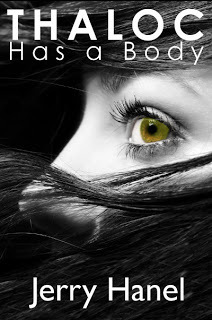
Jerry's 10 tips for new authors: Lately, several people have asked me for advice on being a writer and the writing industry. I hope that I can shed some light on some things I've learned over my short time in this industry. These are my ten tips for new authors that want to break out and get their stories heard.
1) Don't expect to get rich quick. This is my number one rule because, I think, with the advent of Kindle, nook and other e-readers, there's a myth going around that if you publish a book you will instantly have thousands of sales and can quit your day job. While I would love to say that is true, it is not.
Most of the published authors I know, self-published and traditionally-published alike, have a day job. Why? Because writing doesn't generally make much money. There are some exceptions, and they are making enough to survive. But unless you are one of the 1% that strike a chord with the world readers, or are incredibly prolific and can produce four or five high-quality works each year, or get lucky and somehow end up on Oprah's reading list, then get a day job and write for the fun of it, not for profit. At least for now.
If you are considering self-publishing your works, it is true is that sites like Amazon, Smashwords and Barnes & Noble make becoming an independent author much easier. Yes, you can now self-publish your books and have as much exposure to the public as Stephen King. But you still have to do the marketing, and you still have to write a quality book. And don't forget about fans. It takes years to develop and cultivate a fan base; the wonderful folks that actually shell out hard-earned cash to read about the worlds in our heads.
There are a few exceptions to this rule; Amanda Hocking and Victorine Leiske, for example. I've read their works and they deserve the fans and praise. They are not only great writers, but incredibly wonderful people. I've talked at length with them both and I loved every second of it because they were genuinely interesting. But their rise to stardom took countless hours of self-promotion and they hit a great trend while it was hot. They are the exception, not the norm.
When you set your expectations right at the start, everything else flows so much better.
2) Write more quality books. If you are going in as a self-published author, it is true that you are the general manager, publicist, art-director, writer, editor and agent, all rolled into one. And while each of these tasks are vital to the success of a new work in the marketplace, you can't forget about the love of the stories in your head. You can't write just one book and expect overnight success (see rule #1). And you can't build a fan base without giving your fans quality work to read. Don't get so bogged down in the details of running the business of writing that you forget about the art of writing itself.
I write like mad until I get a new work complete. I then have to put on a different hat and do the artwork, publishing, promoting and the business of making money. I do that for about three months. I then take a month off to be with my wife before jumping back into the writing again. You have to find the balance in your own life that works for you, and any successful part of balance needs to include significant time set aside just for writing your next amazing work of art.
Yes, I'm always jotting new ideas for stories, taking notes on new plots or character concepts. But when I'm the business manager, I focus on that role. When I'm writing, I ignore the sales numbers. When I'm promoting, I don't spend time worrying about chapters. When I'm laying out the book and formatting it for the different reading platforms, I don't worry about character development.
When you produce more works, each subsequent book will help build a fan base many times more effectively than any self-promotion you can do. The more quality work you write, the more of a following you can generate. Put the links to your new books directly in the back of your other books. Cross-link your books and re-publish old works with new links each time a new book is released. In doing this, you'll be able to drive fans to all of your works and may even make an extra sale.
3) Hire an editor. Maybe even two. I don't know how many times I've heard "I can't afford an editor." Being the notorious cheapskate that I am, I did the same thing when I released my first book. And I lost many, many loyal fans over it. The story was thrilling, but the art was so damaged by the mistakes that many people returned the books, or worse -- decided to not buy my future books. That one action has probably hurt my career more than anything else. Your brain will replace wrong words with right ones, tricking you into leaving those words on the page. It's a subtle, cruel, evil thing, but it happens to all of us. Anyone that says that they do not need an editor is lying. I learned this the hard way. Trust me when I say, you can't afford to NOT hire an editor.
Everyone needs an editor. I eventually hired a fabulous woman named Rebecca Eagleton. She's a member of kindleboards.com (her user name is Rebecca Jane) and does incredible work. She also is very inexpensive, which made the scrooge in me very happy. I've since republished that tarnished work, and it has really exploded since then. Whoever you hire, make sure that they are willing to do a sample chapter and get references of their quality. You don't want to pay someone $1/page on a 500-page manuscript just to discover that they left half of the typos in.
4) Get great cover art. While it is said that we should never judge a book by its cover, the fact is that we all do. Every last one of us. The cover should relay the genre, theme, and overall concept of the story itself in two seconds or less, and look great in the process. Why? Because that's all the time that the average person takes in evaluating whether they want to even turn the book over and read the book description. You have a whopping two seconds to capture your reader. Make it count. You cover art is just as important as your editor. Pay for it, if you have to. That cash will definitely come back to you in terms of sales later.
5) Don't give up. Many authors will write a book, maybe even two, and when the sales aren't what they expect or when that one very rude person leaves a scathing review, they give up. Don't give up. The more you write, the better you become at writing. You need to have the good sense to know what is publish-worthy and what isn't. But just because you didn't produce publish-worthy material doesn't mean that you're not a good writer. Writing good stories takes time, patience, and an immeasurable amount of practice. I'll say it again, the more you write, the better at the art you become. If you love the art, don't give up.
6) Publish your quality works. When you feel you have something publish-worthy, jump out there and try. With the advent of self-publishing, you have more freedom than ever before in the history of story-telling. Just don't let those great ideas sit on a shelf until "you are ready." I'm not knocking traditionally-published authors. If you can find an agent or a publisher that will work with you, great! But if you've done all of the rules up to this point, and you consistently get feedback that your story should be shared but can't find someone that will take your work, don't be afraid to jump into the water.
Getting into writing is like getting into the pool; whether you enter through the ladder (traditionally published) or the cannonball (self-publishing) the end result is the same. Don't be afraid to get wet. The worst thing that can happen to an author is that no one reads their published work. That is the ABSOLUTE worst thing that can happen, right?
Okay... let's look at that from the other side. If no one read your work, and you learned more and more about the business of self-publishing, you received a free education. And since NO ONE read your work, what have you lost? You didn't get a bad reputation because... say it with me; no one read your work.
And this is the worst thing that can happen. What if you put yourself out there and it receives only a little praise? That's awesome. That's exactly how you build a fan base... one fan at a time. And who knows if you'll strike a major trend with a third or fourth novel and it takes off?
If you feel that you jumped in too early, and your name is tarnished forever due to what you didn't know that you didn't know when you published your works, that's okay. Don't worry. Write under a pseudonym and keep writing (see rule #2).
7) Get a great critique group. Or two. I have a weekly critique group of local writers. We meet on Monday nights, and I can't even begin to tell you how valuable that has been for me. I've learned about writing, but I've also received encouragement to follow the rules above. After a while, I learn to edit myself. I can almost predict what Steve or Carolyn is going to say about a chapter I've brought. I'm also a member on CritiqueCircle.com where I can branch out and get feedback from several other authors, and help break off even more rough edges that my Monday night crew has become used to.
Despite the stereotype, writing is not performed in an isolated environment. It takes twice as much input to produce quality work.
8) Grow thick skin. Seriously. There will come a day (probably the first day you step out there) that someone will say that your plot was too flimsy. Or your characters were too shallow. Or that they didn't like how you ended your story. While all of that is important feedback and should be taken into consideration, don't attach an emotion to it. Don't allow yourself to become sad, angry or defensive. It is simply more feedback that you can use in your next work of art. Take it in like a calculating computer. It is a fact of that person's perception. Nothing more. Nothing less.
Joining a critique group (Rule #7) greatly helps you learn how to take criticism appropriately. not only is a critique group great feedback, it helps you learn how to evaluate the information you get and separate the emotion behind it so that you can focus on what you need to do, and what you need to ignore.
For example, consider the source. If Stephen King or Janet Evanovich were to tell me that my characters were too shallow, you can bet I'd spend the next five months making my next novel with deep, rich, colorful characters. With the beauty of electronic publishing, I would probably fix that in my current work, and re-publish the current work with richer characters. Remember that just because you release a book doesn't mean that it is set in stone.
On the other hand, if someone on the Internet named Strykrgrrrl says that my characters are "stoopid and I diddnt undrstnand thm. This autor is dum." I'll consider it and ask my two editors if they think my characters need work, but I'm not going to worry much about it for the current story. I will shrug and move on.(John here: My favorite negative review on one of my works is for "The Emo Bunny that Should": "i hope that bunny is emo so it can stab itself to death")
9) Do something other than writing. "Wait, you just said write more books. Aren't you contradicting yourself?" No. Write more books, but you can't do so without experiencing more stuff. Writing reflects what we know about life. The more you experience, the richer your stories become. Go square-dancing. Climb a mountain. Walk around your city. Join a knitting club. Do something -- anything -- on a regular basis that has absolutely nothing to do with the business of writing. You'll be amazed at the people you meet and the things you can learn doing something other than writing.
For me, I serve in the community, helping out the homeless and those that don't have much. I love going to the elderly center and listening to them tell me about their day. Miss Zenobia (yes, that's her name) and Miss Dani regularly give me lessons in dominoes and Skip-bo. I take the beatings like a champ and smile because I know that each time I go there, I learn something more about humanity itself.
10) Have fun. Seriously, if this is something you love, then have fun doing it. Don't let the business or the need for money swallow the art of writing. Release the stories that you enjoy. Don't try to write about the hottest trend like vampires or sorcerers if that isn't your style. Trust me when I say that it will show to your readers, and you will hate your own work and the act of writing will be painful. Enjoy what you do, and find the corner of the writing world where those readers want to read your unique story.
# # #Jerry Hanel is the author of the Brodie Wade series of Paranormal Thrillers. You can find his novels, Death Has a Name and Thaloc Has a Body, on Amazon.com. Jerry lives with his beautiful wife in Tulsa, Oklahoma.You can find his work and follow his writing on these sites:Website: http://www.JerryHanel.comFacebook: http://www.facebook.com/Jerry-Hanel-AuthorTwitter: http://www.twitter.com/jerryhanelGoogle+: http://www.jerryhanel.com/gplus
Death Has a Name links:Amazon (US): http://www.amazon.com/dp/B004H1TDKQAmazon (UK): http://www.amazon.co.uk/dp/B004H1TDKQSmashwords: Smashwords
Thaloc Has a Body links:Amazon (US): http://www.amazon.com/dp/B0058DUAS6Amazon (UK); http://www.amazon.co.uk/dp/B0058DUAS6Smashwords: Smashwords
I've invited fellow Indie Author Jerry Hanel to write a guest blog. We both published our first books right around the same time at the end of 2010. Jerry has been a valuable member of the self-publishing community since the outset, helping other authors wherever possible and offering advice to anyone who asks.
He has responded with 10 tips for new authors. I've read through them and agree whole-heartedly with every single one, particularly the first two. Becoming a self-supporting Indie Author will take an immense amount of work and one must always improve their craft if they truly wish to succeed.

Jerry's 10 tips for new authors: Lately, several people have asked me for advice on being a writer and the writing industry. I hope that I can shed some light on some things I've learned over my short time in this industry. These are my ten tips for new authors that want to break out and get their stories heard.
1) Don't expect to get rich quick. This is my number one rule because, I think, with the advent of Kindle, nook and other e-readers, there's a myth going around that if you publish a book you will instantly have thousands of sales and can quit your day job. While I would love to say that is true, it is not.
Most of the published authors I know, self-published and traditionally-published alike, have a day job. Why? Because writing doesn't generally make much money. There are some exceptions, and they are making enough to survive. But unless you are one of the 1% that strike a chord with the world readers, or are incredibly prolific and can produce four or five high-quality works each year, or get lucky and somehow end up on Oprah's reading list, then get a day job and write for the fun of it, not for profit. At least for now.
If you are considering self-publishing your works, it is true is that sites like Amazon, Smashwords and Barnes & Noble make becoming an independent author much easier. Yes, you can now self-publish your books and have as much exposure to the public as Stephen King. But you still have to do the marketing, and you still have to write a quality book. And don't forget about fans. It takes years to develop and cultivate a fan base; the wonderful folks that actually shell out hard-earned cash to read about the worlds in our heads.
There are a few exceptions to this rule; Amanda Hocking and Victorine Leiske, for example. I've read their works and they deserve the fans and praise. They are not only great writers, but incredibly wonderful people. I've talked at length with them both and I loved every second of it because they were genuinely interesting. But their rise to stardom took countless hours of self-promotion and they hit a great trend while it was hot. They are the exception, not the norm.
When you set your expectations right at the start, everything else flows so much better.
2) Write more quality books. If you are going in as a self-published author, it is true that you are the general manager, publicist, art-director, writer, editor and agent, all rolled into one. And while each of these tasks are vital to the success of a new work in the marketplace, you can't forget about the love of the stories in your head. You can't write just one book and expect overnight success (see rule #1). And you can't build a fan base without giving your fans quality work to read. Don't get so bogged down in the details of running the business of writing that you forget about the art of writing itself.
I write like mad until I get a new work complete. I then have to put on a different hat and do the artwork, publishing, promoting and the business of making money. I do that for about three months. I then take a month off to be with my wife before jumping back into the writing again. You have to find the balance in your own life that works for you, and any successful part of balance needs to include significant time set aside just for writing your next amazing work of art.
Yes, I'm always jotting new ideas for stories, taking notes on new plots or character concepts. But when I'm the business manager, I focus on that role. When I'm writing, I ignore the sales numbers. When I'm promoting, I don't spend time worrying about chapters. When I'm laying out the book and formatting it for the different reading platforms, I don't worry about character development.
When you produce more works, each subsequent book will help build a fan base many times more effectively than any self-promotion you can do. The more quality work you write, the more of a following you can generate. Put the links to your new books directly in the back of your other books. Cross-link your books and re-publish old works with new links each time a new book is released. In doing this, you'll be able to drive fans to all of your works and may even make an extra sale.

3) Hire an editor. Maybe even two. I don't know how many times I've heard "I can't afford an editor." Being the notorious cheapskate that I am, I did the same thing when I released my first book. And I lost many, many loyal fans over it. The story was thrilling, but the art was so damaged by the mistakes that many people returned the books, or worse -- decided to not buy my future books. That one action has probably hurt my career more than anything else. Your brain will replace wrong words with right ones, tricking you into leaving those words on the page. It's a subtle, cruel, evil thing, but it happens to all of us. Anyone that says that they do not need an editor is lying. I learned this the hard way. Trust me when I say, you can't afford to NOT hire an editor.
Everyone needs an editor. I eventually hired a fabulous woman named Rebecca Eagleton. She's a member of kindleboards.com (her user name is Rebecca Jane) and does incredible work. She also is very inexpensive, which made the scrooge in me very happy. I've since republished that tarnished work, and it has really exploded since then. Whoever you hire, make sure that they are willing to do a sample chapter and get references of their quality. You don't want to pay someone $1/page on a 500-page manuscript just to discover that they left half of the typos in.
4) Get great cover art. While it is said that we should never judge a book by its cover, the fact is that we all do. Every last one of us. The cover should relay the genre, theme, and overall concept of the story itself in two seconds or less, and look great in the process. Why? Because that's all the time that the average person takes in evaluating whether they want to even turn the book over and read the book description. You have a whopping two seconds to capture your reader. Make it count. You cover art is just as important as your editor. Pay for it, if you have to. That cash will definitely come back to you in terms of sales later.
5) Don't give up. Many authors will write a book, maybe even two, and when the sales aren't what they expect or when that one very rude person leaves a scathing review, they give up. Don't give up. The more you write, the better you become at writing. You need to have the good sense to know what is publish-worthy and what isn't. But just because you didn't produce publish-worthy material doesn't mean that you're not a good writer. Writing good stories takes time, patience, and an immeasurable amount of practice. I'll say it again, the more you write, the better at the art you become. If you love the art, don't give up.
6) Publish your quality works. When you feel you have something publish-worthy, jump out there and try. With the advent of self-publishing, you have more freedom than ever before in the history of story-telling. Just don't let those great ideas sit on a shelf until "you are ready." I'm not knocking traditionally-published authors. If you can find an agent or a publisher that will work with you, great! But if you've done all of the rules up to this point, and you consistently get feedback that your story should be shared but can't find someone that will take your work, don't be afraid to jump into the water.
Getting into writing is like getting into the pool; whether you enter through the ladder (traditionally published) or the cannonball (self-publishing) the end result is the same. Don't be afraid to get wet. The worst thing that can happen to an author is that no one reads their published work. That is the ABSOLUTE worst thing that can happen, right?
Okay... let's look at that from the other side. If no one read your work, and you learned more and more about the business of self-publishing, you received a free education. And since NO ONE read your work, what have you lost? You didn't get a bad reputation because... say it with me; no one read your work.
And this is the worst thing that can happen. What if you put yourself out there and it receives only a little praise? That's awesome. That's exactly how you build a fan base... one fan at a time. And who knows if you'll strike a major trend with a third or fourth novel and it takes off?
If you feel that you jumped in too early, and your name is tarnished forever due to what you didn't know that you didn't know when you published your works, that's okay. Don't worry. Write under a pseudonym and keep writing (see rule #2).
7) Get a great critique group. Or two. I have a weekly critique group of local writers. We meet on Monday nights, and I can't even begin to tell you how valuable that has been for me. I've learned about writing, but I've also received encouragement to follow the rules above. After a while, I learn to edit myself. I can almost predict what Steve or Carolyn is going to say about a chapter I've brought. I'm also a member on CritiqueCircle.com where I can branch out and get feedback from several other authors, and help break off even more rough edges that my Monday night crew has become used to.
Despite the stereotype, writing is not performed in an isolated environment. It takes twice as much input to produce quality work.
8) Grow thick skin. Seriously. There will come a day (probably the first day you step out there) that someone will say that your plot was too flimsy. Or your characters were too shallow. Or that they didn't like how you ended your story. While all of that is important feedback and should be taken into consideration, don't attach an emotion to it. Don't allow yourself to become sad, angry or defensive. It is simply more feedback that you can use in your next work of art. Take it in like a calculating computer. It is a fact of that person's perception. Nothing more. Nothing less.
Joining a critique group (Rule #7) greatly helps you learn how to take criticism appropriately. not only is a critique group great feedback, it helps you learn how to evaluate the information you get and separate the emotion behind it so that you can focus on what you need to do, and what you need to ignore.
For example, consider the source. If Stephen King or Janet Evanovich were to tell me that my characters were too shallow, you can bet I'd spend the next five months making my next novel with deep, rich, colorful characters. With the beauty of electronic publishing, I would probably fix that in my current work, and re-publish the current work with richer characters. Remember that just because you release a book doesn't mean that it is set in stone.
On the other hand, if someone on the Internet named Strykrgrrrl says that my characters are "stoopid and I diddnt undrstnand thm. This autor is dum." I'll consider it and ask my two editors if they think my characters need work, but I'm not going to worry much about it for the current story. I will shrug and move on.(John here: My favorite negative review on one of my works is for "The Emo Bunny that Should": "i hope that bunny is emo so it can stab itself to death")
9) Do something other than writing. "Wait, you just said write more books. Aren't you contradicting yourself?" No. Write more books, but you can't do so without experiencing more stuff. Writing reflects what we know about life. The more you experience, the richer your stories become. Go square-dancing. Climb a mountain. Walk around your city. Join a knitting club. Do something -- anything -- on a regular basis that has absolutely nothing to do with the business of writing. You'll be amazed at the people you meet and the things you can learn doing something other than writing.
For me, I serve in the community, helping out the homeless and those that don't have much. I love going to the elderly center and listening to them tell me about their day. Miss Zenobia (yes, that's her name) and Miss Dani regularly give me lessons in dominoes and Skip-bo. I take the beatings like a champ and smile because I know that each time I go there, I learn something more about humanity itself.
10) Have fun. Seriously, if this is something you love, then have fun doing it. Don't let the business or the need for money swallow the art of writing. Release the stories that you enjoy. Don't try to write about the hottest trend like vampires or sorcerers if that isn't your style. Trust me when I say that it will show to your readers, and you will hate your own work and the act of writing will be painful. Enjoy what you do, and find the corner of the writing world where those readers want to read your unique story.
# # #Jerry Hanel is the author of the Brodie Wade series of Paranormal Thrillers. You can find his novels, Death Has a Name and Thaloc Has a Body, on Amazon.com. Jerry lives with his beautiful wife in Tulsa, Oklahoma.You can find his work and follow his writing on these sites:Website: http://www.JerryHanel.comFacebook: http://www.facebook.com/Jerry-Hanel-AuthorTwitter: http://www.twitter.com/jerryhanelGoogle+: http://www.jerryhanel.com/gplus
Death Has a Name links:Amazon (US): http://www.amazon.com/dp/B004H1TDKQAmazon (UK): http://www.amazon.co.uk/dp/B004H1TDKQSmashwords: Smashwords
Thaloc Has a Body links:Amazon (US): http://www.amazon.com/dp/B0058DUAS6Amazon (UK); http://www.amazon.co.uk/dp/B0058DUAS6Smashwords: Smashwords
July 22, 2011
My Fiance, My love
Explanation
I have been writing (mostly bad) poetry since I was 21. This is very odd considering I absolutely hate poetry. Poetry drives me up a wall. As a form of writing, it tends to be overly impressed with itself. If someone wishes to say something, it's best just to come out and say it instead of tying it up in uselessly colorful words that confuse the entire situation.
So . . . now that I've gone on a rant about how much I dislike poetry . . . Let's get back to the fact that I write it. *sigh* The fact of the matter is, poetry is a very useful tool for writers. It's a way to get concepts, images and ideas onto paper and experiment with words. It's also awesome for saying lovey-dovey-gushy stuff.
That's what this poem is. My wife and I have been together for nearly 16 years and we've been married nearly 15. I wrote this particular poem in 1996, shortly after I asked Tracy to marry me. :) I found it in my notebook of poetry and decided to tortur . . . share it with you. *evil laughter*
Please understand that this was written before I was writing consistently. The technical merits of the writing are . . . non-existant. It could be written much better, but I'm not going to edit it. I figure she still married me ever after I gave this to her soooooo . . .
The Poem
My Fiancé, My Love
What a joy to loveAnd a joy to be lovedTo feel the warmth of a heartTo give my hear to another
So long have I wanderedAlone with my dreamsDreams of romance and compassionDreams of love
The world was as an old movieAlways black and whiteColors were nonexistentAll was faded and dull
Smiles were half-heartedGenuine, yet with a tinge of sadnessA smile always wanting moreNeeding an unknown strength
Eyes without a twinkleMostly guarded and closed A distant longingEver present deep within
So much beauty seenSo many experiences enjoyedAlways half-emptyKnown only by me
I looked to my sideOnly to see no one thereI jumped at lifeOnly to find it wanting
Often I have sighedDreaming impossible dreamsOften I lay downTo feel my bed empty
I have known happinessBut it has always been lackingNeeding somewhat moreWanting to be fuller
This is what has gone beforeThis is how it used to beThis is when I was aloneBefore I met you
Now my life is fullColor surrounds me everywhereMy surroundings vividFull of life and energy
My smiles are now brightWhole and completeMy heart wants to singStrong and loud to all
My eyes shine with loveTwinkling with laughterProud with knowledge of youConfident with joy
The beauty I see is youFor it is hard to look awayExperiences are sharedEnjoyed to the fullest
I look to my sideTo see you always thereLife is now completeA road to walk with you
Still I sigh oftenBut with contentmentI lay downTo find your warmth waiting
I now know true happinessLacking not; because of youNeeding nothing moreBut to share my life with you
Thank you for saying yesFor giving your love to meFor accepting my love to youThank you for being
I love you Tracy
John
Copyright 1996 John H. Carroll
I have been writing (mostly bad) poetry since I was 21. This is very odd considering I absolutely hate poetry. Poetry drives me up a wall. As a form of writing, it tends to be overly impressed with itself. If someone wishes to say something, it's best just to come out and say it instead of tying it up in uselessly colorful words that confuse the entire situation.
So . . . now that I've gone on a rant about how much I dislike poetry . . . Let's get back to the fact that I write it. *sigh* The fact of the matter is, poetry is a very useful tool for writers. It's a way to get concepts, images and ideas onto paper and experiment with words. It's also awesome for saying lovey-dovey-gushy stuff.
That's what this poem is. My wife and I have been together for nearly 16 years and we've been married nearly 15. I wrote this particular poem in 1996, shortly after I asked Tracy to marry me. :) I found it in my notebook of poetry and decided to tortur . . . share it with you. *evil laughter*
Please understand that this was written before I was writing consistently. The technical merits of the writing are . . . non-existant. It could be written much better, but I'm not going to edit it. I figure she still married me ever after I gave this to her soooooo . . .

The Poem
My Fiancé, My Love
What a joy to loveAnd a joy to be lovedTo feel the warmth of a heartTo give my hear to another
So long have I wanderedAlone with my dreamsDreams of romance and compassionDreams of love
The world was as an old movieAlways black and whiteColors were nonexistentAll was faded and dull
Smiles were half-heartedGenuine, yet with a tinge of sadnessA smile always wanting moreNeeding an unknown strength
Eyes without a twinkleMostly guarded and closed A distant longingEver present deep within
So much beauty seenSo many experiences enjoyedAlways half-emptyKnown only by me
I looked to my sideOnly to see no one thereI jumped at lifeOnly to find it wanting
Often I have sighedDreaming impossible dreamsOften I lay downTo feel my bed empty
I have known happinessBut it has always been lackingNeeding somewhat moreWanting to be fuller
This is what has gone beforeThis is how it used to beThis is when I was aloneBefore I met you
Now my life is fullColor surrounds me everywhereMy surroundings vividFull of life and energy
My smiles are now brightWhole and completeMy heart wants to singStrong and loud to all
My eyes shine with loveTwinkling with laughterProud with knowledge of youConfident with joy
The beauty I see is youFor it is hard to look awayExperiences are sharedEnjoyed to the fullest
I look to my sideTo see you always thereLife is now completeA road to walk with you
Still I sigh oftenBut with contentmentI lay downTo find your warmth waiting
I now know true happinessLacking not; because of youNeeding nothing moreBut to share my life with you
Thank you for saying yesFor giving your love to meFor accepting my love to youThank you for being
I love you Tracy
John
Copyright 1996 John H. Carroll