
Lori Schafer's Blog: Lori Schafer's Short Subjects I Feel Like Writing About, page 30
June 1, 2014
I am Subject: On Writing My Memoir
I am participating in Diane DeBella’s #iamsubject project http://www.iamsubject.com/the-iamsubj.... Here is my #iamsubject story. ON WRITING MY MEMOIR I forgot her. I hadn’t intended it. I didn’t mean to forget, or to set her aside. I didn’t plan to consign her to the fog of some distant past, or to the blur of some hazy […]


May 31, 2014
Baby And Me by Lori Schafer
Originally posted on Back Hair Advocate:
Our best friends were having a baby. Inwardly, I groaned. “You know what this means, Frank?” I complained to my boyfriend. “They won’t be going out with us anymore.” One by one our friends had succumbed to the bothersome burdens of boring adulthood: first marriage, now children. Soon only…
Our best friends were having a baby. Inwardly, I groaned. “You know what this means, Frank?” I complained to my boyfriend. “They won’t be going out with us anymore.” One by one our friends had succumbed to the bothersome burdens of boring adulthood: first marriage, now children. Soon only…
May 27, 2014
The Newest Residents of the Feral Cat Motel (aka My Backyard)

Love the look on the lower one's face...
May 25, 2014
"Funeral for Charlie" on Story Shack Magazine
http://thestoryshack.com/short-stories/comedy/funeral-for-charlie/
My humorous short-short "Funeral for Charlie" is now up on Story Shack Magazine, accompanied by a wonderful illustration by artist Daniele Murtas (http://dmurtas.blogspot.com/). Hope you enjoy it!
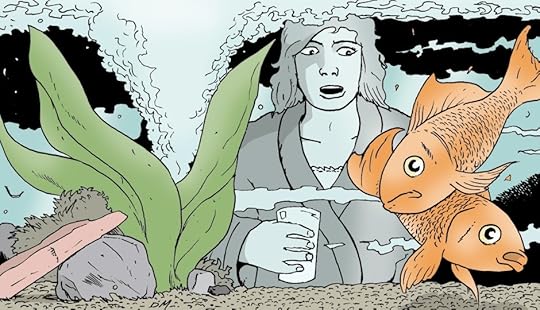
"I watched as the water swirled away, taking Charlie on one final miraculous journey to the home of his ancient ancestors, to the ocean the abrupt end of his short life had precluded him from ever going to see..."
My humorous short-short "Funeral for Charlie" is now up on Story Shack Magazine, accompanied by a wonderful illustration by artist Daniele Murtas (http://dmurtas.blogspot.com/). Hope you enjoy it!

"I watched as the water swirled away, taking Charlie on one final miraculous journey to the home of his ancient ancestors, to the ocean the abrupt end of his short life had precluded him from ever going to see..."
May 19, 2014
Out! in That's Life Fast Fiction Quarterly
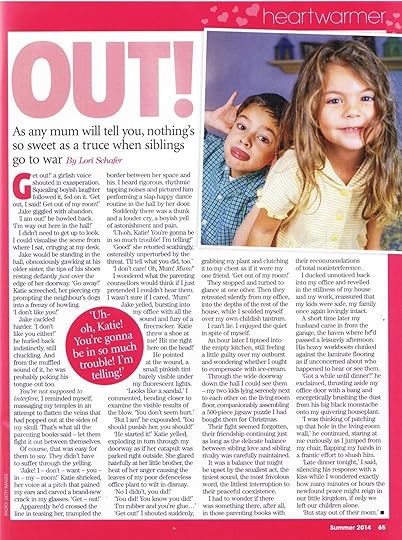
"Out!" appeared in the Summer 2014 (Australian summer) issue of That's Life Fast Fiction Quarterly. Tell me what you think!
OUT!
“GET OUT!” a girlish voice shouted in exasperation, unbelievably audible even from across the house, possibly even from across the town. Squealing boyish laughter followed it; fed on it.
“Get out, I said!! Get out of my room!!”
Jake laughed again, louder, nearly giggling with gleeful abandon. “I am out!” he howled back at her triumphantly. “I’m way out here in the hall!”
I didn’t need to get up to look; I could visualize the scene from where I sat cringing at the desk in my office. Jake standing grinning in the hall, gawking at his year-older sister through her open door, the tips of his sneakers defiantly resting just over the edge of her lintel.
“Go away!” Katie yelled, her piercing cry prompting the neighbor’s hounds into a frenzy of agonized howling. “I don’t like you!”
Jake only cackled harder, his small fists slapping like drumsticks against the hollow-sounding sheetrock.
“I mean it!! I don’t like you!”
“I don’ wike you eiver!” he hurled back indistinctly, still chuckling. From the muffled sound of it, probably poking his tongue out at her.
You’re not supposed to interfere, I reminded myself forcibly, massaging my temples in a futile attempt to flatten the thick, bulging veins that had popped out palpably from the sides of my skull. That’s what the parenting books said; let them fight it out amongst themselves. Easy for them to say, I grumbled internally. They didn’t have to suffer through the screeching.
“JAKE!” Katie shrieked suddenly, her voice rising to a pitch that pained my ears and carved a new crack in my glasses. “I – don’t – want – you – in – my – room!” she erupted, nearly breathless with childish fury and indignation. “Get – out!!” Apparently he’d crossed the line in teasing her; trampled the border between her space and his.
“What?!” he yelled back with mock innocence. “I’m not doing anything!” I heard rigorous, rhythmic tapping noises and pictured him performing a slap-happy dance-routine in the hall by her door.
Suddenly there was a loud thunk and a louder cry, a boyish yell of astonishment and pain.
“Uh-oh, Katie!! You’re gonna be in so much trouble! I’m telling!”
“Good!” she retorted scathingly, ostensibly unperturbed by the formidable threat. “I’ll tell what you did, too.”
“I don’t care! Oh no, I don’t! Oh, Mom! Mo-om!”
I wondered what the parenting counselors would think if I pretended I didn’t hear it. I wasn’t sure if I cared.
“Mom!” Jake yelled, bursting into my office with all of the sound and fury of a string of firecrackers going off unexpectedly in the middle of May. “Katie threw a shoe at me! Hit me right here on the head!” He pointed cheerfully at the nasty wound, a small pinkish tint barely visible beneath my fluorescent lights.
“Looks more like a sandal,” I contended calmly, bending closer to examine the visible results of the near-fatal blow. “You don’t seem hurt.”
“But I am!” he expounded happily. “You should punish her; yes, you should!”
“He started it!” Katie yelled, exploding in turn through my doorway as if her catapult was parked right outside. She glared hatefully at her little brother, the hotness of her anger causing the freshly watered leaves of my poor defenseless office plant to wilt in dismay.
“No, I didn’t, you did!”
“Yes, you did, you know you did!”
“I know you are, but what am I?!”
“I’m rubber and you’re glue…”
“GET OUT!!” I shouted suddenly, snatching up my plant and clutching it to my chest as if it were my one true friend. “Get out of my room!!”
They stopped. Turned to glance thoughtfully at one other and hushed. Retreated silently from my office, sadly into the unknown depths of the rest of the house, while I scolded myself over my own childish temper tantrum.
I can’t lie. I enjoyed the quiet in spite of myself.
An hour later I tiptoed gingerly into the empty kitchen, still feeling a little guilty over my impatient outburst and considering whether I ought to compensate with everyone’s favorite dinner and maybe ice cream to boot. Through the wide doorway down the hall I could see them: my two kids lying serenely next to each other on the living room floor, companionably assembling a five-hundred-piece jigsaw puzzle I’d gotten them for Christmas. Their argument as long forgotten as Mom’s unusual fit of anger, their renewed friendship ensured as long as the delicate balance between sibling love and sibling rivalry was carefully maintained. A balance that might be upset by the smallest act, the tiniest sound, the most frivolous word, the most meager interruption to their peaceful co-existence. Maybe they had something there, after all, those parenting books with their recommendations of non-interference.
I ducked unnoticed back into my office; returned to the smooth stillness of my walls and my work, reassured that my children were safe, my family once again loving and intact. A short time later my husband came in from the garage, the blissfully quiet haven in which he’d passed his leisurely afternoon, his work-boots clunking hard against the laminate flooring as if entirely unconcerned about who heard or observed them. “We got a while until dinner?” he boomed, thrusting aside the door of my office with a bang and energetically brushing the dust from his big black mustache onto my still-quivering houseplant. “I was thinking of patching that hole in the living room wall,” he continued, staring at me curiously as I leapt from my rocking, rolling chair, waving my hands incomprehensibly in a frantic effort to shush him.
“Late dinner tonight,” I whispered, silencing his half-uttered response with a kiss while I wondered how many minutes or hours the newfound peace might reign in our little kingdom if only we left our children alone. “But stay out of their room.”
OUT!
“GET OUT!” a girlish voice shouted in exasperation, unbelievably audible even from across the house, possibly even from across the town. Squealing boyish laughter followed it; fed on it.
“Get out, I said!! Get out of my room!!”
Jake laughed again, louder, nearly giggling with gleeful abandon. “I am out!” he howled back at her triumphantly. “I’m way out here in the hall!”
I didn’t need to get up to look; I could visualize the scene from where I sat cringing at the desk in my office. Jake standing grinning in the hall, gawking at his year-older sister through her open door, the tips of his sneakers defiantly resting just over the edge of her lintel.
“Go away!” Katie yelled, her piercing cry prompting the neighbor’s hounds into a frenzy of agonized howling. “I don’t like you!”
Jake only cackled harder, his small fists slapping like drumsticks against the hollow-sounding sheetrock.
“I mean it!! I don’t like you!”
“I don’ wike you eiver!” he hurled back indistinctly, still chuckling. From the muffled sound of it, probably poking his tongue out at her.
You’re not supposed to interfere, I reminded myself forcibly, massaging my temples in a futile attempt to flatten the thick, bulging veins that had popped out palpably from the sides of my skull. That’s what the parenting books said; let them fight it out amongst themselves. Easy for them to say, I grumbled internally. They didn’t have to suffer through the screeching.
“JAKE!” Katie shrieked suddenly, her voice rising to a pitch that pained my ears and carved a new crack in my glasses. “I – don’t – want – you – in – my – room!” she erupted, nearly breathless with childish fury and indignation. “Get – out!!” Apparently he’d crossed the line in teasing her; trampled the border between her space and his.
“What?!” he yelled back with mock innocence. “I’m not doing anything!” I heard rigorous, rhythmic tapping noises and pictured him performing a slap-happy dance-routine in the hall by her door.
Suddenly there was a loud thunk and a louder cry, a boyish yell of astonishment and pain.
“Uh-oh, Katie!! You’re gonna be in so much trouble! I’m telling!”
“Good!” she retorted scathingly, ostensibly unperturbed by the formidable threat. “I’ll tell what you did, too.”
“I don’t care! Oh no, I don’t! Oh, Mom! Mo-om!”
I wondered what the parenting counselors would think if I pretended I didn’t hear it. I wasn’t sure if I cared.
“Mom!” Jake yelled, bursting into my office with all of the sound and fury of a string of firecrackers going off unexpectedly in the middle of May. “Katie threw a shoe at me! Hit me right here on the head!” He pointed cheerfully at the nasty wound, a small pinkish tint barely visible beneath my fluorescent lights.
“Looks more like a sandal,” I contended calmly, bending closer to examine the visible results of the near-fatal blow. “You don’t seem hurt.”
“But I am!” he expounded happily. “You should punish her; yes, you should!”
“He started it!” Katie yelled, exploding in turn through my doorway as if her catapult was parked right outside. She glared hatefully at her little brother, the hotness of her anger causing the freshly watered leaves of my poor defenseless office plant to wilt in dismay.
“No, I didn’t, you did!”
“Yes, you did, you know you did!”
“I know you are, but what am I?!”
“I’m rubber and you’re glue…”
“GET OUT!!” I shouted suddenly, snatching up my plant and clutching it to my chest as if it were my one true friend. “Get out of my room!!”
They stopped. Turned to glance thoughtfully at one other and hushed. Retreated silently from my office, sadly into the unknown depths of the rest of the house, while I scolded myself over my own childish temper tantrum.
I can’t lie. I enjoyed the quiet in spite of myself.
An hour later I tiptoed gingerly into the empty kitchen, still feeling a little guilty over my impatient outburst and considering whether I ought to compensate with everyone’s favorite dinner and maybe ice cream to boot. Through the wide doorway down the hall I could see them: my two kids lying serenely next to each other on the living room floor, companionably assembling a five-hundred-piece jigsaw puzzle I’d gotten them for Christmas. Their argument as long forgotten as Mom’s unusual fit of anger, their renewed friendship ensured as long as the delicate balance between sibling love and sibling rivalry was carefully maintained. A balance that might be upset by the smallest act, the tiniest sound, the most frivolous word, the most meager interruption to their peaceful co-existence. Maybe they had something there, after all, those parenting books with their recommendations of non-interference.
I ducked unnoticed back into my office; returned to the smooth stillness of my walls and my work, reassured that my children were safe, my family once again loving and intact. A short time later my husband came in from the garage, the blissfully quiet haven in which he’d passed his leisurely afternoon, his work-boots clunking hard against the laminate flooring as if entirely unconcerned about who heard or observed them. “We got a while until dinner?” he boomed, thrusting aside the door of my office with a bang and energetically brushing the dust from his big black mustache onto my still-quivering houseplant. “I was thinking of patching that hole in the living room wall,” he continued, staring at me curiously as I leapt from my rocking, rolling chair, waving my hands incomprehensibly in a frantic effort to shush him.
“Late dinner tonight,” I whispered, silencing his half-uttered response with a kiss while I wondered how many minutes or hours the newfound peace might reign in our little kingdom if only we left our children alone. “But stay out of their room.”

May 18, 2014
Just a Little Rest - Please?
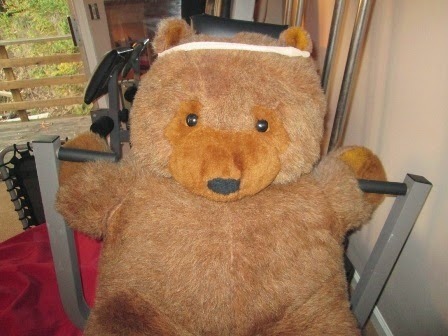
40,000 words in the last month. My Muse is really giving me a workout!

May 12, 2014
How, On Mother’s Day, Twitter Taught Me the True Meaning of Social Support
Yesterday was Mother’s Day. It is not a holiday I celebrate. I am not a mother myself, and as those of you who know something of my personal history are aware, my relationship with my own mother was critically wounded when she became mentally ill during my adolescence.
I’m generally not much affected by the holiday. It’s been years since I left home, and by now I’ve spent more of my life without my mom than I spent with her. Time heals. But last year I learned that she had died – in 2007. And ever since then I’ve found myself thinking of her much more often, of the mother she was when I was young, and of the mother she became when I was older. And in completing my memoir, which is being released next month, naturally I’ve had to spend a great deal of time digging deeper into my long-repressed feelings towards her, this woman I once loved with all my heart.
And maybe that’s why, on Sunday morning as I was doing my usual Twitter thing, I found myself growing uncomfortable when faced with the steady stream of tweets celebrating moms and motherhood. That’s wonderful, of course, for people who are mothers and who have mothers – they should celebrate. But then I thought, what about those who don’t ? What about all those children – young and old alike – who have lost their mothers? How does it make them feel to be deluged with these reminders of other people’s happy families when their own has been torn apart?
I hadn’t known ahead of time what I was going to tweet that day. I had nothing sweet or tender to offer in honor of the holiday, nothing warm or fuzzy I wanted to say about my mom or anyone else’s. But as I waded my way through my tweetstream, it suddenly came to me that even if I didn’t know what I wanted to say, I knew who I wanted to speak to, this Mother’s Day. Not to the mothers, but to the motherless.
And this is what I posted.
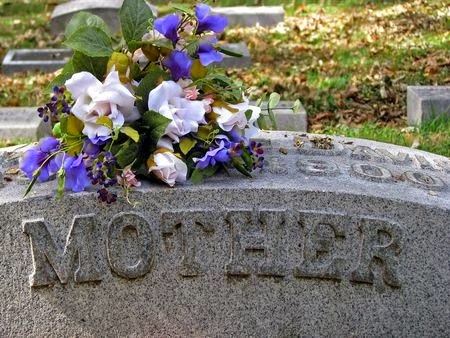
“For all those who can no longer celebrate #MothersDay… Remember #Mom.”

And then I got up and made breakfast. When I returned to my computer about an hour later, my tweet had been retweeted 49 times and favorited 70 times.
I was blown away. Needless to say, nothing I have ever posted on Twitter has ever gotten anything close to that kind of response. As of this writing, there have been 133 retweets and 152 favorites – mostly by people with whom I had no prior connection. And people responded! How they responded. Here are a few of the notes I received:
"I remember my mom too! Its the 1st Mother's Day without her! Be strong, Lori!"
"I put flowers on my mother's grave too. Miss her so much today."
"Thank you. Lovely reminder of our mothers lost too early."
"Thank you Lori. This is a tough day for a lot of us, but this makes it a little easier."
I was moved. Deeply, deeply moved. My tweet – 70 characters and a photo – had actually reached people, hundreds of them; it had touched them in a brief yet meaningful way. And when you look at the responses it prompted, it’s apparent that there were different reasons why. Some wanted to share their own feelings about their own lost mothers. Some wanted to offer their support to others who might be in pain. And some were merely grateful to be acknowledged – to be given the recognition that Mother’s Day is not necessarily a day of celebration for everyone. The responses varied. But at heart they all stemmed from the same impulse, our unquenchable desire to communicate our feelings to other humans.
It’s often said that social media is about making meaningful connections, about developing relationships with individuals you wouldn’t normally encounter in your local environment. But there’s a different kind of connection that social media also makes possible. Connecting to strangers. People with whom you have no real relationship and probably never will. People with whom you have absolutely nothing in common, except for this – a shared emotion. A shared feeling, a shared experience. A shared bit of the humanity that’s common to us all.
In its own strange way, social media unites us. We’ve all heard of revolutionary movements being organized through Twitter. We’re all aware of the grassroots activism that’s transpiring every day on the internet. We all know how social media is changing our lives, how it’s connecting people all around the world, how it brings people together, how it makes their voices heard.
And what we’re discovering is that we are not alone. There are millions upon millions of others just like us, in all the countries of the world, who are living and loving and laughing and crying and hurting and dying. We no longer have to be alone with our feelings. We can touch, and be touched. We can share our sorrow. We can share our pain. We can find comfort and support in the hearts of strangers. We can find strength in the swell of humanity that surrounds us, in the knowledge that in some of the most essential ways, we are not many, but one.
It’s a powerful age. And a beautiful one. For the first time in history, we can reach out to our fellow humans, all of them. Knowing that they can respond to us. Knowing that they will reach back.
May 11, 2014
April 27, 2014
How Many Times Do I Have to Rewrite This %$^ Thing?! The “Yellow Wagon” Saga
http://www.everydayfiction.com/yellow-wagon-by-lori-schafer/
What a journey this story has taken! The piece as I originally submitted it (reproduced at the end of this post) was about half the length of the final published version. It lacked the intro featuring Debra and her mother, and focused solely on the little girl’s experience of walking to school by herself for the first time, and becoming aware, early on, that the wagon was following her.
The editors at Every Day Fiction were possibly interested in publishing it, except that they didn’t like the idea of “misleading” the reader about the wagon, which is precisely what the original version did. In fact, that was the essence of the story. In addition, they thought the premise itself was unbelievable because I had made Debra a first-grader and the argument was that no parent would permit a child that young to walk to school by herself.
Naturally, this threw me for a loop, because, of course, the child in the story was me, and I was not a first-grader but a kindergartner when it happened. Where I grew up in small-town New England, lots of kids walked to school by themselves. There was no such thing as blue-collar flex time so you could drive your children to school – and many parents took the bus to work because they didn’t have a car, anyway. However, I was certainly willing to grant that we live in a different time, and that perhaps the premise would seem implausible to modern readers, so, at EDF’s request, I re-wrote it to include details that would make it obvious that the story took place in an earlier era.
They still didn’t like it. There was still the issue of Debra not appearing to recognize the wagon, which naturally made little sense in their interpretation of the story. I frankly had no idea what to do about this, because my intention for the story was entirely different. I had been attempting to convey the thoughts and emotions of a little girl who has been given a great new responsibility and is trying very hard to behave herself as her mother would wish. It’s not that she doesn’t recognize the wagon – she merely pretends not to because she doesn’t want her mother to think she’s only being careful because she knows she’s being watched. The whole story development – where she keeps looking anxiously over her shoulder to see if the wagon is still following, how she exaggerates her caution in crossing the street, even her final sprint at the end when the pressure becomes too much for her – centers around this concept. What I thought was clever about it was not the fact that it draws the reader down a false path, but that if you reach the end and look back on it, it turns out that the story details were true and accurate all along. The tension was real – it just had a different meaning than a reader would initially believe.
Anyway, they asked for another rewrite, and suggested that I make the story more about Debra and her mother. I’ll admit that this caused me considerable consternation. On the one hand, it was a challenge, and I’m certainly not one to shrink from a struggle. On the other hand, I had no particular interest in writing the story that way. It just didn’t feel like me. It took me longer to transform this simple little piece into heartwarming family fiction than the original story took to write! I’m not disappointed in the way it turned out, although it is a bit sentimental for my taste. But I do still believe the original version has its charms – although I’m willing to concede that I may be the only one who thinks so!
It was, however, an interesting lesson. First, because sometimes it’s easy to forget that what I think is obvious as a writer doesn’t necessarily come across to a reader the way I intended it. Editors are usually right, and if these ones weren’t getting it, chances are pretty good no one else would have, either. And second, because it was my first real experience writing to someone else’s specifications. I mean, sure, I’ve had to write papers on topics that haven’t particularly interested me – but no one has ever told me how to write them. And ultimately, I feel that this is something I should be able to do, even if I don’t enjoy it very much. As wonderful as it is to exercise total control over my fiction, a writer who knows their craft should have the capacity to create work that someone else defines. So I suppose you might say that I, too, took a journey of transformation – and it’s to be hoped that I came out a better writer at the end of it.
YELLOW WAGON (Original Version)
“Right on Orange, left on Revere,” Debra repeated to herself for the dozenth time, kicking away the crisp dead leaves that snapped at her feet like so many untrained puppies. First grade wasn’t like kindergarten; the teachers got mad if you were late. Her mom would be mad, too, if she got lost along the way.
She reached the end of her street and hung a hard right, ignoring the noise
of the engine she heard revving slightly behind her. It was only a block more to the light, and when she reached it she stopped dead, waiting cautiously for the green, both feet planted firmly on the sidewalk, not even touching the curb. When her turn came she looked both ways, repeating and exaggerating the motion, and catching in consequence a glimpse of a yellow station wagon with wood paneling that had drawn to a seemingly casual halt on the side of the road behind her.
She crossed hurriedly, shifting the schoolbag in her left hand while gripping the lunchbox more tightly in her right, swinging both in steady rhythm as she walked. Halfway down the block she knelt suddenly; fiddled with her shoelaces. Peeking over her shoulder as she bent forward, she spotted it again, the yellow wagon, which had rounded the corner after her and was still following at a respectful distance.
With grim determination she pressed on, on towards the schoolyard, now only a few blocks away. She could hear the cries of the kids on the playground, see the bright orange sash of the crossing-guard directing traffic, smell the exhaust of the ancient school buses that brought the children who lived on the far side of town. And then suddenly she was on the last block and she was running, running towards the final intersection, the one guarded by the gentle white-haired man with the threatening crimson sign, and then she had flown across it and was vanishing safely into the thick crowd of students and teachers. She turned, breathless, and witnessed the yellow wagon retreating cautiously down the street, crawling silently away as if at last losing interest in the subject of its persistent pursuit.
She remained alert that afternoon; negotiated the crosswalks with care and kept watch for the stealthy wagon, but discerned no sign of it. She sighed with relief as she at last climbed the steps of the porch on which her mother stood happily waving her home.
“How was your day, sweetheart?” she inquired cheerfully. “Were you scared walking to school by yourself?”
“Nope,” Debra replied without hesitation.
“Did you remember to look both ways and cross with the light?”
“Yes, Mom,” she said, smiling, confident that her mother already knew the answer to that question.
“So you’ll be all right walking, then, if I take the car to my new job tomorrow?”
“Of course,” Debra answered. She glanced appreciatively at it, the familiar yellow station wagon with the wood paneling, parked, as always, comfortably in front of their house.

What a journey this story has taken! The piece as I originally submitted it (reproduced at the end of this post) was about half the length of the final published version. It lacked the intro featuring Debra and her mother, and focused solely on the little girl’s experience of walking to school by herself for the first time, and becoming aware, early on, that the wagon was following her.
The editors at Every Day Fiction were possibly interested in publishing it, except that they didn’t like the idea of “misleading” the reader about the wagon, which is precisely what the original version did. In fact, that was the essence of the story. In addition, they thought the premise itself was unbelievable because I had made Debra a first-grader and the argument was that no parent would permit a child that young to walk to school by herself.
Naturally, this threw me for a loop, because, of course, the child in the story was me, and I was not a first-grader but a kindergartner when it happened. Where I grew up in small-town New England, lots of kids walked to school by themselves. There was no such thing as blue-collar flex time so you could drive your children to school – and many parents took the bus to work because they didn’t have a car, anyway. However, I was certainly willing to grant that we live in a different time, and that perhaps the premise would seem implausible to modern readers, so, at EDF’s request, I re-wrote it to include details that would make it obvious that the story took place in an earlier era.
They still didn’t like it. There was still the issue of Debra not appearing to recognize the wagon, which naturally made little sense in their interpretation of the story. I frankly had no idea what to do about this, because my intention for the story was entirely different. I had been attempting to convey the thoughts and emotions of a little girl who has been given a great new responsibility and is trying very hard to behave herself as her mother would wish. It’s not that she doesn’t recognize the wagon – she merely pretends not to because she doesn’t want her mother to think she’s only being careful because she knows she’s being watched. The whole story development – where she keeps looking anxiously over her shoulder to see if the wagon is still following, how she exaggerates her caution in crossing the street, even her final sprint at the end when the pressure becomes too much for her – centers around this concept. What I thought was clever about it was not the fact that it draws the reader down a false path, but that if you reach the end and look back on it, it turns out that the story details were true and accurate all along. The tension was real – it just had a different meaning than a reader would initially believe.
Anyway, they asked for another rewrite, and suggested that I make the story more about Debra and her mother. I’ll admit that this caused me considerable consternation. On the one hand, it was a challenge, and I’m certainly not one to shrink from a struggle. On the other hand, I had no particular interest in writing the story that way. It just didn’t feel like me. It took me longer to transform this simple little piece into heartwarming family fiction than the original story took to write! I’m not disappointed in the way it turned out, although it is a bit sentimental for my taste. But I do still believe the original version has its charms – although I’m willing to concede that I may be the only one who thinks so!
It was, however, an interesting lesson. First, because sometimes it’s easy to forget that what I think is obvious as a writer doesn’t necessarily come across to a reader the way I intended it. Editors are usually right, and if these ones weren’t getting it, chances are pretty good no one else would have, either. And second, because it was my first real experience writing to someone else’s specifications. I mean, sure, I’ve had to write papers on topics that haven’t particularly interested me – but no one has ever told me how to write them. And ultimately, I feel that this is something I should be able to do, even if I don’t enjoy it very much. As wonderful as it is to exercise total control over my fiction, a writer who knows their craft should have the capacity to create work that someone else defines. So I suppose you might say that I, too, took a journey of transformation – and it’s to be hoped that I came out a better writer at the end of it.
YELLOW WAGON (Original Version)
“Right on Orange, left on Revere,” Debra repeated to herself for the dozenth time, kicking away the crisp dead leaves that snapped at her feet like so many untrained puppies. First grade wasn’t like kindergarten; the teachers got mad if you were late. Her mom would be mad, too, if she got lost along the way.
She reached the end of her street and hung a hard right, ignoring the noise
of the engine she heard revving slightly behind her. It was only a block more to the light, and when she reached it she stopped dead, waiting cautiously for the green, both feet planted firmly on the sidewalk, not even touching the curb. When her turn came she looked both ways, repeating and exaggerating the motion, and catching in consequence a glimpse of a yellow station wagon with wood paneling that had drawn to a seemingly casual halt on the side of the road behind her.
She crossed hurriedly, shifting the schoolbag in her left hand while gripping the lunchbox more tightly in her right, swinging both in steady rhythm as she walked. Halfway down the block she knelt suddenly; fiddled with her shoelaces. Peeking over her shoulder as she bent forward, she spotted it again, the yellow wagon, which had rounded the corner after her and was still following at a respectful distance.
With grim determination she pressed on, on towards the schoolyard, now only a few blocks away. She could hear the cries of the kids on the playground, see the bright orange sash of the crossing-guard directing traffic, smell the exhaust of the ancient school buses that brought the children who lived on the far side of town. And then suddenly she was on the last block and she was running, running towards the final intersection, the one guarded by the gentle white-haired man with the threatening crimson sign, and then she had flown across it and was vanishing safely into the thick crowd of students and teachers. She turned, breathless, and witnessed the yellow wagon retreating cautiously down the street, crawling silently away as if at last losing interest in the subject of its persistent pursuit.
She remained alert that afternoon; negotiated the crosswalks with care and kept watch for the stealthy wagon, but discerned no sign of it. She sighed with relief as she at last climbed the steps of the porch on which her mother stood happily waving her home.
“How was your day, sweetheart?” she inquired cheerfully. “Were you scared walking to school by yourself?”
“Nope,” Debra replied without hesitation.
“Did you remember to look both ways and cross with the light?”
“Yes, Mom,” she said, smiling, confident that her mother already knew the answer to that question.
“So you’ll be all right walking, then, if I take the car to my new job tomorrow?”
“Of course,” Debra answered. She glanced appreciatively at it, the familiar yellow station wagon with the wood paneling, parked, as always, comfortably in front of their house.

April 26, 2014
"Yellow Wagon" on Every Day Fiction
http://www.everydayfiction.com/yellow-wagon-by-lori-schafer/
My family flash fiction piece "Yellow Wagon" has been published on Every Day Fiction!
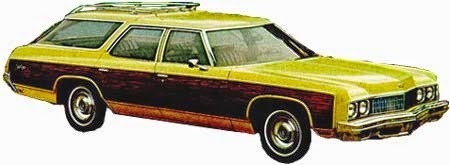
My family flash fiction piece "Yellow Wagon" has been published on Every Day Fiction!
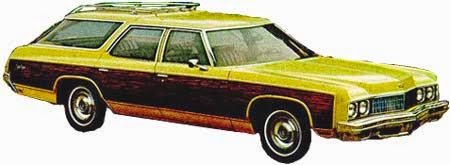
Lori Schafer's Short Subjects I Feel Like Writing About

Featuring commentary on published works and essays on subjects of interest to the author.
- Lori Schafer's profile
- 135 followers

