Chris Hakim's Blog, page 2
September 28, 2016
On Wanting to Have Children

There is so much pressure in this world to have children. Having the status of parent somehow brings with it some credential, or some worthiness that we all see as being better than not having children. Depending on one’s upbringing, having children is often considered a given. The only reason not to have children would be some medical condition which may prevent it, in which case one would consider adoption.
We have come to some cultural agreement that having children is the status quo. We have come to some personal agreement to measure our self-worth based on how successfully we find a mate and produce a family. Many intimate relationships today are based very heavily on whether one’s partner is daddy material or mommy material. In other words we ask, do I want to have a child with this person? We quickly and superficially scan potential partners, looking for the qualities needed for a possible future family. Financial security, temperament, compatibility, and do they want children. Often a no to the last question can be the deal-breaker.
Why do you want children? For self-worth? For your parents? Do you just want someone to love you?
Then we obsess over having children early enough, or how many children to have, or judging our own worth based on whether or not we have children.
Having children is a biological urge, no doubt. It is ingrained in us, as humans, to want to procreate. Making more humans means that our species survives on planet earth. Our planet is entirely overpopulated. As this point, not recognizing this as an impersonal instinct borders on madness. So many people go without food, adequate medical care, clean water, or even housing. How is it not selfish to be obsessed with bringing another human onto this earth?

It’s not that no one should ever have children, but it’s important to look deeply at your motivations. Why do you want children? For self-worth? For your parents? Do you just want someone to love you? Is it because that’s what expected of you? Is it an attempt to secure a mate, to tie your partner into something?
Have you ever considered not having children?
It may seem obvious, but before making such an earth-altering choice, it’s important to consider both options with equal curiosity and honesty. It seems that so many people have children mindlessly. A choice with this much weight should be a careful one. Even if you decide not to have children, there will still be no shortage of children whom you can welcome into your life, to love, to support, and to learn from. It takes a village, either way. You can be the village no matter what.
Discover a new book, The Authentic Lover


On wanting to have children

There is so much pressure in this world to have children. Having the status of parent somehow brings with it some credential, or some worthiness that we all see as being better than not having children. Depending on one’s upbringing, having children is often considered a given. The only reason not to have children would be some medical condition which may prevent it, in which case one would consider adoption.
We have come to some cultural agreement that having children is the status quo. We have come to some personal agreement to measure our self-worth based on how successfully we find a mate and produce a family. Many intimate relationships today are based very heavily on whether one’s partner is daddy material or mommy material. In other words we ask, do I want to have a child with this person? We quickly and superficially scan potential partners, looking for the qualities needed for a possible future family. Financial security, temperament, compatibility, and do they want children. Often a no to the last question can be the deal-breaker.
Why do you want children? For self-worth? For your parents? Do you just want someone to love you?
Then we obsess over having children early enough, or how many children to have, or judging our own worth based on whether or not we have children.
Having children is a biological urge, no doubt. It is ingrained in us, as humans, to want to procreate. Making more humans means that our species survives on planet earth. Our planet is entirely overpopulated. As this point, not recognizing this as an impersonal instinct borders on madness. So many people go without food, adequate medical care, clean water, or even housing. How is it not selfish to be obsessed with bringing another human onto this earth?
It’s not that no one should ever have children, but it’s important to look deeply at your motivations. Why do you want children? For self-worth? For your parents? Do you just want someone to love you? Is it because that’s what expected of you? Is it an attempt to secure a mate, to tie your partner into something?
Have you ever considered not having children?
It may seem obvious, but before making such an earth-altering choice, it’s important to consider both options with equal curiosity and honesty. It seems that so many people have children mindlessly. A choice with this much weight should be a careful one. Even if you decide not to have children, there will still be no shortage of children whom you can welcome into your life, to love, to support, and to learn from. It takes a village, either way. You can be the village no matter what.
September 24, 2016
The Problem of the Peacock, Part Two
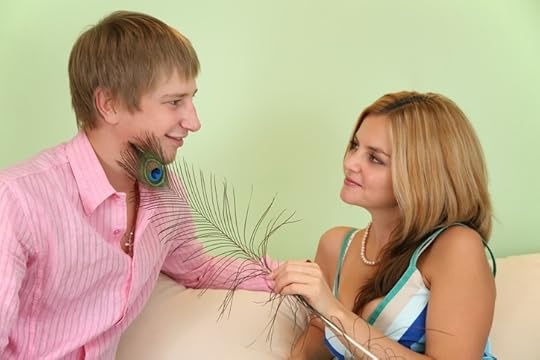
This post follows Part One.
Vulnerability is a way of softening, and opening up to one’s experience. To truly see a situation clearly, one must be vulnerable to it — willing to feel it. When one can see from this space, frames of reference begin to shift. What we normally label as “beautiful” becomes much less beautiful when one is in touch with one’s heart. What we label as “desirable” becomes a turn-off when one inhabits the space of genuine feeling.
One must see the other through the eyes of inherent worth, of already being complete, of not needing to fix anything, or accomplish anything. It is very much the opposite of our societal conditioning, being everything from appearance to financial status to title.
To truly love oneself, and to truly love another, one must soften in this way. One must see the other through the eyes of inherent worth, of already being complete, of not needing to fix anything, or accomplish anything. It is very much the opposite of our societal conditioning, being everything from appearance to financial status to title. Furthermore, the attainment of marriage, or children, or a house, or a car seem to be the major motivators in many relationships.
So how can you practice softening more, and seeing the inner qualities of yourself and others?
Meditate every day
Sitting quietly and focusing on your breathing, even for five minutes each day, allows you to become more familiar with your own mind and heart. This is the first step to softening to your own being.
Make a list of the qualities you value
These can be qualities that you value in yourself or in other people. Contemplate what you write down. Which of these are valuable only because you have been taught to value them? Which are valuable to you because you connect with them in a deep and understanding way? Which ones are of most benefit?
People watching
Just watch people coming and going, without judgement. If you feel judgement coming up, let it go. Notice how you can see each person as beautiful in some way, regardless of any societal definition of beauty. Try to appreciate something about each person who walks by. Do you see aspects of yourself in any of these people? Do you see that they too are trying hard to fit into certain molds?
Practice self-love
Look in the mirror each morning and tell yourself what you love most about being you.
Dare to be you
Practice not caring what others think of you. Wear whatever you feel like wearing. Have your hair however you want. Dance in public. Howl at the moon. Do something that you want to do just because you want to do it.
Return to Part One.
September 23, 2016
The Problem of the Peacock, Part One

There is an old Buddhist tale of a proud peacock who attends a great gathering held by the king, so that his daughter could choose her husband. All the birds in the kingdom flock to the court, hoping to be chosen. The peacock, with his bright flowing tail feathers stood out the most in the crowd. The young princess proclaimed that the peacock was her choice for husband. Upon hearing this, the peacock was filled with so much pride that he began to strut around the crowd, making a big scene. Dancing crazily, and flailing about, he stumbled and made a great fool of himself when his (ahem) peacock parts became the laughing stock of the crowd. The king was so disappointed to see his daughter’s choice behave in such a foolish way, that he called off the match.
Just like the puffed up peacock, humanity is prancing around with flashing feathers, foolishly thinking they have gained some victory by looking a certain way or being chosen by a certain mate.
Why is it that we value outer attractiveness so very much, especially when finding a mate? People are persistently bombarded with messages of making themselves more attractive. One needs the right hair, the right-shaped eyebrows, the right tan, the right shade of white teeth, the right body, and so on. Everyone seems to be buying into this matrix. Why are humans satisfied with such a pathetic rubric? Why do people spend (or earn) thousands of dollars, and hours, trying to look a certain way in order to gain what they think is love? Why do people swim in self loathing and self hatred? Why is so much value based on appearance?
The answer is in the fact that humans have forgotten their own hearts. Just like the puffed up peacock, humanity is prancing around with flashing feathers, foolishly thinking they have gained some victory by looking a certain way or being chosen by a certain mate. Meanwhile, this illusion of value dissolves the moment one sees another person with more beautiful feathers, or the moment one’s mate seems to be anything but loving.
It is radical to love oneself in a world which is trying constantly to make us into something else.
True worth is found in the heart. The secret everyone has forgotten is that human beings are already whole, complete, and worthy, from the beginning. Nothing can diminish this human worth. If one could remember this, there would be much less pain and foolishness.
It is radical to love oneself in a world which is trying constantly to make us into something else. It is radical to love another from that place of inner worth as well. Instead of disliking ourselves because we do not adhere to some external standard of beauty, wealth, success, or acceptability, we could see ourselves for who we really are. To connect to the inherent qualities of ourselves or another being takes bravery, and requires being vulnerable.
September 11, 2016
The Way to Love is to Love

A friend of mine said, “The way to love is to love.”
The way to love. Just think about that. The way to love. Do you really think there is a way to love? There are endless books written about how to love, or how to get to love. Endless theories and talks and classes and coaches. Even witch doctors have a thing or two to say about how to love.
Love is not the label of “relationship” finally bestowed upon a connection.
If we are trying so hard to love properly, then we likely have missed the point entirely. One cannot follow an instruction manual, a map, or even another person’s advice when it comes to loving. Rather, one must actually feel. Feel what love is. Look closely and see what love is not. Love is not an agenda we make. Love is not claiming another. Love is not achieving some end result—marriage, children, mortgage… Love is not properly completing a series of steps. Love is not the label of “relationship” finally bestowed upon a connection.
Love looks different everywhere it is. Loving does not discriminate. Loving doesn’t stop itself because of age or gender or appearance or social acceptability. Love is bigger than such logistics.
I won’t attempt to explain what love is, but I will say trust yourself when it comes to love. Trust the vastness of your own heart. Trust the potency of the human capacity for connection. Love doesn’t do anything. Love just is.
September 9, 2016
Is Love an Emotion?
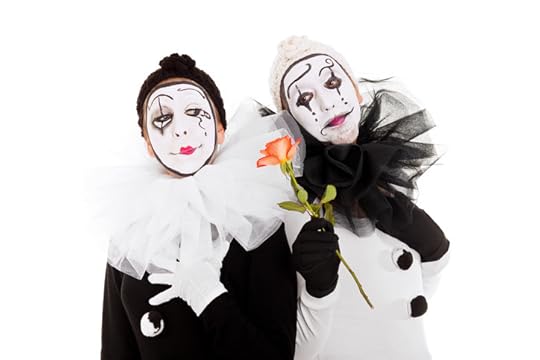
What if love were a state of being? Real love, I mean. When I say love in this context, I don’t mean the possessive, “forever,” solidified kinds of relationships we call love. When I talk about love being a state, I mean the kind of love that is bigger than all of that. We could call it the root love. This is the experience which draws people together all the time, before the mortgages, deals, and grocery lists come into existence.
When I think about love, it doesn’t feel like an emotion. My emotions tend to change pretty quickly. I can churn things up, of course, but they rise and fall. I can sense their utter ephemerality. Love is different. Of course there is the tendency toward possession or eternalizing that comes up often, and it is short lived like all the others. But the root love is deep and unchanging.
It touches my own sense of worthiness, appreciation, and vulnerability.
For me, love is like a field. It shines out from my heart and encompasses a vast circumference. It feels open, warm, and connecting. It is a state of being. It touches my own sense of worthiness, appreciation, and vulnerability. People come in and out of this field through various relationships. Some of them stay longer than others. Each of them has their own field shining out. When our fields overlap, there is much power and brilliance. We enrich each other’s entire state of being. Likewise, when one person enriches our field, the entire field becomes brighter. Thus every person in the field is enriched.
In this way, love doesn’t need an object. It certainly doesn’t discriminate. And it isn’t exclusive. Love is so bright and so big. Sometimes I feel like I could love any person who passes by. They enter the field when I am relaxed and open. And perhaps they leave it too. None of this feels particularly sad. It’s just how things are.
How do you experience love?
September 8, 2016
On Seduction and Courtship
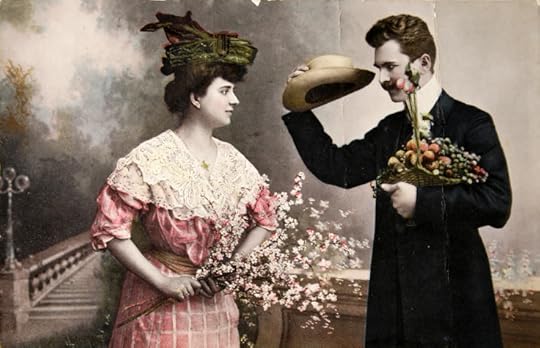
The idea of seduction gives me the creeps. I realize that seduction is said to be an art form, and many people claim to be accomplished in this art. But the underlying idea of manipulation doesn’t strike the right chord with me when it comes to love.
If one is simply after sex, then perhaps there is nothing wrong with seducing or being seduced.
The sense is that one can follow certain moves from a playbook, saying just the right thing at just the right time. These moves will lead to a sort of deal made between two people. Something is achieved. Someone is won over. But what happens afterward?
If one is simply after sex, then perhaps there is nothing wrong with seducing or being seduced. Games can be rather enjoyable, and feeling desired is always nice. However, if one is after something deeper and longer lasting, no collection of moves in the book can possibly help one find that.
To truly love is to be genuine. To truly love is not to manipulate. To truly love is to be open and available to what is arising within you and between you and others.
So how is seduction different from other ways of engaging with intimacy, like courtship for example? Traditionally courtship was meant to be a serious inquiry into the marriage potential of two partners. It was an exclusive and serious consideration which often involved entire families. Courtship is also the name for certain behaviors performed in order to attract a mate. I think there can still be manipulation in some of these approaches. Courtship implies a particular outcome. Agendas exist, at the very least.
We could drop our expectations. We could let go of seeking an outcome.
What if we approach courtship from a new perspective? That of fully showing up with another person in any given moment to see what arises. We could drop our expectations. We could let go of seeking an outcome. We could, for a moment, forget about marriage potential, or getting laid, and just see what happens when we open to another heart.
Sometimes the most magic happens when we stop trying so hard to make something happen.
September 7, 2016
What with Mars and Venus?
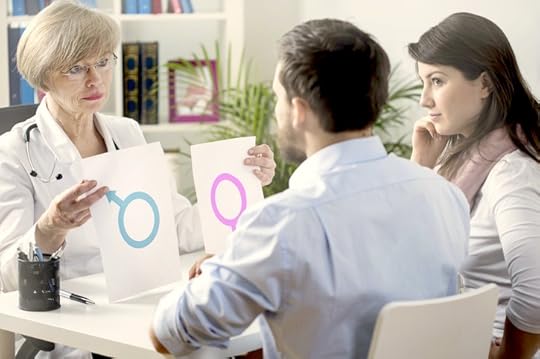
So we’ve all heard it—the men are from mars, women are from venus theory. John Gray published this relationship advice book in the 90s postering that men and women are psychological from different planets and this is the cause of most relationship problems. I don’t need to publish another criticism of this theory, but it is interesting to ponder.
We tend toward extreme views when it comes to talking about love and relationships. It seems so convenient to have nice little theories that explain every issue. It’s equally convenient that we can fit things into little boxes with obvious solutions. Fortunately for us, love is not convenient, nor is it black and white.
We’ve begun to admit that even gender isn’t binary, with people expressing gender identity on a full spectrum of fluidity.
Part of the beauty of love is that we can’t fit it into theories. Obviously no one group of people are all the same way because of some outer appearance. I think we are moving beyond such things in modern society. We’ve begun to admit that even gender isn’t binary,
with people expressing gender identity on a full spectrum of fluidity. The same is true of our sexual orientation. So it’s pretty easy to debunk the women are from venus, men are from mars scenario.

I’d like to dig a little deeper here and suggest that in fact all of these books and theories are based on a flawed idea that there is a problem which needs to be fixed. It sounds crazy, of course. But in my experience, things don’t really need fixing.
When we approach our relationships as things which are inherently problematic and which we must find solutions to, we will be eternally miserable. We are expending countless amounts of time and energy trying to change something to make it how we want it. Instead, we could be acknowledging things as they are.
As long as we are busy trying to fix someone or something, we will never truly connect.
We can approach something as perfectly worthy just as it is, without needing to change it. When we do this, we establish a ground of flexibility and workability. When we feel okay with things as they are, we become more spacious. This means we have more space in our hearts and minds to meet others, to relate to them, as it were. Thus, we have a chance to actually connect. We can meet them as they are, in whatever situation we are in. We can appreciate that. We can show up for that. This is how connection happens. As long as we are busy trying to fix someone or something, we will never truly connect.
Whatever planet we might be from, if we remember that there is no problem to begin with, we might just find that we already speak the same language.
Intimacy: Eye Gazing
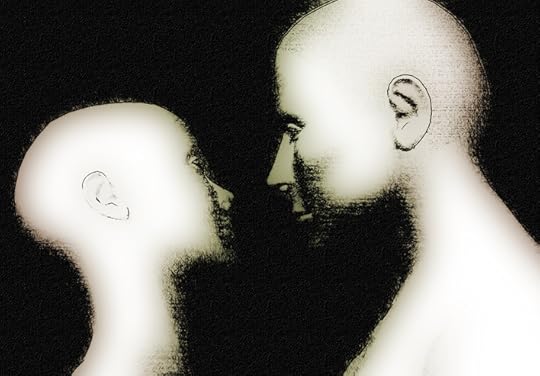
I can’t recall who said that the eyes are the windows to the soul, but there’s something to that. Think of the last time you made eye contact with someone else and actually held it. Something immediately softens when we actually look at another human being.

We don’t usually feel comfortable holding someone’s gaze. Perhaps it is not socially appropriate. Perhaps we are afraid the other person will make assumptions about why we are looking so deeply into their eyes. Whether it’s because of social norms, because we are within a culture where eye gazing might be considered offensive or disrespectful, or because it can be uncomfortable to really look at another person, we don’t often eye gaze.
The practice of eye gazing… can be an incredible exploration in intimacy.
The practice of eye gazing, however, can be an incredible exploration in intimacy. When we relax enough to see and be seen, we open more deeply to who we are. There is so much one could say about intimacy and opening to another human being, but ultimately no words can do it justice. The point is that when we look into someone’s eyes and hold their gaze, we allow something in ourselves to soften. It can be uncomfortable, awkward, funny, frightening, intimidating, or any number of other things. We begin to see our own reaction to being vulnerable. Allowing yourself to be seen is just that—becoming vulnerable. A teacher of mine once told me that vulnerability is bravery and bravery is vulnerability. I’ve found that to be true.
We begin to see the other person as a sort of mirror, recognizing what we see.
If we hold our gaze in spite of whatever is arising, just relaxing and softening into what is, we gently open ourselves to experiencing the other. We begin to see the other person as a sort of mirror, recognizing what we see. We see someone who suffers like we do. We see someone who has hopes and fears just like ours. We see someone who is looking back, also uncomfortable or awkward, or whatever it is, but still looking. We someone who is willing to be seen. That, my friends, is the key. When we are willing to see and be seen, then we can truly connect with another.
How to do it
1. Find a comfortable place to sit, perhaps with some privacy at first, and face one another.
2. Take an upright but comfortable posture.
3. First, close your eyes and check in with how you feel.
4. When ready, open your eyes and look into each other’s eyes.
5. Hold the gaze for longer than normal. Notice how you feel, without trying to change it.
6. You can practice for short periods at first, then increase the length. You will find that two to four minutes is a very long time!
7. Take breaks if it gets too intense, and then go back to it.
8. Don’t use words during the gazing, but you can talk about what came up afterwards.
9. Do it with someone you trust.
Gaze on!