Chris Hakim's Blog
May 10, 2018
Discover the Tarot of Authentic Love
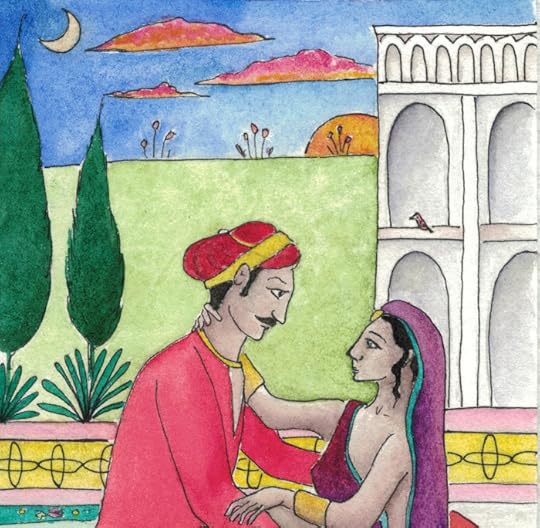
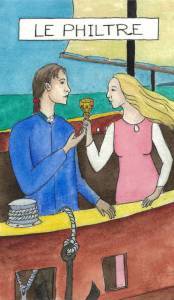
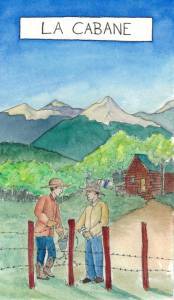
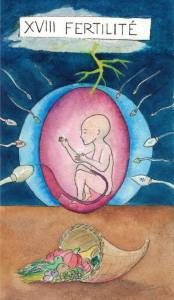
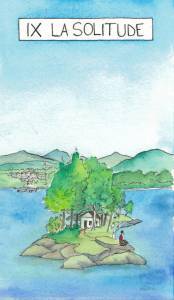
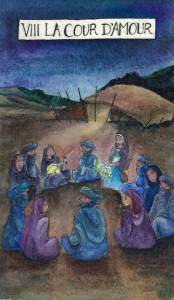
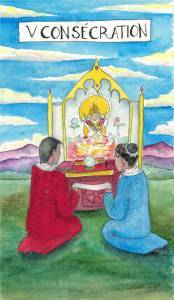
The Tarot of Authentic Love is based on Chris Hakim’s book The Authentic Lover, the fruition of decades of research and contemplation on the mysteries of Love. Faithfully drawn by renowned tarot artist Beth Seilonen, its 22 major arcana and eight court cards evoke themes relevant to our modern and not-so-modern concerns. Its powerful imagery will not fail to stir you. A 40-page booklet explains the detailed meaning behind each image, a relationship spread, and special card groupings.
The deluxe version with printed booklet and box can be purchased at this link.
The deck alone can be purchased at this link.







October 24, 2017
Dr. K. Akua Gray interviews the author of The Authentic Lover
“We are in a real mess, yet we believe in love, and hold it to be so valuable as to accept the risk of failure…”
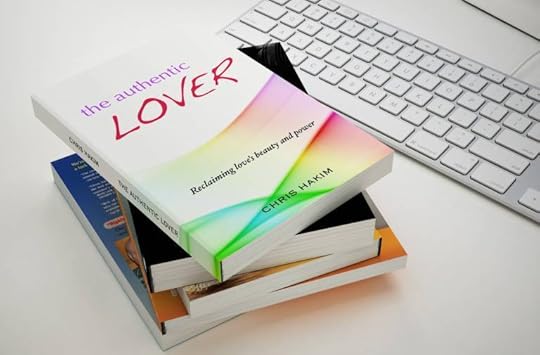
The Authentic Lover: Reclaiming love’s beauty and power by Chris Hakim is a book of hope and an asset to those who have a particular interest in renewing their personal commitment to achieving a higher level of consciousness in their quest for a spiritual connection beyond the norm. I was quite intrigued by the ideas in this work on love because the author touched on so many of the things that can help to change the low level vibration of dysfunctional love that so many people dwell in relationships they claim to hold so dear.
Such ethics are not just pat rules to follow. On the contrary, they require effort as well as accepting that love entails some amount of discomfort.
I reached out to Chris for an author interview and enjoyed a moment of talking with him about some of my inquires from my readings.
Who is your audience for the Authentic Lover?
I tried to address everyone who wonders why sexual and marital relationships, on the main, don’t work. A psychologist pointed to me that this book would most appeal to middle–aged people, who have already been a bit beaten up by life. She felt that young people were too “hormone driven” to even care. Perhaps “spiritual” people would resonate more with the idea of obstacles and what lies behind them.
Are you suggesting that a whole new religion be developed based on conquering the four great enemies? If so, what would be the framework for that possibility? If not, why not?
There are so many cults, movements, and religions already. It would be much preferable if people could rediscover and appreciate their own spiritual or religious background, or if they don’t have one, join something which they find to be authentic. What I present as four enemies is a roadmap that can help people take stock of their situation, and simple practices to try and loosen the grip of the enemies. The use of quotes from multiple traditions serves to show that love is not the exclusive province of any.
In the Pettiness and Grace chapter you end the chapter with many quotes from the European courts of love; how would you suggest readers view this information other than just a history lesson?
The ethics of courtly love, as discussed (exclusivity, but not quite monogamy; sincerity; respect; etc.) seem to map almost one for one as remedies to the obstacles described just before. But there is a caveat, which is that such ethics are not just pat rules to follow. On the contrary, they require effort as well as accepting that love entails some amount of discomfort. This seems to also connect with the Buddhist practice of tonglen, also described in Part Two of the book.
The idea of sexual attractiveness is rarely treated in an upfront way, let alone the idea that both men and women face the exact same problem, but with different criteria.
In the Vanity and Charm chapter, I found myself more intrigued by the numerous quotes that you included, and I noticed that you offered very little of your own thoughts in between the quotes, was this intentional? If so, why? If not, what is the major point you want your readers to take from this chapter?
Some of the topics touched upon are sensitive and controversial. The idea of sexual attractiveness is rarely treated in an upfront way, let alone the idea that both men and women face the exact same problem, but with different criteria. For this reason, I tried to remain as rooted as I could in fact and in accepted wisdom, and presented as little as possible as personal opinion. Once we see that sexual competition is nothing but toxic, the rest of the argument follows logically. I also wanted to clarify what tantrism is and isn’t, because there is so much misinformation on the topic.
In the final chapter of Mystery, you offer some profound solutions to the problems of love and again there are numerous quotes from Rumi in particular; would you suggest that the reader also take up a study of Rumi if they are going to try applying The Authentic Lover to their lives? Why or why not?
The first three qualities (gentleness, etc.) require work, but mystery happens by not doing. Few have been as eloquent as Rumi about the mystery of love. While he is known in America for his “poems,” he wasn’t a poet at all, but an extraordinary mystic and lover. He didn’t write books. His sayings were written by his disciples as he spoke. Rumi would probably say to leave books alone and let life be your teacher. I would say that readers should feel free to expand in any direction they see fit, including taking up the study and practice of Sufism, if they wish.
I was looking for the way of life mentioned in the introduction, but I didn’t find it. If you were to give the reader a vision of living as an Authentic Lover, what would it look like?
One really can’t be too specific, because each person has different aspirations, faces different challenges, and may resonate with a different approach. This being said, I would like to see people gather in small groups of friends, much like the ahal described in Part Three, as an alternative to conventional dating. If romance weren’t so divorced from friendship and community, a lot of problems would go away. Another promising avenue is Tamera, an intentional community in Portugal with a worldwide following, whose stated purpose is the healing of love. Good for them.
I can’t say that I agree with all of the insights brought forth in The Authentic Lover, however, most of what the author brings forth will have you thinking on a deeper level about how you are operating in your personal relationships. I must also admit I stopped reading some of the elongated quotes because there were quite a few of them throughout the book, but this does not overshadow any of the nurturing points that will intensify your true desire to change your relationships and become an “Authentic Lover.” I received a free copy of this book via my book review site for an honest review. Not many books fall into my 5 ankhs category but the innovation of the compilation of The Authentic Lover is masterful. ☥ ☥ ☥ ☥ ☥
Dr. Akua Gray, a wellness educator for over two decades is the author of nine published works on holistic health and vegan nutrition. As a founding member of A Life Of Peace Wellness Education Institute she has help to train thousands of community wellness workers world wide in the areas of Naturopathy, Iridology, Naturopathic Reiki, Naturopathic Herbalogy and many other areas of holistic and alternative methods of healthcare. Born in Houston, TX Dr. Akua now lives in southern Ghana, West Africa.
February 19, 2017
Rumi: the lover’s vainglory
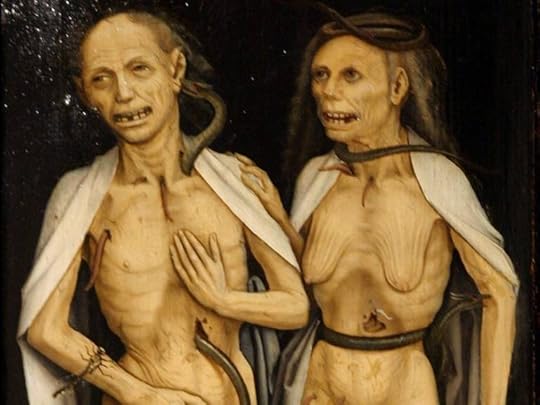
A lover was once admitted to the presence of his mistress, but, instead of embracing her, he pulled out a paper of sonnets and read them to her, describing her perfections and charms and his own love towards her at length. His mistress said to him, “You are now in my presence, and these lovers’ sighs and invocations are a waste of time. It is not the part of a true lover to waste his time in this way. It shows that I am not the real object of your affection, but that what you really love is your own effusions and ecstatic raptures. I see, as it were, the water which I have longed for before me, and yet you withhold it. I am, as it were, in Bulgaria, and the object of your love is in Cathay. One who is really loved is the single object of her lover, the Alpha and Omega of his desires. As for you, you are wrapped up in your own amorous raptures, depending on the varying states of your own feelings, instead of being wrapped up in me.”
— The Persian Mystics: Jalálu’d-dín Rúmí (F. H. Davis, 1920)
Discover a new book, The Authentic Lover
October 13, 2016
What do you Want, Love or the Other Thing?

Knowing what you want is one of life’s immense challenges. Often we think we know what we want, only to find out that wasn’t it at all. When entering into intimate or romantic relationships, knowing what you want is critical. Not only will such clarity make engaging in such relationships easier, but it also creates a more honest ground. If you don’t know what you want, then the other person doesn’t know what they are opening to either.
What if the most perfect love does not fit neatly with your plans for sex or marriage?
There’s a big difference between wanting love, wanting sex, and wanting marriage. In many instances these things could be exclusive. In other cases, they are all united. It’s often surprising to discover that what you think you want is actually what society wants for you, or what your upbringing has ingrained in you to want. For instance, marriage isn’t for everyone. That may sound shocking because marriage is so embedded in our culture that it even figures prominently in the tax code. (Note this very amusing detail: the US tax code favors one spouse earning much more than the other, but penalizes couples with equal earnings — the taxman is your enforcer of traditional marriage!) But do you want to be married? Like the real thing. Not the idealized romance-white-picket-fence thing. Do you want to commit to another person for life? Does it even make sense to do so on its own merit?
As for sex… do you really want sex? (With anyone, or is the desire qualified?) Or maybe you want intimacy? It’s possible to share intimacy without sex. It’s possible to have both. How does this fit into marriage? Do you want a monogamous marriage? What would be the advantage of monogamy?
And then there’s love. Many people say they want love, but they aren’t willing to open to it. Love is the most intense commitment of all. But it’s also the most rewarding. Opening to love requires a commitment to look honestly at your own heart and mind. It requires vulnerability. It requires a willingness to meet things as they are. What if the most perfect love does not fit neatly with your plans for sex or marriage?
Spending some time exploring what you really want will lead you into richer, more nourishing relationships. Here are a few tips on how to find out what you want:
Sit with yourself. Quietly. Without your devices. Every day. Feel your feelings.
Journal. Write out your ideal relationship. Be totally honest.
Reflect. Look at what you wrote. Underline everything that may be coming from some external influence and may not be yours. Contemplate what’s left.
Communicate. Talk to your partner or potential partner about your honest thoughts and feelings. Let the discussion open up space for both of you to acknowledge what you want.
Be spacious. Let things arise naturally, and let them dissolve too if it’s their time.
Discover a new book, The Authentic Lover
What do you want, love or the other thing?
Knowing what you want is one of life’s immense challenges. Often we think we know what we want, only to find out that wasn’t it at all. When entering into intimate or romantic relationships, knowing what you want is critical. Not only will such clarity make engaging in such relationships easier, but it also creates a more honest ground. If you don’t know what you want, then the other person doesn’t know what they are opening to either.
What if the most perfect love does not fit neatly with your plans for sex or marriage?
There’s a big difference between wanting love, wanting sex, and wanting marriage. In many instances these things could be exclusive. In other cases, they are all united. It’s often surprising to discover that what you think you want is actually what society wants for you, or what your upbringing has ingrained in you to want. For instance, marriage isn’t for everyone. That may sound shocking because marriage is so embedded in our culture that it even figures prominently in the tax code. (Note this very amusing detail: the US tax code favors one spouse earning much more than the other, but penalizes couples with equal earnings — the taxman is your enforcer of traditional marriage!) But do you want to be married? Like the real thing. Not the idealized romance-white-picket-fence thing. Do you want to commit to another person for life? Does it even make sense to do so on its own merit?
As for sex… do you really want sex? (With anyone, or is the desire qualified?) Or maybe you want intimacy? It’s possible to share intimacy without sex. It’s possible to have both. How does this fit into marriage? Do you want a monogamous marriage? What would be the advantage of monogamy?
And then there’s love. Many people say they want love, but they aren’t willing to open to it. Love is the most intense commitment of all. But it’s also the most rewarding. Opening to love requires a commitment to look honestly at your own heart and mind. It requires vulnerability. It requires a willingness to meet things as they are. What if the most perfect love does not fit neatly with your plans for sex or marriage?
Spending some time exploring what you really want will lead you into richer, more nourishing relationships. Here are a few tips on how to find out what you want:
Sit with yourself. Quietly. Without your devices. Every day. Feel your feelings.
Journal. Write out your ideal relationship. Be totally honest.
Reflect. Look at what you wrote. Underline everything that may be coming from some external influence and may not be yours. Contemplate what’s left.
Communicate. Talk to your partner or potential partner about your honest thoughts and feelings. Let the discussion open up space for both of you to acknowledge what you want.
Be spacious. Let things arise naturally, and let them dissolve too if it’s their time.
Discover a new book about Love, The Authentic Lover:

October 10, 2016
Emptiness and Change

It’s very easy to become convinced of a particular story or image we have of something. Everyone has heard of the phrase “in love with being in love”: to love our own concepts and ideas of something instead of what is actually there to touch and experience. Understanding the difference can be incredibly eye opening. Trying to find oneself, for example, or trying to find one’s lover, is an endless and never-ending task.
Empty doesn’t particularly mean nothing… Rather it points to the fluid nature of reality. It points to the fact that we are constantly in flux.
Try this contemplation:
Try to find something about yourself that is unchanging, that you can point to and say “This, my friends, is me.” Point to it. Locate it. Where exactly are you in this sea of thoughts, feelings, ideas, stories, memories, and sensations?
Now, try to find something about your loved one that is unchanging, that you can pinpoint, define, and locate what makes him or her, well, him or her.
In the Buddhist tradition, there are many teachings on emptiness. In this context, empty doesn’t particularly mean nothing, and it certainly doesn’t imply nihilism — the idea that nothing exists. Rather it points to the fluid nature of reality. It points to the fact that we are constantly in flux. The you of yesterday is not the same you of today. You have different feelings, thoughts, sensations, and many of your cells have died or have just been born.
It can be useful to touch into this truth when relating with others. It’s easy to show up in front of a person and treat them according to everything you already know about them: how they were yesterday, what they usually like, how they usually speak, what you think of them based on your experiences together. But what if you actually showed up in front of them with curiosity? What if you let go of any idea you had about how or who they will be? Showing up with inquisitiveness is true relationship. After all, the meaning of relationship is to relate. Relate with whatever is happening now, with whoever is happening now (for yourself or for another). It will do wonders for finding contentment in life.
Discover a new book, The Authentic Lover
Emptiness and change

It’s very easy to become convinced of a particular story or image we have of something. Everyone has heard of the phrase “in love with being in love”: to love our own concepts and ideas of something instead of what is actually there is to touch and experience. Understanding the difference can be incredibly eye opening. Trying to find oneself, for example, or trying to find one’s lover, is an endless and never-ending task.
Empty doesn’t particularly mean nothing… Rather it points to the fluid nature of reality. It points to the fact that we are constantly in flux.
Try this contemplation:
Try to find something about yourself that is unchanging, that you can point to and say “This, my friends, is me.” Point to it. Locate it. Where exactly are you in this sea of thoughts, feelings, ideas, stories, memories, and sensations?
Now, try to find something about your loved one that is unchanging, that you can pinpoint, define, and locate what makes him or her, well, him or her.
In the Buddhist tradition, there are many teachings on emptiness. In this context, empty doesn’t particularly mean nothing, and it certainly doesn’t imply nihilism — the idea that nothing exists. Rather it points to the fluid nature of reality. It points to the fact that we are constantly in flux. The you of yesterday is not the same you of today. You have different feelings, thoughts, sensations, and many of your cells have died or have just been born.
It can be useful to touch into this truth when relating with others. It’s easy to show up in front of a person and treat them according to everything you already know about them: how they were yesterday, what they usually like, how they usually speak, what you think of them based on your experiences together. But what if you actually showed up in front of them with curiosity? What if you let go of any idea you had about how or who they will be? Showing up with inquisitiveness is true relationship. After all, the meaning of relationship is to relate. Relate with whatever is happening now, with whoever is happening now (for yourself or for another). It will do wonders for finding contentment in life.
October 7, 2016
Troubadour songs
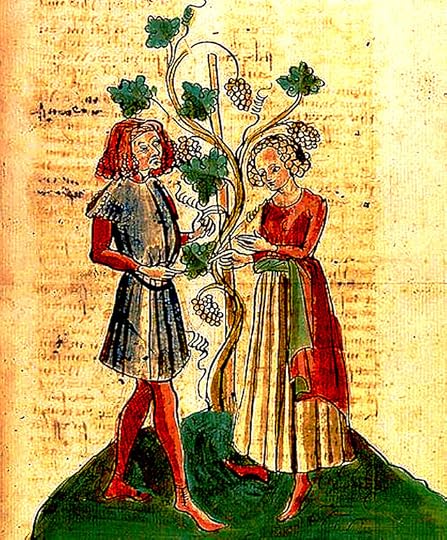
(Love and the grapevine: Rumi would be proud.)
Enjoy these rare, modern troubadour love songs by Mans de Breïsh.
I could not identify the author or the song of this video:
October 1, 2016
The School of Love
Because one does not see that love is an activity, a power of the soul, one believes that all that is necessary is to find the right object — and that everything goes by itself afterward. This attitude can be compared to that of a man who wants to paint but who, instead of learning the art, claims that he has just to wait for the right object, and that he will paint beautifully when he finds it.
— Eric Fromm, The Art of Loving
Most of the books, classes, and other guides on love are guides to finding the right object, rather than guides on how to open to love. There are endless instructions on how to attract the right mate or how to manifest the partner of your dreams. Where are the instructions on relaxing enough to be yourself, so that you realize that love is your nature, and that trying too hard only collapses your potential? Where are the instructions on appreciating the profound connections you already have with yourself and others? Where are the instructions on dropping your agenda, so that you can actually engage in intimacy?
Becoming educated in the art of love is profoundly important. Somehow the human species has buried love so deeply in the muck and mire of materialism and aggression that we’ve even forgotten what love is. Now we must do the work of discovering again our natural birthright. We must learn how to overcome the agenda of a success-driven society. We must learn how to love ourselves for who we are instead of trying to be someone else.
Be yourself; everyone else is already taken.
— Oscar Wilde
We must learn anew that to love someone means to relate to them as they are, not as how we want them to be. We must educate our hearts enough to understand that love does not fit into any box, or standard, or should, or must. Loving is not about finding an object. Loving is about opening to who we are as human beings. This allows us to open to others in the space of freedom and true connection.
Investing in our education as human beings, in this way, is the most important work we can do. Our willingness to take this journey into truly understanding ourselves, our habitual patterns, society’s influence on our desires and dreams, and the nature of reality itself can change our lives for the better. So what are you waiting for?
Discover a new book, The Authentic Lover
The school of love
Because one does not see that love is an activity, a power of the soul, one believes that all that is necessary is to find the right object — and that everything goes by itself afterward. This attitude can be compared to that of a man who wants to paint but who, instead of learning the art, claims that he has just to wait for the right object, and that he will paint beautifully when he finds it.
— Eric Fromm, The Art of Loving
Most of the books, classes, and other guides on love are guides to finding the right object, rather than guides on how to open to love. There are endless instructions on how to attract the right mate or how to manifest the partner of your dreams. Where are the instructions on relaxing enough to be yourself, so that you realize that love is your nature, and that trying too hard only collapses your potential? Where are the instructions on appreciating the profound connections you already have with yourself and others? Where are the instructions on dropping your agenda, so that you can actually engage in intimacy?
Becoming educated in the art of love is profoundly important. Somehow the human species has buried love so deeply in the muck and mire of materialism and aggression that we’ve even forgotten what love is. Now we must do the work of discovering again our natural birthright. We must learn how to overcome the agenda of a success-driven society. We must learn how to love ourselves for who we are instead of trying to be someone else.
Be yourself; everyone else is already taken.
— Oscar Wilde
We must learn anew that to love someone means to relate to them as they are, not as how we want them to be. We must educate our hearts enough to understand that love does not fit into any box, or standard, or should, or must. Loving is not about finding an object. Loving is about opening to who we are as human beings. This allows us to open to others in the space of freedom and true connection.
Investing in our education as human beings, in this way, is the most important work we can do. Our willingness to take this journey into truly understanding ourselves, our habitual patterns, society’s influence on our desires and dreams, and the nature of reality itself can change our lives for the better. So what are you waiting for?