Rachel Maddow's Blog, page 3347
August 21, 2013
Health care hypocrisy with a twist
Associated Press
Peggy Noonan, a prominent Republican pundit at the Wall Street Journal, ran into a little trouble last week trying to discuss health care policy she mistakenly thinks she understands.
Indeed, as Ezra Klein explained yesterday, "Noonan's column is a beautiful example of a writer so intent on criticizing Obamacare that she's missed the fact that the law is doing precisely the thing she wants done. A reasonable reader of Noonan's column would end up loathing 'Obamacare' and hoping for a replacement that looks like, well, Obamacare."
At issue is something called Community First Choice, a new part of Medicaid that expands access to at-home care for the disabled. It's a major breakthrough, which Noonan thinks she doesn't like, but when she fleshed out her concerns, it sounded like Nooan was calling for changes that are already in the law.
Indeed, as it turns out, Community First Choice is all over the news, and Noonan isn't the only one whose opposition isn't quite as consistent as previously thought.
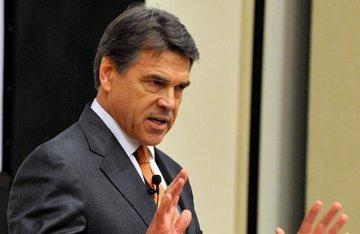
Gov. Rick Perry wants to kill Obamacare dead, but Texas health officials are in talks with the Obama administration about accepting an estimated $100 million available through the health law to care for the elderly and disabled, POLITICO has learned.
Perry health aides are negotiating with the Obama administration on the terms of an optional Obamacare program that would allow Texas to claim stepped-up Medicaid funding for the care of people with disabilities.
The so-called Community First Choice program aims to enhance the quality of services available to the disabled and elderly in their homes or communities. Similar approaches have had bipartisan support around the country. About 12,000 Texans are expected to benefit in the first year of the program.
Now, the knee-jerk reaction to this is probably to accuse Perry of simple hypocrisy -- he claims to be disgusted by the Affordable Care Act, and yet here he is seeking funds through the federal system he holds in contempt.
On this angle, I'm inclined to cut the Texas governor some slack. Federal officials are making resources available to states, and it's tough to blame Perry for thinking to himself, "Well, if the money is just sitting there, I might as well help some of my constituents, whether I like the law or not."
But there's another angle to this that I find more problematic.
Consider a related example. Remember the Recovery Act? In 2009, Democrats approved an economic stimulus package that was chiefly responsible for ending the Great Recession, and which made all kinds of investments available nationwide. Nearly every congressional Republican rejected the effort, but nevertheless sought stimulus money for their states and districts.
What was wrong with this? Not much -- the money was going to be spent anyway, so it stands to reason they'd look for a piece of the pie. The trouble came when these same congressional Republicans told the Obama administration, "Spend the money on my constituents and it'll create jobs and boost the economy." GOP lawmakers tried to have it both ways -- they said government spending hurts job creation and stunts growth, except when it's government spending in their preferred area.
And that's the problem I have with Perry. The far-right Republican governor has said the dreaded Obamacare is an outrageous, tyrannical "monstrosity" that will hurt the country and is incapable of improving Americans' lives. And now that same governor is saying he wants some Obamacare cash because, as it turns out, the law is capable of improving Americans' lives after all.
That's a position that's impossible to take seriously.
Peggy Noonan thinks she knows what Community First Choice is, but doesn't. Rick Perry, on the other hand, apparently knows what Community First Choice is and wants to take advantage of its resources, and would prefer if we overlooked the inconsistency of his positions.


The registry the NRA warned against

Associated Press
A few months ago, conservative senators felt the need to kill a popular, bipartisan proposal on firearm background checks, and relied primarily on a single talking point: the proposal might lead to a firearm database. The very idea of some kind of national gun registry was so offensive to the right that the legislation had to die at the hands of a Republican filibuster.
It didn't matter that the bipartisan bill had no such database. It didn't matter that the bipartisan bill explicitly made the creation of such a registry a felony. All that mattered was that conservatives had a lie they liked, and which they used to great effect.
Four months later, Steve Friess reports that a massive, secret database of gun owners exists after all. But it wasn't built by the Justice Department or the Department of Homeland Security; it was compiled without gun owners' consent by the National Rifle Association.
It is housed in the Virginia offices of the NRA itself. The country's largest privately held database of current, former, and prospective gun owners is one of the powerful lobby's secret weapons, expanding its influence well beyond its estimated 3 million members and bolstering its political supremacy.
That database has been built through years of acquiring gun permit registration lists from state and county offices, gathering names of new owners from the thousands of gun-safety classes taught by NRA-certified instructors and by buying lists of attendees of gun shows, subscribers to gun magazines and more, BuzzFeed has learned.
The result: a Big Data powerhouse that deploys the same high-tech tactics all year round that the vaunted Obama campaign used to win two presidential elections.
The compilation of these kinds of lists is not uncommon. Entities ranging from political parties to media companies to marketing experts want to target -- and sometimes micro-target -- American voters/consumers and find great value in private, detailed databases.
But we've been told that guns are different, and that a sophisticated registry of gun owners represents some kind of threat to American norms and freedoms.
Indeed, we were told that by the NRA, which has created a sophisticated registry of gun owners.
The BuzzFeed piece added:
The NRA won't say how many names and what other personal information is in its database, but former NRA lobbyist Richard Feldman estimates they keep tabs on "tens of millions of people." [...]
Some data-collection efforts are commonplace in politics these days, such as buying information from data brokers on magazine subscriptions and the like.
But several observers said the NRA's methods reflect a sophistication and ingenuity that is largely unrivaled outside of major national presidential campaigns. While the organization took great umbrage in December when a newspaper published the names and addresses of gun owners in two New York counties, the group for years has been gathering similar information via the same public records as a matter of course.
Former NRA lobbyist Richard Feldman added, "It's probably partially true that people don't know the information is being collected, but even if they don't know it, they probably won't care because the NRA is not part of the government."
And I suppose that's the real trump card here. The right doesn't want the FBI to know which Americans have firearms, but if the NRA secretly compiles such a registry, no problem.
As for why the NRA needs such a database, I imagine it's simply a matter of marketing -- if the far-right organization feels the need to get its political message to a specific audience, it needs to know where to find that audience.
So if you're a gun owner who was somewhat surprised by targeting mailings that ended up in your inbox or robocalls that ended up on your answering machine, stop being surprised -- the NRA knows more than you might expect.
Bentivolio's idea of a 'dream come true'
We here at The Rachel Maddow Show have been fascinated by Rep. Kerry Bentivolio (R-Mich.) for a while, because even in a Congress filled with colorful characters, the Michigan Republicans stands out as ... unique.
As Rachel noted a couple of weeks ago, Bentivolio was elected to Congress last year in a bit of a fluke -- the GOP incumbent in a deep-red district resigned just four months before Election Day, leaving Bentivolio, a wacky perennial candidate, as the only Republican running. Bentivolio's day job is working as a professional Santa Claus re-enactor and reindeer herder. He also played a doctor in a 9/11 truther movie, and took shirtless photos of himself kissing a reindeer.
Watch on YouTubeNow Kerry Bentivolio is an actual member of Congress, hosting town-hall meetings like this one earlier this week. As Andrew Kaczynski noted, Bentivolio told his constituents on Monday that he wants to write and submit articles of impeachment against President Obama, which the congressman would consider "a dream come true."
He added that after standing near the president for a speech, "I went back to my office and I've had lawyers come in. These are lawyers, Ph.Ds in history, and I said, 'Tell me how I can impeach the President of the United States.'"
Bentivolio conceded that he'd have to find some "evidence" to avoid becoming "a laughing stock."
We certainly wouldn't want that to happen.
Of course, the point here isn't just to marvel at a strange congressman saying ridiculous things; rather, the point is that Bentivolio, as nutty as he is, isn't nearly as isolated on the fringe as he probably should be.
Note that the Michigan Republican wasn't just a silly candidate for Congress; he's also become a silly member of Congress. At a recent House hearing, he asked Obama administration officials if they have "any operational plans in the event there is civil unrest" to "arrest innocent civilians and put them in FEMA camps." Now he's dreaming of presidential impeachment, because he apparently thinks it would make him feel happy.
And if Bentivolio were the only loony lawmaker talking like this, we could safely say impeachment had been relegated to a lonely fringe. But therein lies the point: he's not alone.
Sen. Ted Cruz (R-Texas) is talking up presidential impeachment, too. So is Rep. Blake Farenthold (R-Texas). And Sen. James Inhofe (R-Okla.). And Rep. Jason Chaffetz (R-Utah).
It's easy to laugh at the over-the-top rhetoric from folks like Bentivolio, but the larger question is what to make of a political party in which Bentivolio-like silliness becomes all too common.
The company Corbett keeps
Associated Press
Ordinarily, the staffers chosen by prominent policymakers don't generate much attention, and are largely invisible to the public. But once in a while -- when, say, a senator with a fringe ideology hires a neo-Confederate, pro-secessionist activist to work on Capitol Hill -- there are exceptions.
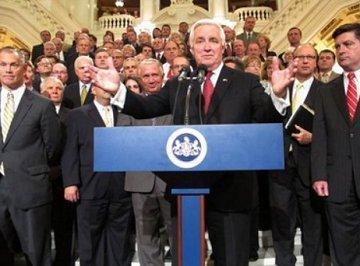
A classic example emerged this week in Pennsylvania, where Gov. Tom Corbett's (R) administration hired Ana Puig to a prominent post in the state Department of Revenue. The ideological inconsistency was hard to miss -- Puig is a prominent right-wing activist and Tea Party spokesperson who made a name for herself railing against government and taxes. Now, as the Philadelphia Inquirer's Thomas Fitzgerald reported, Puig "not only went to work for state government, she represents the people who collect the taxes to keep the beast purring along."
But there's more to this story than irony. Josh Israel fleshed out some additional details.
Speaking at numerous rallies, [Puig] became co-chair of and registered lobbyist for a local group called the Kitchen Table Patriots. At a 2009 rally, she argued that Obama was a Communist, in the mold of Fidel Castro and Hugo Chavez. [...]
According to Keystone Politics, she defended Nazi memorabilia enthusiast in her organization as “a historian” and “an extremely smart person,” featured a blog promoting birther conspiracy theories and identifying the president as a member of the Muslim Brotherhood on her group’s website, and promoted events warning of the creeping threat of Sharia law in the United States.
Corbett is well aware of Puig's radicalism -- after he named the right-wing activist to his gubernatorial transition team in 2010, and critics questioned the move, Corbett said he didn't care. And now the Republican governor has given her yet another position in his administration.
Corbett is facing a tough re-election fight next year, and should probably be moving at least a little closer to the state's mainstream and a little further from his extremists in his base. Perhaps the governor missed the memo.
August 20, 2013
Key House Republican looks to kill immigration reform
Associated Press
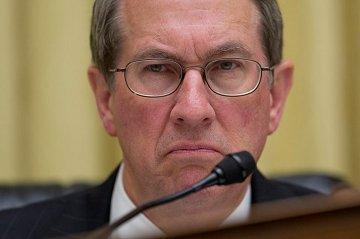
House Judiciary Committee Chairman Bob Goodlatte (R-Va.)
With the Senate already having approved comprehensive immigration reform, there's still a big question mark hanging over the House. And if you want to know what's likely to happen, there are a handful of House members to keep an eye on.
You'd start, of course, with House Speaker John Boehner (R-Ohio), but at this point he doesn't know what he wants to do or what he can even get away with. So we turn our attention instead to House Judiciary Committee Chairman Bob Goodlatte (R-Va.), who rejected comprehensive reform in February, but who's left himself some wiggle room ever since.
That is, until yesterday.
Rep. Bob Goodlatte (R-Va.) didn't breed much optimism on Monday about his plans for comprehensive immigration reform, telling a town hall crowd that the House would act, but not on a "special pathway to citizenship" that Democrats support. [...]
Goodlatte said he sympathized with young undocumented immigrants who wanted to gain legal status so they can work and attend college more easily. But he said he would not support moving forward before other border security and enforcement mechanisms were in place. He said he also opposes allowing a special pathway to citizenship for other undocumented immigrants -- such as Dreamers' parents -- that he feared may encourage more unauthorized immigration.
Remember, Goodlatte may not be a household name, but when it comes to the House process, he's as important as nearly anyone on Capitol Hill. Immigration reform, if it moves at all in the House, will start with his Judiciary Committee -- and he intends to oppose any bill that enjoys Senate and White House support. Goodlatte will support something, but not a pathway to citizenship,
As we've discussed before, a pathway to citizenship in an immigration-reform bill isn't just some luxury add-on element -- it's largely the point of working on reform in the first place. This provision is at the heart of the entire endeavor. Goodlatte's willingness to tackle the issue, but without a mechanism to help those undocumented immigrants who are already here, is effectively the same thing as opposing reform in its entirety.
This is not to say immigration reform is dead, but I'm increasingly of the opinion that a solution in the House, if there's going to be a solution at all, will rely on a discharge petition.
A 'nail in the coffin' of the IRS 'scandal'
Associated Press
Remember when the IRS story looked, way back in May, like a legitimate political controversy? With every passing revelation, the misguided uproar looks a little sillier.
The ranking Democrat on the tax-writing House Ways and Means Committee ranking member, Sander Levin, D-Mich., released new information Tuesday from the Internal Revenue Service to provide further evidence that progressive groups were singled out for scrutiny as were conservative groups.
The documents include an IRS training presentation that instructs IRS employees to screen tax-exemption applications for Democratic leaning "Emerge" organizations alongside "progressive" and "tea party" organizations.
Three organizations tied to the national Emerge America organization -- Emerge Nevada, Emerge Maine and Emerge Massachusetts -- sought tax-exempt status on 2011. They were -- the group, which helps recruit and train Democratic women for electoral politics, was deemed too political.
And so, when it came time for the IRS to scrutinize organizations, it instructed IRS employees to screen for "Emerge" along with "progressive." If the tax agency were singling out conservatives, as Republicans and a few too many reporters claimed, this obviously wouldn't have happened.
Making matters slightly more amusing, the same new materials show the IRS had a "Be On the Look Out" warning that called for heightened scrutiny to "ACORN successor" organizations.
Levin said in a statement, "Once again it is clear that the Inspector General's report left out critical information that skewed the audit's findings and set the stage for Republicans to make completely baseless accusations in an effort to tarnish the White House. These new documents make it clear the IRS scrutiny of the political activity of 501(c)(4) organizations covered a broad spectrum of political ideology and was not politically motivated. Republicans should stop trying to twist the facts to fit a faulty 'enemies list' narrative and instead join in the effort to fix the mismanagement problems at the IRS tax-exempt division as I have called for since day one."
Government Reform Committee Ranking Member Elijah Cummings (D-Md.) added, "This new information should put a nail in the coffin of the Republican claims that the IRS's actions were politically motivated or were targeted at only one side of the political spectrum."
And yet, even now, the right continues to insist there's an IRS "scandal" that only conservatives can see.
Just last week, Sen. Rob Portman (R-Ohio) had a lengthy op-ed in the Cleveland Plain Dealer, arguing that that administration needs to "come clean" on this terrible "scandal" and "cover-up." I was tempted to write a post fact-checking the whole thing, but (1) the entire op-ed was one long falsehood intended to exploit public ignorance; (2) I find it hard to believe Portman or the staffer who wrote the piece actually believes what it says; and (3) the op-ed had no real impact because it's suddenly dawning on the mainstream that there is no "scandal."
What was annoying has since become tiresome. Republicans were so heavily invested in this controversy that they feel the need to keep up appearances, but it seems they're just going through the motions -- no one could honestly take the story seriously anymore.
To reiterate a point from July, this would be a great time for at least some accountability. There were countless Republicans and mainstream pundits -- left, right, and center, from Limbaugh to Jon Stewart -- who were absolutely convinced that this story was legitimate and President Obama bore responsibility for the wrongdoing we now know didn't exist.
And yet, the scandal that evaporated into nothing has led to precious little introspection among those who demanded the public take it seriously. The political world flubbed this one, and instead of acknowledging that, it's simply moved on as if it hadn't made a mistake.
It's a real shame.
So, I guess we'll start hearing more about Benghazi again soon?
Tuesday's campaign round-up
Associated Press
Today's installment of campaign-related news items that won't necessarily generate a post of their own, but may be of interest to political observers:
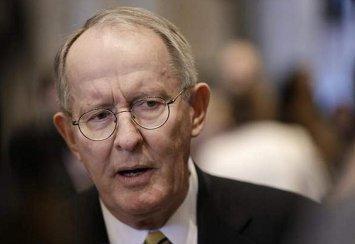
* Just a week after Tea Party groups urged Sen. Lamar Alexander (R-Tenn.) to retire, the incumbent has suddenly found himself with a primary challenger: Tennessee state Rep. Joe Carr (R) is getting in the 2014 race.
* In advance of New Jersey's U.S. Senate special election in October, the new Monmouth University/Asbury Park Press Poll finds Cory Booker (D) with a comfortable lead over Steve Lonegan (R), 54% to 38%.
* In Louisiana, Gov. Bobby Jindal (R) continues to struggle with weak public support -- the latest survey from GOP firm Harper Polling found only 35% of Louisianans have a favorable opinion of the governor, and only 20% want Jindal to run for president in 2016.
* In Ohio, Public Policy Polling's new survey shows Gov. John Kasich's (R) approval rating dropping to 42%. In a hypothetical match-up against Ed FitzGerald (D), the governor trails by three points, 38% to 35%, though many remain undecided.
* As promised, Ken Buck (R) is officially a U.S. Senate candidate in Colorado, hoping to take on Sen. Mark Udall (D) next year. In 2010, Buck's extremism helped propel Sen. Michael Bennet (D) to victory in an otherwise great year for the GOP.
* In Alaska, Sen. Mark Begich (D) is launching a new radio ad campaign, stressing his opposition to the No Child Left Behind Act. "One of my priorities in Washington is dumping No Child Left Behind mandates that don't work in Alaska, like the yearly progress tests that don't fit the diversity of Alaska schools or Alaskan kids," Begich says in the 60-second spot. "I fought for waivers to get Alaska out from under this one-size-fits-all law hurting our children, but we need a permanent fix."
'Why don't we impeach him?'

prozac623/Flickr
Borrowing a page from Bill Maher, I'd like to establish a new rule: those who propose presidential impeachment should come up with some sort of coherent rationale for doing so. And before conservatives ask, no, "I don't like Obama" is not an actual reason.
Last week, Rep. Blake Farenthold (R-Tex.) not only expressed an interest in impeaching President Obama, he said proponents "could probably get the votes in the House of Representatives to do it." On what grounds? Farenthold didn't get around to explaining why the president would be impeached, though in context, it apparently had something to do with what the Texas Republican described as "the whole birth certificate issue."
And then last night, Sen. Ted Cruz (R-Texas) said something similar.
In a question and answer session following a speech he gave at a Montgomery County GOP dinner last night, an audience member asked Cruz, "Why don't we impeach him [Obama]?"
"It's a good question," Cruz responded, "and I'll tell you the simplest answer: To successfully impeach a president you need the votes in the U.S. Senate."
Actually, it's not a good question, and to successfully impeach a president you need the votes in the U.S. House. But other than that, the right-wing senator clearly knows what he's talking about.
National Review posted an audio clip of the Cruz event, and listeners will notice that neither the senator nor his audience actually bothered mentioning a rationale for impeachment; they just seemed to think it was a good idea. Cruz said something about his belief that Obama has acted outside the law, but he offered no details or specifics.
I remember the good old days -- back in 2011 -- when unhinged conservative Republicans in Congress used to come up with pretenses of high crimes when talking up presidential impeachment. Lately, they don't even bother. Obama is the president; he's a Democrat; the right doesn't like him; ergo impeachment is a credible option. QED.
For the record, as we discussed last week ,a variety of voices on the right raised the specter of impeaching President Obama over all sorts of things in recent years -- immigration policy, czars, recess appointments, DOMA, Benghazi, legislative gridlock, Syria, and job offers, among other things. In the spring, congressional Republicans went a little further, talking up the possibility of impeaching the president over executive orders that don't exist, gun control, and even budget deficits.
Of course, none of these controversies point to actual presidential wrongdoing, and certainly don't constitute "high crimes."
Which is probably why folks like Cruz and Farenthold are making the transition -- from talking about impeachment with cause to talking about impeachment for the heck of it.
McDonnell has made 'the prospect of his continued leadership untenable'
Associated Press
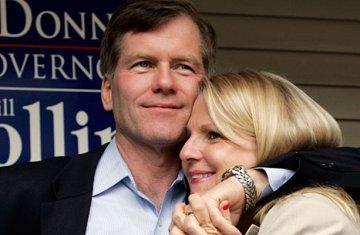
As the details surrounding Virginia Gov. Bob McDonnell's (R) corruption scandal become more damaging, calls for the Republican governor's ouster are growing louder.
Yesterday, the Washington Post's Jennifer Rubin, a prominent voice in Republican media, said it's time for McDonnell to go, and today, The Virginian-Pilot, a Norfolk-based paper that's the largest in the commonwealth, reached the same conclusion.
[T]he revelations have raised substantial new questions about the governor's ties to the company. Those details include additional gifts provided by Williams to the governor's family, as well as confirmation that the governor's wife, Maureen McDonnell, twice purchased shares of Star Scientific stock with money loaned to her by Williams.
As The Pilot's Julian Walker reported, those stock purchases establish a direct financial connection between the McDonnells and the company that the governor and first lady have touted during his term. The governor's explanation -- that he didn't know the extent of his wife's financial dealings with Williams -- doesn't change that.
The paper's editorial board stressed that the story has "diminished" McDonnell's "credibility and drained his capacity to lead the commonwealth." The latest revelations "make the prospect of his continued leadership untenable."
The Virginian-Pilot editorial will certainly make the governor's tenuous hold on power more difficult, though it's worth noting that it isn't the only Virginia newspaper calling for McDonnell's resignation -- last week, the Daily Progress in Charlottesville also urged the governor to step down.
This isn't the kind of problem an "opportunity" bus tour can fix.
Giving lawmakers added motivation on immigration

Associated Press
Shortly before he left for an eight-day vacation, President Obama hosted a White House press conference and fielded an interesting question about immigration. "Part of the political logic behind immigration reform was the strong showing by Latino voters last November," NPR's Scott Horsley said. "That doesn't seem to resonate with a lot of House Republicans who represent overwhelmingly white districts. What other political leverage can you bring to bear to help move a bill in the House?"
It was a fair question, based on an important premise: when it comes to persuading congressional Republicans, the first argument is electoral. GOP lawmakers need to hear why supporting an idea will generate more votes for them on Election Day. If that argument falls flat, the next argument should be ... well, it's not altogether clear what else congressional Republicans care about.
But if other considerations matter at all to GOP lawmakers, news like this should resonate.
The Senate's immigration bill would add nearly 14,000 new jobs on average in each congressional district over the next decade, according to a new report.
The new analysis is from the center-right American Action Network (AAN), which backs an overhaul of the nation's immigration laws. It's being distributed to lawmakers' offices as pro-reform groups seek to convince GOP congressmen to vote for immigration reform proposals this fall.
District-by-district data is available through this web tool. No district would see fewer than 7,000 jobs created by 2023, and an average of 13,992 new jobs would be created in each. The figures were compiled using data from a Regional Economic Models, Inc. (REMI) study of economic data and new worker visas and a Congressional Budget Office report on the impact of the Senate bill.
Remember, the report wasn't published by Lefty Liberals for Liberalism; it was released by a center-right organization interested in helping Republican officials.
The larger point, of course, is that opponents of immigration reform really don't have any excuses -- and if they're looking for cover to justify a "yes" vote on a popular, bipartisan bill, they have plenty of it.
As we discussed in July, the Senate produced a bipartisan, comprehensive bill that doubles the border patrol, shrinks the deficit, and boosts economy growth. It enjoys the support of the White House, business leaders, GOP strategists, leaders from the Latino community, and a clear majority of the country.
And now, Republican allies have helped document the expected boost in the job market, too.
Circling back to Scott Horsley's question at the president's press conference, electoral consideration don't seem to "resonate" with radicalized congressional Republicans, but don't some of them care about jobs, economic growth, deficit reduction, and border security?
As for how reform may yet get across the finish line, Time reported yesterday on one of my favorite subjects.
[T]here may still be a way to resuscitate reform efforts and force a vote on a path to citizenship. It involves a rarely used parliamentary tactic known as a discharge petition.
The legislative practice enables a simple majority of the House to force a vote on a bill, discharging the relevant committee from its responsibility to report it and circumventing the power of leadership, which controls the floor. Discharge petitions are rare. The tactic was successfully employed just 26 times between 1931 and 2002, when it was most recently leveraged to win a vote on the McCain-Feingold campaign-finance-reform bill. But a cadre of progressive activists, including powerful labor groups like the AFL-CIO and the pro-reform organization America's Voice, have zeroed in on it as perhaps the best way to sidestep Speaker John Boehner's insistence that any immigration bill brought to the floor have the support of a majority of the GOP conference.
"Certainly if the House fails to pass a bill with a path to citizenship and strong worker protections, then the discharge petition has to be an option for us to pursue," says Tom Snyder, manager of the AFL-CIO citizenship campaign.
Watch this space.