Rachel Maddow's Blog, page 3340
August 29, 2013
'They asked a long list of Republicans to come'
Associated Press
We talked briefly yesterday about the lack of Republican representation at the 50th anniversary event honoring the 1963 March on Washington, but a day later, the questions persist: where were the GOP voices?
Former NAACP Chairman Julian Bond told MSNBC that organizers "asked a long list of Republicans to come, and to a man and woman they said 'no.'"
In fairness, some prominent Republicans had good excuses. Former Presidents George W. Bush and George H.W. Bush were invited, but poor health kept them away. That said, former Gov. Jeb Bush was invited to represent his family, and he turned down the invitation, too.
House Speaker John Boehner (R-Ohio) is currently on a fundraising tour, and though his public schedule included no events yesterday, he declined the opportunity to appear.
And how about House Majority Leader Eric Cantor (R-Va.), whose office yesterday complained about only getting two weeks' notice from event organizers? He was otherwise engaged in the afternoon (via).
Cantor, hosted by Rep. Kevin Cramer, R-N.D., met with energy industry and community leaders at a crew camp in Williston, toured a drilling site and other oilfield locations in the Bakken and met with North Dakota Petroleum Council members in Watford City. [...]
"I hope to be able to tell the president that there's a lot for him to learn here as far as energy production here in America," Cantor said. "North Dakota seems to have gotten it right."
Oh, I see. Cantor couldn't make it to the event on civil rights because he was visiting with oil industry representatives.
Keep in mind, organizers wanted Republican voices. They reached out to former RNC Chairman Michael Steele for help, and the Rev. Leah D. Daughtry, who served as executive producer of the commemoration, told the Washington Post's By Ed O'Keefe that Cantor tried to find a GOP lawmaker to take his place but couldn't find anyone.
It's true that Congress isn't in session, and most members have left the Beltway until after Labor Day, but -- and this is key -- airplanes exist. If the party considered it a priority to participate in yesterday's event, GOP leaders could have made sure someone with an "R" after his or her name was there.
But they didn't.
Two weeks ago, Reince Priebus led a Republican National Committee event to feature "rising stars" in the party, which emphasized diversity within the party. The point wasn't subtle: from a distance, it may look like Republicans are an old, white party unconcerned with diversity, but Priebus actually cares.
Yesterday's no-show represents an important setback for those efforts. It's almost as if the party's rebranding campaign is going backwards.


Thursday's campaign round-up

Associated Press
Today's installment of campaign-related news items that won't necessarily generate a post of their own, but may be of interest to political observers:
* Texas state Sen. Wendy Davis (D) still appears likely to run for governor in 2014, but her formal decision and announcement have been delayed. Davis, who intended to declare her plans next week, is now tending to her ailing father, who is currently in critical condition at a Fort Worth hospital.
* San Diego will hold a special election to replace Bob Filner on Nov. 19.
* In related news, Carl DeMaio (R), who appears likely to run to replace Filner, rejected allegations yesterday from a former city councilmember who claims he caught DeMaio masturbating in a restroom in City Hall. The Republican called the allegations "disgusting, humiliating and nothing more than a character assassination attempt." DeMaio also provided a local news organization with the results of a polygraph test that concluded the "subject was not attempting deception" on the matter.
* Pennsylvania Gov. Tom Corbett's (R) re-election bid appears to be in big trouble. A new Philadelphia Daily News/Franklin & Marshall College Poll found that only one in five voters in the state believe the governor deserves a second term.
* In New Jersey yesterday, Senate hopeful Cory Booker (D) unveiled an ambitious plan to reform the criminal justice system, promising to make this a key priority if elected.
* In New York City's mayoral race, a new Quinnipiac poll shows Public Advocate Bill de Blasio (D) jumping out in front of a crowded field of candidates.
* And in Virginia, Lt. Gov. Bill Bolling (R), who dropped out of the gubernatorial race earlier this year, now says he does not intend to endorse anyone in the race. Bolling considered running as an independent before ruling out the possibility as impractical.
'Had the clerk issued marriage licenses to 12-year-olds...'
Associated Press
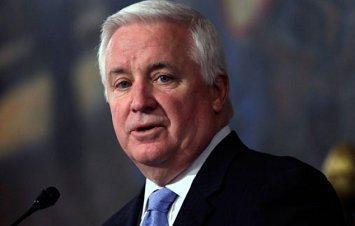
Pennsylvania Gov. Tom Corbett (R)
We've kept an eye on developments near Philadelphia, where county clerk D. Bruce Hanes recently announced he's granting marriage license to couples, gay or straight, who wish to get married in Montgomery County. Hanes insisted his policy is consistent with the Supreme Court ruling that struck down the Defense of Marriage Act, and in line with the judgment of the state Attorney General, who believes the state's law discrimination against gay couples is unconstitutional.
Pennsylvania Gov. Tom Corbett (R), not surprisingly, strongly disagrees, and his administration has filed suit to stop Hanes and halt the same-sex marriages. Yesterday, we got a closer look at the legal argument against equal treatment.
The Corbett administration said its lawsuit seeking to halt same-sex marriage licenses in Montgomery County "would have no direct effect" on the couples who have already received them.
In a brief Wednesday, state attorneys said those marriage licenses were never valid, and compared gay and lesbian couples to "12-year-olds" who are also barred from marrying under state law.
That's not hyperbole. As the Philadelphia Inquirer's report noted, the brief filed by the Corbett administration asks, "Had the clerk issued marriage licenses to 12-year-olds in violation of state law, would anyone seriously contend that each 12-year-old ... is entitled to a hearing on the validity of his 'license'?"
So, as far as Pennsylvania's Republican governor is concerned, if two consenting adults fall in love, want to get married, and are given a marriage license from their local town clerk, this is effectively the same thing as extending a marriage license to children -- if the two consenting adults are of the same gender, that is.
If Corbett and his attorneys want to argue that Hanes is bound by state statute, and that Hanes' policy in Montgomery County represents a form of civil disobedience, they may have a credible case to make.
But comparing consenting adults to 12-year-olds because Corbett disapproves of their sexual orientation, and state law prefers discrimination to equality, is unlikely to win the day.
Note, on the advice of counsel, Hanes hasn't said much to the media, but he'll appear in court to help present a defense next week.
Access to assault weapons vs. access to the ballot box
Associated Press
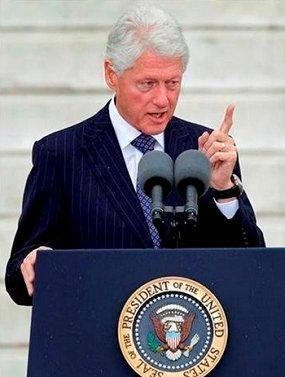
There were some memorable moments at yesterday's event celebrating the 50th anniversary of the March on Washington, but concern over voting rights was a constant theme throughout the day, and former President Bill Clinton delivered one of the more striking lines: "A great democracy does not make it harder to vote than to buy an assault weapon."
That's a great quote, which made the rounds with lightning speed, but is it rooted in fact? Salon's Alex Seitz-Wald took a closer look and found that it's "absolutely true."
[I]n strict voter ID states, [voters must show a] government-issued photo ID, and some states, like Texas, don't even allow out-of-state IDs. These restrictions can be a big burden for millions of people who don't have drivers licenses or birth certificates, or who lost them, or who don't live near a DMV, etc.
As for guns, under federal law, you can buy a gun through a private seller without even showing an ID. And assault weapons have been fair game since the ban on them expired in 2004.
Many states have added their own limits on assault-weapon ownership, but plenty have not. Seitz-Wald added, "[I]n states like Texas and Virginia, which have both recently enacted voter ID laws, it is safe to say that, once those laws go into effect, it will absolutely be easier to purchase an assault weapon than to vote. No ID required to buy the gun, a government-issued photo ID needed to vote."
If one considers voting more dangerous than owning an AR-15, then I'm sure this makes perfect sense. But if one disagrees, then Clinton's argument is quite persuasive and it's hard not to wonder whether the values in some parts of our great democracy are wildly off track.
August 28, 2013
Wednesday's Mini-Report
Today's edition of quick hits:
* Former President Bill Clinton delivered one of the more memorable lines of the day: "A great democracy does not make it harder to vote than to buy an assault weapon."
* Syria: "The United Nations Security Council appeared headed for a new confrontation over Syria on Wednesday after Britain said it would introduce a resolution accusing the Syrian government of a deadly chemical weapons attack last week and authorizing the use of force in that conflict, a measure that Russia was almost certain to block."
* Vague: "U.N.'s special envoy to Syria Lakhdar Brahimi in Geneva Wednesday told reporters 'it does seem like some kind of substance was used.' He went on to say that any action must have U.N. Security Council backing."
* Afghanistan: "The Taliban breached an international military base in eastern Afghanistan on Wednesday, in a complex attack that left at least one Western soldier, four Afghan police officers, and two other Afghans dead, Western and Afghan officials said."
* Nidal Hasan: "The Fort Hood gunman, former Army Maj. Nidal Hasan, was sentenced to death Wednesday for killing 13 people, most of them unarmed soldiers, in a 2009 shooting rampage.... Hasan will now be flown to the maximum security U.S. military prison at Fort Leavenworth, Kansas, where he will be placed on death row while awaiting lengthy, automatic appeals."
* More on this in the morning: "More than 100 lawmakers, including 16 Democrats, have signed a letter that says President Obama would violate the Constitution by striking Syria without first getting authorization from Congress."
* I wish politicians would leave rivals' kids out of their arguments: "Rep. Tim Huelskamp (R-Kan.) sounded off about school lunches Wednesday, slamming healthy food regulations that 'rich kids' and the president's daughters do not have to endure."
* Good call: "Wal-Mart Stores Inc. will now allow workers' same-sex partners to participate in its company health benefits, bringing policies at the largest private employer in the U.S. in line with most of the nation's top businesses."
* Perhaps praising freedom of expression in Russia isn't a great idea: "Police in Russia have confiscated a painting of Russian President Vladimir Putin and Prime Minister Dmitry Medvedev in women's underwear from an art gallery in the city of St Petersburg. The artwork depicts President Putin combing the hair of the prime minister."
* And Dylan Matthews asked the right question in response to the on-screen text: "Seriously, Fox News?"
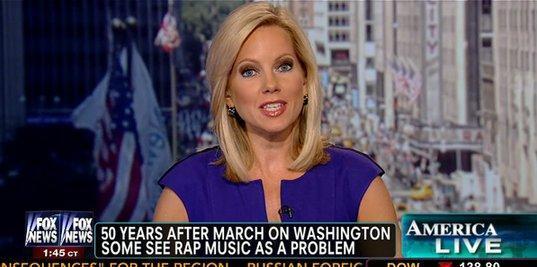
Anything to add? Consider this an open thread.
A partisan advantage at the Lincoln Memorial
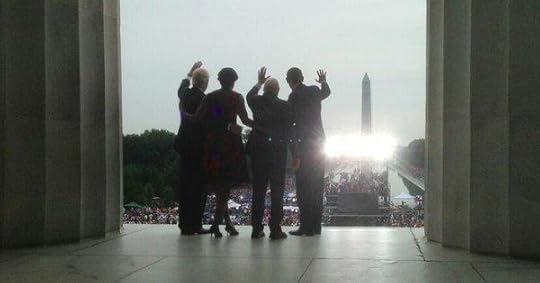
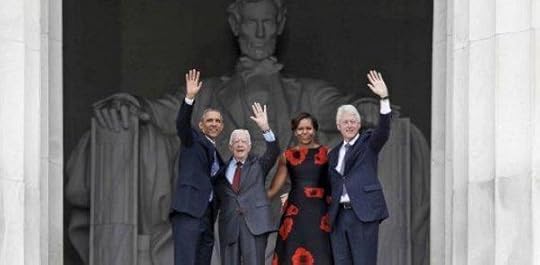
Former President Bill Clinton, First Lady Michelle Obama, former President Jimmy Carter, and President Barack Obama
If you've spent any part of the afternoon watching the event honoring the 50th anniversary of the March of Washington, you may have noticed something most of the political speakers had in common. They were, well, Democrats -- and I don't just mean those who celebrate democracy.
Viewers and attendees heard from Democratic presidents, lawmakers, governors, and even mayors. So where were the Republicans? Drudge whined, for example, that the King family "blew it" by "allowing no one with different political beliefs on stage."
And while I suspect this will soon become the conventional wisdom on the right, it's worth noting that many Republicans were invited, but declined for a variety reasons.
Republican congressional leaders were absent from Wednesday's 50th anniversary event commemorating the March on Washington.
The offices of Majority Leader Eric Cantor and House Speaker John Boehner both said they were invited to the event, but were unable to attend due to previous scheduling commitments.
Boehner participated in a July congressional ceremony in the Capitol to mark the anniversary and Cantor participated in a pilgrimage earlier in the year to Selma Alabama with civil rights icon Rep. John Lewis. Cantor's office says they only received an invitation 12 days ago, and his calendar was already full.
Boehner, for the record, is on a 15-state bus tour, raising money for conservative Republican lawmakers. It's not clear what Cantor had scheduled for this afternoon.
The Wall Street Journal added that both Presidents George H.W. Bush and George W. Bush were invited, but both declined citing poor health. (The younger Bush, you'll recall, is recovering from a heart procedure.)
It's not that the King family "allowed no one with different political beliefs on stage"; it's that Democrats were better able to accept the invitations to participate.
Obama reflects on 'our great unfinished business'
The 50th anniversary of the March on Washington and Dr. Martin Luther King's "I Have A Dream" speech, hundreds of thousands of Americans assembled again today at the Lincoln Memorial to honor the occasion. President Obama, among many notable speakers, reflected on "out great unfinished business."
For those who can't watch clips online, I've included a full transcript below, but pay particular attention to the way in which the president intertwined social and economic justice.
"For the men and women who gathered 50 years ago were in there in search of some abstract idea," Obama said. "They were there seeking jobs as well as justice. Not just the absence of oppression but the presence of economic opportunity. For what does it profit a man, King would ask, to sit at an integrated lunch counter if he can't afford the meal? This idea that one's liberty is linked to one's livelihood that, the pursuit of happiness requires the dignity of work, the skills to find work, decent pay, some measure of material security, this idea was not new."
It was a poignant reminder of the scope of the larger struggle, and the work that still must be done.
Here's the transcript, by way of the White House:
To the King family, who have sacrificed and inspired so much; to President Clinton; President Carter; Vice President Biden and Jill; fellow Americans.
Five decades ago today, Americans came to this honored place to lay claim to a promise made at our founding: "We hold these truths to be self-evident, that all men are created equal, that they are endowed by their Creator with certain unalienable rights, that among these are Life, Liberty and the pursuit of Happiness."
In 1963, almost 200 years after those words were set to paper, a full century after a great war was fought and emancipation proclaimed, that promise -- those truths -- remained unmet. And so they came by the thousands from every corner of our country, men and women, young and old, blacks who longed for freedom and whites who could no longer accept freedom for themselves while witnessing the subjugation of others.
Across the land, congregations sent them off with food and with prayer. In the middle of the night, entire blocks of Harlem came out to wish them well. With the few dollars they scrimped from their labor, some bought tickets and boarded buses, even if they couldn't always sit where they wanted to sit. Those with less money hitchhiked or walked. They were seamstresses and steelworkers, students and teachers, maids and Pullman porters. They shared simple meals and bunked together on floors. And then, on a hot summer day, they assembled here, in our nation's capital, under the shadow of the Great Emancipator -- to offer testimony of injustice, to petition their government for redress, and to awaken America's long-slumbering conscience.
We rightly and best remember Dr. King's soaring oratory that day, how he gave mighty voice to the quiet hopes of millions; how he offered a salvation path for oppressed and oppressors alike. His words belong to the ages, possessing a power and prophecy unmatched in our time.
But we would do well to recall that day itself also belonged to those ordinary people whose names never appeared in the history books, never got on TV. Many had gone to segregated schools and sat at segregated lunch counters. They lived in towns where they couldn't vote and cities where their votes didn't matter. They were couples in love who couldn't marry, soldiers who fought for freedom abroad that they found denied to them at home. They had seen loved ones beaten, and children fire-hosed, and they had every reason to lash out in anger, or resign themselves to a bitter fate.
And yet they chose a different path. In the face of hatred, they prayed for their tormentors. In the face of violence, they stood up and sat in, with the moral force of nonviolence. Willingly, they went to jail to protest unjust laws, their cells swelling with the sound of freedom songs. A lifetime of indignities had taught them that no man can take away the dignity and grace that God grants us. They had learned through hard experience what Frederick Douglass once taught -- that freedom is not given, it must be won, through struggle and discipline, persistence and faith.
That was the spirit they brought here that day. That was the spirit young people like John Lewis brought to that day. That was the spirit that they carried with them, like a torch, back to their cities and their neighborhoods. That steady flame of conscience and courage that would sustain them through the campaigns to come -- through boycotts and voter registration drives and smaller marches far from the spotlight; through the loss of four little girls in Birmingham, and the carnage of the Edmund Pettus Bridge, and the agony of Dallas and California and Memphis. Through setbacks and heartbreaks and gnawing doubt, that flame of justice flickered; it never died.
And because they kept marching, America changed. Because they marched, a Civil Rights law was passed. Because they marched, a Voting Rights law was signed. Because they marched, doors of opportunity and education swung open so their daughters and sons could finally imagine a life for themselves beyond washing somebody else's laundry or shining somebody else's shoes. (Applause.) Because they marched, city councils changed and state legislatures changed, and Congress changed, and, yes, eventually, the White House changed. (Applause.)
Because they marched, America became more free and more fair -- not just for African Americans, but for women and Latinos, Asians and Native Americans; for Catholics, Jews, and Muslims; for gays, for Americans with a disability. America changed for you and for me. and the entire world drew strength from that example, whether the young people who watched from the other side of an Iron Curtain and would eventually tear down that wall, or the young people inside South Africa who would eventually end the scourge of apartheid. (Applause.)
Those are the victories they won, with iron wills and hope in their hearts. That is the transformation that they wrought, with each step of their well-worn shoes. That's the debt that I and millions of Americans owe those maids, those laborers, those porters, those secretaries; folks who could have run a company maybe if they had ever had a chance; those white students who put themselves in harm's way, even though they didn't have; those Japanese Americans who recalled their own internment; those Jewish Americans who had survived the Holocaust; people who could have given up and given in, but kept on keeping on, knowing that "weeping may endure for a night, but joy cometh in the morning." (Applause.)
On the battlefield of justice, men and women without rank or wealth or title or fame would liberate us all in ways that our children now take for granted, as people of all colors and creeds live together and learn together and walk together, and fight alongside one another, and love one another, and judge one another by the content of our character in this greatest nation on Earth. (Applause.)
To dismiss the magnitude of this progress -- to suggest, as some sometimes do, that little has changed -- that dishonors the courage and the sacrifice of those who paid the price to march in those years. (Applause.) Medgar Evers, James Chaney, Andrew Goodman, Michael Schwerner, Martin Luther King Jr. -- they did not die in vain. (Applause.) Their victory was great.
But we would dishonor those heroes as well to suggest that the work of this nation is somehow complete. The arc of the moral universe may bend towards justice, but it doesn't bend on its own. To secure the gains this country has made requires constant vigilance, not complacency. Whether by challenging those who erect new barriers to the vote, or ensuring that the scales of justice work equally for all, and the criminal justice system is not simply a pipeline from underfunded schools to overcrowded jails, it requires vigilance. (Applause.)
And we'll suffer the occasional setback. But we will win these fights. This country has changed too much. (Applause.) People of goodwill, regardless of party, are too plentiful for those with ill will to change history's currents. (Applause.)
In some ways, though, the securing of civil rights, voting rights, the eradication of legalized discrimination -- the very significance of these victories may have obscured a second goal of the March. For the men and women who gathered 50 years ago were not there in search of some abstract ideal. They were there seeking jobs as well as justice -- (applause) -- not just the absence of oppression but the presence of economic opportunity. (Applause.)
For what does it profit a man, Dr. King would ask, to sit at an integrated lunch counter if he can't afford the meal? This idea -- that one's liberty is linked to one's livelihood; that the pursuit of happiness requires the dignity of work, the skills to find work, decent pay, some measure of material security -- this idea was not new. Lincoln himself understood the Declaration of Independence in such terms -- as a promise that in due time, "the weights should be lifted from the shoulders of all men, and that all should have an equal chance."
And Dr. King explained that the goals of African Americans were identical to working people of all races: "Decent wages, fair working conditions, livable housing, old-age security, health and welfare measures, conditions in which families can grow, have education for their children, and respect in the community."
What King was describing has been the dream of every American. It's what's lured for centuries new arrivals to our shores. And it's along this second dimension -- of economic opportunity, the chance through honest toil to advance one's station in life -- where the goals of 50 years ago have fallen most short.
Yes, there have been examples of success within black America that would have been unimaginable a half century ago. But as has already been noted, black unemployment has remained almost twice as high as white unemployment, Latino unemployment close behind. The gap in wealth between races has not lessened, it's grown. And as President Clinton indicated, the position of all working Americans, regardless of color, has eroded, making the dream Dr. King described even more elusive.
For over a decade, working Americans of all races have seen their wages and incomes stagnate, even as corporate profits soar, even as the pay of a fortunate few explodes. Inequality has steadily risen over the decades. Upward mobility has become harder. In too many communities across this country, in cities and suburbs and rural hamlets, the shadow of poverty casts a pall over our youth, their lives a fortress of substandard schools and diminished prospects, inadequate health care and perennial violence.
And so as we mark this anniversary, we must remind ourselves that the measure of progress for those who marched 50 years ago was not merely how many blacks could join the ranks of millionaires. It was whether this country would admit all people who are willing to work hard regardless of race into the ranks of a middle-class life. (Applause.)
The test was not, and never has been, whether the doors of opportunity are cracked a bit wider for a few. It was whether our economic system provides a fair shot for the many -- for the black custodian and the white steelworker, the immigrant dishwasher and the Native American veteran. To win that battle, to answer that call -- this remains our great unfinished business.
We shouldn't fool ourselves. The task will not be easy. Since 1963, the economy has changed. The twin forces of technology and global competition have subtracted those jobs that once provided a foothold into the middle class -- reduced the bargaining power of American workers. And our politics has suffered. Entrenched interests, those who benefit from an unjust status quo, resisted any government efforts to give working families a fair deal -- marshaling an army of lobbyists and opinion makers to argue that minimum wage increases or stronger labor laws or taxes on the wealthy who could afford it just to fund crumbling schools, that all these things violated sound economic principles. We'd be told that growing inequality was a price for a growing economy, a measure of this free market; that greed was good and compassion ineffective, and those without jobs or health care had only themselves to blame.
And then, there were those elected officials who found it useful to practice the old politics of division, doing their best to convince middle-class Americans of a great untruth -- that government was somehow itself to blame for their growing economic insecurity; that distant bureaucrats were taking their hard-earned dollars to benefit the welfare cheat or the illegal immigrant.
And then, if we're honest with ourselves, we'll admit that during the course of 50 years, there were times when some of us claiming to push for change lost our way. The anguish of assassinations set off self-defeating riots. Legitimate grievances against police brutality tipped into excuse-making for criminal behavior. Racial politics could cut both ways, as the transformative message of unity and brotherhood was drowned out by the language of recrimination. And what had once been a call for equality of opportunity, the chance for all Americans to work hard and get ahead was too often framed as a mere desire for government support -- as if we had no agency in our own liberation, as if poverty was an excuse for not raising your child, and the bigotry of others was reason to give up on yourself.
All of that history is how progress stalled. That's how hope was diverted. It's how our country remained divided. But the good news is, just as was true in 1963, we now have a choice. We can continue down our current path, in which the gears of this great democracy grind to a halt and our children accept a life of lower expectations; where politics is a zero-sum game where a few do very well while struggling families of every race fight over a shrinking economic pie -- that's one path. Or we can have the courage to change.
The March on Washington teaches us that we are not trapped by the mistakes of history; that we are masters of our fate. But it also teaches us that the promise of this nation will only be kept when we work together. We'll have to reignite the embers of empathy and fellow feeling, the coalition of conscience that found expression in this place 50 years ago.
And I believe that spirit is there, that truth force inside each of us. I see it when a white mother recognizes her own daughter in the face of a poor black child. I see it when the black youth thinks of his own grandfather in the dignified steps of an elderly white man. It's there when the native-born recognizing that striving spirit of the new immigrant; when the interracial couple connects the pain of a gay couple who are discriminated against and understands it as their own.
That's where courage comes from -- when we turn not from each other, or on each other, but towards one another, and we find that we do not walk alone. That's where courage comes from. (Applause.)
And with that courage, we can stand together for good jobs and just wages. With that courage, we can stand together for the right to health care in the richest nation on Earth for every person. (Applause.) With that courage, we can stand together for the right of every child, from the corners of Anacostia to the hills of Appalachia, to get an education that stirs the mind and captures the spirit, and prepares them for the world that awaits them. (Applause.)
With that courage, we can feed the hungry, and house the homeless, and transform bleak wastelands of poverty into fields of commerce and promise.
America, I know the road will be long, but I know we can get there. Yes, we will stumble, but I know we'll get back up. That's how a movement happens. That's how history bends. That's how when somebody is faint of heart, somebody else brings them along and says, come on, we're marching. (Applause.)
There's a reason why so many who marched that day, and in the days to come, were young -- for the young are unconstrained by habits of fear, unconstrained by the conventions of what is. They dared to dream differently, to imagine something better. And I am convinced that same imagination, the same hunger of purpose stirs in this generation.
We might not face the same dangers of 1963, but the fierce urgency of now remains. We may never duplicate the swelling crowds and dazzling procession of that day so long ago -- no one can match King's brilliance -- but the same flame that lit the heart of all who are willing to take a first step for justice, I know that flame remains. (Applause.)
That tireless teacher who gets to class early and stays late and dips into her own pocket to buy supplies because she believes that every child is her charge -- she's marching. (Applause.)
That successful businessman who doesn't have to but pays his workers a fair wage and then offers a shot to a man, maybe an ex-con who is down on his luck -- he's marching. (Applause.)
The mother who pours her love into her daughter so that she grows up with the confidence to walk through the same door as anybody's son -- she's marching. (Applause.)
The father who realizes the most important job he'll ever have is raising his boy right, even if he didn't have a father -- especially if he didn't have a father at home -- he's marching. (Applause.)
The battle-scarred veterans who devote themselves not only to helping their fellow warriors stand again, and walk again, and run again, but to keep serving their country when they come home -- they are marching. (Applause.)
Everyone who realizes what those glorious patriots knew on that day -- that change does not come from Washington, but to Washington; that change has always been built on our willingness, We The People, to take on the mantle of citizenship -- you are marching. (Applause.)
And that's the lesson of our past. That's the promise of tomorrow -- that in the face of impossible odds, people who love their country can change it. That when millions of Americans of every race and every region, every faith and every station, can join together in a spirit of brotherhood, then those mountains will be made low, and those rough places will be made plain, and those crooked places, they straighten out towards grace, and we will vindicate the faith of those who sacrificed so much and live up to the true meaning of our creed, as one nation, under God, indivisible, with liberty and justice for all. (Applause.)
Key House Republican eyes VRA deadline
Associated Press
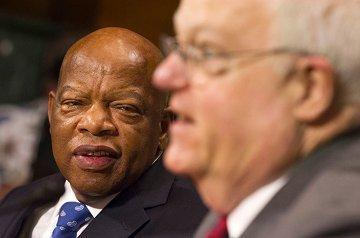
Reps. John Lewis (D-Ga.) and James Sensenbrenner (R-Wis.)
Rep. Jim Sensenbrenner (R-Wis.) said this week that he not only intends to push through a revised Voting Rights Act in this Congress, he intends to get it done by the end of 2013.
Sensenbrenner said he wants to fix the law so that it is immune to court challenges.
"The first thing we have to do is take the monkey wrench that the court threw in it, out of the Voting Rights Act, and then use that monkey wrench to be able to fix it so that it is alive, well, constitutional and impervious to another challenge that will be filed by the usual suspects," Sensenbrenner said.
Taking the stage after Sensenbrenner, RNC Chairman Reince Priebus said, "I think Jim just made some news."
He did, indeed. Sensenbrenner, a long-time VRA proponent, has repeatedly voiced support for "fixing" the law following the Supreme Court's ruling in June, but this was the first time he publicly gave himself something of a deadline.
Of course, with the 50th anniversary of the March on Washington today, it would have been nice if Congress had made at least some progress on this by now, but that's probably asking too much.
But the next question is whether Sensenbrenner, while clearly well intentioned, can reach his goal.
As we talked about last week, I remain skeptical. Literally every indication suggests congressional Republicans intend to block efforts to pass a new-and-improved Voting Rights Act. Remember this story from July?
If House Republicans are interested in patching the Voting Rights Act, they aren't showing it.
"Historically I fully understand why they addressed the situations they did," Republican Rep. Trent Franks of Arizona, who chairs the House judiciary subcommittee that would handle new voting rights legislation, said to reporters after the hearing. "I am just of the opinion today that we should do as the court said and that is to not focus on punishing the past but on building a better future."
As we talked about at the time, most of the Republican members of the panel apparently didn't think the hearing was especially important -- which is to say, they didn't show up -- and the witnesses GOP lawmakers called reinforced fears that the party simply isn't interested in a constructive debate.
The Heritage Foundation's Hans von Spakovsky, for example, was called by Republicans to offer his "expert" testimony on voting rights, despite the fact that von Spakovsky is best known for the loathsome voter-suppression tactics he championed during his tenure in the Bush/Cheney Justice Department. If this is the guy GOP lawmakers are turning to for guidance, the future of the Voting Rights Act is bleak.
Indeed, von Spakovsky assured the Judiciary Committee panel that the "the systematic, widespread discrimination against blacks has long since disappeared" -- a claim we know to be ridiculously untrue.
Sensenbrenner's worthwhile efforts notwithstanding, those waiting for House Republicans to do the right thing on voting rights are probably going to be waiting a very, very long time.
Boehner doubles down on looming debt-ceiling crisis
Associated Press
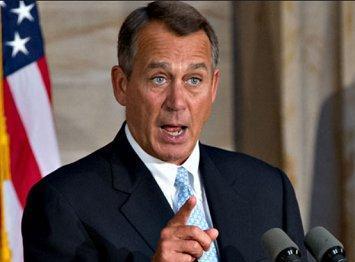
House Speaker John Boehner (R-Ohio) made some strikingly reckless comments this week on his appetite for yet another debt-ceiling crisis, telling donors at an Idaho fundraiser that his position "may be unfair," but he's going to put Americans through this anyway.
Any chance the Speaker's office might walk this back a bit, turning down the temperature and reassuring the world that Republicans will not deliberately trash the full faith and credit of the United States? Apparently not.
Michael Steel, a spokesman for Mr. Boehner, said the speaker had long espoused a policy of spending cuts tied to an increase in the debt ceiling. "The speaker's comments are consistent," he said. "Any increase in the debt limit must be accompanied by cuts and reforms greater than the increase."
Great. The White House will negotiate over the budget, but it will not negotiate with those who threaten to hurt Americans on purpose by holding the debt ceiling hostage. The Speaker of the House, meanwhile, knows the debt limit has to be raised, but says unspecified conservative goodies "must" accompany the increase.
The last time Republicans pulled this incredibly irresponsible stunt, it did real, lasting harm to the nation, our economy, our job market, our credit rating, and our global credibility. Boehner and other GOP leaders know this, but they say they're prepared to do it, regardless of the consequences.
Why this isn't considered a major scandal is something I'll never fully understand.
Nevertheless, when Boehner's spokesperson says the Speaker's comments "are consistent," it's an interesting defense, largely because it's ridiculous. Igor Volsky put together a great item yesterday noting the many instances in which Boehner said he wouldn't use the debt ceiling for political leverage, which is precisely what the Speaker is doing now. Perhaps it's best if his office doesn't casually throw around references to "consistency" -- Boehner has said repeatedly that failing to raise the debt ceiling would produce catastrophic consequences, and has said it's a gambit he opposes, and yet here we are.
All of this, incidentally, leads to a related question that's become the subject of spirited debate: is Boehner bluffing?
Plenty of credible observers -- Beutler, Khimm, Barro, and Beutler again -- all believe Boehner's chest thumping is little more than bluster, and there's really nothing to be alarmed about. I sincerely hope they're correct.
But I'm not convinced the Speaker is bluffing, and like Ezra Klein, I believe Americans should be concerned.
The central fact of the next debt-ceiling fight is that the two parties' positions are mutually exclusive. Republicans say they will raise the debt ceiling only in return for significant budget concessions. The Obama administration says it won't offer anything in return for raising the debt ceiling.
There's only one possible outcome given those two positions: The debt ceiling won't be raised.
Eventually, one or both of those positions will change. No one -- including me -- believes that the debt ceiling will remain right where it is, forever and ever, amen. That would mean a financial crisis of epic proportions.
But here's what scares me: No one can tell me how one or both of those positions will change before we breach the ceiling in mid-October.
I'd add just one more thing: Boehner should, in theory, be sending subtle signals about giving in, getting his members and his party prepared for the inevitable fact that the debt ceiling has to be raised and they're not going to get what they want. But with just eight weeks remaining, the Speaker is doing the opposite -- boasting that his demands are "unfair" while promising to once again hold the nation hostage until the non-negotiable demands on his ransom note are met.
If he were bluffing, Boehner could use very different rhetoric -- "We'll do our best, but..." or "Maybe after the 2014 midterms, if Republicans control the Senate..."
The Speaker knows time is running out, he knows the risks, and he knows the consequences, but he won't lower the gun from the hostage's head.
Ezra added:
The Democrats' quiet hope is that House Republicans will overplay their hand and, as terror mounts over the debt ceiling, Senate Republicans will cut a meaningful deal with Obama and the House will let the package pass by waiving the Hastert rule. That's possible, of course, but hardly likely. House Republicans don't like getting jammed by the Senate, and powerful conservative groups have been policing Hastert rule violations much more aggressively of late.
And then there's the possibility of simple miscalculation. Remember when Boehner's "Plan B" failed on the floor of the House? When the farm bill failed on the floor of the House? When the Transportation, Housing and Urban Development appropriations bill failed on the floor of the House? The odds of Boehner and Cantor thinking they can pass something and simply being wrong about that are not zero.
And that's the problem. None of the safe outcomes are likely. None of them even look particularly plausible, at least right now. And that's scary. If you're not at least a bit worried about the debt ceiling, you're not paying close enough attention.
Those insisting Boehner is bluffing no doubt think Ezra and I are overreacting. Some probably said the same thing in early 2011, arguing, "Republicans are nuts, but they're not so insane as to actually harm the country with a real crisis."
How'd that work out?
Wednesday's campaign round-up
Associated Press
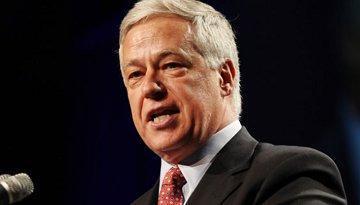
Rep. Mike Michaud (D-Maine)
Today's installment of campaign-related news items that won't necessarily generate a post of their own, but may be of interest to political observers:
* In Maine, new survey results from Public Policy Polling show Rep. Mike Michaud (D) leading Gov. Paul LePage (R) by four points, 39% to 35%, with independent Eliot Cutler third with 18%. As was the case in 2010, when Cutler split Maine's voting mainstream and allowed LePage to win, he takes nearly all of his support from the Democrat -- in a head-to-head match-up, Michaud leads LePage by 15 points.
* Virginia gubernatorial hopeful Ken Cuccinelli (R) hopes to get a boost from a scheduled campaign visit from Sen. Marco Rubio (R) of Florida. Election Day in the commonwealth is just 10 weeks away.
* In New Jersey, Gov. Chris Christie (R), true to form, slammed yet another reporter this week, calling the New York Daily News's Manesh Mehta "a complete idiot."
* Texas Gov. Rick Perry (R), increasingly unsubtle about his future plans, is scheduling upcoming appearances in Iowa.
* One of Sen. Max Baucus' (D-Mont.) top staffers, John Lewis, has filed a statement of organization with the Federal Election Commission, in advance of his congressional campaign next year. While it was unclear which seat Lewis would pursue, it now appears he'll run for the U.S. House.
* And the Democratic Senatorial Campaign Committee continues to outpace the National Republican Senatorial Committee in fundraising, with the Dems besting the GOP by about a million dollars in July. As The Hill noted, "The DSCC has outraised the NRSC every month this year except April."