Rachel Maddow's Blog, page 3337
September 3, 2013
Tuesday's campaign round-up
Associated Press
Today's installment of campaign-related news items that won't necessarily generate a post of their own, but may be of interest to political observers:
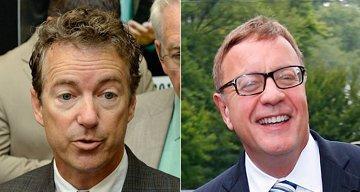
* Republican Senate hopeful Steve Lonegan appears to be struggling in New Jersey, but he hopes to get a boost this week from an endorsement and campaign appearance from Sen. Rand Paul (R-Ky.). Gov. Chris Christie (R) has reportedly been invited to participate at their event, though the governor and Paul generally don't get along.
* In Virginia, Republican gubernatorial hopeful Ken Cuccinelli launched a new ad this morning (which is unfortunately not yet on YouTube), highlighting his role helping free a wrongly convicted man. It's the kind of ad a campaign runs when its candidate has low favorability numbers.
* On a related note, Larry Sabato wrote late last week, "As the calendar turns to September, the nation's marquee race in 2013 is coming into focus: Terry McAuliffe (D) now has an edge over Ken Cuccinelli (R) in the Virginia gubernatorial race, and we're changing our rating in the contest from toss-up to Leans Democratic."
* In Tennessee, Sen. Lamar Alexander (R) is apparently poised to get another primary opponent, with former Williamson County Republican Party Chairman Kevin Kookogey going so far as to call himself an "unannounced candidate" over the weekend.
* In Alaska, a Hays Research Group poll found incumbent Sen. Mark Begich (D) with a surprisingly large lead over Mead Treadwell (R), 50% to 39%, in their likely 2014 match-up.
* And while West Virginia looks like a clear pick-up opportunity for Republicans next year, a West Virginia Poll released late last week showed a competitive contest, with Rep. Shelley Capito (R) leading Natalie Tennant (D) by just five points, 45% to 40%.


'The result will be more people without health insurance'
Associated Press
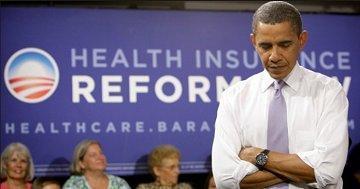
As the political world's focus shifts to Syria and looming crises on Capitol Hill, the Republican campaign to defund the Affordable Care Act has largely disappeared from the landscape. Sen. Ted Cruz (R-Texas) and the Heritage Foundation intended to use the August recess to put this on the front burner, but as of today, their efforts appear to have fallen far short.
So, the federal health care law is in the clear as the state exchanges get set to open? Not entirely.
The Obama administration has invested $67 million in grants to hire "navigators," intended to help American consumers better understand the new system and sign up for benefits they're legally entitled to. Unfortunately, many Republican-led states have imposed harsh restrictions on the navigators -- in Ohio, navigators are forbidden from comparing and contrasting insurance plans for customers -- and Republicans on the House Energy and Commerce Committee last week launched a new intimidation campaign targeting those assisting the uninsured.
Even the Washington Post's editorial board is getting sick of the sabotage.
As The Post’s Sandhya Somashekhar reported last week, Republicans at the state level also have applied a variety of less visible measures to impede the law’s implementation. Some won't enforce consumer protections, including a ban on insurance companies rejecting patients with pre-existing conditions. The result will be illegal discrimination. Another tactic has been restricting the work of federal "navigators," consumer assistants who help people understand their options and get coverage. [...]
Though some analysts offer explanations for why state governments might make one or another of these decisions, states taking these steps are unwise at best. To the extent they represent a deliberate policy to derail the law, such steps are worse than misguided. Georgia’s state government is doing “everything in our power to be an obstructionist,” Ralph Hudgens, the state’s insurance commissioner, boasted.
"The result," the editorial added, "will be more people without health insurance."
I imagine that's the point. GOP officials appear genuinely afraid that the federal health care system will prove to be effective and popular, so naturally Republicans are going to truly ridiculous lengths to sabotage the law.
When was the last time Americans saw such a coordinated effort to undermine federal law, motivated by cheap partisan spite? We've never seen anything like this, ever.
Predicting the GOP's course on Syria

Associated Press
Weekly Standard editor Bill Kristol sounded optimistic over the weekend about what his party will do when it comes to authorizing the use of force in Syria. "I think the Republican Party will step up and do the right thing and support the president against a chemical-weapons-using, terror-sponsoring, Iran-backed dictator," he said.
There's ample evidence to the contrary.
Though the Capitol Hill debate has not yet begun in earnest, Byron York reports today that after off-the-record conversations, he believes Republicans are likely to balk. The reasons are varied -- some question the evidence, some distrust Syrian rebels, some hold President Obama in such contempt that they won't trust him, even when they agree with him -- but note York's conclusion (via Greg Sargent):
Perhaps in anticipation of a close vote, a new argument is circulating among pro-interventionists which says that protecting the prerogatives of future presidents is so important that Republicans should support Obama's Syrian action even if there is no good case for doing so.
Rejecting Obama could permanently weaken the presidency, argues political scientist James Ceaser in an article cited by influential conservative commentator William Kristol. Therefore, Republicans should vote to authorize force "even if they think that the president's policy will prove ineffective, do no good, waste money, or entail unforeseen risks ... even if they think he has gotten the nation into this situation by blunders, fecklessness, arrogance, or naivete; and ... even if, and especially, if they have no confidence in his judgment."
That will be a very hard sell for Republicans. In the end, many will carefully consider all the evidence and then vote their instincts. And that will mean a vote against Barack Obama.
In recent years, there have been a great number of issues on which Republicans took a side, only to abandon their position the moment President Obama agreed with them. By now, I imagine most of us can think of the list off the top of our head: an individual mandate in health care, cap-and-trade, the DREAM Act, a bipartisan deficit-reduction commission, at least some form of Keynesian economics, trying terrorist suspects in civilian U.S. courts and then imprisoning them on American soil, etc. I'm probably forgetting a few.
But each of the items on the list has to do with domestic policy -- Syria would break new ground. Obama believes military intervention is wise, so the normally hawkish party is quickly rediscovering its inner dove.
I continue to believe the Republican Party is going to have to figure out what its approach to foreign policy is going to be in the post-Bush/Cheney era, because right now, for the first time in many years, the GOP has lost its clear vision. And no, "Whatever Obama Is For, We're Against" is not a coherent foreign policy worldview.
Post-9/11, Republicans have been very much inclined to use force in the Middle East, especially when it came to dictators and chemical weapons. As of last week, that no longer appears to be the case, at least not party wide. It leaves the GOP with some questions for which there are no obvious answers.
Is this an interventionist party or an isolationist party? Are neocons guiding the way or are libertarians? Up until quite recently, the answers to questions like these were obvious. The answers are far more ambiguous now.
Again, this is not to say all Democrats are reading from the identical script; they're clearly not. Congressional Dems may feel a pull to support their president because he's their president, but while the leadership in both chambers will likely endorse the White House's position, I expect a large number of Democratic defections.
But it's the GOP facing a possible turning point on foreign policy, and it's the Republicans' intra-party fissures that are about to take center stage in a way we haven't seen in a long while.
When congressional homework and playtime are at odds
Associated Press
Back in March, just two months into the new Congress, Rep. Mike Kelly (R-Pa.) conceded that he had a small problem. He'd been assigned the task of working on loan guarantees for clean-energy companies, and was supposed to write legislation. But that never happened -- Kelly got distracted.
His spokesperson said at the time, "It was a priority, and it remains an issue of interest. But Mike's efforts shifted when he chose to focus more on holding the administration accountable with regards to Fast and Furious. And then when the Benghazi tragedy occurred, that took the cake."
In other words, there was real work to do, but the Pennsylvania Republican couldn't get to it because he decided made-up political "scandals" were a better use of his time.
Six months later, those attitudes continue to dominate the House GOP's thinking.
Republicans on Capitol Hill are acknowledging that the fall's looming fiscal fights could peel attention away from their investigation into the IRS's singling out of conservative groups. [...]
But Republicans have also made the IRS investigation a key part of their recent political message, at a time when the agency is trying to implement the Democratic healthcare law that conservatives are itching to defund. The controversy has also helped revive a Tea Party movement that had been flagging in recent months.
With all that in mind, GOP aides stress that the congressional investigation into the IRS will be moving full speed ahead, even as a potential debt default takes up much of the oxygen in the halls of Congress.
This will, by the way, include even more hearings into the discredited controversy.
John Feehery, a GOP strategist, told The Hill that Republicans "have to make the connection" between the non-existent IRS story and the Affordable Care Act "because it's so hot right now."
Oh for crying out loud.
Look, the House of Representatives is in session only nine days this month. Nine. Congress just took a four-week break, but the Republican-led lower chamber apparently wants to ease back into their work schedule.
On the to-do list? A budget crisis, a debt-ceiling crisis, a farm bill, immigration reform, appropriations bills, and fixing the Voting Rights Act. It's simply unrealistic to think the dysfunctional House will complete all of these tasks, or even most of them, anytime soon, though a couple of these are non-optional.
But despite all of this work that remains undone, much of which should have been completed before the August recess, House GOP leaders are still eager to invest time and energy in a "scandal" that no longer makes any sense. Why? Apparently because it's "so hot right now."
It reminds me a lot of a child who prioritizes playtime over homework. Sure, the homework is important, but it's not nearly as fun or satisfying as playing -- so the child decides some of the homework just won't get done.
Republicans remain a post-policy party. They have real work to do, which they will neglect because their shiny plaything has a firm grip on their limited attention span.
'Soft on drugs' talking points go up in smoke

Associated Press
Seattle Police Department spokesman Sgt. Sean Whitcomb hands out bags of Doritos with a sticker that spells out rules for marijuana users during Seattle's annual Hempfest.
Attorney General Eric Holder took a step without modern precedent last week, giving Colorado and Washington the green light on voter-approved marijuana-legalization measures. After four decades of a "war on drugs" that only moved in one punitive direction, the Justice Department decided to go in a decidedly more progressive direction.
Immediately after, congressional Republicans did something fascinating: nothing.
A stark radio silence is emanating from Republicans on Capitol Hill in the wake of the Justice Department's (DOJ) decision this week not to sue Colorado and Washington state, which legalized the recreational use of marijuana, or other states that have approved its medicinal use.
While Democrats have largely supported the state initiatives -- and lauded the DOJ's decision on Thursday -- Republicans have historically objected to the legalization and decriminalization of pot.
And yet, only a handful of GOP lawmakers have weighed in against this week's landmark DOJ announcement, which helped clear the muddy waters about how the federal government, which still considers marijuana a Schedule I drug along with heroin and LSD, plans to treat the state measures.
If previous administrations were inclined to take the steps on drug policy the Obama administration has taken, fear kept them from doing so -- no one wanted to be condemned as being "soft on drugs" or "soft on crime."
But the landscape has changed quite quickly. Holder very likely assumed that if there was political pushback, it'd be mild and unpersuasive, if it existed at all. The usual, regressive talking points, the A.G. probably assumed, just don't resonate the way they used to, and much of the American mainstream has lost its appetite for an expensive policy that tears apart families and communities while failing at its purported goals.
And Holder's assumptions were correct.
Indeed, this wasn't the first time.
A few weeks ago, Holder also announced sentencing reforms intended to circumvent mandatory minimums in non-violent drug crimes. And immediately thereafter, Republicans didn't say much of anything about this, either.
If Republicans thought they could benefit politically from going on the offensive on this, they would. If they had any reason to believe jumping up and down about the rascally Obama administration destroying America by undermining the "drug war" would give them a bump in the polls and/or help motivate the party's base, that's exactly what they would do.
But therein lies the point: even GOP leaders don't see this as a fight worth having anymore.
Roll Call added, "A day after the Department of Justice announced it would not challenge state laws legalizing marijuana, not a single top leader in Congress has weighed in on the issue -- signaling, perhaps, the noxious nature of pot politics."
Rep. Jared Polis (D-Colo.) called this "progress." I'm very much inclined to agree.
Russia eyes U.S. lobbying campaign
Getty Images
As Congress readies a vote on authorizing the use of force in Syria, lawmakers in both parties and both chambers will be lobbied by all sorts of folks -- members of the Obama administration, members of the public, defense contractors, etc.
But don't be surprised if Russia dispatches some lobbyists of its own.
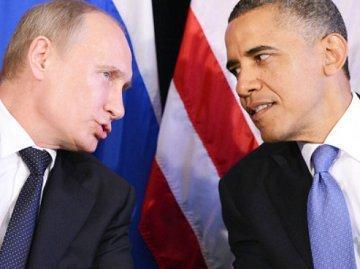
Russian President Vladimir Putin hopes to send Russian lawmakers to lobby Congress against a strike against Syria. According to a report by the Interfax news agency,
Putin has signaled his support for a proposal made by two Russian lawmakers to send a delegation to Washington.
The initiative, championed by Russian legislators Valentina Matvienko and Sergei Naryshkin, still requires formal approval by the country's Foreign Ministry -- although an informal group of Russian lawmakers may decide to travel on their own.
The meetings between Russians and U.S. lawmakers would be fascinating, wouldn't they? "Don't believe your State Department and your CIA; instead put your faith in the Putin government!"
I don't doubt that there will be plenty of members of Congress who balk at authorizing force in Syria, but I'll be eager to see just how many of these lawmakers say they were persuaded by a Russian lobbying campaign.
Of course, these won't be the only unusual U.S.-Russian meetings to take place in the coming days. Max Seddon reported yesterday, "Following his cancellation of a bilateral meeting with President Vladimir Putin, U.S. President Barack Obama may infuriate the Kremlin further by meeting Russian human rights activists, including LGBT rights groups, during his upcoming trip to St Petersburg for the G20 summit. Four Russian non-governmental organizations told BuzzFeed Monday they had been invited to the meeting, scheduled for this Thursday at St. Petersburg's Crowne Plaza Hotel."
This would, of course, be the first-ever visit between a U.S. president and members of the Russian LGBT community, and would come against the backdrop of a brutal anti-gay crackdown by the Putin government.
It's safe to say the bored kid in the back of the classroom will not be pleased with Obama's outreach.
McCain says congressional inaction could prove 'catastrophic'
When it comes to rallying political support for military intervention in Syria, President Obama could use more friends. And in theory, Sen. John McCain (R-Ariz.) could certainly fit the bill -- the Republican has been pushing the White House to use force in Syria, and as of last week, that's precisely what the White House is prepared to do.
But it's not that simple. While many skeptics of military strikes in Syria fear Obama intends to do too much, McCain and his allies have blasted the president from the other direction, insisting Obama isn't doing enough. Indeed, almost immediately after the president announced his intention to seek congressional authorization for the use of force, McCain and Sen. Lindsey Graham (R-S.C.) issued a statement saying they "cannot in good conscience support isolated military strikes in Syria" if the mission is too "limited." McCain and Graham want a full-fledged war, not targeted strikes.
Yesterday, the senators seemed ready to change their mind.
The White House's aggressive push for Congressional approval of an attack on Syria appeared to have won the tentative support of one of President Obama's most hawkish critics, Senator John McCain, who said Monday that he would back a limited strike if the president did more to arm the Syrian rebels and the attack was punishing enough to weaken the Syrian military.
In an hourlong meeting at the White House, said Mr. McCain, Republican of Arizona, Mr. Obama gave general support to doing more for the Syrian rebels, although no specifics were agreed upon.
"A vote against that resolution by Congress," McCain said, "I think would be catastrophic." He added a congressional vote against authorizing force would "undermine the credibility of the United States."
There are a couple of important problems with this.
First, McCain's approach seems poorly thought out. By his reasoning, any time any president prepares to use military force abroad, Congress must agree or risk undermining the credibility of the United States. But what if lawmakers have sincere policy differences with an administration and they're right to oppose intervention abroad? To hear McCain tell it, that wouldn't much matter -- lawmakers should feel an obligation to approve a resolution anyway.
That's a recipe for Congress serving as little more than a rubber stamp.
Second, MSNBC's Andrea Mitchell reports this morning that McCain appeared on the "Today" show and said he may still oppose authorization if he believes the president's intended strikes are too limited.
In other words, over the last three days, John McCain, who's been consistently wrong about nearly every major foreign policy decision the U.S. has faced in recent years, has said he wants U.S. military strikes in the U.S. ... but not if they're too limited ... unless that's all he can get ... because opposing a congressional resolution could prove "catastrophic" ... though he's prepared to oppose it anyway.
Reports of McCain's expertise on matters of foreign policy and national security have been greatly exaggerated.
September 2, 2013
Monday's Mini-Report
Today's edition of quick hits:
* Afghanistan: "Militants attacked a U.S. base in Afghanistan near the border with Pakistan on Monday, setting off bombs, torching vehicles and shutting down a key road used by NATO supply trucks, officials said. At least three people -- apparently all attacking insurgents -- were killed."
* The congressional process begins in earnest tomorrow: "Secretary of State John Kerry and Defense Secretary Chuck Hagel will testify at the Senate Foreign Relations Committee on Tuesday to argue the Obama administration's case for using military force in Syria. A Senate aide familiar with the plans said additional witnesses would also be announced. Kerry and Hagel will be testifying before a committee on which they both served as senators."
* It's part of a broader push: "The lobbying blitz stretched from Capitol Hill, where the administration held its first classified briefing on Syria open to all lawmakers, to Cairo, where Secretary of State John Kerry reached Arab diplomats by phone in an attempt to rally international support for a firm response to the Aug. 21 chemical weapons attack in the suburbs of Damascus."
* Support for intervention is limited abroad, but the U.S. is not literally alone: "France was set Monday to provide what it says is clear evidence that the Syrian regime was behind a devastating chemical attack, as Western leaders bid to overcome widespread skepticism to military action."
* Ned Resnikoff asks a good question: "Can the fast food strikes revive American labor unions?"
* Paul Krugman had a great Labor Day piece on how conservative came to oppose labor and workers' interests.
* Likewise, E.J. Dionne has a gem of his own: "Could this Labor Day mark the comeback of movements for workers’ rights and a turn toward innovation and a new militancy on behalf of wage-earners?"
* And an amusing clip from the weekend when Tucker Carlson literally fell asleep during a Fox News broadcast. Sure, I'm inclined to find "Fox & Friends" dull, but when one of the co-hosts nods off, it's a problem.
Anything to add? Consider this an open thread.
'The draft resolution is very broad'

Getty Images
President Obama surprised the world on Saturday when he announced he would seek authorization from Congress to use military force in Syria. Obama said he's eyeing a "limited" mission -- "This would not be an open-ended intervention; we would not put boots on the ground" -- and hopes lawmakers will agree.
And to that end, the president soon after sent House Speaker John Boehner (R-Ohio) a formal document, alongside a brief letter that read, "I transmit herewith the attached draft legislation regarding Authorization for Use of United States Armed Forces in connection with the conflict in Syria."
But the "draft legislation" the White House sent to Capitol Hill and the ultimate resolution that will receive a vote aren't going to be the same thing. As Adam Serwer reported, and draft proposal crafted by the administration is, as many lawmakers soon realized, quite open-ended. Rep. Elijah Cummings (D-Md.) described the resolution as "very broad."
"It authorizes the President to use any element of the U.S. Armed Forces and any method of force," writes Jack Goldsmith, a former Bush Justice Department official who now teaches at Harvard law. "It does not contain specific limits on targets -- either in terms of the identity of the targets (e.g. the Syrian government, Syrian rebels, Hezbollah, Iran) or the geography of the targets."
In other words, though the administration has publicly said it is seeking Congress' approval for a limited strike on Syria, it's proposal would grant Obama authority for a much more open-ended mission -- one that ultimately could include boots on the ground, if Obama decided it were necessary. As written, the draft language would also approve more than just an attack on Assad, but on any of Syria's regional allies, or even the Syrian rebels if Obama decided it were necessary.
"As the history of the 9/11 AUMF shows, and as prior AUMFs show (think about the Gulf of Tonkin), a President will interpret an AUMF for all it is worth, and then some," writes Goldsmith.
Even White House allies on the Hill expect to make significant changes, and by all accounts, the reactions were not surprising in the West Wing, which assumed that Congress would change the measure to lawmakers' liking.
Still, it's another angle to keep in mind this week -- Congress won't just debate the contentious issue of whether or not to authorize the use of force, but also how to approve of military action, if at all.
Rand Paul's unique understanding of Syria
It wasn't surprising to see Sen. Rand Paul (R-Ky.) on "Meet the Press" yesterday criticizing the idea of military intervention in Syria. It was, however, interesting to hear his rationale for what U.S. foreign policy should look like in this case.
"I think the failure of the Obama administration has been we haven't engaged the Russians enough or the Chinese enough on this, and I think they were engaged. I think there's a possibility Assad could already be gone. The Russians have every reason to want to keep their influence in Syria, and I think the only way they do is if there's a change in government where Assad has gone but some of the same people remain stable.
"That would also be good for the Christians. I think the Islamic rebels winning is a bad idea for the Christians and all of a sudden we'll have another Islamic state where Christians are persecuted.
"So I think really the best outcome for all the major powers would be a peaceful transition government, and Russia could influence that if they told Assad no more weapons."
Paul seemed oddly preoccupied with Christians in Syria -- a group he mentioned five times during the brief interview -- to the point at which it seemed the senator may be confusing Syria with Egypt, where Coptic Christians have seen their churches burned.
But it was his rhetoric about Russia that was especially out of place.
About 13 years ago, then-Gov. George W. Bush and then-Vice President Al Gore met for the first of three debates, and Jim Lehrer asked about Slobodan Milosevic, who was threatening at the time to ignore his election results and leave office. Bush said it would be "a wonderful time for the Russians to step into the Balkans" and help lead diplomatic efforts.
Gore said that didn't make any sense -- Russia had largely sided with Milosevic and wasn't prepared to accept the election results. Bush said, "Well obviously we wouldn't use the Russians if they didn't agree with our answer, Mr. Vice President."
"They don't," Gore replied, making clear that only one candidate on the stage knew what he was talking about.
I thought about that 2000 debate watching Paul suggest the Obama administration should "engage" Russia to help create a "change in government" in Syria. Indeed, in Paul's vision, Obama would convince Russia to deny military aid to the Assad government.
How would this happen, exactly? Does Rand Paul realize that Russia and the U.S. are on opposite sides of this, and "engaging" Russians to help oust Assad doesn't really make any sense? Did the senator not fully prepare for questions about Syria before the interview?
Or is this just another issue in which the Kentucky Republican has strong opinions about a subject he doesn't really understand?