Rachel Maddow's Blog, page 3331
September 11, 2013
Turning the exceptionalism debate on its ear
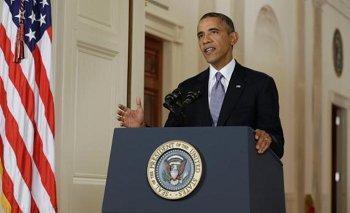
Getty Images
For much of President Obama's first term, when conservatives weren't questioning President Obama's citizenship, patriotism, or affinity for capitalism, they complained loudly and frequently about the president's commitment to "American exceptionalism."
After last night, the criticisms look pretty silly. Obama has not only embraced the principle, he's now begun using it as a key part of his rationale in confronting Syria.
The right's rhetoric on this has never really made any sense, but it was a Republican staple for years. Throughout the 2012 campaign, in nearly every stump speech he delivered, Mitt Romney insisted that Obama thinks "America's just another nation with a flag."
I wonder if conservatives noticed the not-so-subtle theme in the president's remarks to the nation on Syria.
"My fellow Americans, for nearly seven decades, the United States has been the anchor of global security. This has meant doing more than forging international agreements -- it has meant enforcing them. The burdens of leadership are often heavy, but the world is a better place because we have borne them. [...]
"America is not the world's policeman. Terrible things happen across the globe, and it is beyond our means to right every wrong. But when, with modest effort and risk, we can stop children from being gassed to death, and thereby make our own children safer over the long run, I believe we should act. That's what makes America different. That's what makes us exceptional. With humility, but with resolve, let us never lose sight of that essential truth."
After years in which Republicans expressed exasperation over the president and his indifference towards exceptionalism -- Kathleen Parker, I'm looking in your direction -- Obama's presentation to the nation at times boiled down to a simple proposition: the United States has to act because we're the United States. It's what we do. It's the burden that comes with being a superpower.
We can't look the other way, the argument goes, because America isn't just another nation with a flag.
Of course, this may not be an especially persuasive argument to skeptics of military intervention. Sure, we have the burden of leadership, but that doesn't mean that every mission is wise and every strike will advance our national security interests.
Indeed, for many skeptics of the use of force in Syria, whether or not America is "exceptional" is irrelevant. The questions are far more practical: would intervention make conditions in Syria better? How? For how long?
To this extent, the president's argument was effectively more of a challenge to the right -- if you embrace American exceptionalism, and you accept that Syria has used chemical weapons to massacre civilians, then you can't just throw up your arms and expect some other country to step up.
I have no idea whether this will resonate, but here's hoping the exceptionalism criticism joins the birther conspiracy theory in the folder marked "Obama smears no one should take seriously."


Morning Maddow: September 11
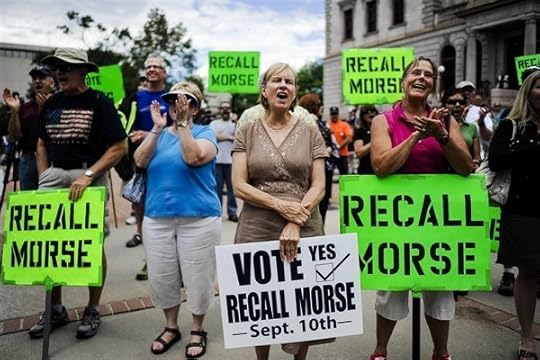
Michael Ciaglo / The Colorado Springs Gazette / AP
USA Today with the backstory on how the agreement with Russia over Syria's chemical weapons developed.
Republicans blame the White House's legislative liaison for failing to sell Congress on the plan to strike Syria.
Sen. Mitch McConnell fundraises off his Syria stance.
Colorado state senators ousted in recall seen as a referendum on gun rights.
An Air Force base is reportedly recognizing same-sex marriages performed in New Mexico.
The richest one percent have the biggest share of U.S. wealth since the 1920s.
What we know one year after the attack on a U.S. diplomatic outpost in Benghazi.
How New York City, the Pentagon and Shanksville are commemorating the 12th anniversary of 9/11.
September 10, 2013
Obama speaks to nation on crisis in Syria
President Obama addressed the nation from the White House on U.S. policy in Syria tonight, and the full speech is available in this clip. [This post originally featured a livestream video, which has since been replaced.]
Update: 9:39 p.m.
Nearly every major speech starts with identifying the speaker's audience. When we first learned that the president would give a national address on Syria, I more or less expected the intended audience to be Congress -- Obama wants lawmakers to give him the authority to use force, so he'd use the bully pulpit to make his case for intervention.
But recent developments have changed the domestic and international landscape in a hurry. In fact, persuading Congress, at least for now, isn't much of a priority since there won't be any votes anytime soon. As Obama explained this evening, the process of approving (or rejecting) a resolution on force is on hold while the administration pursues the diplomatic opportunity that emerged yesterday. Whether lawmakers are persuaded or not, all of a sudden, is of little short-term significance.
So why deliver a speech at all? On a certain level, part of Obama's intended audience was abroad -- the president seemed eager to remind Syria and its allies that his willingness to use force in response to the use of chemical weapons hasn't dissipated. Indeed, though it now seems unlikely Obama would act without congressional approval, the president once again made clear tonight that he believes he has that authority.
But more fundamentally, Obama seemed eager to simply explain to the American public exactly why he's pursued this policy. It was the first presidential speech I can recall that seemed to come with a FAQ section right smack in the middle -- Obama realizes that the prospect of intervention is quite unpopular, so he saw value in at least making himself clear so Americans understand the White House's motivations, even if they disapprove.
What we saw, in other words, was a president who decided it's time to lead on an unpopular foreign policy crisis, bringing clarity and focus to his position. Whether he persuaded skeptics to follow remains to be seen.
The full transcript of the speech is below.
My fellow Americans, tonight I want to talk to you about Syria, why it matters and where we go from here. Over the past two years, what began as a series of peaceful protests against the repressive regime of Bashar al-Assad has turned into a brutal civil war. Over a hundred thousand people have been killed. Millions have fled the country. In that time, America has worked with allies to provide humanitarian support, to help the moderate opposition and to shape a political settlement.
But I have resisted calls for military action because we cannot resolve someone else's civil war through force, particularly after a decade of war in Iraq and Afghanistan.
The situation profoundly changed, though, on August 21st, when Assad's government gassed to death over a thousand people, including hundreds of children. The images from this massacre are sickening, men, women, children lying in rows, killed by poison gas, others foaming at the mouth, gasping for breath, a father clutching his dead children, imploring them to get up and walk. On that terrible night, the world saw in gruesome detail the terrible nature of chemical weapons and why the overwhelming majority of humanity has declared them off limits, a crime against humanity and a violation of the laws of war.
This was not always the case. In World War I, American GIs were among the many thousands killed by deadly gas in the trenches of Europe. In World War II, the Nazis used gas to inflict the horror of the Holocaust. Because these weapons can kill on a mass scale, with no distinction between soldier and infant, the civilized world has spent a century working to ban them. And in 1997, the United States Senate overwhelmingly approved an international agreement prohibiting the use of chemical weapons, now joined by 189 government that represent 98 percent of humanity.
On August 21st, these basic rules were violated, along with our sense of common humanity.
No one disputes that chemical weapons were used in Syria. The world saw thousands of videos, cellphone pictures and social media accounts from the attack. And humanitarian organizations told stories of hospitals packed with people who had symptoms of poison gas.
Moreover, we know the Assad regime was responsible. In the days leading up to August 21st, we know that Assad's chemical weapons personnel prepared for an attack near an area they where they mix sarin gas. They distributed gas masks to their troops. Then they fired rockets from a regime-controlled area into 11 neighborhoods that the regime has been trying to wipe clear of opposition forces.
Shortly after those rockets landed, the gas spread, and hospitals filled with the dying and the wounded. We know senior figures in Assad's military machine reviewed the results of the attack. And the regime increased their shelling of the same neighborhoods in the days that followed. We've also studied samples of blood and hair from people at the site that tested positive for sarin.
When dictators commit atrocities, they depend upon the world to look the other day until those horrifying pictures fade from memory. But these things happened. The facts cannot be denied.
The question now is what the United States of America and the international community is prepared to do about it, because what happened to those people, to those children, is not only a violation of international law, it's also a danger to our security.
Let me explain why. If we fail to act, the Assad regime will see no reason to stop using chemical weapons.
As the ban against these weapons erodes, other tyrants will have no reason to think twice about acquiring poison gas and using them. Over time our troops would again face the prospect of chemical warfare on the battlefield, and it could be easier for terrorist organizations to obtain these weapons and to use them to attack civilians.
If fighting spills beyond Syria's borders, these weapons could threaten allies like Turkey, Jordan and Israel.
And a failure to stand against the use of chemical weapons would weaken prohibitions against other weapons of mass destruction and embolden Assad's ally, Iran, which must decide whether to ignore international law by building a nuclear weapon or to take a more peaceful path.
This is not a world we should accept. This is what's at stake. And that is why, after careful deliberation, I determined that it is in the national security interests of the United States to respond to the Assad regime's use of chemical weapons through a targeted military strike. The purpose of this strike would be to deter Assad from using chemical weapons, to degrade his regime's ability to use them and to make clear to the world that we will not tolerate their use. That's my judgment as commander in chief.
But I'm also the president of the world's oldest constitutional democracy. So even though I possessed the authority to order military strikes, I believed it was right, in the absence of a direct or imminent threat to our security, to take this debate to Congress. I believe our democracy is stronger when the president acts with the support of Congress, and I believe that America acts more effectively abroad when we stand together.
This is especially true after a decade that put more and more war-making power in the hands of the president, and more and more burdens on the shoulders of our troops, while sidelining the people's representatives from the critical decisions about when we use force.
Now, I know that after the terrible toll of Iraq and Afghanistan, the idea of any military action, no matter how limited, is not going to be popular. After all, I've spent four and a half years working to end wars, not to start them. Our troops are out of Iraq, our troops are coming home from Afghanistan, and I know Americans want all of us in Washington, especially me, to concentrate on the task of building our nation here at home, putting people back to work, educating our kids, growing our middle class. It's no wonder, then, that you're asking hard questions. So let me answer some of the most important questions that I've heard from members of Congress and that I've read in letters that you've sent to me.
First, many of you have asked: Won't this put us on a slippery slope to another war? One man wrote to me that we are still recovering from our involvement in Iraq. A veteran put it more bluntly: This nation is sick and tired of war.
My answer is simple. I will not put American boots on the ground in Syria. I will not pursue an open-ended action like Iraq or Afghanistan. I will not pursue a prolonged air campaign like Libya or Kosovo. This would be a targeted strike to achieve a clear objective: deterring the use of chemical weapons and degrading Assad's capabilities.
Others have asked whether it's worth acting if we don't take out Assad. As some members of Congress have said, there's no point in simply doing a pinprick strike in Syria.
Let me make something clear: The United States military doesn't do pinpricks.
Even a limited strike will send a message to Assad that no other nation can deliver. I don't think we should remove another dictator with force. We learned from Iraq that doing so makes us responsible for all that comes next. But a targeted strike can make Assad or any other dictator think twice before using chemical weapons.
Other questions involve the dangers of retaliation. We don't dismiss any threats, but the Assad regime does not have the ability to seriously threaten our military. Any other -- any other retaliation they might seek is in line with threats that we face every day. Neither Assad nor his allies have any interest in escalation that would lead to his demise. And our ally Israel can defend itself with overwhelming force, as well as the unshakable support of the United States of America.
Many of you have asked a broader question: Why should we get involved at all in a place that's so complicated and where, as one person wrote to me, those who come after Assad may be enemies of human rights? It's true that some of Assad's opponents are extremists. But al-Qaida will only draw strength in a more chaotic Syria if people there see the world doing nothing to prevent innocent civilians from being gassed to death. The majority of the Syrian people and the Syrian opposition we work with just want to live in peace, with dignity and freedom. And the day after any military action, we would redouble our efforts to achieve a political solution that strengthens those who reject the forces of tyranny and extremism.
Finally, many of you have asked, why not leave this to other countries or seek solutions short of force?
And several people wrote to me, we should not be the world's policeman. I agree. And I have a deeply held preference for peaceful solutions. Over the last two years my administration has tried diplomacy and sanctions, warnings and negotiations. But chemical weapons were still used by the Assad regime.
However, over the last few days we've seen some encouraging signs in part because of the credible threat of U.S. military action as well as constructive talks that I had with President Putin. The Russian government has indicated a willingness to join with the international community in pushing Assad to give up his chemical weapons. The Assad regime has now admitted that it has these weapons and even said they'd join the chemical weapons convention, which prohibits their use.
It's too early to tell whether this offer will succeed, and any agreement must verify that the Assad regime keeps its commitments. But this initiative has the potential to remove the threat of chemical weapons without the use of force, particularly because Russia is one of Assad's strongest allies.
I have therefore asked the leaders of Congress to postpone a vote to authorize the use of force while we pursue this diplomatic path. I'm sending Secretary of State John Kerry to met his Russian counterpart on Thursday, and I will continue my own discussions with President Putin. I've spoken to the leaders of two of our closest allies, France and the United Kingdom. And we will work together in consultation with Russia and China to put forward a resolution at the U.N. Security Council requiring Assad to give up his chemical weapons and to ultimately destroy them under international control.
We'll also give U.N. inspectors the opportunity to report their findings about what happened on August 21st. And we will continue to rally support from allies, from Europe to the Americas, from Asia to the Middle East who agree on the need for action.
Meanwhile, I've ordered our military to maintain their current posture, to keep the pressure on Assad and to be in a position to respond if diplomacy fails. And tonight I give thanks again to our military and their families for their incredible strength and sacrifices.
My fellow Americans, for nearly seven decades the United States has been the anchor of global security. This has meant doing more than forging international agreements. It has meant enforcing them. The burdens of leadership are often heavy, but the world's a better place because we have borne them.
And so to my friends on the right, I ask you to reconcile your commitment to America's military might with a failure to act when a cause is so plainly just.
To my friends on the left, I ask you to reconcile your belief in freedom and dignity for all people with those images of children writhing in pain and going still on a cold hospital floor, for sometimes resolutions and statements of condemnation are simply not enough.
Indeed, I'd ask every member of Congress, and those of you watching at home tonight, to view those videos of the attack, and then ask: What kind of world will we live in if the United States of America sees a dictator brazenly violate international law with poison gas and we choose to look the other way? Franklin Roosevelt once said our national determination to keep free of foreign wars and foreign entanglements cannot prevent us from feeling deep concern when ideals and principles that we have cherished are challenged.
Our ideals and principles, as well as our national security, are at stake in Syria, along with our leadership of a world where we seek to ensure that the worst weapons will never be used. America is not the world's policeman. Terrible things happen across the globe, and it is beyond our means to right every wrong. But when, with modest effort and risk, we can stop children from being gassed to death and thereby make our own children safer over the long run, I believe we should act. That's what makes America different. That's what makes us exceptional.
With humility, but with resolve, let us never lose sight of that essential truth.
Thank you. God bless you, and God bless the United States of America.
We'll see you at 8pm ET tonight
We’ve got twice the Maddow show tonight! MSNBC’s special coverage of President Obama addressing the nation about the situation in Syria. Join Rachel and her esteemed colleagues live at 8pm ET tonight with two hours of insightful analysis.
President Obama’s address is scheduled for 9:01:30 (yes, down to the second), after which Rachel will resume hosting until 10.
“The Last Word with Lawrence O’Donnell” airs at its usual time of 10pm ET.
Then, at 11 p.m. ET, don’t miss a special live edition of “All In with Chris Hayes.”
Tonight’s MSNBC panel of analysts:
Chris Matthews, host of “Hardball”
Rev. Al Sharpton, host of “Politics Nation”
Ed Schultz, host of “The Ed Show”
Chris Hayes, host of “All In with Chris Hayes”
Eugene Robinson, Pulitzer prize-winning columnist for “The Washington Post” and MSNBC political analyst
And an all-star lineup of guests:
Richard Engel, NBC chief foreign correspondent, live from Antakya, Turkey near the Syria border
Andrea Mitchell, NBC chief foreign affairs correspondent and host of “Andrea Mitchell Reports” on MSNBC
Sen. Tammy Baldwin, (D) Wisconsin
Sen. Joe Manchin, (D) West Virginia
Rep. Scott Rigell, (R) Virginia
Here is tonight’s soundtrack! And here is executive producer Bill Wolff with what to expect tonight:
Tuesday's Mini-Report
Today's edition of quick hits:
* President Obama will address the public this evening, but this afternoon, he made his case to lawmakers directly.
* Don't expect a vote anytime soon: "President Obama on Tuesday asked Senate Democrats to delay a vote authorizing a military strike on Syria as he embraced a U.N. effort to secure Syria's chemical weapons stockpiles. Obama told Democrats at a meeting on Capitol Hill he wanted the vote delayed to give the international diplomatic process more time to work."
* Secretary of State John Kerry announced plans to meet with Russian officials in Geneva on Thursday to discuss the crisis in Syria.
* Ezra Klein makes the case that recent developments with Syria are "a better outcome than the White House could have hoped for."
* Note, however, that Gary Samore, Obama's former White House coordinator for arms control and weapons of mass destruction, told Greg Sargent that a deal may not come together, and successfully implementing an agreement will be very difficult.
* Bolstering the intelligence: "An investigation by the international group Human Rights Watch found that the Syrian regime of dictator Bashar al-Assad is most likely responsible for the Aug. 21 chemical weapons attack outside Damascus that the U.S. government says killed more than 1,400 people. Although the intelligence services of France and Germany have also said they believe the Assad regime carried out the attack, the Human Rights Watch investigation is the first in-depth assessment not conducted by state intelligence agencies."
* NSA: "Newly released documents show that a federal judge who oversaw a secret U.S. spy court almost shut down the government's domestic surveillance program after he "lost confidence" in officials' ability to operate it."
* Pakistan "is set to release the Afghan Taliban's former second-in-command to help facilitate the peace process in neighboring Afghanistan, a Pakistani official told NBC News on Tuesday."
* China: "Worried about its hold on public opinion, the Chinese government has pursued a propaganda and police offensive against what it calls malicious rumor-mongering online. Police forces across the country have announced the detentions of hundreds of microblog users since last month on charges of concocting and spreading false claims, often politically damaging."
* And immigration reform isn't dead just yet: "Republican Congressman Bob Goodlatte, chair of the House Judiciary Committee overseeing immigration, said he expected Congress to pursue reform legislation despite a tight schedule featuring debates over Syria, health care, and the debt limit.... Goodlatte said he expected votes soon, perhaps in October, on a series of smaller House bills on border security, internal enforcement, guest workers, and high-tech visas."
Anything to add? Consider this an open thread.
Syria willing to join Chemical Weapons Convention
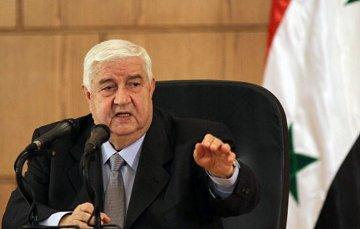
Getty Images
Syrian Foreign Minister Walid al-Moualem
The diplomatic resolution to the crisis in Syria will be messy, halting, and fragile. It may even fail. The momentum have shifted with remarkable speed yesterday, but details slowed the process down considerably today -- a Security Council resolution from France was swiftly rejected by Russia, which is also now calling on the United States to take the threat of military force off the table altogether as a precondition to further talks.
Fits and starts like these will continue until the negotiations produce a solution or collapse. But in the meantime, this is what progress looks like.
Syria is ready to declare its chemical weapons arsenal and adhere to the chemical weapons convention, the country's foreign minister said Tuesday, amid a flurry of diplomatic maneuverings around the world.
Foreign Minister Walid al-Moualem said Damascus supports the Russian initiative for Syria to hand over chemical weapons. "I am authorized to confirm our support for the Russian initiative regarding chemical weapons in Syria in compliance with the regime of the Organization for the Prevention of Chemical Weapons," Moualem said.
Moualem added that Syria is prepared to place chemical weapons locations in the hands of representatives of Russia, "other countries," and the United Nations, though it's not yet clear which countries might be included in this "other" category.
I hope we don't brush past this too quickly, because these developments were largely unimaginable very recently. Not only has Syria ignored calls for years to join the Chemical Weapons Convention, but Syrian officials were still denying as recently as yesterday morning that the country's chemical weapons even exist.
Today, Syria is suddenly prepared to acknowledge these weapons for the first time and willing to adhere to the global system on chemical weapons.
Maybe the diplomatic solution will take hold, maybe not. But if literally nothing else happens in the diplomatic process, we're already witnessing progress.
Cuccinelli and his microwave try to move past controversy
Following up on a story we've been following, Virginia Gov. Bob McDonnell (R) tried to turn the corner on his corruption scandal by returning the gifts he'd received from Star Scientific CEO Jonnie Williams. But a related problem lingered: why didn't state Attorney General Ken Cuccinelli, the Republican who hopes to replace McDonnell, do the same?
A month ago, the far-right candidate said he couldn't return the $18,000 in gifts he received from Williams because he didn't have $18,000. Apparently, however, as his campaign struggles, Cuccinelli came up with the cash -- and released a new video to brag about it (thanks to my colleague Laura Conaway for the tip). For those who can't watch clips online:
"[I]n recent days, I've managed to send a check of over $18,000 to a Richmond-based charity. I did this to resolve any questions surrounding the matter concerning Star Scientific. I made the decision because it's the right thing to do, plain and simple. This is something I would have liked to have done sooner, but like most Virginians, writing a check for more than $18,000 is not a simple matter for my family and me. It's taken a while to get our funds together.
"For those who've been disappointed in this situation or how I've handled it, I apologize. It's been a humbling set of lessons for me. In the remaining weeks of my campaign, I intend to focus on what I've done and what I intend to do for the people of Virginia."
One assumes Cuccinelli was tired of having this issue drag him down the last several weeks, and today's announcement is no doubt intended to end the controversy.
But questions remain. Which charity received the $18,000? How did Cuccinelli suddenly come up with the money he said he didn't have?
And perhaps most importantly, what's all that stuff on his microwave? This, of course, is the question Maddow Blog readers can help with.
A couple of years ago, Team Maddow became fascinated with the kitchen canisters featured in a Sharron Angle campaign video. They even made an appearance on the show.
At the time, eagle-eyed readers/viewers helped us track down those canisters. Now we're hoping you're ready to help again.
What's all that stuff behind Cuccinelli? We don't mean the bananas visible in the first second; we mean all that other stuff visible 17 seconds in. Feel free to let us know in comments.
'The level of hypocrisy is what amazes me'
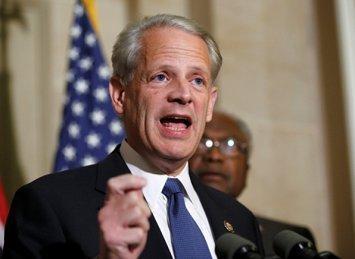
Associated Press
Rep. Steve Israel (D-N.Y.)
I'm curious if anyone has even bothered to push back against arguments like these.
"What has fascinated me more than anything is this," said Democratic Congressional Campaign Committee Chairman Steve Israel (D-N.Y.). "Does anyone truly believe that if Mitt Romney had been elected president and had asked House Republicans for exactly what President Obama is asking, that House Republicans would oppose it to the extent that they're opposed to what President Obama wants? The level of hypocrisy is what amazes me."
"Let's not be fooled. I don't know of any credible analyst who believes that if Mitt Romney had been elected president and produced this same exact resolution that you would see the whip counts in the Republican caucus that you see today," he added.
Are Republicans seriously prepared to deny this? Is Mitch McConnell?
I suppose this is about the point at which some will suggest Democrats are equally guilty of playing politics with foreign policy and national security, but recent evidence points in the exact opposite direction.
For much of the Bush/Cheney era, Democrats were, often to the chagrin of their base, willing to be constructive partners with Republicans -- large numbers of Democratic lawmakers voted to authorize the use of force in Iraq in large numbers; they backed the PATRIOT Act; and they approved a revised FISA law. Democrats could have simply said they opposed Bush/Cheney, and voted accordingly, but they took the notion of a "loyal opposition" seriously.
Likewise, if Democrats were reflexive partisans on questions like these, we'd also see Dem lawmakers lining up in droves to endorse President Obama's proposed intervention in Syria. Except, that's not happening, either.
Republicans, on the other hand, are putting on an extraordinary display -- up to and including their condemnations of the president's "red line' standard that they themselves embraced last year.
Kevin Drum added the other day, "When Obama wanted to stay out of Syria, they spent hours on Fox sputtering about his lack of leadership and insisting that we had to do more to bring down the Assad regime. But now that Obama is proposing to do exactly what they asked for, suddenly they're spending hours on Fox explaining why it would be foolish to enmesh ourselves in a brutal and intractable civil war five thousand miles away. It's pretty stomach turning."
Or as Rachel put it on the show last night, "It would be awesome at times like this for the opposition party in Washington to be a useful part of the debate. Hard-fought fights are better fights than fights that are wussy, right? The more contentious the discussion sometimes the more rigorous the discussion. Instead, though, a lot of the more substantive discussion and debate is happening just inside one our two parties. It's happening inside the president's party, among Democrats, who respect each other but who do strongly disagree on this issue."
When Bill Kristol predicted two weeks ago, "I think the Republican Party will step up and do the right thing and support the president against a chemical-weapons-using, terror-sponsoring, Iran-backed dictator," it was fairly easy to believe he was right. But what quickly followed was a fight that pitted the Republican Party's foreign-policy priorities against the Republican Party's contempt for the Commander in Chief during a national security crisis.
The policy priorities never stood a chance.
Obama agrees to U.N. talks over Syria
In Congress, prominent Republicans continue to abandon their own foreign policy views to announce their opposition to U.S. using force in Syria -- Senate Minority Leader Mitch McConnell (R-Ky.) fell off the fence this morning, and he was soon followed by Sen. Rob Portman (R-Ohio) -- but away from Capitol Hill, the larger dynamic continues to change quickly.
President Barack Obama has agreed to discuss Russia's proposal that Syria hand over chemical weapons, the White House said Tuesday after Damascus confirmed it would accept such a deal.
Talks will begin at the United Nations later Tuesday, a White House official told NBC News, even as Obama prepares to address Congress -- and the American people -- to make the case for authorization to use military strikes if diplomatic solutions fail.
As recently as yesterday, we expected President Obama's White House address to focus on his administration's case for military intervention. Now, I'm more or less expecting that he'll let us know the latest updates on the ongoing diplomatic efforts.
It's worth emphasizing again that the crisis has not dissipated, and it's quite likely that Obama will continue to stress the military option, if for no other reason that the White House believes it's the threat of force that's creating the impetus for diplomacy. As seen in the video posted above, Secretary of State John Kerry made this argument explicitly to Congress this morning.
"Nothing focuses the mind like the prospect of a hanging," Kerry told the House Armed Services Committee. He added that the administration is open to the proposed solution, adding, "We're waiting for that proposal but we're not waiting for long."
Kerry went on to tell lawmakers that the threat of military action "is more compelling if the Congress stands with the commander in chief," a sentiment that a growing number of lawmakers apparently disagree with.
Regardless, British Prime Minister David Cameron also indicated this morning that Britain would join the U.S. and France in proposing a U.N. Security Council resolution quite soon.
Indeed, the debate over wording is apparently already underway.
The New York Times reported:
Diplomats at the United Nations said the French had begun to share the text of a resolution drafted by France, which the French foreign minister, Laurent Fabius, announced earlier Tuesday, that would include the threat of force to ensure compliance. One of the diplomats, who spoke on condition of anonymity, said of the discussions that "we're looking at a process that will last a few days."
The diplomacy at the United Nations could prove awkward for Russia, which started the process with its proposal on Syria's chemical munitions. As a permanent Security Council member, it has thrice vetoed previous Western-sponsored resolutions that would authorize force to help resolve the conflict in Syria, now in its third year.
On a related note, there are also new talks underway in the Senate -- the institution that was set to vote tomorrow on a resolution authorizing the use of force -- where a bipartisan group of lawmakers are crafting a reworked measure that would, among other things, "set a deadline for establishing United Nations control of the arsenal." A failure to meet the deadline would trigger the authorization of military force.
Tuesday's campaign round-up
Today's installment of campaign-related news items that won't necessarily generate a post of their own, but may be of interest to political observers:
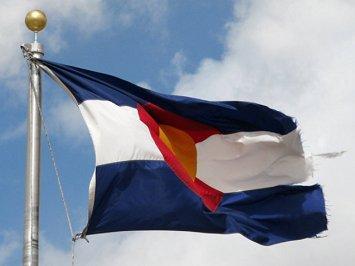
* A big day in Colorado: "A final, frantic effort is underway to get voters to the polls Tuesday in two state Senate districts where Democratic lawmakers face ouster for stricter gun laws passed in the 2013 legislative session. State Senate President John Morse of Colorado Springs and Sen. Angela Giron of Pueblo are in the fight of their political lives in an election that has attracted national attention and money."
* With eight weeks to go in New Jersey's gubernatorial race, Gov. Chris Christie (R) is poised to take advantage on his massive financial advantage over Barbara Buono (D), investing another $1.5 million in a television ad spree. Buono has raised only $650,000 for the general election.
* In Michigan, Rep. Kerry Bentivolio's (R) primary challenger, attorney David Trott, isn't fooling around. Trott's campaign confirmed this week that it's hired some major GOP players to serve as the candidate's strategists, pollsters, and media consultants.
* In Pennsylvania, John Hugya, the late Rep. John Murtha's (D) former chief of staff, is poised to run for Murtha's old seat. The district is currently represented by Republican Rep. Keith Rothfus in an increasingly "red" part of the state.
* For reasons I won't even try to explain, Rep. Peter King (R-N.Y.) seems rather serious about his national ambitions, telling a New Hampshire radio station he's visiting the sate "because right now I'm running for president." I believe he means president of the United States.
* And North Carolina's next gubernatorial race is still three years away, but with Gov. Pat McCrory (R) flailing, prominent Democrats, including state Attorney General Roy Cooper, are already laying the groundwork for the 2016 campaign.