Edward Cline's Blog, page 17
January 20, 2013
My Life in Words
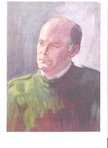
Contributing Editor Edward Cline was interviewed by
Family Security Matters about his life, writing career, and goals. He is first and foremost a
novelist, but over the years has written hundreds of book and movie reviews,
political and cultural columns, and papers for a variety of print and weblog
publications. Born in Pittsburgh in 1946, when he graduated from high school,
he went directly into the Air Force because he was going to be drafted. After
leaving the Air Force, he lived and worked around the country, educating
himself (he learned very little in high school) and honing his writing skills.
Currently, he lives in Williamsburg, Virginia.
FSM: You say you are first and foremost a
novelist. But, what prompted you to write so much nonfiction? You've had
hundreds of articles, reviews, and essays published, much of it appearing on Family
Security Matters.
Cline: While writing the novels, those were
occasional projects I pursued when I had the spare time and energy, and when I
was invited to submit articles. I've written pieces for the Encyclopedia of Library and Information
Science, McGraw-Hill's Western
Civilization, the Journal of Information Ethics, Reason Magazine, The
Social Critic, The Intellectual Activist, The Wall Street Journal, Marine Corps
League, The Library Journal, The Journal of Colonial Williamsburg, and The
Armchair Detective, among other publications. Over the last few years I've
contributed to Rule of Reason, Capitalism Magazine, and, of course,
Family Security Matters. Often my pieces are picked up by other weblogs, from
here to Israel and India. Since finishing the Sparrowhawk
series, I've had time and energy on my hands. It's got to be spent somehow,
somewhere, productively. I can't sit still when there are so many issues to
address.
FSM: Why do you think it's necessary to address
those issues?
Cline: Because I think I can bring a measure of
reason to them. And because it's in the way of catharsis, of letting off steam.
If I didn't write about them, I'd blow up. I don't want to be confined in a
state-run rubber room wearing a straightjacket.
FSM: You've published a collection of your columns.
Cline: I've published three collections: Broadsides
in the War of Ideas , Running
Out My Guns , and Corsairs
and Freebooters . They're print books as well being on Kindle. They
contain articles and essays on politics, Obama's rise to stardom (stage-managed
by George Soros), Islam and the threat it poses to the West, the Federalization
of language (i.e., politically correct speech) and various cultural topics,
such as the wholly bogus depictions of Mozart and Salieri in Amadeus. I'm thinking of compiling a
fourth collection, tentatively called Boarding
Parties.
FSM: How long have you been writing novels? Or, for that matter, how
long have you been writing anything?
Cline: I wrote two clunkers before finishing my
first polished novel, Whisper the Guns.
I don't even have the manuscripts of the first two novels – I disposed of my
copies ages ago, I didn't want them around – although incredibly, I found an
agent who represented them, a fellow by the name of Oscar Collier (he died in
1998). Those clunkers were my first efforts. One, In the Land of the Pharaohs, was set in a future American
dictatorship, and was about a police detective who's assigned to help a Federal
agent find the gang that robbed the Federal Reserve Bank of its gold bullion.
The second was a suspense novel about an American businessman, Merritt Fury,
rescuing a woman kidnapped by the Polish Communists. He breaks into the Polish
Consulate and causes a lot of mayhem. I can't now recall its title or even how
it ended.
Mr. Collier couldn't
find publishers for the clunkers, however. Whisper
was eventually published in 1992 by The Atlantean Press, a small publisher
based in California. It was about to publish the second in that series, We Three Kings, when it went under. It
had republished two of Victor Hugo's novels, Toilers of the Sea, and The
Man Who Laughs. I wrote the introduction to The Man Who Laughs. Whisper,
of course, went out of print. The Atlantean Press editions of those novels
aren't even listed on Amazon Books. I
find copies of Whisper now going for
$150 or more from bookstores connected with Amazon Books. I finally republished
Whisper on Kindle two years ago and
recently as a print book, and later We
Three Kings. The third and last
in that series, Run
From Judgment , sees Fury being targeted for assassination by some
unknown person. He winds up marrying a British portrait painter and inheriting
a financial weekly much like Barron's, the U.S.'s leading financial weekly.
FSM: Isn't We
Three Kings about Arabs?
Cline: Yes. I finished that novel in 1980. Readers have
said it was pretty prescient, because in 1980 the Saudis weren't much in the
news. I wouldn't call it "prescient." As a culture watcher, I'd made
a habit to observe fundamental trends, and our obvious, obscene, and obsequious
behavior to the Sauds was hard to ignore.
The story? This Saudi
sheik has bought up all these rare gold coins to use in a museum in Riyadh. The
last one is owned by an American, who won't sell it, and the sheik sics his
nephew on him to terrorize him into surrendering it. Fury rescues the man
during this mugging, killing the nephew during the fight. The man, Crenshaw,
gives the coin to Fury in the way of appreciation. Then he's murdered. The
sheik, who's also something or other at the U.N., is given carte blanche to
deal with Fury as he pleases by the State Department. In the meantime, a
homicide detective, Wade Lambert, works to prove that Fury murdered the nephew.
He winds up siding with Fury and is suspended from the police force and goes
into hiding before he's kidnapped by the sheik. There are more murders, and no
plot spoilers here. Fury triumphs in the end.
FSM: What were you doing in the meantime, while
writing all these novels?
Cline: Making a living. I held numerous jobs on Wall
Street, in insurance, banking, for Icelandic Airlines, and so on, working
chiefly as a teletype agent for all these firms. I also worked as a reader for
a few publishers. My work life enabled me to pursue my life work, my novels.
The only break in that period I had was when I moved to East Lansing, Michigan,
and Michigan State University, to research my first detective novel, With
Distinction . Wade Lambert was the progenitor of Chess Hanrahan, a
detective who solves what I call "moral paradoxes." With Distinction is set in the
philosophy department of a fictive university. A philosophy professor is
murdered, and Chess can't believe that anyone would want to murder such a
person. As he investigates, he learns why. In that novel he's the chief of
police of this university town. Then in First
Prize , the second in the series, I move him to New York as a private
detective. In this one he solves the murder of a prize-winning novelist. The
third in that series, Presence
of Mind , pits him against the denizens of diplomacy. The fourth and last in that series, Honors
Due , has him playing cat-and-mouse with some Hollywood types over the
murder of a scholar.
First Prize was originally
published by the Mysterious Press/Warner Books in 1988. Otto Penzler, the
publisher, was the power behind that break and published it against the wishes
of his editors. At the time, it was represented by George Ziegler, whom I
called the last "gentleman" agent in the business. It was even
reviewed in The New York Times. It was
in print for years before lapsing. First editions of it are now going for some
pretty outlandish prices. Perfect Crime
Books has now published the whole Hanrahan series.
FSM: What was it like, dealing with publishers,
trying to interest them in your books?
Cline: Publishing seems to have always been in a
state of flux, completely rudderless in terms of literature and literary
standards, although it usually followed intellectual trends, such as the French
deconstructionists or the New School Progressives or the Postmodern Realists
and Surrealists. One really couldn't decide who was running the "literary"
show: critics such as Stanley Fish (a postmodernist Marxist) and Edmond Wilson
(a leftist) and Granville Hicks (a leftist), or publishers such as Bennett Cerf
(of Random House) and George Delacorte, or editors and teachers such as Hiram
Haydn. Compounding the confusion have
been successive generations of aspiring writers and editors expectorated from
university humanities courses, whose literary senses have been stripped of all
standards and value and whose only ambition was to make names for themselves as
arbiters of literature and culture. I remember that when I was a reader for a
few publishing houses, invariably the trash I called trash in my reports was
published, and the books I thought had promise or showed a glimmer of
intelligence, were consigned to the slush piles. I lasted a year in that
racket.
FSM: Were you still working
in New York?
Cline: No. By the time First Prize was published, I had moved to Palo Alto, California. I
had accepted a job offer there with a free market think tank, the Institute for
Humane Studies. I finished the rest of the Hanrahan novels there, on an IBM
Selectric typewriter, which I still have. When IHS moved to George Mason
University a year later, I elected to stay on in Palo Alto, where I made my
living working for various Silicon Valley software firms and other companies.
While at IHS some of my nonfiction writing was published and even syndicated in
various newspapers. I even wrote four book reviews for The Wall Street Journal.
FSM: There's a third
detective series of yours, isn't there?
Cline: Yes. This one is set in San Francisco in 1928
and 1929, and features Cyrus Skeen, a wealthy private eye who uses his cases to
collect material for his short stories, which he writes under a pen name. Its
genesis is peculiar. I was invited by Western Michigan University Press to
write an article for an anthology of articles about detective and crime
fiction. I wrote the piece, called "The Wizards of Disambiguation,"
which burst the balloons of various left-wing literary critics who alleged that
Dashiell Hammett's The Maltese Falcon
was a kind of proletarian novel. In the piece I prove that, while Hammett had
Red sympathies, his hero, Sam Spade, wasn't some kind of signifying avatar of
communist ideology and that all the Frankfurt School-inspired
"deconstructive" interpretations of the novel were just so much
hooey. The piece wasn't accepted. It turned out, I learned later on, that all
the other essays in that anthology were written by left-wing critics. But the
exercise led me to write an answer to The
Maltese Falcon, set in the same week and year as Hammett's story, which was
originally serialized in Black Mask Magazine in 1928. Thus was born China
Basin , which I finished in 1990. Skeen is asked by a French countess
and retired British officer to find Thomas Becket's chalice, stolen from them
by a psychotic and very elusive killer. It's also an audio book, as are First Prize and Whisper the Guns.
FSM: And after that?
Cline: I had so much fun writing China
Basin that I decided to continue the series. I felt that I could no longer
set a detective story in my own time, what with political correctness gaining
strength and the politics becoming more and more statist. Publishers were
becoming leery of anything that went against political trends, not that any of
them gave me a second look. Also, trying to force my heroes work within all the
federal regulations and stifling laws brought me no joy or satisfaction. So I
decided to set the next novels in a time when the hero had more freedom of
thought and action. I finished The
Head of Athena in 1992. In it, Skeen agrees to try to exonerate an
atheist lecturer of the charge of murdering his ex-wife. Next came The Daedâlus
Conspiracy in 2011, and lastly, The
Chameleon , in 2012. Skeen takes on some very unusual cases in the last
two, and his politics also become more evident. All are now published by the
Patrick Henry Press as print books and are on Kindle.
FSM: Why is there such a big time gap between The Head of Athena and The Daedâlus Conspiracy? It's nearly
twenty years!
Cline: For a long while I had been taking notes for
a historical novel set in the pre-Revolutionary period. That period, I had
decided, had not been justly or fairly represented in American fiction. I
decided to do something about it. I wanted to dramatize why the Revolution
happened, and not write just another costume period novel. The election of Bill
Clinton in 1992 caused me to think: If I'm ever going to write this novel, I
had better start on it now, because politically and culturally, things can only
get worse and I may not have a chance or even the freedom to write it. So, in
1993, I packed up my bags and moved to Williamsburg, Virginia, to begin
researching and writing the series, Sparrowhawk.
I finished it in 2005. It turned out to be six titles, plus a Companion to the series, published in
2007. The first title appeared in 2001. The series was published by
MacAdam/Cage of San Francisco.
FSM: How did that come about?
Cline: To paraphrase Sam Spade in The Maltese Falcon (who was paraphrasing
Prospero in The Tempest), it was the
stuff that dreams are made of. In 2000 I had moved temporarily to Las Vegas to
take a breather from working on the novel, which I had worked on steadily while
working full time. I had sent out queries to publishers and agents about their
interest in Sparrowhawk. No interest.
I was in the middle of the fourth title of the series. I was feeling pretty
despondent. I got a note from my retired agent, George Ziegler, suggesting I
query MacAdam/Cage, a new publisher that that was looking for "quality
fiction." I had heard that line before – I didn't think much of the
"quality fiction" I saw was being published – but sent a query to the
firm. They expressed interest. I submitted the first of the series. Before I
knew it, I had a contract for the first four titles and a promised contract for
the rest of the series. Book One: Jack
Frake came out in 2001, the other titles consecutively up to 2007, as well
as the trade soft covers.
FSM: So, it was smooth sailing from that point on?
Cline: No, it was rough seas and an un-prosperous
voyage. My relationship with MacAdam/Cage blew hot and cold. They did a very
nice job in designing and packaging the series, but did next to diddly to
market it. If it sold, it sold on its own merits. It was a series that the
reading public had to discover itself. Which it has, but with no help from the
publisher. They did not know how to sell it. In addition, one of their readers
thought that the hero of Book One,
Jack Frake, was unbelievable, and thought he could be made more credible if I
gave him an Oedipus complex or something. I said no deal, and if that meant no
contract, that was fine with me. They gave in and never made another editorial
suggestion.
The series became a
revenue generating mainstay for the publisher. Then, shortly after the Companion came out, I stopped getting
royalties. To make a long story short, I got no satisfaction from the
publisher, and had to threaten legal action to get paid what was coming to me.
This tug of war lasted some four years. The publisher's appetite was bigger
than its ability to publish big time. It was buying some very trendy books and
going into bidding wars against far bigger publishers, such as Random House and
Harper/Collins, and paying writers fabulous advances. Their books did not sell.
The publisher began suffering significant losses.
As well as my series was
doing, it couldn't carry the whole firm.
Behind all its backlist authors' backs, it sold the electronic or e-book
rights of the whole backlist to a British publisher to keep afloat. I didn't
learn about that until I put up the series myself on Kindle, with cleaned up
texts, and was told that I was in violation of contract. So, down they came.
I've patched things up with MacAdam since then – the relationship since then
has been tepid at best – but now the publisher is negotiating the sale of the
firm to some other outfit, and the future of Sparrowhawk is in question. For all I know – because the publisher
won't answer my queries, which does not bode well for the future – it's a done
deal. Publishers Weekly is looking into it.
FSM: What a rollercoaster ride!
Cline: You can say that again. Sparrowhawk represents a big chunk of my life. I had to fight for
it. I may still need to fight for it.
FSM: What were your first published writings?
Cline: Aside from a handful of letters to the editor, my first
"professional" writings were fillers for Barron's National and
Financial Weekly, now just known as Barron's. I rewrote corporate press
releases into bland short items, with no byline. They were intended to fill
blank spaces that followed a regular column or news item.
FSM: How did you get that job?
Cline: I had just moved to New
York City from California, and had worked for a few stock brokerages. I was in
between jobs and on an impulse went into the Dow Jones building on Broad Street
to see if the Wall Street Journal was hiring. The personnel department (not the
"human resources" department) referred me to Barron's. They were
looking for a "go-for." So, with some excitement, I went up upstairs
and was interviewed by Robert Bleiberg, the editor-in-chief, and began the next
day. I loved Bleiberg's editorials. They were consistently pro-freedom and
harshly anti-government. I was hired as the paper's librarian, but soon was
asked to write fillers, and then was sent out to cover press conferences and
performed other minor editorial tasks. No bylines, however.
FSM: What other tasks?
Cline: Oh, proofing the writers' copy, running
errands between Barron's and the Journal, even going for writers' lunches. I
completely reorganized the paper's library. It was a mess. The writer at the
desk in back of me was an elderly gentleman, either German or Austrian. I had
long discussions with him about economics and political economy. He introduced
me to Hayek and von Mises.
FSM: Why did you leave Barron's?
Cline: The assistant editor didn't like me, and I
didn't like him. When Bleiberg was away on vacation, this editor managed to
make it impossible for me to remain there, so I quit. It was so long ago, I
can't recall the circumstances now.
FSM: What then?
Cline: While at Barron's, I volunteered to work for
Nixon Campaign Headquarters on Park Avenue. I worked as a news reviewer. I
watched the television evening news and wrote up reports on whether or not the
coverage was pro- or anti-Nixon or pro- or anti-Humphrey. This was in 1968.
When Nixon won, he had to leave the law firm he was a partner with, and I got
to go next door to the Dow Jones building to wait with hundreds of other
well-wishers in the lobby for him to come down from the law offices. I got to
shake his hand. I'm still wiping the grease from it. Later, when he imposed
wage and price controls, I swore I'd never work for another politician. And I never
did.
FSM: Well, enough about your writing career. What
about you? Ever married?
Cline: Never married. Had a few disastrous romances.
Not much of a social life, because I've had little time for one. But, allow me
to correct you. My career is my life. Anything outside of it is not the stuff that dreams are made of. I
wouldn't presume to bore people with it.
FSM: Thank you, Mr. Cline.
Family Security Matters about his life, writing career, and goals. He is first and foremost a
novelist, but over the years has written hundreds of book and movie reviews,
political and cultural columns, and papers for a variety of print and weblog
publications. Born in Pittsburgh in 1946, when he graduated from high school,
he went directly into the Air Force because he was going to be drafted. After
leaving the Air Force, he lived and worked around the country, educating
himself (he learned very little in high school) and honing his writing skills.
Currently, he lives in Williamsburg, Virginia.
FSM: You say you are first and foremost a
novelist. But, what prompted you to write so much nonfiction? You've had
hundreds of articles, reviews, and essays published, much of it appearing on Family
Security Matters.
Cline: While writing the novels, those were
occasional projects I pursued when I had the spare time and energy, and when I
was invited to submit articles. I've written pieces for the Encyclopedia of Library and Information
Science, McGraw-Hill's Western
Civilization, the Journal of Information Ethics, Reason Magazine, The
Social Critic, The Intellectual Activist, The Wall Street Journal, Marine Corps
League, The Library Journal, The Journal of Colonial Williamsburg, and The
Armchair Detective, among other publications. Over the last few years I've
contributed to Rule of Reason, Capitalism Magazine, and, of course,
Family Security Matters. Often my pieces are picked up by other weblogs, from
here to Israel and India. Since finishing the Sparrowhawk
series, I've had time and energy on my hands. It's got to be spent somehow,
somewhere, productively. I can't sit still when there are so many issues to
address.
FSM: Why do you think it's necessary to address
those issues?
Cline: Because I think I can bring a measure of
reason to them. And because it's in the way of catharsis, of letting off steam.
If I didn't write about them, I'd blow up. I don't want to be confined in a
state-run rubber room wearing a straightjacket.
FSM: You've published a collection of your columns.
Cline: I've published three collections: Broadsides
in the War of Ideas , Running
Out My Guns , and Corsairs
and Freebooters . They're print books as well being on Kindle. They
contain articles and essays on politics, Obama's rise to stardom (stage-managed
by George Soros), Islam and the threat it poses to the West, the Federalization
of language (i.e., politically correct speech) and various cultural topics,
such as the wholly bogus depictions of Mozart and Salieri in Amadeus. I'm thinking of compiling a
fourth collection, tentatively called Boarding
Parties.
FSM: How long have you been writing novels? Or, for that matter, how
long have you been writing anything?
Cline: I wrote two clunkers before finishing my
first polished novel, Whisper the Guns.
I don't even have the manuscripts of the first two novels – I disposed of my
copies ages ago, I didn't want them around – although incredibly, I found an
agent who represented them, a fellow by the name of Oscar Collier (he died in
1998). Those clunkers were my first efforts. One, In the Land of the Pharaohs, was set in a future American
dictatorship, and was about a police detective who's assigned to help a Federal
agent find the gang that robbed the Federal Reserve Bank of its gold bullion.
The second was a suspense novel about an American businessman, Merritt Fury,
rescuing a woman kidnapped by the Polish Communists. He breaks into the Polish
Consulate and causes a lot of mayhem. I can't now recall its title or even how
it ended.
Mr. Collier couldn't
find publishers for the clunkers, however. Whisper
was eventually published in 1992 by The Atlantean Press, a small publisher
based in California. It was about to publish the second in that series, We Three Kings, when it went under. It
had republished two of Victor Hugo's novels, Toilers of the Sea, and The
Man Who Laughs. I wrote the introduction to The Man Who Laughs. Whisper,
of course, went out of print. The Atlantean Press editions of those novels
aren't even listed on Amazon Books. I
find copies of Whisper now going for
$150 or more from bookstores connected with Amazon Books. I finally republished
Whisper on Kindle two years ago and
recently as a print book, and later We
Three Kings. The third and last
in that series, Run
From Judgment , sees Fury being targeted for assassination by some
unknown person. He winds up marrying a British portrait painter and inheriting
a financial weekly much like Barron's, the U.S.'s leading financial weekly.
FSM: Isn't We
Three Kings about Arabs?
Cline: Yes. I finished that novel in 1980. Readers have
said it was pretty prescient, because in 1980 the Saudis weren't much in the
news. I wouldn't call it "prescient." As a culture watcher, I'd made
a habit to observe fundamental trends, and our obvious, obscene, and obsequious
behavior to the Sauds was hard to ignore.
The story? This Saudi
sheik has bought up all these rare gold coins to use in a museum in Riyadh. The
last one is owned by an American, who won't sell it, and the sheik sics his
nephew on him to terrorize him into surrendering it. Fury rescues the man
during this mugging, killing the nephew during the fight. The man, Crenshaw,
gives the coin to Fury in the way of appreciation. Then he's murdered. The
sheik, who's also something or other at the U.N., is given carte blanche to
deal with Fury as he pleases by the State Department. In the meantime, a
homicide detective, Wade Lambert, works to prove that Fury murdered the nephew.
He winds up siding with Fury and is suspended from the police force and goes
into hiding before he's kidnapped by the sheik. There are more murders, and no
plot spoilers here. Fury triumphs in the end.
FSM: What were you doing in the meantime, while
writing all these novels?
Cline: Making a living. I held numerous jobs on Wall
Street, in insurance, banking, for Icelandic Airlines, and so on, working
chiefly as a teletype agent for all these firms. I also worked as a reader for
a few publishers. My work life enabled me to pursue my life work, my novels.
The only break in that period I had was when I moved to East Lansing, Michigan,
and Michigan State University, to research my first detective novel, With
Distinction . Wade Lambert was the progenitor of Chess Hanrahan, a
detective who solves what I call "moral paradoxes." With Distinction is set in the
philosophy department of a fictive university. A philosophy professor is
murdered, and Chess can't believe that anyone would want to murder such a
person. As he investigates, he learns why. In that novel he's the chief of
police of this university town. Then in First
Prize , the second in the series, I move him to New York as a private
detective. In this one he solves the murder of a prize-winning novelist. The
third in that series, Presence
of Mind , pits him against the denizens of diplomacy. The fourth and last in that series, Honors
Due , has him playing cat-and-mouse with some Hollywood types over the
murder of a scholar.
First Prize was originally
published by the Mysterious Press/Warner Books in 1988. Otto Penzler, the
publisher, was the power behind that break and published it against the wishes
of his editors. At the time, it was represented by George Ziegler, whom I
called the last "gentleman" agent in the business. It was even
reviewed in The New York Times. It was
in print for years before lapsing. First editions of it are now going for some
pretty outlandish prices. Perfect Crime
Books has now published the whole Hanrahan series.
FSM: What was it like, dealing with publishers,
trying to interest them in your books?
Cline: Publishing seems to have always been in a
state of flux, completely rudderless in terms of literature and literary
standards, although it usually followed intellectual trends, such as the French
deconstructionists or the New School Progressives or the Postmodern Realists
and Surrealists. One really couldn't decide who was running the "literary"
show: critics such as Stanley Fish (a postmodernist Marxist) and Edmond Wilson
(a leftist) and Granville Hicks (a leftist), or publishers such as Bennett Cerf
(of Random House) and George Delacorte, or editors and teachers such as Hiram
Haydn. Compounding the confusion have
been successive generations of aspiring writers and editors expectorated from
university humanities courses, whose literary senses have been stripped of all
standards and value and whose only ambition was to make names for themselves as
arbiters of literature and culture. I remember that when I was a reader for a
few publishing houses, invariably the trash I called trash in my reports was
published, and the books I thought had promise or showed a glimmer of
intelligence, were consigned to the slush piles. I lasted a year in that
racket.
FSM: Were you still working
in New York?
Cline: No. By the time First Prize was published, I had moved to Palo Alto, California. I
had accepted a job offer there with a free market think tank, the Institute for
Humane Studies. I finished the rest of the Hanrahan novels there, on an IBM
Selectric typewriter, which I still have. When IHS moved to George Mason
University a year later, I elected to stay on in Palo Alto, where I made my
living working for various Silicon Valley software firms and other companies.
While at IHS some of my nonfiction writing was published and even syndicated in
various newspapers. I even wrote four book reviews for The Wall Street Journal.
FSM: There's a third
detective series of yours, isn't there?
Cline: Yes. This one is set in San Francisco in 1928
and 1929, and features Cyrus Skeen, a wealthy private eye who uses his cases to
collect material for his short stories, which he writes under a pen name. Its
genesis is peculiar. I was invited by Western Michigan University Press to
write an article for an anthology of articles about detective and crime
fiction. I wrote the piece, called "The Wizards of Disambiguation,"
which burst the balloons of various left-wing literary critics who alleged that
Dashiell Hammett's The Maltese Falcon
was a kind of proletarian novel. In the piece I prove that, while Hammett had
Red sympathies, his hero, Sam Spade, wasn't some kind of signifying avatar of
communist ideology and that all the Frankfurt School-inspired
"deconstructive" interpretations of the novel were just so much
hooey. The piece wasn't accepted. It turned out, I learned later on, that all
the other essays in that anthology were written by left-wing critics. But the
exercise led me to write an answer to The
Maltese Falcon, set in the same week and year as Hammett's story, which was
originally serialized in Black Mask Magazine in 1928. Thus was born China
Basin , which I finished in 1990. Skeen is asked by a French countess
and retired British officer to find Thomas Becket's chalice, stolen from them
by a psychotic and very elusive killer. It's also an audio book, as are First Prize and Whisper the Guns.
FSM: And after that?
Cline: I had so much fun writing China
Basin that I decided to continue the series. I felt that I could no longer
set a detective story in my own time, what with political correctness gaining
strength and the politics becoming more and more statist. Publishers were
becoming leery of anything that went against political trends, not that any of
them gave me a second look. Also, trying to force my heroes work within all the
federal regulations and stifling laws brought me no joy or satisfaction. So I
decided to set the next novels in a time when the hero had more freedom of
thought and action. I finished The
Head of Athena in 1992. In it, Skeen agrees to try to exonerate an
atheist lecturer of the charge of murdering his ex-wife. Next came The Daedâlus
Conspiracy in 2011, and lastly, The
Chameleon , in 2012. Skeen takes on some very unusual cases in the last
two, and his politics also become more evident. All are now published by the
Patrick Henry Press as print books and are on Kindle.
FSM: Why is there such a big time gap between The Head of Athena and The Daedâlus Conspiracy? It's nearly
twenty years!
Cline: For a long while I had been taking notes for
a historical novel set in the pre-Revolutionary period. That period, I had
decided, had not been justly or fairly represented in American fiction. I
decided to do something about it. I wanted to dramatize why the Revolution
happened, and not write just another costume period novel. The election of Bill
Clinton in 1992 caused me to think: If I'm ever going to write this novel, I
had better start on it now, because politically and culturally, things can only
get worse and I may not have a chance or even the freedom to write it. So, in
1993, I packed up my bags and moved to Williamsburg, Virginia, to begin
researching and writing the series, Sparrowhawk.
I finished it in 2005. It turned out to be six titles, plus a Companion to the series, published in
2007. The first title appeared in 2001. The series was published by
MacAdam/Cage of San Francisco.
FSM: How did that come about?
Cline: To paraphrase Sam Spade in The Maltese Falcon (who was paraphrasing
Prospero in The Tempest), it was the
stuff that dreams are made of. In 2000 I had moved temporarily to Las Vegas to
take a breather from working on the novel, which I had worked on steadily while
working full time. I had sent out queries to publishers and agents about their
interest in Sparrowhawk. No interest.
I was in the middle of the fourth title of the series. I was feeling pretty
despondent. I got a note from my retired agent, George Ziegler, suggesting I
query MacAdam/Cage, a new publisher that that was looking for "quality
fiction." I had heard that line before – I didn't think much of the
"quality fiction" I saw was being published – but sent a query to the
firm. They expressed interest. I submitted the first of the series. Before I
knew it, I had a contract for the first four titles and a promised contract for
the rest of the series. Book One: Jack
Frake came out in 2001, the other titles consecutively up to 2007, as well
as the trade soft covers.
FSM: So, it was smooth sailing from that point on?
Cline: No, it was rough seas and an un-prosperous
voyage. My relationship with MacAdam/Cage blew hot and cold. They did a very
nice job in designing and packaging the series, but did next to diddly to
market it. If it sold, it sold on its own merits. It was a series that the
reading public had to discover itself. Which it has, but with no help from the
publisher. They did not know how to sell it. In addition, one of their readers
thought that the hero of Book One,
Jack Frake, was unbelievable, and thought he could be made more credible if I
gave him an Oedipus complex or something. I said no deal, and if that meant no
contract, that was fine with me. They gave in and never made another editorial
suggestion.
The series became a
revenue generating mainstay for the publisher. Then, shortly after the Companion came out, I stopped getting
royalties. To make a long story short, I got no satisfaction from the
publisher, and had to threaten legal action to get paid what was coming to me.
This tug of war lasted some four years. The publisher's appetite was bigger
than its ability to publish big time. It was buying some very trendy books and
going into bidding wars against far bigger publishers, such as Random House and
Harper/Collins, and paying writers fabulous advances. Their books did not sell.
The publisher began suffering significant losses.
As well as my series was
doing, it couldn't carry the whole firm.
Behind all its backlist authors' backs, it sold the electronic or e-book
rights of the whole backlist to a British publisher to keep afloat. I didn't
learn about that until I put up the series myself on Kindle, with cleaned up
texts, and was told that I was in violation of contract. So, down they came.
I've patched things up with MacAdam since then – the relationship since then
has been tepid at best – but now the publisher is negotiating the sale of the
firm to some other outfit, and the future of Sparrowhawk is in question. For all I know – because the publisher
won't answer my queries, which does not bode well for the future – it's a done
deal. Publishers Weekly is looking into it.
FSM: What a rollercoaster ride!
Cline: You can say that again. Sparrowhawk represents a big chunk of my life. I had to fight for
it. I may still need to fight for it.
FSM: What were your first published writings?
Cline: Aside from a handful of letters to the editor, my first
"professional" writings were fillers for Barron's National and
Financial Weekly, now just known as Barron's. I rewrote corporate press
releases into bland short items, with no byline. They were intended to fill
blank spaces that followed a regular column or news item.
FSM: How did you get that job?
Cline: I had just moved to New
York City from California, and had worked for a few stock brokerages. I was in
between jobs and on an impulse went into the Dow Jones building on Broad Street
to see if the Wall Street Journal was hiring. The personnel department (not the
"human resources" department) referred me to Barron's. They were
looking for a "go-for." So, with some excitement, I went up upstairs
and was interviewed by Robert Bleiberg, the editor-in-chief, and began the next
day. I loved Bleiberg's editorials. They were consistently pro-freedom and
harshly anti-government. I was hired as the paper's librarian, but soon was
asked to write fillers, and then was sent out to cover press conferences and
performed other minor editorial tasks. No bylines, however.
FSM: What other tasks?
Cline: Oh, proofing the writers' copy, running
errands between Barron's and the Journal, even going for writers' lunches. I
completely reorganized the paper's library. It was a mess. The writer at the
desk in back of me was an elderly gentleman, either German or Austrian. I had
long discussions with him about economics and political economy. He introduced
me to Hayek and von Mises.
FSM: Why did you leave Barron's?
Cline: The assistant editor didn't like me, and I
didn't like him. When Bleiberg was away on vacation, this editor managed to
make it impossible for me to remain there, so I quit. It was so long ago, I
can't recall the circumstances now.
FSM: What then?
Cline: While at Barron's, I volunteered to work for
Nixon Campaign Headquarters on Park Avenue. I worked as a news reviewer. I
watched the television evening news and wrote up reports on whether or not the
coverage was pro- or anti-Nixon or pro- or anti-Humphrey. This was in 1968.
When Nixon won, he had to leave the law firm he was a partner with, and I got
to go next door to the Dow Jones building to wait with hundreds of other
well-wishers in the lobby for him to come down from the law offices. I got to
shake his hand. I'm still wiping the grease from it. Later, when he imposed
wage and price controls, I swore I'd never work for another politician. And I never
did.
FSM: Well, enough about your writing career. What
about you? Ever married?
Cline: Never married. Had a few disastrous romances.
Not much of a social life, because I've had little time for one. But, allow me
to correct you. My career is my life. Anything outside of it is not the stuff that dreams are made of. I
wouldn't presume to bore people with it.
FSM: Thank you, Mr. Cline.


January 17, 2013
Who Framed the Second Amendment?
“If
there’s even one life that can be saved, then we’ve got an obligation to try,” said
President Barack
Obama.
In
the fantasy world of Left/Liberalism,
in which the vacuity of preventive, positivist law reigns and is unquestioned
and adopted as policy, countless lives will have been "saved" with
gun bans, smoking bans, big soft drink bans, msg-bans, transfat bans, medical insuranceless
bans (Obamacare), lead gas bans, "dirty" energy bans, pollution
bans, drug bans, asbestos bans, greenhouse gas bans, Islamophobic speech bans, hate
speech bans, and so on. But how, then,
is it proven that even one life has been "saved"? Will the Left/Liberals be able to trot out the
single life that has been saved? Will that single individual become the poster
child of tyranny?
Let's
up the ante, and move on to "countless" lives saved. Where are the
graphs, the pie charts, the statistics to come from? Is there a kind of
gigantic federal database that collects, analyzes, correlates and decollates "non-events"
to prove the efficacy of bans? Oh, they can be produced, but will they be as credible
as, say, the numbers produced by the wizards of University of East Anglia to
"prove" anthropological global warming?
The
absurdity of bans is nearly self-evident, but not so much that liberals and leftists
can grasp it. Were it as self-evident as a sunrise, we would not be bothered
with pontificating, sanctimonious rhetoric surrounding the signing of executive
orders to "save" one life, never mind countless lives.
Let's
examine the absurdity for a moment, even though Ayn Rand counseled (through one
of her villains), "Don't bother to examine a folly – ask yourself only
what it accomplishes."*
The
purpose of any ban is to cause an absence
of a consequence. The absence or delinquency of a consequence is held as proof
of the efficacy of a ban. Thus, the presence of a gun in someone's hand will
likely cause the death of a child. The absence
of a gun in someone's hand will result in the child not being killed by a gun. In logic, this is the fallacy of
attempting to prove a negative. The absence of something causes a non-event. In fact, it causes nothing. Ergo, a universal gun ban – of handguns,
automatics, clip-loaded, whatever – will consequently cause incalculable non-events.
Let's
imagine more non-events. That guy you passed on the street did not try to rob
you because he had no gun. Because there are no guns in your house, your wife,
son, or daughter did not try to kill you with a gun because there are no guns
in your house. Your three-year-old kid did not accidentally kill herself while
playing with a gun because there were no guns for her to play with. If your son
is mentally unbalanced, he could not go to a local school with a gun and begin
killing students and teachers.
Just
imagine: If no guns had been allowed in Newtown, Connecticut, Adam Lanza would
not have been able to go to the Sandy
Hook school to commit a massacre.
Just
imagine: If George
Zimmerman had not been carrying a gun that fateful evening, Trayvon Martin
would still be alive today. Possibly he would be in jail for assault and
battery, and Zimmerman beaten to a pulp by a punk and still recovering from his
wounds. But, the saved life is the important thing, you see.
Okay.
No guns. But that does not rule out clubs, knives, frying pans, tire irons, rolling
pins, or other objects that can be used to kill. I can't recall the number of
times the cartoon character and moonshiner Snuffy Smith was beaned by his wife
with a rolling pin. Those cartoons were dangerous. Provocative. And sanctioned
violence! Then there was Joe Palooka, and Popeye!
So,
just imagine: There's this unstable fellow who's really, really mad at the
world. At his parents. At his siblings. At his teachers. His classmates. At that
girl who won't look at him twice because he's wearing razor blade earrings and
has a steel pin lanced through his lower lip to complement his multi-dyed
semi-Mohawk hairdo with a cowlick and the stud affixed to his tongue. He's so
upset, he sits in his room and pounds the top of his desk in frustration and anger
and just knows that he is alone in
his victimhood. Nobody understands him. He's the only sane person in his known
world. What's a guy to do? It's hopeless. He's doomed to unhappiness and
solitude! He may as well try to make a statement, or die trying. And make
others die while he tries. It's all their fault, you see, that he's so terribly
frustrated! He shakes his feeble fist in the air, and cries, "Cruel world!
Hear me roar!"
In
the fantasy world of Left/Liberal bans, he calms down, cleans himself up and
finds a job at the local Burger King, or volunteers for community service, or
masters quantum mechanics. Why? Because he had no access to guns! No guns in
his house! No gun sales allowed in his town! No gun ownership allowed in it
whatsoever! Guns aren't even available for purchase across the state line. Not anywhere.
All is peaceful. Nothing happens, except that flowers sing as he passes by,
everyone smiles at him, and the world throbs with the placid quietude of a
gun-less society.
The
fantasy world of the gun-haters is about as real as Toontown in Who Framed Roger Rabbit.
In
the real world, he finds a tire iron or baseball bat and goes to the nearest
primary school and starts killing children and teachers with it. But first murders
his parents and siblings. See? It was a no-gun
non-event! Lives were saved from guns! Think of all the disgruntled former
employees who can't go to their former workplace and start shooting. Of all the
gang members who won't be able to rub out their neighborhood rivals. Of all the
bank robbers who can't rob banks because of the absence of guns. Of all the men
and women whose spouses had no guns with which to punish them.
By
now, one should be convinced that banning guns – any type of gun – from sale or
ownership, will have only two real-world consequences: criminals and the criminally
insane will get them somehow, somewhere; and victims, real and potential, will
be disarmed against them. There will be real, demonstrable events, which the
MSM and anti-gun advocates will ignore or gloss over or explain away.
Aside
from scrutinizing the deadly fantasy worlds of the Adam Lanzas and Andre Breiviks
and Timothy McVeighs of the world, the Technicolor fantasy worlds of anti-gun
advocates should also be subjected to close examination. It will be seen that
their projections and forecasts have all the substance and veracity of a
computer model predicting next week's weather.
Then
we'll know who framed the Second Amendment – and why.
*Ellsworth
Toohey, p. 666, in The Fountainhead,
by Ayn Rand (1943). New York: Penguin/Plume
Centennial Edition, 2005.
there’s even one life that can be saved, then we’ve got an obligation to try,” said
President Barack
Obama.
In
the fantasy world of Left/Liberalism,
in which the vacuity of preventive, positivist law reigns and is unquestioned
and adopted as policy, countless lives will have been "saved" with
gun bans, smoking bans, big soft drink bans, msg-bans, transfat bans, medical insuranceless
bans (Obamacare), lead gas bans, "dirty" energy bans, pollution
bans, drug bans, asbestos bans, greenhouse gas bans, Islamophobic speech bans, hate
speech bans, and so on. But how, then,
is it proven that even one life has been "saved"? Will the Left/Liberals be able to trot out the
single life that has been saved? Will that single individual become the poster
child of tyranny?
Let's
up the ante, and move on to "countless" lives saved. Where are the
graphs, the pie charts, the statistics to come from? Is there a kind of
gigantic federal database that collects, analyzes, correlates and decollates "non-events"
to prove the efficacy of bans? Oh, they can be produced, but will they be as credible
as, say, the numbers produced by the wizards of University of East Anglia to
"prove" anthropological global warming?
The
absurdity of bans is nearly self-evident, but not so much that liberals and leftists
can grasp it. Were it as self-evident as a sunrise, we would not be bothered
with pontificating, sanctimonious rhetoric surrounding the signing of executive
orders to "save" one life, never mind countless lives.
Let's
examine the absurdity for a moment, even though Ayn Rand counseled (through one
of her villains), "Don't bother to examine a folly – ask yourself only
what it accomplishes."*
The
purpose of any ban is to cause an absence
of a consequence. The absence or delinquency of a consequence is held as proof
of the efficacy of a ban. Thus, the presence of a gun in someone's hand will
likely cause the death of a child. The absence
of a gun in someone's hand will result in the child not being killed by a gun. In logic, this is the fallacy of
attempting to prove a negative. The absence of something causes a non-event. In fact, it causes nothing. Ergo, a universal gun ban – of handguns,
automatics, clip-loaded, whatever – will consequently cause incalculable non-events.
Let's
imagine more non-events. That guy you passed on the street did not try to rob
you because he had no gun. Because there are no guns in your house, your wife,
son, or daughter did not try to kill you with a gun because there are no guns
in your house. Your three-year-old kid did not accidentally kill herself while
playing with a gun because there were no guns for her to play with. If your son
is mentally unbalanced, he could not go to a local school with a gun and begin
killing students and teachers.
Just
imagine: If no guns had been allowed in Newtown, Connecticut, Adam Lanza would
not have been able to go to the Sandy
Hook school to commit a massacre.
Just
imagine: If George
Zimmerman had not been carrying a gun that fateful evening, Trayvon Martin
would still be alive today. Possibly he would be in jail for assault and
battery, and Zimmerman beaten to a pulp by a punk and still recovering from his
wounds. But, the saved life is the important thing, you see.
Okay.
No guns. But that does not rule out clubs, knives, frying pans, tire irons, rolling
pins, or other objects that can be used to kill. I can't recall the number of
times the cartoon character and moonshiner Snuffy Smith was beaned by his wife
with a rolling pin. Those cartoons were dangerous. Provocative. And sanctioned
violence! Then there was Joe Palooka, and Popeye!
So,
just imagine: There's this unstable fellow who's really, really mad at the
world. At his parents. At his siblings. At his teachers. His classmates. At that
girl who won't look at him twice because he's wearing razor blade earrings and
has a steel pin lanced through his lower lip to complement his multi-dyed
semi-Mohawk hairdo with a cowlick and the stud affixed to his tongue. He's so
upset, he sits in his room and pounds the top of his desk in frustration and anger
and just knows that he is alone in
his victimhood. Nobody understands him. He's the only sane person in his known
world. What's a guy to do? It's hopeless. He's doomed to unhappiness and
solitude! He may as well try to make a statement, or die trying. And make
others die while he tries. It's all their fault, you see, that he's so terribly
frustrated! He shakes his feeble fist in the air, and cries, "Cruel world!
Hear me roar!"
In
the fantasy world of Left/Liberal bans, he calms down, cleans himself up and
finds a job at the local Burger King, or volunteers for community service, or
masters quantum mechanics. Why? Because he had no access to guns! No guns in
his house! No gun sales allowed in his town! No gun ownership allowed in it
whatsoever! Guns aren't even available for purchase across the state line. Not anywhere.
All is peaceful. Nothing happens, except that flowers sing as he passes by,
everyone smiles at him, and the world throbs with the placid quietude of a
gun-less society.
The
fantasy world of the gun-haters is about as real as Toontown in Who Framed Roger Rabbit.
In
the real world, he finds a tire iron or baseball bat and goes to the nearest
primary school and starts killing children and teachers with it. But first murders
his parents and siblings. See? It was a no-gun
non-event! Lives were saved from guns! Think of all the disgruntled former
employees who can't go to their former workplace and start shooting. Of all the
gang members who won't be able to rub out their neighborhood rivals. Of all the
bank robbers who can't rob banks because of the absence of guns. Of all the men
and women whose spouses had no guns with which to punish them.
By
now, one should be convinced that banning guns – any type of gun – from sale or
ownership, will have only two real-world consequences: criminals and the criminally
insane will get them somehow, somewhere; and victims, real and potential, will
be disarmed against them. There will be real, demonstrable events, which the
MSM and anti-gun advocates will ignore or gloss over or explain away.
Aside
from scrutinizing the deadly fantasy worlds of the Adam Lanzas and Andre Breiviks
and Timothy McVeighs of the world, the Technicolor fantasy worlds of anti-gun
advocates should also be subjected to close examination. It will be seen that
their projections and forecasts have all the substance and veracity of a
computer model predicting next week's weather.
Then
we'll know who framed the Second Amendment – and why.
*Ellsworth
Toohey, p. 666, in The Fountainhead,
by Ayn Rand (1943). New York: Penguin/Plume
Centennial Edition, 2005.
January 13, 2013
All for Nothing: Nihilism in Cinema
It is common knowledge that, as Washington is now the citadel of the Left, Hollywood has been a fiefdom of the Left for a very long time. The Left picks the projects, the scripts, the actors, and the directors, and then foists its films on a hapless American movie-going public, saying it's only entertainment and not to be taken seriously, adding, "We don't mean nothin' by it." The Left calls nearly all the shots in Hollywood. Anyone who doesn’t toe the Left's Party line is left unemployed, unnoticed, shunned, and ostracized, regardless of talent or experience. In short, blacklisted. They may be invited to fill seats on Oscar night, but that is the limit of their visibility.
But how did the Left take over Hollywood? What made it possible? Without rehashing a history of Hollywood's political struggles, its flirtation with self-censorship (the Hays and Breen Offices), and subsequent abandonment of self-censorship in favor of "ratings" (the MPAA), the Communist infiltration of the studios and various unions, the McCarthy Era, the HUAC hearings, and the Hollywood Ten, the subject here will be what I perceive to be one of the means by which the Left effected its conquest. That method is psycho-epistemological in nature, and it is insidious.
What is epistemology? Novelist/Philosopher Ayn Rand defined it as "a science devoted to the discovery of the proper methods of acquiring and validating knowledge." Psycho-epistemology, she went on to explain, is "is the study of man’s cognitive processes from the aspect of the interaction between the conscious mind and the automatic functions of the subconscious."
Briefly, epistemology can tell us existence exists and why we know it. Psycho-epistemology tells us the method of our awareness of existence. Epistemology can validate that you are reading these words and that they are real. Psycho-epistemology, for example, will prove that reality is not some kind of super piñata to be approached blind-folded with a stick in hopes of thwacking some meaning from it.
In her brilliant essay on the effects of modern education on children, "The Comprachicos," Rand noted that:
But who or what left the door open to the Left? It was nihilism. The Left needed help in establishing squatters' rights. Its penchant for censorship and propagandizing was too well known. Let us pick an arbitrary time for when the nihilism began to creep into film, say, the late 1950's and early 1960's, before the Left and the beatniks-cum-hippies completed their takeover of Hollywood. Very likely it began long before, but some prominent movies ought to demonstrate the method and the rot.
And what is the method? The films I mention here lead the viewer to believe that the story they are about to see is going somewhere, that there is a purpose to the sequence of events, no matter how muddled or tightly drawn the sequence. Viewers are in the mental habit of expecting a conclusion and a climax that make sense, no matter how banal or dramatic or contrived.
And these are not amateur films produced by film school wannabe directors shooting from a sophomoric script and starring no-talent casts and shot on make-shift sets. They are professionally made films made by big name directors on million dollar budgets with all-star, often international casts.
The films simply end. There are no concluding, satisfying denouements, no logical resolutions, no happy or even tragic endings. They simply end and everything that precedes the ending evaporates into irrelevancy. Life is meaningless, as well as all the struggles, thoughts, efforts, conflicts and purposes – all meaningless. All for nothing. Dissolved into nothingness. Phttt! Roll the credits.
Don't believe me? Try these synopses.
Anatomy of a Murder (1959, Otto Preminger, director): Jimmy Stewart plays a small town lawyer who agrees to represent a soldier accused of murdering his wife's rapist. By the end of the story, after Stewart has got the soldier off the hook on an insanity plea, the soldier and his wife skip town without paying him. This act of dishonesty casts doubt on the evidence and testimony of the solider and his wife. Was she actually raped, and did her husband, a drunken lout, kill her alleged attacker during a bout of "insanity"? Stewart shrugs it off and goes fishing. Mentally, the viewer is expected to do the same.
They Came to Cordura (1959, Robert Rossen, director): During the Mexican Incursion campaign of 1916, Gary Cooper plays an officer charged with taking several candidates for the Congressional Medal of Honor to a Texas town, Cordura, so they can live to receive the medal and serve as role models for Americans when the U.S. enters World War I. During a grueling trek on foot across desert (having had to surrender their horses to Mexican bandits), the soldiers nearly murder Cooper, attempt to rape Rita Hayworth, and initiate a string of harrowing conflicts and betrayals, in which the candidates reveal they are not heroic after all. Finally, Cordura is spotted and, forgetting everything that went on before, everyone rushes to reach it. Well, what a relief! But, what was all the dramatics about that led up to it? Will Cooper still recommend the brutes for the Congressional Medal of Honor? We are left guessing.
Advise and Consent (1962, Otto Preminger, director): A Senate committee is convened to investigate the possible left-wing allegiances of the president's nominee for Secretary of State, appropriately named "Leffingwell" (played, appropriately, by Henry Fonda). By the end of the film, the president dies and Leffingwell's name is automatically withdrawn because the new president will have his own nominee for the post. All the entanglements, intrigues, back-stabbings, and even a suicide, were for naught. Never mind. They'll just start all over again.
Lonely Are the Brave (1962, David Miller, director; screenplay, Dalton Trumbo): Kirk Douglas plays an independent man and cowboy who gets himself arrested and put into a local prison so he can stop his best friend there from being sent to a penitentiary by making an escape. His friend refuses to escape and wants to serve his time. So, Douglas escapes, and, with his horse, leads the authorities on a wild chase over a nearly impassable mountain. His pursuer is a local sheriff played by Walter Matthau.
After training his horse to cross highways safely, when they have reached sanctuary during a rain storm, he and his horse make it to the other side of the mountain, only to be struck by a truck, driven by Carroll O'Connor, hauling a load of commodes. Matthau is at the scene and he may or may not identify Douglas as the man he had conducted the search for. We are not sure of his motive, or even that he recognizes Douglas. Douglas is last seen gazing up with bewilderment at all the faces staring down at him.
Play Dirty (1969,
Ronin (1998, John Frankenheimer, director): Former American spy Robert De Niro is contacted by a woman to secure a briefcase that contains something that other spies and mercenaries want. After nonstop action and gun play and car chases, the briefcase may or may not have been secured because it has been switched with a duplicate. We never learn what was in it. By mayhem's end, the main characters settle back in a café to have their drinks and reminisce and speculate.
And as the credits roll and the audience leaves the theater, what is the audience to think? Well, they're not supposed to think about it at all. Just accept the nihilism as the norm. Causo-connections, however solid or shaky, that would allow full or partial comprehension, are forbidden.
It's interesting to note that Otto Preminger was not an avowed communist, and was famous for Laura (1944), Forever Amber (1947), and many other films that do have conclusions. If he was anything, he was apolitical. Robert Rossen was a communist, but a penitent one who "ratted" on his fellow communists to HUAC. The politics of André De Toth, a Hungarian immigrant, are not known.
However, Dalton Trumbo, who received credit for the screenplay of Lonely, and who was one of the unrepentant Hollywood Ten, was a communist, although he tried to distance himself from the others by "ratting" on his fellow travelers, too. John Frankenheimer's most famous films, The Manchurian Candidate (1962), Seven Days in May (1964), The Train (1965), all of which have finely honed conclusions, conflict violently with the senseless carnage of Ronin.
These films do not overtly reflect their makers' political leanings. Every one of them introduces an element of nihilism – or the destruction of values for destruction's sake –that helped to pave the way for the Hollywood Left to attack all American values, and values as such.
Why? I do not think the introduction of nihilism was deliberate or conscious. I think the directors were simply absorbing the psycho-epistemology of the time, by way of osmosis, one made possible by an overall retreat of reason in the culture. Making a film without the capstone of a conclusion was a novelty that contrasts sharply with each director's overall oeuvre. Their casts can be held blameless; actors are rarely good judges of the philosophical import of the scripts they choose to accept, although that is not the rule today. Ask Sean Penn, or Brad Pitt, or Danny Glover.
Some critics, in passing, or in amusement, called these and similar films "cynical." But nihilism is worse than mere cynicism. They are not the same thing. Cynicism alleges that there are certain ideals or standards that men can imagine but cannot live up to for one reason or another, usually because of their "base," deterministic nature. Nihilism says there are no ideals or standards – or even minds – that can't be suborned, corrupted, gutted, and destroyed.
Nihilism is by no means the sole method with which the Left inveigled its way into becoming the dominant political force in Hollywood. But, these and other films helped to make nihilism respectable, and the norm. Once that was done, the Left was free to fill the void. They prepared the viewer for an onslaught of films that are little more than gussied up propaganda. They inured viewers to watching the construction of a tower, and before it can be topped off, seeing it dynamited and collapsed into a cloud of rubble and dust.
Nihilism – even little bits of it snuck into scenes in the course of other films – habituates viewers to the notion that everything is nothing and nothing is everything, and that all is meaningless, so there's no good reason to claim that one's values are superior or special or sacrosanct, and can't be replaced with "higher" values. It attempts, case by case, instance by instance, from film to film, to scrub the viewer's epistemology clean of important causo-connections between reality, his values, and his own cognitive powers.
Nature does not tolerate a vacuum, neither in reality, nor in men's minds. As the "comprachicos" in modern education – from Progressive nursery schools up through the universities – have been busy "remolding" men's minds to create compliant servants of the Left and the all-encompassing state, nihilist films have sought to complete that education in the theater.
The solution in education is to get the government out of education. Once that is accomplished, that will, in time, solve the problem of evicting the Left from Hollywood.
*p. 158. The New Left: The Anti-Industrial Revolution. New York: Signet/New American Library, 1971.
But how did the Left take over Hollywood? What made it possible? Without rehashing a history of Hollywood's political struggles, its flirtation with self-censorship (the Hays and Breen Offices), and subsequent abandonment of self-censorship in favor of "ratings" (the MPAA), the Communist infiltration of the studios and various unions, the McCarthy Era, the HUAC hearings, and the Hollywood Ten, the subject here will be what I perceive to be one of the means by which the Left effected its conquest. That method is psycho-epistemological in nature, and it is insidious.
What is epistemology? Novelist/Philosopher Ayn Rand defined it as "a science devoted to the discovery of the proper methods of acquiring and validating knowledge." Psycho-epistemology, she went on to explain, is "is the study of man’s cognitive processes from the aspect of the interaction between the conscious mind and the automatic functions of the subconscious."
Briefly, epistemology can tell us existence exists and why we know it. Psycho-epistemology tells us the method of our awareness of existence. Epistemology can validate that you are reading these words and that they are real. Psycho-epistemology, for example, will prove that reality is not some kind of super piñata to be approached blind-folded with a stick in hopes of thwacking some meaning from it.
In her brilliant essay on the effects of modern education on children, "The Comprachicos," Rand noted that:
"This skill [the process of forming, integrating, and using concepts] does not pertain to the particular content of a man's knowledge at any given age, but to the method by which he acquires and organizes knowledge – the method by which his mind deals with its content. The method programs his subconscious computer, determining how efficiently, lamely or disastrously his cognitive processes will function. The programming of a man's subconscious consists of the kind of cognitive habits he acquires: these habits constitute his psycho-epistemology."*
But who or what left the door open to the Left? It was nihilism. The Left needed help in establishing squatters' rights. Its penchant for censorship and propagandizing was too well known. Let us pick an arbitrary time for when the nihilism began to creep into film, say, the late 1950's and early 1960's, before the Left and the beatniks-cum-hippies completed their takeover of Hollywood. Very likely it began long before, but some prominent movies ought to demonstrate the method and the rot.
And what is the method? The films I mention here lead the viewer to believe that the story they are about to see is going somewhere, that there is a purpose to the sequence of events, no matter how muddled or tightly drawn the sequence. Viewers are in the mental habit of expecting a conclusion and a climax that make sense, no matter how banal or dramatic or contrived.
And these are not amateur films produced by film school wannabe directors shooting from a sophomoric script and starring no-talent casts and shot on make-shift sets. They are professionally made films made by big name directors on million dollar budgets with all-star, often international casts.
The films simply end. There are no concluding, satisfying denouements, no logical resolutions, no happy or even tragic endings. They simply end and everything that precedes the ending evaporates into irrelevancy. Life is meaningless, as well as all the struggles, thoughts, efforts, conflicts and purposes – all meaningless. All for nothing. Dissolved into nothingness. Phttt! Roll the credits.
Don't believe me? Try these synopses.
Anatomy of a Murder (1959, Otto Preminger, director): Jimmy Stewart plays a small town lawyer who agrees to represent a soldier accused of murdering his wife's rapist. By the end of the story, after Stewart has got the soldier off the hook on an insanity plea, the soldier and his wife skip town without paying him. This act of dishonesty casts doubt on the evidence and testimony of the solider and his wife. Was she actually raped, and did her husband, a drunken lout, kill her alleged attacker during a bout of "insanity"? Stewart shrugs it off and goes fishing. Mentally, the viewer is expected to do the same.
They Came to Cordura (1959, Robert Rossen, director): During the Mexican Incursion campaign of 1916, Gary Cooper plays an officer charged with taking several candidates for the Congressional Medal of Honor to a Texas town, Cordura, so they can live to receive the medal and serve as role models for Americans when the U.S. enters World War I. During a grueling trek on foot across desert (having had to surrender their horses to Mexican bandits), the soldiers nearly murder Cooper, attempt to rape Rita Hayworth, and initiate a string of harrowing conflicts and betrayals, in which the candidates reveal they are not heroic after all. Finally, Cordura is spotted and, forgetting everything that went on before, everyone rushes to reach it. Well, what a relief! But, what was all the dramatics about that led up to it? Will Cooper still recommend the brutes for the Congressional Medal of Honor? We are left guessing.
Advise and Consent (1962, Otto Preminger, director): A Senate committee is convened to investigate the possible left-wing allegiances of the president's nominee for Secretary of State, appropriately named "Leffingwell" (played, appropriately, by Henry Fonda). By the end of the film, the president dies and Leffingwell's name is automatically withdrawn because the new president will have his own nominee for the post. All the entanglements, intrigues, back-stabbings, and even a suicide, were for naught. Never mind. They'll just start all over again.
Lonely Are the Brave (1962, David Miller, director; screenplay, Dalton Trumbo): Kirk Douglas plays an independent man and cowboy who gets himself arrested and put into a local prison so he can stop his best friend there from being sent to a penitentiary by making an escape. His friend refuses to escape and wants to serve his time. So, Douglas escapes, and, with his horse, leads the authorities on a wild chase over a nearly impassable mountain. His pursuer is a local sheriff played by Walter Matthau.
After training his horse to cross highways safely, when they have reached sanctuary during a rain storm, he and his horse make it to the other side of the mountain, only to be struck by a truck, driven by Carroll O'Connor, hauling a load of commodes. Matthau is at the scene and he may or may not identify Douglas as the man he had conducted the search for. We are not sure of his motive, or even that he recognizes Douglas. Douglas is last seen gazing up with bewilderment at all the faces staring down at him.
Play Dirty (1969,
Ronin (1998, John Frankenheimer, director): Former American spy Robert De Niro is contacted by a woman to secure a briefcase that contains something that other spies and mercenaries want. After nonstop action and gun play and car chases, the briefcase may or may not have been secured because it has been switched with a duplicate. We never learn what was in it. By mayhem's end, the main characters settle back in a café to have their drinks and reminisce and speculate.
And as the credits roll and the audience leaves the theater, what is the audience to think? Well, they're not supposed to think about it at all. Just accept the nihilism as the norm. Causo-connections, however solid or shaky, that would allow full or partial comprehension, are forbidden.
It's interesting to note that Otto Preminger was not an avowed communist, and was famous for Laura (1944), Forever Amber (1947), and many other films that do have conclusions. If he was anything, he was apolitical. Robert Rossen was a communist, but a penitent one who "ratted" on his fellow communists to HUAC. The politics of André De Toth, a Hungarian immigrant, are not known.
However, Dalton Trumbo, who received credit for the screenplay of Lonely, and who was one of the unrepentant Hollywood Ten, was a communist, although he tried to distance himself from the others by "ratting" on his fellow travelers, too. John Frankenheimer's most famous films, The Manchurian Candidate (1962), Seven Days in May (1964), The Train (1965), all of which have finely honed conclusions, conflict violently with the senseless carnage of Ronin.
These films do not overtly reflect their makers' political leanings. Every one of them introduces an element of nihilism – or the destruction of values for destruction's sake –that helped to pave the way for the Hollywood Left to attack all American values, and values as such.
Why? I do not think the introduction of nihilism was deliberate or conscious. I think the directors were simply absorbing the psycho-epistemology of the time, by way of osmosis, one made possible by an overall retreat of reason in the culture. Making a film without the capstone of a conclusion was a novelty that contrasts sharply with each director's overall oeuvre. Their casts can be held blameless; actors are rarely good judges of the philosophical import of the scripts they choose to accept, although that is not the rule today. Ask Sean Penn, or Brad Pitt, or Danny Glover.
Some critics, in passing, or in amusement, called these and similar films "cynical." But nihilism is worse than mere cynicism. They are not the same thing. Cynicism alleges that there are certain ideals or standards that men can imagine but cannot live up to for one reason or another, usually because of their "base," deterministic nature. Nihilism says there are no ideals or standards – or even minds – that can't be suborned, corrupted, gutted, and destroyed.
Nihilism is by no means the sole method with which the Left inveigled its way into becoming the dominant political force in Hollywood. But, these and other films helped to make nihilism respectable, and the norm. Once that was done, the Left was free to fill the void. They prepared the viewer for an onslaught of films that are little more than gussied up propaganda. They inured viewers to watching the construction of a tower, and before it can be topped off, seeing it dynamited and collapsed into a cloud of rubble and dust.
Nihilism – even little bits of it snuck into scenes in the course of other films – habituates viewers to the notion that everything is nothing and nothing is everything, and that all is meaningless, so there's no good reason to claim that one's values are superior or special or sacrosanct, and can't be replaced with "higher" values. It attempts, case by case, instance by instance, from film to film, to scrub the viewer's epistemology clean of important causo-connections between reality, his values, and his own cognitive powers.
Nature does not tolerate a vacuum, neither in reality, nor in men's minds. As the "comprachicos" in modern education – from Progressive nursery schools up through the universities – have been busy "remolding" men's minds to create compliant servants of the Left and the all-encompassing state, nihilist films have sought to complete that education in the theater.
The solution in education is to get the government out of education. Once that is accomplished, that will, in time, solve the problem of evicting the Left from Hollywood.
*p. 158. The New Left: The Anti-Industrial Revolution. New York: Signet/New American Library, 1971.
January 5, 2013
Becoming a Great Leader: Advice from a Zero
I
suppose it is a law of political economy that when a burgeoning and omnivorous
government reaches a certain stage of growth, its champions and beneficiaries and
sinecured, career bureaucrats inaugurate self-congratulatory and appreciation organizations
that "reward" bureaucrats and "public servants" for their
work. These organizations are great for bringing the "recognized"
together for speeches and photo-ops and a dose of "feel-good"
camaraderie. Not to mention a medal and possibly a chunk of cash. Looking at
the Washington Post's "Federal Coach" blog columns, written by Tom
Fox of the Partnership for Public Service, one is amazed by the hubris of an
organization that recognizes the efforts of salaried parasites who happen to be
department heads or supervisors or White House cabinet members.
Scrolling
through the Washington Post's daily grind the other morning – I subscribe to
the Post and the New York Times Internet versions of the papers, just to keep
an eye on them – a teaser caught my attention: "Lead 'em and Reap: Why
self-sacrifice, shared values and reflective listening are the building blocks
of great leadership."
My
immediate mental rebuttal was: Obama isn't sacrificing anything, least of all
himself, I share no values with him, and the building blocks he is fashioning,
which resemble the Mafia's cement shoes, are resting on my head. He is not a
"great" leader by any means, although he is a "leader." He
is a community organizing Führer.
Clicking
on the article, the page comes up with the startling headline: What makes a great federal leader?
The
article is an interview by Fox of E. Allan Lind of Duke University, whose
research "centers on leadership and global management issues." Lind
discusses, with appropriate prompting by Fox, how bureaucrats and presidents
and public servants can become effective Führers and gauleiters in the name of
bureaucratic efficiency and effectiveness.
Most
Americans, however, don’t want efficient bureaucracies. Efficient and effective
bureaucracies are a nemesis. If they must have them, Americans prefer
inefficient ones that allow them a breathing space to mind their own business. Like
me, they don’t want "leaders." But apparently Lind and Fox have not received
this message. Their heads are in the realm of theoretical authoritarianism.
Lind
natters on in sociological and social-metaphysical language, focusing on how a
"leader" can best get along with his underlings and coworkers. His
advice could just as well apply to running a Boy Scout troop or a Chicago
street gang or a Target women's accessories department. It has the nebulous
consistency and mutability of a cloud.
Lind's
chief point, on which the five other points seem to rely, is something called
"reflective listening." This is "listening to what somebody says
and then paraphrasing back to them [sic]
to check understanding." In populist jargon, this means ensuring that the
listener and the speaker are "on the same page," or confirming that
the listener knows where someone is "coming from." You wonder how
much Lind is being paid to play semantic alchemist and turn jargon and
metaphorical patois into effervescent
technicalese. Otherwise known as yadda-yadda.
Fox
asks Lind what he and his colleague, Prof. Simon Sitkin, call the "Six
Domains Leadership Pyramid." And you thought I was kidding about the
technicalese. Lind replies:
The first domain is personal leadership, which is demonstrating vision,
competency, authenticity and dedication — in essence, showing people why they
should follow you. The second domain is relational leadership. You must
understand your people’s interests and their competencies, show concern for
their well-being, and show fairness by behaving in an unbiased way. The third
category is the idea of contextual leadership. This domain is all about how the
leader conveys the essence of the organization to the people he or she is
leading. These three domains form the base of a pyramid. If you adhere to these
three domains, you build up a stock of leadership capital. Once you got this
stock of leadership, then you can exercise inspirational leadership, which is
getting people excited about the mission and getting them to be innovative and
optimistic about the task.
Yes,
this is "cloud speak." And if you follow the logic of it, you, the "great
leader," will be sitting on top of the pyramid, on the pointy end of it,
venerated and deferred to by all your underlings. In politics, there have been
precedents for this kind of social metaphysical people management in pursuit of
a variety of missions. In America, Woodrow Wilson, FDR, and JFK. Overseas, Hitler, Stalin, Pol Pot, weirdly-coiffed North
Korean tyrants, Hugo Chavez, Fidel Castro, and Mahmoud Ahmadinejad. To name but
a few. Except that when they reached the top of the pyramid, concern for anyone
else's well-being and for fairness and for wanting to solicit others' opinions
so those others won’t feel extraneous, ignored, and left out, all got thrown
out the window.
As
Lord Acton noted: Power corrupts, and absolute power corrupts absolutely. Unless
you're already corrupted by power-lust, as President Barack Obama is. He'd just
rather not have to deal with Congress. Just as Hitler did not wish to deal with
the Reichstag.
Of
course, if you're just a bureaucratic mediocrity and a cipher in the federal
state of things, you needn't aspire to become a "great leader." You
can settle for being just a comfortably ensconced and well-remunerated
middle-of-the-road bureaucrat who follows all Lind's rules and is rewarded with
"recognition" for not rocking the boat and doing nothing that would
cause a sex scandal or bring charges of malfeasance on your head.
There
really isn't much to report on Tom Fox, other than his association with the
Partnership entities, which seek to make the federal government the
"employer of choice for talented Americans." He's not even on Face
Book, so his career antecedents are unknown. The Partnership for Public Service
entities, however, have their tentacles and fingers everywhere, especially in
universities.
This
is to be expected in a culture that is turning more and more statist and
European. If you're looking for "talented" young people to lord it
over the serfs laboring in the private sector, recruit them straight out of the
classroom. They've been prepared for "public service" in their
studies and social lives. The Partnership entity, a non-profit, was founded by
a former businessman, Samuel J. Heyman, who, fresh from Harvard, worked for
Robert F. Kennedy. Well, that explains the political color of the organization,
which is distinctly Democratic but particularly fascist.
Heyman
made a lot of money in business later, and decided to fund an organization with
it that would promote his own "employer of choice" – the federal
government. It is a rule of thumb that businessmen who fund charities and
organizations that promote the growth of government do so from a sense of
guilt. Look at Bill Gates.
As
for Lind, he has written several papers and is engaged in several projects. Choosing
at random from his many papers and projects, here is a sample of his obfuscating,
insubstantial wisdom, from "Social Conflict and Social Justice," an
address and paper presented to Leiden University in 1995:
Many theories of
social conflict suggest that whenever people try to divide scarce resources,
their egoistic inclinations will push them toward competitive actions that
ultimately result in mutual harm. The temptation to act competitively will
prompt one person to make choices that benefit his or her individual interests
but that harm others in the social group or society….
The consequences
attached to various choices in the fundamental social dilemmas that I have in
mind go to how we define ourselves and how much of our self-identity we are
willing to put in the hands of others. As we move away from dilemmas of
concrete outcomes and toward dilemmas of identity, I would argue, the stakes
become much more important than any material outcome….
One prediction
of the theory I have just described is that justice will be construed largely
in terms of one's personal relationships to salient groups. If people generate
justice judgments in order to have a standard to use in deciding whether they
will be rejected or exploited, then it would make sense for the standard to be
primarily concerned with the individual's own personal relationship with the
group. Justice judgments should be very sensitive to indications that one is
favorably or unfavorably positioned vis-à-vis one's group. …
This suggests
that the question in intergroup conflicts is not how to get people to abandon
their original group identifications in favor of identification with another
group. What is needed instead is a high level of overarching identification regardless
of subgroup identification.
Had
enough? Are your eyes crossed yet? There are pages and pages more. The term
"social justice" should have served as a clue to its leftist
character. How are your "egoistic inclinations" faring? Does wanting
to retain ownership of your guns, or your property, or your life contribute to
the harm of the social group or society? Are your "justice judgments"
attuned to your group's sensitivities? If not, you're in for a boatload of
conflict. Are you ready to submit to a "high level of overarching
identification, regardless of your subgroup identification"? If not,
prepare to be ostracized and shunted aside.
Hitler
did that. He appealed to all Germans
in a supreme example of "overarching identification." His "reflective
listening" was to paraphrase right back at them the "unfairness"
of the Versailles Treaty and the burden of the reparations and the demonization
of Germany for having begun a war of conquest. This "overarching identification"
included Catholics and Protestants, the young and old, the middle and lower
classes, the white collar workers and the blue, men, and women and children.
All subgroups.
His
"reflective listening" did not solicit the opinions of Jews, gypsies,
and the mentally retarded and permanently disabled. They were all thrown out
the window. They were on pages he wished to rip from the book of great leadership.
They had no place in the "Six Domains of Leadership Pyramid."
It
may seem melodramatic using Hitler as an example of the kind of sociological
nonsense and patent medicine statist solutions peddled by Lind and his ilk. After
all, how many federal nonentities who are mere department heads or supervisors
in any federal organization nurture in secret an ambition to become a
"great leader"? Very damned few.
But
they should take heart. After all, Hitler was awarded two Iron Crosses for just
pedaling a bike. And he was among the greatest public servants of them all.
suppose it is a law of political economy that when a burgeoning and omnivorous
government reaches a certain stage of growth, its champions and beneficiaries and
sinecured, career bureaucrats inaugurate self-congratulatory and appreciation organizations
that "reward" bureaucrats and "public servants" for their
work. These organizations are great for bringing the "recognized"
together for speeches and photo-ops and a dose of "feel-good"
camaraderie. Not to mention a medal and possibly a chunk of cash. Looking at
the Washington Post's "Federal Coach" blog columns, written by Tom
Fox of the Partnership for Public Service, one is amazed by the hubris of an
organization that recognizes the efforts of salaried parasites who happen to be
department heads or supervisors or White House cabinet members.
Scrolling
through the Washington Post's daily grind the other morning – I subscribe to
the Post and the New York Times Internet versions of the papers, just to keep
an eye on them – a teaser caught my attention: "Lead 'em and Reap: Why
self-sacrifice, shared values and reflective listening are the building blocks
of great leadership."
My
immediate mental rebuttal was: Obama isn't sacrificing anything, least of all
himself, I share no values with him, and the building blocks he is fashioning,
which resemble the Mafia's cement shoes, are resting on my head. He is not a
"great" leader by any means, although he is a "leader." He
is a community organizing Führer.
Clicking
on the article, the page comes up with the startling headline: What makes a great federal leader?
The
article is an interview by Fox of E. Allan Lind of Duke University, whose
research "centers on leadership and global management issues." Lind
discusses, with appropriate prompting by Fox, how bureaucrats and presidents
and public servants can become effective Führers and gauleiters in the name of
bureaucratic efficiency and effectiveness.
Most
Americans, however, don’t want efficient bureaucracies. Efficient and effective
bureaucracies are a nemesis. If they must have them, Americans prefer
inefficient ones that allow them a breathing space to mind their own business. Like
me, they don’t want "leaders." But apparently Lind and Fox have not received
this message. Their heads are in the realm of theoretical authoritarianism.
Lind
natters on in sociological and social-metaphysical language, focusing on how a
"leader" can best get along with his underlings and coworkers. His
advice could just as well apply to running a Boy Scout troop or a Chicago
street gang or a Target women's accessories department. It has the nebulous
consistency and mutability of a cloud.
Lind's
chief point, on which the five other points seem to rely, is something called
"reflective listening." This is "listening to what somebody says
and then paraphrasing back to them [sic]
to check understanding." In populist jargon, this means ensuring that the
listener and the speaker are "on the same page," or confirming that
the listener knows where someone is "coming from." You wonder how
much Lind is being paid to play semantic alchemist and turn jargon and
metaphorical patois into effervescent
technicalese. Otherwise known as yadda-yadda.
Fox
asks Lind what he and his colleague, Prof. Simon Sitkin, call the "Six
Domains Leadership Pyramid." And you thought I was kidding about the
technicalese. Lind replies:
The first domain is personal leadership, which is demonstrating vision,
competency, authenticity and dedication — in essence, showing people why they
should follow you. The second domain is relational leadership. You must
understand your people’s interests and their competencies, show concern for
their well-being, and show fairness by behaving in an unbiased way. The third
category is the idea of contextual leadership. This domain is all about how the
leader conveys the essence of the organization to the people he or she is
leading. These three domains form the base of a pyramid. If you adhere to these
three domains, you build up a stock of leadership capital. Once you got this
stock of leadership, then you can exercise inspirational leadership, which is
getting people excited about the mission and getting them to be innovative and
optimistic about the task.
Yes,
this is "cloud speak." And if you follow the logic of it, you, the "great
leader," will be sitting on top of the pyramid, on the pointy end of it,
venerated and deferred to by all your underlings. In politics, there have been
precedents for this kind of social metaphysical people management in pursuit of
a variety of missions. In America, Woodrow Wilson, FDR, and JFK. Overseas, Hitler, Stalin, Pol Pot, weirdly-coiffed North
Korean tyrants, Hugo Chavez, Fidel Castro, and Mahmoud Ahmadinejad. To name but
a few. Except that when they reached the top of the pyramid, concern for anyone
else's well-being and for fairness and for wanting to solicit others' opinions
so those others won’t feel extraneous, ignored, and left out, all got thrown
out the window.
As
Lord Acton noted: Power corrupts, and absolute power corrupts absolutely. Unless
you're already corrupted by power-lust, as President Barack Obama is. He'd just
rather not have to deal with Congress. Just as Hitler did not wish to deal with
the Reichstag.
Of
course, if you're just a bureaucratic mediocrity and a cipher in the federal
state of things, you needn't aspire to become a "great leader." You
can settle for being just a comfortably ensconced and well-remunerated
middle-of-the-road bureaucrat who follows all Lind's rules and is rewarded with
"recognition" for not rocking the boat and doing nothing that would
cause a sex scandal or bring charges of malfeasance on your head.
There
really isn't much to report on Tom Fox, other than his association with the
Partnership entities, which seek to make the federal government the
"employer of choice for talented Americans." He's not even on Face
Book, so his career antecedents are unknown. The Partnership for Public Service
entities, however, have their tentacles and fingers everywhere, especially in
universities.
This
is to be expected in a culture that is turning more and more statist and
European. If you're looking for "talented" young people to lord it
over the serfs laboring in the private sector, recruit them straight out of the
classroom. They've been prepared for "public service" in their
studies and social lives. The Partnership entity, a non-profit, was founded by
a former businessman, Samuel J. Heyman, who, fresh from Harvard, worked for
Robert F. Kennedy. Well, that explains the political color of the organization,
which is distinctly Democratic but particularly fascist.
Heyman
made a lot of money in business later, and decided to fund an organization with
it that would promote his own "employer of choice" – the federal
government. It is a rule of thumb that businessmen who fund charities and
organizations that promote the growth of government do so from a sense of
guilt. Look at Bill Gates.
As
for Lind, he has written several papers and is engaged in several projects. Choosing
at random from his many papers and projects, here is a sample of his obfuscating,
insubstantial wisdom, from "Social Conflict and Social Justice," an
address and paper presented to Leiden University in 1995:
Many theories of
social conflict suggest that whenever people try to divide scarce resources,
their egoistic inclinations will push them toward competitive actions that
ultimately result in mutual harm. The temptation to act competitively will
prompt one person to make choices that benefit his or her individual interests
but that harm others in the social group or society….
The consequences
attached to various choices in the fundamental social dilemmas that I have in
mind go to how we define ourselves and how much of our self-identity we are
willing to put in the hands of others. As we move away from dilemmas of
concrete outcomes and toward dilemmas of identity, I would argue, the stakes
become much more important than any material outcome….
One prediction
of the theory I have just described is that justice will be construed largely
in terms of one's personal relationships to salient groups. If people generate
justice judgments in order to have a standard to use in deciding whether they
will be rejected or exploited, then it would make sense for the standard to be
primarily concerned with the individual's own personal relationship with the
group. Justice judgments should be very sensitive to indications that one is
favorably or unfavorably positioned vis-à-vis one's group. …
This suggests
that the question in intergroup conflicts is not how to get people to abandon
their original group identifications in favor of identification with another
group. What is needed instead is a high level of overarching identification regardless
of subgroup identification.
Had
enough? Are your eyes crossed yet? There are pages and pages more. The term
"social justice" should have served as a clue to its leftist
character. How are your "egoistic inclinations" faring? Does wanting
to retain ownership of your guns, or your property, or your life contribute to
the harm of the social group or society? Are your "justice judgments"
attuned to your group's sensitivities? If not, you're in for a boatload of
conflict. Are you ready to submit to a "high level of overarching
identification, regardless of your subgroup identification"? If not,
prepare to be ostracized and shunted aside.
Hitler
did that. He appealed to all Germans
in a supreme example of "overarching identification." His "reflective
listening" was to paraphrase right back at them the "unfairness"
of the Versailles Treaty and the burden of the reparations and the demonization
of Germany for having begun a war of conquest. This "overarching identification"
included Catholics and Protestants, the young and old, the middle and lower
classes, the white collar workers and the blue, men, and women and children.
All subgroups.
His
"reflective listening" did not solicit the opinions of Jews, gypsies,
and the mentally retarded and permanently disabled. They were all thrown out
the window. They were on pages he wished to rip from the book of great leadership.
They had no place in the "Six Domains of Leadership Pyramid."
It
may seem melodramatic using Hitler as an example of the kind of sociological
nonsense and patent medicine statist solutions peddled by Lind and his ilk. After
all, how many federal nonentities who are mere department heads or supervisors
in any federal organization nurture in secret an ambition to become a
"great leader"? Very damned few.
But
they should take heart. After all, Hitler was awarded two Iron Crosses for just
pedaling a bike. And he was among the greatest public servants of them all.
January 2, 2013
Our Zombie Culture
Without
going much into the lore, literature, and filmography of zombies, there is an appropriate
analogy to be drawn between the notion of the "living dead" and the
living that deserves to be illustrated. Metaphorical zombies rule our current
political culture, as well. At least, that is how I often feel when engaging others
in a discussion of politics and even esthetics and contemporary human behavior.
Try as one might, such people are proof against reason, beyond redemption or
reclamation.
There
is, however, more fascination with the subject than I had expected to
encounter. One venue I had not expected to see it in is a government website,
incredibly, that of the Centers for Disease Control (CDC). It is a
tongue-in-cheek, semi-humorous treatment that employs the notion of a zombie
apocalypse to instruct people to prepare for very real disasters, including a
pandemic of disease. It isn't confined to one page, but goes on and on through
several links and even offers a down-loadable graphic novel tailored to
disaster preparedness.
This
is your tax dollars at work. It is so reassuring to know that some bureaucrat
decided to indulge his sense of humor and subcontract some pricey consultant to
create a website devoted to publicizing disaster preparedness, as a way of
talking down to us lunk heads and cajoling us into a state of responsible
citizenship, doubtless taking a leaf from that patronizing and politically
correct PBS children's educational program, Sesame
Street or virtually any other instance of children's educational
programming.
Briefly,
according to some accounts, the term "zombie" was popularized in our
culture by Bela Lugosi in his 1932 movie, WhiteZombie . The term has Haitian voodoo origins, of course, and the notion of a
zombie has ancient European folklore parallels, as well. Mary Shelley's 1818 Frankenstein monster was assembled from
the body parts of the dead, thus technically making it a zombie. Stephen Mallory's "drooling
beast" in The Fountainhead could
be said to be a zombie, too, a beast deaf to all reason, a thing that lives
only to kill, a "maniac who's had some disease that's eaten his brain out….You'd
see living eyes watching you and you'd know that the thing can't hear you, that
it can't be reached, not reached, not in any way, yet it's breathing and moving
there before you with a purpose of its own…"*
Ian
Fleming exploited the idea in his 1954 James Bond thriller, Live and Let Die. George A. Romero's
low-budget, 1968 Night of the Living Dead
boosted interest in the notion of flesh-eating zombies, an interest which has
since spawned a billion dollar industry that caters to the zombie-obsessed
among the living. AMC's bigger-budget "The Walking Dead" TV series is
about to go into its third season. It is based rather loosely on the graphic novel of the same name.
In
the TV series, the last surviving doctor in Atlanta's CDC blows up the place
and himself in a fit of despair and hopelessness about finding a cure to
whatever caused the pandemic. I'm betting the irony was not lost on the
executive responsible for the CDC's zombie site.
I
do not like horror movies, but have watched some of them to grasp their appeal
in an attempt to form a wider understanding of the phenomenon and the culture.
I have watched "The Walking Dead" because in it human relationships
compete with all the head-lopping, rasping, and flesh feasting. These relationships
do not rise above the confusing, complex and banal ones to be seen in daytime
soaps. There is no explanation of why suddenly the world is overrun by the
walking dead. The title of the series not too subtly indicates the actual,
living characters who are all infected with some unidentified pathogen and will
rise from death by natural or unnatural causes regardless, and so must be shot
in the head before they do. It just
happens.
So,
what is a zombie? It is a metaphysically impossible creature, dead, but
magically reanimated by a virus or a curse or other pseudo-scientific
jiggery-pokery, with a functioning motor and autonomous system, a non-causal
appetite, a robot oblivious to the weather and its surroundings, conscious but
not conscious, volitional but not volitional, teleologically driven or
programmed to consume living flesh to survive. But, then, how can the dead
"survive"? Survive what? And what for? These are paradoxical
questions that needn't be examined, because they are semantic follies. Call a
zombie a humanoid plant, or a kind of non-religious Golem.
Americans,
too many of them, have an unhealthy fascination with zombies, whatever the
antecedents of their favorite walking dead. And too many of them also have
functioning motor and autonomous systems, perfect digestive systems, and are
selectively conscious. They are eclectically volitional from choice or from
habit, and their moral codes make them teleologically driven to consume the
living flesh of their fellow men – in the way of social services,
government-paid entitlements, surrendering to the state their own lives together
with the lives, fortunes and purposes of others. As in "The Walking
Dead," they gather in herds and move in herds, chiefly aimlessly, until
they find the living.
If,
after having seen for themselves what destruction has been wrought by President
Barack Obama and his nihilistic policies, and they remain stubbornly blind to
that destruction and to the guarantee that he will author even more, and they
voted him into a second term, then they are zombies.
If
they expect the state to solve every real or imagined crisis, and refuse to
grasp that most economic and social crises are caused by government
interference or mismanagement or corruption or the systematic expropriation of
wealth and effort redirected by force into the bottomless pits of subsidies,
welfare, and "social justice," then they are zombies.
If
they believe that the state can manage, regulate, or juggle the economy and/or
their lives for the public good and for their children and future generations,
and guarantee a permanently prosperous, vibrant, and stable society, then they
are zombies.
If
they believe that incalculable wealth can be stolen from the poor to make
others rich, or that a nation's wealth is a static entity that should be
divided equally among all, then they are zombies.
If
they believe that their mere existence entitles them to economic and spiritual
support by their fellows via the state, through taxes, special legislation, and
protective privileges, then they are zombies.
If
they believe that America was founded as a majority-rule "democracy"
and that the principles enunciated by the Founders in the Constitution are
inapplicable to the "modern" world, or that the Constitution is a
"living" one that can be interpreted any way a court or law professor
or bureaucrat or politician wishes to conform with the fiat populism or fallacy
of the moment, then they are zombies.
If
they believe that principles are merely prejudices or con games designed to
manipulate or fool the ignorant and superstitious, then they are zombies. If
they believe that the greed of a successful businessman is evil, but that their
own greed for the unearned is supremely virtuous, then they are zombies.
If
they believe that words have no demonstrable and permanent meaning, that all
opinions are merely subjective utterances determined by one's race, gender,
class, age, ancestry, or education, then they are zombies. If they further
believe that words accrue meaning solely by consensus or fiat law, then they
are zombies.
If
they believe that the state is the author, dispenser, and steward of all
individual rights, and that rights are merely privileges bestowed and granted
by the state at the behest and will of a real or fictive majority, and can be
withdrawn or obviated at any time, then they are zombies.
If
they believe that freedom of speech, guns, and the profit motive are the sole
causes of massacres and crime, which they call "tragedies," then they
are zombies. If they further believe that speech, guns, and the profit motive
should be regulated, and even banned, for the safety and benefit of all, so as
to prevent more "tragedies," then they are zombies.
If
they believe that all property is theft – and needn't explain from whom – they are
zombies.
If
they believe that unquestioning "faith" in the ability of government
to solve all their problems is justifiable, then they are zombies. If they
believe that government is imbued with the power of a deity to work wonders and
promise paradise and salvation, then they are zombies. "Faith," by
the way, is responsible for the partial lobotomy of most men's minds, making
them the walking semi-dead. To many of these zombies, Earth and existence are just
a way station to the future or some ethereal realm. Why bother with freedom?
Why overvalue it?
If
they believe that government can create a tolerable economic and social
condition which amounts to tyranny, these zombies are insensible to the
consequent loss of freedom. They never understood it and would not miss it,
even in their own penury. If you are not a zombie, there's no place in their
paradise for you, the living.
The
poverty and hardships imposed by the government today will make possible the
luxuries and ease of living for everyone tomorrow.
Anyone
who believes that is a zombie.
On
a final, esthetic note, if a person doesn’t see a difference between Michelangelo's
"David" and Giacometti's "Walking Man,"
he is a zombie.
Doubtless
many readers have friends, acquaintances, work colleagues, and even family who
fit some or all of the foregoing criteria of zombiehood. To know them is not
necessarily to love them, but rather to keep them at arm's length before they
take a chunk out of one's arm or neck or wallet or bank account.
But
today's zombies needn’t get up front and personal to be a slobbering,
life-threatening menace. They can elect career zombies to do it for them. Herds
of them are busy in Washington and every state capital and municipal town hall,
day and night, chomping away at the wealth of individuals and businesses. In Washington,
a herd of these zombies – Republicans and Democrats – just this morning, in
fact, have come together and maneuvered you to the edge of a fiscal cliff.
The
name of the pandemic is altruism. Its symptoms are collectivism and
self-sacrifice.
*The Fountainhead, by Ayn Rand. 1943. Bobbs-Merrill:
Indianapolis-New York. pp. 352-353.
going much into the lore, literature, and filmography of zombies, there is an appropriate
analogy to be drawn between the notion of the "living dead" and the
living that deserves to be illustrated. Metaphorical zombies rule our current
political culture, as well. At least, that is how I often feel when engaging others
in a discussion of politics and even esthetics and contemporary human behavior.
Try as one might, such people are proof against reason, beyond redemption or
reclamation.
There
is, however, more fascination with the subject than I had expected to
encounter. One venue I had not expected to see it in is a government website,
incredibly, that of the Centers for Disease Control (CDC). It is a
tongue-in-cheek, semi-humorous treatment that employs the notion of a zombie
apocalypse to instruct people to prepare for very real disasters, including a
pandemic of disease. It isn't confined to one page, but goes on and on through
several links and even offers a down-loadable graphic novel tailored to
disaster preparedness.
This
is your tax dollars at work. It is so reassuring to know that some bureaucrat
decided to indulge his sense of humor and subcontract some pricey consultant to
create a website devoted to publicizing disaster preparedness, as a way of
talking down to us lunk heads and cajoling us into a state of responsible
citizenship, doubtless taking a leaf from that patronizing and politically
correct PBS children's educational program, Sesame
Street or virtually any other instance of children's educational
programming.
Briefly,
according to some accounts, the term "zombie" was popularized in our
culture by Bela Lugosi in his 1932 movie, WhiteZombie . The term has Haitian voodoo origins, of course, and the notion of a
zombie has ancient European folklore parallels, as well. Mary Shelley's 1818 Frankenstein monster was assembled from
the body parts of the dead, thus technically making it a zombie. Stephen Mallory's "drooling
beast" in The Fountainhead could
be said to be a zombie, too, a beast deaf to all reason, a thing that lives
only to kill, a "maniac who's had some disease that's eaten his brain out….You'd
see living eyes watching you and you'd know that the thing can't hear you, that
it can't be reached, not reached, not in any way, yet it's breathing and moving
there before you with a purpose of its own…"*
Ian
Fleming exploited the idea in his 1954 James Bond thriller, Live and Let Die. George A. Romero's
low-budget, 1968 Night of the Living Dead
boosted interest in the notion of flesh-eating zombies, an interest which has
since spawned a billion dollar industry that caters to the zombie-obsessed
among the living. AMC's bigger-budget "The Walking Dead" TV series is
about to go into its third season. It is based rather loosely on the graphic novel of the same name.
In
the TV series, the last surviving doctor in Atlanta's CDC blows up the place
and himself in a fit of despair and hopelessness about finding a cure to
whatever caused the pandemic. I'm betting the irony was not lost on the
executive responsible for the CDC's zombie site.
I
do not like horror movies, but have watched some of them to grasp their appeal
in an attempt to form a wider understanding of the phenomenon and the culture.
I have watched "The Walking Dead" because in it human relationships
compete with all the head-lopping, rasping, and flesh feasting. These relationships
do not rise above the confusing, complex and banal ones to be seen in daytime
soaps. There is no explanation of why suddenly the world is overrun by the
walking dead. The title of the series not too subtly indicates the actual,
living characters who are all infected with some unidentified pathogen and will
rise from death by natural or unnatural causes regardless, and so must be shot
in the head before they do. It just
happens.
So,
what is a zombie? It is a metaphysically impossible creature, dead, but
magically reanimated by a virus or a curse or other pseudo-scientific
jiggery-pokery, with a functioning motor and autonomous system, a non-causal
appetite, a robot oblivious to the weather and its surroundings, conscious but
not conscious, volitional but not volitional, teleologically driven or
programmed to consume living flesh to survive. But, then, how can the dead
"survive"? Survive what? And what for? These are paradoxical
questions that needn't be examined, because they are semantic follies. Call a
zombie a humanoid plant, or a kind of non-religious Golem.
Americans,
too many of them, have an unhealthy fascination with zombies, whatever the
antecedents of their favorite walking dead. And too many of them also have
functioning motor and autonomous systems, perfect digestive systems, and are
selectively conscious. They are eclectically volitional from choice or from
habit, and their moral codes make them teleologically driven to consume the
living flesh of their fellow men – in the way of social services,
government-paid entitlements, surrendering to the state their own lives together
with the lives, fortunes and purposes of others. As in "The Walking
Dead," they gather in herds and move in herds, chiefly aimlessly, until
they find the living.
If,
after having seen for themselves what destruction has been wrought by President
Barack Obama and his nihilistic policies, and they remain stubbornly blind to
that destruction and to the guarantee that he will author even more, and they
voted him into a second term, then they are zombies.
If
they expect the state to solve every real or imagined crisis, and refuse to
grasp that most economic and social crises are caused by government
interference or mismanagement or corruption or the systematic expropriation of
wealth and effort redirected by force into the bottomless pits of subsidies,
welfare, and "social justice," then they are zombies.
If
they believe that the state can manage, regulate, or juggle the economy and/or
their lives for the public good and for their children and future generations,
and guarantee a permanently prosperous, vibrant, and stable society, then they
are zombies.
If
they believe that incalculable wealth can be stolen from the poor to make
others rich, or that a nation's wealth is a static entity that should be
divided equally among all, then they are zombies.
If
they believe that their mere existence entitles them to economic and spiritual
support by their fellows via the state, through taxes, special legislation, and
protective privileges, then they are zombies.
If
they believe that America was founded as a majority-rule "democracy"
and that the principles enunciated by the Founders in the Constitution are
inapplicable to the "modern" world, or that the Constitution is a
"living" one that can be interpreted any way a court or law professor
or bureaucrat or politician wishes to conform with the fiat populism or fallacy
of the moment, then they are zombies.
If
they believe that principles are merely prejudices or con games designed to
manipulate or fool the ignorant and superstitious, then they are zombies. If
they believe that the greed of a successful businessman is evil, but that their
own greed for the unearned is supremely virtuous, then they are zombies.
If
they believe that words have no demonstrable and permanent meaning, that all
opinions are merely subjective utterances determined by one's race, gender,
class, age, ancestry, or education, then they are zombies. If they further
believe that words accrue meaning solely by consensus or fiat law, then they
are zombies.
If
they believe that the state is the author, dispenser, and steward of all
individual rights, and that rights are merely privileges bestowed and granted
by the state at the behest and will of a real or fictive majority, and can be
withdrawn or obviated at any time, then they are zombies.
If
they believe that freedom of speech, guns, and the profit motive are the sole
causes of massacres and crime, which they call "tragedies," then they
are zombies. If they further believe that speech, guns, and the profit motive
should be regulated, and even banned, for the safety and benefit of all, so as
to prevent more "tragedies," then they are zombies.
If
they believe that all property is theft – and needn't explain from whom – they are
zombies.
If
they believe that unquestioning "faith" in the ability of government
to solve all their problems is justifiable, then they are zombies. If they
believe that government is imbued with the power of a deity to work wonders and
promise paradise and salvation, then they are zombies. "Faith," by
the way, is responsible for the partial lobotomy of most men's minds, making
them the walking semi-dead. To many of these zombies, Earth and existence are just
a way station to the future or some ethereal realm. Why bother with freedom?
Why overvalue it?
If
they believe that government can create a tolerable economic and social
condition which amounts to tyranny, these zombies are insensible to the
consequent loss of freedom. They never understood it and would not miss it,
even in their own penury. If you are not a zombie, there's no place in their
paradise for you, the living.
The
poverty and hardships imposed by the government today will make possible the
luxuries and ease of living for everyone tomorrow.
Anyone
who believes that is a zombie.
On
a final, esthetic note, if a person doesn’t see a difference between Michelangelo's
"David" and Giacometti's "Walking Man,"
he is a zombie.
Doubtless
many readers have friends, acquaintances, work colleagues, and even family who
fit some or all of the foregoing criteria of zombiehood. To know them is not
necessarily to love them, but rather to keep them at arm's length before they
take a chunk out of one's arm or neck or wallet or bank account.
But
today's zombies needn’t get up front and personal to be a slobbering,
life-threatening menace. They can elect career zombies to do it for them. Herds
of them are busy in Washington and every state capital and municipal town hall,
day and night, chomping away at the wealth of individuals and businesses. In Washington,
a herd of these zombies – Republicans and Democrats – just this morning, in
fact, have come together and maneuvered you to the edge of a fiscal cliff.
The
name of the pandemic is altruism. Its symptoms are collectivism and
self-sacrifice.
*The Fountainhead, by Ayn Rand. 1943. Bobbs-Merrill:
Indianapolis-New York. pp. 352-353.
December 31, 2012
A Cline Chrestomathy
Nothing will
replace physical books. There is a certain satisfaction to be had and valued in
seeing the physical, existential, three-dimensional form of a book – one's own
or someone else's – in having it on hand without needing to click a mouse or
scroll through screen pages. Perhaps the entire contents of the Library of
Congress and the British Museum can be combined and fitted into a special
thumbnail drive and be made accessible to one and all, everywhere, anywhere,
and at any time.
But otherwise, a
book's contents exist in the ethereal realm of chips and circuitry. One can't reach
out and touch it, flip through its pages, and say, "There it is. A lifetime
of work," and heft its two or three pounds in one's hand. All Kindle and
other forms of e-books are based on the chief format of a book, with covers and
pages. But an e-book is much like an ideal woman; an abstraction hovering in
one's mind, not entirely real and dependent on electric power that hasn’t been
knocked out by a storm or a power company's incompetence. The real ideal woman
is three-dimensional and, well, real. There's a morale-boosting difference between
a having a pin-up of Rita Hayworth and Rita Hayworth sitting across the club
table from you with a come-hither look and her unseen foot teasing one's leg
beneath the table. Substitute Lauren Bacall or Carole Lombard, if you wish.
The publishing
world tends to be culturally and esthetically autistic. Its communication
skills are miniscule or non-existent, it is rigidly myopic in its practices and
planning, and is about as detached from the world as any random political party
or bureaucracy. It has been so for decades, nay, centuries. As a rule, it passes
over what it ought to publish and promotes the marginal, the forgettable, and
the transient. "It's what the public wants," is its oft-repeated
excuse and rationalization for its behavior, wishing to forget and hoping the
book-buying public doesn’t remember that much of what it publishes winds up on bookstores'
remainder tables with drastically marked-down prices to help reduce its taxable
inventory. Its claim to omniscience is the stuff of satire.
Speaking of
inventory, book publishing was mortally wounded by the Thor Power Tool Company
decision of the Supreme Court in 1979, which, among other things, ruled that a
company's inventory can be taxed according to the IRS's whim and discretion and
byzantine guidelines. We won’t go into the mental gymnastics of tax code
accounting here. Be it said that an inventory is an asset – power tools, auto parts,
books, components for McDonald's movie promotion toys, off-the-rack fashions in
Wal-Mart or Sachs Fifth Avenue, or gold and ivory bracelets in Tiffany's, it
matters not the entity – and whether or not it can be "written down" or
reported as depreciated or subjected to other feats of mental legerdemain, it
is still taxable. Companies work to keep their taxable inventories as low as possible.
Not all are successful, especially not publishing companies. Thus, year-end sales
and remainder tables. Enough said on that subject.
A physical book is
immediate, tangible proof that a thought existed and was put into communicative
form. It is evidence and the end product of mental effort. It can be
complimentary, or damning. It can be a Victor Hugo novel or a biography of
Patrick Henry or a Saul Alinsky how-to book about making communistic revolution
and tyranny. One can weigh a thumbnail drive in one's hand, or wear it on a
key-chain, or stash it in a music box, but not see its contents. But one can
weigh a book in one's hand, and its contents are readily available. Do not,
however, mistake this ode to physical books as a screed against technology. Technology
enabled me to publish many books overlooked or rejected by autistic publishers.
It enabled me to make them real and accessible to me and anyone else.
I have recently
self-published three collections of my political and cultural columns. These are
apart from the Sparrowhawk historical
novels, the two detective novel series, and one suspense novel series. When the
first title of the Sparrowhawk series
debuted in 2001, it was a moment of triumph after decades of being rebuffed by
the best minds in the publishing world, including editors and agents. I am
being generous when I say "best." One day that year, as I sat contemplating the
burgeoning envelopes that contained about thirty years of rejection notices and
other correspondence to editors and agents, I wondered why I kept them. I wondered
with muted bitterness about the thousands of dollars spent on copies of
manuscripts that were never read and postage sent and self-addressed return
stamped envelopes that were never used by the addressees. Many of those companies
no longer existed as independent companies (such as Scribner) and many of those
editors and agents had died and were forgotten. I outlasted them. They no longer
mattered. I discarded the envelopes. Their contents have long since been
mulched and have, as Robert Heinlein might have put it, pushed up several
generations of daisies.
Perfect Crime Books
exhibited its discretion and discrimination by publishing my Chess Hanrahan
detective series (With Distinction, First Prize, Presence of Mind, and Honors
Due). My own Patrick Henry Press imprint has published a Roaring Twenties
detective series set in San Francisco (China
Basin, The Head of Athena, The Daedâlus Conspiracy, and The Chameleon), and the Merritt Fury
suspense series (Whisper the Guns, We Three Kings, and Run From Judgment). All are available as print books or on Kindle.
The columns have
all appeared here on Rule of Reason and on other weblogs, and many were
"reprinted" in dozens of other weblogs or "webzines" as far
away as Russia, India, and Israel. The titles of the collections have naval
warfare themes. They are Running Out MyGuns in the War of Ideas , Broadsidesin the War of Ideas , and Corsairs andFreebooters (subtitled, respectively, A
Collection of Advices, A Collection
of Observations, and A Collection of
Pungent Remarks). For a long time, they were available under different covers
on Kindle (and also on Barnes & Noble's Nook, but some legal matter of
exclusivity claimed by Amazon obliged me to take them down from Nook). Now they
are also available as hold-in-your-hand, page-turning books, thin,
light-weight, easy to hold, non-daunting, and able to be perused by light bulb
or candlelight. They represent a selection from nearly five hundred columns or
essays and a fraction of the nearly one million words I have expended since
finishing Sparrowhawk in 2005.
They also contain
articles and reviews which appeared in other publications long before I began
writing regular columns, such as the Journal of Information Ethics, The Social
Critic, the Encyclopedia of Library and
Information Science, two editions of McGraw-Hill's Civilization textbook, and the Journal
of Colonial Williamsburg.
All in all,
ninety-three appeals to reason and rationality are available under three covers,
addressing such subjects as Islam, our political conundrum (with two special
sections devoted exclusively to the rise, investiture, and nihilism of President
Barack Obama), the progress of "Progressivism," the state of the culture,
the Clintons, the Bushes, and the phenomena of movie remakes. The collections
also feature book and movie reviews.
I may put together a
fourth collection, depending on the state of the economy this coming year and
on the response to the existing collections. Whether or not these collections
represent my best, is for the reader to judge.
Happy New Year, and,
if possible, calm seas and a prosperous voyage to all in this world of turmoil.
replace physical books. There is a certain satisfaction to be had and valued in
seeing the physical, existential, three-dimensional form of a book – one's own
or someone else's – in having it on hand without needing to click a mouse or
scroll through screen pages. Perhaps the entire contents of the Library of
Congress and the British Museum can be combined and fitted into a special
thumbnail drive and be made accessible to one and all, everywhere, anywhere,
and at any time.
But otherwise, a
book's contents exist in the ethereal realm of chips and circuitry. One can't reach
out and touch it, flip through its pages, and say, "There it is. A lifetime
of work," and heft its two or three pounds in one's hand. All Kindle and
other forms of e-books are based on the chief format of a book, with covers and
pages. But an e-book is much like an ideal woman; an abstraction hovering in
one's mind, not entirely real and dependent on electric power that hasn’t been
knocked out by a storm or a power company's incompetence. The real ideal woman
is three-dimensional and, well, real. There's a morale-boosting difference between
a having a pin-up of Rita Hayworth and Rita Hayworth sitting across the club
table from you with a come-hither look and her unseen foot teasing one's leg
beneath the table. Substitute Lauren Bacall or Carole Lombard, if you wish.
The publishing
world tends to be culturally and esthetically autistic. Its communication
skills are miniscule or non-existent, it is rigidly myopic in its practices and
planning, and is about as detached from the world as any random political party
or bureaucracy. It has been so for decades, nay, centuries. As a rule, it passes
over what it ought to publish and promotes the marginal, the forgettable, and
the transient. "It's what the public wants," is its oft-repeated
excuse and rationalization for its behavior, wishing to forget and hoping the
book-buying public doesn’t remember that much of what it publishes winds up on bookstores'
remainder tables with drastically marked-down prices to help reduce its taxable
inventory. Its claim to omniscience is the stuff of satire.
Speaking of
inventory, book publishing was mortally wounded by the Thor Power Tool Company
decision of the Supreme Court in 1979, which, among other things, ruled that a
company's inventory can be taxed according to the IRS's whim and discretion and
byzantine guidelines. We won’t go into the mental gymnastics of tax code
accounting here. Be it said that an inventory is an asset – power tools, auto parts,
books, components for McDonald's movie promotion toys, off-the-rack fashions in
Wal-Mart or Sachs Fifth Avenue, or gold and ivory bracelets in Tiffany's, it
matters not the entity – and whether or not it can be "written down" or
reported as depreciated or subjected to other feats of mental legerdemain, it
is still taxable. Companies work to keep their taxable inventories as low as possible.
Not all are successful, especially not publishing companies. Thus, year-end sales
and remainder tables. Enough said on that subject.
A physical book is
immediate, tangible proof that a thought existed and was put into communicative
form. It is evidence and the end product of mental effort. It can be
complimentary, or damning. It can be a Victor Hugo novel or a biography of
Patrick Henry or a Saul Alinsky how-to book about making communistic revolution
and tyranny. One can weigh a thumbnail drive in one's hand, or wear it on a
key-chain, or stash it in a music box, but not see its contents. But one can
weigh a book in one's hand, and its contents are readily available. Do not,
however, mistake this ode to physical books as a screed against technology. Technology
enabled me to publish many books overlooked or rejected by autistic publishers.
It enabled me to make them real and accessible to me and anyone else.
I have recently
self-published three collections of my political and cultural columns. These are
apart from the Sparrowhawk historical
novels, the two detective novel series, and one suspense novel series. When the
first title of the Sparrowhawk series
debuted in 2001, it was a moment of triumph after decades of being rebuffed by
the best minds in the publishing world, including editors and agents. I am
being generous when I say "best." One day that year, as I sat contemplating the
burgeoning envelopes that contained about thirty years of rejection notices and
other correspondence to editors and agents, I wondered why I kept them. I wondered
with muted bitterness about the thousands of dollars spent on copies of
manuscripts that were never read and postage sent and self-addressed return
stamped envelopes that were never used by the addressees. Many of those companies
no longer existed as independent companies (such as Scribner) and many of those
editors and agents had died and were forgotten. I outlasted them. They no longer
mattered. I discarded the envelopes. Their contents have long since been
mulched and have, as Robert Heinlein might have put it, pushed up several
generations of daisies.
Perfect Crime Books
exhibited its discretion and discrimination by publishing my Chess Hanrahan
detective series (With Distinction, First Prize, Presence of Mind, and Honors
Due). My own Patrick Henry Press imprint has published a Roaring Twenties
detective series set in San Francisco (China
Basin, The Head of Athena, The Daedâlus Conspiracy, and The Chameleon), and the Merritt Fury
suspense series (Whisper the Guns, We Three Kings, and Run From Judgment). All are available as print books or on Kindle.
The columns have
all appeared here on Rule of Reason and on other weblogs, and many were
"reprinted" in dozens of other weblogs or "webzines" as far
away as Russia, India, and Israel. The titles of the collections have naval
warfare themes. They are Running Out MyGuns in the War of Ideas , Broadsidesin the War of Ideas , and Corsairs andFreebooters (subtitled, respectively, A
Collection of Advices, A Collection
of Observations, and A Collection of
Pungent Remarks). For a long time, they were available under different covers
on Kindle (and also on Barnes & Noble's Nook, but some legal matter of
exclusivity claimed by Amazon obliged me to take them down from Nook). Now they
are also available as hold-in-your-hand, page-turning books, thin,
light-weight, easy to hold, non-daunting, and able to be perused by light bulb
or candlelight. They represent a selection from nearly five hundred columns or
essays and a fraction of the nearly one million words I have expended since
finishing Sparrowhawk in 2005.
They also contain
articles and reviews which appeared in other publications long before I began
writing regular columns, such as the Journal of Information Ethics, The Social
Critic, the Encyclopedia of Library and
Information Science, two editions of McGraw-Hill's Civilization textbook, and the Journal
of Colonial Williamsburg.
All in all,
ninety-three appeals to reason and rationality are available under three covers,
addressing such subjects as Islam, our political conundrum (with two special
sections devoted exclusively to the rise, investiture, and nihilism of President
Barack Obama), the progress of "Progressivism," the state of the culture,
the Clintons, the Bushes, and the phenomena of movie remakes. The collections
also feature book and movie reviews.
I may put together a
fourth collection, depending on the state of the economy this coming year and
on the response to the existing collections. Whether or not these collections
represent my best, is for the reader to judge.
Happy New Year, and,
if possible, calm seas and a prosperous voyage to all in this world of turmoil.
December 21, 2012
Gun Control Means a Disarmed Public
As I noted in my
earlier column, "Come Out With Your Hands Up!"on the occasion of the
Sandy Hook school massacre and the howling of the Left for gun controls:
The calls for stricter controls
on automatic and semi–automatic weapons sound more like the baying of a wolf
pack as it closes in on hapless gun–owners and the Second Amendment right to
own and bear arms than it does outrage over the crime.
"Preventive" or
"preemptive" law is the legal offspring of Positive Law, which,
simply put, is legislation passed to correct perceived social wrongs or
inequities. Positive law nullifies natural law, which, in today's and
yesteryear's context, is based on the requirements for an individual to live as
an independent, rational being. The Constitution is based on natural law. The
United States has absorbed many tons of positive law in the way of welfare
state legislation that has made the Constitution nearly superfluous. Natural
law has been under assault for over a century.
Positive law presumes that men
cannot be trusted to handle a butter knife – never mind a gun – without harming
themselves or others. But if a man murdered or maimed another with a butter
knife, then, in today's disintegrating culture, in which mob rule and demagoguery
trump individual rights, there would an outcry against the legal sale and
possession of metal butter knives.
A British correspondent, John Webb, has seconded these and other points I
make in that column, and provides us with further elucidation on the historical,
practical, and political background of not only America's Second Amendment, but
the British philosophical and political origins of that thinking. I have
reprinted his comments with minor editorial and punctuation changes.
John Webb writes:
I cannot really be bothered to write anything new on gun control and the
ridiculous stupidity of the media. It's a sickening spectacle to be sure. My
position, which dates from 2007, remains unchanged. I'll make just a few
comments in no particular order. They are not by any means intended to be water–tight
arguments, just casual observations jotted down as they occur to me.
The government wants to ban private gun
ownership on the grounds of public safety. Since when did public safety
become a proper goal of government? On how many objects and humans actions
might the government legislate under the pretext of possible injury to a
third party? Form your own list.
Even if you argue the case on the basis of
'domestic tranquility' some of the most violent nations in history have
also been the freest – you couldn't find a more bellicose bunch of nutters
than the ancient Greeks, not to mention the peaceful years of the Soviet
Russia, Hitler's orderly pre–war Germany or any number of tribal
societies, some of which don't even have a word for 'theft' let alone
'murder.' If it's safety you desire – there's nothing more tranquil than a
concentration camp, except, perhaps, a graveyard.
Remember
that line of Harry Lime's from the 1949 film, The Third Man? I know this argument is unfair but I'm sympathetic
to its long–term perspective. The plethora of contemporary moral panics to
which we're subjected mean absolutely nothing to me.
"In
Italy, for thirty years under the Borgias, they had warfare, terror, murder and
bloodshed – they produced Michelangelo, Leonardo Da Vinci and the Renaissance.
In Switzerland, they had brotherly love and five hundred years of democracy and
peace, and what did they produce? The cuckoo clock!"
If firearms are in general circulation don't armed
crooks have a tactical advantage over the armed law–abiding? They may
benefit from the element of surprise. But their behavior often gives them
away before they draw their weapons – scoping for security cameras,
unobstructed getaway routes, the location of their accomplices, etc. Plus, most crooks are idiots – they are
incompetent at everything, including gun use – they buy the wrong ammo,
forget the safety catches, don't maintain their guns, they accidentally
shoot themselves. And all short–term tactical advantages disappear as soon
as an alert is sounded – if the people are armed.
Wouldn't a ban decrease the availability of
arms to criminals? No. Banning guns increases their availability to the
criminal classes, thereby making criminals more of a threat than they
should be, which in turn generates fear in their victims and potential
victims, and fear is anti–mind. Criminals do not heed – and, indeed, scoff
at – all species of legislation, especially gun controls.
In a
free society everyone should be able to own guns except those with a criminal
record. In such circumstances the law supports, and encourages the honest and
the 'societal' advantage of an armed public, and advantage which rests with the
law–abiding. Ban guns and the situation is reversed. Now the law–abiding are at
a disadvantage against gun–toting criminals and more dependent for their
protection on the diligence of government officials. And that diligence is too
often found wanting, especially because government officials cannot predict the
commissions of crimes. Crimes happen regardless of the diligence of the
authorities.
True, when guns are banned the general supply of guns falls locally, but among
the criminal classes the supply of guns subsequently increases – not only do
serious criminals merely stash their firearms along with the rest of their
loot, but petty criminals, too, get in on the act encouraged by the artificially
inflated profits of a "new" illicit trade. As long as Afghan peasants
can afford a Kalashnikov it is likely that there will exist sufficient economic
margins to make it worthwhile for petty criminals to smuggle and horde weapons
for use as illicit currency.
Unless
the UK government can abolish all guns everywhere on the planet simultaneously
it is unlikely that any domestic legislation will remove firearms from the
hands of UK criminals. I doubt that the UK government will ever be able to
achieve this 'noble' aim given its failure to eradicate illicit drugs from
convicts securely ensconced within the not insubstantial walls of UK prisons (and
U.S. prisons).
5. Speaking of drugs – the same principle
applies to all goods of simple manufacture. Prohibition doesn't work – it
merely empowers the criminal classes to the detriment of all. The idea that all
social illustrations, real or imagined, can be solved by the sweep of a
legislator's pen is a popular, modern delusion.
American
Prohibition sired the creation and growth of organized crime. American
regulations, including the criminalization of drug use, sired the creation and
growth of drug cartels. Joseph Kennedy Sr. founded his family's political
dynasty on smuggled Canadian and British alcohol. Cigarette taxes and
regulations have fostered the growth of criminal gangs smuggling cigarettes
from low tax states to high tax states – gangs often composed of Muslims
raising money for their jihadist
masters.
6. Neither will Draconian laws against
possession reduce criminality – but it will fill the prisons with harmless
dupes, women, and children coerced by gangsters to transport and secrete
weaponry intended for criminal purposes.
7. Though it is true that in society we do
surrender our right to self–defense to the government, we do so only partially,
but not in entirety. On many, if not most occasions, no government official
will be present to prevent a crime, especially a crime against the person. In
the absence of an armed populace (or a state–appointed bodyguard) the potential
for ambitious politicians to use the fear of crime to advance their own powers
and interests is exacerbated – 24-hour surveillance, ID cards, paid informants,
retinal scans, and etc.
8. Even today the government recognizes some
right to self–defense but what does 'the right to self–defense' mean in
practice? What does 'the right to self–defense' mean for an unarmed woman in
the face of a male attacker? In purely physical terms most men are endowed with
a muscular strength that puts women at a serious disadvantage during a physical
confrontation. Firearms – the product of the mind – negate that unchosen
genetic disadvantage. A firearm is just a tool, a tool of the mind; Should the
mindful be deprived of the tools of the mindful? How many tools would exist if
their use were restricted to the mindless by the mindless? Would you ban the
ownership of pointed sticks? If not, who should decide who gets the licenses
and permits to use pointed sticks? If you want a big government, that's a good
way to get one.
9. Which leads us to the political aspect. If
this country stands for anything it stands for the recognition of the idea that
individuals have rights, especially the rights to life, liberty, and property.
The social and historical context for the development and
"implementation" of these ideas is, to the best of my knowledge,
unique to this island and its former colonies. France and Spain, however,
produced some great heroes of liberalism but they signally failed to implement
any coherent liberal tradition independently of this country. Why?
Politically, a number of reasons occur to me – but four
stand out:
a) The absence of a standing army.
b) The early separation of church and state (since the 12th century).
c) The subjection of political authority to the rule of law (since the 11th
century, at least).
d) A consistent affirmation of the right of rebellion (since 12th
century).
According to some historians, particularly by David Hume, it seems that these
principles matured by accident often contrary to intent and independently of
philosophy. I disagree with that thesis, but it would take too long for me to
justify that position. It is, however, worth remembering that these principles
did not go unchallenged by ambitious monarchs and they were not secured without
cost – as Wat Tyler, Jack Cade, Robin Hood, the Parliamentarians, the Regicides
of Charles I, Algernon Sydney, and The Immortal Seven (Five Whigs and two
Tories who put their estates – and necks – on the line by inviting William of
Orange to take the throne from the Papist James II), thereby facilitating and
enabling the Glorious Revolution. and many, many others would readily attest.
In the light of their experience, what might the future hold now that we are
disarmed, and have an army of police officers eager to enforce the dubious
whims of our political masters (e.g., the regulation of the use of mobile
phones today – who knows what tomorrow)? What might the future hold now that we
have a growing band of enthusiastic religionists anxious to foist their vision
of the New Jerusalem courtesy of an army of professional activists funded by
their tax–exempt re–branded charities – many of today's seemingly secular
charities have religious origins, and still others aspire to the Papacy
"Wildlife groups axe David Bellamy as global warming 'heretic'," was
one classic headline I remember from last year.
What
might the future hold now that the government
routinely exempts itself from its own laws – the European Union's
nonexistent accounts, Mandelson's mortgage, bribes to the Saudis, Jack Straw's
child–molesting brother and drug–pushing son, Blunkett's nannies, the sale of
Knighthoods, exemption from pension taxes etc.
And what sort of rebellion might be organized if Tony Blair's great–grandson
becomes President of the United States of Europe and declares Pol Pot a
visionary? Will our great–grandchildren thank us for their lack of arms?
Tom Paine once observed that a nation's constitution, ultimately, is its people
who must exercise vigilance, identify tyranny, make their judgment and put
their lives and estates in jeopardy in defense of their rights.
What force does that living 'constitution' have now that it is disarmed? (This is a reference to the liberal perception
of especially the U.S. Constitution as a "charter" that can be
modified or amended to conform to the exigencies and circumstances of the
modern world – in short, a document governed by no absolute principles.)
The long English tradition of an armed public and disarmed state has been
turned on its head. Is this a good idea?
10. Gun
prohibition also sends out the wrong metaphysical message. On every occasion
that I have had the chance to seriously question collectivists about the wisdom
of their infantile policies, exposing their policies for the nonsense that they
are, sooner or later, they always revert to the same old mantra: the people are
sinful, guilty and foolish, unreliable and untrustworthy, incapable of managing
their own welfare, not sufficiently 'evolved' to be left to their own
decisions. Is this a principle that we should affirm by agreeing with gun
controls –the people cannot be trusted?
11. The right to bear arms is written into our own Bill of Rights of 1689. If we allow such a fundamental right to be infringed then it sets a precedent for abolishing other fundamental rights (this is already happening.)
12. By siding in favor of gun controls we also side with some of history's blackest villains, Hitler, Stalin, Mao, Pol Pot.
13. By siding in favor of gun controls we also side against some of freedoms postulated by our greatest advocates:
14.
Edward Coke (1552– 1634.)
"And yet in some cases a man may not only use force and arms, but assemble
company also. As any may assemble his friends and neighbours, to keep his house
against those that come to rob, or kill him, or to offer him violence in
it....for a man's house is his castle, and a person's own house is his ultimate
refuge; for where shall a man be safe, if it be not in his house? And in this
sense it truly said that the laws permit the taking up of arms against armed
persons." Institutes of the Laws of England , 1628.
John Locke (1632– 1704.) "The people "have a right to defend
themselves and recover by force what by unlawful force is taken from them
...." Thus, the people never give absolute power to the legislator, for
they would not "have disarmed themselves, and armed him, to make prey of
them when he pleases." SecondTreatise on Civil Government , 1690.
Algernon Sydney (1623–1683.) "...swords were given to men that none
might be slaves, but such as know not how to use them." Discourses Concerning Civil Government ,
1698.
William Blackstone (1723–1780.) "In the three preceding articles we
have taken a short view of the principal absolute rights (personal security,
personal liberty, private property) which appertain to every Englishman. But in
vain would these rights be declared, ascertained, and protected by the dead
letter of the laws, if the constitution had provided no other method to secure
their actual enjoyment. It has therefore established certain other auxiliary
subordinate rights of the subject, which serve principally as outworks or
barriers to protect and maintain inviolate the three great and primary rights,
of personal security, personal liberty, and private property...To vindicate (the three primary rights), when actually
violated or attacked, the subjects of England are entitled, in the first place,
to the regular administration and free course of justice in the courts of law;
next, to the right of petitioning the king and parliament for redress of
grievances; and, lastly, to the right of having and using arms for self–preservation
and defense." Commentaries on theLaws of England, 1765.
Thomas Jefferson had something to say about
guns and an armed citizenry:
"The
strongest reason for the people to retain the right to keep and bear arms is,
as a last resort, to protect themselves against tyranny in government."
"No
free man shall ever be debarred the use of arms in his own lands." (On an
early draft of the Constitution)
"Laws
that forbid the carrying of arms . . . disarm only those who are neither
inclined nor determined to commit crimes . . . Such laws make things worse for
the assaulted and better for the assailants; they serve rather to encourage
than to prevent homicides, for an unarmed man may be attacked with greater
confidence than an armed man." Thomas
Jefferson, quoting Cesare Beccaria in OnCrimes and Punishment, 1764.
Americans should treat the current assault on their right to own and bear
arms as perilous as the current assault on the First Amendment and their freedom
of speech. The power to physically disarm the citizen is the companion power to
disarm his mind.
Gun control advocates ultimately and necessarily must and will
advocate speech control, to render Americans defenseless in body and mind.
earlier column, "Come Out With Your Hands Up!"on the occasion of the
Sandy Hook school massacre and the howling of the Left for gun controls:
The calls for stricter controls
on automatic and semi–automatic weapons sound more like the baying of a wolf
pack as it closes in on hapless gun–owners and the Second Amendment right to
own and bear arms than it does outrage over the crime.
"Preventive" or
"preemptive" law is the legal offspring of Positive Law, which,
simply put, is legislation passed to correct perceived social wrongs or
inequities. Positive law nullifies natural law, which, in today's and
yesteryear's context, is based on the requirements for an individual to live as
an independent, rational being. The Constitution is based on natural law. The
United States has absorbed many tons of positive law in the way of welfare
state legislation that has made the Constitution nearly superfluous. Natural
law has been under assault for over a century.
Positive law presumes that men
cannot be trusted to handle a butter knife – never mind a gun – without harming
themselves or others. But if a man murdered or maimed another with a butter
knife, then, in today's disintegrating culture, in which mob rule and demagoguery
trump individual rights, there would an outcry against the legal sale and
possession of metal butter knives.
A British correspondent, John Webb, has seconded these and other points I
make in that column, and provides us with further elucidation on the historical,
practical, and political background of not only America's Second Amendment, but
the British philosophical and political origins of that thinking. I have
reprinted his comments with minor editorial and punctuation changes.
John Webb writes:
I cannot really be bothered to write anything new on gun control and the
ridiculous stupidity of the media. It's a sickening spectacle to be sure. My
position, which dates from 2007, remains unchanged. I'll make just a few
comments in no particular order. They are not by any means intended to be water–tight
arguments, just casual observations jotted down as they occur to me.
The government wants to ban private gun
ownership on the grounds of public safety. Since when did public safety
become a proper goal of government? On how many objects and humans actions
might the government legislate under the pretext of possible injury to a
third party? Form your own list.
Even if you argue the case on the basis of
'domestic tranquility' some of the most violent nations in history have
also been the freest – you couldn't find a more bellicose bunch of nutters
than the ancient Greeks, not to mention the peaceful years of the Soviet
Russia, Hitler's orderly pre–war Germany or any number of tribal
societies, some of which don't even have a word for 'theft' let alone
'murder.' If it's safety you desire – there's nothing more tranquil than a
concentration camp, except, perhaps, a graveyard.
Remember
that line of Harry Lime's from the 1949 film, The Third Man? I know this argument is unfair but I'm sympathetic
to its long–term perspective. The plethora of contemporary moral panics to
which we're subjected mean absolutely nothing to me.
"In
Italy, for thirty years under the Borgias, they had warfare, terror, murder and
bloodshed – they produced Michelangelo, Leonardo Da Vinci and the Renaissance.
In Switzerland, they had brotherly love and five hundred years of democracy and
peace, and what did they produce? The cuckoo clock!"
If firearms are in general circulation don't armed
crooks have a tactical advantage over the armed law–abiding? They may
benefit from the element of surprise. But their behavior often gives them
away before they draw their weapons – scoping for security cameras,
unobstructed getaway routes, the location of their accomplices, etc. Plus, most crooks are idiots – they are
incompetent at everything, including gun use – they buy the wrong ammo,
forget the safety catches, don't maintain their guns, they accidentally
shoot themselves. And all short–term tactical advantages disappear as soon
as an alert is sounded – if the people are armed.
Wouldn't a ban decrease the availability of
arms to criminals? No. Banning guns increases their availability to the
criminal classes, thereby making criminals more of a threat than they
should be, which in turn generates fear in their victims and potential
victims, and fear is anti–mind. Criminals do not heed – and, indeed, scoff
at – all species of legislation, especially gun controls.
In a
free society everyone should be able to own guns except those with a criminal
record. In such circumstances the law supports, and encourages the honest and
the 'societal' advantage of an armed public, and advantage which rests with the
law–abiding. Ban guns and the situation is reversed. Now the law–abiding are at
a disadvantage against gun–toting criminals and more dependent for their
protection on the diligence of government officials. And that diligence is too
often found wanting, especially because government officials cannot predict the
commissions of crimes. Crimes happen regardless of the diligence of the
authorities.
True, when guns are banned the general supply of guns falls locally, but among
the criminal classes the supply of guns subsequently increases – not only do
serious criminals merely stash their firearms along with the rest of their
loot, but petty criminals, too, get in on the act encouraged by the artificially
inflated profits of a "new" illicit trade. As long as Afghan peasants
can afford a Kalashnikov it is likely that there will exist sufficient economic
margins to make it worthwhile for petty criminals to smuggle and horde weapons
for use as illicit currency.
Unless
the UK government can abolish all guns everywhere on the planet simultaneously
it is unlikely that any domestic legislation will remove firearms from the
hands of UK criminals. I doubt that the UK government will ever be able to
achieve this 'noble' aim given its failure to eradicate illicit drugs from
convicts securely ensconced within the not insubstantial walls of UK prisons (and
U.S. prisons).
5. Speaking of drugs – the same principle
applies to all goods of simple manufacture. Prohibition doesn't work – it
merely empowers the criminal classes to the detriment of all. The idea that all
social illustrations, real or imagined, can be solved by the sweep of a
legislator's pen is a popular, modern delusion.
American
Prohibition sired the creation and growth of organized crime. American
regulations, including the criminalization of drug use, sired the creation and
growth of drug cartels. Joseph Kennedy Sr. founded his family's political
dynasty on smuggled Canadian and British alcohol. Cigarette taxes and
regulations have fostered the growth of criminal gangs smuggling cigarettes
from low tax states to high tax states – gangs often composed of Muslims
raising money for their jihadist
masters.
6. Neither will Draconian laws against
possession reduce criminality – but it will fill the prisons with harmless
dupes, women, and children coerced by gangsters to transport and secrete
weaponry intended for criminal purposes.
7. Though it is true that in society we do
surrender our right to self–defense to the government, we do so only partially,
but not in entirety. On many, if not most occasions, no government official
will be present to prevent a crime, especially a crime against the person. In
the absence of an armed populace (or a state–appointed bodyguard) the potential
for ambitious politicians to use the fear of crime to advance their own powers
and interests is exacerbated – 24-hour surveillance, ID cards, paid informants,
retinal scans, and etc.
8. Even today the government recognizes some
right to self–defense but what does 'the right to self–defense' mean in
practice? What does 'the right to self–defense' mean for an unarmed woman in
the face of a male attacker? In purely physical terms most men are endowed with
a muscular strength that puts women at a serious disadvantage during a physical
confrontation. Firearms – the product of the mind – negate that unchosen
genetic disadvantage. A firearm is just a tool, a tool of the mind; Should the
mindful be deprived of the tools of the mindful? How many tools would exist if
their use were restricted to the mindless by the mindless? Would you ban the
ownership of pointed sticks? If not, who should decide who gets the licenses
and permits to use pointed sticks? If you want a big government, that's a good
way to get one.
9. Which leads us to the political aspect. If
this country stands for anything it stands for the recognition of the idea that
individuals have rights, especially the rights to life, liberty, and property.
The social and historical context for the development and
"implementation" of these ideas is, to the best of my knowledge,
unique to this island and its former colonies. France and Spain, however,
produced some great heroes of liberalism but they signally failed to implement
any coherent liberal tradition independently of this country. Why?
Politically, a number of reasons occur to me – but four
stand out:
a) The absence of a standing army.
b) The early separation of church and state (since the 12th century).
c) The subjection of political authority to the rule of law (since the 11th
century, at least).
d) A consistent affirmation of the right of rebellion (since 12th
century).
According to some historians, particularly by David Hume, it seems that these
principles matured by accident often contrary to intent and independently of
philosophy. I disagree with that thesis, but it would take too long for me to
justify that position. It is, however, worth remembering that these principles
did not go unchallenged by ambitious monarchs and they were not secured without
cost – as Wat Tyler, Jack Cade, Robin Hood, the Parliamentarians, the Regicides
of Charles I, Algernon Sydney, and The Immortal Seven (Five Whigs and two
Tories who put their estates – and necks – on the line by inviting William of
Orange to take the throne from the Papist James II), thereby facilitating and
enabling the Glorious Revolution. and many, many others would readily attest.
In the light of their experience, what might the future hold now that we are
disarmed, and have an army of police officers eager to enforce the dubious
whims of our political masters (e.g., the regulation of the use of mobile
phones today – who knows what tomorrow)? What might the future hold now that we
have a growing band of enthusiastic religionists anxious to foist their vision
of the New Jerusalem courtesy of an army of professional activists funded by
their tax–exempt re–branded charities – many of today's seemingly secular
charities have religious origins, and still others aspire to the Papacy
"Wildlife groups axe David Bellamy as global warming 'heretic'," was
one classic headline I remember from last year.
What
might the future hold now that the government
routinely exempts itself from its own laws – the European Union's
nonexistent accounts, Mandelson's mortgage, bribes to the Saudis, Jack Straw's
child–molesting brother and drug–pushing son, Blunkett's nannies, the sale of
Knighthoods, exemption from pension taxes etc.
And what sort of rebellion might be organized if Tony Blair's great–grandson
becomes President of the United States of Europe and declares Pol Pot a
visionary? Will our great–grandchildren thank us for their lack of arms?
Tom Paine once observed that a nation's constitution, ultimately, is its people
who must exercise vigilance, identify tyranny, make their judgment and put
their lives and estates in jeopardy in defense of their rights.
What force does that living 'constitution' have now that it is disarmed? (This is a reference to the liberal perception
of especially the U.S. Constitution as a "charter" that can be
modified or amended to conform to the exigencies and circumstances of the
modern world – in short, a document governed by no absolute principles.)
The long English tradition of an armed public and disarmed state has been
turned on its head. Is this a good idea?
10. Gun
prohibition also sends out the wrong metaphysical message. On every occasion
that I have had the chance to seriously question collectivists about the wisdom
of their infantile policies, exposing their policies for the nonsense that they
are, sooner or later, they always revert to the same old mantra: the people are
sinful, guilty and foolish, unreliable and untrustworthy, incapable of managing
their own welfare, not sufficiently 'evolved' to be left to their own
decisions. Is this a principle that we should affirm by agreeing with gun
controls –the people cannot be trusted?
11. The right to bear arms is written into our own Bill of Rights of 1689. If we allow such a fundamental right to be infringed then it sets a precedent for abolishing other fundamental rights (this is already happening.)
12. By siding in favor of gun controls we also side with some of history's blackest villains, Hitler, Stalin, Mao, Pol Pot.
13. By siding in favor of gun controls we also side against some of freedoms postulated by our greatest advocates:
14.
Edward Coke (1552– 1634.)
"And yet in some cases a man may not only use force and arms, but assemble
company also. As any may assemble his friends and neighbours, to keep his house
against those that come to rob, or kill him, or to offer him violence in
it....for a man's house is his castle, and a person's own house is his ultimate
refuge; for where shall a man be safe, if it be not in his house? And in this
sense it truly said that the laws permit the taking up of arms against armed
persons." Institutes of the Laws of England , 1628.
John Locke (1632– 1704.) "The people "have a right to defend
themselves and recover by force what by unlawful force is taken from them
...." Thus, the people never give absolute power to the legislator, for
they would not "have disarmed themselves, and armed him, to make prey of
them when he pleases." SecondTreatise on Civil Government , 1690.
Algernon Sydney (1623–1683.) "...swords were given to men that none
might be slaves, but such as know not how to use them." Discourses Concerning Civil Government ,
1698.
William Blackstone (1723–1780.) "In the three preceding articles we
have taken a short view of the principal absolute rights (personal security,
personal liberty, private property) which appertain to every Englishman. But in
vain would these rights be declared, ascertained, and protected by the dead
letter of the laws, if the constitution had provided no other method to secure
their actual enjoyment. It has therefore established certain other auxiliary
subordinate rights of the subject, which serve principally as outworks or
barriers to protect and maintain inviolate the three great and primary rights,
of personal security, personal liberty, and private property...To vindicate (the three primary rights), when actually
violated or attacked, the subjects of England are entitled, in the first place,
to the regular administration and free course of justice in the courts of law;
next, to the right of petitioning the king and parliament for redress of
grievances; and, lastly, to the right of having and using arms for self–preservation
and defense." Commentaries on theLaws of England, 1765.
Thomas Jefferson had something to say about
guns and an armed citizenry:
"The
strongest reason for the people to retain the right to keep and bear arms is,
as a last resort, to protect themselves against tyranny in government."
"No
free man shall ever be debarred the use of arms in his own lands." (On an
early draft of the Constitution)
"Laws
that forbid the carrying of arms . . . disarm only those who are neither
inclined nor determined to commit crimes . . . Such laws make things worse for
the assaulted and better for the assailants; they serve rather to encourage
than to prevent homicides, for an unarmed man may be attacked with greater
confidence than an armed man." Thomas
Jefferson, quoting Cesare Beccaria in OnCrimes and Punishment, 1764.
Americans should treat the current assault on their right to own and bear
arms as perilous as the current assault on the First Amendment and their freedom
of speech. The power to physically disarm the citizen is the companion power to
disarm his mind.
Gun control advocates ultimately and necessarily must and will
advocate speech control, to render Americans defenseless in body and mind.
December 17, 2012
Come Out With Your Hands Up!
The massacre of
twenty-six individuals at the Sandy Hook school in Newtown, Connecticut on
December 14th by
mentally unstable (and reportedly autistic) Adam Lanza has again pushed the
buttons of anti-gun and gun control advocates. Senator Diane Feinstein has
promised to introduce more stringent gun sale regulation in Congress the first
day of its new session in 2013, while President Barack Obama, exploiting the
photo and sound-byte opportunities, went to Newtown to shed his crocodile tears
and alluded to "meaningful action" to ban all guns.
The calls for
stricter controls on automatic and semi-automatic weapons sound more like the
baying of a wolf pack as it closes in on hapless gun-owners and the Second
Amendment right to own and bear arms than it does outrage over the crime.
But, what are gun
laws, those that permit, and those that prohibit? Such laws are intended to
"prevent" individuals from going on shooting sprees.
"Preventive"
or "preemptive" law is the legal offspring of Positive Law, which,
simply put, is legislation passed to correct perceived social wrongs or
inequities. Positive law nullifies natural law, which, in today's and
yesteryear's context, is based on the requirements for an individual to live as
an independent, rational being. The Constitution is based on natural law. The
United States has absorbed many tons of positive law in the way of welfare
state legislation that has made the Constitution nearly superfluous. Natural
law has been under assault for over a century.
Positive law
presumes that men cannot be trusted to handle a butter knife – never mind a gun
– without harming themselves or others. But if a man murdered or maimed another
with a butter knife, then, in today's disintegrating culture, in which mob rule
and demagoguery trump individual rights, there would an outcry against the
legal sale and possession of metal butter knives.
Metal butter knives
would be replaced by legal mandate with plastic knives – until someone
successfully murdered with a plastic knife. Plastic knives would be substituted
with paper clips, or credit cards.
Sound ludicrous? Or familiar? Take
a look at the warnings one can find on toy packaging, or on Styrofoam coffee
cups, or even automobile advertising. These are legal devices adopted to
forestall the enactment of positive laws against producers – not that they will
protect them against the draconian imposition of, say, EPA regulations.
The only consequence
of a butter knife law would be that, because he was not able to easily procure
a butter knife with which to attack others, the killer would settle for a tire
iron, or an ice pick, or a machete. Virtually any hand-held thing can be used
as a weapon. Even a book, or a pair of scissors, or nail clippers. Guns are
merely a more efficient means to kill.
Positive law is the
law of the welfare state, of assuaging the feelings, envy, and fears of the
perceived dispossessed, of providing for assumed entitlements, of subsidizing bitter
failures and losers. Positive law is focused on victims and the
"needy," not on individual rights. According to positive law, natural
rights are an illusion or are offensive; instead, entitlements and government-granted
dispensations are "rights."
The Second
Amendment has been interpreted by liberal judges and leftist writers as an
antiquated proviso no longer applicable in our "modern," "progressive,"
and "complex" society. But the Second Amendment was intended to be a
safeguard against an intrusive, force-initiating government. That was its chief
role. In the Founders' day – and for over a century after it – using a firearm
against marauding Indians or bands of criminals was taken for granted as the
unquestionable natural right of citizens. Let us examine the wording of the
Amendment that was ratified by the states and authenticated by Thomas Jefferson:
A well regulated militia being necessary to the security of a free state,
the right of the people to keep and bear arms shall not be infringed.
What is a
"well regulated militia"? It can mean two things: A force of armed
citizens directed by a state that wishes to remain free; or private militias
consisting of armed citizens who wish their state to remain free.
What means
"being necessary"? It means that citizens must retain the power of
retaliatory force, or otherwise remain helpless against initiated force.
What means "the
security of a free state"? A secure free state is one that has won its
independence from an invader or from an overbearing, over-reaching central government.
(In America today, there are no such "free states," they have all
become de facto departments of the
federal government.) But, suppose the free state has been taken over by
statists? Then retaliatory force is necessary to return the state to the status
of a free one.
What is the
"right of the people"? It is the natural right of individuals or organizations
of them to defend and preserve their natural rights to life, liberty, property
and the pursuit of happiness in a free state. See the Declaration of
Independence.
What means "to
keep and bear arms"? It means the right of private citizens to own arms
and to use them, when necessary, to defend one's other liberties against the initiated
force of criminals, of gangs of outlaws, or of governments.
What means
"shall not be infringed"? This clause does not pertain to criminals. Criminals,
unless they are creatures of the state brought into being by fiat laws and
prohibitions (such as drug cartels), do not systematically "infringe"
on one's rights. It means that only governments
can systematically infringe on one's liberties, including the right to keep and
bear arms, by arbitrary, fiat law.
That is the plain,
simple, and literal interpretation of the Second Amendment from the perspective
of recognizing and defending the sanctity of individual rights.
Individual rights,
however, are now viewed, if not with suspicion, then with outright hostility. This
is the inevitable consequence of a welfare state. One man's right intrudes on
another's "welfare," and in a welfare state committed to preserving
and expanding the number of things it allows or dispenses in terms of welfare,
genuine natural rights are gradually and incrementally violated, nullified and obliterated.
AWR Hawkins, in his
Breitbart Big Government article on the Second Amendment of December 15th,
"The 2nd Amendment is Hard to Change, as Our FoundersIntended," stressed the fact that under the Constitution, a movement to
repeal any amendment must originate
with the people, not with the government.
The move to propose or repeal can
begin with the American people, with a majority of the populations in two
thirds of the 50 states voting for the amendment or its repeal. However, even
if the people do this, the push to propose or repeal still has to garner
two/thirds House, two/thirds Senate, and two/thirds of all 50 state
legislatures.
Opposing this safeguard
against mob rule and government force is the argument presented by the current
champion of mob rule and government force, a man who likes to govern by
executive edict and decree: Barack Obama. Speaking at his "let no massacre go to
waste" moment in Newtown, Obama growled, in between quivering vowels and
syllables,
"We
can't tolerate this anymore….These tragedies must end. And to end them, we must
change….In the coming weeks I'll use whatever power this office holds to engage
my fellow citizens … in an effort aimed at preventing more tragedies like
this," he said.
Obama
offered no specifics as to what type action he might take or legislation he
might seek to address these incidences of violence.
Tragedies? Not
mass murder? Tragedies are accidents,
or errors of knowledge or action committed by good people. Mass murder is conscious
and deliberate. Lanza didn't go to the Sandy Hook school to commit a
"tragedy." However, Obama's use of the term "tragedy"
serves a useful, collectivist purpose: it connotes a dysfunctional society responsible
for the actions of individuals. You, a
faceless cipher in society, are responsible for the "tragedy," and so
must endorse stricter gun controls laws, if not a total ban on the private
possession of all firearms, whatever their make or caliber. You must help prevent and end these
"tragedies." If you continue to shout about your Second Amendment
rights, you must be as unstable and
disturbed as Adam Lanza and can't be trusted with owning a gun, and will be
responsible in ex parte for the next
"tragedy." Get it?
"This
is our first task, caring for our children. It's our first job. If we don't get
that right, we don't get anything right. That's how, as a society, we will be
judged," Obama asked. "And by that measure, can we truly say that, as
a nation, we're meeting our obligations?"
The
president added: "I've been reflecting on this the past few days, and if
we're honest with ourselves, the answer's no. We're not doing enough. And we
will have to change."
In short, you must change. You must submit to the wishes of the
White House and Congress and Senator Feinstein and Mayor Michael Bloomberg of New
York, and all the rest of the wolves, and surrender the right to defend
yourself against….? Well, that culprit goes unnamed. They're not suggesting against
the likes of the Adam Lanza's of the world. You
must deliver yourself to the mercies of every random nut case who finds a gun
and count on the authorities to arrive in time to "prevent" your
death. But, then, someone name me a time when the authorities did arrive in
time to prevent a single killing in a
school, office, or factory.
Obama's true and frank position on the Constitution was revealed in 2001,
during a radio interview.
… [T]he
Supreme Court never ventured into the issues of redistribution of wealth, and
of more basic issues such as political and economic justice in society. To that
extent, as radical as I think people try to characterize the Warren Court, it
wasn't that radical. It didn't break free from the essential constraints that
were placed by the founding fathers in the Constitution, at least as it's been
interpreted and Warren Court interpreted in the same way, that generally the
Constitution is a charter of negative liberties. Says what the states can't do
to you. Says what the Federal government can't do to you, but doesn't say what
the Federal government or State government must do on your behalf, and that
hasn't shifted and one of the, I think, tragedies of the civil rights movement
was, um, because the civil rights movement became so court focused I think
there was a tendency to lose track of the political and community organizing
and activities on the ground that are able to put together the actual coalition
of powers through which you bring about redistributive change. In some ways we
still suffer from that."
In short, the courts are too slow and cumbersome and tied to procedural niceties
to effect any populist legislation. Obama and Congress and his passel of czars
are ready and willing to effect "meaningful" change on their own and
bypass the courts, in terms of "political and community organizing and
activities on the ground" that can create voting blocs that will bring about
"redistributive change."
But the Second Amendment can't be "redistributed." It can only be
excoriated, scuttled, and scrapped. Then we will live in a "just"
society in which mass school killings will have been "prevented" –
until the next one. Individuals with criminal intent will by nature flout any
and every law to get what they want. That is what being criminal is all about.
And there will be more such killings, regardless. Commenting on the Sandy Hook
school massacre and the cultural sickness that is guaranteed to produce another,
Robert LeChevalier noted:
It's too terrible to dwell on the
concrete details, which have become far too commonplace. I only note that it
was inevitable, and more is on the way.
It's a terrible fact that when the philosophy of a culture becomes utterly
irrational, it infects everything. People become utterly irrational when
they come to embrace utterly irrational ideas. I've remarked multiple times
that the Left has become borderline psychotic, and I mean it….
The effect of irrational ideas infects everyone who subscribes to them. What
makes the Left's ideas so pernicious, especially those of the so-called
"post-modern" Left, who are something of the apotheosis of worship in
the Cult of Unreason, is the insidious nature of the un-integrated, unreal
ideas they advocate -- ideas developed ultimately with no regard for reality,
but not merely no regard -- open, defiant contempt for reality. The ideas they
uphold are utterly unintegrated from any rational context by intention, with a
brooding leitmotif of loathing for any kind of order to existence, and for any kind
of human existence….
The effect of irrational ideas
has to ripple down through a culture. Putting aside the vocational aspects, our
schools today are dedicated to one proposition: destroying the minds of
children. The most successful products of our schools now grow up warped and
disfigured mentally, in possession of some knowledge here and there -- table
scraps for emaciated minds -- but largely shriveled mentally, their cortical
folds flattened and disfigured by rabid commitments to random eclectic notions
bearing no connection at all to reality.
Adam Lanza was a product of modern education. And anyone who has tried to
engage a young person in critical thinking is usually astounded by how brainwashed,
lobotomized and conformist such people are. They have been turned into the ventriloquist
dummies of the Left. It is fruitless to have intelligent conversations, or even
"national debates" with them. Their only worlds are in their Ipads, TV
screens, and video games. Reality doesn’t interest them. Reality is what they
want it to be. Teacher said so. They are lost.
Only one politician spoke intelligently on the issue of citizens carrying
arms: Texas Representative Louie Gohmert. He was interviewed by Chris Wallace on Fox
News on December 16th:
The segment with Gohmert began
with footage of Eric Holder saying we need to discuss who we are as a nation,
talk about the freedom and rights we have, and how they can be used in a
responsible way. In other words, he wants to talk about gun control. Rep.
Gohmert’s response, which brought up Fast and Furious, was priceless:
“Well I think coming from him
that’s really important to note coming from a man who’s in a department that
forced the sale of guns to people that would bring about the death of people
like Brian Terry and there should be national outrage about Mexicans, our
neighbors, 200 or more that have been killed by the guns his department have
forced to be sold, so he’s right. And Sen. Durbin is right but the conversation
we’ve got to have has got to have everybody open-minded. I mean, we all react
emotionally that’s why we’ve all shed tears…”
That was a slap in the faces of Attorney General Holder and Obama. If Obama
were truly concerned about "tragedies," he would have fired Holder
long ago and recommended to Congress that he be criminally charged with aiding
and abetting murder and massacres. But, that won’t happen.
Wallace then brought up the
Aurora movie theater massacre and Gohmert making the argument in its aftermath
for more people to carry weapons to prevent a similar situation from happening.
Wallace asks: “Do we really want folks in movie theaters, and shopping malls,
and schools, armed?
Gohmert responds: “Once we have
this actually open dialogue about the situation you find out…every mass killing
of more than three people in recent history has been in a place where guns were
prohibited, except for one. They choose this place. They know no one will be
armed. You know, having been a judge, having reviewed photographs of these
horrific scenes and knowing that children have these defensive wounds, gun
shots through their arms and hands as they try to protect themselves and
hearing the heroic stories of the principal lunging trying to protect…Chris, I
wish to God she had had an M4 in her office locked up so when she heard gun
fire she pulls it out and she didn’t have to lunge heroically with nothing in
her hands, but she takes him out, takes his head off before he could kill those
precious kids.”
Doubtless Gohmert will be getting a lot of hate mail and hate calls for
suggesting that the principal, who died charging Lanza with her bare hands,
should've been armed with a gun that would have ended Lanza's real-life
Dungeons and Dragons elimination game before more children were murdered.
Then the obligatory question by
the media: Why do people need semi-automatic weapons? Wallace says these are
weapons created for law enforcement, for the military, but why does the average
person need these “weapons of mass destruction”?
Gohmert: "Well, for the
reason that George Washington said: A free people should be an armed people. It
ensures against the tyranny of the government if they know that the biggest
army is the American people, then you don’t have the tyranny that came from
King George…."
The White House has
set up a "petition" that has received tens of thousands of signatures
from people who want him or Congress to "engage" them in "preventing"
further "tragedies" by making the Second Amendment a dead letter. They
all believe in "preventative" or "preemptive" law. Or Positive
Law.
Or the law of an
executive and government with unlimited powers to disarm the public for the
"public good." If they get their
way, they will have taken one more step closer to authoritarian government, which
is but a rung below totalitarian government.
The republic? Neither
Obama, nor Congress, nor a big swath of the people, want to keep it.

twenty-six individuals at the Sandy Hook school in Newtown, Connecticut on
December 14th by
mentally unstable (and reportedly autistic) Adam Lanza has again pushed the
buttons of anti-gun and gun control advocates. Senator Diane Feinstein has
promised to introduce more stringent gun sale regulation in Congress the first
day of its new session in 2013, while President Barack Obama, exploiting the
photo and sound-byte opportunities, went to Newtown to shed his crocodile tears
and alluded to "meaningful action" to ban all guns.
The calls for
stricter controls on automatic and semi-automatic weapons sound more like the
baying of a wolf pack as it closes in on hapless gun-owners and the Second
Amendment right to own and bear arms than it does outrage over the crime.
But, what are gun
laws, those that permit, and those that prohibit? Such laws are intended to
"prevent" individuals from going on shooting sprees.
"Preventive"
or "preemptive" law is the legal offspring of Positive Law, which,
simply put, is legislation passed to correct perceived social wrongs or
inequities. Positive law nullifies natural law, which, in today's and
yesteryear's context, is based on the requirements for an individual to live as
an independent, rational being. The Constitution is based on natural law. The
United States has absorbed many tons of positive law in the way of welfare
state legislation that has made the Constitution nearly superfluous. Natural
law has been under assault for over a century.
Positive law
presumes that men cannot be trusted to handle a butter knife – never mind a gun
– without harming themselves or others. But if a man murdered or maimed another
with a butter knife, then, in today's disintegrating culture, in which mob rule
and demagoguery trump individual rights, there would an outcry against the
legal sale and possession of metal butter knives.
Metal butter knives
would be replaced by legal mandate with plastic knives – until someone
successfully murdered with a plastic knife. Plastic knives would be substituted
with paper clips, or credit cards.
Sound ludicrous? Or familiar? Take
a look at the warnings one can find on toy packaging, or on Styrofoam coffee
cups, or even automobile advertising. These are legal devices adopted to
forestall the enactment of positive laws against producers – not that they will
protect them against the draconian imposition of, say, EPA regulations.
The only consequence
of a butter knife law would be that, because he was not able to easily procure
a butter knife with which to attack others, the killer would settle for a tire
iron, or an ice pick, or a machete. Virtually any hand-held thing can be used
as a weapon. Even a book, or a pair of scissors, or nail clippers. Guns are
merely a more efficient means to kill.
Positive law is the
law of the welfare state, of assuaging the feelings, envy, and fears of the
perceived dispossessed, of providing for assumed entitlements, of subsidizing bitter
failures and losers. Positive law is focused on victims and the
"needy," not on individual rights. According to positive law, natural
rights are an illusion or are offensive; instead, entitlements and government-granted
dispensations are "rights."
The Second
Amendment has been interpreted by liberal judges and leftist writers as an
antiquated proviso no longer applicable in our "modern," "progressive,"
and "complex" society. But the Second Amendment was intended to be a
safeguard against an intrusive, force-initiating government. That was its chief
role. In the Founders' day – and for over a century after it – using a firearm
against marauding Indians or bands of criminals was taken for granted as the
unquestionable natural right of citizens. Let us examine the wording of the
Amendment that was ratified by the states and authenticated by Thomas Jefferson:
A well regulated militia being necessary to the security of a free state,
the right of the people to keep and bear arms shall not be infringed.
What is a
"well regulated militia"? It can mean two things: A force of armed
citizens directed by a state that wishes to remain free; or private militias
consisting of armed citizens who wish their state to remain free.
What means
"being necessary"? It means that citizens must retain the power of
retaliatory force, or otherwise remain helpless against initiated force.
What means "the
security of a free state"? A secure free state is one that has won its
independence from an invader or from an overbearing, over-reaching central government.
(In America today, there are no such "free states," they have all
become de facto departments of the
federal government.) But, suppose the free state has been taken over by
statists? Then retaliatory force is necessary to return the state to the status
of a free one.
What is the
"right of the people"? It is the natural right of individuals or organizations
of them to defend and preserve their natural rights to life, liberty, property
and the pursuit of happiness in a free state. See the Declaration of
Independence.
What means "to
keep and bear arms"? It means the right of private citizens to own arms
and to use them, when necessary, to defend one's other liberties against the initiated
force of criminals, of gangs of outlaws, or of governments.
What means
"shall not be infringed"? This clause does not pertain to criminals. Criminals,
unless they are creatures of the state brought into being by fiat laws and
prohibitions (such as drug cartels), do not systematically "infringe"
on one's rights. It means that only governments
can systematically infringe on one's liberties, including the right to keep and
bear arms, by arbitrary, fiat law.
That is the plain,
simple, and literal interpretation of the Second Amendment from the perspective
of recognizing and defending the sanctity of individual rights.
Individual rights,
however, are now viewed, if not with suspicion, then with outright hostility. This
is the inevitable consequence of a welfare state. One man's right intrudes on
another's "welfare," and in a welfare state committed to preserving
and expanding the number of things it allows or dispenses in terms of welfare,
genuine natural rights are gradually and incrementally violated, nullified and obliterated.
AWR Hawkins, in his
Breitbart Big Government article on the Second Amendment of December 15th,
"The 2nd Amendment is Hard to Change, as Our FoundersIntended," stressed the fact that under the Constitution, a movement to
repeal any amendment must originate
with the people, not with the government.
The move to propose or repeal can
begin with the American people, with a majority of the populations in two
thirds of the 50 states voting for the amendment or its repeal. However, even
if the people do this, the push to propose or repeal still has to garner
two/thirds House, two/thirds Senate, and two/thirds of all 50 state
legislatures.
Opposing this safeguard
against mob rule and government force is the argument presented by the current
champion of mob rule and government force, a man who likes to govern by
executive edict and decree: Barack Obama. Speaking at his "let no massacre go to
waste" moment in Newtown, Obama growled, in between quivering vowels and
syllables,
"We
can't tolerate this anymore….These tragedies must end. And to end them, we must
change….In the coming weeks I'll use whatever power this office holds to engage
my fellow citizens … in an effort aimed at preventing more tragedies like
this," he said.
Obama
offered no specifics as to what type action he might take or legislation he
might seek to address these incidences of violence.
Tragedies? Not
mass murder? Tragedies are accidents,
or errors of knowledge or action committed by good people. Mass murder is conscious
and deliberate. Lanza didn't go to the Sandy Hook school to commit a
"tragedy." However, Obama's use of the term "tragedy"
serves a useful, collectivist purpose: it connotes a dysfunctional society responsible
for the actions of individuals. You, a
faceless cipher in society, are responsible for the "tragedy," and so
must endorse stricter gun controls laws, if not a total ban on the private
possession of all firearms, whatever their make or caliber. You must help prevent and end these
"tragedies." If you continue to shout about your Second Amendment
rights, you must be as unstable and
disturbed as Adam Lanza and can't be trusted with owning a gun, and will be
responsible in ex parte for the next
"tragedy." Get it?
"This
is our first task, caring for our children. It's our first job. If we don't get
that right, we don't get anything right. That's how, as a society, we will be
judged," Obama asked. "And by that measure, can we truly say that, as
a nation, we're meeting our obligations?"
The
president added: "I've been reflecting on this the past few days, and if
we're honest with ourselves, the answer's no. We're not doing enough. And we
will have to change."
In short, you must change. You must submit to the wishes of the
White House and Congress and Senator Feinstein and Mayor Michael Bloomberg of New
York, and all the rest of the wolves, and surrender the right to defend
yourself against….? Well, that culprit goes unnamed. They're not suggesting against
the likes of the Adam Lanza's of the world. You
must deliver yourself to the mercies of every random nut case who finds a gun
and count on the authorities to arrive in time to "prevent" your
death. But, then, someone name me a time when the authorities did arrive in
time to prevent a single killing in a
school, office, or factory.
Obama's true and frank position on the Constitution was revealed in 2001,
during a radio interview.
… [T]he
Supreme Court never ventured into the issues of redistribution of wealth, and
of more basic issues such as political and economic justice in society. To that
extent, as radical as I think people try to characterize the Warren Court, it
wasn't that radical. It didn't break free from the essential constraints that
were placed by the founding fathers in the Constitution, at least as it's been
interpreted and Warren Court interpreted in the same way, that generally the
Constitution is a charter of negative liberties. Says what the states can't do
to you. Says what the Federal government can't do to you, but doesn't say what
the Federal government or State government must do on your behalf, and that
hasn't shifted and one of the, I think, tragedies of the civil rights movement
was, um, because the civil rights movement became so court focused I think
there was a tendency to lose track of the political and community organizing
and activities on the ground that are able to put together the actual coalition
of powers through which you bring about redistributive change. In some ways we
still suffer from that."
In short, the courts are too slow and cumbersome and tied to procedural niceties
to effect any populist legislation. Obama and Congress and his passel of czars
are ready and willing to effect "meaningful" change on their own and
bypass the courts, in terms of "political and community organizing and
activities on the ground" that can create voting blocs that will bring about
"redistributive change."
But the Second Amendment can't be "redistributed." It can only be
excoriated, scuttled, and scrapped. Then we will live in a "just"
society in which mass school killings will have been "prevented" –
until the next one. Individuals with criminal intent will by nature flout any
and every law to get what they want. That is what being criminal is all about.
And there will be more such killings, regardless. Commenting on the Sandy Hook
school massacre and the cultural sickness that is guaranteed to produce another,
Robert LeChevalier noted:
It's too terrible to dwell on the
concrete details, which have become far too commonplace. I only note that it
was inevitable, and more is on the way.
It's a terrible fact that when the philosophy of a culture becomes utterly
irrational, it infects everything. People become utterly irrational when
they come to embrace utterly irrational ideas. I've remarked multiple times
that the Left has become borderline psychotic, and I mean it….
The effect of irrational ideas infects everyone who subscribes to them. What
makes the Left's ideas so pernicious, especially those of the so-called
"post-modern" Left, who are something of the apotheosis of worship in
the Cult of Unreason, is the insidious nature of the un-integrated, unreal
ideas they advocate -- ideas developed ultimately with no regard for reality,
but not merely no regard -- open, defiant contempt for reality. The ideas they
uphold are utterly unintegrated from any rational context by intention, with a
brooding leitmotif of loathing for any kind of order to existence, and for any kind
of human existence….
The effect of irrational ideas
has to ripple down through a culture. Putting aside the vocational aspects, our
schools today are dedicated to one proposition: destroying the minds of
children. The most successful products of our schools now grow up warped and
disfigured mentally, in possession of some knowledge here and there -- table
scraps for emaciated minds -- but largely shriveled mentally, their cortical
folds flattened and disfigured by rabid commitments to random eclectic notions
bearing no connection at all to reality.
Adam Lanza was a product of modern education. And anyone who has tried to
engage a young person in critical thinking is usually astounded by how brainwashed,
lobotomized and conformist such people are. They have been turned into the ventriloquist
dummies of the Left. It is fruitless to have intelligent conversations, or even
"national debates" with them. Their only worlds are in their Ipads, TV
screens, and video games. Reality doesn’t interest them. Reality is what they
want it to be. Teacher said so. They are lost.
Only one politician spoke intelligently on the issue of citizens carrying
arms: Texas Representative Louie Gohmert. He was interviewed by Chris Wallace on Fox
News on December 16th:
The segment with Gohmert began
with footage of Eric Holder saying we need to discuss who we are as a nation,
talk about the freedom and rights we have, and how they can be used in a
responsible way. In other words, he wants to talk about gun control. Rep.
Gohmert’s response, which brought up Fast and Furious, was priceless:
“Well I think coming from him
that’s really important to note coming from a man who’s in a department that
forced the sale of guns to people that would bring about the death of people
like Brian Terry and there should be national outrage about Mexicans, our
neighbors, 200 or more that have been killed by the guns his department have
forced to be sold, so he’s right. And Sen. Durbin is right but the conversation
we’ve got to have has got to have everybody open-minded. I mean, we all react
emotionally that’s why we’ve all shed tears…”
That was a slap in the faces of Attorney General Holder and Obama. If Obama
were truly concerned about "tragedies," he would have fired Holder
long ago and recommended to Congress that he be criminally charged with aiding
and abetting murder and massacres. But, that won’t happen.
Wallace then brought up the
Aurora movie theater massacre and Gohmert making the argument in its aftermath
for more people to carry weapons to prevent a similar situation from happening.
Wallace asks: “Do we really want folks in movie theaters, and shopping malls,
and schools, armed?
Gohmert responds: “Once we have
this actually open dialogue about the situation you find out…every mass killing
of more than three people in recent history has been in a place where guns were
prohibited, except for one. They choose this place. They know no one will be
armed. You know, having been a judge, having reviewed photographs of these
horrific scenes and knowing that children have these defensive wounds, gun
shots through their arms and hands as they try to protect themselves and
hearing the heroic stories of the principal lunging trying to protect…Chris, I
wish to God she had had an M4 in her office locked up so when she heard gun
fire she pulls it out and she didn’t have to lunge heroically with nothing in
her hands, but she takes him out, takes his head off before he could kill those
precious kids.”
Doubtless Gohmert will be getting a lot of hate mail and hate calls for
suggesting that the principal, who died charging Lanza with her bare hands,
should've been armed with a gun that would have ended Lanza's real-life
Dungeons and Dragons elimination game before more children were murdered.
Then the obligatory question by
the media: Why do people need semi-automatic weapons? Wallace says these are
weapons created for law enforcement, for the military, but why does the average
person need these “weapons of mass destruction”?
Gohmert: "Well, for the
reason that George Washington said: A free people should be an armed people. It
ensures against the tyranny of the government if they know that the biggest
army is the American people, then you don’t have the tyranny that came from
King George…."
The White House has
set up a "petition" that has received tens of thousands of signatures
from people who want him or Congress to "engage" them in "preventing"
further "tragedies" by making the Second Amendment a dead letter. They
all believe in "preventative" or "preemptive" law. Or Positive
Law.
Or the law of an
executive and government with unlimited powers to disarm the public for the
"public good." If they get their
way, they will have taken one more step closer to authoritarian government, which
is but a rung below totalitarian government.
The republic? Neither
Obama, nor Congress, nor a big swath of the people, want to keep it.
December 15, 2012
The Finances of Hypocrisy
Bill Gates is
liquidating his billions to "do good" – "dedicated to improving
lives here and around the world" – and also to avoid an annual tax bill
that could match the GNP of Luxembourg or perhaps Switzerland. His foundation website
boasts the egalitarian motto: "All Lives Have Equal Value."
Do they? Doubtless,
Bill Gates believes they do. But is the Bill and Melinda Gates Foundation
merely a super-sized tax dodge? All tax dodges are altruist in nature. And
hypocritical. Our tax code enforces altruism by granting deductions for charity
and exempting nonprofit enterprises. It encourages dishonesty and – what is
worse than tax evasion – moral evasion, and ultimately moral corruption.
Much has been
written by critics since the beginning of 2009 and President Barack Obama's
reign about the hypocrisy of members of his allies in the Left/Liberal
Establishment. Particular focus has been on wealthy politicians and the
champions of left/liberal causes, such as movie stars and professional talking
heads, who advocate financial discipline and lower expectations for Americans
but who don’t themselves wish to practice what they preach.
This barrage of
accusations has largely fallen on deaf ears. Virtually the only thing that will
guarantee the permanent potting and retirement of a liberal is a sex scandal, à la former North Carolina Senator John Edwards or former New York
governor Eliot Spitzer. A charge of criminal behavior and gross malfeasance of
public funds and just plain blatant corruption sometimes works, but not always.
New York congressman Charles Rangel is a case in point. He was
"censured" by the House in 2010 but still maintains his corrupt ways
and lifestyle, and grins at you from his House web page with the amiability of
a card shark.
Hurling a charge of
hypocrisy at a liberal hypocrite is about as effective as throwing a spitball
at the back of New Jersey Governor Chris Christie sporting a flak jacket. It is
a fruitless, impotent act because the target is by nature inured against
charges of verisimilitude, dissimulation, venality, and double standards.
Morality, honesty, integrity, and legally gained wealth – these virtues, the
hypocrite avers, are for others, not for him. He is of the elite and must have
some freedom of action and viable options and financial security and comfort so
he has the leisure time to concoct his utopian fiscal and social plans for
everyone else, and then propose them with the religious fervor of a ragged
desert anchorite.
Charges of
hypocrisy have never made hypocrites blush in embarrassment. When such charges
are made public, a hypocrite's first concern is his public image, not the
falseness and fraudulence of his private and public character. Such charges
only move his ilk to erect even higher opaque barriers to exposure and to dig
deeper labyrinths of secrecy.
As a rule, liberals
and advocates of confiscatory taxation seek to conserve and protect their nest
eggs from the very tax and fiscal policies they propose for everyone else. They
can afford the tax lawyers and CPA firms which most middle income individuals
can only dream of employing. Liberals such as John Kerry and any random Kennedy
patronize the services of law firms and CPA firms with a dozen names between
them to fix their books. All others must patronize a strip mall's Jackson
Hewitt or H&R Block.
Former Speaker of
the House Nancy Pelosi and Senator Harry Reid are prime examples. Well, Reid is
perhaps the poorest politician, declaring at least $5 million. Representing
Nevada, perhaps he's lost too much in the Las Vegas slots and craps tables. Pelosi,
however, is married to money, and is worth at least $35 million. Whether that
figure means her personal assets or assets combined with her husband's
holdings, isn't quite clear. They own a lot of real estate in San Francisco.
Nancy Pelosi fought
like the Botox harpy she is for Obamacare. Obamacare was for the little people,
not for her. Little people are individuals who are worth at least $250,000, but
no more. She and her House colleagues are all exempted from all its mandates,
more or less for life. Her Congressional salary and her personal fortune will ensure
her the best medical care and insurance coverage money can buy. Everyone else
must settle for less, or for rationed care, or for even nothing. Pelosi, now 73
years old, needn't worry that her name will someday come up for review by an
Obamacare death panel when she is beyond Botox treatments and needs a walker or
a wheelchair to get around.
Massachusetts
Senator John "Swift Boat" Kerry, who poses as a man of the people
looking out for the people, was born with a silver spoon in his mouth and a
European pedigree, and all his life apparently kept himself as far away as
possible from the people. He is the classic liberal elitist who finagled and
married his way to the top of the social and political establishment. A few
years ago he was worth about $194 million. His second wife since 1995, Teresa
Heinz Kerry, is worth much more than that, having inherited wealth exceeding
$500 million from her first husband, Pennsylvania Republican Senator John
Heinz, who died in a helicopter accident. Yes, this is the same Heinz of the
ketchup and sauce company. Teresa Kerry is a career do-gooder with her
manicured fingers in every conceivable altruist cause.
Texas
Representative Michael McCaul is not a household name, but he is wealthier than
John Kerry, worth at least $294 million. His wife, Linda, is the daughter of
Clear Channel Communications chairman Lowry Mays, and the sister of Clear Channel
CEO Mark Mays, and is worth about $500 million. Michael is worth about $294
million because his wife's family gave it to him.
Barack Obama must
settle for collecting a mere $400,000 a year in presidential salary, a pittance
compared with other politicians' income. But he has been compensated handsomely
by his book sales.
When Barack Obama
first entered the White House, his net worth was $1.3 million. Four years later
that net worth has grown to 800% to $11.8 million....
Barack’s wallet began to expand
after his much praised keynote speech at the 2004 Democratic National
Convention that marked his explosion onto the national conscience. As Obama’s
profile rose, so did sales of his 1995 book “Dreams from My Father: A Story of
Race and Inheritance”. In 2005, the Obama’s income grew from around $200,000 to
a combined $1.7 million! In 2006 the Obamas reported income of $916,000.
Barack’s second book “Audacity of Hope”, released in October 2006, was a
massive hit, selling millions of copies and rocketing the Obama’s income to $4.2
million in 2007! Their income continued to swell in the following years
thanks to Barack’s 2008 successful campaign and election.
Of course, these
books were ghost-written, and the ghost, very likely Obama's meet-and-greet
master, Bill Ayers, has ever since been muttering, sotto voce, "You didn't write them." When he leaves
office, Obama will emulate fellow statist Bill Clinton and become a
globe-trotting raconteur and amass an even greater fortune from speaking fees
and videos and more books. These socialists really like their money.
What follows is a
list of the best known politicians and their net worth:
#1: Michael Bloomberg's Net Worth
– $19.5 Billion
#2: Michael McCaul's Net Worth –
$294 Million
#3: Mitt Romney's Net worth –
$250 Million
#4: Darrell Issa's Net Worth –
$220 Million
#5: Jane Harman's Net Worth –
$200 Million
#6: John Kerry's – $194 Million
#7: Jared Polis's Net Worth –
$160 Million
#8: Bill and Hillary Clinton's
Net Worth – $101.5 Million
#9: Rick Scott Net Worth's – $103
Million
#10: Jay Rockefeller Net Worth's
– $86 Million
#11: Mark Warner's Net Worth –
$76 Million
#12: Frank Lautenberg's Net Worth
– $55 Million
#13: Richard Blumenthal's Net
Worth – $53 Million
#14: Dianne Feinstein's Net Worth
– $45 Million
#15: Vern Buchanan's Net Worth –
$45 Million
Outside of politics
– at least, not as politicians – leftist activist, Pentecostal preacher, and
race-hustler Al Sharpton is
worth $5 million. Jesse Jackson, a Baptist minister, leftist activist, and
race-hustler is worth about $10 million. Both Sharpton and Jackson inserted
themselves into the George Zimmerman/ Trayvon Martin issue somewhat
prematurely, charging Zimmerman with "racism," unaware that Zimmerman
is nearly as Hispanic as was Pancho Villa, but of greater moral stature. So did
Obama, who opined publically that Martin a kind of "ideal" son he didn’t
have. But one thinks now that he'd rather everyone forget that blurb because
Martin, it has come to light, was merely a young punk with a chip on his
shoulder, looking for trouble. But, then, that could just as well describe
Barack Obama.
Leftist and
anti-war activist Jane Fonda is worth an estimated $120 million, but her
ex-husband, the manic depressive broadcasting mogul Ted Turner, is worth about
$2 billion. Turner is also the largest land-owner in the U.S. Leftist web mistress Arianna Huffington of
the Huffington Post was worth some $35 million until she sold the Post in 2011
to AOL for $315 million. Arianna married Michael Huffington, of the Huffington
energy family, who helped her found the Post, but was divorced from him in
1997.
Wealthy, individual
supporters of Obama's nihilistic socialist agenda – an agenda that envisions
the diminution of America as a political, military, and financial power – come
in many sizes and stripes. The Associated Press lists five of Obama's biggest
individual donors to his 2012 reelection campaign: Fred Eychaner, founder of
Newsweb Corporation, $3.57 million; James Simons, founder of Renaissance
Technologies, $3.5 million; Jeffrey Katzenberg, a Hollywood film producer and
CEO of Dreamworks Animation, $3.07 million; Irwin Jacobs, founder of Qualcomm,
$2.122 million; and Jon Stryker, philanthropist, $2.066 million.
So what? one may
ask. The paradox is that after witnessing Obama's performance during his first
term of office, these individuals wished to see four more years of it. It means
that they endorse his destructive policies. They may not call them destructive
– progressive, yes, socialist or communist, never, it would be the height of
tactlessness – but nevertheless they are destructive, consciously, deliberately
destructive. They don’t seem to mind that the destruction is visited on
everyone else. Their ignorance of the consequences of Obama's policies is but a
ruse that disguises their shared malice for America, one they share with Obama.
Corporate donors to
Obama's first run for president in 2008, through their PACs, included many of
the companies that needed bailing out of their sub-prime mortgage swindles via
TARP and other Obama-inspired instances of federal fiscal prodigality. Topping
the list was the University of California, at $1,648,685. Next was Goldman Sachs,
at $1,013,091. Then came Harvard University at $878.164, and Microsoft at
$852,167. Google donated $814,540.
Google, for
example, this election cycle wanted more of the same, too. That is, it endorses
taxing the rich, increased government spending, and "spreading the
wealth" around a lot – so long as it isn't Google's, or Microsoft's, or
Harvard's wealth. Daniel Greenfield reveals a little about Google's relationship
with Obama:
Google’s creepy ex-CEO Eric
Schmidt was a major Obama donor and campaign advisor, and was even considered
for a Cabinet post. Schmidt was on Obama’s transition board and is a member of
his Council of Advisors on Science and Technology.
So naturally when Obama talks
about making the rich pay, he doesn’t mean his friends at Google who moved 80
percent of their pre-tax profits into a shell company in Bermuda.
Read the linked
Bloomberg article here. When it comes to paying their "fair share of
taxes" to support the programs they endorse, companies like Google are
paragons of hypocrisy. Their money is so special it must be preserved offshore.
Other people's money is not so special – tax havens and loopholes ought to be
closed to them so that there is no escape – and seized to support a mixed
economy of taxes and regulations and "social justice" which Google
would not otherwise survive were it not for those evil tax havens and loopholes.
Nonprofits, the
really big ones, such as the Southern Poverty Law Center, with net assets of
$238.1 million, also squirrel away money in Bermuda and the Cayman Islands.
Matthew Vadum reports on other nonprofits with visions of an egalitarian,
socialist U.S.
SPLC’s robust balance sheet
dwarfs those of other big leftist groups. For example, the highly influential
Center for American Progress, founded by Clinton White House chief of staff
John Podesta, discloses net assets of just $36.6 million, or less than
one-sixth of SPLC’s bank ledger.
In 2011 FrontPage
interviewed author Peter Schweizer about the gulf between the words and actions
of the banner bearers of the Left, that is, about the dichotomy between the
Left's ideas and what leftists do about them in the way of preserving their
wealth.
FrontPage: Why
do you think people are drawn to leftist ideals and what kind of people are
they? Self-contempt appears to be a common ingredient, no?
Schweizer:
Yes, self-contempt is a big part of it. Dietrich Bonhoeffer, the great German
pastor who stood up to Hitler, wrote a book about “cheap grace.” Liberals are
guilty of cheap grace in the political sense. They feel guilty and their form
of penance is embracing the destructive ideas of the progressive faith. But
it’s cheap grace because as I show it the book, they don’t actually change the
way they live. I think that the religious comparison makes sense because in
many respects the modern day left represents a religious movement. They are
motivated by a sense of sin, guilt, and the need for salvation and absolution
in the political sense. Socialism offers salvation to them. Of course, they
don’t actually plan to live like socialists.
No, they don’t. But
I beg to differ with Schweizer's summary conclusions. The issue isn't as simple
as mere hypocrisy, or liberal guilt, of finding that "old time Progressive
religion," or even of self-contempt. Those are just minor moral misdemeanors
sitting in the shadow of a worse capital crime.
There is an
operative evil at work in every one of the instances cited above. That evil is:
Knowing that the ideas one supports are unworkable and destructive – ideas premised
on the morality of altruism – and, knowing the certain consequences of those
ideas, wishing and acting to escape them. This is tantamount to championing the
old medical practice of bleeding a person to purge his body of mysterious
"humors," but then demanding that one personally, secretly be hooked
up to an IV for transfusions of healthy blood. Call it the ethics of moral schizoids,
but that would be generous diagnosis of what passes for the moral high ground
in leftists.
As did members of
the Nazi elite who secreted their wealth and ill-gotten gains from Germany into
Swiss bank accounts – in implicit votes of no confidence in the economic policies
of their Führer – American statists take advantage of every chance to preserve
their money from the scorched earth policies of a succession of administrations,
most recently those of Barack Obama.

liquidating his billions to "do good" – "dedicated to improving
lives here and around the world" – and also to avoid an annual tax bill
that could match the GNP of Luxembourg or perhaps Switzerland. His foundation website
boasts the egalitarian motto: "All Lives Have Equal Value."
Do they? Doubtless,
Bill Gates believes they do. But is the Bill and Melinda Gates Foundation
merely a super-sized tax dodge? All tax dodges are altruist in nature. And
hypocritical. Our tax code enforces altruism by granting deductions for charity
and exempting nonprofit enterprises. It encourages dishonesty and – what is
worse than tax evasion – moral evasion, and ultimately moral corruption.
Much has been
written by critics since the beginning of 2009 and President Barack Obama's
reign about the hypocrisy of members of his allies in the Left/Liberal
Establishment. Particular focus has been on wealthy politicians and the
champions of left/liberal causes, such as movie stars and professional talking
heads, who advocate financial discipline and lower expectations for Americans
but who don’t themselves wish to practice what they preach.
This barrage of
accusations has largely fallen on deaf ears. Virtually the only thing that will
guarantee the permanent potting and retirement of a liberal is a sex scandal, à la former North Carolina Senator John Edwards or former New York
governor Eliot Spitzer. A charge of criminal behavior and gross malfeasance of
public funds and just plain blatant corruption sometimes works, but not always.
New York congressman Charles Rangel is a case in point. He was
"censured" by the House in 2010 but still maintains his corrupt ways
and lifestyle, and grins at you from his House web page with the amiability of
a card shark.
Hurling a charge of
hypocrisy at a liberal hypocrite is about as effective as throwing a spitball
at the back of New Jersey Governor Chris Christie sporting a flak jacket. It is
a fruitless, impotent act because the target is by nature inured against
charges of verisimilitude, dissimulation, venality, and double standards.
Morality, honesty, integrity, and legally gained wealth – these virtues, the
hypocrite avers, are for others, not for him. He is of the elite and must have
some freedom of action and viable options and financial security and comfort so
he has the leisure time to concoct his utopian fiscal and social plans for
everyone else, and then propose them with the religious fervor of a ragged
desert anchorite.
Charges of
hypocrisy have never made hypocrites blush in embarrassment. When such charges
are made public, a hypocrite's first concern is his public image, not the
falseness and fraudulence of his private and public character. Such charges
only move his ilk to erect even higher opaque barriers to exposure and to dig
deeper labyrinths of secrecy.
As a rule, liberals
and advocates of confiscatory taxation seek to conserve and protect their nest
eggs from the very tax and fiscal policies they propose for everyone else. They
can afford the tax lawyers and CPA firms which most middle income individuals
can only dream of employing. Liberals such as John Kerry and any random Kennedy
patronize the services of law firms and CPA firms with a dozen names between
them to fix their books. All others must patronize a strip mall's Jackson
Hewitt or H&R Block.
Former Speaker of
the House Nancy Pelosi and Senator Harry Reid are prime examples. Well, Reid is
perhaps the poorest politician, declaring at least $5 million. Representing
Nevada, perhaps he's lost too much in the Las Vegas slots and craps tables. Pelosi,
however, is married to money, and is worth at least $35 million. Whether that
figure means her personal assets or assets combined with her husband's
holdings, isn't quite clear. They own a lot of real estate in San Francisco.
Nancy Pelosi fought
like the Botox harpy she is for Obamacare. Obamacare was for the little people,
not for her. Little people are individuals who are worth at least $250,000, but
no more. She and her House colleagues are all exempted from all its mandates,
more or less for life. Her Congressional salary and her personal fortune will ensure
her the best medical care and insurance coverage money can buy. Everyone else
must settle for less, or for rationed care, or for even nothing. Pelosi, now 73
years old, needn't worry that her name will someday come up for review by an
Obamacare death panel when she is beyond Botox treatments and needs a walker or
a wheelchair to get around.
Massachusetts
Senator John "Swift Boat" Kerry, who poses as a man of the people
looking out for the people, was born with a silver spoon in his mouth and a
European pedigree, and all his life apparently kept himself as far away as
possible from the people. He is the classic liberal elitist who finagled and
married his way to the top of the social and political establishment. A few
years ago he was worth about $194 million. His second wife since 1995, Teresa
Heinz Kerry, is worth much more than that, having inherited wealth exceeding
$500 million from her first husband, Pennsylvania Republican Senator John
Heinz, who died in a helicopter accident. Yes, this is the same Heinz of the
ketchup and sauce company. Teresa Kerry is a career do-gooder with her
manicured fingers in every conceivable altruist cause.
Texas
Representative Michael McCaul is not a household name, but he is wealthier than
John Kerry, worth at least $294 million. His wife, Linda, is the daughter of
Clear Channel Communications chairman Lowry Mays, and the sister of Clear Channel
CEO Mark Mays, and is worth about $500 million. Michael is worth about $294
million because his wife's family gave it to him.
Barack Obama must
settle for collecting a mere $400,000 a year in presidential salary, a pittance
compared with other politicians' income. But he has been compensated handsomely
by his book sales.
When Barack Obama
first entered the White House, his net worth was $1.3 million. Four years later
that net worth has grown to 800% to $11.8 million....
Barack’s wallet began to expand
after his much praised keynote speech at the 2004 Democratic National
Convention that marked his explosion onto the national conscience. As Obama’s
profile rose, so did sales of his 1995 book “Dreams from My Father: A Story of
Race and Inheritance”. In 2005, the Obama’s income grew from around $200,000 to
a combined $1.7 million! In 2006 the Obamas reported income of $916,000.
Barack’s second book “Audacity of Hope”, released in October 2006, was a
massive hit, selling millions of copies and rocketing the Obama’s income to $4.2
million in 2007! Their income continued to swell in the following years
thanks to Barack’s 2008 successful campaign and election.
Of course, these
books were ghost-written, and the ghost, very likely Obama's meet-and-greet
master, Bill Ayers, has ever since been muttering, sotto voce, "You didn't write them." When he leaves
office, Obama will emulate fellow statist Bill Clinton and become a
globe-trotting raconteur and amass an even greater fortune from speaking fees
and videos and more books. These socialists really like their money.
What follows is a
list of the best known politicians and their net worth:
#1: Michael Bloomberg's Net Worth
– $19.5 Billion
#2: Michael McCaul's Net Worth –
$294 Million
#3: Mitt Romney's Net worth –
$250 Million
#4: Darrell Issa's Net Worth –
$220 Million
#5: Jane Harman's Net Worth –
$200 Million
#6: John Kerry's – $194 Million
#7: Jared Polis's Net Worth –
$160 Million
#8: Bill and Hillary Clinton's
Net Worth – $101.5 Million
#9: Rick Scott Net Worth's – $103
Million
#10: Jay Rockefeller Net Worth's
– $86 Million
#11: Mark Warner's Net Worth –
$76 Million
#12: Frank Lautenberg's Net Worth
– $55 Million
#13: Richard Blumenthal's Net
Worth – $53 Million
#14: Dianne Feinstein's Net Worth
– $45 Million
#15: Vern Buchanan's Net Worth –
$45 Million
Outside of politics
– at least, not as politicians – leftist activist, Pentecostal preacher, and
race-hustler Al Sharpton is
worth $5 million. Jesse Jackson, a Baptist minister, leftist activist, and
race-hustler is worth about $10 million. Both Sharpton and Jackson inserted
themselves into the George Zimmerman/ Trayvon Martin issue somewhat
prematurely, charging Zimmerman with "racism," unaware that Zimmerman
is nearly as Hispanic as was Pancho Villa, but of greater moral stature. So did
Obama, who opined publically that Martin a kind of "ideal" son he didn’t
have. But one thinks now that he'd rather everyone forget that blurb because
Martin, it has come to light, was merely a young punk with a chip on his
shoulder, looking for trouble. But, then, that could just as well describe
Barack Obama.
Leftist and
anti-war activist Jane Fonda is worth an estimated $120 million, but her
ex-husband, the manic depressive broadcasting mogul Ted Turner, is worth about
$2 billion. Turner is also the largest land-owner in the U.S. Leftist web mistress Arianna Huffington of
the Huffington Post was worth some $35 million until she sold the Post in 2011
to AOL for $315 million. Arianna married Michael Huffington, of the Huffington
energy family, who helped her found the Post, but was divorced from him in
1997.
Wealthy, individual
supporters of Obama's nihilistic socialist agenda – an agenda that envisions
the diminution of America as a political, military, and financial power – come
in many sizes and stripes. The Associated Press lists five of Obama's biggest
individual donors to his 2012 reelection campaign: Fred Eychaner, founder of
Newsweb Corporation, $3.57 million; James Simons, founder of Renaissance
Technologies, $3.5 million; Jeffrey Katzenberg, a Hollywood film producer and
CEO of Dreamworks Animation, $3.07 million; Irwin Jacobs, founder of Qualcomm,
$2.122 million; and Jon Stryker, philanthropist, $2.066 million.
So what? one may
ask. The paradox is that after witnessing Obama's performance during his first
term of office, these individuals wished to see four more years of it. It means
that they endorse his destructive policies. They may not call them destructive
– progressive, yes, socialist or communist, never, it would be the height of
tactlessness – but nevertheless they are destructive, consciously, deliberately
destructive. They don’t seem to mind that the destruction is visited on
everyone else. Their ignorance of the consequences of Obama's policies is but a
ruse that disguises their shared malice for America, one they share with Obama.
Corporate donors to
Obama's first run for president in 2008, through their PACs, included many of
the companies that needed bailing out of their sub-prime mortgage swindles via
TARP and other Obama-inspired instances of federal fiscal prodigality. Topping
the list was the University of California, at $1,648,685. Next was Goldman Sachs,
at $1,013,091. Then came Harvard University at $878.164, and Microsoft at
$852,167. Google donated $814,540.
Google, for
example, this election cycle wanted more of the same, too. That is, it endorses
taxing the rich, increased government spending, and "spreading the
wealth" around a lot – so long as it isn't Google's, or Microsoft's, or
Harvard's wealth. Daniel Greenfield reveals a little about Google's relationship
with Obama:
Google’s creepy ex-CEO Eric
Schmidt was a major Obama donor and campaign advisor, and was even considered
for a Cabinet post. Schmidt was on Obama’s transition board and is a member of
his Council of Advisors on Science and Technology.
So naturally when Obama talks
about making the rich pay, he doesn’t mean his friends at Google who moved 80
percent of their pre-tax profits into a shell company in Bermuda.
Read the linked
Bloomberg article here. When it comes to paying their "fair share of
taxes" to support the programs they endorse, companies like Google are
paragons of hypocrisy. Their money is so special it must be preserved offshore.
Other people's money is not so special – tax havens and loopholes ought to be
closed to them so that there is no escape – and seized to support a mixed
economy of taxes and regulations and "social justice" which Google
would not otherwise survive were it not for those evil tax havens and loopholes.
Nonprofits, the
really big ones, such as the Southern Poverty Law Center, with net assets of
$238.1 million, also squirrel away money in Bermuda and the Cayman Islands.
Matthew Vadum reports on other nonprofits with visions of an egalitarian,
socialist U.S.
SPLC’s robust balance sheet
dwarfs those of other big leftist groups. For example, the highly influential
Center for American Progress, founded by Clinton White House chief of staff
John Podesta, discloses net assets of just $36.6 million, or less than
one-sixth of SPLC’s bank ledger.
In 2011 FrontPage
interviewed author Peter Schweizer about the gulf between the words and actions
of the banner bearers of the Left, that is, about the dichotomy between the
Left's ideas and what leftists do about them in the way of preserving their
wealth.
FrontPage: Why
do you think people are drawn to leftist ideals and what kind of people are
they? Self-contempt appears to be a common ingredient, no?
Schweizer:
Yes, self-contempt is a big part of it. Dietrich Bonhoeffer, the great German
pastor who stood up to Hitler, wrote a book about “cheap grace.” Liberals are
guilty of cheap grace in the political sense. They feel guilty and their form
of penance is embracing the destructive ideas of the progressive faith. But
it’s cheap grace because as I show it the book, they don’t actually change the
way they live. I think that the religious comparison makes sense because in
many respects the modern day left represents a religious movement. They are
motivated by a sense of sin, guilt, and the need for salvation and absolution
in the political sense. Socialism offers salvation to them. Of course, they
don’t actually plan to live like socialists.
No, they don’t. But
I beg to differ with Schweizer's summary conclusions. The issue isn't as simple
as mere hypocrisy, or liberal guilt, of finding that "old time Progressive
religion," or even of self-contempt. Those are just minor moral misdemeanors
sitting in the shadow of a worse capital crime.
There is an
operative evil at work in every one of the instances cited above. That evil is:
Knowing that the ideas one supports are unworkable and destructive – ideas premised
on the morality of altruism – and, knowing the certain consequences of those
ideas, wishing and acting to escape them. This is tantamount to championing the
old medical practice of bleeding a person to purge his body of mysterious
"humors," but then demanding that one personally, secretly be hooked
up to an IV for transfusions of healthy blood. Call it the ethics of moral schizoids,
but that would be generous diagnosis of what passes for the moral high ground
in leftists.
As did members of
the Nazi elite who secreted their wealth and ill-gotten gains from Germany into
Swiss bank accounts – in implicit votes of no confidence in the economic policies
of their Führer – American statists take advantage of every chance to preserve
their money from the scorched earth policies of a succession of administrations,
most recently those of Barack Obama.
December 11, 2012
Turn Left at Hollywood & Vine
Reading Ben
Shapiro's Front Page article, "Hollywood Hates Corporations, LovesCorporate Cash" (December 5th) caused me to reflect again on
the esthetic, political, and moral gulf between the films of yesteryear and of
today. What underscored the reflection was a recent watching of
Director/Producer Sam Wood's For Whom theBell Tolls , one of my favorite movies. I decided it was time to revisit the
role of Hollywood and its decline into the agitprop business
What? That vehicle of communist
propaganda is one of my favorite
movies? Released in 1943, it may or may not have been propaganda of any kind. I
doubt it. Sam Wood was a conservative. So was Gary Cooper, who plays Robert
Jordan, the demolition expert working for the Republican side, which,
historically, was supported by the Soviet Union. The film may have been intended to be a kind of
cinematic "pep talk" for American audiences during World War II. I do
not know, nor do I care.
I first saw the
film in the Thalia, a small, moldy, slightly odiferous, "revival" movie
house off Broadway in upper Manhattan in New York years ago in the 1970's. The tatterdemalion
carpeting was so worn and decrepit that if exposed to the sun, I imagined it
would have sprouted mushrooms, or perhaps disintegrated. The cloth on the
commodious seats was threadbare, but no one went to the Thalia to judge its
comforts and amenities. It boasted a loge about half the size of the front
section of seats. This was where the smokers sat, and I am certain that not all
the smoke that wafted past the screen emanated exclusively from cigarettes. It
certainly did from mine.
I cannot remember
the décor of the place, except that it was not gaudy rococo, but "Art
Moderne," which I barely noticed because the place was always so dark. I
spent a lot of time in the Thalia, because it featured films that were far more
interesting than what was running in regular movie houses. As a rule, the
audiences were courteous and quiet – and adult.
Most of the films shown were made before my time, or at least while I was
growing up, before the Left "occupied" Hollywood in earnest. I spent
countless evenings and Saturday afternoons in the Thalia, giving myself an
education in cinematography, direction, dialogue, plotting, and story-telling.
I still have some of the Thalia's movie schedules.
The politics of For Whom the Bell Tolls, however, were
invisible to anyone who knew anything about the Spanish Civil War, and at the
time I knew little about it. They are invisible now. So it was not a political
film or an instance of expensive propaganda. I've seen many of that kind of
film. The Republican guerilla group Jordan joins in the mountains not once yells
"All power to the proletariat" in Spanish or English or voices any
other Communist slogans. They never say why
they are Republicans and fight the Nationalists. But you know that they feel
very strongly about it, and the Spanish are noted for their emotional ardor. In
the film, that emotion is strong, credible, and almost palpable.
There are no tell-tale
ideological price tags fluttering from any of the characters in the film, either,
not even from the Nationalists, or Franco's Fascists, who were supported by
Nazi Germany and Fascist Italy. Other than a brief, forgettable statement by
Cooper's Jordan later in the film in answer to a character's question about why
he, an American, is fighting on the Republican side, there is no ideological or
political discourse at all. If it weren't for the spoken Spanish, and the
mentions of Barcelona and Madrid, the story could have been set during any 20th
century civil war. The film is nearly generic in its historical setting.
The film is based
on Ernest Hemmingway's novel, which I read shortly after seeing the film only
to note which parts of it made it to the screen. Most of them did, but were
essentialized for scripting purposes. I
have not read it since and do not plan to. Hemmingway was never one of my
favorite writers. Later I read up on the Spanish Civil War. A well-made, gripping
movie with an historical theme rarely failed to move me to study the period. Movies
had been a large part of my education.
It is noteworthy
that Hemmingway did not like the film, precisely because the film did not
include the leftist political content of his novel. Had it been worked into the
shooting script, the film would have been far less a success than it was, and
then he might have whined about the poor box office and dismissed the
movie-going public as a herd of tasteless and ignorant philistines.
I could go on here
about the incomparable all-star cast. There is the tiresome, shifty scoundrel,
Pablo, leader-presumptive of the guerillas, played by Akim Tamiroff; Pilar, the
true head of the gang, an earthy, headstrong woman, but strangely benevolent,
played by Katina Paxinou; Rafael the merry, impish gypsy, played by Mikhail
Rasumny; and Anselmo, Jordan's aged and loyal guide, played by Vladimir
Sokoloff.
(One trivial note
about the film I can't pass up: Duncan Renaldo, who was Romanian, and who briefly
appears as a rather foolish Nationalist officer, later went on to star in the
TV series, "The Cisco Kid," one of my favorite childhood shows.)
But the performance
that for me is the most endearing, the most captivating, and the most
enthralling, is Ingrid Bergman's, as Maria. I have not always liked Bergman's
films or her roles, but I have always liked her. I loved her in this role. Her
performance makes the rest of the story nearly irrelevant. The Spanish Civil
War setting and the relationships depicted among the other characters seemed to
be mere excuses to showcase Bergman at her best.
And her best was to
portray a young woman who was forced to watch her parents and townsmen shot by
the Nationalists, then to have her head shaved, and finally raped in her
father's office. She is rescued from a prisoners' train blown up Republican
guerillas, and taken to the mountain hideaway. There she earns her keep by
cooking. Pilar becomes her protective confidante. Bergman portrays a tragic
character, yet one who has remained undefiled.
When Robert Jordan (Cooper)
appears at the hideaway with his instructions to blow up an important bridge, Maria's
face lights up. One doesn’t yet know her past and when one does, it doesn’t seem
to matter. For Bergman manages to convey element of hero worship – and hero desire – I cannot recall seeing in
the face of any other actress in cinema, and I have watched thousands of
movies. At least, it does not appear in such an undiluted form. She even bests
, the actress who plays Kira, the equally passionate and convincing heroine
of the 1942 Italian film version of Ayn Rand's We the Living . Whether the film is in color or in black-and-white
is irrelevant. That unsullied, uncorrupted element is there and nearly
overwhelms Gary Cooper's response to it.
Cooper does his
best to convey a reciprocation of emotion and value, but his character and
masculinity are wooden, almost two-dimensional. Together they are convincing,
but stiff and tentative. I would say "tolerable." Cooper looks the role
– he looks and acts and speaks like the kind of man Maria ought to fall in love with – but he can't match Bergman's
performance.
Bergman projects in
Maria an irrepressibly ecstatic and clean sexuality, and an unconditional
devotion to Jordan. Jordan twice calls it "shameless," and Maria
admits it, boastfully, almost as though she doesn’t know the meaning of the
term. Cooper at times looks uncomfortable in the role of a hero in Maria's
eyes, but he manages to sound sincere in his parting words to Maria in the
final scenes. They are the desperate, yet convincing words of a man who wants
to preserve a value – Maria. And Maria's cries as she is torn away from him are
unforgettably heart-rending.
If you're half a
man, that is the kind of woman you
want to want you.
Then you look at most
contemporary actresses – the so-called sex symbols, the Oscar Night figures in
their self-consciously outrageous gowns frolicking in what actor George C. ScottScott called a demeaning "meat parade" – and while one often can see
their beauty, their sexuality is vapid, empty, contrived – at best corrupted – and
their appeal is only skin-deep. At times, only superficially glamorous. There
is no spirituality in their faces, not the spiritual purity one sees in
Bergman's Maria. There are very, very few exceptions to that rule, and
Hollywood is not making films that have any place for the kind of thing created
and projected by Ingrid Bergman in that film.
The Left cannot or
will not convincingly project heroes or hero-worshippers. To the Left in
Hollywood, individuals do not exist to be happy and to live their own lives, to
reach for a plateau of happiness far above the mob and out of reach of OccupyWall Street groundlings. Heroes, says Hollywood, exist to "give back"
to society or to act as selfless role models or to pose as cynical,
anti-capitalist mentors in incredible "slices of life," such as Brad Pitt
in Killing Them Softly, discussed in
Ben Shapiro's article. Individuals, says Hollywood, by themselves are just
clueless dorks or helpless products of their "class" or
"race" or "gender" who can't manage their love lives, their
careers, their families, or anything else without screwing it up and needing
societal input and analysis.
Hollywood has
largely become the agitprop arm of the collectivists, statists, and the
anti-freedom trolls in American culture. When the Left triumphed and occupied Hollywood,
the bell tolled for Tinsel Town.
It's time for
Americans to tell Hollywood that the show is over. It's time for Americans to
tell the Left to just leave it all on the cutting room floor.

Shapiro's Front Page article, "Hollywood Hates Corporations, LovesCorporate Cash" (December 5th) caused me to reflect again on
the esthetic, political, and moral gulf between the films of yesteryear and of
today. What underscored the reflection was a recent watching of
Director/Producer Sam Wood's For Whom theBell Tolls , one of my favorite movies. I decided it was time to revisit the
role of Hollywood and its decline into the agitprop business
What? That vehicle of communist
propaganda is one of my favorite
movies? Released in 1943, it may or may not have been propaganda of any kind. I
doubt it. Sam Wood was a conservative. So was Gary Cooper, who plays Robert
Jordan, the demolition expert working for the Republican side, which,
historically, was supported by the Soviet Union. The film may have been intended to be a kind of
cinematic "pep talk" for American audiences during World War II. I do
not know, nor do I care.
I first saw the
film in the Thalia, a small, moldy, slightly odiferous, "revival" movie
house off Broadway in upper Manhattan in New York years ago in the 1970's. The tatterdemalion
carpeting was so worn and decrepit that if exposed to the sun, I imagined it
would have sprouted mushrooms, or perhaps disintegrated. The cloth on the
commodious seats was threadbare, but no one went to the Thalia to judge its
comforts and amenities. It boasted a loge about half the size of the front
section of seats. This was where the smokers sat, and I am certain that not all
the smoke that wafted past the screen emanated exclusively from cigarettes. It
certainly did from mine.
I cannot remember
the décor of the place, except that it was not gaudy rococo, but "Art
Moderne," which I barely noticed because the place was always so dark. I
spent a lot of time in the Thalia, because it featured films that were far more
interesting than what was running in regular movie houses. As a rule, the
audiences were courteous and quiet – and adult.
Most of the films shown were made before my time, or at least while I was
growing up, before the Left "occupied" Hollywood in earnest. I spent
countless evenings and Saturday afternoons in the Thalia, giving myself an
education in cinematography, direction, dialogue, plotting, and story-telling.
I still have some of the Thalia's movie schedules.
The politics of For Whom the Bell Tolls, however, were
invisible to anyone who knew anything about the Spanish Civil War, and at the
time I knew little about it. They are invisible now. So it was not a political
film or an instance of expensive propaganda. I've seen many of that kind of
film. The Republican guerilla group Jordan joins in the mountains not once yells
"All power to the proletariat" in Spanish or English or voices any
other Communist slogans. They never say why
they are Republicans and fight the Nationalists. But you know that they feel
very strongly about it, and the Spanish are noted for their emotional ardor. In
the film, that emotion is strong, credible, and almost palpable.
There are no tell-tale
ideological price tags fluttering from any of the characters in the film, either,
not even from the Nationalists, or Franco's Fascists, who were supported by
Nazi Germany and Fascist Italy. Other than a brief, forgettable statement by
Cooper's Jordan later in the film in answer to a character's question about why
he, an American, is fighting on the Republican side, there is no ideological or
political discourse at all. If it weren't for the spoken Spanish, and the
mentions of Barcelona and Madrid, the story could have been set during any 20th
century civil war. The film is nearly generic in its historical setting.
The film is based
on Ernest Hemmingway's novel, which I read shortly after seeing the film only
to note which parts of it made it to the screen. Most of them did, but were
essentialized for scripting purposes. I
have not read it since and do not plan to. Hemmingway was never one of my
favorite writers. Later I read up on the Spanish Civil War. A well-made, gripping
movie with an historical theme rarely failed to move me to study the period. Movies
had been a large part of my education.
It is noteworthy
that Hemmingway did not like the film, precisely because the film did not
include the leftist political content of his novel. Had it been worked into the
shooting script, the film would have been far less a success than it was, and
then he might have whined about the poor box office and dismissed the
movie-going public as a herd of tasteless and ignorant philistines.
I could go on here
about the incomparable all-star cast. There is the tiresome, shifty scoundrel,
Pablo, leader-presumptive of the guerillas, played by Akim Tamiroff; Pilar, the
true head of the gang, an earthy, headstrong woman, but strangely benevolent,
played by Katina Paxinou; Rafael the merry, impish gypsy, played by Mikhail
Rasumny; and Anselmo, Jordan's aged and loyal guide, played by Vladimir
Sokoloff.
(One trivial note
about the film I can't pass up: Duncan Renaldo, who was Romanian, and who briefly
appears as a rather foolish Nationalist officer, later went on to star in the
TV series, "The Cisco Kid," one of my favorite childhood shows.)
But the performance
that for me is the most endearing, the most captivating, and the most
enthralling, is Ingrid Bergman's, as Maria. I have not always liked Bergman's
films or her roles, but I have always liked her. I loved her in this role. Her
performance makes the rest of the story nearly irrelevant. The Spanish Civil
War setting and the relationships depicted among the other characters seemed to
be mere excuses to showcase Bergman at her best.
And her best was to
portray a young woman who was forced to watch her parents and townsmen shot by
the Nationalists, then to have her head shaved, and finally raped in her
father's office. She is rescued from a prisoners' train blown up Republican
guerillas, and taken to the mountain hideaway. There she earns her keep by
cooking. Pilar becomes her protective confidante. Bergman portrays a tragic
character, yet one who has remained undefiled.
When Robert Jordan (Cooper)
appears at the hideaway with his instructions to blow up an important bridge, Maria's
face lights up. One doesn’t yet know her past and when one does, it doesn’t seem
to matter. For Bergman manages to convey element of hero worship – and hero desire – I cannot recall seeing in
the face of any other actress in cinema, and I have watched thousands of
movies. At least, it does not appear in such an undiluted form. She even bests
, the actress who plays Kira, the equally passionate and convincing heroine
of the 1942 Italian film version of Ayn Rand's We the Living . Whether the film is in color or in black-and-white
is irrelevant. That unsullied, uncorrupted element is there and nearly
overwhelms Gary Cooper's response to it.
Cooper does his
best to convey a reciprocation of emotion and value, but his character and
masculinity are wooden, almost two-dimensional. Together they are convincing,
but stiff and tentative. I would say "tolerable." Cooper looks the role
– he looks and acts and speaks like the kind of man Maria ought to fall in love with – but he can't match Bergman's
performance.
Bergman projects in
Maria an irrepressibly ecstatic and clean sexuality, and an unconditional
devotion to Jordan. Jordan twice calls it "shameless," and Maria
admits it, boastfully, almost as though she doesn’t know the meaning of the
term. Cooper at times looks uncomfortable in the role of a hero in Maria's
eyes, but he manages to sound sincere in his parting words to Maria in the
final scenes. They are the desperate, yet convincing words of a man who wants
to preserve a value – Maria. And Maria's cries as she is torn away from him are
unforgettably heart-rending.
If you're half a
man, that is the kind of woman you
want to want you.
Then you look at most
contemporary actresses – the so-called sex symbols, the Oscar Night figures in
their self-consciously outrageous gowns frolicking in what actor George C. ScottScott called a demeaning "meat parade" – and while one often can see
their beauty, their sexuality is vapid, empty, contrived – at best corrupted – and
their appeal is only skin-deep. At times, only superficially glamorous. There
is no spirituality in their faces, not the spiritual purity one sees in
Bergman's Maria. There are very, very few exceptions to that rule, and
Hollywood is not making films that have any place for the kind of thing created
and projected by Ingrid Bergman in that film.
The Left cannot or
will not convincingly project heroes or hero-worshippers. To the Left in
Hollywood, individuals do not exist to be happy and to live their own lives, to
reach for a plateau of happiness far above the mob and out of reach of OccupyWall Street groundlings. Heroes, says Hollywood, exist to "give back"
to society or to act as selfless role models or to pose as cynical,
anti-capitalist mentors in incredible "slices of life," such as Brad Pitt
in Killing Them Softly, discussed in
Ben Shapiro's article. Individuals, says Hollywood, by themselves are just
clueless dorks or helpless products of their "class" or
"race" or "gender" who can't manage their love lives, their
careers, their families, or anything else without screwing it up and needing
societal input and analysis.
Hollywood has
largely become the agitprop arm of the collectivists, statists, and the
anti-freedom trolls in American culture. When the Left triumphed and occupied Hollywood,
the bell tolled for Tinsel Town.
It's time for
Americans to tell Hollywood that the show is over. It's time for Americans to
tell the Left to just leave it all on the cutting room floor.