
Peter Hitchens's Blog, page 153
September 6, 2016
A Superb TV Documentary You May have Missed
There is such a thing as good television, and most people will, on Sunday night, have missed one of the best programmes shown here for a very long time.
But you can still see it here
http://www.bbc.co.uk/iplayer/episode/b07v3vzz/a-very-british-deterrent
This was a dramatized documentary ���A Very British Deterrent��� which , with actors impersonating several leading figures, examined the events leading up to the Nassau Agreement, basis of our ���independent��� nuclear deterrent.
The programme was made by BBC Scotland, and plainly has a strong interest in the siting of nuclear forces in Scotland, very unpopular there then and since, for understandable reasons. But I must confess (and here open myself to the jibes of better-read readers) that I had not previously heard many of the details of the dealings between Harold Macmillan and Dwight Eisenhower, and then between Macmillan and John F. Kennedy.
The hopeless failure of the foredoomed Blue Streak rocket is broadly known. So is the failure of the air-launched Skybolt missiles with which the USA offered to supply us to cover our nuclear nakedness in the post-Sputnik era.
But I have never before seen details of the pressure placed on the British government to allow the basing of US nuclear missile submarines in the Holy Loch, never heard of the RB-47 incident(similar to the U2 incident which is world famous, but different because the plane was based in the UK, see here http://sw.propwashgang.org/rb47.htm ) and had never seen anything like so much detail of the Nassau talks themselves, in which the Anglo-American alliance very nearly unravelled altogether, and Harold Macmillan more or less admitted that it was ridiculous for Britain to try to maintain itself as a nuclear power. I suppose so many of these things are *known* to specialists and close readers of memoirs and official histories, but not to the rest of us. It is rather shaming.
What little I did know about Nassau had always puzzled me. How had we managed to get something so large ��� American Polaris missiles, which we would fit with warheads and house in our own submarines, out of the Americans? I didn���t know they tried to fob us off, even at that stage, with what they themselves described as a turkey, the failed Skybolt project, nor how direct Kennedy was in trying to make it explicit that we would have no real control over Polaris missiles.
I also note the involvement of US Admiral Arleigh Burke, who long-term readers here will have met before in 1956, advising the then Secretary of State, John Foster Dulles, that if he really wants to stop the Suez operation, then he will have to order the US Navy to ���blast��� the Royal Navy.
The programme is a bit CND-tinged for me, though this gives the excuse for an annoyingly short clip of Bertrand Russell speaking, a sight and sound I can never tire of. But it is a fine piece of historical documentary work, illustrated with some rare, evocative film, and some intelligent and (so far as I can see) truthful dramatisation of real events, only undermined by needless music trying to tell us to be alarmed, excited, suspicious, etc.


September 5, 2016
BBC Sunday Morning Live - Doctors' Strikes, Homosexual Clergy and 'Migrants, or Refugees?'
Some readers may be interested in this programme, in which I discuss the Junior Doctors' strike, the recent controversy about clergy in same-sex marriages, and the continuing argument about how we should treat migrants who wish to enter this country.
http://www.bbc.co.uk/programmes/b07vcrzw
Some may not.
September 4, 2016
Peter Hitchens FAQs
Here, elsewhere and on Twitter I am frequently asked several questions which I weary of answering.
A reader suggested I might create a ���Frequently Asked Questions��� page to which I could direct such questions in future.
Here it is.
Any further suggestions will be gratefully received
Q.Why do you call yourself ClarkeMicah on Twitter?
A.You���ll have to work out why I cannot use my own name. I had wanted to call myself ���MicahClarke���, the name of a favourite historical novel by Arthur Conan Doyle, about the Monmouth Rebellion and the Battle of Sedgemoor. But this was taken. So I reversed it. And now I am stuck with it. By the way ���Micah ��� for those unfamiliar with either the Bible, Protestant England or literature, is pronounced to rhyme with ���Leica���, not with ���bleaker���
Q.You are a Tory, why do you support renationalisation of the railways, oppose foreign wars and defend Jeremy Corbyn?
A.I am not a Tory. I loathe the Tory party, which has embraced modern left-wing ideas without understanding them, in an attempt to survive. I hope for its collapse. I am a social, moral and political conservative. I judge policies by asking if they are good for the country. I disagree with much that Corbyn thinks, says and does but feel he should be given a fair hearing. The British political media (see my book ���the Cameron Delusion��� ) are much too close to power and much too unanimous. I refuse to go along with this
Q.Why don���t you support UKIP?
A.I think it is a Dad���s Army party, a mixture of cravat-wearing retired colonels, wide boys and Thatcherite nostalgists. Its leader (most of the time), Nigel Farage, is not a moral conservative and favours relaxing the drug laws. Were I to endorse *any* party, I would have it dangling round my neck like an albatross, and be made responsible for every stupid thing it then did. I think this would be a mistake. One day, a new party may emerge from the wreckage of the Tory Party which I feel I can support. But I see no signs of any such thing
Q.You are very much against legalising cannabis. Have you ever taken drugs?
A. To my lasting and continuing shame and regret ,yes, when I was in my mid-teens I did do this stupid, wrong thing in the period , 50 years ago, when prosecutions of leading rock stars for drug offences were overturned, thanks to the actions of establishment figures, and I (correctly) saw that the law and the state were no longer serious about the issue. I had no idea of the dangers I was courting, and was far too selfish to consider the horrible possible consequences for my parents. I despise politicians who confess past drug use without any serious regret, or who refuse to say. That is why I make this full statement
Q.What about alcohol?
A.I drink very moderately, seldom more than a single glass of wine or pint of beer. I believe that, if alcohol were being introduced into our society now, and was illegal, it would be folly to legalise it. But I also believe that drugs which have been legal *and in mass use* for centuries, cannot realistically be banned. Present-day Iran is proof of this. I do however support the return of the alcohol licensing laws which existed in this country between 1915 and 1985. Under which pubs were closed for much of the day and alcohol was in general harder to find and more expensive to buy.
I believe this prevented much misery, domestic abuse and other crime. At the time the Thatcher government was destroying the alcohol laws, I had no platform from which to criticise them, though I was aware of what was going on and much distressed by false government claims that longer drinking hours would not lead to greater disorder. New Labour did make this worse, but the policy was bipartisan, and this should never be forgotten.
Q.What are your religious beliefs
A.I am a broad-church Anglican, Catholic and Reformed, opposed to religious factionalism and sectarianism and uninterested in telling anyone else what to believe. In return , I ask not to be told what to believe by other people. I am bored by theological disputes, and take an inclusivist view of other faiths. My own religious opinions are best summed up in the Church of England���s 1662 Book of Common Prayer, especially the Collects. I am not a Bible literalist and believe its many differing books must be read with discrimination and understanding. Some are poetry, some prophecy, some political tract, some legal manuals, some history and some exhortation. It would be absurd to treat them all the same.
Q.Did you have a conversion experience? I have read something about a picture you saw that made you believe in God.
A. Absolutely not. My belief in God was a rational choice based on many ordinary material experiences, on reason and on hope; My detailed religious affiliations even more so. The picture, a Last Judgement by Rogier van der Weyden, in Beaune, just scared the pants off me. But I remained an atheist for some time after I saw it.
Q.What thinkers have influenced me?
A.None especially, though Edmund Burke is a useful corrective to the tendency among 18th century writers to see the French Revolution as a good thing, which it wasn���t. As an ex-Marxist and Trotskyist, I have a better idea than most conservatives of what I am opposing. I am a jobbing scribbler, not an intellectual. My beliefs have been formed by almost 40 years on Fleet Street, which I sometimes describe as ���The University of Fleet Street���. This, together with more than three years spent on evening papers in Swindon and Coventry (originally as an indentured apprentice) has given me a great deal of direct historical and practical knowledge about politics, foreign affairs and the application of ideas in practice. During this time I have been an education reporter, an industrial and labour reporter, a political reporter, a defence and diplomatic correspondent and resident correspondent in both Moscow (1990-92) and Washington DC (1993-95). I have seen (without intending to) open conflict in Romania in 1989, Lithuania in 1991, Somalia in 1992. I have, on my last counted, visited 57 countries. I write from time to time about books which I have liked and from which I have gained (usually light novels and heavy histories, I struggle with ���serious��� literature, and literary criticism makes me feel numb all over). These can be found indexed under ���culture��� on my blog. I urge everyone to read George Orwell���s essay ���Politics and the English Language���. Everyone.
Q.Have you written any books?
A.Several: ���The Abolition of Britain��� is a description of the cultural revolution which transformed this country during the late 20th century. ���The Abolition of Liberty��� (originally ���A Brief History of Crime���) argues that a free country is also one which severely deters crime, and that the two are in fact interdependent. It was sparked off by George Orwell���s remark in ���The Lion and the Unicorn��� about the hanging judge who is stupid but also incorruptible. ���The Cameron Delusion��� (originally ���The Broken Compass���) examines the collapse of traditional Labour vs Tory politics, the misleading nature of most British political journalism and some of my reasons for abandoning the left. ���The Rage Against God��� is a response to my brother���s book ���God is not Great���, an examination of the strong links between revolutionary politics and atheism, and an attack on the certainties (and intolerance and illiberalism) of the new atheists. ���The War We Never Fought ��� The British Establishment���s Surrender to Drugs��� is exactly what it sounds like. All are available as e-books or audiobooks. Any library will get them for you, on inter-library loan if they don't have them.
My latest book ���Short Breaks in Mordor��� is a compilation of foreign despatches from all over the world, including China, Russia, Iraq, Egypt, Ukraine, North Korea, Bhutan and India. It is only available as an e-book. A compendium of ���Daily Express��� columns, ���Monday Morning Blues��� can still be found in obscure second-hand bookshops if anyone really wants it. I was feeling my way as a columnist at the time (the early Blair era) and regard it as a curiosity.
I am currently contracted to write a further book ���The Phoney Victory��� about the terrible price we pay for the prevailing myth about World War Two, that it was an uncomplicated good war between good and evil, in which good triumphed., and for the connected myth that ���We, the British won the war���. I am only just digging the foundations of this.
Q.You go on about grammar schools? Did you go to one? A. No. I was privately educated to the age of 15, then attended a College of Further Education, then went to University ( at York). I don���t discuss my private life but am prepared to say that, where and when I have been able to, I have educated my children privately. Had I lived in an area where grammar schools were available, I would have hoped they would have been able to attend such schools. But I do not.
Q.Do you really claim that all terrorism is caused by drugs?
A. No. This is what I actually say:
Q.Do you really think there���s no such thing as addiction?
A. Do *you* really think there *is* any such thing. What���s your evidence? Please see
https://citizensane.wordpress.com/2013/03/25/further-adventures-with-peter-hitchens/
Q.You have some pretty revolting ideas about ADHD, antidepressants and Dyslexia, don���t you?
A.I think they are pretty well-thought-out, myself, see below,
The following links go into more detail about some of the above .
What about alcohol?
http://hitchensblog.mailonsunday.co.uk/2012/02/the-continuing-crisis-and-some-responses.html
Grammar schools reinforce privilege, surely?
http://hitchensblog.mailonsunday.co.uk/2015/07/a-new-discussion-about-school-selection-.html
���Dyslexia���
http://hitchensblog.mailonsunday.co.uk/2007/06/does_dyslexia_e.html
���ADHD���
http://hitchensblog.mailonsunday.co.uk/2010/05/the-adhd-fantasy-posted-once-more.html
���Antidepressants���
http://hitchensblog.mailonsunday.co.uk/2011/07/the-anti-depressant-controversy-again.html
PETER HITCHENS: All that's missing from this sorry line-up is a seat for Humpty Dumpty
This is Peter Hitchens's Mail on Sunday column
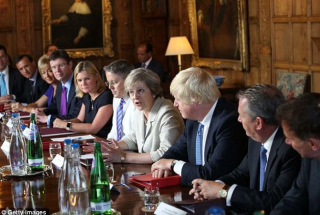 What are the real thoughts of Chairman May as she sits amid a Cabinet made up mostly of nonentities nobody would recognise in the street?
There this feeble Politburo hunches, squeaking amid the Elizabethan grandeur of Chequers, a government committed to a task most of them hate. Even Boris Johnson doesn���t really want to leave the EU.
���Brexit means Brexit,��� intones the Prime Minister. But this slogan seems to have escaped from Lewis Carroll���s Alice books, where Humpty Dumpty proclaims that words mean what he says they mean.
If I were her, I���d be scared of the months to come. France, our ancient rival, has spotted that nobody in London has decided what we really want.
As we dither, they will undermine us. Before long it will be clear that either we exit the EU single market and take our chances, or do a deal under which we stay, more or less, under Brussels rule.
France wouldn���t be able to bully a government committed to departure, backed by a parliamentary majority.
Such a government could be genuinely tough in talks, because it had a real, much desired aim.
But this lot? As Winston Churchill said of a similarly soggy Cabinet in 1936, they are ���decided only to be undecided, resolved to be irresolute, adamant for drift, solid for fluidity���.
From behind them come the endless whispers, especially from the USA, which drove us into the EU in the first place, that we might ���walk back��� the decision.
Plus there are the mutterings of the Civil Service, the diplomats, and the BBC.
These are tricky times. Chairman May, who claims to admire the first Queen Elizabeth, may find that she faces nearly as many foes as that cunning monarch did, at home and abroad.
But the most dangerous ones will be among the smiling faces round the Chequers table.
She is not there because she is strong but because ��� for the moment ��� nobody else is stronger.
Cowardly truth about Oxford's state school 'success'
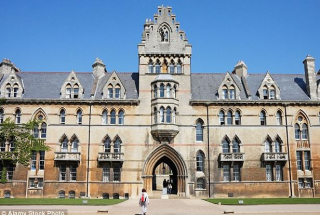 Oxford University boasts of increasing its state school intake to 59.2 per cent. How cowardly of it. On the same day we learned that most boys (50.46 per cent) leave state primary school without reaching the Government���s pretty basic standards in reading, writing or maths. Many will never catch up.
If state school children are getting into Oxford, it���s either because they go to super-exclusive fake comprehensives, surrounded by expensive houses or open only to churchgoers; or they go to besieged and rare grammar schools; or they have private tutors; or they have been given special treatment and are not really up to Oxford���s standards.
In the days before ���comprehensive��� schools, Oxford���s non-public school intake was rising fast without any of these tricks or reduced standards ��� from 38 per cent in 1939 to 51 per cent by 1965.
If grammar schools had survived, many reckon it would soon have reached 70 per cent, and maybe higher. Oxford should campaign to bring back selective state schools, not cringe before the equality commissars.
But we are at the mercy of crude egalitarians. The supposedly Tory Government continues to employ Alan Milburn, the Blairite former Cabinet Minister and (so far as I know) unrepentant student Marxist.
Mr Milburn, who refuses to tell me where his own children went to school, regularly attacks the privilege of private education, though never that of the socially exclusive pseudo-comprehensive state schools favoured by well-off Leftists.
As head of the creepy quango the Social Mobility Commission, he cranks out regular reports claiming that public school toffs rule the world. He���s just got lots of headlines by claiming that City bankers still discriminate against applicants who wear brown shoes.
His evidence for this? A 15-year-old book about the death of the traditional banking industry, by a man whose name his report misspells, and another book on the City by a Dutch expert on the Middle East.
People do believe what they want to believe, I find.
It's official: The British bobby IS dead
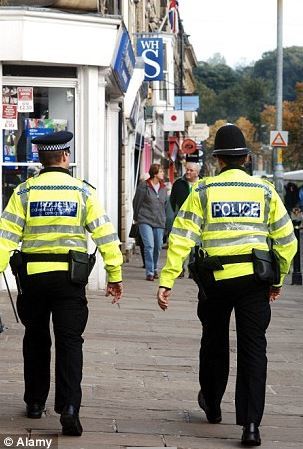 My ���I told you so��� department is now back from a much-needed holiday, after a long summer of full-power gloating and smirking. Immediately it has new work to do. Her Majesty���s Chief Inspector of Constabulary has (after 50 years) finally grasped that police foot patrols have been abolished.
Congratulations, HM Inspector! Well spotted! Even so, he buried it in his complacent survey report, where among all the politically correct stuff, it reveals on page 38 that one third of us have not seen a uniformed police officer on foot in their area in the past year ��� in the past two decades, in my case.
Even this fact is turned into a PC lecture about ���more deprived areas���. One in four say they see one once a month. If so, he was probably nipping into Costa Coffee for a flat white.
So what are they doing instead? As we learned again last week, car pursuits seem to appeal far more than plodding the pavement deterring crime and disorder. Are these pursuits ��� which in some years have led to as many as 20 innocent deaths ��� even remotely worth the risk?
But while resources are available for such chases, what of shopping centres such as The Stow in Harlow, where a Polish man, Arkadiusz Jozwik, was violently (and fatally) attacked? Gangs of menacing youths smoking cannabis, that peaceful drug Sir Richard Branson wants to legalise, have been patrolling The Stow for months, promoting fear and disorder.
But police ��� as everywhere ��� seem to have paid little attention to either the menace or the illegal drug abuse. Now, too late, they are present ��� for a while. And there is a lot of grandiose stuff about a ���hate crime���.
Maybe, maybe not, but it might also be ���Dope Crime���, that growing category, and also a ���Neglect Crime���, the sort of thing that happens on streets which the police have quietly ceded to the violent and lawless.
Can there be any simpler way of putting this? Doctors should never go on strike. Mercy is not a commodity that can just be withdrawn.
People living with pain and fear cannot be deliberately ignored by those trained and paid to help them.
If you want to comment on Peter Hitchens, click on Comments and scroll down
September 2, 2016
'Brexit Means Brexit', says Humpty Dumpty.Some Thoughts on the Coming Autumn Crisis
Well, here we are in the blackberry-picking season, when the dewy early mornings are deliciously cool, especially in contrast to the noonday heat, and Michaelmas isn't far off, and normality is beginning to reassert itself after the strange, dreamy unreality of August. Do huge events happen in August (as they do) precisely *because* people lose their grip on reality in this time of somnolent heat and institutionalised lassitude, when so many people vanish from their posts?
I���ve always had mixed feeling about this time of year, which, for a privately-educated Englishman of my age, used to be a strange mixture of smug separateness, anticipation, melancholy and trepidation ��� as my school terms didn���t start till the 18th or 19th of September and I could watch the normal world restart, and yet stand aloof from it. For some reason I associate it especially with the haunted windy coast near Stokes Bay in Hampshire, just opposite the Isle of Wight, littered with ruined fortifications and site of MI6���s secret training school, from which one could watch the last great ocean liners steaming in and out of Southampton and (if unwary) be smacked in the back by their huge bow-waves as they reached the stony beach from two miles out. Canadian troops practised their D-Day landing there. One of them had come back and set up an ice-cream business near the beach. Canadian ice-cream was very exotic in that world of Walls vanilla vs Lyons vanilla cylinders.
I can���t have spent more than three summers there, if that, but they are the most memorable of my childhood.
And of course there were the blackberries, so many more of them than now, because the heathland on which they grow was swallowed up in the great building boom of the middle 1960s. All those Kennedy Crescents, Kennedy Ways and Kennedy Closes! I still spot them from time to time.
And so off the Cabinet go to Chequers, to try to square the circle of a government and establishment intent on staying in the EU, and an electorate narrowly in favour of leaving.
I always said this would be a mess if it happened. When it became clear that it would happen, I prophesied a constitutional crisis. So far, it has mainly affected the two big parties, both riven by paradoxical revenges. But as Parliament and normal government resume, and the courts return, the depth, length, height and breadth of the mess will become obvious.
A contributor here has rightly reminded me of the remarks of John Kerry, US Secretary of State, back on 29th June (see here https://www.theguardian.com/us-news/2016/jun/29/john-kerry-brexit-could-be-walked-back-david-cameron )
Mr Kerry(who, like the rest of the US establishment was appalled by our vote ��� the USA was the party most determined to keep us in the EU) made no pretence of neutrality:
��� The US secretary of state has raised doubts about whether Brexit will ever happen, suggesting most leave campaigners do not truly believe in Britain���s divorce from the EU and do not know how to achieve it.
Claiming there were a number of ways in which Thursday���s vote could be ���walked back���, John Kerry, who visited Downing Street on Monday, said David Cameron was loth to invoke article 50, the EU exit procedure.
He said the British prime minister felt powerless to ���start negotiating a thing that he doesn���t believe in��� and ���has no idea how he would do it���.
Apparently referring to Boris Johnson, one of the frontrunners to replace Cameron, Kerry added: ���And by the way, nor do most of the people who voted to do it.��� ���
Well, how powerful does Mrs May feel in negotiating thing she also doesn���t believe in, which her Cabinet doesn���t believe in, which her civil and diplomatic service and judiciary don���t believe in, and which the bulk of the media don���t believe in either.
���Brexit is Brexit��� really isn���t much use here. It���s an Alice in Wonderland sort of statement, or even a ���Through the Looking Glass��� one ��� Chairman May does increasingly remind me of the Red Queen, much bustle and speed, no visible achievement. For ist corollary is that the statement works just as well the other way round.
By this I mean ( readers of ���Alice��� , that great politico-philosophical tract will know) that the second of the two ���Brexits���, that is, whatever Chairman May comes up with at the end of whatever now happens, will replace the first ���Brexit��� ��� the vague, ill-formulated yearning for national independence and border control which won the referendum for the ���Leave��� campaign back in June.
And where now is that campaign? Al ���Boris��� Johnson is now a member of Chairman May���s politburo, her creature, existing at her whim and committed to make any failure look like a success. Michael Gove is, I am told, growing a beard. Gisela Stuart has vanished into the jungle of Labour���s civil war. Andrea Leadsom has been swallowed up.
As for David Davis, the only real shark in Chairman May���s lagoon, he is mainly occupied fending off his rivals, Liam Fox and Al Johnson. Both Mr Davis and Mr Fox know that they are dead men on leave, appointed because they agree with the voters and disagree with the government. They have no real support from No 10 or the Treasury, let alone from the civil service or the diplomatic service. The Parliamentary lobby, the journalists licensed to write about politics and to receive and process targeted unattributable leaks aimed at damaging Downing Street���s foes and boosting its friends, are power-worshippers. They will inevitably take their cue from Chairman May���s Downing Street media operation. The Johnson-Fox-David trio are expected and intended to fail, and will get all the help they need to fail, from Chairman May and her allies. Mr Johnson, whose commitment to the cause is , shall we say, the weakest, may survive by ensuring that ���Brexit��� actually isn���t ���Brexit��� at all.
This interesting article by Paul Mason in ���the Guardian��� suggests that the EU leaders are by no means as devastated or divided as some like to think
As Mason rightly says, French diplomats are trained from their cradles to spot an opponent���s weakness and aim repeated blows at it and ���May���s administration goes into this critical negotiating process with an obvious weakness. It does not know whether it wants to remain in the single market.���
This is the point around which it will all revolve. By the way, I already knew this, as I am interested in what happened to Western Europe���s Communists after they gave up on the Soviet Union, but how many of you grasped the significance of the location of the Mediterranean summit, the bleak island of Ventotene, used by Mussolini as a prison for his opponents? ? It was a homage to the Italian Communist Altiero Spinelli, One of the original designers of the EU utopia. Yet his original politics are either not known to, or never mentioned by, most mainstream, reporters. Why would that be? My friend Christopher Booker, of course, knew and noticed. See here;
In a free state, Ministers do not 'run the country'
Every year in the depth of summer there are stories in the papers about some middle-ranking Cabinet Minister (the most recent was Al ���Boris��� Johnson, the Foreign Secretary ���running the country��� because the Prime Minister is away. These stories make me grind my teeth in rage.
In free lands, the government does not ���run the country���. In fact, when the government is entirely absent ( as was the case for ages in Belgium recently, and is more or less the case now in Ireland and Spain) things often carry on just as well, if not better, than they did when there was an administration in place.
But I think this is (or was) especially so in England, a land where for centuries self-reliant people have obeyed and enforced the Law of the Land, devised by them for their own pleasure and convenience.
The age and power of this idea isn���t very obvious in London. The capital is full of symbols of government, and much of the rest of it is an increasingly unattractive megacity in which the impossibly rich are served by the unconscionably poor in grotesque, even gross surroundings.
But over the past few weeks I���ve been travelling through a part of the country that is often unvisited, stretching from Nottingham over towards the east coast.
And one sees, in the old heart of Nottingham, in the handsome broad streets of Derby , the glorious market square of Newark and the profound Anglican peace and elegance and beauty of Southwell (whose unvisited Minster contains some of the loveliest, most exuberant carved stone in Europe), the architectural relics of English independence and liberty.
There���s a plain, four-square, unpretending solidity about this style of building. It is confident without being arrogant, mostly undecorated, predominantly brick, its streets are not too straight or regular but its displays of wealth don���t have the cold haughty grandeur of their French equivalents. These houses were inhabited by stout, independent men who would stand up for themselves and not be ordered about, and their governments knew it, and treated them accordingly.
It speaks of an age in which a Member of Parliament really was somebody, and so was a Justice of the Peace and a Rector, and the editor of the town���s newspaper, and the head master (two words, not one) of its grammar school.
Now most of these people are cyphers, stifled into obedience by whips, quangoes and government inspectors, and every town is pushed towards sameness and subservience.
And if it carries on like this much longer, someone like Al Johnson really will be ���running the country��� one day,. Though why anyone would ask him to do so, I do not know.
August 29, 2016
Look out! They're sneaking up on you with a chemical cosh
 This is Peter Hitchens's Mail on Sunday column
The most sinister thing I have heard all year was this week���s revelation that British government doctors secretly sought to drug troublesome teenagers in the 1960s ��� and we have only just found out.
One of the pills they wanted to use was called Haloperidol. Its side effects include incurable lifelong twitching, delirium and rigid muscles.
This plan was stopped, but another worrying substance, Beclamide, was given to boys at a Yorkshire ���Approved School��� (a state-inspected home for troubled teens). Neither the boys nor their parents were told of this experiment.
To qualify for the secret chemical cosh, you had to be ���impulsive, explosive, irritable, restless and aggressive���, which for teenage boys is more or less a description of being alive and awake. Both schemes were endorsed by the Home Office���s own in-house psychiatrist, Pamela Mason. How many other such horrors happened ��� are perhaps still happening ��� without us knowing?
I have long suspected that the Home Office ��� and much of our elite ��� are quite keen on doping the population. Despite making various militant noises over the years, this secretive department has quietly filleted the drug laws so that they are now the boneless wonder of the western world.
And for many years our prisons have pretended not to notice the epidemic use of illegal narcotics behind bars. I suspect the authorities hoped prisoners would be so stupefied that they would not riot, or escape in large numbers ��� things the Government greatly fears, and which have destroyed many Cabinet Ministers.
This policy is now going badly wrong, as cannabis is not in fact the peaceful drug some claim. Many of the drugs readily available in jail, such as the synthetic ���Spice���, make their users more violent, not less.
The Government has also been quite happy to allow pharmaceutical companies to run huge experiments on adults and children with sketchily tested and unproven tablets that I would not give to a dog, even if I disliked it.
Astonishing numbers of people are now regularly taking mind-altering drugs ��� Ritalin for children who get bored in school, ���antidepressants��� for unhappy adults (and sometimes both together, as adults now have ���ADHD��� and children are allegedly ���depressed���). Having wrongly feared that George Orwell���s 1984 nightmare of drabness and surveillance would come true, we missed the much more accurate warning in Aldous Huxley���s Brave New World.
Huxley didn���t just foresee the state rummaging about in the womb, the abolition of parents, the family and private life, the cheery disposal of the old and ill, and the distraction of a wage-slave population by flashy entertainment and sex.
He predicted the invention of an all-purpose happiness drug called ���Soma���. It would keep the middle classes content, and could be used in spray form to quell riots by the poor. He said it would have ���all the advantages of Christianity and alcohol; none of their defects��� there is always delicious Soma, half a gramme for a half-holiday, a gramme for a week-end, two grammes for a trip to the gorgeous East, three for a dark eternity on the moon���.
They haven���t actually invented it yet. Huxley���s Soma was harmless, which today���s drugs somehow never are. But they are working on it. And you might like to know the name of the brilliant, subtle, well-funded campaign to legalise marijuana launched almost half a century ago by the late Steve Abrams (I discussed it with him at length before he died). It was ���Soma���.
Rewriting our history? That's hard to Swallow
As a child I never took to Swallows And Amazons.
I had a boarding school headmaster who drove us ceaselessly out of doors, made us accompany him on to the heaving, open sea (without lifejackets) in an ancient ketch, taught us to make fires, camp in the rain, gut fish and endure more than our fair share of mud, wet and cold.
I had no idea how lucky I was, and I am sure it was very good for me. But as a result I didn���t much want to read about such things, let alone do them on my holidays. And I only came to know Arthur Ransome���s books when I read them to my own children.
I instantly recognised the children and adults in them, the way they thought and spoke, and the lives they lived. I could guess in detail what their homes or schools were like, though they were never described. I knew (I still do) what a country station platform felt and sounded like on a summer afternoon just after the train had steamed away. I also knew (as the film-makers don���t) that British Railways didn���t exist in 1935. And I knew that pemmican (a joke in the books) was never on sale in tins in British grocers��� shops; and that telegrams came in khaki-yellow envelopes.
But the new film suffers from the constant problem of modern people. They can���t begin to imagine the recent past and know almost nothing about it.
One thing that struck me is that the children in the film (pictured above) seem to be much ruder to each other than I remember from the books. The girls are also a lot screamier. Of course, hardly anything really happened in most of the books. It was all imagination, a thing which has died in the age of TV and computers. And you can see why they inserted an absurd plot about Russian spies. Odd that it blames Russia for coming up with the idea for the atom bomb, when this was from the first a scheme dreamt up by Western idealist scientists horrified by Hitler.
People keep telling me these things don���t matter. But they do. If we get the past wrong, we will get the future wrong, as we prove every day.
The real scandal of Corbyn's empty seats
Actually, I can quite see why Jeremy Corbyn thought that train was full. Rail companies punish anyone who just wants to travel when he feels like it.
So we���re all forced to make reservations we don���t want, and dozens of seats are blocked by this and festooned with silly labels.
Then there���s the strange urge to make train travel even worse than going by plane, including nose-to-tail seats crammed close together, cunningly arranged to obscure the windows.
It���s increasingly hard to spot a vacant place. I suspect most of those having a go at the Labour leader haven���t done much second (sorry ���standard���) class travel by train recently.
*********
I see we now have flashily painted ���Border Force��� cutters with go-faster stripes, just like the US Coastguard.
I detect the hand of Chairman May and her clever PR team when they were still at the Home Office. But what use is all this? It will be worth checking in six months what has happened to the six migrants picked up by HMC Valiant off the Kent coast on Thursday.
Your guess is as good as mine, but unlike Australia, we have no remote islands where we can put such people.
If you want to comment on Peter Hitchens, click on Comments and scroll down
It's no Surprise that Police have Joined the Defeatists on the Issue of Drugs
Most people don���t understand the state���s policy on drugs and so are baffled and impressed when police officers call for weaker drug laws. There is in fact nothing surprising about this. The police have not, for many years, been the tough moral force we imagine them to be, and the law has not been the uncompromising boundary between good and evil which we imagine it to be:
In reply to an article by the former undercover policeman Neil Woods, calling for surrender to the drug legalisation lobby, I wrote the following for the Mail on Sunday:
There���s no reason to be shocked by police officers who want to give up on fighting drugs by concentrating on dealers alone. They���ve been wasting their time doing this futile thing for 40 years. They���ve failed utterly. Who can blame them if they���re sick of it?
But that doesn���t mean that surrendering to the drug legalisation lobby is the right response. All this macho undercover stuff misses the point completely.
Why are the dealers evil in the first place? If they were selling soap, who would care? The things that make them wicked are their products, which ruin the lives of those who buy them, and the lives of their families. Drugs do their damage when people buy and then use them.
Yet for decades the courts have been treating the major crime of drug possession as unimportant. And the police have got the message and seldom even bother to arrest anyone for it. Why plunge into the ghastly paperwork of an arrest when the result will be a discharge or a tiny fine?
Some forces openly say they cannot be bothered to act against possession. Others undermine the law by permitting the open ���testing��� of illegal drugs for ���quality��� at festivals. In April this year a BBC Freedom of Information request showed that arrests for cannabis possession in England and Wales had dropped by 46% - almost half - since 2010.
This weakness comes from the very top, despite frequent noisy claims by politicians to be ���tough���. The Tory Lord Chancellor, Lord Hailsham, told magistrates in October 1973 to stop sending people to prison for cannabis possession.
This approach has been going on by stealth since the Wootton Report recommended it in 1969. As long ago as February 1994, John O���Connor, former head of the Scotland Yard Flying Squad, said ���Cannabis is a decriminalised drug.���
Nor is it just cannabis. In July 2008 the Tetrapak heir Hans Kristian Rausing and his wife Eva were arrested and charged with cocaine and heroin possession after Mrs Rausing tried to take the drugs into the US Embassy in London. Two weeks later, all charges were dropped.
It was claimed at the time that the pair had been given privileged treatment, but there is no evidence that this is so. Figures obtained by Nicola Blackwood MP showed that fewer than one in ten Class ���A��� drug users are imprisoned for possession.
Real toughness does not involve hanging out with violent gangsters. It involves resisting the huge media and political power of the drugs lobby and punishing the
people who really drive the global drug trade ��� the selfish, law-breaking users who supply the money. This policy once worked well here, and still works well in both Japan and South Korea, where possession is prosecuted and firmly punished and drug abuse is far lower than in Britain. What a pity that the subtle, oily spokesmen of the drugs legalisation lobby have now succeeded in demoralising the police.
An argument about drugs on LBC
Following the articles by Neil Woods referred to in the previous post, the independent news and comment station LBC invited me on to a programme this afternoon. The programme opened with a long and (in my view) one-sided introduction by the presenter crammed with the sort of conventional wisdom on drugs which I have spent the last several years investigating and exploding. LBC has now put online the introduction to which I was responding, but the link to it is below the recording of my response.
This is what followed:
http://www.lbc.co.uk/incredible-row-between-maajid-and-peter-hitchens-136113
August 28, 2016
PETER HITCHENS: Look out! They're sneaking up on you with a chemical cosh
This is Peter Hitchens' Mail on Sunday column
The most sinister thing I have heard all year was this week���s revelation that British government doctors secretly sought to drug troublesome teenagers in the 1960s ��� and we have only just found out.
One of the pills they wanted to use was called Haloperidol. Its side effects include incurable lifelong twitching, delirium and rigid muscles.
This plan was stopped, but another worrying substance, Beclamide, was given to boys at a Yorkshire ���Approved School��� (a state-inspected home for troubled teens). Neither the boys nor their parents were told of this experiment.
To qualify for the secret chemical cosh, you had to be ���impulsive, explosive, irritable, restless and aggressive���, which for teenage boys is more or less a description of being alive and awake. Both schemes were endorsed by the Home Office���s own in-house psychiatrist, Pamela Mason. How many other such horrors happened ��� are perhaps still happening ��� without us knowing?
I have long suspected that the Home Office ��� and much of our elite ��� are quite keen on doping the population. Despite making various militant noises over the years, this secretive department has quietly filleted the drug laws so that they are now the boneless wonder of the western world.
And for many years our prisons have pretended not to notice the epidemic use of illegal narcotics behind bars. I suspect the authorities hoped prisoners would be so stupefied that they would not riot, or escape in large numbers ��� things the Government greatly fears, and which have destroyed many Cabinet Ministers.
This policy is now going badly wrong, as cannabis is not in fact the peaceful drug some claim. Many of the drugs readily available in jail, such as the synthetic ���Spice���, make their users more violent, not less.
The Government has also been quite happy to allow pharmaceutical companies to run huge experiments on adults and children with sketchily tested and unproven tablets that I would not give to a dog, even if I disliked it.
Astonishing numbers of people are now regularly taking mind-altering drugs ��� Ritalin for children who get bored in school, ���antidepressants��� for unhappy adults (and sometimes both together, as adults now have ���ADHD��� and children are allegedly ���depressed���). Having wrongly feared that George Orwell���s 1984 nightmare of drabness and surveillance would come true, we missed the much more accurate warning in Aldous Huxley���s Brave New World.
Huxley didn���t just foresee the state rummaging about in the womb, the abolition of parents, the family and private life, the cheery disposal of the old and ill, and the distraction of a wage-slave population by flashy entertainment and sex.
He predicted the invention of an all-purpose happiness drug called ���Soma���. It would keep the middle classes content, and could be used in spray form to quell riots by the poor. He said it would have ���all the advantages of Christianity and alcohol; none of their defects��� there is always delicious Soma, half a gramme for a half-holiday, a gramme for a week-end, two grammes for a trip to the gorgeous East, three for a dark eternity on the moon���.
They haven���t actually invented it yet. Huxley���s Soma was harmless, which today���s drugs somehow never are. But they are working on it. And you might like to know the name of the brilliant, subtle, well-funded campaign to legalise marijuana launched almost half a century ago by the late Steve Abrams (I discussed it with him at length before he died). It was ���Soma���.
Rewriting our history? That's hard to Swallow
As a child I never took to Swallows And Amazons.
I had a boarding school headmaster who drove us ceaselessly out of doors, made us accompany him on to the heaving, open sea (without lifejackets) in an ancient ketch, taught us to make fires, camp in the rain, gut fish and endure more than our fair share of mud, wet and cold.
I had no idea how lucky I was, and I am sure it was very good for me. But as a result I didn���t much want to read about such things, let alone do them on my holidays. And I only came to know Arthur Ransome���s books when I read them to my own children.
I instantly recognised the children and adults in them, the way they thought and spoke, and the lives they lived. I could guess in detail what their homes or schools were like, though they were never described. I knew (I still do) what a country station platform felt and sounded like on a summer afternoon just after the train had steamed away. I also knew (as the film-makers don���t) that British Railways didn���t exist in 1935. And I knew that pemmican (a joke in the books) was never on sale in tins in British grocers��� shops; and that telegrams came in khaki-yellow envelopes.
But the new film suffers from the constant problem of modern people. They can���t begin to imagine the recent past and know almost nothing about it.
One thing that struck me is that the children in the film (pictured above) seem to be much ruder to each other than I remember from the books. The girls are also a lot screamier. Of course, hardly anything really happened in most of the books. It was all imagination, a thing which has died in the age of TV and computers. And you can see why they inserted an absurd plot about Russian spies. Odd that it blames Russia for coming up with the idea for the atom bomb, when this was from the first a scheme dreamt up by Western idealist scientists horrified by Hitler.
People keep telling me these things don���t matter. But they do. If we get the past wrong, we will get the future wrong, as we prove every day.
The real scandal of Corbyn's empty seats
Actually, I can quite see why Jeremy Corbyn thought that train was full. Rail companies punish anyone who just wants to travel when he feels like it.
So we���re all forced to make reservations we don���t want, and dozens of seats are blocked by this and festooned with silly labels.
Then there���s the strange urge to make train travel even worse than going by plane, including nose-to-tail seats crammed close together, cunningly arranged to obscure the windows.
It���s increasingly hard to spot a vacant place. I suspect most of those having a go at the Labour leader haven���t done much second (sorry ���standard���) class travel by train recently.
I see we now have flashily painted ���Border Force��� cutters with go-faster stripes, just like the US Coastguard.
I detect the hand of Chairman May and her clever PR team when they were still at the Home Office. But what use is all this? It will be worth checking in six months what has happened to the six migrants picked up by HMC Valiant off the Kent coast on Thursday.
Your guess is as good as mine, but unlike Australia, we have no remote islands where we can put such people.
If you want to comment on Peter Hitchens, click on Comments and scroll down
Peter Hitchens's Blog

- Peter Hitchens's profile
- 299 followers

