
Peter Hitchens's Blog, page 152
September 18, 2016
PETER HITCHENS: Charmer Cameron put us on the slippery slope to disaster
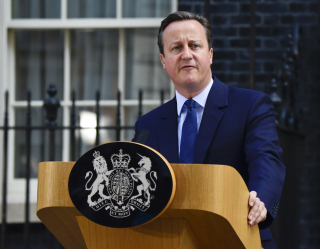 So, Mr Slippery has finally slipped away, just before he was found out. I wish David Cameron lots of money in his future life, so much of it that he at last begins to wonder if that is what he really wanted.
But can we pause for a moment and ask how it was that this charming but pointless person rose to such prominence in our country?
His single most important action was to lend Western air forces and other assistance to Islamist fanatics in Libya. Parliament's Foreign Affairs Committee last week explained just how clueless and irresponsible this was, though it is a pity that so many of the MPs on this committee supported the Libya folly at the time.
The same goes for much of the media, which reported the overthrow of Colonel Gaddafi more or less as if it was a sporting event, and the fanatical rebels were our team. They also gullibly repeated the most ridiculous atrocity propaganda, something any knowledgeable journalist is trained to treat with suspicion.
I have checked my own writing and broadcasting at the time and find I warned clearly against it, for example this from March 2011: 'Who are the Libyan rebels? What do they want? Why do we love them so? I've no idea, and nor has Mr Cameron��� Some of the longest wars in history started with small-scale intervention, for a purpose that looked good and achievable, and ended up ruining millions of lives.
'The Soviet takeover of Afghanistan in 1979 ended with countless innocents driven into refugee camps, and the collapse of the Soviet state itself. It also left Afghanistan as a worse snake pit than before.'
I did not know the half of it. David Cameron's war created the appalling, unstoppable crisis of mass migration across the Mediterranean from Africa, a gigantic movement of people unknown in previous history, which will in the long run transform the economic and political fortunes of our continent.
This catastrophe was his most notable act. He ought to be remembered for it. Many of you will be able to think of others, some deliberate (such as his daft energy, education, migration, economic and aid policies), others exploding cigars, such as his incompetent and contemptuous handling of the European Union issue.
He was one of the worst prime ministers we have ever had, but have we ��� have you ��� learned from this experience? Will you continue to turn to the smooth, the well-spun, the expensively suited and rehearsed, the ones endorsed by the same media who gushed over the Blair creature?
Already the forces that put David Cameron in power are uniting in a dishonest spasm of hatred against Theresa May's grammar school policy and the referendum result.
Will you be fooled by them again? Or will you learn that there is no such thing as 'the centre' and that those who claim to stand there are driven by nothing but personal ambition and vanity? And that they do not offer safety, but danger?
*****
Late last year a strange new law came into force in this country, making it a crime, punishable by prison, to use repeated ���controlling or coercive behaviour��� in the home.
You might think there���s nothing wrong with that.
But what if it becomes one of the many offences in family law where social workers, police and courts assume that the accused is guilty, and he or she has to prove his innocence?
The growing numbers who have fallen into this pit simply do not get fair trials. No doubt some of them are guilty. But in many cases this simply is not proved beyond reasonable doubt. They lose homes, families, children, livelihoods, reputations and ��� sometimes ��� liberty.
And if we stop caring if they���ve been properly tried, we forge a weapon that may one day be used against us.
That���s why I really dislike the great fuss recently made about the BBC Radio 4 soap opera ���The Archers���.
In this programme - which I have many times explained is openly intended as propaganda for ���progressive��� ideas - two actors pretended to be a married couple. This long drama got under way as the new law came into force.
For months, the male actor pretended to be a perfect example of the ���coercive control��� which extreme feminists claim is so common. Again and again he bullied and belittled the female actor, as if he were a Victorian squire who had her imprisoned in a cottage miles from civilization.
She submitted to it meekly for months in a way I doubt any modern woman would do for more than about five minutes. Then, in a bizarre and incredible scene, the male actor pretended to goad the female actor into pretending to stab him.
There was then a pretend arrest, and a pretend trial. There was even a pretend jury, made up of celebrity actors. And the nation was supposed to be terribly engaged, anxiously hoping that the fictional jury would pretend to acquit the female actor, so she could pretend to go back to her fictional home.
This rubbish had two propaganda aims. The first was to make more people willing to believe that this kind of thing is common, when we have no way of knowing.
The second was to give the audience information it never normally has, in any proper courtroom drama. Listeners thought they already ���knew��� what had ���really happened���. They ���knew��� the male actor was ���guilty���. Actually, they didn���t. They just knew what the scriptwriters had decided to portray, a fictional wicked man, fictionally coercing and controlling, and fictionally trying to get away with it.
But in any real trial on this charge, without solid evidence, and where the only two witnesses disagree, I am sure that some real jurors��� minds will be influenced, by this programme, towards convicting. As a result, an innocent defendant might go to prison for years. I think the BBC has done a wrong and shameful thing.
******
The story of the Prague assassination of the SS monster Reinhard Heydrich is a thrilling and bitter one, and has now been made into a major film, for the second time, or perhaps the fourth, if you count 'Hangmen also Die' and the Czech film 'Atentat' The new version ���Anthropoid���, which stars Cillian Murphy and Jamie Dornan, gets closer than before to the savage horror of the Nazi reprisals, and made me wonder, yet again, if this sort of assassination was justified.
The evil of the Third Reich continued all too efficiently without Heydrich. But the torture and collective punishment visited on the Czechs (whose subjugation we couldn���t and didn���t prevent) were frightful. Was any good really achieved? I grow less sure year by year.
**********
Why do suckers always fall for the claims of ���medical cannabis���? Its advocates are invariably mixed up with the lobby for general legalisation. America���s leading campaigner for legal dope, Keith Stroup, said in a candid moment in 1979 that he was using medical cannabis as ���a red herring to give marijuana a good name.��� Cannabis may make some people feel better, but so did Thalidomide. A drug correlated with severe mental illness may just not be the ideal miracle cure.
If you want to comment on Peter Hitchens, click on Comments and scroll down


September 16, 2016
Some Thoughts on the New Film 'Anthropoid'
The City of Darkness
It must be 40 years since I first saw the film 'Operation Daybreak', about the assassination in Prague of the monster Reinhard Heydrich. I hadn���t been to Prague then (I would put that right two years later). That unique city, as imagined but never seen, had a powerful, mythical, almost mystical hold over my mind. It still does, provided I stay away from it. Recent visits, in which I have come to see it as a modern place rather than a dark and lovely stage set on which good and evil do battle, have rather spoiled it for me. I do understand that its inhabitants much prefer it the way it is.
The Kafka associations and two films , ���Operation Daybreak��� and Costa-Gavras���s now almost unobtainable ���L���Aveu��� (���The Confession���) about the Slansky show trials of 1953, helped fix it in my mind as a frightening place of violence, melancholy, gloom, betrayal, dungeons and defeat, but also a very beautiful one. Later I would come to read Lionel Davidson���s charming and enthralling ���Night of Wenceslas���, later very badly filmed, in which the city ��� lovely and captivating, but hiding terrible menace - plays a starring role. As is the case with anyone in my generation, my mind was also full of black-and-white TV news pictures of Soviet tanks trundling through Wenceslas Square (which isn���t a square, as I now well know), bulldozing trams to one side (this sight made me realise what a potent thing a tank is. I���d seen trams and thought they were heavy, a useful obstruction if needed. But Moscow���s tanks just biffed them out of the way as if they were plastic toys). And I have some sort of memory of immense crowds at the funeral of Jan Palach, though perhaps I have made it up (having been privileged to see at first hand the equally enormous multitudes who turned up for the funeral of Czech Communism in the winter of 1989) . Then years of frozen silence.
An odd anomaly
I���m still not quite sure how ���Operation Daybreak���, a western-made and financed film (it was called ���The Price of Freedom��� in the USA, a title I���ll return to), got the co-operation of the Communist Czechoslovak authorities, less than ten years after the extinction of the Prague Spring. Remember, it is about Czechs trained in Britain, making an attack on the Germans in 1941-2. Czech co-operation with Britain in the 1939-45 war tended to be forgotten or suppressed. Warsaw Pact Czechoslovakia owed its territorial restoration (apart from sub-Carpathian Ukraine, then in Soviet hands, now in Ukraine) and its form of government to the USSR���s victory over Hitler and the resulting Yalta settlement. Likewise, they owed to Stalin the reunification of the country after Hitler���s removal of Slovakia from Prague���s control. Slovakia, encouraged by Berlin to break away from post Munich Czecho-Slovakia(note the hyphen added to the country���s name at the time), was treated very differently from the Czech lands under Nazi rule.
They also owed the ethnic cleansing of German-speaking Czechoslovak citizens (thus ���resolving��� the pre-war Sudeten German problem) mainly to the Soviets, who helped them carry it out with British and American blessing, under the deliberately forgotten Potsdam agreement.
The Wrong Allies
We in Britain were by then (the mid-1970s) very much the wrong allies. We were on the opposite side of Europe, in NATO. And it went deeper than that . Not only had Britain abandoned Czechoslovakia to Germany in 1938. It had then given a home to the exile government of Eduard Benes, the figurehead of Czech nationalism who was not really thought of as an ally by the Communists who seized power in Prague in 1948 in a ���spontaneous��� mob-backed coup d���etat (which continued to fool some sympathisers for long afterwards, who described it as a ���rising��� and argued that it was legitimate)..
It wasn���t as bad as it had been. The days were gone when Czech pilots, returning home to their supposedly liberated land from service in the RAF , were imprisoned as politically unreliable (see ���Dark Blue World���, an interesting if disappointing film on this subject). But it wasn���t done to mention it, or draw attention to this awkward period in history. I remember a British diplomat in Prague describing to me the little ceremony those Czech RAF fliers would try to hold each year at a war memorial in a Prague cemetery. Many would struggle into their old RAF uniforms. And the whole thing would be very aggressively watched, photographed and filmed by spooks and musclemen from the StB, the Communist Secret Police of the time. Their existence challenged the official orthodoxy, that liberation had come solely from Moscow.
Maybe the Prague Communists of the early 1970s just wanted the dollars, to help finance the mildly prosperous consumer society they were creating to soothe the wounds of 1968 and encourage forgetfulness. Whatever the explanation, Prague was the star of the film , Prague as it then was, as I first saw it, black with age and neglect, falling to bits, indifferent to tourists, ancient, sinister, seductive, shabby within and without, an inhabited cemetery of great loveliness and enormous gloom, whispering from its many-spired sooty towers the last enchantments of an older, crueller, yet also more beautiful and more exciting age. Perhaps that is why , when the barbarities of the past came to life again the mid-20th century, they did this so horribly in that particular city.
A Man So Horrible He had Two Funerals
One scene from ���Operation Daybreak��� is probably clearer in my mind now than in the film. I find my imagination quite often embellishes and lengthens scenes in films watched long ago. When I finally track them down, episodes which last many minutes in my recollection are over in 20 seconds. But the film-makers��� re-staging of Heydrich���s Prague funeral must have shocked the city at the time, only 35 years after the real thing. Hitler gave Heydrich two lots of obsequies, one in Prague and one (with lots of Nordic fir trees and Wagner) in Berlin, with an armoured train-ride in between. This was not to make sure he was dead. The Prague ceremony was held to hammer home to the Czechs just who was in charge, and how much they were going to pay for the death of Hitler���s favourite. In the film it is a pagan occasion of barely-suppressed savagery and vengeance, the thudding SS drums a message of evil to come.
An SS Film Crew Makes a Horror Movie
I also recall a clever, deeply shocking shot of an SS camera crew, complete with clapperboard and very modern camera, but garbed in the armour, death���s head badges and deadly-black uniform of their hellish society, swinging their lenses towards the ruins of Lidice, one of two villages (everyone remembers Lidice, nobody remembers the other, Lezaky) destroyed and subjected to mass murder, including women and children, as collective punishment. Unlike so many other German atrocities of the period carried out in secret, this one was openly avowed and publicised by Berlin. They wanted the world, and especially their subject peoples or those like us and the USSR, still insisting on fighting them, to know they were capable of this. All of us live within a century of this event, an open, purposeful, publicised mass reprisal murder in civilised Europe. And yet we think we���re safe and that there is such a thing as progress. Lidice was only a small part of the bloodbath. Many others were murdered elsewhere.
Year later I saw the film again on a rather inadequate DVD seemingly made for the Arab market, in which the subtitles for the German-language segments were not much help. And yet it still had some of its power, after all that time. Anton Diffring, as Heydrich, was suitably hateful and arrogant ��� there was a legend that Heydrich had defiantly donned the ancient crown of Bohemia to underline his absolute power, so activating an old curse and ensuring his death. He is shown doing so. In that part of the world, where violence and legend are in the bones of the landscape, such things seem more credible.
From 'Daybreak' to 'Anthropoid'
Now the story is once again the subject of a film ���Anthropoid���. This is in fact the genuine name of the operation, which was nevr called ���Daybreak��� , though it is a better title. ���Daybreak��� came from the title of the book about the event ���Seven Men at Daybreak��� by Alan Burgess (once an RAF pilot) , a book now so rare that it is on sale for mad prices in the Internet, and so effectively unobtainable.
Much of this new film is spoiled for me by the casting of Cillian Murphy, the absurdly good-looking star of the unwatchably preposterous BBC drama ���Peaky Blinders���, as Jozef Gabcik, one of the assassins. You can find pictures 0f Sgt Gabcik ( a Slovak) on the Internet. His resemblance to Cillian Murphy is slight. Perhaps as a side-effect of ���Peaky Blinders��� (as so often in films about the past) no opportunity is lost (I put this mildly) for the lighting of a cigarette, though only the glamorous ignition tends to be shown, not the half-smoked stub jutting from the corner of the mouth or jammed between yellow fingers, nor the grinding out of it in some nasty place, let alone the revolting smelly piles of debris in ashtrays, or the jaundiced tinge the damned things left everywhere; let alone the grey lined faces of the smokers and their hacking, productive coughs with their ever-present promises of major phlegm expulsion.
I���ll be told that Anthony Andrews, as yet undiscovered by Brideshead, who played the same part in ���Operation Daybreak, might also be a bit distractingly good looking. But somehow he wasn���t. Andrews can efface his beauty quite a bit, when he chooses, and did so rather brilliantly in the later scenes of ���Brideshead��� where he played a washed-up, broken old soak with great power.
What I can���t recall from ���Daybreak��� and couldn���t get from ���Anthropoid��� is any great consideration of the claim often made that Churchill thought the Czechs were a bit too quiescent and content under German occupation, and hoped to end that by killing Heydrich. In short, he is said to have been counting on a severe retaliation by Hitler. Though whether he expected what he got, or rather what the poor Czechs got, who can say? Even Churchill, a man who knew a lot of history, may not have fathomed the National Socialist capacity for wickedness. Idealists are so much more dangerous than ordinary tyrants.
We did several rather questionable things during the long years when we had no army on the European continent, and to this day it is hard to discuss them without meeting the wall of rage which I encounter if I criticise our bombing of German civilians. NOTE: Since first writing this passage, with its reference to Churchill���s alleged attitude, I���ve made some effort to back it up with historical warrant, and can���t find anything which implicates Churchill, though another name does come up, which I���ll come to. I���ve kept it in because I am still not sure of the truth, would be glad of any contributions or references which either confirm it or explode it, and because I decided it would be dishonest to cut it out, as I have long believed it and often said it. Certainly the Czechs were more lightly occupied than many other of Hitler���s subject peoples, their factories produced valuable armaments for the German Reich, and attempts to send in saboteurs by parachute often failed, ending in the denunciation of the agents or in the round-up and massacre of the resistance members who had helped them.
They Rightly Feared Reprisals
But I will say one thing for ���Anthropoid��� (which follows ���Daybreak��� quite closely in many aspects but not all - most modern film critics don���t seem to have seen ���Daybreak���, or at least don���t mention it if they have). It makes it clear that those who helped Heydrich���s assassins did not, in many cases, find out till rather late what it was they were aiding ��� by which time, of course they were doomed to appalling fates by their participation. And it does not hide the fact that leading figures in the Czech resistance, on the spot, were horrified when they learned of the plan, opposed it and tried to get it stopped by appealing to London. (They were, in their defence, already gravely demoralised by the clever and efficient repression which Heydrich and his forerunners had visited on them. They had been penetrated and many of their best people had been arrested and murdered). This is all true and very much confirmed by the authoritative book on the subject, Professor Callum Macdonald���s 1989 work ���The Killing of SS Obergruppenfuhrer Reinhard Heydrich��� .
According to Macdonald, the man who wanted to go ahead with the operation was Eduard Benes, who seems to have spoken personally to Gabcik before he set off. With the USSR now in the war, Benes need a major stroke against the Nazis to show that the non-Communist Czech resistance was capable of potent action. If Churchill opposed or encouraged this, I don���t know, and would be grateful for any reference.
I thought that the depiction of the assassination in ���Anthropoid��� was wrong because in it the bomb aimed at Heydrich���s car also damages a passing tram and wounds many of its occupants(the event took place on a hairpin bend in an untouristed part of Prague, north-west of the city centre). The earlier film shows the events taking place in a deserted street. But Macdonald���s book confirms that ���Anthropoid��� is absolutely accurate. It also confirms that both assassins found girlfriends in Prague during the long months between their (botched) landing and the killing.
What would YOU have done?
The treatment of the traitor Curda, who betrayed his comrades for a huge reward and to save his skin( see below), is perhaps a little inaccurate. I doubt that he was rotten from the start, and I don���t think the Gestapo had any need to beat his evidence out of him. He was just frightened out of his wits once the reprisals started, assumed the German would be in power forever, and did what many others would have done. Indeed, when he was brought back to Prague to be tried and hanged, he said in court that anyone else would have done what he did, given the huge size of the reward (and his likely fate if he was tracked down).
���Anthropoid��� also invents an incident at the beginning of the film, in which the ordinary Czechs who discover the parachutists limping, lost, through the snow, appear to betray the two agents. This never happened. The men who found them helped them, and smuggled them to Prague. They were mistakenly dropped hundreds of miles from their intended landing point, missed their rendezvous and made contact with the resistance only by guesswork and luck, amid a great deal of entirely justified mistrust.
The end of the assassins��� story, with the two men and several other parachutists surrounded by the Waffen SS in a Prague Church, and their legendary, epic last strand against the Nazis (which really ought to be better known) is lengthily portrayed, as it must be. But it is not, alas, the end.
Unbearable to watch
In both films the Moravec family who sheltered the assassins are prominently featured, especially Mrs Moravcova and her gentle, violin-playing, hero-worshipping teenage son Ata. Anyone who knows the story must tremble for those courageous, honourable people as soon as the assassins come into their lives. And they duly encounter a fate so horrible and distressing that I will not recount it in detail here. In my view ���Anthropoid��� gives too much detail of that fate, but you could, I suppose, make a moral case for doing so, if only to remind people of how bottomlessly wrong torture is and how terribly human beings can behave when they think that cruelty is justified by necessity. But I thought we knew that about the Nazis. Maybe we are forgetting it. Cover your eyes if you prefer.
You can certainly make such a case for the awful scenes of torture shown in ���The Battle of Algiers���, a film which did a lot to convince me that there can never be any excuse for the use of this method by any country which calls itself civilised, whatever the supposed gains.
Nazi torture, of course, requires no such examination. It involves the servants of evil doing evil things for evil ends. It is uncomplicatedly wrong. The issue here is quite different. Knowing what we knew of the German National Socialists, and of the sordid, cruel gangster Heydrich�� were we right to embark on an operation which was more or less bound to bring about retaliation of a mediaeval type (as it indeed it did)?
There is something in me that says no, and I am not satisfied by being told in the closing credits that Heydrich was an architect of the Holocaust (as indeed he was). He was a foul man, a nasty bullying philanderer and pervert who ceaselessly betrayed his ���good Nazi��� wife (most of the Nazi elite were amoral in their personal lives, to put it mildly, a fact not often dwelt upon, for some reason. Heydrich���s sordid morals did not harm him in the eyes of Hitler) as well as a mass killer and wielder of terror.
Nor am I impressed by the other postscript in which it is stated that, after the killing of Heydrich, Britain revoked the Munich agreement and welcomed Czechoslovakia as a full participant in the alliance for freedom. This just draws attention to the fact that, before 1942, the relationship was much more ambiguous ��� and to the fact that ���freedom��� for Czechoslovakia took the form, after Yalta, of subjection to Soviet Power for 40 long hard years, plus the savage expulsion of ethnic Germans mentioned above and described here in my posting on the Potsdam Agreement and the fine book about it by R.M.Douglas ���Orderly and Humane��� http://hitchensblog.mailonsunday.co.uk/2012/11/orderly-and-humane.html
Happily Ever After?
I also note that in the end, Czechoslovakia was dismantled altogether, once again waving goodbye to Slovakia (Benes would have been appalled by this, I am sure) and absorbed, in pieces, into the EU. Does any of this justify what we see happening to poor Ata Moravec, whose pitiable fate in the film might be said to represent all the thousands of other gentle people hacked and smashed and torn to pieces in the red mist of vengeance which followed the assassination of Heydrich? I am by no means sure that it does.
September 15, 2016
Hurrah for the House of Commons Foreign Affairs Committee
Hurrah for the House of Commons Foreign Affairs Committee , whose report http://www.publications.parliament.uk/pa/cm201617/cmselect/cmfaff/119/11901.htm
has rightly criticised the absurd Libyan intervention, supported by two of the most ludicrous politicians of modern times, France���s former president Sarkozy and our own unlamented Mr Slippery, David Cameron.
I remain amazed that Mr Cameron has had so little trouble because of his role in Afghanistan, where he more or less became a servant of Rupert Murdoch and the neoconservative permanent war campaign, and in Libya, where he created a crisis where there wasn���t one.
This behaviour is not significantly better than the Bair creature���s behaviour in Iraq, and may actually have had as dire an effect. The anarchy in Libya certainly created much of the migration crisis that now engulfs Europe, and has changed our continent beyond recognition.
When will people understand that in the post-colonial world, it is no use getting hoity-toity about the morality of the rulers who have taken over the West���s former colonies?
We all accepted, in the 1950s and 1960s, the argument that peoples had a ���right to self-determination���, even if they used it to choose unpleasant despots. The alternative, that colonial rule might actually be better for almost everyone involved, became unsayable and unthinkable, and not worth advancing in civilised society. There's really not much point in removing Despot A if he is then replaced either by anarchy or by Despot B. And let's face it, we're never going to reconquer these places, even if we had the nerve and self-confidence to do so.
Oddly enough this rule tended to apply only to the former possessions of the clapped-out European empires. China pays no attention to it, and the USA, a vast contiguous land empire assembled via purchase and violent conquest, is still strong enough to resist any attempts to get ���self-determination��� by any part of its territory.
The USSR was rather amusingly compelled to grant liberation to most of its empire in 1991, after decades of preaching to others about their imperialism. This is doubly paradoxical, as the Soviet Empire was also the first ideological one, and it was this that did for it. The Soviet takeover in Afghanistan under Brezhnev may well count as the first liberal intervention of modern times (the Communist ideologues favoured it , the soldiers, diplomats and professionals, who knew what Afghanistan was like, opposed it). It was this failure that did for the whole Leninist empire.
As for the Libya episode, I remember it well at the time, especially the growing attempt to pretend that the Cameron government had always had chilly relations with Gaddafi, and that the Blair government had been the Colonel���s patsies. Maybe they were, but if so, what about the Cameron government���s initial attitude to the Tripoli potentate. This is interesting. Look out for the reference to Mr Bellingham:
http://hitchensblog.mailonsunday.co.uk/2015/08/bravo-blair.html
But the MPs��� report (see for instance paragraph 32) shows that various claims made in favour of intervention, especially the alleged plan for a massacre in Benghazi, were ��� to put it kindly ��� seriously exaggerated. This was not the only thing of this sort. I recall being asked on BBC Question Time around then to treat, as if it were proven truth, some atrocity propaganda about mass rape.
People sometimes accuse me of looking glum or bad-tempered on TV. Perhaps I do, but if so it is because I am amazed at what���s being said around me. Honestly, how can any educated, responsible, conscious person not know the simple rule, that truth is the first casualty of war and that atrocity propaganda must always be treated with caution. Yes, it is sometimes true (and history shows that is exactly when we tend to disbelieve it most, as in the well-authenticated reports of the massacre of European Jews, smuggled out of Hitler���s efficiently evil empire by a few incredibly brave people).
Oddly enough the early proof of the Holocaust was dismissed, in my view, precisely because it was *not* a pretext for war ��� we were already at war with the perpetrators. It would have required us to do something much more complicated and politically complicated than war, had we acknowledged it.
But there is this strange impulse in the human breast to rush into benevolent wars (especially if you won���t personally be doing the fighting, killing or dying) which makes us unbelievably credulous at the worst moments.
I still wonder what the real reason is for our Iraq, Libyan and Syrian enthusiasms. I suspect it lies a bit south of Jordan and somewhere to the east of the Red Sea.
September 13, 2016
Why I'm Sort of Slightly Sympathetic Towards Emily Thornberry
I have no reason to love Emily Thornberry, a Labour blowhard whose explosion of phoney outrage I once had to wipe away and then denounce during a BBC Question Time appearance in Stockton-on-Tees, when we were on the same panel.
Perhaps that���s why I stood by when Ms Thornberry, whose interesting background is worth studying, was oddly pilloried for a not especially outrageous tweet during the Rochester and Strood by-election.
I could never see that this really deserved the level of criticism it received. It appeared to reflect an attitude which I would have thought was shared by most of the people who then attacked her. The fury of the left-wing elite towards Corbynistas is a very odd thing. I���m fascinated by the ���anti-Semitism��� charge against the Corbynites, which certainly has some justification, given their sympathy for anti-Israel factions. But those who make this charge have in many cases for years swallowed and repeated anti-Israel propaganda which I have always regarded as being selective criticism founded in an unacknowledged Judophobia. Put it like this. I've never been able to find another explanation for their special concentration on the undoubted faults of Israel, and their lack of interest in the parallel faults of other countries.
But now she���s been caught out not knowing the name of the French Foreign Minister, I feel I must speak up for her. I do not know the name of the French Foreign Minister, even though I read it this morning. It just hasn���t stuck. I���d have to look it up, or write it on my sleeve if I were, by some sort of nightmare chance, Shadow Foreign Secretary. And no wonder. I will be unlikely to need it. Once, I would have done (especially when it was the gloriously named Maurice Couve de Murville, whose comings and goings were incessant in the 1960s) . And for ages I could also confidently have identified the German Foreign Minister, Hans-Dieter Genscher.
Long ago now, I tried to maintain a pretty close interest in the politics of the main continental countries, closely studying the relevant pages of the FT and The Times. I thought this was the sort of thing an informed person ought to know. When I visited France I could usually pick up the thread of French politics by reading Le Monde, but it���s all gone now. The end of the Cold War, and the death of truly independent countries caused by the EU, has made foreign governments as interesting as district councils in faraway bits of the West Midlands.
There was a time in the mid-60s when I could confidently have identified every British MP by his or her constituency, especially enjoying the fact that Frank Hooley was MP for Heeley, then a division of Sheffield. Now I stare blankly at pictures of the Cabinet, wondering who they are and not feeling much more informed when people give me their names. (���Who? Who?��� I ask, echoing the Duke of Wellington���s querulous, bellowed response to Lord Derby���s 1852 Cabinet of unknowns). For years I struggled to remember that George Osborne was the name of the Chancellor of the Exchequer. Something in my mind wanted to reject this information. It still does.
So Ms Thornberry seems to me to have a point when she complains that she���s being singled out when she���s asked to name the French Foreign Minister on live TV. Yes, I know she is actually planning to meet the nameless Frenchman. But I���m sure she���d have got it right in time for the meeting. And, despite considering myself well-informed, I can easily imagine being caught out on such a thing. Also, like her in her Shadow Defence Secretary period , I didn���t know what a Defcon was, though I could identify a CEP, know roughly what Tritium is ( and where you might just encounter it) , can tell a SLCM from an SLBM, know the difference between a warship and a battleship and can distinguish an air-superiority fighter from a strike aircraft and a tank from a self-propelled gun.
And I have to ask, did her interrogator know who the French Foreign Minister was, much before he asked the question? And how would he do on a quickfire quiz on leading continentalolitci9ians or, come to that, the names of Barack Obama���s Cabinet? More important what do most political journalists really know about history, foreign affairs or anything much? All they need to know is the line of the day, who���s in and who���s out - and they���re safe.
This sort of failing isn���t quite the same as not knowing the price of a loaf or a pint of milk or a stamp. Such things (which politicians now rehearse frenziedly at election times) are tests of whether you have entirely lost touch with the world of normal people. I���m glad they feel they ought to know. Though they don���t mean much if you don���t also know what the average household���s take-home pay and average debts are, what it costs to rent a house or flat in the South-East, or the outrageous price of a two-mile bus ride.
And so, Emily Thornberry, you sort of have some of my sympathy today.
September 11, 2016
PETER HITCHENS: You stole my idea, Mrs May... and I've plenty more for you
 This is Peter Hitchens's Mail on Sunday column
It���s not every day that a Prime Minister steals a soundbite from me, and I���m pleased that she has done. What���s more, she is welcome to use it again, and I have plenty more where that came from.
She rightly swatted away narrow-minded enemies of grammar schools, saying: ���We already have selection in our school system ��� and it is selection by house price, selection by wealth.���
I���ve been making this exact point for many years, as part of a lonely campaign to restore our lost grammar schools. When I started in the 1990s I was told it was a lost cause. Nobody���s saying that now. It���s winning because it���s right, just and wise.
If Chairman May has really decided to bulldoze aside the nasty, spiteful egalitarian garbage which blocks the road to good state schools, she can count on my total support against all who get in her way. I haven���t been keen on her before, and wasn���t even sure she cared, but her bold strike on Thursday night was impressive politics.
It is national madness to refuse to select children for the best schools on academic ability. We must have wasted oceans of talent thanks to the idiotic comprehensive system. We should not waste another drop.
I have this picture in my mind of the desolate faces of clever boys and girls trapped in howling, chaotic classrooms where academic excellence is actively despised, resigned to failure and disappointment, and going off into lost lives of needless mediocrity, from which their parents were powerless to rescue them.
If people ever wonder why we lack the talent, skills and competence that used to be normal in this country, it is because our state schools threw them in the bin in the name of ���equality���. And even now the enemies of promise are still ganging up to hold back the talented but poor.
The BBC, to its lasting shame, is running what amounts to a campaign against grammars ��� which it is forbidden by its charter to do. Its reporters are allowed to intone at the end of reports that ���many people��� doubt that grammars aid social mobility, weasel words which they can use to smuggle their own opinions into what is supposed to be impartial journalism.
Many people, I can assure them, think the opposite and have evidence to prove it. But they rarely get asked on.
The Corporation, ever the reliable voice of the smug, wealthy Left, has readily swallowed the anti-grammar propaganda which concentrates on the tiny number of untypical grammar schools which still survive in a few areas.
These schools are besieged, and no wonder, when seven years at their private equivalents would cost a minimum of ��120,000 in post-tax income.
The top comprehensives, secretly selective in various clever ways, are actually more socially exclusive than these hopelessly oversubscribed grammars. If there were, once again, more than 1,000 such schools all over the country, this pressure would drop away. Lots of other things would happen. Standards would rise.
Sir Michael Wilshaw, chief inspector of English schools, bafflingly opposes grammar schools despite having gone to one (and would this son of a postman have risen so high otherwise?).
YET he admitted in a recent speech: ���The fate of the most able pupils in non-selective [i.e. comprehensive] schools is particularly depressing. Some 60,000 youngsters who achieved the top levels at Key Stage 2 did not achieve an A or A* in English and maths five years later. Indeed, only a quarter achieved a B grade. According to the Sutton Trust, 7,000 children a year who were in the top ten per cent nationally at age 11 were not in the top 25 per cent at GCSE five years later. These youngsters are drawn disproportionately from the white working class.���
Why is this? Well, these facts may help. Grammar schools, where excellence is encouraged rather than bullied or ignored, get better results than comprehensive education.
 In 2015, no less than 96.7 per cent of pupils in England���s grammar schools got five good GCSEs. Only 56.7 per cent of pupils at comprehensives (in fully comprehensive areas, not in any way ���creamed off��� by grammars) did so, whatever their background.
And what about those supposedly dreadful secondary moderns which comprehensives are meant to have saved us from? Almost half (49.7 per cent) of pupils at non-selective schools in grammar school catchment areas won five good GCSEs.
So, after 50 years and billions of pounds, comprehensives have only a miserable seven per cent advantage over today���s equivalent of despised secondary moderns. But grammars still have a 40 per cent advantage over comprehensives.
Smashing up the grammars did not help a single child in a secondary modern. But it ruined the hopes of many who might otherwise have gone to grammars, but were dumped in bog-standard comprehensives.
Closing the grammars because the secondary moderns were bad was like cutting off a man���s left leg because his right leg is gangrenous. In short, it was mad. Let us welcome this long-awaited return to sanity, even if the privileged rulers of the BBC refuse to do so.
Theresa May needs the support of all of us to do this good thing, and to take it further.
The real menace on the roads
I have to try not to grind my teeth when I read about people who kill their innocent fellow creatures because they think it���s all right to text while driving.
How can we bring home to these homicidal, heedless cretins that their actions are at least as dangerous as letting off a gun in the street? Try speaking politely to them if you spot them (as I have).
They will threaten and swear at you. One said to me: ���You know perfectly well the police don���t care. I can do what I like.��� He is, alas, quite right. He shouldn���t be.
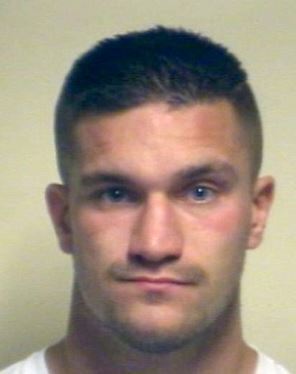
Last week Christopher Gard (pictured, right) was jailed for killing Lee Martin, a cyclist. Gard, because he was not looking where he was going, drove into Mr Martin at 65mph. He then tried to conceal that he had been texting at the time. This was not a moment���s carelessness.
It was a deliberate risk. For the sake of a text about taking his dog for a walk, he deprived Mr Martin���s two daughters (12 and 15) of a father, and his wife of a husband.
Gard knew his actions were stupid and illegal. He had eight convictions for using his phone at the wheel and had promised magistrates to stop doing this six weeks before he destroyed a happy family.
There���s only one solution. A year���s loss of licence and a vicious fine on a first conviction, and prison on a second; and the police instructed to enforce the law with maximum rigour, as they once did with the breathalyser and seatbelts.
Police and magistrates who ignore this crime, or deal with it lightly, are risking the lives of others. Stop it.
Question time for our drug law MPs
The saga of Keith Vaz MP (before whose Home Affairs Committee I once appeared in a vain attempt to persuade them to stop weakening the drug laws) prompts this suggestion.
Any MP involved in influencing drug laws should be asked, on oath, when they last used any illegal drug, or observed others using such drugs including their children.
If we can demand details of financial interests, this is only reasonable.
If you want to comment on Peter Hitchens, click on Comments and scroll down
September 9, 2016
Chairman May Borrows my Grammar School soundbite - but is she just posing?
I see Chairman May has borrowed my soundbite on school selection. She responded to anti-grammar moaners complaining about the alleged unfairness of selection by ability, by pointing out that we already select by house price. She did so in a meeting with Conservative MPs at the 1922 Committee on Wednesday .
She is very welcome to this soundbite and may use it as much as she likes, but, like the Permanent Secretary at the Education Department, I am still unsure of what she really intends to do.
Much like the EU issue, the grammar school controversy allows people to take positions which appear to be more radical than they really are.
It���s necessary to recall that academic selection was largely destroyed in the late 1960s and 1970s, so making grammar schools pretty theoretical in most parts of the country. Only in Northern Ireland is there still a fully functional academically selective system.
In 1998 the Blair government actually banned new grammar schools by law, not that there had been any great effort to create any in the intervening 20 years. It was just that, from then on, any talk by the Tories about recreating them would need *at the very least* to involve the repeal of this ban as a manifesto measure.
Since then, the numbers of academically selective state schools in England has dwindled to a besieged and untypical rump, from whose problems and successes we can learn something *only* if we allow for this.
I have many times made these points, not least in an exchange with ���Kent Mum��� which those adept at the internet can doubtless call up with ease. But here���s most of it : http://hitchensblog.mailonsunday.co.uk/2015/07/a-new-discussion-about-school-selection-.html
But now the Tories have plainly made a political decision to seem to embrace the grammar school policy (perhaps to outflank UKIP, perhaps to please the conservative media). So we need to go further
To *say* you wish to abolish the ban on new grammar schools, when this wasn���t in your manifesto, leaves you in a pretty safe position. You can put up a Bill which the Lords (heavily dominated now by the cultural Left) will chuck out. And, as you didn���t put it in the manifesto, the Westminster Convention cannot be invoked to require them to pass it out of respect for the people���s will. And it will die.
But if you win the next election, you will be reminded of this. So you will have had to put it in your manifesto before that election. And so, bit by bit, it will creep up the stairs of urgency until you have to legislate seriously.
And of course I���d be delighted if the 1998 ban were repealed. But then we���d only be back where we were in 1997, when there were hardly any grammars and no plans to create any new ones.
What we need, for this to matter, is a government determined to build and open hundreds of new grammars. Do we have such a government? No, the current Education Secretary, whose name I forget, is plainly not keen. Chairman May herself, despite borrowing my soundbite concealed for years her own attendance at a grammar school and cannot be said to be an actual enthusiast.
The Tories are most of all committed (as are many Blairites) to the stealthy nationalisation of education, through ���academies��� , which allows them to hand over the running of state-financed schools to private companies, via an agency which is almost entirely opaque and unaccountable.
Grammars, which were often based upon local pride and in many cases built and founded by old-fashioned Labour town halls, are unlikely to emerge in any numbers from this system, which is selective in more subtle, less politically difficult , more unfair ways.
I think we may be being played for suckers here. I will need to see significant numbers of new grammars before I am persuaded that Chairman May is doing anything other than posing.
September 8, 2016
The Consolation of All Sorrows - an article about Russia
Some readers may be interested in this long article about our mistaken attitudes towards Russia, written for the US publisher ���First Things���:
https://www.firstthings.com/article/2016/10/the-cold-war-is-over
Many will be familiar with the arguments in it, but the general approach is perhaps a little new.
Others, of course, may not be interested.
September 7, 2016
My Return to Boston - now on iPlayer
AS promised, the BBC iPlayer version of my short film on Boston, Lincs
http://www.bbc.co.uk/iplayer/episode/b07qbcsl/inside-out-yorkshire-and-lincolnshire-05092016
An Interesting Question
I was very pleased to see the question asked in the Commons yesterday by Dr Julian Lewis, the Chairman of the Commons Defence Committee.
Dr Julian Lewis (New Forest East) (Con)
In welcoming the Home Secretary to her new role, may I ask her whether she has had a chance to see to what extent profiling of those who commit terrorist atrocities has been examined by her Department, by the police and by the security services? People such as the journalist Peter Hitchens have noted a correlation between drug abuse and the commission of atrocities that is rather greater than any link with a Muslim faith background, despite what one would normally expect. Therefore, if profiling is to be carried out successfully, will the appropriate effort be invested?
Amber Rudd
We have a behavioural unit in the Home Office that looks at types of behaviour that may lead to certain actions. Now that my right hon. Friend has raised that question with me, rest assured that I will look at it more seriously.
The question (and the reply to it by the Home Secretary, Amber Rudd) can be found here in Hansard.
https://hansard.parliament.uk/commons/2016-09-05/debates/1609052000012/TerroristAttacks
September 6, 2016
Boston Revisited
The BBC recently invited me to revisit Boston, the Lincolnshire town with very high levels of immigration which also voted in record numbers for exit from the EU.
The resulting short film, including me riding a bicycle (not, in my view, in a fascist way) , is to be shown at 7.30 tonight on BBC1 in Lincolnshire and Yorkshire.
After that, it will be available nationally on iPlayer. I will post a link when I have one.
Peter Hitchens's Blog

- Peter Hitchens's profile
- 299 followers

